Power Line Communication Market by Offering (Hardware, Software, and Services), Frequency (Narrowband, and Broadband), Application (Energy Management and Smart Grid, and Indoor Networking), Vertical, and Geography - Global Forecast to 2036


Power Line Communication Market Summary
The Power Line Communication Market was valued at approximately USD 9–11 billion in 2025 and is projected to reach nearly USD 24–27 billion by 2036, expanding at a CAGR of 8–10% during the forecast period. The market is experiencing significant growth as industries, utilities, and smart infrastructure projects increasingly adopt intelligent communication technologies. The rapid deployment of smart grids, rising penetration of IoT-connected devices, and growing investments in energy-efficient communication systems are major factors driving market expansion.
Power line communication (PLC) technology enables data transmission through existing electrical wiring infrastructure, reducing deployment costs and supporting efficient connectivity in residential, commercial, and industrial environments. The integration of AI-powered grid analytics, cloud-based energy management systems, and industrial automation technologies is further enhancing the relevance of PLC systems. Governments worldwide are also investing heavily in digital utility infrastructure and smart city initiatives, accelerating demand for reliable communication platforms capable of supporting real-time monitoring and automation.
The increasing need for secure, scalable, and low-cost communication networks across energy distribution systems, industrial automation, and home networking applications is expected to sustain strong growth momentum for the Power Line Communication Market through 2036.
Key Market Trends & Insights
North America currently dominates the Power Line Communication Market due to large-scale smart grid deployment and strong investments in utility modernization. The United States continues to lead in advanced metering infrastructure and energy automation technologies.
Asia Pacific is the fastest-growing region owing to rapid urbanization, smart city development, and expanding power infrastructure projects in countries such as China, Japan, and India. Governments across the region are emphasizing digital transformation and grid modernization.
Broadband PLC technology is becoming the dominant segment due to its ability to support high-speed data transmission and advanced smart grid applications. Narrowband PLC also remains highly relevant in utility monitoring and smart metering systems.
AI integration is emerging as a major trend, enabling predictive maintenance, automated fault detection, and intelligent power distribution management. IoT-enabled PLC systems are enhancing real-time connectivity and operational efficiency across industrial and utility sectors.
The growing adoption of electric vehicles and renewable energy systems is also increasing demand for advanced communication technologies capable of supporting decentralized energy infrastructure.
Market Size & Forecast
-
Base year market size (2025): USD 9–11 billion
-
Forecast market size (2036): USD 24–27 billion
-
CAGR (2025–2036): 8–10%
-
Growth factors: Expansion of smart grids, IoT adoption, AI-driven automation, renewable energy integration, and rising investments in digital utility infrastructure
Power Line Communication Market Top 10 key takeaway
-
Smart grid deployment is a major growth driver for the market
-
North America leads due to utility modernization initiatives
-
Asia Pacific is the fastest-growing regional market
-
Broadband PLC technology dominates due to high-speed connectivity
-
AI-powered grid management is enhancing operational efficiency
-
Industrial automation is increasing PLC adoption globally
-
Smart metering infrastructure is driving utility sector demand
-
IoT-enabled devices are expanding communication network requirements
-
Renewable energy integration supports long-term market growth
-
Cloud-based monitoring platforms are transforming PLC applications
Product Insights
Broadband PLC solutions account for the largest share of the Power Line Communication Market because of their capability to support high-speed communication over electrical networks. These systems are extensively used in smart homes, industrial automation, and advanced smart grid applications where large volumes of data need to be transmitted efficiently. Broadband PLC technology offers enhanced bandwidth, stable connectivity, and cost-effective deployment compared to traditional communication infrastructure.
Narrowband PLC systems continue to maintain strong demand, especially in utility and smart metering applications. These systems are widely utilized for long-distance communication and low-data-rate applications where reliability and low operational costs are critical. Utilities prefer narrowband PLC for applications such as remote meter reading, grid control, and fault detection.
Emerging product categories include hybrid PLC systems integrated with wireless communication technologies such as Wi-Fi, Zigbee, and 5G connectivity. These hybrid platforms improve network flexibility and support seamless communication across multiple devices and infrastructure systems.
AI integration is increasingly becoming a differentiating factor in PLC products. Intelligent communication modules can now automatically optimize signal transmission, detect faults, and improve network stability using predictive analytics and machine learning algorithms. Manufacturers are also focusing on compact and energy-efficient PLC modules suitable for smart appliances and industrial IoT ecosystems.
Technology / Component Insights
The Power Line Communication Market is strongly influenced by advancements in communication protocols, semiconductor technologies, and intelligent networking systems. Orthogonal Frequency-Division Multiplexing (OFDM) technology remains one of the key innovations driving PLC efficiency by enabling reliable data transmission across noisy electrical environments.
AI and IoT technologies are playing a transformative role in the market. AI-based analytics platforms help utilities and industrial operators optimize network performance, identify anomalies, and predict maintenance requirements. IoT integration enables connected sensors, smart devices, and automated systems to communicate efficiently through existing power infrastructure.
Cloud computing is becoming increasingly important for centralized energy management and real-time monitoring applications. Cloud-connected PLC systems enable remote diagnostics, energy consumption analysis, and predictive maintenance capabilities across utility and industrial networks.
Automation technologies are also accelerating PLC adoption in industrial facilities. Manufacturing plants are integrating PLC-enabled systems to improve machine communication, production monitoring, and operational efficiency. The rising deployment of Industry 4.0 technologies is expected to create substantial growth opportunities.
Future innovations are likely to focus on cybersecurity enhancements, edge computing integration, and AI-powered autonomous grid management systems. Advanced PLC chipsets with enhanced transmission speeds and lower latency are expected to improve communication reliability across complex infrastructures.
Application Insights
The smart grid and energy management segment dominates the Power Line Communication Market due to the increasing need for efficient power distribution and real-time grid monitoring. Utilities worldwide are deploying PLC systems for advanced metering infrastructure, load management, and grid automation applications.
The industrial automation segment is also experiencing substantial growth as manufacturers adopt connected production systems and intelligent monitoring technologies. PLC systems enable seamless communication between industrial machines and centralized control systems, improving efficiency and reducing operational downtime.
Residential applications are growing steadily with the expansion of smart home ecosystems. Power line communication technology is increasingly used for home networking, smart lighting, security systems, and energy-efficient appliances. The ability to use existing electrical wiring infrastructure makes PLC an attractive solution for residential connectivity.
Transportation and electric vehicle charging infrastructure represent emerging application areas. PLC systems are being integrated into EV charging stations to facilitate communication between vehicles, charging units, and energy management platforms.
Future opportunities are expected in renewable energy integration, where PLC systems can support decentralized power generation networks and distributed energy resource management.
Regional Insights
North America leads the Power Line Communication Market due to large-scale investments in smart grid modernization and advanced utility infrastructure. The region benefits from strong technological adoption, established energy companies, and supportive government initiatives focused on energy efficiency and grid reliability.
Europe maintains a strong market presence owing to stringent energy regulations, sustainability goals, and increasing renewable energy deployment. Countries across the region are actively investing in smart metering systems and intelligent power distribution infrastructure.
Asia Pacific is the fastest-growing region, driven by rapid urbanization, industrialization, and smart city development. China, Japan, South Korea, and India are investing heavily in digital utility infrastructure and industrial automation technologies, creating significant demand for PLC solutions.
The Middle East and Latin America are also witnessing growing adoption due to increasing investments in energy infrastructure and industrial modernization projects.
-
North America dominates due to smart grid investments
-
Europe benefits from sustainability and renewable energy initiatives
-
Asia Pacific shows the highest growth potential
-
Smart city development is accelerating regional demand
-
Industrial automation is driving global market expansion
Country-Specific Market Trends
China is leading the Asia Pacific market with a CAGR of 10–12%, supported by aggressive smart city initiatives, industrial automation expansion, and investments in digital energy infrastructure. The Chinese government continues to promote intelligent grid technologies and renewable energy integration.
Japan is witnessing steady growth at a CAGR of 8–9% due to advanced industrial automation, aging infrastructure upgrades, and strong investments in energy-efficient communication technologies.
The United States remains the dominant market in North America with a CAGR of 7–9%, driven by utility modernization programs, advanced metering deployment, and increasing adoption of AI-powered grid management systems. Canada is also experiencing growth due to renewable energy investments, while Mexico is adopting PLC technologies in industrial applications.
Germany leads the European market with a CAGR of 7–8%, supported by Industry 4.0 initiatives and renewable energy integration projects. France is focusing on energy-efficient smart infrastructure and digital utility transformation.
-
China leads global PLC infrastructure expansion
-
Japan emphasizes industrial automation and energy efficiency
-
The United States dominates smart grid deployment
-
Germany drives Industry 4.0 adoption in Europe
-
France focuses on digital utility modernization initiatives
Key Power Line Communication Market Company Insights
The Power Line Communication Market is highly competitive, with major players focusing on technological innovation, strategic partnerships, and AI-enabled communication solutions. Companies are investing heavily in smart grid technologies, advanced communication chipsets, and intelligent energy management platforms.
Key market participants include Siemens AG, Schneider Electric SE, ABB Ltd., Cypress Semiconductor Corporation, STMicroelectronics N.V., Texas Instruments Incorporated, Qualcomm Technologies Inc., Eaton Corporation, Hubbell Incorporated, and General Electric Company. These companies are actively expanding their product portfolios and strengthening their global market presence through acquisitions and collaborations.
AI adoption has become a strategic priority for leading companies. Intelligent communication systems equipped with predictive analytics, automated diagnostics, and real-time monitoring capabilities are becoming increasingly common. Companies are also integrating cloud-based management systems to enhance scalability and remote operational control.
Manufacturers are prioritizing interoperability, cybersecurity, and energy efficiency to address evolving customer requirements. Product strategies increasingly focus on hybrid communication platforms that combine PLC with wireless technologies to improve flexibility and performance.
-
Companies are investing in AI-driven communication technologies
-
Strategic partnerships are strengthening market competitiveness
-
Cloud-based energy management solutions are gaining importance
-
Hybrid PLC and wireless systems are emerging rapidly
-
Cybersecurity and interoperability remain major innovation priorities
Recent Developments
Several leading companies recently launched AI-integrated PLC chipsets designed to improve signal reliability and support predictive maintenance in smart grid applications. These next-generation systems offer enhanced data transmission efficiency and lower power consumption.
A major partnership between utility technology providers and industrial automation firms was announced to develop integrated smart grid communication platforms capable of supporting renewable energy management and real-time grid analytics.
Additionally, manufacturers introduced broadband PLC modules optimized for electric vehicle charging infrastructure and industrial IoT networks, highlighting the growing role of PLC technology in connected ecosystems.
Market Segmentation
The Power Line Communication Market is segmented based on product, technology, application, and region. By product, the market is categorized into broadband PLC and narrowband PLC systems. Broadband PLC dominates the market due to its high-speed communication capabilities and growing adoption in smart infrastructure projects.
By technology and component, the market includes communication chipsets, modems, gateways, routers, and software platforms. Advanced semiconductor technologies and AI-enabled communication modules are gaining strong traction.
By application, the market covers smart grids, industrial automation, smart homes, transportation, energy management, and telecommunications. Smart grid applications account for the largest market share because of increasing investments in utility modernization and advanced metering infrastructure.
Regionally, the market is segmented into North America, Europe, Asia Pacific, Latin America, and the Middle East & Africa. North America currently leads, while Asia Pacific is expected to witness the fastest growth during the forecast period.
-
Broadband PLC is the leading product segment
-
Smart grid applications dominate the market
-
AI-enabled communication systems are gaining popularity
-
Asia Pacific is projected to grow at the highest CAGR
-
Industrial automation remains a major application area
The Power Line Communication Market is positioned for substantial growth through 2036 as governments, utilities, and industries continue investing in intelligent communication infrastructure. The increasing integration of AI, IoT, cloud computing, and automation technologies is transforming PLC systems into highly efficient and scalable communication platforms.
Smart grids, renewable energy systems, industrial automation, and smart home ecosystems are expected to remain key demand drivers throughout the forecast period. As digital transformation accelerates globally, power line communication technology will play a critical role in enabling secure, reliable, and cost-effective connectivity across diverse industries.
Companies that prioritize AI innovation, cybersecurity, interoperability, and energy-efficient communication solutions are expected to gain a significant competitive advantage in the evolving market landscape.
FAQs
-
What is the market size of the Power Line Communication Market?
The Power Line Communication Market was valued at approximately USD 9–11 billion in 2025. -
What is the expected growth rate of the market?
The market is expected to grow at a CAGR of 8–10% from 2025 to 2036. -
What are the key drivers of the Power Line Communication Market?
Key drivers include smart grid deployment, AI integration, IoT adoption, industrial automation, and renewable energy infrastructure expansion. -
Which region leads the Power Line Communication Market?
North America currently leads the market due to strong investments in smart grid modernization and advanced utility infrastructure. -
Who are the major companies operating in the market?
Major companies include Siemens AG, Schneider Electric SE, ABB Ltd., Texas Instruments Incorporated, Qualcomm Technologies Inc., Eaton Corporation, and STMicroelectronics N.V.
To speak to our analyst for a discussion on the above findings, click Speak to Analyst
 Exclusive indicates content/data unique to MarketsandMarkets and not available with any competitors.
Table of Contents
1 Introduction (Page No. - 14)
1.1 Study Objectives
1.2 Definition
1.3 Study Scope
1.3.1 Markets Covered
1.3.2 Geographic Scope
1.3.3 Years Considered for Study
1.4 Currency
1.5 Limitations
1.6 Stakeholders
2 Research Methodology (Page No. - 17)
2.1 Research Data
2.1.1 Secondary Data
2.1.1.1 Secondary Sources
2.1.2 Primary Data
2.1.2.1 Key Data From Primary Sources
2.1.2.2 Key Industry Insights
2.1.2.3 Breakdown of Primaries
2.2 Market Size Estimation
2.2.1 Bottom-Up Approach
2.2.2 Top-Down Approach
2.3 Market Breakdown and Data Triangulation
2.3.1 Assumptions for Research Study
3 Executive Summary (Page No. - 26)
4 Premium Insights (Page No. - 31)
4.1 Attractive Opportunities for Power Line Communication Market
4.2 Market, By Offering
4.3 Market in APAC, By Country and Vertical
4.4 Market, By Application
4.5 Market, By Country (2017)
5 Market Overview (Page No. - 36)
5.1 Introduction
5.2 Market Dynamics
5.2.1 Drivers
5.2.1.1 Cost-Effective Installation
5.2.1.2 Enabling Wide Coverage By Using the Existing Electricity Distribution Network
5.2.1.3 Growing Deployment of Smart Grids
5.2.1.4 High Penetration of Broadband Power Line Communication Devices in Indoor Networking Applications
5.2.2 Restraints
5.2.2.1 High Noise Generation on Power Lines Limiting the Data Transmission Quality
5.2.2.2 Adverse Effect of Signal Attenuation
5.2.3 Opportunities
5.2.3.1 Growth Opportunities From Emerging Countries in APAC
5.2.3.2 Use of Power Line Communication Technology for Lighting Control Applications
5.2.4 Challenges
5.2.4.1 Availability of Various Substitute Technologies
5.3 Value Chain Analysis
6 Power Line Communication Market, By Offering (Page No. - 43)
6.1 Introduction
6.2 Hardware
6.3 Software
6.3.1 Data Acquisition and Management
6.3.2 Energy Management
6.4 Services
6.4.1 Professional Services
6.4.1.1 Consulting
6.4.1.2 Training & Development
6.4.2 Maintenance and Repair
7 Power Line Communication Market, By Frequency (Page No. - 49)
7.1 Introduction
7.2 Narrowband (3 kHz to 500 kHz)
7.3 Broadband (Greater Than 500 kHz)
8 Power Line Communication Market, By Application (Page No. - 53)
8.1 Introduction
8.2 Energy Management and Smart Grid
8.2.1 Substation Communication
8.2.2 Advanced Metering
8.2.3 Micro Inverter Monitoring
8.2.4 Vehicle Communication and Electric Vehicle Charging
8.2.5 Lighting Control
8.2.5.1 Indoor Lighting Control
8.2.5.2 Outdoor Lighting Control
8.2.5.2.1 Street Lighting
8.2.5.2.2 Airport Runway Lighting
8.3 Indoor Networking
9 Power Line Communication Market, By Vertical (Page No. - 66)
9.1 Introduction
9.2 Residential
9.3 Commercial
9.3.1 Smart Buildings
9.3.2 Retail
9.4 Industrial
9.4.1 Energy and Power
9.4.2 Automotive & Transportation
9.4.3 Others
10 Power Line Communication, By Modulation Technique (Page No. - 73)
10.1 Introduction
10.2 Single Carrier Modulation
10.2.1 Frequency Shift Keying (FSK)
10.2.2 Phase Shift Keying (PSK)
10.2.3 Amplitude Shift Keying (ASK)
10.3 Multi Carrier Modulation
10.3.1 Orthogonal Frequency Division Multiplexing (OFDM)
10.3.2 Filtered Multitone (FMT) Modulation
10.3.3 Discrete Wavelet Multitone (DWMT) Modulation
10.4 Spread Spectrum Modulation
11 Geographic Analysis (Page No. - 76)
11.1 Introduction
11.2 North America
11.2.1 US
11.2.2 Canada
11.2.3 Mexico
11.3 Europe
11.3.1 Italy
11.3.2 UK
11.3.3 Germany
11.3.4 Spain
11.3.5 France
11.3.6 Rest of Europe
11.4 Asia Pacific
11.4.1 China
11.4.2 Japan
11.4.3 South Korea
11.4.4 India
11.4.5 Rest of APAC
11.5 Rest of the World
11.5.1 South America
11.5.2 Middle East and Africa
12 Competitive Landscape (Page No. - 103)
12.1 Overview
12.2 Market Ranking Analysis: Market
12.3 Competitive Situations and Trends
12.3.1 Product Launches
12.3.2 Partnerships, Agreements, and Contracts
12.3.3 Others
13 Company Profiles (Page No. - 108)
(Business Overview, Product Offering, Strength of Product Portfolio, Business Strategy Excellence & Recent Developments, Key Relationships)*
13.1 Key Players
13.1.1 ABB
13.1.2 Siemens
13.1.3 Ametek
13.1.4 General Electric
13.1.5 Schneider Electric
13.1.6 Tp-Link Technologies
13.1.7 Netgear
13.1.8 D-Link
13.1.9 Hubbell Power Systems
13.1.10 Belkin International
13.1.11 Zyxel Communications
13.1.12 Landis+Gyr
(Business Overview, Product Offering, Strength of Product Portfolio, Business Strategy Excellence & Recent Developments, Key Relationships)*
13.2 Key Innovators
13.2.1 NYX Hemera Technologies
13.2.2 Trendnet
13.2.3 Lumenpulse
13.2.4 Devolo
13.3 Other Companies
13.3.1 Billion Electric
13.3.2 Extollo Communications
13.3.3 Netcomm Wireless
13.3.4 Asustek Computer
13.3.5 ZIV
13.3.6 Comtrend
13.3.7 Corinex Communications
13.3.8 Iskra
13.3.9 Aeconversion
14 Appendix (Page No. - 150)
14.1 Insights of Industry Experts
14.2 Discussion Guide
14.3 Knowledge Store: Marketsandmarkets’ Subscription Portal
14.4 Introducing RS: Real-Time Market Intelligence
14.5 Available Customizations
14.6 Related Reports
14.7 Author Details
List of Tables (64 Tables)
Table 1 Market, By Offering, 2014–2023 (USD Million)
Table 2 Market for Hardware, By Application, 2014–2023 (USD Million)
Table 3 Market, By Frequency, 2014–2023 (USD Billion)
Table 4 Narrowband Market, By Application, 2014–2023 (USD Million)
Table 5 Broadband Market, By Application, 2014–2023 (USD Million)
Table 6 Market, By Application, 2014–2023 (USD Billion)
Table 7 Market for Energy Management and Smart Grid Application, By Type, 2014–2023 (USD Million)
Table 8 Market for Energy Management and Smart Grid Application, By Vertical, 2014–2023 (USD Million)
Table 9 Market for Energy Management and Smart Grid Application, By Region, 2014–2023 (USD Million)
Table 10 Market for Energy Management and Smart Grid Application in North America, By Country, 2014–2023 (USD Million)
Table 11 Market for Energy Management and Smart Grid Application in Europe, By Country, 2014–2023 (USD Million)
Table 12 Market for Energy Management and Smart Grid Application in APAC, By Country, 2014–2023 (USD Million)
Table 13 Market for Energy Management and Smart Grid Application in RoW, By Region, 2014–2023 (USD Million)
Table 14 Market for Indoor Networking Application, By Vertical, 2014–2023 (USD Million)
Table 15 Market for Indoor Networking Application, By Region, 2014–2023 (USD Million)
Table 16 Market for Indoor Networking Application in North America, By Country, 2014–2023 (USD Million)
Table 17 Market for Indoor Networking Application in Europe, By Country, 2014–2023 (USD Million)
Table 18 Market for Indoor Networking Application in APAC, By Country, 2014–2023 (USD Million)
Table 19 Market for Indoor Networking Application in RoW, By Region, 2014–2023 (USD Million)
Table 20 Market, By Vertical, 2014–2023 (USD Billion)
Table 21 Market for Residential Vertical, By Application, 2014–2023 (USD Million)
Table 22 Market for Commercial Vertical, By Application, 2014–2023 (USD Million)
Table 23 Market for Industrial Vertical, By Application, 2014–2023 (USD Million)
Table 24 Market, By Region, 2014–2023 (USD Million)
Table 25 Market in North America, By Country, 2015–2023 (USD Million)
Table 26 Market in US, By Application, 2015–2023 (USD Million)
Table 27 Market in US, By Vertical, 2015–2023 (USD Million)
Table 28 Market in Canada, By Application, 2015–2023 (USD Million)
Table 29 Market in Canada, By Vertical, 2015–2023 (USD Million)
Table 30 Market in Mexico, By Application, 2015–2023 (USD Million)
Table 31 Market in Mexico, By Vertical, 2015–2023 (USD Million)
Table 32 Market in Europe, By Country, 2015–2023 (USD Million)
Table 33 Market in Italy, By Application, 2015–2023 (USD Million)
Table 34 Market in Italy, By Vertical, 2015–2023 (USD Million)
Table 35 Market in UK, By Application, 2015–2023 (USD Million)
Table 36 Market in UK, By Vertical, 2015–2023 (USD Million)
Table 37 Market in Germany, By Application, 2015–2023 (USD Million)
Table 38 Market in Germany, By Vertical, 2015–2023 (USD Million)
Table 39 Market in Spain, By Application, 2015–2023 (USD Million)
Table 40 Market in Spain, By Vertical, 2015–2023 (USD Million)
Table 41 Market in France, By Application, 2015–2023 (USD Million)
Table 42 Market in France, By Vertical, 2015–2023 (USD Million)
Table 43 Market in Rest of Europe, By Application, 2015–2023 (USD Million)
Table 44 Market in Rest of Europe, By Vertical, 2015–2023 (USD Million)
Table 45 Market in APAC, By Country, 2015–2023 (USD Million)
Table 46 Market in China, By Application, 2015–2023 (USD Million)
Table 47 Market in China, By Vertical, 2015–2023 (USD Million)
Table 48 Market in Japan, By Application, 2015–2023 (USD Million)
Table 49 Market in Japan, By Vertical, 2015–2023 (USD Million)
Table 50 Market in South Korea, By Application, 2015–2023 (USD Million)
Table 51 Market in South Korea, By Vertical, 2015–2023 (USD Million)
Table 52 Market in India, By Application, 2015–2023 (USD Million)
Table 53 Market in India, By Vertical, 2015–2023 (USD Million)
Table 54 Market in Rest of APAC, By Application, 2015–2023 (USD Million)
Table 55 Market in Rest of APAC, By Vertical, 2015–2023 (USD Million)
Table 56 Market in RoW, By Region, 2015–2023 (USD Million)
Table 57 Market in South America, By Application, 2015–2023 (USD Million)
Table 58 Market in South America, By Vertical, 2015–2023 (USD Million)
Table 59 Market in Middle East and Africa, By Application, 2015–2023 (USD Million)
Table 60 Market in Middle East and Africa, By Vertical, 2015–2023 (USD Million)
Table 61 Market Ranking of Key Players in Market, 2016
Table 62 Product Launches, 2016–2017
Table 63 Partnerships, Agreements, and Contracts, 2015–2017
Table 64 Expansions and Joint Ventures, 2015–2017
List of Figures (40 Figures)
Figure 1 Market Segmentation
Figure 2 Process Flow: Market Size Estimation
Figure 3 Market: Research Design
Figure 4 Market: Bottom-Up Approach
Figure 5 Market: Top-Down Approach
Figure 6 Data Triangulation
Figure 7 Market Size (2014–2023)
Figure 8 Market, By Frequency (2017 vs 2023)
Figure 9 Market for Energy Management and Smart Grid Application to Grow at Higher CAGR During Forecast Period
Figure 10 Industrial Vertical to Hold Largest Share of Market By 2023
Figure 11 Europe Accounted for Largest Share of Market in 2016
Figure 12 Market Expected to Witness Attractive Growth Opportunities Owing to Increasing Demand From Industrial Vertical During the Forecast Period
Figure 13 Software Expected to Grow at Highest CAGR in Market During Forecast Period
Figure 14 China to Hold Largest Share of Market in 2017
Figure 15 Market for Energy Management and Smart Grid to Grow at Higher CAGR During Forecast Period
Figure 16 US Expected to Hold Largest Share of Market in 2017
Figure 17 Growing Deployment of Smart Grids Boosts Market
Figure 18 Value Chain Analysis: Major Value Addition During System Or Equipment Manufacturing Stage
Figure 19 Market, By Offering
Figure 20 Software Segment Expected to Witness Highest Growth in Market Between 2017 and 2023
Figure 21 Market, By Frequency
Figure 22 Indoor Networking Application Expected to Hold Largest Share of Broadband Market By 2023
Figure 23 Market, By Application
Figure 24 Energy Management and Smart Grid Application to Hold Largest Share of Market By 2023
Figure 25 Vehicle Communication & Electric Vehicle Charging Application to Witness Highest Growth Rate During Forecast Period
Figure 26 China Expected to Dominate Market for Energy Management and Smart Grid Application in APAC During Forecast Period
Figure 27 Market, By Vertical
Figure 28 Industrial Vertical to Hold Largest Share of Market By 2023
Figure 29 Geographic Snapshot (2017–2023): APAC Countries, Such as China and Japan, Expected to Witness Significant Growth in Market During Forecast Period
Figure 30 North America: Market Snapshot
Figure 31 Europe: Market Snapshot
Figure 32 Asia Pacific: Market Snapshot
Figure 33 ABB: Company Snapshot
Figure 34 Siemens: Company Snapshot
Figure 35 Ametek: Company Snapshot
Figure 36 General Electric: Company Snapshot
Figure 37 Schneider Electric: Company Snapshot
Figure 38 Netgear: Company Snapshot
Figure 39 D-Link: Company Snapshot
Figure 40 Landis+Gyr: Company Snapshot
This research study incorporates the usage of secondary sources, annual reports, directories, and databases (such as Hoovers, Bloomberg Businessweek, Factiva, and OneSource) to identify and collect information useful for the extensive technical, market-oriented, and commercial study of the power line communication market. The key players in the power line communication market have been identified through secondary research, and their market share has been determined through primary and secondary research. Primary sources mainly comprise several experts from core and related industries, along with preferred suppliers, manufacturers, distributors, technology developers, alliances, standards, and certification organizations related to various parts of the value chain of the industry. In-depth interviews with various primary respondents, including key industry participants, subject matter experts (SMEs), C-level executives of key companies, and consultants, have been conducted to obtain and verify critical qualitative and quantitative information as well as assess prospects.
Secondary Research
In the secondary research process, various secondary sources have been referred to identify and collect information important for this study. Secondary sources include corporate filings such as annual reports, press releases, investor presentations, and financial statements; trade, business, and professional associations; white papers, journals, and articles from recognized authors; and certified publications related to power line communication technology, directories, and databases. The secondary research has been conducted to obtain key information about the supply chain of the industry, monetary chain of the market, the total pool of key players, and segmentation of the market according to industry trends to the bottommost level, geographic markets, and key developments from the market-oriented perspective. The secondary data has been collected and analyzed to arrive at the overall market size, which has been further validated through primary research.
Primary Research
In the primary research process, various primary sources from both supply and demand sides have been interviewed to obtain qualitative and quantitative information for this report. Primary sources from the supply side include experts such as CEOs, vice presidents, marketing directors, technology and innovation directors, subject matter experts (SMEs), consultants, and related key executives from the major companies and organizations operating in the power line communication market. After the complete market engineering process (which includes market statistics calculations, market breakdown, market size estimations, market forecasting, and data triangulation), extensive primary research has been conducted to gather information, and verify and validate the critical market numbers. Several primary interviews have been conducted with experts from both demand and supply sides across 4 major regions—North America, Europe, Asia Pacific (APAC), and Rest of the World (RoW). Approximately 25% of the primary interviews have been conducted with the demand side and 75% with the supply side. This primary data has been collected through questionnaires, e-mails, and telephonic interviews.
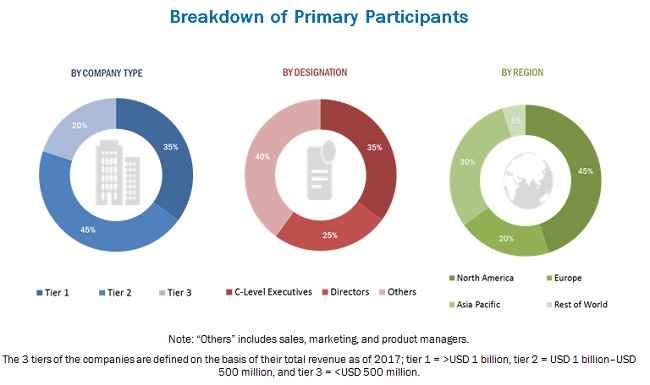
To know about the assumptions considered for the study, download the pdf brochure
Market Size Estimation
Top-down and bottom-up approaches have been used to estimate and validate the size of the power line communication market and other dependent submarkets. The key players in the market have been identified through secondary research, and their market ranking in respective regions has been determined through primary and secondary research. This entire research methodology includes the study of annual and financial reports of the top market players and interviews with industry experts (CEOs, VPs, directors, and marketing executives) for key insights (both quantitative and qualitative) on the power line communication market. All percentage shares and breakdowns have been determined using secondary sources and verified through primary sources. All possible parameters that positively and negatively impact the markets covered in this research study have been accounted for, viewed in extensive detail, verified through primary research, and analyzed to get the final quantitative and qualitative data. This data has been consolidated and supplemented with detailed inputs and analysis from MarketsandMarkets and presented in this report
Data Triangulation
After arriving at the overall market size through the process explained earlier, the total market has been split into several segments. The market breakdown and data triangulation procedures have been employed, wherever applicable, to complete the overall market engineering process and arrive at the exact statistics for all the segments and subsegments. The data has been triangulated by studying various factors and trends from both demand and supply sides. Along with this, the market has been validated using both top-down and bottom-up approaches.
Study Objectives
The objectives of the study are as follows:
- Define, describe, and forecast the overall power line communication market in terms of value
- Define, describe, and forecast the power line communication market segmented on the basis of offering, frequency, application, vertical, and geography
- Forecast the size of the power line communication market, in terms of value, for various segments with respect to 4 main regions—North America, Europe, Asia Pacific (APAC), and Rest of the World (RoW)
- Describe the major factors (drivers, restraints, opportunities, and challenges) influencing the growth of the power line communication market and its submarkets
- Analyze the micromarkets with respect to individual growth trends, prospects, and contributions to the overall power line communication market
- Analyze the opportunities in the market for stakeholders by identifying the high-growth segments of the power line communication market
- Identify the key players operating in the power line communication market and comprehensively analyze their market ranking and core competencies
- Analyze strategic developments such as product launches, partnerships, expansions, and contracts in the power line communication market
Available Customizations:
With the given market data, MarketsandMarkets offers customizations according to the company’s specific needs. The following customization options are available for the report:
Company Information
Detailed analysis and profiling of additional market players (up to 5)













Growth opportunities and latent adjacency in Power Line Communication Market