Next Generation Space Communications Market by Technology (Optical, RF, Quantum Communication), Offering (Hardware, Software, Services), Application (Satellite Communication, Deep Space Exploration, Earth Observation), End-Use Industry (Telecommunication, Defense, Commercial) and Region – Global Forecast to 2030


Next Generation Space Communications Market Overview
The Next Generation Space Communications Market is revolutionizing the global connectivity landscape, enabling advanced communication capabilities for terrestrial and space-based applications. This market encompasses cutting-edge technologies such as quantum communication, laser-based optical transmission, artificial intelligence (AI)-driven network optimization, and satellite constellations. Driven by growing demand for seamless global communication, the market is rapidly evolving to meet the needs of both government and commercial entities. Applications range from real-time Earth observation and global broadband connectivity to interplanetary missions and secure military communications.
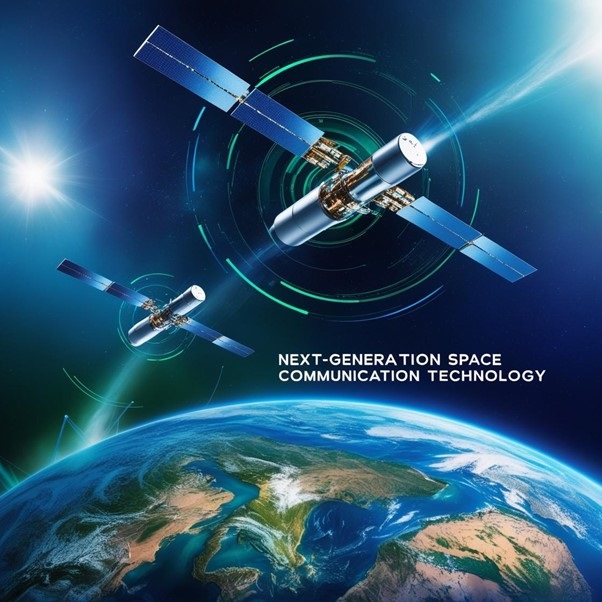
North America, particularly the United States, is leading advancements in this market due to significant investments by both government organizations like NASA and private enterprises such as SpaceX and Amazon. The deployment of large-scale satellite constellations and the adoption of AI-enhanced communication technologies are redefining possibilities in space exploration, telecommunications, and defense.
Attractive Opportunities in Next Generation Space Communications Market
1. Satellite Mega-Constellations Mega-constellation projects such as SpaceX’s Starlink, Amazon’s Kuiper, and OneWeb are central to the development of next-generation communication networks. These constellations aim to provide affordable and high-speed internet connectivity to remote and underserved areas, unlocking new opportunities for global digital inclusion.
2. Quantum Communication Technologies
Quantum communication is gaining traction for its ability to provide ultra-secure data transmission, leveraging quantum key distribution (QKD) to prevent hacking and eavesdropping. This technology is particularly critical for military, governmental, and financial institutions requiring high levels of data security.
3. AI-Driven Network Optimization
Artificial intelligence is revolutionizing space communication systems by enhancing signal processing, automating satellite operations, and optimizing data transfer. AI-powered algorithms improve efficiency by predicting disruptions and rerouting communication channels, reducing latency and ensuring reliable service.
4. Integration of 5G and Beyond
The integration of satellite networks with 5G technologies is enabling a new era of communication. It supports high-speed connectivity for autonomous vehicles, smart cities, and remote industrial operations. Future advancements in 6G are expected to further enhance capabilities, especially in remote sensing and real-time data analytics.
Global Next Generation Space Communications Market Dynamics
Drivers
- Growing Demand for Global Connectivity: The rising need for uninterrupted, high-speed internet across the globe is fueling investments in satellite communication networks.
- Increased Space Exploration: The growing number of interplanetary missions and lunar exploration projects is driving the adoption of advanced communication systems.
- Technological Advancements: Innovations in RF (radio frequency) and optical communication technologies are enabling faster and more reliable data transfer.
Restraints
- High Initial Investments: Developing, launching, and maintaining advanced satellite networks requires significant financial resources, which can limit market entry for smaller players.
- Regulatory Challenges: Spectrum allocation, licensing, and orbital slot management pose challenges for industry stakeholders.
Opportunities
- Public-Private Partnerships: Collaboration between space agencies and private companies is fostering innovation and reducing costs, enabling scalable solutions.
- Emergence of New Markets: The growing demand for satellite services in agriculture, disaster management, and environmental monitoring is creating new opportunities for market growth.
Challenges
- Space Debris Management: The increasing number of satellites in orbit raises concerns about collisions and debris, prompting the need for better tracking and mitigation strategies.
- Cybersecurity Risks: As communication systems become more advanced, they are increasingly vulnerable to cyber threats, requiring robust security measures.
Global Next Generation Space Communications Market Ecosystem Analysis
The ecosystem of the Next Generation Space Communications Market includes multiple stakeholders:
- Satellite Manufacturers: Companies like Airbus, Boeing, and Lockheed Martin are focusing on miniaturized and high-capacity satellites to meet the increasing demand for advanced communication.
- Ground Station Operators: Ground stations serve as the backbone of satellite communication, enabling data transfer and network management.
- Technology Providers: Firms specializing in AI, quantum computing, and optical technologies are key enablers of innovation in this market.
- Service Providers: Companies such as SpaceX and OneWeb are offering direct-to-consumer broadband services, revolutionizing global internet access.
Recent Developments in the Market
- Starlink V2 Launch (2024): SpaceX launched its second-generation satellites with improved bandwidth and reduced latency, targeting global broadband services.
- Artemis Program Expansion (2023): NASA implemented advanced communication systems for lunar exploration, emphasizing the use of optical communication for real-time data transfer.
- Quantum Satellite Deployment (2023): China launched its second quantum satellite, enhancing secure intercontinental communication.
- European Space Agency Initiatives (2022): ESA introduced optical ground stations to support inter-satellite communication, boosting network resilience.
- Amazon Kuiper Project (2022): Amazon began deploying its satellite constellation to compete with Starlink, targeting underserved regions with high-speed internet.
Key Market Players
The competitive landscape of the Next Generation Space Communications Market includes established players and emerging startups:
- SpaceX (US): Dominates the satellite broadband market with its Starlink constellation.
- Amazon (US): Actively developing the Kuiper satellite network to provide global internet connectivity.
- Thales Alenia Space (France): Focused on secure and reliable communication systems for both government and commercial clients.
- Lockheed Martin (US): Leading in the development of communication systems for defense and space exploration.
- Honeywell Aerospace (US): Specializes in satellite hardware and advanced communication technologies.
- OneWeb (UK): Expanding its satellite network to provide connectivity for aviation, maritime, and remote regions.
Scope of the Report
This report provides an in-depth analysis of the Next Generation Space Communications Market, segmented by technology (RF, optical, and quantum communication), end-users (commercial, military, and exploration), and geography (North America, Europe, Asia-Pacific, and Rest of the World).
The report examines:
- Market Trends: Insights into emerging technologies and their impact on industry growth.
- Growth Forecasts: Projections for market size and revenue growth through 2030.
- Competitive Strategies: Analysis of key players and their approaches to market dominance.
- Challenges and Opportunities: Identification of potential barriers and areas of growth within the industry.
The Next Generation Space Communications Market is at the forefront of technological innovation, redefining the future of global connectivity and space exploration. With significant investments in satellite constellations, AI-driven networks, and secure communication systems, this market is poised for substantial growth. North America continues to lead the industry, driven by advancements from both private enterprises and government initiatives. As technologies evolve, the market will play a crucial role in bridging the digital divide and enabling the next era of space exploration.
Frequently Asked Questions (FAQs):
What are the key technologies driving the Next Generation Space Communications Market?
Key technologies include radio frequency (RF) communication, optical communication (laser-based), quantum communication for ultra-secure data transmission, and AI-driven network optimization. These technologies enhance data transfer speed, reliability, and security, revolutionizing both terrestrial and space-based communication networks.
How is the North American region influencing the growth of this market?
North America, particularly the United States, is a leader in this market due to robust investments from government agencies like NASA and private companies such as SpaceX, Amazon, and Lockheed Martin. The region is home to major satellite constellation projects (e.g., Starlink, Kuiper) and is heavily focused on integrating advanced communication systems for defense, exploration, and commercial applications.
What industries benefit most from advancements in space communications?
Industries such as telecommunications, defense, Earth observation, disaster management, remote sensing, agriculture, and space exploration are key beneficiaries. The integration of 5G/6G with satellite networks is also enabling applications in smart cities, autonomous vehicles, and industrial IoT.
What are the major challenges faced by the Next Generation Space Communications Market?
Challenges include high initial costs of satellite deployment, space debris management, cybersecurity risks in advanced networks, and regulatory hurdles related to spectrum allocation and orbital slot management. Addressing these issues is crucial for sustainable growth in the market.
Who are the prominent players in the Next Generation Space Communications Market?
Prominent players include SpaceX (Starlink), Amazon (Kuiper Project), OneWeb, Thales Alenia Space, Lockheed Martin, and Honeywell Aerospace. These companies are innovating in satellite hardware, network optimization, and secure communication systems, driving the market forward.
 Exclusive indicates content/data unique to MarketsandMarkets and not available with any competitors.
Table of Contents
-
Executive Summary
- Overview of the Next Generation Space Communications Market
- Market Insights and Key Findings
- Growth Drivers and Opportunities
- Summary of Market Forecast (2024-2030)
-
Introduction
- Market Definition and Scope
- Research Methodology and Approach
- Assumptions and Limitations
-
Market Overview
- Size and Growth Projections
- Key Market Segmentation Overview
- Market Dynamics: Drivers, Restraints, Opportunities
-
Technology Analysis
- Optical Communication in Space: Current Trends and Future Prospects
- Radio Frequency (RF) Technology in Space Communications
- Quantum Communication: Revolutionizing Secure Communication in Space
-
Market Segmentation by Offering
-
Hardware
- Communication Devices and Components
- Satellite Communication Equipment
-
Software
- Communication Software and Platforms
- Network Management Solutions
-
Services
- Managed Services for Space Communications
- Consulting and Integration Services
-
Hardware
-
Market Segmentation by Application
-
Satellite Communication
- Commercial Satellite Networks and Their Evolution
- Satellite Communication in Military and Defense Applications
-
Deep Space Exploration
- Communication Systems for Mars Missions and Beyond
-
Earth Observation
- Satellite Data Acquisition and Communication Systems
-
Satellite Communication
-
Market Segmentation by End-Use Industry
-
Telecommunication
- Satellite Networks for Global Connectivity
- Communication Infrastructure for Remote Areas
-
Defense
- Strategic Military Communications via Space
- Secure Communication Systems for Defense Operations
-
Commercial
- Commercial Applications of Space Communications
- Role of Space Communications in IoT and Smart Cities
-
Government and Space Agencies
- Government-Sponsored Space Communication Projects
- Space Communications for Scientific Research and Innovation
-
Telecommunication
-
Regional Market Analysis
-
North America
- Market Landscape and Growth Opportunities
- Key Players and Investments in Space Communications
-
Europe
- Space Communication Advancements in the EU
- Regional Policies and Collaborations
-
Asia-Pacific
- Rapid Adoption of Space Technologies in Asia
- Key Projects in Space Communication Networks
-
Middle East and Africa
- Emerging Opportunities in Space Communication for MENA
- Government Investments and Regional Collaborations
-
Latin America
- Growing Demand for Space Communication Services
- Key Players and Market Dynamics
-
North America
-
Competitive Landscape
- Market Share Analysis by Key Players
- Leading Players in Space Communications: Profiles and Strategies
- Recent Mergers, Acquisitions, and Strategic Partnerships
- Technological Innovations and Product Developments
-
Recent Developments and Innovations
- Advancements in Satellite and Communication Technologies
- Breakthroughs in Quantum Communication for Space
- Ongoing and Upcoming Space Missions with New Communication Solutions
-
Market Forecast (2024-2030)
- Growth Rate Projections by Technology, Offering, and Region
- Future Trends in Space Communication Technologies
- Long-term Impact of Emerging Technologies on the Market
-
Conclusion
- Summary of Market Outlook and Key Takeaways
- Recommendations for Stakeholders in the Space Communication Ecosystem
-
Appendix
- List of Acronyms and Definitions
- Glossary of Terms
- Data Sources and References
-
About the Report
- Overview of Research Methodology
- Market Data Sources and Insights
- Contact Information and Author Details












Growth opportunities and latent adjacency in Next Generation Space Communications Market