Paint Protection Films Market

Paint Protection Films Market by Type (TPU, PVC, PET), System (Waste-based, Solvent-based), Finish Type (Matte, Gloss, Satin), End-use Industry (Automotive & Transportation, Electrical & Electronics), and Region - Global Forecast to 2030




OVERVIEW
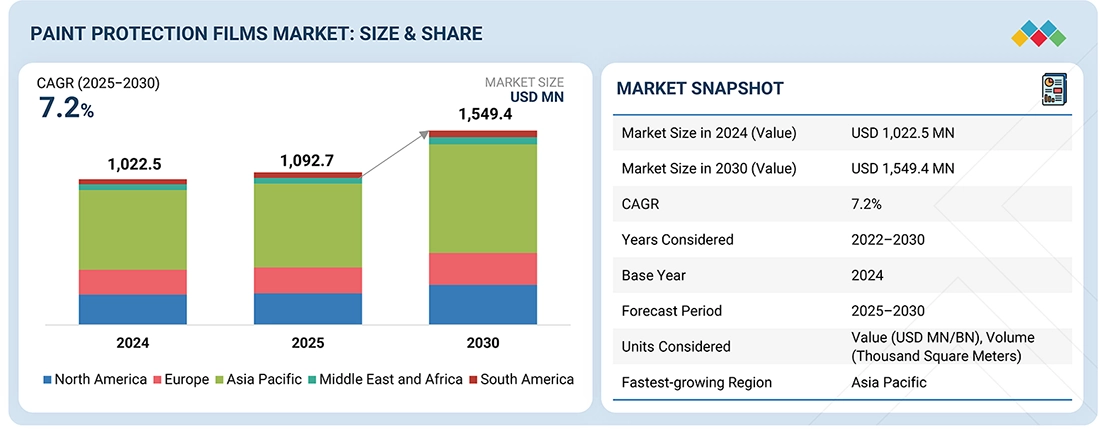
Source: Secondary Research, Interviews with Experts, MarketsandMarkets Analysis
The paint protection films market is projected to reach USD 1,549.4 million by 2030 from USD 1,092.7 million in 2025, at a CAGR of 7.2% from 2025 to 2030. The paint protection films (PPF) market experiences steady growth because more people want to protect their vehicle surfaces, more consumers want to keep their vehicles looking good, and automotive aftermarket services continue to grow. The adoption of self-healing films, durable thermoplastic polyurethane materials, and professional installation services accelerates across both premium and mass-market vehicles.
KEY TAKEAWAYS
-
BY TYPEThe paint protection films (PPFs) market uses polyethylene terephthalate (PET) as its third most popular material because of its affordable price and high optical clarity and simple manufacturing process.
-
BY FINISH TYPESatin functions as the third-biggest segment in the paint protection films market because it has gained popularity among customers who want to achieve a discreet matte appearance that still maintains some gloss.
-
By SYSTEMThe market experiences its fastest growth rate through solvent-based PPF, which operates as its fastest-expanding system because of its better adhesion and durability and its capacity to work in various environmental conditions.
-
BY END-USE INDUSTRYAerospace & defense represents the fourth-largest end-use industry in the paint protection films (PPF) market because it requires paint protection films to safeguard aircraft surfaces from abrasion and erosion and harsh environmental conditions.
-
BY REGIONThe paint protection films market in Europe stands as the third-largest market because premium automotive manufacturers operate extensively in the region, while vehicle customization trends continue to grow and consumers become more aware of surface protection solutions.
-
COMPETITIVE LANDSCAPE - KEY PLAYERS3M (US), XPEL, Inc (US), Eastman Chemical Company (US), Avery Dennison Corporation (US), Saint-Gobain (France), Lubrizol (US), CCL Industries (Canada), Hexis S.A.S. (France), ORAFOL Europe GmbH (Germany), Garware Hi-Tech Films (India)
-
COMPETITIVE LANDSCAPE - STARTUPS/SMESSWM International (Luxembourg), RENOLIT SE (Germany), KDX Window Film (China), STEK-USA (US), UPPF (US), Ceramic Pro (US)
Paint protection films (PPFs) are transparent thermoplastic films that automotive manufacturers use to shield their painted surfaces from damage caused by scratches, stone chips, stains, UV radiation, and environmental effects. These films, which manufacturers create from thermoplastic polyurethane (TPU), offer protection to vehicles while preserving their original paint appearance, and they typically include advanced capabilities such as self-healing and hydrophobic properties.
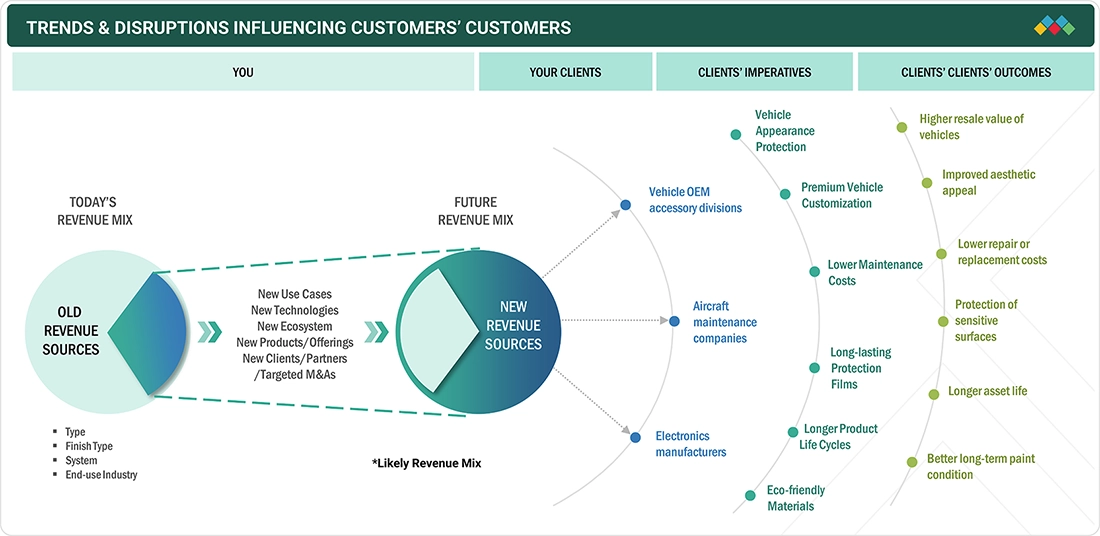
TRENDS & DISRUPTIONS IMPACTING CUSTOMERS' CUSTOMERS
The paint protection films (PPF) market is changing quickly because more people understand vehicle appearance, and film technology continues to develop. Modern PPF products deliver self-healing capabilities while their optical properties have been enhanced. Their hydrophobic coatings create protective surfaces that last longer against stains and ultraviolet sunlight. The development of thermoplastic polyurethane (TPU) and adhesive technologies brings better product durability, which results in easier installation processes. The PPF market experiences increased innovation and competitive activity because of rising vehicle customization needs, growing detailing networks and the popularity of electric vehicles and sustainable materials.
Source: Secondary Research, Interviews with Experts, MarketsandMarkets Analysis
MARKET DYNAMICS

Level
-
Rising demand for premium and luxury vehicles

-
Growth of the automotive aftermarket customization and detailing industry


Level
-
High initial cost of material and professional installation

-
Limited awareness and perceived value gap in emerging markets


Level
-
Expansion of electric vehicle (EV) adoption

-
Growing adoption in non-automotive applications


Level
-
Risk of product counterfeiting and quality variability

-
Complex supply chain and dependence on advance material inputs

Source: Secondary Research, Interviews with Experts, MarketsandMarkets Analysis
Driver: Rising demand for premium and luxury vehicles
The paint protection films (PPFs) market experiences significant growth because of the increasing global demand for high-quality and luxurious vehicles. High-value vehicle buyers dedicate more effort to preserving their vehicle appearance because they want to maintain their vehicle's resale value. Paint protection films provide a durable transparent layer which protects vehicle surfaces from stone chips and scratches and road debris and environmental contaminants thus making them an attractive solution for owners of luxury and performance vehicles. The ownership of premium vehicles is increasing because the global middle class grows and disposable incomes increase throughout developing Asian and Middle Eastern countries. Automotive manufacturers nowadays produce vehicles with paint finishes and body designs that make their products more vulnerable to damage which costs more to fix. Vehicle owners implement protective solutions because they want to avoid spending money on vehicle repainting and repair costs that they will face in the future. Luxury car dealerships and detailing centers now offer paint protection film installation as part of their premium service packages which helps them reach more customers. The demand for PPF solutions will continue to grow because consumers see vehicles as both practical assets and essential parts of their personal identity.
Restraint: High initial cost of material and professional installation
The primary obstacle that prevents paint protection films (PPF) from becoming widespread in their use exists because customers must pay both the material costs and professional installation expenses. High-quality PPF products are typically manufactured using advanced thermoplastic polyurethane (TPU) materials combined with specialized adhesive and top-coat technologies, which significantly increases their production cost. The installation process demands excessive manpower because technicians need to handle specialized equipment to complete accurate installations on modern vehicles, which possess detailed body designs and advanced manufacturing technologies. The incorrect installation process produces air bubbles and film lifting and visible edges, which result in decreased product appearance and product performance. Consumers select certified installers and professional detailing centers because they believe these options provide better results, which forces them to pay extra costs during the process. The total expense of applying PPF to an entire vehicle exceeds customer budgets in many markets because it costs more than half of the vehicle's total value, particularly with mid-range cars. The premium vehicle owners and automotive enthusiasts who own expensive vehicles should drive all product updates because the general public does not display interest in purchasing this product. Price-sensitive customers in developing markets remain unable to access paint protection films because this cost sensitivity serves as a permanent barrier that prevents these films from becoming widely used.
Opportunity: Expansion of electric vehicle adoption
The electric vehicle (EV) market is growing quickly which creates a major opportunity for the paint protection films (PPF) market to expand. Global automotive manufacturers now make electric vehicles which they design as premium products that include advanced technology and showcase their exceptional design and aerodynamic features and premium exterior surfaces. EV manufacturers spend large amounts of money to create special paint colors and to develop exclusive body designs and smooth exterior designs, which make their products more attractive to customers but which make their products more likely to suffer damage from street debris and outdoor elements and everyday city driving. EV owners who belong to the first group of technology users show a strong tendency to spend money on advanced protection systems that preserve their vehicle's initial look and help maintain its worth over time. EV buyers show greater environmental understanding than typical customers do which matches with preventive maintenance practices that use paint protection films to decrease repainting and bodywork needs throughout the years. Automotive dealerships and detailing service providers are increasingly offering PPF installation as part of EV delivery packages or protection bundles, which helps to increase PPF usage. The expansion of electric vehicle production across North America and Europe and Asia-Pacific will lead to more expensive electric vehicles on roads which will create ongoing demand for high-quality surface protection products like paint protection films.
Challenge: Risk of product counterfeiting and quality variability
The paint protection films market continues to struggle with counterfeit and substandard products which damage consumer trust in the technology. As demand for PPF increases, particularly in fast-growing automotive markets, a number of unorganized manufacturers and distributors have entered the market with low-cost alternatives that do not meet the performance standards of established brands. The products demonstrate low-quality materials because they lack high-performance top-coat technologies and they display defects which include discoloration and peeling and adhesive strength problems and diminished long-term durability. When such products fail prematurely, consumers may attribute the performance issues to paint protection films in general rather than to the specific product quality, which can negatively impact the reputation of the entire category. The use of inconsistent materials by installers leads to poor results, which makes potential customers doubt about the reliability of the product. The emergence of low-quality alternatives creates pricing challenges for established manufacturers because they need to protect their research expenditures and their quality control processes and their brand reputation. The solution to this issue requires brands to develop stronger identification methods and installer certification systems and customer education programs which focus on product quality and approved distribution paths.
PAINT PROTECTION FILMS MARKET: COMMERCIAL USE CASES ACROSS INDUSTRIES
| COMPANY | USE CASE DESCRIPTION | BENEFITS |
|---|---|---|
 |
Applies paint protection films on vehicle hoods, bumpers, mirrors, and door edges to protect exterior paint surfaces | Prevents scratches, stone chips, and environmental damage while preserving vehicle aesthetics and resale value |
 |
Uses protective films on device displays, panels, and external surfaces during manufacturing and product usage | Provides scratch resistance, surface protection, and maintains optical clarity of electronic devices |
 |
Applies protective surface films on aircraft exterior panels and sensitive painted components during operation and maintenance | Protects against abrasion, debris impact, and environmental exposure while maintaining surface integrity |
 |
Installs paint protection films on high-impact areas of electric vehicles to maintain premium surface finish | Enhances durability of exterior coatings and protects against road debris, scratches, and UV exposure |
 |
Uses protective films on painted machinery components and exposed surfaces of heavy equipment | Reduces paint wear, corrosion risks, and maintenance costs in harsh operational environments |
Logos and trademarks shown above are the property of their respective owners. Their use here is for informational and illustrative purposes only.
MARKET ECOSYSTEM
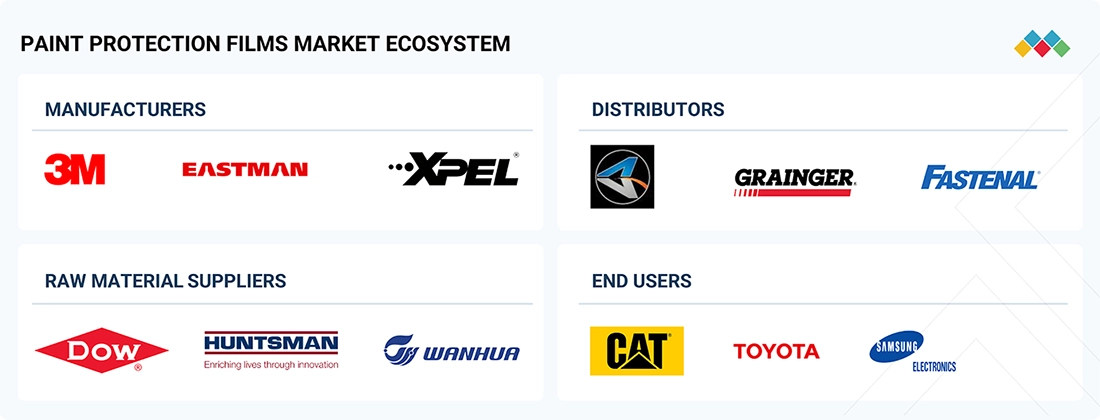
The paint protection films (PPFs) market ecosystem comprises raw material suppliers, film manufacturers, installers, and end users. The main raw materials for production include thermoplastic polyurethane (TPU) and adhesives and coating additives, which control the performance and lifespan of the film. The main companies and brands in the market create new products to maintain their supply chain, while professional installers and detailing networks drive product acceptance. The demand for products comes from three main sources, which include automotive OEMs, aftermarket service providers, and individual drivers who want to protect their vehicles and improve their appearance. The complete system enables ongoing product development, performance enhancements, and market growth in all vehicle categories.
Logos and trademarks shown above are the property of their respective owners. Their use here is for informational and illustrative purposes only.
MARKET SEGMENTS
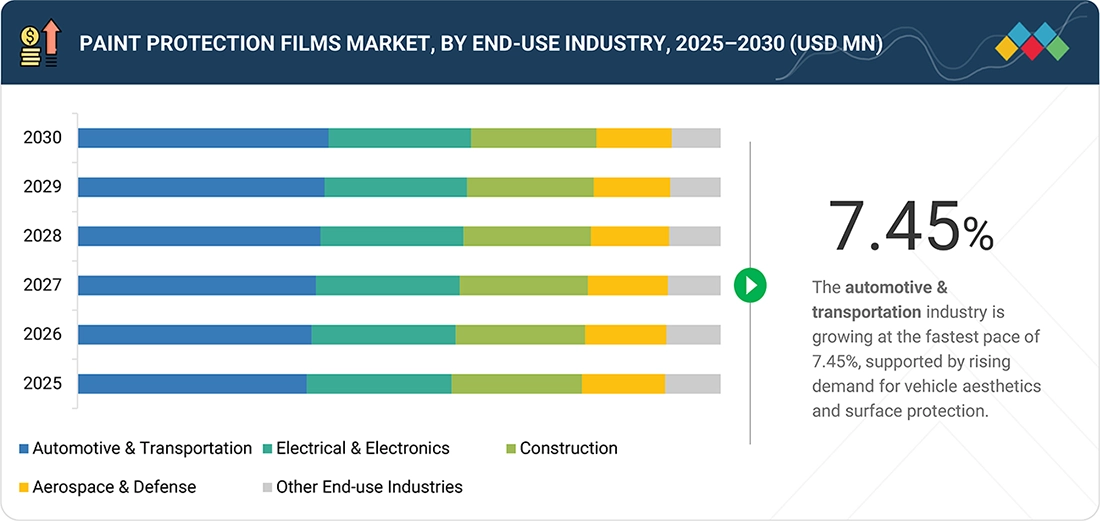
Source: Secondary Research, Interviews with Experts, MarketsandMarkets Analysis
Paint Protection Films Market, By Type
By type, polyvinyl chloride (PVC) is the second-largest segment in the paint protection films (PPF) market and is also growing at the second-fastest pace because of its cost-effective price, simple processing methods, and its ability to deliver sufficient protective performance in medium-range applications. The price-sensitive marketplaces use PVC-based films because customers in these markets value affordable products. The product fails to achieve market leadership because its durability and flexibility performance standards fall short of requirements, and it lacks self-healing capabilities, which TPU films provide.
Paint Protection Films Market, By Finish Type
Gloss finish type creates the biggest market share in paint protection films (PPF) industry as it provides excellent transparency which improves the original paint appearance of vehicles. Gloss finishes serve as the most popular choice because they help maintain factory-like shine and deliver strong protection against scratches and stains and UV damage. Their broad consumer acceptance, affordability, and compatibility with most vehicle types contribute to their dominant market position.
Paint Protection Films Market, By System
The water-based PPF system becomes the second largest market segment due to regulations related to low VOC emissions and customers' demand for eco-friendly products. The water-based systems provide strong bonding capabilities that meet performance standards while ensuring safety for both installation workers and environmental protection. The products face two main issues that restrict their use in premium markets, because their performance and durability do not match solvent-based solutions.
Paint Protection Films Market, By End-use Industry
The construction sector holds the third-largest market share for paint protection films because the construction projects require protective films for application on glass surfaces, metal panels and interior fixtures to safeguard against scratches and stains and environmental damage during construction and postconstruction periods. The demand for the product increases because of ongoing infrastructure development and renovation projects. The market segment maintains a lower market share than automotive and electronics because customers know less about the product, and they use it less.
REGION
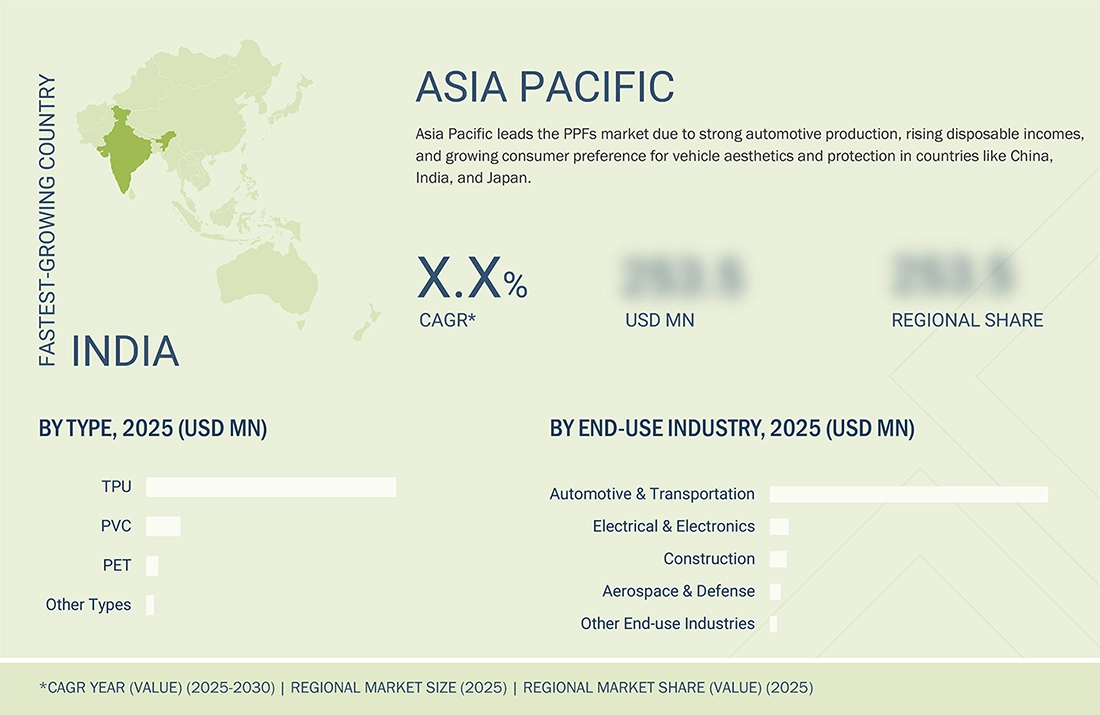
Asia Pacific to be the largest region in the global paint protection films market during the forecast period
The paint protection films (PPFs) market witnesses its strongest growth in Asia Pacific region, which serves as the largest market for this PPF. The market expansion occurs due to the automotive production increases and the development of urban areas, and people in China, India, Japan, and South Korea gain more spending power. The expanding automotive aftermarket services, together with increasing consumer awareness about vehicle aesthetics and protection requirements, drive higher market demand. The large manufacturing presence, in combination with cost benefits, enables Asia Pacific to achieve higher market growth and a larger market size than all other regions.
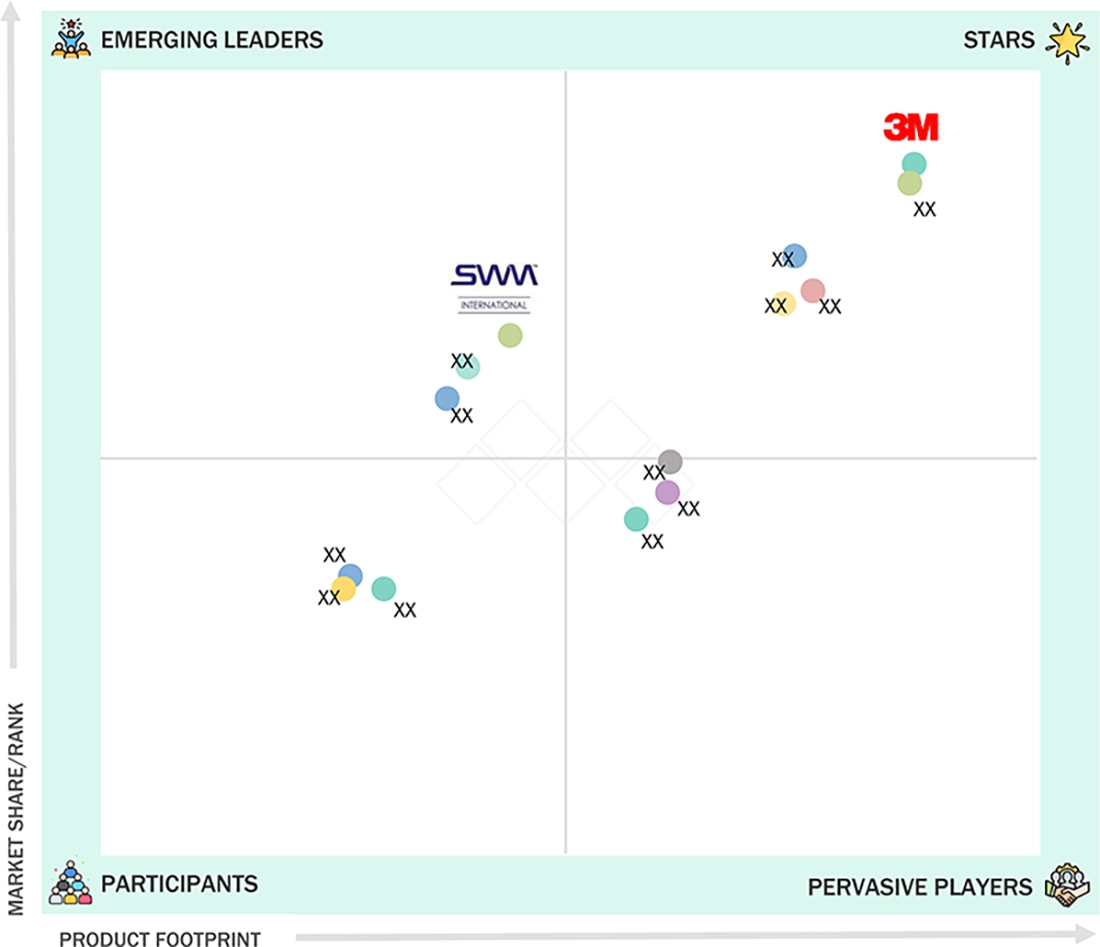
PAINT PROTECTION FILMS MARKET: COMPANY EVALUATION MATRIX
In the paint protection films market matrix, 3M (Star) leads with a strong market share and extensive product footprint, which enables it to serve the most regions in the world. SWM (Emerging Leader) is gaining visibility with its solutions in the paint protection films market, maintaining its position through innovation and niche product offerings. While 3M dominates through scale and a diverse portfolio, SWM shows significant potential to move toward the leaders’ quadrant as demand for paint protection films is rising continuously.
Source: Secondary Research, Interviews with Experts, MarketsandMarkets Analysis
KEY MARKET PLAYERS
MARKET SCOPE
| REPORT METRIC | DETAILS |
|---|---|
| Market Size in 2024 (USD Million) (Base Year) | USD 1,022.5 Million |
| Market Size in 2025 (USD Million) (Estimated Year) | USD 1,092.7 Million |
| Market Forecast in 2030 (USD Million) (Forecast Year) | USD 1,549.4 Million |
| CAGR | CAGR of 7.2% from 2025-2030 |
| Years Considered | 2022–2030 |
| Base Year | 2024 |
| Forecast Period | 2025–2030 |
| Units Considered | Value (USD Million/Billion), Volume (Thousand Square Meters) |
| Report Coverage | Revenue forecast, company ranking, competitive landscape, growth factors, and trends |
| Segments Covered |
|
| Regions Covered | North America, Asia Pacific, Europe, Middle East & Africa, and South America |
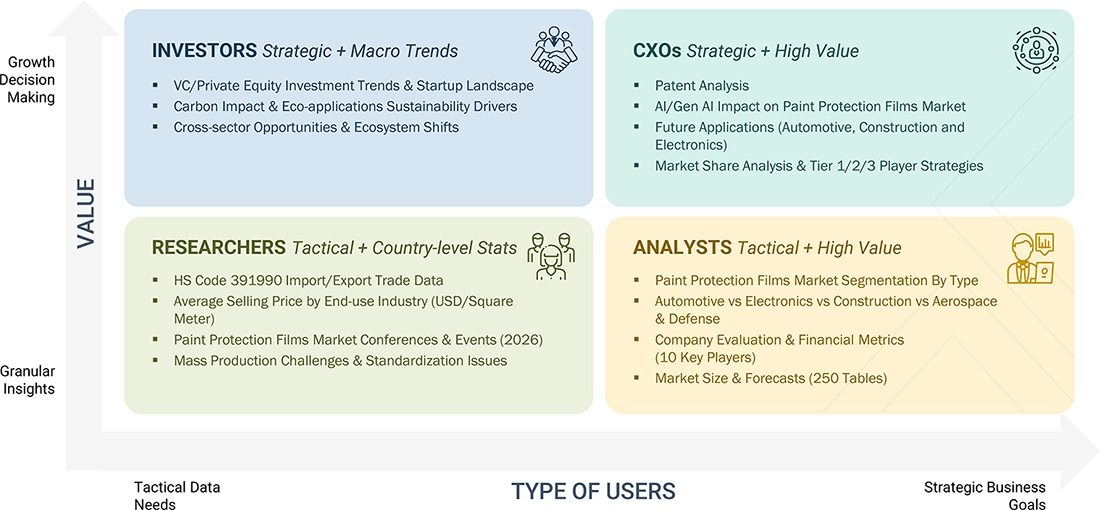
WHAT IS IN IT FOR YOU: PAINT PROTECTION FILMS MARKET REPORT CONTENT GUIDE
DELIVERED CUSTOMIZATIONS
We have successfully delivered the following deep-dive customizations:
| CLIENT REQUEST | CUSTOMIZATION DELIVERED | VALUE ADDS |
|---|---|---|
| Asia Pacific-based paint protection films manufacturer |
|
|
| Europe-based paint protection films manufacturer |
|
|
RECENT DEVELOPMENTS
- October 2025 : 3M partnered with William Smith Group 1832 Ltd. by naming them as the only UK distributor for their two new PPFs, 3M PPF Series 100 Gloss and Series 150 Gloss. This collaboration not only increases product availability for the PPF installers in the UK but also extends 3M footprint in the expanding PPF market.
- September 2025 : XPEL Inc. expanded its global presence by acquiring its exclusive distributor in China, and has become the owner of 76% of the business there. It will also generate a revenue increment of about USD 13 million to USD 18 million. Through this extension, XPEL has taken direct authority over sales and operations in the area, which has empowered the company to better cater to the needs of installers, OEMs, and dealerships. Besides, it has paved the way for XPEL to occupy a more substantial portion of the flourishing PPFs market.
- May 2024 : XPEL Inc. partnered with Tint World, a globally authorized dealer of XPEL products. Through this alliance, a co-branded “Tint World powered by XPEL” product line has been launched, which allows Tint World consumers to experience paint protection films (PPFs) and coatings from XPEL. The company plans to offer training, assistance, and technological innovations to ensure a high-end customer experience and simultaneously expand its international footprint in the PPFs market.
Table of Contents
 Exclusive indicates content/data unique to MarketsandMarkets and not available with any competitors.
Methodology
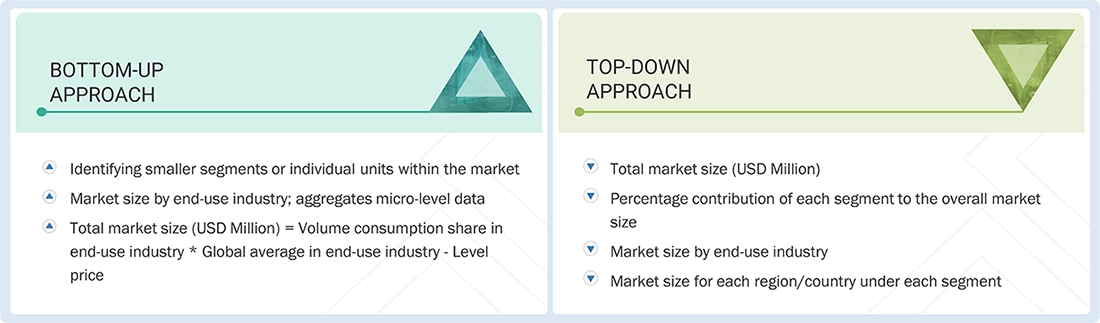
The study involved four major activities in estimating the market size for the paint protection films market. Exhaustive secondary research was done to collect information on the market, the peer market, and the parent market. The next step was to validate these findings, assumptions, and sizing with industry experts across the value chain through primary research. Both top-down and bottom-up approaches were employed to estimate the complete market size. After that, the market breakdown and data triangulation procedures were used to estimate the market size of the segments and subsegments.
Secondary Research
Secondary sources used in this study included annual reports, press releases, and investor presentations of companies; white papers; certified publications; articles from recognized authors; and gold-standard and silver-standard websites, such as Factiva, ICIS, Bloomberg, and others. The findings of this study were verified through primary research, which involved conducting extensive interviews with key officials, including CEOs, VPs, directors, and other executives. The breakdown of profiles of the primary interviewees is illustrated in the figure below.
Primary Research
The paint protection films market comprises several stakeholders, such as raw material suppliers, end-product manufacturers, and regulatory organizations in the supply chain. The demand side of this market is characterized by key opinion leaders in various end-use industries for the paint protection films market. The supply side is characterized by advancements in technology and diverse application industries. Various primary sources from both the supply and demand sides of the market were interviewed to obtain qualitative and quantitative information.
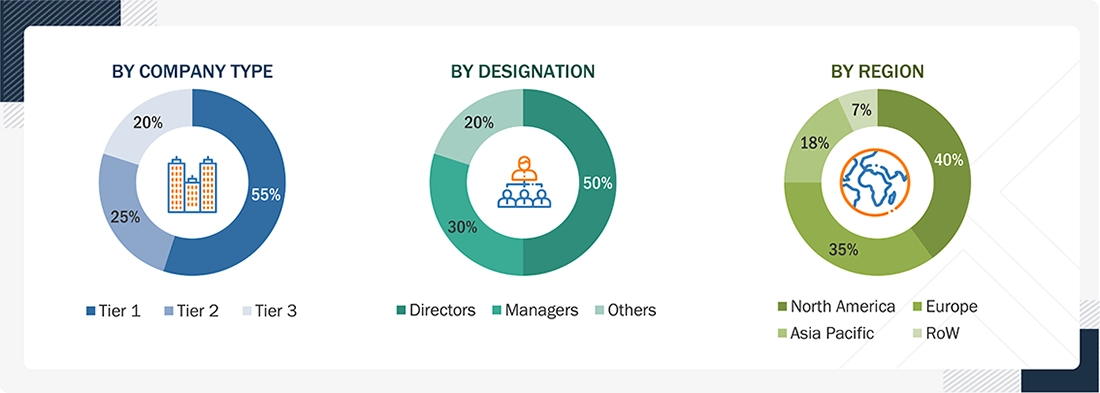
Note: Tier 1, Tier 2, and Tier 3 companies are classified based on their market revenue in 2023/2024, available in the public domain, product portfolios, and geographical presence.
Other designations include consultants and sales, marketing, and procurement managers
|
COMPANY NAME |
DESIGNATION |
|
3M |
Senior Manager |
|
Eastman Chemical Company |
Innovation Manager |
|
XPEL, Inc. |
Vice-President |
|
Lubrizol |
Production Supervisor |
|
Garware Hi-Tech Films |
Sales Manager |
To know about the assumptions considered for the study, download the pdf brochure
Market Size Estimation
Both top-down and bottom-up approaches were used to estimate and validate the total size of the paint protection films market. These methods were also used extensively to estimate the size of various subsegments in the market. The research methodology used to estimate the market size includes the following:
- The key players in the industry have been identified through extensive secondary research.
- The supply chain of the industry has been determined through primary and secondary research.
- All percentage shares, splits, and breakdowns have been determined using secondary sources and verified through primary sources.
- All possible parameters that affect the markets covered in this research study have been accounted for, viewed in extensive detail, verified through primary research, and analyzed to obtain the final quantitative and qualitative data.
Data Triangulation
After determining the overall market size using the market size estimation processes explained above, the market was divided into several segments and subsegments. To complete the overall market engineering process and determine the exact statistics for each market segment and subsegment, data triangulation and market breakdown procedures were employed, as applicable. The data was triangulated by studying various factors and trends from both the demand and supply sides in the paint protection films industry.
Market Definition
According to the paints & coatings industry, paint protection films (PPFs) are transparent, durable thermoplastic films applied to a vehicle’s painted surfaces to protect them from scratches, stone chips, stains, UV radiation, and environmental damage. Typically made from thermoplastic polyurethane (TPU), these films provide a protective barrier while maintaining the vehicle’s original paint finish and often include advanced features such as self-healing and hydrophobic properties.
Key Stakeholders
- Paint protection film manufacturers
- Paint protection film distributors
- Raw material suppliers
- Government and research organizations
- Investment banks and private equity firms
Report Objectives
- To analyze and forecast the size of the global paint protection films market in terms of value and volume
- To provide detailed information about the important drivers, restraints, challenges, and opportunities influencing market growth
- To define, describe, and segment the market based on type, finish type, system, end-use industry, and region
- To forecast the size of the market segments based on regions such as Asia Pacific, North America, Europe, the Middle East & Africa, and South America
- To strategically analyze the segmented markets with respect to individual growth trends, prospects, and contributions to the overall market
- To identify and analyze opportunities for stakeholders in the market
- To analyze competitive developments such as expansions, partnerships & collaborations, mergers & acquisitions, agreements, and product launches in the market
- To strategically profile the key companies and comprehensively analyze their core competencies
Available customizations:
Along with the given market data, MarketsandMarkets offers customizations according to the company’s specific needs. The following customization options are available for the report:
Regional Analysis- Further breakdown of a region with respect to a particular country or additional application
- Detailed analysis and profiles of additional market players (up to five)


Personalize This Research
- Triangulate with your Own Data
- Get Data as per your Format and Definition
- Gain a Deeper Dive on a Specific Application, Geography, Customer or Competitor
- Any level of Personalization
Let Us Help You
- What are the Known and Unknown Adjacencies Impacting the Paint Protection Films Market
- What will your New Revenue Sources be?
- Who will be your Top Customer; what will make them switch?
- Defend your Market Share or Win Competitors
- Get a Scorecard for Target Partners

Custom Market Research Services
We Will Customise The Research For You, In Case The Report Listed Above Does Not Meet With Your Requirements
Get 10% Free CustomisationTESTIMONIALS
We at Nissan Chemicals Corporation have been clients of MarketsandMarkets for more than a year now. We recently consulted MarketsandMarkets for a study, the team at MarketsandMarkets was extremely professional and organized. The business insights were very detailed and aligned well with our expectations that really helped us formulate the Business Plans and device new strategies for development themes. MarketsandMarkets offers a unique combination of expertise and dedicated engagement model. Their research findings have helped us in designing our Pricing Strategy which will make it easier for us to predict the future sales and profits for the next ten years. We look forward to working with MarketsandMarkets in the future.
VP of Strategy & New Business Development
Leading Specialty Chemical Company
The MarketsandMarkets Engagement Model, composed of both the Knowledge Store and advisory custom research, has greatly helped us in understanding our markets and making strategic decisions. The Knowledge Store is a fast way to allow everyone in our organization to understand more about most any market they are interested in. The ability to then get custom research done and get answers to specific strategic questions and market insight has been spectacular. The Markets and Markets team feel more like colleagues than vendors and their services have helped us change our culture where statements of things like growth opportunities and competitive position are always backed by industry research.

Rich Gibson,
Director, Corporate Strategy
Milliken & Company,
Leading Industrial Manufacturer of specialty chemical, floor covering, performance and protective textile materials, and healthcaremilliken.com
MarketsandMarkets is a trusted resource that helps us to better understand markets that are near-adjacencies-whether its technology, value chain or geography. Their Knowledge Store platform provides a dashboard of markets and their characteristics which is easy to use and saves us time.
Adam Shaw,
Market Development and Strategy Manager
AdvanSix Inc. USA,
An American Leader in Chemicalswww.advansix.com
The Knowledge Store from MarketsandMarkets is a valuable tool which has helped my team acquire greater insight in to the end markets that our business serves. This has enabled us to help our company build stronger strategies throughout our planning process.
TOSHIO KINOSHITA
Senior Chif Consultion Research & Consulting Division
Mitsubishi Chemical Research Corporation,
Leading Manufacturer of Chemical Productswww.mitsubishichem-res.co.jp/en/

We recently engaged with MarketsandMarkets for a study, the team not only clearly understood our business objectives but was also extremely professional in the way they handled the entire project. The study was efficiently conducted in a phase-wise manner, and the engagement model furnished us with high-quality business insights that far exceeded our expectations at each phase. We were especially happy that MarketsandMarkets could provide us with both, an English as well as a Japanese version of the study. A special thanks to the Analyst Team and Client Services Team, whose fluency in Japanese enhanced our comfort level, as we could converse with them in our preferred language.
Independent entrepreneurs
Arrow Precision
We approached MarketsandMarkets for study on Proppants Market, and their work exceeded our expectations. The study conducted was comprehensive and enabled us to view the market through the various dimensions. In addition, the team was extraordinarily responsive throughout the process and resolved our queries on time. I strongly recommend MarketsandMarkets and will certainly consider them for additional market assessments we will need in the future.
Global engineering company, Japan
Deputy Manager,
Strategic Planning OfficeThe high-quality insights shared by the MarketsandMarkets team helped us understand the pharmaceutical plant designers in a specific geography. It also captured the risks that we may likely face in communicating with our potential partners. The study would enable us identify partners, which would impact our future growth.
- US Paint Protection Films Market
- Canada Paint Protection Films Market
- Mexico Paint Protection Films Market
- Germany Paint Protection Films Market
- UK Paint Protection Films Market
- France Paint Protection Films Market
- Italy Paint Protection Films Market
- Spain Paint Protection Films Market
- China Paint Protection Films Market
- Japan Paint Protection Films Market
- India Paint Protection Films Market
- South Korea Paint Protection Films Market
- South Africa Paint Protection Films Market
- Brazil Paint Protection Films Market
- Argentina Paint Protection Films Market
- Rest Of Europe Paint Protection Films Market
- Rest Of Asia Pacific Paint Protection Films Market






Growth opportunities and latent adjacency in Paint Protection Films Market