Ambient Assisted Living and Smart Home Market by Product, Services, Assisted Living, Product (Safety & Security, Communication, Medical Assistive, Mobility, Telemonitoring, Compensatory Impairment) and Region - Global Growth Driver and Industry Forecast to 2035


Ambient Assisted Living and Smart Home Market Summary
The global Ambient Assisted Living and Smart Home Market is undergoing rapid transformation as aging populations, connected-home adoption, healthcare digitization, and demand for independent living converge. The market is estimated at approximately USD 130-140 billion in 2024-2025 and is projected to reach approximately USD 600-700 billion by 2030-2035, representing a high-growth trajectory of roughly 25-30% CAGR over the forecast period.
The market combines smart home products and ambient assisted living technologies, including connected lighting, smart HVAC, security and access systems, home automation platforms, remote monitoring, telecare, assistive devices, medication-support systems, fall detection, and connected healthcare technologies. Growth is being accelerated by the global shift toward aging in place, increasing healthcare costs, caregiver shortages, connected-device penetration, broadband availability, and advances in artificial intelligence, IoT, cloud computing, and edge analytics. The convergence of consumer smart-home ecosystems with healthcare-oriented ambient intelligence is creating a larger addressable market in which homes increasingly function as connected, responsive, and data-enabled living environments.
AI is becoming particularly important because it allows smart-home systems to move beyond simple command-based automation toward predictive and context-aware assistance. Sensors can identify occupancy patterns, changes in activity, abnormal behavior, energy consumption, or potential safety events, while AI models can determine when an intervention or notification may be appropriate. IoT provides the connectivity layer, while automation converts analyzed information into actions such as adjusting lighting, controlling temperature, locking doors, or alerting caregivers. This combination is positioning the Ambient Assisted Living and Smart Home Market as an important component of the broader digital transformation of residential and care environments.
Key Market Trends & Insights
The leading region is North America, which accounted for approximately 33.1% of global market revenue in 2024 according to Grand View Research. Strong smart-home penetration, high technology spending, advanced healthcare infrastructure, aging demographics, and demand for connected security and energy-management solutions support the region's leadership.
Asia Pacific is expected to be the fastest-growing major region. Grand View Research estimates that the Asia Pacific market could expand at approximately 32.9% CAGR from 2025 to 2030. Rapid urbanization, expanding middle-class purchasing power, smart-city development, electronics manufacturing capabilities, and rapidly aging populations in countries including Japan and China are supporting adoption.
Smart home products represent the dominant product category. Connected security, HVAC control, lighting, energy management, entertainment, and home networking systems have a broader consumer addressable base than specialized assisted-living solutions. Europe also identifies smart home products as its largest revenue-generating type segment.
AI-powered ambient intelligence is changing the competitive landscape. Systems are increasingly incorporating machine learning, computer vision, voice interfaces, behavioral analytics, and anomaly detection to deliver more personalized assistance.
Aging in place is becoming a structural demand driver. Families, caregivers, healthcare providers, and governments are seeking ways to allow older adults to remain independent while maintaining safety and access to remote support. Technology adoption is already visible across Asia, where motion sensors, GPS devices, cameras, smart speakers, and other systems are being deployed to support older populations.
Energy efficiency and sustainability are becoming closely linked with assisted living. Smart thermostats, occupancy sensors, connected appliances, automated lighting, and AI-based building controls can simultaneously improve comfort, reduce energy use, and support independent living.
Market Size & Forecast
- Base year market size: Approximately USD 130-140 billion in 2024-2025; one established market estimate values the 2024 market at about USD 132.1 billion.
- Forecast value by 2030-2035: Approximately USD 600-700 billion, supported by strong adoption of connected-home products and ambient assisted living services.
- CAGR: Approximately 25-30%, with the latest Grand View Research estimate indicating 29.7% CAGR for 2025-2030.
- Growth factors: Aging populations, aging-in-place preferences, IoT connectivity, AI-enabled monitoring, smart-home adoption, healthcare digitization, energy-management requirements, and increasing demand for automated residential environments are expected to sustain expansion.
Ambient Assisted Living and Smart Home Market Top 10 key takeaway
- The global Ambient Assisted Living and Smart Home Market is estimated at approximately USD 130-140 billion around the 2024-2025 base period.
- The market is projected to reach approximately USD 600-700 billion by 2030-2035 under a high-growth adoption scenario.
- The market is expected to expand at approximately 25-30% CAGR.
- North America currently represents the leading regional market.
- Asia Pacific is expected to record the fastest growth among major regions.
- Smart home products represent the largest product category across the combined market.
- AI is shifting smart-home systems from reactive automation toward predictive and personalized assistance.
- IoT sensors, cloud platforms, edge computing, and connected devices are central to ambient assisted living architectures.
- Aging in place and caregiver-support requirements are creating long-term demand for remote monitoring and assistive technologies.
- Privacy, cybersecurity, interoperability, affordability, and ease of use will remain critical factors influencing adoption.
Product Insights
The smart home products segment represents the largest component of the Ambient Assisted Living and Smart Home Market because smart-home technologies address both everyday consumer requirements and assisted-living needs. Smart security and access control, connected lighting, HVAC controls, smart appliances, energy-management systems, entertainment controls, and home networking equipment have moved from niche products toward mainstream connected-home infrastructure. Grand View Research identifies smart home products as the largest revenue-generating type segment in Europe and as a major category in the global market.
Security and access-control products are particularly important because they offer direct, easily understood benefits. Connected door locks, cameras, motion sensors, video doorbells, intrusion detection, and emergency-alert systems can improve household safety while also supporting remote supervision. For older adults living alone, these technologies can create an additional layer of protection without requiring constant physical supervision.
Energy-management products are another important category. Smart thermostats, connected meters, occupancy sensors, automated blinds, and intelligent lighting can adapt the home environment to actual occupancy and user preferences. These capabilities are increasingly relevant as energy costs and sustainability targets influence consumer and property-management decisions.
Ambient assisted living products represent a more specialized but rapidly developing category. These include fall-detection systems, wearable devices, medication reminders, emergency communication systems, remote vital-sign monitoring, mobility-support technologies, and sensors that identify deviations from normal routines. The underlying objective is to support independent living while reducing caregiver burden.
The next generation of products will increasingly combine multiple functions. A smart speaker may provide voice control while also serving as an emergency communication interface. A lighting system can become a fall-risk mitigation tool. A home sensor network can monitor occupancy, temperature, movement, and behavioral patterns. This convergence will increase the strategic value of AI-enabled platforms that can interpret data across multiple device categories rather than treating every device as an isolated endpoint.
Technology / Component Insights (Rename based on keyword if needed)
The technology foundation of the Ambient Assisted Living and Smart Home Market consists of IoT sensors, wireless connectivity, cloud platforms, edge computing, AI, automation engines, voice interfaces, computer vision, and integrated home-control platforms. IoT enables devices and sensors to communicate continuously, creating the data infrastructure required for context-aware services.
AI represents the most important technology shift. Traditional smart-home systems generally respond to predetermined commands, schedules, or sensor thresholds. AI-enabled platforms can analyze historical behavior and contextual information to predict what may happen next. In an assisted-living environment, this could mean recognizing an unusual change in movement patterns, identifying a potential fall, detecting prolonged inactivity, or notifying a caregiver when a routine changes significantly.
Edge computing is becoming important where privacy, latency, and reliability are critical. Processing selected data locally can reduce dependence on cloud connectivity and allow systems to respond quickly to safety events. This is particularly relevant for cameras, motion sensors, voice interfaces, and health-related monitoring.
Cloud technology remains important for remote access, data storage, analytics, software updates, and coordination among family members, caregivers, service providers, and devices. Hybrid architectures combining cloud analytics with edge processing are expected to become increasingly common.
Automation is the mechanism that turns intelligence into practical outcomes. Smart homes can automatically adjust HVAC systems, lighting, security settings, appliances, and access controls based on occupancy and user preferences. Johnson Controls, for example, describes AI-powered building platforms that integrate building data, occupancy sensors, energy systems, and automated optimization, demonstrating the broader movement toward autonomous environments.
Future innovation will focus on multimodal AI, privacy-preserving analytics, interoperability, natural-language interfaces, digital twins, predictive maintenance, and personalized automation. The most successful platforms are likely to combine healthcare-support functions with mainstream smart-home capabilities without making the technology difficult for older users to operate.
Application Insights
The leading applications span safety and security, energy management, communication, healthcare assistance, telemonitoring, mobility support, home automation, and consumer convenience. Safety and security have strong adoption potential because they provide immediate value through emergency alerts, access control, surveillance, fall detection, and abnormal-activity monitoring.
Healthcare and telemonitoring represent one of the most strategically important growth areas. Connected devices can collect information from the home and make it available to authorized caregivers or healthcare professionals. Research into intelligent ambient assisted living has highlighted the potential of machine learning and multimodal sensor data to support personalized care management and independent living.
Energy management is another major application because smart-home automation can reduce unnecessary consumption while maintaining comfort. Occupancy-based controls can automatically adjust temperature and lighting, while AI-enabled platforms can identify inefficient equipment behavior or changing consumption patterns.
The future opportunity lies in integrated applications rather than isolated devices. A connected home can simultaneously support safety, health, energy efficiency, mobility, and entertainment. For example, an occupancy sensor can contribute to both energy optimization and fall-risk monitoring, while a voice assistant can provide home control and emergency communication.
Commercial and institutional applications are also expanding. Senior living facilities, assisted-living communities, hospitals, hospitality properties, and multifamily housing can use connected building systems to improve operational efficiency and occupant experience. Siemens, for example, offers occupancy-sensing automation technology applicable to senior living and managed residential environments.
Regional Insights
North America leads the Ambient Assisted Living and Smart Home Market because of high smart-device penetration, established technology infrastructure, mature healthcare systems, and strong consumer willingness to invest in connected-home products. The region also has a substantial senior population and growing demand for aging-in-place solutions. The United States represents the largest opportunity, while Canada offers additional potential through healthcare digitization and connected-home adoption.
Europe is a major market driven by aging demographics, energy-efficiency objectives, smart-building initiatives, and public and private interest in independent living. Germany, France, the United Kingdom, the Nordic countries, and other technologically advanced economies are developing ecosystems that connect smart buildings, healthcare, home automation, and social-care services. Europe generated approximately USD 34.6 billion in 2024 within the combined market and is projected to grow at approximately 30% CAGR through 2030 in Grand View Research's regional assessment.
Asia Pacific is the fastest-growing region, supported by a combination of demographic change and technology manufacturing strength. Japan has one of the world's oldest populations and has invested in robotics and technology-assisted care, while China is rapidly expanding smart-home and connected-device ecosystems. Asia Pacific's combined market was estimated at approximately USD 25.8 billion in 2024 and is projected to reach roughly USD 138.5 billion by 2030 at about 33% CAGR in the regional assessment.
- North America: Maintains the leading position due to smart-home maturity and healthcare technology adoption.
- Europe: Benefits from aging demographics, energy-efficiency requirements, and smart-building initiatives.
- Asia Pacific: Represents the fastest-growing major regional opportunity.
- China and Japan: Are central to APAC growth because of smart-home adoption and aging-related technology demand.
- Regional convergence: Healthcare, home automation, IoT, and AI are increasingly being integrated into unified platforms.
[Country]-Specific Market Trends
In APAC, China is estimated to record approximately 30-35% CAGR, while Japan is expected to grow at approximately 25-30% CAGR during the forecast period. China's smart-home market benefits from strong consumer electronics manufacturing, urbanization, connected-device adoption, and government emphasis on digital infrastructure. Smart appliances, security systems, connected lighting, and AI-enabled home platforms are increasingly integrated into residential environments. Japan has a particularly strong opportunity in ambient assisted living because of its aging demographic, caregiver constraints, and established robotics ecosystem. Technology-supported elder care is already being explored and deployed across Japan and neighboring Asian economies.
In North America, the United States is expected to expand at approximately 25-30% CAGR, Canada at approximately 23-28%, and Mexico at approximately 22-27%. The U.S. market is supported by high adoption of connected security, smart speakers, home automation, remote monitoring, and healthcare technology. Canada benefits from aging-in-place initiatives and connected-care demand, while Mexico offers opportunities as residential construction, telecommunications connectivity, and smart-home adoption develop.
In Europe, Germany is estimated to grow at approximately 27-31% CAGR, while France is expected to record approximately 25-29% CAGR. Germany's aging population, industrial technology capabilities, energy-management priorities, and smart-building investment create strong demand. France benefits from healthcare digitization, connected-home deployment, energy efficiency, and increasing interest in independent living.
Across these countries, government initiatives can accelerate adoption through healthcare digitization, smart-city investment, energy-efficiency programs, aging-related social policy, and digital infrastructure development. However, privacy and cybersecurity requirements remain particularly important where systems process health or behavioral data.
- China: Rapid smart-home penetration and digital infrastructure support strong growth.
- Japan: Aging demographics and caregiver shortages make assisted-living technologies strategically important.
- United States: Strong consumer adoption and advanced healthcare technology drive broad market demand.
- Germany: Energy management, smart buildings, and aging-in-place applications support expansion.
- France: Healthcare digitization and residential automation provide diversified growth opportunities.
Key Ambient Assisted Living and Smart Home Company Insights
The competitive environment includes Johnson Controls, Siemens, Honeywell International, Schneider Electric, ABB, Koninklijke Philips, Tunstall Healthcare, Televic, Loxone, and Caretech Group, alongside numerous smart-home platform providers, medical-technology companies, telecommunications operators, and specialized assisted-living technology developers. Grand View Research identifies companies including Johnson Controls, Kohler, Philips, Siemens, Medic4all, GETEMED, Televic, Loxone, EnOcean Alliance, and Caretech Group among participants in the broader market.
Johnson Controls is increasingly emphasizing AI-powered building intelligence, automated optimization, occupancy data, and connected building systems. Its EasyIO solutions also address elderly-home environments through environmental monitoring, security, room management, automated routines, and predictive maintenance.
Honeywell is pursuing an AI-centered building-management strategy. In 2025, the company announced Honeywell Connected Solutions, an AI-powered platform designed to integrate building software and technologies through a unified interface. Siemens combines automation and connected-device capabilities, including occupancy-based smart thermostats and sensors suitable for senior living and managed residential environments.
Philips is positioned around healthcare, connected care, and aging-related technology, while Schneider Electric and ABB bring expertise in energy management, building automation, and connected electrical infrastructure. Specialized providers such as Tunstall Healthcare and Televic focus more directly on care communication, monitoring, and assisted-living environments.
- Johnson Controls: Focuses on AI-powered building intelligence, automation, energy optimization, and elderly-home environments.
- Honeywell: Emphasizes unified AI-enabled building management and automated operations.
- Siemens: Combines building automation, occupancy sensing, connectivity, and energy management.
- Philips: Concentrates on connected healthcare, aging well, and remote-care ecosystems.
- Specialized care providers: Tunstall, Televic, and similar companies focus on communication, monitoring, and assisted-living solutions.
Recent Developments
One major development trend is the introduction of AI-powered building and home-management platforms capable of interpreting large volumes of sensor and occupancy data. In 2025, Johnson Controls expanded its OpenBlue ecosystem with AI-driven capabilities designed to provide natural-language access to building data, identify anomalies, and automate optimization activities.
A second development is the acceleration of AI-enabled building-management solutions from established automation companies. Honeywell introduced its Connected Solutions platform in 2025, combining building technologies and software through an integrated AI-enabled interface, illustrating how the smart-home and smart-building industries are moving toward unified digital platforms.
A third development is the increased use of privacy-conscious monitoring and multimodal sensing for older adults. Researchers and technology providers are exploring systems that combine motion, environmental, wearable, and behavioral data to identify changes while reducing reliance on intrusive monitoring. This trend is particularly relevant as privacy concerns become more prominent in AI-enabled assisted living.
Market Segmentation
The Ambient Assisted Living and Smart Home Market can be segmented By Product into smart home products and ambient assisted living products. Smart home products include security and access control, energy-management systems, HVAC controls, lighting, entertainment systems, connected appliances, and home networking. Ambient assisted living includes monitoring systems, emergency communication, mobility support, telemonitoring, medication assistance, and technologies designed to support independent living. Grand View Research uses smart home products and ambient assisted living as the principal type segmentation.
By Technology / Component, the market includes sensors, cameras, connected appliances, smart controllers, gateways, communication modules, cloud platforms, edge-computing devices, AI software, voice interfaces, and automation systems. Wireless protocols, IoT platforms, interoperability standards, and cybersecurity technologies are becoming increasingly important as homes incorporate larger numbers of connected endpoints.
By Application, the market encompasses safety and security, communication, healthcare assistance, telemonitoring, mobility, energy management, entertainment, consumer electronics, and general household automation. Applications can also be categorized across residential, senior-living, healthcare, hospitality, and other managed environments.
By Region, the market covers North America, Europe, Asia Pacific, Latin America, and the Middle East & Africa. North America currently leads, Europe remains a high-value technology market, and Asia Pacific is expected to achieve the fastest growth through the forecast period.
- By Product: Smart home products currently represent the dominant category.
- By Technology: IoT sensors, AI, cloud, edge computing, connectivity, and automation are core enabling technologies.
- By Application: Security, energy management, healthcare assistance, and remote monitoring are key opportunities.
- By End Environment: Residential homes, senior living, healthcare facilities, and managed properties are important demand centers.
- By Region: North America leads while Asia Pacific offers the strongest growth potential.
Conclusion
The global Ambient Assisted Living and Smart Home Market is transitioning from a collection of connected consumer devices into an integrated digital ecosystem capable of supporting safety, health, comfort, energy efficiency, and independent living. With the market estimated at approximately USD 130-140 billion around 2024-2025, the opportunity could expand to approximately USD 600-700 billion by 2030-2035, supported by a projected 25-30% CAGR under current high-growth market assumptions.
AI will be one of the defining technologies through the forecast period. Instead of simply responding to commands, intelligent home systems will increasingly learn household patterns, identify anomalies, predict needs, and coordinate multiple devices. IoT will provide continuous connectivity, while edge computing will enable faster and more privacy-conscious processing. Automation will translate intelligence into actions, creating homes that can dynamically adapt to occupants.
The aging population represents an especially durable opportunity. As more older adults seek to remain in familiar homes, families and care providers will require affordable technologies that provide reassurance without compromising autonomy. However, successful adoption will depend on designing systems that are intuitive, discreet, interoperable, secure, and respectful of privacy. Technology that feels like surveillance rather than assistance could encounter resistance, particularly among older users.
Through 2030-2035, the strategic opportunity will increasingly lie in platform integration rather than individual devices. Companies able to combine smart-home automation, AI analytics, healthcare-support functions, cybersecurity, energy management, and user-friendly interfaces will be better positioned to capture the next phase of market growth. For businesses, investors, healthcare organizations, property developers, and technology providers, the Ambient Assisted Living and Smart Home Market therefore represents a convergence opportunity across digital health, IoT, home automation, AI, and aging-in-place infrastructure.
FAQs
1. What is the market size of the Ambient Assisted Living and Smart Home Market?
The global Ambient Assisted Living and Smart Home Market is estimated at approximately USD 130-140 billion around the 2024-2025 base period. Grand View Research valued the market at approximately USD 132.1 billion in 2024.
2. What is the growth rate of the Ambient Assisted Living and Smart Home Market?
The market is expected to grow at approximately 25-30% CAGR during the forecast period. Grand View Research estimates a CAGR of approximately 29.7% from 2025 to 2030.
3. What are the key drivers of the Ambient Assisted Living and Smart Home Market?
Major drivers include aging populations, aging-in-place preferences, increasing caregiver requirements, smart-home adoption, IoT connectivity, AI-enabled monitoring, healthcare digitization, energy-efficiency requirements, home automation, and improvements in cloud and edge computing.
4. Which region leads the Ambient Assisted Living and Smart Home Market?
North America currently leads the global market, supported by advanced smart-home infrastructure, healthcare technology adoption, and strong consumer demand. Asia Pacific is expected to be the fastest-growing major region, with its regional market estimated to grow at approximately 33% CAGR through 2030.
5. Who are the key companies in the Ambient Assisted Living and Smart Home Market?
Major participants include Johnson Controls, Siemens, Honeywell, Schneider Electric, ABB, Koninklijke Philips, Tunstall Healthcare, Televic, Loxone, and Caretech Group. Companies are increasingly differentiating through AI, IoT connectivity, automation, energy management, remote monitoring, and integrated digital platforms.
To speak to our analyst for a discussion on the above findings, click Speak to Analyst
 Exclusive indicates content/data unique to MarketsandMarkets and not available with any competitors.
Table of Contents
1 Introduction (Page No. - 15)
1.1 Objectives of the Study
1.2 Market Definition
1.3 Study Scope
1.3.1 Markets Covered
1.4 Year
1.5 Currency
1.6 Limitation
1.7 Stakeholders
2 Research Methodology (Page No. - 19)
2.1 Research Data
2.1.1 Secondary Data
2.1.1.1 Key Data From Secondary Sources
2.1.2 Primary Data
2.1.2.1 Key Data From Primary Sources
2.1.2.2 Breakdown of Primary Interviews: By Company Type, Designation, and Region
2.1.2.3 Key Industry Insights
2.2 Market Breakdown and Data Traingulation
2.3 Report Assumptions
3 Executive Summary (Page No. - 26)
4 Premium Insights (Page No. - 33)
4.1 Smart Home Market to Grow at A Significant Rate During the Forecast Period
4.2 Market Opportunities in Market
4.3 Market, By Product
4.4 Market , By Product
4.5 Regional and Product Snapshot of the Smart Home Market
4.6 Regional and Product Snapshot of Ambient Assisted Living Market
4.7 Market Regional Snapshot (2015)
4.8 Ambient Assisted Living Market Regional Snapshot (2015)
5 Market Overview (Page No. - 39)
5.1 Introduction
5.2 Market Segmentation
5.2.1 Smart Home Market, By Product
5.2.2 Market, By Protocol & Technology
5.2.3 Ambient Assisted Living Market, By Product
5.2.4 Market, By Service
5.2.5 Market, By Geography
5.2.5.1 Market, By Geography
5.2.5.2 Ambient Assisted Living Market, By Geography
5.3 Smart Home Protocols & Standards
5.3.1 Digital Addressable Lighting Interface
5.3.2 KNX
5.3.3 Lonworks
5.3.4 Modbus
5.3.5 National Electrical Manufacturers Association’s Digitial Lighting Controls Open Protocol
5.3.6 Power Line Communication
5.3.7 X10
5.4 Cellular Network Technologies
5.4.1 Cdma Networks
5.4.2 GSM/HSPA Networks
5.4.3 LTE
5.5 Smart Home Wireless Communication Technologies
5.5.1 Bluetooth
5.5.2 Enocean
5.5.3 Infrared
5.5.4 Wi-Fi
5.5.5 Zigbee
5.5.6 Z-Wave
5.6 Market Dynamics
5.6.1 Drivers
5.6.1.1 Increased Security & Safety Concerns Fuel the Growth of the Smart Home and AAL Market
5.6.1.2 Rising Demand for Energy-Saving and Low-Carbon Emission-Oriented Solutions Drives the Need for Smart Homes
5.6.1.3 Growing Aging Population and Rising Demands for Managed Cares are Among the Major Factors Driving the AAL Market
5.6.1.4 Interplay of Wireless Technology, Mobility, IoT, and Digital Living Drive the Smart Home and AAL Markets
5.6.2 Restraints
5.6.2.1 Huge Requirement of Capital Investment and Significant Maintenance Costs Restrain the Growth of the Smart Home Market
5.6.2.2 Inability of AAL Devices to Reach Aged People Living in Small Towns Or Villages
5.6.3 Opportunities
5.6.3.1 Accelerated Growth in Smart-Home Centric Wireless Protocols to Provide Opportunity in the Smart Home Market
5.6.3.2 Increased Number of Activities of Ambient Assisted Living Joint Programme and Participation of Major Players Between 2008 and 2013
5.6.4 Challenges
5.6.4.1 Network Security Concerns Pertaining to Wireless Protocols
6 Industry Trends (Page No. - 57)
6.1 Introduction
6.2 Value Chain Analysis
6.2.1 Key Influencers
6.3 Porter’s Five Forces Analysis for Market
6.3.1 Bargaining Power of Suppliers
6.3.2 Bargaining Power of Buyers
6.3.3 Threat of Substitutes
6.3.4 Threat of New Entrants
6.3.5 Competitive Rivalry
7 Smart Home Market, By Product (Page No. - 66)
7.1 Introduction
7.2 Energy Management System
7.2.1 Smart Devices
7.2.2 Lighting Control
7.3 Security & Access Control
7.3.1 Security Control
7.3.2 Access Control
7.4 HVAC Control
7.4.1 Thermostats
7.4.2 Climate Controls
7.4.3 Temperature Sensors
7.4.4 Humidity Sensors
7.4.5 Others
7.5 Entertainment Control
7.5.1 Audio Controller
7.5.2 Multimedia Room Control
7.5.3 Home Theatre System Control
7.5.4 Touch Screen & Keypad
7.6 Others
8 Ambient Assisted Living Market, By Product (Page No. - 84)
8.1 Introduction
8.2 Safety & Security
8.3 Communication
8.4 Medical Assistive
8.5 Mobility
8.6 Telemonitoring/Telemedicine
8.7 Compensatory Impairment
8.8 Consumer Electronics/Multimedia
8.9 Others
9 Smart Home Market, By Service (Page No. - 96)
9.1 Introduction
9.2 Installation & Repair Services
9.3 Customization & Renovation
10 Smart Home & Ambient Assisted Living Market, By Geography (Page No. - 100)
10.1 Introduction
10.2 North America
10.2.1 U.S.
10.2.2 Canada
10.2.3 Mexico
10.3 Europe
10.3.1 Germany
10.3.2 U.K.
10.3.3 France
10.3.4 Scandinavia
10.3.5 Italy
10.3.6 Spain
10.3.7 Rest of Europe
10.4 Asia-Pacific
10.4.1 China
10.4.2 Japan
10.4.3 India
10.4.4 Australia
10.4.5 Rest of Asia-Pacific (RoAPAC)
10.5 Rest of the World
10.5.1 Latin & Central America
10.5.2 Middle East & Africa
11 Competitive Landscape (Page No. - 147)
11.1 Overview
11.2 Market Players Ranking Analysis of the Smart Home and Ambient Assisted Living Market
11.3 New Product Launches
11.4 Collaborations, Agreements, and Partnerships
11.5 Expansions
11.6 Mergers and Acquisitions
12 Company Profiles (Page No. - 153)
(Overview, Products and Services, Financials, Strategy & Development)*
12.1 Introduction
12.2 Schneider Electric S.E.
12.3 Ingersoll-Rand PLC
12.4 Legrand SA
12.5 Siemens AG
12.6 ABB Group
12.7 Honeywell International, Inc.
12.8 Tunstall Healthcare Ltd.
12.9 Koninklijke Philips N.V.
12.10 Chubb Community Care
12.11 Caretech Ab
12.12 Assisted Living Technologies, Inc.
12.13 Getemed Medizin- Und Informationstechnik AG
12.14 Medic4all Group
12.15 Telbios
12.16 Televic N.V.
12.17 Vitaphone GmbH
*Details on Overview, Products and Services, Financials, Strategy & Development Might Not Be Captured in Case of Unlisted Companies.
13 Appendix (Page No. - 191)
13.1 Insights From Industry Experts
13.2 Discussion Guide
13.3 Introducing RT: Real-Time Market Intelligence
13.4 Available Customization
13.5 Related Reports
List of Tables (80 Tables)
Table 1 Currency Table
Table 2 Smart Home Market By Product
Table 3 Market By Protocols and Technology
Table 4 Ambietn Assisted Living Market By Product
Table 5 Market By Services
Table 6 Average Energy Saving Potential From Lighting Controls
Table 7 Typical Smart Home Solution
Table 8 Market Size, By Product, 2013–2020 (USD Billion)
Table 9 Energy Management System: Smart Home Market Size, By Product, 2013–2020 (USD Billion)
Table 10 Energy Management System: Smart Home Market Size, By Region, 2014–2020 (USD Billion)
Table 11 Smart Device Market Size, By Region, 2013–2020 (USD Billion)
Table 12 Lighting Control: Smart Home Market Size, By Product, 2013–2020 (USD Billion)
Table 13 Lighting Control: Market Size, By Region, 2013–2020 (USD Billion)
Table 14 Security & Access Control: Market Size, By Product, 2013–2020 (USD Billion)
Table 15 Security & Access Control: Market Size, By Geography, 2013–2020 (USD Billion)
Table 16 Security Control: Smart Home Market Size, By Region, 2013–2020 (USD Billion)
Table 17 Access Control: Smart Home Market Size, By Region, 2013–2020 (USD Billion)
Table 18 HVAC Control: Market Size, By Product, 2013–2020 (USD Billion)
Table 19 HVAC Control: Smart Home Market Size, By Region, 2013–2020 (USD Billion)
Table 20 Entertainment Control: Smart Home Market Size, By Product, 2013–2020 (USD Billion)
Table 21 Entertainment Control: Market Size, By Geography, 2013–2020 (USD Billion)
Table 22 Others: Smart Home Market Size, By Region, 2013–2020 (USD Billion)
Table 23 Ambient Assisted Living Market Size, By Product, 2013–2020 (USD Million)
Table 24 Safety & Security: AAL Market, By Region, 2013–2020 (USD Million)
Table 25 Communication : AAL Market Size, By Region, 2013–2020 (USD Million)
Table 26 Medical Assistive: AAL Market Size, By Region, 2013–2020 (USD Million)
Table 27 Mobility: AAL Market Size, By Region, 2013–2020 (USD Million)
Table 28 Telemonitoring/Telemedicine: AAL Market Size, By Region, 2013–2020 (USD Million)
Table 29 Compensatory Impairment: AAL Market Size, By Region, 2013–2020 (USD Million)
Table 30 Consumer Electronics/Multimedia: AAL Market Size, By Region, 2013–2020 (USD Million)
Table 31 Others: AAL Market, By Region, 2013–2020 (USD Million)
Table 32 Smart Home Market, By Service, 2013–2020 (USD Billion)
Table 33 Smart Home Services Market, By Region, 2013–2020 (USD Million)
Table 34 Market Size, By Region, 2013–2020 (USD Billion)
Table 35 Living Market Size, By Region, 2013–2020 (USD Billion)
Table 36 North America: Smart Home Market Size, By Product, 2013–2020 (USD Billion)
Table 37 North America: Energy Management System Market Size, By Product, 2013–2020 (USD Billion)
Table 38 North America: Security & Access Control Market Size, By Product, 2013–2020 (USD Billion)
Table 39 North America: Smart Home Market Size, By Country 2013–2020 (USD Billion)
Table 40 North America: Ambient Assisted Living Market Size, By Product, 2013–2020 (USD Million)
Table 41 North America: Ambient Assisted Living Market Size, By Country, 2013–2020 (USD Million)
Table 42 U.S.: Ambient Assisted Living Market Size, By Product, 2013–2020 (USD Million)
Table 43 Canada: Living Market Size, By Product, 2013–2020 (USD Million)
Table 44 Mexico: Market Size, By Product, 2013–2020 (USD Million)
Table 45 Europe: Market Size By Product, 2013–2020 (USD Billion)
Table 46 Europe: Smart Home Energy Management System Market Size, By Product, 2013–2020 (USD Billion)
Table 47 Europe: Smart Home Security & Access Control Market Size, By Product, 2013–2020 (USD Billion)
Table 48 Europe: Market Size, By Country, 2013–2020 (USD Billion)
Table 49 Europe: Ambient Assisted Living Market Size, By Product, 2013–2020 (USD Million)
Table 50 Europe: Market Size, By Geography, 2013–2020 (USD Million)
Table 51 Germany: Ambient Assisted Living Market Size, By Product, 2013–2020 (USD Million)
Table 52 U.K.: Ambient Assisted Living Market Size, By Product, 2013–2020 (USD Million)
Table 53 France: Market Size, By Product, 2013–2020 (USD Million)
Table 54 Scandinavia: Ambient Assisted Living Market Size, By Product, 2013–2020 (USD Million)
Table 55 Italy: Ambient Assisted Living Market Size, By Product, 2013–2020 (USD Million)
Table 56 Spain: Ambient Assisted Living Market Size, By Product, 2013–2020 (USD Million)
Table 57 Asia-Pacific: Market Size By Product, 2013–2020 (USD Billion)
Table 58 Asia-Pacific: Smart Home Energy Management System Market Size By Product, 2013–2020 (USD Billion)
Table 59 Asia-Pacific: Smart Home Security & Access Control Market Size, By Product, 2013–2020 (USD Billion)
Table 60 Asia-Pacific: Smart Home Market Size, By Geography, 2013–2020 (USD Billion)
Table 61 Asia-Pacific: Ambient Assisted Living Market Size By Product, 2013–2020 (USD Million)
Table 62 Asia-Pacific: Ambient Assisted Living Market Size By Geography, 2013–2020 (USD Million)
Table 63 China: Ambient Assisted Living Market Size By Product, 2013–2020 (USD Million)
Table 64 Japan: Ambient Assisted Living Market Size, By Product, 2013–2020 (USD Million)
Table 65 India: Market Size, By Product, 2013–2020 (USD Million)
Table 66 Australia: Ambient Assisted Living Market Size, By Product, 2013–2020 (USD Million)
Table 67 RoW: Smart Home Market Size By Region, 2013–2020 (USD Billion)
Table 68 RoW: Market Size, By Product, 2013–2020 (USD Billion)
Table 69 RoW: Smart Home Energy Management System Market Size, By Product, 2013–2020 (USD Billion)
Table 70 RoW: Smart Home Security & Access Control Market Size, By Product, 2013–2020 (USD Billion)
Table 71 RoW: AAL Market Size, By Region, 2013–2020 (USD Million)
Table 72 RoW: AAL Market Size By Product, 2013–2020 (USD Million)
Table 73 Latin & Central America: AAL Market Size, By Product, 2013–2020 (USD Million)
Table 74 Middle East & Africa: AAL Market Size, By Product, 2013–2020 (USD Million)
Table 75 Key Players Rank (2014)
Table 76 Key Players Rank (2014)
Table 77 New Product Launches, 2011–2015
Table 78 Collaborations, Agreements, and Partnerships, 2011–2015
Table 79 Expansions, 2011–2015
Table 80 Mergers and Acquisitions, 2011–2015
List of Figures (96 Figures)
Figure 1 Smart Home Market
Figure 2 Ambient Assisted Living Market
Figure 3 Global Smart Home and Ambient Assisted Living Market: Research Design
Figure 4 Market Size Estimation Methodology: Bottom-Up Approach
Figure 5 Market Size Estimation Methodology: Top-Down Approach
Figure 6 Smart Home Market Snapshot (2015 vs 2020) : Security & Access Control Segment Would Be the Leading Segment in This Market
Figure 7 Ambient Assisted Living Market, By Product (2015 vs 2020): Markets for Medical Assistive Products and Telemedicine/Telemonitoring to Grow at A High Rate Between 2015 and 2020
Figure 8 North America: Smart Home Market, By Product (2015–2020)
Figure 9 Asia-Pacific AAL Market, By Product (2015–2020)
Figure 10 Global Smart Home Market, By Geography, 2014
Figure 11 Global Ambient Assisted Living Market, By Geography, 2014
Figure 12 Lucrative Growth Opportunities for the Smart Home Market Between 2015 and 2020
Figure 13 Ambient Assisted Living Market Expected to Grow at A Higher Rate Than Smart Home Market Between 2015 and 2020
Figure 14 Security & Access Control Market and Energy Management System Market Expected to Play A Major Role in Smart Home Market (2015–2020)
Figure 15 Safety & Security Market Held the Largest Share of the Assisted Living Market
Figure 16 Security & Access Control and Energy Management System Held the Major Share of the Smart Home Market in 2014
Figure 17 North America and Europe Led the Assisted Living Market in 2014
Figure 18 The U.S. Held the Largest Share of the Smart Home Market
Figure 19 The U.S. Held the Largest Share of the Ambient Assisted Living Market
Figure 20 Smart Home Market, By Geography
Figure 21 Ambient Assisted Living Market, By Geography
Figure 22 Different Protocols & Technologies for Smart Homes
Figure 23 Protocols & Standards for Smart Homes
Figure 24 Wiring for Dali Fluorescent Dimming
Figure 25 Lonworks Control Network
Figure 26 GSM/HSPA Network Set Up
Figure 27 Wireless Communication Technologies Used in Smart Homes
Figure 28 DROC for Smart Home and Ambient Assisted Living Market
Figure 29 Value Chain Analysis (2014) of Smart Home and Ambient Assisted Living Market: Major Value Added By Component Manufacturers and Product Manufacturers
Figure 30 Porter’s Five Forces Analysis for Ambient Assisted Living Market (2014)
Figure 31 Porter’s Five Forces Analysis for the Ambient Assisted Living Market
Figure 32 Bargaining Power of Suppliers in the Ambient Assisted Living Market
Figure 33 Bargaining Power of Buyers in the Ambient Assisted Living Market
Figure 34 Threats of Substitutes in the Ambient Assisted Living Market
Figure 35 Threat of New Entrants in the Ambient Assisted Living Market
Figure 36 Competitive Rivalry in the Ambient Assisted Living Market
Figure 37 Security & Access Control to Hold the Major Market Size in Smart Home Market Till 2020
Figure 38 Energy Management System Market, By Geography (2015 vs 2020)
Figure 39 Sensors Market Expected to Hold the Largest Size of Lighting Controls Market Between 2015 and 2020
Figure 40 Security Control Product Expected to Grow at the Highest Rate in the Securtiy & Access Control Market Between 2015 and 2020
Figure 41 North America Held the Major Market for Security Control and Expected to Lead Till 2020
Figure 42 HVAC Control Solutions
Figure 43 Thermostat Segment Expected to Witness Highest Growth in the HVAC Control Market During Forecasted Period
Figure 44 North America Held the Major Market for HVAC Control in Smart Homes
Figure 45 Smart Home Entertainment Control Solutions
Figure 46 Home Theatre Control to Hold the Largest Market in Entertainment Control Till 2020
Figure 47 North America Expected to Hold A Major Market in Other Segment of Smart Home
Figure 48 Safety & Security Would Hold the Major Share in the Assisted Living Market Till 2020
Figure 49 North America to Hold Major Market in AAL Safety & Security in 2015
Figure 50 Asia-Pacific Expected to Be the Fastest-Growing Region in AAL Medical Assistive Products Market Between 2015 and 2020
Figure 51 North America Expected to Be Hold the Largest Market in AAL Mobility Products By 2020
Figure 52 Aisa-Pacific Expected to Grow at the Highest Rate in AAL Telemonitoring/Telemedicine Market By 2020
Figure 53 North America to Hold the Major Market of the AAL Consumer Electronics in 2015
Figure 54 Smart Home and Ambient Assisted Living Market, By Service
Figure 55 Customization & Renovation Process
Figure 56 North America Expected to Lead the Smart Home Market in 2015
Figure 57 Geographic Snapshot (2015–2020)– U.S., Germany, Japan and China are Expected to Grow Faster for Smart Home Market
Figure 58 Geographic Snapshot for the AAL Market: (2015–2020 )
Figure 59 North America and Europe to Lead the AAL Market in 2015
Figure 60 North America: Smart Home Market Snapshot (2014–2020 )
Figure 61 Energy Management Systems and Security & Access Control Segment Would Hold the Largest Share of the Smart Home Market in North America By 2020
Figure 62 U.S. to Hold A Large Share of the North American AAL Market in 2015
Figure 63 North America: AAL Market, By Product, 2015–2020 (USD Million)
Figure 64 U.S. Expected to Lead the AAL Market Till 2020
Figure 65 North America to Lead the AAL Market for Safety & Security Products in 2015
Figure 66 Safety & Security and Communication Devices to Be the Largest Market for AALin the U.S. in 2015
Figure 67 Europe: AAL Market Snapshot (2014–2020 )
Figure 68 U.K. and Germany to Play A Major Role in the Growth of the Smart Home Market (2015–2020 )
Figure 69 Safety & Security Segment Expected to Lead the European AAL Market By 2020
Figure 70 Germany Expected to Hold A Large Share of AAL Market in Europe in 2015
Figure 71 Germany: AAL Market, By Product (2015–2020 )
Figure 72 Medical Assistive Product Segment Expected to Grow at A High Rate in the AAL Market in the U.K.
Figure 73 Scandinavia: AAL Market, By Product (2015–2020 )
Figure 74 APAC: Smart Home Market Snapshot (2014–2020 )
Figure 75 APAC: Smart Home Market, By Product (2015–2020 )
Figure 76 China Expected to Be the Fastest-Growing Market in 2015
Figure 77 Markets for Medical Assitive Products and Telemonitoring/Telemedicine Expected to Grow Rapidly Between 2015 and 2020
Figure 78 Japan Expected to Hold A Large Share of the AAL Market in APAC in 2015
Figure 79 AAL Market in China, By Product, 2013–2020 (USD Million)
Figure 80 Japan: AAL Market, By Product, 2013–2020 (USD Million)
Figure 81 Latin America and Middle East & Africa: Smart Home Market Snapshot
Figure 82 Security and Access Control Market Expected to Grow at the Highest CAGR in RoW
Figure 83 Latin & Central America: AAL Market, By Product
Figure 84 Companies Adopted Partnerships, Agreements, and Collaborations as the Key Growth Strategy Over the Last Four Years (2011–2015)
Figure 85 Battle for Market Share:New Product Launches, Collaborations, Agreements, and Partnerships are the Key Strategies Adopted By Companies Between 2011 and 2015
Figure 86 Geographic Revenue Mix of the Top Market Players in the Smart Home Market
Figure 87 Schneider Electric S.E.: Company Snapshot
Figure 88 Schneider Electric S.E.: SWOT Analysis
Figure 89 Ingersoll-Rand PLC: Company Snapshot
Figure 90 Ingersoll-Rand PLC: SWOT Analysis
Figure 91 Legrand SA: Company Snapshot
Figure 92 Legrand SA: SWOT Analysis
Figure 93 Siemens AG: Company Snapshot
Figure 94 ABB Group: Company Snapshot
Figure 95 Honeywell International, Inc.: Company Snapshot
Figure 96 Koninklijke Philips N.V. : Company Snapshot
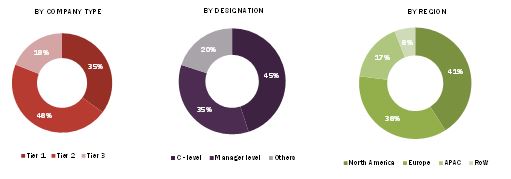
The research methodology used to estimate and forecast the smart home and ambient assisted living markets begins with capturing data on key vendor revenue through the secondary research with sources such as annual reports, investor presentations, and financial statements; trade, business, and professional associations; white papers, journals, certified publications, articles from recognized authors; directories, and databases.. The vendor offerings were also taken into consideration to determine the market segmentation. The bottom-up procedure was employed to arrive at the overall market size of the global smart home and ambient assisted living markets from the revenue of key players in these markets. After arriving at the overall market size, the total market was split into several segments and sub-segments which were then verified through the primary research by conducting extensive interviews with key people such as CEOs, VPs, directors, and executives. Data triangulation and market breakdown procedures were employed to complete the overall market engineering process and arrive at the exact statistics for all segments and sub-segments. The breakdown of profiles of primaries is depicted in the below figure:
To know about the assumptions considered for the study, download the pdf brochure
The smart home and ambient assisted living market comprises players such as Honeywell International, Inc. (U.S.), Siemens AG (Germany), Schneider Electric S.E. (France), Ingersoll Rand Plc. (Ireland), Legrand SA (France), ABB Group (Switzerland), Medic4all Group (Switzerland), Tunstall Healthcare Ltd. (U.K.), Chubb Community Care (U.K.), Televic N.V. (Belgium), Telbios (Italy), Vitaphone GmbH (Germany), GETEMED AG (Germany), Koninklijke Philips N.V. (Netherlands), CareTech AB (Sweden), and Assisted Living Technologies, Inc. (U.S.)
Key Target audience
- Raw material and manufacturing equipment suppliers
- Automation & control vendors
- Automation & control networking technologies vendors
- System integrators
- Home owners
- Project consultants
- Designers/consultants (HVAC, security, and fire & safety)
- Component manufacturers (sensors & controls)
- Home management systems (product & server providers)
- Associations & standards
- Government bodies involved in green buildings
Scope of the Report
The research report segments the smart home and ambient assisted living market to following submarkets:
Smart home market, by Product:
- Energy Management Systems
- Security & Access Control
- HVAC Control
- Entertainment Control
- Others
Smart Home Market, by Service:
- Installation & Repair
- Customization & Renovation
Smart Home Market, by Protocol & Standard
- Digital Addressable Lighting Interface
- KNX
- Lonworks
- Modbus
- National electrical manufacturers association’s digital lighting controls open protocol
- Power Line Communication
- X10
Ambient Assisted Living Market, by Product:
- Safety & Security
- Communication Devices
- Medical Assisted Products
- Mobility
- Telemonitoring/Telemedicine
- Compensatory Impairments
- Consumer Electronics/ Multimedia
- Others
By Region:
- North America
- Europe
- Asia-Pacific
- RoW
Available Customizations
With the given market data, MarketsandMarkets offers customizations as per the company’s specific needs. The following customization options are available for the report:
Product Analysis
- Product matrix which gives a detailed comparison of product portfolio of each company
Company Information
- Detailed analysis and profiling of additional market players













Growth opportunities and latent adjacency in Ambient Assisted Living and Smart Home Market
1. I have budget issues. Could you send me a new special pricing designed for me for the Ambient Assisted Living and Smart Home Market? (I have experience in getting a special pricing about another report in October, 2015) 2. I am interested in customization options too. How can I get it? How much does it cost?