Aseptic Packaging Market

Aseptic Packaging Market by Material (Plastic, Metal, Glass, Paper & Paperboard), Type (Cartons, Bottles & Cans, Bags & Pouches , Vial, Ampoules and Prefillable Syringes), Application (Beverage, Food, Pharmaceutical), & Region - Global Forecast to 2031




OVERVIEW
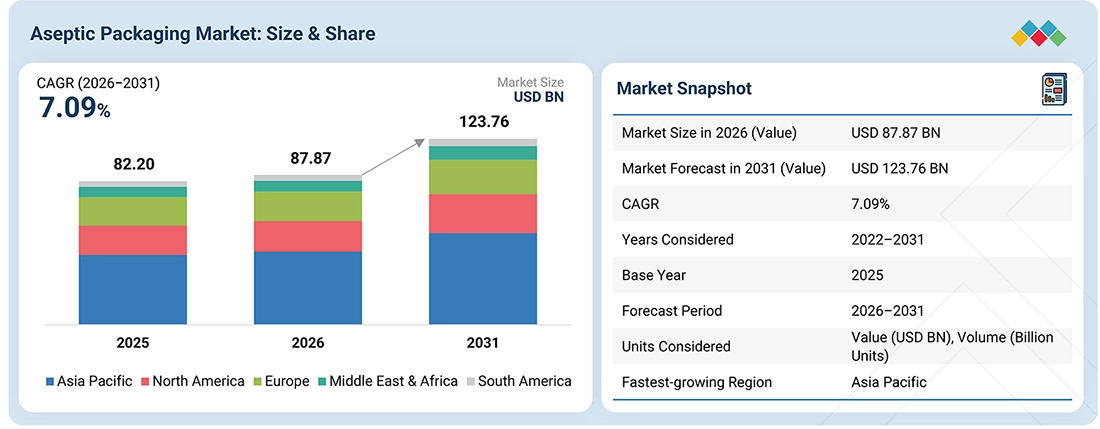
Source: Secondary Research, Interviews with Experts, MarketsandMarkets Analysis
The aseptic packaging market is projected to reach USD 123.76 billion in 2031 from USD 87.87billion in 2026, at a CAGR of 7.09% from 2026 to 2031. The demand for aseptic packaging is rising because it extends the shelf life of food, beverages, and pharmaceuticals without refrigeration or preservatives, ensuring product safety while significantly lowering transportation and supply chain costs
KEY TAKEAWAYS
-
By RegionAsia Pacific accounted for a significant share of 36.84% in 2025.
-
By MaterialBy material, the plastic segment is accounted for the largest share of 38.75% in 2025.
-
By TypeBy type, the vial, ampoules and prefillable syringes segment is projected to register the highest CAGR of 8.48% during the period.
-
By ApplicationBy application, the beverages segment is accounted for the largest share of 53.75% in 2025.
-
Competitive Landscape - Key PlayersAmcor plc (Switzerland), Mondi plc (UK), Smurfit Westrock plc (Ireland), TOPPAN Holdings Inc. (Japan), and Graphic Packaging Holding Company (US) were identified as key players aseptic packaging market (global), given their strong market share and product footprint.
-
Competitive Landscape - Startups/SMEsSIG Group AG (Switzerland), UFlex Limited (India), and Elopak ASA (Norway) have distinguished themselves among startups and SMEs by securing strong footholds in specialized niche areas, underscoring their potential as emerging market leaders.
The surging demand for aseptic packaging is fueled by the rise of e-commerce and home delivery networks that require lightweight, leak-proof options capable of withstanding long-distance shipping without spoiling
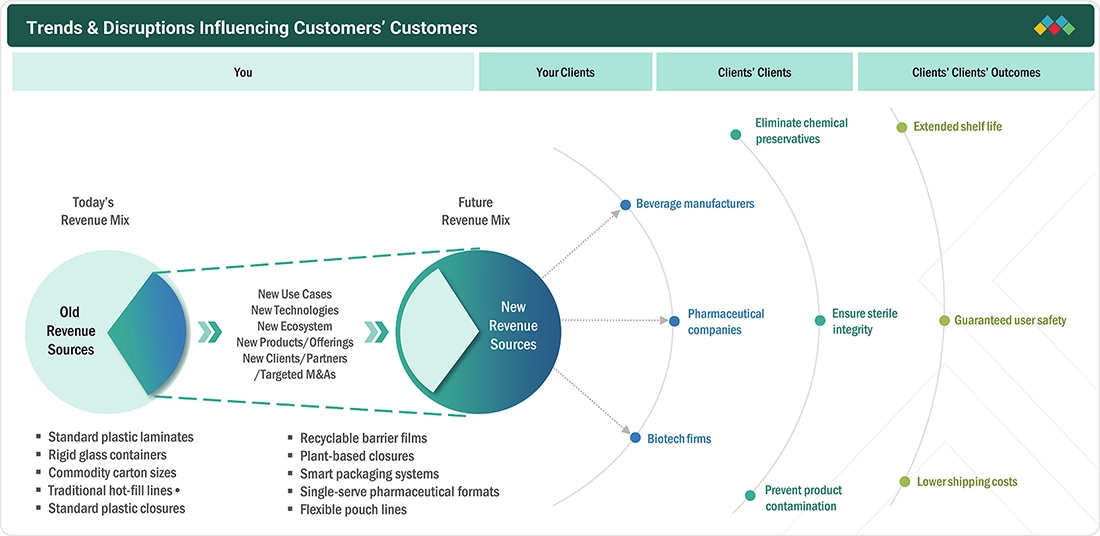
TRENDS & DISRUPTIONS IMPACTING CUSTOMERS' CUSTOMERS
The market for aseptic packaging is evolving from traditional rigid containers to advanced sterile packaging solutions. Traditionally, revenue was generated through standard plastic laminates, rigid glass containers, commodity carton sizes, traditional hot-fill lines, and standard plastic closures. Fresh possibilities for income have arisen in the form of such products as recyclable barrier films, plant-based closures, smart packaging systems, single-serve pharmaceutical formats, and flexible pouch lines.These products are increasingly utilized by beverage manufacturers, dairy producers, pharmaceutical companies, biotech firms, and e-commerce retailers. Such clients need to eliminate chemical preservatives, bypass the cold chain, ensure sterile integrity, prevent product contamination, and reduce packaging weight. In reaction to these demands, suppliers have developed clean-label trends, advanced sterilization tech, e-commerce expansion, sustainable material R&D, and strategic business acquisitions. At the end of it all, everybody benefits from extended shelf life, intact product nutrients, guaranteed user safety, lower shipping costs, and decreased product spoilage
Source: Secondary Research, Interviews with Experts, MarketsandMarkets Analysis
MARKET DYNAMICS

Level
-
Extensive Food Loss Across Supply Chains

-
Beverage Category Diversification Beyond Traditional Milk


Level
-
High Capital Requirements for Aseptic Production

-
High Pharmaceutical Packaging Qualification Requirements


Level
-
Expansion of Processed Food Export Activity

-
Pharmaceutical Prefilled Syringe and Injectable Packaging


Level
-
Variations in Environmental Mandates Across Regions

-
Cost-to-benefit ratio a concern to small manufacturers

Source: Secondary Research, Interviews with Experts, MarketsandMarkets Analysis
Driver:Extensive food loss across supply chains
The high volume of food lost in supply chains significantly accelerates the implementation of aseptic packaging. This is due to the fact that traditional delivery systems do not keep required temperatures which results in the spoiling of a heap of perishable products before they canBy means of aseptic technology, the process of flash sterilization is carried out on products as well as on packaging materials under aseptic conditions. With the help of this process, an absolutely dependable barrier to bacteria, light, and oxygen has been created, which allows keeping different perishable food and beverage products stable under normal temperatures. Thanks to the removal of the stringent need for continuous refrigeration, there is no need to keep products at constant low temperatures, which means that goods can be transported safely across long distances and through difficult terrains. An innovative packaging method of this kind has allowed minimizing product loss, optimizing stock management systems of various distributers, and saving food supplies.
Restraint: High capital requirements for aseptic production
High capital requirements connected with aseptic production act as a barrier to entry in the market by forming a serious financial obstacle for various producers of food products, beverages, and pharmaceuticals. In order to create an aseptic production facility that fully meets mandatory requirements, producers need to invest a considerable amount of money in equipment that includes sterile filling machines, special flash-heating systems, clean rooms, and automated inspecting equipment. Apart from the first purchase of equipment, the need to maintain ultimate sterility will entail even higher operational costs. The facilities will demand highly-skilled engineering personnel capable of working on sophisticated equipment and implementing high-level quality control procedures since even a small mistake can lead to serious contamination of the whole batch. The retrofit of the current traditional production equipment is very expensive and thus cannot be afforded by small and medium-sized enterprises. The expenses connected with these investments will be long-lasting and cause the delay of the period required for return on investment.
Opportunity: Expansion of Processed Food Export Activity
The growth of processed food exports provides the aseptic packaging industry with a great opportunity. Due to the benefits of globalization, processed food, milk, and drinks will travel from one country to another, but now producers will be able to deal with shipment problems without compromising quality. Aseptic packaging ensures long-term product storage and safety in ambient conditions. This technology makes big geographical markets available for food exporters, as it makes it unnecessary to keep food items in constant refrigeration during transit. With aseptic packaging technology, producers will be able to make their shipping costs lower and spoilage during transport much less. Besides, with the help of this system, producers will be able to expand their distribution network quickly as there is increasing interest in importing high-quality food products from emerging economies.
Challenge: Variations in environmental mandates across regions
Differences in environmental regulations among regions constitute a serious challenge for the global aseptic packaging market. Aseptic cartons are made of complicated, multi-layer materials which usually combine paperboard, polyethylene, and aluminum foil. Such materials require special recycling facilities that are unavailable globally. As a result, companies are faced with a fragmented regulatory environment. For example, the EU has strict circular economy regulations and recycling requirements which require companies to invest in bio-based materials and mono-material research. Emerging Asian and Latin-American markets operate under different waste-managing systems and offer different timelines for compliance, adding chaos to multinational companies' operations. Such inconsistency does not allow companies to make use of the advantages of global standardization. Companies are obliged to frequently alter production processes, adjust variations of materials, and redesign package labels for various locations.
ASEPTIC PACKAGING MARKET: COMMERCIAL USE CASES ACROSS INDUSTRIES
| COMPANY | USE CASE DESCRIPTION | BENEFITS |
|---|---|---|
 |
Aseptic Filling for Ambient UHT Milk Formats: The brand installed advanced aseptic filling machines to package its popular Molico and Ninho UHT milk products in varying volume sizes | • Addresses lifestyle trends by serving on-the-go consumers with diverse sizing. • Bypasses cold chain requirements to seamlessly deliver liquid dairy products at room temperature. • Extends shelf life while preserving natural taste and structural freshness without chemical additives. |
 |
LGSF for Large Residential Accommodation – Balfour Beatty developed the University of Sussex East Slopes Residences using a light-gauge steel panelised framing system across 29 blocks containing approximately 2,100 bedrooms. | Slashes utility footprint by drastically reducing factory water and energy consumption. • Enables lightweighting by cutting plastic bottle raw material weight requirements by up to 25%. • Supports clean-label product portfolios like preservative-free juices and teas. |
Logos and trademarks shown above are the property of their respective owners. Their use here is for informational and illustrative purposes only.
MARKET ECOSYSTEM
The aseptic packaging industry ecosystem consists of important elements, including raw material suppliers, manufacturers of aseptic packaging machinery and materials, fabricators, co-packers who do production, and final users. Raw material suppliers provide high-quality paperboard, polyethylene resins, and ultra-thin aluminum foils in specified thicknesses and grades that are crucial raw materials in the process of production. Manufacturers make use of automated extrusion laminating, printing, slitting, and sterile filling machines in order to produce different structural components—cartons, pouches, bottles, vials, and specialized closures. Manufacturers and fabricators might be using computer-aided design and sterile engineering systems as well in order to convert the product requirements into particular dimensions and make their project-specific elements of packaging. The other participants of the ecosystem supply necessary parts and elements for aseptic packaging, such as caps, fittings, straws, sterilization chemicals, and outer secondary corrugated boxes. The ones engaged in production work and co-packing companies can apply those systems for the packaging of liquid dairy, juices, beverages, and liquid pharmaceuticals. Final users receive products from aseptic packaging used for daily retail consumption and different services, including healthcare, school nutritional feeding programs, and global food assistance disbursement, among others.
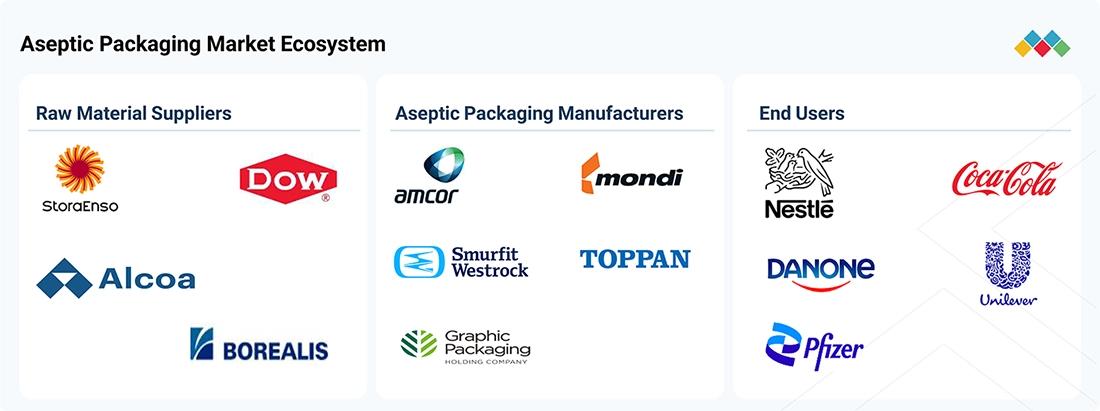
Logos and trademarks shown above are the property of their respective owners. Their use here is for informational and illustrative purposes only.
MARKET SEGMENTS
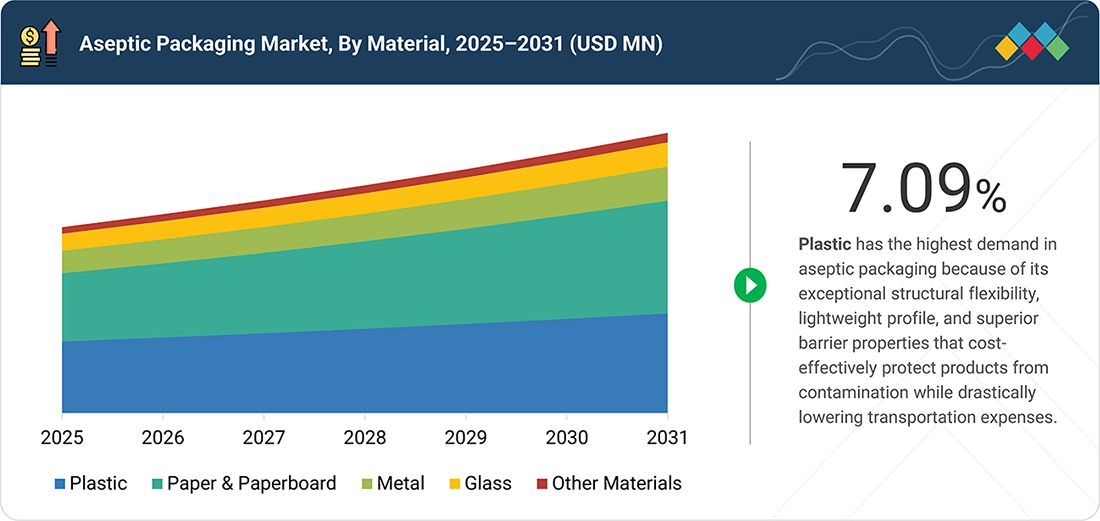
Source: Secondary Research, Interviews with Experts, MarketsandMarkets Analysis
Aseptic Packaging Market, by Material
Material wise, plastic has become the leading material in aseptic packaging. Thanks to its versatility, light weight and barrier properties. The group of polymers that includes polyethylene, polypropylene, and polyethylene terephthalate is widely used in creating efficient aseptic bottles, pouches and protective coatings within multi-layer cartons. High resistance offered by plastics enables safe transport and storage of food, beverages and medicines that are sensitive to structure and microbial contamination. Furthermore, plastics are lighter than any other traditional materials, thus allowing cutting down logistics fuel consumption and shipping costs. Even though the industry is changing its focus to bio-based resins and higher recyclability due to global ecological requirements, plastic is hard to replace. The reason is that plastic is still the most cost-effective, scalable and effective means of food preservation.
Aseptic Packaging Market, by Type
The cartons segment plays a crucial role in the aseptic packaging industry, serving as the ongoing standard for beverages and liquid foods. Typically made from a multi-layered combination of paperboard, polyethylene, and aluminum foil, aseptic cartons are an excellent barrier to light, oxygen, and germs. The multi-layered structure of aseptic cartons allows sensitive products like milk, plant-based dairy substitutes, juices, and soups to remain fresh for months without refrigeration or the use of chemical preservatives. In addition, the box-like shape of aseptic cartons improves storage efficiency and helps suppliers optimize the space inside pallets, therefore decreasing transportation costs. A high reliance on paperboard, the renewable source of materials, corresponds to increasing demand from consumers around the world for sustainable packaging options. While the industry players keep improving their technologies by leveraging bio-based plastics and easily recyclable coatings, cartons remain a cost-efficient and convenient option for numerous companies in the packaged food sector.
Aseptic Packaging Market, by Application
The beverage segment is noted to be the largest as well as the most dynamic utilization sector in the aseptic packaging industry. The significant demand for the sector originates from the growing consumption of ready-to-drink juices, dairy beverages, plant-based milk products, and wellness drinks on a global scale. The aseptic process is known to be effective, as it allows processing liquids that are sensitive to heat and maintaining the required conditions of ensuring total cleanliness in their packaging, thereby ensuring the preservation of their unique flavors and nutritional value. Another notable reason leading to the development of the sector is that, due to the use of aseptic packaging, beverage manufacturers and producers are given freedom from the need to maintain refrigeration throughout the supply chain and thanks to that, start selling in remote areas.
REGION
Asia Pacific to be the largest region in global aseptic packaging market during forecast period
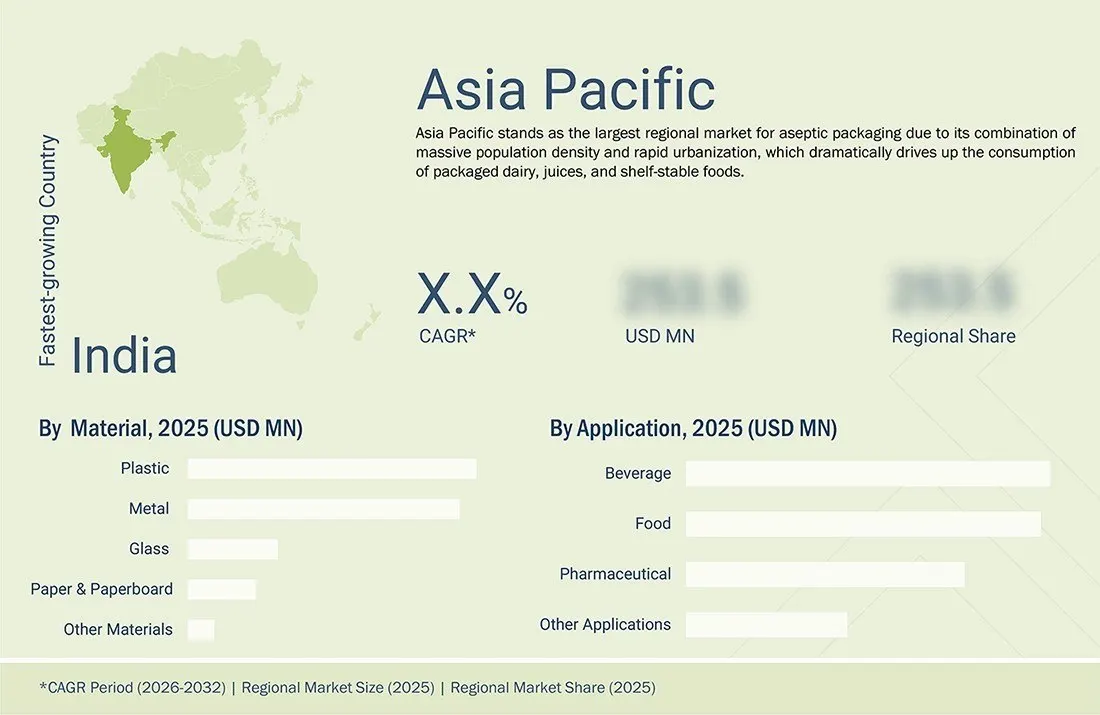
Asia Pacific is both the largest and fastest-growing aseptic packaging market. The growth of this area is explained by a huge consumer market, the acceleration of the urbanization process, and an increase in the disposable income of people in this area. As lifestyles become faster, there is a huge rise in demand for the consumption of drinks, processed food, and dairy products. It should be noted that the scale of the territory of this area and the poorly developed cold chain system in many rural parts of the region require the usage of aseptic technology in the process of production and distribution of the goods. The newest technology provides long-term stability of the product and allows producers to use hot shipment and to transport products over long distances without the chance of spoiling. Furthermore, the development of the market for aseptic packaging is also due to the growth of people's health consciousness, which means an increasing demand for "clean label” products.
ASEPTIC PACKAGING MARKET: COMPANY EVALUATION MATRIX
Amcor plc (Star) holds a prominent position among key players in the aseptic packaging sector thanks to its comprehensive portfolio of advanced barrier materials and experience in the global packaging industry. The company offers flexible and rigid packaging systems and products, such as multi-layer barrier films, pouches, containers, and other accessories within the packaging sector, including food, beverage, and pharmaceutical projects. Its expertise in sterile materials engineering, production processes, and execution of the filling process helps the company meet the challenges of individual projects while enabling effective solutions for shelf-life extension and supply chain operations. The firm's huge distribution network and manufacturing activities allow it to maintain its strong position in the aseptic packaging market. Graphic Packaging Holding Company (Emerging Leader) strengthens its competitive position within the aseptic packaging sector thanks to its rich experience and expertise in the field of fiber-based packaging solutions. The company develops and provides customers with structural liquid carton products designed to meet various requirements within the beverage, dairy, and liquid food commercial market. The firm's competences in design engineering allow it to produce customized systems based on specific needs. Its international presence and modern technological solutions guarantee its effective growth in the global aseptic packaging marketplace.
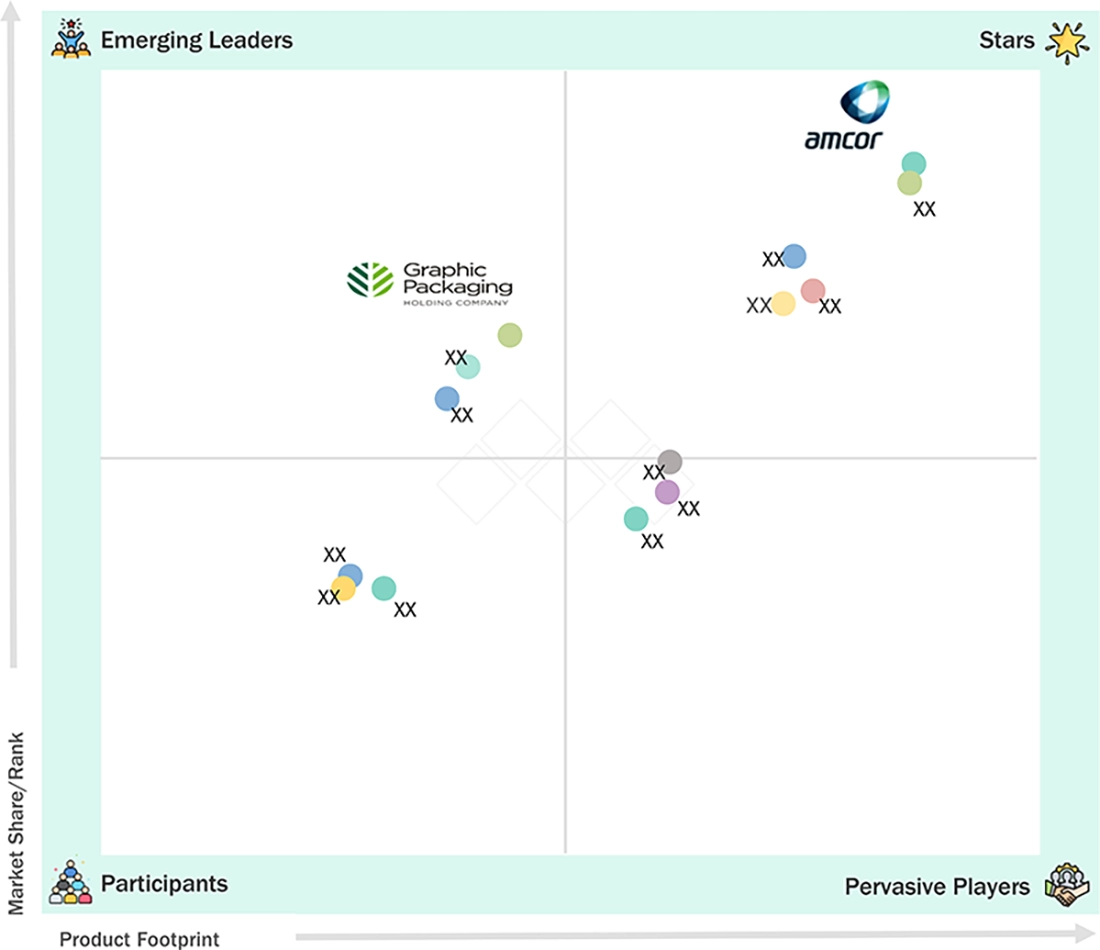
Source: Secondary Research, Interviews with Experts, MarketsandMarkets Analysis
KEY MARKET PLAYERS
- Amcor plc (Switzerland)
- Mondi plc (UK)
- Smurfit Westrock plc (Ireland)
- TOPPAN Holdings Inc. (Japan)
- Graphic Packaging Holding Company (US)
- Nippon Paper Industries Co., Ltd. (Japan)
- Dai Nippon Printing Co., Ltd. (DNP) (Japan)
- Huhtamäki Oyj (Finland)
- Stora Enso Oyj (Finland)
- Tetra Pak International S.A. (Switzerland)
- SIG Group AG (Switzerland)
- UFlex Limited (India)
- Elopak ASA (Norway)
- Greatview Aseptic Packaging Co., Ltd. (China)
- Nampak Limited (South Africa)
MARKET SCOPE
| REPORT METRIC | DETAILS |
|---|---|
| Market Size in 2025 (Value) | USD 82.20 Billion |
| Market Forecast in 2026 (Value) | USD 87.87 Billion |
| Market Forecast in 2031 (Value) | USD 123.76 Billion |
| Growth Rate | CAGR of 7.09% from 2026 to 2031 |
| Years Considered | 2022–2031 |
| Base Year | 2025 |
| Forecast Period | 2026–2031 |
| Units Considered | Value (USD Billion), Volume (Billion Units) |
| Report Coverage | Revenue forecast, company ranking, competitive landscape, growth factors, and trends |
| Segments Covered |
|
| Regions Covered | North America, Asia Pacific, Europe, South America, Middle East & Africa |
WHAT IS IN IT FOR YOU: ASEPTIC PACKAGING MARKET REPORT CONTENT GUIDE
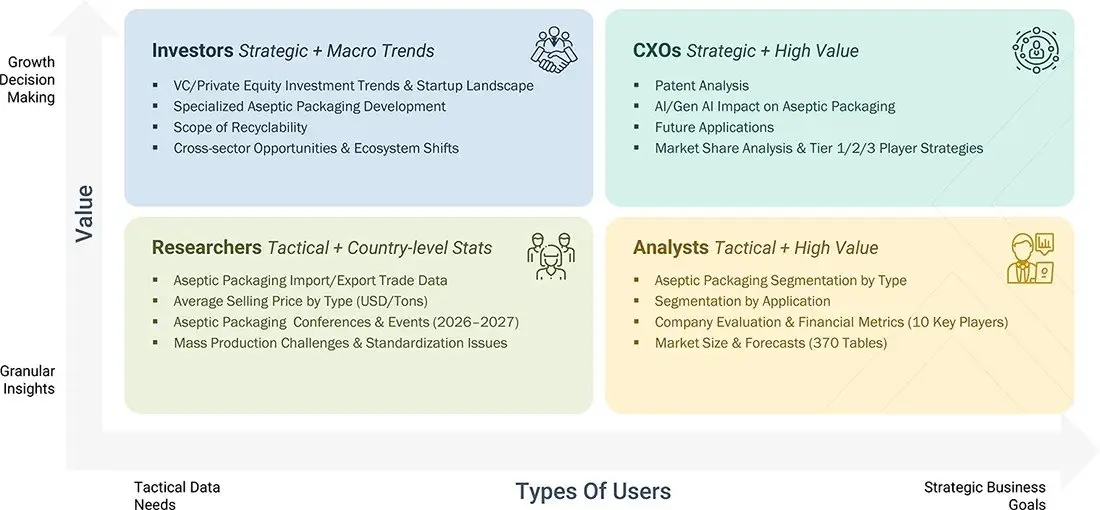
DELIVERED CUSTOMIZATIONS
We have successfully delivered the following deep-dive customizations:
| CLIENT REQUEST | CUSTOMIZATION DELIVERED | VALUE ADDS |
|---|---|---|
| Aseptic Packaging Market – Pharmaceutical Packaging Focus, Key Manufacturers Analysis | Detailed specific analysis of the aseptic packaging market with a dedicated focus on pharmaceutical packaging, covering market structure, sterile pharmaceutical applications, product categories, demand across key healthcare industries, local sterile manufacturing capabilities, competitive landscape, and identification of key manufacturers producing aseptic pharmaceutical packaging. |
|
| CLIENT REQUEST | CUSTOMIZATION DELIVERED | VALUE ADDS | | | | | ||
| Deeper analysis of high-growth end-use industries | Detailed demand breakdown for semiconductor, healthcare, metal fabrication, and environmental monitoring sectors | Consumption pattern analysis across industries | Purity requirement mapping for specialt | ||
| Assessment of competitive positioning in specialty gas mixtures | Benchmarking of key players based on blending capabilities, purity levels, distribution models, and technology integration | Comparative analysis of product portfolios and certification cap |
RECENT DEVELOPMENTS
- June 2026 : Amcor partnered with Kelpi to explore and test seaweed-based barrier coatings for recyclable fiber packaging. This collaboration aims to develop next-generation barrier materials that can replace plastic laminates, potentially enabling recyclable paper-based solutions for food and beverage applications.
- April 2026 : Smurfit Westrock signed a 10-year renewable energy agreement with PepsiCo, Givaudan, and Statkraft to source power from a repowered Spanish wind asset. This deal aims to reduce 32,000 metric tons of CO2 emissions annually, supporting lower-carbon production of paper-based packaging for food and beverage applications, including aseptic formats.
- September 2025 : Mondi showcased Ad/Vantage TrayWrap at Fachpack 2025, a paper-based secondary tray-wrapping solution suitable for aseptic cartons, coffee vacuum packs, cans and bottles, replacing plastic stretch film on stackable retail products.
Table of Contents
 Exclusive indicates content/data unique to MarketsandMarkets and not available with any competitors.
Methodology
The study involved four major activities to estimate the current size of the global aseptic packaging market. Exhaustive secondary research was carried out to collect information on the market, the peer product market, and the parent product group market. The next step was to validate these findings, assumptions, and sizes with industry experts across the value chain of aseptic packaging through primary research. The top-down and bottom-up approaches were employed to estimate the overall size of the aseptic packaging market. After that, market breakdown and data triangulation procedures were used to determine the size of different segments of the market.
Secondary Research
The market for companies offering aseptic packaging was determined by studying the secondary data available through paid and unpaid sources, analyzing the product portfolios of the major companies in the ecosystem, and rating the companies by their performance and quality. Various secondary sources, such as Business Standard, Bloomberg, World Bank, and Factiva, were referred to identify and collect information for this study on the aseptic packaging market. In the secondary research process, various secondary sources were referred to identify and collect information related to the study. Secondary sources included annual reports, press releases, investor presentations, aseptic packaging vendors, forums, certified publications, and white papers. The secondary research was used to obtain critical information on the industry’s value chain, the total pool of key players, market classification, and segmentation from the market and technology-oriented perspectives.
Primary Research
In the primary research process, various primary sources from the supply and demand sides were interviewed to obtain qualitative and quantitative information for this report. The primary sources from the supply side included industry experts, such as Chief Executive Officers (CEOs), Vice Presidents (VPs), marketing directors, technology and innovation directors, and related key executives from several key companies and organizations operating in the aseptic packaging market. After the complete market engineering (calculations for market statistics, market breakdown, market size estimations, market forecasting, and data triangulation), extensive primary research was conducted to gather information and verify and validate the critical numbers arrived at. Primary research was also conducted to identify the segmentation types, industry trends, competitive landscape of aseptic packaging offered by various market players, and key market dynamics, such as drivers, restraints, opportunities, challenges, industry trends, and key player strategies. In the complete market engineering process, the top-down and bottom-up approaches and several data triangulation methods were extensively used to perform the market estimation and market forecasting for the overall market segments and subsegments listed in this report. Extensive qualitative and quantitative analysis was performed on the complete market engineering process to list the key information/insights throughout the report.
The following is the breakdown of primary respondents:
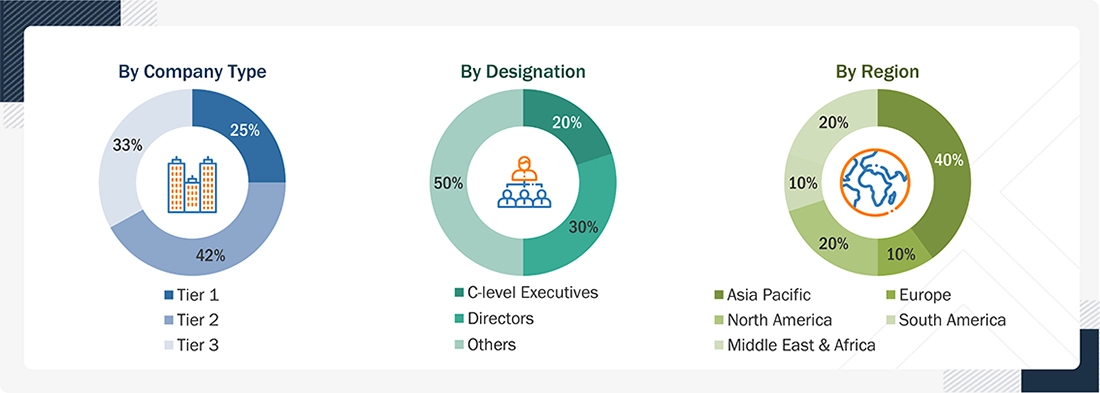
Notes:
Others include Sales, Marketing, and Product Managers.
Tier 1: > USD 1 billion; Tier 2: USD 500 million–1 billion; and Tier 3: < USD 500 million
To know about the assumptions considered for the study, download the pdf brochure
Market Size Estimation
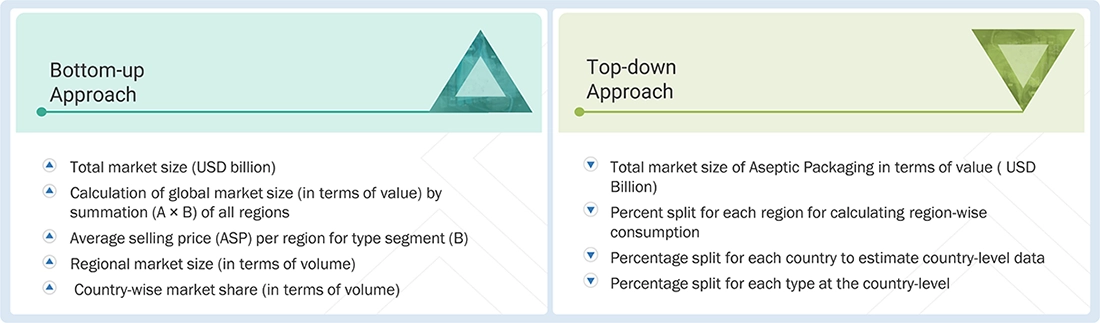
The top-down and bottom-up approaches were used to estimate and validate the size of the global aseptic packaging market. These approaches were also used extensively to estimate the size of various dependent market segments.
The research methodology used to estimate the market size included the following approaches:
Data Triangulation
After arriving at the overall market size using the market size estimation processes, the market was split into several segments and subsegments. The data triangulation and market breakup procedures were employed, wherever applicable, to complete the overall market engineering process and arrive at the exact statistics of each market segment and subsegment. The data was triangulated by studying various factors and trends from both the demand and supply sides.
Market Definition
Aseptic packaging is a specialized manufacturing method where a sterile product is filled and sealed inside a pre-sterilized packaging material under an entirely sterile environment. This process prevents any microbial recontamination, allowing highly perishable foods, beverages, and pharmaceuticals to be transported and stored at room temperature for extended periods without requiring artificial preservatives or continuous refrigeration.
Key Stakeholders
- Aseptic Packaging Manufacturers
- Aseptic Packaging Suppliers
- Industry Associations And Regulatory Bodies
- Research & Development Entities
- Raw Material Suppliers
- End Users
Report Objectives
- To define, describe, and forecast the size of the global aseptic packaging market based on material, type, application, and region in terms of value and volume
- To provide detailed information on the significant drivers, restraints, opportunities, and challenges influencing the market
- To analyze and forecast the market based on material, type, and application
- To strategically analyze micro-markets concerning individual growth trends, prospects, and their contribution to the market
- To assess the growth opportunities in the market for stakeholders and provide details on the competitive landscape for market leaders
- To forecast the market size of segments for North America, Europe, Asia Pacific, South America, and the Middle East & Africa
- To strategically profile key players and comprehensively analyze their market shares and core competencies
- To analyze competitive developments, such as expansions, product launches, partnerships, and acquisitions in the aseptic packaging market
- To provide the impact of AI on the aseptic packaging market
Available customizations:
With the given market data, MarketsandMarkets offers customizations according to client-specific needs.
The following customization options are available for the aseptic packaging report:
Product Analysis
- A product matrix that gives a detailed comparison of the product portfolio of each company
Regional Analysis
- A further breakdown of the aseptic packaging market for additional countries
Company Information
- Detailed analysis and profiling of additional market players (up to five)


Personalize This Research
- Triangulate with your Own Data
- Get Data as per your Format and Definition
- Gain a Deeper Dive on a Specific Application, Geography, Customer or Competitor
- Any level of Personalization
Let Us Help You
- What are the Known and Unknown Adjacencies Impacting the Aseptic Packaging Market
- What will your New Revenue Sources be?
- Who will be your Top Customer; what will make them switch?
- Defend your Market Share or Win Competitors
- Get a Scorecard for Target Partners

Custom Market Research Services
We Will Customise The Research For You, In Case The Report Listed Above Does Not Meet With Your Requirements
Get 10% Free CustomisationTESTIMONIALS
We at Nissan Chemicals Corporation have been clients of MarketsandMarkets for more than a year now. We recently consulted MarketsandMarkets for a study, the team at MarketsandMarkets was extremely professional and organized. The business insights were very detailed and aligned well with our expectations that really helped us formulate the Business Plans and device new strategies for development themes. MarketsandMarkets offers a unique combination of expertise and dedicated engagement model. Their research findings have helped us in designing our Pricing Strategy which will make it easier for us to predict the future sales and profits for the next ten years. We look forward to working with MarketsandMarkets in the future.
VP of Strategy & New Business Development
Leading Specialty Chemical Company
The MarketsandMarkets Engagement Model, composed of both the Knowledge Store and advisory custom research, has greatly helped us in understanding our markets and making strategic decisions. The Knowledge Store is a fast way to allow everyone in our organization to understand more about most any market they are interested in. The ability to then get custom research done and get answers to specific strategic questions and market insight has been spectacular. The Markets and Markets team feel more like colleagues than vendors and their services have helped us change our culture where statements of things like growth opportunities and competitive position are always backed by industry research.

Rich Gibson,
Director, Corporate Strategy
Milliken & Company,
Leading Industrial Manufacturer of specialty chemical, floor covering, performance and protective textile materials, and healthcaremilliken.com
MarketsandMarkets is a trusted resource that helps us to better understand markets that are near-adjacencies-whether its technology, value chain or geography. Their Knowledge Store platform provides a dashboard of markets and their characteristics which is easy to use and saves us time.
Adam Shaw,
Market Development and Strategy Manager
AdvanSix Inc. USA,
An American Leader in Chemicalswww.advansix.com
The Knowledge Store from MarketsandMarkets is a valuable tool which has helped my team acquire greater insight in to the end markets that our business serves. This has enabled us to help our company build stronger strategies throughout our planning process.
TOSHIO KINOSHITA
Senior Chif Consultion Research & Consulting Division
Mitsubishi Chemical Research Corporation,
Leading Manufacturer of Chemical Productswww.mitsubishichem-res.co.jp/en/

We recently engaged with MarketsandMarkets for a study, the team not only clearly understood our business objectives but was also extremely professional in the way they handled the entire project. The study was efficiently conducted in a phase-wise manner, and the engagement model furnished us with high-quality business insights that far exceeded our expectations at each phase. We were especially happy that MarketsandMarkets could provide us with both, an English as well as a Japanese version of the study. A special thanks to the Analyst Team and Client Services Team, whose fluency in Japanese enhanced our comfort level, as we could converse with them in our preferred language.
Independent entrepreneurs
Arrow Precision
We approached MarketsandMarkets for study on Proppants Market, and their work exceeded our expectations. The study conducted was comprehensive and enabled us to view the market through the various dimensions. In addition, the team was extraordinarily responsive throughout the process and resolved our queries on time. I strongly recommend MarketsandMarkets and will certainly consider them for additional market assessments we will need in the future.
Global engineering company, Japan
Deputy Manager,
Strategic Planning OfficeThe high-quality insights shared by the MarketsandMarkets team helped us understand the pharmaceutical plant designers in a specific geography. It also captured the risks that we may likely face in communicating with our potential partners. The study would enable us identify partners, which would impact our future growth.






Growth opportunities and latent adjacency in Aseptic Packaging Market