Biophotonics Market by Application(See-through Imaging, Inside Imaging, Spectromolecular, Surface Imaging, Microscopy, Light Therapy, Biosensors), Technology(In-vivo, In-vitro), End-use(Diagnostics, Therapeutic, Tests), & Geography - Global Growth Driver and Industry Forecast to 2035


Biophotonics Market Summary
The global Biophotonics Market is entering a high-value expansion phase as optical technologies become increasingly integrated into medical diagnostics, therapeutics, life-science research, biosensing, microscopy, and non-invasive disease monitoring. Based on a synthesis of recent market estimates, the global Biophotonics Market is valued in the range of US$60-90 billion in 2025 and is projected to reach approximately US$180-240 billion by 2035, representing an estimated 9%-11% CAGR during the forecast period. Recent research estimates vary because of differences in market scope: Fortune Business Insights estimates the market at US$66.15 billion in 2025 and US$117.49 billion by 2034, while Emergen Research estimates US$86.04 billion in 2025 and US$233.52 billion by 2035.
Biophotonics combines photonics, biology, medicine, imaging, spectroscopy, sensing, and optical technologies to capture or manipulate biological information. Demand is being supported by the global shift toward minimally invasive diagnostics, precision medicine, early disease detection, point-of-care testing, advanced microscopy, and personalized treatment. At the same time, AI is improving image interpretation and signal processing, while IoT connectivity and automation are enabling remote monitoring, digitally connected laboratories, automated diagnostics, and high-throughput research workflows. The resulting convergence of photonics, artificial intelligence, cloud computing, and laboratory automation is broadening the commercial opportunity beyond traditional medical imaging.
Key Market Trends & Insights
Asia Pacific is emerging as a major growth engine. Recent estimates indicate that Asia Pacific accounted for approximately 41.8% of the global biophotonics market in 2025 in one market assessment, reflecting strong demand from healthcare, research, electronics, biotechnology, and advanced manufacturing.
Medical diagnostics remains a core revenue-generating application. Optical imaging, spectroscopy, biosensing, microscopy, and fluorescence-based technologies are increasingly being adopted for earlier and more accurate detection of disease.
In-vivo technologies continue to hold strategic importance. Real-time visualization, non-invasive monitoring, and optical examination of biological processes make in-vivo biophotonics highly relevant to modern clinical workflows. Traditional industry segmentation also distinguishes in-vivo and in-vitro technologies.
AI is changing the value proposition of biophotonic systems. Machine-learning algorithms can analyze complex microscopy and imaging datasets, identify patterns that may be difficult to detect manually, and support automated classification and decision assistance.
Point-of-care and decentralized diagnostics are expanding the opportunity. Smaller optical instruments, compact spectrometers, biosensors, and portable imaging platforms can reduce dependence on centralized laboratories and support faster testing.
Non-medical applications are becoming increasingly important. Biophotonics is expanding into agriculture, food testing, environmental monitoring, biotechnology, biometrics, and industrial biosensing, providing additional revenue opportunities beyond healthcare.
Market Size & Forecast
- Base year market size (2025): approximately US$60-90 billion
- Forecast value by 2035: approximately US$180-240 billion
- CAGR: approximately 9%-11%
- Short explanation of growth factors: Expansion is being driven by advanced optical imaging, demand for non-invasive diagnostics, biosensor development, precision medicine, increasing healthcare expenditure, laboratory automation, AI-powered image analysis, and growing adoption of photonics across life sciences. Recent published estimates span a broad range because market definitions differ.
Biophotonics Market Top 10 key takeaway
- The global Biophotonics Market is estimated at approximately US$60-90 billion in 2025.
- The market is projected to reach approximately US$180-240 billion by 2035.
- Market expansion is expected at approximately 9%-11% CAGR through the forecast period.
- Medical diagnostics remains one of the largest application opportunities.
- In-vivo technologies are strategically important because of their role in real-time and non-invasive biological monitoring.
- Imaging systems, lasers, fiber optics, and spectroscopy components form important product categories.
- AI is accelerating automated image interpretation, pattern recognition, and diagnostic workflows.
- Asia Pacific represents a major regional growth opportunity, supported by healthcare and technology investment.
- Point-of-care diagnostics, biosensing, and automated microscopy are creating new commercialization opportunities.
- Leading companies include Carl Zeiss, Olympus, Hamamatsu Photonics, Nikon, PerkinElmer, Leica Microsystems, Becton Dickinson, and Lumenis.
Product Insights
The imaging systems segment represents one of the most commercially important product categories within the Biophotonics Market. Optical imaging technologies provide clinicians and researchers with detailed information about biological structures and processes without relying exclusively on conventional invasive techniques. Fluorescence imaging, confocal microscopy, multiphoton microscopy, optical coherence tomography, hyperspectral imaging, and related technologies are increasingly used across clinical research, pathology, drug discovery, and biological investigation.
The market's product landscape also includes lasers, fiber optics, light sources, optical detectors, spectrometers, cameras, microscopes, biosensors, and optical components. Lasers are particularly important because they serve as fundamental sources for imaging, spectroscopy, surgical procedures, photodynamic therapy, microscopy, and analytical systems. Fiber-optic technologies provide flexible light delivery and signal transmission, while sensitive photodetectors and cameras enable high-resolution measurement of biological signals.
A significant emerging trend is the miniaturization of biophotonic instruments. Portable spectroscopy systems, compact fluorescence devices, handheld imaging platforms, and chip-based biosensors can support point-of-care testing and decentralized healthcare. This trend is particularly relevant in emerging markets where access to sophisticated centralized laboratories can be limited.
AI is increasingly being embedded within imaging products. Rather than treating an optical instrument as an independent measurement device, manufacturers are integrating image-processing algorithms, automated focusing, object recognition, segmentation, anomaly detection, and workflow optimization. This improves usability while potentially reducing analysis time for clinicians and researchers.
The combination of high-performance optics with AI-enabled software is therefore becoming a key differentiator. Future systems are expected to provide not just images or signals but actionable interpretation, quantitative measurements, and automated quality control.
Technology / Component Insights (Rename based on keyword if needed)
Biophotonics technology is built around the interaction of light with biological materials. Major technology categories include in-vivo and in-vitro systems, optical imaging, spectroscopy, microscopy, biosensing, laser technologies, fiber optics, fluorescence, Raman spectroscopy, and optical coherence techniques. The traditional MarketsandMarkets segmentation also categorizes biophotonics by application, technology, end use, and geography, with in-vivo and in-vitro representing the principal technology divisions.
The role of AI is becoming more prominent as biophotonic instruments generate increasingly large datasets. Deep-learning models can assist with image classification, tissue segmentation, cellular analysis, spectral interpretation, and detection of subtle patterns. In research laboratories, AI can also automate image acquisition and help prioritize samples for additional testing.
IoT and cloud technologies add another layer of connectivity. Connected optical instruments can transmit measurements to laboratory information systems, cloud databases, hospital platforms, and remote monitoring applications. This creates opportunities for centralized analytics across multiple locations and facilitates collaborative research.
Automation is especially important in pharmaceutical research, genomics, cell biology, pathology, and high-throughput screening. Automated microscopes and imaging platforms can acquire and analyze thousands of samples with limited manual intervention. This improves reproducibility and increases laboratory throughput.
Future technology development will emphasize miniaturized photonic chips, integrated optical sensors, AI-enabled diagnostics, hyperspectral imaging, advanced fluorescence systems, quantum-enhanced sensing, wearable optical devices, and multimodal imaging. The convergence of photonics with semiconductor manufacturing and microfluidics will further support compact and scalable systems.
Application Insights
Medical diagnostics represents one of the most significant application areas for the Biophotonics Market. Optical techniques can support cancer detection, ophthalmology, dermatology, infectious-disease testing, pathology, cardiovascular monitoring, and neurological research. The ability to obtain biological information with minimal tissue disruption is particularly attractive as healthcare systems increasingly prioritize early diagnosis and patient-centered care.
Medical therapeutics is another important application. Laser-based procedures, photodynamic therapy, optical stimulation, and image-guided interventions are expanding the use of photonics beyond diagnosis. Laser technologies can provide targeted treatment with high precision and are widely used in areas such as ophthalmology, dermatology, dentistry, and surgery.
Biosensing is expected to generate substantial future opportunities. Optical biosensors can detect biological molecules, pathogens, biomarkers, and chemical changes with high sensitivity. When combined with microfluidics and portable electronics, they can contribute to rapid point-of-care testing.
The pharmaceutical and biotechnology industries are also important users of biophotonics. Advanced microscopy and spectroscopy are used for drug discovery, cellular analysis, protein characterization, quality control, and process development. Increasing investment in biologics, cell therapies, and precision medicine should support demand for advanced optical analysis.
Beyond healthcare, agriculture and food testing offer attractive growth opportunities. Optical systems can monitor plant health, identify contaminants, evaluate food composition, and support environmental analysis. These applications diversify the market and reduce dependence on medical spending cycles.
Regional Insights
North America remains a leading market for advanced biophotonics because of its mature healthcare infrastructure, strong research ecosystem, high adoption of medical imaging, substantial biotechnology investment, and presence of major technology providers. The United States is particularly important because universities, hospitals, pharmaceutical companies, and technology manufacturers actively invest in optical diagnostics and life-science instrumentation.
Europe represents another technologically mature market. Germany, the United Kingdom, France, Switzerland, and other European countries benefit from established medical-device industries, research institutions, pharmaceutical manufacturing, and government-supported innovation. Demand is supported by healthcare modernization, precision medicine, and advanced microscopy.
Asia Pacific is expected to record some of the fastest growth through 2035. Increasing healthcare expenditure, expanding biotechnology capabilities, rising research activity, medical infrastructure development, and investment in semiconductor and photonics manufacturing are strengthening regional demand. One recent estimate identifies Asia Pacific as the largest regional market in 2025.
China, Japan, South Korea, and India are particularly important. Japan has a long-established optical and imaging industry, China is rapidly expanding healthcare and research infrastructure, South Korea has strong semiconductor and photonics capabilities, and India is increasing investment in diagnostics and biotechnology.
- North America: Leading mature market supported by advanced healthcare and research infrastructure.
- Europe: Strong demand from medical technology, pharmaceuticals, and scientific research.
- Asia Pacific: Major growth region driven by healthcare investment and technology manufacturing.
- Latin America: Expanding diagnostic infrastructure creates long-term opportunities.
- Middle East & Africa: Healthcare modernization and specialized diagnostic investment support gradual adoption.
Country-Specific Market Trends
In China, the Biophotonics Market is expected to grow at approximately 11%-14% CAGR, supported by healthcare modernization, biotechnology investment, medical-device manufacturing, and expansion of diagnostic capacity. Government-backed technology development and growing domestic demand for advanced imaging are contributing to the country's strategic importance.
Japan is expected to grow at approximately 8%-10% CAGR, supported by an aging population, high healthcare expenditure, advanced optical manufacturing, and established research capabilities. Japanese companies have significant expertise in cameras, microscopes, optical components, and precision instrumentation.
In North America, the United States is projected to expand at approximately 8%-10% CAGR, benefiting from strong biomedical research, pharmaceutical R&D, advanced diagnostics, and investment in AI-enabled healthcare. Canada could record approximately 7%-9% CAGR, supported by life-science research and healthcare technology adoption, while Mexico may grow at approximately 8%-11% CAGR as diagnostic infrastructure and medical-device manufacturing expand.
In Europe, Germany is expected to grow at approximately 8%-10% CAGR, driven by precision engineering, medical technology, industrial photonics, and scientific research. France could expand at around 7%-9% CAGR, supported by biomedical research, healthcare modernization, and pharmaceutical applications.
- China: Rapid healthcare modernization and domestic photonics development support strong growth.
- Japan: Advanced optics and aging-related healthcare demand create sustained opportunities.
- United States: Strongest combination of biomedical R&D, diagnostics, and technology commercialization.
- Germany: Precision engineering and medical-device expertise strengthen adoption.
- France: Pharmaceutical research and healthcare innovation support market expansion.
Key Biophotonics Market Company Insights
The competitive landscape includes optical-instrument manufacturers, medical-device companies, photonics specialists, laser manufacturers, and life-science technology providers. Important participants include Carl Zeiss, Olympus, Hamamatsu Photonics, Nikon, Leica Microsystems, PerkinElmer, Becton Dickinson, Lumenis, HORIBA, and Thorlabs. The historical MarketsandMarkets study also identified companies such as Carl Zeiss, Olympus, Hamamatsu Photonics, PerkinElmer, Lumenis, Becton Dickinson, and others among significant industry participants.
Carl Zeiss has a strong position in microscopy and optical imaging, while Olympus and Nikon bring extensive expertise in imaging and microscopy. Hamamatsu Photonics is important in photodetectors, light sources, imaging sensors, and optical components. Leica Microsystems has a strong presence in microscopy and life-science imaging.
PerkinElmer has historically participated in life-science and diagnostic technologies, while Lumenis has focused on laser-based medical applications. New competition is increasingly emerging from companies developing compact optical sensors, AI-enabled imaging software, and integrated diagnostic platforms.
The competitive focus is shifting from hardware specifications alone toward complete solutions. Companies are investing in software, automation, cloud connectivity, AI analytics, workflow integration, and application-specific systems to create recurring and higher-value revenue streams.
- Carl Zeiss: Focuses on precision microscopy, imaging, and advanced optical systems.
- Olympus: Emphasizes imaging, microscopy, and clinical applications.
- Hamamatsu Photonics: Strong in photodetectors, optical sensors, and imaging components.
- Nikon and Leica Microsystems: Concentrate on advanced microscopy and biological imaging.
- Emerging competitors: Increasingly differentiate through AI, automation, miniaturization, and connected diagnostics.
Recent Developments
One major development across the industry is the increasing integration of AI into microscopy and medical imaging platforms. Manufacturers and research organizations are developing software capable of automating image segmentation, cell classification, anomaly detection, and quantitative analysis. This trend is transforming biophotonic instruments from measurement devices into intelligent analytical platforms.
A second development is the expansion of compact and portable photonic diagnostic systems. Advances in miniaturized lasers, optical sensors, microfluidics, and semiconductor components are enabling instruments that can be used closer to patients. This supports decentralized testing and point-of-care healthcare.
A third development is the convergence of automation and multimodal imaging. Automated systems increasingly combine optical, fluorescence, spectral, and imaging information to generate richer biological datasets. These systems can be particularly valuable for drug discovery, pathology, cellular research, and high-throughput screening.
Market Segmentation
The Biophotonics Market can be segmented by product, technology, application, end use, and region. By product, the market includes imaging systems, lasers, fiber optics, optical sensors, spectrometers, microscopes, cameras, and other optical components. Imaging systems represent a major commercial category because of their broad application across diagnostics, research, and therapeutics. Recent market research similarly segments the industry into imaging systems, lasers, fiber optics, and other products.
By technology, the market is divided primarily into in-vivo and in-vitro applications. In-vivo technologies are important for real-time biological observation and non-invasive diagnostics, while in-vitro systems remain essential for laboratory analysis, biosensing, testing, and research. By application, the industry encompasses see-through imaging, inside imaging, spectromolecular applications, surface imaging, microscopy, light therapy, biosensors, and other analytical applications. These categories are consistent with the segmentation used in the historical MarketsandMarkets report.
By end use, medical diagnostics and medical therapeutics form the core healthcare categories, complemented by testing components and non-medical applications. Newer research increasingly includes drug discovery, agriculture and food testing, environmental monitoring, and forensic science, reflecting the expanding scope of biophotonics. Regionally, the market covers North America, Europe, Asia Pacific, Latin America, and the Middle East & Africa.
- By Product: Imaging systems, lasers, fiber optics, sensors, spectrometers, microscopes, and optical components.
- By Technology: In-vivo and in-vitro biophotonic technologies.
- By Application: Imaging, microscopy, spectroscopy, light therapy, biosensing, and optical detection.
- By End Use: Medical diagnostics, therapeutics, research, testing, pharmaceuticals, and non-medical applications.
- By Region: North America, Europe, Asia Pacific, Latin America, and Middle East & Africa.
Conclusion
The global Biophotonics Market is positioned for substantial long-term expansion as healthcare and life-science industries increasingly rely on optical methods for high-resolution, minimally invasive, and data-rich analysis. With the market estimated in the range of US$60-90 billion in 2025 and potentially reaching US$180-240 billion by 2035, the industry offers significant opportunities for manufacturers of imaging systems, lasers, sensors, microscopes, spectrometers, and integrated diagnostic platforms. Current published forecasts differ materially because of variations in market definitions, but recent assessments consistently point toward continued growth.
AI will be one of the most influential forces shaping this trajectory. As optical instruments generate increasingly complex image and spectral datasets, AI can automate interpretation, identify subtle biological patterns, reduce analysis time, and support clinical and research decision-making. The combination of AI with high-performance optics will create opportunities for intelligent diagnostics and automated laboratories.
IoT and cloud connectivity will further expand the strategic value of biophotonic systems. Connected instruments can share measurements across hospitals, laboratories, research networks, and manufacturing facilities, while automated workflows can improve reproducibility and throughput. These capabilities are especially important for pharmaceutical development and high-throughput biological research.
Through 2035, the strongest opportunities are likely to emerge around AI-enabled microscopy, point-of-care diagnostics, biosensors, multimodal imaging, automated laboratories, wearable optical sensing, and compact photonic platforms. Companies that combine optical hardware with software intelligence, connectivity, and workflow automation will be better positioned to capture value as biophotonics evolves from specialized instrumentation into an increasingly connected healthcare and life-science technology ecosystem.
FAQs
1. What is the current size of the Biophotonics Market?
The global Biophotonics Market is estimated to be approximately US$60-90 billion in 2025. Recent estimates vary substantially according to the scope of products and applications included; published assessments place the market at approximately US$66 billion to US$86 billion in 2025.
2. What is the expected growth rate of the Biophotonics Market?
The market is expected to expand at approximately 9%-11% CAGR through 2035. Current industry estimates range from approximately 6%-7% to more than 10%, reflecting differences in market definitions and forecast methodologies.
3. What are the key drivers of the Biophotonics Market?
Key drivers include demand for non-invasive diagnostics, early disease detection, precision medicine, advanced microscopy, biosensors, pharmaceutical research, healthcare digitization, laboratory automation, AI-powered image analysis, and increasing use of optical technologies in non-medical applications.
4. Which region leads the Biophotonics Market?
Asia Pacific is emerging as a major regional market, with one recent estimate indicating that it represented approximately 41.8% of the global market in 2025. North America remains a highly developed and strategically important market because of its healthcare infrastructure, biotechnology ecosystem, and research investment.
5. Who are the key companies in the Biophotonics Market?
Major companies include Carl Zeiss, Olympus, Hamamatsu Photonics, Nikon, Leica Microsystems, PerkinElmer, Becton Dickinson, Lumenis, HORIBA, and Thorlabs. Competition is increasingly centered on advanced optics, AI-enabled imaging, automation, miniaturization, and integrated diagnostic solutions.
To speak to our analyst for a discussion on the above findings, click Speak to Analyst
 Exclusive indicates content/data unique to MarketsandMarkets and not available with any competitors.
Table of Contents
1 Introduction (Page No. - 13)
1.1 Objectives of the Study
1.2 Market Definition
1.3 Market Scope
1.3.1 Markets Covered
1.3.2 Years Considered for the Study
1.4 Currency
1.5 Limitation
1.6 Market Stakeholders
2 Research Methodology (Page No. - 16)
2.1 Research Data
2.1.1 Secondary Data
2.1.1.1 Key Data From Secondary Sources
2.1.2 Primary Data
2.1.2.1 Key Data From Primary Sources
2.1.2.2 Key Industry Insights
2.1.2.3 Breakdown of Primary Interviews
2.2 Factor Analysis
2.2.1 Introduction
2.2.2 Demand-Side Analysis
2.2.2.1 Rapid Growth in the Elderly Population
2.2.3 Supply-Side Analysis
2.2.3.1 Poor Customer Perception
2.3 Market Size Estimation
2.3.1 Bottom-Up Approach
2.3.2 Top-Down Approach
2.4 Market Breakdown and Data Triangulation
2.5 Assumptions for the Study
3 Executive Summary (Page No. - 26)
4 Premium Insights (Page No. - 31)
4.1 Biophotonics Market Overview
4.2 Biophotonics Market, By End-Use and Geography
4.3 Geographic Snapshot of the Biophotonics Market
4.4 Biophotonics Market, By Technology (2015 – 2020)
4.5 See-Through Imaging Biophotonics Market, By Region
5 Market Overview (Page No. - 35)
5.1 Introduction
5.2 Market Segmentation
5.2.1 Biophotonics Market, By Application
5.2.2 Biophotonics Market, Technology
5.2.3 Biophotonics Market, By End Use
5.2.4 Biophotonics Market, By Geography
5.3 Market Dynamics
5.3.1 Drivers
5.3.1.1 Emergence of Nanotechnology
5.3.1.2 Significant Technological Advancements Over the Last Few Years
5.3.1.3 Increase in the Demand for Home-Based Poc Devices
5.3.1.4 Aging Population and Growing Lifestyle Diseases
5.3.2 Restraints
5.3.2.1 Slow Rate of Commercialization
5.3.2.2 High Cost Involved in Research and Development
5.3.2.3 Reluctance Toward the Adoption of New Treatment Practices
5.3.3 Opportunities
5.3.3.1 Emerging Markets in the Developing Countries
5.3.3.2 The Use of Biophotonics in Non-Medical Sectors
5.3.4 Challenges
5.3.4.1 Government Regulations and Long Certification & Approval Cycles
5.3.4.2 Pricing Pressure in the Point-Of-Care Market
6 Industry Insights (Page No. - 47)
6.1 Introduction
6.2 Value Chain Analysis
6.3 Industry Trends
6.4 Porter’s Five Forces Analysis
6.4.1 Bargaining Power of Suppliers
6.4.2 Bargaining Power of Buyers
6.4.3 Threat of New Entrants
6.4.4 Threat of Substitutes
6.4.5 Degree of Competition
6.5 Pest Analysis
6.5.1 Political Factors
6.5.2 Economic Factors
6.5.3 Social Factors
6.5.4 Technological Factors
7 Biophotonics Market, By Application (Page No. - 54)
7.1 Introduction
7.2 See-Through Imaging
7.3 Inside Imaging (Endoscopy)
7.4 Spectromolecular
7.5 Surface Imaging
7.6 Microscopy
7.7 Light Therapy
7.8 Biosensors
7.9 Others
8 Biophotonics Market, By Technology (Page No. - 63)
8.1 Introduction
8.2 In-Vivo
8.3 In-Vitro
9 Biophotonics Market, By End Use (Page No. - 67)
9.1 Introduction
9.2 Medical Diagnostics
9.3 Medical Therapeutics
9.4 Test Components
9.5 Other (Non-Medical)
10 Regional Analysis (Page No. - 72)
10.1 Introduction
10.2 Americas
10.2.1 U.S.
10.2.2 Canada
10.2.3 Mexico
10.2.4 Others
10.3 Europe
10.3.1 U.K.
10.3.2 Germany
10.3.3 France
10.3.4 Others
10.4 APAC
10.4.1 Japan
10.4.2 China
10.4.3 India
10.4.4 Others
10.5 RoW
10.5.1 Middle East
10.5.2 Africa
11 Competitive Landscape (Page No. - 114)
11.1 Overview
11.2 Top 5 Players in Biophotonics Market- Market Ranking
11.3 Competitive Situation and Trends
11.3.1 New Product Launches
11.3.2 Agreements, Collaborations, Contracts, & Partnerships
11.3.3 Expansions and Patents
11.3.4 Acquisitions
12 Company Profiles (Page No. - 120)
(Overview, Products and Services, Financials, Strategy & Development)*
12.1 Introduction
12.2 Affymetrix, Inc.
12.3 Andor Technology Ltd
12.4 Becton, Dickinson and Company
12.5 Carl Zeiss AG
12.6 FEI Company
12.7 Hamamatsu Photonics K.K.
12.8 Lumenis Ltd.
12.9 Olympus Corporation
12.10 Perkinelmer, Inc.
12.11 Zecotek Photonics Inc.
*Details on Overview, Products and Services, Financials, Strategy & Development Might Not Be Captured in Case of Unlisted Companies
13 Appendix (Page No. - 150)
13.1 Insights of Industry Experts
13.2 Discussion Guide
13.3 Introducing RT: Real-Time Market Intelligence
13.4 Available Customizations
13.5 Related Report
List of Tables (80 Tables)
Table 1 Emergence of Nanotechnology and Technological Advancements are the Key Market Drivers
Table 2 Slow Rate of Commercialisation and High Cost of R&D are Major Restraining Factors
Table 3 Use of Biophotonics in Non-Medical Applications is A Key Opportunity for the Companies
Table 4 Government Regulations, Long Certification & Approval Cycles are the Major Challenges for the Market Players
Table 5 Biophotonics Market, By Application, 2013 - 2020 (USD Billion)
Table 6 See-Through Imaging Biophotonics Market, By Region, 2013 - 2020 (USD Billion)
Table 7 Inside Imaging Biophotonics Market, By Region, 2013 - 2020 (USD Billion)
Table 8 Spectromolecular Biophotonics Market, By Region, 2013 - 2020 (USD Billion)
Table 9 Surface Imaging Biophotonics Market, By Region, 2013 - 2020 (USD Million)
Table 10 Microscopy Biophotonics Market, By Region, 2013 - 2020 (USD Million)
Table 11 Light Therapy Biophotonics Market, By Region, 2013 - 2020 (USD Million)
Table 12 Biosensors Biophotonics Market, By Region, 2013 - 2020 (USD Million)
Table 13 Other Applications Biophotonics Market, By Region, 2013 - 2020 (USD Million)
Table 14 Biophotonics Market, By Technology, 2013 - 2020 (USD Billion)
Table 15 In-Vivo Biophotonics Market, By End Use, 2013 - 2020 (USD Billion)
Table 16 In-Vitro Biophotonics Market, By End Use, 2013 - 2020 (USD Billion)
Table 17 Biophotonics Market, By End Use, 2013 - 2020 (USD Billion)
Table 18 Medical Diagnostics Biophotonics Market, By Technology, 2013 - 2020 (USD Billion)
Table 19 Medical Therapeutics Biophotonics Market, By Technology, 2013 - 2020 (USD Billion)
Table 20 Tests & Components Biophotonics Market, By Technology, 2013 - 2020 (USD Billion)
Table 21 Biophotonics Market, By Region, 2013 - 2020 (USD Billion)
Table 22 The Americas Biophotonics Market, By Country, 2013 - 2020 (USD Billion)
Table 23 The Americas: Biophotonics Market, By Application, 2013 - 2020 (USD Billion)
Table 24 The Americas: Biophotonics Market for See-Through Imaging, By Country, 2013 - 2020 (USD Billion)
Table 25 The Americas: Biophotonics Market for Inside Imaging, By Country, 2013 - 2020 (USD Billion)
Table 26 The Americas: Biophotonics Market for Spectromolecular, By Country, 2013 - 2020 (USD Million)
Table 27 The Americas: Biophotonics Market for Surface Imaging, By Country, 2013 - 2020 (USD Million)
Table 28 The Americas: Biophotonics Market for Microscopy, By Country, 2013 - 2020 (USD Million)
Table 29 The Americas: Biophotonics Market for Light Therapy, By Country, 2013 - 2020 (USD Million)
Table 30 The Americas: Biophotonics Market for Biosensors, By Country, 2013 - 2020 (USD Million)
Table 31 The Americas: Biophotonics Market for Other Sectors, By Country, 2013 - 2020 (USD Million)
Table 32 U.S.: Biophotonics Market, By Application, 2013 - 2020 (USD Billion)
Table 33 Canada: Biophotonics Market, By Application, 2013 - 2020 (USD Billion)
Table 34 Mexico: Biophotonics Market, By Application, 2013 - 2020 (USD Million)
Table 35 Others Biophotonics Market, By Application, 2013 - 2020 (USD Million)
Table 36 Europe: Biophotonics Market, By Country, 2013 - 2020 (USD Billion)
Table 37 Europe: Biophotonics Market, By Application, 2013 - 2020 (USD Billion)
Table 38 Europe: Biophotonics Market for See-Through Imaging, By Country, 2013 - 2020 (USD Million)
Table 39 Europe: Biophotonics Market for Inside Imaging, By Country, 2013 - 2020 (USD Million)
Table 40 Europe: Biophotonics Market for Spectromolecular, By Country, 2013 - 2020 (USD Million)
Table 41 Europe: Biophotonics Market for Surface Imaging, By Country, 2013 - 2020 (USD Million)
Table 42 Europe: Biophotonics Market for Microscopy, By Country, 2013 - 2020 (USD Million)
Table 43 Europe: Biophotonics Market for Light Therapy, By Country, 2013 - 2020 (USD Million)
Table 44 Europe: Biophotonics Market for Biosensors, By Country, 2013 - 2020 (USD Million)
Table 45 Europe: Biophotonics Market for Other Sectors, By Country, 2013 - 2020 (USD Million)
Table 46 U.K.: Biophotonics Market, By Application, 2013 - 2020 (USD Million)
Table 47 Germany: Biophotonics Market, By Application, 2013 - 2020 (USD Million)
Table 48 France: Biophotonics Market, By Application, 2013 - 2020 (USD Million)
Table 49 Others Biophotonics Market, By Application, 2013 - 2020 (USD Million)
Table 50 APAC: Biophotonics Market, By Country, 2013 - 2020 (USD Billion)
Table 51 APAC: Biophotonics Market, By Application, 2013 - 2020 (USD Billion)
Table 52 APAC: Biophotonics Market for See-Through Imaging, By Country, 2013 - 2020 (USD Million)
Table 53 APAC: Biophotonics Market for Inside Imaging, By Country, 2013 - 2020 (USD Million)
Table 54 APAC: Biophotonics Market for Spectromolecular, By Country, 2013 - 2020 (USD Million)
Table 55 APAC: Biophotonics Market for Surface Imaging, By Country, 2013 - 2020 (USD Million)
Table 56 APAC: Biophotonics Market for Microscopy, By Country, 2013 - 2020 (USD Million)
Table 57 APAC: Biophotonics Market for Light Therapy, By Country, 2013 - 2020 (USD Million)
Table 58 APAC: Biophotonics Market for Biosensors, By Country, 2013 - 2020 (USD Million)
Table 59 APAC: Biophotonics Market for Other Sectors, By Country, 2013 - 2020 (USD Million)
Table 60 Japan: Biophotonics Market, By Application, 2013 - 2020 (USD Million)
Table 61 China: Biophotonics Market, By Application, 2013 - 2020 (USD Million)
Table 62 India: Biophotonics Market, By Application, 2013 - 2020 (USD Million)
Table 63 Others Biophotonics Market, By Application, 2013 - 2020 (USD Billion)
Table 64 RoW: Biophotonics Market, By Country, 2013 - 2020 (USD Billion)
Table 65 RoW Biophotonics Market, By Application, 2013 - 2020 (USD Million)
Table 66 RoW: Biophotonics Market for See-Through Imaging, By Country, 2013 - 2020 (USD Million)
Table 67 RoW: Biophotonics Market for Inside Imaging, By Country, 2013 - 2020 (USD Million)
Table 68 RoW: Biophotonics Market for Spectromolecular, By Country, 2013 - 2020 (USD Million)
Table 69 RoW: Biophotonics Market for Surface Imaging, By Country, 2013 - 2020 (USD Million)
Table 70 RoW: Biophotonics Market for Microscopy, By Country, 2013 - 2020 (USD Million)
Table 71 RoW: Biophotonics Market for Light Therapy, By Country, 2013 - 2020 (USD Million)
Table 72 RoW: Biophotonics Market for Biosensors, By Country, 2013 - 2020 (USD Million)
Table 73 RoW: Biophotonics Market for Other Sectors, By Country, 2013 - 2020 (USD Million)
Table 74 The Middle East: Biophotonics Market, By Application, 2013 - 2020 (USD Million)
Table 75 Africa: Biophotonics Market, By Application, 2013 - 2020 (USD Million)
Table 76 Biophotonics Market: Key Players, 2014
Table 77 New Product Launches
Table 78 Agreements, Collaborations, Contracts, & Partnerships
Table 79 Expansions and Patents
Table 80 Acquisitions
List of Figures (50 Figures)
Figure 1 Biophotonics Market: Research Design
Figure 2 Countrywise Percentage of Aging Population (2004 vs 2014)
Figure 3 Bottom-Up Approach
Figure 4 Top-Down Approach
Figure 5 Data Triangulation Methodology
Figure 6 Biophotonics Market Snapshot: Application in See-Through Imaging are Expected to Lead the Market
Figure 7 Other End Uses Such as Biometrics and Biosensing Expected to Witness the Highest Growth Rate
Figure 8 Global Biophotonics Market, By Technology, 2014
Figure 9 Global Biophotonics Market, By Region, 2014
Figure 10 Biophotonics Market to Showcase Lucrative Growth Opportunities in Non-Medical Sectors
Figure 11 Medical Diagnostics Segment to Hold the Largest Market Share in 2015
Figure 12 Countries in APAC Expected to Witness High Growth Rate During the Forecast Period
Figure 13 Other (Non-Medical) Sectors to Witness Highest Growth Rate During the Forecast Period
Figure 14 Americas Expected to Be the Leading Market for See-Through Imaging Till 2020
Figure 15 Biophotonics Market Segmentation
Figure 16 Market, By Application
Figure 17 Market, By Technology
Figure 18 Biophotonics Market: By End Use
Figure 19 Biophotonics Market: By Geography
Figure 20 Emergence of Nanotechnology and Technological Advancements are the Key Market Drivers
Figure 21 Nanotechnology-Based Medical Devices Market, By Application
Figure 22 Percentage of World Population, By Country, 2014
Figure 23 Value Chain Analysis: Major Value is Added During R&D and Manufacturing Stages
Figure 24 Industry Trends
Figure 25 Porter’s Five Forces Analysis: Biophotonics Market
Figure 26 Biophotonics Market, By Application
Figure 27 Biophotonics Market, By Technology
Figure 28 Biophotonics Market, By End Use
Figure 29 Geographical Snapshot: APAC Was the Fastest-Growing Market for Biophotonics, 2014
Figure 30 The Americas: Market Snapshot
Figure 31 European Market Snapshot
Figure 32 APAC Market Snapshot
Figure 33 RoW Market Snapshot
Figure 34 Companies Adopted New Product Launches as the Key Growth Strategy Over the Last Four Years (2012-2015)
Figure 35 Battle for Market Share: New Product Launches has Been the Key Strategy
Figure 36 Geographic Revenue Mix of Major Players
Figure 37 Affymetrix, Inc. : Company Snapshot
Figure 38 Affymetrix, Inc. : SWOT Analysis
Figure 39 Becton, Dickinson and Company : Company Snapshot
Figure 40 Becton, Dickinson and Company : SWOT Analysis
Figure 41 Carl Zeiss AG : Company Snapshot
Figure 42 Carl Zeiss AG : SWOT Analysis
Figure 43 FEI Company: Company Snapshot
Figure 44 Hamamatsu Photonics K.K. : Company Snapshot
Figure 45 Hamamatsu Photonics K.K. : SWOT Analysis
Figure 46 Lumenis Ltd. : Company Snapshot
Figure 47 Olympus Corporation : Company Snapshot
Figure 48 Olympus Corporation : SWOT Analysis
Figure 49 Perkinelmer, Inc. : Company Snapshot
Figure 50 Zecotek Photonics Inc. : Company Snapshot
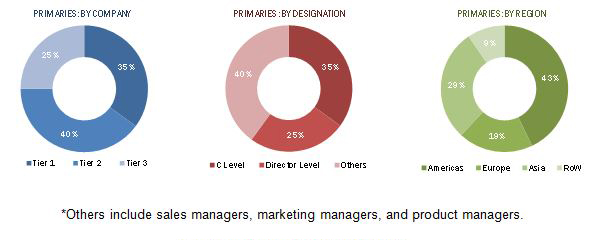
This research study involves extensive usage of secondary sources, directories, and databases (such as Hoovers, Bloomberg, Businessweek, Factiva, and OneSource) to identify and collect information useful for this technical, market-oriented, and commercial aspects of biophotonics market. In addition to secondary sources, the market data was collected by primary research as well by conducting extensive interviews with key people such as CEOs, VPs, Directors and executives. After arriving at the overall market size the total market has been split into several segments and sub-segments. The figure below shows the break-down of the primaries on the basis of company, designation, and region, conducted during the research study.
To know about the assumptions considered for the study, download the pdf brochure
This report takes a close look at the biophotonics market, providing a holistic outlook on market dynamics, industry trends, and supply & demand. The study aims at providing granular information regarding estimates and forecasts for the biophotonics market segments. This report is based on an extensive research study of the biophotonics market and aims at identifying the entire market and all its sub-segments through extensively detailed classifications. The demand for biophotonics is expected to grow significantly and gain importance among players across various domains. The Americas is projected to be the fastest-growing market during the forecast period.
The information provided in this report includes profiles of leading companies in the biophotonics ecosystem, key developments, core strategies deployed by various players, mergers and acquisitions, new product developments, collaborations, and joint ventures of key manufacturers along with their financials. A competitive landscape of the current market has been analyzed on the basis of a company’s recent developments, R&D activities, and product portfolio among other factors.
The target audience of the report include existing players in biophotonics market, start-up companies, venture capitalists, private equity groups, investment houses, equity research firms and other stakeholders. This study answers several questions for the stakeholders, primarily which market segments to focus in next two to five years for prioritizing the efforts and investments.
The report also discusses the future of the global market with roadmaps, upcoming technologies, and applications with respect to biophotonics market. Key players in this industry include, Affymetrix, Inc. (U.S.), Andor Technology Ltd. (U.K.), Becton, Dickinson and Company (U.S.), Carl Zeiss AG (Germany), FEI Company (U.S.), Hamamatsu Photonics K.K. (Japan), Lumenis Ltd. (Israel), Olympus Corporation (Japan), PerkinElmer, Inc. (U.S.), and Zecotek Photonics Inc. (Canada).













Growth opportunities and latent adjacency in Biophotonics Market