Chip Antenna Market by Product Type (Dielectric Chip and LTCC Chip), Application Type (WLAN/WiFi, Bluetooth/BLE, Dual Band/Multi-Band, and GPS/GNSS), End-User Industry (Automotive, Healthcare, and Industrial & Retail) - Global Forecast to 2035


Chip Antenna Market Summary
The global Chip Antenna Market is entering a strong expansion phase as connected electronics increasingly require compact, low-profile, and high-performance wireless components. The market is estimated at USD 4–5 billion in 2025 and is projected to reach USD 16–18 billion by 2035, registering a CAGR of approximately 14%–15% during the forecast period. This outlook is supported by the rapid adoption of IoT devices, smartphones, wearables, connected vehicles, smart home equipment, industrial automation, and wireless communication infrastructure. Chip antennas enable manufacturers to integrate wireless connectivity into space-constrained electronic products while maintaining acceptable RF performance. The increasing deployment of Wi-Fi, Bluetooth, GNSS, Zigbee, cellular IoT, and emerging 5G/6G technologies is further expanding the addressable market. AI is also indirectly supporting demand by accelerating the development of intelligent edge devices that require continuous connectivity for sensing, data processing, and cloud interaction. Industry research indicates that dielectric chip antennas currently represent a significant product category because of their compact form factor and integration advantages, while North America remains a major market and Asia Pacific is expected to record the fastest growth.
Key Market Trends & Insights
The Chip Antenna Market is being shaped by the convergence of miniaturization, wireless connectivity, edge computing, and intelligent electronics. One of the most important trends is the increasing requirement for smaller antennas capable of supporting multiple communication standards. Manufacturers are therefore developing multiband and broadband chip antennas that allow a single component to support technologies such as Bluetooth, Wi-Fi, GNSS, Zigbee, and other short-range wireless protocols.
North America continues to represent a leading regional market because of its established technology ecosystem, high adoption of connected consumer electronics, industrial IoT, automotive telematics, and advanced wireless infrastructure. Asia Pacific is expected to be the fastest-growing region, supported by large-scale electronics manufacturing, smartphone production, automotive electronics, 5G deployment, and increasing IoT adoption.
Dielectric chip antennas remain an important product segment because they combine compact dimensions, surface-mount compatibility, and relatively straightforward integration into printed circuit board designs. At the same time, LTCC chip antennas are gaining attention for applications requiring high-frequency performance, dimensional stability, and reliable operation in demanding environments.
AI and automation are creating additional demand through connected edge devices. Smart cameras, industrial sensors, robots, autonomous systems, medical monitoring equipment, and intelligent appliances increasingly depend on wireless communication. As device intelligence moves closer to the edge, antenna performance becomes increasingly important for maintaining reliable data exchange.
Another important trend is antenna co-design. Instead of treating the antenna as an isolated component, electronics manufacturers are increasingly optimizing the antenna, RF front end, PCB, enclosure, and wireless chipset as a single system. This approach can improve signal quality while reducing device size and power consumption.
Market Size & Forecast
- Base year market size: USD 4–5 billion in 2025.
- Forecast market value: USD 16–18 billion by 2035.
- Expected CAGR: 14%–15% during the forecast period.
- Growth factors: Rising IoT connectivity, 5G deployment, connected vehicles, smart consumer electronics, wearable devices, industrial automation, and demand for miniaturized wireless components are expected to drive market expansion.
- Long-term opportunity: Increasing adoption of multiband connectivity, edge AI, smart sensors, and connected infrastructure will create additional opportunities for chip antenna manufacturers.
The market estimate is positioned within the range of published industry forecasts, with one recent market assessment estimating the global market at USD 4.43 billion in 2025 and projecting USD 12.74 billion by 2033 at a 14.1% CAGR.
Chip Antenna Market Top 10 key takeaway
- The global Chip Antenna Market is estimated at USD 4–5 billion in 2025.
- The market is projected to reach approximately USD 16–18 billion by 2035.
- The market is expected to expand at a CAGR of 14%–15% through 2035.
- North America remains a major regional market due to advanced connected-device adoption.
- Asia Pacific is expected to demonstrate the fastest market growth.
- Dielectric chip antennas represent a leading product category.
- IoT, Bluetooth, Wi-Fi, GNSS, and Zigbee applications remain important demand generators.
- Automotive connectivity is becoming an increasingly important application area.
- Multiband and miniaturized antennas are gaining importance in next-generation electronics.
- AI-enabled edge devices and industrial automation are expected to create new wireless connectivity opportunities.
Product Insights
The dielectric chip antenna segment is expected to maintain a leading position in the Chip Antenna Market because of its combination of small size, integration flexibility, and suitability for high-volume electronic products. Dielectric materials allow antennas to achieve useful electrical performance within significantly smaller physical dimensions than many conventional antenna structures. This characteristic is particularly valuable in smartphones, wearables, Bluetooth modules, IoT sensors, smart meters, medical devices, and compact industrial equipment where PCB space is limited.
Dielectric chip antennas are also attractive because they can be manufactured as surface-mount components and integrated directly into automated electronics assembly processes. This supports high-volume production while helping original equipment manufacturers simplify product architectures. Their availability across different frequency ranges makes them suitable for WLAN, Bluetooth, GNSS, Zigbee, and other wireless applications.
The LTCC chip antenna segment is also gaining attention. Low-temperature co-fired ceramic technology provides strong dimensional stability and can support applications requiring reliable high-frequency performance. LTCC designs can integrate conductive patterns within multilayer ceramic structures, allowing antenna designers to achieve compact configurations for sophisticated wireless systems.
The next stage of product development is increasingly focused on multiband, ultra-small, high-efficiency, and application-specific antennas. Antenna manufacturers are working to address challenges associated with crowded RF environments, device miniaturization, and the simultaneous operation of several wireless standards. This is particularly relevant to smartphones, connected vehicles, industrial gateways, and wearable devices.
AI is influencing product development through automated RF simulation, design optimization, and predictive performance analysis. Machine learning can help engineers evaluate antenna geometries and optimize designs for specific enclosure configurations and operating environments. As AI-enabled devices become more common, chip antennas will increasingly be treated as critical connectivity components rather than simple passive elements.
Technology / Component Insights (Rename based on keyword if needed)
The technology landscape of the Chip Antenna Market is centered on dielectric materials, LTCC technology, RF design, surface-mount manufacturing, multiband architectures, and advanced simulation tools. Modern chip antennas must operate within increasingly crowded frequency environments while meeting stringent requirements for size, efficiency, cost, and reliability.
IoT represents one of the strongest technology drivers. IoT devices frequently have severe space and power constraints, making chip antennas attractive for compact sensor nodes, gateways, trackers, meters, and controllers. Bluetooth Low Energy, Wi-Fi, Zigbee, Thread, GNSS, and cellular IoT technologies are expanding the number of connected products requiring integrated antenna solutions.
The transition toward 5G and future 6G networks is also influencing antenna development. Although chip antennas are not a universal solution for every high-frequency application, advanced materials and specialized designs can support increasingly sophisticated wireless architectures. Higher frequencies and broader bandwidths create opportunities for manufacturers capable of delivering stable RF performance within very small packages.
Cloud connectivity and edge computing further increase the importance of antenna performance. Industrial sensors, autonomous machines, smart appliances, and healthcare devices increasingly transmit data to local gateways or cloud platforms. Reliable wireless connectivity is essential for real-time monitoring and automated decision-making.
Automation is influencing both antenna design and manufacturing. Computer-aided electromagnetic simulation, automated testing, machine vision, and precision surface-mount assembly can improve production consistency. In the future, AI-based design optimization may reduce development cycles by automatically identifying antenna configurations that meet defined performance and dimensional constraints.
Another important innovation direction is integrated antenna solutions. Antennas are increasingly designed alongside RF modules, filters, matching networks, and wireless chipsets. This system-level approach can reduce losses and simplify device integration while improving overall RF performance.
Application Insights
Consumer electronics represents a major application area for the Chip Antenna Market because smartphones, tablets, wearables, smart speakers, wireless accessories, and home networking devices require compact wireless connectivity. The continuing trend toward thinner devices and multifunctional products increases demand for antennas that occupy minimal PCB area while supporting several communication protocols.
IoT is another high-growth application segment. Smart sensors, asset trackers, smart meters, security systems, environmental monitors, and industrial gateways depend on wireless communication for data transmission. The rapid proliferation of connected devices creates significant volume opportunities for chip antenna manufacturers.
Automotive electronics represents a particularly promising long-term application. Modern vehicles increasingly incorporate telematics, infotainment, GNSS, Bluetooth, Wi-Fi, keyless entry, connectivity modules, and advanced driver assistance functions. Connected and software-defined vehicles require multiple wireless interfaces, creating additional demand for compact antenna solutions.
Industrial automation is also expanding the addressable market. Smart factories use wireless sensors, robots, machine controllers, condition-monitoring devices, and industrial gateways to collect and exchange data. As factories transition toward Industry 4.0 and increasingly autonomous operations, reliable wireless connectivity becomes essential.
Healthcare and medical electronics provide another emerging opportunity. Wearable health monitors, portable diagnostic devices, patient-monitoring equipment, and connected medical accessories increasingly incorporate wireless communication. Chip antennas enable manufacturers to integrate connectivity without substantially increasing device size.
Regional Insights
North America is expected to remain a leading regional market for chip antennas, supported by high adoption of connected consumer electronics, IoT infrastructure, automotive connectivity, industrial automation, and advanced wireless technologies. The region has a mature ecosystem of semiconductor companies, wireless technology developers, electronics manufacturers, and system integrators. The strong presence of technology-driven industries also supports demand for high-performance RF components. Published market research identifies North America as the largest regional market, with a reported 38.75% revenue share in 2025 in one assessment.
Europe represents another important market, particularly because of automotive electronics, industrial automation, smart infrastructure, and connected healthcare. Germany, France, and other major European economies are investing in connected manufacturing and intelligent transportation technologies, which creates demand for compact wireless components.
Asia Pacific is expected to record the fastest growth through the forecast period. China, Japan, South Korea, Taiwan, and India have extensive electronics manufacturing ecosystems and are rapidly expanding 5G, IoT, automotive electronics, and smart-device deployment. The region's large consumer-electronics production base provides chip antenna manufacturers with significant volume opportunities.
- North America: Strong demand from IoT, automotive, wireless infrastructure, and connected consumer electronics.
- Europe: Automotive and industrial automation remain important demand centers.
- Asia Pacific: Expected to be the fastest-growing regional market.
- China and Japan: Strong electronics manufacturing and advanced wireless technology adoption.
- India and Southeast Asia: Increasing electronics production and IoT deployment create emerging opportunities.
Region Specific Market Trends
China is expected to remain one of the most important country markets in Asia Pacific because of its large electronics manufacturing base, extensive 5G infrastructure, smart-device ecosystem, and growing connected-vehicle industry. Chip antenna demand is expected to benefit from domestic production of smartphones, IoT devices, networking equipment, and automotive electronics. Japan is also expected to maintain strong adoption because of its advanced automotive, robotics, consumer electronics, and industrial automation sectors. China is estimated to record approximately 15%–17% CAGR, while Japan is expected to grow at around 10%–12% CAGR over the forecast period.
In North America, the United States is expected to remain the dominant market, supported by IoT, cloud-connected devices, autonomous and connected vehicles, industrial automation, and advanced wireless technologies. The US market is estimated to expand at approximately 12%–14% CAGR. Canada is projected to grow at around 10%–12% CAGR, supported by connected infrastructure and industrial applications, while Mexico is expected to achieve approximately 11%–13% CAGR, supported by electronics and automotive manufacturing.
Germany is expected to remain a major European market because of its automotive manufacturing base and Industry 4.0 ecosystem. Its chip antenna market could grow at approximately 9%–11% CAGR. France is expected to expand at around 8%–10% CAGR, supported by aerospace, automotive, telecom, smart infrastructure, and industrial applications.
- China: Large electronics manufacturing base and rapid connected-device adoption support strong growth.
- Japan: Robotics, automotive electronics, and advanced manufacturing drive demand.
- United States: IoT, automotive connectivity, and industrial automation remain major growth engines.
- Canada and Mexico: Connected infrastructure and manufacturing support expanding adoption.
- Germany and France: Automotive, industrial automation, and smart infrastructure remain important opportunities.
Key Chip Antenna Market Company Insights
The competitive landscape includes established RF component manufacturers and specialized antenna companies focusing on miniaturization, multiband performance, high-frequency applications, and application-specific designs. Major participants include Murata Manufacturing Co., Ltd., Yageo Corporation, TDK Corporation, Vishay Intertechnology, Inc., Johanson Technology, Inc., Antenova Ltd., Taoglas, Abracon LLC, and Mitsubishi Materials Corporation. Industry sources also identify companies such as INPAQ Technology, Partron, Fractus, KYOCERA AVX, Molex, and Linx Technologies as participants in the competitive landscape.
Competition is increasingly centered on engineering support, RF simulation capabilities, customization, manufacturing scale, and the ability to meet stringent size and performance requirements. Companies are investing in multiband antennas, high-frequency solutions, automotive-grade products, and integrated wireless modules. Product strategies increasingly target high-growth areas such as IoT, automotive connectivity, GNSS, smart devices, and industrial automation.
- Murata and TDK: Focus on miniaturized RF components and high-volume electronics applications.
- Yageo and Vishay: Leverage broad electronic-component portfolios and global manufacturing capabilities.
- Johanson Technology: Focuses strongly on RF and microwave component performance.
- Antenova and Taoglas: Emphasize antenna engineering and application-specific wireless solutions.
- Abracon and Mitsubishi Materials: Expand offerings across specialized RF and electronic component applications.
Recent Developments
The Chip Antenna Market is seeing continued product development around smaller form factors, multiband connectivity, and application-specific RF performance. Manufacturers are increasingly introducing solutions designed for compact IoT modules, GNSS devices, Wi-Fi/Bluetooth applications, and connected automotive systems.
Another important development is the integration of advanced RF simulation and automated design workflows. These tools allow manufacturers to evaluate antenna performance within specific PCB and enclosure configurations, helping reduce design iterations and accelerate product development.
The expansion of connected vehicles and industrial IoT is also encouraging partnerships between antenna manufacturers, module developers, and system integrators. These collaborations are intended to deliver optimized connectivity solutions rather than standalone antenna components.
Market Segmentation
The Chip Antenna Market can be segmented by product, technology, application, and region. By product, the market includes dielectric chip antennas and LTCC chip antennas, with dielectric designs maintaining a strong position because of their compact form factor and integration advantages. By technology and connectivity standard, applications include WLAN/Wi-Fi, Bluetooth, Zigbee, GNSS, and other short-range or wireless communication technologies. By application, the market spans consumer electronics, automotive, healthcare, telecommunications, industrial IoT, smart infrastructure, and other connected-device applications. Regionally, the market covers North America, Europe, Asia Pacific, South America, and the Middle East & Africa, with Asia Pacific expected to demonstrate the strongest growth over the forecast period.
- By Product: Dielectric chip antennas and LTCC chip antennas.
- By Connectivity: Wi-Fi/WLAN, Bluetooth, Zigbee, GNSS, and other wireless standards.
- By Application: Consumer electronics, automotive, IoT, healthcare, telecom, and industrial automation.
- By End Use: Connected devices, smart infrastructure, vehicles, industrial equipment, and wearable electronics.
- By Region: North America, Europe, Asia Pacific, South America, and Middle East & Africa.
Conclusion
The global Chip Antenna Market is positioned for sustained expansion as wireless connectivity becomes a fundamental requirement across consumer, industrial, automotive, healthcare, and infrastructure applications. From an estimated USD 4–5 billion in 2025, the market could reach USD 16–18 billion by 2035, reflecting a CAGR of approximately 14%–15%. The central growth opportunity will come from the continued miniaturization of electronic products combined with rising requirements for multiband, low-power, and reliable wireless connectivity.
AI, IoT, automation, and edge computing will strengthen this opportunity by increasing the number of intelligent devices that must communicate continuously with other devices, gateways, and cloud platforms. Automotive connectivity, smart factories, wearable electronics, and connected infrastructure are likely to become increasingly important demand centers.
For manufacturers, strategic priorities will include improving RF efficiency, developing smaller multiband solutions, supporting emerging wireless standards, and providing customized antenna designs. Companies that combine advanced materials, automated engineering, RF simulation, and application-specific design expertise will be well positioned to capture opportunities through 2035. The market's long-term importance therefore extends beyond antenna components themselves: chip antennas are becoming an enabling technology for the broader connected-device and intelligent-electronics ecosystem.
FAQs
1. What is the projected market size of the Chip Antenna Market?
The global Chip Antenna Market is estimated at USD 4–5 billion in 2025 and is projected to reach approximately USD 16–18 billion by 2035, supported by increasing demand for compact wireless connectivity.
2. What is the expected growth rate of the Chip Antenna Market?
The Chip Antenna Market is expected to grow at approximately 14%–15% CAGR from 2025 to 2035. Growth will be supported by IoT, connected vehicles, consumer electronics, wireless infrastructure, and industrial automation.
3. What are the key drivers of the Chip Antenna Market?
Major drivers include device miniaturization, increasing IoT adoption, 5G and wireless connectivity expansion, connected automotive systems, wearable electronics, smart-home devices, industrial automation, and growing demand for multiband wireless communication.
4. Which region is expected to lead the Chip Antenna Market?
North America is expected to remain a leading regional market because of its strong adoption of connected devices, IoT, automotive telematics, and advanced wireless technologies. Asia Pacific is expected to register the fastest growth during the forecast period.
5. Who are the key companies in the Chip Antenna Market?
Major companies include Murata Manufacturing, Yageo, TDK, Vishay Intertechnology, Johanson Technology, Antenova, Taoglas, Abracon, Mitsubishi Materials, INPAQ Technology, Partron, and Fractus.
To speak to our analyst for a discussion on the above findings, click Speak to Analyst
 Exclusive indicates content/data unique to MarketsandMarkets and not available with any competitors.
Table of Contents
1 Introduction (Page No. - 13)
1.1 Objectives of the Study
1.2 Market Definition
1.3 Study Scope
1.3.1 Markets Covered
1.3.2 Years Considered for the Study
1.4 Currency
1.5 Units Considered
1.6 Limitations
1.7 Stakeholders
2 Research Methodology (Page No. - 16)
2.1 Research Data
2.1.1 Secondary Data
2.1.1.1 Key Data From Secondary Sources
2.1.2 Primary Data
2.1.2.1 Key Data From Primary Sources
2.1.2.2 Key Industry Insights
2.1.2.3 Breakdown of Primaries
2.2 Market Size Estimation
2.2.1 Bottom-Up Approach
2.2.2 Top-Down Approach
2.3 Market Breakdown & Data Triangulation
2.4 Research Assumptions
3 Executive Summary (Page No. - 24)
4 Premium Insights (Page No. - 28)
4.1 Chip Antenna Market, 2013–2022 (USD Million)
4.2 Market, By Application
4.3 Market, By Geography
4.4 Consumer Electronics End-User Industry to Dominate the Asia-Pacific Market in 2015
4.5 Asia-Pacific Market Expected to Grow at the Highest CAGR During the Forecast Period (2016-2022)
4.6 Chip Antenna Market, By End-User Industry
4.7 Market, By Region
5 Market Overview (Page No. - 32)
5.1 Introduction
5.2 Market Segmentation
5.2.1 Chip Antenna Market, By Product Type
5.2.2 Market, By Application
5.2.3 Market, By End-Use Industry
5.2.4 Market, By Geography
5.3 Market Dynamics
5.3.1 Drivers
5.3.1.1 Low Cost of Smd Chip Antennas as Compare to Conventional Antennas
5.3.1.2 Demand for Chip Antenna in IoT Applications
5.3.1.3 Growing Trend of Miniaturization in Consumer Electronics
5.3.2 Restraints
5.3.2.1 High Initial Development Cost of Ceramic Chip Antenna
5.3.2.2 Variable Performance Efficiency and Limited Range of Chip Antenna
5.3.2.3 Lack in Operability and Compatibility Between Supplier and Odm
5.3.3 Opportunities
5.3.3.1 Industry 4.0 Will Provide Potential Growth Opportunity for Chip Antennas in the Near Future
5.3.3.2 Opportunity for Chip Antenna in Low Power Wide Area Network (Lpwan) Application
5.3.4 Challenge
5.3.4.1 Lack of Uniformity & Consistency in Chip Antennas and Variance in Various Operating Frequencies for Different Applications Across the World
6 Industry Trends (Page No. - 42)
6.1 Introduction
6.2 Value Chain Analysis (2015)
6.3 Key Industry Trends
6.4 Porter’s Five Forces Analysis
6.4.1 Intensity of Competitive Rivalry
6.4.2 Threat of Substitutes
6.4.3 Threat of New Entrants
6.4.4 Bargaining Power of Suppliers
6.4.5 Bargaining Power of Buyers
7 Chip Antenna Market, By Product Type (Page No. - 51)
7.1 Introduction
7.2 Dielectric Chip Antenna
7.3 LTCC
8 Chip Antenna Market, By Application Type (Page No. - 56)
8.1 Introduction
8.2 Wlan/Wifi
8.3 Bluetooth /BLE
8.4 Dual Band / Multi-Band
8.5 GPS / GNSS
9 Chip Antenna Market, By End-User Industry (Page No. - 68)
9.1 Introduction
9.2 Consumer Electronics
9.3 Automotive
9.4 Smart Home / Smart Grid
9.5 Healthcare
9.6 Industrial & Retail
9.7 Other
10 Geographic Analysis (Page No. - 86)
10.1 Introduction
10.2 North America
10.2.1 U.S.
10.2.2 Canada
10.2.3 Mexico
10.3 Europe
10.3.1 U.K.
10.3.2 Germany
10.3.3 France
10.3.4 Rest of Europe
10.4 APAC
10.4.1 China
10.4.2 Japan
10.4.3 South Korea
10.4.4 Rest of Asia-Pacific
10.5 Rest of the World
10.5.1 Latin America
10.5.2 Middle East
10.5.3 Africa
11 Competitive Landscape (Page No. - 105)
11.1 Overview
11.2 Chip Antenna Market: Comparative Analysis
11.3 Market Ranking Analysis: Chip Antenna Market, 2015
11.4 Competitive Situations and Trends
11.4.1 New Product Launches & New Product Devlopments
11.4.2 Expansions
11.4.3 Agreements & Partnerships
11.4.4 Acquisitions
12 Company Profiles (Page No. - 112)
(Overview, Products And Services, Financials, Strategy & Development)*
12.1 Introduction
12.2 Yageo Corporation
12.3 Vishay Intertechnology, Inc.
12.4 Johanson Technology, Inc.
12.5 Pulse Electronics
12.6 Taoglas
12.7 Mitsubishi Materials Corporation
12.8 Partron Co., Ltd.
12.9 Inpaq Technology Co., Ltd.
12.10 Antenova M2m
12.11 Fractus S.A.
12.12 Linx Technologies
12.13 Fractus Antenna S.L.
*Details On Overview, Products And Services, Financials, Strategy & Development Might Not Be Captured In Case Of Unlisted Companies.
13 Appendix (Page No. - 145)
13.1 Insights From Industry Experts
13.2 Discussion Guide
13.3 Introducing RT: Real Time Market Intelligence
13.4 Knowledge Store: Marketsandmarkets’ Subscription Portal
13.5 Available Customizations
13.6 Related Reports
List of Tables (77 Tables )
Table 1 Currency Table
Table 2 Increasing Demand for IoT Applicationsis Propelling the Growth of the Chip Antenna Market
Table 3 Variable Performance Efficiency and Limited Range Expected to Affect Growth of the Chip Antenna Market
Table 4 Communication Matrix for Low Power Wide Area Network
Table 5 Evolution of 5g Technology Will Create New Market Opportunities for Market
Table 6 Lack of Uniformity & Consistency ,Variance in Various Operating Frequencies for Different Applications Will Be A Major Challenge for the Market
Table 7 Chip Antenna Market Size, By Product Type, 2013–2022 (USD Million)
Table 8 Market Size, By Product Type, 2013–2022 (Million Units)
Table 9 Dielectric: Chip Antenna Market Size, By Application Type, 2013–2022 (USD Million)
Table 10 Dielectric: Market Size, By Application Type, 2013–2022 (Million Units)
Table 11 LTCC: Market Size, By Application Type, 2013–2022 (USD Million)
Table 12 LTCC: Market Size, By Application Type, 2013–2022 (Million Units)
Table 13 Global Chip Antenna Market Size, By Application, 2013–2022 (USD Million)
Table 14 Global Market Size, By Application, 2013–2022 ( Million Units)
Table 15 Wlan/Wi-Fi Market Size, By Product Type, 2013–2022 (USD Million)
Table 16 Wlan-/Wi-Fi Market Size, By Product Type, 2013–2022 (Million Units)
Table 17 Wlan/Wi-Fi Market Size, By End-User Industry, 2013–2022 (USD Million)
Table 18 Bluetooth /BLE Market Size, By Product Type, 2013–2022 (USD Million)
Table 19 Bluetooth /BLE Market Size, By Product Type, 2013–2022 (Million Units)
Table 20 Bluetooth/BLE Market Size, By End-User Industry, 2013–2022 (USD Million)
Table 21 Dual Band / Multi-Band Chip Antenna Market Size, By Product Type, 2013–2022 (USD Million)
Table 22 Dual Band / Multi-Band Market Size, By Product Type, 2013–2022 (Million Units)
Table 23 Dual Band/Multi-Band Market Size, By End-User Industry, 2013–2022 (USD Million)
Table 24 GPS / GNSS Chip Antenna Market Size, By Product Type, 2013–2022 (USD Million)
Table 25 GPS / GNSS Market Size, By Product Type, 2013–2022 (Million Units)
Table 26 GPS/GNSS Market Size, By End-User Industry, 2013–2022(USD Million)
Table 27 Chip Antenna Market Size, By End-User Industry, 2013–2022 (USD Million)
Table 28 Consumer Electronics: Chip Antenna Market Size, By Application, 2013–2022 (USD Million)
Table 29 North America: Market for Consumer Electronics, By Country, 2013–2022 (USD Million)
Table 30 Europe: Market for Consumer Electronics, By Country, 2013–2022 (USD Million)
Table 31 APAC: Market for Consumer Electronics, By Country, 2013–2022 (USD Million)
Table 32 RoW: Market for Consumer Electronics, By Country, 2013–2022 (USD Million)
Table 33 Automotive: Chip Antenna Market Size, By Application, 2013–2022 (USD Million)
Table 34 North America: Market for Automotive, By Country, 2013–2022 (USD Million)
Table 35 Europe: Market for Automotive, By Country, 2013–2022 (USD Million)
Table 36 APAC: Market for Automotive, By Country, 2013–2022 (USD Million)
Table 37 RoW: Market for Automotive, By Country, 2013–2022 (USD Million)
Table 38 Smart Home/Smart Grid: Chip Antenna Market Size, By Application, 2013–2022 (USD Million)
Table 39 North America: Market for Smart Home/Smart Grid, By Country, 2013–2022 (USD Million)
Table 40 Europe: Market for Smart Home/Smart Grid, By Country, 2013–2022 (USD Million)
Table 41 APAC: Market for Smart Home/Smart Grid, By Country, 2013–2022 (USD Million)
Table 42 RoW: Market for Smart Home/Smart Grid, By Country, 2013–2022 (USD Million)
Table 43 Healthcare: Chip Antenna Market Size, By Application, 2013–2022 (USD Million)
Table 44 North America: Market for Healthcare, By Country, 2013–2022 (USD Million)
Table 45 Europe: Market for Healthcare, By Country, 2013–2022 (USD Million)
Table 46 APAC: Market for Healthcare, By Country, 2013–2022 (USD Million)
Table 47 RoW: Market for Healthcare, By Country, 2013–2022 (USD Million)
Table 48 Industrial & Retail: Market Size, By Application, 2013–2022 (USD Million)
Table 49 North America: Market for Industrial & Retail, By Country, 2013–2022 (USD Million)
Table 50 Europe: Market for Industrial & Retail, By Country, 2013–2022 (USD Million)
Table 51 APAC: Market for Industrial & Retail, By Country, 2013–2022 (USD Million)
Table 52 RoW: Market for Industrial & Retail, By Country, 2013–2022 (USD Million)
Table 53 Others: Market Size, By Application, 2013–2022 (USD Million)
Table 54 North America: Market for Other, By Country, 2013–2022 (USD Million)
Table 55 Europe: Market for Other, By Country, 2013–2022 (USD Million)
Table 56 APAC: Market for Other, By Country, 2013–2022 (USD Million)
Table 57 RoW: Market for Other, By Country, 2013–2022 (USD Million)
Table 58 Chip Antenna Market Size, By Region, 2013–2022 (USD Million)
Table 59 U.S.: Market, By End-User Industry, 2013–2022 (USD Million)
Table 60 Canada: Market, By End-User Industry, 2013–2022 (USD Million)
Table 61 Mexico: Market, By End-User Industry, 2013–2022 (USD Million)
Table 62 U.K.: Market, By End-User Industry, 2013–2022 (USD Million)
Table 63 Germany: Market, By End-User Industry, 2013–2022 (USD Million)
Table 64 France: Market, By End-User Industry, 2013–2022 (USD Million)
Table 65 Rest of Europe: Market, By End-User Industry, 2013–2022 (USD Million)
Table 66 China: Market, By End-User Industry, 2013–2022 (USD Million)
Table 67 Japan: Market, By End-User Industry, 2013–2022 (USD Million)
Table 68 South Korea: Market, By End-User Industry, 2013–2022 (USD Million)
Table 69 Rest of Asia-Pacific: Market, By End-User Industry, 2013–2022 (USD Million)
Table 70 Latin America: Market, By End-User Industry, 2013–2022 (USD Million)
Table 71 Middle East: Market, By End-User Industry, 2013–2022 (USD Million)
Table 72 Africa: Market, By End-User Industry, 2013–2022 (USD Million)
Table 73 Chip Antenna Market Ranking, 2015
Table 74 New Product Launches & New Product Devlopments, 2013–2016
Table 75 Expansions, 2013–2015
Table 76 Agreements & Partnerships, 2013–2015
Table 77 Acquisitions, 2014–2015
List of Figures (50 Figures)
Figure 1 Market Segmentation
Figure 2 Chip Antenna Market: Research Design
Figure 3 Data Triangulation
Figure 4 Process Flow of Market Size Estimation
Figure 5 Dielectric Chip Antennas to Hold the Largest Market Share in 2015
Figure 6 Dual Band/Multi-Band Segment is Expected to Grow at the Highest CAGR Between (2016-2022)
Figure 7 Consumer Electronics Market Expected to Hold the Largest Market Size During the Forecast Period (2016-2022)
Figure 8 Chip Antenna Market, By Geography, 2015
Figure 9 Demand From the Consumer Electronics & Automotive Sectors is Driving the Chip Antenna Market Between (2016-2022)
Figure 10 Dual Band/Multi-Band Segment is Expected to Grow at the Highest CAGR During the Forecast Period (2016-2022)
Figure 11 Asia-Pacific Held the Largest Share of the Market in 2015
Figure 12 China Held the Largest Share in the Asia-Pacific Market (2015)
Figure 13 Asia-Pacific Held the Largest Share in the Market in 2015
Figure 14 Consumer Electronics End-User Industry Dominated the Market in 2015
Figure 15 Asia-Pacific Market to Grow at the Highest CAGR During the Forecast Period (2016-2022)
Figure 16 Segmentation, By Geography
Figure 17 Increasing Demand for Chip Antennas for IoT Applications are the Key Factor Driving the Market
Figure 18 IoT Chip Market, 2014– 2022, (USD Million)
Figure 19 Value Chain Analysis: Major Value is Added During Component Development and Device Integration Phase
Figure 20 Key Industry Trends: Growing Demand for Compact Size Antenna
Figure 21 Porter’s Five Forces Analysis, 2015
Figure 22 Intensity of Competitive Rivalry Had A High Impact on the Chip Antenna Market in 2015
Figure 23 Threat of Substitutes Had Medium Impact on Market in 2015
Figure 24 Threat of New Entrants Had Medium Impact on Market in 2015
Figure 25 Bargaining Power of Suppliers Had Medium Impact on Market in 2015
Figure 26 Bargaining Power of Buyers Had High Impact on Market in 2015
Figure 27 Market for Dual Band/ Multi-Band Applications is Expected to Grow at Highest CAGR From 2016 to 2022
Figure 28 Consumer Electronics End-Use Segment Dominated the Wlan/WiFi Market in 2016
Figure 29 Bluetooth Enabled Device Shipment (Billion Units) From 2012 to 2018
Figure 30 Consumer Electronics End-User Segment Dominated the GPS Chip Antenna in 2016
Figure 31 Chip Antenna Market: Geographic Snapshot, 2016–2022
Figure 32 North American Market Snapshot: Demand Would Be Driven By the Growth in the Consumer Electronics Sector
Figure 33 Asia-Pacific Market Snapshot: Demand Would Be Driven By the Growth in the Consumer Electronics & Automotive Sectors
Figure 34 During the Forecast Period Players Adopted New Product Launches as the Key Strategy
Figure 35 Battle for Market Share: Companies Adopt New Product Launches as the Key Strategy
Figure 36 Market Evolution Framework: Various New Product Launches Fueled the Growth of the Market Between 2014 and 2016
Figure 37 Geographic Revenue Mix of the Top 3 Market Players
Figure 38 Yageo Corporation: Company Snapshot
Figure 39 Yageo Corporation: SWOT Analysis
Figure 40 Vishay Intertechnology, Inc.: Company Snapshot
Figure 41 Vishay Intertechnology, Inc.: SWOT Analysis
Figure 42 Johanson Technology, Inc.: SWOT Analysis
Figure 43 Pulse Electronics: Company Snapshot
Figure 44 Mitsubishi Materials Corporation: Company Snapshot
Figure 45 Mitsubishi Materials Corporation: SWOT Analysis
Figure 46 Partron Co., Ltd.: Company Snapshot
Figure 47 Partron Co., Ltd.: SWOT Analysis
Figure 48 Inpaq Technology Co., Ltd.: Company Snapshot
Figure 49 Inpaq Technology Co., Ltd.: SWOT Analysis
Figure 50 Antenova M2m: SWOT Analysis
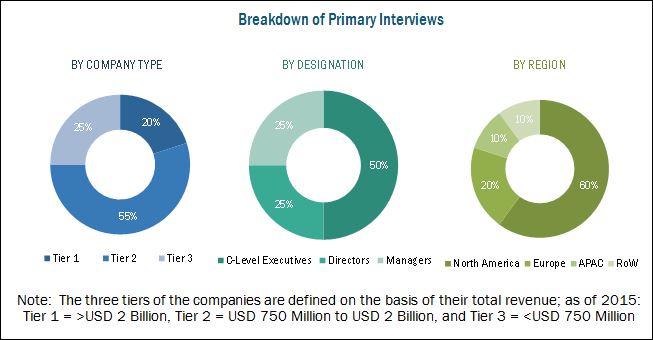
The top-down and bottom-up approaches have been used in the study to estimate the size of the chip antenna market. The research methodology includes the study of annual and financial reports of top players, presentations, press releases, journals, and paid databases, and interviews with industry experts. Additionally, the average revenue generated by companies according to the region was used to arrive at the overall market size. This overall market size was used in the top-down procedure to estimate the sizes of other individual markets via percentage splits from secondary and primary research.
To know about the assumptions considered for the study, download the pdf brochure
The chip antenna ecosystem comprises antenna manufacturers such as Johanson Technology, Inc. (U.S.), Yageo Corporation (Taiwan), Vishay Intertechnology, Inc. (U.S.)., Fractus S.A. (Spain), Antenova M2M (U.K.), and Taoglas (Ireland), dielectric material suppliers, distributors, and system integrators such as Samsung C&T Corporation (South Korea) and Apple (U.S.) that integrate chip antennas and sell them to end-users according to their unique business requirements.
Target Audience:
- Chip antenna designers and manufacturers
- Research organizations and consulting companies
- Associations, forums, and alliances related to chip antenna
- Investors
- Start-up companies
- Raw material suppliers
- Government and other regulatory bodies
- Market research and consulting firms
Chip antenna Market Scope:
By Product Type
- LTCC Chip Antenna
- Dielectric Chip Antenna
By Application Type
- WLAN/WiFi
- Bluetooth/BLE
- Dual Band/Multi-Band
- GPS/GNSS
By End-User Industry
- Automotive
- Healthcare
- Industrial & Retail
- Smart Grid/Smart Home
- Consumer Electronics
- Others
By Geography
-
North America
- U.S.
- Canada
- Mexico
-
Europe
- U.K.
- Germany
- France
- Others
-
APAC
- China
- Japan
- South Korea
- Others
-
RoW
- Latin America
- Middle East
- Africa
Available Customizations:
With the given market data, MarketsandMarkets offers customizations as per the clients’ specific needs. The following customization options are available for this report:
Geographic Analysis
Further breakdown of region/country-specific analysis
Company Information
Detailed analysis and profiling of additional market players (up to five)













Growth opportunities and latent adjacency in Chip Antenna Market