Composite Decking & Railing Market

Composite Decking & Railing Market by Type (Capped, Uncapped), Resin Type (Polyethylene, Polypropylene, Polyvinyl Chloride, Others), Application (Residential, Non- Residential), And Region - Global Forecast to 2031




COMPOSITE DECKING & RAILING MARKET
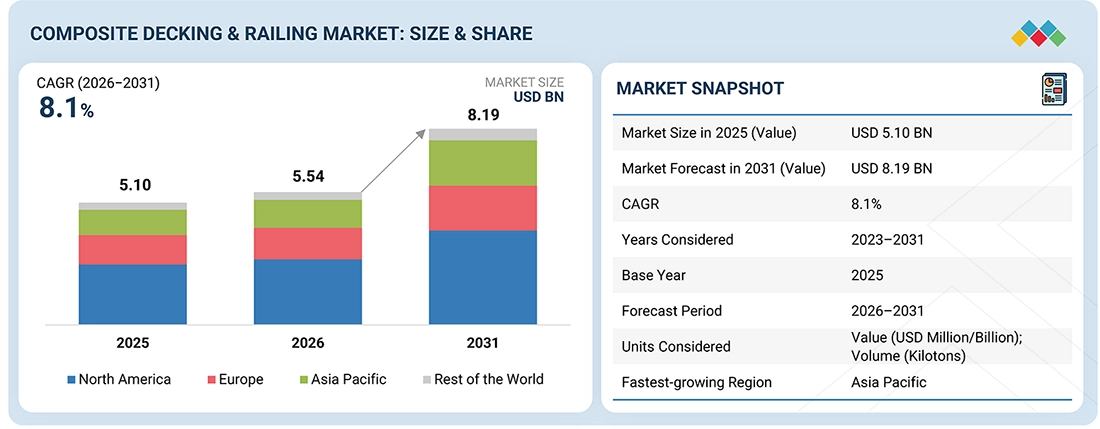
Source: Secondary Research, Interviews with Experts, MarketsandMarkets Analysis | Updated on : September 16, 2026
The composite decking & railing market is projected to reach USD 8.19 billion in 2031 from USD 5.54 billion in 2026, at a CAGR of 8.1%. The growth of the market is mainly due to the increasing demand for composite decking & railing across various application segments, such as residential buildings, commercial premises, and outdoor infrastructure. The residential construction industry is a major consumer of composite decking & railing. These products are widely used in the construction of outdoor living areas, boardwalks, and balconies for their improved workability, weather resistance, safety, and low-maintenance properties. The growing demand for modern, effective, and aesthetically designed buildings results in increased consumption of composite decking & railing in the industry. Home improvement and high-end outdoor hospitality are among the leading end users of composite decking & railing. They are used as significant parts in construction for their properties such as durability, moisture resistance, color retention, and structural stability.
KEY TAKEAWAYS
-
By RegionNorth America dominated the composite decking & railing market with a share of 49.4% in terms of value in 2025.
-
By TypeThe capped segment is projected to grow at the highest CAGR (9.1%) during the forecast period.
-
By Resin TypeThe Polypropylene (PP) segment is projected to grow at the highest CAGR (9.2%) during the forecast period.
-
By ApplicationThe residential segment dominated the composite decking & railing market, accounting for 72.4% of the value in 2025.
-
Competitive Landscape - Key PlayersTrex Company, Inc., James Hardie Building Products Inc., Fortune Brands Innovations, UFP Industries, Inc., and Oldcastle APG are star players in the composite decking & railing market, given their broad industry coverage and strong operational & financial strength.
-
Competitive Landscape - StartupsBetterDeck, Dino Decking Ltd., Ecodek, and Everwood WPC have distinguished themselves among startups and SMEs due to their well-developed marketing channels and extensive funding to build their product portfolios.
The global composite decking & railing market is driven by increasing demand for durable, low-maintenance, and environmentally sustainable outdoor building materials. Composite decking & railing products, manufactured using a combination of wood fibers and recycled plastics, offer superior resistance to moisture, insects, and weather-related damage compared to traditional wood alternatives. Rising residential renovation activities, expanding construction projects, and growing consumer preference for aesthetically appealing outdoor living spaces are further supporting market expansion. Technological advancements in product design, texture, and color options are enhancing product adoption across residential and commercial applications. North America remains a prominent market owing to strong remodeling trends, while Asia Pacific is emerging as a lucrative region due to rapid urbanization and infrastructure development.
TRENDS & DISRUPTIONS IMPACTING CUSTOMERS' CUSTOMERS
The impact on consumers’ business emerges from customer trends or disruptions. Shifts, which are changing trends or disruptions, will impact the revenues of end users. The revenue impact on end users will affect the revenue of hot bets, which will further affect the revenues of composite decking & railing manufacturers.
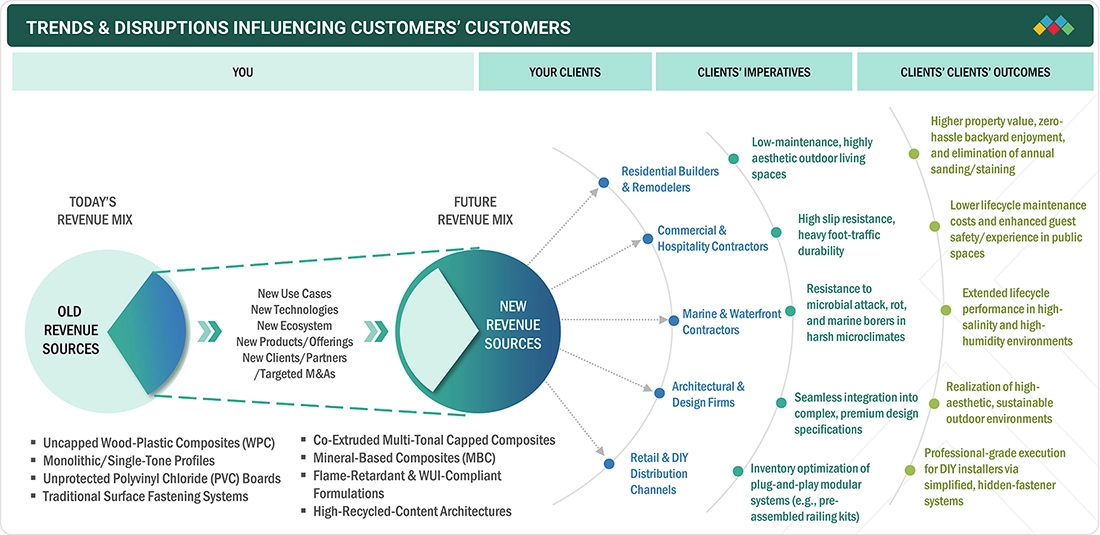
Source: Secondary Research, Interviews with Experts, MarketsandMarkets Analysis
MARKET DYNAMICS

Level
-
Rising demand for low-maintenance outdoor materials

-
Growth in residential remodeling and outdoor living spaces


Level
-
High initial installation cost

-
Availability of cheaper substitute materials


Level
-
Expansion in commercial and hospitality infrastructure

-
Untapped growth potential in emerging economies


Level
-
Raw material price volatility

-
Lack of standardized awareness among contractors and consumers

Source: Secondary Research, Interviews with Experts, MarketsandMarkets Analysis
Driver: Growth in residential remodeling and outdoor living spaces
The increase in residential remodeling projects and investments in outdoor living spaces is contributing significantly to the rise in demand for composite decking and railings. More people have turned their attention to transforming unused outdoor areas into extensions of the indoor living space, such as patios, rooftop decks, poolside decks, outdoor kitchens, entertainment areas, and backyard seating areas. Such a trend has been observed following changes in lifestyle choices, resulting in increased expenditure on improving and building recreational facilities within residential properties. In countries like the US, remodeling of outdoor areas is playing a vital role in renovation spending, especially among people living in the suburbs who want to enhance their property and improve their lifestyle.
Restraint: High initial installation cost
One of the biggest constraints preventing market expansion and customer penetration is the relatively high upfront cost of composite decks and railings. Compared to pressure-treated wood, the use of composite materials entails considerably higher material and installation costs due to the modern technology involved, the presence of polymers, and the need for protection and finishing. In current conditions, when people assess outdoor construction projects, the initial cost becomes crucial, while they overlook long-term savings. For instance, first-time homeowners or middle-income households who need to build a new patio or deck prefer pressure-treated wood to composite materials due to the higher costs associated with the latter. This problem becomes especially serious in developing countries, where people have less extra income and budget constraints are tighter. In addition, small contractors may advise their clients to choose cheaper options as well.
Opportunity: Expansion in commercial and hospitality infrastructure
Infrastructure development in commercial and hospitality sectors offers considerable potential in driving growth in the composite decking and railing market, especially due to the increasing inclination towards durability and aesthetics of the outdoor setting among hotels, resorts, restaurants, entertainment facilities, and recreation centers. Outdoor areas are now seen as an essential part of the strategy for providing a pleasant customer experience, which makes it worthwhile to spend on quality decking for pool areas, rooftop decks, beach walkways, dining decks, marinas, and recreational areas. The use of composite material is particularly favorable in these areas owing to its ability to withstand moisture, corrosion, mold growth, discoloration, and heavy traffic.
Challenge: Raw material price volatility
Fluctuations in the prices of raw materials continue to be one of the major difficulties that manufacturers face in the composite decking and railings industry, since manufacturing requires the use of plastic resins, wood fiber, additives, coloring agents, and chemical stabilizers. Materials used to manufacture composite decking include polyethylene, polypropylene, and polyvinyl chloride (PVC), whose prices are highly dependent on crude oil and petrochemical markets. Fluctuations in resin prices put pressure on companies' profit margins, especially in long-term supply agreements or in highly competitive markets. This has been seen in cases where disruptions in petrochemical markets have increased polymer prices.
COMPOSITE DECKING & RAILING MARKET: COMMERCIAL USE CASES ACROSS INDUSTRIES
| COMPANY | USE CASE DESCRIPTION | BENEFITS |
|---|---|---|
 |
Composite decking and railing in residential communities and outdoor living spaces | Low maintenance, long service life, enhanced aesthetics |
 |
Composite decking around pools, terraces, and outdoor lounges | Slip resistance, low maintenance, long-lasting appearance |
 |
Composite decking in multifamily residential and mixed-use developments | Sustainable materials, reduced maintenance, aesthetic appeal |
Logos and trademarks shown above are the property of their respective owners. Their use here is for informational and illustrative purposes only.
MARKET ECOSYSTEM
The ecosystem of the composite decking & railing market is an interconnected network of raw material suppliers, manufacturers, distributors, contractors, retailers, and end users. At its core, the market depends on collaboration among suppliers of recycled plastics, wood fibers, and additives, as well as manufacturers focused on developing durable, low-maintenance, and aesthetically appealing products. As demand grows, the market integrates with residential construction, remodeling, landscaping, and commercial outdoor infrastructure sectors. Feedback from homeowners, builders, and contractors drives innovation in product durability, design, sustainability, and installation efficiency. Overall, the composite decking & railing market ecosystem thrives on material innovation, industry collaboration, and the growing preference for sustainable outdoor living solutions.
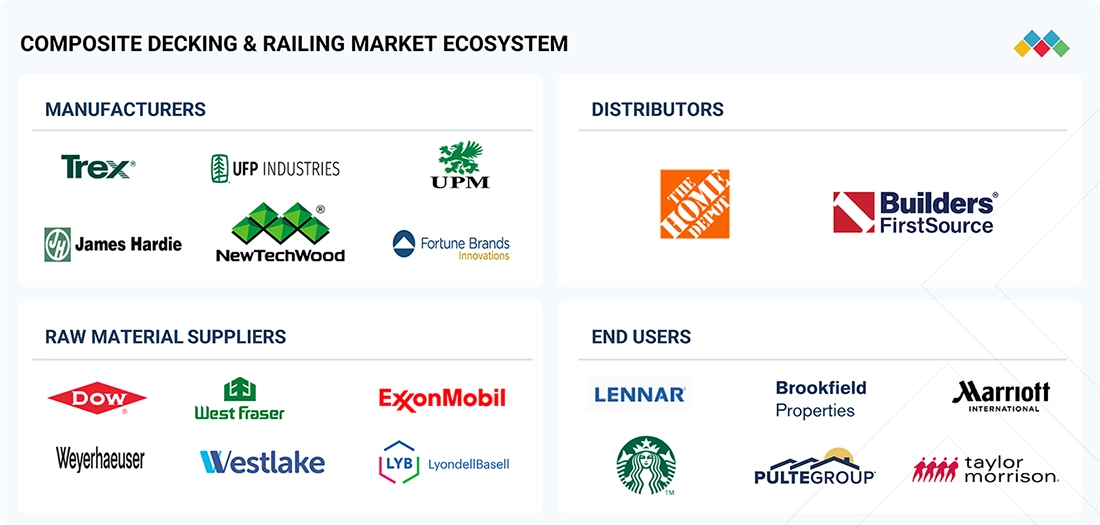
Logos and trademarks shown above are the property of their respective owners. Their use here is for informational and illustrative purposes only.
MARKET SEGMENTS
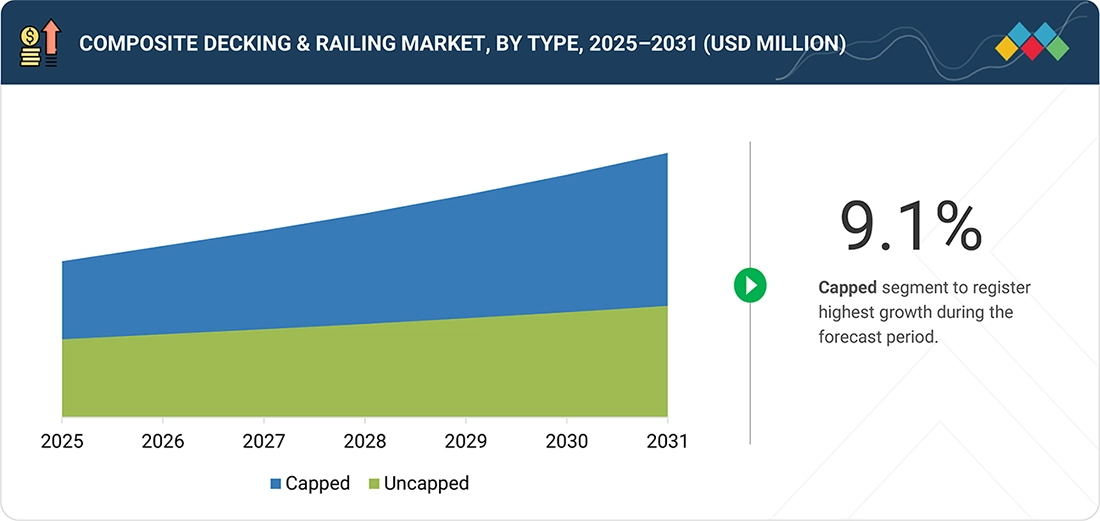
Source: Secondary Research, Interviews with Experts, MarketsandMarkets Analysis
Composite Decking & Railing Market, By Type
The capped composite dominated the industry owing to its remarkable durability and high level of protection from adverse outdoor weather. This product consists of a polymeric top cap that ensures the material’s high resistance to water, fading, staining, scratching, and mold, enabling long-term outdoor use. In the residential and commercial construction industry, the capped composite serves an essential function, as it allows for low maintenance and long-lasting performance. In addition, the ability of these products to have a wood-like appearance and be weather-resistant, along with their increased durability, aligns well with the current global trend of sustainability.
Composite Decking & Railing Market, By Resin Type
Polyethylene (PE) resin has dominated the market because it offers a good combination of longevity, flexibility, and performance at a low cost in the composite deck and railing industry. Composites made from PE have moisture, rot, insect, and weather resistance, making them suitable for outdoor use. In residential and commercial construction, the use of polyethylene is very important, as it enables the production of decking and railings that last a long time with minimal maintenance and can also achieve a wood-like finish. Another aspect of PE composites is that their manufacture is sustainable and involves the recycling of materials.
Composite Decking & Railing Market, By Application
The residential application segment accounts for the largest share of the composite decking and railing industry, owing to the rising need for robust, low-maintenance materials for outdoor use. The composite decking and railing materials are widely used on decks, patios, balconies, swimming pool enclosures, and gardens, where they exhibit excellent resistance to moisture, UV radiation, discoloration, pest infestations, and degradation. Due to their extended service life and reduced maintenance needs, composite decking and railing materials are a better alternative to conventional wood-based materials. Besides, due to their ability to provide aesthetic appeal, durability, and sustainable performance through the use of recyclable materials, composite decking and railing products have become increasingly popular in residential construction.
REGION
Asia Pacific to be the fastest-growing market for composite decking & railing during the forecast period
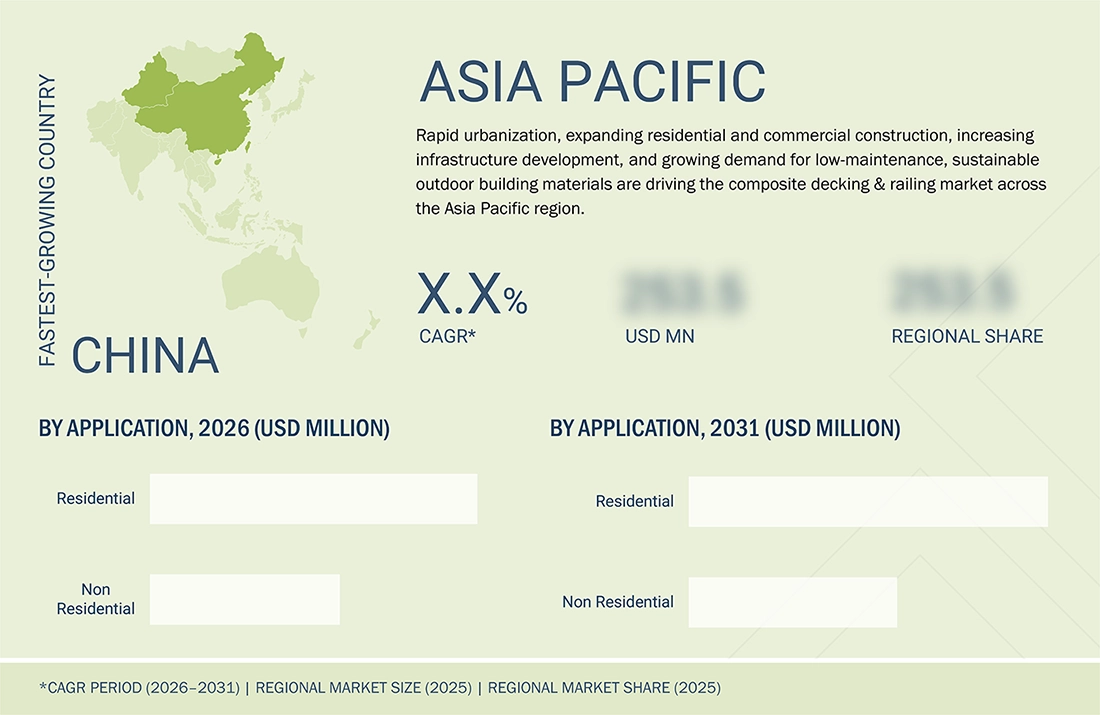
The Asia Pacific region has emerged as the leading growth market for composite decking and railing, driven by rapid urbanization, rising construction activity in residential buildings, and infrastructure development in nations such as China and India. There are a number of sectors that require composite products, and among them, the building sector ranks foremost as the driving force behind the demand for these materials. Besides the building sector, there is an emerging trend toward the adoption of environmentally friendly, low-maintenance building products. Composite decking and railing materials have been gaining prominence over wooden products owing to their durability and long life cycle.
COMPOSITE DECKING & RAILING MARKET: COMPANY EVALUATION MATRIX
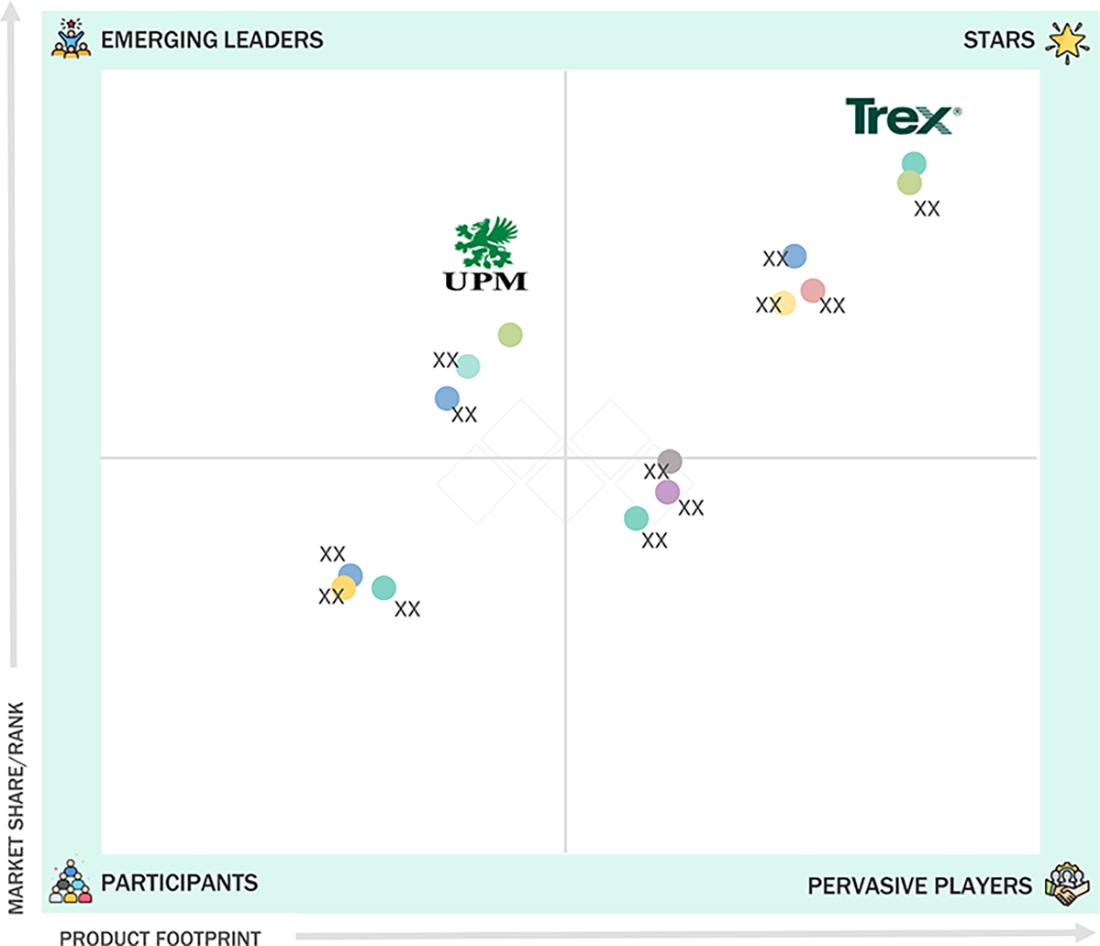
In the global composite decking & railing market, Trex Company, Inc. (Star) leads with a dominant market share and an extensive global footprint, driven by its vertically integrated manufacturing and strategic focus on a diverse portfolio of high-performance wood-alternative decking and premium railing solutions for residential and commercial applications. On the other hand, UPM Biocomposites (Emerging Leader) is rapidly gaining visibility, leveraging its expertise in circular bioeconomy solutions and high-quality wood-plastic functional materials to provide tailored, cost-effective formulations for the next generation of residential patios, outdoor design, and sustainable construction projects.
Source: Secondary Research, Interviews with Experts, MarketsandMarkets Analysis
KEY MARKET PLAYERS
- Trex Company, Inc. (US)
- UPM Biocomposites (Finland)
- James Hardie Building Products Inc. (US)
- UFP Industries (US)
- Old Castle APG (US)
- Green Bay Decking (US)
- Fortune Brands Innovations (US)
- Eva-Last Hong Kong Ltd. (China)
- NewTechWood (China)
- Envision Building Products LLC (US)
- Cladco Profiles (UK)
- Shanghai Seven Trust Material Technology Co. Ltd. (China)
- Silvadec (France)
MARKET SCOPE
| REPORT METRIC | DETAILS |
|---|---|
| Market Size, 2025 (Value) | USD 5.10 Billion |
| Market Size, 2031 (Value) | USD 8.19 Billion |
| Growth Rate | CAGR of 8.1% from 2026 to 2031 |
| Years Considered | 2023–2031 |
| Base Year | 2025 |
| Forecast Period | 2026–2031 |
| Units Considered | Value (USD Million/Billion); Volume (Kilotons) |
| Report Coverage | Revenue Forecast, Company Ranking, Competitive Landscape, Growth Factors, and Trends |
| Segments Covered |
|
| Regions Covered | North America, Europe, Asia Pacific, Rest of the world |
WHAT IS IN IT FOR YOU: COMPOSITE DECKING & RAILING MARKET REPORT CONTENT GUIDE
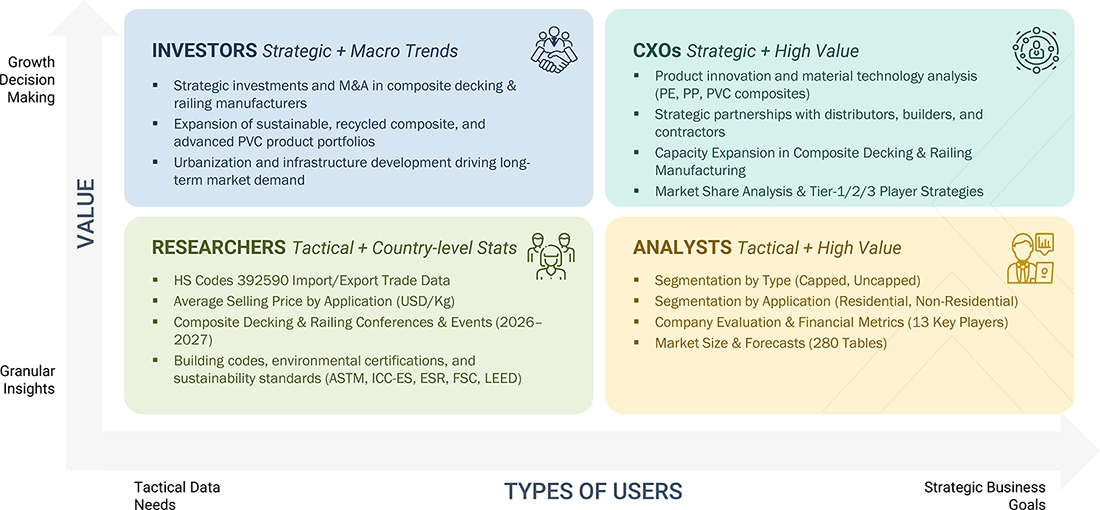
DELIVERED CUSTOMIZATIONS
We have successfully delivered the following deep-dive customizations:
| CLIENT REQUEST | CUSTOMIZATION DELIVERED | VALUE ADDS |
|---|---|---|
| Raw Material Suppliers (Wood fibers/flour, HDPE, PP, PVC resins, additives, colorants, capstock materials) |
|
|
| Composite Decking & Railing Manufacturers |
|
|
| Builders, Contractors & Distribution Channels (Home improvement retailers, lumberyards, dealers, installers) |
|
|
| End-use Industries (Residential, Commercial, Hospitality, Multifamily, Public Infrastructure) |
|
|
RECENT DEVELOPMENTS
- March 2026 : James Hardie expanded its strategic agreement with CBUSA to include TimberTech decking and railing, providing nearly 1,000 custom home builders with streamlined access to premium composite and Advanced PVC decking and railing solutions through an expanded distribution network.
- February 2026 : Fiberon introduced Novus Fused Composite Decking at the 2026 International Builders' Show, featuring a proprietary fused composite construction that delivers the authentic appearance of natural wood with enhanced durability, slip resistance, low maintenance, and long-term weather performance for residential outdoor living applications. The launch expands Fiberon's premium composite decking portfolio and reinforces its focus on innovation in the composite decking market.
- August 2025 : Through the expansion of its distribution arrangement with IWP, Trex increased market penetration across the Mountain Region and Western United States, improving accessibility of its capped polyethylene composite decking and railing products for residential and non-residential customers.
Table of Contents
 Exclusive indicates content/data unique to MarketsandMarkets and not available with any competitors.
Methodology
The study involved two major activities in estimating the current market size for the composite decking & railing market. Exhaustive secondary research was done to collect information on the market, peer market, and parent market. The next step was to validate these findings, assumptions, and sizing with industry experts across the value chain through primary research. Both top-down and bottom-up approaches were employed to estimate the complete market size. Afterward, data triangulation was used to estimate the market size for segments and subsegments.
Secondary Research
Secondary sources referred to for this research study include financial statements of companies offering composite decking & railing and information from various trade, business, and professional associations. Secondary research has been used to obtain critical information on the industry’s value chain, the total pool of key players, market classification, and segmentation by industry trends, down to the bottom-most level and regional markets. Secondary data were collected and analyzed to determine the overall size of the composite decking & railing market, which was validated by primary respondents.
Primary Research
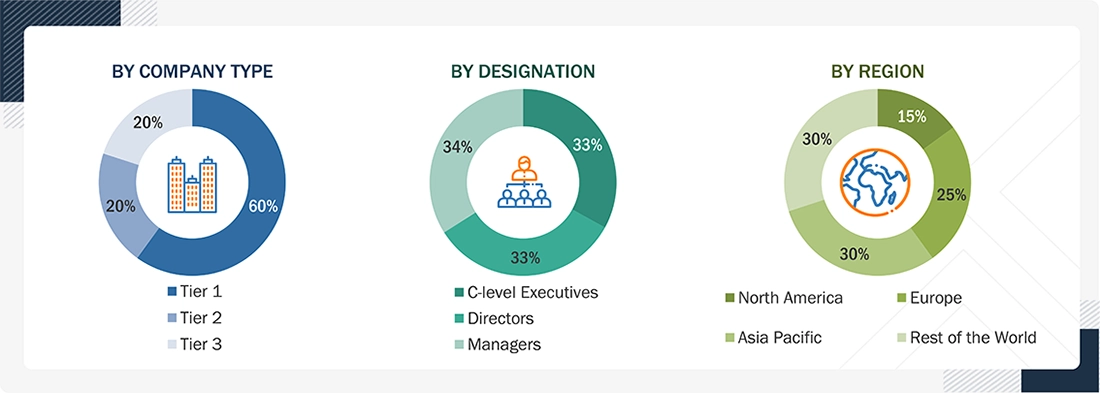
Extensive primary research was conducted after obtaining information regarding the composite decking & railing market scenario through secondary research. Several primary interviews were conducted with market experts from both the demand and supply sides across major countries of North America, Europe, Asia Pacific, and the Rest of the World. Primary data was collected through questionnaires, emails, and telephonic interviews. The primary sources from the supply side included various industry experts, such as Chief X Officers (CXOs), Vice Presidents (VPs), Directors from business development, marketing, product development/innovation teams, and related key executives from composite decking & railing industry vendors; system integrators; component providers; distributors; and key opinion leaders.
Primary interviews were conducted to gather insights, including market statistics, revenue data from products and services, market breakdowns, market size estimates, market forecasting, and data triangulation. Primary research also helped in understanding the various trends related to type, resin type, application, and region.
Stakeholders from the demand side, such as CIOs, CTOs, CSOs, and installation teams of the customers/end users who are using composite decking & railing, were interviewed to understand the buyers’ perspective on the suppliers, products, component providers, and their current usage of composite decking & railing and future outlook of their business, which will affect the overall market.
To know about the assumptions considered for the study, download the pdf brochure
Market Size Estimation
The research methodology used to estimate the size of the composite decking & railing market includes the following details. Market sizing was conducted from the demand side. The market was upsized to accommodate procurements and modernizations of composite decking & railing across different applications at the regional level. Such procurements provide information on the demand aspects of the composite decking & railing industry for each application. For each application, all possible segments of the composite decking & railing market were integrated and mapped.
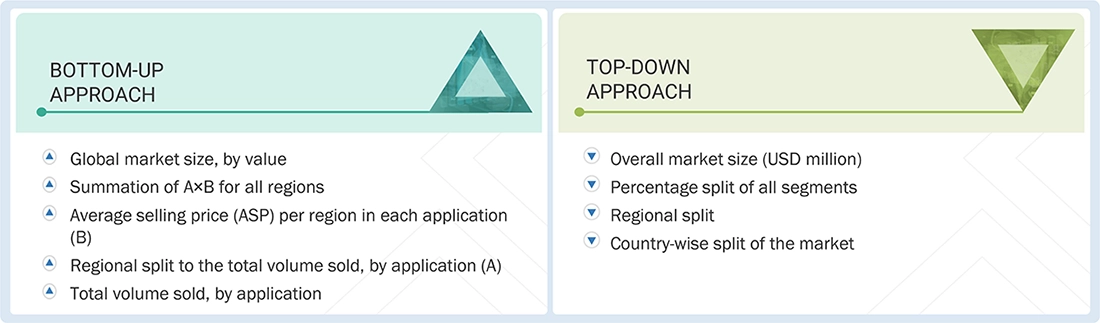
Data Triangulation
After arriving at the overall size from the market size estimation process explained above, the total market was split into several segments and subsegments. The data triangulation and market breakdown procedures explained below were implemented, where applicable, to complete the overall market engineering process and derive the exact statistics for various market segments and subsegments. The data was triangulated by examining various factors and trends on both the demand and supply sides. In addition, the market size was validated using both top-down and bottom-up approaches.
Market Definition
A deck is usually a flat surface that supports the weight of a structure, just like a floor. They are constructed outdoors above the ground and are connected to a building. In the building industry, there is a growing demand for high-performance, low-maintenance, and low-cost building products. To meet this demand, composite decking & railing are being used as they suit the requirements for building & construction materials. Due to the steady and tough nature of composite decking, a deck made of it is durable and capable of bearing enough weight. Composite decking is eco-friendly and maintenance-free. Due to its inherent characteristics, rainwater is drained out through the gaps between the flooring planks, thus keeping the surface dry even during rain.
Key Stakeholders
- Composite decking & railing manufacturers
- Raw material manufacturers
- Government and research organizations
- R&D institutions
- National and local government organizations
- Institutional investors
- Composite decking & railing suppliers
- End users
Report Objectives
- To define, describe, and forecast the composite decking & railing market size in terms of volume and value
- To provide detailed information regarding the key factors, such as drivers, restraints, opportunities, and challenges influencing market growth
- To analyze and project the global composite decking & railing market by type, resin type, application, and region
- To forecast the market size concerning main regions (along with country-level data), namely, North America, Europe, Asia Pacific, and Rest of the World, and analyze the significant region-specific trends
- To strategically analyze micromarkets with respect to individual growth trends, prospects, and contributions of the submarkets to the overall market
- To analyze the market opportunities and the competitive landscape for stakeholders and market leaders
- To assess recent market developments and competitive strategies, such as agreements, contracts, acquisitions, and product developments/product launches, to draw the competitive landscape
- To strategically profile the key market players and comprehensively analyze their core competencies.
Available customizations:
MarketsandMarkets offers the following customizations for this market report:
- Additional country-level analysis of the composite decking & railing market
Product Analysis
- Product matrix, which provides a detailed comparison of the product portfolio of each company’s market


Personalize This Research
- Triangulate with your Own Data
- Get Data as per your Format and Definition
- Gain a Deeper Dive on a Specific Application, Geography, Customer or Competitor
- Any level of Personalization
Let Us Help You
- What are the Known and Unknown Adjacencies Impacting the Composite Decking & Railing Market
- What will your New Revenue Sources be?
- Who will be your Top Customer; what will make them switch?
- Defend your Market Share or Win Competitors
- Get a Scorecard for Target Partners

Custom Market Research Services
We Will Customise The Research For You, In Case The Report Listed Above Does Not Meet With Your Requirements
Get 10% Free CustomisationTESTIMONIALS

We at Nissan Chemicals Corporation have been clients of MarketsandMarkets for more than a year now. We recently consulted MarketsandMarkets for a study, the team at MarketsandMarkets was extremely professional and organized. The business insights were very detailed and aligned well with our expectations that really helped us formulate the Business Plans and device new strategies for development themes. MarketsandMarkets offers a unique combination of expertise and dedicated engagement model. Their research findings have helped us in designing our Pricing Strategy which will make it easier for us to predict the future sales and profits for the next ten years. We look forward to working with MarketsandMarkets in the future.
VP of Strategy & New Business Development
Leading Specialty Chemical Company
The MarketsandMarkets Engagement Model, composed of both the Knowledge Store and advisory custom research, has greatly helped us in understanding our markets and making strategic decisions. The Knowledge Store is a fast way to allow everyone in our organization to understand more about most any market they are interested in. The ability to then get custom research done and get answers to specific strategic questions and market insight has been spectacular. The Markets and Markets team feel more like colleagues than vendors and their services have helped us change our culture where statements of things like growth opportunities and competitive position are always backed by industry research.

Rich Gibson,
Director, Corporate Strategy
Milliken & Company,
Leading Industrial Manufacturer of specialty chemical, floor covering, performance and protective textile materials, and healthcaremilliken.com
MarketsandMarkets is a trusted resource that helps us to better understand markets that are near-adjacencies-whether its technology, value chain or geography. Their Knowledge Store platform provides a dashboard of markets and their characteristics which is easy to use and saves us time.
Adam Shaw,
Market Development and Strategy Manager
AdvanSix Inc. USA,
An American Leader in Chemicalswww.advansix.com
The Knowledge Store from MarketsandMarkets is a valuable tool which has helped my team acquire greater insight in to the end markets that our business serves. This has enabled us to help our company build stronger strategies throughout our planning process.
TOSHIO KINOSHITA
Senior Chif Consultion Research & Consulting Division
Mitsubishi Chemical Research Corporation,
Leading Manufacturer of Chemical Productswww.mitsubishichem-res.co.jp/en/

We recently engaged with MarketsandMarkets for a study, the team not only clearly understood our business objectives but was also extremely professional in the way they handled the entire project. The study was efficiently conducted in a phase-wise manner, and the engagement model furnished us with high-quality business insights that far exceeded our expectations at each phase. We were especially happy that MarketsandMarkets could provide us with both, an English as well as a Japanese version of the study. A special thanks to the Analyst Team and Client Services Team, whose fluency in Japanese enhanced our comfort level, as we could converse with them in our preferred language.
Independent entrepreneurs
Arrow Precision
We approached MarketsandMarkets for study on Proppants Market, and their work exceeded our expectations. The study conducted was comprehensive and enabled us to view the market through the various dimensions. In addition, the team was extraordinarily responsive throughout the process and resolved our queries on time. I strongly recommend MarketsandMarkets and will certainly consider them for additional market assessments we will need in the future.
Global engineering company, Japan
Deputy Manager,
Strategic Planning OfficeThe high-quality insights shared by the MarketsandMarkets team helped us understand the pharmaceutical plant designers in a specific geography. It also captured the risks that we may likely face in communicating with our potential partners. The study would enable us identify partners, which would impact our future growth.
- US Composite Decking & Railing Market
- Canada Composite Decking & Railing Market
- Mexico Composite Decking & Railing Market
- Germany Composite Decking & Railing Market
- France Composite Decking & Railing Market
- UK Composite Decking & Railing Market
- China Composite Decking & Railing Market
- Japan Composite Decking & Railing Market
- Australia Composite Decking & Railing Market
- Brazil Composite Decking & Railing Market
- Rest Of Europe Composite Decking & Railing Market
- Rest Of Asia Pacific Composite Decking & Railing Market
- Middle East Composite Decking & Railing Market






Growth opportunities and latent adjacency in Composite Decking & Railing Market