Cosmetic Pigments Market

Cosmetic Pigments Market by Composition (Organic, Inorganic), Type (Special-effect, Surface-treated, Nano Pigments, Natural Colorants), Application (Facial, Eye, Lip, Nail, Hair Color, Special-purpose Product, Others) and Region - Global Forecast To 2031




OVERVIEW
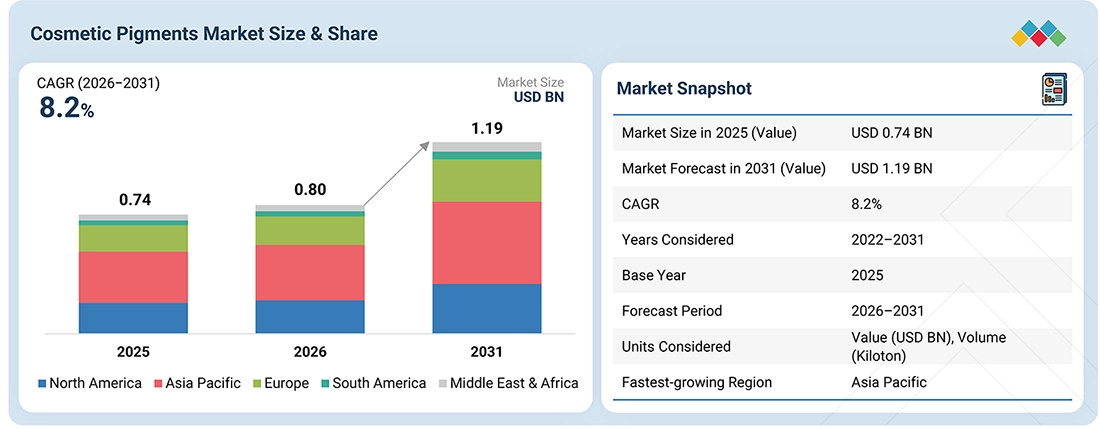
Source: Secondary Research, Interviews with Experts, MarketsandMarkets Analysis
The global cosmetic pigments market is projected to reach USD 1.19 billion by 2031 from USD 0.80 billion in 2026, at a CAGR of 8.2%. The global cosmetic pigments market is projected to grow steadily during the forecast period, driven by rising demand for color cosmetics, increasing consumer spending on beauty and personal care products, and growing adoption of premium and multifunctional cosmetic formulations. The global cosmetic pigments market is witnessing steady growth, supported by expanding consumption of facial makeup, eye makeup, lip products, nail cosmetics, and other color cosmetic applications. At the same time, advancements in surface-treated pigments, effect pigments, organic and inorganic pigments, and specialty color systems are improving color intensity, dispersion, stability, formulation compatibility, and overall product performance. Expanding investments in cosmetics manufacturing, increasing demand for broader shade ranges and personalized beauty products, and growing consumer preference for clean-label and innovative formulations are further supporting market growth across both developed and emerging economies.
KEY TAKEAWAYS
-
By RegionThe Asia Pacific cosmetic pigments market accounted for 43% of the global market in 2026, driven by rapid growth in the cosmetics and personal care industry, expanding manufacturing activities, rising disposable incomes, and increasing demand for color cosmetics across the region. The region's growing consumption of cosmetic products across facial makeup, eye makeup, lip products, nail products, hair color products, and skincare & personal care applications is further supporting market growth.
-
By CompositionBy composition, the organic pigments segment is projected to register the CAGR of 8.0% during the forecast period.
-
By TypeBy type, the special-effect pigments segment accounted for 34% of the overall market in 2026, owing to their ability to provide unique optical effects, enhanced visual appeal, and differentiated finishes across a wide range of cosmetic products.
-
By ApplicationBy application, the facial makeup segment accounted for the largest share of the overall market in 2026, owing to its widespread adoption in foundations, concealers, blushes, bronzers, and other facial cosmetic products. The market is supported by increasing consumer demand for diverse shades, enhanced coverage, and innovative makeup formulations.
-
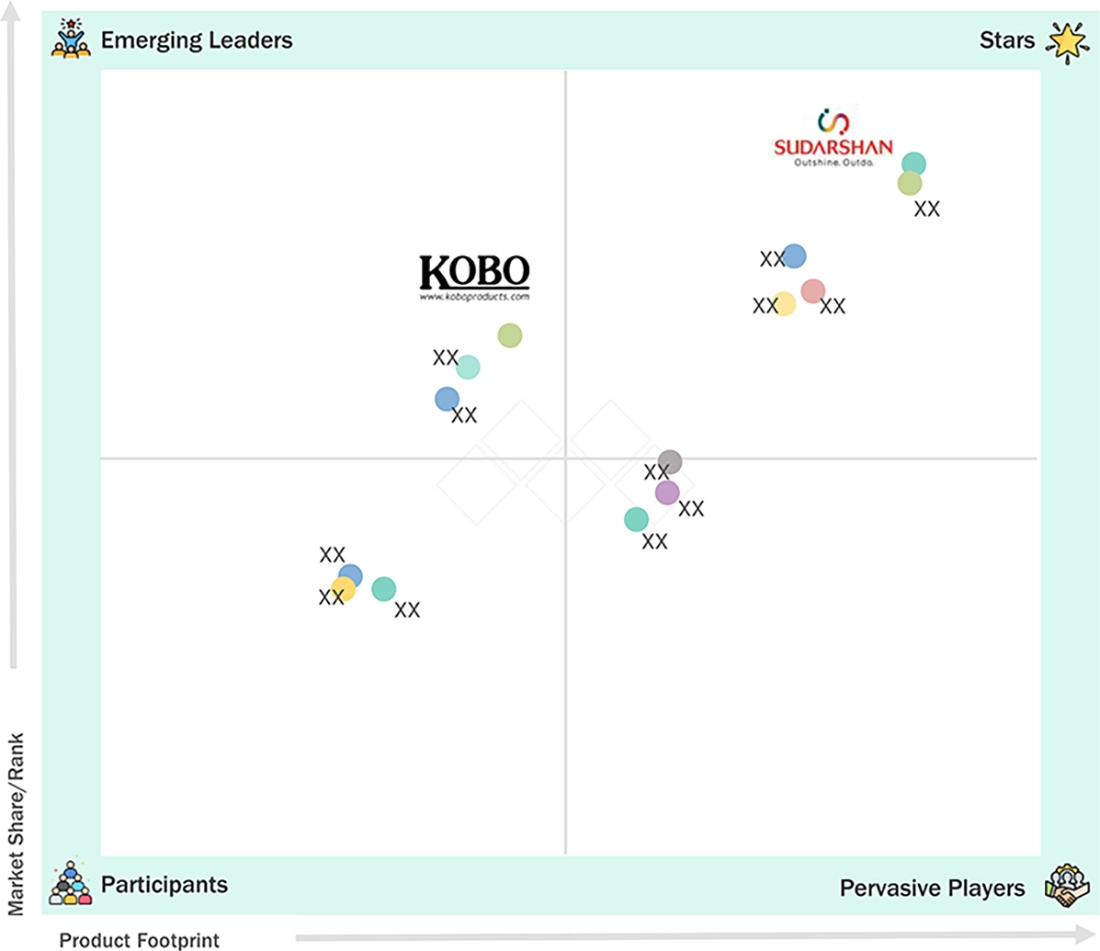
Competitive Landscape - Key PlayersSudarshan Chemical Industries Limited, DIC Corporation, and Sensient Cosmetic Technologies were identified as some of the star players in the cosmetic pigments market, given their strong market presence, extensive product portfolios, and broad application footprint.
-
Competitive Landscape - Startups/SMEsKobo Products, Kuncai Pigments, and Koel Colours Private Limited, among others, have distinguished themselves among emerging players and SMEs by establishing strong footholds in specialized pigment applications, underscoring their potential as emerging market leaders.
The global cosmetic pigments market is witnessing strong growth, driven by increasing demand for color cosmetics, expanding beauty and personal care industries, and growing adoption of innovative cosmetic formulations across facial makeup, eye makeup, lip products, and nail cosmetics. Asia Pacific is the largest regional market, supported by rapid urbanization, rising disposable incomes, expanding cosmetics manufacturing activities, and increasing demand for color cosmetics across China, India, Japan, South Korea, and Southeast Asia. North America holds the second-largest share, supported by premium beauty products, product innovation, established cosmetics manufacturers, and growing demand for high-performance and specialty pigments. Europe is supported by demand for premium, sustainable, natural, and high-quality cosmetic formulations across established beauty and personal care markets. Meanwhile, South America and the Middle East & Africa are experiencing growing demand, driven by increasing beauty-product consumption, urbanization, rising disposable incomes, expanding retail and e-commerce channels, and growing adoption of cosmetics across emerging markets.
TRENDS & DISRUPTIONS IMPACTING CUSTOMERS' CUSTOMERS
Technological advancements and increasing consumer demand for innovative beauty products are driving major transformations across the cosmetics, personal care, color cosmetics, skincare, and beauty care sectors. A growing focus on enhanced color performance, improved formulation stability, broader shade ranges, sustainable ingredients, and multifunctional cosmetic solutions is accelerating innovation and creating new growth opportunities across the value chain. The shift toward advanced effect pigments and surface-treated pigments, along with the development of natural colorants, specialty color systems, and high-performance pigment technologies, is reshaping the competitive landscape.
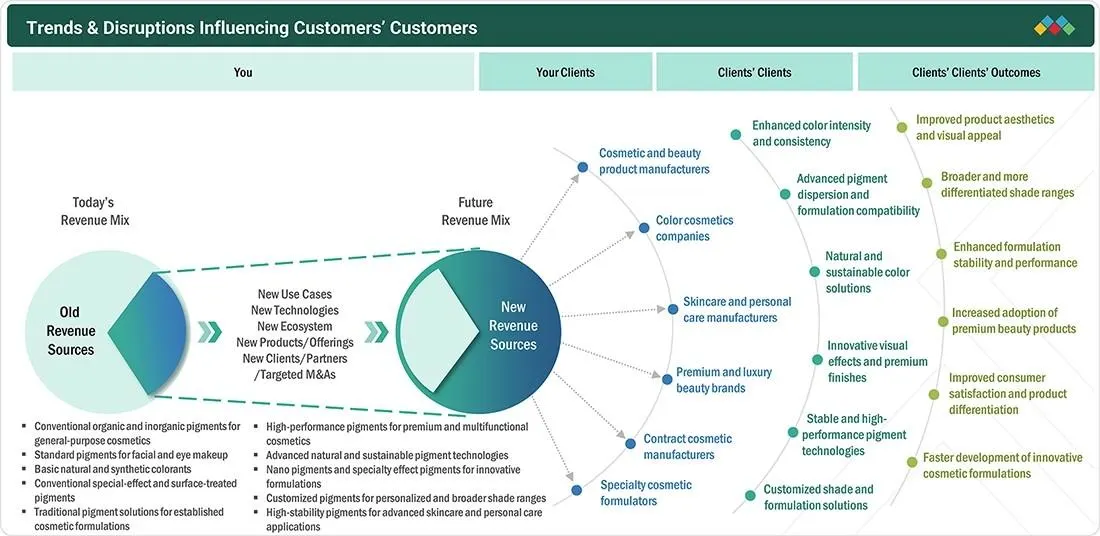
Source: Secondary Research, Interviews with Experts, MarketsandMarkets Analysis
MARKET DYNAMICS

Level
-
Rising consumption of color cosmetics and beauty products

-
Growing demand for diverse shades and innovative cosmetic finishes


Level
-
Stringent regulations governing cosmetic pigments and color additives

-
Volatility in prices of pigment raw materials and specialty minerals


Level
-
Growing demand for natural and clean-label cosmetic pigments

-
Increasing adoption of specialty pigments for premium beauty products


Level
-
Maintaining consistent shade and color performance across production batches

-
Ensuring pigment stability across different cosmetic formulations

Source: Secondary Research, Interviews with Experts, MarketsandMarkets Analysis
Driver: Rising demand for color cosmetics and beauty products
The cosmetic pigments market is expanding as demand for color cosmetics grows across facial makeup, eye makeup, lip products, nail products, and other beauty applications. Growing consumer spending on beauty and personal care products, rising adoption of premium cosmetics, and increasing product launches across diverse cosmetic categories are driving the demand for cosmetic pigments. Increasing preference for vibrant shades, improved color performance, and innovative cosmetic formulations are further supporting market growth. As cosmetics manufacturers continue to expand their product portfolios, the requirement for high-quality pigments with consistent color performance is increasing across various applications.
Restraint: Stringent regulations governing cosmetic pigments
Despite strong market growth, the cosmetic pigments industry faces challenges from stringent regulations governing the safety, purity, and permitted use of color additives in cosmetic products. Pigment manufacturers and cosmetics companies must comply with evolving regulations on ingredient safety, labeling, product composition, and environmental standards across regions. These requirements can increase testing, certification, and compliance costs, particularly for manufacturers developing new and specialty pigments. Additionally, differences in regulatory standards across countries can complicate product approvals and increase the time required for commercialization.
Opportunity: Growing demand for natural and sustainable cosmetic pigments
The cosmetic pigments market presents significant opportunities due to growing consumer preference for natural, sustainable, and clean-label beauty products. Increasing awareness regarding ingredient safety and environmental sustainability is encouraging cosmetics manufacturers to incorporate naturally derived colorants and environmentally responsible pigment solutions into their formulations. The development of stable, vibrant, and high-performance natural pigments can help manufacturers address changing consumer preferences while supporting product differentiation. Additionally, increasing investments in sustainable cosmetics and clean beauty product development are creating new opportunities for pigment manufacturers.
Challenge: Maintaining consistent color performance across formulations
The cosmetic pigments industry faces challenges in maintaining consistent shade, color intensity, dispersion, and stability across different cosmetic formulations. Pigment performance can vary depending on the formulation composition, processing conditions, particle characteristics, and interactions with other ingredients. Cosmetic manufacturers therefore need pigments that deliver uniform performance across products such as foundations, lipsticks, eye shadows, nail products, and skincare formulations. Ensuring consistent quality while meeting diverse formulation requirements can increase technical complexity and create challenges for pigment manufacturers.
COSMETIC PIGMENTS MARKET: COMMERCIAL USE CASES ACROSS INDUSTRIES
| COMPANY | USE CASE DESCRIPTION | BENEFITS |
|---|---|---|
 |
Utilizes advanced organic and inorganic pigments, specialty pigments, and color solutions across cosmetic and personal care applications | Enhances color performance | Supports broader shade development | Improves formulation compatibility |
 |
Provides organic pigments, effect pigments, and specialty colorants for cosmetics and personal care formulations | Enhances color intensity | Supports formulation stability | Enables innovative cosmetic applications |
 |
Develops specialty pigments, natural colorants, and color solutions for color cosmetics and personal care products | Supports vibrant color development | Improves formulation performance | Enables innovative beauty products |
 |
Provides mica-based effect pigments and specialty color materials for cosmetics and personal care applications | Enhances visual effects | Supports differentiated cosmetic formulations | Improves product appearance |
 |
Develops effect pigments and specialty color solutions for cosmetics, personal care, and other high-performance applications | Creates unique optical effects | Enhances product aesthetics | Supports premium cosmetic formulations |
Logos and trademarks shown above are the property of their respective owners. Their use here is for informational and illustrative purposes only.
MARKET ECOSYSTEM
The cosmetic pigments ecosystem comprises interconnected stakeholders, including raw material suppliers, pigment manufacturers, cosmetic ingredient suppliers, cosmetics manufacturers, distributors, formulators, and end-use industries. Raw material suppliers provide key inputs such as organic and inorganic compounds, natural colorants, mica, minerals, and specialty materials. Cosmetic pigment manufacturers process and develop these materials into high-performance pigments used across facial makeup, eye makeup, lip products, nail products, hair color products, skincare & personal care, and other cosmetic applications. Regulatory bodies set safety, quality, labeling, and permissible color additive standards, influencing pigment development and the adoption of compliant, sustainable technologies. Distributors and channel partners ensure efficient product availability across regional markets and to cosmetic manufacturers. End users across the cosmetics, personal care, beauty, and specialty formulation sectors drive demand for safe, stable, high-performance, and innovative cosmetic pigments.
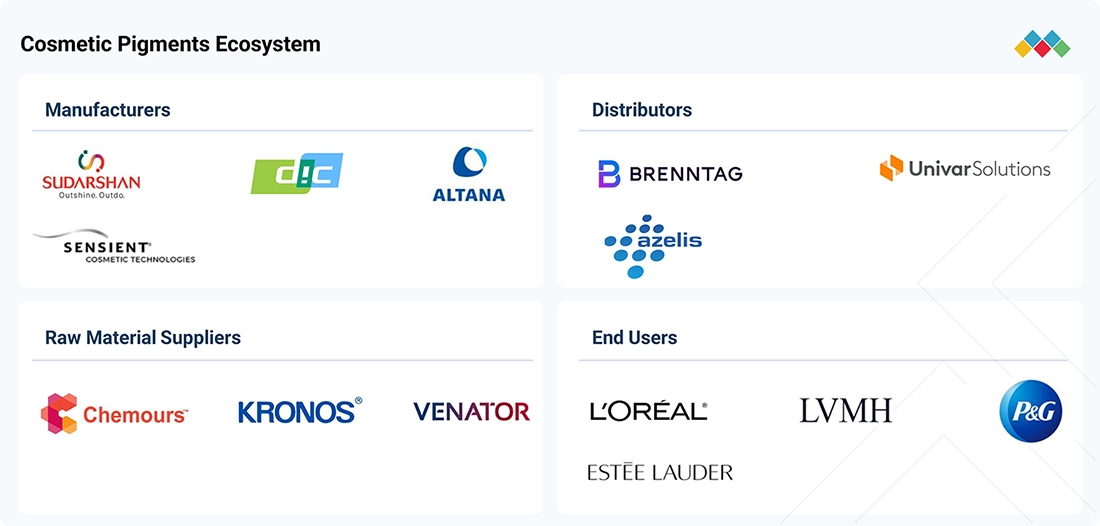
Logos and trademarks shown above are the property of their respective owners. Their use here is for informational and illustrative purposes only.
MARKET SEGMENTS
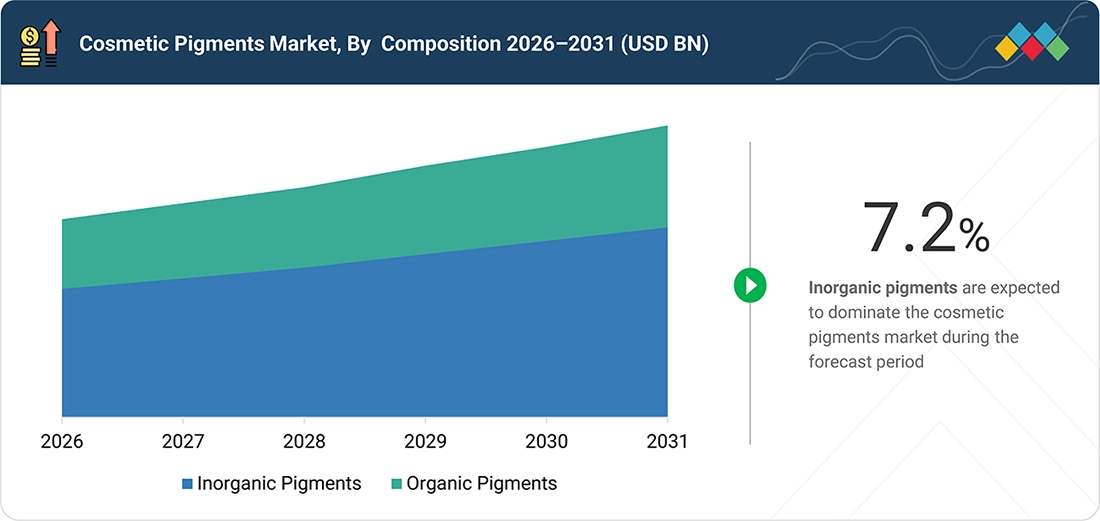
Source: Secondary Research, Interviews with Experts, MarketsandMarkets Analysis
Cosmetic Pigments Market, By Composition
Inorganic pigments are the largest composition segment, while organic pigments are the fastest-growing segment in the global cosmetic pigments market. Inorganic pigments hold a leading share because of their excellent color stability, opacity, durability, chemical resistance, and suitability for a wide range of cosmetic formulations. Organic pigments are gaining adoption due to their vibrant shades, high color intensity, broader color range, and suitability for innovative and specialty cosmetic applications. Both pigment compositions are widely used across facial makeup, eye makeup, lip products, nail products, hair color products, skincare & personal care, and other cosmetic applications. Growing demand for high-performance colorants, expanding color cosmetic consumption, and increasing development of innovative, differentiated cosmetic formulations are further supporting the growth of these pigment compositions.
Cosmetic Pigments Market, By Type
Special-effect pigments are the largest type segment, while natural colorants are the fastest-growing segment in the global cosmetic pigments market. Special-effect pigments hold a leading share because they provide unique optical effects, enhanced visual appeal, differentiated finishes, and premium aesthetics across cosmetic products. Natural colorants are gaining adoption due to growing consumer preference for naturally derived ingredients, sustainable formulations, and clean-label cosmetic products. Both types are widely used across facial makeup, eye makeup, lip products, nail products, hair color products, skincare & personal care, and other cosmetic applications. Growing demand for innovative beauty products, premium cosmetic formulations, and differentiated visual effects is further supporting the growth of these pigment types.
Cosmetic Pigments Market, By Application
Facial makeup is the largest application segment, while skincare & personal care is the fastest-growing application in the global cosmetic pigments market. Facial makeup accounts for a leading share due to its widespread use across foundations, concealers, blushes, bronzers, and other facial cosmetic products. The market in this application is supported by increasing consumer spending on beauty products, expanding product portfolios, and growing demand for diverse shades, enhanced product performance, and innovative cosmetic formulations.
REGION
Asia Pacific is the largest market for cosmetic pigments during forecast period.
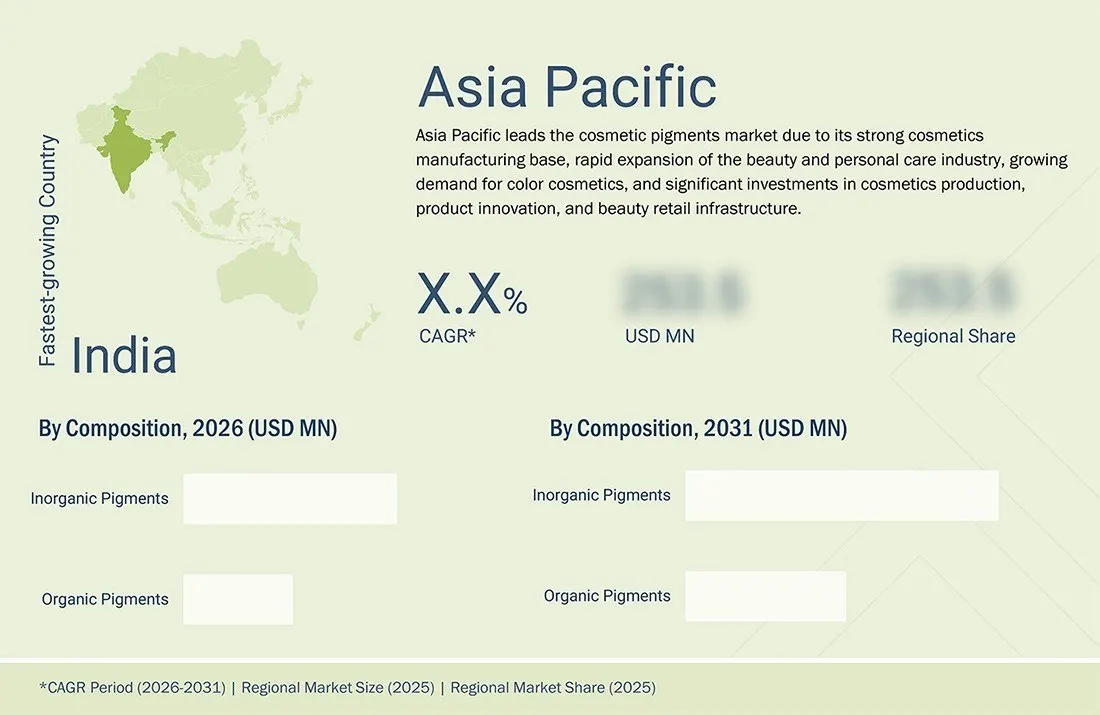
The Asia Pacific cosmetic pigments market is the largest globally, supported by strong demand from facial makeup, eye makeup, lip products, nail products, hair color products, skincare & personal care, and other cosmetic applications. The region benefits from rapid growth in the cosmetics and personal care industry, expanding manufacturing capabilities, increasing disposable incomes, and growing consumption of color cosmetics. Growing investments in cosmetics manufacturing, product innovation, e-commerce, and beauty retail channels are further driving market growth. Asia Pacific remains a key market due to the strong presence of major cosmetics manufacturing economies, expanding consumer spending on beauty products, and increasing adoption of innovative cosmetic pigments across diverse end-use applications.
COSMETIC PIGMENTS MARKET: COMPANY EVALUATION MATRIX
In the cosmetic pigments market matrix, Sudarshan Chemical Industries Limited (Star), an India-based company, leads the market through its broad portfolio of organic, inorganic, specialty, and effect pigments, which find extensive applications across color cosmetics, personal care, and beauty formulations. Kobo Products is becoming an emerging leader in the cosmetic pigments market as it focuses strongly on surface-treated pigments, pigmentary dispersions, effect pigments and color concentrates. The company offers an array of effect pigments, such as pearlescent, interference, holographic, prismatic, magnetic and long color-travel pigments, which help create unique finishes in color cosmetics.
Source: Secondary Research, Interviews with Experts, MarketsandMarkets Analysis
KEY MARKET PLAYERS
- Sudarshan Chemical Industries Limited (India)
- DIC Corporation (Japan)
- Sensient Cosmetic Technologies (US)
- Global New Material International Holdings Limited (China)
- ALTANA (Germany)
- Kobo Products (US)
- Kuncai Pigments (China)
- LANXESS (Germany)
- Geotech International (India)
- Neelikon Food Dyes and Chemicals Limited (India)
- Vibrantz (US)
MARKET SCOPE
| REPORT METRIC | DETAILS |
|---|---|
| Market Size in 2025 (Value) | USD 0.74 Billion |
| Market Size in 2026 (Value) | USD 0.80 Billion |
| Market Forecast in 2031 (Value) | USD 1.19 Billion |
| Growth Rate | CAGR of 8.2% from 2026–2031 |
| Years Considered | 2022–2031 |
| Base Year | 2025 |
| Forecast Period | 2026–2031 |
| Units Considered | Value (USD Million/Billion), Volume (Kiloton) |
| Report Coverage | Revenue forecast, company ranking, competitive landscape, growth factors, and trends |
| Segments Covered |
|
| Regions Covered | North America, Asia Pacific, Europe, South America, Middle East & Africa |
WHAT IS IN IT FOR YOU: COSMETIC PIGMENTS MARKET REPORT CONTENT GUIDE
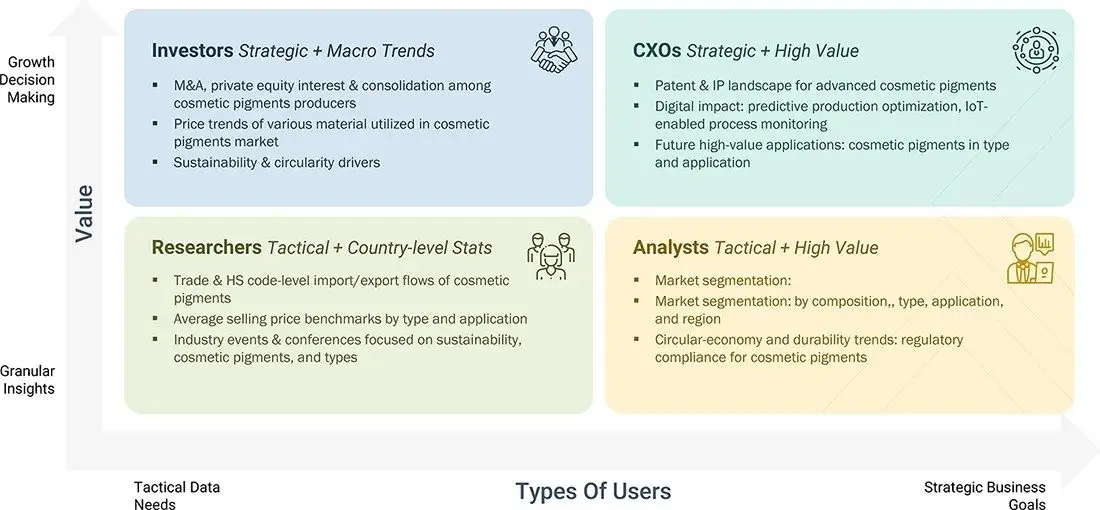
DELIVERED CUSTOMIZATIONS
We have successfully delivered the following deep-dive customizations:
| CLIENT REQUEST | CUSTOMIZATION DELIVERED | VALUE ADDS |
|---|---|---|
| Leading Cosmetic Pigments Supplier |
|
Supported go-to-market strategy and positioning vs competitors |
| Country-level insights for high-growth regions | Provided detailed market sizing and forecasts for the Asia Pacific and North America market | Helped the client identify region-specific growth hotspots and investment opportunities |
| Identify emerging cosmetic pigments technologies | Conducted technology scouting and feasibility analysis for advanced cosmetic pigments, surface-treated pigments, effect pigments, natural colorants, and high-performance pigment technologies | Supported investment decisions and innovation roadmap for clients |
| Evaluate regulatory compliance for new market entry | Compiled country-specific cosmetic regulations, ingredient safety requirements, permissible color additive standards, and technical guidelines for cosmetic pigment applications | Ensured smooth market entry and minimized legal risks |
RECENT DEVELOPMENTS
- August 2025 : Sudarshan Chemical Industries Limited (India) completed the acquisition of the global pigment business operations of Germany-based Heubach Group, strengthening its global pigment portfolio and expanding its presence across international markets. The acquisition combines complementary pigment technologies, manufacturing capabilities, and application expertise, supporting the company's ability to serve customers across cosmetics, coatings, plastics, inks, and other applications.
- August 2025 : Global New Material International Holdings Limited (China) completed the acquisition of Merck’s Surface Solutions business for USD 751 million, with the business rebranded as Susonity. The transaction expanded GNMI’s global production footprint and sales channels, strengthening its position in premium effect pigments and cosmetic applications.
- March 2025 : Sudarshan Chemical Industries Limited (India) completed the acquisition of Germany-based Heubach Group through its wholly owned subsidiary Sudarshan Europe B.V. The acquisition expanded Sudarshan’s global footprint to 19 sites and strengthened its pigment portfolio, manufacturing capabilities, and application expertise across cosmetics and other end-use industries.
Table of Contents
 Exclusive indicates content/data unique to MarketsandMarkets and not available with any competitors.
Methodology
The study involved four major activities to estimate the current size of the global cosmetic pigments market. Exhaustive secondary research was conducted to collect information on the cosmetic pigments market, the peer product market, and the parent product group market. The next step was to validate these findings, assumptions, and sizes with industry experts across the cosmetic pigments value chain through primary research. Both the top-down and bottom-up approaches were employed to estimate the overall size of the cosmetic pigments market. After that, market breakdown and data triangulation were used to determine the sizes of different market segments and subsegments.
Secondary Research
For the secondary research, sources such as D&B Hoovers, Factiva, Bloomberg BusinessWeek, and Dun & Bradstreet were used to identify and collect information for this study of the cosmetic pigments market. These sources included annual reports, press releases, and investor presentations from companies; white papers; certified publications; databases; articles by recognized authors; regulatory bodies; and trade directories.
Primary Research
The cosmetic pigments market involves various stakeholders along the supply chain, such as raw material suppliers, distributors, end-product manufacturers, buyers, and regulatory bodies. Both qualitative and quantitative data have been collected through interviews with primary sources from both the supply and demand sides. On the demand side, key participants include opinion leaders, company executives, vice presidents, and CEOs in the market. On the supply side, primary sources consist of associations, institutions, influential opinion leaders, and processing companies involved in the market.
The following is the breakdown of primary respondents:
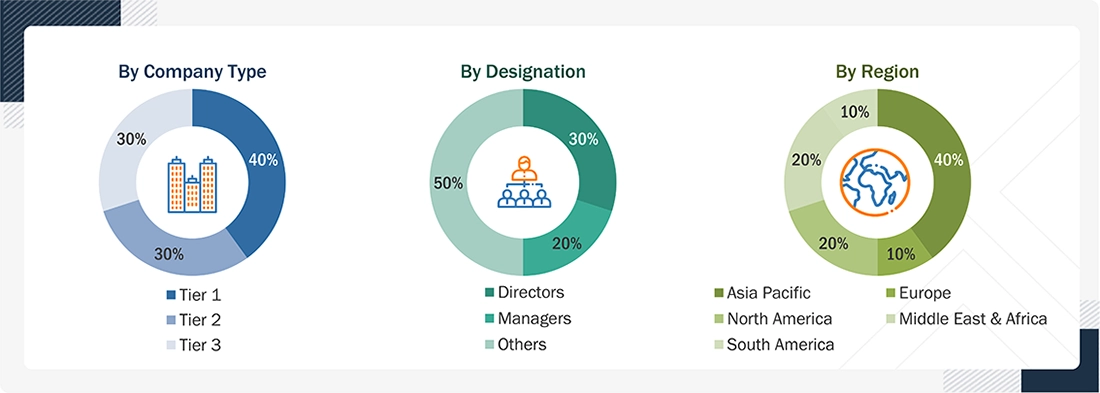
To know about the assumptions considered for the study, download the pdf brochure
Market Size Estimation
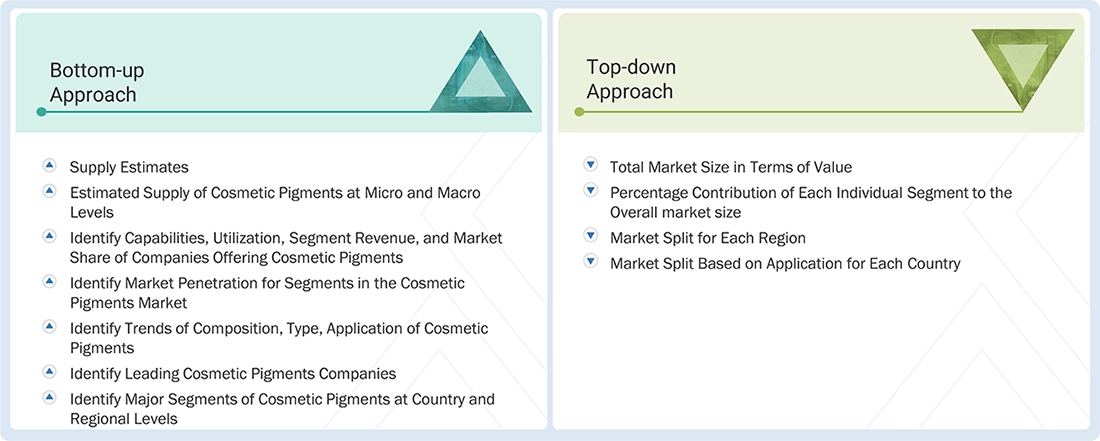
The bottom-up and top-down approaches were used to estimate the cosmetic pigments market by composition, type, application, and region. The research methodology used to calculate the market size includes the following steps:
- The key players in the market were identified through extensive secondary research.
- In terms of value, the industry’s supply chain and market size were determined through primary and secondary research processes.
- All percentage shares, splits, and breakdowns were determined using secondary sources and verified through primary sources.
- All parameters that affect the markets covered in this research study were accounted for, examined in detail, verified through primary research, and analyzed to obtain the final quantitative and qualitative data.
- The research included reviewing reports, reviews, and newsletters from top market players, as well as extensive interviews with leaders, such as directors and marketing executives, to gather opinions.
The following figure illustrates the overall market size estimation process employed for this study.
Data Triangulation
After estimating the total size of the cosmetic pigments market, the market was divided into multiple segments and subsegments. Data triangulation and breakdown methods were used, where relevant, to refine the overall market analysis and determine precise statistics for all segments. The data was cross-checked by examining factors and trends from both demand and supply perspectives. Additionally, market size validation was performed using top-down and bottom-up approaches.
Market Definition
Cosmetic pigments are crushed and refined color materials that do not dissolve. They help a product look colored, cover well, and appear less see through. They can also add shine or other visual effects. Some common cosmetic pigments include organic, inorganic, pearlescent, and special effect pigments. There are also surface-treated pigments, nano pigments, and natural pigments . These materials are used in lipsticks, eyeshadows, foundations, blushes, and mascaras.
Key Stakeholders
- Cosmetic pigment manufacturers
- Raw material suppliers
- Regulatory bodies and government agencies
- Distributors and suppliers
- End-use industries
- Associations and industrial bodies
- Market research and consulting firms
Report Objectives
- To define, describe, and forecast the size of the cosmetic pigments market in terms of value and volume
- To provide detailed information regarding the key factors influencing the growth of the market (drivers, restraints, opportunities, and challenges)
- To forecast the market size based on type, composition, application, and region
- To forecast the market size for the five main regions—North America, Europe, Asia Pacific, South America, and Middle East & Africa—along with their key countries
- To strategically analyze micromarkets with respect to individual growth trends, prospects, and contributions to the total market
- To analyze opportunities in the market for stakeholders and provide details of the competitive landscape for market leaders
- To strategically profile leading players and comprehensively analyze their key developments, such as product launches, expansions, and deals in the cosmetic pigments market
- To comprehensively analyze the market share and core competencies of key players
- To study the impact of AI/gen AI on the market under study, along with the macroeconomic outlook
Available customizations:
With the given market data, MarketsandMarkets offers customizations per the specific needs of companies.
The following customization options are available for the report:
PRODUCT ANALYSIS
- Product matrix, which provides a detailed comparison of the market for different sources of cosmetic pigments
REGIONAL ANALYSIS
- Further breakdown of a country with respect to the cosmetic pigments market
COMPANY INFORMATION
- Detailed analysis and profiling of additional market players


Personalize This Research
- Triangulate with your Own Data
- Get Data as per your Format and Definition
- Gain a Deeper Dive on a Specific Application, Geography, Customer or Competitor
- Any level of Personalization
Let Us Help You
- What are the Known and Unknown Adjacencies Impacting the Cosmetic Pigments Market
- What will your New Revenue Sources be?
- Who will be your Top Customer; what will make them switch?
- Defend your Market Share or Win Competitors
- Get a Scorecard for Target Partners

Custom Market Research Services
We Will Customise The Research For You, In Case The Report Listed Above Does Not Meet With Your Requirements
Get 10% Free CustomisationTESTIMONIALS
We at Nissan Chemicals Corporation have been clients of MarketsandMarkets for more than a year now. We recently consulted MarketsandMarkets for a study, the team at MarketsandMarkets was extremely professional and organized. The business insights were very detailed and aligned well with our expectations that really helped us formulate the Business Plans and device new strategies for development themes. MarketsandMarkets offers a unique combination of expertise and dedicated engagement model. Their research findings have helped us in designing our Pricing Strategy which will make it easier for us to predict the future sales and profits for the next ten years. We look forward to working with MarketsandMarkets in the future.
VP of Strategy & New Business Development
Leading Specialty Chemical Company
The MarketsandMarkets Engagement Model, composed of both the Knowledge Store and advisory custom research, has greatly helped us in understanding our markets and making strategic decisions. The Knowledge Store is a fast way to allow everyone in our organization to understand more about most any market they are interested in. The ability to then get custom research done and get answers to specific strategic questions and market insight has been spectacular. The Markets and Markets team feel more like colleagues than vendors and their services have helped us change our culture where statements of things like growth opportunities and competitive position are always backed by industry research.

Rich Gibson,
Director, Corporate Strategy
Milliken & Company,
Leading Industrial Manufacturer of specialty chemical, floor covering, performance and protective textile materials, and healthcaremilliken.com
MarketsandMarkets is a trusted resource that helps us to better understand markets that are near-adjacencies-whether its technology, value chain or geography. Their Knowledge Store platform provides a dashboard of markets and their characteristics which is easy to use and saves us time.
Adam Shaw,
Market Development and Strategy Manager
AdvanSix Inc. USA,
An American Leader in Chemicalswww.advansix.com
The Knowledge Store from MarketsandMarkets is a valuable tool which has helped my team acquire greater insight in to the end markets that our business serves. This has enabled us to help our company build stronger strategies throughout our planning process.
TOSHIO KINOSHITA
Senior Chif Consultion Research & Consulting Division
Mitsubishi Chemical Research Corporation,
Leading Manufacturer of Chemical Productswww.mitsubishichem-res.co.jp/en/

We recently engaged with MarketsandMarkets for a study, the team not only clearly understood our business objectives but was also extremely professional in the way they handled the entire project. The study was efficiently conducted in a phase-wise manner, and the engagement model furnished us with high-quality business insights that far exceeded our expectations at each phase. We were especially happy that MarketsandMarkets could provide us with both, an English as well as a Japanese version of the study. A special thanks to the Analyst Team and Client Services Team, whose fluency in Japanese enhanced our comfort level, as we could converse with them in our preferred language.
Independent entrepreneurs
Arrow Precision
We approached MarketsandMarkets for study on Proppants Market, and their work exceeded our expectations. The study conducted was comprehensive and enabled us to view the market through the various dimensions. In addition, the team was extraordinarily responsive throughout the process and resolved our queries on time. I strongly recommend MarketsandMarkets and will certainly consider them for additional market assessments we will need in the future.
Global engineering company, Japan
Deputy Manager,
Strategic Planning OfficeThe high-quality insights shared by the MarketsandMarkets team helped us understand the pharmaceutical plant designers in a specific geography. It also captured the risks that we may likely face in communicating with our potential partners. The study would enable us identify partners, which would impact our future growth.
Growth opportunities and latent adjacency in Cosmetic Pigments Market






Bridget
Aug, 2015
Commodity Pigments, Special Effect Pigments, High Performance Pigments, Organic Pigments, Natural Colorants, and Pigment Dispersions market and insights.
El
Mar, 2018
Market dynamics, growth trends, key manufacturers present in the market.
Emily
Aug, 2018
General information required on cosmetic colarants.
Sofia
Nov, 2017
Interested in Pearlescent pigments market for cosmetic applications.
DR.
Sep, 2017
Looking for market information.
Ken
Jun, 2018
Report on cosmetic pigments market focussing on mineral and natural pigment markets .