Digital Education Market by Learning Model (Self-paced, Blended, Microlearning, Adaptive, Mobile), Course Type (Academic, Test Preparation, Professional Certification & Skill Development, Vocational Training, Corporate Training) - Global Forecast to 2030

icon1
USD 95.71 BN
MARKET SIZE, 2030
icon2
CAGR 24.2%
(2025-2030)
icon3
270
REPORT PAGES
icon4
215
MARKET TABLES

OVERVIEW

Source: Secondary Research, Interviews with Experts, MarketsandMarkets Analysis

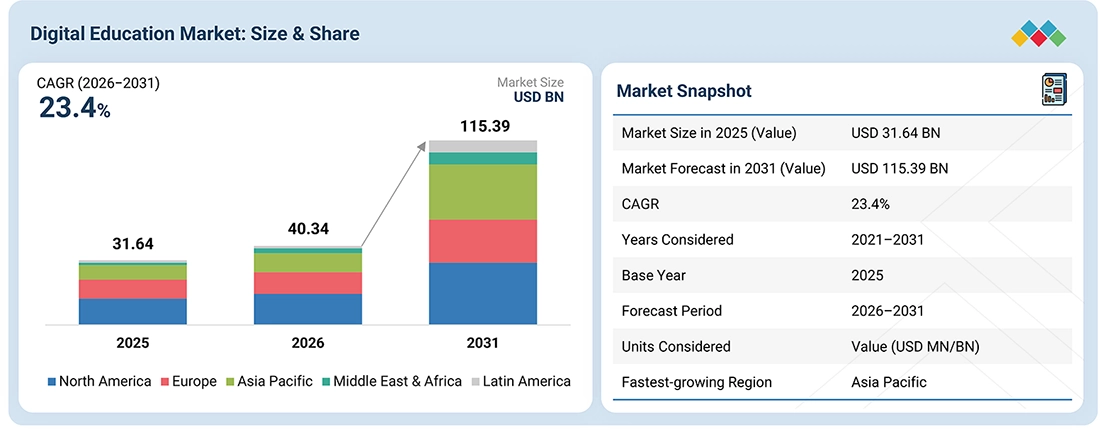
The digital education market is expected to grow from USD 32.36 billion in 2025 to USD 95.70 billion by 2030, registering a CAGR of 24.2%. It encompasses online learning, virtual classrooms, and e-learning platforms that extend education beyond traditional settings. Major players like Udemy, Coursera, edX, and Pluralsight are advancing their platforms to meet evolving academic and corporate learning needs. According to the Digital Education Council’s 2024 Global AI Student Survey, 86% of students use AI in their studies, marking a strong shift toward AI-driven learning. AI adoption enhances learning through instant feedback, personalized pacing, and improved comprehension, while reducing learning time. This growing integration is driving institutions to invest in AI-enabled education platforms offering personalized content, predictive analytics, and adaptive assessments to optimize learning outcomes.

KEY TAKEAWAYS

  • BY LEARNING MODEL
    The instructor-led learning model holds the largest market share in the digital education market due to its structured approach, real-time interaction, and guided learning experience. Learners benefit from direct engagement with instructors, which enhances understanding and retention. This model is increasingly supported by virtual classrooms and blended learning platforms, combining traditional teaching strengths with digital flexibility. Institutions and corporations prefer this approach for effective skill development and personalized mentorship, driving its continued dominance in the market.
  • BY COURSE TYPE
    The academic education segment is expected to hold the largest market share in the digital education market, driven by the rapid digital transformation of schools and universities. Growing adoption of online degree programs, virtual classrooms, and AI-powered learning tools is enhancing accessibility and engagement. Governments and institutions are investing heavily in digital infrastructure and curriculum modernization, making education more inclusive and flexible. This shift toward technology-enabled academic learning is fueling sustained market growth.
  • BY DELIVERY MODE
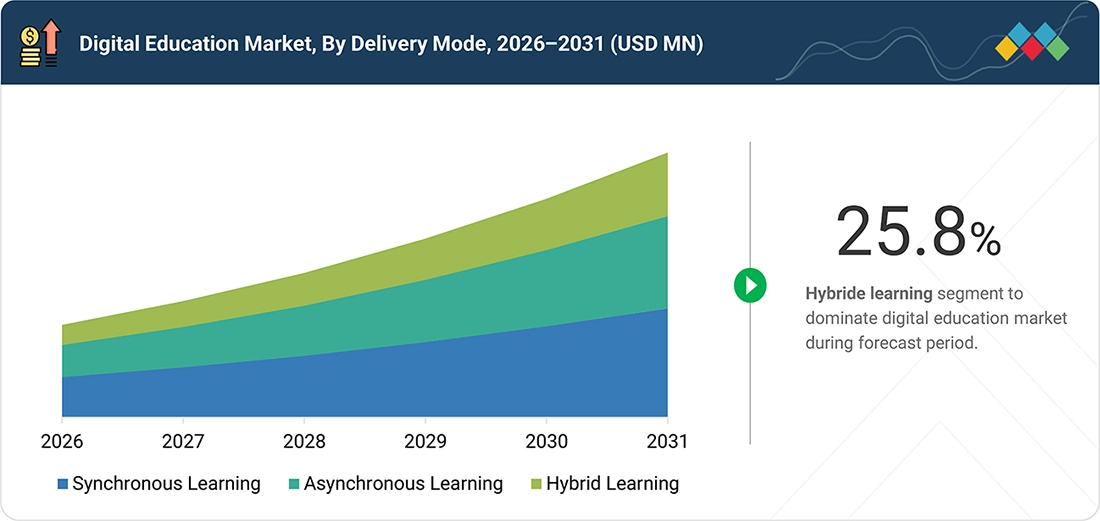
    The synchronous learning segment is expected to hold the largest market share due to its real-time interaction and collaborative learning environment. This model enables live communication between instructors and learners, promoting engagement and immediate feedback. The rise of virtual classrooms, video conferencing tools, and interactive platforms has accelerated its adoption across academic and corporate sectors. Growing demand for immersive, instructor-led digital sessions continues to strengthen the dominance of synchronous learning in the market.
  • BY END USER
    The academic institutions segment is expected to hold the largest market share in the digital education market, driven by the widespread adoption of online learning platforms and digital classrooms. Schools and universities are embracing AI-enabled tools, cloud-based systems, and virtual learning environments to enhance teaching efficiency and student engagement. Increasing government support for digital literacy and education modernization further accelerates this trend. The growing focus on scalable, accessible, and data-driven learning continues to reinforce the segment’s leadership.
  • BY REGION
    The Asia-Pacific (APAC) region is expected to grow at the highest CAGR (26.7%) in the digital education market, driven by rapid digitalization and expanding internet penetration. Countries like India, China, Japan, and South Korea are investing heavily in edtech infrastructure, online learning platforms, and AI-driven education tools. Government initiatives promoting digital literacy and skill development are further accelerating adoption. The region’s large student population and rising demand for flexible, affordable learning solutions make APAC a key growth hub for digital education.
  • COMPETITIVE LANDSCAPE
    The digital education market is highly competitive, with key players such as Coursera, Udemy, edX, Pluralsight, and Udacity leading the global landscape. These companies are focusing on AI-driven personalization, flexible learning models, and industry-aligned content to attract diverse learners across academic, professional, and corporate segments. Coursera and edX are strengthening partnerships with universities to expand accredited online degree programs, while Udemy and Pluralsight emphasize workforce upskilling and enterprise learning solutions. Udacity continues to focus on specialized technology programs and nano-degree courses. Continuous innovation, strategic collaborations, and expanding global reach define the competitive strategies shaping this fast-evolving market.

The digital education market presents significant global growth opportunities driven by rising demand for personalized, flexible, and technology-enabled learning solutions. Expanding internet penetration, smartphone adoption, and cloud infrastructure are enabling broader access to online education across regions, including emerging markets. Increasing emphasis on AI-powered adaptive learning, microlearning, and skill-based training is creating opportunities for both academic institutions and corporate training providers. Moreover, government initiatives promoting digital literacy, lifelong learning, and workforce upskilling are accelerating adoption. These factors collectively position the market for sustained global expansion, catering to diverse learners and evolving educational needs.

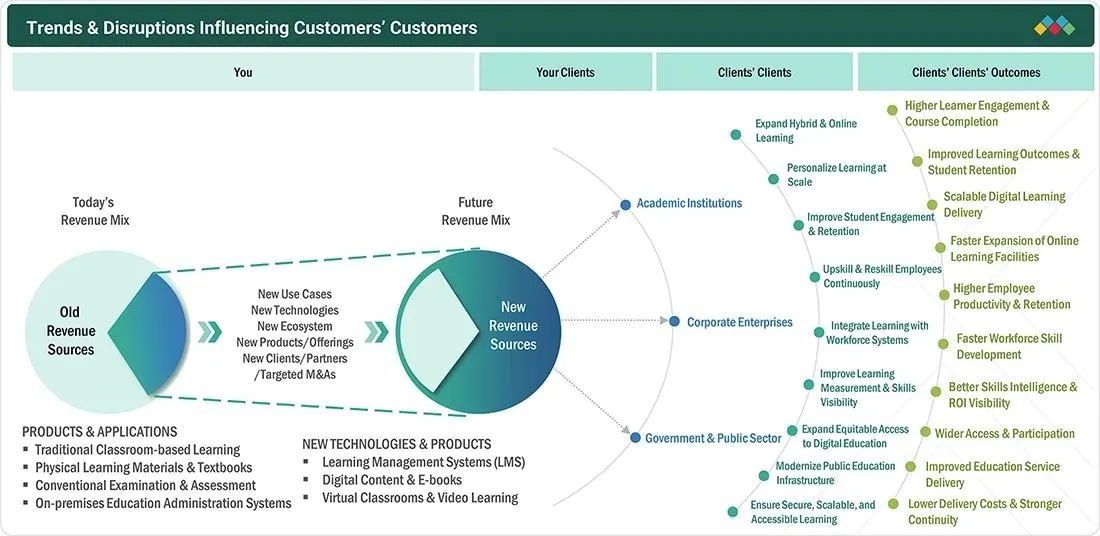
TRENDS & DISRUPTIONS IMPACTING CUSTOMERS' CUSTOMERS

The digital education market is witnessing major trends and disruptions driven by AI integration, immersive learning technologies, and data-driven personalization. Artificial intelligence and analytics are transforming content delivery, enabling adaptive learning paths and real-time performance tracking. Virtual and augmented reality (VR/AR) are creating interactive, experiential learning environments that enhance engagement and retention. The rise of microlearning, mobile learning, and hybrid education models is reshaping how learners access and consume content. These disruptions are pushing institutions and enterprises to adopt agile, tech-enabled learning ecosystems, accelerating innovation and competitiveness in the education landscape.

Source: Secondary Research, Interviews with Experts, MarketsandMarkets Analysis

MARKET DYNAMICS

Drivers
Impact
Level
  • Growing demand for adaptive technology-driven personalized learning
  • Gamification enhancing student engagement in learning
RESTRAINTS
Impact
Level
  • Infrastructure shortage in rural areas
  • Prolonged screen time
OPPORTUNITIES
Impact
Level
  • Transforming microlearning and modular learning with digital education
  • Offering local language content boosts course completion rates
CHALLENGES
Impact
Level
  • Insufficient interaction in virtual classrooms hindering student engagement
  • Inadequate teacher training hampering effective integration of digital tools

Source: Secondary Research, Interviews with Experts, MarketsandMarkets Analysis

Driver: Growing demand for adaptive technology-driven personalized learning

The growing demand for personalized learning is a key driver of the digital education market, as traditional models struggle to meet diverse learner needs. AI and machine learning-based adaptive systems are enabling customized learning experiences through real-time feedback and content adjustment. In October 2024, Anthology partnered with Obrizum to integrate adaptive learning technology into Blackboard, enhancing global student engagement. Similarly, the South Korean government invested USD 0.74 billion to introduce AI-powered digital textbooks by 2028, advancing classroom personalization. In November 2024, Digital Promise and LINC launched “Yourway”, an AI tool for personalized lesson planning. These innovations highlight how AI-driven adaptive learning is reshaping education to deliver more engaging, efficient, and inclusive outcomes.

Restraint: Infrastructure shortage in rural areas

Infrastructural challenges such as limited internet access, unreliable electricity, and insufficient digital devices are major restraints on the digital education market, particularly in low-income and rural areas. For instance, a UNICEF 2025 report highlights that in Nigeria, only 36% have internet access, 78% of youth lack digital literacy, and less than half of teachers have basic ICT skills, limiting platform effectiveness. To address these gaps, governments are investing in infrastructure improvements; the UK committed USD 58.3 million to enhance school connectivity via wireless networks and fiber upgrades by 2030. Resolving these deficits is essential to expand digital education adoption and promote inclusive, equitable learning opportunities globally.

Opportunity: Transforming microlearning and modular learning with digital education

Microlearning and modular learning are transforming the digital education landscape by providing flexible, personalized, and scalable learning solutions. Microlearning delivers short, focused content like videos and quizzes for quick knowledge acquisition, ideal for professionals upskilling at their own pace. Modular learning breaks content into independent segments, allowing learners to target specific skills or knowledge gaps. The Commonwealth Bank of Australia (CBA) illustrates this trend with its AI for All microlearning series, launched in May 2024, upskilling 43,000 employees on generative AI and responsible AI through bite-sized modules and an AI Boot Camp. These approaches enhance engagement, retention, and workforce readiness in a rapidly evolving digital education environment.

Challenge: Insufficient interaction in virtual classrooms hindering student engagement

Student engagement remains a key challenge in the digital education market, as online learning often struggles with distractions, lower motivation, and limited social interaction compared to traditional classrooms. Many platforms use a one-size-fits-all approach, making it difficult to sustain active participation and reduce dropout rates. To address this, providers are adopting personalized and interactive solutions. For example, in October 2024, InScribe partnered with Pima Community College, supported by the US Department of Education, to enhance engagement through real-time support, dynamic peer networks, and integrated LMS features. Such initiatives aim to boost student motivation, persistence, and learning outcomes in digital education.

Digital Education Market: COMMERCIAL USE CASES ACROSS INDUSTRIES

COMPANY USE CASE DESCRIPTION BENEFITS
ITX, a software development and consulting firm, adopted Udemy Business to drive continuous learning, enhance employee skills, and strengthen loyalty, aligning its workforce with industry needs and company values. Fostered a strong culture of continuous learning. Upskilled employees with in-demand technical skills like JavaScript, .NET, AngularJS, and Scrum Development. Improved employee loyalty and strengthened ITX’s reputation as a great place to work. Supported global alignment with company values and norms.
The Abu Dhabi School of Government (ADSG) partnered with Coursera to upskill 60,000+ government employees through 3,600+ online courses, covering data science, AI, leadership, and digital transformation to build a future-ready workforce. 489,162 learning hours and 33,189 courses completed, showcasing strong adoption and engagement Skills mapping and tailored content aligned with Abu Dhabi’s competency framework Integration with promotion rubrics, linking learning to career progression Real-time analytics and insights to measure ROI and track learner progress
Hallym University partnered with edX to launch the K-University Model, integrating AI-powered courses, hybrid learning, and modular curricula to align with global standards and boost student engagement. This initiative addressed declining enrollments while equipping students and faculty with innovative learning tools. Enhanced teaching methods with AI-powered tools and hybrid models. Improved accessibility through AI translation for multilingual learning. Greater flexibility for both students and professors in course delivery. Fostered self-directed learning and global competence among students. Rapid scaling of online learning programs to meet long-term goals
Airbus, Europe’s largest aeronautics company, partnered with Udacity to digitally upskill over 1,000 employees in data analytics, AI, and machine learning, creating new technical roles. Digitally upskilled over 1,000 employees. Established new technical roles within the organization. Delivered a 237% return on investment (ROI). Boosted employee capabilities and readiness for emerging technologies. Positioned Airbus as a leader in digital transformation in aerospace.

Logos and trademarks shown above are the property of their respective owners. Their use here is for informational and illustrative purposes only.

MARKET ECOSYSTEM

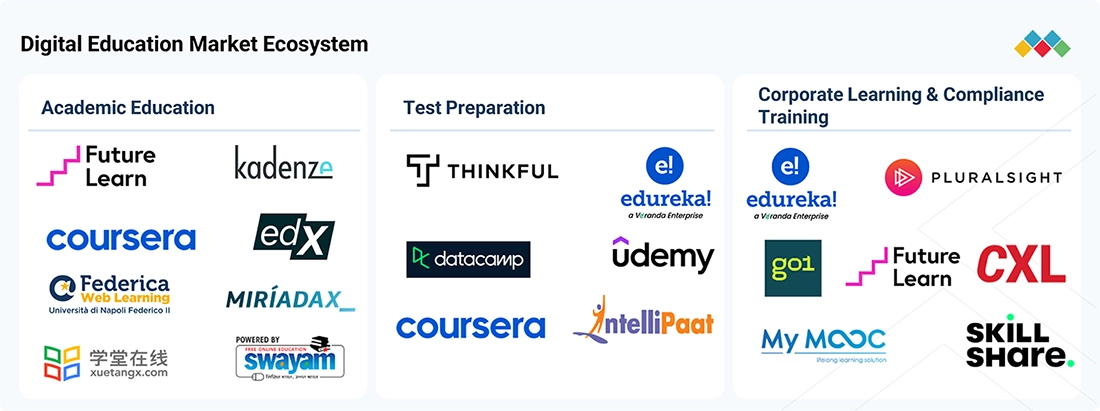
The digital education ecosystem encompasses a wide range of academic, test preparation, and corporate learning solutions, tailored to diverse learner needs and objectives. Providers offer formal academic programs, including degrees and MOOCs, alongside test preparation platforms for competitive exams and certifications. Additionally, the ecosystem supports corporate learning, focusing on workforce upskilling, compliance training, and professional development. This diverse landscape reflects how vendors customize offerings to address specific user groups, learning goals, and market demands, shaping a comprehensive and dynamic digital education environment.

Logos and trademarks shown above are the property of their respective owners. Their use here is for informational and illustrative purposes only.

MARKET SEGMENTS
Source: Secondary Research, Interviews with Experts, MarketsandMarkets Analysis

Digital Education Market, By Learning Model

The instructor-led segment holds the largest market share as it provides structured guidance, interactive sessions, and real-time feedback, making it ideal for learners seeking high engagement and effective knowledge retention. Key drivers include: Preference for expert-led training and mentorship High learner engagement through interactive sessions Effective support for complex and professional learning outcomes These factors are driving institutions and organizations to adopt instructor-led solutions to enhance learning outcomes, ensure better skill acquisition, and deliver measurable training impact.

Digital Education Market, By Course Type

The professional certification & skill development segment is expected to grow at the highest CAGR due to increasing demand for industry-relevant skills and certifications that enable career progression and workforce readiness. Key drivers include: Growing need for industry-recognized credentials and specialized skills Rising adoption of online certification programs for career growth Alignment with emerging technologies and professional standards These trends are encouraging learners and enterprises to prioritize skill-based courses that improve employability, support career advancement, and meet evolving industry requirements.

Digital Education Market, By Delivery Model

The synchronous learning segment holds the largest market share as it enables live interaction, real-time collaboration, and immediate feedback, fostering engaging and effective learning experiences. Key drivers include: Demand for live virtual classrooms and interactive sessions Support for collaborative learning and peer engagement Integration with corporate training and academic programs These advantages are making synchronous learning the preferred mode for delivering high-quality, engaging, and impactful digital education across institutions and organizations.

Digital Education Market, By End User

The corporate enterprises segment is witnessing the highest CAGR, driven by the need for continuous employee upskilling, talent development, and scalable learning programs across global teams. Key drivers include: Emphasis on workforce development and skill enhancement Implementation of large-scale, scalable learning initiatives Focus on learning analytics to improve performance and retention These factors are motivating enterprises to invest in digital education solutions that enhance productivity, strengthen employee capabilities, and ensure competitive advantage.

REGION

North America is expected to largest share in market during the forecast period

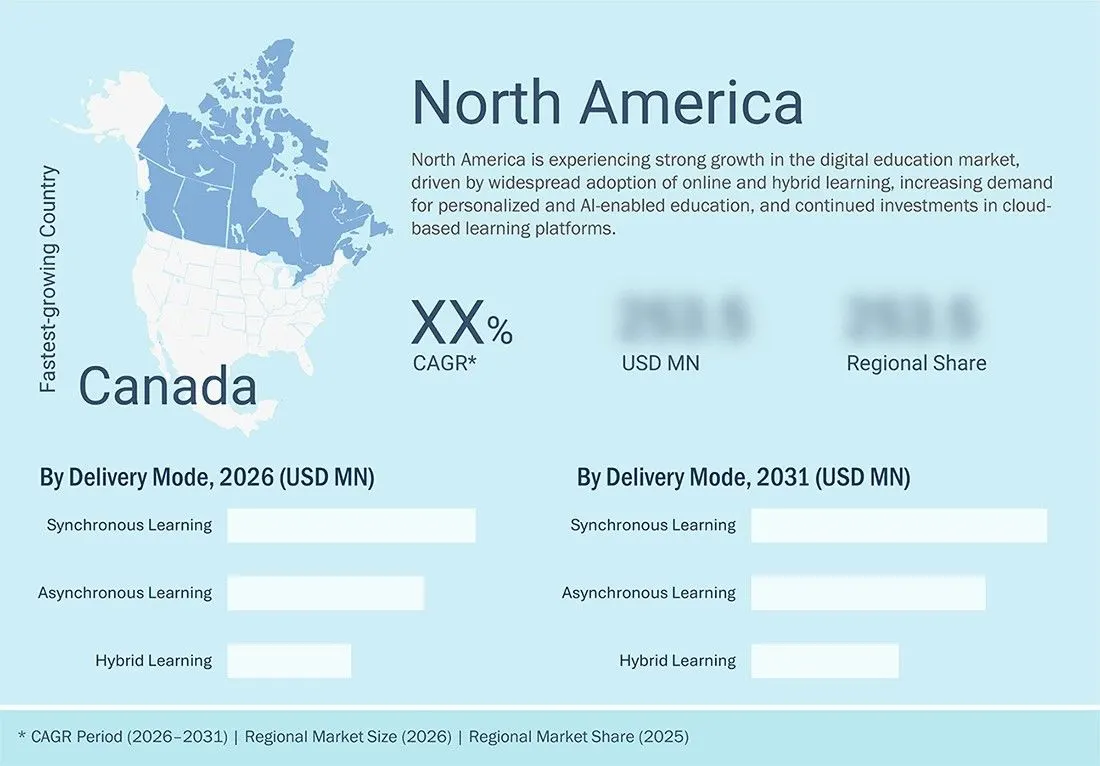
The North American digital education market is experiencing strong growth, driven by increasing internet penetration, widespread adoption of e-learning platforms, and rapid technological advancements. The market spans K–12, higher education, corporate training, and lifelong learning, with 5G rollout playing a pivotal role by enabling high-speed connectivity, real-time collaboration, and immersive virtual/augmented reality applications for experiential learning. AI-driven tools are further enhancing personalized learning, making education more engaging, accessible, and data-driven.

Digital Education Market: COMPANY EVALUATION MATRIX

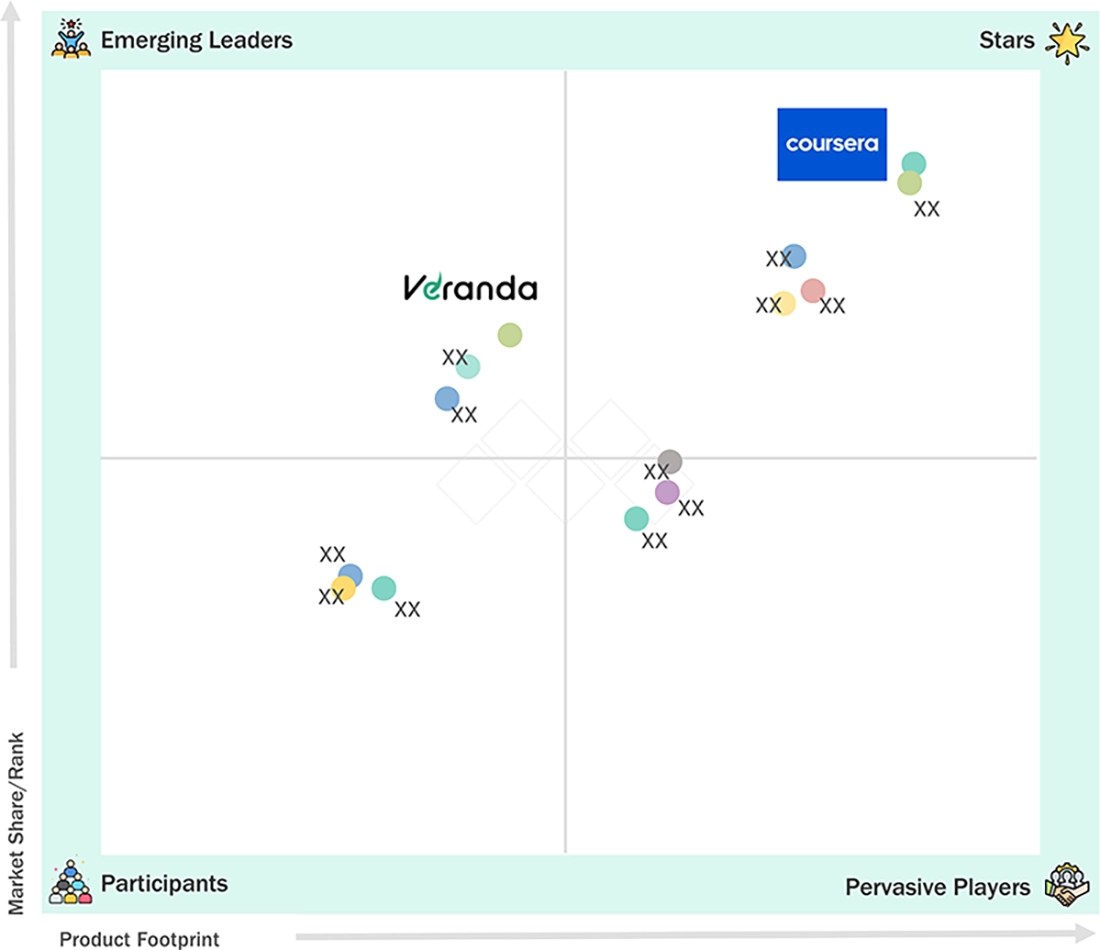
In the global digital education market, Udemy (star), offers a vast portfolio of professional and skill-based courses with a strong international presence and AI-driven personalized learning experiences. Veranda Learning (emerging leader), is gaining recognition for its innovative instructor-led programs and interactive solutions tailored to corporate and professional training. Both companies leverage technology to enhance learner engagement, expand accessibility, and meet the growing demand for flexible, scalable, and skill-focused digital learning solutions worldwide.

Source: Secondary Research, Interviews with Experts, MarketsandMarkets Analysis

KEY MARKET PLAYERS

MARKET SCOPE

REPORT METRIC DETAILS
Market Size in 2024 (Value) USD 24.94 BN
Market Forecast in 2030 (value) USD 95.71 BN
Growth Rate 24.2%
Years Considered 2020–2030
Base Year 2024
Forecast Period 2025–2030
Units Considered Value (USD MN)
Report Coverage Revenue forecast, company ranking, competitive landscape, growth factors, and trends.
Segments Covered
  • By Learning Model:
    • Self-paced Learning
    • Instructor-led
    • Blended Learning
    • Microlearning
    • Adaptive Learning
    • Mobile Learning
  • By Self-paced Learning:
    • Video-based Courses
    • Text-based Courses
    • Interactive Learning
  • By Instructor-led:
    • Scheduled Webinar
    • Mentorship & Tutoring Sessions
  • By Blended Learning:
    • Flipped Classroom
    • Project-based Learning Model
  • By Microlearning:
    • Infographics & Short Capsules
    • Short Videos
  • By Adaptive Learning:
    • AI-peronalized Pathways
    • Skill-gap Assessment Tools
  • By Mobile Learning:
    • App-based Learning Platform
    • Skill-based Learning Platform
  • By Delivery Mode:
    • Synchronous Learning
    • Asynchronous Learning
    • Hybrid Learning
  • By Course Type:
    • Academic Education
    • Test Preparation
    • Professional Certification & Skill Development
    • Vocational Training
    • Corporate Learning & Compliance Training
  • By End User:
    • Academic Institutions
    • Corporate & Enterprise Organizations
    • Government & Public Sector
Regions Covered North America, Asia Pacific, Europe, Middle East & Africa, Latin America

WHAT IS IN IT FOR YOU: Digital Education Market REPORT CONTENT GUIDE

DELIVERED CUSTOMIZATIONS

We have successfully delivered the following deep-dive customizations:

CLIENT REQUEST CUSTOMIZATION DELIVERED VALUE ADDS
Leading Provider (US) In-depth segmentation of the global Digital Education Market, covering learning models, course types, delivery modes, and end-users. Extended regional analysis for North America, Europe, APAC, and Latin America. Identified high-growth regional and segment opportunities across K–12, higher education, corporate training, and professional upskilling. Enabled tailored market entry strategies based on regional learning trends, regulatory environments, and digital infrastructure readiness. Supports optimized resource allocation and investment prioritization aligned with evolving learner needs, emerging technologies (AI/AR/VR), and skill development demands.
Leading Provider (EU) Detailed profiling of additional market players (up to 5 vendors), including platform offerings, learning delivery methods, and competitive positioning. Enhances competitive intelligence for strategic planning and go-to-market execution. Reveals market gaps and white spaces for differentiation and innovation. Supports targeted growth initiatives by aligning product development and content strategies with unmet learner needs and emerging demand clusters in professional certification, upskilling, and corporate learning solutions.

RECENT DEVELOPMENTS

  • April 2025 : Coursera launched Compass, an AI-driven feature that personalizes course recommendations based on learners' career goals. By completing a brief quiz, users receive tailored content suggestions aligned with 60 in-demand roles, supplemented by localized salary and job data across 39 countries. Compass aims to streamline career advancement pathways.
  • January 2025 : edX introduced the 'Groups' feature within its edX For Business platform, enabling administrators to create learner groups across various plans without budget constraints. This enhancement allows for streamlined bulk course assignments, filtered progress tracking, and improved learner management, facilitating more organized and efficient training programs
  • November 2024 : Pluralsight partnered with Carahsoft to deliver technology skills development solutions to US government agencies. This collaboration enables public sector organizations to access Pluralsight's comprehensive learning platform through Carahsoft's contracts, facilitating upskilling in cloud computing, cybersecurity, and software development.
  • August 2024 : Alteryx partnered with Udacity to launch a comprehensive course on data preparation with Alteryx Designer, along with a free beginner course on predictive analytics. This collaboration aims to expand data and AI literacy, equipping learners with essential skills for predictive analytics and AI implementation.


Table of Contents

Exclusive indicates content/data unique to MarketsandMarkets and not available with any competitors.

TITLE
PAGE NO
1
INTRODUCTION


27
2
RESEARCH METHODOLOGY


32
3
EXECUTIVE SUMMARY


45
4
PREMIUM INSIGHTS


50
5
MARKET OVERVIEW AND INDUSTRY TRENDS
Adaptive technology and gamification drive digital education's evolution, overcoming rural infrastructure and engagement challenges.


54
 
5.1
INTRODUCTION


5.2
MARKET DYNAMICS


5.2.1
DRIVERS


5.2.1.1
GROWING DEMAND FOR ADAPTIVE TECHNOLOGY-DRIVEN PERSONALIZED LEARNING


5.2.1.2
GAMIFICATION ENHANCING STUDENT ENGAGEMENT IN LEARNING


5.2.1.3
RISING NEED FOR UPSKILLING AND RESKILLING


5.2.1.4
INCREASING IOT INTEGRATION IN DIGITAL EDUCATION FOR REAL-TIME ENGAGEMENT


5.2.2
RESTRAINTS


5.2.2.1
INFRASTRUCTURE SHORTAGE IN RURAL AREAS


5.2.2.2
PROLONGED SCREEN TIME


5.2.3
OPPORTUNITIES


5.2.3.1
TRANSFORMING MICROLEARNING AND MODULAR LEARNING WITH DIGITAL EDUCATION


5.2.3.2
LOCALIZED CONTENT CREATION TO BOOST COURSE COMPLETION RATES


5.2.3.3
BLOCKCHAIN INTEGRATION IN EDUCATION SYSTEMS


5.2.3.4
CORPORATE-ACADEMIC EDTECH PARTNERSHIPS


5.2.4
CHALLENGES


5.2.4.1
INSUFFICIENT INTERACTION IN VIRTUAL CLASSROOMS HINDERING STUDENT ENGAGEMENT


5.2.4.2
INADEQUATE TEACHER TRAINING HAMPERING EFFECTIVE INTEGRATION OF DIGITAL TOOLS
 
 
5.3
CASE STUDY ANALYSIS


5.3.1
COURSERA BUILDING FUTURE-READY WORKFORCE FOR ABU DHABI GOVERNMENT


5.3.2
ITX ENHANCED EMPLOYEE DEVELOPMENT AND LOYALTY WITH UDEMY BUSINESS


5.3.3
STRATEGIC SHIFT OF HALLYM UNIVERSITY TO ENHANCE STUDENT LEARNING WITH EDX


5.3.4
ENHANCING EMPLOYEE DIGITAL SKILLS WITH UDACITY


5.3.5
ADOPTION OF LINKEDIN LEARNING BY FINASTRA FOR EMPLOYEE SKILL DEVELOPMENT


5.4
ECOSYSTEM ANALYSIS


5.5
SUPPLY CHAIN ANALYSIS


5.6
PRICING ANALYSIS


5.6.1
AVERAGE SELLING PRICE (ASP) OF KEY PLAYERS, BY REGION


5.6.2
INDICATIVE PRICING OF KEY PLAYERS, BY END USER


5.7
PATENT ANALYSIS


5.8
TECHNOLOGY ANALYSIS


5.8.1
KEY TECHNOLOGIES


5.8.1.1
LEARNING MANAGEMENT SYSTEMS (LMS)


5.8.1.2
CLOUD-BASED PLATFORMS


5.8.2
COMPLEMENTARY TECHNOLOGIES


5.8.2.1
BLOCKCHAIN


5.8.2.2
NATURAL LEARNING PROCESSING (NLP)


5.8.3
ADJACENT TECHNOLOGIES


5.8.3.1
AR & VR


5.8.3.2
GAMIFICATION & SIMULATION
 
 
5.9
REGULATORY LANDSCAPE


5.9.1
REGULATORY BODIES, GOVERNMENT AGENCIES, AND OTHER ORGANIZATIONS


5.9.2
REGULATIONS, BY REGION


5.10
PORTER’S FIVE FORCES ANALYSIS


5.10.1
THREAT OF NEW ENTRANTS


5.10.2
THREAT OF SUBSTITUTES


5.10.3
BARGAINING POWER OF BUYERS


5.10.4
BARGAINING POWER OF SUPPLIERS


5.10.5
INTENSITY OF COMPETITIVE RIVALRY


5.11
KEY STAKEHOLDERS AND BUYING CRITERIA


5.11.1
KEY STAKEHOLDERS IN BUYING PROCESS


5.11.2
BUYING CRITERIA


5.12
KEY CONFERENCES AND EVENTS, 2025


5.13
TRENDS/DISRUPTIONS IMPACTING CUSTOMER BUSINESS


5.14
BUSINESS MODEL ANALYSIS


5.14.1
SUBSCRIPTION-BASED MODEL


5.14.2
LICENSE-BASED MODEL


5.14.3
FREEMIUM MODEL


5.15
INVESTMENT AND FUNDING SCENARIO


5.16
IMPACT OF AI/GEN AI ON DIGITAL EDUCATION MARKET


5.16.1
TOP CLIENTS ADAPTING GEN AI


5.16.1.1
360LEARNING


5.16.1.2
WORKRAMP


5.16.2
CASE STUDY


5.16.2.1
USE OF GENERATIVE AI BY MODERNA TO DRIVE PHARMACEUTICAL ADVANCEMENTS
 
 
5.17
IMPACT OF 2025 US TARIFF – DIGITAL EDUCATION MARKET


5.17.1
INTRODUCTION


5.17.2
KEY TARIFF RATES


5.17.3
PRICE IMPACT ANALYSIS


5.17.4
IMPACT ON REGION


5.17.4.1
NORTH AMERICA


5.17.4.2
EUROPE


5.17.4.3
ASIA PACIFIC
 
6
DIGITAL EDUCATION MARKET, BY LEARNING MODEL
Market Size & Growth Rate Forecast Analysis to 2030 in USD Million | 14 Data Tables


92
 
6.1
INTRODUCTION


6.1.1
LEARNING MODEL: DIGITAL EDUCATION MARKET DRIVERS


6.2
SELF-PACED LEARNING


6.2.1
ADVANCING FLEXIBILITY THROUGH SELF-PACED LEARNING


6.2.2
VIDEO-BASED COURSES


6.2.3
TEXT-BASED MODULES


6.2.4
INTERACTIVE LEARNING


6.3
INSTRUCTOR-LED


6.3.1
STRENGTHENING LEARNERS’ SUPPORT THROUGH INSTRUCTOR-LED LEARNING


6.3.2
SCHEDULED WEBINARS


6.3.3
MENTORSHIP & TUTORING SESSIONS


6.4
BLENDED LEARNING


6.4.1
ADAPTING LEARNING TO DIVERSE NEEDS WITH BLENDED APPROACHES


6.4.2
FLIPPED CLASSROOMS


6.4.3
PROJECT-BASED LEARNING MODELS


6.5
MICROLEARNING


6.5.1
BOOSTING RETENTION WITH MICROLEARNING MODULES


6.5.2
INFOGRAPHICS & SHORT CAPSULES


6.5.3
SHORT VIDEOS


6.6
ADAPTIVE LEARNING


6.6.1
PERSONALIZING LEARNING THROUGH REAL-TIME ADAPTATION


6.6.2
AI-PERSONALIZED PATHWAYS


6.6.3
SKILL-GAP ASSESSMENT TOOLS


6.7
MOBILE LEARNING


6.7.1
BOOSTING LEARNING CONTINUITY THROUGH MOBILE DEVICES


6.7.2
APP-BASED LEARNING PLATFORMS


6.7.3
SKILL-GAP ASSESSMENT TOOLS
 
 
7
DIGITAL EDUCATION MARKET, BY DELIVERY MODE
Market Size & Growth Rate Forecast Analysis to 2030 in USD Million | 8 Data Tables


105
 
7.1
INTRODUCTION


7.1.1
DELIVERY MODE: DIGITAL EDUCATION MARKET DRIVERS


7.2
SYNCHRONOUS LEARNING


7.2.1
FOSTERING REAL-TIME INTERACTION WITH SYNCHRONOUS LEARNING


7.3
ASYNCHRONOUS LEARNING


7.3.1
LEARNING BEYOND TIME CONSTRAINTS WITH ASYNCHRONOUS LEARNING


7.4
HYBRID LEARNING


7.4.1
EMPOWERING LEARNERS WITH FLEXIBILITY AND REAL-TIME INTERACTION
 
 
8
DIGITAL EDUCATION MARKET, BY COURSE TYPE
Market Size & Growth Rate Forecast Analysis to 2030 in USD Million | 12 Data Tables


111
 
8.1
INTRODUCTION


8.1.1
COURSE TYPE: DIGITAL EDUCATION MARKET DRIVERS


8.2
ACADEMIC EDUCATION


8.2.1
TRANSFORMING TRADITIONAL EDUCATION THROUGH TECHNOLOGY


8.2.2
K-12


8.2.3
HIGHER EDUCATION


8.3
TEST PREPARATION


8.3.1
EMPOWERING ASPIRANTS WITH ONLINE TEST PREPARATION


8.4
PROFESSIONAL CERTIFICATION & SKILL DEVELOPMENT


8.4.1
UPSKILLING THROUGH DIGITAL EDUCATION


8.5
VOCATIONAL TRAINING


8.5.1
UPGRADING VOCATIONAL TRAINING THROUGH DIGITAL PLATFORMS


8.6
CORPORATE LEARNING & COMPLIANCE TRAINING


8.6.1
ENSURING COMPLIANCE THROUGH DIGITAL TRAINING
 
 
9
DIGITAL EDUCATION MARKET, BY END USER
Market Size & Growth Rate Forecast Analysis to 2030 in USD Million | 8 Data Tables


120
 
9.1
INTRODUCTION


9.1.1
END USER: DIGITAL EDUCATION MARKET DRIVERS


9.2
ACADEMIC INSTITUTIONS


9.2.1
MODERNIZING CLASSROOMS WITH DIGITAL EDUCATION


9.2.2
SCHOOLS


9.2.3
COLLEGES & UNIVERSITIES


9.3
CORPORATE & ENTERPRISE ORGANIZATIONS


9.3.1
TRANSFORMING WORKFORCE AGILITY WITH DIGITAL LEARNING


9.3.2
SMES


9.3.3
LARGE ENTERPRISES


9.4
GOVERNMENT & PUBLIC SECTOR


9.4.1
EQUIPPING CITIZENS WITH TECH-ENABLED TRAINING
 
 
10
DIGITAL EDUCATION MARKET, BY REGION
Comprehensive coverage of 8 Regions with country-level deep-dive of 14 Countries | 96 Data Tables.


127
 
10.1
INTRODUCTION


10.2
NORTH AMERICA


10.2.1
NORTH AMERICA: MARKET DRIVERS


10.2.2
NORTH AMERICA: MACROECONOMIC OUTLOOK


10.2.3
US


10.2.3.1
GOVERNMENT INITIATIVES AND TECHNOLOGICAL ADOPTIONS TO DRIVE MARKET


10.2.4
CANADA


10.2.4.1
STRONG FOCUS ON TECHNOLOGY ADOPTION IN EDUCATION TO DRIVE MARKET
 
 
10.3
EUROPE


10.3.1
EUROPE: MARKET DRIVERS


10.3.2
EUROPE: MACROECONOMIC OUTLOOK


10.3.3
UK


10.3.3.1
GOVERNMENT INVESTMENTS AND PARTNERSHIPS WITH TECH COMPANIES TO DRIVE MARKET


10.3.4
GERMANY


10.3.4.1
INVESTMENT IN DIGITAL PACT 2.0 TO DRIVE MARKET


10.3.5
FRANCE


10.3.5.1
EMPHASIS ON ENSURING EQUAL ACCESS TO DIGITAL EDUCATION RESOURCES TO DRIVE MARKET


10.3.6
ITALY


10.3.6.1
INCREASING FOCUS ON AI-INTEGRATED CLASSROOMS TO DRIVE MARKET


10.3.7
REST OF EUROPE


10.4
ASIA PACIFIC


10.4.1
ASIA PACIFIC: MARKET DRIVERS


10.4.2
ASIA PACIFIC: MACROECONOMIC OUTLOOK


10.4.3
CHINA


10.4.3.1
STRONG GOVERNMENT INITIATIVES FOR ONLINE LEARNING TO DRIVE MARKET


10.4.4
JAPAN


10.4.4.1
GIGA SCHOOL PROGRAM TO EXPAND DIGITAL EDUCATION


10.4.5
INDIA


10.4.5.1
WIDESPREAD INTERNET PENETRATION, SMARTPHONE ADOPTION, AND GOVERNMENT INITIATIVES TO DRIVE MARKET


10.4.6
ANZ


10.4.6.1
INCREASING INTERNET PENETRATION AND STRONG FOCUS ON FUTURE-READY SKILLS TO DRIVE MARKET


10.4.7
REST OF ASIA PACIFIC


10.5
MIDDLE EAST & AFRICA


10.5.1
MIDDLE EAST & AFRICA: MARKET DRIVERS


10.5.2
MIDDLE EAST & AFRICA: MACROECONOMIC OUTLOOK


10.5.3
GULF COOPERATION COUNCIL (GCC)


10.5.3.1
UAE


10.5.3.2
SAUDI ARABIA


10.5.3.3
REST OF GCC


10.5.4
SOUTH AFRICA


10.5.4.1
INCREASING INTERNET PENETRATION AND RISING DEMAND FOR QUALITY EDUCATION TO DRIVE MARKET


10.5.5
REST OF MIDDLE EAST & AFRICA


10.6
LATIN AMERICA


10.6.1
LATIN AMERICA: MARKET DRIVERS


10.6.2
LATIN AMERICA: MACROECONOMIC OUTLOOK


10.6.3
BRAZIL


10.6.3.1
INVESTMENTS FROM INTERNATIONAL FINANCING INSTITUTIONS TO DRIVE MARKET


10.6.4
MEXICO


10.6.4.1
GROWING EMPHASIS ON ENHANCING EDUCATIONAL ACCESS AND QUALITY TO DRIVE MARKET


10.6.5
REST OF LATIN AMERICA
 
 
11
COMPETITIVE LANDSCAPE
Discover top strategies and market dominance of key players and startups shaping 2024.


176
 
11.1
INTRODUCTION


11.2
KEY PLAYER STRATEGIES/RIGHT TO WIN, 2022–2025


11.3
MARKET SHARE ANALYSIS, 2024


11.4
REVENUE ANALYSIS, 2020–2024


11.5
COMPANY EVALUATION MATRIX: KEY PLAYERS, 2024


11.5.1
STARS


11.5.2
EMERGING LEADERS


11.5.3
PERVASIVE PLAYERS


11.5.4
PARTICIPANTS


11.5.5
COMPANY FOOTPRINT: KEY PLAYERS, 2024


11.5.5.1
COMPANY FOOTPRINT


11.5.5.2
REGION FOOTPRINT


11.5.5.3
LEARNING MODEL FOOTPRINT


11.5.5.4
COURSE TYPE FOOTPRINT


11.5.5.5
END USER FOOTPRINT
 
 
11.6
COMPANY EVALUATION MATRIX: STARTUPS/SMES, 2024


11.6.1
PROGRESSIVE COMPANIES


11.6.2
RESPONSIVE COMPANIES


11.6.3
DYNAMIC COMPANIES


11.6.4
STARTING BLOCKS


11.6.5
COMPETITIVE BENCHMARKING: STARTUPS/SMES, 2024


11.6.5.1
DETAILED LIST OF KEY STARTUPS/SMES


11.6.5.2
COMPETITIVE BENCHMARKING OF KEY STARTUPS/SMES
 
 
11.7
COMPANY VALUATION AND FINANCIAL METRICS


11.7.1
COMPANY VALUATION


11.7.2
FINANCIAL METRICS


11.8
BRAND/PRODUCT COMPARISON


11.9
COMPETITIVE SCENARIO


11.9.1
PRODUCT LAUNCHES AND ENHANCEMENTS


11.9.2
DEALS
 
 
12
COMPANY PROFILES
In-depth Company Profiles of Leading Market Players with detailed Business Overview, Product and Service Portfolio, Recent Developments, and Unique Analyst Perspective (MnM View)


203
 
12.1
INTRODUCTION


12.2
MAJOR PLAYERS


12.2.1
COURSERA


12.2.1.1
BUSINESS OVERVIEW


12.2.1.2
PRODUCTS/SOLUTIONS/SERVICES OFFERED


12.2.1.3
RECENT DEVELOPMENTS


12.2.1.4
MNM VIEW


12.2.2
UDEMY


12.2.3
EDX


12.2.4
PLURALSIGHT


12.2.5
UDACITY


12.2.6
INTELLIPAAT


12.2.7
SWAYAM


12.2.8
VERANDA LEARNING


12.2.9
ALISON


12.2.10
LINKEDIN LEARNING


12.2.11
IVERSITY


12.3
OTHER PLAYERS


12.3.1
FUTURELEARN


12.3.2
NOVOED


12.3.3
XUETANG


12.3.4
KHAN ACADEMY


12.3.5
KADENZE


12.3.6
FEDERICA WEB LEARNING


12.3.7
TREEHOUSE


12.3.8
SKILLSHARE


12.3.9
CXL


12.3.10
GO1


12.3.11
DATACAMP


12.3.12
PLATZI


12.3.13
CHEGG


12.3.14
MY MOOC
 
 
13
ADJACENT/RELATED MARKET


259
 
13.1
INTRODUCTION


13.1.1
RELATED MARKETS


13.1.2
LIMITATIONS


13.2
LEARNING MANAGEMENT SYSTEM MARKET


13.3
SMART LEARNING MARKET


14
APPENDIX


262
 
14.1
DISCUSSION GUIDE


14.2
KNOWLEDGESTORE: MARKETSANDMARKETS’ SUBSCRIPTION PORTAL


14.3
CUSTOMIZATION OPTIONS


14.4
RELATED REPORTS


14.5
AUTHOR DETAILS


LIST OF TABLES


TABLE 1
USD EXCHANGE RATES, 2018–2023


TABLE 2
PRIMARY RESPONDENTS: DIGITAL EDUCATION MARKET


TABLE 3
FACTOR ANALYSIS


TABLE 4
DIGITAL EDUCATION MARKET SIZE AND GROWTH, 2020–2024 (USD MILLION, YOY GROWTH %)


TABLE 5
DIGITAL EDUCATION MARKET SIZE AND GROWTH, 2025–2030 (USD MILLION, YOY GROWTH %)


TABLE 6
DIGITAL EDUCATION MARKET: ECOSYSTEM


TABLE 7
INDICATIVE PRICING OF KEY PLAYERS, BY END USER, 2025


TABLE 8
DIGITAL EDUCATION MARKET: LIST OF MAJOR PATENTS, 2024


TABLE 9
NORTH AMERICA: LIST OF REGULATORY BODIES, GOVERNMENT AGENCIES, AND OTHER ORGANIZATIONS


TABLE 10
EUROPE: LIST OF REGULATORY BODIES, GOVERNMENT AGENCIES, AND OTHER ORGANIZATIONS


TABLE 11
ASIA PACIFIC: LIST OF REGULATORY BODIES, GOVERNMENT AGENCIES, AND OTHER ORGANIZATIONS


TABLE 12
REST OF THE WORLD: LIST OF REGULATORY BODIES, GOVERNMENT AGENCIES, AND OTHER ORGANIZATIONS


TABLE 13
DIGITAL EDUCATION MARKET: PORTER’S FIVE FORCES ANALYSIS


TABLE 14
INFLUENCE OF STAKEHOLDERS ON BUYING PROCESS FOR TOP END USERS


TABLE 15
KEY BUYING CRITERIA FOR TOP END USERS


TABLE 16
DIGITAL EDUCATION MARKET: LIST OF KEY CONFERENCES AND EVENTS, 2025


TABLE 17
US ADJUSTED RECIPROCAL TARIFF RATES


TABLE 18
EXPECTED CHANGE IN PRICES AND LIKELY IMPACT ON DIGITAL EDUCATION MARKET DUE TO TARIFF


TABLE 19
DIGITAL EDUCATION MARKET, BY LEARNING MODEL, 2020–2024 (USD MILLION)


TABLE 20
DIGITAL EDUCATION MARKET, BY LEARNING MODEL, 2025–2030 (USD MILLION)


TABLE 21
SELF-PACED LEARNING: DIGITAL EDUCATION MARKET, BY REGION, 2020–2024 (USD MILLION)


TABLE 22
SELF-PACED LEARNING: DIGITAL EDUCATION MARKET, BY REGION, 2025–2030 (USD MILLION)


TABLE 23
INSTRUCTOR-LED: DIGITAL EDUCATION MARKET, BY REGION, 2020–2024 (USD MILLION)


TABLE 24
INSTRUCTOR-LED: DIGITAL EDUCATION MARKET, BY REGION, 2025–2030 (USD MILLION)


TABLE 25
BLENDED LEARNING: DIGITAL EDUCATION MARKET, BY REGION, 2020–2024 (USD MILLION)


TABLE 26
BLENDED LEARNING: DIGITAL EDUCATION MARKET, BY REGION, 2025–2030 (USD MILLION)


TABLE 27
MICROLEARNING: DIGITAL EDUCATION MARKET, BY REGION, 2020–2024 (USD MILLION)


TABLE 28
MICROLEARNING: DIGITAL EDUCATION MARKET, BY REGION, 2025–2030 (USD MILLION)


TABLE 29
ADAPTIVE LEARNING: DIGITAL EDUCATION MARKET, BY REGION, 2020–2024 (USD MILLION)


TABLE 30
ADAPTIVE LEARNING: DIGITAL EDUCATION MARKET, BY REGION, 2025–2030 (USD MILLION)


TABLE 31
MOBILE LEARNING: DIGITAL EDUCATION MARKET, BY REGION, 2020–2024 (USD MILLION)


TABLE 32
MOBILE LEARNING: DIGITAL EDUCATION MARKET, BY REGION, 2025–2030 (USD MILLION)


TABLE 33
DIGITAL EDUCATION MARKET, BY DELIVERY MODE, 2020–2024 (USD MILLION)


TABLE 34
DIGITAL EDUCATION MARKET, BY DELIVERY MODE, 2025–2030 (USD MILLION)


TABLE 35
SYNCHRONOUS LEARNING: DIGITAL EDUCATION MARKET, BY REGION, 2020–2024 (USD MILLION)


TABLE 36
SYNCHRONOUS LEARNING: DIGITAL EDUCATION MARKET, BY REGION, 2025–2030 (USD MILLION)


TABLE 37
ASYNCHRONOUS LEARNING: DIGITAL EDUCATION MARKET, BY REGION, 2020–2024 (USD MILLION)


TABLE 38
ASYNCHRONOUS LEARNING: DIGITAL EDUCATION MARKET, BY REGION, 2025–2030 (USD MILLION)


TABLE 39
HYBRID LEARNING: DIGITAL EDUCATION MARKET, BY REGION, 2020–2024 (USD MILLION)


TABLE 40
HYBRID LEARNING: DIGITAL EDUCATION MARKET, BY REGION, 2025–2030 (USD MILLION)


TABLE 41
DIGITAL EDUCATION MARKET, BY COURSE TYPE, 2020–2024 (USD MILLION)


TABLE 42
DIGITAL EDUCATION MARKET, BY COURSE TYPE, 2025–2030 (USD MILLION)


TABLE 43
ACADEMIC EDUCATION: DIGITAL EDUCATION MARKET, BY REGION, 2020–2024 (USD MILLION)


TABLE 44
ACADEMIC EDUCATION: DIGITAL EDUCATION MARKET, BY REGION, 2025–2030 (USD MILLION)


TABLE 45
TEST PREPARATION: DIGITAL EDUCATION MARKET, BY REGION, 2020–2024 (USD MILLION)


TABLE 46
TEST PREPARATION: DIGITAL EDUCATION MARKET, BY REGION, 2025–2030 (USD MILLION)


TABLE 47
PROFESSIONAL CERTIFICATION & SKILL DEVELOPMENT: DIGITAL EDUCATION MARKET, BY REGION, 2020–2024 (USD MILLION)


TABLE 48
PROFESSIONAL CERTIFICATION & SKILL DEVELOPMENT: DIGITAL EDUCATION MARKET, BY REGION, 2025–2030 (USD MILLION)


TABLE 49
VOCATIONAL TRAINING: DIGITAL EDUCATION MARKET, BY REGION, 2020–2024 (USD MILLION)


TABLE 50
VOCATIONAL TRAINING: DIGITAL EDUCATION MARKET, BY REGION, 2025–2030 (USD MILLION)


TABLE 51
CORPORATE LEARNING & COMPLIANCE TRAINING: DIGITAL EDUCATION MARKET, BY REGION, 2020–2024 (USD MILLION)


TABLE 52
CORPORATE TRAINING & COMPLIANCE TRAINING: DIGITAL EDUCATION MARKET, BY REGION, 2025–2030 (USD MILLION)


TABLE 53
DIGITAL EDUCATION MARKET, BY END USER, 2020–2024 (USD MILLION)


TABLE 54
DIGITAL EDUCATION MARKET, BY END USER, 2025–2030 (USD MILLION)


TABLE 55
ACADEMIC INSTITUTIONS: DIGITAL EDUCATION MARKET, BY REGION, 2020–2024 (USD MILLION)


TABLE 56
ACADEMIC INSTITUTIONS: DIGITAL EDUCATION MARKET, BY REGION, 2025–2030 (USD MILLION)


TABLE 57
CORPORATE & ENTERPRISE ORGANIZATIONS: DIGITAL EDUCATION MARKET, BY REGION, 2020–2024 (USD MILLION)


TABLE 58
CORPORATE & ENTERPRISE ORGANIZATIONS: DIGITAL EDUCATION MARKET, BY REGION, 2025–2030 (USD MILLION)


TABLE 59
GOVERNMENT & PUBLIC SECTOR: DIGITAL EDUCATION MARKET, BY REGION, 2020–2024 (USD MILLION)


TABLE 60
GOVERNMENT & PUBLIC SECTOR: DIGITAL EDUCATION MARKET, BY REGION, 2025–2030 (USD MILLION)


TABLE 61
DIGITAL EDUCATION MARKET, BY REGION, 2020–2024 (USD MILLION)


TABLE 62
DIGITAL EDUCATION MARKET, BY REGION, 2025–2030 (USD MILLION)


TABLE 63
NORTH AMERICA: DIGITAL EDUCATION MARKET, BY LEARNING MODEL, 2020–2024 (USD MILLION)


TABLE 64
NORTH AMERICA: DIGITAL EDUCATION MARKET, BY LEARNING MODEL, 2025–2030 (USD MILLION)


TABLE 65
NORTH AMERICA: DIGITAL EDUCATION MARKET, BY DELIVERY MODE, 2020–2024 (USD MILLION)


TABLE 66
NORTH AMERICA: DIGITAL EDUCATION MARKET, BY DELIVERY MODE, 2025–2030 (USD MILLION)


TABLE 67
NORTH AMERICA: DIGITAL EDUCATION MARKET, BY COURSE TYPE, 2020–2024 (USD MILLION)


TABLE 68
NORTH AMERICA: DIGITAL EDUCATION MARKET, BY COURSE TYPE, 2025–2030 (USD MILLION)


TABLE 69
NORTH AMERICA: DIGITAL EDUCATION MARKET, BY END USER, 2020–2024 (USD MILLION)


TABLE 70
NORTH AMERICA: DIGITAL EDUCATION MARKET, BY END USER, 2025–2030 (USD MILLION)


TABLE 71
NORTH AMERICA: DIGITAL EDUCATION MARKET, BY COUNTRY, 2020–2024 (USD MILLION)


TABLE 72
NORTH AMERICA: DIGITAL EDUCATION MARKET, BY COUNTRY, 2025–2030 (USD MILLION)


TABLE 73
US: DIGITAL EDUCATION MARKET, BY LEARNING MODEL, 2020–2024 (USD MILLION)


TABLE 74
US: DIGITAL EDUCATION MARKET, BY LEARNING MODEL, 2025–2030 (USD MILLION)


TABLE 75
CANADA: DIGITAL EDUCATION MARKET, BY LEARNING MODEL, 2020–2024 (USD MILLION)


TABLE 76
CANADA: DIGITAL EDUCATION MARKET, BY LEARNING MODEL, 2025–2030 (USD MILLION)


TABLE 77
EUROPE: DIGITAL EDUCATION MARKET, BY LEARNING MODEL, 2020–2024 (USD MILLION)


TABLE 78
EUROPE: DIGITAL EDUCATION MARKET, BY LEARNING MODEL, 2025–2030 (USD MILLION)


TABLE 79
EUROPE: DIGITAL EDUCATION MARKET, BY DELIVERY MODE, 2020–2024 (USD MILLION)


TABLE 80
EUROPE: DIGITAL EDUCATION MARKET, BY DELIVERY MODE, 2025–2030 (USD MILLION)


TABLE 81
EUROPE: DIGITAL EDUCATION MARKET, BY COURSE TYPE, 2020–2024 (USD MILLION)


TABLE 82
EUROPE: DIGITAL EDUCATION MARKET, BY COURSE TYPE, 2025–2030 (USD MILLION)


TABLE 83
EUROPE: DIGITAL EDUCATION MARKET, BY END USER, 2020–2024 (USD MILLION)


TABLE 84
EUROPE: DIGITAL EDUCATION MARKET, BY END USER, 2025–2030 (USD MILLION)


TABLE 85
EUROPE: DIGITAL EDUCATION MARKET, BY COUNTRY, 2020–2024 (USD MILLION)


TABLE 86
EUROPE: DIGITAL EDUCATION MARKET, BY COUNTRY, 2025–2030 (USD MILLION)


TABLE 87
UK: DIGITAL EDUCATION MARKET, BY LEARNING MODEL, 2020–2024 (USD MILLION)


TABLE 88
UK: DIGITAL EDUCATION MARKET, BY LEARNING MODEL, 2025–2030 (USD MILLION)


TABLE 89
GERMANY: DIGITAL EDUCATION MARKET, BY LEARNING MODEL, 2020–2024 (USD MILLION)


TABLE 90
GERMANY: DIGITAL EDUCATION MARKET, BY LEARNING MODEL, 2025–2030 (USD MILLION)


TABLE 91
FRANCE: DIGITAL EDUCATION MARKET, BY LEARNING MODEL, 2020–2024 (USD MILLION)


TABLE 92
FRANCE: DIGITAL EDUCATION MARKET, BY LEARNING MODEL, 2025–2030 (USD MILLION)


TABLE 93
ITALY: DIGITAL EDUCATION MARKET, BY LEARNING MODEL, 2020–2024 (USD MILLION)


TABLE 94
ITALY: DIGITAL EDUCATION MARKET, BY LEARNING MODEL, 2025–2030 (USD MILLION)


TABLE 95
REST OF EUROPE: DIGITAL EDUCATION MARKET, BY LEARNING MODEL, 2020–2024 (USD MILLION)


TABLE 96
REST OF EUROPE: DIGITAL EDUCATION MARKET, BY LEARNING MODEL, 2025–2030 (USD MILLION)


TABLE 97
ASIA PACIFIC: DIGITAL EDUCATION MARKET, BY LEARNING MODEL, 2020–2024 (USD MILLION)


TABLE 98
ASIA PACIFIC: DIGITAL EDUCATION MARKET, BY LEARNING MODEL, 2025–2030 (USD MILLION)


TABLE 99
ASIA PACIFIC: DIGITAL EDUCATION MARKET, BY DELIVERY MODE, 2020–2024 (USD MILLION)


TABLE 100
ASIA PACIFIC: DIGITAL EDUCATION MARKET, BY DELIVERY MODE, 2025–2030 (USD MILLION)


TABLE 101
ASIA PACIFIC: DIGITAL EDUCATION MARKET, BY COURSE TYPE, 2020–2024 (USD MILLION)


TABLE 102
ASIA PACIFIC: DIGITAL EDUCATION MARKET, BY COURSE TYPE, 2025–2030 (USD MILLION)


TABLE 103
ASIA PACIFIC: DIGITAL EDUCATION MARKET, BY END USER, 2020–2024 (USD MILLION)


TABLE 104
ASIA PACIFIC: DIGITAL EDUCATION MARKET, BY END USER, 2025–2030 (USD MILLION)


TABLE 105
ASIA PACIFIC: DIGITAL EDUCATION MARKET, BY COUNTRY, 2020–2024 (USD MILLION)


TABLE 106
ASIA PACIFIC: DIGITAL EDUCATION MARKET, BY COUNTRY, 2025–2030 (USD MILLION)


TABLE 107
CHINA: DIGITAL EDUCATION MARKET, BY LEARNING MODEL, 2020–2024 (USD MILLION)


TABLE 108
CHINA: DIGITAL EDUCATION MARKET, BY LEARNING MODEL, 2025–2030 (USD MILLION)


TABLE 109
JAPAN: DIGITAL EDUCATION MARKET, BY LEARNING MODEL, 2020–2024 (USD MILLION)


TABLE 110
JAPAN: DIGITAL EDUCATION MARKET, BY LEARNING MODEL, 2025–2030 (USD MILLION)


TABLE 111
INDIA: DIGITAL EDUCATION MARKET, BY LEARNING MODEL, 2020–2024 (USD MILLION)


TABLE 112
INDIA: DIGITAL EDUCATION MARKET, BY LEARNING MODEL, 2025–2030 (USD MILLION)


TABLE 113
ANZ: DIGITAL EDUCATION MARKET, BY LEARNING MODEL, 2020–2024 (USD MILLION)


TABLE 114
ANZ: DIGITAL EDUCATION MARKET, BY LEARNING MODEL, 2025–2030 (USD MILLION)


TABLE 115
REST OF ASIA PACIFIC: DIGITAL EDUCATION MARKET, BY LEARNING MODEL, 2020–2024 (USD MILLION)


TABLE 116
REST OF ASIA PACIFIC: DIGITAL EDUCATION MARKET, BY LEARNING MODEL, 2025–2030 (USD MILLION)


TABLE 117
MIDDLE EAST & AFRICA: DIGITAL EDUCATION MARKET, BY LEARNING MODEL, 2020–2024 (USD MILLION)


TABLE 118
MIDDLE EAST & AFRICA: DIGITAL EDUCATION MARKET, BY LEARNING MODEL, 2025–2030 (USD MILLION)


TABLE 119
MIDDLE EAST & AFRICA: DIGITAL EDUCATION MARKET, BY DELIVERY MODE, 2020–2024 (USD MILLION)


TABLE 120
MIDDLE EAST & AFRICA: DIGITAL EDUCATION MARKET, BY DELIVERY MODE, 2025–2030 (USD MILLION)


TABLE 121
MIDDLE EAST & AFRICA: DIGITAL EDUCATION MARKET, BY COURSE TYPE, 2020–2024 (USD MILLION)


TABLE 122
MIDDLE EAST & AFRICA: DIGITAL EDUCATION MARKET, BY COURSE TYPE, 2025–2030 (USD MILLION)


TABLE 123
MIDDLE EAST & AFRICA: DIGITAL EDUCATION MARKET, BY END USER, 2020–2024 (USD MILLION)


TABLE 124
MIDDLE EAST & AFRICA: DIGITAL EDUCATION MARKET, BY END USER, 2025–2030 (USD MILLION)


TABLE 125
MIDDLE EAST & AFRICA: DIGITAL EDUCATION MARKET, BY COUNTRY, 2020–2024 (USD MILLION)


TABLE 126
MIDDLE EAST & AFRICA: DIGITAL EDUCATION MARKET, BY COUNTRY, 2025–2030 (USD MILLION)


TABLE 127
GCC: DIGITAL EDUCATION MARKET, BY LEARNING MODEL, 2020–2024 (USD MILLION)


TABLE 128
GCC: DIGITAL EDUCATION MARKET, BY LEARNING MODEL, 2025–2030 (USD MILLION)


TABLE 129
GCC: DIGITAL EDUCATION MARKET, BY COUNTRY, 2020–2024 (USD MILLION)


TABLE 130
GCC: DIGITAL EDUCATION MARKET, BY COUNTRY, 2025–2030 (USD MILLION)


TABLE 131
UAE: DIGITAL EDUCATION MARKET, BY LEARNING MODEL, 2020–2024 (USD MILLION)


TABLE 132
UAE: DIGITAL EDUCATION MARKET, BY LEARNING MODEL, 2025–2030 (USD MILLION)


TABLE 133
SAUDI ARABIA: DIGITAL EDUCATION MARKET, BY LEARNING MODEL, 2020–2024 (USD MILLION)


TABLE 134
SAUDI ARABIA: DIGITAL EDUCATION MARKET, BY LEARNING MODEL, 2025–2030 (USD MILLION)


TABLE 135
REST OF GCC: DIGITAL EDUCATION MARKET, BY LEARNING MODEL, 2020–2024 (USD MILLION)


TABLE 136
REST OF GCC: DIGITAL EDUCATION MARKET, BY LEARNING MODEL, 2025–2030 (USD MILLION)


TABLE 137
SOUTH AFRICA: DIGITAL EDUCATION MARKET, BY LEARNING MODEL, 2020–2024 (USD MILLION)


TABLE 138
SOUTH AFRICA: DIGITAL EDUCATION MARKET, BY LEARNING MODEL, 2025–2030 (USD MILLION)


TABLE 139
REST OF MIDDLE EAST & AFRICA: DIGITAL EDUCATION MARKET, BY LEARNING MODEL, 2020–2024 (USD MILLION)


TABLE 140
REST OF MIDDLE EAST & AFRICA: DIGITAL EDUCATION MARKET, BY LEARNING MODEL, 2025–2030 (USD MILLION)


TABLE 141
LATIN AMERICA: DIGITAL EDUCATION MARKET, BY LEARNING MODEL, 2020–2024 (USD MILLION)


TABLE 142
LATIN AMERICA: DIGITAL EDUCATION MARKET, BY LEARNING MODEL, 2025–2030 (USD MILLION)


TABLE 143
LATIN AMERICA: DIGITAL EDUCATION MARKET, BY DELIVERY MODE, 2020–2024 (USD MILLION)


TABLE 144
LATIN AMERICA: DIGITAL EDUCATION MARKET, BY DELIVERY MODE, 2025–2030 (USD MILLION)


TABLE 145
LATIN AMERICA: DIGITAL EDUCATION MARKET, BY COURSE TYPE, 2020–2024 (USD MILLION)


TABLE 146
LATIN AMERICA: DIGITAL EDUCATION MARKET, BY COURSE TYPE, 2025–2030 (USD MILLION)


TABLE 147
LATIN AMERICA: DIGITAL EDUCATION MARKET, BY END USER, 2020–2024 (USD MILLION)


TABLE 148
LATIN AMERICA: DIGITAL EDUCATION MARKET, BY END USER, 2025–2030 (USD MILLION)


TABLE 149
LATIN AMERICA: DIGITAL EDUCATION MARKET, BY COUNTRY, 2020–2024 (USD MILLION)


TABLE 150
LATIN AMERICA: DIGITAL EDUCATION MARKET, BY COUNTRY, 2025–2030 (USD MILLION)


TABLE 151
BRAZIL: DIGITAL EDUCATION MARKET, BY LEARNING MODEL, 2020–2024 (USD MILLION)


TABLE 152
BRAZIL: DIGITAL EDUCATION MARKET, BY LEARNING MODEL, 2025–2030 (USD MILLION)


TABLE 153
MEXICO: DIGITAL EDUCATION MARKET, BY LEARNING MODEL, 2020–2024 (USD MILLION)


TABLE 154
MEXICO: DIGITAL EDUCATION MARKET, BY LEARNING MODEL, 2025–2030 (USD MILLION)


TABLE 155
REST OF LATIN AMERICA: DIGITAL EDUCATION MARKET, BY LEARNING MODEL, 2020–2024 (USD MILLION)


TABLE 156
REST OF LATIN AMERICA: DIGITAL EDUCATION MARKET, BY LEARNING MODEL, 2025–2030 (USD MILLION)


TABLE 157
DIGITAL EDUCATION MARKET: OVERVIEW OF STRATEGIES ADOPTED BY KEY PLAYERS, 2022–2025


TABLE 158
DIGITAL EDUCATION MARKET: DEGREE OF COMPETITION, 2024


TABLE 159
DIGITAL EDUCATION MARKET: REGION FOOTPRINT


TABLE 160
DIGITAL EDUCATION MARKET: LEARNING MODEL FOOTPRINT


TABLE 161
DIGITAL EDUCATION MARKET: COURSE TYPE FOOTPRINT


TABLE 162
DIGITAL EDUCATION MARKET: END USER FOOTPRINT


TABLE 163
DIGITAL EDUCATION MARKET: KEY STARTUPS/SMES


TABLE 164
DIGITAL EDUCATION MARKET: COMPETITIVE BENCHMARKING OF KEY STARTUPS/SMES


TABLE 165
DIGITAL EDUCATION MARKET: PRODUCT LAUNCHES AND ENHANCEMENTS, OCTOBER 2022–MAY 2025


TABLE 166
DIGITAL EDUCATION MARKET: DEALS, OCTOBER 2022–JANUARY 2025


TABLE 167
COURSERA: COMPANY OVERVIEW


TABLE 168
COURSERA: PRODUCTS/SOLUTIONS/SERVICES OFFERED


TABLE 169
COURSERA: PRODUCT LAUNCHES AND ENHANCEMENTS


TABLE 170
COURSERA: DEALS


TABLE 171
UDEMY: COMPANY OVERVIEW


TABLE 172
UDEMY: PRODUCTS/SOLUTIONS/SERVICES OFFERED


TABLE 173
UDEMY: PRODUCT LAUNCHES AND ENHANCEMENTS


TABLE 174
UDEMY: DEALS


TABLE 175
UDEMY: OTHER DEVELOPMENTS


TABLE 176
EDX: COMPANY OVERVIEW


TABLE 177
EDX: PRODUCTS/SOLUTIONS/SERVICES OFFERED


TABLE 178
EDX: PRODUCT LAUNCHES AND ENHANCEMENTS


TABLE 179
EDX: DEALS


TABLE 180
PLURALSIGHT: COMPANY OVERVIEW


TABLE 181
PLURALSIGHT: PRODUCTS/SOLUTIONS/SERVICES OFFERED


TABLE 182
PLURALSIGHT: PRODUCT LAUNCHES AND ENHANCEMENTS


TABLE 183
PLURALSIGHT: DEALS


TABLE 184
UDACITY: COMPANY OVERVIEW


TABLE 185
UDACITY: PRODUCTS/SOLUTIONS/SERVICES OFFERED


TABLE 186
UDACITY: PRODUCT LAUNCHES AND ENHANCEMENTS


TABLE 187
UDACITY: DEALS


TABLE 188
INTELLIPAAT: COMPANY OVERVIEW


TABLE 189
INTELLIPAAT: PRODUCTS/SOLUTIONS/SERVICES OFFERED


TABLE 190
INTELLIPAAT: PRODUCT LAUNCHES AND ENHANCEMENTS


TABLE 191
INTELLIPAAT: DEALS


TABLE 192
SWAYAM: COMPANY OVERVIEW


TABLE 193
SWAYAM: PRODUCTS/SOLUTIONS/SERVICES OFFERED


TABLE 194
SWAYAM: PRODUCT LAUNCHES AND ENHANCEMENTS


TABLE 195
SWAYAM: DEALS


TABLE 196
VERANDA LEARNING: COMPANY OVERVIEW


TABLE 197
VERANDA LEARNING: PRODUCTS/SOLUTIONS/SERVICES OFFERED


TABLE 198
VERANDA LEARNING: DEALS


TABLE 199
ALISON: COMPANY OVERVIEW


TABLE 200
ALISON: PRODUCTS/SOLUTIONS/SERVICES OFFERED


TABLE 201
ALISON: PRODUCT LAUNCHES AND ENHANCEMENTS


TABLE 202
ALISON: DEALS


TABLE 203
LINKEDIN LEARNING: COMPANY OVERVIEW


TABLE 204
LINKEDIN LEARNING: PRODUCTS/SOLUTIONS/SERVICES OFFERED


TABLE 205
LINKEDIN LEARNING: DEALS


TABLE 206
IVERSITY: COMPANY OVERVIEW


TABLE 207
IVERSITY: PRODUCTS/SOLUTIONS/SERVICES OFFERED


TABLE 208
LEARNING MANAGEMENT SYSTEM MARKET, BY OFFERING, 2018–2022 (USD MILLION)


TABLE 209
LEARNING MANAGEMENT SYSTEM MARKET, BY OFFERING, 2023–2028 (USD MILLION)


TABLE 210
LEARNING MANAGEMENT SYSTEM MARKET, BY DELIVERY MODE, 2018–2022 (USD MILLION)


TABLE 211
LEARNING MANAGEMENT SYSTEM MARKET, BY DELIVERY MODE, 2023–2028 (USD MILLION)


TABLE 212
SMART LEARNING MARKET, BY OFFERING, 2018–2023 (USD MILLION)


TABLE 213
SMART LEARNING MARKET, BY OFFERING, 2024–2029 (USD MILLION)


TABLE 214
SMART LEARNING MARKET, BY LEARNING TYPE, 2018–2023 (USD MILLION)


TABLE 215
SMART LEARNING MARKET, BY LEARNING TYPE, 2024–2029 (USD MILLION)


LIST OF FIGURES


FIGURE 1
DIGITAL EDUCATION MARKET: RESEARCH DESIGN


FIGURE 2
BREAKUP OF PRIMARY INTERVIEWS, BY COMPANY TYPE, DESIGNATION, AND REGION


FIGURE 3
DIGITAL EDUCATION MARKET: TOP-DOWN AND BOTTOM-UP APPROACHES


FIGURE 4
MARKET SIZE ESTIMATION METHODOLOGY: TOP-DOWN APPROACH


FIGURE 5
MARKET SIZE ESTIMATION METHODOLOGY: BOTTOM-UP APPROACH


FIGURE 6
DIGITAL EDUCATION MARKET: RESEARCH FLOW


FIGURE 7
MARKET SIZE ESTIMATION METHODOLOGY: SUPPLY-SIDE ANALYSIS


FIGURE 8
MARKET SIZE ESTIMATION METHODOLOGY: BOTTOM-UP APPROACH FROM SUPPLY SIDE – COLLECTIVE REVENUE OF VENDORS


FIGURE 9
DIGITAL EDUCATION MARKET: DEMAND-SIDE APPROACH


FIGURE 10
DIGITAL EDUCATION MARKET TO WITNESS SIGNIFICANT GROWTH


FIGURE 11
FASTEST-GROWING SEGMENTS IN DIGITAL EDUCATION MARKET, 2025–2030


FIGURE 12
DIGITAL EDUCATION MARKET: REGIONAL SNAPSHOT


FIGURE 13
GROWING DEMAND FOR ADAPTIVE TECHNOLOGY-DRIVEN PERSONALIZED LEARNING TO BOOST MARKET


FIGURE 14
INSTRUCTOR-LED LEARNING SEGMENT TO ACCOUNT FOR LARGEST MARKET SHARE DURING FORECAST PERIOD


FIGURE 15
SYNCHRONOUS LEARNING SEGMENT TO ACCOUNT FOR LARGEST MARKET SHARE DURING FORECAST PERIOD


FIGURE 16
ACADEMIC EDUCATION SEGMENT TO ACCOUNT FOR LARGEST MARKET SHARE DURING FORECAST PERIOD


FIGURE 17
ACADEMIC INSTITUTIONS SEGMENT TO ACCOUNT FOR LARGEST MARKET SHARE DURING FORECAST PERIOD


FIGURE 18
ASIA PACIFIC TO EMERGE AS BEST MARKET FOR INVESTMENT IN NEXT FIVE YEARS


FIGURE 19
DIGITAL EDUCATION MARKET: DRIVERS, RESTRAINTS, OPPORTUNITIES, AND CHALLENGES


FIGURE 20
DIGITAL EDUCATION MARKET: ECOSYSTEM ANALYSIS


FIGURE 21
DIGITAL EDUCATION MARKET: SUPPLY CHAIN ANALYSIS


FIGURE 22
AVERAGE SELLING PRICE OF KEY PLAYERS, BY REGION, 2025


FIGURE 23
PATENTS APPLIED AND PUBLISHED, 2013–2024


FIGURE 24
DIGITAL EDUCATION MARKET: PORTER’S FIVE FORCES ANALYSIS


FIGURE 25
INFLUENCE OF STAKEHOLDERS ON BUYING PROCESS FOR TOP END USERS


FIGURE 26
KEY BUYING CRITERIA FOR TOP END USERS


FIGURE 27
DIGITAL EDUCATION MARKET: TRENDS/DISRUPTIONS IMPACTING CUSTOMER BUSINESS


FIGURE 28
INVESTMENT AND FUNDING SCENARIO OF MAJOR DIGITAL EDUCATION COMPANIES


FIGURE 29
INSTRUCTOR-LED SEGMENT TO DOMINATE MARKET DURING FORECAST PERIOD


FIGURE 30
SYNCHRONOUS LEARNING SEGMENT TO LEAD MARKET DURING FORECAST PERIOD


FIGURE 31
ACADEMIC EDUCATION SEGMENT TO HOLD LARGEST MARKET SIZE DURING FORECAST PERIOD


FIGURE 32
ACADEMIC INSTITUTIONS SEGMENT TO DOMINATE MARKET DURING FORECAST PERIOD


FIGURE 33
NORTH AMERICA TO HOLD LARGEST MARKET SIZE DURING FORECAST PERIOD


FIGURE 34
NORTH AMERICA: MARKET SNAPSHOT


FIGURE 35
ASIA PACIFIC: MARKET SNAPSHOT


FIGURE 36
DIGITAL EDUCATION: MARKET SHARE ANALYSIS, 2024


FIGURE 37
DIGITAL EDUCATION MARKET: REVENUE ANALYSIS OF KEY PLAYERS, 2020–2024 (USD MILLION)


FIGURE 38
DIGITAL EDUCATION MARKET: COMPANY EVALUATION MATRIX (KEY PLAYERS), 2024


FIGURE 39
DIGITAL EDUCATION MARKET: COMPANY FOOTPRINT


FIGURE 40
DIGITAL EDUCATION MARKET: COMPANY EVALUATION MATRIX (STARTUPS/SMES), 2024


FIGURE 41
COMPANY VALUATION OF KEY VENDORS


FIGURE 42
EV/EBITDA ANALYSIS OF KEY VENDORS


FIGURE 43
YEAR-TO-DATE (YTD) PRICE TOTAL RETURN AND FIVE-YEAR STOCK BETA OF KEY VENDORS


FIGURE 44
DIGITAL EDUCATION MARKET: BRAND/PRODUCT COMPARISON


FIGURE 45
COURSERA: COMPANY SNAPSHOT


FIGURE 46
UDEMY: COMPANY SNAPSHOT


FIGURE 47
VERANDA LEARNING: COMPANY SNAPSHOT


Methodology

This research study used extensive secondary sources, directories, and databases, such as D&B Hoovers, Bloomberg Businessweek, and Factiva, to identify and collect information for a technical, market-oriented, and commercial study of the digital education market. A few other market-related reports and analyses published by various industry associations and consortia, such as the National Security Agency (NSA) and SC Magazine, were considered during the secondary research. The primary sources were mainly industry experts from the core and related industries and preferred suppliers, manufacturers, distributors, service providers, technology developers, and technologists from companies and organizations related to all segments of this industry’s value chain. In-depth interviews were conducted with primary respondents, including key industry participants, subject-matter experts, C-level executives of key market players, and industry consultants, to obtain and verify critical qualitative and quantitative information and assess the prospects.

Secondary Research

The market size of companies offering digital education was arrived at based on the secondary data available through paid and unpaid sources, as well as by analyzing the product portfolios of major companies in the ecosystem and rating the companies based on their product capabilities and business strategies.

In the secondary research process, various sources were referred to to identify and collect information for the study. The secondary sources included annual reports, press releases, investor presentations of companies, product data sheets, white papers, journals, certified publications, articles from recognized authors, government websites, directories, and databases.

Secondary research was mainly used to obtain key information about the industry’s supply chain, the total pool of key players, market classification and segmentation according to industry trends to the bottom-most level, regional markets, and key developments from both market- and technology-oriented perspectives, all of which were further validated by primary sources.

Primary Research

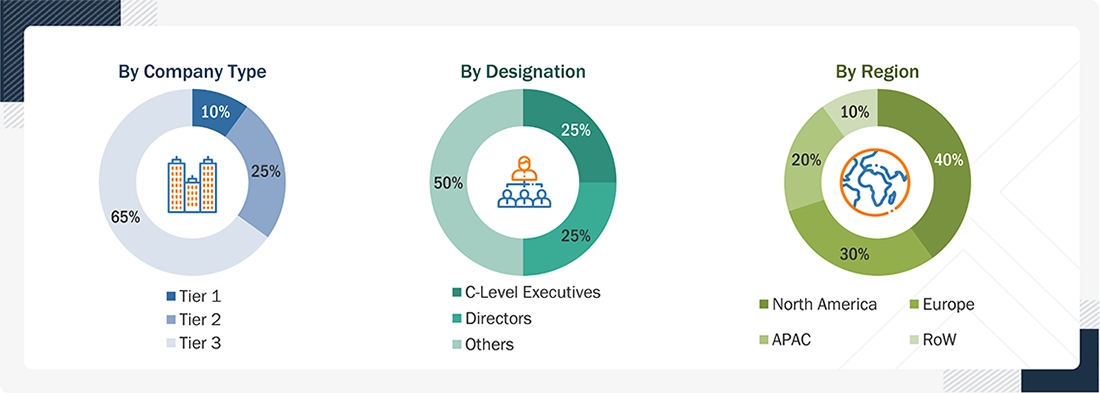
In the primary research process, various sources from the supply and demand sides were interviewed to obtain qualitative and quantitative information for this report. The primary sources from the supply side included industry experts, such as chief executive officers (CEOs), vice presidents (VPs), marketing directors, technology and innovation directors, and related key executives from various key companies and organizations operating in the digital education market.

Primary interviews were conducted to gather insights, such as market statistics, the latest trends disrupting the market, new use cases implemented, data on revenue collected from products and services, market breakups, market size estimations, market forecasts, and data triangulation. Primary research also helped understand various technology-related trends, segmentation types, industry trends, and regions. Demand-side stakeholders, such as Chief Information Officers (CIOs), Chief Technology Officers (CTOs), Chief Security Officers (CSOs), and the installation teams of governments/end users using digital education platforms and digital initiatives project teams, were interviewed to understand the buyer’s perspective on suppliers, products, service providers, and their current use of services, which would affect the overall digital education market.

Digital Education Market Size, and Share

Note 1: Others include sales managers, marketing managers, and product managers.
Note 2: Tier 1 companies’ revenues are more than USD 10 billion; tier 2 companies’ revenues range between USD 1 and 10 billion; and tier 3 companies’ revenues range between USD 500 million and USD 1 billion.
Source: Industry Experts

To know about the assumptions considered for the study, download the pdf brochure

Market Size Estimation

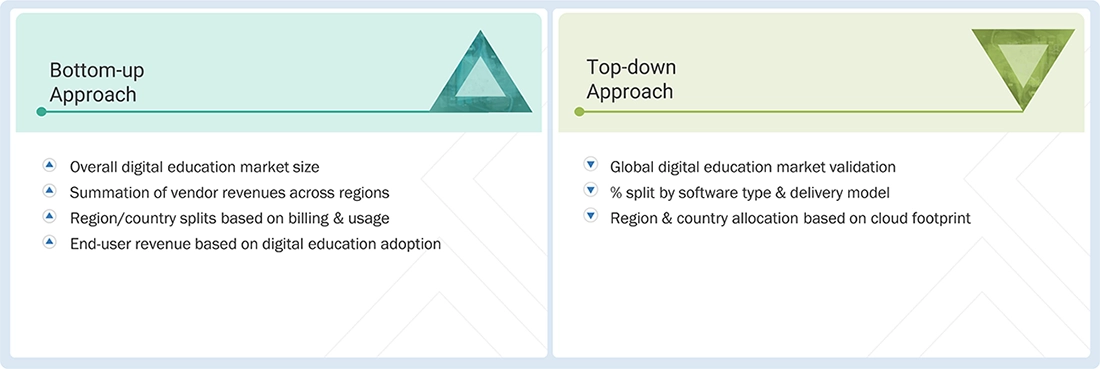
Multiple approaches were adopted to estimate and forecast the digital education market. The first approach involved estimating the market size by the summation of the companies’ revenue generated through the sale of services.

The research methodology used to estimate the market size included the following.

  • Primary and secondary research was conducted to assess the revenue contributions of major market participants in each country, with secondary research identifying these participants.
  • Critical insights were obtained by conducting in-depth interviews with industry professionals, including directors, CEOs, VPs, and marketing executives, and by reading the annual and financial reports of the top firms in the market.
  • Primary sources were used to verify all percentage splits and breakups, which were calculated using secondary sources.

Digital Education Market : Top-Down and Bottom-Up Approach

Digital Education Market Top Down and Bottom Up Approach

Data Triangulation

Once the overall market size was determined, the market was divided into segments and subsegments using the previously described market size estimation procedures. When required, market breakdown and data triangulation procedures were employed to complete the market engineering process and specify the exact figures for every market segment and subsegment. The data was triangulated by examining several variables and patterns from the government entities’ supply and demand sides.

Market Definition

Digital education refers to the use of digital technologies and tools to facilitate teaching and learning. It encompasses online learning platforms, virtual classrooms, digital content, and interactive resources that enhance access to education beyond traditional settings. Digital education enables personalized learning, supports flexible study environments, and fosters collaboration through technology. It includes various formats: e-learning, blended learning, and mobile learning. With artificial intelligence and cloud computing advancements, digital education is crucial in equipping learners with essential digital skills and promoting inclusive, lifelong learning opportunities across various age groups and educational contexts.

Stakeholders

  • Students
  • Teachers & Educators
  • Educational Institutions
  • EdTech Companies
  • Governments & Regulatory Bodies
  • Parents & Guardians
  • Content Providers & Publishers
  • Technology Providers
  • Investors & Venture Capitalists
  • NGOs & Foundations
  • Telecommunication Companies
  • Assessment & Accreditation Bodies

Report Objectives

  • To define, describe, and forecast the global digital education market based on learning model (self-paced online learning, instructor-based online learning, blended learning, microlearning, adaptive learning, mobile learning), delivery mode (synchronous learning, asynchronous, hybrid/flipped classroom), course type (academic education, test preparation, professional certification & skill development, vocational training, corporate learning & compliance training), end user (educational institutions, corporate & enterprise, government & public sector, edtech companies,) and region
  • To forecast the market size of the five major regional segments: North America, Europe, Asia Pacific, the Middle East & Africa, and Latin America
  • To strategically analyze the market subsegments concerning individual growth trends, prospects, and contributions to the total market
  • To provide detailed information related to the significant factors influencing the growth of the market (drivers, restraints, opportunities, and challenges)
  • To strategically analyze macro and micro markets concerning growth trends, prospects, and their contributions to the overall market
  • To analyze industry trends, patents, innovations, and pricing data related to the digital education market
  • To analyze the opportunities in the market for stakeholders and provide details of the competitive landscape for major players
  • To analyze the impact of AI/GenAI on the digital education market
  • To profile key players in the market and comprehensively analyze their market share/ranking and core competencies
  • To track and analyze competitive developments, such as mergers & acquisitions, product developments, and partnerships & collaborations in the market

Available Customizations

MarketsandMarkets provides customizations based on the company’s unique requirements using market data. The following customization options are available for the report.

Product Analysis

  • The product matrix provides a detailed comparison of each company’s portfolio.

Geographic Analysis as per Feasibility

  • Further breakup of the digital education market

Company Information

  • Detailed analysis and profiling of five additional market players

Key Questions Addressed by the Report

What is a digital education?

Digital education refers to teaching and learning using digital technologies like computers, the Internet, software, and online platforms. It enables access to educational content anytime and anywhere, supporting self-paced and interactive learning. Tools like virtual classrooms, e-learning platforms, and AI-powered tutors personalize learning experiences. Digital education also helps educators track progress and adapt instruction based on data.

What innovations are improving digital education?

Trending innovations in digital education include AI-powered personalized learning, immersive AR/VR experiences, gamification, and blockchain-based credentials. Tools like intelligent tutoring systems, learning analytics, and metaverse classrooms enhance engagement, accessibility, and real-time progress tracking.

Which are the key vendors providing digital education?

Some significant vendors offering digital education worldwide include Udemy (US), Coursera (US), LinkedIn Learning (US), Pluralsight (US), edX (US), Udacity (US), Intellipaat (India), Swayam (India), Veranda Learning (India), and Alison (Ireland).

What is the total CAGR recorded for the digital education market from 2025 to 2030?

The digital education market is expected to achieve a CAGR of 24.2 % from 2025 to 2030.

Which are the major clients adopting digital education?


Key clients adopting the digital education platforms include:-

  • Large Enterprises
  • Higher Education Institutions
  • K-12 Schools
  • Government & Public Sector
  • Healthcare Organizations
  • Defense & Aerospace Sector
  • Non-Profits & NGOs
  • Professional Certification Bodies


Personalize This Research

  • Triangulate with your Own Data
  • Get Data as per your Format and Definition
  • Gain a Deeper Dive on a Specific Application, Geography, Customer or Competitor
  • Any level of Personalization
Request A Free Customisation

Let Us Help You

  • What are the Known and Unknown Adjacencies Impacting the Digital Education Market
  • What will your New Revenue Sources be?
  • Who will be your Top Customer; what will make them switch?
  • Defend your Market Share or Win Competitors
  • Get a Scorecard for Target Partners
Customized Workshop Request

Custom Market Research Services

We Will Customise The Research For You, In Case The Report Listed Above Does Not Meet With Your Requirements

Get 10% Free Customisation

Growth opportunities and latent adjacency in Digital Education Market

DMCA.com Protection Status