Power Management IC (PMIC) Market by Product (Linear Regulator, Switching Regulator, Voltage References, Battery Management IC, Energy Management IC, LED Driver IC, POE Controller, Wireless Charging IC), Application, and Geography - Global Forecast to 2035


Power Management IC (PMIC) Market Summary
The Power Management IC (PMIC) Market is experiencing strong momentum as industries increasingly prioritize energy efficiency, miniaturization, and intelligent power management across electronic devices. The market is estimated at USD 38–40 billion in 2025 and is projected to reach USD 72–76 billion by 2035, registering a CAGR of 6%–8% during the forecast period. The growing adoption of artificial intelligence (AI), Internet of Things (IoT), electric vehicles (EVs), 5G infrastructure, industrial automation, consumer electronics, and cloud computing is significantly driving demand for advanced PMIC solutions. As semiconductor manufacturers focus on integrating AI-enabled power optimization, higher power density, and intelligent battery management, Power Management ICs are becoming an essential component in modern electronic systems. Increasing digital transformation initiatives across industries, coupled with stringent energy-efficiency regulations, are further accelerating market expansion.
Key Market Trends & Insights
-
North America remains the leading regional market due to its strong semiconductor ecosystem, advanced electronics manufacturing, and rapid AI adoption.
-
Asia Pacific is expected to witness the fastest growth, supported by expanding electronics production, EV manufacturing, and government-backed semiconductor investments.
-
Voltage regulators continue to dominate the product landscape owing to widespread demand across consumer electronics, automotive, and industrial applications.
-
AI-powered adaptive power management and intelligent battery optimization are emerging as transformative technologies across next-generation PMIC designs.
-
Integration of PMICs with IoT devices, wearable electronics, and edge computing platforms is creating significant growth opportunities.
-
Automation, Industry 4.0, and energy-efficient computing continue to accelerate innovation in power management technologies.
Market Size & Forecast
-
Base Year Market Size (2025): USD 38–40 billion
-
Forecast Market Size (2035): USD 72–76 billion
-
CAGR (2025–2035): 6%–8%
-
Growth Outlook: Market expansion is supported by rising semiconductor demand, AI-enabled electronics, electrification of transportation, IoT proliferation, and increasing adoption of high-performance computing and data centers requiring efficient power regulation.
Power Management IC (PMIC) Market Top 10 key takeaway
-
Growing demand for energy-efficient semiconductor solutions is fueling market expansion.
-
Consumer electronics remain the largest application segment.
-
AI-enabled intelligent power optimization is becoming a major innovation trend.
-
Electric vehicles are creating significant demand for advanced battery management ICs.
-
Industrial automation is accelerating PMIC deployment in smart factories.
-
North America continues to lead global technological innovation.
-
Asia Pacific records the fastest manufacturing and consumption growth.
-
Highly integrated PMICs are reducing PCB size and improving device performance.
-
Renewable energy storage systems increasingly rely on advanced power management technologies.
-
Strategic investments in semiconductor manufacturing continue to strengthen long-term market prospects.
Product Insights
Voltage regulators represent the largest product segment within the Power Management IC (PMIC) Market due to their widespread application across smartphones, laptops, industrial equipment, automotive electronics, networking devices, and medical systems. These integrated circuits ensure stable voltage delivery while minimizing power losses, making them indispensable for modern electronic architectures.
Battery management ICs are witnessing rapid growth as electric vehicles, portable electronics, energy storage systems, and wearable devices require sophisticated charging, monitoring, and protection capabilities. Integrated battery management solutions improve battery life, charging efficiency, thermal performance, and operational safety.
Motor control ICs and LED driver ICs continue to gain importance with expanding industrial automation, robotics, electric mobility, and smart lighting infrastructure. Meanwhile, highly integrated PMIC solutions combining multiple functions into a single chip are increasingly preferred because they reduce board space, lower component count, simplify circuit design, and improve overall energy efficiency.
Artificial intelligence is enabling adaptive voltage scaling, predictive battery diagnostics, workload-aware power optimization, and autonomous energy management, significantly enhancing PMIC functionality across next-generation electronic devices.
Technology / Component Insights
Technological innovation continues to reshape the Power Management IC (PMIC) Market as manufacturers integrate intelligent control algorithms, digital power architectures, and advanced semiconductor materials into modern PMIC designs. Highly efficient DC-DC converters, low-dropout regulators (LDOs), battery charging ICs, power sequencing controllers, and voltage supervisors remain essential building blocks across various electronic systems.
Artificial intelligence is improving real-time energy optimization by dynamically adjusting voltage levels according to processing workloads. IoT connectivity enables remote monitoring, predictive maintenance, and energy analytics for industrial equipment and smart infrastructure. Cloud computing further supports centralized power optimization by enabling intelligent monitoring of distributed electronic devices.
Wide-bandgap semiconductor technologies, including Gallium Nitride (GaN) and Silicon Carbide (SiC), are improving switching efficiency, reducing heat generation, and increasing power density. These materials are expected to play an increasingly important role in future PMIC development for electric vehicles, renewable energy systems, and high-performance computing applications.
Automation technologies, advanced packaging techniques, and miniaturized semiconductor fabrication processes are expected to enhance integration levels while reducing power consumption and manufacturing costs throughout the forecast period.
Application Insights
Consumer electronics remain the leading application segment due to continuous demand for smartphones, tablets, laptops, smartwatches, gaming devices, and wearable electronics. Every electronic device requires efficient voltage regulation, battery charging, and power distribution, making PMICs indispensable.
The automotive sector is rapidly emerging as one of the fastest-growing application areas, driven by electric vehicles, autonomous driving technologies, advanced driver assistance systems (ADAS), infotainment platforms, and battery management systems. Modern EVs require multiple PMICs to efficiently control power distribution across complex electronic architectures.
Industrial automation represents another high-growth application as smart factories increasingly deploy robotics, industrial IoT sensors, programmable logic controllers, and AI-enabled manufacturing systems. Medical devices, telecommunications infrastructure, aerospace systems, renewable energy equipment, and data centers are also contributing significantly to overall market demand.
Future opportunities will primarily arise from AI computing hardware, edge devices, smart cities, renewable energy storage, and next-generation communication infrastructure requiring intelligent power management capabilities.
Regional Insights
North America maintains its leadership position due to its well-established semiconductor industry, strong investment in AI technologies, advanced automotive innovation, and expanding cloud infrastructure. The presence of leading semiconductor manufacturers and technology companies continues to accelerate PMIC innovation.
Europe remains an important market driven by industrial automation, electric mobility, renewable energy investments, and strict energy-efficiency regulations. Countries across the region continue to support semiconductor research and sustainable electronics manufacturing.
Asia Pacific is projected to register the highest growth throughout the forecast period due to expanding semiconductor manufacturing, increasing consumer electronics production, rapid EV adoption, and government initiatives supporting domestic chip manufacturing. China, Japan, South Korea, and India continue to strengthen regional semiconductor capabilities.
Latin America and the Middle East & Africa are gradually increasing PMIC adoption as digital transformation, industrial modernization, and telecommunications infrastructure continue to expand.
Regional Insights Summary
-
North America leads global PMIC innovation and technology adoption.
-
Asia Pacific records the highest forecast CAGR driven by electronics manufacturing.
-
Europe benefits from strong automotive and industrial automation demand.
-
Emerging economies continue investing in semiconductor capabilities.
-
Renewable energy expansion increases demand for advanced power management technologies.
Country-Specific Market Trends
China (CAGR: 8%–10%) remains the largest manufacturing hub for consumer electronics and electric vehicles. Government initiatives promoting semiconductor self-reliance and domestic chip production continue to strengthen PMIC demand.
Japan (CAGR: 6%–8%) benefits from advanced automotive electronics, robotics, industrial automation, and precision manufacturing. Continuous investment in semiconductor innovation supports long-term market growth.
United States (CAGR: 5%–7%) remains the technology leader with strong demand from AI data centers, cloud infrastructure, aerospace, defense electronics, and high-performance computing applications.
Canada (CAGR: 5%–7%) is expanding semiconductor research, renewable energy deployment, and industrial automation, supporting increased PMIC adoption across multiple sectors.
Mexico (CAGR: 6%–8%) benefits from growing automotive manufacturing, electronics assembly, and cross-border semiconductor supply chain investments.
Germany (CAGR: 6%–7%) continues to drive European market growth through automotive electronics, Industry 4.0 initiatives, and advanced manufacturing technologies.
France (CAGR: 5%–7%) is witnessing increased PMIC demand across aerospace, industrial automation, renewable energy, and smart infrastructure projects.
Country-Level Insights Summary
-
China dominates manufacturing capacity and semiconductor investments.
-
Japan leads robotics and automotive electronics innovation.
-
United States drives AI-enabled semiconductor technologies.
-
Germany strengthens industrial automation and automotive applications.
-
France expands renewable energy and digital infrastructure investments.
Key Power Management IC (PMIC) Market Company Insights
Leading companies continue investing heavily in research and development to improve energy efficiency, miniaturization, AI integration, and system-level power optimization. Product innovation focuses on highly integrated PMIC platforms capable of supporting AI processors, electric vehicles, industrial automation systems, and next-generation communication equipment. Strategic partnerships with automotive manufacturers, cloud infrastructure providers, and consumer electronics companies remain common competitive strategies.
Major industry participants include Texas Instruments, Analog Devices, Infineon Technologies, STMicroelectronics, NXP Semiconductors, Renesas Electronics, onsemi, ROHM Semiconductor, Microchip Technology, and Qualcomm.
Company Strategy Summary
-
Continuous investment in AI-enabled PMIC development.
-
Expansion of automotive semiconductor portfolios.
-
Increasing focus on highly integrated power management solutions.
-
Strategic acquisitions strengthen technology capabilities.
-
Partnerships accelerate innovation across EVs, AI, and industrial automation.
Recent Developments
-
Semiconductor manufacturers have introduced next-generation AI-enabled PMIC platforms featuring adaptive voltage scaling for AI processors and high-performance computing systems.
-
Several leading vendors have expanded their automotive PMIC portfolios with advanced battery management and power distribution solutions supporting electric vehicle architectures.
-
Strategic collaborations between semiconductor companies and cloud infrastructure providers are accelerating development of energy-efficient power management technologies for hyperscale data centers.
Market Segmentation
The Power Management IC (PMIC) Market is segmented by Product, Technology/Component, Application, and Region. By product, the market includes voltage regulators, battery management ICs, motor control ICs, LED driver ICs, and power sequencing ICs, with voltage regulators accounting for the largest share due to broad deployment across electronic devices. Technology segmentation includes analog PMICs, digital PMICs, integrated PMIC platforms, DC-DC converters, LDO regulators, and battery charging technologies, with digital and AI-enabled solutions gaining traction. Applications span consumer electronics, automotive, industrial automation, telecommunications, healthcare, aerospace, defense, renewable energy, and data centers. Regionally, North America leads the market, Europe maintains stable growth, Asia Pacific demonstrates the fastest expansion, while Latin America and the Middle East & Africa continue to emerge as promising markets supported by industrial modernization and digital transformation initiatives.
Segmentation Summary
-
Voltage regulators remain the leading product category.
-
Digital PMICs show the fastest technological advancement.
-
Consumer electronics dominate application demand.
-
Automotive represents the fastest-growing end-use industry.
-
Asia Pacific records the strongest regional growth outlook.
The Power Management IC (PMIC) Market is positioned for sustained long-term growth as industries increasingly prioritize energy efficiency, intelligent electronics, and digital transformation. Artificial intelligence, IoT connectivity, industrial automation, electric vehicles, and cloud computing will continue reshaping PMIC technologies over the coming decade. Manufacturers are expected to focus on higher integration, advanced semiconductor materials, predictive power optimization, and intelligent battery management to address evolving customer requirements. With the market projected to reach USD 72–76 billion by 2035, PMICs will remain a strategic technology enabling next-generation electronic devices, sustainable energy systems, and intelligent industrial infrastructure.
FAQs - Power Management IC (PMIC) Market
1. What is the current size of the Power Management IC (PMIC) Market?
The market is valued at approximately USD 38–40 billion in 2025.
2. What is the expected growth rate of the market?
The market is projected to grow at a CAGR of 6%–8% between 2025 and 2035.
3. What are the key growth drivers of the Power Management IC (PMIC) Market?
Major growth drivers include AI adoption, IoT expansion, electric vehicles, industrial automation, consumer electronics, cloud computing, and increasing demand for energy-efficient semiconductor solutions.
4. Which region leads the Power Management IC (PMIC) Market?
North America currently leads the market, while Asia Pacific is expected to witness the fastest growth during the forecast period.
5. Which companies are the major players in the Power Management IC (PMIC) Market?
Key companies include Texas Instruments, Analog Devices, Infineon Technologies, STMicroelectronics, NXP Semiconductors, Renesas Electronics, onsemi, ROHM Semiconductor, Microchip Technology, and Qualcomm.
 Exclusive indicates content/data unique to MarketsandMarkets and not available with any competitors.
Table of Contents
1 Introduction (Page No. - 14)
1.1 Objectives of the Study
1.2 Market Definition
1.3 Study Scope
1.3.1 Markets Covered
1.3.2 Years Considered for the Study
1.3.3 Geographic Scope
1.4 Currency
1.5 Limitations
1.6 Stakeholders
2 Research Methodology (Page No. - 18)
2.1 Research Data
2.1.1 Secondary Data
2.1.1.1 Key Data From Secondary Sources
2.1.2 Primary Data
2.1.2.1 Key Data From Primary Sources
2.1.2.2 Key Industry Insights
2.1.2.3 Breakdown of Primary Interviews
2.2 Market Size Estimation
2.3 Market Breakdown and Data Triangulation
2.4 Research Assumptions
3 Executive Summary (Page No. - 27)
4 Premium Insights (Page No. - 31)
4.1 Attractive Opportunities for the Power Management IC (PMIC) Market
4.2 Power Management IC Market, By Application
5 Market Overview (Page No. - 34)
5.1 Introduction
5.2 Market Dynamics
5.2.1 Drivers
5.2.1.1 Increasing Demand for Energy-Efficient Battery-Powered Devices
5.2.1.2 Advancements in Technology
5.2.1.3 Rising Trend of Energy Harvesting Technologies
5.2.2 Restraints
5.2.2.1 Complex Integration Process for Multi-Power Domain Socs of PMICs
5.2.3 Opportunities
5.2.3.1 Increasing Application Areas of Power Management ICs
5.2.4 Challenges
5.2.4.1 to Make PMICs Highly Efficient Along With Reducing Their Size
6 Industry Trends (Page No. - 40)
6.1 Introduction
6.2 Value Chain Analysis
6.3 Porter’s Five Forces Analysis
6.3.1 Threat of Substitutes
6.3.2 Threat of New Entrants
6.3.3 Bargaining Power of Suppliers
6.3.4 Bargaining Power of Buyers
6.3.5 Intensity of Competitive Rivarly
7 Power Management IC Market, By Product (Page No. - 48)
7.1 Introduction
7.2 Linear Regulators
7.3 Switching Regulators
7.4 Voltage References
7.5 Power Management ASIC/ASSP/Others
7.5.1 Battery Charging & Management IC
7.5.2 Energy Management IC
7.5.3 Led Driver IC
7.5.4 Power-Over-Ethernet (POE) Controller
7.5.5 Power Factor Correction (PFC) Controller
7.5.6 Hot-Swap Controller
7.5.7 Wireless Charging IC
8 Power Management IC Market, By Application (Page No. - 54)
8.1 Introduction
8.2 Building Control
8.2.1 Access, Monitoring, Security, and Management
8.2.2 HVAC
8.2.3 Others
8.3 Consumer Electronics
8.3.1 Smartphones
8.3.2 Tablets
8.3.3 Portable Navigation Systems
8.3.4 Digital Cameras
8.3.5 Laptops
8.3.6 Wireless Audio Devices
8.4 Healthcare
8.4.1 Diagnostics & Therapy
8.4.2 Health & Wellness
8.4.3 Portable/Wearable Devices
8.5 Automotive
8.5.1 Infotainment
8.5.2 Telematics
8.5.3 Advanced Driver Assistance System (ADAS)
8.5.4 Automotive Passive Safety
8.6 Industrial & Retail
8.7 Wearable Electronics
8.7.1 Sports & Activity Monitors
8.7.2 Smartwatches
9 Power Management IC Market, By Geography (Page No. - 98)
9.1 Introduction
9.2 North America
9.2.1 U.S.
9.2.2 Canada
9.2.3 Mexico
9.3 Europe
9.3.1 U.K.
9.3.2 Germany
9.3.3 France
9.3.4 Rest of Europe
9.4 APAC
9.4.1 China
9.4.2 Japan
9.4.3 India
9.4.4 Rest of APAC
9.5 Rest of the World
9.5.1 Latin America
9.5.2 Middle East & Africa
10 Competitive Landscape (Page No. - 111)
10.1 Overview
10.2 Market Ranking Analysis: Power Management IC Market, 2015
10.3 Competitive Situation
10.3.1 New Product Launches
10.3.2 Mergers & Acquisitions
10.3.3 Collaborations & Agreements
11 Company Profiles (Page No. - 118)
(Overview, Products and Services, Financials, Strategy & Development)*
11.1 Introduction
11.2 Texas Instruments Inc.
11.3 Analog Devices, Inc.
11.4 Stmicroelectronics N.V.
11.5 On Semiconductor Corp.
11.6 Dialog Semiconductor PLC
11.7 NXP Semiconductors
11.8 Fairchild Semiconductor International, Inc.
11.9 Linear Technology Corp.
11.10 Renesas Electronics Corp.
11.11 Maxim Integrated Products, Inc.
*Details on Overview, Products and Services, Financials, Strategy & Development Might Not Be Captured in Case of Unlisted Companies
12 Appendix (Page No. - 152)
12.1 Insights of Industry Experts
12.2 Discussion Guide
12.3 Knowledge Store: Marketsandmarkets’ Subscription Portal
12.4 Introducing RT: Real Time Market Intelligence
12.5 Available Customizations
12.6 Related Reports
List of Tables (71 Tables)
Table 1 Driver Analysis
Table 2 Restraint Analysis
Table 3 Opportunity Analysis
Table 4 Challenge Analysis
Table 5 Power Management IC Market, By Product, 2013–2022 (USD Billion)
Table 6 Market, By Application, 2013–2022 (USD Billion)
Table 7 Market for Building Control, 2013–2022 (USD Billion)
Table 8 PMIC Market for Building Control Sector, By Geography,2013–2022 (USD Million)
Table 9 Market for the Consumer Electronics Sector, By Application, 2013–2022 (USD Million)
Table 10 PMIC Market for the Consumer Electronics Sector, By Geography, 2013–2022 (USD Billion)
Table 11 PMIC Market for the Consumer Electronics Sector,2013–2022 (Million Units)
Table 12 Market for the Consumer Electronics Sector, By Geography, 2013–2022 (Million Units)
Table 13 PMIC Market for Smartphones in Terms of Value (USD Billion) & Volume (Million Units), 2013–2022
Table 14 PMIC: Market for Smartphones, By Geography, 2013–2022 (USD Billion)
Table 15 PMIC Market for Smartphones, By Geography,2013–2022 (Million Units)
Table 16 Market for Tablets in Terms of Value (USD Million) & Volume (Million Units), 2013–2022
Table 17 PMIC Market for Tablets, By Geography, 2013–2022 (USD Million)
Table 18 Market for Tablets, By Geography, 2013–2022 (Million Units)
Table 19 PMIC Market for Portable Navigation Systems in Terms of Value (USD Million) & Volume (Million Units), 2013–2022
Table 20 PMIC Market for Portable Navigation Systems, By Geography,2013–2022 (Million Units)
Table 21 Market for Digital Cameras in Terms of Value (USD Million)& Volume (Million Units), 2013–2022
Table 22 PMIC Market for Digital Cameras, By Geography,2013–2022 (Million Units)
Table 23 PMIC Market for Laptops in Terms of Value (USD Million) & Volume (Million Units), 2013–2022
Table 24 PMIC Market for Laptops, By Geography, 2013–2022 (USD Billion)
Table 25 Market for Laptops, By Geography, 2013–2022 (Million Units)
Table 26 PMIC Market for Wireless Audio Devices in Terms of Value (USD Million) & Volume (Million Units), 2013–2022
Table 27 PMIC Market for Wireless Audio Devices, By Geography,2013–2022 (USD Million)
Table 28 PMIC Market for Wireless Audio Devices, By Geography,2013–2022 (Million Units)
Table 29 Market for the Healthcare Sector, 2013–2022 (USD Billion)
Table 30 PMIC Market for the Healthcare Sector, 2013–2022 (Million Units)
Table 31 PMIC Market for the Healthcare Sector, By Geography,2013–2022 (USD Billion)
Table 32 Market for the Healthcare Sector, By Geography,2013–2022 (Million Units)
Table 33 Market for Diagnostics & Therapy in Terms of Value (USD Billion) & Volume (Million Units), 2013–2022
Table 34 PMIC Market for Diagnostics & Therapy, By Geography,2013–2022 (USD Million)
Table 35 Market for Diagnostics & Therapy, By Geography,2013–2022 (Million Units)
Table 36 Market for Health & Wellness in Terms of Value (USD Billion)& Volume (Million Units), 2013–2022
Table 37 PMIC Market for Health & Wellness, By Geography,2013–2022 (USD Billion)
Table 38 Market for Health & Wellness, By Geography,2013–2022 (Million Units)
Table 39 PMIC Market for Portable/Wearable Medical Devices in Terms of Value (USD Billion) & Volume (Million Units), 2013–2022
Table 40 PMIC Market for Portable/Wearable Medical Devices, By Geography, 2013–2022 (USD Million)
Table 41 PMIC Market for Portable/Wearable Medical Devices, By Geography, 2013–2022 (Million Units)
Table 42 Power Management IC Market for Automotive, 2013–2022 (USD Billion)
Table 43 PMIC Market for Automotive, 2013–2022 (Million Units)
Table 44 Market for Automotive, By Geography 2013–2022 (Million Units)
Table 45 PMIC Market for Automotive, By Geography, 2013–2022 (USD Billion)
Table 46 PMIC Market for Infotainment in Terms of Value (USD Billion) & Volume (Million Units), 2013–2022
Table 47 Market for Infotainment, By Geography, 2013–2022 (USD Billion)
Table 48 PMIC Market for Infotainment, By Geography, 2013–2022 (Million Units)
Table 49 PMIC for Telematics in Terms of Value (USD Billion) & Volume (Million Units), 2013–2022
Table 50 PMIC Market for Telematics, By Geography, 2013–2022 (USD Million)
Table 51 PMIC Market for Telematics, By Geography, 2013–2022 (Million Units)
Table 52 PMIC Market for Advanced Driver Assistance System (ADAS) in Terms of Value (USD Billion) & Volume (Million Units), 2013–2022
Table 53 PMIC Market for Advanced Driver Assistance Systems (ADAS),By Geography, 2013–2022 (USD Billion)
Table 54 PMIC Market for Advanced Driver Assistance Systems (ADAS),By Geography, 2013–2022 (Million Units)
Table 55 PMIC Market for Automotive Passive Safety in Terms of Value(USD Billion) & Volume (Million Units), 2013–2022
Table 56 PMIC Market for Automotive Passive Safety, By Geography,2013–2022 (USD Million)
Table 57 PMIC Market for Automotive Passive Safety, By Geography,2013–2022 (Million Units)
Table 58 PMIC Market for the Industrial & Retail Sector,2013–2022 (USD Billion)
Table 59 PMIC Marlet for the Industrial & Retail Sector, By Geography,2013–2022 (USD Billion)
Table 60 PMIC Market for the Wearable Electronics Sector,2013–2022 (USD Million)
Table 61 PMIC Market for the Wearable Electronics Sector, By Geography, 2013–2022 (USD Million)
Table 62 PMIC Market for Wearable Electronics, By Geography,2013–2022 (Million Units)
Table 63 PMIC Market for Wearable Electronics, 2013–2022 (Million Units)
Table 64 Power Management IC Market, By Geography, 2015–2022 (USD Billion)
Table 65 North America: Power Management IC Market, By Application,2013–2022 (USD Billion)
Table 66 Europe: Market, By Application,2013–2022 (USD Billion)
Table 67 APAC: Market, By Application,2013–2022 (USD Billion)
Table 68 RoW: Market, By Application,2013–2022 (USD Billion)
Table 69 New Product Launches, 2012–2016
Table 70 Mergers & Acquisitions, 2012–2015
Table 71 Collaborations & Agreements, 2012–2015
List of Figures (71 Figures)
Figure 1 PMIC Market Scope
Figure 2 Years Considered in the Report
Figure 3 Power Management IC (PMIC) Market: Research Design
Figure 4 PMIC Market Size Estimation Methodology: Bottom-Up Approach
Figure 5 PMIC Market Size Estimation Methodology: Top-Down Approach
Figure 6 Data Triangulation
Figure 7 Power Management IC Market, 2013–2022 (USD Billion)
Figure 8 Consumer Electronics Expected to Hold the Largest SizeOf the PMIC Market During the Forecast Period
Figure 9 APAC Accounted for the Largest Share of the Power ManagementIC Market in 2015
Figure 10 Market Expected to Grow at A High CAGR During the Forecast Period
Figure 11 Wearable Electronics Expected to Witness the Highest Growth During the Forecast Period
Figure 12 Consumer Electronics Held the Largest Share of the Global Market in 2015
Figure 13 APAC Held the Largest Share of the Global Market, Segmented on the Basis of Application, in 2015
Figure 14 Drivers, Restraints, Opportunities, and Challenges for the PMIC Market
Figure 15 Value Chain Analysis of PMIC Market
Figure 16 Porter’s Five Forces Analysis, 2015
Figure 17 Intensity of Competitive Rivarly Was High in the PMIC Market in 2015
Figure 18 PMIC Market: Threats of Substitutes
Figure 19 PMIC Market: Threats of New Entrants
Figure 20 PMIC Market: Bargaining Power of Suppliers
Figure 21 PMIC Market: Bargaining Power of Buyers
Figure 22 PMIC Market: Intensity of Competitive Rivalry
Figure 23 Power Management IC: Product Segmentation
Figure 24 Power Management IC Market : Application Segmentation
Figure 25 Consumer Electronics Expected to Hold the Largest Market SizeBy 2022
Figure 26 Building Control Application Segmentation
Figure 27 Access, Monitoring, Security, and Management Applications Expected to Lead the PMIC Market for Building Control During the Forecast Period
Figure 28 APAC Expected to Dominate the PMIC Market for Consumer Electronics in 2022
Figure 29 PMIC: Consumer Electronics Applications
Figure 30 APAC Expected to Lead the PMIC Market for Smartphones in 2022
Figure 31 APAC Expected to Hold the Largest Market Size in Terms of Volume By 2022
Figure 32 APAC to Hold the Largest Market Size in Terms of Volume By 2022
Figure 33 PMIC Market for Health & Wellness Expected to Hold the Largest Market Size By 2022
Figure 34 PMIC: Healthcare Applications
Figure 35 APAC Expected to Exhibit the Highest Growth Rate During the Forecast Period
Figure 36 North America Expected to Have the Largest Market Size By 2022
Figure 37 Infotainment Expected to Exhibit the Highest Growth Rate During the Forecast Period
Figure 38 APAC Expected to Hold the Largest Market Size By 2022
Figure 39 PMIC: Automotive Applications
Figure 40 APAC Expected to Hold the Largest Market Size By 2022
Figure 41 APAC Expected to Hold the Largest Market Size By 2022
Figure 42 PMIC: Industrial & Retail Applications
Figure 43 Factory Automation Expected to Hold the Largest Market Size By 2022
Figure 44 APAC Expected to Hold the Largest Market Size By 2022
Figure 45 Wearable Electronics Market Segmentation
Figure 46 APAC Expected to Grow at the Highest Rate in the Market During the Forecast Period
Figure 47 Snapshot of the Market in North America
Figure 48 Snapshot of the Market in Europe
Figure 49 Snapshot of the Market in APAC
Figure 50 Companies Adopted New Product Launches and Merger & Acquisitions as the Key Growth Strategies Between 2012 and 2015
Figure 51 Market Ranking of the Top 5 Players in the Power Management IC Market, 2015
Figure 52 Market Evolution Framework: New Product Development has Fueled Growth and Innovation Between 2013 and 2015
Figure 53 Battle for Market Share: New Product Launches Was the Key Strategy Between 2013 and 2015
Figure 54 Geographic Revenue Mix of Top Five Market Players
Figure 55 Texas Instruments Inc.: Company Snapshot
Figure 56 Texas Instruments Inc.: SWOT Analysis
Figure 57 Analog Devices, Inc.: Company Snapshot
Figure 58 Analog Devices, Inc.: SWOT Analysis
Figure 59 Stmicroelectronics N.V.: Company Snapshot
Figure 60 Stmicroelectronics N.V.: SWOT Analysis
Figure 61 On Semiconductor Corp.: Company Snapshot
Figure 62 On Semiconductor Corp.: SWOT Analysis
Figure 63 Dialog Semiconductor PLC: Company Snapshot
Figure 64 Dialog Semiconductor PLC: SWOT Analysis
Figure 65 NXP Semiconductors: Company Snapshot
Figure 66 NXP Semiconductors: SWOT Analysis
Figure 67 Fairchild Semiconductor International, Inc.: Company Snapshot
Figure 68 Fairchild Semiconductor International, Inc.: SWOT Analysis
Figure 69 Linear Technology Corp.: Company Snapshot
Figure 70 Renesas Electronics Corp.: Company Snapshot
Figure 71 Maxim Integrated Products, Inc.: Company Snapshot
The research methodology used to estimate and forecast the size of the power management IC market begins with obtaining data on key vendor revenues through secondary research. Some of the secondary sources used in this research include information from various journals and databases such as IEEE journals, Factiva, Hoover’s, and OneSource. The vendor offerings have also been taken into consideration to determine the market segmentation. The bottom-up procedure has been employed to arrive at the overall market size of the power management IC market from the revenue of the key players in the market. This data triangulation and market breakdown procedures have been employed to complete the overall market engineering process and arrive at the exact statistics for all segments and subsegments. The analysis of the PMIC market includes extensive primary research to gather information and verify and validate the critical conclusions arrived at after an extensive secondary research.
After arriving at the overall market size, the total market has been split into several segments and subsegments. The figure below shows the breakdown of the primaries conducted during the research study on the basis of company, designation, and region.
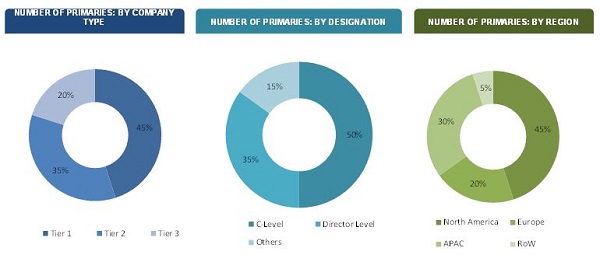
To know about the assumptions considered for the study, download the pdf brochure
The PMIC ecosystem comprises several key market players such as Texas Instruments Inc. (U.S.), ON Semiconductor Corp. (U.S.), Analog Devices, Inc. (U.S.), Dialog Semiconductor PLC (U.K.), Maxim Integrated Products, Inc. (U.S.), STMicroelectronics N.V. (Switzerland), and Linear Technology Corp. (U.S.) among others. These companies are either the manufacturer or the system integrators of PMICs and provide solutions to end-users, catering their unique requirements. The end users are from a wide range of applications, including consumer electronics, wearable electronics, healthcare, building control, automotive, and industrial & retail.
Scope of the Report:
|
Report Metric |
Details |
|
Base year |
2015 |
|
Forecast period |
2016–2022 |
|
Units |
Value (USD) |
|
Segments covered |
Type, End User, Offerings, and Region |
|
Geographic regions covered |
North America, APAC, Europe, and RoW |
|
Companies covered |
Texas Instruments Inc. (U.S.), ON Semiconductor Corp. (U.S.), Analog Devices, Inc. (U.S.), Fairchild Semiconductor Corp. (U.S.), Dialog Semiconductor PLC (U.K.), Maxim Integrated Products, Inc. (U.S.), STMicroelectronics N.V. (Switzerland), NXP Semiconductors Netherlands B.V. (Netherlands), Linear Technology Corporation (U.S.), and Renesas Electronics Corporation (Japan) |
Key Target Audience
- Raw material and manufacturing equipment suppliers
- Electronic design automation (EDA) and design tool vendors
- Component manufacturers
- Original equipment manufacturers (OEMs)
- Integrated device manufacturers (IDMs)
- Product manufacturers (ODMs)
- ODM and OEM technology solution providers
- Assembly, testing, and packaging vendors
- Technology, service, and solution providers
- Intellectual property (IP) core and licensing providers
- Suppliers and distributors
- Government and other regulatory bodies
- Technology investors
- Research institutes and organizations
- Market research and consulting firms
The study answers several questions for the stakeholders, primarily, which market segments to focus on in the next two to five years for prioritizing efforts and investments.
The market covered under this report has been segmented as follows:
Power Management IC Market, By Product:
- Linear Regulators
- Switching Regulators
- Voltage References
- Power Management ASICs/ASSPs/others (including Battery Charging & Management ICs, Energy Management ICs, LED Driver ICs, Power-over-Ethernet (PoE) Controllers, Power Factor Correction (PFC) Controllers, Hot Swap Controllers, and Wireless Charging ICs)
Power Management IC Market, By Application:
- Consumer Electronics
- Wearable Electronics
- Automotive
- Healthcare
- Industrial & Retail
- Building Control
Power Management IC Market, By Region:
- North America
- Europe
- Asia-Pacific (APAC)
- Rest of the World
Available Customizations
With the given market data, MarketsandMarkets offers customizations as per the company’s specific needs. The following customization options are available for the report:
Technology Analysis
- Product matrix, which gives a detailed comparison of the PMIC portfolio of each company
Geographic Analysis
- Further breakdown of the power management IC market in North America
- Further breakdown of the PMIC market in Europe
- Further breakdown of the power management IC market in APAC
- Further breakdown of the PMIC market in the MEA
- Further breakdown of the power management IC market in Latin America
Company Information
Detailed analysis and profiling of additional market players on the basis of various blocks of the value













Growth opportunities and latent adjacency in Power Management IC (PMIC) Market