Enterprise Manufacturing Intelligence Market by Deployment Type (Embedded, and Standalone), Offering (Software, and Services), End-User Industry (Automotive, Oil & Gas, Pharmaceutical, Food & Beverages), and Geography - Global Forecast to 2035


Enterprise Manufacturing Intelligence Market Summary
The Enterprise Manufacturing Intelligence Market is entering a high-growth phase as manufacturers shift from isolated plant-level monitoring toward connected, enterprise-wide decision intelligence. The global market was valued at approximately USD 6–7 billion in 2025 and is projected to reach around USD 22–24 billion by 2035, registering a CAGR of 13%–14% during the forecast period. Recent market estimates place the 2025 market at USD 6.48 billion and project growth at about 13.5% through 2035, while other estimates indicate even faster expansion depending on the scope of solutions and services included.
Enterprise manufacturing intelligence platforms aggregate data from manufacturing execution systems (MES), enterprise resource planning (ERP), quality management systems, industrial IoT devices, production equipment, and other operational technologies. This consolidated data enables manufacturers to monitor production performance, identify bottlenecks, improve overall equipment effectiveness (OEE), reduce downtime, and make faster operational decisions.
The market is being driven by rapid AI adoption, industrial IoT deployment, automation, cloud migration, predictive analytics, digital twins, and Industry 4.0 initiatives. Manufacturers are increasingly seeking real-time visibility across multiple plants and production lines, creating strong demand for scalable EMI platforms that transform raw operational data into actionable insights. AI-powered anomaly detection and predictive analytics are further moving manufacturing intelligence from descriptive reporting toward predictive and prescriptive decision-making.
Key Market Trends & Insights
The Enterprise Manufacturing Intelligence Market is characterized by accelerating integration between information technology and operational technology. Manufacturing organizations are moving beyond conventional dashboards and adopting platforms capable of contextualizing production, quality, energy, asset, and supply-chain information in near real time.
-
North America remains the leading regional market, supported by advanced manufacturing infrastructure, strong industrial automation adoption, cloud investment, and the presence of major industrial technology vendors.
-
Asia Pacific is expected to be the fastest-growing region, driven by manufacturing expansion, smart-factory investments, electronics and automotive production, and government-backed Industry 4.0 initiatives.
-
Software solutions represent the dominant product category, as manufacturers prioritize analytics, visualization, data contextualization, predictive maintenance, and production-performance management.
-
AI and machine learning are becoming core EMI capabilities, enabling anomaly detection, predictive quality, demand forecasting, and automated root-cause analysis.
-
Cloud and edge computing are reshaping deployment models, allowing enterprises to combine centralized analytics with low-latency plant-level processing.
-
Industrial IoT integration is expanding the data foundation of EMI platforms by connecting machines, sensors, PLCs, SCADA systems, MES platforms, and enterprise applications.
Market Size & Forecast
-
Base year market size: Approximately USD 6–7 billion in 2025
-
Forecast value by 2035: Approximately USD 22–24 billion
-
CAGR: Approximately 13%–14% from 2025 to 2035
-
Growth factors: AI-enabled analytics, IIoT connectivity, factory automation, cloud adoption, predictive maintenance, digital transformation, and increasing demand for real-time manufacturing visibility.
The market's growth trajectory reflects the transition from plant-specific monitoring toward enterprise-level manufacturing intelligence. The ability to integrate operational data across multiple facilities is becoming increasingly important as manufacturers pursue standardized processes, higher asset utilization, lower production costs, and resilient supply chains.
Enterprise Manufacturing Intelligence Market Top 10 key takeaway
-
The global Enterprise Manufacturing Intelligence Market is projected to reach approximately USD 22–24 billion by 2035.
-
The market is expected to expand at a 13%–14% CAGR during 2025–2035.
-
North America is expected to maintain its position as the leading regional market.
-
Asia Pacific is anticipated to register the fastest growth during the forecast period.
-
Software-based EMI solutions account for a major share because of their analytics and visualization capabilities.
-
AI and machine learning are transforming traditional manufacturing dashboards into predictive intelligence platforms.
-
Industrial IoT is expanding the amount and variety of data available for enterprise manufacturing analytics.
-
Cloud-edge architectures are enabling scalable and lower-latency manufacturing intelligence deployments.
-
Automotive, electronics, pharmaceuticals, food and beverage, and aerospace industries represent important application areas.
-
Increasing demand for operational efficiency, predictive maintenance, quality optimization, and real-time decision-making will support long-term market growth.
Product Insights
Software represents the leading product segment in the Enterprise Manufacturing Intelligence Market. Manufacturers increasingly require centralized platforms capable of collecting, contextualizing, visualizing, and analyzing information generated across production environments. Unlike conventional plant monitoring tools, enterprise manufacturing intelligence software can connect information from MES, ERP, quality systems, production equipment, sensors, and other manufacturing applications to provide a unified operational view.
The dominance of software is also associated with the growing importance of data-driven manufacturing. Production managers require real-time information regarding throughput, downtime, cycle time, scrap, quality deviations, energy consumption, and equipment utilization. EMI software converts these datasets into dashboards, performance indicators, alerts, trend analyses, and actionable recommendations.
Emerging product categories include AI-powered manufacturing analytics, cloud-native EMI platforms, predictive maintenance applications, digital-twin-enabled intelligence solutions, industrial data platforms, and low-code analytics tools. Vendors are increasingly embedding machine learning models directly into manufacturing applications so that users can identify abnormal machine behavior or quality deviations without requiring advanced data-science expertise.
Cloud-based software is particularly attractive to enterprises operating multiple plants because it enables standardized analytics and centralized performance management. At the same time, edge-enabled solutions are becoming important for applications requiring rapid response, such as machine monitoring, automated inspection, and production-line optimization.
Technology / Component Insights
The technological foundation of the Enterprise Manufacturing Intelligence Market consists of industrial IoT, AI and machine learning, cloud computing, edge computing, big-data analytics, connectivity technologies, automation systems, and data-integration platforms. These technologies work together to establish a continuous data-to-decision cycle across manufacturing operations.
AI is increasingly becoming one of the most important differentiators. Machine learning algorithms can identify unusual operating patterns, predict equipment failures, detect quality anomalies, and determine relationships between production variables. Generative AI is also beginning to improve access to manufacturing information through natural-language interfaces, enabling managers and engineers to ask questions about production performance without navigating complex analytical tools.
IoT provides the underlying data infrastructure. Connected sensors and industrial equipment continuously generate information about temperature, vibration, pressure, energy consumption, machine status, production rates, and quality parameters. EMI platforms contextualize this information with business and production data to generate enterprise-level insights.
Cloud computing supports centralized data storage and analytics, while edge computing allows manufacturers to analyze time-sensitive information closer to production equipment. The future of the market is therefore expected to move toward hybrid edge-to-cloud architectures, AI agents, digital twins, automated root-cause analysis, and autonomous decision-support capabilities.
Application Insights
Production performance management represents one of the most important application areas for enterprise manufacturing intelligence. Manufacturers use EMI systems to monitor production output, cycle time, downtime, OEE, capacity utilization, and process efficiency. By consolidating these indicators, organizations can identify bottlenecks and take corrective action before operational problems significantly affect production schedules.
Predictive maintenance is another rapidly expanding application. EMI platforms can combine machine-condition data with historical maintenance information to identify potential equipment failures. This allows manufacturers to transition from reactive maintenance toward condition-based and predictive strategies, reducing unexpected downtime and extending equipment life.
Quality management is also benefiting from advanced manufacturing intelligence. AI-based analytics can identify relationships between process parameters and defects, helping organizations improve first-pass yield and reduce scrap. In automotive, electronics, semiconductor, pharmaceutical, and food manufacturing, such capabilities can be particularly valuable because quality deviations can generate substantial financial and regulatory consequences.
Future opportunities will increasingly involve autonomous production optimization, energy intelligence, supply-chain visibility, digital twins, AI-assisted scheduling, and real-time sustainability monitoring. As enterprises connect more production assets, EMI platforms will become central to closed-loop manufacturing strategies.
Regional Insights
North America is expected to remain the largest market for enterprise manufacturing intelligence during the forecast period. The region benefits from mature industrial automation infrastructure, extensive cloud adoption, high investment in AI, and a strong ecosystem of manufacturing software and automation providers. Manufacturers in the United States are increasingly deploying connected factories and enterprise analytics to improve productivity, address labor constraints, and strengthen supply-chain resilience.
Europe represents another significant market, supported by industrial digitalization, advanced automotive and machinery manufacturing, sustainability requirements, and Industry 4.0 programs. Germany, France, and other industrial economies are investing in connected production systems that combine automation, IIoT, analytics, and enterprise software.
Asia Pacific is expected to record the fastest growth. China, Japan, South Korea, India, and other economies are expanding smart-factory infrastructure as manufacturers seek greater automation and operational efficiency. The region's large electronics, automotive, semiconductor, pharmaceutical, and machinery manufacturing bases provide substantial opportunities for EMI vendors. Market estimates also identify Asia Pacific as the fastest-growing regional market.
-
North America: Leading market because of advanced digital manufacturing infrastructure and early adoption of industrial analytics.
-
Europe: Strong demand from automotive, machinery, pharmaceuticals, and sustainable manufacturing initiatives.
-
Asia Pacific: Fastest-growing region due to manufacturing expansion and smart-factory investments.
-
China and Japan: Major contributors to regional EMI adoption because of large-scale automation and industrial digitization.
-
Emerging Asian economies: Increasing adoption as manufacturers modernize legacy production environments.
Country-Specific Market Trends
China is expected to remain one of Asia Pacific's largest enterprise manufacturing intelligence markets, supported by large-scale manufacturing modernization, industrial automation, robotics, and smart-factory programs. The country's electronics, automotive, machinery, and semiconductor industries are generating substantial demand for real-time production analytics. China is estimated to record an EMI CAGR of approximately 15%–17% through 2035.
Japan is expected to expand at approximately 11%–13% CAGR, supported by robotics, precision manufacturing, industrial automation, and the modernization of production systems. Japanese manufacturers are increasingly integrating AI and IoT with existing manufacturing infrastructure to improve productivity and address workforce challenges.
In North America, the United States remains the principal market and is expected to grow at approximately 12%–14% CAGR. Investments in domestic manufacturing capacity, semiconductor production, automotive electrification, aerospace, and industrial automation are supporting demand for enterprise-level manufacturing intelligence. Canada is expected to grow at around 11%–13% CAGR, supported by industrial digitalization and advanced manufacturing initiatives, while Mexico could register approximately 13%–15% CAGR, driven by automotive, electronics, aerospace, and nearshoring-related manufacturing investments.
In Europe, Germany is projected to grow at approximately 12%–14% CAGR, reflecting its strong machinery, automotive, chemicals, and industrial automation sectors. France is expected to register around 11%–13% CAGR, supported by aerospace, automotive, pharmaceuticals, and government-backed industrial digitalization.
-
China: Rapid smart-factory deployment supports approximately 15%–17% CAGR.
-
Japan: Robotics and precision manufacturing support approximately 11%–13% CAGR.
-
United States: Advanced manufacturing and AI investments support approximately 12%–14% CAGR.
-
Germany: Industry 4.0 adoption supports approximately 12%–14% CAGR.
-
France: Digital industrial transformation supports approximately 11%–13% CAGR.
Key Enterprise Manufacturing Intelligence Market Company Insights
The competitive landscape includes established industrial automation, enterprise software, and manufacturing technology companies. Siemens maintains a strong position through its manufacturing intelligence, industrial automation, digital-twin, and industrial software capabilities. Its EMI approach integrates information from ERP and manufacturing operations management environments to create broader operational visibility.
Rockwell Automation focuses on connected manufacturing, industrial automation, analytics, and smart manufacturing platforms. Schneider Electric combines industrial automation, energy management, edge computing, and digital solutions to support intelligent manufacturing environments. Honeywell continues to emphasize industrial automation, operational technology, analytics, and process optimization.
SAP contributes through enterprise software, ERP, supply-chain, asset-management, and manufacturing capabilities, helping organizations connect business processes with operational information. ABB focuses on industrial automation, robotics, electrification, and digital manufacturing. Dassault Systèmes leverages digital twins, simulation, product lifecycle management, and virtual manufacturing capabilities.
The competitive environment is increasingly shaped by AI integration, cloud-native architectures, interoperability, low-code analytics, and partnerships between industrial automation and enterprise software providers. Vendors are seeking to make EMI platforms easier to deploy across geographically distributed factories while reducing the complexity associated with legacy system integration.
-
Leading vendors are increasing investments in AI-powered industrial analytics.
-
Cloud and edge capabilities are becoming important competitive differentiators.
-
Vendors are emphasizing interoperability with MES, ERP, SCADA, and IIoT systems.
-
Digital twins and simulation are being integrated with manufacturing intelligence.
-
Partnerships and ecosystem strategies are expanding the functionality of EMI platforms.
Recent Developments
Recent market activity demonstrates the shift toward AI-enabled and connected manufacturing intelligence. In 2025, Siemens announced a major investment in a global AI manufacturing technologies R&D center in Canada, highlighting the increasing importance of AI in advanced manufacturing and battery production applications.
Manufacturing technology providers are also expanding cloud-based industrial analytics and AI capabilities to support predictive maintenance, production optimization, quality monitoring, and enterprise-wide performance management. These developments are accelerating the transition from traditional reporting tools to intelligent manufacturing platforms.
Another important development is the increasing adoption of private industrial wireless networks, edge computing, and connected factory architectures. Higher-speed connectivity allows machines and sensors to provide near-real-time data to EMI platforms, creating opportunities for closed-loop production optimization.
Market Segmentation
The Enterprise Manufacturing Intelligence Market can be segmented by product, technology/component, application, and region. By product, the market primarily consists of software and services. Software includes data management, visualization, reporting, performance monitoring, predictive analytics, and AI-powered intelligence, while services include consulting, implementation, system integration, training, maintenance, and managed services.
By technology/component, the market includes industrial IoT, AI and machine learning, cloud computing, edge computing, big-data analytics, industrial connectivity, sensors, gateways, and automation technologies. AI-enabled analytics is expected to gain significant momentum as manufacturers seek predictive and prescriptive insights rather than historical reporting.
By application, major areas include production performance management, predictive maintenance, quality management, asset performance management, production planning and scheduling, energy management, and supply-chain optimization. Automotive, electronics and semiconductors, pharmaceuticals, food and beverage, aerospace and defense, chemicals, and energy are important end-use industries. By region, the market covers North America, Europe, Asia Pacific, Latin America, and the Middle East & Africa, with North America leading and Asia Pacific demonstrating the strongest growth potential.
-
By Product: Software is expected to maintain the dominant position, supported by demand for analytics and visualization.
-
By Technology: AI, IIoT, cloud, edge computing, and big-data analytics are key growth technologies.
-
By Application: Production optimization, predictive maintenance, and quality management are major use cases.
-
By Industry: Automotive, electronics, pharmaceuticals, food and beverage, and aerospace are important users.
-
By Region: North America leads, while Asia Pacific is expected to grow at the fastest pace.
The Enterprise Manufacturing Intelligence Market is evolving from a reporting-oriented technology segment into a strategic intelligence layer for digital manufacturing. With the market expected to expand from approximately USD 6–7 billion in 2025 to USD 22–24 billion by 2035, manufacturers are likely to increase investments in platforms that can unify operational data and convert it into real-time business intelligence.
AI will be one of the most influential forces shaping this evolution. Machine learning, generative AI, computer vision, predictive analytics, and intelligent automation will allow EMI platforms to move from identifying problems to recommending—and increasingly initiating—corrective actions. At the same time, IoT, edge computing, cloud platforms, digital twins, and industrial connectivity will create increasingly comprehensive data environments.
For manufacturers, the strategic importance of EMI extends beyond productivity improvement. Enterprise-wide manufacturing intelligence can support resilience, quality, sustainability, energy optimization, predictive maintenance, and faster decision-making. As Industry 4.0 adoption accelerates through 2035, companies that successfully integrate AI, automation, and manufacturing data are likely to gain a meaningful competitive advantage.
FAQs - Enterprise Manufacturing Intelligence Market
1. What is the projected size of the Enterprise Manufacturing Intelligence Market?
The global Enterprise Manufacturing Intelligence Market is estimated at approximately USD 6–7 billion in 2025 and is projected to reach around USD 22–24 billion by 2035, depending on market scope and segmentation. Recent published estimates similarly indicate strong long-term expansion.
2. What is the growth rate of the Enterprise Manufacturing Intelligence Market?
The market is expected to grow at approximately 13%–14% CAGR from 2025 to 2035. Growth is supported by increasing adoption of AI, IIoT, cloud computing, automation, predictive analytics, and digital manufacturing platforms.
3. What are the key drivers of the Enterprise Manufacturing Intelligence Market?
Major drivers include the need for real-time production visibility, increasing industrial automation, IIoT adoption, AI-powered predictive analytics, cloud migration, predictive maintenance, Industry 4.0 initiatives, and the growing need to optimize production costs and asset utilization.
4. Which region is leading the Enterprise Manufacturing Intelligence Market?
North America is expected to remain the leading regional market because of its mature manufacturing technology ecosystem, advanced automation infrastructure, strong AI investment, and high adoption of cloud and industrial analytics. Asia Pacific is expected to be the fastest-growing region.
5. Who are the key companies in the Enterprise Manufacturing Intelligence Market?
Major companies active in the market include Siemens, Rockwell Automation, Schneider Electric, Honeywell, SAP, ABB, and Dassault Systèmes, along with other specialized manufacturing intelligence and industrial software providers.
 Exclusive indicates content/data unique to MarketsandMarkets and not available with any competitors.
Table of Contents
1 Introduction (Page No. - 15)
1.1 Objectives of the Study
1.2 Market Definition
1.3 Scope of the Study
1.3.1 Market Scope
1.3.2 Years Considered for the Study
1.4 Currency
1.5 Limitations
1.6 Stakeholders
2 Research Methodology (Page No. - 18)
2.1 Research Data
2.1.1 Secondary Data
2.1.1.1 Key Data From Secondary Sources
2.1.2 Primary Data
2.1.2.1 Key Data From Primary Sources
2.1.2.2 Key Industry Insights
2.1.2.3 Breakdown of Primaries
2.2 Market Size Estimation
2.3 Market Breakdown & Data Triangulation
2.4 Assumptions
3 Executive Summary (Page No. - 26)
4 Premium Insights (Page No. - 31)
4.1 Enterprise Manufacturing Intelligence Market, 2016–2022 (USD Billion)
4.2 Market, By Deployment Type (2016–2022)
4.3 Market, By Offering (2016)
4.4 Market, By End–User Industry and Region (2016)
4.5 Market, By Region (2016)
5 Market Overview (Page No. - 34)
5.1 Introduction
5.2 Evolution of the EMI Market
5.3 Market Segmentation
5.3.1 By Deployment Type
5.3.2 By Offering
5.3.3 By End-User Industry
5.3.4 By Geography
5.4 Market Dynamics
5.4.1 Drivers
5.4.1.1 Intensifying Competitive Scenario Among Manufacturers Drives the Growth of the EMI Market
5.4.1.2 Rising Need for Enhanced Operational Efficiency Increases the Demand for EMI
5.4.1.3 Increased Complexities in the Supply Chain Process Augmenting Adoption of EMI to Ensure Speedy Response
5.4.1.4 Rising Emphasis on Regulatory Compliances Results Into High Demand for EMI
5.4.2 Restraints
5.4.2.1 Hefty Initial Investments for the Implementation of EMI Limit the Demand From End-User Industries
5.4.2.2 High Costs Associated With Integration Limit the Adoption of EMI in Older Enterprises
5.4.3 Opportunities
5.4.3.1 Developing Economies Expanding Its Production Base
5.4.3.2 Growing Implementation of EMI in Small- and Large-Scale Enterprises for Sustainable Production
5.4.4 Challenges
5.4.4.1 Poor It Networks and Infrastructure for the Implementation of EMI
6 Industry Trends (Page No. - 44)
6.1 Introduction
6.2 Value Chain Analysis
6.3 Porter’s Five Forces Analysis
6.3.1 Intensity of Rivalry
6.3.2 Threat of Substitutes
6.3.3 Bargaining Power of Buyers
6.3.4 Bargaining Power of Suppliers
6.3.5 Threat of New Entrants
7 Market Analysis, By Deployment Type (Page No. - 52)
7.1 Introduction
7.2 Embedded EMI Solutions
7.2.1 Embedded EMI Allowing Suppliers to Digitally Collaborate With Manufacturers
7.2.2 Rising Warranty Concerns Would Boost the Adoption of Embedded EMI Solutions
7.3 Standalone EMI Solutions
7.3.1 Increasing Pressure on Reduction of Tco Drives the Demand for Standalone EMI Solutions
7.3.2 Standalone EMI Work in Silos
8 Market Analysis, By Application (Page No. - 57)
8.1 Introduction
8.2 Data Integration
8.2.1 Data Integration Aids in the Amalgamation of Enterprise Data Expected to Propel the EMI Market Growth
8.2.2 Data Integration Supports End-User Industries to Take Actionable Insights
8.3 Data Contextualization
8.4 Analytics and Analysis
8.4.1 Analytics Allows Manufacturing Enterprises to Gain Significant Insights Into Manufacturing Processes
8.4.2 Growing Demand for High Purity Ingredients in the Pharmaceutical Industry Driving the EMI Market Growth
8.5 Visualization
8.5.1 EMI’s Visualization Exhibits Variations and Flaws in the Manufacturing Processes
9 Market Analysis, By Offering (Page No. - 61)
9.1 Introduction
9.2 Software
9.2.1 Benefits of EMI Software
9.2.2 Major Players Competing in the EMI Software Space
9.3 Services
9.3.1 EMI Services are Industry-Specific in Nature
9.3.2 High Costs Associated With Timely Updates
10 Market Analysis, By End-User Industry (Page No. - 65)
10.1 Introduction
10.2 Process Industries
10.2.1 Chemical
10.2.2 Energy and Power
10.2.3 Food and Beverages
10.2.4 Oil and Gas
10.2.5 Pharmaceutical
10.2.6 Other Process Industries
10.3 Discrete Industries
10.3.1 Aerospace and Defense
10.3.2 Automotive
10.3.3 Medical Devices
10.3.4 Semiconductor and Electronics
11 Geographical Analysis (Page No. - 90)
11.1 Introduction
11.2 Americas
11.2.1 Introduction
11.2.2 North America
11.2.3 High-End Manufacturing in the U.S. to Propel the EMI Market Growth
11.2.4 Canada to Account for the Second-Highest Share of the North American EMI Market
11.2.5 Mexico Anticipated to Witness the Fastest Growth Rate Between 2016 and 2022
11.2.6 South America
11.2.7 Brazil
11.2.8 Argentina
11.2.9 Rest of South America
11.3 Europe
11.3.1 Germany
11.3.2 U.K.
11.3.3 France
11.3.4 Rest of Europe
11.4 APAC
11.4.1 China
11.4.2 Japan
11.4.3 South Korea
11.4.4 India
11.4.5 Rest of APAC
11.5 Rest of the World
11.5.1 Middle East
11.5.2 Africa
12 Competitive Landscape (Page No. - 119)
12.1 Overview
12.2 Analysis of Competition Among Market Players
12.2.1 Market Ranking Analysis of EMI, 2015
12.3 Competitive Situations and Trends
12.3.1 New Product Launches/Developments
12.3.2 Partnerships/ Agreements/ Strategic Alliances/ Collaborations
12.3.3 Acquisitions
13 Company Profiles (Page No. - 126)
13.1 Introduction
(Business Overview, Products & Services, Key Insights, Recent Developments, SWOT Analysis, Ratio Analysis, MnM View)*
13.2 ABB Ltd.
13.3 Honeywell International Inc.
13.4 Rockwell Automation, Inc.
13.5 Schneider Electric SE
13.6 Siemens AG
13.7 Aspen Technology, Inc.
13.8 Dassault Systemes Sa
13.9 Emerson Electric Co.
13.10 General Electric Co.
13.11 SAP SE
13.12 Yokogawa Electric Corporation
*Details on Business Overview, Products & Services, Key Insights, Recent Developments, SWOT Analysis, MnM View Might Not Be Captured in Case of Unlisted Companies.
14 Appendix (Page No. - 155)
14.1 Insights of Industry Experts
14.2 Discussion Guide
14.3 Knowledge Store: Marketsandmarkets’ Subscription Portal
14.4 Introducing RT: Real-Time Market Intelligence
14.5 Available Customizations
14.6 Related Reports
14.7 Author Details
List of Tables (68 Tables)
Table 1 Enterprise Manufacturing Intelligence Market, By Deployment Type
Table 2 Market, By Offering
Table 3 Market, By End-User Industry
Table 4 EMI Market, By Deployment Type, 2013–2022 (USD Million)
Table 5 EMI Market, By Offering, 2013–2022 (USD Million)
Table 6 Market for End-User Industries, By Type, 2013–2022 (USD Million)
Table 7 EMI Market, By Process Industry, 2013–2022 (USD Million)
Table 8 Market for Process Industries, By Region, 2013–2022 (USD Million)
Table 9 Market for Process Industry in Americas, By Region, 2013–2022 (USD Million)
Table 10 Market for Chemical Industry, By Region, 2013–2022 (USD Million)
Table 11 Market for Chemical Industry in North America, By Country, 2013–2022 (USD Million)
Table 12 EMI Market for Energy and Power Industry, By Region, 2013–2022 (USD Million)
Table 13 Market for Energy and Power Industry in North America, By Country, 2013–2022 (USD Million)
Table 14 Market for Food and Beverages Industry, By Region, 2013–2022 (USD Million)
Table 15 Market for Food and Beverages Industry in North America, By Country, 2013–2022 (USD Million)
Table 16 Market for Oil and Gas Industry, By Region, 2013–2022 (USD Million)
Table 17 Market for Oil and Gas Industry in North America, By Country, 2013–2022 (USD Million)
Table 18 Market for Pharmaceutical Industry, By Region, 2013–2022 (USD Million)
Table 19 Market for Pharmaceutical Industry in North America, By Country, 2013–2022 (USD Million)
Table 20 Market for Other Process Industries, By Region, 2013–2022 (USD Million)
Table 21 EMI Market for Other Process Industries in North America, By Country, 2013–2022 (USD Million)
Table 22 Market for Discrete Industries, By Type, 2013–2022 (USD Million)
Table 23 Market for Discrete Industries, By Region, 2013–2022 (USD Million)
Table 24 Market for Discrete Industries in Americas, By Region, 2013–2022 (USD Million)
Table 25 Market for Aerospace and Defense Industry, By Region, 2013–2022 (USD Million)
Table 26 Market for Aerospace and Defense Industry in North America, By Country, 2013–2022 (USD Million)
Table 27 Market for Automotive Industry, By Region, 2013–2022 (USD Million)
Table 28 Market for Automotive Industry in North America, By Country, 2013–2022 (USD Million)
Table 29 EMI Market for Medical Devices Industry, By Region, 2013–2022 (USD Million)
Table 30 EMI Market for Medical Devices Industry in North America, By Country, 2013–2022 (USD Million)
Table 31 EMI Market for Semiconductor and Electronics Industry, By Region, 2013–2022 (USD Million)
Table 32 EMI Market for Semiconductor and Electronics Industry in North America, By Country, 2013–2022 (USD Million)
Table 33 Market, By Region, 2013–2022 (USD Million)
Table 34 EMI Market in Americas, By Region, 2013–2022 (USD Million)
Table 35 Market in Americas, By Process Industry, 2013–2022 (USD Million)
Table 36 Market in Americas, By Discrete Industry, 2013–2022 (USD Million)
Table 37 Market in North America, By End-User Industry, 2013–2022 (USD Million)
Table 38 Market in North America, By Country, 2013–2022 (USD Million)
Table 39 Market in North America, By Process Industry, 2013–2022 (USD Million)
Table 40 Market in South America, By End-User Industry, 2013–2022 (USD Million)
Table 41 EMI Market in South America, By Country, 2013–2022 (USD Million)
Table 42 Market in South America, By Process Industry, 2013–2022 (USD Million)
Table 43 Market in Europe, By End-User Industry, 2013–2022 (USD Million)
Table 44 Market in Europe, By Country, 2013–2022 (USD Million)
Table 45 Market in Europe, By Process Industry, 2013–2022 (USD Million)
Table 46 Market in Europe, By Discrete Industry, 2013–2022 (USD Million)
Table 47 EMI Market in APAC, By End-User Industry, 2013–2022 (USD Million)
Table 48 Market in APAC, By Country, 2013–2022 (USD Million)
Table 49 EMI Market in APAC, By Process Industry, 2013–2022 (USD Million)
Table 50 Market for Chemical Industry in APAC, By Country, 2013–2022 (USD Million)
Table 51 Market for Energy and Power Industry in APAC, By Country, 2013–2022 (USD Million)
Table 52 Market for Food and Beverage Industry in APAC, By Country, 2013–2022 (USD Million)
Table 53 Market for Oil and Gas Industry in APAC, By Country, 2013–2022 (USD Million)
Table 54 Market for Pharmaceutical Industry in APAC, By Country, 2013–2022 (USD Million)
Table 55 Market for Other Process Industries in APAC, By Country, 2013–2022 (USD Million)
Table 56 Market in APAC, By Discrete Industry, 2013–2022 (USD Million)
Table 57 Market for Aerospace and Defense Industry in APAC, By Country, 2013–2022 (USD Million)
Table 58 EMI Market for Automotive Industry in APAC, By Country, 2013–2022 (USD Million)
Table 59 Market for Medical Devices Industry in APAC, By Country, 2013–2022 (USD Million)
Table 60 Market for Semiconductor and Electronics Industry in APAC, By Country, 2013–2022 (USD Million)
Table 61 Market in RoW, By End-User Industry, 2013–2022 (USD Million)
Table 62 Market in RoW, By Region, 2013–2022 (USD Million)
Table 63 Market in RoW, By Process Industry, 2013–2022 (USD Million)
Table 64 EMI Market in RoW, By Discrete Industry, 2013–2022 (USD Million)
Table 65 Ranking of Key Players in the Market, 2015
Table 66 Most Significant New Product Launches in the Market
Table 67 Most Significant Collaborations, Partnerships, and Joint Ventures in the Market
Table 68 Recent Acquisitions in the Market
List of Figures (69 Figures)
Figure 1 Enterprise Manufacturing Intelligence Market Segmentation
Figure 2 Enterprise Manufacturing Intelligence Market: Research Design
Figure 3 Market Size Estimation Methodology: Bottom-Up Approach
Figure 4 Market Size Estimation Methodology: Top-Down Approach
Figure 5 Data Triangulation
Figure 6 Market, 2016–2022 (USD Billion)
Figure 7 Embedded Deployment Type Expected to Lead the EMI Market During the Forecast Period
Figure 8 EMI Market, By Application
Figure 9 The EMI Market for Automotive End–User Industry Expected to Hold Largest Market Size During Forecast Period
Figure 10 North America to Hold the Largest Market Share in 2016, While APAC to Grow at the Highest Rate During the Forecast Period
Figure 11 Demand From Automotive Industry is Likely to Create Attractive Growth Opportunities in the Market
Figure 12 Embedded EMI Market Expected to Grow at the Highest Rate Between 2016 and 2022
Figure 13 Services Segment Expected to Hold the Largest Share of the Market in 2016
Figure 14 Automotive Industry to Hold the Largest Share of the Global Market in 2016
Figure 15 U.S. to Hold the Largest Share of the Market in 2016
Figure 16 Impact of Industrial Revolution on EMI
Figure 17 Market, By Geography
Figure 18 Drivers, Restraints, Opportunities, and Challenges of the Market
Figure 19 Value Chain Analysis: Maximum Value is Added During the EMI R&D and Software Development Stage
Figure 20 Threat of New Entrants and Intensity of Rivalry Expected to Have A High Impact
Figure 21 Porter’s Five Forces Analysis, 2015
Figure 22 Impact of Intensity of Rivalry on Market in 2015
Figure 23 Impact of Threat of Substitutes on Market in 2015
Figure 24 Impact of Bargaining Power of Buyers on Market in 2015
Figure 25 Impact of Bargaining Power of Suppliers on Market in 2015
Figure 26 Impact of Threat of New Entrants on Market in 2015
Figure 27 Embedded Deployment Type Expected to Lead the Market Between 2016 and 2022
Figure 28 Market, By Application
Figure 29 Types of Manufacturing Data Acquired for Data Contextualization
Figure 30 Services Segment Likely to Lead the EMI Market Based on Offering Between 2016 and 2022
Figure 31 Process Industry to Hold the Largest Size of the EMI Market Between 2016 and 2022
Figure 32 EMI Market for Food and Beverages Industry Expected to Grow at the Highest Rate Between 2016 and 2022
Figure 33 Americas Expected to Hold the Largest Size of the EMI Market for the Energy and Power Industry By 2022
Figure 34 Americas is Expected to Hold the Largest Size of the EMI Market for Food and Beverages Industry
Figure 35 EMI Market in APAC for Oil and Gas Industry Expected to Grow at the Highest Rate During the Forecast Period
Figure 36 EMI Market in APAC to Grow at the Highest Rate During the Forecast Period
Figure 37 Americas to Hold the Largest Size of the EMI Market for Other Process Industries By 2022
Figure 38 Automotive Industry Expected to Dominate the EMI Market for Discrete Industries Between 2016 and 2022
Figure 39 EMI Market for Aerospace and Defense Industry in APAC Expected to Grow at the Highest Rate During the Forecast Period
Figure 40 EMI Market in APAC for Automotive Industry Expected to Register the Highest Growth Rate During the Forecast Period
Figure 41 Americas Likely to Hold the Largest Size of the EMI Market for Medical Devices Industry By 2022
Figure 42 APAC to Lead the EMI Market in Semiconductor and Electronics Industry During the Forecast Period
Figure 43 Geographic Snapshot: Global EMI Market
Figure 44 EMI Market in APAC Expected to Grow at the Highest Rate Between 2016 and 2022
Figure 45 Snapshot: EMI Market in North America
Figure 46 U.S. to Lead the North American EMI Market Between 2016 and 2022
Figure 47 EMI Market Snapshot in Europe
Figure 48 Germany Expected to Dominate the EMI Market in Europe
Figure 49 China Anticipated to Witness Fastest Growth in the EMI Market By 2022
Figure 50 Companies Adopted New Product Development as the Key Growth Strategy Between 2014 and 2016
Figure 51 Market Evolution Framework: New Product Developments Fuelled the Growth of the Market, 2013–2016
Figure 52 Battle for Market Share: New Product Launches is the Key Strategy
Figure 53 Geographic Revenue Mix of Top 5 Players (2015)
Figure 54 ABB Ltd.: Company Snapshot
Figure 55 ABB Ltd.: SWOT Analysis
Figure 56 Honeywell International Inc.: Company Snapshot
Figure 57 Honeywell International Inc.: SWOT Analysis
Figure 58 Rockwell Automation, Inc.: Company Snapshot
Figure 59 Rockwell Automation, Inc.: SWOT Analysis
Figure 60 Schneider Electric SE : Company Snapshot
Figure 61 Schneider Electric SE: SWOT Analysis
Figure 62 Siemens AG: Company Snapshot
Figure 63 Siemens AG: SWOT Analysis
Figure 64 Aspen Technology, Inc.: Company Snapshot
Figure 65 Dassault Systemes Sa: Company Snapshot
Figure 66 Emerson Electric Co.: Company Snapshot
Figure 67 General Electric Co.: Company Snapshot
Figure 68 SAP SE: Company Snapshot
Figure 69 Yokogawa Electric Corporation: Company Snapshot
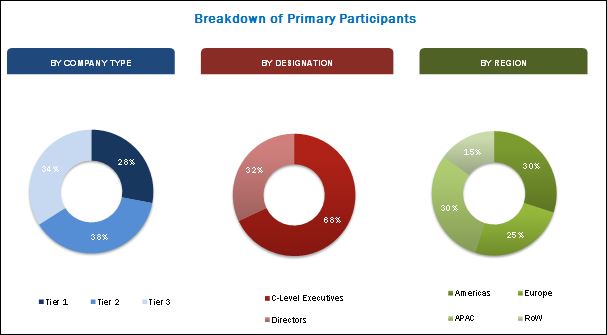
The research methodology used to estimate and forecast the enterprise manufacturing intelligence market begins with capturing data on key vendor revenue through the secondary research such as includes corporate filings (such as annual reports, investor presentations, and financial statements); trade, business, and professional associations; white papers; journals; certified publications; articles from recognized authors; directories, automation world magazine, manufacturing automation magazine, and leading player’s newsletters. The vendor offerings are also taken into consideration to determine the market segmentation. The bottom-up procedure has been employed to arrive at the overall size of the global market for enterprise manufacturing intelligence from the revenue of key players. After arriving at the overall market size, the total market has been split into several segments and subsegments which have been verified through the primary research by conducting extensive interviews of people holding key positions such as CEOs, VPs, directors, and executives. The market breakdown and data triangulation procedures have been employed to complete the overall market engineering process and arrive at the exact statistics for all segments and subsegments. The breakdown of the profiles of primaries is depicted in the below figure:
To know about the assumptions considered for the study, download the pdf brochure
The value chain of the enterprise manufacturing intelligence market starts with research and development (R&D), followed by EMI software developers, EMI software suppliers, end-user industries, and post-sales services. enterprise manufacturing intelligence research & development and software development add maximum value to the overall price of the system. EMI software suppliers are companies whose core business is to develop EMI software solutions for various industries according to the requirement of different manufacturing companies.
Major key players involved in the enterprise manufacturing intelligence market are ABB Ltd. (U.S.), Aspen Technology, Inc. (U.S.), Dassault Systèmes (France), Emerson Electric Co. (U.S.), General Electric Co. (U.S.), Honeywell International Inc. (U.S.), Rockwell Automation, Inc. (U.S.), SAP SE (Germany), Schneider Electric SE (France), Siemens AG (Germany), and Yokogawa Electric Corporation (Japan).
Target Audience of the Report:
- Associations, organizations, forums, and alliances
- Distributors and traders
- Manufacturing equipment suppliers
- Process industries like oil and gas, power, chemical, and pharmaceuticals, among others
- Discrete industries like automotive, medical devices, aerospace & defense, among others
- Semiconductor & electronics manufacturers
- Research organizations and consulting companies
- Software and service providers
- System integrators
- Technology solution providers
“This study answers several questions for the stakeholders, primarily which market segments to focus on in the next two to five years for prioritizing efforts and investments.”
Scope of the Report:
This research report categorizes the global enterprise manufacturing intelligence market on the basis of deployment type, offering, end-user industry, and geography.
Market, by Deployment Type:
- Embedded
- Standalone
Market, by Offering:
- Software
- Services
Market, by End-user Industry:
-
Process Industries
- Chemical
- Energy & Power
- Food & Beverages
- Oil & Gas
- Pharmaceutical
- Other Process Industries (Mining and Metals, Paper and Pulp)
-
Discrete Industries
- Aerospace & Defense
- Automotive
- Medical Devices
- Semiconductor & Electronics
Market, by Geography:
-
Americas
-
North America
- U.S.
- Canada
- Mexico
-
South America
- Brazil
- Argentina
- Rest of South America
-
North America
-
Europe
- Germany
- U.K.
- France
- Rest of Europe
-
Asia-Pacific (APAC)
- China
- Japan
- South Korea
- India
- Rest of APAC
-
Rest of the World (RoW)
- Middle East
- Africa
Available Customizations:
With the given market data on enterprise manufacturing intelligence, MarketsandMarkets offers customizations according to the companies’ specific needs. The following customization options are available for the report:
Company Information:
Detailed analysis and profiling of additional market players (up to five)













Growth opportunities and latent adjacency in Enterprise Manufacturing Intelligence Market