Heavy Construction Equipment Market Size, Share & Analysis

Heavy Construction Equipment Market by Equipment Type (Excavator, Loader, Dozer, Dump Truck, Compactor, Crane), Propulsion, Power Output, Engine Capacity, Application, Electric Construction Equipment, Battery Chemistry, and Region - Global Forecast to 2033




OVERVIEW
Source: Secondary Research, Interviews with Experts, MarketsandMarkets Analysis
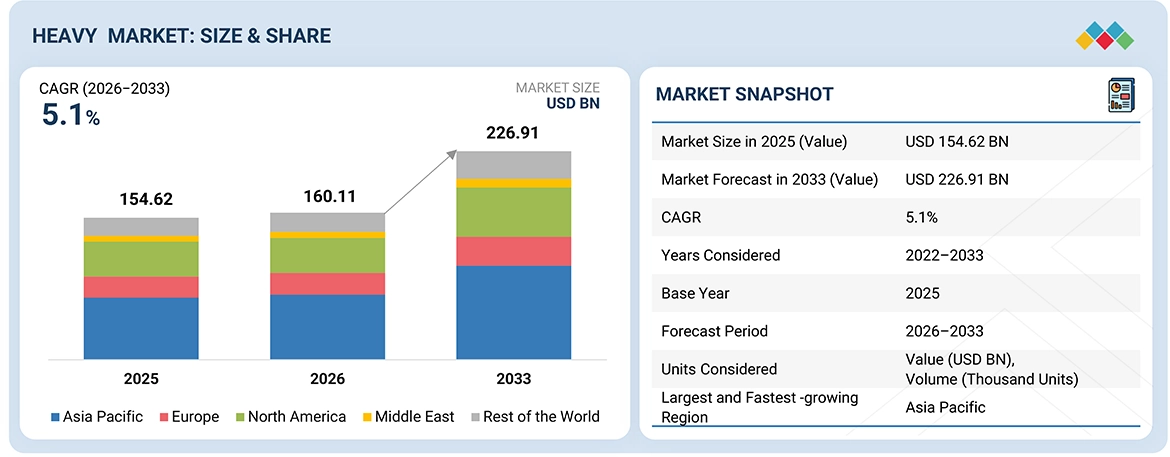
The global heavy construction equipment market projected to grow from USD 160.11 billion in 2026 to USD 226.91 billion by 2033, at a CAGR of 5.1% during the forecast period. Asia Pacific continues to be a dominant market for heavy construction equipment. Growth in the market is driven by demand for high-performance, durable machinery and heavy construction equipment. This demand is further driven by crawler excavators, mini excavators, wheel loaders, backhoe loaders, and rigid dump trucks dominating global sales. Additionally, OEMs are enhancing offerings with predictive maintenance and basic fleet monitoring, improving uptime and lifecycle efficiency. However, supply chain constraints and skilled labor shortages continue to limit the growth.
Heavy Construction Equipment Market Size and Forecast:
- Market Size Value in 2025: USD 154.62 Billion
- Market Size Value in 2026: USD 160.11 Billion
- Revenue Forecast in 2033: USD 226.91 Billion
- Growth Rate: CAGR of 10.6% from 2026 to 2033
- Data available from 2022 to 2033
- Base year: 2025
- Forecast period: 2026–2033
Key Market Trends and Insights
- Market Growth: Growth is driven by increasing demand for high-performance construction equipment and rising infrastructure and construction activities worldwide.
-
IoT Impact: Predictive maintenance and fleet monitoring technologies are improving equipment uptime and operational efficiency.
- Growing Trends: The market is shifting toward connected, automated, and electrified construction equipment solutions.
- Growth Opportunities: Opportunities are driven by the growing adoption of electric and sustainable construction equipment.
KEY TAKEAWAYS
-
By RegionThe Asia Pacific heavy construction equipment market accounted for the largest share of 40–45% in 2025.
-
By Equipment TypeBy equipment type, the rigid dump trucks segment is projected to grow at the highest CAGR (6–8%) during the forecast period.
-
By Equipment CategoryBy equipment category, the earthmoving equipment segment is expected to grow at the fastest rate from 2026 to 2033.
-
By Aftertreatment DeviceBy aftertreatment device, the selective catalyst reduction segment is expected to dominate the market during the forecast period.
-
By ApplicationBy application, the infrastructure segment is expected to grow the highest rate during the forecast period.
-
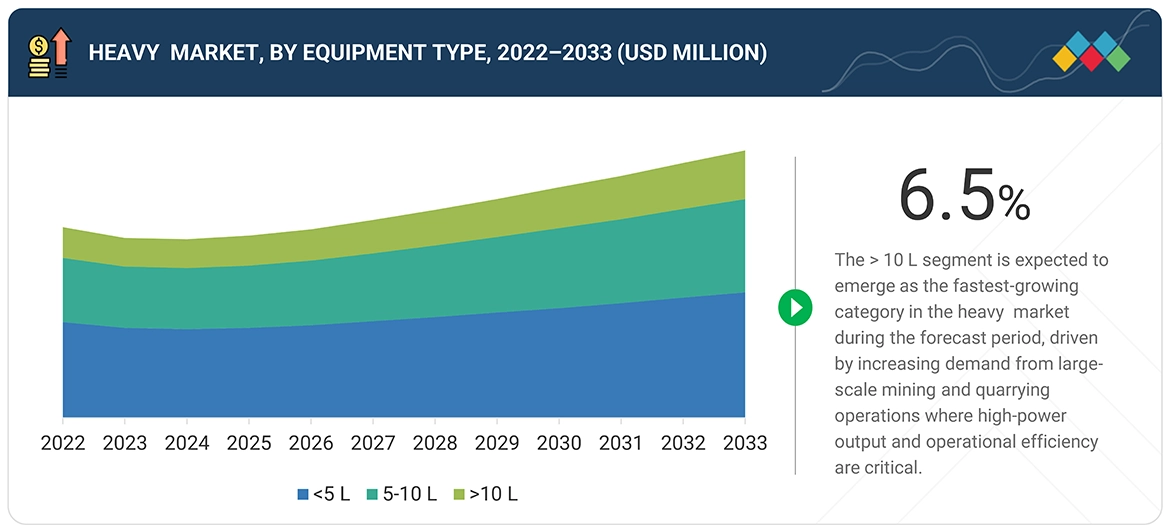
By Engine CapacityBy engine capacity, the < 5 L segment is projected to grow at the highest rate of 4.4% during the forecast period.
-
By Power OutputBy power output, the 201–400 HP segment is projected to register the highest CAGR of 4.7% during the forecast period.
-
By PropulsionBy propulsion, the CNG/LNG/RNG segment is expected to grow at the highest rate from 2026 to 2033.
-
Heavy Construction Equipment Rental Market, By ApplicationBy application, the commercial segment is expected to dominate the market during the forecast period.
-
Electric & Hybrid Heavy Construction Equipment Market, By Equipment TypeBy equipment type, the electric loaders segment is expected to grow the highest rate during the forecast period.
-
Heavy Electric Construction Equipment Market, By Battery ChemistryBy battery chemistry, the lithium iron phosphate segment is projected to achieve the highest CAGR of 17.8% during the forecast period.
-
Autonomous Heavy Construction Equipment Market, By RegionThe North America autonomous heavy construction equipment market accounted for a 42.3% revenue share in 2025.
-
Competitive Landscape (Key Players)Major market players, such as Caterpillar (US), Komatsu Ltd. (Japan), Deere & Company (US), Hitachi Construction Machinery Co., Ltd. (Japan), Xuzhou Construction Machinery Group (China), SANY Group (China), and AB Volvo (Sweden), have adopted organic and inorganic strategies, including partnerships and investments, to cater to the growing demand for construction equipment market across innovative applications.
-
Competitive Landscape (Startups/SMEs)Companies Liebherr (Switzerland), J C Bamford Excavators Ltd. (UK), and Kobelco Construction Machinery Co., Ltd. (Japan) among others, have distinguished themselves among startups and SMEs by securing strong footholds in specialized niche areas, underscoring their potential as emerging market leaders.
The heavy construction equipment market is growing steadily as governments and developers push new infrastructure and urban projects, while contractors increasingly use rentals for cost flexibility and rely on telematics to monitor uptime, safety, and maintenance. Additionally, electrification and hybrid machines are gaining momentum due to tighter emission goals and city rules, with OEMs and rental firms partnering with technology providers to roll out compact electric models, better batteries, and connected systems that reshape how fleets are managed.
TRENDS & DISRUPTIONS IMPACTING CUSTOMERS' CUSTOMERS
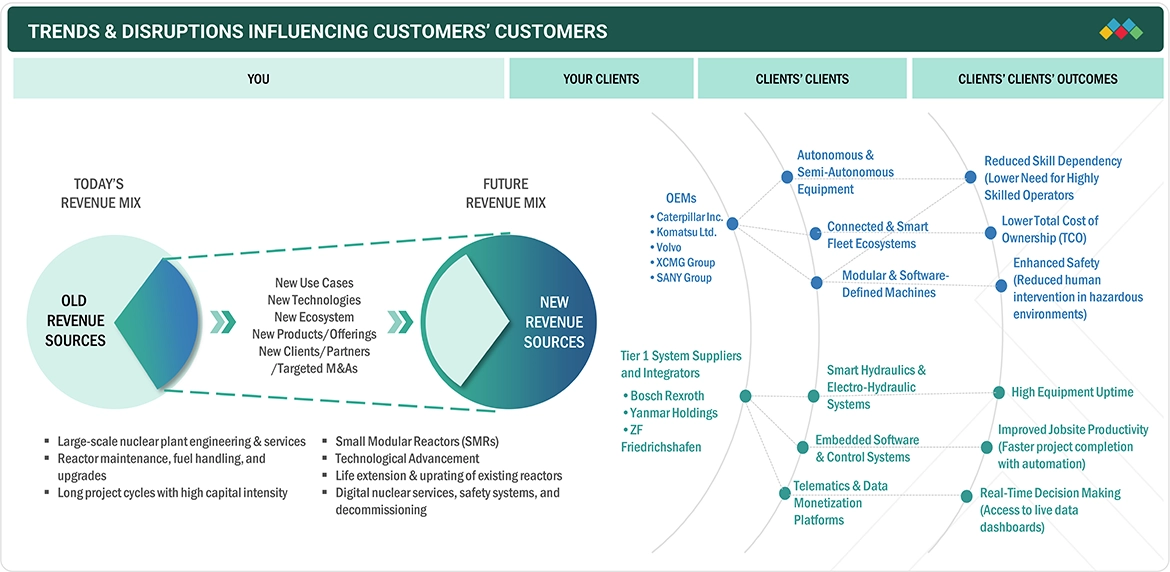
The heavy construction equipment market is evolving from conventional equipment sales toward digitally connected and service-oriented business models. Current revenues are largely driven by machinery, components, rentals, and aftermarket services, while future growth is expected from electrification, automation, and equipment intelligence platforms. This transition is driving integration between OEMs, suppliers, and fleet technology providers to deliver more efficient operating environments. This shift ultimately enables higher equipment utilization, lower operating costs, improved project execution, and reduced environmental impact.
Source: Secondary Research, Interviews with Experts, MarketsandMarkets Analysis
MARKET DYNAMICS

Level
-
Growth in infrastructural development projects

-
Adoption of advanced construction technologies


Level
-
Stringent emission and regulatory standards


Level
-
Growth of electric and sustainable construction equipment

-
Increasing demand for equipment rental and leasing


Level
-
Shortage of skilled labor in equipment operations

-
Economic and construction industry cyclicality

Source: Secondary Research, Interviews with Experts, MarketsandMarkets Analysis
Driver: Growth in infrastructural development projects
According to Oxford Economics, the heavy construction equipment market is projected to grow from USD 9.7 trillion in 2022 to USD 13.9 trillion by 2037, driven primarily by China, the US, and India, along with other major construction markets. The growth of the market is being fueled by large-scale, multi-country infrastructure projects, particularly in roads, railways, airports, and urban mobility. At a global level, the value of transport infrastructure construction alone is estimated to be USD 161.63 billion in 2026, with projections reaching USD 229.27 billion by 2033. Roads and highways are expected to contribute nearly 40% of this total activity. This growth is not merely theoretical; it is supported by ongoing and approved projects across various regions. For example, in India, the National Infrastructure Pipeline includes over 8,600 projects worth approximately USD 2,216 billion, covering roads, railways, and urban infrastructure. Recent approvals in 2025 include the following projects: the Mawlyngkhung–Silchar highway (~USD 2.75 billion or ?22,864 crore), the JNPA Port–Chowk highway (~USD 540 million), and railway expansion projects (~USD 2.2 billion across multiple states). In Europe and North America as well, governments are prioritizing the modernization of existing infrastructure. In the UK alone, there are approximately USD 1.25 trillion worth of active infrastructure projects spanning transport and urban systems. On the policy front, over 3,600 infrastructure projects valued at around USD 372 billion are currently being executed under structured investment programs, many of which focus on roads and transport infrastructure. This growth is not sporadic; it represents a pipeline-driven, regionally distributed demand that ensures sustained utilization of heavy earthmoving equipment.
Restraint: Stringent Emission and Regulatory Standards
The heavy construction equipment market is facing challenges due to tightening emission standards and regulatory frameworks, particularly in Europe (Stage V) and North America (Tier 4 Final). These regulations are compelling original equipment manufacturers (OEMs) to redesign engines, integrate advanced after-treatment systems, and adopt cleaner technologies, which significantly increases the complexity and cost of machinery. Meanwhile, regions like Asia Pacific present a mixed landscape. While regulatory enforcement is increasing, price sensitivity remains high. The most significant impact is the rise in upfront equipment costs, which directly influences purchasing decisions and slows adoption among cost-conscious contractors, especially in emerging markets. To comply with these evolving standards, companies such as Caterpillar Inc. and Komatsu Ltd. are heavily investing in low-emission technologies, hybrid systems, and electrification. This commitment has led to a sharp increase in research and development (R&D) expenditures and longer product development cycles. As a result, there is a margin squeeze, as OEMs must absorb high innovation costs while customers are reluctant to accept price increases. Additionally, the complex certification and environmental approval processes across various regions are extending product launch timelines and delaying equipment deployment on projects, particularly in urban infrastructure, where compliance requirements are stricter. This creates a bottleneck, as not only does cost matter, but time delays in approvals can directly impact project execution and fleet availability. These regulatory pressures are accelerating a shift toward data-driven and customer-centric decision-making. Contractors are no longer evaluating equipment based solely on purchase price; they are now considering the total cost of ownership (TCO), fuel efficiency, emission compliance costs, and lifecycle productivity, often supported by telematics and real-time monitoring systems. Regionally, Europe is leading in the rapid adoption of electric and low-emission equipment due to strict mandates, while North America is transitioning steadily, and Asia Pacific is striving to balance cost with compliance. The future is clearly moving toward a customer-centric model where OEMs and rental providers offer compliant, connected, and flexible equipment solutions. This trend transforms regulatory pressure into a catalyst for cleaner, smarter, and more efficient construction ecosystems.
Opportunity: Growth of Electric and Sustainable Construction Equipment
The transition to electric and sustainable construction equipment presents a significant growth opportunity, primarily driven by robust government support for low-emission machinery. In Europe, stringent emission regulations and incentives are driving the adoption of electric excavators, loaders, and compact equipment for urban infrastructure projects. In North America, federal and state funding programs are increasingly linking infrastructure spending to sustainability targets. Meanwhile, in the Asia Pacific region, rapid urbanization and favorable policies in countries like China and India are facilitating the swift adoption of electric machinery. Original Equipment Manufacturers (OEMs), such as Volvo Construction Equipment and Komatsu Ltd., are realigning their product portfolios to include electric and hybrid machinery, highlighting a clear long-term shift in the industry. The key driver behind this change is the alignment of policies and funding, which is making the adoption of sustainable equipment both environmentally essential and economically viable. On the technology front, advancements in battery systems are significantly enhancing the operational practicality of electric equipment. Improvements in energy density, faster charging times, and better thermal management are enabling longer operating hours and reduced downtime. This is particularly advantageous for mid-size earthmoving equipment, such as crawler excavators, backhoe loaders, compactors, and wheel loaders, which are often utilized in road and rail projects. These advancements are gradually addressing previous concerns regarding range limitations and productivity gaps when compared to diesel machines. Additionally, the integration of telematics and Internet of Things (IoT) technologies is facilitating data-driven optimization of battery usage, charging cycles, and fleet efficiency, making electric fleets more predictable and cost-effective. In this transition, technology is no longer a barrier, but also an enabler of performance and cost savings throughout the equipment lifecycle.
Challenge: Economic and Construction Industry Cyclicality
The heavy construction equipment market is currently facing a significant shortage of skilled machine operators, particularly in North America and Europe. This shortage is largely due to an aging workforce and a low rate of new entrants, which is shrinking the available talent pool. In contrast, regions like the Asia Pacific are experiencing rapid infrastructure expansion, which is outpacing the availability of trained operators. The industry is also witnessing a shift toward advanced, digital, and connected equipment. This transition increases operational complexity, as modern machines require operators to understand telematics, automation features, and digital interfaces. As a result, there are higher training requirements and longer onboarding cycles for new operators. Companies such as Caterpillar Inc. and Komatsu Ltd. are addressing these challenges by investing in operator training simulators, remote support systems, and semi-autonomous technologies to reduce reliance on highly skilled labor. The growing skill gap is further exacerbated by the rapid adoption of technology. Safety is another critical concern in this industry. Inexperienced operators can increase the risk of accidents, equipment damage, and project delays, particularly in complex road and rail construction environments. To mitigate these risks, contractors are adopting data-driven safety and performance monitoring systems that track operator behavior, machine usage, and site conditions in real-time. The market is shifting towards a more customer-centric and automation-supported model. This includes intuitive controls, semi-autonomous functions, and remote operations, all designed to reduce reliance on manual expertise. For original equipment manufacturers (OEMs), this presents both a challenge and an opportunity. By offering simpler machine interfaces, enhanced automation features, and integrated training solutions, they can differentiate their products and create additional service revenue streams. Overall, the industry is transitioning toward “operator-assisted” and, eventually, “operator-light” ecosystems, where productivity and safety can be maintained despite labor constraints.
HEAVY CONSTRUCTION EQUIPMENT MARKET SIZE, SHARE & ANALYSIS: COMMERCIAL USE CASES ACROSS INDUSTRIES
| COMPANY | USE CASE DESCRIPTION | BENEFITS |
|---|---|---|
 |
Integration of telematics and autonomous haulage systems for real-time fleet monitoring and predictive maintenance | Improves equipment uptime | Reduces unplanned downtime | Enhances productivity through data-driven fleet optimization |
 |
Deployment of smart construction solutions with IoT-enabled excavators and dozers for automated grading and jobsite visualization | Enables precision earthmoving | Reduces rework | Enhances project efficiency with digital site coordination |
 |
Electrified and connected machines with remote diagnostics and energy-efficient operation for urban and quarry applications | Lowers fuel consumption and emissions | Improves lifecycle cost and sustainability compliance |
 |
Deployment of electric and autonomous mining equipment integrated with fleet management platforms | Reduces operating costs | Supports zero-emission mining operations | Improves large-scale fleet coordination |
Logos and trademarks shown above are the property of their respective owners. Their use here is for informational and illustrative purposes only.
MARKET ECOSYSTEM
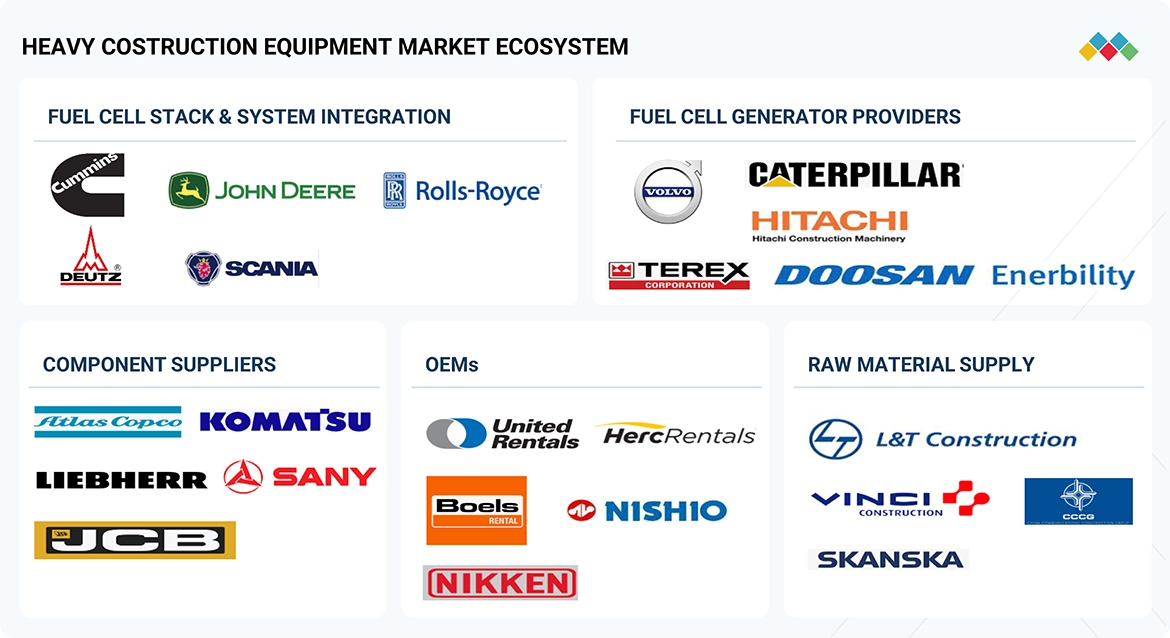
The heavy construction equipment market ecosystem consists of multiple interconnected layers, including component suppliers, OEMs, distributors, rental service providers, and end users. Component manufacturers such as Cummins, John Deere, and Rolls-Royce supply engines and key systems, while OEMs like Caterpillar, Volvo Construction Equipment, and Hitachi Construction Machinery assemble complete machines. Distribution and service players such as Komatsu, JCB, and Liebherr ensure market reach and after-sales support, while rental firms like United Rentals and Herc Rentals provide flexible access to equipment. Overall, the ecosystem is driven by collaboration, enabling efficiency, innovation, and sustainable growth.
Logos and trademarks shown above are the property of their respective owners. Their use here is for informational and illustrative purposes only.
MARKET SEGMENTS
Source: Secondary Research, Interviews with Experts, MarketsandMarkets Analysis
Heavy Construction Equipment Market, By Equipment Type
The mini excavators segment is projected to hold the largest market share by volume in the heavy construction equipment market during the forecast period. This growth is primarily driven by strong demand from China, India, and Southeast Asia, where compact and versatile machines are preferred for high-frequency, small-to-mid-scale applications. These regions are experiencing rapid growth in urban redevelopment, utility installation, and confined-site construction activities, which require equipment that can operate efficiently in restricted spaces. Mini excavators offer enhanced maneuverability in urban environments and cause less ground disturbance, making them ideal for projects in densely populated areas. Furthermore, the increasing adoption of electric and low-emission mini excavators, along with government support for cleaner and more compact equipment, is further boosting their demand in these markets.
Heavy Construction Equipment Market, By Equipment Category
The earthmoving equipment segment is expected to be the fastest-growing segment during the forecast period. This growth is driven by high demand pull from India, China, and Australia. These countries are investing heavily in the development of infrastructure, including roadways, airports, and urban projects, thereby fueling demand for excavators, loaders, and dump trucks. Rapid urbanization, government stimulus for affordable housing, and industrial expansion are key growth drivers. Advanced technologies like automation and telematics in earthmoving equipment further boost operational efficiency, accelerating market growth.
Heavy Construction Equipment Market, By Aftertreatment Device
Asia Pacific is experiencing rapid growth for aftermarket devices in the heavy construction equipment market, owing to high demand pull from China, India, and Indonesia. Countries such as China, India, and Indonesia are experiencing significant growth in infrastructure and mining activities. This growth is driven by initiatives like China's Belt and Road Initiative, India's USD 1.4 trillion National Infrastructure Pipeline, and Indonesia's USD 475 billion development plan. These projects require extensive maintenance, repair, and replacement services to minimize downtime for large fleets. Rapid urbanization and the aging of equipment in high-usage areas are increasing the demand for parts, including hydraulics and engines. This demand is supported by local original equipment manufacturer (OEM) networks and telematics systems that enable predictive maintenance. Additionally, government incentives aimed at fleet upgrades and sustainability are further promoting the adoption of aftermarket services in these economies.
Heavy Construction Equipment Market, By Application
The crawler excavators segment is expected to be the largest segment during the forecast period, driven by high demand pull from China, India, and Southeast Asia. Countries experiencing rapid urbanization, infrastructure growth, and mining activities require highly stable and efficient excavators that can operate on uneven and soft terrains. Advanced technologies, such as hydraulic-electronic integration, telematics, and automation, improve fuel efficiency and operational precision. This makes crawler excavators particularly suitable for large-scale infrastructure projects, urban development, and the mining sector in these regions. Additionally, government initiatives supporting smart city developments and sustainable construction are further driving demand for these machines.
Heavy Construction Equipment Market, By Engine Capacity
The > 10 L segment expected to grow at the highest rate during the forecast period. This growth is largely driven by strong demand from countries like China, India, and Australia. These nations are focusing on large-scale mining, heavy excavation, and mega-infrastructure projects. Notable initiatives include China's Belt and Road Initiative, India's National Infrastructure Pipeline, and Australia’s resource boom. These projects require high-torque engines for heavy machinery such as large excavators, dump trucks, and bulldozers, which are essential for handling extreme loads and long operational hours. This segment is projected to experience a compound annual growth rate (CAGR) of 8.5%. This growth is fueled by the increasing extraction of energy resources and the demand for durable, high-performance equipment for urban megaprojects, which often requires more power than smaller engines can provide. Additionally, advancements in emission-compliant technologies, such as Cummins' 15L X15 diesel engine, further support this growth by reducing operational costs and helping to meet global environmental standards.
Heavy Construction Equipment Market, By Power Output
The < 100 HP segment is expected to account for the largest market share in the heavy construction equipment market during the forecast period. The growth in this sector is largely driven by high demand from China, India, and Southeast Asian countries. These nations are experiencing rapid urbanization and are undertaking small to medium-scale projects, such as residential developments, urban renewal, and agricultural infrastructure. Initiatives like India’s PMAY housing scheme and China’s rural revitalization program are at the forefront of this development. Compact mini-excavators, skid-steer loaders, and backhoes are popular choices due to their maneuverability in tight spaces. This segment holds a dominant 45% share in the compact equipment market, largely because these machines offer acquisition costs that are 30% lower, fuel efficiency that is up to 20% better than higher horsepower classes, and suitability for emission-regulated urban sites. Additionally, the increasing adoption of electric variants, supported by government subsidies for green machinery, is further boosting the growth of the segment.
REGION
Asia Pacific to be the fastest-growing region in the global heavy construction equipment market during the forecast period
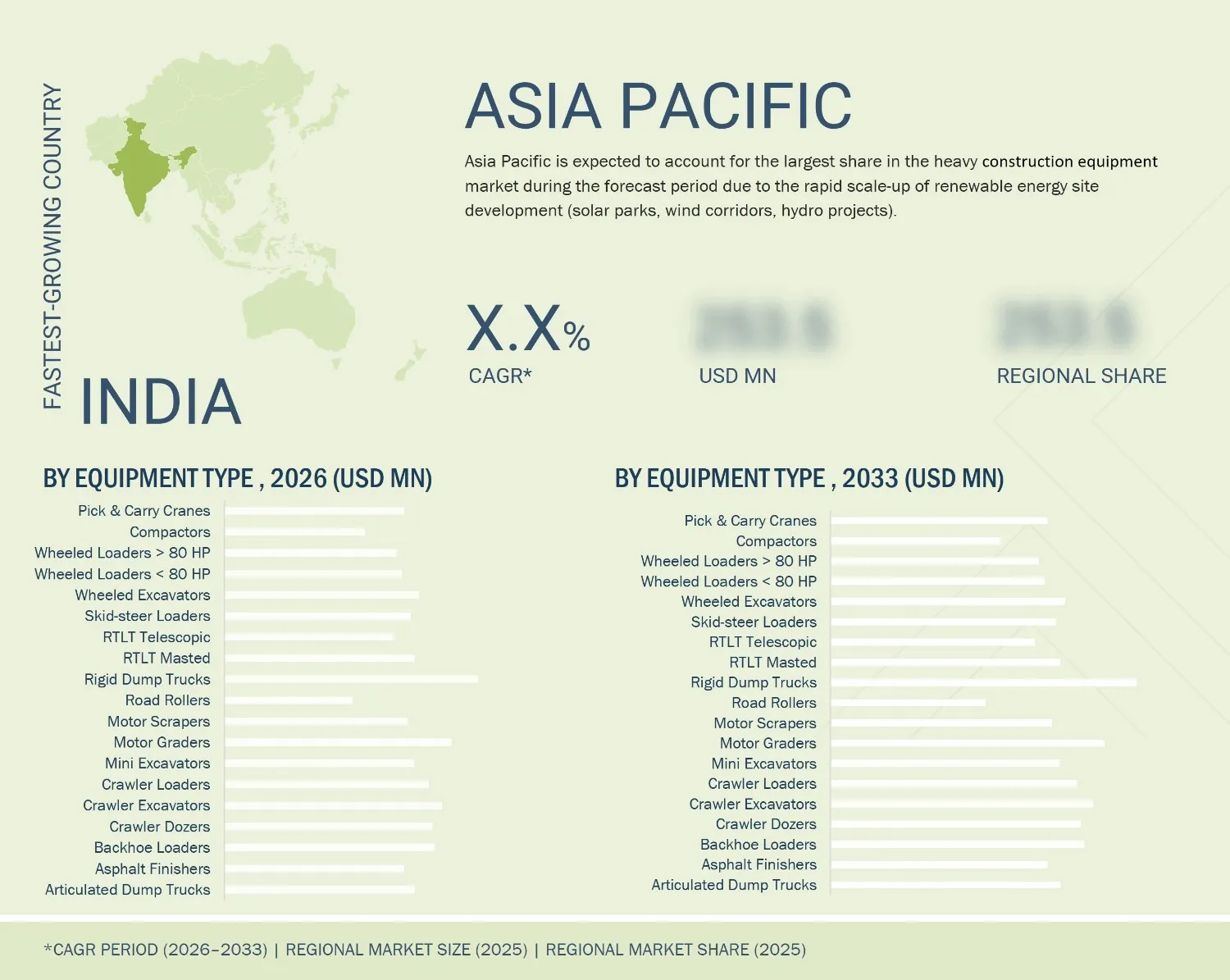
The Asia Pacific heavy construction equipment market is expected to be the largest in the world in terms of value during the forecast period, driven by extensive infrastructure development, rapid urbanization, and government-backed projects. Countries such as China and India lead this market, supported by initiatives like China's Belt and Road, which are driving the demand for earthmoving and concrete equipment. Original Equipment Manufacturers (OEMs) and suppliers in the region are concentrating on advanced manufacturing, focusing on improved fuel efficiency, rental fleets, digital equipment management, and research and development in electric technology. Additionally, the rising adoption of hybrid powertrains to enhance sustainability is also accelerating market growth across the region.
HEAVY CONSTRUCTION EQUIPMENT MARKET SIZE, SHARE & ANALYSIS: COMPANY EVALUATION MATRIX
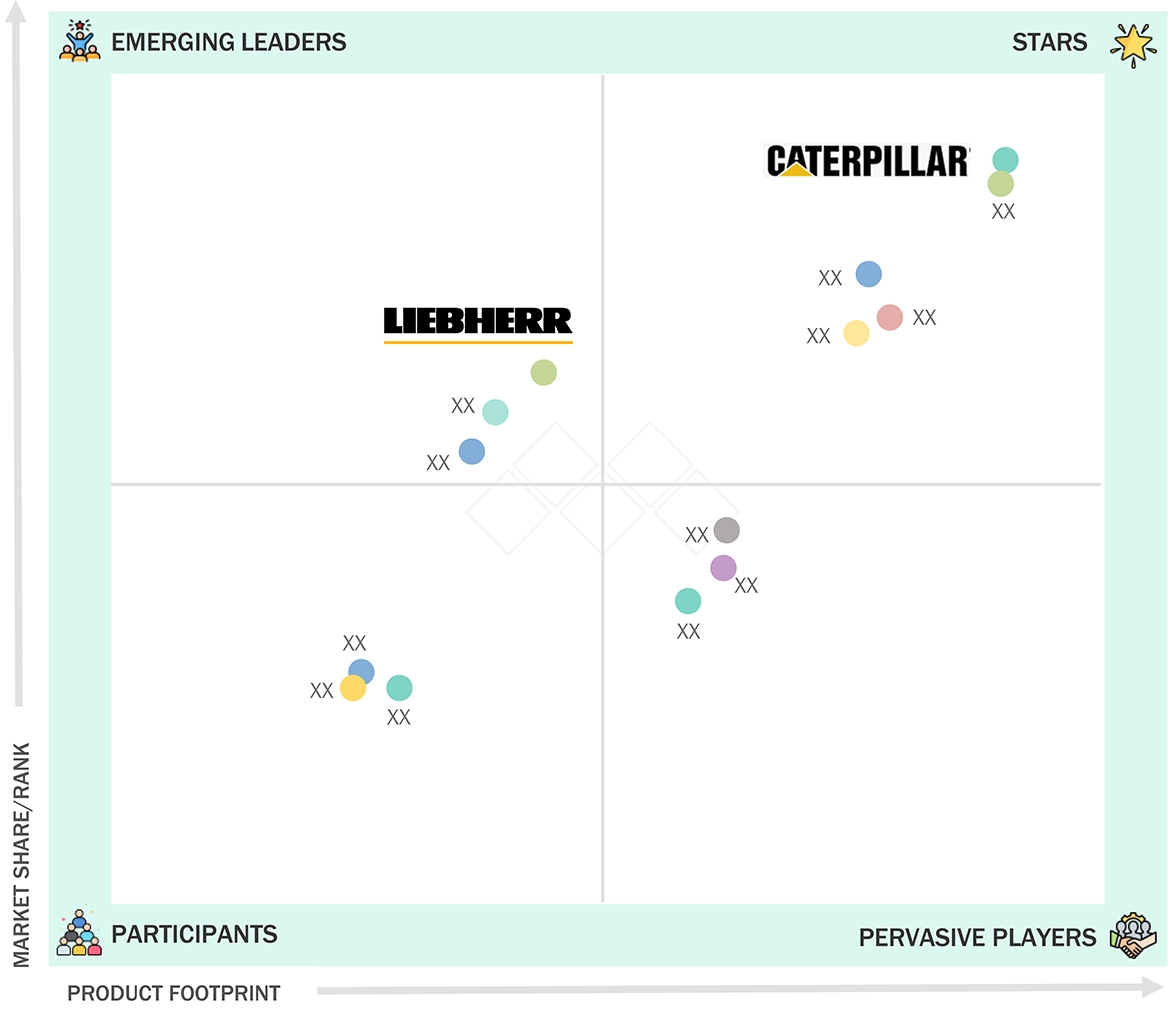
In the heavy construction equipment market, Caterpillar Inc. is classified as a "Star" due to its strong global presence and extensive product portfolio. The company's offerings are bolstered by advanced telematics, autonomous systems, and energy-efficient machinery that are widely utilized in mining, infrastructure, and urban projects. Liebherr, on the other hand, is positioned as an "Emerging Leader." It is gaining ground through its high-precision engineering, the development of electric and hybrid machinery, and a focus on customized solutions for heavy-duty applications. While Caterpillar thrives on its scale, digital integration, and robust after-sales network, Liebherr shows significant potential to move toward the leaders' quadrant, especially as demand for sustainable and intelligent construction equipment continues to grow.
Source: Secondary Research, Interviews with Experts, MarketsandMarkets Analysis
KEY MARKET PLAYERS
- Caterpillar (US)
- Komatsu Co., Ltd. (Japan)
- Deere & Company (US)
- SANY (China)
- AB Volvo (Sweden)
- Zoomlion Heavy Industry Science & Technology Co., Ltd. (China)
- Doosan Enerbility (South Korea)
- Terex Corporation (US)
- CNH Industrial N.V. (UK)
- Liebherr (Switzerland)
- J C Bamford Excavators Ltd. (UK)
- Kobelco Construction Machinery Co., Ltd. (Japan)
MARKET SCOPE
| REPORT METRIC | DETAILS |
|---|---|
| Market Size in 2025 (Value) | USD 154.62 Billion |
| Market Forecast in 2033 (Value) | USD 226.91 Billion |
| Growth Rate | CAGR of 5.1% from 2026–2033 |
| Years Considered | 2022–2033 |
| Base Year | 2025 |
| Forecast Period | 2026–2033 |
| Units Considered | Value (USD Billion), Volume (Thousand Units) |
| Report Coverage | Revenue forecast, company ranking, competitive landscape, growth factors, and trends |
| Segments Covered |
|
| Regions Covered | North America, Asia Pacific, Europe, Middle East, and Rest of the World |
WHAT IS IN IT FOR YOU: HEAVY CONSTRUCTION EQUIPMENT MARKET SIZE, SHARE & ANALYSIS REPORT CONTENT GUIDE
DELIVERED CUSTOMIZATIONS
We have successfully delivered the following deep-dive customizations:
| CLIENT REQUEST | CUSTOMIZATION DELIVERED | VALUE ADDS |
|---|---|---|
| Global CE OEM |
|
|
| Regional Rental Major |
|
|
| Component Tier 1 (Engines/Hydraulics) |
|
|
| Digital Tech Provider (Machine Control/Telematics) |
|
|
| Dealer Group (Multi-OEM) |
|
|
RECENT DEVELOPMENTS
- April 2026 : Volvo CE launched the world’s first serially produced electric articulated haulers designed for zero-emission quarry and mining operations. Volvo CE has begun the production of its A30 Electric and A40 Electric at Volvo CE's Braås site in Sweden.
- March 2026 : Caterpillar launched the Cat 6040 mining shovel to help mining operations improve productivity and efficiency. The new design integrates more standard technologies, such as Cat Payload, which measures every bucket load to help customers consistently achieve target truck payloads without overloading or underloading, boosting load-haul cycle efficiency.
- January 2026 : Hitachi Construction Machinery showcased its ‘Zero-Emission Construction Equipment’ (Hardware), which supports reduction of carbon emissions in construction operations.
Table of Contents
 Exclusive indicates content/data unique to MarketsandMarkets and not available with any competitors.
Methodology
The study encompassed four primary tasks to determine the present and future scope of the heavy construction equipment market. Initially, extensive secondary research was conducted to gather data on the market, its related sectors, and overarching industries. Subsequently, these findings and assumptions were corroborated and validated through primary research involving industry experts across the value chain. The complete market size was estimated by using top-down and bottom-up methodologies. Following this, a market breakdown and data triangulation approach were utilized to determine the size of specific segments and subsegments within the market.
Secondary Research
Secondary sources referred to the company’s annual reports/presentations, industry association publications, directories, technical handbooks, World Economic Outlook, technical articles, and databases, which were used to identify and collect information for an extensive study of the heavy construction equipment market. The secondary sources used while estimating the market sizing are the Association of Equipment Manufacturers, the Committee for European Construction Equipment (CECE), corporate filings (such as annual reports, investor presentations, and financial statements), and off-highway associations. Secondary data was collected and analyzed to determine the overall market size, further validated through primary research. The primary sources experts from related industries, OEMs, rental service players, and component suppliers were interviewed to obtain and verify critical information and assess prospects and market estimations. Historical sales data has been collected and analyzed, and the industry trend is considered to arrive at the forecast, which is further validated by primary research.
Primary Research
In the primary research process, various primary sources from the supply and demand sides were interviewed to obtain qualitative and quantitative information on the market. The primary sources from the supply side included various industry experts, such as CXOs, vice presidents, directors from business development, marketing, product development/innovation teams, and related key executives from various key companies. Various system integrators, industry associations, independent consultants/industry veterans, and key opinion leaders were also interviewed.
Primary interviews were conducted to gather insights such as heavy construction equipment market sizing estimation and forecast, future technology trends, and upcoming technologies in the market. Data triangulation of all these points was done using the information gathered from secondary research and model mapping. Stakeholders from the demand and supply sides were interviewed to understand their views on the aforementioned points.
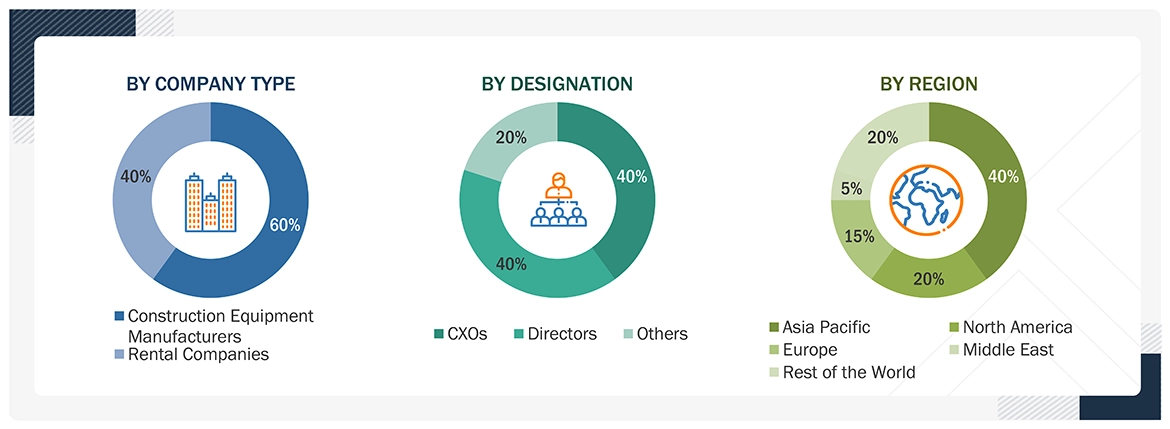
Note: Other Designations include Sales, Marketing, and Product Managers.
Source: Secondary Research, Primary Interviews, and MarketsandMarkets Analysis
To know about the assumptions considered for the study, download the pdf brochure
Market Size Estimation
A detailed market estimation approach was followed to estimate and validate the value of the heavy construction equipment market and other dependent submarkets, as mentioned below.
- The bottom-up approach was used to estimate and validate the market size. The market size, by equipment and country, was derived by mapping the historical sales of different equipment types at the country level. The forecast of country-level equipment type is carried out by considering the different parameters such as country-wise economic development, macro-economic factors, grow of infrastructural, residential and commercial construction activities, etc. These data points were largely fetched from the country-level associations, off-highway databases, and OEM data excerpts. The market size, by value, was derived by multiplying the equipment-wise average selling price by the respective equipment volume calculated in units. Each country/region’s total volume and value of each country/ region are then summed up to reveal the total volume of the global market for each type. The data was validated through primary interviews with industry experts. The market is further segmented into the equipment category, which includes power output, engine capacity, propulsion, and heavy electric construction equipment. The penetration of different segments was derived from secondary research and primary interviews.
- The gathered market data was consolidated, enhanced with detailed inputs, analyzed, and presented in this report.
Heavy Construction Equipment Market : Top-Down and Bottom-Up Approach

Data Triangulation
All percentage shares, splits, and breakdowns were determined using secondary sources and verified by primary sources. All parameters that affect the markets covered in this research study were accounted for, viewed in extensive detail, and analyzed to obtain the final quantitative and qualitative data. This data has been consolidated and enhanced with detailed inputs and analysis from MarketsandMarkets and presented in the report.
Market Definition
Heavy construction equipment refers to a specialized range of high-capacity machinery designed for intensive operations, such as mining, bulk earthmoving, overburden removal, and large-scale material handling. These machines are critical for executing high-volume, continuous-duty tasks under extreme load and terrain conditions, significantly enhancing operational efficiency, productivity, and project execution speed. Common types of heavy construction equipment include crawler excavators, rigid and articulated dump trucks, large wheel loaders, crawler dozers, motor graders, and high-capacity cranes. Each category is engineered to deliver high power output, durability, and precision, enabling construction teams to efficiently manage large-scale projects more efficiently.
Key Stakeholders
- Construction Equipment manufacturers
- Raw Material Suppliers for Construction Equipment Component/System Manufacturers
- Consulting Companies (Road, Building & Infrastructure)
- Tier 1 Companies (Aftertreatment Device Manufacturers and Component Suppliers)
- Battery, Motor, and Other Electric Construction Equipment Part Suppliers
- Equipment Service Providers
- Off-Vehicle Safety Regulatory Bodies
- Government and Research Institutions
- Off-Highway and Heavy Equipment Associations
- Rental Equipment Service Providers
Report Objectives
-
To define, describe, and forecast the heavy construction equipment market in terms of value (USD million) and volume (units), based on
- Equipment Type [Articulated Dump Trucks, Asphalt Finishers, Backhoe Loaders, Crawler Dozers, Crawler Excavators, Crawler Loaders, Mini Excavators, Motor Graders, Motor Scrapers, Rigid Dump Trucks, Road Rollers, Rough Terrain Lift Truck (RTLT) Masted, Rough Terrain Lift Truck (RTLT) Telescopic, Skid-Steer Loaders, Wheeled Excavators, Wheeled Loaders < 80 HP, Wheeled Loaders > 80 HP, Compactors, and Pick and Carry Cranes]
- By Equipment Category (Earthmoving, Material Handling, Heavy Construction Vehicles, Others)
- By Propulsion Type (Diesel, CNG/LNG/RNG)
- By Power Output (< 100 HP, 101–200 HP, 201–400 HP, > 400 HP)
- By Engine Capacity (< 5 L, 5–10 L, > 10 L)
- By Application (Commercial, Residential, Infrastructure)
- By Aftertreatment Device (Diesel Oxidation Catalyst, Diesel Particulate Filter, Exhaust Gas Recirculation, Selective Catalyst Reduction)
- Rental, by Application (Commercial, Residential, Infrastructure)
- Electric & Hybrid Heavy Construction Equipment Market, By Equipment Type (Electric Dump Truck, Electric Dozer, Electric Loader, Electric Excavator, Electric Motor Grader, Electric Load Haul Dump)
- Electric Heavy Construction Equipment Market, By Battery Chemistry (Lithium Iron Phosphate, Lithium Nickel Manganese Cobalt Oxide, Others)
- Compact Heavy Construction Equipment Market, Global Shipment by OEM (Bobcat, Caterpillar, Hitachi Construction Equipment, CNH Industrial, Hyundai Construction Equipment Co., Ltd, JCB, Deere & Company, Komatsu, Kubota Corporation, Liebherr, Liugong Machinery Co., Ltd, Terex Corporation, AB Volvo, Wacker Neuson SE, Yanmar Holdings Co., Ltd, Kobelco)
- By Region (Asia Pacific, Europe, North America, The Middle East, and the Rest of the World)
- To understand the dynamics (drivers, restraints, opportunities, and challenges) of the market
- To analyze the market share of leading players operating in the market and evaluate the company evaluation quadrant
- To strategically analyze key player strategies and company revenue analysis
-
To study the following with respect to the market
- Trends and Disruptions Impacting Customer Business
- Market Ecosystem
- Supply Chain Analysis
- Patent Analysis
- Regulatory Landscape
- Case Study Analysis
- Key Conferences and Events
- Investment and Funding Scenario
- Pricing Analysis
- Macroeconomic Outlook
- Impact of AI/Gen AI on heavy construction equipment market
- Impact of EU-FTA trade deal on market
- Impact of Israel Iran war on market
- To analyze recent developments, including supply contracts, product launches, expansions, and mergers & acquisitions undertaken by key industry participants in the market
- To analyze the opportunities in the market for stakeholders and provide details of the competitive landscape for market leaders
Available customizations:
MarketsandMarkets offers the following customizations for this market report:
Heavy Construction Equipment Market, By End-Use Industry
- Construction & Infrastructure
- Mining
- Oil & Gas
- Manufacturing
- Others
Note: This chapter will be further segmented at the country level in terms of volume and value
Heavy Construction Equipment Market, By Emission Regulation
- STAGE II
- STAGE III
- STAGE III a
- STAGE III b
- STAGE IV
- STAGE V
- STAGE VI
- TIER 3
- TIER 4
- TIER 5
Note: This chapter will be further segmented at the country level in terms of volume and value
Heavy Electric Construction Equipment Market, By Country
- China
- India
- Japan
- Indonesia
- US
- Canada
- Mexico
- Germany
- UK
- France
- Italy
- Spain
Note: This chapter will be further segmented at the regional level (Asia Pacific, Europe, North America, and the Rest of the World) in terms of volume and value


Personalize This Research
- Triangulate with your Own Data
- Get Data as per your Format and Definition
- Gain a Deeper Dive on a Specific Application, Geography, Customer or Competitor
- Any level of Personalization
Let Us Help You
- What are the Known and Unknown Adjacencies Impacting the Heavy Construction Equipment Market
- What will your New Revenue Sources be?
- Who will be your Top Customer; what will make them switch?
- Defend your Market Share or Win Competitors
- Get a Scorecard for Target Partners

Custom Market Research Services
We Will Customise The Research For You, In Case The Report Listed Above Does Not Meet With Your Requirements
Get 10% Free CustomisationTESTIMONIALS

JIM NAAS
PRODUCT DIRECTOR, WEASLER
Weasler Engineering, a CentroMotion organization
Global Provider of Industrial Actuation & Control Solutionswww.weasler.com
Our organization was interested in learning more about the attractiveness of a particular market space. We contacted MarketsandMarkets to help us based on previous positive experiences we had with them. The results did not disappoint! We discussed our objectives with them, and the team at MarketsandMarkets developed and executed a proposal that met our needs precisely. We were very impressed by their level of expertise, the quality of the analysis and their insightful recommendations. We would not hesitate in working with them again in the future.

Matt Kardel,
Vice President
Aptiv,
A global technology company that develops safer, greener and more connected solutions.www.aptiv.com
We contracted with
MarketsandMarkets to evaluate the value chain and potential go-to-market partners related to our
interest in the Fleet Management space. The team successfully completed the work on time and at the
pricing agreed. MarketsandMarkets listened and understood our objectives and collaborated well with
us to help us get the visibility we needed to make an investment.
We have subsequently used
MarketsandMarkets again related to Smart Cities to good results.
- China Heavy Construction Equipment Market
- India Heavy Construction Equipment Market
- Japan Heavy Construction Equipment Market
- Indonesia Heavy Construction Equipment Market
- Germany Heavy Construction Equipment Market
- UK Heavy Construction Equipment Market
- France Heavy Construction Equipment Market
- Italy Heavy Construction Equipment Market
- Spain Heavy Construction Equipment Market
- Canada Heavy Construction Equipment Market
- Mexico Heavy Construction Equipment Market
- Qatar Heavy Construction Equipment Market
- Saudi Arabia Heavy Construction Equipment Market
- UAE Heavy Construction Equipment Market
- Russia Heavy Construction Equipment Market
- South Africa Heavy Construction Equipment Market
- Brazil Heavy Construction Equipment Market
- US Heavy Construction Equipment Market
Growth opportunities and latent adjacency in Heavy Construction Equipment Market




Andrew
May, 2022
We would like to know more about how electric construction equipment market and special application products for the further expansion of the European market..
Thomas
Jun, 2022
Who are the top vendors in the Construction Equipment Market? How is the competitive scenario among them?.
Akshit
Jun, 2019
we are looking at setting up a website to sell new and used construction and mining equipment for Africa, there is nothing at the moment .
Atul
Jun, 2019
My company deals with construction equipment, we buy equipment in large number and then sell them to export from Japan to all over the world. .
Nilesh
Jun, 2019
We are trying to evaluate the market size of backhoes, excavators, dozers, skid steers, front end loaders, and articulated dump trucks. This will help prioritize where time and energy are spent. .
Nilesh
Jun, 2019
Looking to identify U.S. market share by brand (Case, Cat, etc...) for various types of construction equipment..