Microwave Transmission Equipment Market by Network Technology (Hybrid, Packet Microwave, Small Cell), Component (IDU, ODU), Frequency Band, Mounting Type (Full Indoor, Split Mount, Full Outdoor), Application, and Geography - Global Forecast to 2035


Microwave Transmission Equipment Market Summary
The Microwave Transmission Equipment Market is expected to expand steadily through 2035 as telecom operators, enterprises, governments, and infrastructure providers invest in high-capacity wireless backhaul, 5G network densification, rural connectivity, and resilient communications infrastructure. The market is estimated at approximately USD 7 billion in 2025 and is projected to reach around USD 10 billion by 2035, registering a CAGR of approximately 4%–5% during the forecast period. Increasing mobile data traffic, rapid 5G deployment, fiber deployment limitations, and demand for cost-effective last-mile connectivity are major growth drivers. At the same time, AI-enabled network optimization, IoT connectivity, cloud computing, edge infrastructure, and automation are encouraging operators to modernize microwave links with higher capacity, software-defined controls, and intelligent monitoring capabilities.
Key Market Trends & Insights
The microwave transmission equipment market is being shaped by the convergence of telecommunications, cloud infrastructure, and intelligent network management. North America remains a significant market because of continued investment in 5G, private wireless networks, enterprise connectivity, and critical communications. Asia Pacific is expected to record the fastest growth as operators expand mobile broadband networks and improve connectivity across densely populated urban areas and underserved rural locations.
A major trend is the transition from conventional point-to-point microwave systems toward higher-capacity, packet-based, IP/MPLS-compatible platforms. Operators increasingly require equipment capable of supporting Ethernet traffic, synchronization, network automation, and dynamic capacity allocation. Multi-band and millimeter-wave solutions are also gaining attention because they can combine capacity and coverage characteristics more efficiently.
AI and machine learning are increasingly being incorporated into network monitoring and optimization. Intelligent analytics can help identify congestion, predict equipment degradation, optimize spectrum utilization, and automate maintenance decisions. IoT applications are simultaneously creating demand for reliable wireless connectivity in industrial sites, utilities, transportation networks, and remote infrastructure.
Market Size & Forecast
-
Base year market size: USD 7 billion in 2025.
-
Forecast value: USD 10 billion by 2035.
-
Expected CAGR: 4%–5% during 2025–2035.
-
Growth factors: 5G expansion, increasing mobile data traffic, network densification, rural broadband initiatives, IoT connectivity, and demand for resilient wireless backhaul.
-
Technology outlook: High-capacity radios, adaptive modulation, multi-band aggregation, software-defined networking, AI-based monitoring, and automated network management are expected to influence future market development.
Microwave Transmission Equipment Market Top 10 key takeaway
-
The microwave transmission equipment market is projected to grow steadily through 2035.
-
Rising 5G deployments are increasing demand for high-capacity wireless backhaul.
-
North America remains one of the leading regional markets.
-
Asia Pacific is expected to demonstrate the fastest growth during the forecast period.
-
Point-to-point microwave systems continue to represent an important equipment category.
-
Multi-band and high-frequency microwave technologies are gaining market attention.
-
AI is improving network monitoring, predictive maintenance, and capacity optimization.
-
IoT and edge computing are creating additional demand for reliable wireless connectivity.
-
Telecom operators are increasingly adopting software-driven and packet-based transmission platforms.
-
Infrastructure modernization and rural connectivity programs will create new opportunities for equipment suppliers.
Product Insights
Point-to-point microwave transmission equipment represents a major product category because it provides reliable high-capacity connectivity between network nodes without requiring extensive physical fiber deployment. It is particularly valuable for mobile backhaul, enterprise connectivity, utility networks, transportation infrastructure, and remote locations where fiber installation can be expensive or geographically challenging. Modern point-to-point systems increasingly support high-throughput Ethernet traffic, advanced modulation schemes, synchronization, and centralized network management.
Point-to-multipoint systems also provide opportunities in broadband access and distributed connectivity applications. Meanwhile, compact radios, integrated antennas, all-outdoor units, and high-capacity solutions are becoming increasingly important as operators seek simplified installation and lower operating costs. Emerging products are incorporating intelligent diagnostics, remote configuration, automated performance monitoring, and cloud-based management.
The integration of AI-enabled analytics is further increasing the value of microwave equipment. Instead of operating solely as transmission hardware, modern platforms can provide real-time performance data that network operators can use to identify degradation, optimize traffic, and anticipate potential failures.
Technology / Component Insights
Technological advancement is centered on improving capacity, spectrum efficiency, reliability, and operational flexibility. Adaptive modulation and coding enable microwave links to dynamically adjust transmission characteristics according to changing environmental and network conditions. Higher-order modulation, channel aggregation, dual-band configurations, and improved radio-frequency components are helping operators increase throughput without proportionally increasing spectrum requirements.
Software-defined networking is another important development. Software-controlled microwave infrastructure allows network operators to configure and manage distributed transmission assets from centralized platforms. Cloud-based management can simplify provisioning and improve visibility across geographically dispersed networks.
AI and machine learning are expected to become increasingly important for predictive maintenance and network optimization. AI systems can analyze historical performance, weather-related disruptions, traffic patterns, and equipment telemetry to identify potential failures or recommend configuration changes. IoT connectivity is also increasing the need for low-latency and dependable transmission infrastructure, particularly in smart factories, energy facilities, logistics centers, and connected transportation systems.
Future innovation will focus on higher-frequency operation, improved spectral efficiency, compact form factors, integrated cybersecurity, automation, and seamless interoperability with 5G, edge computing, and fiber-based networks.
Application Insights
Telecommunication backhaul is expected to remain one of the leading application areas for microwave transmission equipment. The rapid expansion of mobile networks is increasing the amount of data that must be transported between cell sites and core network infrastructure. Microwave links provide operators with a flexible alternative or complement to fiber, especially in locations where rapid deployment and lower civil-work requirements are important.
Enterprise and private network applications are also expanding. Manufacturing facilities, energy companies, mining operations, transportation systems, and public-sector organizations require dependable communications infrastructure across geographically dispersed locations. Microwave technology can provide dedicated connectivity where traditional wired infrastructure is unavailable or difficult to deploy.
The future opportunity is particularly strong in rural broadband, private 5G, smart infrastructure, utility communications, and disaster-resilient networks. As edge computing expands, microwave links can also support connectivity between edge facilities and regional network hubs.
Regional Insights
North America is expected to remain a leading market for microwave transmission equipment, supported by investments in 5G infrastructure, enterprise networking, private wireless systems, utilities, and public-safety communications. Network operators are increasingly combining fiber and microwave infrastructure to improve coverage, deployment flexibility, and network resilience. Europe continues to benefit from digital transformation, industrial automation, smart-city projects, and modernization of telecommunications infrastructure.
Asia Pacific is expected to register the fastest growth. Large-scale mobile network deployments, rising smartphone penetration, increasing data consumption, expanding broadband infrastructure, and rural connectivity initiatives are encouraging investment in microwave transmission solutions. Countries such as China, Japan, South Korea, and India are also increasing investments in 5G, industrial IoT, and digital infrastructure.
-
North America: Strong demand from 5G, enterprise, utilities, and critical communications.
-
Europe: Industrial digitalization and smart infrastructure support market development.
-
Asia Pacific: Rapid telecom expansion makes the region a major growth engine.
-
Middle East & Africa: Rural connectivity and infrastructure modernization create emerging opportunities.
-
Latin America: Broadband expansion and remote connectivity projects support adoption.
Country-Specific Market Trends
China is expected to remain one of the largest microwave transmission equipment markets in Asia Pacific, supported by extensive telecommunications infrastructure and continued investment in high-capacity mobile networks. The Chinese market could grow at approximately 5%–6% CAGR through 2035. Japan is expected to expand at around 3%–4% CAGR, supported by advanced telecommunications networks, industrial automation, and demand for reliable infrastructure.
In North America, the United States is expected to remain the largest national market, with growth of approximately 4%–5% CAGR, driven by 5G modernization, private networks, broadband infrastructure, and enterprise connectivity. Canada could record approximately 4%–5% CAGR, while Mexico could expand at approximately 5%–6% CAGR as telecommunications infrastructure develops and broadband access expands.
Germany is expected to grow at approximately 3%–4% CAGR, supported by industrial connectivity and smart manufacturing. France could register approximately 3%–4% CAGR, driven by telecommunications modernization, digital infrastructure, and connected services. Government broadband programs, spectrum policies, and investments in digital infrastructure will remain important adoption factors across these markets.
-
China: Large-scale telecom infrastructure supports strong microwave demand.
-
Japan: Advanced mobile networks and industrial applications sustain adoption.
-
United States: 5G, private wireless, and enterprise connectivity remain key drivers.
-
Canada and Mexico: Broadband expansion creates additional opportunities.
-
Germany and France: Industrial digitalization and network modernization support steady growth.
Key Microwave Transmission Equipment Market Company Insights
The competitive landscape includes established telecommunications equipment providers and specialist microwave technology companies. Major participants focus on increasing transmission capacity, improving spectral efficiency, simplifying installation, and integrating intelligent network management. Companies such as Ericsson, Nokia, Huawei, NEC Corporation, and Ceragon Networks continue to compete through portfolio expansion, high-capacity radio platforms, software-defined networking, and network automation.
Companies are increasingly positioning microwave solutions as part of integrated transport networks rather than standalone transmission products. AI-driven monitoring, centralized orchestration, multi-band capabilities, and compatibility with 5G architectures are becoming important areas of product differentiation.
-
Companies are increasing microwave capacity to support 5G traffic growth.
-
AI-enabled monitoring is becoming an important product differentiator.
-
Multi-band and high-frequency solutions are expanding product portfolios.
-
Software-defined management is improving network flexibility.
-
Strategic partnerships with telecom operators and infrastructure providers remain important.
Recent Developments
Microwave transmission equipment suppliers are increasingly introducing higher-capacity radios designed for 5G backhaul and fronthaul-related applications. Newer platforms emphasize compact form factors, multi-band operation, adaptive modulation, and improved energy efficiency.
Another important development is the integration of AI-powered analytics into transmission management platforms. These capabilities enable operators to monitor link performance, identify anomalies, forecast potential failures, and optimize network resources.
Partnerships between equipment vendors, telecom operators, and system integrators are also increasing as the industry moves toward converged IP, fiber, microwave, and cloud-managed transport architectures.
Market Segmentation
The microwave transmission equipment market can be segmented by product, technology, application, and region. By product, the market includes point-to-point and point-to-multipoint systems, with point-to-point equipment maintaining a strong position because of its broad use in telecom backhaul and enterprise connectivity. By technology, traditional microwave solutions are increasingly being complemented by packet microwave, multi-band systems, high-capacity radios, and millimeter-wave technologies. By application, telecommunications remains dominant, followed by enterprise networks, utilities, transportation, public safety, and industrial communications. Regionally, North America and Europe represent mature markets, while Asia Pacific offers substantial expansion potential because of network deployment and digital infrastructure investments.
-
By Product: Point-to-point systems remain highly significant.
-
By Technology: Packet-based, multi-band, and high-capacity microwave technologies are gaining traction.
-
By Application: Telecommunications represents the largest demand center.
-
By Region: North America is a leading market, while Asia Pacific is the fastest-growing region.
-
Emerging opportunity: Private 5G, rural broadband, utilities, and edge connectivity offer long-term growth potential.
The Microwave Transmission Equipment Market is entering a period of sustained technological evolution as communications networks become more data-intensive, distributed, and software-driven. Through 2035, demand will be supported by 5G expansion, network densification, rural broadband deployment, IoT connectivity, enterprise digitalization, and the need for resilient communications infrastructure. AI will increasingly influence network operations by enabling predictive maintenance, automated optimization, anomaly detection, and intelligent capacity management.
The combination of microwave and fiber technologies will remain strategically important. Rather than replacing fiber, microwave transmission equipment will increasingly complement it by providing flexible connectivity where physical infrastructure is costly, slow, or impractical to deploy. Vendors that combine high-capacity radios with AI-enabled software, cloud management, automation, and cybersecurity capabilities are likely to gain a competitive advantage as operators modernize their networks toward 2035.
FAQs
1. What is the projected market size of the Microwave Transmission Equipment Market?
The market is estimated at approximately USD 7 billion in 2025 and is projected to reach around USD 10 billion by 2035.
2. What is the expected growth rate of the Microwave Transmission Equipment Market?
The market is expected to expand at approximately 4%–5% CAGR during 2025–2035.
3. What are the key drivers of the Microwave Transmission Equipment Market?
Key drivers include 5G deployment, increasing mobile data traffic, network densification, rural broadband expansion, IoT connectivity, and demand for reliable wireless backhaul.
4. Which region is expected to lead the Microwave Transmission Equipment Market?
North America is expected to remain a leading regional market, while Asia Pacific is projected to record the fastest growth during the forecast period.
5. Who are the key companies in the Microwave Transmission Equipment Market?
Major participants include Ericsson, Nokia, Huawei, NEC Corporation, and Ceragon Networks, along with other regional and specialized microwave transmission technology providers.
To speak to our analyst for a discussion on the above findings, click Speak to Analyst
 Exclusive indicates content/data unique to MarketsandMarkets and not available with any competitors.
Table of Contents
1 Introduction (Page No. - 13)
1.1 Objectives of the Study
1.2 Market Definition
1.3 Market Scope
1.3.1 Markets Covered
1.3.2 Years Considered for the Study
1.4 Currency
1.5 Limitations
1.6 Stakeholders
2 Research Methodology (Page No. - 17)
2.1 Research Data
2.1.1 Secondary Data
2.1.1.1 Key Data From Secondary Sources
2.1.2 Primary Data
2.1.2.1 Key Data From Primary Sources
2.1.2.2 Key Industry Insights
2.1.2.3 Breakdown of Primaries
2.2 Market Size Estimation
2.2.1 Bottom-Up Approach
2.2.2 Top-Down Approach
2.3 Market Breakdown and Data Triangulation
2.4 Research Assumptions
3 Executive Summary (Page No. - 25)
4 Premium Insights (Page No. - 30)
4.1 Lucrative Opportunities in the Microwave Transmission Equipment Market
4.2 Microwave Transmission Equipment Market – Comparison of Growth Patterns of Components in Microwave Transmission Equipment
4.3 Microwave Transmission Equipment Market in APAC, 2015
4.4 Market Share of Major Countries and Regions, 2015
4.5 Microwave Transmission Equipment Market, By Mounting Type
5 Market Overview (Page No. - 35)
5.1 Introduction
5.2 History of the Microwave Transmission Equipment Market
5.3 Market Segmentation
5.3.1 By Network Technology
5.3.2 By Component
5.3.3 By Frequency Band
5.3.4 By Mounting Type
5.3.5 By Application
5.3.6 By Geography
5.4 Market Dynamics
5.4.1 Drivers
5.4.1.1 Rise of 4g, Lte Advanced, and Other New Standards
5.4.1.2 Increased Spectrum Efficiency and Growing Level of Automation
5.4.1.3 Increasing Use of Cellular Network for Facilitating M2m Connectivity
5.4.2 Restraints
5.4.2.1 Technological Limitations Pertaining to Microwave Transmission
5.4.3 Opportunities
5.4.3.1 Growing Adoption of Small-Cell Radio Access
5.4.3.2 Increasing Demand for High-Capacity Cellular Connectivity From India and the Middle East
5.4.4 Challenges
5.4.4.1 High Development Costs
6 Industry Trends (Page No. - 44)
6.1 Introduction
6.2 Value Chain Analysis
6.3 Porter’s Five Forces Analysis
6.3.1 Threat of New Entrants
6.3.2 Threat of Substitutes
6.3.3 Bargaining Power of Suppliers
6.3.4 Bargaining Power of Buyers
6.3.5 Intensity of Competitive Rivalry
7 Market, By Network Technology (Page No. - 51)
7.1 Introduction
7.2 Time Division Multiplexing (TDM)
7.3 Hybrid Microwave
7.4 Packet Microwave
7.5 Small Cell Backhaul
8 Market, By Component (Page No. - 72)
8.1 Introduction
8.2 Antennas
8.3 RF Processing Units
8.4 Indoor Units (IDU)
8.5 Outdoor Units (ODU)
8.6 Cables & Connectors
9 Market By Frequency Band (Page No. - 76)
9.1 Introduction
9.2 L Band
9.3 S Band
9.4 C Band
9.5 X Band
9.6 KU Band
9.7 KA Band
9.8 V Band
9.9 E Band
9.10 W Band
10 Market, By Mounting Type (Page No. - 81)
10.1 Introduction
10.2 Full Indoor
10.3 Split Mount
10.4 Full Outdoor
11 Market, By Application (Page No. - 86)
11.1 Introduction
11.2 Navigation
11.3 Cellular Communication
11.4 Radio Telecommunication
11.5 Satellite Communication
11.6 Radar
11.7 Broadband Communication
12 Geographical Analysis (Page No. - 94)
12.1 Introduction
12.2 North America
12.2.1 U.S.
12.2.2 Canada
12.2.3 Mexico
12.3 Europe
12.3.1 U.K.
12.3.2 Germany
12.3.3 France
12.3.4 Italy
12.3.5 Rest of Europe
12.4 Asia-Pacific
12.4.1 China
12.4.2 Japan
12.4.3 India
12.4.4 Rest of APAC
12.5 Rest of the World
12.5.1 Middle East
12.5.2 Africa
13 Competitive Landscape (Page No. - 112)
13.1 Overview
13.2 Market Ranking Analysis
13.3 Competitive Situation and Trends
13.3.1 New Product Launches
13.3.2 Agreements, Partnerships, and Contracts
13.3.3 Mergers and Acquisitions
13.3.4 Expansions
14 Company Profiles (Page No. - 117)
14.1 Introduction
(Business Overview, Products & Services, Key Insights, Recent Developments, SWOT Analysis, Ratio Analysis, MnM View)*
14.2 Huawei Technology Co., Ltd.
14.3 NEC Corp.
14.4 LM Ericsson Telefon AB
14.5 Alcatel-Lucent S.A.
14.6 Giga-Tronics Inc.
14.7 Aviat Networks Inc.
14.8 Ceragon Networks Ltd.
14.9 Intracom S.A. Telecom Solutions
14.10 Dragonwave Inc.
14.11 Anritsu Corp.
*Details on Business Overview, Products & Services, Key Insights, Recent Developments, SWOT Analysis, MnM View Might Not Be Captured in Case of Unlisted Companies.
15 Appendix (Page No. - 142)
15.1 Insights of Industry Experts
15.2 Discussion Guide
15.3 Knowledge Store: Marketsandmarkets’ Subscription Portal
15.4 Introducing RT: Real-Time Market Intelligence
15.5 Available Customizations
15.6 Related Reports
15.7 Author Details
List of Tables (66 Tables)
Table 1 Microwave Transmission Equipment Market, By Network Technology, 2013–2022 (USD Million)
Table 2 Market for Hybrid Microwave Network Technology, By Component, 2013–2022 (USD Million)
Table 3 Microwave Transmission Equipment Market for Hybrid Microwave Network Technology, By Frequency Band, 2013–2022 (USD Million)
Table 4 Microwave Transmission Equipment Market for Hybrid Microwave Network Technology, By Mounting Type, 2013–2022 (USD Million)
Table 5 Microwave Transmission Equipment Market for Hybrid Microwave Network Technology, By Application, 2013–2022 (USD Million)
Table 6 Microwave Transmission Equipment Market for Hybrid Microwave Network Technology, By Region, 2013–2022 (USD Million)
Table 7 Market for Hybrid Microwave Network Technology for Navigation Application, By Region, 2013–2022 (USD Million)
Table 8 Market for Hybrid Microwave Network Technology for Cellular Communication Application, By Region, 2013–2022 (USD Million)
Table 9 Market for Hybrid Microwave Network Technology for Radio Telecommunication Application, By Region, 2013–2022 (USD Million)
Table 10 Market for Hybrid Microwave Network Technology for Satellite Communication Application, By Region, 2013–2022 (USD Million)
Table 11 Market for Hybrid Microwave Network Technology for Radar Application, By Region, 2013–2022 (USD Million)
Table 12 Market for Hybrid Microwave Network Technology for Broadband Communication Application, By Region, 2013–2022 (USD Million)
Table 13 Microwave Transmission Equipment Market for Packet Microwave Network Technology, By Component, 2013–2022 (USD Million)
Table 14 Microwave Transmission Equipment Market for Packet Microwave Network Technology, By Frequency Band, 2013–2022 (USD Million)
Table 15 Microwave Transmission Equipment Market for Packet Microwave Network Technology, By Mounting Type, 2013–2022 (USD Million)
Table 16 Microwave Transmission Equipment Market for Packet Microwave Network Technology, By Application, 2013–2022 (USD Million)
Table 17 Microwave Transmission Equipment Market for Packet Microwave Network Technology, By Region, 2013–2022 (USD Million)
Table 18 Market for Packet Microwave Network Technology for Cellular Communication Application, By Region, 2013–2022 (USD Million)
Table 19 Market for Packet Microwave Network Technology for Radio Telecommunication Application, By Region, 2013–2022 (USD Million)
Table 20 Market for Packet Microwave Network Technology for Satellite Communication Application, By Region, 2013–2022 (USD Million)
Table 21 Market for Packet Microwave Network Technology for Broadband Communication Application, By Region, 2013–2022 (USD Million)
Table 22 Microwave Transmission Equipment Market for Small Cell Backhaul Network Technology, By Component, 2013–2022 (USD Million)
Table 23 Market for Microwave Transmission Equipment for Small Cell Backhaul Network Technology, By Frequency Band, 2013–2022 (USD Million)
Table 24 Microwave Transmission Equipment Market for Small Cell Backhaul Network Technology, By Mounting Type, 2013–2022 (USD Million)
Table 25 Microwave Transmission Equipment Market for Small Cell Backhaul Network Technology, By Application, 2013–2022 (USD Million)
Table 26 Microwave Transmission Equipment Market for Small Cell Backhaul Network Technology, By Region, 2013–2022 (USD Million)
Table 27 Market for Small Cell Backhaul Network Technology for Cellular Communication Application, By Region, 2013–2022 (USD Million)
Table 28 Market for Small Cell Backhaul Network Technology for Radio Telecommunication Application, By Region, 2013–2022 (USD Million)
Table 29 Market for Small Cell Backhaul Network Technology for Satellite Communication Application, By Region, 2013–2022 (USD Million)
Table 30 Market for Small Cell Backhaul Network Technology for Radar Application, By Region, 2013–2022 (USD Million)
Table 31 Market for Small Cell Backhaul Network Technology for Broadband Communication Application, By Region, 2013–2022 (USD Million)
Table 32 Microwave Transmission Equipment Market, By Component, 2013–2022 (USD Million)
Table 33 Market, By Frequency Band, 2013–2022 (USD Million)
Table 34 Market, By Mounting Type, 2013–2022 (USD Million)
Table 35 Market for Full-Indoor Mounting Type, By Region, 2013–2022 (USD Million)
Table 36 Microwave Transmission Equipment Market for Split-Mount Mounting Type, By Region, 2013–2022 (USD Million)
Table 37 Microwave Transmission Equipment Market for Full-Outdoor Mounting Type, By Region, 2013–2022 (USD Million)
Table 38 Microwave Transmission Equipment Market, By Application, 2013–2022 (USD Million)
Table 39 Market for Navigation, By Region, 2013–2022 (USD Million)
Table 40 Market for Cellular Communication, By Region, 2013–2022 (USD Million)
Table 41 Microwave Transmission Equipment Market for Radio Telecommunication, By Region, 2013–2022 (USD Million)
Table 42 Microwave Transmission Equipment Market for Satellite Communication, By Region, 2013–2022 (USD Million)
Table 43 Microwave Transmission Equipment Market for Radar, By Region, 2013–2022 (USD Million)
Table 44 Market for Broadband Communication, By Region, 2013–2022 (USD Million)
Table 45 Market, By Region, 2013–2022 (USD Million)
Table 46 Market in North America, By Network Technology, 2013–2022 (USD Million)
Table 47 Market in North America, By Mounting Type, 2013–2022 (USD Million)
Table 48 Microwave Transmission Equipment Market in North America, By Application, 2013–2022 (USD Million)
Table 49 Market in North America, By Country, 2013–2022 (USD Million)
Table 50 Microwave Transmission Equipment Market in Europe, By Network Technology, 2013–2022 (USD Million)
Table 51 Market in Europe, By Mounting Type, 2013–2022 (USD Million)
Table 52 Market in Europe, By Application, 2013–2022 (USD Million)
Table 53 Market in Europe, By Country, 2013–2022 (USD Million)
Table 54 Microwave Transmission Equipment Market in APAC, By Network Technology, 2013–2022 (USD Million)
Table 55 Market in APAC, By Mounting Type, 2013–2022 (USD Million)
Table 56 Market in APAC, By Application, 2013–2022 (USD Million)
Table 57 Market in APAC, By Country, 2013–2022 (USD Million)
Table 58 Microwave Transmission Equipment Market in RoW, By Network Technology, 2013–2022 (USD Million)
Table 59 Market in RoW, By Mounting Type, 2013–2022 (USD Million)
Table 60 Market in RoW, By Application, 2013–2022 (USD Million)
Table 61 Market in RoW, By Region, 2013–2022 (USD Million)
Table 62 Market Ranking, 2015
Table 63 New Product Launches, 2013–2016
Table 64 Agreements, Partnerships, and Contracts, 2013–2016
Table 65 Mergers and Acquisitions, 2016
Table 66 Expansions, 2014–2015
List of Figures (59 Figures)
Figure 1 Microwave Transmission Equipment Market Segmentation
Figure 2 Microwave Transmission Equipment Market: Research Design
Figure 3 Market Size Estimation Meth0dology: Bottom-Up Approach
Figure 4 Market Size Estimation Meth0dology: Top-Down Approach
Figure 5 Data Triangulation
Figure 6 Microwave Transmission Equipment Market Snapshot (2016 vs 2022): Packet Microwave to Hold the Largest Market Size By 2022
Figure 7 Cellular Communication to Hold the Largest Size of the Microwave Transmission Equipment Market During the Forecast Period
Figure 8 IDU to Hold the Largest Size of the Microwave Transmission Equipment Market Between 2016 and 2022
Figure 9 APAC Held the Largest Share of the Microwave Transmission Equipment Market in 2015
Figure 10 Increasing Demand for Packet Microwaves to Drive the Market Between 2016 and 2022
Figure 11 Market for ODU to Grow at the Highest Rate During the Forecast Period
Figure 12 China Held the Largest Share of the Microwave Transmission Equipment Market in APAC in 2015
Figure 13 U.S. Held the Largest Share of the Market in 2015
Figure 14 Split Mount to Hold the Largest Size of the Microwave Transmission Equipment Market Between 2016 and 2022
Figure 15 Microwave Transmission Equipment Market: Evolution
Figure 16 Major Markets for Microwave Transmission Equipment Across Different Geographies
Figure 17 Increased Spectrum Efficiency and Rising Use of Cellular Networks to Drive the Market During the Forecast Period
Figure 18 Value Chain Analysis: Microwave Transmission Equipment Market
Figure 19 Porter’s Five Forces Analysis: Microwave Transmission Equipment Market (2015)
Figure 20 Porter’s Five Forces: Impact Analysis
Figure 21 Microwave Transmission Equipment Market: Threat of New Entrants
Figure 22 Market: Threat of Substitutes
Figure 23 Market: Bargaining Power of Suppliers
Figure 24 Market: Bargaining Power of Buyers
Figure 25 Market: Intensity of Competitive Rivalry
Figure 26 Packet Microwave Expected to Lead the Market for Microwave Transmission Equipment By 2022
Figure 27 APAC to Be the Largest Market for Hybrid Microwave During the Forecast Period
Figure 28 APAC to Be the Leading Market for Packet Microwave During the Forecast Period
Figure 29 APAC to Be the Leading Market for Small Cell Backhaul Network Technology During the Forecast Period
Figure 30 Indoor Units to Hold the Largest Size of the Microwave Transmission Equipment Market By 2022
Figure 31 L Band to Hold the Largest Size of the Market During the Forecast Period
Figure 32 Split Mount to Account for the Largest Size of the Microwave Transmission Equipment Market During the Forecast Period
Figure 33 APAC Expected to Hold the Largest Size for Split Mount During the Forecast Period
Figure 34 Cellular Communication to Hold the Largest Market During the Forecast Period
Figure 35 APAC to Be the Largest Market for Cellular Communication By 2022
Figure 36 APAC to Hold the Largest Share of the Satellite Communication Market By 2022
Figure 37 U.S. Expected to Hold the Largest Share of Microwave Transmission Equipment Market Between 2016 and 2022
Figure 38 Attractive Growth Opportunity in APAC During the Forecast Period
Figure 39 Market Snapshot in North America, 2015
Figure 40 Market Snapshot in Europe, 2015
Figure 41 Market Snapshot in APAC, 2015
Figure 42 Market Snapshot in RoW, 2015
Figure 43 Organic and Inorganic Strategies Adopted By the Companies Operating in the Market
Figure 44 Battle for Market Share: “Agreements, Partnerships, and Contracts” Was the Key Strategy
Figure 45 Geographic Revenue Mix of Top Market Players
Figure 46 Huawei Technology Co., Ltd.: Company Snapshot
Figure 47 Huawei Technology Co., Ltd.: SWOT Analysis
Figure 48 NEC Corp.: Company Snapshot
Figure 49 NEC Corp.: SWOT Analysis
Figure 50 LM Ericsson Telefon AB: Company Snapshot
Figure 51 LM Ericsson Telefon AB.: SWOT Analysis
Figure 52 Alcatel-Lucent S.A.: Company Snapshot
Figure 53 Alcatel-Lucent S.A.: SWOT Analysis
Figure 54 Giga-Tronics Inc.: Company Snapshot
Figure 55 Aviat Networks Inc.: Company Snapshot
Figure 56 Ceragon Networks Ltd.: Company Snapshot
Figure 57 Intracom S.A. Telecom Solutions: Company Snapshot
Figure 58 Dragonwave Inc.: Company Snapshot
Figure 59 Anritsu Corp.: Company Snapshot
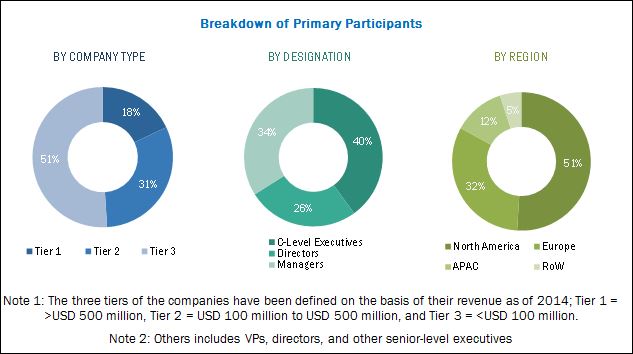
The research methodology used to estimate and forecast the microwave transmission equipment market begins with obtaining data on key vendor revenue through secondary research (IEEE Microwave Theory & Techniques Society, European Microwave Association, The Federal Communications Commission (FCC), The International Telecommunication Union (ITU), and the GSM Association). The vendor offerings have been taken into consideration to determine the market segmentation. A combination of top-down and bottom-up approaches has been employed to arrive at the overall size of the global microwave transmission equipment market from the revenues of key players in the market. After arriving at the overall market size, the total market has been split into several segments and subsegments, which have then been verified through primary research by conducting extensive interviews with people holding key positions such as CEOs, VPs, directors, and executives. The market breakdown and data triangulation procedures have been employed to complete the overall market engineering process and arrive at the exact statistics for all segments and subsegments. The breakdown of profiles of primaries has been depicted in the figure given below.
To know about the assumptions considered for the study, download the pdf brochure
The microwave transmission equipment market comprises major players such as LM Ericsson Telefon AB (Sweden), Huawei Technologies Co., Ltd. (China), Alcatel-Lucent (France), NEC Corp. (Japan), Aviat Network (U.S.), Intracom Telecom (Greece), Ceragon (Israel), DragonWave Inc. (Canada), and Anritsu (Japan), among others.
All the above mentioned companies have their own R&D facilities and extensive sales offices and distribution channels. The products of these companies have applications in various industries. The report provides the competitive landscape of the key players, which indicates their growth strategies pertaining to the microwave transmission equipment market.
Target Audience:
- Raw material suppliers
- Semiconductor foundries
- Microwave transmission integrated circuits (ICs) manufacturers
- OEMs – white label manufacturing for others in bulk volume
- System/network integrators
- Intellectual property (IP) and licensing providers
- Governments, financial institutions, and investment communities
- Product manufacturers
- Suppliers and distributors
- Technology investors
- Technology standards organizations, forums, alliances, and associations
“The study answers several questions for the stakeholders, primarily which market segments to focus on in the next two to five years for prioritizing efforts and investments.”
Scope of the Report:
The report scope covers the microwave transmission equipment market based on following segments:
-
By Network Technology
- Packet Microwave
- Hybrid Microwave
- Small-Cell Backhaul
- Time Division Multiplexing (TDM)
-
By Component
- Antennas
- RF Processing Units
- IDUs
- ODUs
- Cables and Connectors
-
By Frequency Band
- L Band
- S Band
- C Band
- X Band
- Ku Band
- Ka Band
- V Band
- E Band
- W Band
-
By Mounting Type
- Full-Indoor
- Split-Mount
- Full-Outdoor
-
By Application
- Navigation
- Cellular Communication
- Radio Telecommunication
- Satellite Communication
- Radar
- Broadband Communication
-
By Geography
-
North America
- U.S.
- Canada
- Mexico
-
Europe
- U.K.
- Germany
- France
- Italy
- Rest of Europe
-
Asia-Pacific
- China
- Japan
- India
- Rest of APAC
-
RoW
- South America
- Middle East
- Africa
-
North America
Competitive Landscape: Market share analysis
Company Profiles: Detailed analysis of the major companies present in the microwave transmission equipment market
Available Customizations:
With the given market data, MarketsandMarkets offers customizations according to the company’s specific needs. The following customization options are available for the report:
Company Information:
Detailed analysis and profiling of additional market players (up to five)













Growth opportunities and latent adjacency in Microwave Transmission Equipment Market
We want to know more only about Microwave Transmission Equipment Market by Network Technology (Hybrid, Packet Microwave, Small Cell).