Modular Flooring Market

Modular Flooring Market by Product Type (LVT, Ceramic, Rubber, Polyolefin), Installation Technique (Interlocking, Loose Lay), End-use (Household, Workplace, Healthcare, Education, Retail), and Region - Global Forecast to 2031




OVERVIEW
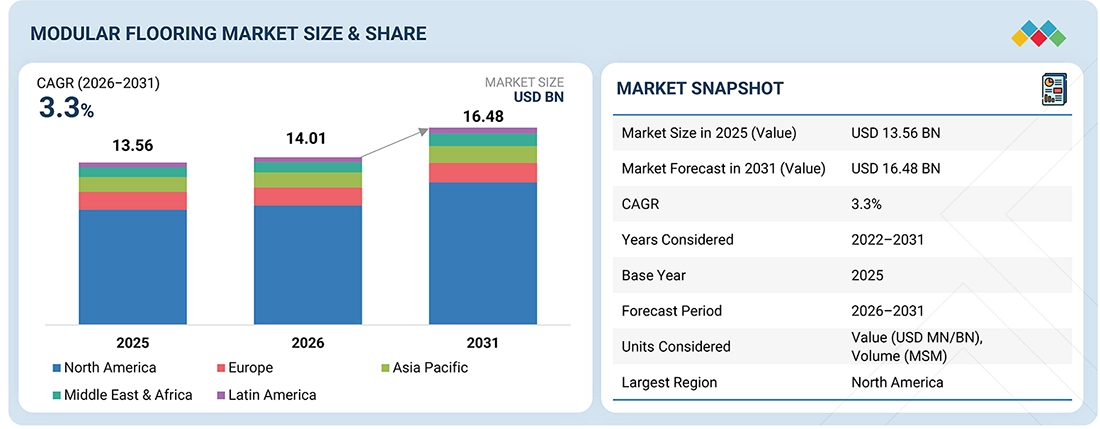
Source: Secondary Research, Interviews with Experts, MarketsandMarkets Analysis
The modular flooring market is projected to grow from USD 14.01 billion in 2026 to USD 16.48 billion by 2031, representing a compound annual growth rate (CAGR) of 3.3% during this period. The demand for modular flooring is attributed to its ease of installation and replacement, enabling faster project execution with minimal operational disruption.
KEY TAKEAWAYS
-
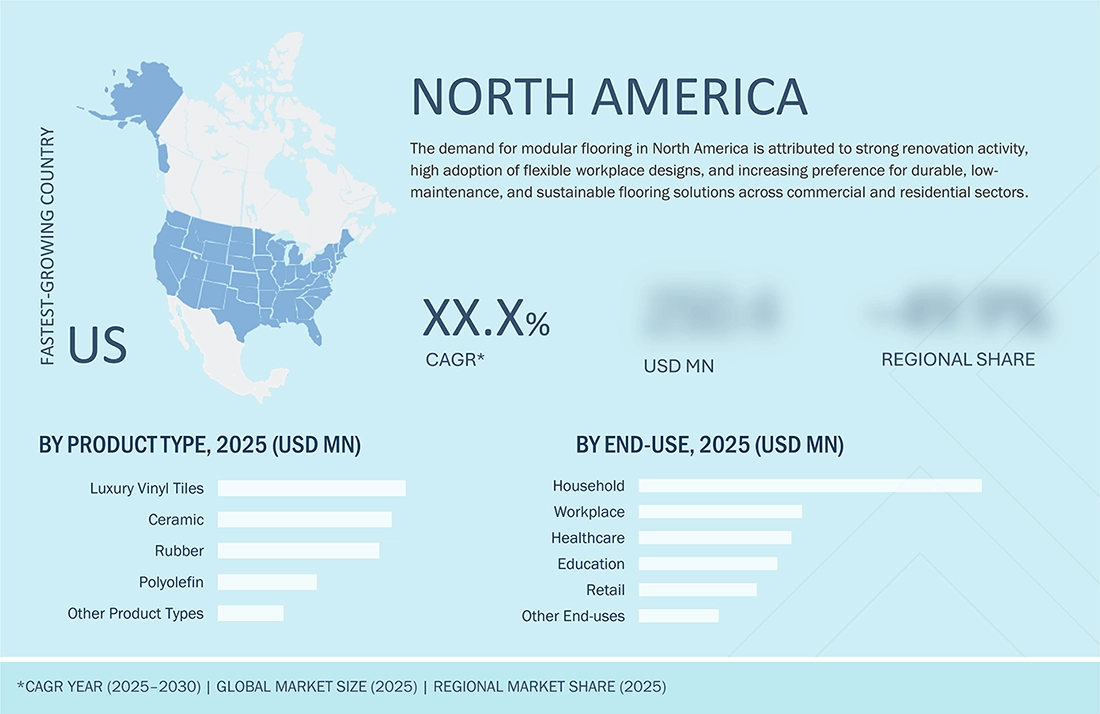
By RegionNorth America accounted for a significant share of 71.0% in 2025.
-
By Product TypeThe luxury vinyl tiles segment is projected to register the highest CAGR of 3.6% during the forecast period.
-
By Installation TechniqueThe loose lay segment is projected to register the highest CAGR of 3.5% during the forecast period.
-
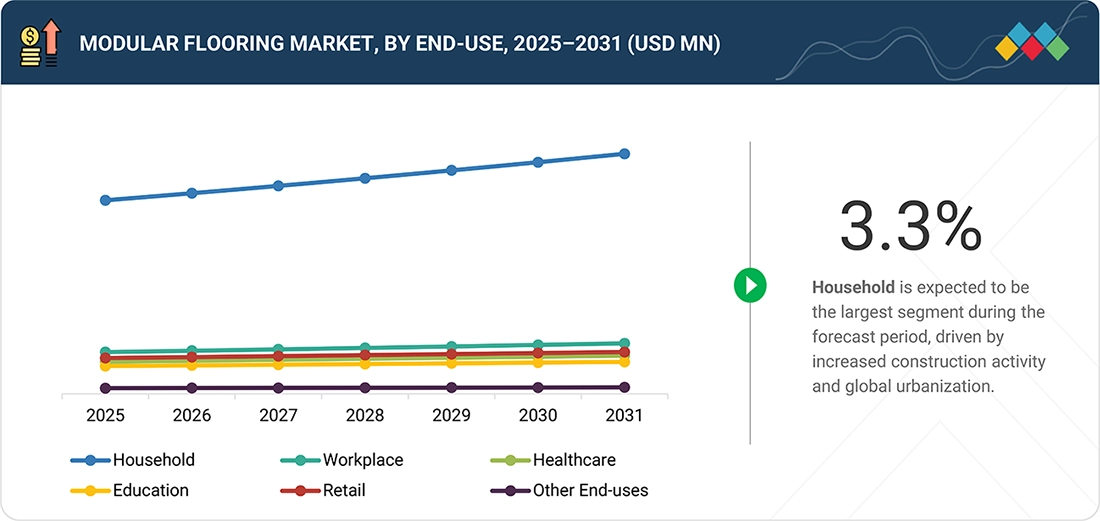
By End-UseThe household segment dominated the market in 2025, accounting for a share of 57.5%.
-
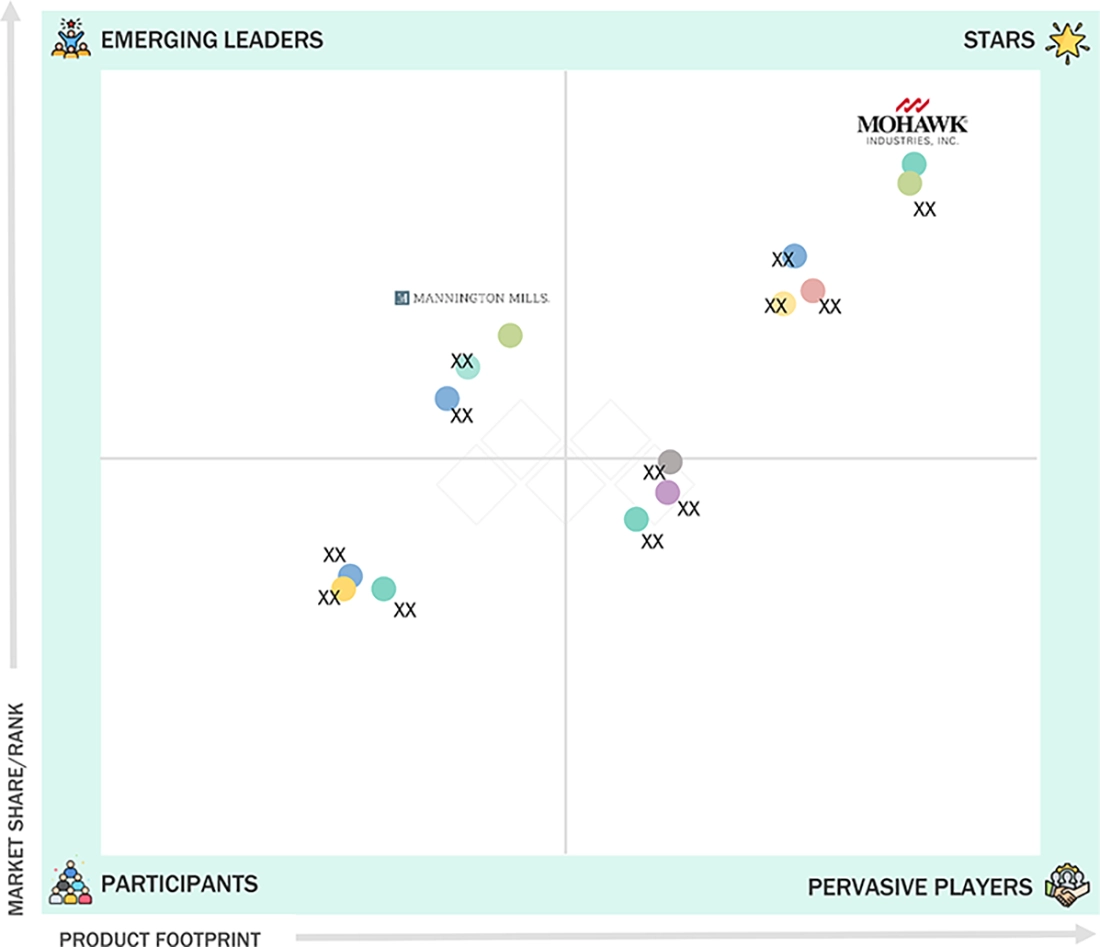
Competitive Landscape - Key PlayersMohawk Industries, Inc. (US), Shaw Industries Group, Inc. (US), Tarkett (France), Armstrong Flooring, Inc. (US), Forbo Holding AG (Switzerland), and Interface, Inc. (US) were identified as star players in the modular flooring market (global), given their strong market shares and product footprints.
-
Competitive Landscape - Startups/SMEsJames Halstead plc (UK), Dixie Group, Inc. (US), Victoria plc (UK), LX Hausys, Ltd. (South Korea), and CFL Holding Limited (UK) have distinguished themselves among startups and SMEs by securing strong footholds in specialized niche areas, underscoring their potential as emerging market leaders.
The shift toward modular flooring is increasingly evident as end users move away from traditional fixed flooring systems that require extensive installation time and complex maintenance. Instead, they are opting for flexible, pre-engineered flooring solutions that support quick installation, easy replacement, and adaptable interior layouts. At the same time, advancements in material engineering, surface durability, and locking system technologies are enhancing the performance of modular flooring. These developments ensure long-term durability, improved acoustic and ergonomic comfort, simplified maintenance, and consistent aesthetics across applications in commercial offices, healthcare facilities, retail spaces, and educational institutions
TRENDS & DISRUPTIONS IMPACTING CUSTOMERS' CUSTOMERS
In the modular flooring industry, a structural transition is underway as permanent floor coverings are being replaced with modular flooring systems intended for specific applications and that allow for faster floor installation, staged renovation of a building, and seamless incorporation into changing workspaces. High-performing modular flooring systems provide additional benefits in terms of performance (dimensional stability, acoustic isolation, wear resistance) and improved access to the electrical and mechanical components of the building under the slab. Therefore, the result of this structural transition will be reduced lifecycle disruptions, improved building management efficiency, enhanced indoor environmental quality, and increased design standardization across office buildings, healthcare facilities, retailers, and educational facilities. As the refurbishment cycle of buildings becomes shorter and their use even more fluid, modular flooring systems will continue to be a higher priority for stakeholders seeking a consistent level of performance, sustainability, and flexibility for long-term use across a wide range of environments.
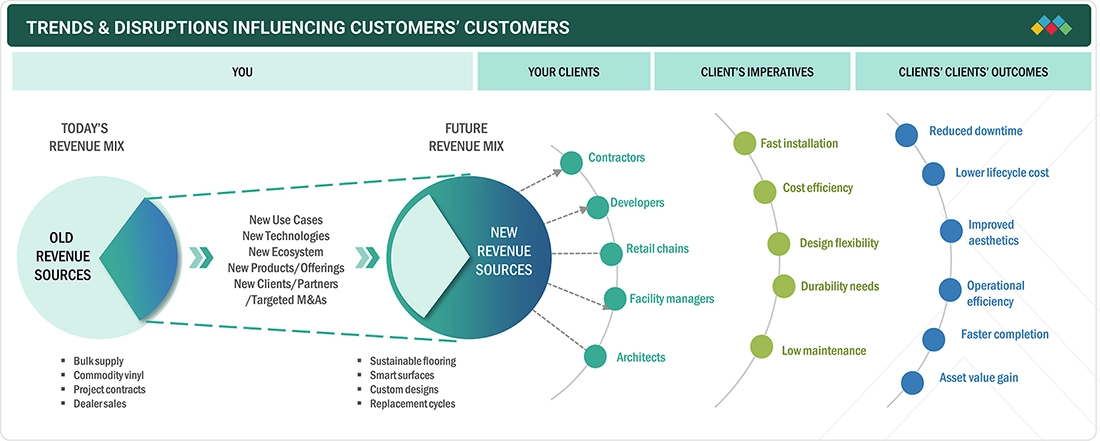
Source: Secondary Research, Interviews with Experts, MarketsandMarkets Analysis
MARKET DYNAMICS

Level
-
Increasing Construction Activity in Commercial and Non-commercial Infrastructure

-
Rising Renovation and Retrofit Activities in Commercial Buildings


Level
-
Subfloor Preparation Sensitivity and Installation Constraints

-
High Dependence on Petrochemical-based Raw Materials


Level
-
Development of Fully Recyclable Closed-loop Modular Flooring Systems

-
Smart Flooring Tiles with Embedded Sensor Technology


Level
-
Engineering-reliable Click-Lock and Interlocking Systems Across Different Climate Conditions

-
Managing Rapid Product Collection Turnover in Design-oriented Markets

Source: Secondary Research, Interviews with Experts, MarketsandMarkets Analysis
Driver: Increasing Construction Activity in Commercial and Non-commercial Infrastructure
The increasing demand for modular building materials is fueled by growing construction activities globally. Both developers and facility owners are focused on fast, scalable, and lifecycle-efficient designs. Modular building materials provide many benefits, such as the ability to create rapid and efficient fit-out processes across multiple building locations, a consistent design aesthetic across multiple locations, and a reduced impact on ongoing operations when expanding or renovating facilities. At the same time, the rising investment in non-commercial construction is creating an increasing demand for building products that are durable and can be easily maintained. Modular flooring allows for fast and efficient installations, localized modifications to the flooring system, and a reduced amount of wasted material.
Restraint: Subfloor Preparation Sensitivity and Installation Constraints
Constraints caused by subfloor preparation sensitivity and installation constraints are an influential barrier to the adoption of modular flooring, especially in projects with high demands for speed and cost efficiency. Modular installations require level, clean, and moisture-free subfloors to ensure the best interlocking capability, dimensional stability, and long-term performance. Installation errors may occur if there are any surface imperfections or moisture intrusion (e.g., surface irregularities) and cause misalignment, failure of joints, or premature wear on the modular floor system. This can have a negative impact on the durability of the modular floor and the visual consistency of the installation. Therefore, additional surface preparation, such as surface treatments or leveling compounds, may be required prior to installing the modular floor system; this may contribute to a longer duration prior to the start of installation and to the overall project budget. In renewal projects, particularly in older structure projects, achieving the required condition is often difficult; thus, skilled installers must be used to ensure the proper installation technique is used, which further complicates the execution of the project. These constraints may affect the ability to install a modular floor system on projects requiring both low cost and/or short duration.
Opportunity: Development of Fully Recyclable Closed-loop Modular Flooring Systems
The advent of an entirely closed-loop modular flooring system that is wholly recyclable offers great potential for the modular flooring industry. With sustainability goals and material circularity becoming key drivers of construction strategies, manufacturers are increasingly designing flooring products to be collected, processed, and remanufactured into new products at the end of their useful lives; thus, decreasing the use of new (virgin) raw materials and eliminating the need to send flooring products to landfills. This approach is also being driven by new regulations and green building certification requirements being imposed on commercial and institutional construction projects. Closed-loop modular flooring systems allow asset owners to establish take-back programs for their flooring systems, thereby enhancing traceability and lifecycle accountability of the materials. Innovative material separation technologies, new backing technologies, and adhesive-less installation methods are contributing to the improved recyclability of these flooring products while maintaining their originally intended performance. There is also a growing demand for modular flooring solutions that contribute to circular economy (CE) models, particularly from enterprises that are working to reduce their carbon footprint and implement sustainable purchasing policies. Therefore, the demand for CE-oriented modular flooring systems is expected to increase significantly within office buildings, healthcare facilities, educational institutions, and large-scale commercial buildings during the forecast period.
Challenge: Engineering Reliable Click-lock and Interlocking Systems Across Different Climate Conditions
Developing dependable click-locks and interlocks under varying climate conditions will continue to present a significant challenge for modular flooring manufacturers and installers. Modular flooring parts experience thermal expansion (particularly horizontal), contraction (particularly horizontal), and moisture absorption from the subfloor, all of which can impact joint integrity as well as the long-term dimensional stability of the flooring. The swelling of materials caused by humid environments can create tight joints or surface buckling, while shrinkage resulting from dry or variable temperatures can result in gaps and loose joints. Advanced material engineering, correct manufacturing tolerances, and rigorous testing standards are required to assure that consistent locking performance is achieved despite such fluctuations in humidity. Furthermore, the inconsistency of subfloor conditions further complicates the ability to achieve performance consistency. Manufacturers must provide the proper balance between flexible and rigid locking mechanisms while still providing ease of installation. Addressing these issues is necessary to avoid future performance failures over time, maintain visual uniformity, and provide dependable performance across the entire range of commercial, residential, or institutional applications for modular flooring products.
MODULAR FLOORING MARKET: COMMERCIAL USE CASES ACROSS INDUSTRIES
| COMPANY | USE CASE DESCRIPTION | BENEFITS |
|---|---|---|
 |
Sustainable office renovation using circular, recycled flooring materials to create flexible, modern workspace aligned with environmental and user wellbeing goals | Enables circular economy integration, reduces environmental impact, improves maintenance efficiency, enhances workplace comfort, and supports flexible, technology-driven office design aligned with sustainability objectives |
 |
Energy-efficient conveyor belt system installed at airports to reduce friction and significantly lower energy consumption in baggage handling operations | Achieves up to 40% energy savings, maintains long-term performance stability, reduces operational costs, minimizes friction-related wear, and supports sustainable airport infrastructure efficiency improvements |
 |
Modular flooring used in modern offices to create flexible, collaborative workspace with a strong focus on acoustics, sustainability, and biophilic design principles | Improves acoustic comfort, enhances collaboration through flexible zoning, supports sustainability with low-carbon materials, increases durability, and creates a calm, productive, and people-centric work environment |
Logos and trademarks shown above are the property of their respective owners. Their use here is for informational and illustrative purposes only.
MARKET ECOSYSTEM
The modular flooring market ecosystem consists of raw material suppliers (BASF, Dow, Celanese, Arkema), manufacturers (Mohawk Industries, Tarkett, Shaw Industries, Interface, Forbo), distributors (Headlam Group, Riterug Flooring), and end users (JLL, CBRE, Marriott International, Hilton Worldwide, Tesco Plc). Raw material suppliers provide polymers, resins, and specialty chemicals used in the production of vinyl, laminate, and carpet tile systems. Manufacturers convert these materials into engineered modular flooring solutions with advanced backing systems, surface treatments, and interlocking technologies. Distributors play a critical role in inventory management, regional availability, and project-based supply coordination. End users across commercial real estate, hospitality, retail, and facility management sectors rely on modular flooring for flexible layouts, ease of maintenance, and lifecycle cost efficiency. Collaboration across the ecosystem ensures consistent product quality, scalable supply, and continuous innovation aligned with evolving building performance and sustainability requirements.
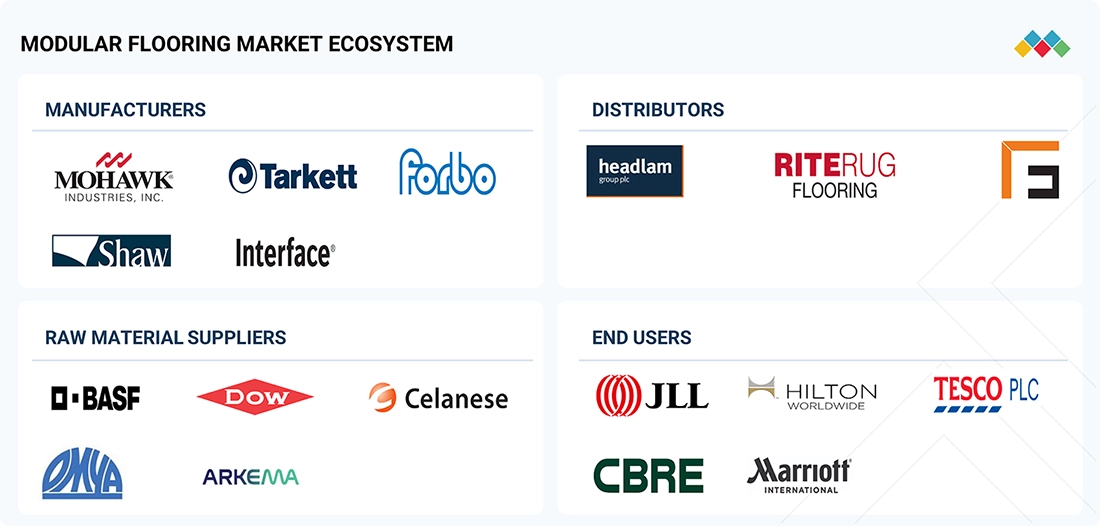
Logos and trademarks shown above are the property of their respective owners. Their use here is for informational and illustrative purposes only.
MARKET SEGMENTS
Source: Secondary Research, Interviews with Experts, MarketsandMarkets Analysis
Modular Flooring Market, By Product Type
During the forecast period, the luxury vinyl tiles (LVTs) segment is predicted to lead the modular flooring market due to its strong balance of performance, cost-efficiency, and design versatility. LVTs are superior in water/mold resistance, scratch resistance, and are able to hold up to heavy traffic conditions. The multi-layer construction of LVTs further enhances their durability while providing dimensional stability under various environmental conditions. As a result of advancements in printing and embossing technologies, LVTs are now capable of replicating the look of natural materials such as wood and stone. As a result of using click-lock and loose-lay installation processes for LVTs, users can also benefit from installation flexibility and continue to reduce the time their spaces are out of service (downtime) during renovations. With an increase in users placing a higher priority on both long life-cycle performance/low maintenance of modular flooring products, and on aesthetic product performance due to standardization, LVTs are expected to continue to be the largest product type in the modular flooring market.
Modular Flooring Market, By Installation Technique
Interlocking installation techniques are expected to account for the major share of the modular flooring market throughout the forecast period. The growth factors are their advantages over traditional glue-down or nail-down methods of installation; for example, the structural stability of interlocks is far superior to any other type of modular flooring installation technique and allows interlocked installations to remain secure in high-traffic areas (e.g., airports). Additionally, the installation process of interlocking modular flooring is greatly simplified by the use of engineered click-lock systems that form tight joints between adjacent tiles without using adhesives. In addition, interlocked flooring has superior dimensional stability and greater resistance to shifting – even under very heavy loads and with repeated foot traffic. Interlocked modular flooring is capable of accommodating phased renovation projects and allowing for the removal and replacement of individual tiles/planks, without damaging the adjacent tiles/planks during the removal/replacement process. As end users continue to look for greater efficiencies in their operations and increased durability/performance from their flooring products over the long term, interlocked modular flooring systems are expected to remain the most preferred and most often utilized method of installation in residential and commercial modular flooring applications.
Modular Flooring Market, By End-use
The household segment is projected to be the largest end-use of modular flooring during the forecast period. Factors contributing to this trend include the continued growth of residential construction and urban housing, and increasing consumer demand for low-maintenance, aesthetically versatile floor coverings. Modular flooring offers homeowners a choice of several flooring materials, with luxury vinyl tiles, ceramic tiles, and polyolefin-based flooring among the most popular options due to their durability, moisture resistance, and ability to pull together different design motifs. Additionally, consumer concerns regarding hygiene, particularly in kitchens and living room areas, is driving demand for floor coverings that are easy to clean and resistant to stains. The introduction of consumer-friendly, DIY installation systems (including click-lock installation systems) provides additional incentive for individual homeowners to purchase modular flooring. As residential construction and renovations continue increasing, many homeowners will consider modular flooring a solution for their needs for functionality, durability, and modern home design attractiveness.
REGION
North America to be largest region in global modular flooring market during forecast period
North America is projected to be the largest modular flooring market during the forecast period due to continued high demand from the commercial real estate, residential renovation, and institutional infrastructure sectors. North America has a long history of using established methods of construction, excellent acceptance rates for advanced building materials, and a strong commitment to flexibility in building interiors and lifecycle cost efficiency. Corporate offices renovate, retail spaces expand, and healthcare facilities upgrade are the primary industries contributing to the need for modular flooring products, as these industries need solutions that can be installed rapidly with as little disruption to their operations as possible. The growing interest in using more sustainable and lower-emission products, all of which have been developed in accordance with Green Building Standards, is also driving market growth. In addition to a large number of top-tier manufacturers, North America has developed a very extensive distribution network that promotes continued growth within the modular flooring market.
MODULAR FLOORING MARKET: COMPANY EVALUATION MATRIX
Mohawk Industries Inc (Star) is a leading company in the modular flooring sector due to its robust global manufacturing base and an extensive, diverse range of product offerings, including carpet tiles, luxury vinyl tiles (LVT), and laminate modular systems. Access to vertically integrated, i.e., complete control over all parts of the supply chain from raw materials through production costs, makes it easier for Mohawk to innovate new products. Mohawk's investment in high-tech surface technologies and durable, eco-friendly flooring products allows it to be a player in modern commercial office, retail, hospitality, and educational projects. Mohawk's ability to manufacture high-quality, durable modular flooring products with the same look-and-feel as traditional hardwood, while also meeting stringent environmental regulations (LEED), makes it a leading supplier for large specification-driven projects. With an established distribution network, long relationship with contractors and facility managers, Mohawk has solidified its position as an industry leader. Mannington Mills Inc (Emerging Leader) is constantly building on its existing presence in the resilient modular flooring market by focusing on LVT and more advanced modular sheet products. Mannington has invested heavily in developing new designs and high-performing materials, as well as developing and promoting products that are recyclable as part of a circular economy. By combining highly productive, flexible manufacturing systems with tailored product offerings, Mannington has positioned itself for continued growth in the healthcare, education, and corporate interior markets and for capturing additional value-added, sustainable market opportunities.
Source: Secondary Research, Interviews with Experts, MarketsandMarkets Analysis
KEY MARKET PLAYERS
- Mohawk Industries, Inc. (US)
- Shaw Industries Group, Inc. (US)
- Tarkett (France)
- Armstrong Flooring, Inc. (US)
- Forbo Holding AG (Switzerland)
- Interface, Inc. (US)
- Gerflor Group (France)
- Mannington Mills, Inc. (US)
- Beaulieu International Group (Belgium)
- TOLI Corporation (Japan)
- Milliken (US)
- James Halstead plc (UK)
- Dixie Group, Inc. (US)
- Victoria plc (UK)
- CFL Holding Limited (US)
MARKET SCOPE
| REPORT METRIC | DETAILS |
|---|---|
| Market Size in 2025 (Value) | USD 13.56 Billion |
| Market Forecast in 2031 (Value) | USD 16.48 Billion |
| Growth Rate | CAGR of 3.3% from 2026–2031 |
| Years Considered | 2022–2031 |
| Base Year | 2025 |
| Forecast Period | 2026–2031 |
| Units Considered | Value (USD Million/Billion), Volume (Million Square Meter) |
| Report Coverage | Revenue forecast, company ranking, competitive landscape, growth factors, and trends |
| Segments Covered |
|
| Regions Covered | North America, Asia Pacific, Europe, South America, Middle East & Africa |
WHAT IS IN IT FOR YOU: MODULAR FLOORING MARKET REPORT CONTENT GUIDE
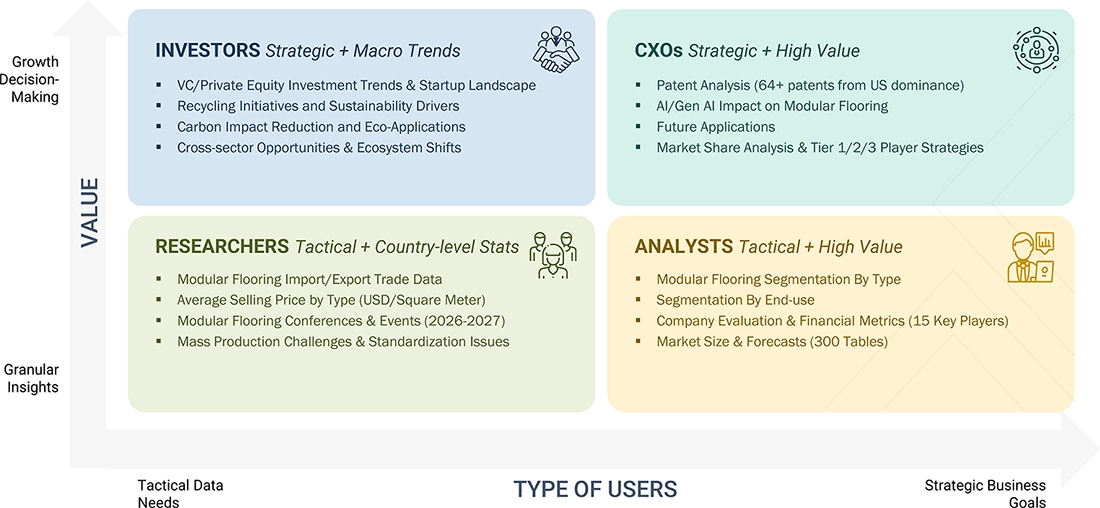
DELIVERED CUSTOMIZATIONS
We have successfully delivered the following deep-dive customizations:
| CLIENT REQUEST | CUSTOMIZATION DELIVERED | VALUE ADDS |
|---|---|---|
| Modular Flooring Manufacturer | Thickness market analysis across applications |
|
|
| In-depth analysis of luxury vinyl tiles (LVT) segment |
|
|
RECENT DEVELOPMENTS
- November 2025 : Tarkett debuted the Resonant Spaces ethos® carpet tile collection, a modular workplace flooring range with three patterns in nine colorways featuring fully circular backing.
- July 2025 : Armstrong Flooring introduced Zanlite and Starlux Plus modular flooring series for the Indonesian market, expanding its regional product portfolio to address the growing demand for modern resilient flooring solutions in Southeast Asia.
- April 2025 : Mohawk Group launched EcoFlex Matrix ULC, an ultra-low carbon modular carpet backing with high recycled content for sustainable modular flooring.
Table of Contents
 Exclusive indicates content/data unique to MarketsandMarkets and not available with any competitors.
Methodology
The study involved four major activities to estimate the current size of the global modular flooring market. Exhaustive secondary research was carried out to collect information on the market, the peer product market, and the parent product group market. The next step was to validate these findings, assumptions, and sizes with the industry experts across the value chain of modular flooring through primary research. The top-down and bottom-up approaches were employed to estimate the overall size of the modular flooring market. After that, market breakdown and data triangulation procedures were used to determine the size of different segments of the market.
Secondary Research
The market for companies offering modular flooring was arrived at by studying the secondary data available through paid and unpaid sources, analyzing the product portfolios of the major companies in the ecosystem, and rating the companies by their performance and quality. Various secondary sources, such as Business Standard, Bloomberg, World Bank, and Factiva, were referred to identify and collect information for this study on the modular flooring market. In the secondary research process, various secondary sources were referred to for identifying and collecting information related to the study. Secondary sources included annual reports, press releases, investor presentations, modular flooring vendors, forums, certified publications, and white papers. The secondary research was used to obtain critical information on the industry’s value chain, the total pool of key players, market classification, and segmentation from the market and technology-oriented perspectives.
Primary Research
In the primary research process, various primary sources from the supply and demand sides were interviewed to obtain qualitative and quantitative information for this report. The primary sources from the supply side included industry experts, such as Chief Executive Officers (CEOs), Vice Presidents (VPs), marketing directors, technology and innovation directors, and related key executives from several key companies and organizations operating in the modular flooring market. After the complete market engineering (calculations for market statistics, market breakdown, market size estimations, market forecasting, and data triangulation), extensive primary research was conducted to gather information and verify and validate the critical numbers arrived at. Primary research was also conducted to identify the segmentation, industry trends, competitive landscape of modular flooring offered by various market players, and key market dynamics, such as drivers, restraints, opportunities, challenges, industry trends, and key player strategies. In the complete market engineering process, the top-down and bottom-up approaches and several data triangulation methods were extensively used to perform the market estimation and market forecasting for the overall market segments and subsegments listed in this report. Extensive qualitative and quantitative analysis was performed on the complete market engineering process to list the key information/insights throughout the report.
The following is the breakdown of primary respondents:
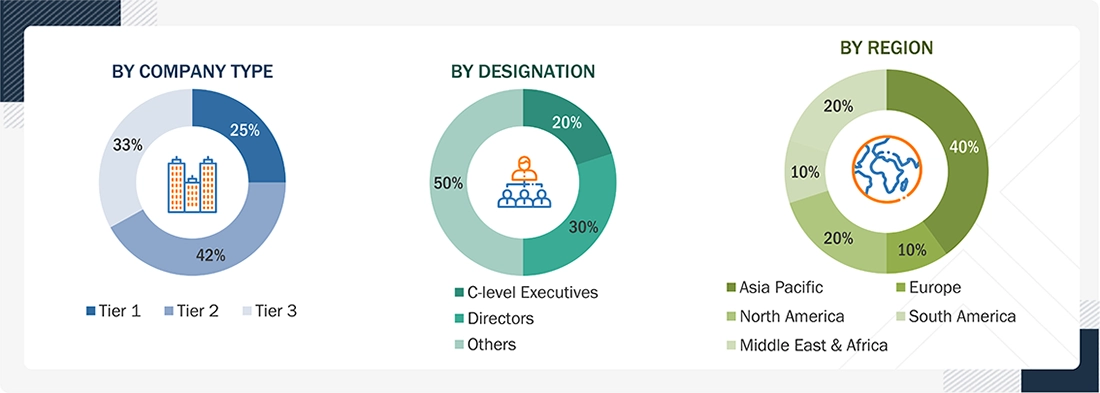
Notes: Others include sales, marketing, and product managers.
Tier 1: > USD 1 billion; Tier 2: USD 500 million–1 billion; and Tier 3: < USD 500 million
To know about the assumptions considered for the study, download the pdf brochure
Market Size Estimation
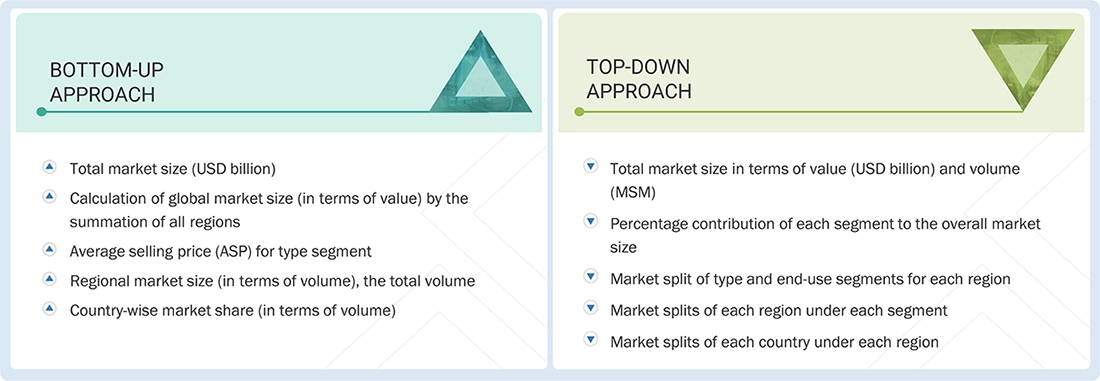
The top-down and bottom-up approaches were used to estimate and validate the size of the global modular flooring market. These approaches were also used extensively to estimate the size of various dependent market segments.
The research methodology used to estimate the market size included the following approaches:
Data Triangulation
After arriving at the overall market size using the market size estimation processes, the market was split into several segments and subsegments. The data triangulation and market breakup procedures were employed, wherever applicable, to complete the overall market engineering process and arrive at the exact statistics of each market segment and subsegment. The data was triangulated by studying various factors and trends from both the demand and supply sides.
Market Definition
Modular flooring refers to pre-engineered flooring units such as tiles or planks designed for easy installation, replacement, and reconfiguration, excluding carpet tile systems. These flooring solutions are typically manufactured using materials such as luxury vinyl, ceramic, rubber, polyolefin, and other resilient compounds to deliver durability, moisture resistance, and dimensional stability. Modular flooring is widely used in commercial, institutional, and residential spaces due to its ease of maintenance, flexibility in design, and ability to support fast, low-disruption installations.
Stakeholders
- Raw Material Suppliers
- Regulatory Bodies
- Government and Consulting Firms
- End Users
- Research and Development Organizations
- Modular Flooring Manufacturers, Dealers, Traders, and Suppliers
Report Objectives
- To define, describe, and forecast the size of the global modular flooring market based on product type, installation technique, end-use, and region in terms of value and volume
- To provide detailed information on the significant drivers, restraints, opportunities, and challenges influencing the market
- To analyze and forecast the market based on product type, installation technique, end-use, and manufacturing process
- To strategically analyze micro markets concerning individual growth trends, prospects, and their contribution to the market
- To assess the growth opportunities in the market for stakeholders and provide details on the competitive landscape for market leaders
- To forecast the market size of segments for North America, Europe, the Asia Pacific, South America, and the Middle East & Africa
- To strategically profile key players and comprehensively analyze their market shares and core competencies
- To analyze competitive developments, such as product launches, expansions, partnerships, and acquisitions in the modular flooring market
- To provide the impact of AI on the modular flooring market


Personalize This Research
- Triangulate with your Own Data
- Get Data as per your Format and Definition
- Gain a Deeper Dive on a Specific Application, Geography, Customer or Competitor
- Any level of Personalization
Let Us Help You
- What are the Known and Unknown Adjacencies Impacting the Modular Flooring Market
- What will your New Revenue Sources be?
- Who will be your Top Customer; what will make them switch?
- Defend your Market Share or Win Competitors
- Get a Scorecard for Target Partners

Custom Market Research Services
We Will Customise The Research For You, In Case The Report Listed Above Does Not Meet With Your Requirements
Get 10% Free CustomisationTESTIMONIALS

We at Nissan Chemicals Corporation have been clients of MarketsandMarkets for more than a year now. We recently consulted MarketsandMarkets for a study, the team at MarketsandMarkets was extremely professional and organized. The business insights were very detailed and aligned well with our expectations that really helped us formulate the Business Plans and device new strategies for development themes. MarketsandMarkets offers a unique combination of expertise and dedicated engagement model. Their research findings have helped us in designing our Pricing Strategy which will make it easier for us to predict the future sales and profits for the next ten years. We look forward to working with MarketsandMarkets in the future.
VP of Strategy & New Business Development
Leading Specialty Chemical Company
The MarketsandMarkets Engagement Model, composed of both the Knowledge Store and advisory custom research, has greatly helped us in understanding our markets and making strategic decisions. The Knowledge Store is a fast way to allow everyone in our organization to understand more about most any market they are interested in. The ability to then get custom research done and get answers to specific strategic questions and market insight has been spectacular. The Markets and Markets team feel more like colleagues than vendors and their services have helped us change our culture where statements of things like growth opportunities and competitive position are always backed by industry research.

Rich Gibson,
Director, Corporate Strategy
Milliken & Company,
Leading Industrial Manufacturer of specialty chemical, floor covering, performance and protective textile materials, and healthcaremilliken.com
MarketsandMarkets is a trusted resource that helps us to better understand markets that are near-adjacencies-whether its technology, value chain or geography. Their Knowledge Store platform provides a dashboard of markets and their characteristics which is easy to use and saves us time.
Adam Shaw,
Market Development and Strategy Manager
AdvanSix Inc. USA,
An American Leader in Chemicalswww.advansix.com
The Knowledge Store from MarketsandMarkets is a valuable tool which has helped my team acquire greater insight in to the end markets that our business serves. This has enabled us to help our company build stronger strategies throughout our planning process.
TOSHIO KINOSHITA
Senior Chif Consultion Research & Consulting Division
Mitsubishi Chemical Research Corporation,
Leading Manufacturer of Chemical Productswww.mitsubishichem-res.co.jp/en/

We recently engaged with MarketsandMarkets for a study, the team not only clearly understood our business objectives but was also extremely professional in the way they handled the entire project. The study was efficiently conducted in a phase-wise manner, and the engagement model furnished us with high-quality business insights that far exceeded our expectations at each phase. We were especially happy that MarketsandMarkets could provide us with both, an English as well as a Japanese version of the study. A special thanks to the Analyst Team and Client Services Team, whose fluency in Japanese enhanced our comfort level, as we could converse with them in our preferred language.
Independent entrepreneurs
Arrow Precision
We approached MarketsandMarkets for study on Proppants Market, and their work exceeded our expectations. The study conducted was comprehensive and enabled us to view the market through the various dimensions. In addition, the team was extraordinarily responsive throughout the process and resolved our queries on time. I strongly recommend MarketsandMarkets and will certainly consider them for additional market assessments we will need in the future.
Global engineering company, Japan
Deputy Manager,
Strategic Planning OfficeThe high-quality insights shared by the MarketsandMarkets team helped us understand the pharmaceutical plant designers in a specific geography. It also captured the risks that we may likely face in communicating with our potential partners. The study would enable us identify partners, which would impact our future growth.
- US Modular Flooring Market
- Canada Modular Flooring Market
- Mexico Modular Flooring Market
- Germany Modular Flooring Market
- France Modular Flooring Market
- UK Modular Flooring Market
- Italy Modular Flooring Market
- China Modular Flooring Market
- India Modular Flooring Market
- Japan Modular Flooring Market
- South Korea Modular Flooring Market
- South Africa Modular Flooring Market
- Brazil Modular Flooring Market
- Argentina Modular Flooring Market
- Rest Of Europe Modular Flooring Market
- Rest Of Asia Pacific Modular Flooring Market
- GCC Countries Modular Flooring Market
- –Other GCC Countries Modular Flooring Market






Growth opportunities and latent adjacency in Modular Flooring Market