North America Healthcare Cloud Computing Market

North America Healthcare Cloud Computing Market by Product (EHR, VNA, RIS, LIS, RCM, Telehealth, Billing), Deployment (Private, Public), Pricing (Pay-Per, Subs), Service Model (SaaS, laaS), End User (Hospital, Imaging Centers, Pharmacy) - Forecast to 2031



NORTH AMERICAN HEALTHCARE CLOUD COMPUTING MARKET SIZE, SHARE & GROWTH SNAPSHOT
Source: Secondary Research, Interviews with Experts, MarketsandMarkets Analysis
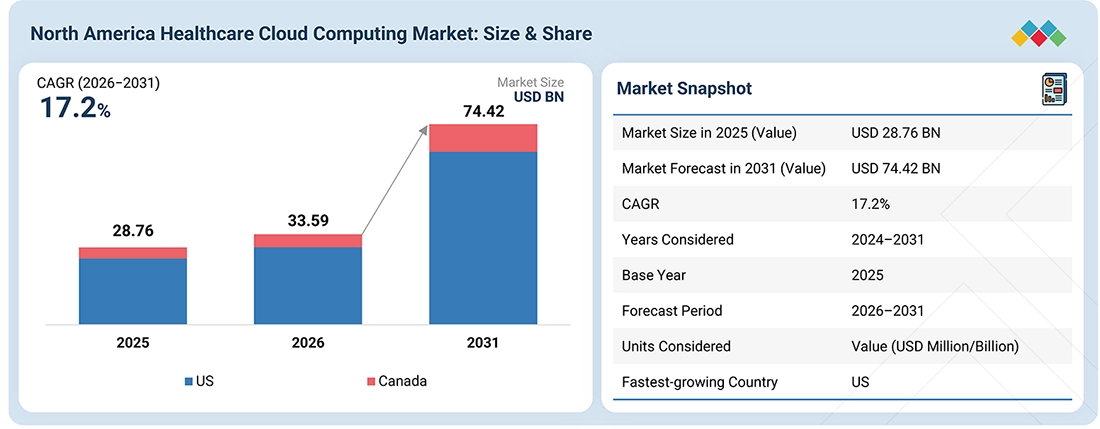
The North America healthcare cloud computing market is projected to grow from USD 33.59 billion in 2026 to USD 74.42 billion by 2031, at a CAGR of 17.2% during the forecast period. The market was valued at USD 28.76 billion in 2025. The North America healthcare cloud computing market is driven by the growing adoption of cloud-based healthcare IT to improve scalability, interoperability, data accessibility, and operational efficiency. Increasing use of AI, hybrid cloud, healthcare analytics, and connected care solutions is further accelerating market growth.
KEY TAKEAWAYS
-
MARKET SNAPSHOT:
Base Year Market Size (2025): USD 28.76 Billion
Current Market Size (2026): USD 33.59 Billion
Forecast Market Size (2031): USD 74.42 Billion
CAGR (2026–2031): 17.2% -
SEGMENT LEADERSHIP:
Regional Leader: US dominated the North America healthcare cloud computing market, with a share of 85.6% in 2025.
Product Leader: Healthcare provider solutions segment is expected to register the highest CAGR of 18.6% during the forecast period.
Offering Leader: Services segment dominated the market in 2025.
Deployment Model Leader: Hybrid cloud segment is expected to register the highest CAGR during the forecast period.
Pricing Model Leader: Pay-as-you-go pricing model segment is expected to register the highest CAGR during the forecast period.
Service Model Leader: Software-as-a-service segment is expected to dominate the market, with a share of 58.6% in 2025.
End User Leader: Healthcare provider segment is expected to dominate the market. -
MARKET OUTLOOK & COMPETITIVE LANDSCAPE:
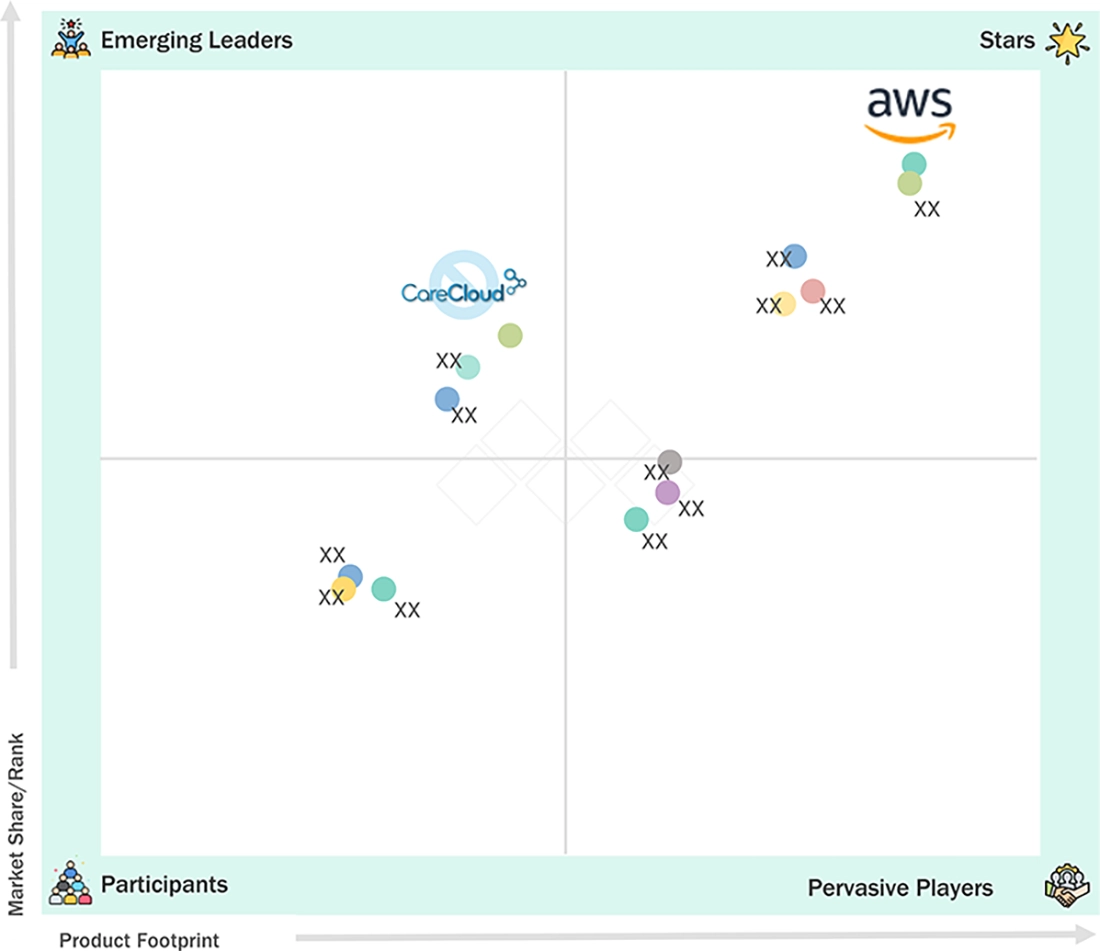
Amazon Web Services, Inc. (US), Microsoft (US), and Google LLC (Alphabet Inc.) (US) were identified as some of the star players in the North America healthcare cloud computing market, given their strong market share and product footprint.
ClearDATA (US), VMware, Inc. (US), and INFINITT Healthcare Co., Ltd. (South Korea), among others, have distinguished themselves among startups and SMEs by securing strong footholds in specialized niche areas, underscoring their potential as emerging market leaders.
The North America healthcare cloud computing industry is driven by the growing demand for scalable, secure, and interoperable cloud-based healthcare infrastructure that improves operational efficiency while reducing IT complexity. Increasing adoption of AI, healthcare analytics, hybrid cloud, and connected care solutions, along with the need to modernize legacy systems and manage growing healthcare data volumes, is encouraging healthcare providers, payers, and life sciences organizations to migrate workloads to cloud environments to enhance data accessibility, streamline workflows, and support connected, data-driven care.
TRENDS & DISRUPTIONS IMPACTING CUSTOMERS' CUSTOMERS
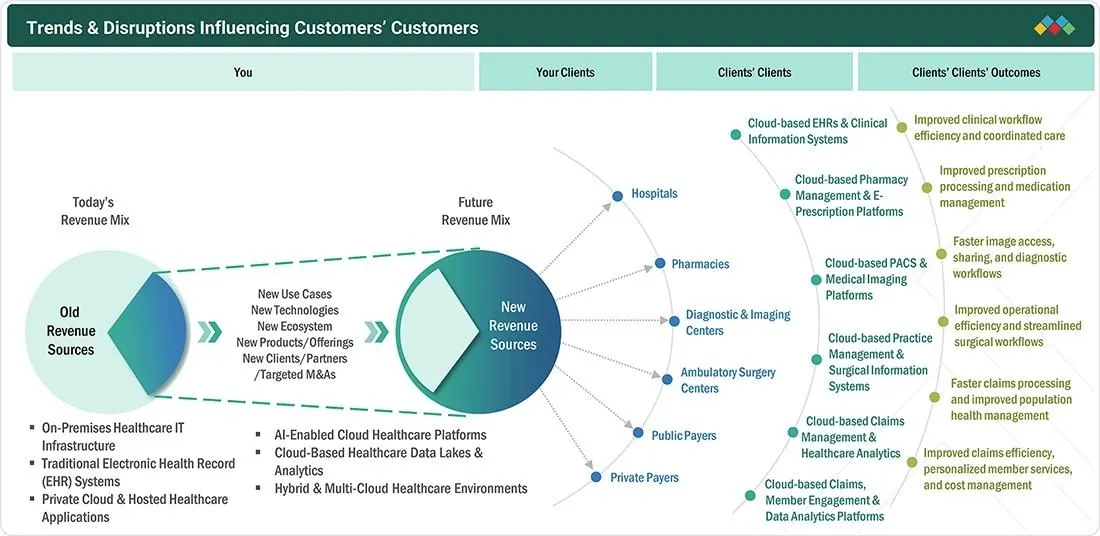
There has been a significant transformation in the North America healthcare cloud computing market, with a shift from traditional on-premises infrastructure and basic hosted applications toward scalable, secure, and AI-enabled cloud environments. Cloud providers have evolved from offering basic storage and computing capabilities to advanced solutions such as hybrid and multi-cloud platforms, cloud-based AI and analytics, healthcare data lakes, medical imaging, interoperability, and cloud-native clinical applications. Growing demand from hospitals, pharmacies, diagnostic and imaging centers, ambulatory surgery centers, and public and private payers is accelerating cloud adoption. As healthcare organizations increasingly prioritize digital transformation, data-driven decision-making, and connected care, next-generation cloud technologies are becoming essential for improving operational efficiency, data accessibility, interoperability, cybersecurity, and scalability.
Source: Secondary Research, Interviews with Experts, MarketsandMarkets Analysis
MARKET DYNAMICS

Level
-
Increasing healthcare data volumes and need for scalable infrastructure

-
Growing demand for healthcare interoperability and health information exchange


Level
-
Data privacy and cybersecurity concerns

-
High complexity of legacy-system migration


Level
-
Expansion of cloud-based AI and machine learning in healthcare

-
Growth of cloud-enabled healthcare data platforms


Level
-
Vendor lock-in and cloud concentration risk

-
Difficulty achieving interoperability across heterogeneous systems

Source: Secondary Research, Interviews with Experts, MarketsandMarkets Analysis
Driver: Increasing healthcare data volumes and need for scalable infrastructure
The rapid expansion of electronic health records (EHRs), medical imaging, connected medical devices, remote patient monitoring, telehealth, and digital healthcare applications is generating increasingly large and complex volumes of healthcare data across North America. Healthcare providers, payers, and life sciences organizations require flexible infrastructure that can efficiently store, process, and exchange these growing datasets across multiple locations and care settings. Cloud computing provides scalable storage and computing resources that can be expanded according to workload requirements, while supporting real-time data processing, healthcare analytics, artificial intelligence (AI), and machine learning applications. This enables organizations to manage growing data volumes more efficiently, reduce reliance on costly on-premise infrastructure, and support the development of data-driven and connected healthcare services.
Restraint: Data privacy and cybersecurity concerns
The increasing migration of sensitive patient information, clinical records, medical images, and financial data to cloud environments raises concerns regarding unauthorized access, data breaches, ransomware, and cyberattacks across the North America healthcare sector. Healthcare organizations must comply with stringent data privacy and security requirements while managing complex cloud environments and third-party vendors. The integration of cloud platforms with EHRs, connected medical devices, and other healthcare systems further expands the potential attack surface. These concerns can increase the cost and complexity of cloud implementation, require continuous investment in cybersecurity capabilities, and make some healthcare organizations cautious about migrating sensitive workloads to cloud environments, thereby restraining market growth.
Opportunity: Expansion of cloud-based AI and machine learning in healthcare
The growing adoption of artificial intelligence (AI) and machine learning (ML) across clinical, operational, and administrative workflows is creating significant opportunities for cloud computing in North America. Cloud platforms provide the scalable computing power, data storage, and processing capabilities required to develop and deploy AI/ML applications for medical imaging, clinical decision support, predictive analytics, drug discovery, patient risk stratification, and personalized care. As healthcare organizations increasingly seek to integrate AI into existing workflows, cloud-based infrastructure enables faster deployment, flexible resource scaling, and access to advanced AI tools without requiring substantial investments in dedicated computing infrastructure. This growing convergence of cloud computing and AI is expected to create new opportunities for healthcare cloud providers and accelerate digital transformation across the region.
Challenge: Vendor lock-in and cloud concentration risk
Healthcare organizations may become heavily dependent on a limited number of cloud providers for infrastructure, applications, data storage, and AI services. Migration between providers can be complex and costly because of proprietary technologies, differences in data architectures, application dependencies, and integration requirements. The concentration of critical healthcare workloads with major cloud providers can also increase exposure to service disruptions, pricing changes, and provider-specific security or operational risks. These factors can make organizations cautious about long-term cloud commitments and encourage the adoption of hybrid- and multi-cloud strategies, which may increase implementation and management complexity.
NORTH AMERICAN HEALTHCARE CLOUD COMPUTING MARKET: COMMERCIAL USE CASES ACROSS INDUSTRIES
| COMPANY | USE CASE DESCRIPTION | BENEFITS |
|---|---|---|
 |
Cloud infrastructure, healthcare data management, AI/ML, medical imaging, and analytics for healthcare workloads | Scalable infrastructure, faster data processing, improved analytics, reduced IT costs, and accelerated AI adoption |
 |
Azure and Microsoft Cloud for Healthcare for healthcare data, EHR integration, AI, and clinical workflows | Improved workflow efficiency, secure data management, enhanced patient engagement, and faster AI deployment |
 |
Google Cloud for healthcare data management, AI, analytics, interoperability, and clinical applications | Better data accessibility, enhanced clinical insights, streamlined workflows, and personalized care |
 |
Cloud-based EHR, practice management, revenue cycle, and patient engagement solutions | Improved practice efficiency, streamlined workflows, faster claims processing, and reduced administrative burden |
 |
Cloud-based EHR, practice management, revenue cycle management, and patient engagement | Improved operational efficiency, optimized revenue cycles, better data access, and reduced administrative workload |
Logos and trademarks shown above are the property of their respective owners. Their use here is for informational and illustrative purposes only.
MARKET ECOSYSTEM
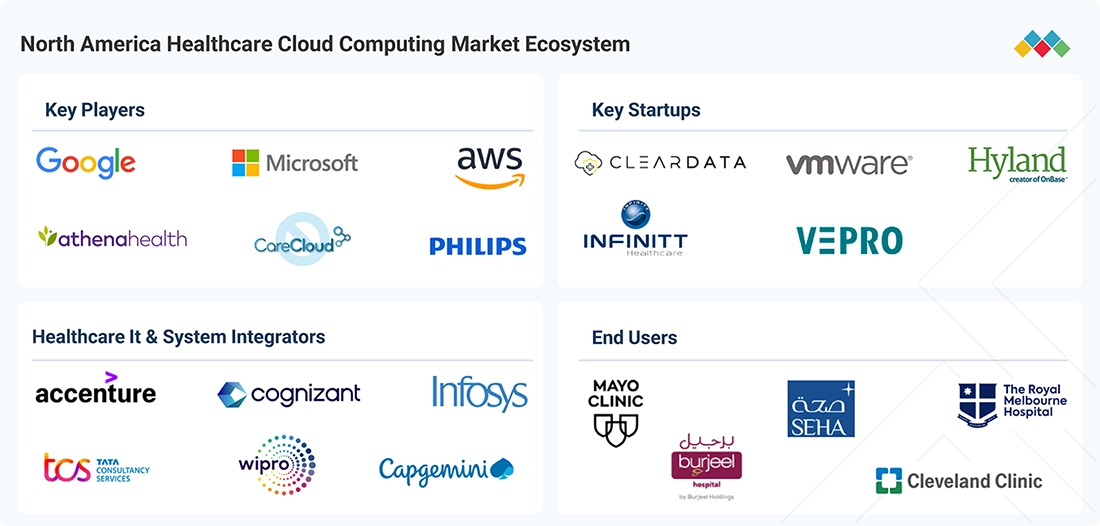
The North America healthcare cloud computing market ecosystem consists of leading cloud and healthcare technology providers such as Amazon Web Services (AWS), Microsoft, Google LLC, Oracle, Epic Systems Corporation, Koninklijke Philips, GE HealthCare, and Siemens Healthcare Limited, which provide cloud infrastructure, healthcare applications, data management, medical imaging, analytics, and AI-enabled solutions. Healthcare IT and system integrators including Accenture, Cognizant, Deloitte, NTT DATA, DXC Technology, IBM, TCS, Infosys, and HCLTech support cloud migration, implementation, integration, cybersecurity, and managed services. Specialized healthcare technology companies such as athenahealth, CareCloud, eClinicalWorks, Veradigm, Sectra, and INFINITT Healthcare provide cloud-based EHR, practice management, imaging, and clinical information solutions. End users, including hospitals, pharmacies, diagnostic & imaging centers, ambulatory surgery centers, public payers, and private payers, leverage these technologies to modernize IT infrastructure, improve data accessibility and interoperability, enhance operational efficiency, strengthen cybersecurity, and support AI-enabled, data-driven healthcare delivery.
Logos and trademarks shown above are the property of their respective owners. Their use here is for informational and illustrative purposes only.
MARKET SEGMENTS
Source: Secondary Research, Interviews with Experts, MarketsandMarkets Analysis
North America Healthcare Cloud Computing Market, By Product
In 2025, the healthcare provider solutions segment accounted for the largest share of the North America healthcare cloud computing market, as healthcare providers increasingly rely on cloud technologies to modernize IT infrastructure, manage growing volumes of clinical data, and support connected care delivery. These solutions enable hospitals, clinics, and other providers to deploy cloud-based EHRs, clinical information systems, medical imaging, analytics, telehealth, and remote patient monitoring while improving data accessibility and interoperability. The increasing need to replace legacy systems, enhance operational efficiency, and support scalable healthcare applications has significantly strengthened the adoption of cloud solutions among healthcare providers. Additionally, advancements in artificial intelligence, cloud-based analytics, hybrid cloud architectures, cybersecurity, and integration with connected medical devices are expanding the capabilities of provider-focused cloud solutions. These technologies enable healthcare organizations to streamline workflows, improve clinical decision-making, enhance care coordination, and deliver more efficient, data-driven healthcare services at scale.
North America Healthcare Cloud Computing Market, By Offering
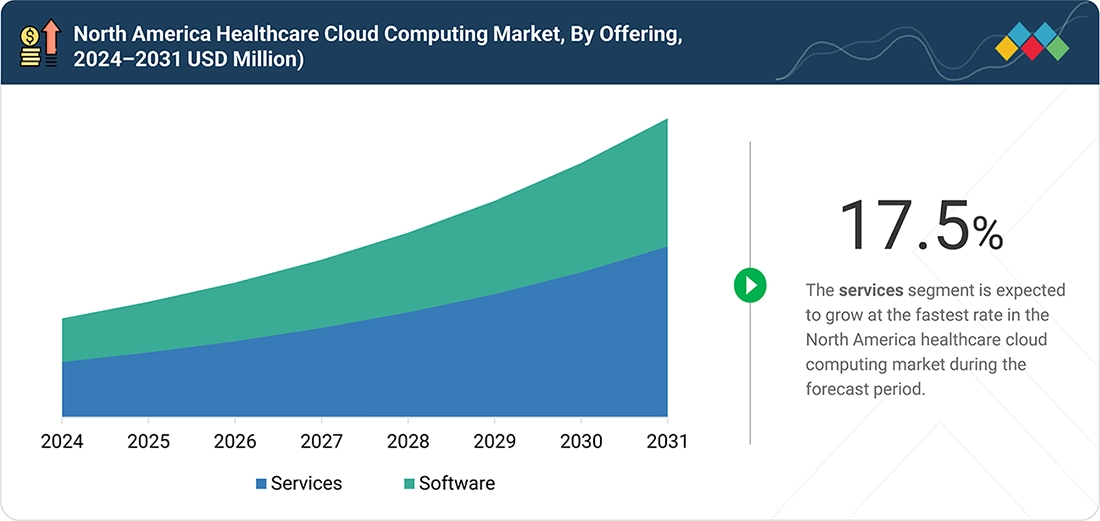
In 2025, the services segment accounted for the largest share of the North America healthcare cloud computing market, by offering, as healthcare organizations increasingly require specialized support for cloud migration, implementation, integration, consulting, and ongoing management. Cloud services enable hospitals, payers, pharmacies, diagnostic centers, and other healthcare organizations to modernize legacy infrastructure, integrate cloud platforms with existing healthcare systems, and manage complex data environments without extensive internal IT resources. The growing adoption of hybrid and multi-cloud architectures, AI-enabled applications, healthcare analytics, and cloud-based cybersecurity is further increasing demand for professional and managed services. Additionally, the complexity of healthcare data, interoperability requirements, regulatory compliance, and the need for continuous technical support are encouraging organizations to rely on specialized service providers. These factors are strengthening demand for cloud services and enabling healthcare organizations to accelerate digital transformation, improve operational efficiency, enhance security, and optimize their cloud investments.
North America Healthcare Cloud Computing Market, By Deployment Model
Hybrid cloud deployment has emerged as the leading model in the North America healthcare cloud computing market, as healthcare organizations increasingly seek to combine the scalability and flexibility of public cloud environments with the control and security of private infrastructure. This model enables hospitals, payers, and other healthcare organizations to retain sensitive patient and clinical data within controlled environments while leveraging public cloud resources for AI, advanced analytics, medical imaging, data processing, and other resource-intensive applications. Hybrid cloud also allows organizations to modernize legacy IT infrastructure gradually without disrupting existing systems and workflows. Furthermore, growing requirements for data privacy, regulatory compliance, interoperability, business continuity, and cybersecurity are encouraging healthcare organizations to adopt flexible hybrid architectures, supporting the segment's leading position in the market.
North America Healthcare Cloud Computing Market, By Pricing Model
Pay-as-you-go pricing is gaining strong adoption across the North America healthcare cloud computing market, particularly among organizations seeking to align technology expenditure with actual usage. Rather than committing to fixed infrastructure capacity, healthcare organizations can dynamically consume computing, storage, analytics, and application resources based on workload requirements. This model is well suited to variable-demand applications such as medical imaging, AI workloads, data analytics, telehealth, and remote patient monitoring, where resource requirements can fluctuate significantly. It also lowers the financial barrier to cloud adoption by minimizing upfront capital investments and allowing organizations to test or expand cloud services incrementally. As healthcare providers and payers increasingly focus on cost optimization, scalability, and efficient resource utilization, pay-as-you-go pricing is expected to maintain a strong position in the market.
North America Healthcare Cloud Computing Market, By Service Model
Software-as-a-Service (SaaS) is gaining widespread adoption in the North America healthcare cloud computing market, as healthcare organizations increasingly prefer ready-to-use applications that can be accessed through the cloud without managing underlying infrastructure. SaaS enables hospitals, pharmacies, diagnostic centers, ambulatory surgery centers, and payers to deploy applications for EHR management, practice management, revenue cycle management, analytics, patient engagement, and clinical workflows with lower upfront IT investments. Automatic software updates, centralized maintenance, flexible subscription models, and easier scalability further reduce the burden on internal IT teams. Moreover, the ability to integrate SaaS applications with existing healthcare systems and leverage AI, analytics, and interoperability capabilities is encouraging organizations to transition from traditional on-premises applications to cloud-based software solutions.
North America Healthcare Cloud Computing Market, By End User
Healthcare providers are emerging as the leading end-user group in the North America healthcare cloud computing market, supported by the growing need to modernize clinical IT infrastructure and manage increasingly complex healthcare operations. Hospitals, specialty clinics, and ambulatory care organizations are adopting cloud technologies across EHRs, medical imaging, clinical data management, telehealth, analytics, AI, and remote patient monitoring. Cloud adoption enables providers to connect information across departments and care settings, improve access to clinical data, and support more efficient workflows. In addition, the need to replace legacy systems, accommodate growing data volumes, and scale digital services without major infrastructure investments is encouraging providers to accelerate cloud migration. As healthcare delivery becomes increasingly connected and data-driven, continued investments in cloud infrastructure and applications are expected to strengthen adoption among healthcare providers.
REGION
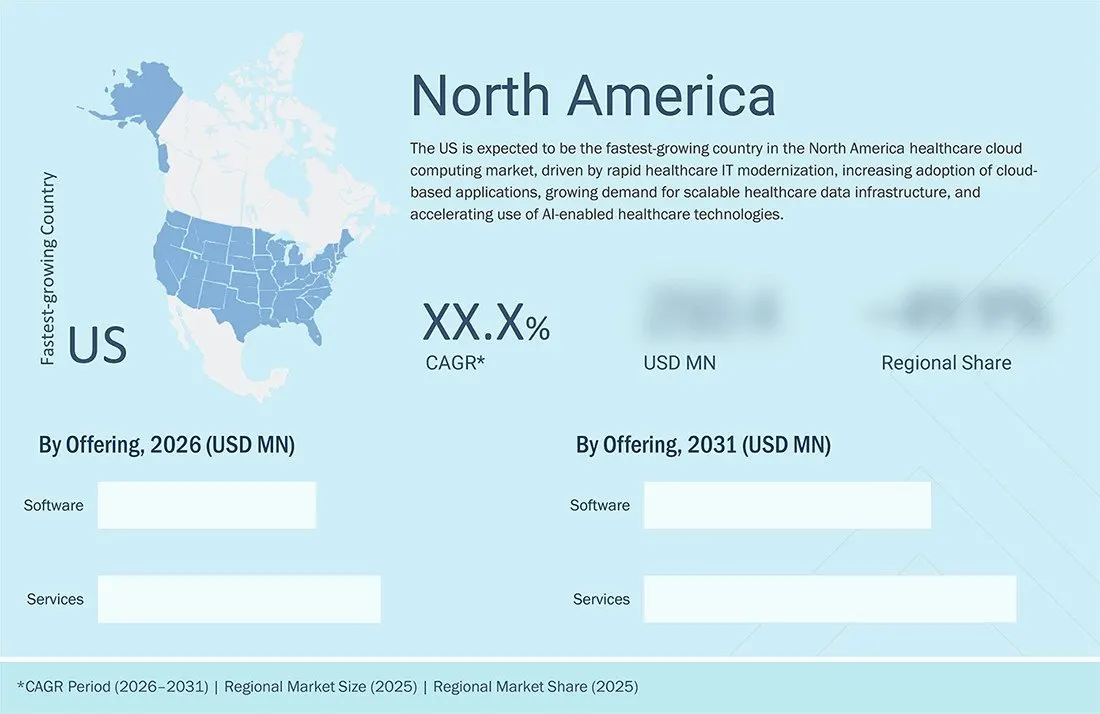
US registered the highest CAGR during the forecast period in the North America healthcare cloud computing market
The US is one of the fastest-growing countries in the North America healthcare cloud computing market, supported by rapid healthcare IT modernization, increasing cloud adoption, and growing demand for scalable and interoperable healthcare infrastructure. Furthermore, the expanding use of AI-enabled cloud solutions, healthcare analytics, hybrid cloud environments, and cloud-based clinical applications, along with increasing investments in digital transformation and cybersecurity, is accelerating the adoption of healthcare cloud computing across the US.
NORTH AMERICAN HEALTHCARE CLOUD COMPUTING MARKET: COMPANY EVALUATION MATRIX
In the market matrix for the North America healthcare cloud computing market, Amazon Web Services, Inc. (Star) stands out with strong market presence and a comprehensive portfolio of cloud infrastructure, data management, analytics, AI/ML, and healthcare-specific solutions. Its extensive cloud infrastructure, broad healthcare customer base, strong ecosystem of technology partners, and capabilities in areas such as medical imaging, clinical data management, and AI-enabled healthcare applications reinforce its leading position in the market. CareCloud, Inc. (Emerging Leader) is gaining traction through its cloud-based healthcare technology portfolio, including electronic health records (EHRs), practice management, revenue cycle management, patient engagement, and healthcare analytics solutions. While AWS maintains a leading position through its scale, technology breadth, infrastructure capabilities, and extensive ecosystem, CareCloud demonstrates strong potential to advance toward the leaders' quadrant as healthcare organizations increasingly adopt cloud-based platforms to modernize IT infrastructure, streamline workflows, and improve data-driven care delivery.
Source: Secondary Research, Interviews with Experts, MarketsandMarkets Analysis
KEY MARKET PLAYERS
- Amazon Web Services, Inc. (US)
- Microsoft (US)
- Google LLC (Alphabet Inc.) (US)
- athenahealth. Inc. (US)
- CareCloud, Inc. (US)
- Siemens Healthineers AG (Germany)
- eClinicalWorks (US)
- Epic Systems Corporation (US)
- Koninklijke Philips N.V. (Netherlands)
- Veradigm LLC (US)
- NTT Data Group Corporation (Japan)
- Sectra AB (Sweden)
- GE Healthcare (US)
- DXC Technology Company (US)
- Salesforce, Inc. (US)
- FUJIFILM Holdings Corporation (Japan)
- Dell Inc. (US)
- Oracle (US)
- Ensoftek, Inc. (US)
- Iron Mountain, Inc. (US)
MARKET SCOPE
| REPORT METRIC | DETAILS |
|---|---|
| Market Size in 2025 (Value) | USD 28.76 Billion |
| Market Size in 2026 (Value) | USD 33.59 Billion |
| Market Forecast in 2031 (Value) | USD 74.42 Billion |
| Growth Rate | 17.2% |
| Years Considered | 2024–2031 |
| Base Year | 2025 |
| Forecast Period | 2026–2031 |
| Units Considered | Value (USD Million/Billion) |
| Report Coverage | Revenue forecast, company ranking, competitive landscape, growth factors, and trends |
| Segments Covered |
|
| Countries Covered | US, Canada |
WHAT IS IN IT FOR YOU: NORTH AMERICAN HEALTHCARE CLOUD COMPUTING MARKET REPORT CONTENT GUIDE
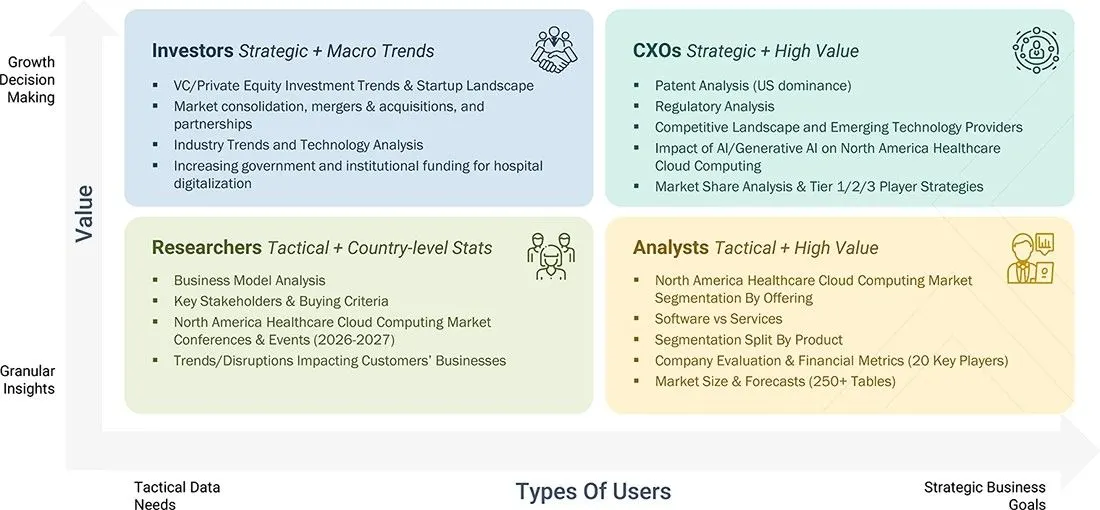
DELIVERED CUSTOMIZATIONS
We have successfully delivered the following deep-dive customizations:
| CLIENT REQUEST | CUSTOMIZATION DELIVERED | VALUE ADDS |
|---|---|---|
| Local Competitive Landscape | Profiling of leading healthcare cloud computing companies based on cloud offerings, healthcare capabilities, AI/analytics integration, partnerships, customer base, and geographic presence | Enables competitive benchmarking, vendor evaluation, and differentiation strategies |
| Regional Market Entry Strategy | Assessment of the US and Canada based on cloud adoption, healthcare IT maturity, regulatory environment, infrastructure readiness, and demand across key healthcare end users | Supports market localization, reduces entry risk, and identifies high-growth opportunities |
| Local Risk & Opportunity Assessment | Analysis of data privacy and cybersecurity requirements, interoperability challenges, legacy-system dependency, vendor concentration, cloud migration barriers, and emerging growth opportunities | Strengthens risk mitigation, investment planning, and strategic decision-making |
| Technology Adoption by End User | Mapping adoption of SaaS, hybrid cloud, AI/ML, healthcare analytics, cloud-based EHRs, medical imaging, data platforms, and cybersecurity solutions across hospitals, pharmacies, diagnostic & imaging centers, ambulatory surgery centers, and public and private payers | Identifies technology adoption trends and supports solution development, product positioning, and market expansion |
RECENT DEVELOPMENTS
- April 2026 : Noom, Humana, and Welldoc partnered with b.well Connected Health to expand secure health data access and interoperability, enabling members to integrate longitudinal health records with personalized digital therapeutics and chronic disease management solutions.
- October 2025 : Datavant and Athenahealth began a collaboration to automate medical record requests nationwide, enabling healthcare organizations to streamline record retrieval and exchange. The initiative aimed to reduce administrative burden, improve access to patient information, and support more efficient healthcare data workflows.
- March 2025 : Contentnea Health partnered with eClinicalWorks to adopt a comprehensive cloud-based EHR system, enabling the organization to modernize clinical and administrative workflows. The implementation was expected to improve access to patient information, streamline operations, enhance care coordination, and support more efficient healthcare delivery.
Table of Contents
 Exclusive indicates content/data unique to MarketsandMarkets and not available with any competitors.
Methodology
This research study involved the extensive use of both primary and secondary sources. It involved the analysis of various factors affecting the industry to identify the segmentation types, industry trends, key players, the competitive landscape of market players, and key market dynamics such as drivers, opportunities, challenges, restraints, and key player strategies.
Secondary Research
This research study extensively utilized secondary sources, including directories, databases such as Dun & Bradstreet, Bloomberg Businessweek, and Factiva, as well as white papers, annual reports, and companies' house documents. The secondary research aimed to gather and analyze information for a comprehensive and commercially focused study of the North America healthcare cloud computing market, encompassing technical aspects and market dynamics. It also facilitated the identification of key players, market classification, industry trends, geographical markets, and significant market-related developments. Additionally, a database of prominent industry leaders was compiled through secondary research.
Primary Research
In the primary research process, various supply-side and demand-side sources were interviewed to obtain qualitative and quantitative information for this report. Primary sources from the supply side included industry experts such as CEOs, vice presidents, marketing and sales directors, technology & innovation directors, engineers, and related key executives from various companies and organizations operating in the North America healthcare cloud computing market. Primary sources from the demand side included personnel from healthcare providers and payers.
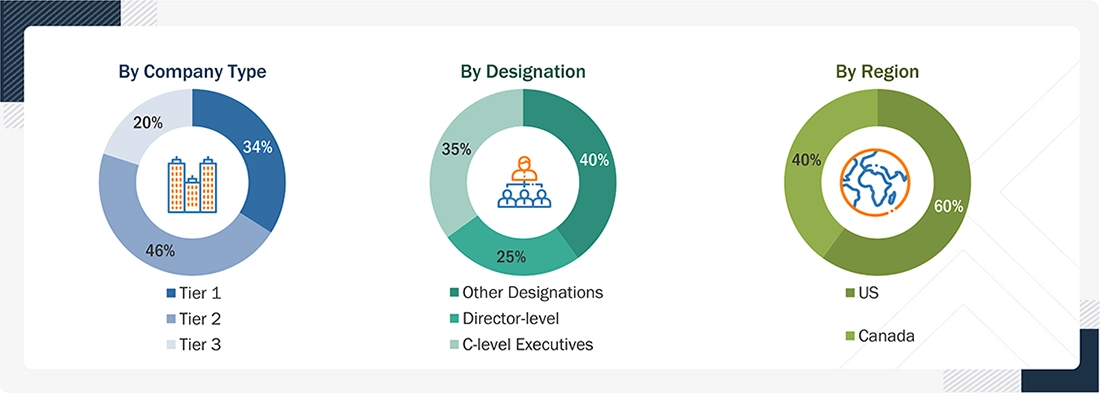
Others include sales managers, marketing managers, and product managers.
Note: Tiers are defined based on a company’s total revenue, as of 2025: Tier 1 = >USD 1 billion, Tier 2 = USD 500 million to USD 1 billion, and Tier 3 = <USD 500 million.
To know about the assumptions considered for the study, download the pdf brochure
Market Size Estimation
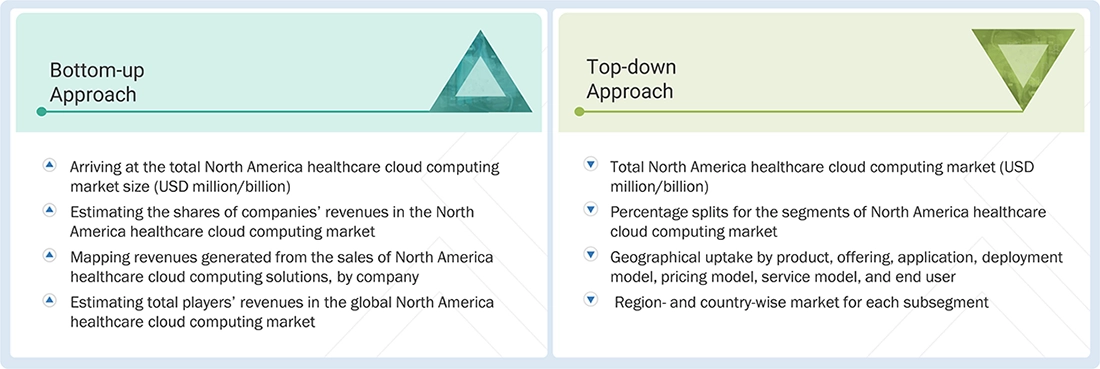
The total size of the North America healthcare cloud computing market was determined after data triangulation through the two approaches mentioned below. After the completion of each approach, the weighted average of these approaches was taken based on the level of assumptions used in each approach.
North America Healthcare Cloud Computing Market Size: Top-Down Approach and Bottom-Up Approach
Data Triangulation
The size of the North America healthcare cloud computing market was estimated through segmental extrapolation using the bottom-up approach. The methodology used is as given below:
- Revenues for individual companies were gathered from public sources and databases.
- Shares of leading players in the North America healthcare cloud computing market were gathered from secondary sources to the extent available. In certain cases, shares of North America healthcare cloud computing businesses have been ascertained after a detailed analysis of various parameters, including product portfolios, market positioning, selling price, and geographic reach & strength.
- Individual shares or revenue estimates were validated through interviews with experts.
- The total revenue in the North America healthcare cloud computing market was determined by extrapolating the market share data of major companies.
Market Definition
The North America healthcare cloud computing market comprises cloud-based infrastructure, software, and services used by healthcare organizations to store, manage, process, exchange, and analyze healthcare data and support clinical, administrative, and operational workflows. The market includes public, private, and hybrid cloud environments and encompasses solutions such as cloud-based electronic health records (EHRs), healthcare data management, medical imaging, clinical applications, analytics, artificial intelligence (AI), telehealth, remote patient monitoring, interoperability, and cybersecurity.
Key Stakeholders
- Cloud service providers and cloud infrastructure companies
- Healthcare cloud software and platform providers
- Healthcare providers (hospitals, health systems, specialty clinics, ambulatory care centers)
- Health insurance companies (public and private payers)
- Pharmaceutical and biotechnology companies
- Medical device and medical imaging companies
- Electronic health record (EHR) and healthcare IT solution providers
- Healthcare data management, analytics, and artificial intelligence (AI) providers
- Telehealth and remote patient monitoring platform providers
- Managed service providers, system integrators, and IT consulting companies
- Cybersecurity and healthcare data protection solution providers
- Government agencies, public health organizations, and healthcare regulators
- Academic medical centers, universities, and research institutions
- Healthcare technology investors, venture capital firms, and private equity firms
- Patients and patient advocacy organizations
- Business research and consulting service providers
Report Objectives
- To define, describe, and forecast the North America healthcare cloud computing market based on product, offering, deployment model, pricing model, service model, end user, and region
- To provide detailed information regarding the major factors influencing the market growth (such as drivers, restraints, opportunities, and challenges)
- To analyze the micromarkets with respect to individual growth trends, prospects, and contributions to the overall North America healthcare cloud computing market
- To analyze the opportunities for stakeholders and provide details of the competitive landscape for market leaders
- To forecast the size of the market segments with respect to the two key countries in North America, namely the US and Canada
- To profile the key players and analyze their market shares and core competencies
- To track and analyze competitive developments such as product launches & approvals, partnerships, agreements, and collaborations in the overall North America healthcare cloud computing market
- To benchmark players within the market using the proprietary "Competitive Leadership Mapping" framework, which analyzes market players on various parameters within the broad categories of business and product strategy
Available customizations:
With the given market data, MarketsandMarkets offers customizations as per your company’s specific needs. The following customization options are available for the report:
Company information
- Detailed analysis and profiling of additional market players (up to five)
Geographic Analysis
- Further breakdown of the North America healthcare cloud computing market into US and Canada


Personalize This Research
- Triangulate with your Own Data
- Get Data as per your Format and Definition
- Gain a Deeper Dive on a Specific Application, Geography, Customer or Competitor
- Any level of Personalization
Let Us Help You
- What are the Known and Unknown Adjacencies Impacting the North America Healthcare Cloud Computing Market
- What will your New Revenue Sources be?
- Who will be your Top Customer; what will make them switch?
- Defend your Market Share or Win Competitors
- Get a Scorecard for Target Partners

Custom Market Research Services
We Will Customise The Research For You, In Case The Report Listed Above Does Not Meet With Your Requirements
Get 10% Free CustomisationTESTIMONIALS

JAYANT RAJPUROHIT
Director of Market Insights, Data and Analytics
SFI Health,
Leading Pharmaceutical Companywww.sfihealth.com/

We at SFI Health approached MarketsandMarkets for an Opportunity Assessment on "Incidence and Prevalence of Focus Indications" as we wanted to know the most attractive HCPs like Physician, Functional MD, Naturopath and Pharmacist. The project was critical for us to ensure our focus on the right target which would enable sustainable growth and profitability for SFI Health. The business insights provided exceeded our expectations and we were extremely impressed. The team at MarketsandMarkets is highly professional and detail oriented and very well understood our business needs. MarketsandMarkets offers a unique combination of expertise and dedicated engagement model. We identified 2 new products to be launched in coming months, based on the research findings provided by MarketsandMarkets. We are happy with the services and would strongly recommend MarketsandMarkets to my peers in the industry.

BEATRIZ DE LA CALLE
Head of Commercial Analytics
Qualicaps,
Leading Pharmaceutical Companywww.qualicaps.com/

We partnered with MarketsandMarkets for an assessment study on hard empty capsules. The team was extremely professional in understanding our business requirements and we received timely responses to all our queries. The market intelligence and the recommendations has met our business requirements. We were extremely impressed to see the final study results; it really exceeded our expectations. The market intelligence offered by MarketsandMarkets, and clarity on next steps will help us achieve our business objective for the Year 2021. We are happy with the services and would strongly recommend MarketsandMarkets to my peers in the industry.

Bob Williams,
Senior Director Business Development & Innovation
Bracco Diagnostics Inc.,
Italian Multinational in life sciences sector and a World Leader in imaging diagnosticsimaging.bracco.com/us-en
We were pleased with targeted insights that MarketsandMarkets identified from a custom study on the 'Radiation Dose Management Solutions Market'. Your team identified and characterized the market participants as well as underlying trends accurately. This study was useful to Bracco in formulating business strategies for our dose monitoring product lines and we thank MarketsandMarkets for the job well done.
Cody Coonradt,
Market Development and Strategy Manager
3M Health Information Systems,
Leader in Health care Coding, Payment & Analytics Solutions.www.3m.com/3M/en_US/health-information-systems-us
The value for our organization comes from three things: depth of research, specificity of segments and being easy to work with. As important as the first two are, the third can't be underestimated. MarketsandMarkets, maybe more than any other research vendor, wants to know what is top of mind for our team and what big questions we are grappling to answer.
Their customer first approach and high value engagement model, have given us great analysis and excellent value for money






Growth opportunities and latent adjacency in North America Healthcare Cloud Computing Market