Packaging Automation Solution Market by Product Type (Automated Packagers, Packaging Robots, and Automated Conveyors & Sortation Systems), Function (Case Packaging, Palletizing), Software and Service, Industry, and Geography - Global Forecast to 2035


Packaging Automation Solution Market Summary
The Packaging Automation Solution Market is estimated to grow from approximately US$ 58.40 Billion in 2025 to US$ 108.70 Billion by 2035, at a CAGR of 6.40% from 2025 to 2035. The market is being driven by the rapid adoption of automated packaging equipment across food & beverages, pharmaceuticals, consumer goods, e-commerce, personal care, and industrial manufacturing. Rising labor costs, demand for faster production cycles, stringent packaging quality requirements, increasing e-commerce fulfillment volumes, and the need to reduce material waste are encouraging manufacturers to replace manual packaging processes with automated solutions. At the same time, AI, industrial IoT (IIoT), robotics, machine vision, cloud connectivity, and predictive maintenance are transforming conventional packaging lines into intelligent, connected production environments.
Key Market Trends & Insights
North America is expected to remain the leading regional market, supported by high automation penetration, advanced manufacturing infrastructure, strong e-commerce activity, and early adoption of robotics and AI-enabled packaging systems. The United States represents a major contributor because manufacturers increasingly prioritize labor productivity, operational resilience, and high-speed fulfillment.
Asia Pacific is projected to be the fastest-growing region during the forecast period. China, Japan, India, and South Korea are investing heavily in industrial automation, smart factories, robotics, and high-volume manufacturing. Growing consumer markets and the expansion of organized retail and e-commerce are further increasing demand for automated packaging equipment.
By product, automated filling and dosing systems, packaging machinery, robotic systems, and automated case-packing solutions represent major demand areas. Packaging lines are increasingly integrated rather than purchased as standalone machines, allowing manufacturers to automate filling, sealing, labeling, inspection, palletizing, and material handling through interconnected systems.
AI-enabled machine vision is emerging as an important technology trend. AI-based inspection systems can identify packaging defects, incorrect labels, seal problems, product-positioning errors, and foreign particles with greater consistency than conventional inspection approaches.
Another important trend is the integration of IoT and cloud-based monitoring. Connected packaging machines can provide real-time production data, equipment health information, energy-consumption metrics, and predictive maintenance alerts, enabling manufacturers to reduce downtime and improve overall equipment effectiveness.
Market Size & Forecast
- Base year market size (2025): US$ 58.40 Billion
- Forecast market value (2035): US$ 108.70 Billion
- CAGR (2025–2035): 6.40%
- Growth outlook: Increasing automation in manufacturing, labor shortages, e-commerce expansion, demand for flexible packaging formats, AI-enabled quality inspection, and Industry 4.0 investments are expected to support sustained market expansion through 2035.
AI-Powered Military Transformation: The Future of Smart Combat and Defense Top 10 Key Takeaway
- The Packaging Automation Solution Market is projected to increase from US$ 58.40 Billion in 2025 to US$ 108.70 Billion by 2035, registering a CAGR of 6.40%.
- North America is expected to maintain its position as the leading regional market because of high automation adoption and advanced manufacturing capabilities.
- Asia Pacific is anticipated to record the fastest growth as manufacturers in China, Japan, India, and South Korea accelerate factory automation.
- AI-powered machine vision is improving packaging inspection, defect detection, quality control, and process optimization.
- Industrial robots are increasingly being deployed for pick-and-place, case packing, palletizing, depalletizing, and material-handling applications.
- IoT-connected packaging machinery is enabling real-time monitoring, remote diagnostics, predictive maintenance, and production analytics.
- Food & beverages remains one of the largest application areas because of high production volumes and stringent requirements for speed, hygiene, and consistency.
- Pharmaceutical packaging automation is gaining importance because of traceability, serialization, regulatory compliance, and precision requirements.
- Flexible and modular automation solutions are becoming increasingly important as manufacturers seek to handle multiple package sizes and product formats.
- Integration of AI, robotics, cloud platforms, digital twins, and industrial analytics is expected to define the next generation of intelligent packaging facilities.
Product Insights
Packaging machinery and automated packaging systems represent the core product segment of the market. Their dominance is supported by the increasing requirement for high-speed, repeatable, and consistent packaging operations. Automated filling, form-fill-seal, labeling, wrapping, cartoning, case packing, and palletizing systems allow manufacturers to increase throughput while reducing dependence on manual labor.
Robotic packaging solutions are becoming particularly important for applications requiring flexibility. Unlike traditional fixed automation, robotic systems can be programmed to handle multiple products, package configurations, and production requirements. Collaborative robots are also gaining traction in applications where humans and machines need to operate within the same production environment.
Emerging product categories include AI-enabled inspection machines, autonomous packaging cells, smart conveyors, automated guided vehicles, robotic palletizers, digital packaging line controllers, and modular end-of-line automation. Manufacturers are increasingly combining these systems into integrated solutions rather than deploying individual machines.
AI and machine vision are adding another layer of intelligence. Cameras combined with AI algorithms can inspect products and packages at high production speeds while identifying defects and automatically triggering corrective actions. This shift from mechanical automation toward intelligent automation is expected to create significant opportunities for solution providers.
Technology / Component Insights
The market is increasingly shaped by robotics, machine vision, artificial intelligence, industrial IoT, programmable logic controllers, sensors, motion-control systems, and cloud-based analytics. These technologies work together to improve packaging-line speed, precision, flexibility, and operational visibility.
AI is becoming especially valuable in quality inspection and predictive maintenance. Machine-learning models can analyze production and equipment data to identify unusual operating patterns before they result in equipment failure. This can reduce unplanned downtime and improve maintenance scheduling.
IoT-enabled sensors allow packaging equipment to continuously transmit information related to temperature, vibration, motor performance, speed, energy consumption, and machine status. Cloud platforms can consolidate this information across multiple production facilities, providing manufacturers with centralized performance dashboards.
Future innovation will increasingly involve digital twins, edge computing, autonomous robots, AI-based process optimization, and cybersecurity for connected machinery. Edge AI is expected to become particularly relevant where packaging decisions must be made in milliseconds without depending entirely on cloud infrastructure.
Application Insights
The food & beverages application segment is expected to remain one of the largest contributors to the Packaging Automation Solution Market. High production volumes, shorter product life cycles, increasing SKU diversity, food-safety requirements, and growing demand for packaged products are driving automation adoption.
Pharmaceuticals represent another high-value application area. Packaging processes in this industry require extremely high accuracy, serialization, traceability, tamper evidence, and regulatory compliance. Automated inspection and data capture systems help manufacturers maintain consistent quality while reducing human error.
Consumer goods, personal care, cosmetics, chemicals, and e-commerce fulfillment are also increasing investment in packaging automation. E-commerce is particularly important because fulfillment operations require rapid sorting, packing, labeling, and dispatching of large numbers of individual orders.
Future opportunities will center on flexible automation that can rapidly change between product formats. Manufacturers are seeking packaging systems that can support smaller batches, customized packaging, sustainable materials, and frequent product changes without lengthy machine changeovers.
Regional Insights
North America is expected to remain the leading region in the Packaging Automation Solution Market through 2035. The region benefits from mature manufacturing ecosystems, high labor costs, strong robotics adoption, advanced logistics infrastructure, and significant investments in smart factories. The US packaging industry is also benefiting from the growth of e-commerce and automated fulfillment centers.
Europe is characterized by strong demand for energy-efficient and sustainable manufacturing technologies. Germany, France, Italy, and other European markets are adopting advanced packaging automation to improve productivity while complying with environmental and product-safety regulations. Industrial robotics and machine vision are increasingly integrated into packaging production lines.
Asia Pacific is projected to achieve the fastest CAGR during the forecast period. Rapid industrialization, expanding consumer markets, increasing manufacturing capacity, and government-supported Industry 4.0 programs are supporting demand. China remains a major manufacturing hub, while India is experiencing growing investments in automated production, food processing, pharmaceuticals, logistics, and consumer products.
- North America: Leading market supported by automation maturity, robotics adoption, and e-commerce.
- Europe: Strong demand for sustainable, energy-efficient, and digitally connected packaging systems.
- Asia Pacific: Fastest-growing region due to industrialization and expanding manufacturing capacity.
- China and Japan: Major contributors to regional automation investment and robotics deployment.
- India: Increasing adoption driven by manufacturing modernization, food processing, pharmaceuticals, and organized retail.
Country Specific Market Trends
In Asia Pacific, China is expected to remain a major market, with packaging automation adoption supported by large-scale manufacturing and strong robotics investment. China’s packaging automation market is estimated to expand at approximately 7.2% CAGR during 2025–2035. Japan is projected to grow at around 5.8% CAGR, supported by advanced robotics, aging workforce dynamics, precision manufacturing, and smart-factory development.
In North America, the United States remains the dominant country market, with an estimated 6.1% CAGR through 2035. Demand is being driven by warehouse automation, food and beverage manufacturing, pharmaceutical production, and e-commerce fulfillment. Canada is projected to grow at approximately 5.6% CAGR, supported by food processing and manufacturing modernization, while Mexico could achieve around 6.8% CAGR as nearshoring and manufacturing investments increase.
In Europe, Germany is expected to register approximately 5.7% CAGR, supported by Industry 4.0 initiatives, automotive and industrial manufacturing, and advanced machinery production. France is projected to grow at approximately 5.3% CAGR, supported by food, beverage, cosmetics, pharmaceuticals, and consumer-goods manufacturing.
Government initiatives promoting smart manufacturing, energy efficiency, industrial digitalization, and domestic manufacturing are contributing to adoption. Manufacturers are also investing in automation to address workforce shortages and improve production resilience.
- China: Strongest APAC demand from high-volume manufacturing and robotics.
- Japan: Advanced robotics and precision automation support steady market growth.
- United States: AI, e-commerce, pharmaceuticals, and smart factories drive adoption.
- Germany: Industry 4.0 and intelligent machinery support advanced packaging automation.
- France: Food, cosmetics, pharmaceuticals, and sustainable packaging drive demand.
Key Company Insights
The competitive landscape includes global automation and packaging-equipment companies such as **Krones AG, Syntegon Technology, IMA Group, Coesia, Tetra Pak, Marchesini Group, MULTIVAC, and Sidel. These companies are focusing on integrated packaging lines, robotics, digital monitoring, machine vision, flexible machinery, and lifecycle services.
Competitive strategies are increasingly shifting from equipment-only sales toward complete automation ecosystems. Companies are combining hardware, software, analytics, remote monitoring, and maintenance services to provide end-to-end packaging solutions. AI and IoT capabilities are also becoming important differentiators as customers seek measurable improvements in throughput, quality, energy efficiency, and downtime reduction.
- Companies are increasingly integrating AI and machine vision into packaging lines.
- Modular and flexible machinery is becoming a key product strategy.
- Digital monitoring and predictive maintenance are expanding recurring-service opportunities.
- Partnerships between machine manufacturers, robotics providers, and software companies are increasing.
- Sustainability-focused automation and energy-efficient equipment are becoming competitive differentiators.
Recent Developments
Packaging automation suppliers are increasingly introducing AI-enabled machine vision and intelligent inspection capabilities to identify defects, packaging inconsistencies, and labeling errors in real time. These systems are designed to improve quality while reducing dependence on manual inspection.
Another major development is the integration of collaborative robots into packaging and end-of-line applications. Cobots can perform repetitive pick-and-place, packing, palletizing, and material-handling tasks while offering greater flexibility for manufacturers operating multiple product lines.
Manufacturers are also expanding partnerships involving industrial automation software, cloud platforms, robotics, and IIoT technologies. These collaborations are helping packaging-equipment suppliers develop connected production environments capable of predictive maintenance, remote monitoring, and data-driven optimization.
Market Segmentation
The Packaging Automation Solution Market can be segmented by Product, Technology / Component, Application, and Region. By Product, the market includes filling and dosing equipment, labeling and coding systems, wrapping and bundling machinery, form-fill-seal machines, cartoning and case-packing systems, palletizing and depalletizing systems, and robotic packaging solutions. By Technology / Component, the market includes robotics, machine vision, AI and machine learning, sensors, PLCs, motion-control systems, industrial IoT, software, and cloud-based analytics. By Application, major segments include food & beverages, pharmaceuticals, consumer goods, personal care and cosmetics, chemicals, industrial products, and e-commerce. By Region, the market covers North America, Europe, Asia Pacific, and the Middle East & Africa and Latin America.
- By Product: Filling, labeling, wrapping, cartoning, case packing, palletizing, and robotics.
- By Technology / Component: AI, robotics, machine vision, sensors, PLCs, IIoT, and software.
- By Application: Food & beverages, pharmaceuticals, consumer goods, personal care, chemicals, and e-commerce.
- By Region: North America, Europe, Asia Pacific, Middle East & Africa, and Latin America.
- High-growth opportunity: AI-enabled, connected, flexible, and robotic packaging solutions.
Conclusion
The Packaging Automation Solution Market is entering a new phase in which automation is evolving from isolated machinery toward intelligent, connected, and adaptive production systems. The market is projected to expand from US$ 58.40 Billion in 2025 to US$ 108.70 Billion by 2035 at a CAGR of 6.40% from 2025 to 2035. AI, machine vision, robotics, IIoT, cloud computing, and predictive analytics will increasingly influence investment decisions as manufacturers seek higher productivity, lower operating costs, improved quality, and greater production flexibility.
By 2035, successful packaging operations are expected to rely heavily on connected equipment capable of collecting, analyzing, and acting on production data in real time. Companies that invest in scalable automation platforms, AI-driven quality systems, flexible robotics, and predictive maintenance can strengthen operational resilience and respond more effectively to changing consumer demand. For packaging manufacturers and end users, automation will therefore remain a strategic technology investment rather than simply an equipment upgrade.
FAQs
-
What is the projected size of the Packaging Automation Solution Market?
The Packaging Automation Solution Market is estimated at US$ 58.40 Billion in 2025 and is projected to reach approximately US$ 108.70 Billion by 2035. -
What is the expected growth rate of the Packaging Automation Solution Market?
The market is projected to grow at a CAGR of approximately 6.40% from 2025 to 2035, supported by increasing automation, robotics, AI, IIoT, and e-commerce demand. -
What are the key drivers of the Packaging Automation Solution Market?
Major drivers include labor shortages, rising labor costs, demand for higher production efficiency, e-commerce growth, stringent quality requirements, smart-factory adoption, and increasing use of AI and robotics. -
Which region is expected to lead the Packaging Automation Solution Market?
North America is expected to remain the leading regional market, while Asia Pacific is projected to record the fastest growth during the forecast period. -
Who are the key companies in the Packaging Automation Solution Market?
Major participants include Krones, Syntegon Technology, IMA Group, Coesia, Tetra Pak, Marchesini Group, MULTIVAC, and Sidel, among other packaging automation and machinery providers.
 Exclusive indicates content/data unique to MarketsandMarkets and not available with any competitors.
Table of Contents
1 Introduction (Page No. - 13)
1.1 Objectives of the Study
1.2 Market Definition
1.3 Study Scope
1.3.1 Markets Covered
1.3.2 Years Considered for the Study
1.4 Currency
1.5 Limitations
1.6 Stakeholders
2 Research Methodology (Page No. - 17)
2.1 Research Data
2.1.1 Secondary Data
2.1.1.1 Key Data From Secondary Sources
2.1.2 Primary Data
2.1.2.1 Key Data From Primary Sources
2.1.2.2 Key Industry Insights
2.1.2.3 Breakdown of Primaries
2.2 Market Size Estimation
2.2.1 Bottom-Up Approach
2.2.2 Top-Down Approach
2.3 Market Breakdown & Data Triangulation
2.4 Research Assumptions
3 Executive Summary (Page No. - 25)
4 Premium Insights (Page No. - 30)
4.1 Attractive Opportunities in the Packaging Automation Solution Market
4.2 Packaging Automation Solution Market in APAC
4.3 Packaging Automation Solution Market: Developed vs Developing Markets, 2016 and 2022 (USD Billion)
4.4 Packaging Automation Solution Market in APAC to Record High CAGR, Between 2016 and 2022
4.5 Packaging Automation Solution Market, By Industry
4.6 Packaging Automation Solution Market, By Product Type
5 Market Overview (Page No. - 33)
5.1 Introduction
5.2 Market Segmentation
5.2.1 By Product Type
5.2.2 By Software & Services
5.2.3 By Function
5.2.4 By Industry
5.2.5 By Geography
5.3 Market Dynamics
5.3.1 Drivers
5.3.1.1 Increasing Adoption of Automation Solutions Across Various Industries
5.3.1.2 Increasing Need for Supply Chain Integration
5.3.1.3 Reduction in Labor Costs
5.3.2 Restraints
5.3.2.1 High Capital Cost
5.3.2.2 High Level of Maintenance Required
5.3.3 Opportunities
5.3.3.1 Huge Scope of Growth in the E-Commerce and Retail Sectors
5.3.3.2 Growing Opportunities for Customized Packaging Automation Solutions
5.3.4 Challenges
5.3.4.1 Standardization of Solutions to Cater to Various Compatibility Requirements and Real-Time Technical Challenges
6 Industry Trends (Page No. - 39)
6.1 Introduction
6.2 Value Chain Analysis: Packaging Automation Solution Market
6.3 Key Trends in the Packaging Automation Solution Market
6.4 Porter’s Five Forces Analysis
6.4.1 Bargaining Power of Suppliers
6.4.2 Bargaining Power of Buyers
6.4.3 Threat of New Entrants
6.4.4 Threat of Substitutes
6.4.5 Intensity of Competitive Rivalry
7 Packaging Automation Solution Market, By Software and Services (Page No. - 47)
7.1 Introduction
7.2 Software
7.3 Services
8 Packaging Automation Solution Market, By Function (Page No. - 50)
8.1 Introduction
8.2 Case Packaging
8.3 Palletizing
8.4 Labeling
8.5 Bagging
8.6 Filling
8.7 Capping
8.8 Wrapping
8.9 Others
9 Packaging Automation Solution Market, By Product Type (Page No. - 54)
9.1 Introduction
9.2 Automated Packagers
9.3 Packaging Robots
9.4 Automated Conveyor & Sortation Systems
10 Packaging Automation Solution Market, By Industry (Page No. - 63)
10.1 Introduction
10.2 Food and Beverages
10.3 Logistics and Warehousing
10.3.1 E-Commerce
10.4 Healthcare
10.4.1 Medical Device
10.4.2 Pharmaceutical
10.5 Chemical
10.6 Retail
10.7 Semiconductor and Electronics
10.8 Aerospace and Defense
10.9 Automotive
10.10 Others
11 Geographical Analysis (Page No. - 91)
11.1 Introduction
11.2 North America
11.2.1 U.S.
11.2.2 Canada
11.2.3 Mexico
11.3 Europe
11.3.1 U.K.
11.3.2 Germany
11.3.3 France
11.3.4 Rest of Europe
11.4 APAC
11.4.1 China
11.4.2 India
11.4.3 South Korea
11.4.4 Japan
11.4.5 Rest of APAC
11.5 Rest of the World
11.5.1 Middle-East & Africa
11.5.2 Latin America
12 Competitive Landscape (Page No. - 109)
12.1 Introduction
12.2 Ranking for Packaging Automation Solution Market Players
12.3 Competitive Scenario
12.3.1 New Product Launches and Developments
12.3.2 Acquisitions
12.3.3 Agreements and Contracts
12.3.4 Expansion
13 Company Profiles (Page No. - 115)
(Business Overview, Products & Services, Key Insights, Recent Developments, SWOT Analysis, Ratio Analysis, MnM View)*
13.1 Introduction
13.2 Rockwell Automation, Inc.
13.3 ABB Ltd.
13.4 Mitsubishi Electric Corp.
13.5 Schneider Electric Se
13.6 Emerson Electric Co.
13.7 Swisslog Holding AG
13.8 Siemens AG
13.9 Automated Packaging Systems, Inc.
13.10 Kollmorgen
13.11 Beumer Group GmbH & Co., Kg
*Details on Business Overview, Products & Services, Key Insights, Recent Developments, SWOT Analysis, MnM View Might Not Be Captured in Case of Unlisted Companies.
14 Appendix (Page No. - 139)
14.1 Insights of Industry Experts
14.2 Discussion Guide
14.3 Knowledge Store: Marketsandmarkets’ Subscription Portal
14.4 Introducing RT: Real-Time Market Intelligence
14.5 Available Customizations
14.6 Related Reports
14.7 Author Details
List of Tables (71 Tables)
Table 1 Intensity of Competitive Rivalry and Bargaining Power of Suppliers Had A Major Impact on the Overall Packaging Automation Solution Market in 2015
Table 2 Packaging Automation Solution Market, By Software & Services, 2013–2022 (USD Billion)
Table 3 Packaging Automation Solution Market, By Function, 2013–2022 (USD Billion)
Table 4 Packaging Automation Solution Market, By Product Type, 2013–2022 (USD Billion)
Table 5 Packaging Automation Solution Market, By Product Type, 2013–2022 (Thousand Units)
Table 6 Packaging Automation Solution Market for Automated Packagers, By Industry, 2013–2022 (USD Billion)
Table 7 Packaging Automation Solution Market for Automated Packagers, By Function, 2013–2022 (USD Billion)
Table 8 Packaging Automation Solution Market for Packaging Robots, By Industry, 2013–2022 (USD Billion)
Table 9 Packaging Automation Solution Market for Packaging Robots, By Function, 2013–2022 (USD Billion)
Table 10 Packaging Automation Solution Market for Automated Conveyor & Sortation Systems, By Industry, 2013–2022 (USD Billion)
Table 11 Packaging Automation Solution Market for Automated Conveyor & Sortation Systems, By Function, 2013–2022 (USD Billion)
Table 12 Packaging Automation Solution Market, By Industry, 2013–2022 (USD Billion)
Table 13 Packaging Automation Solution Market for Food & Beverages Industry, By Region, 2013–2022 (USD Billion)
Table 14 Packaging Automation Solution Market in North America for Food & Beverages Industry, By Country, 2013–2022 (USD Billion)
Table 15 Packaging Automation Solution Market in Europe for Food & Beverages Industry, By Country, 2013–2022 (USD Billion)
Table 16 Packaging Automation Solution Market in APAC for Food & Beverages Industry, By Country, 2013–2022 (USD Billion)
Table 17 Packaging Automation Solution Market in RoW for Food & Beverages Industry, By Country, 2013–2022 (USD Billion)
Table 18 Packaging Automation Solution Market for Logistics & Warehousing Industry, By Region, 2013–2022 (USD Billion)
Table 19 Packaging Automation Solution Market in North America for Logistics & Warehousing Industry, By Country, 2013–2022 (USD Million)
Table 20 Packaging Automation Solution Market in Europe for Logistics & Warehousing Industry, By Country, 2013–2022 (USD Billion)
Table 21 Packaging Automation Solution Market in APAC for Logistics & Warehousing Industry, By Country, 2013–2022 (USD Billion)
Table 22 Packaging Automation Solution Market in RoW for Logistics & Warehousing Industry, By Country, 2013–2022 (USD Million)
Table 23 Packaging Automation Solution Market for Healthcare Industry, By Region, 2013–2022 (USD Billion)
Table 24 Packaging Automation Solution Market in North America for Healthcare Industry, By Country, 2013–2022 (USD Billion)
Table 25 Packaging Automation Solution Market in Europe for Healthcare Industry, By Country, 2013–2022 (USD Billion)
Table 26 Packaging Automation Solution Market in APAC for Healthcare Industry, By Country, 2013–2022 (USD Billion)
Table 27 Packaging Automation Solution Market in RoW for Healthcare Industry, By Country, 2013–2022 (USD Million)
Table 28 Packaging Automation Solution Market for Chemical Industry, By Region, 2013–2022 (USD Billion)
Table 29 Packaging Automation Solution Market in North America for Chemical Industry, By Country, 2013–2022 (USD Million)
Table 30 Packaging Automation Solution Market in Europe for Chemical Industry, By Country, 2013–2022 (USD Million)
Table 31 Packaging Automation Solution Market in APAC for Chemical Industry, By Country, 2013–2022 (USD Million)
Table 32 Packaging Automation Solution Market in RoW for Chemical Industry, By Country, 2013–2022 (USD Million)
Table 33 Packaging Automation Solution Market for Retail Industry, By Region, 2013–2022 (USD Billion)
Table 34 Packaging Automation Solution Market in North America for Retail Industry, By Country, 2013–2022 (USD Billion)
Table 35 Packaging Automation Solution Market in Europe for Retail Industry, By Country, 2013–2022 (USD Million)
Table 36 Packaging Automation Solution Market in APAC for Retail Industry, By Country, 2013–2022 (USD Million)
Table 37 Packaging Automation Solution Market in RoW for Retail Industry, By Country, 2013–2022 (USD Million)
Table 38 Packaging Automation Solution Market for Semiconductor & Electronics Industry, By Region, 2013–2022 (USD Billion)
Table 39 Packaging Automation Solution Market in North America for Semiconductor & Electronics Industry, By Country, 2013–2022 (USD Million)
Table 40 Packaging Automation Solution Market in Europe for Semiconductor & Electronics Industry, By Country, 2013–2022 (USD Million)
Table 41 Packaging Automation Solution Market in APAC for Semiconductor & Electronics Industry, By Country, 2013–2022 (USD Million)
Table 42 Packaging Automation Solution Market in RoW for Semiconductor & Electronics Industry, By Country, 2013–2022 (USD Million)
Table 43 Packaging Automation Solution Market for Aerospace & Defense Industry, By Region, 2013–2022 (USD Million)
Table 44 Packaging Automation Solution Market in North America for Aerospace & Defense Industry, By Country, 2013–2022 (USD Million)
Table 45 Packaging Automation Solution Market in Europe for Aerospace & Defense Industry, By Country, 2013–2022 (USD Million)
Table 46 Packaging Automation Solution Market in APAC for Aerospace & Defense Industry, By Country, 2013–2022 (USD Million)
Table 47 Packaging Automation Solution Market in RoW for Aerospace & Defense Industry, By Country, 2013–2022 (USD Million)
Table 48 Packaging Automation Solution Market for Automotive Industry, By Region, 2013–2022 (USD Million)
Table 49 Packaging Automation Solution Market in North America for Automotive Industry, By Country, 2013–2022 (USD Million)
Table 50 Packaging Automation Solution Market in Europe for Automotive Industry, By Country, 2013–2022 (USD Million)
Table 51 Packaging Automation Solution Market in APAC for Automotive Industry, By Country, 2013–2022 (USD Million)
Table 52 Packaging Automation Solution Market in RoW for Automotive Industry, By Country, 2013–2022 (USD Million)
Table 53 Packaging Automation Solution Market for Other Industries, By Region, 2013–2022 (USD Million)
Table 54 Packaging Automation Solution Market in North America for Other Industries, By Country, 2013–2022 (USD Million)
Table 55 Packaging Automation Solution Market in Europe for Other Industries, By Country, 2013–2022 (USD Million)
Table 56 Packaging Automation Solution Market in APAC for Other Industries, By Country, 2013–2022 (USD Million)
Table 57 Packaging Automation Solution Market in RoW for Other Industries, By Country, 2013–2022 (USD Million)
Table 58 Global Packaging Automation Solution Market, By Region, 2013–2022 (USD Billion)
Table 59 Packaging Automation Solution Market in North America, By Industry, 2013–2022 (USD Billion)
Table 60 Packaging Automation Solution Market in North America, By Country, 2013–2022 (USD Billion)
Table 61 Packaging Automation Solution Market in Europe, By Industry, 2013–2022 (USD Billion)
Table 62 Packaging Automation Solution Market in Europe, By Country, 2013–2022 (USD Billion)
Table 63 Packaging Automation Solution Market in APAC, By Industry, 2013–2022 (USD Billion)
Table 64 Packaging Automation Solution Market in APAC, By Country, 2013–2022 (USD Billion)
Table 65 Packaging Automation Solution Market in RoW, By Industry, 2013–2022 (USD Billion)
Table 66 Packaging Automation Solution Market in RoW, By Region, 2013–2022 (USD Million)
Table 67 Top 5 Players in the Global Packaging Automation Solution Market
Table 68 New Product Launches and Developments, 2015–2016
Table 69 Acquisitions, 2014–2016
Table 70 Agreements and Contracts, 2013–2016
Table 71 Expansion, 2016
List of Figures (54 Figures)
Figure 1 Markets Covered
Figure 2 Global Packaging Automation Solution Market: Research Design
Figure 3 Market Size Estimation Methodology: Bottom-Up Approach
Figure 4 Market Size Estimation Methodology: Top-Down Approach
Figure 5 Data Triangulation
Figure 6 Packaging Automation Solution Market, 2013–2022 (USD Billion)
Figure 7 Packaging Automation Solution Market, By Function, 2015 vs 2022
Figure 8 Food & Beverages Industry to Record Highest CAGR in Packaging Automation Solution Market, Between 2016 and 2022
Figure 9 Europe Held Highest Market Share in Global Packaging Automation Solution Market in 2016
Figure 10 Region-Wise Market Size of Top 2 Industries in Packaging Automation Solution Market, 2016
Figure 11 Packaging Automation Solution Market to Record High CAGR, Between 2016 and 2022
Figure 12 China to Hold the Largest Share of the Packaging Automation Solution Market in APAC, By 2022
Figure 13 China and the U.S. to Lead the Packaging Automation Solution Market, By 2022
Figure 14 China to Register the Highest CAGR in the Packaging Automation Solution Market, Between 2016 and 2022
Figure 15 Food & Beverages to Dominate the Packaging Automation Solution Market, Between 2016 and 2022
Figure 16 Automated Packagers to Dominate the Packaging Automation Solution Market, By 2022
Figure 17 Packaging Automation Solution Market, By Geography
Figure 18 Increasing Adoption of Automation Solutions to Drive the Packaging Automation Solution Market
Figure 19 Value Chain Analysis of Packaging Automation Solution (2015): Major Value Added During the Assembly Stage
Figure 20 Packaging Automation Solution Market: Porter’s Five Forces Analysis
Figure 21 Packaging Automation Solution Market: Porter’s Five Forces Analysis
Figure 22 High Impact of Bargaining Power of Suppliers on Packaging Automation Solution Market, 2015
Figure 23 Medium Impact of Bargaining Power of Buyers on Packaging Automation Solution Market, 2015
Figure 24 High Impact of Threat of New Entrants on Packaging Automation Solution Market, 2015
Figure 25 Low Impact of Threat of Substitutes on Packaging Automation Solution Market, 2015
Figure 26 High Impact of Intensity of Competitive Rivalry on Packaging Automation Solution Market, 2015
Figure 27 Packaging Automation Solution Market for Software to Record High CAGR By 2022
Figure 28 Palletizing Function to Record Highest CAGR Between 2016 and 2022
Figure 29 Packaging Robots to Record Highest CAGR By 2022
Figure 30 Automated Packagers Market for Food & Beverages Industry to Register Highest CAGR, By 2022
Figure 31 Packaging Automation Solution Market for Food & Beverages Industry Expected to Record Highest CAGR During Forecast Period
Figure 32 Packaging Automation Solution Market for Logistics & Warehousing Industry to Record Highest CAGR in APAC During the Forecast Period
Figure 33 APAC to Lead the Packaging Automation Solution Market for Healthcare Industry, By Value, By 2022
Figure 34 Geographic Snapshot: APAC to Record the Highest CAGR Between 2016 and 2022
Figure 35 China to Record Highest CAGR in Global Packaging Automation Solution Market, Between 2016 and 2022
Figure 36 Overview of Packaging Automation Solution Market in North America, 2015
Figure 37 Overview of Packaging Automation Solution Market in Europe, 2015
Figure 38 Overview of Packaging Automation Solution Market in APAC, 2015
Figure 39 Companies Adopted New Product Launches and Developments as the Key Growth Strategy Between 2013 and 2016
Figure 40 Market Evaluation Framework: New Product Launches and Developments Fueled Market Growth Between 2013 and 2016
Figure 41 Battle for Market Share: New Product Launches & Developments and Acquisitions Were the Key Strategies Between 2013 and 2016
Figure 42 Geographic Revenue Mix of Major Players
Figure 43 Rockwell Automation, Inc.: Company Snapshot
Figure 44 Rockwell Automation Inc.: SWOT Analysis
Figure 45 ABB Ltd.: Company Snapshot
Figure 46 ABB Ltd.: SWOT Analysis
Figure 47 Mitsubishi Electric Corp.: Company Snapshot
Figure 48 Mitsubishi Electric Corp.: SWOT Analysis
Figure 49 Schneider Electric SE: Company Snapshot
Figure 50 Schneider Electric SE: SWOT Analysis
Figure 51 Emerson Electric Co.: Company Snapshot
Figure 52 Emerson Electric Co. : SWOT Analysis
Figure 53 Swisslog Holding AG: Company Snapshot
Figure 54 Siemens AG: Company Snapshot
The research methodology includes the use of primary and secondary data. Both top-down and bottom-up approaches have been used to estimate and validate the size of the market as well as of the other dependent submarkets in the overall packaging automation solution market. Key players in the market have been identified through secondary research. The secondary sources include annual reports, press releases, and investor presentations of companies; white papers, certified publications, and articles from recognized authors; directories; and databases. Some of these secondary sources include organizations and associations such as World Packaging Organization, Packaging World, Automation World, International Society of Automation, Association for Packaging and Processing Technologies, and Organization for Machine Automation and Control, among others.
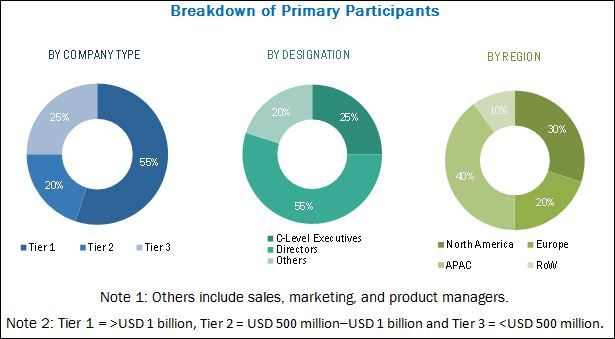
The research methodology includes the study of the annual and financial reports of the top market players and extensive interviews for key insights with industry leaders such as CEOs, VPs, directors, and marketing executives. All the percentage shares and breakdowns have been determined using secondary sources and verified through primary sources. All the possible parameters that affect the markets covered in this research study have been accounted for, viewed in extensive detail, verified through primary research, and analyzed to obtain the final quantitative and qualitative data. The breakdown of the profiles of primaries has been depicted in the figure below:
To know about the assumptions considered for the study, download the pdf brochure
The value chain of the packaging automation solution market includes original equipment manufacturers for packaging automation solutions, packaging software vendors, distributors, and manufacturing equipment suppliers. The major companies that are part of the value chain include Rockwell Automation (U.S.), ABB Ltd. (Switzerland), Mitsubishi Electric Corp. (Japan), Schneider Electric SE (France), Emerson Electric Co. (U.S.), Swisslog Holding AG (Switzerland), Siemens AG (Germany), Automated Packaging Systems, Inc. (U.S.), Kollmorgen (U.S.), and BEUMER Group GmbH & Co., KG (Germany), among others.
Target Audience
- Raw material and manufacturing equipment suppliers
- Original equipment manufacturers (OEMs)
- Product manufacturers
- Original design manufacturers (ODMs) and OEM technology solution providers
- Research organizations
- Technology standard organizations, forums, alliances, and associations
- Technology investors
- Governments, financial institutions, and investment communities
- Analysts and strategic business planners
- End users
“The study answers several questions for the target audiences, primarily which market segments to focus on in the next two to five years for prioritizing efforts and investments.”
Report Scope
In this report, the packaging automation solution market has been segmented as follows:
Packaging Automation Solution Market, by Product Type
- Automated Packagers
- Packaging Robots
- Automated Conveyors and Sortation Systems
Packaging Automation Solution Market, by Function
- Case Packaging
- Palletizing
- Labeling
- Bagging
- Filling
- Capping
- Wrapping
- Others
Packaging Automation Solution Market, by Software and Service
- Software
- Services
Packaging Automation Solution Market, by Industry
- Food and Beverages
- Healthcare
- Logistics and Warehousing
- Chemical
- Retail
- Semiconductor and Electronics
- Aerospace and Defense
- Automotive
- Others
Packaging Automation Solution Market, by Geography
- North America
- Europe
- Asia-Pacific (APAC)
- Rest of the World (RoW)
Company Profiles: Detailed analysis of the major companies present in the packaging automation solution market
Available Customizations
With the given market data, MarketsandMarkets offers customizations according to the company’s specific needs. The following customization options are available for the report:
Company Information
Detailed analysis and profiling of additional market players (up to five)













Growth opportunities and latent adjacency in Packaging Automation Solution Market