Pressure Vessels Market

Pressure Vessels Market by Type (Storage Vessels, Processing Vessels), By Material (Steel, Titanium, Nickel Alloys, Aluminum, Composites, Other Pressure Vessel Materials), Pressure Rating (0–10 Bar, 11–50 Bar, 51–100 Bar, Above 100 Bar), End-use Industry, and Region - Global Forecast to 2031



PRESSURE VESSELS MARKET SIZE, SHARE & GROWTH SUMMARY
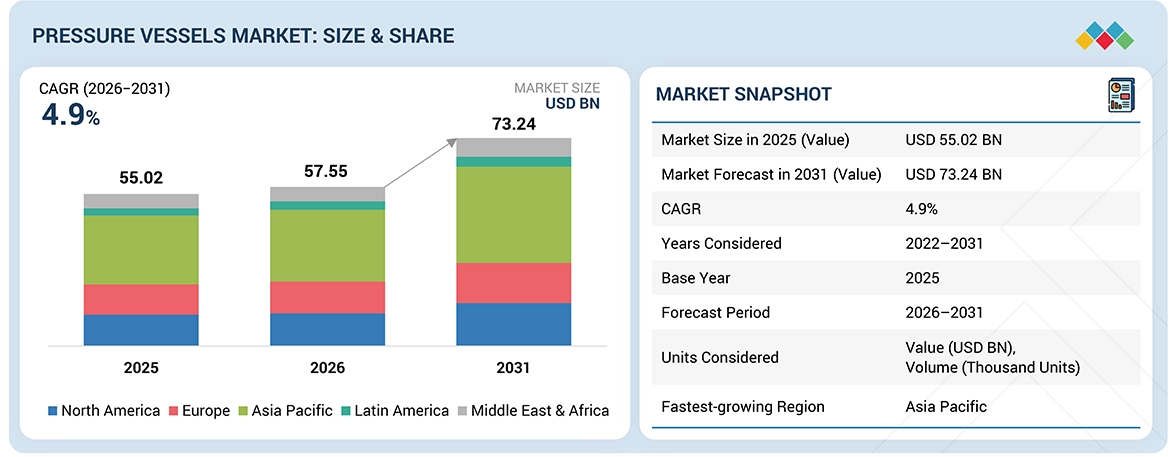
The global pressure vessels market is projected to grow from USD 57.55 billion in 2026 to USD 73.24 billion by 2031, at a CAGR of 4.9%, driven by growing chemical production worldwide and the expanding oil & gas activities. The pressure vessels market is undergoing a meaningful shift, driven by a mix of new technologies and tighter regulations that are changing how equipment is designed, manufactured, and operated. One of the biggest developments is the growing use of advanced materials such as composite pressure vessels and high-performance alloys. These materials make vessels lighter, more corrosion-resistant, and better suited for demanding applications like hydrogen storage and carbon capture.
Source: Secondary Research, Interviews with Experts, MarketsandMarkets Analysis
Pressure Vessels Market Size and Forecast:
- Market Size (2025): USD 55.02 Billion
- Market Size (2026): USD 57.55 Billion
- Market Forecast (2031): USD 73.24 Billion
- Growth Rate: CAGR of 4.9% from 2026 to 2031
- Base Year: 2025
- Forecast Period: 2026–2031
Key Growth Drivers
- Growth momentum in chemical manufacturing industry
- Increasing global electricity demand
- Expansion of Renewable energy enabling new demand streams for pressure vessels
- Growing focus on nuclear energy deployment
KEY TAKEAWAYS
-
BY END-USE INDUSTRYBy end-use industry: the power generation segment is expected to dominate the market during the forecast period
-
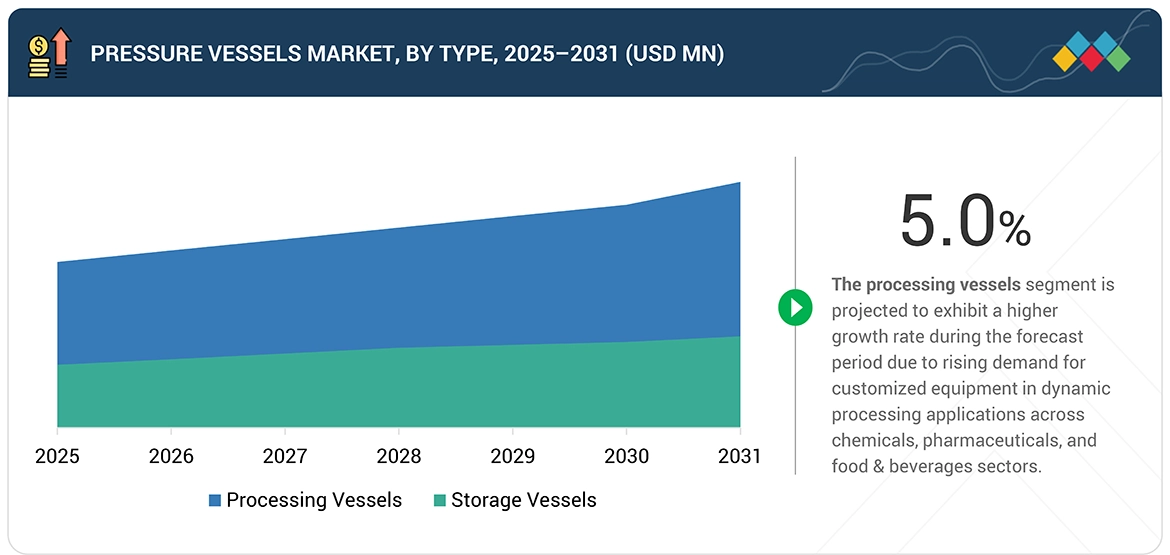
BY TYPEBy type: the processing vessels segment is expected to register the highest CAGR of 5.0% during the forecast period.
-
BY MATERIALBy material: the steel segment is expected to dominate the market during the forecast period.
-
BY POWER RATINGBy power rating: the above 100 bar segment is record the highest CAGR of 6.6% during the forecast period.
-
BY REGIONThe Asia Pacific region accounted for 38.9% of market share in 2025.
-
COMPETITIVE LANDSCAPE (KEY PLAYERS)Mitsubishi Heavy Industries, IHI Corporation, and Bharat Heavy Electricals Limited were identified as star players in the pressure vessels market as they focus on product launches and investments to strengthen their product portfolio in the market.
-
COMPETITIVE LANDSCAPE (STARTUP/SME PLAYERS)Steelhead Composites, Inc; Sun Boilers Pvt. Ltd.; and Kairos Power were identified as SMEs in the pressure vessels market.
The global pressure vessels market is driven by rising energy demand and expanding power generation capacity across thermal, nuclear, and renewable sources. Rapid growth in the oil & gas and chemicals industries is increasing the need for safe storage and processing of high-pressure fluids. Industrialization in emerging economies is further boosting demand through new infrastructure projects such as refineries and manufacturing plants. Additionally, strict safety regulations are pushing companies to upgrade to advanced, compliant vessels. Technological advancements, including automation and smart monitoring systems, are improving efficiency and reliability, while the growing focus on hydrogen, carbon capture, and energy storage is creating new growth avenues.
TRENDS & DISRUPTIONS IMPACTING CUSTOMERS' CUSTOMERS
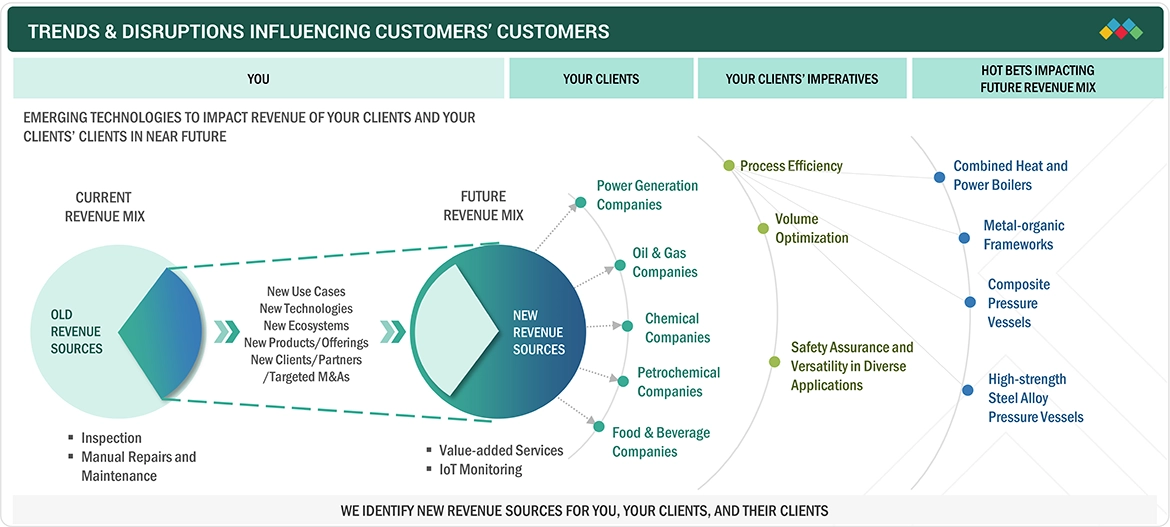
The pressure vessels market is undergoing a clear transition from traditional, service-driven revenue models toward more advanced, technology-enabled solutions. Historically, revenue has largely depended on conventional activities such as inspection, manual repairs, and maintenance of installed vessels across industries. While these services remain essential, they represent mature and relatively slower-growing revenue streams. Going forward, the market is shifting toward a future revenue mix driven by new technologies, innovative applications, and integrated solutions. Advancements such as IoT-enabled monitoring, predictive maintenance, and digital asset management are enabling manufacturers and service providers to offer value-added services beyond basic equipment supply. In addition, the development of new materials and designs is expanding use cases and improving performance, safety, and lifecycle efficiency of pressure vessels. This transformation is closely aligned with the evolving needs of key end-use industries, including power generation, oil & gas, chemicals, petrochemicals, and food & beverages. These sectors are increasingly prioritizing process efficiency, production optimization, and enhanced safety standards, which in turn is driving demand for more sophisticated and reliable pressure vessel systems. Future growth opportunities in the pressure vessels market are expected to center on high-impact innovations, including combined heat and power systems, advanced material technologies such as metal-organic frameworks, composite pressure vessels, and high-strength alloy-based designs. Overall, the market is moving toward a more innovation-led and service-integrated landscape, where digital capabilities and advanced engineering play a crucial role in shaping long-term revenue streams.
Source: Secondary Research, Interviews with Experts, MarketsandMarkets Analysis
MARKET DYNAMICS

Level
-
Growth Momentum in Chemical Manufacturing Industry

-
Increasing Global Electricity Demand


Level
-
Cost-intensive Manufacturing and Upkeep Requirements


Level
-
Renewable Energy Expansion s

-
Growing Focus on Nuclear Energy Deployment


Level
-
Volatile Prices of Raw Materials

Source: Secondary Research, Interviews with Experts, MarketsandMarkets Analysis
Driver: Growth Momentum in Chemical Manufacturing Industry
The global chemical manufacturing industry is undergoing sustained expansion, supported by structural shifts in industrial activity, energy transition priorities, and evolving consumption patterns. Growth is increasingly concentrated in Asia Pacific and the Middle East, where capacity additions are being driven by feedstock availability, cost competitiveness, and strategic investments in downstream value chains. At the same time, mature markets in North America and Europe are witnessing selective growth in high-value segments such as specialty chemicals, bio-based chemicals, and advanced materials. This evolving landscape is resulting in continuous investments in new plants, brownfield expansions, and the modernization of existing facilities to improve efficiency, sustainability, and compliance. As production expands, the demand for pressurized vessels also increases. Chemical manufacturing involves extremely high temperatures and pressures, from reactors and separators to distillation plants, storage facilities, and other operations. Increasing complexity in chemical manufacturing is driving the need for more advanced, corrosion-resistant, high-integrity vessels used in these processes. In addition, as digital monitoring systems and automation are implemented in chemical facilities, there will be greater demands for the vessel designs capable of allowing real-time optimization and safety management of processes. Regulatory frameworks across major regions are becoming increasingly stringent, particularly in relation to emissions, process safety, and material handling. Compliance with standards such as ASME, PED, and other regional certifications is no longer optional but a baseline requirement for market participation. This is compelling chemical manufacturers to upgrade or replace aging infrastructure with high-performance, compliant pressure vessels. As a result, both replacement demand and new installation demand are contributing to market growth. Overall, the continued expansion and transformation of the global chemical manufacturing industry are creating a strong and sustained demand environment for pressure vessels. Manufacturers that can deliver technologically advanced, compliant, and application-specific solutions are well-positioned to capitalize on this growth trajectory.
Restraint: Cost-intensive Manufacturing and Upkeep Requirements
Pressure vessel manufacturing continues to be inherently cost-intensive, with rising global input costs further amplifying the burden. Compliance with stringent international standards such as American Society of Mechanical Engineers (ASME), Pressure Equipment Directive (PED), and other regional codes leads to complex engineering design, accurate fabrication and extensive validation process. In recent years, volatility in raw material prices, particularly for stainless steel, nickel-based alloys, and other high-performance materials, has significantly increased production costs. Additionally, the growing requirement for corrosion-resistant and high-temperature materials, especially in applications such as hydrogen and specialty chemicals, is pushing manufacturers toward more expensive material grades and complex fabrication techniques. Beyond manufacturing, lifecycle maintenance costs remain a critical restraint for end users. Pressure vessels require continuous monitoring, periodic inspections, and adherence to evolving safety and environmental regulations. Advanced inspection methods, including non-destructive testing and digital condition monitoring, while improving reliability, also add to operational expenditure. Aging infrastructure in mature markets further increases maintenance intensity, as retrofitting and compliance upgrades become necessary. For large-scale installations across oil & gas, power generation, and chemical sectors, these recurring costs can be substantial, making the total cost of ownership a key concern and potentially limiting investment in new pressure vessel installations.
Opportunity: Renewable Energy Expansion
The expansion of renewable energy capacity is driving the development of supporting infrastructure required to manage variability and ensure a reliable energy supply. As solar and wind penetration increases, systems such as hydrogen production, compressed air energy storage, and thermal storage are being deployed at scale. These technologies require high-pressure containment for storage, processing, and transport, thereby creating new areas of demand for pressure vessels. Hydrogen, in particular, is gaining momentum as an energy carrier, with applications across industry, mobility, and power systems, all of which rely on pressurized storage solutions. At the same time, renewable-led energy systems are enabling the growth of power-to-X pathways, including ammonia and synthetic fuel production, where pressurized reactors and storage units are essential. Increased reliance on variable energy sources is also leading to investments in grid balancing and flexible generation systems, indirectly supporting demand for pressure vessels. This shift reflects a transition in end-use applications, with emerging clean energy technologies complementing traditional sectors. As these applications continue to scale, they provide a sustained opportunity for pressure vessel manufacturers to align with evolving energy systems and diversify their market exposure.
Challenge: Volatile Prices of Raw Materials
Volatile prices of raw materials remains a significant challenge for the pressure vessels market players as it directly impacts manufacturing costs, project feasibility, and profit margins. Core materials such as stainless steel, carbon steel, nickel alloys, and other materials have experienced notable price fluctuations in recent years due to supply chain disruptions, geopolitical tensions, energy price shocks, and uneven post-pandemic demand recovery. For instance, nickel and stainless steel prices surged sharply during 2021–2022, followed by corrections, while carbon steel prices have remained sensitive to global construction and infrastructure cycles. This volatility creates uncertainty for manufacturers, making long-term pricing contracts and cost forecasting increasingly complex. Additionally, the transition toward advanced applications such as hydrogen and specialty chemicals are increasing reliance on high-performance alloys, which are inherently more price-sensitive and supply constrained. Raw material cost swings not only elevate production expenses but also delay procurement cycles and project timelines, particularly for large-scale industrial equipment like pressure vessels. Manufacturers are increasingly adopting strategies such as supplier diversification, long-term sourcing agreements, and material optimization. However, sustained volatility continues to pose a risk to margin stability and capital investment planning across end-use industries.
PRESSURE VESSELS MARKET: COMMERCIAL USE CASES ACROSS INDUSTRIES
| COMPANY | USE CASE DESCRIPTION | BENEFITS |
|---|---|---|
 |
A large-scale hydrogen production facility implemented SynCOR technology, which integrates multiple process steps within a single refractory-lined pressure vessel reactor designed for syngas generation under high-temperature and high-pressure conditions. | This approach resulted in a more compact plant configuration with reduced capital costs and improved thermal efficiency. The enhanced durability and operational performance of the pressure vessel contributed to longer lifecycle and lower maintenance requirements, making the technology economically and operationally advantageous. |
|
|
A US-based port decarbonization initiative evaluated large-scale hydrogen storage solutions, incorporating pressure vessels as a key component for energy storage and distribution within port infrastructure. | The implementation enabled scalable and flexible hydrogen storage infrastructure, improving energy resilience and supporting decarbonization goals. The project demonstrated the viability of pressure vessels in large-scale energy ecosystems while ensuring operational safety and efficiency. |
Logos and trademarks shown above are the property of their respective owners. Their use here is for informational and illustrative purposes only.
MARKET ECOSYSTEM
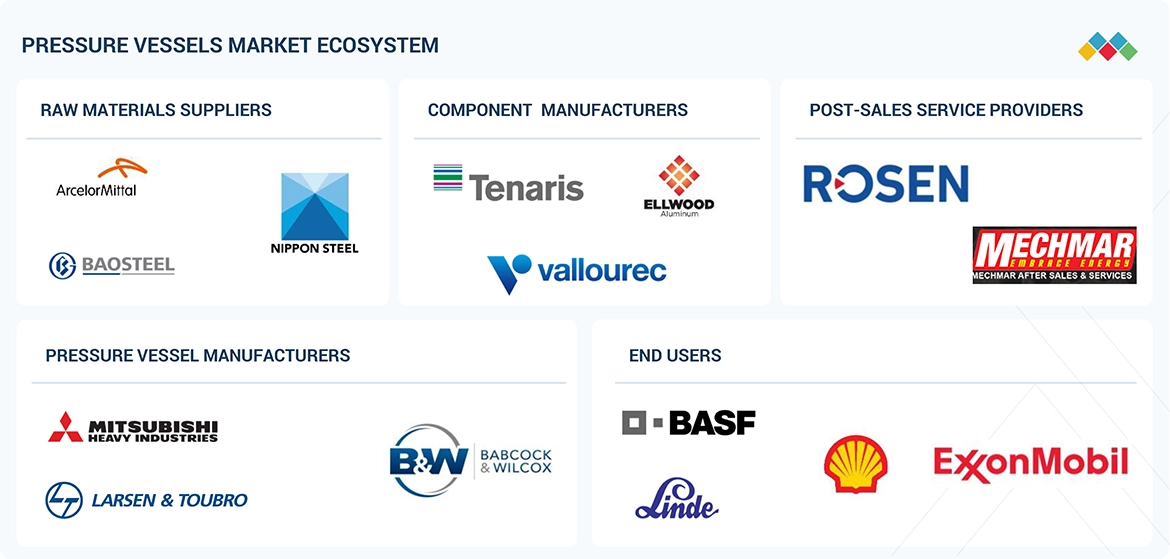
Ecosystem mapping of the pressure vessels market highlights the interconnected relationships among raw material suppliers, component manufacturers, pressure vessel manufacturers, EPC contractors and system integrators, and end users. Raw material suppliers provide essential inputs such as carbon steel, stainless steel, alloy steels, including nickel, chromium, and molybdenum-based grades, and composites, which form the foundation for pressure-retaining equipment. Component manufacturers convert these materials into semi-finished and engineered parts such as plates, pipes, flanges, dished heads, shells, nozzles, and forgings, designed to meet specific pressure ratings and application requirements. Pressure vessel manufacturers and assemblers undertake detailed engineering design in compliance with global standards such as ASME and PED, followed by fabrication, welding, testing, and certification of storage vessels, reactors, boilers, and heat exchangers. EPC contractors and system integrators play a critical role in procurement, customization, installation, and commissioning, ensuring seamless integration of pressure vessels into broader industrial systems. End users, including oil & gas, power generation, chemicals, food & beverages, and pharmaceuticals industries, deploy these vessels for storage, processing, and high-pressure operations. In addition, post-sales service providers support the ecosystem through inspection, maintenance, retrofitting, and asset integrity management, ensuring operational safety, regulatory compliance, and extended equipment lifecycle.
Logos and trademarks shown above are the property of their respective owners. Their use here is for informational and illustrative purposes only.
MARKET SEGMENTS
Source: Secondary Research, Interviews with Experts, MarketsandMarkets Analysis
Pressure Vessels Market, by Type
This report segments the pressure vessels market by type into processing vessels and storage vessels, with processing vessels projected to be the fastest-growing segment. The growth of processing vessels is primarily driven by the increasing demand for efficient, continuous processing operations across industries such as oil & gas, chemicals, petrochemicals, and food & beverages. These vessels are critical for applications involving heating, cooling, mixing, and chemical reactions under controlled pressure and temperature conditions. Rising focus on process optimization, higher production throughput, and stringent safety and quality standards further accelerate their adoption. Additionally, advancements in materials, automation, and IoT-enabled monitoring systems are enhancing operational efficiency and reliability, making processing vessels a preferred choice for modern industrial facilities.
Pressure Vessels Market, by Material
Based on material, the pressure vessels market is segmented into steel, titanium, aluminum, nickel alloys, composites, and other materials, with composites expected to be the fastest-growing segment during the forecast period. This growth is largely driven by the increasing demand for lightweight, high-strength solutions in high-pressure applications, particularly above 100 bar. Composite materials offer an excellent strength-to-weight ratio, corrosion resistance, and superior fatigue performance, making them ideal for hydrogen storage, CNG cylinders, and aerospace applications. The global shift toward clean energy and fuel-efficient systems is further accelerating their adoption. Additionally, advancements in carbon fiber technology and manufacturing processes are reducing costs and improving scalability, making composite pressure vessels more viable for a wide range of industrial and energy applications.
Pressure Vessels Market, by Pressure Rating
Based on pressure rating, the pressure vessels market is segmented into 0–10 bar, 11–50 bar, 51–100 bar, and above 100 bar, with above 100 bar is expected to be the fastest-growing segment during the forecast period. This growth is driven by rising demand for high-pressure applications in industries such as oil & gas, hydrogen storage, power generation, and advanced chemical processing. The global push toward clean energy, particularly hydrogen economies, requires ultra-high-pressure vessels for safe storage and transportation. Additionally, increasing deepwater and high-pressure drilling activities are boosting demand for robust vessel designs. Advancements in high-strength alloys, composite materials, and improved safety standards are further enabling the adoption of above 100 bar pressure vessels across critical and high-performance industrial applications.
Pressure Vessels Market, by End-use Industry
Based on end-use industry, the pressure vessels market has been classified into power generation, oil & gas, food & beverages, pharmaceuticals, chemicals, and other end-use industries, which include agriculture, marine, paper & pulp, and aerospace. The power generation sector is poised to maintain its dominance in the market over the forecast period, driven by strong demand for pressure vessels in boiler applications. These vessels are engineered to contain water or steam at elevated pressures, thereby generating steam that drives turbines for electricity production. Additionally, pressure vessels play a crucial role in nuclear power facilities, where they are utilized for various functions. The global proliferation of nuclear power plants is further driving demand in this sector, thereby influencing market dynamics.
REGION
Asia Pacific to be fastest-growing region in global pressure vessels market during forecast period
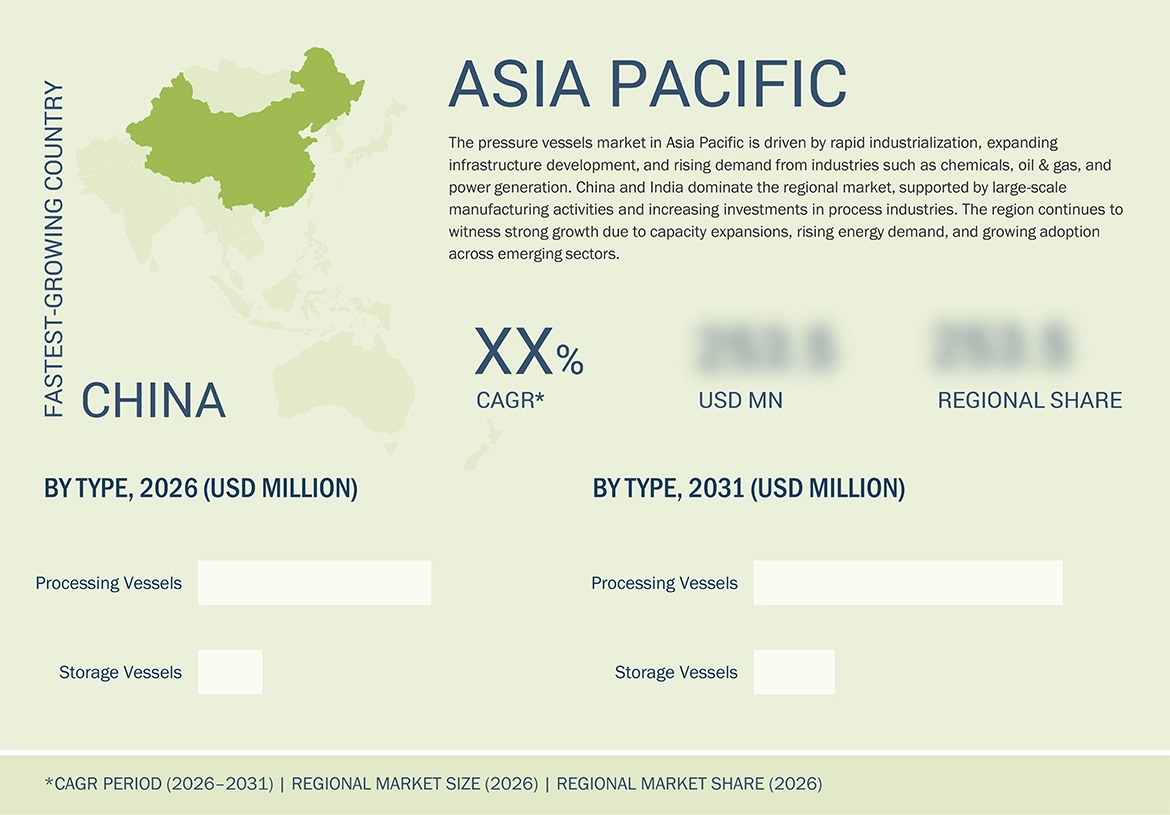
Asia Pacific is leading the charge as the fastest-growing market for pressure vessels, driven by rapid industrialization, booming urbanization, and significant infrastructure investments in powerhouse economies such as China, India, Southeast Asia, and other emerging economies. Demand keeps surging from massive buildouts in petrochemical refineries, power plants, and chemical processing hubs, plus a real need for high-pressure storage in fertilizers and pharmaceuticals. In addition, the growing focus on clean energy projects, such as hydrogen production and nuclear power, along with the expansion of desalination plants and large-scale industrial modernization, is further accelerating demand. Supported by a strong manufacturing base, cost-efficient production capabilities, and growing demand for durable, corrosion-resistant pressure vessels, the region is strengthening its position as a leading market.
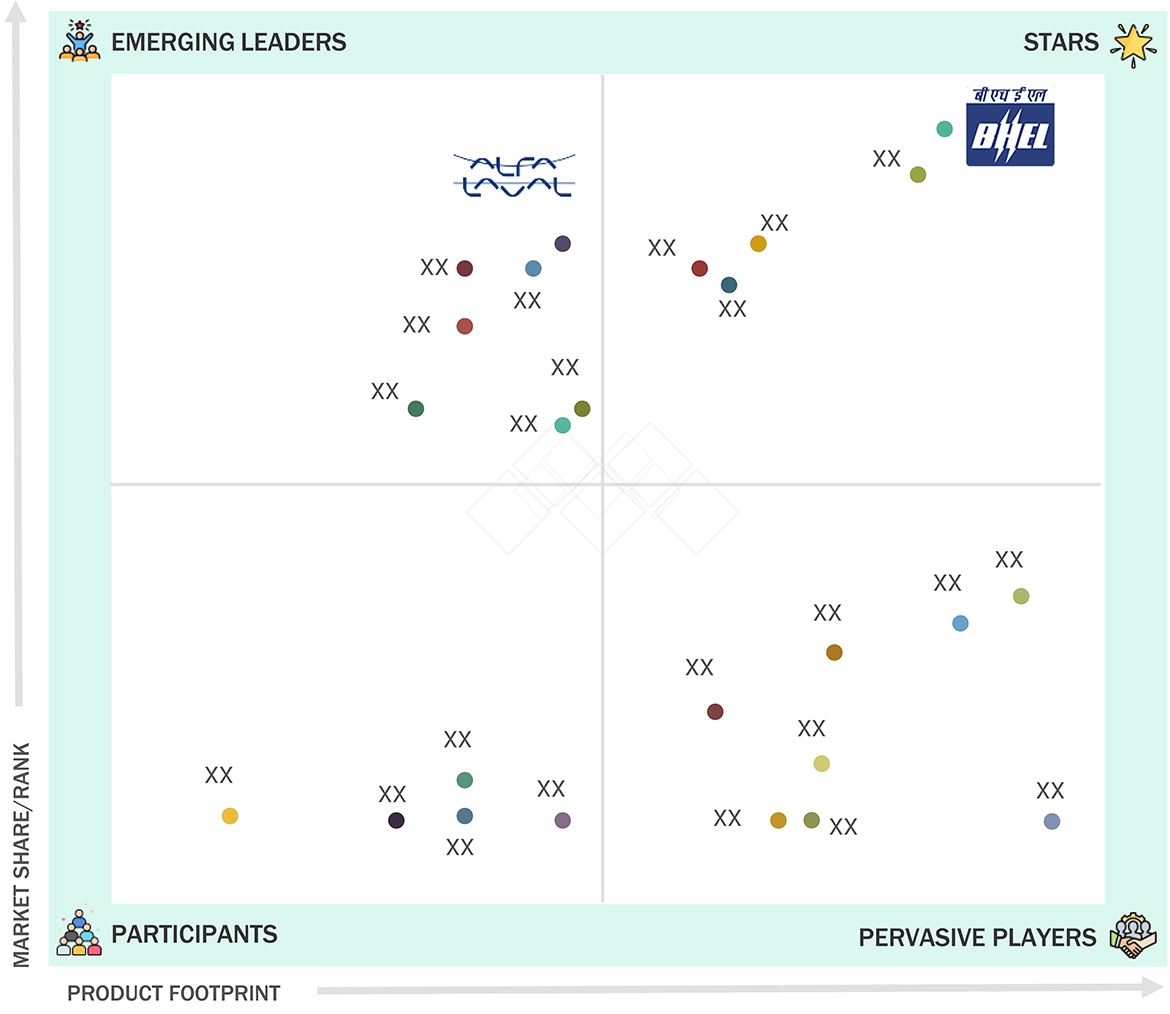
PRESSURE VESSELS MARKET: COMPANY EVALUATION MATRIX
In the pressure vessels market matrix, Bharat Heavy Electricals Limited (BHEL) (Star) leads with a strong market presence and wide product portfolio, driving large-scale adoption across industrial and commercial verticals. ALFA LAVAL (Emerging Leader) is gaining traction with high efficiency pressure vessels.
Source: Secondary Research, Interviews with Experts, MarketsandMarkets Analysis
KEY MARKET PLAYERS
- Bharat Heavy Electricals Limited (India)
- MITSUBISHI HEAVY INDUSTRIES, LTD. (Japan)
- IHI Plant Services Corporation (Japan)
- LARSEN & TOUBRO LIMITED (India)
- GE Vernova (US)
- Babcock & Wilcox Enterprises, Inc. (US)
- Isgec Hitachi Zosen Ltd. (India)
- Dongturbo Electric Company Ltd. (China)
- Samuel, Son & Co. (Canada)
- Westinghouse Electric Company LLC. ( US)
- Halvorsen Company (US)
- Alfa Laval (Sweden)
- Bosch Industriekessel GmbH (Germany)
- Alloy Products Corp. US)
- Kelvion Holding GmbH (Germany)
- Örnalp Unozon (Sweden)
- Zamil Process Equipment Company Limited (Saudi Arabia)
- Weihai Chemical Machinery Co., Ltd. (China)
- Miura America Co., LTD. (US)
- Godrej Enterprise (India)
- Infinite Composites (US)
- KARADANI ENGINEERING PVT LTD. (India)
- Sun Boilers (India)
- Kairos Power (US)
- Steelhead Composites(US)
MARKET SCOPE
| REPORT METRIC | DETAILS |
|---|---|
| Market Size in 2025 (Value) | USD 55.02 BN |
| Market Forecast in 2031 (Value) | USD 73.24 BN |
| Growth Rate | CAGR 4.9% from 2026-2031 |
| Years Considered | 2022-2031 |
| Base Year | 2025 |
| Forecast Period | 2026-2031 |
| Units Considered | Value (USD Billion), Volume (Thousand Units) |
| Report Coverage | Revenue Forecast, Company Ranking, Competitive Landscape, Growth Factors, and Trends |
| Segments Covered | • By Type: Storage Vessels, Processing Vessels |
| Regional Scope | North America, Europe, Asia Pacific, South America, and Middle East & Africa |
WHAT IS IN IT FOR YOU: PRESSURE VESSELS MARKET REPORT CONTENT GUIDE
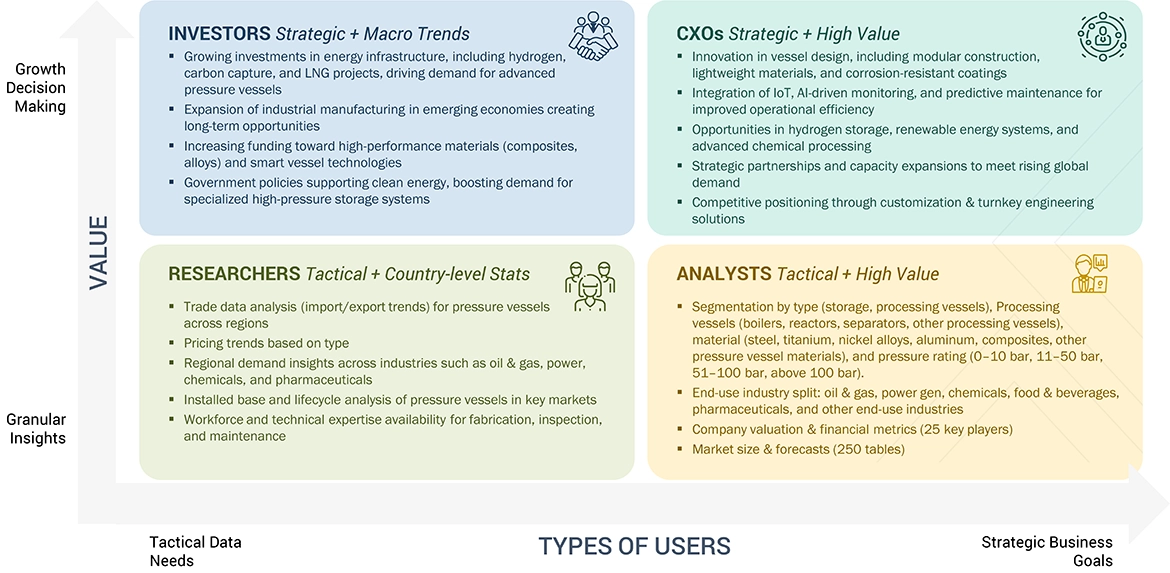
DELIVERED CUSTOMIZATIONS
We have successfully delivered the following deep-dive customizations:
| CLIENT REQUEST | CUSTOMIZATION DELIVERED | VALUE ADDS |
|---|---|---|
| Market Forecast | Forecast of pressure vessels market till 2035 | Uncover long-term revenue streams in pressure vessels |
| Company Profiling | Competitive benchmarking of top players | Startup and key player mapping, including strategic partnerships, alliances, technology, solution positioning, M&A and investment activity tracking, competitive differentiation, and emerging business model identification |
RECENT DEVELOPMENTS
- October 2025 : Mitsubishi Heavy Industries (Japan) and Nippon Shokubai (Japan) collaborate to develop ammonia cracking systems (reactor-based process technology) for hydrogen value chain.
- February 2026 : GE Vernova completed its acquisition of the remaining 50% stake in Prolec GE from Xignux in early February 2026, following the initial announcement in October 2025. This USD 5.275 billion deal, funded equally with cash and debt, integrates Prolec GE's transformer manufacturing expertise into GE Vernova's Electrification segment.
- September 2025 : BHEL Commissioned advanced welding/cladding machine to enhance manufacturing capacity of high-pressure boiler components and improve delivery timelines.
- June 2023 : Larsen & Toubro (India) inaugurated a Heavy Wall Pressure Vessel Facility in Saudi Arabia to enhance manufacturing for pressure vessels.
Table of Contents
 Exclusive indicates content/data unique to MarketsandMarkets and not available with any competitors.
Methodology
The study involved major activities in estimating the current size of the pressure vessels market. Exhaustive secondary research was done to collect information on the peer and parent markets. The next step was to validate these findings, assumptions, and sizing with industry experts across the value chain through primary research. Both top-down and bottom-up approaches were employed to estimate the complete market size. Thereafter, market breakdown and data triangulation were used to estimate the market size of the segments and subsegments.
Secondary Research
This research study on the pressure vessels market involved the use of extensive secondary sources, directories, and databases, such as Hoovers, Bloomberg, Businessweek, Factiva, the International Energy Agency, and BP Statistical Review of World Energy, to identify and collect valuable information for a technical, market-oriented, and commercial study of the global pressure vessels market. Other secondary sources included annual reports, press releases, and investor presentations from companies; white papers; certified publications; articles by recognized authors; manufacturer associations; trade directories; and databases.
Primary Research
The pressure vessels market comprises stakeholders such as pressure vessel manufacturers, technology providers, and support providers in the supply chain. On the demand side, the pressure vessels market is driven by growing adoption of pressure vessels in power generation, oil & gas, and chemicals sectors, due to surging energy demand, rapid industrialization, and infrastructure investments worldwide. Additional factors include the expansion of oil & gas refining, the growing adoption of renewables, and advancements in power generation technologies. On the supply side, manufacturers are seeing increasing opportunities through contracts with utility and industrial distribution networks, as well as through strategic initiatives such as mergers, acquisitions, and partnerships among major players to expand their market presence and technological capabilities. Various primary sources from both the supply and demand sides of the market were interviewed to obtain qualitative and quantitative information. The following is the breakdown of primary respondents:
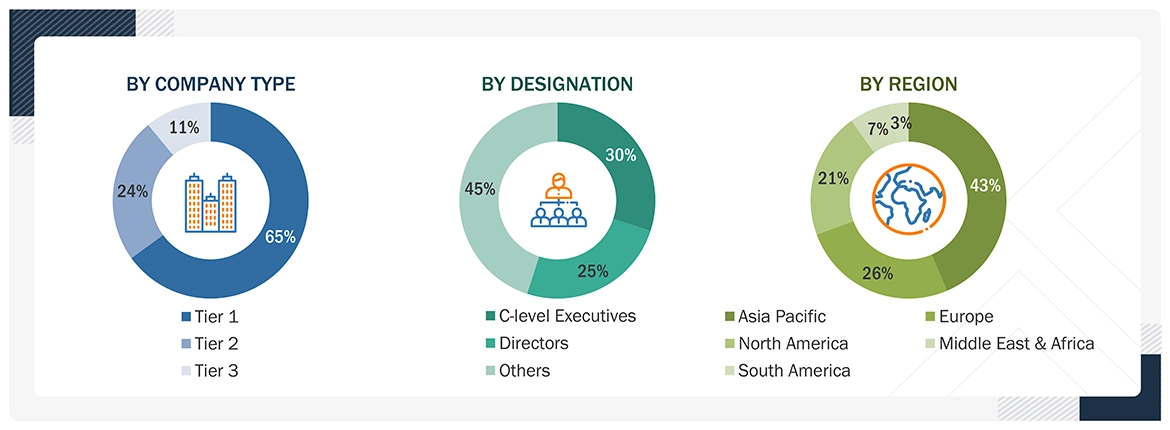
Note: “Others” include sales managers, engineers, and regional managers.
The tiers of the companies are defined by their total revenue as of 2025: Tier 1: >USD 1 billion; Tier 2: USD 500 million–1 billion; and Tier 3: USD 500 million.
To know about the assumptions considered for the study, download the pdf brochure
Market Size Estimation
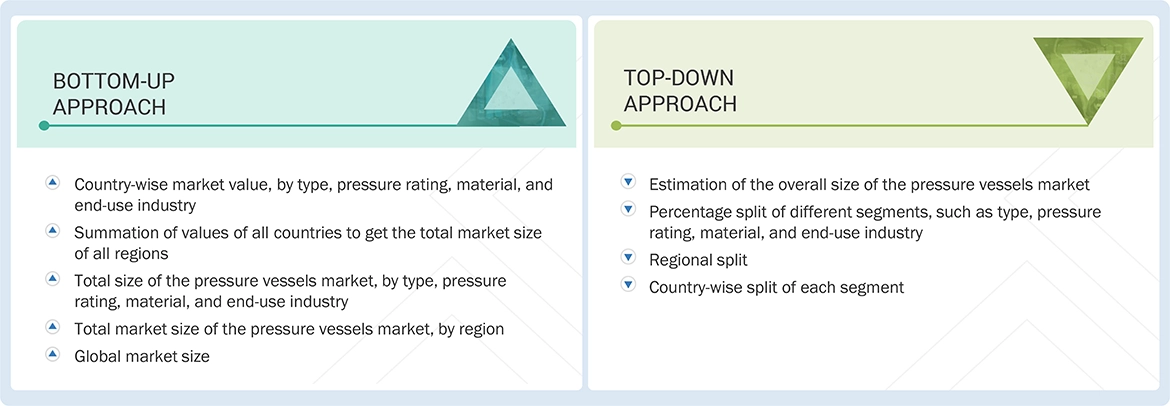
Both top-down and bottom-up approaches were employed to estimate and validate the size of the pressure-vessel market and its dependent submarkets. The key players in the market were identified through secondary research, and their market share in each region was determined through a combination of primary and secondary research. The research methodology involves analyzing the annual and financial reports of leading market players and conducting interviews with industry experts, including chief executive officers, vice presidents, directors, sales managers, and marketing executives, to gather key quantitative and qualitative insights into the pressure vessels market.
Pressure Vessels Market : Top-Down and Bottom-Up Approach
Data Triangulation
After determining the overall market size through the estimation process explained above, the total market has been divided into several segments and subsegments. To complete the overall market engineering process and obtain the exact statistics for all segments and subsegments, data triangulation and market breakdown processes have been employed, where applicable. The data has been triangulated by studying various factors and trends from both the demand and supply sides. Additionally, the market has been validated using both top-down and bottom-up approaches.
Market Definition
A pressure vessel is a container designed to hold gases or liquids at a pressure significantly different from ambient pressure. The pressure within the vessel may be higher or lower than the atmospheric pressure outside. Pressure vessels are used in a variety of industrial and commercial applications, including chemical processing, oil and gas production, power generation, and manufacturing. They can be made from various materials, including metals, plastics, and composites, and are typically designed to meet specific safety standards and regulations, ensuring they can withstand the pressure and stress they experience during operation.
Key Stakeholders
- pressure vessel manufacturers
- pressure vessel associations
- Oilfield service players
- Public and private oil & gas and power generation operators
- Government and research organizations
- Pressure vessel raw material providers
- Consulting companies
- Industrial users
Report Objectives
- To describe and forecast the pressure vessels market, by type, pressure rating, material, end-use industry, and region, in terms of value
- To describe and forecast the pressure vessels market for various segments with respect to five main regions: North America, Europe, Asia Pacific, Latin America, and the Middle East & Africa, in terms of value
- To describe and forecast the pressure vessels market, by region, in terms of volume
- To provide detailed information regarding drivers, restraints, opportunities, and challenges influencing the growth of the market
- To provide a detailed overview of the pressure vessels chain analysis, use case analysis, key stakeholders and buying criteria, patent analysis, trade analysis, tariff analysis, regulations, macroeconomic outlook, pricing analysis, Porter’s five forces analysis, impact of gen AI/AI, and the US tariff impact
- To strategically analyze micromarkets1 with respect to individual growth trends, prospects, and contributions to the total market
- To analyze opportunities in the market for various stakeholders by identifying high-growth segments
- To strategically profile key players and comprehensively analyze their market position in terms of ranking and core competencies2, along with detailing the market’s competitive landscape.
- To analyze growth strategies, such as acquisitions, investments, expansions, and product launches, adopted by market players in the pressure vessels market
1 Micromarkets are defined as the segments and subsegments of the pressure vessels market included in the report.
2 Core competencies of companies are defined in terms of key developments and strategies adopted to sustain their positions in the pressure vessels market.
Available customizations:
MarketsandMarkets offers customizations tailored to the specific needs of companies using the given market data.
The following customization options are available for the report:
Product Analysis
- Product matrix, which gives a detailed comparison of the product portfolio of each company
Regional Analysis
- Further breakdown of the pressure vessels, by country
Company Information
- Detailed analysis and profiling of additional market players (up to five)
Key Questions Addressed by the Report
What is the current market size of the Pressure Vessels Market and how is it expected to grow?
The global Pressure Vessels Market is projected to grow from USD 57.55 billion in 2026 to USD 73.24 billion by 2031, at a CAGR of 4.9%.
What are the key factors driving the growth of the Pressure Vessels Market?
The Pressure Vessels Market growth is driven by increasing chemical production, expanding oil & gas activities, and rising demand for advanced pressure vessels in hydrogen storage and carbon capture applications.
Which region is expected to witness the fastest growth in the Pressure Vessels Market?
Asia Pacific is expected to be the fastest-growing region due to rapid industrialization, infrastructure development, and increasing investments in energy and chemical industries.
Which end-use industry is expected to dominate the Pressure Vessels Market?
The power generation segment is expected to dominate the market, supported by growing demand for boilers and pressure vessels in conventional and nuclear power plants.
Who are the major players in the Pressure Vessels Market?
Key companies include Bharat Heavy Electricals Limited (BHEL), Mitsubishi Heavy Industries, IHI Plant Services Corporation, Larsen & Toubro Limited, GE Vernova, and Babcock & Wilcox Enterprises.


Personalize This Research
- Triangulate with your Own Data
- Get Data as per your Format and Definition
- Gain a Deeper Dive on a Specific Application, Geography, Customer or Competitor
- Any level of Personalization
Let Us Help You
- What are the Known and Unknown Adjacencies Impacting the Pressure Vessels Market
- What will your New Revenue Sources be?
- Who will be your Top Customer; what will make them switch?
- Defend your Market Share or Win Competitors
- Get a Scorecard for Target Partners

Custom Market Research Services
We Will Customise The Research For You, In Case The Report Listed Above Does Not Meet With Your Requirements
Get 10% Free CustomisationTESTIMONIALS

Kimberly Murphy
GLOBAL MARKETING DIRECTOR
Bently Nevada,
Leading Condition Monitoring & Asset Protectionwww.bakerhughesds.com/bently-nevada

MarketsandMarkets™ showed consistent rigor for success and relentlessly worked with Bently Nevada stakeholders to positively impact go-to-market strategy. Their proactiveness and flexibility has been instrumental in achieving the objectives to grow our sales pipeline in key industrial markets.

DARRICK HUEBER
Business Development Leader
Nexus Controls LLC,
Leading Manufacturer of Automation System & Electrical Panelswww.bakerhughesds.com/nexus-controls

We partnered with MarketsandMarkets to expand our business further by tapping into new industrial segments. It was critical for us to gather crucial business insights about specific markets to achieve this goal. MarketsandMarkets engagement model and client services helped us provide those insights, it was really impressive and valuable for my business. The team was extremely flexible and helpful.

Mike Schoff
Global Industrial Commercial Strategy Leader
Nexus Controls LLC
Leading Manufacturer of Automation System & Electrical Panelswww.bakerhughesds.com/nexus-controls
We consulted MarketsandMarkets for potential Partner Identification. Overall, it was a good experience. The insights provided through interviews conducted by the team helped us put together the questionnaire required for discussion with the selected partners. Their ability to provide insights through interviews with customers in a timely manner was quite impressive.
- Canada Pressure Vessels Market
- Mexico Pressure Vessels Market
- US Pressure Vessels Market
- China Pressure Vessels Market
- India Pressure Vessels Market
- Japan Pressure Vessels Market
- South Korea Pressure Vessels Market
- Malaysia Pressure Vessels Market
- Australia Pressure Vessels Market
- Indonesia Pressure Vessels Market
- UK Pressure Vessels Market
- France Pressure Vessels Market
- Germany Pressure Vessels Market
- Russia Pressure Vessels Market
- Nigeria Pressure Vessels Market
- South Africa Pressure Vessels Market
- Brazil Pressure Vessels Market
- Argentina Pressure Vessels Market
- Rest Of Europe Pressure Vessels Market
- Rest Of Asia Pacific Pressure Vessels Market
- Algeria Pressure Vessels Market
- GCC Countries Pressure Vessels Market
- Rest Of South America Pressure Vessels Market






Growth opportunities and latent adjacency in Pressure Vessels Market