Security Cameras Market (IR Illuminator) by System (Analog, IP Based), Resolution (NON HD, HD, Full HD), Type (Indoor, Outdoor), Feature (PTZ, Fixed), Application (City Infrastructure, Commercial, Institutional) and Geography - Global Forecast to 2035


Security Cameras Market Summary
The Security Cameras Market is witnessing substantial growth as organizations, governments, and residential consumers increasingly prioritize safety, surveillance, and smart monitoring solutions. The market is estimated to be valued at USD 25–30 billion in 2025 and is projected to reach USD 55–65 billion by 2035, expanding at a CAGR of 8%–10% during the forecast period. The growing adoption of AI-powered video analytics, cloud-based surveillance platforms, IoT-enabled security infrastructure, and automation technologies is significantly reshaping the industry. Rapid urbanization, smart city initiatives, rising investments in commercial infrastructure, and increasing concerns over public safety and cyber-physical security are further driving market expansion. Enterprises are increasingly integrating intelligent surveillance systems capable of facial recognition, behavior analysis, and predictive threat detection, making security cameras an essential component of modern digital transformation strategies.
Key Market Trends & Insights
-
North America remains the leading regional market due to widespread adoption of AI-enabled surveillance systems and advanced security infrastructure.
-
Asia Pacific is expected to register the fastest growth, driven by smart city projects, industrial expansion, and increasing investments in public safety.
-
IP security cameras continue to dominate the product landscape owing to superior image quality, remote accessibility, and cloud compatibility.
-
AI-powered video analytics, facial recognition, object detection, and automated incident response are becoming mainstream across commercial and government sectors.
-
Integration with IoT ecosystems, edge computing, and cloud video surveillance is accelerating the deployment of intelligent security solutions.
-
Growing demand for cybersecurity-enabled surveillance platforms is creating new opportunities for software-driven security ecosystems.
Market Size & Forecast
-
Base Year Market Size (2025): USD 25–30 billion
-
Forecast Market Value (2035): USD 55–65 billion
-
CAGR (2025–2035): 8%–10%
-
Growth Outlook: Expansion is supported by AI-powered surveillance, cloud video management systems, smart city investments, industrial automation, digital infrastructure modernization, and increasing demand for intelligent monitoring across residential, commercial, and industrial applications.
Security Cameras Market Top 10 key takeaway
-
AI-powered surveillance is transforming traditional security camera systems into intelligent monitoring platforms.
-
IP cameras remain the dominant product segment across commercial and government sectors.
-
Cloud-based video surveillance solutions are witnessing rapid adoption globally.
-
North America continues to lead market revenue due to technology maturity.
-
Asia Pacific is expected to achieve the highest growth throughout the forecast period.
-
Smart city initiatives continue to boost demand for advanced surveillance infrastructure.
-
Edge AI is reducing latency while improving real-time threat detection capabilities.
-
Residential smart home adoption is creating new revenue opportunities.
-
Cybersecurity integration is becoming a key purchasing criterion for surveillance systems.
-
Strategic partnerships between hardware manufacturers and AI software providers are accelerating innovation.
Product Insights
The IP security camera segment represents the largest share of the Security Cameras Market owing to its superior image quality, remote accessibility, scalability, and seamless integration with cloud-based surveillance platforms. Organizations increasingly prefer IP cameras because they support AI-powered analytics, automated alerts, and centralized management across multiple locations. Compared to analog systems, IP cameras provide enhanced flexibility, lower long-term operational costs, and improved cybersecurity capabilities.
Demand for wireless security cameras is also increasing rapidly as consumers seek easy installation and mobile monitoring features for residential properties. Battery-powered and solar-powered surveillance cameras are becoming popular for outdoor applications where traditional wiring is impractical. Pan-Tilt-Zoom (PTZ) cameras continue to gain traction in transportation hubs, industrial facilities, airports, and large commercial complexes due to their wider coverage capabilities.
Artificial intelligence is redefining product innovation by enabling facial recognition, vehicle identification, license plate recognition, crowd monitoring, intrusion detection, and behavioral analytics. Manufacturers are also integrating thermal imaging, low-light imaging, and edge AI processors into modern surveillance systems, enhancing performance across various environmental conditions.
Technology / Component Insights
Technological innovation remains the foundation of growth within the Security Cameras Market. AI-driven analytics have evolved from simple motion detection to sophisticated event recognition capable of identifying suspicious behavior, abandoned objects, unauthorized access, and perimeter breaches. Deep learning algorithms continuously improve surveillance accuracy while minimizing false alarms.
IoT connectivity enables security cameras to communicate with smart locks, access control systems, alarms, environmental sensors, and building management platforms, creating integrated security ecosystems. Cloud computing has simplified storage, remote access, software updates, and centralized video management, making surveillance more scalable for organizations operating across multiple locations.
Automation technologies are improving operational efficiency by allowing cameras to automatically track moving objects, initiate emergency responses, notify security personnel, and generate incident reports. Edge computing further enhances surveillance by processing data directly within the camera, reducing bandwidth requirements and enabling real-time analytics without relying entirely on cloud infrastructure.
Future innovations are expected to include generative AI-assisted incident summarization, predictive security analytics, autonomous drone surveillance integration, biometric authentication, privacy-enhancing AI algorithms, and quantum-resistant cybersecurity measures to safeguard surveillance networks.
Application Insights
The commercial sector remains the largest application segment, driven by increasing investments in retail stores, shopping malls, office complexes, educational institutions, healthcare facilities, hospitality, banking, and transportation infrastructure. Businesses rely on intelligent surveillance to improve operational efficiency, reduce theft, monitor customer behavior, and ensure workplace safety.
Government applications continue to expand through smart city surveillance, border security, traffic management, law enforcement, and public safety initiatives. Manufacturing facilities increasingly deploy AI-enabled cameras for worker safety monitoring, quality inspection, and automated industrial surveillance.
Residential applications are growing steadily due to increasing smart home adoption, affordable wireless security cameras, smartphone integration, and cloud subscription services. Future opportunities are expected to emerge across critical infrastructure protection, logistics, energy utilities, autonomous transportation, and connected industrial facilities.
Regional Insights
North America continues to dominate the Security Cameras Market due to widespread technology adoption, mature digital infrastructure, significant investments in public safety, and strong presence of leading surveillance technology providers. Organizations across the United States and Canada increasingly deploy AI-powered surveillance systems for enterprise security, critical infrastructure protection, and smart building management.
Europe maintains a substantial market share owing to increasing investments in intelligent transportation systems, industrial automation, and public surveillance. Compliance with stringent data protection regulations has encouraged vendors to develop privacy-focused AI surveillance technologies.
Asia Pacific is projected to record the fastest growth throughout the forecast period. Rapid urbanization, government-led smart city initiatives, manufacturing expansion, infrastructure modernization, and rising security awareness are driving significant investments across China, Japan, India, South Korea, and Southeast Asian economies.
Latin America and the Middle East & Africa are also experiencing growing adoption of surveillance technologies, supported by infrastructure development, commercial investments, and increasing public safety initiatives.
Regional Highlights
-
North America leads global market revenue through advanced AI surveillance adoption.
-
Asia Pacific records the highest projected CAGR due to rapid infrastructure development.
-
Europe emphasizes privacy-compliant intelligent surveillance technologies.
-
Smart city investments remain a major regional growth catalyst.
-
Industrial automation continues expanding surveillance deployments worldwide.
Country-Specific Market Trends
The United States remains the largest contributor in North America, supported by strong investments in enterprise security, government surveillance programs, smart buildings, and AI-powered video analytics. Canada continues expanding intelligent transportation and public infrastructure surveillance, while Mexico is experiencing rising demand from manufacturing, logistics, and commercial developments.
Within Asia Pacific, China leads regional demand through extensive smart city deployment, AI innovation, and large-scale infrastructure investments. Japan focuses on robotics-integrated surveillance, aging population support, transportation monitoring, and industrial automation, supporting a projected CAGR of approximately 9%–11%.
In Europe, Germany continues investing in industrial security, smart manufacturing, and critical infrastructure protection, while France emphasizes intelligent public safety systems, transportation surveillance, and urban security modernization. Both markets are expected to achieve steady growth with CAGR ranging between 7%–9%.
Country-Level Highlights
-
China remains the fastest-growing national market in Asia Pacific.
-
The United States leads global AI surveillance technology adoption.
-
Japan accelerates intelligent automation across security infrastructure.
-
Germany strengthens industrial surveillance investments.
-
France expands public infrastructure and smart city security deployments.
Key Security Cameras Market Company Insights
Leading companies continue investing heavily in AI innovation, cloud surveillance platforms, cybersecurity, and intelligent video analytics to strengthen their competitive positions. Major industry participants are focusing on product differentiation through edge AI capabilities, cloud-native software, automation, and integrated security ecosystems.
Prominent companies include Axis Communications, Hangzhou Hikvision Digital Technology, Dahua Technology, Bosch Security Systems, Honeywell International, Motorola Solutions, Hanwha Vision, Canon, Avigilon, and Johnson Controls. These organizations are expanding strategic partnerships, investing in AI research, launching intelligent surveillance platforms, and enhancing cybersecurity capabilities to address evolving customer requirements across residential, commercial, and industrial sectors.
Company Strategy Highlights
-
Increased investment in AI-powered video analytics.
-
Expansion of cloud-based surveillance platforms.
-
Focus on cybersecurity and encrypted surveillance solutions.
-
Strategic partnerships with IoT and automation providers.
-
Continuous product innovation targeting smart city deployments.
Recent Developments
Several surveillance technology vendors have introduced next-generation AI-powered cameras featuring improved edge analytics, facial recognition, and automated threat detection capabilities to enhance real-time security monitoring.
Major security solution providers have expanded partnerships with cloud service providers to deliver scalable Video Surveillance as a Service (VSaaS) platforms, enabling remote management, predictive maintenance, and subscription-based deployment models.
Leading manufacturers are also integrating generative AI capabilities into video management software to automate event summarization, anomaly detection, and intelligent search across recorded surveillance footage.
Market Segmentation
The Security Cameras Market is segmented by Product, Technology/Component, Application, and Region. By product, the market includes IP cameras, analog cameras, wireless cameras, PTZ cameras, dome cameras, bullet cameras, thermal cameras, and panoramic cameras, with IP cameras maintaining the dominant market share. By technology, the market encompasses AI-enabled analytics, cloud video surveillance, edge computing, IoT integration, image sensors, processors, storage solutions, and video management software. Application segments include residential, commercial, industrial, government, transportation, healthcare, education, banking, retail, and critical infrastructure. Regionally, the market spans North America, Europe, Asia Pacific, Latin America, and the Middle East & Africa, each demonstrating distinct adoption patterns influenced by digital transformation, urbanization, and infrastructure investments.
Segmentation Highlights
-
IP cameras represent the leading product segment.
-
AI-enabled analytics drive technology innovation.
-
Commercial applications account for the largest market share.
-
Asia Pacific offers the strongest future growth opportunities.
-
Smart city deployments continue expanding regional demand.
The Security Cameras Market is expected to maintain strong long-term growth through 2035, supported by rapid advances in artificial intelligence, IoT connectivity, cloud computing, and intelligent automation. As organizations increasingly prioritize predictive security, operational efficiency, and digital transformation, surveillance systems are evolving into comprehensive intelligent security platforms rather than standalone monitoring devices. Continued investments in smart cities, industrial automation, critical infrastructure, and residential smart home technologies will create sustained growth opportunities for manufacturers, software providers, and system integrators. Businesses that prioritize AI-driven innovation, cybersecurity, cloud-native architectures, and scalable surveillance ecosystems will be well positioned to capitalize on the market's expanding potential.
FAQs - Security Cameras Market
1. What is the current size of the Security Cameras Market?
The Security Cameras Market is estimated at USD 25–30 billion in 2025.
2. What is the projected growth rate of the market?
The market is projected to grow at a CAGR of 8%–10% between 2025 and 2035.
3. What are the major growth drivers?
Key growth drivers include AI-powered video analytics, IoT integration, cloud surveillance, smart city initiatives, industrial automation, digital transformation, and increasing investments in public safety and infrastructure security.
4. Which region leads the Security Cameras Market?
North America currently leads the market, while Asia Pacific is expected to record the fastest growth during the forecast period.
5. Who are the leading companies in the Security Cameras Market?
Major companies include Axis Communications, Hangzhou Hikvision Digital Technology, Dahua Technology, Bosch Security Systems, Honeywell International, Motorola Solutions, Hanwha Vision, Canon, Avigilon, and Johnson Controls.
 Exclusive indicates content/data unique to MarketsandMarkets and not available with any competitors.
Table of Contents
1 Introduction
1.1 Objectives of Study
1.2 Market Definition and Scope
1.2.1 Company Profiles and Market Share
1.2.2 Market, By Systems
1.2.3 Market, By Resolution
1.2.4 Market, By Geography
1.2.5 Market, By Feature
1.2.6 Market, By Types
1.2.7 Market, By Application
1.3 Market Covered
1.4 Stakeholders
1.5 Currency & Years Considered for Study
2 Research Methodology
2.1 Security Cameras Market Size Estimation
2.2 Market Crackdown & Data Triangulations
2.3 Demand and Supply Side Analysis
2.4 Bottom Up and Top Down Factors Considered for Study
2.5 Market Share Estimation
2.6 Report Assumptions
2.6.1 General Assumptions
2.6.2 Year-Wise & Forecast Assumptions
3 Premium Insights
3.1 Key Industry Trends
3.2 Evolution of Surveillance Camera With IR Illuminator
3.3 Security Camera With IR Illuminator: Market Snapshot
4 Market Overview
4.1 Introduction
4.2 Market Dynamics
4.2.1 Drivers
4.2.2 Restraints
4.2.3 Opportunities
5 Industry Trends
5.1 Value Chain Analysis
5.2 Market Entry Options in Developing Countries
5.3 Distribution Process
5.4 Business Model
5.5 Segment Wise Purchase Profile
5.6 Trends in IR Illuminator Camera
6 Security Cameras Market, By System
6.1 Introduction
6.2 Analog System
6.3 IP Based System
6.4 Region Wise Market for Analog and IP Based Systems
7 Security Cameras Market, By Resolution
7.1 Market Overview
7.2 Expected Growth Opportunities
7.3 Camera Resolution, By Application
7.3.1 Non HD
7.3.2 HD
7.3.3 Full HD
7.3.4 Ultra HD
8 Security Cameras Market, By Type
8.1 Market Overview
8.2 Indoor
8.3 Outdoor
9 Market, By Features
9.1 Introduction
9.2 Application Impact Analysis
9.3 Camera Feature, By Application
9.3.1 PTZ
9.3.2 Fixed
9.3.3 Others
10 Market, By Applications
10.1 Introduction
10.2 Market Overview
10.3 City Infrastructure
10.4 Commercial
10.5 Institutional
11 Market, By Geography
11.1 Introduction
11.2 Americas
11.3 Europe
11.4 APAC
11.5 MEA
12 Competitive Landscape
12.1 Introduction
12.2 Company Product Matrix
12.3 New Product Developments
12.4 Agreements, Partnerships, Joint Ventures and Collaborations
12.5 Acquisitions
12.6 Contracts
12.7 Expansions
12.8 Awards & Recognitions
12.9 MnM View
13 Company Profiles
13.1 Arecont Vision LLC
13.2 Avigilon Corporation
13.3 Axis Communication
13.4 Bosch Security Systems
13.5 Canon Inc.
13.6 Cisco System Inc.
13.7 Dahua Technology
13.8 Hikvision Digital Technology Co. Ltd.
13.9 Honeywell International Inc.
13.10 Jvckenwood
13.11 Mitsubishi Electric
13.12 Panasonic Corporation
13.13 Samsung Techwin
13.14 Schneider Electric
13.15 Sony Electronics Inc.
13.16 Tyco International
13.17 Vicon Industries Inc.
List of Tables (20 Tables)
Table 1 Key Data Taken From Secondary Sources
Table 2 Key Data Taken From Primary Sources
Table 3 General Assumptions
Table 4 Year-Wise & Forecast Assumptions
Table 5 Year-Wise & Forecast Assumptions
Table 6 Market Size for 2015 ($Million)
Table 7 Impact Analysis of Drivers
Table 8 Impact Analysis of Restraints
Table 9 Impact Analysis of Opportunities
Table 10 Business Model
Table 11 Segment Wise Purchase Profile
Table 12 Trends in Security Cameras With IR Illuminator
Table 13 Application Market By Geography
Table 14 Key Players Product Mapping
Table 15 New Product Development
Table 16 Agreement, Partnership, Joint Venture and Collaboration
Table 17 Contracts
Table 18 Expansion
Table 19 Awards & Recognition
Table 20 MnM View for Companies
List of Figures (45 Figures)
Figure 1 Influencing Factors and Market Data Estimation for Security Cameras Market (IR Illuminator)
Figure 2 Demand and Supply Infor Graph
Figure 3 Security Cameras Market Snapshot Info Graph
Figure 4 Drivers, Restraints, and Opportunity
Figure 5 Value Chain Analysis
Figure 6 Market Entry Analysis
Figure 7 Distribution Process
Figure 8 Market By System (Size and Volume)
Figure 9 Market By Region for Analog and IP Systems
Figure 10 Market By Resolution (Size and Volume)
Figure 11 Growth Opportunity Analysis By Applications
Figure 12 Market Size By Application (For Non HD, HD 720p, Full HD 1080p, and Ultra HD)
Figure 13 Market Size By Type
Figure 14 Indoor Market Size By System
Figure 15 Outdoor Market Size By System
Figure 16 Market Size By Feature
Figure 17 Application Impact Analysis
Figure 18 Camera Feature Market By Application
Figure 19 Bubble Graph for Application Market
Figure 20 Application Market (Size and Volume)
Figure 21 City Infrastructure Market
Figure 22 Commercial Application Market
Figure 23 Institutional Application Market
Figure 24 Security Cameras With IR Illuminator Market By Geography
Figure 25 Security Cameras With IR Illuminator Market for Americas
Figure 26 Security Cameras With IR Illuminator Market for Europe
Figure 27 Security Cameras With IR Illuminator Market for APAC
Figure 28 Security Cameras With IR Illuminator Market for MEA
Figure 29 Arecont Vision LLC: Company Snapshot
Figure 30 Avigilon Corporation: Company Snapshot
Figure 31 Axis Communication: Company Snapshot
Figure 32 Bosch Security Systems: Company Snapshot
Figure 33 Canon Inc.: Company Snapshot
Figure 34 Cisco System Inc.: Company Snapshot
Figure 35 Dahua Technology Co. Ltd.: Company Snapshot
Figure 36 Hikvision Digital Technology Co., Ltd.: Company Snapshot
Figure 37 Honeywell International Inc.: Company Snapshot
Figure 38 Jvckenwood Corporation: Company Snapshot
Figure 39 Mitsubishi Electric Corporation: Company Snapshot
Figure 40 Panasonic Corporation: Company Snapshot
Figure 41 Samsung Techwin Co. Ltd.: Company Snapshot
Figure 42 Schneider Electric: Company Snapshot
Figure 43 Sony Corporation: Company Snapshot
Figure 44 Tyco International: Company Snapshot
Figure 45 Vicon Industries Inc.: Company Snapshot
Research Methodology
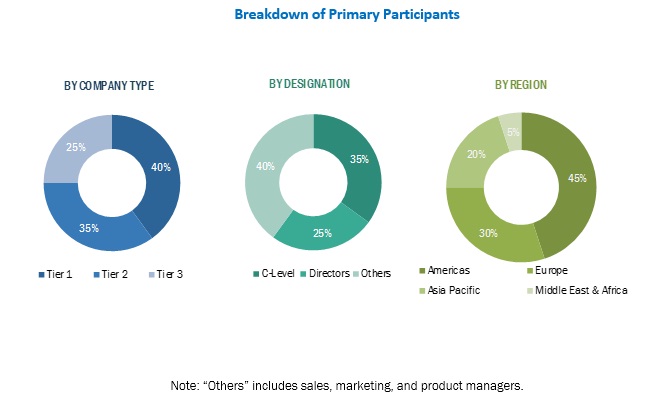
The research methodology used to estimate and forecast the security camera market begins with obtaining data through secondary research from secondary sources such as encyclopedia, directories, and databases such as OneSource and Factiva, and white papers of leading players in the security cameras market. The bottom-up procedure has been employed to arrive at the overall size of the security camera market from the revenues of key players. After arriving at the overall market size, the total market has been split into several segments and subsegments, which have been verified through primary research by conducting extensive interviews with officials such as CEOs, VPs, directors, and executives. The market breakdown and data triangulation procedures have been employed to complete the overall security cameras market engineering process and arrive at the exact statistics for all segments and subsegments. The breakdown of the profiles of primaries has been depicted in the following figure.
To know about the assumptions considered for the study, download the pdf brochure
The key players operating in the security cameras market are Arecont Vision LLC (US), Avigilon Corporation (Canada), Axis Communications (Sweden), Bosch Security Systems (Germany), Canon Inc. (Japan), Cisco Systems Inc. (US), Dahua Technology (China), Hikvision Digital Technology Co. Ltd. (China), Honeywell International Inc. (US), JVCKENWOOD (Japan), Mitsubishi Electric (Japan), Panasonic Corporation (Japan), Samsung Techwin (South Korea), Schneider Electric (France), Sony Electronics Inc. (Japan), Tyco International (Ireland), Vicon Industries Inc. (US).
Key questions
- Most of the suppliers have adopted product launch & development and collaboration & agreement as key strategies, as could be seen from recent developments. Where will it take the industry in the mid to long term?
- Which are the key players in the market, and how intense is the competition?
Target Audience
- Raw material vendors
- Original Device Manufacturers (ODMs) (Image Sensor Manufacturers)
- Original Equipment Manufacturers (OEMs)–PCB, Camera Module makers
- Assembly, testing, and packaging vendors
- Video surveillance solution providers
- Sensors chip traders and distributors
- Sensors module, electronic instrument, equipment, and system-traders & distributors
- Research organizations
This study answers several questions for stakeholders, primarily regarding the market segments to focus on in the next 2–5 years for prioritizing efforts and investments.
Report Scope
This research report categorizes the overall security camera market based on system, application, feature, camera resolution, type, and geography.
Security Cameras Market, by System
- Analog based
- IP based
Security Cameras Market, by Application
- Border security
- City Infrastructure
- Commercial
- Institutional
- Industrial
- Residential
Security Cameras Market, by Feature
- PTZ
- Fixed
- Other
Security Cameras Market, by Camera Resolution
- Non HD Resolution
- HD Resolution
- Full HD Resolution
- UHD Resolution
Security Cameras Market, by Type
- Indoor
- Outdoor
Security Cameras Market, by Region
- Americas
- Europe
- Asia Pacific (APAC)
- Middle East & Africa













Growth opportunities and latent adjacency in Security Cameras Market