Stretchable Conductive Material Market by Conductor Material (Graphene, Carbon Nanotube, Silver, Copper), Application (Wearables, Biomedical, Photovoltaics, Cosmetics), and Geography - Global Forecast to 2036


Stretchable Conductive Material Market Summary
The Stretchable Conductive Material Market was valued at approximately USD 800 million–1.2 billion in 2025 and is projected to reach around USD 4.5–5.5 billion by 2036, expanding at a CAGR of 13%–16% during the forecast period (2025–2036). The market is gaining significant traction as next-generation electronics shift toward flexibility, wearability, and smart integration. This rapid growth is driven by increasing demand for wearable electronics, flexible displays, smart textiles, and biomedical devices. The integration of Artificial Intelligence (AI), Internet of Things (IoT), and advanced automation technologies is accelerating the development of intelligent, connected, and flexible systems. Stretchable conductive materials, including conductive polymers, nanomaterials, and elastomer-based composites, are becoming foundational in enabling these innovations, particularly in sectors such as healthcare, consumer electronics, and automotive.
Key Market Trends & Insights
The Stretchable Conductive Material Market is evolving rapidly, supported by technological advancements and increasing adoption across multiple industries. North America currently leads the market due to strong R&D capabilities, presence of key technology players, and early adoption of wearable devices and smart electronics. Meanwhile, Asia Pacific is the fastest-growing region, driven by large-scale electronics manufacturing, rising consumer demand, and government-backed innovation initiatives in countries such as China and Japan.
Conductive polymers represent the dominant segment due to their flexibility, lightweight nature, and ease of integration into electronic systems. However, nanomaterials such as graphene and carbon nanotubes are emerging as high-performance alternatives due to their superior conductivity and mechanical properties. AI and automation are playing a key role in material design and manufacturing processes, enabling precision engineering and faster innovation cycles. Additionally, the growing use of stretchable electronics in healthcare monitoring systems and smart textiles is reshaping market dynamics.
Market Size & Forecast
-
Base Year Market Size (2025): USD 800 million–1.2 billion
-
Forecast Value by 2036: USD 4.5–5.5 billion
-
CAGR (2025–2036): 13%–16%
-
Growth is driven by rising demand for wearable electronics, flexible devices, smart textiles, and advancements in AI and IoT-enabled applications.
Stretchable Conductive Material Market Top 10 key takeaway
-
Wearable electronics are the primary driver of market growth.
-
Conductive polymers dominate due to flexibility and cost-effectiveness.
-
Nanomaterials such as graphene are emerging as high-performance alternatives.
-
North America leads due to strong innovation ecosystem.
-
Asia Pacific is the fastest-growing region driven by electronics manufacturing.
-
Healthcare applications are expanding rapidly with smart monitoring devices.
-
AI integration is accelerating material innovation and design optimization.
-
Smart textiles are gaining popularity in consumer and industrial sectors.
-
Automotive applications are increasing with the rise of smart interiors.
-
Continuous R&D is driving new product development and commercialization.
Product Insights
In the Stretchable Conductive Material Market, conductive polymers hold the largest share due to their inherent flexibility, lightweight properties, and compatibility with a wide range of substrates. These materials are widely used in wearable devices, flexible circuits, and biomedical sensors, where adaptability and comfort are essential. Their relatively lower cost compared to advanced nanomaterials also contributes to their widespread adoption.
Nanomaterial-based conductive materials, including graphene, silver nanowires, and carbon nanotubes, are gaining significant attention due to their exceptional electrical conductivity and mechanical strength. These materials are particularly suitable for high-performance applications such as flexible displays, advanced sensors, and next-generation electronic devices.
Emerging product categories include hybrid materials that combine polymers with nanomaterials to achieve enhanced performance characteristics. AI-driven material design is enabling the development of customized solutions tailored to specific applications, improving efficiency and reducing time-to-market. As industries demand higher performance and durability, the product landscape is expected to become increasingly diversified.
Technology / Component Insights
The Stretchable Conductive Material Market is heavily influenced by advancements in material science and digital technologies. AI is playing a transformative role in accelerating material discovery and optimization. Machine learning algorithms are being used to analyze material properties and predict performance outcomes, enabling faster development of innovative solutions.
IoT integration is driving demand for stretchable conductive materials in connected devices, where flexibility and durability are critical. These materials are used in sensors and circuits that enable real-time data collection and transmission in wearable and smart devices.
Automation technologies are enhancing manufacturing processes, allowing for scalable and cost-effective production of stretchable materials. Techniques such as 3D printing and roll-to-roll processing are being adopted to improve efficiency and precision. Future innovations are expected to focus on self-healing materials, biodegradable conductive materials, and advanced composites that can adapt to dynamic environments.
Application Insights
The wearable electronics segment dominates the Stretchable Conductive Material Market, driven by increasing consumer demand for smartwatches, fitness trackers, and health monitoring devices. These applications require materials that can withstand continuous movement and deformation without compromising performance.
Healthcare is another key application area, where stretchable conductive materials are used in biomedical sensors, electronic skin (e-skin), and implantable devices. These technologies enable continuous health monitoring and personalized medical solutions.
The automotive sector is also emerging as a significant application area, with the integration of stretchable materials in smart interiors, touch-sensitive surfaces, and advanced driver assistance systems. Additionally, the rise of smart textiles in fashion, sports, and industrial applications is creating new growth opportunities for the market.
Regional Insights
North America leads the Stretchable Conductive Material Market due to its strong focus on innovation, advanced research infrastructure, and high adoption of wearable and smart technologies. The presence of leading technology companies and startups is further driving market growth in the region.
Europe is also a significant market, supported by investments in sustainable technologies and advancements in healthcare and automotive sectors. Countries such as Germany and France are actively promoting research in flexible electronics and smart materials.
Asia Pacific is the fastest-growing region, driven by its dominance in electronics manufacturing and increasing adoption of wearable devices. China and Japan are key contributors, with strong government support and investments in technology development.
-
North America dominates due to strong R&D and early technology adoption.
-
Europe benefits from innovation in healthcare and automotive sectors.
-
Asia Pacific is the fastest-growing region with robust manufacturing capabilities.
-
Government initiatives are supporting technological advancements globally.
-
Rising consumer demand for wearable devices is driving regional growth.
Country Specific Market Trends
In Asia Pacific, China is experiencing rapid growth with a CAGR of 15%–18%, driven by large-scale electronics production and government support for advanced materials research. Japan is also a key market, growing at a CAGR of 13%–15%, with strong focus on robotics, healthcare technology, and smart materials.
In North America, the United States leads the market with a CAGR of 12%–14%, supported by technological innovation and high adoption of wearable devices. Canada and Mexico are also witnessing steady growth due to increasing investments in smart technologies and manufacturing.
In Europe, Germany is a major contributor with a CAGR of 13%–15%, driven by its strong industrial base and focus on advanced materials. France is also growing steadily, supported by government initiatives promoting research and development.
-
China leads APAC with strong manufacturing and innovation ecosystem.
-
Japan focuses on robotics and healthcare applications.
-
United States drives North American growth with advanced technology adoption.
-
Germany leads Europe with strong industrial and research capabilities.
-
France supports growth through government-backed R&D initiatives.
Key Stretchable Conductive Material Market Company Insights
The Stretchable Conductive Material Market is highly competitive, with key players focusing on innovation, material development, and strategic partnerships. Major companies include DuPont, 3M Company, Henkel AG & Co. KGaA, Parker Hannifin Corporation, Dow Inc., LG Chem, Sumitomo Chemical Co., Ltd., Heraeus Holding, Toyobo Co., Ltd., and Toray Industries.
These companies are investing in AI-driven material research, advanced manufacturing techniques, and product innovation to strengthen their market position. Strategic collaborations with electronics manufacturers and research institutions are enabling them to develop customized solutions and expand their market reach. The focus on sustainability and eco-friendly materials is also shaping product development strategies.
-
Companies are investing in AI-driven material innovation.
-
Strategic partnerships are enhancing product development.
-
Focus on high-performance and sustainable materials is increasing.
-
Advanced manufacturing technologies are improving scalability.
-
Continuous R&D is driving competitive differentiation.
Recent Developments
Recent developments in the Stretchable Conductive Material Market highlight the pace of innovation. A leading materials company recently launched a graphene-based stretchable conductor designed for high-performance wearable devices. Another firm introduced an AI-optimized conductive polymer that enhances durability and flexibility. Additionally, a partnership between a materials manufacturer and a wearable technology company aims to develop next-generation smart textiles with integrated sensing capabilities.
Market Segmentation
The Stretchable Conductive Material Market is segmented based on product, technology/component, application, and region. By product, the market includes conductive polymers, nanomaterials, and hybrid materials, with conductive polymers currently dominating. By technology, the market incorporates AI-driven material design, IoT integration, and advanced manufacturing techniques such as 3D printing.
In terms of application, the market serves wearable electronics, healthcare, automotive, and smart textiles. Regionally, the market is divided into North America, Europe, Asia Pacific, and the rest of the world, with North America leading and Asia Pacific emerging as the fastest-growing region.
-
Conductive polymers dominate the product segment.
-
AI and IoT are key technologies driving innovation.
-
Wearable electronics are the leading application segment.
-
North America holds the largest market share.
-
Asia Pacific is the fastest-growing region.
The Stretchable Conductive Material Market is poised for substantial growth through 2036, driven by the increasing demand for flexible, wearable, and smart electronic devices. The integration of AI, IoT, and automation technologies is revolutionizing material development and application, enabling new possibilities across industries. As innovation continues to accelerate, stretchable conductive materials will play a critical role in shaping the future of electronics, healthcare, and smart systems. Companies that invest in advanced materials, sustainable solutions, and digital technologies will be well-positioned to capitalize on the growing market opportunities and maintain a competitive edge.
FAQs
1. What is the market size of the Stretchable Conductive Material Market?
The market size was approximately USD 800 million–1.2 billion in 2025 and is expected to reach USD 4.5–5.5 billion by 2036.
2. What is the growth rate of the Stretchable Conductive Material Market?
The market is projected to grow at a CAGR of 13%–16% during the forecast period (2025–2036).
3. What are the key drivers of the market?
Key drivers include the growth of wearable electronics, smart textiles, healthcare applications, and advancements in AI and IoT technologies.
4. Which region leads the market?
North America currently leads the market due to strong innovation and early adoption of advanced technologies.
5. Who are the key companies in the market?
Major companies include DuPont, 3M, Henkel, Parker Hannifin, Dow, LG Chem, Sumitomo Chemical, Heraeus, Toyobo, and Toray Industries.
To speak to our analyst for a discussion on the above findings, click Speak to Analyst
 Exclusive indicates content/data unique to MarketsandMarkets and not available with any competitors.
Table of Contents
1 Introduction (Page No. - 12)
1.1 Objectives of the Study
1.2 Market Definition
1.3 Study Scope
1.3.1 Markets Covered
1.3.2 Years Considered for the Study
1.4 Currency
1.5 Limitations
1.6 Stakeholders
2 Research Methodology (Page No. - 15)
2.1 Research Data
2.1.1 Secondary Data
2.1.1.1 Key Data From Secondary Sources
2.1.2 Primary Data
2.1.2.1 Primary Interviews With Experts
2.1.2.2 Breakdown of Primaries
2.1.2.3 Key Data From Primary Sources
2.1.3 Secondary and Primary Research
2.1.3.1 Key Industry Insights
2.2 Market Size Estimation
2.2.1 Bottom-Up Approach
2.2.1.1 Approach for Capturing the Market Share By Bottom-Up Analysis (Demand Side)
2.2.2 Top-Down Approach
2.2.2.1 Approach for Capturing the Market Size By Top-Down Analysis (Supply Side)
2.3 Market Breakdown & Data Triangulation
2.4 Research Assumptions
3 Executive Summary (Page No. - 26)
4 Premium Insights (Page No. - 31)
4.1 Attractive Market Opportunities in the Stretchable Conductive Material Market
4.2 Wearables Would Lead the Stretchable Conductive Material Market in APAC
4.3 U.S. to Lead the Stretchable Conductive Material Market By 2022
4.4 Stretchable Conductive Material Market (2017–2022)
4.5 Stretchable Conductive Material Market, By Application
5 Market Overview (Page No. - 34)
5.1 Introduction
5.2 Market Segmentation
5.2.1 Stretchable Conductive Material Market, By Conductor Material
5.2.2 Market, By Application
5.2.3 Market, By Geography
5.3 Market Dynamics
5.3.1 Drivers
5.3.1.1 Increasing Use of Stretchable Conductors in Consumer Electronics
5.3.1.2 Advancements in Design Strategies, Assembly Techniques, and Materials
5.3.1.3 Higher Operational Speed Through Miniaturization of Electronic Products
5.3.2 Restraints
5.3.2.1 Lower Lifespan of Stretchable Circuits
5.3.2.2 Time-Consuming and Laborious Manufacturing Process
5.3.3 Opportunities
5.3.3.1 Huge Scope for Growth in Wearable Electronics
5.3.3.2 Growing Opportunities for Stretchable Materials in the Medical Applications
5.3.3.3 Integration of New Functionalities Into Multiple Products
5.3.4 Challenge
5.3.4.1 Compatibility Along With Good Electrical Performance
5.4 Supply Chain Analysis
5.4.1 Major Strategies Adopted By the Major Vendors
6 Industry Trends (Page No. - 41)
6.1 Introduction
6.2 Innovative Application Types and Market Penetration
6.3 Value Chain Analysis
6.4 Market Strategy Analysis
6.5 Porter’s Five Forces Analysis
6.5.1 Bargaining Power of Suppliers
6.5.2 Bargaining Power of Buyers
6.5.3 Threat of New Entrants
6.5.4 Threat of Substitutes
6.5.5 Intensity of Competitive Rivalry
7 Stretchable Conductive Material Market, By Conductor Material Type (Page No. - 49)
7.1 Introduction
7.2 Conductor Materials in the Stretchable Conductive Material Market
7.2.1 Graphene
7.2.1.1 Graphene Oxide
7.2.1.2 Graphene Nanoplatelets
7.2.2 Carbon Nanotube
7.2.2.1 Single-Walled Carbon Nanotube (SWCNT)
7.2.2.2 Multi-Walled Carbon Nanotube (MWCNT)
7.2.3 Silver
7.2.4 Copper
7.2.5 Others
8 Stretchable Conductive Material Market, By Application (Page No. - 55)
8.1 Introduction
8.2 Applications in the Stretchable Conductive Material Market
8.2.1 Wearables
8.2.2 Biomedical
8.2.3 Photovoltaics
8.2.4 Cosmetic
8.2.5 Others
9 Geographical Analysis (Page No. - 61)
9.1 Introduction
9.2 North America
9.2.1 U.S.
9.2.2 Canada
9.2.3 Mexico
9.3 Europe
9.3.1 U.K.
9.3.2 Germany
9.3.3 France
9.3.4 Italy
9.3.5 Rest of Europe
9.4 Asia-Pacific
9.4.1 China
9.4.2 Japan
9.4.3 India
9.4.4 South Korea
9.4.5 Rest of APAC
9.5 Rest of the World
9.5.1 Middle East & Africa
9.5.2 South America
10 Competitive Landscape (Page No. - 79)
10.1 Introduction
10.2 Ranking for Stretchable Conductive Material Market Players
10.3 Competitive Scenario
10.3.1 New Product Launches and Developments
10.3.2 Funding
10.3.3 Agreement
11 Company Profiles (Page No. - 83)
11.1 Introduction
(Business Overview, Products & Services, Key Insights, Recent Developments, SWOT Analysis, Ratio Analysis, MnM View)*
11.2 Dupont & Co.
11.3 3M Company
11.4 Toyobo Co., Ltd.
11.5 Advanced Nano Products Co., Ltd.
11.6 Applied Nanotech, Inc.
11.7 Indium Corporation
11.8 Vorbeck Materials Corp.
11.9 National Institute of Advanced Industrial Science and Technology
11.10 Textronics, Inc.
11.11 Lotte Advanced Materials Co., Ltd.
*Details on Business Overview, Products & Services, Key Insights, Recent Developments, SWOT Analysis, MnM View Might Not Be Captured in Case of Unlisted Companies.
11.12 Key Innovators
11.12.1 Panasonic Corporation
11.12.2 University of Houston
11.12.3 North Carolina State University
12 Appendix (Page No. - 99)
12.1 Insights of Industry Experts
12.2 Discussion Guide
12.3 Knowledge Store: Marketsandmarkets’ Subscription Portal
12.4 Introducing RT: Real-Time Market Intelligence
12.5 Available Customizations
12.6 Related Reports
12.7 Author Details
List of Tables (35 Tables)
Table 1 Intensity of Competitive Rivalry and Bargaining Power of Suppliers Had A Major Impact on the Overall Stretchable Conductive Material Market in 2015
Table 2 Market, By Conductor Material, 2015–2022 (USD Thousand)
Table 3 Market, By Application, 2015–2022 (USD Thousand)
Table 4 Market for Wearables, By Region 2015–2022 (USD Thousand)
Table 5 Market for Biomedical, By Region 2015–2022 (USD Thousand)
Table 6 Market for Photovoltaics, By Region 2015–2022 (USD Thousand)
Table 7 Market for Other Applications, By Region 2015–2022 (USD Thousand)
Table 8 Market, By Geography, 2015–2022 (USD Thousand)
Table 9 North American Market for Stretchable Conductive Material , By Application, 2015–2022 (USD Thousand)
Table 10 North American Market for Stretchable Conductive Material , By Country, 2015–2022 (USD Thousand)
Table 11 U.S. Market for Stretchable Conductive Material , By Application, 2015–2022 (USD Thousand)
Table 12 Canada Market for Stretchable Conductive Material , By Application, 2015–2022 (USD Thousand)
Table 13 Mexico Market for Stretchable Conductive Material , By Application, 2015–2022 (USD Thousand)
Table 14 Stretchable Conductive Material Market in Europe, By Application, 2015–2022 (USD Thousand)
Table 15 Stretchable Conductive Material Market in Europe, By Country, 2015–2022 (USD Thousand)
Table 16 U.K. Market for Stretchable Conductive Material , By Application, 2015–2022 (USD Thousand)
Table 17 Germany Market for Stretchable Conductive Material , By Application, 2015–2022 (USD Thousand)
Table 18 France Market for Stretchable Conductive Material , By Application, 2015–2022 (USD Thousand)
Table 19 Italy Market for Stretchable Conductive Material , By Application, 2015–2022 (USD Thousand)
Table 20 Market in Rest of Europe, By Application, 2015–2022 (USD Thousand)
Table 21 Market in Asia-Pacific, By Application, 2015–2022 (USD Thousand)
Table 22 Market in Asia-Pacific, By Country, 2015–2022 (USD Thousand)
Table 23 China Market for Stretchable Conductive Material , By Application, 2015–2022 (USD Thousand)
Table 24 Japan Market for Stretchable Conductive Material , By Application, 2015–2022 (USD Thousand)
Table 25 India Market for Stretchable Conductive Material , By Application, 2015–2022 (USD Thousand)
Table 26 South Korea Market for Stretchable Conductive Material , By Application, 2015–2022 (USD Thousand)
Table 27 Rest of APAC Market for Stretchable Conductive Material , By Application, 2015–2022 (USD Thousand)
Table 28 Stretchable Conductive Material Market in RoW, By Application, 2015–2022 (USD Thousand)
Table 29 Stretchable Conductive Material Market in RoW, By Country, 2015–2022 (USD Thousand)
Table 30 Middle East & Africa Market for Stretchable Conductive Material , By Application, 2015–2022 (USD Thousand)
Table 31 South America Market for Stretchable Conductive Material , By Application, 2015–2022 (USD Thousand)
Table 32 Ranking of the Top 5 Players in the Stretchable Conductive Material Market
Table 33 New Product Launches and Developments, 2012–2016
Table 34 Funding, 2016
Table 35 Agreement, 2013
List of Figures (36 Figures)
Figure 1 Markets Covered
Figure 2 Stretchable Conductive Material Market: Research Design
Figure 3 Bottom-Up Approach to Arrive at the Market Size
Figure 4 Top-Down Approach to Arrive at the Market Size
Figure 5 Data Triangulation Methodology
Figure 6 Assumptions of the Research Study
Figure 7 Stretchable Conductive Material Market, 2015–2022 (USD Thousand)
Figure 8 Stretchable Conductive Material Market, By Conductor Material, 2016 vs 2022
Figure 9 Wearable Application Expected to Witness Highest Growth in the Stretchable Conductive Material Market Between 2016 and 2022
Figure 10 North America Holds the Largest Market Share for Stretchable Conductive Material in 2016
Figure 11 Region-Wise Market Size of Top 2 Stretchable Conductive Material Industries, 2016
Figure 12 Stretchable Conductive Material Market, 2016–2022 (USD Thousand)
Figure 13 China Expected to Account for the Largest Share of the Stretchable Conductive Material Market in APAC, By 2022
Figure 14 Stretchable Conductive Material Market: Developed vs Developing Markets, 2016 and 2022 (USD Thousand)
Figure 15 Market in China to Grow at the Highest Rate Between 2017 and 2022
Figure 16 Wearables to Dominate the Market During the Forecast Period
Figure 17 Market, By Geography
Figure 18 Increasing Use of Stretchable Conductive Materials in Consumer Electronics to Drive the Stretchable Conductive Material Market
Figure 19 Value Chain of the Stretchable Conductive Materials Market (2015): Major Value Added During the Research and Development Stage
Figure 20 Stretchable Conductive Material Market: Porter’s Five Forces Analysis, 2015
Figure 21 Porter’s Five Forces Analysis
Figure 22 High Impact of Bargaining Power of Suppliers on the Stretchable Conductive Material Market
Figure 23 Low Bargaining Power of Buyers in the Market
Figure 24 Medium Impact of Threat of New Entrants
Figure 25 High Impact of Threat of Substitutes on the Market
Figure 26 High Impact of Intensity of Competitive Rivalry on the Market
Figure 27 Market for Graphene Material Expected to Grow at the Highest Rate During the Forecast Period
Figure 28 Market for Wearable Application Expected to Grow at the Highest Rate During the Forecast Period
Figure 29 Material Mapping for the Applications in Stretchable Conductive Material Market
Figure 30 APAC Stretchable Conductive Material Market Expected to Grow at the Highest Rate During the Forecast Period
Figure 31 Battle for Market Share: New Product Launches and Developments Were the Key Strategies Between 2013 and 2016
Figure 32 Geographic Revenue Mix of Major Players
Figure 33 Dupont & Co.: Company Snapshot
Figure 34 Dupont & Co.: SWOT Analysis
Figure 35 3M Company: Company Snapshot
Figure 36 Toyobo Co., Ltd.: Company Snapshot
The research methodology includes the use of primary and secondary data. Both top-down and bottom-up approaches have been used to estimate and validate the size of the market as well as that of the other dependent submarkets in the overall stretchable conductive material market. The key players in the market have been identified through secondary research. The secondary sources include annual reports, press releases, and investor presentations of companies; white papers, certified publications, and articles from recognized authors; directories; and databases. The secondary sources namely include MIT Technology Review, University of Michigan, Materials Today, and Science Daily.
The research methodology includes the study of the annual and financial reports of the top market players and extensive interviews for key insights with industry leaders such as CEOs, VPs, directors, and marketing executives. All the percentage shares and breakdowns have been determined using secondary sources and verified through primary sources. All the possible parameters that affect the markets covered in this research study have been accounted for, viewed in extensive detail, verified through primary research, and analyzed to obtain the final quantitative and qualitative data. The breakdown of the profiles of primaries has been depicted in the figure below:
BREAKDOWN OF PRIMARY PARTICIPANTS
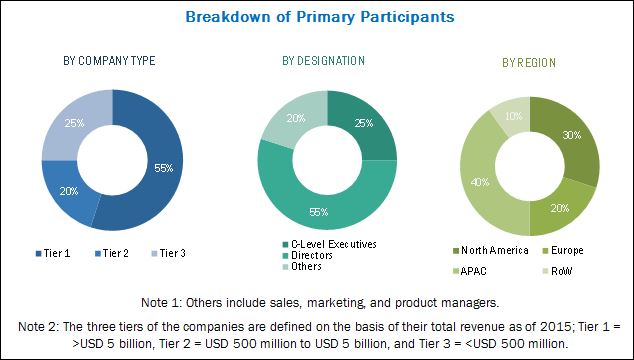
Note 1: Others include sales, marketing, and product managers.
Note 2: The three tiers of the companies are defined on the basis of their total revenue as of 2015; Tier 1 = >USD 5 billion, Tier 2 = USD 500 million to USD 5 billion, and Tier 3 = <(South Korea), Indium Corporation (U.S.), Toyobo Co., Ltd. (Japan), Lotte Advanced Materials Co., Ltd. (South Korea), Textronics, Inc. (U.S.), National Institute of Advanced Industrial Science and Technology (Japan), and Vorbeck Materials Corp. (U.S.).
Major Market Developments
- In September 2016, Vorbeck Materials introduced graphene-enhanced engineered elastomer products developed using its proprietary Vor-x® technology. It features high mechanical strength as well as fatigue and temperature resistance for applications in aerospace, petrochemical, and apparel industries.
- In April 2016, National Institute of Advanced Industrial Science and Technology has developed a stretchable wiring from oriented short conductive fibers and then applied to a stretchable pressure sensor.
- In August 2015, Toyobo developed a wearable conductive film using conductive material that can be used for clothes to measure the biological information. The material can be stretched to twice its length.
Target Audience
- Raw material and manufacturing equipment suppliers
- Original equipment manufacturers (OEMs)
- Product manufacturers
- Original design manufacturers (ODMs) and OEM technology solution providers
- Research organizations
- Technology standard organizations, forums, alliances, and associations
- Technology investors
- Governments, financial institutions, and investment communities
- Analysts and strategic business planners
- End users
“The study answers several questions for the target audiences, primarily which market segments to focus on in the next two to five years for prioritizing efforts and investments.”
Report Scope
In this report, the stretchable conductive material market has been segmented as follows:
Stretchable conductive material Market, by Conductor Material
- Graphene
- Carbon Nanotube
- Silver
- Copper
- Others
Stretchable conductive material Market, by Application
- Wearables
- Biomedical
- Photovoltaics
- Cosmetic
- Others
Stretchable conductive material Market, by Geography
- North America
- Europe
- Asia-Pacific (APAC)
- Rest of the World (RoW)
Company Profiles: Detailed analysis of the major companies present in the stretchable conductive material market
- Critical questions which the report answers
- Which are the major application areas for the stretchable conductive materials?
- Which are the major countries to witness a substantial growth in the adoption of stretchable conductive materials?
- How would the wearables increase the demand for stretchable conductive materials? What would be the major use-cases?
- What would be the major applications for graphene usage?
Available Customizations
With the given market data, MarketsandMarkets offers customizations according to the company’s specific needs. The following customization options are available for the report:
Company Information
Detailed analysis and profiling of additional market players (up to five)













Growth opportunities and latent adjacency in Stretchable Conductive Material Market