Terminal Management System Market by Offering (Software & Services (Professional & Managed Services)), Project Type (Brownfield & Greenfield), Vertical (Oil & Gas (Upstream, Midstream, Downstream), Chemicals), and Geography - Global Growth Driver and Industry Forecast to 2035


Terminal Management System Market Summary
The global Terminal Management System Market is entering a sustained growth phase as airports, seaports, logistics hubs, oil and gas terminals, and other complex transportation facilities accelerate digital transformation. The market is estimated to be valued at approximately USD 1.7 billion in 2025 and is projected to reach around USD 3.1 billion by 2035, registering a CAGR of approximately 6% during the forecast period. Growth is being driven by increasing terminal automation, rising cargo and passenger volumes, demand for real-time operational visibility, and the adoption of IoT-enabled infrastructure. Artificial intelligence (AI), cloud computing, advanced analytics, digital twins, and connected sensors are further transforming terminal management from conventional monitoring systems into intelligent platforms capable of predictive decision-making and automated workflows.
Terminal Management Systems integrate multiple operational functions, including resource allocation, equipment monitoring, cargo or passenger processing, gate and berth management, security coordination, maintenance, and data analytics. As terminal operators face pressure to improve throughput while controlling operating costs, these systems are becoming strategically important. Integration with enterprise resource planning, transportation management, building management, access control, and industrial automation platforms is also expanding the addressable market. Over the next decade, AI-enabled optimization and IoT-based visibility are expected to remain central to the evolution of the Terminal Management System Market.
Key Market Trends & Insights
The North American region is expected to remain a leading market, supported by advanced transportation infrastructure, high technology adoption, established logistics networks, and significant investments in automation. Major airports, ports, and intermodal facilities in the US and Canada are increasingly deploying integrated management platforms to improve asset utilization and operational resilience.
Asia Pacific is projected to be the fastest-growing regional market. Rapid urbanization, expanding trade activity, large-scale airport and port development, and government-backed smart infrastructure initiatives in China, Japan, India, and other Asian economies are creating significant demand for digital terminal solutions.
The software segment is expected to maintain a strong market position, as operators increasingly prioritize centralized platforms capable of integrating operational data from multiple systems. Cloud-based deployment is gaining momentum because it enables scalability, remote monitoring, simplified software updates, and integration with distributed terminal infrastructure.
AI and machine learning are emerging as important differentiators. Instead of simply displaying operational information, advanced Terminal Management Systems can analyze historical and real-time data to predict congestion, identify equipment anomalies, optimize resource allocation, and recommend operational adjustments.
Another major trend is the transition toward IoT-connected and automated terminals. Sensors, cameras, RFID devices, connected equipment, and industrial control systems generate continuous streams of operational data. Terminal management platforms increasingly combine these inputs to create a unified operational view and support data-driven decision-making.
Market Size & Forecast
- Base year market size: Approximately USD 1.7 billion in 2025.
- Forecast market value: Approximately USD 3.1 billion by 2035.
- Expected CAGR: Around 6% from 2025 to 2035.
- Primary growth factors: Terminal automation, IoT connectivity, increasing transportation volumes, infrastructure modernization, cloud adoption, and demand for real-time operational visibility.
- Technology outlook: AI, predictive analytics, digital twins, edge computing, and cybersecurity will increasingly influence Terminal Management System deployments.
Terminal Management System Market Top 10 key takeaway
- The Terminal Management System Market is expected to grow from approximately USD 1.7 billion in 2025 to USD 3.1 billion by 2035.
- Increasing terminal automation is one of the primary factors supporting market expansion.
- North America is expected to remain a leading regional market through 2035.
- Asia Pacific is projected to record the fastest growth during the forecast period.
- Software platforms are expected to account for a significant portion of market demand.
- IoT connectivity is improving real-time monitoring of terminal assets and operations.
- AI-based analytics are enabling predictive maintenance and intelligent resource allocation.
- Cloud deployment is gaining adoption because of scalability and remote-access advantages.
- Ports, airports, logistics hubs, and industrial terminals represent major application opportunities.
- Integration, cybersecurity, interoperability, and lifecycle support will remain important purchasing criteria.
Product Insights
The Terminal Management System Market can broadly be viewed through software platforms, hardware infrastructure, and associated services. Among these categories, software is expected to represent the dominant product segment, supported by the growing need to centralize operational information and coordinate multiple terminal processes through a common digital environment. Modern software platforms can connect equipment, sensors, enterprise applications, access systems, transportation networks, and operational personnel, allowing terminal operators to manage activities from a unified interface.
Traditional terminal software focused primarily on scheduling, tracking, reporting, and transaction management. The next generation of platforms is moving toward intelligent orchestration. AI-powered modules can evaluate traffic patterns, equipment utilization, historical throughput, weather conditions, and operational constraints to recommend more efficient schedules. Machine learning can also identify patterns associated with equipment failures, congestion, delays, or resource bottlenecks.
Hardware remains essential because terminals require physical devices for data acquisition and operational control. Industrial computers, sensors, RFID readers, barcode scanners, communication gateways, cameras, networking equipment, and controllers support the digital infrastructure on which management software operates. Increasing deployment of ruggedized and connected hardware is strengthening the relationship between terminal management platforms and industrial IoT ecosystems.
Services are also becoming increasingly important. System integration, consulting, cybersecurity, software customization, maintenance, and managed services enable operators to deploy complex solutions without disrupting existing operations. As terminal infrastructure becomes more connected, service providers are increasingly expected to support continuous optimization rather than one-time implementation.
Technology / Component Insights (Rename based on keyword if needed)
Technology advancement is fundamentally reshaping the Terminal Management System Market. IoT is one of the most important enabling technologies, allowing terminal operators to collect operational data from vehicles, cranes, conveyors, gates, storage areas, access points, sensors, and other assets. This connectivity creates a continuous data layer that can be analyzed by terminal management platforms.
AI and machine learning are increasingly being incorporated into this data layer. AI algorithms can support demand forecasting, traffic prediction, anomaly detection, asset utilization analysis, and automated scheduling. In large terminals, even small improvements in equipment utilization or turnaround time can produce significant operational and financial benefits.
Cloud computing is another important technology trend. Cloud-based Terminal Management Systems can provide centralized data access across geographically distributed facilities while reducing dependence on local infrastructure. Hybrid architectures are likely to remain particularly relevant for critical terminals that require a combination of cloud analytics and local processing.
Edge computing complements cloud technology by enabling time-sensitive data processing closer to the equipment. This is particularly valuable where low latency is required for monitoring, safety, automation, or equipment control. Digital twins are also gaining attention because they enable operators to create virtual representations of terminal facilities and simulate operational scenarios before implementing changes in the physical environment.
Cybersecurity is becoming an increasingly important component of technology strategy. As terminals connect operational technology with enterprise IT and external networks, the attack surface expands. Future Terminal Management System deployments are therefore expected to incorporate stronger identity management, network segmentation, encryption, continuous monitoring, and anomaly detection.
Application Insights
The Terminal Management System Market serves a broad range of applications, including airports, seaports, logistics terminals, cargo terminals, industrial facilities, and intermodal transportation hubs. Airports and seaports represent particularly important opportunities because of their operational complexity and the need to coordinate multiple stakeholders and assets.
In airport environments, Terminal Management Systems can support passenger flow, gate allocation, baggage handling coordination, security operations, facility management, and resource scheduling. Rising passenger traffic and pressure to reduce turnaround times are encouraging airports to adopt increasingly integrated digital platforms.
Seaports and container terminals are also major users. Growing global trade, larger vessels, increasing container volumes, and the need to improve berth utilization are encouraging port operators to adopt automated and connected management technologies. Terminal platforms can integrate data from cranes, trucks, yard equipment, gates, vessels, and warehouse systems to improve operational coordination.
Logistics and intermodal terminals are expected to offer significant future opportunities. The growth of e-commerce and increasingly complex supply chains is increasing demand for real-time tracking, automated inventory processes, intelligent scheduling, and predictive logistics. AI-enabled platforms can help operators respond dynamically to changes in demand and resource availability.
Future opportunities will increasingly come from autonomous equipment, robotic handling, computer vision, digital twins, and AI-driven optimization. The convergence of these technologies could enable terminals to move from centralized monitoring toward increasingly autonomous operational management.
Regional Insights
North America is expected to maintain a leading position in the Terminal Management System Market through 2035. The region benefits from mature transportation infrastructure, established logistics networks, high levels of software adoption, and ongoing modernization of airports, ports, warehouses, and intermodal facilities. The US remains a major contributor because terminal operators are investing in automation, cybersecurity, IoT connectivity, and operational analytics to increase throughput and resilience.
Europe represents another technologically advanced market, supported by strong environmental objectives, transportation modernization programs, and demand for energy-efficient infrastructure. European terminal operators are increasingly interested in digital systems that can improve resource utilization while supporting sustainability objectives.
Asia Pacific is projected to register the fastest growth. China, Japan, India, South Korea, Singapore, and other economies are investing heavily in ports, airports, logistics parks, and smart transportation infrastructure. Increasing trade activity and rapid infrastructure development are creating opportunities for integrated Terminal Management Systems.
- North America: Strong technology adoption and modernization spending support market leadership.
- Europe: Smart infrastructure and sustainability initiatives are encouraging digital terminal management.
- Asia Pacific: Rapid infrastructure expansion makes the region a high-growth opportunity.
- Middle East: Airport, port, and logistics investments are supporting demand for advanced management platforms.
- Latin America: Port modernization and supply-chain digitalization are creating emerging opportunities.
Country-Specific Market Trends
China is expected to be one of the strongest contributors to Asia Pacific growth, with an estimated Terminal Management System adoption CAGR of approximately 7% through 2035. Investments in smart ports, automated logistics facilities, and transportation infrastructure are encouraging deployment of connected management technologies. Japan, with an estimated CAGR of around 6%, is focusing on automation, robotics, aging-workforce challenges, and highly efficient transportation infrastructure.
In North America, the United States is expected to remain the largest individual country market, expanding at approximately 6% CAGR. Demand is supported by airport modernization, port automation, supply-chain digitization, and investments in resilient infrastructure. Canada could record growth of around 5%, driven by modernization of transportation networks and logistics facilities, while Mexico could expand at approximately 6% as manufacturing, trade, and logistics infrastructure develop.
Germany is expected to remain a leading European market, with an estimated CAGR of approximately 5%, supported by industrial automation and advanced logistics infrastructure. France could grow at around 5%, driven by airport, port, and transportation modernization. Across Europe, government-backed digitalization and sustainability initiatives will continue to influence technology investment.
- China: Smart-port investments and automation are accelerating adoption.
- Japan: Robotics and workforce optimization are key technology priorities.
- United States: Airport, port, and logistics modernization supports strong demand.
- Canada and Mexico: Infrastructure development creates growing implementation opportunities.
- Germany and France: Digitalization, automation, and sustainability influence terminal investments.
Key Terminal Management System Market Company Insights
The competitive landscape includes technology providers, industrial automation companies, transportation technology specialists, and systems integrators. Siemens focuses on industrial automation, digitalization, IoT, and integrated infrastructure solutions. Honeywell provides automation, software, analytics, and operational technologies applicable to complex terminal environments. Schneider Electric emphasizes connected infrastructure, energy management, automation, and digital platforms.
ABB combines automation, electrification, robotics, and digital technologies, providing opportunities for integrated terminal operations. Kongsberg Digital focuses on digital solutions, simulation, and operational optimization, while IBM contributes cloud, AI, analytics, and enterprise technology capabilities. Oracle and Microsoft provide cloud and data platforms that can support large-scale terminal applications and integration ecosystems.
Companies are increasingly competing through interoperability, AI capabilities, cybersecurity, cloud architecture, analytics, and implementation services. Rather than offering isolated software modules, leading vendors are developing platforms capable of connecting multiple operational systems.
- Vendors are increasingly embedding AI and predictive analytics into terminal software.
- Cloud and hybrid deployment models are becoming important product differentiators.
- Industrial automation companies are expanding into integrated terminal digitalization.
- Cybersecurity and interoperability are becoming major competitive factors.
- Partnerships and system integration capabilities are strengthening vendor positioning.
Recent Developments
Recent market activity has increasingly centered on integrating AI, IoT, automation, and cloud technologies into transportation and industrial terminal environments. Technology providers are expanding software platforms with predictive analytics capabilities that can identify operational bottlenecks and equipment anomalies before they affect throughput.
Another important development is the increasing deployment of connected terminal infrastructure. Sensors, cameras, RFID systems, automated gates, and equipment controllers are being integrated with centralized management platforms to provide real-time operational visibility.
Strategic partnerships between automation companies, cloud providers, transportation operators, and systems integrators are also becoming more common. Such collaborations enable vendors to combine industrial expertise with advanced analytics, connectivity, and AI capabilities.
Market Segmentation
The Terminal Management System Market can be segmented by product, technology/component, application, and region. By product, the market includes software, hardware, and services, with software expected to maintain a leading position because of its role in integrating and analyzing operational data. By technology/component, the market encompasses IoT devices and gateways, sensors, communication infrastructure, cloud platforms, AI and analytics, industrial automation technologies, cybersecurity solutions, and supporting computing infrastructure.
By application, the market includes airports, seaports, container terminals, logistics and distribution terminals, industrial terminals, and intermodal facilities. Airport and seaport applications are particularly significant because of their complex workflows and high requirements for real-time coordination. By region, the market spans North America, Europe, Asia Pacific, the Middle East & Africa, and Latin America, with Asia Pacific expected to demonstrate the strongest growth during the forecast period.
- By Product: Software is expected to represent a major share, supported by digital integration requirements.
- By Technology: IoT, AI, cloud computing, and automation are key technology areas.
- By Application: Airports, seaports, and logistics terminals represent major demand centers.
- By Region: North America leads, while Asia Pacific demonstrates strong growth potential.
- By Deployment: Cloud and hybrid architectures are expected to gain wider adoption.
Conclusion
The Terminal Management System Market is positioned for steady expansion through 2035 as terminal operators increasingly transition from conventional management practices to connected, automated, and intelligence-driven operations. A market estimated at approximately USD 1.7 billion in 2025 could reach USD 3.1 billion by 2035, reflecting an estimated CAGR of around 6%. The strategic importance of these systems will increase as transportation facilities face rising throughput requirements, labor constraints, cybersecurity risks, sustainability targets, and the need for greater operational resilience.
AI will play a particularly important role in the next stage of market development. AI-powered forecasting, predictive maintenance, computer vision, intelligent scheduling, and anomaly detection can help operators convert large volumes of operational data into actionable decisions. IoT will provide the connectivity layer, while cloud and edge computing will support scalable data processing.
By 2035, competitive advantage is likely to depend less on standalone terminal software and more on the ability to create an integrated digital operating environment. Organizations that combine Terminal Management Systems with AI, automation, IoT, cybersecurity, and digital twins will be better positioned to improve throughput, reduce downtime, optimize resources, and respond to changing operational conditions.
FAQs
1. What is the estimated size of the Terminal Management System Market?
The global Terminal Management System Market is estimated at approximately USD 1.7 billion in 2025 and is projected to reach around USD 3.1 billion by 2035.
2. What is the expected growth rate of the Terminal Management System Market?
The Terminal Management System Market is expected to expand at approximately 6% CAGR from 2025 to 2035, supported by terminal automation, IoT adoption, infrastructure modernization, and digital transformation.
3. What are the key drivers of the Terminal Management System Market?
Key drivers include increasing terminal automation, rising transportation volumes, demand for real-time operational visibility, IoT connectivity, AI-based analytics, cloud adoption, predictive maintenance, and the modernization of airports, ports, and logistics infrastructure.
4. Which region is expected to lead the Terminal Management System Market?
North America is expected to remain a leading regional market because of its mature transportation infrastructure, strong technology adoption, and ongoing investments in airport, port, and logistics modernization. Asia Pacific is expected to record the fastest growth.
5. Who are the key companies operating in the Terminal Management System Market?
Major companies associated with the broader Terminal Management System ecosystem include Siemens, Honeywell, Schneider Electric, ABB, Kongsberg Digital, IBM, Oracle, and Microsoft, along with specialized terminal technology providers and systems integrators.
To speak to our analyst for a discussion on the above findings, click Speak to Analyst
 Exclusive indicates content/data unique to MarketsandMarkets and not available with any competitors.
Table of Contents
1 Introduction (Page No. - 15)
1.1 Objectives of the Study
1.2 Market Definition
1.3 Study Scope
1.3.1 Markets Covered
1.3.2 Years Considered for the Study
1.4 Currency & Pricing
1.5 Limitations
1.6 Stakeholders
2 Research Methodology (Page No. - 18)
2.1 Research Data
2.1.1 Secondary and Primary Research
2.1.1.1 Key Industry Insights
2.1.2 Secondary Data
2.1.2.1 Key Data From Secondary Sources
2.1.3 Primary Data
2.1.3.1 Primary Interviews With Experts
2.1.3.2 Breakdown of Primaries
2.1.3.3 Key Data From Primary Sources
2.2 Market Size Estimation
2.2.1 Bottom-Up Approach
2.2.1.1 Approach for Capturing the Market Share By Bottom-Up Analysis (Demand Side)
2.2.2 Top-Down Approach
2.2.2.1 Approach for Capturing the Market Share By Top-Down Analysis (Supply Side)
2.3 Market Breakdown & Data Triangulation
2.4 Research Assumptions
3 Executive Summary (Page No. - 29)
4 Premium Insight (Page No. - 34)
4.1 Increase in Retrofit Projects in the Terminal Management System Market
4.2 Terminal Management System (TMS) Market, By Managed Services
4.3 Americas is Expected to Hold the Largest Market Share in the Terminal Management System (TMS) Market in 2017
4.4 China Dominated the Terminal Management System (TMS) Market in APAC in 2017
4.5 Terminal Management System (TMS) Market, By Chemicals
5 Market Overview (Page No. - 37)
5.1 Market Dynamics
5.1.1 Drivers
5.1.1.1 Implementation of Terminal Management Solution in Brownfield Terminals Reduces Operational Cost
5.1.1.2 Increasing Needs for Safety and Environmental Norms in Various Verticals
5.1.1.3 Integrated Safety and Security Solutions Enhance the Levels of Automation in A Terminal
5.1.2 Restraints
5.1.2.1 Fluctuation in Crude Oil Prices Impacts the Installation of Terminal Management Software in Oil & Gas Industry
5.1.2.2 Lack of Technical Expertise
5.1.3 Opportunities
5.1.3.1 Establishment of Greenfield Terminals in Asia and Africa Bring Opportunities for Growth in Terminal Management System Market
5.1.3.2 Cloud Computing Across All Verticals Enables Real-Time Reporting
5.1.4 Challenges
5.1.4.1 Technological Advancement Leads to Vulnerabilities Across All Verticals
5.1.4.2 Terminal Upgradations and Field Operations Require Government Approvals for Promoting Exploration Activities
6 Industry Trends (Page No. - 45)
6.1 Value Chain Analysis
6.2 Strategic Benchmarking
7 By Market, By Project Type (Page No. - 47)
7.1 Introduction
7.2 Brownfield Projects
7.3 Greenfield Projects
8 By Market, By Offering (Page No. - 53)
8.1 Introduction
8.2 Software
8.3 Services
8.3.1 Professional Services
8.3.2 Managed Services
9 By Market, By Vertical (Page No. - 62)
9.1 Introduction
9.2 Oil & Gas
9.2.1 Upstream
9.2.2 Midstream
9.2.3 Downstream
9.3 Chemicals
9.3.1 Petrochemicals
9.3.2 Others
9.4 Others
10 Geographic Analysis (Page No. - 79)
10.1 Introduction
10.2 Americas
10.2.1 Oil & Gas Industry Creates Job Opportunities in Americas
10.2.2 North America
10.2.2.1 Increase in Investment in the Oil & Gas Vertical Along With Rapid Expansion of Shale Gas
10.2.2.2 US
10.2.2.2.1 Liquefied Natural Gas Liquefaction Projects Provides Access to Large Markets
10.2.2.3 Canada
10.2.2.3.1 The Production Capacity of Crude Petroleum Products Experiences A Large Growth
10.2.2.4 Rest of North America
10.2.3 Latin America
10.2.3.1 Government Funding for Development of Semi-Automated Terminals
10.2.3.2 Mexico
10.2.3.2.1 Reforms in Energy Sector Helps to Increase the Overall Oil and Gas Production
10.2.3.3 Argentina
10.2.3.3.1 Oil & Gas Vertical Highly Dependent on Investments Made By Private Companies for Growth
10.2.3.4 Brazil
10.2.3.4.1 Brazil Not A Self-Sufficient Producer in the Chemicals Vertical
10.2.3.5 Rest of Latin America
10.3 Europe
10.3.1 Decline in Downstream Sector Due to the Drop in Global Oil Prices
10.3.2 Russia
10.3.2.1 Government Investments to Attain Growth in the Petrochemicals Industry
10.3.3 Germany
10.3.3.1 Net Exporter of Chemicals
10.3.4 Italy
10.3.4.1 Cheap Access to Land for Oil and Gas Exploration and Production Via Low Lease Rates in Italy
10.3.5 France
10.3.5.1 Union of Chemical Industry Establishing Partnerships to Drive Innovations in the Chemicals Vertical
10.3.6 Spain
10.3.6.1 Increasing Private Sector Participation With the Influx of Foreign Water Companies in Spain
10.3.7 Rest of Europe
10.4 APAC
10.4.1 Construction of Liquefied Natural Gas Facilities Leads to the Growth of the Lng Business
10.4.2 China
10.4.2.1 Reforms in Oil & Gas Vertical Leads to Changes in the National Policy
10.4.3 India
10.4.3.1 Government Incentives for Bio-Based Raw Materials to Reduce the Dependence on Crude Oil
10.4.4 Japan
10.4.4.1 Growth in the Petrochemicals Vertical Leads to Significant Improvement in Trading
10.4.5 Australia
10.4.5.1 More Investments in Large-Scale Gas Projects
10.4.6 Malaysia
10.4.6.1 Increasing Efforts to Improve the Amount of Hydrocarbon Reserves
10.4.7 Indonesia
10.4.7.1 Dependence on Foreign Investment and Collaboration for the Growth in the Petrochemicals Vertical
10.4.8 Rest of APAC
10.5 RoW
10.5.1 Government and Oil and Gas Companies Unite to Prioritize Creation of Skilled Workforce
10.5.2 Middle East
10.5.2.1 Decline in the Upstream Oil & Gas Vertical Due to Ongoing Turmoil in Syria and Libya
10.5.2.2 Iran
10.5.2.2.1 Opportunities to Potential Investors for the Growth and Development in Downstream Petrochemicals Vertical
10.5.2.3 Saudi Arabia
10.5.2.3.1 More Dependence on Oil and Petroleum Industries for Economic Growth
10.5.2.4 UAE
10.5.2.4.1 Petrochemicals Industry in UAE is Still in A Growth Stage
10.5.2.5 Rest of Middle East
10.5.3 Africa
10.5.3.1 Fluctuations in Economic and Political Environment Impacts the Growth of the Petrochemicals Vertical
10.5.3.2 South Africa
10.5.3.2.1 Crude Oil and Finished Products are Mainly Imported
10.5.3.3 Rest of Africa
11 Competitive Landscape (Page No. - 109)
11.1 Introduction
11.2 Market Ranking Analysis: Terminal Management System Market
11.3 Vendor Dive Overview
11.3.1 Vanguard
11.3.2 Dynamic
11.3.3 Innovator
11.3.4 Emerging
11.4 Competitive Benchmarking
11.4.1 Analysis of Product Portfolio of Major Players in the Terminal Management System Market (25 Companies)
11.4.2 Business Strategies Adopted By Major Players in the Terminal Management System Market (25 Players)
*Top 25 Companies Analyzed for This Study are - ABB Ltd. (Switzerland); Honeywell International Inc. (US); Siemens AG (Germany); Yokogawa Electric Corporation (Japan); Rockwell Automation, Inc. (US); Schneider Electric (France); Emerson Electric Co. (US); Endress+Hauser Management AG (Switzerland); General Atomics Corp. (California); Implico (Germany); Wipro Limited (India); Offspring International Limited (Uk); Eds Systems Oü (Estonia); Agidens International Nv (Belgium); Dearman Systems, Inc. (US); Triple Point Technology, Inc. (US); Pumpingsol (US); I.Dohmann GmbH (Germany); Tema Business Systems (India); and Quorum Business Solutions, Inc. (US).
12 Company Profiles (Page No. - 115)
(Overview, Financials, Products & Services, Strategy, and Developments)*
12.1 ABB Ltd.
12.2 Honeywell International Inc.
12.3 Siemens AG
12.4 Yokogawa Electric Corporation
12.5 Rockwell Automation, Inc.
12.6 Schneider Electric
12.7 Emerson Electric Co.
12.8 Endress+Hauser Management AG
12.9 General Atomics Corp.
12.10 Implico Group
*Details on Overview, Financials, Product & Services, Strategy, and Developments Might Not Be Captured in Case of Unlisted Companies.
12.11 Key Innovators & Startups
12.11.1 Koninklijke Vopak N.V.
12.11.1.1 Business Overview
12.11.2 Offspring International Limited
12.11.2.1 Business Overview
12.11.3 Agidens International Nv
12.11.3.1 Business Overview
12.11.4 Toptech Systems, Inc.
12.11.4.1 Business Overview
12.11.5 Triple Point Technology, Inc.
12.11.5.1 Business Overview
13 Appendix (Page No. - 147)
13.1 Insights of Industry Experts
13.2 Discussion Guide
13.3 Knowledge Store: Marketsandmarkets’ Subscription Portal
13.4 Introducing RT: Real-Time Market Intelligence
13.5 Available Customizations
13.6 Related Reports
13.7 Author Details
List of Tables (71 Tables)
Table 1 List of Major Secondary Sources
Table 2 Brownfield Terminal Automation Projects
Table 3 Terminal Management System Market: Safety and Regulatory Standards
Table 4 Global Terminal Management System Projects, 2016
Table 5 TMS Market, By Project Type, 2014–2023 (USD Million)
Table 6 Brownfield TMS Market, By Vertical, 2014–2023 (USD Million)
Table 7 Brownfield TMS Market, By Oil & Gas, 2014–2023 (USD Million)
Table 8 Brownfield TMS Market, By Chemicals, 2014–2023 (USD Million)
Table 9 Greenfield TMS Market, By Vertical, 2014–2023 (USD Million)
Table 10 Greenfield TMS Market, By Oil & Gas, 2014–2023 (USD Million)
Table 11 Greenfield TMS Market, By Chemicals, 2014–2023 (USD Million)
Table 12 TMS Market, By Offering, 2014–2023 (USD Million)
Table 13 TMS Market: Software
Table 14 Terminal Management System Software Market, By Vertical, 2014–2023 (USD Million)
Table 15 Terminal Management System Software Market, By Oil & Gas Vertical, 2014–2023 (USD Million)
Table 16 Terminal Management System Software Market, By Chemicals Vertical, 2014–2023 (USD Million)
Table 17 Terminal Management System Services Market, By Vertical, 2014–2023 (USD Million)
Table 18 Terminal Management System Services Market, By Oil & Gas Vertical, 2014–2023 (USD Million)
Table 19 Terminal Management System Services Market, By Chemicals Vertical, 2014–2023 (USD Million)
Table 20 TMS Market, By Services, 2014–2023 (USD Million)
Table 21 Professional Services: TMS Market, By Vertical, 2014–2023 (USD Million)
Table 22 Managed Services: TMS Market, By Vertical, 2014–2023 (USD Million)
Table 23 TMS Market, By Vertical, 2014–2023 (USD Million)
Table 24 Terminal Management System (TMS) Market for Oil & Gas Vertical, By Project Type, 2014–2023 (USD Million)
Table 25 Terminal Management System (TMS) Market for Oil & Gas Vertical, By Offering, 2014–2023 (USD Million)
Table 26 Terminal Management System (TMS) Market for Oil & Gas Vertical, By Region, 2014–2023 (USD Million)
Table 27 Terminal Management System (TMS) Market for Oil & Gas Vertical, By Type 2014–2023 (USD Million)
Table 28 Terminal Management System (TMS) Market for Upstream Oil & Gas Vertical, By Project Type, 2014–2023 (USD Million)
Table 29 Terminal Management System (TMS) Market for Upstream Oil & Gas Vertical, By Offering, 2014–2023 (USD Million)
Table 30 Terminal Management System (TMS) Market for Upstream Oil & Gas Vertical, By Region, 2014–2023 (USD Million)
Table 31 Terminal Management System (TMS) Market for Midstream Oil & Gas Vertical, By Project Type, 2014–2023 (USD Million)
Table 32 Terminal Management System (TMS) Market for Midstream Oil & Gas Vertical, By Offering, 2014–2023 (USD Million)
Table 33 Terminal Management System (TMS) Market for Midstream Oil & Gas Vertical, By Region, 2014–2023 (USD Million)
Table 34 Terminal Management System (TMS) Market for Downstream Oil & Gas Vertical, By Project Type, 2014–2023 (USD Million)
Table 35 Terminal Management System (TMS) Market for Downstream Oil & Gas Vertical, By Offering, 2014–2023 (USD Million)
Table 36 Terminal Management System (TMS) Market for Downstream Oil & Gas Vertical, By Region, 2014–2023 (USD Million)
Table 37 Terminal Management System (TMS) Market for Chemicals Vertical, By Project Type, 2014–2023 (USD Million)
Table 38 Terminal Management System (TMS) Market for Chemicals Vertical, By Offering 2014–2023 (USD Million)
Table 39 Terminal Management System (TMS) Market for Chemicals Vertical, By Region 2014–2023 (USD Million)
Table 40 Terminal Management System (TMS) Market for Chemicals Vertical, By Type 2014–2023 (USD Million)
Table 41 Terminal Management System (TMS) Market for Petrochemicalsvertical, By Project Type, 2014–2023 (USD Million)
Table 42 Terminal Management System (TMS) Market for Petrochemicals Vertical, By Offering, 2014–2023 (USD Million)
Table 43 Terminal Management System (TMS) Market for Petrochemicals Vertical, By Region 2014–2023 (USD Million)
Table 44 Terminal Management System (TMS) Market for Other Chemicals Vertical, By Project Type, 2014–2023 (USD Million)
Table 45 Terminal Management System (TMS) Market for Other Chemicals Vertical, By Offering, 2014–2023 (USD Million)
Table 46 Terminal Management System (TMS) Market for Other Chemicals Vertical, By Region, 2014–2023 (USD Million)
Table 47 Terminal Management System (TMS) Market for Other Verticals, By Project Type, 2014–2023 (USD Million)
Table 48 Terminal Management System (TMS) Market for Other Verticals, By Offering, 2014–2023 (USD Million)
Table 49 Terminal Management System (TMS) Market for Other Verticals, By Region, 2014–2023 (USD Million)
Table 50 Terminal Management System Market, By Region, 2014–2023 (USD Million)
Table 51 By Market in Americas, By Vertical, 2014–2023 (USD Million)
Table 52 By Market for Oil & Gas in Americas , By Type, 2014–2023 (USD Million)
Table 53 By Market for Chemicals in Americas, By Type, 2014–2023 (USD Million)
Table 54 By Market in Americas, By Region, 2014–2023 (USD Million)
Table 55 By Market in North America, By Country, 2014–2023 (USD Million)
Table 56 By Market in Latin America, By Country, 2014–2023 (USD Million)
Table 57 By Market in Europe, By Vertical, 2014–2023 (USD Million)
Table 58 By Market for Oil & Gas in Europe, By Type, 2014–2023 (USD Million)
Table 59 By Market for Chemicals in Europe, By Type, 2014–2023 (USD Million)
Table 60 By Market in Europe, By Country, 2014–2023 (USD Million)
Table 61 By Market in APAC, By Vertical, 2014–2023 (USD Million)
Table 62 By Market for Oil & Gas in APAC, By Type, 2014–2023 (USD Million)
Table 63 By Market for Chemicals in APAC, By Type, 2014–2023 (USD Million)
Table 64 By Market in APAC, By Country, 2014–2023 (USD Million)
Table 65 By Market in RoW, By Vertical, 2014–2023 (USD Million)
Table 66 By Market for Oil & Gas in RoW, By Type, 2014–2023 (USD Million)
Table 67 By Market for Chemicals in RoW, By Type, 2014–2023 (USD Million)
Table 68 By Market in RoW, By Region, 2014–2023 (USD Million)
Table 69 By Market in Middle East, By Country, 2014–2023 (USD Million)
Table 70 By Market in Africa, By Country, 2014–2023 (USD Million)
Table 71 Market Ranking of the Top 5 Players in the Terminal Management System Market, 2016
List of Figures (51 Figures)
Figure 1 Terminal Management System (TMS) Market: Research Design
Figure 2 Bottom-Up Approach to Arrive at the Market Size
Figure 3 Top-Down Approach to Arrive at the Market Size
Figure 4 Data Triangulation
Figure 5 Assumptions of the Research Study
Figure 6 Terminal Management System (TMS) Market for Services is Expected to Grow at A Higher Rate During the Forecast Period
Figure 7 Terminal Management System (TMS) Market for Managed Services is Expected to Grow at A Higher Rate During the Forecast Period
Figure 8 Terminal Management System (TMS) Market for Chemicals is Expected to Grow at the Highest Rate During the Forecast Period
Figure 9 Terminal Management System (TMS) Market for Brownfield Project is Expected to Grow at A Higher Rate During the Forecast Period
Figure 10 Terminal Management System (TMS) Market in APAC is Expected to Grow at the Highest Rate During the Forecast Period
Figure 11 Significant Rise in the Number of Brownfield Projects is Expected to Drive the Market During the Forecast Period
Figure 12 Chemicals is Expected to Grow at the Highest Rate in the Terminal Management System (TMS) Market for Managed Services During the Forecast Period
Figure 13 India is Expected to Witness the Highest Growth Rate During the Forecast Period
Figure 14 Chemicals Held the Largest Market Share in APAC in 2017
Figure 15 APAC is Estimated to Grow at the Highest CAGR Between 2017 and 2023
Figure 16 Cloud Computing Across All Verticals Enables Real-Time Reporting
Figure 17 Comparative Analysis of Crude Oil Prices
Figure 18 Major Value is Added During the Software Solution Providers Phase
Figure 19 Strategic Benchmarking: Key Players Largely Adopted the Strategy of Partnerships /Agreements/Contracts/ Launches
Figure 20 Terminal Management System Market, By Project Type
Figure 21 Chemicals is Expected to Grow at the Highest Rate in the Terminal Management System Market for Greenfield Projects
Figure 22 Terminal Management System (TMS) Market, By Offering
Figure 23 Terminal Management System (TMS) Market, By Service Type
Figure 24 Market for Managed Services is Expected to Grow at A Higher Rate During the Forecast Period
Figure 25 Terminal Management System (TMS) Market: By Vertical
Figure 26 Terminal Management System (TMS) Market: By Oil and Gas Vertical
Figure 27 Brownfield Projects to Lead the Terminal Management System Market for Downstream Oil & Gas Vertical During the Forecast Period
Figure 28 Terminal Management System (TMS) Market for Petrochemicals Vertical for Services to Grow at A Higher Rate During the Forecast Period
Figure 29 Terminal Management System (TMS) Market Segmentation: By Geography
Figure 30 Geographic Snapshot: TMS Market in APAC Expected to Grow at the Highest Rate During the Forecast Period
Figure 31 Terminal Management System (TMS) Market in India is Estimated to Grow at the Highest Rate Between 2017 and 2023
Figure 32 Segmentation: the Americas
Figure 33 Americas: Terminal Management System Market Snapshot
Figure 34 Segmentation: North America
Figure 35 Segmentation: Latin America
Figure 36 Segmentation: Europe
Figure 37 Segmentation: APAC
Figure 38 APAC: Terminal Management System Market Snapshot
Figure 39 Segmentation: RoW
Figure 40 Segmentation: Middle East
Figure 41 Segmentation: Africa
Figure 42 Key Growth Strategies Adopted By Top Companies, 2013–2017
Figure 43 Dive Chart
Figure 44 ABB Ltd.: Company Snapshot
Figure 45 Honeywell International Inc.: Company Snapshot
Figure 46 Siemens AG: Company Snapshot
Figure 47 Yokogawa Electric Corp.: Company Snapshot
Figure 48 Rockwell Automation, Inc.: Company Snapshot
Figure 49 Schneider Electric: Company Snapshot
Figure 50 Emerson Electric Co.: Company Snapshot
Figure 51 Endress+Hauser Management AG: Company Snapshot
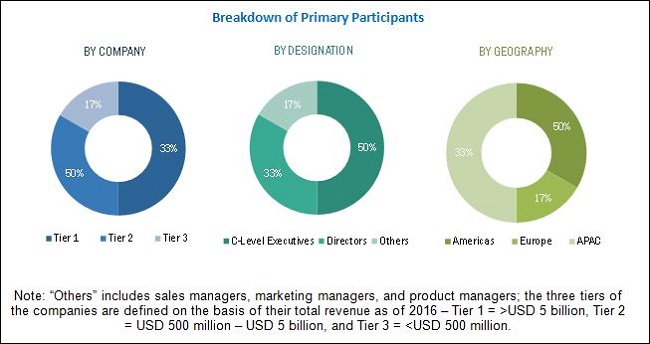
The research methodology used to estimate and forecast the terminal management system market begins with obtaining data on revenues of key vendors through secondary research sources such as Oil and Gas Authority (UK) and International Energy Agency, Vendor offerings are taken into consideration to determine the market segmentation. Top-down approach has been employed to arrive at the overall market size of the global terminal management system market, including automating terminals by integrating software and determining the average project cost in USD. After arriving at the overall market size, the total market is split into several segments and subsegments. This is further verified through primary research by conducting extensive interviews with key people—such as CEOs, VPs, directors, and executives. Data triangulation and market breakdown procedures are employed to complete the overall market engineering process and arrive at the exact statistics for all the segments and subsegments.
To know about the assumptions considered for the study, download the pdf brochure
This study also answers several questions, such as which market segments to focus on in the next 2–5 years for prioritizing efforts and investments, for stakeholders. The terminal management system market comprises software solution providers, turnkey contractors, service providers, system integrators, and end users.
- Software Solution Providers: Honeywell International Inc. (US), Emerson Electric Co. (US), Varec Inc. (US), Toptech Systems (US), Dearman Systems, Inc. (US), Rockwell Automation, Inc. (US), Triple Point Technology (US), Dearman Systems, Inc. (US), Pumping Sol (US), Wipro Limited (India)
- Turnkey Contractors: ABB Ltd. (Switzerland), Siemens AG (Germany), Implico Group (US), Yokogawa Electric Corporation (Japan), Schneider Electric (France), General Atomics Corp. (California)
- Services: AC2, Inc. (US), Koninklijke Vopak N.V. (Netherlands), Agidens International NV (Belgium), Endress+Hauser Management AG (Switzerland), i.Dohmann GmbH (Germany), Motorola Solutions, Inc. (US), Synel (Israel), Tema Business Systems (India), Toptech Systems, Inc. (US)
Target Audience:
- Raw material and equipment suppliers
- Terminal operators
- Automation providers
- Control system manufacturers
- Transportation providers
- Government agencies
Scope of the Report:
The global terminal management system market, in this research report, has been segmented by offering, project type, vertical, and geography.
Terminal Management System Market, by offering:
- Software
- Services
Terminal Management System Market, by Project type:
- Brownfield projects
- Greenfield projects
Terminal Management System Market, by Vertical:
- Oil & Gas
- Chemicals
- Others
Terminal Management System Market, by Region:
- Americas
- Europe
- APAC
- RoW
Available Customizations
With the given market data, MarketsandMarkets offers customizations according to the company’s specific needs. The following customization options are available for the report:
-
Geographic Analysis
- Comprehensive coverage of regulations followed in each region (Americas, Europe, APAC, and RoW)
-
Company Information
- Detailed analysis and profiling of additional market players (up to 10)













Growth opportunities and latent adjacency in Terminal Management System Market
We are looking for competitor analysis for major players in terminal management system in South America and Middle East Countries.