Threat Detection Systems Market by Detection Type (Explosive, Radiological & Nuclear, Chemical & Biological, Narcotics, Intrusion), Product (Dosimeter, Laser, Radar, Video Surveillance, Biometric), Application, and Geography - Global Forecast to 2035


Threat Detection Systems Market Summary
The Threat Detection Systems Market is estimated to be valued at approximately USD 8–9 billion in 2025 and is projected to reach around USD 17–19 billion by 2035, registering a CAGR of 7%–9% during the forecast period. Market growth is being driven by increasing security risks across airports, borders, critical infrastructure, transportation networks, commercial facilities, and public spaces. The growing adoption of artificial intelligence (AI), Internet of Things (IoT)-enabled security networks, automation, cloud-based monitoring, and digital transformation is reshaping threat detection from conventional screening toward intelligent, connected, and predictive security architectures. Increasing passenger volumes, cross-border movement, investments in smart infrastructure, and the need for faster detection of explosives, weapons, narcotics, hazardous materials, and other security threats are also supporting demand. At the same time, organizations are integrating AI-based analytics, sensor fusion, computer vision, machine learning, and automated decision-support capabilities to improve detection accuracy and reduce false alarms.
Key Market Trends & Insights
The Threat Detection Systems Market is undergoing a significant transformation as security operators move toward multi-layered and intelligent detection platforms. North America is expected to remain a leading regional market because of substantial investments in homeland security, transportation security, critical infrastructure protection, and advanced screening technologies. Asia Pacific is projected to record the fastest growth through 2035, supported by airport modernization, expanding transportation infrastructure, urbanization, border-security investments, and increasing adoption of smart-city technologies.
A major trend is the shift from standalone detection equipment toward integrated threat detection ecosystems. Modern systems increasingly combine X-ray imaging, computed tomography, millimeter-wave sensing, trace detection, radiation detection, video analytics, and biometric technologies. AI enables these systems to analyze complex data patterns and identify suspicious objects or behaviors with greater consistency.
Another important trend is the deployment of cloud-connected and IoT-enabled security infrastructure. Connected sensors can transmit information to centralized security platforms, enabling real-time monitoring, remote diagnostics, predictive maintenance, and coordinated incident response. Automation is also reducing dependence on manual inspection and improving throughput at high-volume locations such as airports and transportation hubs.
The market is also benefiting from the growing adoption of advanced imaging and sensor technologies. Three-dimensional imaging, hyperspectral sensing, terahertz technologies, AI-powered computer vision, and advanced chemical detection are creating opportunities for more precise and non-invasive threat identification.
Market Size & Forecast
- Base year market size: Approximately USD 8–9 billion in 2025
- Forecast value: Approximately USD 17–19 billion by 2035
- Expected CAGR: 7%–9% from 2025 to 2035
- Primary growth factors: Increasing security spending, airport modernization, border protection, critical infrastructure investments, AI-enabled detection, IoT connectivity, and automation.
- Growth outlook: Demand is expected to increase as governments and enterprises transition toward integrated, automated, and data-driven threat detection systems.
Threat Detection Systems Market Top 10 key takeaway
- The global Threat Detection Systems Market is projected to expand steadily through 2035.
- North America is expected to maintain a leading position because of strong security investments and technology adoption.
- Asia Pacific is projected to be the fastest-growing regional market during the forecast period.
- Airport and transportation security represent major demand centers for advanced detection systems.
- AI and machine learning are improving object recognition, anomaly detection, and decision support.
- IoT connectivity is enabling real-time monitoring and centralized management of distributed detection equipment.
- Automated screening technologies are helping security operators improve throughput while maintaining detection performance.
- Advanced imaging, trace detection, radiation detection, and sensor-fusion technologies are gaining importance.
- Demand for integrated security platforms is increasing across critical infrastructure and public facilities.
- Strategic partnerships, technology upgrades, and AI integration will remain important competitive strategies through 2035.
Product Insights
The Threat Detection Systems Market encompasses a broad portfolio of technologies designed to identify physical, chemical, radiological, explosive, and other security threats. Among product categories, explosive and weapon detection systems are expected to represent a significant portion of demand because of their extensive use across airports, border checkpoints, transportation terminals, government facilities, and critical infrastructure. X-ray and computed tomography-based systems remain particularly important because they provide security personnel with detailed information about objects and baggage without requiring physical inspection.
X-ray systems are increasingly evolving from conventional two-dimensional imaging toward advanced three-dimensional and computed tomography technologies. These systems can generate detailed volumetric images that enable more sophisticated automated analysis. AI algorithms can assist operators by identifying potentially suspicious objects and highlighting areas requiring additional inspection.
Trace detection systems are another important product category. These systems detect extremely small quantities of chemical signatures associated with explosives or other prohibited materials. Their portability and rapid screening capabilities make them valuable for airports, border checkpoints, public venues, and law-enforcement applications.
Radiation detection equipment is also gaining importance because of increasing emphasis on nuclear and radiological security. Fixed and portable radiation detectors can support monitoring at ports, border crossings, cargo facilities, and critical infrastructure.
Emerging products increasingly integrate multiple sensing technologies into a single platform. Sensor fusion enables information from imaging, chemical, radiation, video, and other sensors to be analyzed collectively. This approach can improve situational awareness and reduce the limitations associated with relying on a single detection modality. AI-based analytics will further strengthen these systems by enabling automated classification, anomaly detection, and risk prioritization.
Technology / Component Insights
Technology innovation is one of the strongest growth factors shaping the Threat Detection Systems Market. Traditional detection systems are increasingly being enhanced with AI, machine learning, IoT connectivity, edge computing, cloud platforms, advanced sensors, and automated analytics.
AI is becoming particularly important for image-based threat detection. Machine-learning algorithms can analyze X-ray and CT images and identify patterns associated with weapons, explosives, concealed objects, or other prohibited items. AI-assisted screening can support human operators by reducing repetitive inspection tasks and prioritizing potentially high-risk images.
Computer vision is also expanding beyond baggage screening. Advanced cameras and video analytics can identify unusual activity, restricted-area access, abandoned objects, crowd anomalies, and other security events. Combining video intelligence with other detection systems can create a more comprehensive security environment.
IoT technologies are enabling detection devices to become connected components of larger security networks. Sensors and detection systems can continuously transmit operational information to centralized platforms. This connectivity supports equipment monitoring, remote configuration, predictive maintenance, and real-time alerts.
Cloud computing is contributing to centralized security management, particularly for organizations operating multiple facilities. Cloud-based platforms can consolidate data from distributed systems and provide security teams with a unified operational view. However, edge computing is also becoming important where rapid response and low latency are essential.
Future innovation is expected to focus increasingly on multimodal sensor fusion, AI-assisted decision-making, digital twins, autonomous inspection, advanced spectroscopy, terahertz sensing, and intelligent edge devices. These technologies could make threat detection more accurate, adaptive, and operationally efficient.
Application Insights
Transportation and airport security are expected to remain among the most important applications in the Threat Detection Systems Market. Airports handle large passenger volumes and require high-throughput security screening without compromising detection performance. As international travel and airport infrastructure expand, operators are investing in advanced CT scanners, explosive detection systems, trace detectors, millimeter-wave technologies, and automated screening platforms.
Border security is another significant application area. Governments are increasing investments in systems capable of screening people, vehicles, baggage, and cargo at land borders, seaports, and other checkpoints. Integrated detection technologies help authorities improve security while maintaining efficient movement of legitimate travelers and goods.
Critical infrastructure is becoming an increasingly important growth area. Power plants, energy facilities, telecommunications sites, data centers, government buildings, and transportation networks require layered security architectures. Connected detection systems can provide continuous monitoring and integrate alarms, access control, surveillance, and other security functions.
Commercial and public venues also represent emerging opportunities. Stadiums, shopping centers, convention facilities, hospitals, universities, and entertainment venues are increasingly deploying automated screening and intelligent video analytics. The future opportunity lies in integrated platforms that combine detection, identification, monitoring, and automated response capabilities.
Regional Insights
North America is expected to remain a leading region in the Threat Detection Systems Market, supported by high security expenditure, sophisticated transportation infrastructure, advanced technology adoption, and strong demand from airports, government facilities, border crossings, and critical infrastructure operators. The US market represents a major source of demand due to ongoing investments in aviation security, homeland security, border protection, and advanced screening technologies.
Europe is expected to maintain significant market share as governments and transportation operators modernize security infrastructure. Regulatory requirements, airport upgrades, cross-border security initiatives, and investments in smart transportation are encouraging adoption of advanced detection systems. European customers are also increasingly focused on solutions that improve security while reducing screening delays.
Asia Pacific is expected to register the fastest growth through 2035. Rapid airport expansion, urbanization, infrastructure development, growing passenger traffic, border modernization, and rising security concerns are driving investments across China, Japan, India, Southeast Asia, and other markets. The deployment of smart-city infrastructure is also creating opportunities for connected and AI-enabled threat detection platforms.
- North America: Strong demand from airports, government agencies, critical infrastructure, and border-security applications.
- Europe: Airport modernization, regulatory requirements, and smart transportation investments support adoption.
- Asia Pacific: Infrastructure expansion and rising security investments make the region a high-growth market.
- Middle East: Airport, tourism, border, and critical infrastructure projects are creating additional opportunities.
- Emerging markets: Digitalization and modernization of public-security infrastructure are increasing demand for automated systems.
Country -Specific Market Trends
China is expected to remain one of the largest growth markets in Asia Pacific as airport infrastructure, high-speed transportation, smart-city initiatives, and public-security investments expand. The increasing deployment of AI-enabled surveillance and automated inspection technologies is creating demand for connected threat detection solutions. Japan is also adopting advanced screening technologies, supported by sophisticated transportation infrastructure, high technology penetration, and requirements for efficient security operations.
In North America, the United States is expected to remain the dominant country market, supported by extensive airport infrastructure, homeland security programs, border protection initiatives, and critical infrastructure investments. Canada is expected to experience steady adoption driven by transportation security and infrastructure modernization, while Mexico presents opportunities associated with border security, airports, logistics, and industrial facilities.
Germany and France are expected to remain important European markets. Germany's industrial infrastructure and transportation networks create demand for sophisticated detection technologies, while France is expected to benefit from investments in airport, public-venue, border, and event security. Across Europe, technology procurement is increasingly emphasizing interoperability, cybersecurity, data protection, and operational efficiency.
Country-level growth rates will vary according to government spending, infrastructure projects, regulatory requirements, and technology adoption. Indicatively, China and Japan could record approximately 8%–10% CAGR, while the United States, Canada, and Mexico could expand at approximately 6%–8% CAGR. Germany and France could achieve approximately 6%–8% CAGR through 2035.
- China: Strong infrastructure development and AI-enabled security adoption support growth.
- Japan: Advanced transportation infrastructure drives demand for sophisticated screening systems.
- United States: Homeland security and aviation-security spending support sustained market leadership.
- Canada and Mexico: Border, airport, and critical infrastructure applications provide growth opportunities.
- Germany and France: Transportation modernization and public-security investments support European demand.
Key Threat Detection Systems Market Company Insights
The competitive landscape of the Threat Detection Systems Market includes established security technology providers and specialized detection-system manufacturers. Companies such as Smiths Detection, Rapiscan Systems, Leidos, OSI Systems, Honeywell, Teledyne Technologies, and L3Harris Technologies participate across different areas of detection, imaging, sensing, security, and integrated technology solutions.
Competitive strategies increasingly center on improving detection accuracy, reducing false alarms, increasing screening throughput, and integrating AI into existing platforms. Product manufacturers are also investing in modular systems that can be upgraded as new detection requirements emerge. Partnerships between technology providers, airport operators, government agencies, and system integrators are becoming increasingly important for large-scale deployments.
AI adoption is becoming a major differentiator. Vendors are developing algorithms that assist operators with image interpretation, anomaly identification, automated classification, and predictive equipment maintenance. Companies are also focusing on cloud-connected management platforms and cybersecurity capabilities to protect connected security infrastructure.
- Companies are increasingly integrating AI into imaging and detection workflows.
- Modular and upgradeable systems are gaining importance among infrastructure operators.
- Sensor fusion is becoming a major product-development strategy.
- Partnerships with airports, governments, and system integrators support large deployments.
- Cloud connectivity and predictive maintenance are becoming important competitive differentiators.
Recent Developments
The Threat Detection Systems Market is experiencing continued product development centered on AI-assisted screening and advanced imaging. Security technology providers are introducing newer generations of CT and X-ray systems designed to improve automated threat recognition while increasing passenger and cargo throughput.
Another important development is the integration of AI-based analytics into existing detection infrastructure. Rather than replacing entire security systems, operators can increasingly upgrade detection platforms with software-based analytics, enabling improved object recognition and automated decision support.
Strategic partnerships between detection-system manufacturers, AI technology providers, airport operators, and security agencies are also expected to increase. These collaborations can accelerate the development of integrated platforms combining imaging, video analytics, sensors, access control, and centralized security management.
Market Segmentation
The Threat Detection Systems Market can be segmented by product, technology/component, application, and region. By product, the market includes explosive detection systems, narcotics detection systems, radiation detection systems, chemical and biological detection systems, X-ray and CT screening systems, metal detectors, millimeter-wave systems, and other specialized technologies. By technology, the market incorporates imaging, spectroscopy, sensor technologies, AI and machine learning, computer vision, IoT connectivity, cloud computing, and edge processing. By application, major areas include airports and transportation, border security, critical infrastructure, government facilities, commercial venues, defense, and public safety. Geographically, the market spans North America, Europe, Asia Pacific, the Middle East, and other regions.
- By Product: Explosive detection and advanced imaging systems remain major demand categories.
- By Technology: AI, sensor fusion, computer vision, IoT, and edge computing are gaining importance.
- By Application: Airports and transportation remain leading application areas.
- By Region: North America leads, while Asia Pacific is expected to show the fastest growth.
- By Deployment: Demand is shifting toward integrated, connected, and automated security platforms.
Conclusion
The Threat Detection Systems Market is positioned for sustained expansion through 2035 as governments, transportation operators, and enterprises increase investments in intelligent security infrastructure. The transition from standalone screening equipment toward integrated, AI-enabled, IoT-connected, and automated detection ecosystems will be a defining characteristic of market development. AI will increasingly support image analysis, anomaly detection, sensor fusion, predictive maintenance, and automated decision-making, allowing security personnel to manage growing volumes of data more efficiently.
The market's long-term potential is also supported by airport modernization, border-security requirements, critical infrastructure protection, urbanization, and the expansion of smart-city initiatives. Companies that combine high detection performance with low false-alarm rates, faster throughput, interoperability, cybersecurity, and scalable software capabilities are likely to gain competitive advantage. By 2035, threat detection is expected to become increasingly data-driven, connected, and automated, making advanced detection technologies strategically important for organizations seeking to improve security while maintaining operational efficiency.
FAQs
1. What is the estimated market size of the Threat Detection Systems Market?
The Threat Detection Systems Market is estimated at approximately USD 8–9 billion in 2025 and is projected to reach around USD 17–19 billion by 2035, based on an estimated CAGR of 7%–9%.
2. What is the expected growth rate of the Threat Detection Systems Market?
The market is expected to expand at a CAGR of approximately 7%–9% from 2025 to 2035, supported by security infrastructure modernization, AI adoption, automation, and increasing demand for advanced screening.
3. What are the key drivers of the Threat Detection Systems Market?
Major drivers include rising security threats, airport modernization, border-security investments, critical infrastructure protection, increasing passenger and cargo volumes, AI-powered detection, IoT connectivity, automation, and digital transformation.
4. Which region is expected to lead the Threat Detection Systems Market?
North America is expected to remain a leading regional market because of its established security infrastructure, high technology adoption, government security expenditure, and demand from airports, borders, and critical infrastructure.
5. Who are the key companies in the Threat Detection Systems Market?
Major participants include Smiths Detection, Rapiscan Systems, Leidos, OSI Systems, Honeywell, Teledyne Technologies, and L3Harris Technologies, among other specialized security and detection technology providers.
To speak to our analyst for a discussion on the above findings, click Speak to Analyst
 Exclusive indicates content/data unique to MarketsandMarkets and not available with any competitors.
Table of Contents
1 Introduction (Page No. - 15)
1.1 Objectives of the Study
1.2 Market Definition
1.3 Market Scope
1.3.1 Markets Covered
1.3.2 Geographic Scope
1.3.3 Years Considered for the Study
1.4 Currency
1.5 Limitations
1.6 Stakeholders
2 Research Methodology (Page No. - 19)
2.1 Research Data
2.1.1 Secondary Data
2.1.1.1 Key Data From Secondary Sources
2.1.2 Primary Data
2.1.2.1 Key Data From Primary Sources
2.1.2.2 Key Industry Insights
2.1.2.3 Breakdown of Primaries
2.2 Market Size Estimation
2.2.1 Bottom-Up Approach
2.2.2 Top-Down Approach
2.3 Market Breakdown and Data Triangulation
2.4 Research Assumptions
3 Executive Summary (Page No. - 27)
4 Premium Insights (Page No. - 33)
4.1 Lucrative Opportunities in the Threat Detection Systems Market
4.2 Threat Detection Systems Market – Comparison of Growth Pattern of Threat Detection Applications
4.3 Threat Detection Systems Market in APAC in 2015
4.4 Market Share of Major Countries and Regions, 2015
4.5 Threat Detection Systems Market, By Type
5 Market Overview (Page No. - 37)
5.1 Introduction
5.2 Market Segmentation
5.2.1 Threat Detection Systems Market, By Detection Type
5.2.2 Threat Detection Systems Market, By Product
5.2.3 Market, By Application
5.2.4 Market, By Geography
5.3 Market Dynamics
5.3.1 Drivers
5.3.1.1 Increase in Acts of Terrorism Across the Globe
5.3.1.2 Rising Territorial Conflicts and Geopolitical Instabilities
5.3.1.3 Growing Need for Large-Scale Surveillance at Public Gatherings
5.3.1.4 Government Regulations for Security Devices
5.3.2 Restraints
5.3.2.1 Concerns Over Intrusion of Privacy
5.3.3 Opportunities
5.3.3.1 Upgrading Existing Infrastructure With Advanced Systems
5.3.3.2 Growing Demand for Biometric Systems From Consumer Electronic Devices and Commercial Establishments
5.3.4 Challenges
5.3.4.1 Technological Limitations Associated With Threat Detection Systems
5.3.4.2 Complexities and High Purchasing Costs for Threat Detection Systems
5.3.4.3 Negative Publicity in Case of Product Failure
6 Industry Trends (Page No. - 47)
6.1 Introduction
6.2 Value Chain Analysis
6.3 Porter’s Five Forces Analysis
6.3.1 Threat of New Entrants
6.3.2 Threat of Substitutes
6.3.3 Bargaining Power of Suppliers
6.3.4 Bargaining Power of Buyers
6.3.5 Intensity of Competitive Rivalry
7 Threat Detection Systems Market, By Detection Type (Page No. - 55)
7.1 Introduction
7.2 Explosive Detection
7.2.1 Trace Detectors
7.2.1.1 Ion-Mobility Spectrometry (IMS)
7.2.1.2 Thermo-Redox
7.2.1.3 Chemiluminescence
7.2.1.4 Colorimetric
7.2.1.5 Mass Spectrometry
7.2.2 Bulk Detectors
7.2.2.1 X-Ray Systems
7.2.2.2 Neutron Method-Based Systems
7.2.2.3 Optical Detectors
7.3 Radiological & Nuclear Detection
7.4 Chemical & Biological Detection
7.4.1 Chemical Agents
7.4.1.1 Nerve Agents
7.4.1.2 Blister Agents
7.4.1.3 Choking Agents
7.4.1.4 Blood Agents
7.4.2 Biological Agents
7.5 Narcotics Detection
7.6 Intrusion Detection
8 Threat Detection Systems Market, By Product (Page No. - 78)
8.1 Introduction
8.2 Explosive and Narcotics Detectors
8.2.1 Trace Detectors
8.2.2 Bulk Detectors
8.3 Personal Radiation Detectors (PRD)
8.4 Dosimeters
8.4.1 Electronic Personal Dosimeters (EPD)
8.4.2 Film Bandage Dosimeters
8.4.3 Mosfet Dosimeters
8.4.4 Thermoluminescent Dosimeters (TLD)
8.4.5 Quartz Fiber Dosimeters
8.5 Survey Meters
8.6 Identifiers
8.7 Photo-Ionization Detectors (PID)
8.8 Air Samplers
8.9 Chemical Agent Detectors
8.10 Biological Agent Detectors
8.11 Laser Systems
8.12 Radar Systems
8.12.1 Ground Surveillance Radar (GSR) Systems
8.12.2 Air Surveillance Radar (ASR) Systems
8.12.3 Costal Surveillance Radar (CSR) Systems
8.13 Video Surveillance Systems
8.14 Perimeter Intrusion Detectors
8.14.1 Electric Fencing Systems
8.14.2 Laser Fencing Systems
8.15 Wide-Band Wireless Communication Systems
8.16 Biometric Systems
8.17 Others
9 Threat Detection Systems Market, By Applicaiton (Page No. - 101)
9.1 Introduction
9.2 Defense
9.3 Public Infrastructure
9.3.1 Airports
9.3.2 Railway Stations
9.3.3 Sports Stadiums
9.3.4 Shopping Malls
9.3.5 Pilgrimages
9.3.6 Others
9.4 Commercial Places
9.4.1 Business Offices
9.4.2 Banks and Financial Institutions
9.4.3 Lodging
9.4.4 Retail Shops
9.4.5 Healthcare Clinics
9.4.6 Warehouses
9.5 Industrial
9.6 Institutional
9.6.1 Educational Buildings
9.6.2 Government Buildings
9.7 Residential (Home Surveillance)
10 Geographic Analysis (Page No. - 115)
10.1 Introduction
10.2 North America
10.2.1 U.S.
10.2.2 Canada
10.2.3 Mexico
10.3 Europe
10.3.1 U.K.
10.3.2 Germany
10.3.3 France
10.3.4 Italy
10.3.5 Rest of Europe
10.4 Asia-Pacific
10.4.1 China
10.4.2 Japan
10.4.3 India
10.4.4 Rest of APAC
10.5 Rest of the World
10.5.1 South America
10.5.2 Middle East
10.5.3 Africa
11 Competitive Landscape (Page No. - 140)
11.1 Overview
11.2 Market Ranking Analysis
11.3 Competitive Situations and Trends
11.3.1 New Product Launches
11.3.2 Agreements, Partnerships, and Contracts
11.3.3 Mergers & Acquisitions
12 Company Profiles (Page No. - 147)
(Company at A Glance, Recent Financials, Products & Services, Strategies & Insights, & Recent Developments)*
12.1 Introduction
12.2 Safran S.A.
12.3 Smiths Group PLC
12.4 Flir Systems, Inc.
12.5 Chemring Group PLC
12.6 Thales S.A.
12.7 AXIS Communications AB
12.8 Rapiscan Systems, Inc.
12.9 RAE Systems, Inc.
12.10 Chemimage Corporation
12.11 Mirion Technologies, Inc.
12.12 Lockheed Martin Corporation
12.13 Blighter Surveillance Systems
*Details on Company at A Glance, Recent Financials, Products & Services, Strategies & Insights, & Recent Developments Might Not Be Captured in Case of Unlisted Companies.
13 Appendix (Page No. - 185)
13.1 Insights of Industry Experts
13.2 Discussion Guide
13.3 Knowledge Store: Marketsandmarkets’ Subscription Portal
13.4 Introducing RT: Real-Time Market Intelligence
13.5 Available Customizations
13.6 Related Reports
List of Tables (69 Tables)
Table 1 Market, By Detection Type, 2013–2022 (USD Billion)
Table 2 Threat Detection Market for Explosive Detection, By Application, 2013–2022 (USD Billion)
Table 3 Market for Explosive Detection, By Region, 2013–2022 (USD Billion)
Table 4 Market for Explosive Detection, By Product, 2013–2022 (USD Billion)
Table 5 Market for Explosive Detection, By Product, 2013–2022 (Thousand Units)
Table 6 Explosive Detection Market for Trace Detectors, By Technology, 2013–2022 (USD Billion)
Table 7 Explosive Detection Market for Bulk Detectors, By Technology, 2013–2022 (USD Billion)
Table 8 Threat Detection Systems Market for Radiological & Nuclear Detection, By Application, 2013–2022 (USD Billion)
Table 9 Threat Detection Systems Market for Radiological & Nuclear Detection, By Region, 2013–2022 (USD Billion)
Table 10 Threat Detection Market for Radiological & Nuclear Detection, By Product, 2013–2022 (USD Billion)
Table 11 Threat Detection Systems Market for Radiological & Nuclear Detection, By Product, 2013–2022 (Thousand Units)
Table 12 Market for Chemical & Biological Detection, By Application, 2013–2022 (USD Billion)
Table 13 Market for Chemical & Biological Detection, By Region, 2013–2022 (USD Billion)
Table 14 Market for Chemical & Biological Detection, By Product, 2013–2022 (USD Billion)
Table 15 Market for Narcotics Detection, By Application, 2013–2022 (USD Billion)
Table 16 Market for Narcotics Detection , By Region, 2013–2022 (USD Billion)
Table 17 Market for Narcotics Detection, By Product, 2013–2022 (USD Billion)
Table 18 Market for Intrusion Detection, By Application, 2013–2022 (USD Billion)
Table 19 Market for Intrusion Detection, By Region, 2013–2022 (USD Billion)
Table 20 Market for Intrusion Detection, By Product, 2013–2022 (USD Billion)
Table 21 Market for Intrusion Detection, By Product, 2013–2022 (Thousand Units)
Table 22 Market in North America, By Product, 2013–2022 (USD Billion)
Table 23 Market for Trace Detectors, By Region, 2013–2022 (USD Billion)
Table 24 Threat Detection Systems Market for Bulk Detectors, By Region, 2013–2022 (USD Billion)
Table 25 Market for Personal Radiation Detector, By Region, 2013–2022 (USD Billion)
Table 26 Market for Dosimeters, By Region, 2013–2022 (USD Billion)
Table 27 Market for Survey Meters, By Region, 2013–2022 (USD Billion)
Table 28 Market for Identifiers, By Region, 2013–2022 (USD Billion)
Table 29 Market for PIDs, By Region, 2013–2022 (USD Billion)
Table 30 Market for Air Samplers, By Region, 2013–2022 (USD Billion)
Table 31 Threat Detection Systems Market for Chemical Agent Detectors, By Region, 2013–2022 (USD Billion)
Table 32 Market for Biological Agent Detectors, By Region, 2013–2022 (USD Billion)
Table 33 Market for Laser Systems, By Region, 2013–2022 (USD Billion)
Table 34 Market for Radar Systems, By Region, 2013–2022 (USD Billion)
Table 35 Market for Video Surveillance Systems, By Offering, 2013–2022 (USD Billion)
Table 36 Market for Video Surveillance Systems, By Type, 2013–2022 (USD Billion)
Table 37 Market for Video Surveillance Systems, By Region, 2013–2022 (USD Billion)
Table 38 Market for Perimeter Intrusion Detectors, By Region, 2013–2022 (USD Billion)
Table 39 Threat Detection Systems Market for Wide-Band Wireless Communication Systems, By Region, 2013–2022 (USD Billion)
Table 40 Market for Biometric Systems, By Region, 2013–2022 (USD Billion)
Table 41 Market for Others, By Geography, 2013–2022 (USD Billion)
Table 42 Market, By Application, 2013–2022 (USD Billion)
Table 43 Market for Defense Application, By Region, 2013–2022 (USD Billion)
Table 44 Market for Public Infrastructure Application, By Region, 2013–2022 (USD Billion)
Table 45 Market for Commercial Application, By Region, 2013–2022 (USD Billion)
Table 46 Market for Industrial Application, By Region, 2013–2022 (USD Billion)
Table 47 Market for Institutional Application, By Region, 2013–2022 (USD Billion)
Table 48 Market for Residential Application, By Region, 2013–2022 (USD Billion)
Table 49 Market, By Region, 2013–2022 (USD Billion)
Table 50 Market in North America, By Detection Type, 2013–2022 (USD Billion)
Table 51 Threat Detection Systems Market in North America, By Product/System, 2013–2022 (USD Billion)
Table 52 Market in North America, By Application, 2013–2022 (USD Billion)
Table 53 Market in North America, By Country, 2013–2022 (USD Billion)
Table 54 Market in Europe, By Detection Type, 2013–2022 (USD Billion)
Table 55 Market in Europe, By Product/System, 2013–2022 (USD Billion)
Table 56 Market in Europe, By Application, 2013–2022 (USD Billion)
Table 57 Threat Detection Systems Market in Europe, By Country, 2013–2022 (USD Billion)
Table 58 Market in APAC, By Detection Type, 2013–2022 (USD Billion)
Table 59 Market in APAC, By Product/System, 2013–2022 (USD Billion)
Table 60 Market in APAC, By Application, 2013–2022 (USD Billion)
Table 61 Market in APAC, By Country, 2013–2022 (USD Billion)
Table 62 Market in RoW, By Detection Type, 2013–2022 (USD Billion)
Table 63 Market in RoW, By Product/System, 2013–2022 (USD Billion)
Table 64 Market in RoW, By Application, 2013–2022 (USD Billion)
Table 65 Market in RoW, By Country, 2013–2022 (USD Billion)
Table 66 Market Ranking, 2015
Table 67 New Product Launches, 2014–2016
Table 68 Agreements, Contracts, Partnerships, and Collaborations, 2014–2016
Table 69 Mergers & Acquisitions, 2015–2016
List of Figures (61 Figures)
Figure 1 Threat Detection Systems Market: Research Design
Figure 2 Market Size Estimation Meth0dology: Bottom-Up Approach
Figure 3 Market Size Estimation Meth0dology: Top-Down Approach
Figure 4 Data Triangulation
Figure 5 Assumptions of the Research Study
Figure 6 Threat Detection Systems Market Snapshot (2016 vs 2022): Intrusion Detection to Be the Largest Market During the Forecast Period
Figure 7 Commercial Application to Exhibit High Growth Between 2016 and 2022
Figure 8 Video Surveillance Systems to Hold the Largest Share of the Market Between 2016 and 2022
Figure 9 North America Held the Largest Share of the Market in 2015
Figure 10 Increasing Demand From Commercial and Public Infrastructure Sectors Would Create Opportunities for Threat Detection Systems Market Between 2016 and 2022
Figure 11 Commercial Application to Grow at the Highest Rate During the Forecast Period
Figure 12 China Held the Largest Share of the Market in APAC in 2015
Figure 13 U.S. Accounted for the Largest Market Share in 2015
Figure 14 Intrusion Threat Detection to Hold the Largest Size of the Market Between 2016 and 2022
Figure 15 Major Markets for Threat Detection Systems Across Different Regions
Figure 16 Increase in Acts of Terrorism Across the Globe Drive the Market
Figure 17 Value Chain Analysis: Threat Detection Systems Market
Figure 18 Porter’s Five Forces Analysis: Threat Detection Systems Market (2015)
Figure 19 Porter’s Five Forces: Impact Analysis
Figure 20 Market: Threat of New Entrants
Figure 21 Threat Detection Systems Market: Threat of Substitutes
Figure 22 Market: Bargaining Power of Suppliers
Figure 23 Threat Detection Systems Market: Bargaining Power of Buyers
Figure 24 Market: Intensity of Competitive Rivalry
Figure 25 Intrusion Detection Expected to Hold A Large Size of the Threat Detection Market During the Forecast Period
Figure 26 IMS Detection Technique Held the Largest Size of the Explosive Detection Market in 2015
Figure 27 Survey Meters Expected to Hold the Largest Size of the Threat Detection Market for Radiological and Nuclear Detection Between 2015 and 2022
Figure 28 Chemical Agent Detectors to Account for the Largest Size of Market By 2022
Figure 29 Threat Detection Systems Market for Narcotics Detection, By Region, 2015–2022 (USD Billion)
Figure 30 Video Surveillance Systems Expected to Hold the Largest Size of the Market for Intrusion Detection By 2022
Figure 31 Video Surveillance Systems to Lead the Threat Detection Market By Holding the Largest Market Size By 2022
Figure 32 Trace Selection Systems Market, By Region (2015–2022)
Figure 33 North America Expected to Hold the Largest Market Size By 2022
Figure 34 North America to Be the Leading Market for Chemical Agent Detectors During the Forecast Period
Figure 35 IP System Held the Largest Market Size for Video Surveillance Systems (2015-2022)
Figure 36 Biometric System Market, By Region (2015 & 2022)
Figure 37 Public Infrastructure to Hold the Largest Market Size for Threat Detection Systems By 2022
Figure 38 Threat Detection Systems Market for Pubclic Infrastructure Application, By Region (2015 vs 2022)
Figure 39 Market in Commercial Application, By Region (2015 vs 2022)
Figure 40 Market in India Expected to Grow at the Highest Rate Between 2016 and 2022
Figure 41 Attractive Growth Opportunities in the Commercial Application During the Forecast Period
Figure 42 North America: Market Snapshot, 2015
Figure 43 Europe: Market Snapshot, 2015
Figure 44 APAC: Market Snapshot, 2015
Figure 45 RoW: Market Snapshot, 2015
Figure 46 Organic and Inorganic Strategies Adopted By Companies Operating in the Market
Figure 47 Battle for Market Share: New Product Launches Was the Key Strategy
Figure 48 Geographic Revenue Mix of Top 6 Players
Figure 49 Safran S.A.: Company Snapshot
Figure 50 Safran S.A.: SWOT Analysis
Figure 51 Smiths Group PLC: Company Snapshot
Figure 52 Smiths Group PLC: SWOT Analysis
Figure 53 Flir Systems, Inc.: Company Snapshot
Figure 54 Flir Systems, Inc.: SWOT Analysis
Figure 55 Chemring Group PLC: Company Snapshot
Figure 56 Chemring Group PLC: SWOT Analysis
Figure 57 Thales S.A.: Company Snapshot
Figure 58 Thales S.A.: SWOT Analysis
Figure 59 AXIS Communications AB: Company Snapshot
Figure 60 AXIS Communications AB: SWOT Analysis
Figure 61 Lockheed Martin Corporation: Company Snapshot
The base year considered for the study is 2015, and the market size forecast is provided for the period between 2016 and 2022.
The research methodology used to estimate and forecast the threat detection systems market begins with obtaining data on key vendor revenues through secondary research. Some of the secondary sources used in this research include information from various journals and databases such as IEEE journals, Factiva, Hoover’s, and OneSource. The vendor offerings have also been taken into consideration to determine the market segmentation. The bottom-up procedure has been employed to arrive at the overall size of the global threat detection systems market from the revenues of the key players in the market. After arriving at the overall market size, the total market has been split into several segments and sub segments, which have then been verified through primary research by conducting extensive interviews of people holding key positions in the industry such as CEOs, VPs, directors, and executives. The market breakdown and data triangulation procedures have been employed to complete the overall market engineering process and arrive at the exact statistics for all segments and sub segments. The breakdown of the profiles of primaries has been depicted in the figure below:
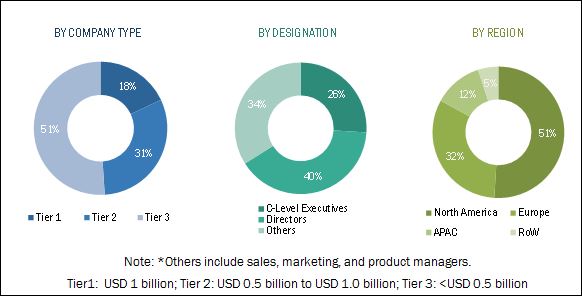
To know about the assumptions considered for the study, download the pdf brochure
The value chain analysis of the threat detection systems market shows the industry insights through raw material suppliers, component suppliers, system designers and manufacturers, system integrators, distributors, and providers of post-sales services. The major value to threat detection systems is added during the system designers and manufacturers, system integrators phases. The market ecosystem includes threat detection equipment manufacturers such as Smiths Group PLC (U.K.), Safran S.A. (France), FLIR Systems Inc. (U.S.), Thales S.A. (France), Rapiscan Systems Inc. (U.S.), RAE Systems Inc. (U.S.), Chemring Group plc (U.K.), ChemImage Sensor Systems (U.S.), Mirion Technologies Inc. (U.S.), and Axis Communication AB (Sweden), among others who offer threat detection devices to end users.
Key Target Audience:
- Original equipment manufacturers (OEMs)
- OEM technology solution providers
- Research institutes
- Market research and consulting firms
- Forums, alliances, and associations
- Technology investors
- Governments and financial institutions
- Analysts and strategic business planners
- End users who want to know more about the technology and the latest technological developments in the industry
Scope of the Report
The threat detection market has been covered in detail in this report, segmented on the basis of type, product/system, application and geography. To provide a holistic picture, the current market demand and forecasts have also been included in the report. The threat detection market has been segmented as follows:
Threat Detection Systems Market, by Type:
- Explosive Detection
- Radiological and Nuclear Detection
- Chemical and Biological Detection
- Narcotics Detection
- Intrusion Detection
Threat Detection Systems Market, by Product/System:
- Explosive and Narcotics Detectors
- Personal Radiation Detectors
- Dosimeters
- Survey Meters
- Identifiers
- Photo Ionization Detectors
- Air Samplers
- Chemical Agent Detectors
- Biological Agent Detectors
- Laser Systems
- Radar Systems
- Video Surveillance Systems
- Perimeter Intrusion Detection Systems
- Wideband Wireless Communication Systems
- Biometric Systems
Threat Detection Systems Market, by Application:
- Defense
- Public Infrastructure
- Commercial
- Industrial
- Institutional
- Residential
Threat Detection Systems Market, by Geography:
- North America
- Europe
- APAC
- RoW (South America, Middle East and Africa)
Available Customizations
With the given market data, MarketsandMarkets offers customizations according to the company’s specific needs. The following customization options are available for the report:
- Market size for 2019 and 2021 for segments such as by type, and product/systems, application and geography.
- Company information: detailed analysis and profiling of additional (5) market players.













Growth opportunities and latent adjacency in Threat Detection Systems Market
Preparing a research project on UTC Aerospace and would like to gain further knowledge of the industry.
I would like a brief interview with the author of the following report: Threat Detection Systems Market by Detection Type (Explosive, Radiological & Nuclear, Chemical & Biological, Narcotics, Intrusion), Product (Dosimeter, Laser, Radar, Video Surveillance, Biometric), Application, and Geography - Global Forecast to 2022.
Please send me the PDF brochure of this report. If I am interested in the main report, then I will contact you.