Touchscreen Controller Market by Technology (Resistive & Capacitive), Interface (I2C, SPI, USB), Touchscreen Technology (Single-Touch & Multi-Touch), Screen Size (Small & Medium, and Large), Application and Geography - Global Forecast to 2035


Touchscreen Controller Market Summary
The global Touchscreen Controller Market is estimated to reach approximately USD 5 billion in 2025 and is projected to grow to around USD 9 billion by 2035, registering a CAGR of approximately 6%–7% during the forecast period. Market expansion is being driven by the rapid adoption of smartphones, tablets, automotive infotainment systems, industrial human-machine interfaces (HMIs), smart appliances, and connected consumer electronics. Increasing integration of capacitive touch technology with AI-enabled interfaces, IoT connectivity, edge computing, and automated control systems is further expanding application opportunities. Automotive digital cockpits, advanced driver-assistance systems, medical displays, and industrial automation are creating additional demand for high-performance touchscreen controllers capable of supporting multitouch, gesture recognition, low-power operation, and high-resolution displays.
Key Market Trends & Insights
The Touchscreen Controller Market is undergoing a transition from conventional touch-input solutions toward intelligent, low-power, highly integrated controller architectures. Capacitive touchscreen controllers continue to represent a major market segment because of their responsiveness, durability, multitouch capability, and compatibility with modern display technologies.
North America remains a significant market owing to strong adoption of advanced automotive electronics, industrial automation, smart devices, and connected technologies. Asia Pacific is expected to record the fastest growth, supported by large-scale electronics manufacturing, expanding smartphone production, automotive electrification, and investments in smart manufacturing.
Automotive applications are becoming an important growth area as manufacturers introduce larger center displays, digital instrument clusters, rear-seat entertainment systems, and touch-based control panels. At the same time, industrial touchscreen HMIs are increasingly connected to IoT platforms, allowing operators to monitor equipment, production parameters, and predictive-maintenance data through intuitive interfaces.
Another important trend is the integration of AI and software intelligence into touch interfaces. AI-enabled systems can improve gesture recognition, contextual interaction, touch accuracy, and user personalization. Semiconductor manufacturers are also emphasizing smaller footprints, lower power consumption, enhanced noise immunity, and integration of multiple functions into a single controller.
Market Size & Forecast
- Base year market size: USD 5 billion in 2025.
- Forecast market value: USD 9 billion by 2035.
- Expected CAGR: 6%–7% during 2025–2035.
- Growth factors: Smartphone and consumer-electronics penetration, automotive digitalization, industrial automation, smart-home adoption, IoT connectivity, and demand for advanced human-machine interfaces are expected to support market growth.
Touchscreen Controller Market Top 10 key takeaway
- The global Touchscreen Controller Market is expected to maintain steady growth through 2035.
- Capacitive touchscreen controllers are expected to remain the dominant technology segment.
- Consumer electronics continue to represent a major source of touchscreen controller demand.
- Automotive displays are emerging as one of the most attractive growth opportunities.
- Asia Pacific is expected to be the fastest-growing regional market.
- Smartphone, tablet, and smart-device manufacturing continues to support high-volume demand.
- Industrial automation is increasing the adoption of touchscreen-based HMIs.
- AI and IoT integration are improving touchscreen functionality and user interaction.
- Low-power and high-noise-immunity controller designs are gaining importance.
- Semiconductor integration and advanced display technologies will shape the competitive landscape through 2035.
Product Insights
Capacitive touchscreen controllers are expected to maintain a leading position in the Touchscreen Controller Market because they provide high sensitivity, multitouch functionality, fast response, and a smooth user experience. Projected-capacitive technology is particularly suitable for smartphones, tablets, automotive displays, industrial panels, and consumer appliances. Its ability to support gestures such as swiping, pinching, and multi-finger interaction makes it well suited to modern graphical user interfaces.
Resistive touchscreen controllers continue to serve specialized applications where operation with gloves, styluses, or other input objects is important. These controllers remain relevant in industrial equipment, point-of-sale terminals, medical instruments, and certain rugged environments. However, the shift toward intuitive multitouch interfaces is strengthening demand for capacitive solutions.
Emerging products are increasingly focused on controller integration, power efficiency, enhanced touch accuracy, and compatibility with flexible and curved displays. Automotive applications are also creating demand for controllers capable of operating reliably under electromagnetic interference, vibration, temperature fluctuations, and demanding environmental conditions. AI-assisted touch processing can further improve rejection of accidental touches and enable more sophisticated gesture-based interfaces.
Technology / Component Insights
Touchscreen controller technology is evolving alongside display, semiconductor, and connectivity innovations. Modern controllers combine sensing, signal processing, firmware, communication interfaces, and power-management capabilities in compact semiconductor packages. Advanced capacitive sensing technologies enable accurate detection of multiple touch points while reducing interference from display noise and external electromagnetic sources.
AI is becoming increasingly relevant in advanced touchscreen systems. Machine-learning algorithms can analyze touch patterns to distinguish intentional interaction from accidental contact, improve gesture recognition, and support adaptive interfaces. In automotive and industrial environments, AI-enabled controllers can work with other sensors to create more contextual human-machine interactions.
IoT connectivity is also influencing controller architectures. Touchscreen panels in industrial equipment and smart appliances can serve as gateways to connected systems, transmitting operational data to cloud or edge platforms. Future controller designs are likely to emphasize edge intelligence, ultra-low power consumption, improved security, higher sampling rates, and compatibility with next-generation display technologies.
Application Insights
Consumer electronics represent one of the largest application areas for touchscreen controllers. Smartphones, tablets, laptops, smartwatches, gaming devices, and smart-home products require compact controllers that can deliver responsive and reliable touch interaction. Rising demand for larger displays, thinner devices, foldable electronics, and sophisticated user interfaces is creating new technical requirements for touchscreen semiconductor components.
Automotive applications are expected to provide substantial future opportunities. Modern vehicles increasingly use touchscreen displays for infotainment, navigation, climate control, vehicle settings, digital instrument clusters, and passenger entertainment. The transition toward electric and software-defined vehicles is accelerating the use of centralized digital interfaces.
Industrial automation is another important application segment. Touchscreen controllers enable intuitive HMIs for programmable machinery, robotics, production lines, process-control systems, and warehouse automation equipment. As factories adopt Industry 4.0 technologies, touchscreen interfaces are increasingly connected with sensors, industrial networks, edge computing, and analytics platforms.
Medical equipment, retail terminals, smart appliances, and aerospace electronics also offer opportunities as manufacturers replace physical controls with digital interfaces.
Regional Insights
North America represents a significant market for touchscreen controllers due to the region's strong presence in technology, automotive electronics, industrial automation, healthcare equipment, and advanced consumer devices. The US market benefits from investment in connected vehicles, smart manufacturing, edge computing, and digital infrastructure. Demand for sophisticated HMIs in industrial and automotive environments is expected to support continued adoption.
Europe is supported by automotive innovation, industrial automation, premium consumer electronics, and increasing digitalization of manufacturing. Germany remains particularly important because of its automotive and industrial-equipment ecosystem. European manufacturers are increasingly incorporating touch-based interfaces into vehicles, machinery, medical devices, and smart building systems.
Asia Pacific is expected to register the fastest growth during the forecast period. China, Japan, South Korea, Taiwan, and other regional manufacturing centers play major roles in electronics production and semiconductor supply chains. Expanding smartphone production, automotive manufacturing, electric vehicles, industrial automation, and smart-device adoption are expected to strengthen regional demand.
- North America benefits from advanced automotive and industrial applications.
- Europe is supported by automotive electronics and Industry 4.0 investments.
- Asia Pacific is expected to be the fastest-growing regional market.
- Electronics manufacturing concentration gives Asia Pacific a strong supply-chain advantage.
- Automotive displays and smart devices are major regional growth opportunities.
Country-Specific Market Trends
China is expected to remain a major market in Asia Pacific, supported by its extensive electronics manufacturing ecosystem, smartphone production, electric-vehicle industry, and smart manufacturing investments. The country's continued emphasis on domestic semiconductor capabilities and industrial digitalization is likely to encourage development and deployment of advanced touchscreen technologies. China's Touchscreen Controller Market could expand at approximately 7%–8% CAGR through 2035.
Japan is expected to record approximately 5%–6% CAGR, supported by automotive electronics, robotics, industrial automation, medical equipment, and high-end consumer electronics. Japanese manufacturers are emphasizing reliable and durable touch interfaces for demanding industrial and automotive applications.
The United States is projected to grow at approximately 6%–7% CAGR, supported by automotive digitalization, industrial automation, healthcare electronics, and advanced computing systems. Canada could record approximately 5%–6% CAGR, while Mexico could experience around 6%–7% CAGR, supported by automotive and electronics manufacturing.
Germany is expected to grow at approximately 5%–6% CAGR, driven by automotive displays, smart factories, industrial machinery, and digital manufacturing. France could register approximately 5%–6% CAGR, supported by automotive, aerospace, healthcare, and connected-device applications.
- China benefits from electronics manufacturing and EV production.
- Japan is driven by robotics, automotive electronics, and industrial applications.
- United States remains a major market for advanced connected technologies.
- Germany benefits strongly from automotive and industrial automation.
- Mexico is gaining importance through automotive and electronics manufacturing.
Key Touchscreen Controller Market Company Insights
The competitive landscape includes semiconductor and interface-technology companies developing touchscreen controllers for consumer, automotive, industrial, and specialized applications. Key participants include Synaptics, Goodix, Microchip Technology, Texas Instruments, Infineon Technologies, STMicroelectronics, ELAN Microelectronics, and FocalTech Systems.
Companies are focusing on increasing touch sensitivity, reducing power consumption, improving electromagnetic interference resistance, and supporting larger and more complex displays. Automotive-oriented strategies increasingly emphasize qualification for harsh operating environments and support for advanced cockpit architectures. In consumer electronics, suppliers are concentrating on integration, thin device designs, high touch accuracy, and compatibility with emerging display formats.
- Companies are prioritizing higher touch accuracy and lower power consumption.
- Automotive-grade controller development is becoming increasingly important.
- AI-based signal processing is creating opportunities for differentiated products.
- Semiconductor integration is helping manufacturers reduce component count.
- Strategic partnerships with display and device manufacturers can strengthen market positioning.
Recent Developments
Recent industry activity has increasingly focused on touchscreen controllers designed for automotive displays, industrial HMIs, and next-generation consumer devices. Semiconductor manufacturers are introducing solutions with improved noise rejection and higher touch sensitivity to support large-format displays and demanding operating conditions.
Another important development is the integration of advanced algorithms into touchscreen processing. These technologies can improve touch accuracy, gesture detection, and rejection of unintended inputs. Automotive suppliers are also increasingly collaborating with display and electronics manufacturers to optimize controller performance for digital cockpits and centralized vehicle displays.
The expansion of flexible, curved, high-resolution, and large-format displays is encouraging controller manufacturers to develop architectures capable of handling greater sensing complexity while maintaining low latency and efficient power consumption.
Market Segmentation
The Touchscreen Controller Market can be segmented by product, technology/component, application, and region. By product, the market includes capacitive and resistive touchscreen controllers, with capacitive solutions expected to maintain a dominant position because of their multitouch capabilities and broad compatibility with modern displays. By technology, projected-capacitive sensing, surface-capacitive sensing, resistive sensing, and advanced signal-processing architectures represent important categories. By application, consumer electronics, automotive, industrial, healthcare, retail, and other applications contribute to demand. Regionally, North America, Europe, Asia Pacific, and other markets represent the major geographic segments, with Asia Pacific expected to experience the strongest expansion.
- By Product: Capacitive controllers are expected to lead.
- By Technology: Advanced projected-capacitive sensing remains highly significant.
- By Application: Consumer electronics represent a major demand center.
- By Emerging Application: Automotive and industrial HMIs offer strong growth potential.
- By Region: Asia Pacific is expected to record the fastest growth.
The Touchscreen Controller Market is positioned for steady expansion through 2035, supported by the convergence of display technologies, semiconductor innovation, AI, IoT, and automation. Touch interfaces are evolving beyond simple input mechanisms into intelligent human-machine interaction platforms capable of supporting contextual controls, connected applications, and increasingly sophisticated digital experiences.
AI will play a growing role in improving touch accuracy, gesture recognition, personalization, and contextual interaction, while IoT and edge computing will connect touchscreen interfaces with broader digital ecosystems. Automotive digital cockpits, electric vehicles, industrial automation, smart appliances, medical systems, and next-generation consumer electronics are expected to create significant opportunities.
For businesses, investment in low-power, secure, reliable, and AI-enabled touchscreen controller technologies will become strategically important. Companies that combine semiconductor integration with advanced sensing, software intelligence, and application-specific design are likely to gain an advantage as the market moves toward more connected and interactive devices.
FAQs
1. What is the estimated size of the Touchscreen Controller Market?
The global Touchscreen Controller Market is estimated at approximately USD 5 billion in 2025 and is projected to reach around USD 9 billion by 2035.
2. What is the expected growth rate of the Touchscreen Controller Market?
The market is expected to expand at approximately 6%–7% CAGR from 2025 to 2035.
3. What are the key drivers of the Touchscreen Controller Market?
Major drivers include smartphone and consumer-electronics adoption, automotive digitalization, industrial automation, IoT connectivity, smart devices, and demand for advanced human-machine interfaces.
4. Which region is expected to lead the Touchscreen Controller Market?
North America remains a significant regional market, while Asia Pacific is expected to experience the fastest growth through 2035.
5. Who are the key companies in the Touchscreen Controller Market?
Major participants include Synaptics, Goodix, Microchip Technology, Texas Instruments, Infineon Technologies, STMicroelectronics, ELAN Microelectronics, and FocalTech Systems.
To speak to our analyst for a discussion on the above findings, click Speak to Analyst
 Exclusive indicates content/data unique to MarketsandMarkets and not available with any competitors.
Table of Contents
1 Introduction (Page No. - 15)
1.1 Objectives of the Study
1.2 Market Definition
1.3 Scope of the Study
1.3.1 Markets Covered
1.3.2 Geographic Scope
1.3.3 Years Considered for the Study
1.4 Currency
1.5 Limitations
1.6 Stakeholders
2 Research Methodology (Page No. - 20)
2.1 Research Data
2.1.1 Secondary Data
2.1.1.1 Key Data From Secondary Sources
2.1.2 Primary Data
2.1.2.1 Key Data From Primary Sources
2.1.2.2 Key Industry Insights
2.1.2.3 Breakdown of Primaries
2.2 Market Size Estimation
2.2.1 Bottom-Up Approach
2.2.2 Top-Down Approach
2.3 Market Breakdown & Data Triangulation
2.4 Research Assumptions
3 Executive Summary (Page No. - 29)
4 Premium Insights (Page No. - 34)
4.1 Touchscreen Controller Market Expected to Have A Huge Growth Opportunity in APAC
4.2 Market, By Technology (2016–2022)
4.3 Market, By Region and Application
4.4 Market, By Region (2016)
4.5 Market, By Interface
5 Market Overview (Page No. - 37)
5.1 Introduction
5.2 Market Segmentation
5.2.1 Market, By Technology
5.2.2 Market, By Interface
5.2.3 Market, By Touchscreen Technology
5.2.4 Market, By Screen Size
5.2.5 Market, By Application
5.2.6 Market, By Geography
5.3 Market Dynamics
5.3.1 Drivers
5.3.1.1 High Demand for Capacitive Touchscreen Technology
5.3.1.2 Increasing Use of Touchscreens in Automobiles
5.3.1.3 Wearable Electronics Driving the Demand for Touchscreen Controller
5.3.2 Restraints
5.3.2.1 Technical Complications in Obtaining the Right Refresh Rate and Power Consumption
5.3.3 Opportunities
5.3.3.1 Growing Trend of Touchscreens in the Banking and Educational Sectors
5.3.3.2 Digitization and Iot to Open Up New Growth Avenues
5.3.4 Challengesss
5.3.4.1 Dealing With the Rising Competition in the Market
6 Industry Trends (Page No. - 44)
6.1 Introduction
6.2 Value Chain Analysis
6.3 Porter’s Five Forces Model
6.3.1 Threat of New Entrants
6.3.2 Threat of Substitutes
6.3.3 Bargaining Power of Suppliers
6.3.4 Bargaining Power of Buyers
6.3.5 Intensity of Competitive Rivalry
7 Touchscreen Controller Market, By Technology (Page No. - 52)
7.1 Introduction
7.2 Resistive Touchscreen Controller
7.2.1 4-Wire Resistive Touchscreen Technology
7.2.2 5-Wire Resistive Touchscreen Technology
7.2.3 8-Wire Resistive Touchscreen Technology
7.3 Capacitive Touchscreen Controller
7.3.1 Projected Capacitive Touchscreen Technology
7.3.2 Surface Capacitive Touchscreen Technology
8 Touchscreen Controller Market, By Interface (Page No. - 59)
8.1 Introduction
8.2 Inter-Integrated Circuit
8.3 Serial Peripheral Interface
8.4 Universal Serial Bus
8.5 Universal Asynchronous Receiver / Transmitter (UART)
8.6 Human Interface Device Over Universal Serial Bus
9 Touchscreen Controller Market, By Touchscreen Technology (Page No. - 64)
9.1 Introduction
9.2 Single-Touch
9.3 Multi-Touch
10 Touchscreen Controller Market, By Screen Size (Page No. - 70)
10.1 Introduction
10.2 Small & Medium Screen Size
10.3 Large Screen Size
11 Touchscreen Controller Market, By Application (Page No. - 77)
11.1 Introduction
11.2 Consumer Electronics
11.2.1 Smartphones
11.2.2 Tablets
11.2.3 Laptops & Pcs
11.2.4 Wearable Devices
11.2.5 Smart Homes
11.2.6 Gaming Devices
11.2.7 Other Consumer Electronics
11.3 Commercial
11.3.1 Automotive
11.3.2 Point of Sale
11.3.3 Education & Training
11.3.4 Healthcare
11.3.5 Banking
11.4 Industrial
11.5 Other Application Areas
12 Geographic Analysis (Page No. - 112)
12.1 Introduction
12.2 North America
12.2.1 U.S.
12.2.1.1 The U.S. is Expected to Be the Largest Market for Touchscreen Controllers in 2016
12.2.2 Canada
12.2.2.1 Canada Expected to Grow at the Highest Rate in the North American Market
12.2.3 Mexico
12.2.3.1 Proactive Initiatives Taken By Mexican Government Helping the Market to Grow
12.3 Europe
12.3.1 U.K.
12.3.1.1 A Significant Market for Touchscreen Controller in Banking
12.3.2 Germany
12.3.2.1 Germany Held the Largest Share of the European Market in 2015
12.3.3 France
12.3.3.1 Huge Potential for the Development of the Market
12.3.4 Rest of Europe
12.3.4.1 Opportunity From Medical Device and Consumer Electronics Applications
12.4 Asia-Pacific
12.4.1 China
12.4.1.1 Increasing Consumer Electronics Production Fueling the Chinese Market
12.4.2 Japan
12.4.2.1 Presence of Key Manufacturers Driving the Market in This Country
12.4.3 South Korea
12.4.3.1 Held the Largest Share of the Asia-Pacific Touchscreen Controller Market in 2015
12.4.4 Rest of Asia-Pacific
12.4.4.1 Rest of APAC: India & Australia are Emerging Markets With Significant Potential
12.5 Rest of the World
12.5.1 South America
12.5.1.1 Developing Market for Tablets is Expected to Drive Future Growth
12.5.2 Middle East
12.5.2.1 Infrastructure Development and Automotive Sector in the Middle East Would Drive This Market
12.5.3 Africa
12.5.3.1 Africa to Hold A Significant Share of the RoW Market for Touchscreen Controller
13 Competitive Landscape (Page No. - 131)
13.1 Overview
13.2 Market Ranking Analysis, 2015
13.3 Competitive Situation and Trends
13.3.1 New Product Launches
13.3.2 Collaborations & Partnerships
13.3.3 Acquisitions & Mergers
13.3.4 Divestiture
14 Company Profiles (Page No. - 138)
(Overview, Products and Services, Financials, Strategy & Development)*
14.1 Introduction
14.2 Cypress Semiconductor Corporation
14.3 Microchip Technology Incorporated
14.4 Stmicroelectronics N.V.
14.5 Synaptics Incorporated
14.6 Texas Instruments Incorporated
14.7 Analog Devices, Inc.
14.8 ELAN Microelectronics Corp.
14.9 Integrated Device Technology, Inc.
14.10 Melfas Incorporated
14.11 NXP Semiconductors N.V.
14.12 Samsung Electronics Co., Ltd
14.13 Broadcom Limited
*Details on Overview, Products and Services, Financials, Strategy & Development Might Not Be Captured in Case of Unlisted Companies.
15 Appendix (Page No. - 165)
15.1 Insights of Industry Experts
15.2 Discussion Guide
15.3 Knowledge Store: Marketsandmarkets’ Subscription Portal
15.4 Introducing RT: Real-Time Market Intelligence
15.5 Available Customizations
15.6 Related Reports
List of Tables (69 Tables)
Table 1 Market Size, in Terms of Value and Volume, 2013–2022
Table 2 Market, By Technology, 2013–2022 (USD Million)
Table 3 Market for Resistive Technology, By Application, 2013–2022 (USD Million)
Table 4 Market for Capacitive Technology, By Application, 2013–2022 (USD Million)
Table 5 Touchscreen Controllers Market, By Interface, 2013–2022 (USD Million)
Table 6 Market, By Touchscreen Technology, 2013–2022 (USD Million)
Table 7 Market for Single-Touch Technology, By Application, 2013–2022 (USD Million)
Table 8 Market for Multi-Touch Technology, By Application, 2013–2022 (USD Million)
Table 9 Market, By Screen Size, 2013–2022 (USD Million)
Table 10 Market for Small & Medium Screen Size, By Application, 2013–2022 (USD Million)
Table 11 Market for Large Screen Size, By Application, 2013–2022 (USD Million)
Table 12 Market, By Application, 2013–2022 (USD Million)
Table 13 Market, By Application, 2013–2022 (Million Units)
Table 14 Touchscreen Controller Market for Consumer Electronics Application, By Type, 2013–2022 (USD Million)
Table 15 Market for Consumer Electronics Application, By Type, 2013–2022 (Million Units)
Table 16 Market for Consumer Electronics, By Technology, 2013–2022 (USD Million)
Table 17 Market for Consumer Electronics Application, By Touchscreen Technology, 2013–2022 (USD Million)
Table 18 Market for Consumer Electronics, By Screen Size, 2013–2022 (USD Million)
Table 19 Market for Consumer Electronics Application, By Region, 2013–2022 (USD Million)
Table 20 Market for Smartphone Application, By Technology, 2013–2022 (USD Million)
Table 21 Market for Smartphone Application, By Screen Size, 2013–2022 (USD Million)
Table 22 Market for Tablet Application, By Technology, 2013–2022 (USD Million)
Table 23 Market for Tablet Application, By Screen Size, 2013–2022 (USD Million)
Table 24 Market for Laptop & Pc Application, By Technology, 2013–2022 (USD Million)
Table 25 Market for Laptop & Pc Application, By Screen Size, 2013–2022 (USD Million)
Table 26 Market for Wearable Devices Application, By Technology, 2013–2022 (USD Million)
Table 27 Market for Wearable Devices Application, By Screen Size, 2013–2022 (USD Million)
Table 28 Market for Smart Home Application, By Technology, 2013–2022 (USD Million)
Table 29 Market for Smart Home Application, By Screen Size, 2013–2022 (USD Million)
Table 30 Market for Gaming Device Application, By Technology, 2013–2022 (USD Million)
Table 31 Market for Gaming Device Application, By Screen Size, 2013–2022 (USD Million)
Table 32 Market for Other Consumer Electronics, By Technology, 2013–2022 (USD Million)
Table 33 Market for Other Consumer Electronics, By Screen Size, 2013–2022 (USD Million)
Table 34 Touchscreen Controller Market for Commercial Application, By Type, 2013–2022 (USD Million)
Table 35 Market for Commercial Application, By Type, 2013–2022 (Million Units)
Table 36 Market for Commercial Application, By Technology, 2013–2022 (USD Million)
Table 37 Market for Commercial Application, By Touchscreen Technology, 2013–2022 (USD Million)
Table 38 Market for Commercial Application, By Screen Size, 2013–2022 (USD Million)
Table 39 Market for Commercial Application, By Region, 2013–2022 (USD Million)
Table 40 Market for Automotive Application, By Technology, 2013–2022 (USD Million)
Table 41 Market for Automotive Application, By Screen Size, 2013–2022 (USD Million)
Table 42 Touchscreen Controller Market for Point of Sale, By Technology, 2013–2022 (USD Million)
Table 43 Market for Point of Sale, By Screen Size, 2013–2022 (USD Million)
Table 44 Market for Education & Training Application, By Technology, 2013–2022 (USD Million)
Table 45 Market for Education and Training Application, By Screen Size, 2013–2022 (USD Million)
Table 46 Market for Healthcare Application, By Technology, 2013–2022 (USD Million)
Table 47 Market for Healthcare Application, By Screen Size, 2013–2022 (USD Million)
Table 48 Market for Banking Application, By Technology, 2013–2022 (USD Million)
Table 49 Market for Banking Application, By Screen Size, 2013–2022 (USD Million)
Table 50 Market for Industrial Application, By Technology, 2013–2022 (USD Million)
Table 51 Market for Industrial Application, By Touchscreen Technology, 2013–2022 (USD Million)
Table 52 Market for Industrial Application, By Screen Size, 2013–2022 (USD Million)
Table 53 Market for Industrial Application, By Region, 2013–2022 (USD Million)
Table 54 Market for Other Applications, By Technology, 2013–2022 (USD Million)
Table 55 Market for Other Applications, By Region, 2013–2022 (USD Million)
Table 56 Market, By Region, 2013–2022 (USD Million)
Table 57 Market in North America, By Country, 2013–2022 (USD Million)
Table 58 Market in North America, By Application, 2013–2022 (USD Million)
Table 59 Market in Europe, By Country, 2013–2022 (USD Million)
Table 60 Market in Europe, By Application, 2013–2022 (USD Million)
Table 61 Touchscreen Controller Market in Asia-Pacific, By Country, 2013–2022 (USD Million)
Table 62 Market in Asia-Pacific, By Application, 2013–2022 (USD Million)
Table 63 Market in RoW, By Region, 2013–2022 (USD Million)
Table 64 Market in RoW, By Application, 2013–2022 (USD Million)
Table 65 Market: Market Ranking Analysis (2015)
Table 66 Most Significant New Product Launches in the Market
Table 67 Most Significant Collaborations and Partnerships in the Market
Table 68 Most Significant Agreements and Contracts in the Market
Table 69 Most Significant Other Developments in the Market
List of Figures (83 Figures)
Figure 1 Markets Covered
Figure 2 Market: Research Design
Figure 3 Market: Bottom-Up Approach
Figure 4 Market: Top-Down Approach
Figure 5 Market Breakdown & Data Triangulation
Figure 6 Assumptions of the Research Study
Figure 7 Touchscreen Controller: Market Segmentation
Figure 8 Market Snapshot (2016 vs 2022): Capacitive Technology Expected to Hold the Largest Share of the Touchscreen Controller Market Between 2016 and 2022
Figure 9 Small-& Medium-Screen Size to Hold the Largest Market Size During the Forecast Period (2016 and 2022)
Figure 10 Market for Commercial Application Expected to Grow at the Highest Rate During the Forecast Period (2016 -2022)
Figure 11 Asia-Pacific Estimated to Hold the Largest Share of the Market in (2016)
Figure 12 Attractive Growth Opportunities in the Market Between 2016 and 2022
Figure 13 Capacitive Touchscreen Controllers to Hold the Largest Market Size During the Forecast Period
Figure 14 Asia-Pacific to Hold the Largest Share of the Touchscreen Controllers Market in 2016
Figure 15 U.S. to Hold the Largest Share of the Global Market in 2016
Figure 16 Inter-Integrated Circuit Interface to Grow at the Highest Rate Between 2016 and 2022
Figure 17 Drivers, Restraints, Opportunities, and Challenges in the Market
Figure 18 Major Value Addition Done During the Manufacturing & Assembly Phase
Figure 19 Porter’s Five Forces Analysis - 2015
Figure 20 Impact Analysis: Touchscreen Controller Market
Figure 21 Medium Impact of Threat of New Entrants on the Market
Figure 22 Low Impact of Threat of Substitutes in the Market
Figure 23 Low Impact of Bargaining Power of Suppliers in the Market
Figure 24 High Impact of Bargaining Power of Buyers in the Market
Figure 25 High Impact of Intensity Rivalry in the Market
Figure 26 Market, By Technology
Figure 27 Market for Capacitive Technology Expected to Grow at the Highest Rate Between 2016 and 2022
Figure 28 Consumer Electronics Application Expected to Hold the Largest Size of the Market for Resistive Technology During the Forecast Period
Figure 29 Commercial Application of the Market for Capacitive Technology Expected to Grow at the Highest Rate Between 2016 and 2022
Figure 30 Touchscreen Controllers Market, By Interface
Figure 31 Inter-Integrated Circuit Interface to Witness the Highest Growth Rate Between 2016 and 2022
Figure 32 Market, By Touchscreen Technology
Figure 33 Multi-Touch Technology Market Expected to Grow at the Highest Rate Between 2016 and 2022
Figure 34 Commercial Application to Grow at the Highest Rate in the Market for the Single-Touch Technology During the Forecast Period
Figure 35 Consumer Electronics Application to Lead the Multi-Touch Technology Between 2016 and 2022
Figure 36 Touchscreen Controllers Market, By Screen Size
Figure 37 Small-& Medium-Sized Touchscreen Market Expected to Grow at the Highest Rate in the Market Between 2016 and 2022
Figure 38 Consumer Electronics Application Expected to Lead the Small & Medium Size Touchscreen Market By 2022
Figure 39 Commercial Application of the Market for Large Screen Size Expected to Grow at the Highest Rate During the Forecast Period
Figure 40 Market, By Application
Figure 41 Commercial Application of the Touch Screen Controller Market Expected to Grow at the Highest Rate Between 2016 and 2022
Figure 42 Multi-Touch Screen Technology Expected to Dominate the Market for Consumer Electronics Application By 2022
Figure 43 Capacitive Technology to Lead the Market for Smartphone Application Between 2016 and 2022
Figure 44 Capacitive Technology of the Market for Laptop & Pc Application Expected to Grow at the Highest Rate Between 2016 and 2022
Figure 45 Capacitive Technology of the Market for Smart Home Application to Hold A Large Size in 2016
Figure 46 Large-Size Screen of Market for Other Consumer Electronics Expected to Grow at the Highest Rate Between 2016 and 2022
Figure 47 Automotive Expected to Dominate the Market for Commercial Application By 2022
Figure 48 Europe to Hold the Largest Size of the Market for Commercial Application Between 2016 and 2022
Figure 49 Capacitive Technology to Lead the Market for Point of Sale Application Between 2016 and 2022
Figure 50 Large-Size Screen to Hold the Largest Size of the Market for Education and Training Application Between 2016 and 2022
Figure 51 Capacitive Technology to Grow at the Highest Rate for the Market for Banking Application Between 2016 and 2022
Figure 52 Multi-Touch Technology Expected to Dominate the Market for Industrial Application By 2022
Figure 53 Asia-Pacific to Lead the Market for Industrial Application Between 2016 and 2022
Figure 54 North America to Hold the Largest Size of the Touchscreen Controller Market for Other Applications Between 2016 and 2022
Figure 55 Geographic Snapshot : Touchscreen Controllers Market (2016-2022)
Figure 56 Asia-Pacific to Hold the Largest Share of the Market in 2016
Figure 57 North America Market Snapshot: Demand Expected to Be Driven By Consumer Electronics Application in the Near Future
Figure 58 Market in Canada Expected to Grow at the Highest Rate Between 2016 and 2022
Figure 59 Germany to Grow at the Highest Rate in the European Market for Touchscreen Controller Between 2016 and 2022
Figure 60 Asia-Pacific Market Snapshot: Market Expected to Be Driven By the Consumer Electronics Application
Figure 61 South Korea Expected to Lead the Market in Asia-Pacific Between 2016 and 2022
Figure 62 Market in the Middle East to Grow at the Highest Rate Between 2016 and 2022
Figure 63 Companies Adopted New Product Launch as the Key Growth Strategy Between 2015 and 2016
Figure 64 Market Evaluation Framework
Figure 65 Battle for Developmental Share: New Product Launch Was the Key Strategy
Figure 66 Geographic Revenue Mix of Top Market Players
Figure 67 Cypress Semiconductor Corporation.: Company Snapshot
Figure 68 Cypress Semiconductor Corporation.: SWOT Analysis
Figure 69 Microchip Technology Incorporated.: Company Snapshot
Figure 70 Microchip Technology Incorporated.: SWOT Analysis
Figure 71 Stmicroelectronics N.V.: Company Snapshot
Figure 72 Stmicroelectronics N.V.: SWOT Analysis
Figure 73 Synaptics Incorporated: Company Snapshot
Figure 74 Synaptics Incorporated.: SWOT Analysis
Figure 75 Texas Instruments Incorporated.: Company Snapshot
Figure 76 Texas Instruments Inc.: SWOT Analysis
Figure 77 Analog Devices, Inc.: Company Snapshot
Figure 78 ELAN Microelectronics Corp.: Company Snapshot
Figure 79 Integrated Device Technology, Inc.: Company Snapshot
Figure 80 Melfas Incorporated.: Company Snapshot
Figure 81 NXP Semiconductors N.V.: Company Snapshot
Figure 82 Samsung Electronics Co. Ltd.: Company Snapshot
Figure 83 Broadcom Limited: Company Snapshot
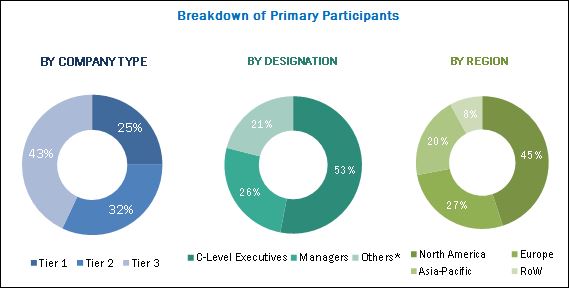
The research methodology used to estimate and forecast the touchscreen controller market begins with obtaining data on key vendor revenues through secondary research and leading players’ newsletters and whitepapers. The vendor offerings have also been taken into consideration to determine the market segmentation. The bottom-up procedure has been employed to arrive at the overall size of the global market from the revenue of key players. After arriving at the overall market size, the total market has been split into several segments and subsegments, which have then been verified through primary research by conducting extensive interviews of people holding key positions in the industry such as CEOs, VPs, directors, and executives. The market breakdown and data triangulation procedures have been employed to complete the overall market engineering process and arrive at the exact statistics for all segments and subsegments. The breakdown of the profiles of primaries has been depicted in the figure given below.
To know about the assumptions considered for the study, download the pdf brochure
The touchscreen controller ecosystem comprises raw material vendors and touch screen controller manufacturers, third party logistics providers and distributors. The players involved in the development of touchscreen controller include Microchip Technology Incorporated (U.S.), Synaptics Incorporated (U.S.), STMicroelectronics N.V. (Switzerland), Cypress Semiconductor Corporation (U.S.), Texas Instruments Inc. (U.S.), Broadcom Limited (U.S.), Analog Devices Inc. (U.S.), NXP Semiconductors N.V. (Netherlands), Integrated Device Technology, Inc. (U.S.) and Samsung Electronics Co. Ltd. (South Korea) among others.
Target audience of the report:
- Government bodies, venture capitalists, and private equity firms
- Manufacturers of Touch screen manufacturers
- Research institutes and organizations
- Raw chemical suppliers and distributors
- Touchscreen controller manufacturers
- Touchscreen controller in various industries such as consumer electronics, automotive, healthcare, banking, retail, industrial, and many others
This study answers several questions for the stakeholders, primarily which market segments to focus on in the next two to five years for prioritizing efforts and investments.
Scope of the Report:
This research report categorizes the global touchscreen controller market on the basis of technology, interface, touchscreen technology, screen size, application and geography.
Based on Technology, the Touchscreen Controller Market been Segmented as below:
- Resistive
- Capacitive
Based on Interface, the Touchscreen Controller Market been Segmented as below:
- I2C (Inter-Integrated Circuit)
- Serial Peripheral Interface
- USB (Universal Serial Bus)
- UART (Universal Asynchronous Receiver/Transmitter)
- HID over USB
Based on Touchscreen Technology, the Touchscreen Controller Market been Segmented as below:
- Single-touch Technology
- Multi-touch Technology
Based on Screen Size, the Touchscreen Controller Market been Segmented as below:
- Small & Medium
- Large
Based on Application, the Touchscreen Controller Market been Segmented as below:
- Introduction
-
Consumer Electronics
- Smart Phones
- Tablets
- Laptops & PCs
- Smart Home
- Wearable Devices
- Gaming Devices
- Other
-
Commercial
- Automotive
- Point of Sale
- Education & Training
- Healthcare
- Banking
- Industrial
- Others
Based on Region, the Touchscreen Controller Market been Segmented as below:
-
North America
- U.S.
- Canada
- Mexico
-
Europe
- U.K.
- Germany
- France
- Rest of Europe
-
Asia-Pacific
- China
- Japan
- South Korea
- Rest of APAC
-
Rest of the World
- South America
- Middle East
- Africa
Available Customizations:
With the given market data, MarketsandMarkets offers customizations according to the companies’ specific needs. The following customization options are available for the report:
Company Information:
Detailed analysis and profiling of additional market players (up to five)













Growth opportunities and latent adjacency in Touchscreen Controller Market