X-Band Radar Market by Application (Defense, Government, and Commercial), Type (Mobile, and Sea-based X-band Radar), Array (Active Electronically Scanned Array (AESA), Passive Electronically Scanned Array (PESA), and Region - Global Forecast to 2035


X-Band Radar Market
X-Band Radar Market Summary
The global X-Band Radar Market is estimated to reach approximately USD 6.80 billion in 2025 and is projected to grow to USD 14.90 billion by 2035, registering a CAGR of 8.2% during the forecast period. The market is gaining strong momentum due to the increasing demand for high-resolution radar systems across defense, maritime, aviation, and weather monitoring applications. X-band radars, operating in the 8–12 GHz frequency range, are widely preferred for their superior target detection, tracking accuracy, and ability to operate effectively in cluttered environments. The rapid integration of artificial intelligence (AI), Internet of Things (IoT), and automation technologies is transforming X-band radar systems into intelligent, networked platforms capable of real-time analytics, predictive monitoring, and autonomous operations. Digital transformation in defense systems, coupled with advancements in phased array radar and sensor fusion technologies, is significantly accelerating market growth globally.
Key Market Trends & Insights
The X-Band Radar Market is evolving rapidly as industries demand more precise and reliable detection systems. North America leads the market due to its strong defense spending, technological leadership, and widespread adoption of advanced radar systems. Asia Pacific is the fastest-growing region, driven by increasing defense modernization programs, maritime security concerns, and expanding aviation infrastructure.
Naval radar systems represent the dominant segment, as X-band radars are extensively used for ship navigation, surveillance, and target tracking. Airborne and ground-based radar systems are also witnessing significant growth due to rising demand in military and civilian applications.
Emerging trends include the development of active electronically scanned array (AESA) radars, integration with unmanned systems, and deployment in smart infrastructure. AI and automation are enhancing radar performance by enabling real-time signal processing, target classification, and adaptive tracking. IoT integration is facilitating seamless connectivity between radar systems and command networks, improving situational awareness.
Market Size & Forecast
-
Base year market size (2025): USD 6.80 billion
-
Forecast value by 2035: USD 14.90 billion
-
CAGR (2025–2035): 8.2%
-
Growth is driven by increasing demand for high-resolution radar systems, advancements in AI and IoT, rising defense budgets, and expansion of maritime and aviation sectors
X-Band Radar Market Top 10 key takeaway
-
The market is expected to more than double by 2035
-
Naval radar systems dominate the product segment
-
North America leads with strong defense investments
-
Asia Pacific is the fastest-growing region globally
-
AI-driven analytics is improving radar performance
-
IoT integration enables real-time connectivity
-
AESA radar technology is gaining traction
-
Maritime and aviation sectors are key growth drivers
-
Sensor fusion technologies are enhancing detection accuracy
-
Continuous innovation is intensifying market competition
Product Insights
Naval radar systems represent the leading product segment in the X-Band Radar Market, driven by their critical role in maritime navigation, surveillance, and security operations. X-band radars are widely used on naval vessels to detect small targets, monitor sea traffic, and ensure safe navigation in challenging environments. Their high resolution and accuracy make them indispensable for maritime applications.
Airborne radar systems are also gaining significant traction, particularly in military aircraft and unmanned aerial vehicles (UAVs). These systems provide advanced capabilities such as terrain mapping, target tracking, and weather monitoring. Ground-based radar systems are used for air traffic control, border surveillance, and weather forecasting.
Emerging product categories include compact and portable radar systems, as well as integrated radar solutions for smart infrastructure. AI integration is enabling advanced functionalities such as automatic target recognition, predictive maintenance, and enhanced situational awareness.
Technology / Component Insights (Rename based on keyword if needed)
Technological advancements are at the core of the X-Band Radar Market, with innovations in radar design, signal processing, and system integration driving significant improvements. Key technologies include active electronically scanned array (AESA) radar, pulse-Doppler radar, and digital beamforming, all of which enhance detection capabilities and system performance.
AI is playing a transformative role by enabling real-time data analysis, target classification, and anomaly detection. Machine learning algorithms are improving radar accuracy and reducing false alarms. IoT integration is facilitating seamless communication between radar systems, sensors, and command centers, enabling coordinated operations.
Cloud-based platforms are supporting data storage and analytics, enabling centralized monitoring and management of radar systems. Automation technologies are improving system efficiency and reducing operational complexity. Future innovation trends include cognitive radar systems, integration with satellite networks, and advancements in miniaturization.
Application Insights
The defense segment dominates the X-Band Radar Market, driven by the increasing need for advanced surveillance, target tracking, and missile guidance systems. Military forces rely heavily on X-band radars for air defense, naval operations, and battlefield awareness.
Maritime applications are also significant, with X-band radars being used for navigation, collision avoidance, and port surveillance. The aviation sector is another key application area, where radar systems are used for air traffic control, weather monitoring, and aircraft navigation.
Future opportunities lie in the integration of X-band radar systems with smart cities, autonomous vehicles, and advanced transportation systems. The adoption of AI and IoT technologies is expected to drive further growth in the market.
Regional Insights
North America leads the X-Band Radar Market, supported by its advanced defense infrastructure, strong technological capabilities, and significant investments in radar systems. The region continues to adopt next-generation radar technologies.
Europe is experiencing steady growth, driven by increasing defense collaboration, modernization of military capabilities, and adoption of advanced radar systems. Countries in this region are focusing on enhancing their surveillance capabilities.
Asia Pacific is the fastest-growing region, fueled by expanding defense budgets, rising maritime security concerns, and increasing investments in aviation infrastructure. Countries such as China, India, and Japan are key contributors to regional growth.
-
North America dominates due to strong defense infrastructure
-
Europe shows steady growth with modernization initiatives
-
Asia Pacific is the fastest-growing region globally
-
Rising security concerns are driving demand
-
Technological advancements are accelerating adoption
Country-Specific Market Trends
In Asia Pacific, China is witnessing a CAGR of approximately 9.1%, driven by large-scale investments in defense and maritime security. Japan is also experiencing steady growth, supported by technological innovation and increased defense spending.
In North America, the United States remains the largest market, with a CAGR of around 8.0%, driven by continuous investment in advanced radar systems. Canada and Mexico are also contributing to market growth through infrastructure development.
In Europe, Germany and France are key markets, with CAGRs of approximately 7.7% and 7.5%, respectively. These countries are focusing on enhancing their defense capabilities and adopting advanced radar technologies.
-
China leads growth in Asia Pacific with strong investments
-
Japan focuses on innovation and advanced technologies
-
The United States dominates the global market
-
Germany and France drive growth in Europe
-
Government policies are key growth drivers
Key X-Band Radar Market Company Insights
The X-Band Radar Market is highly competitive, with leading players focusing on innovation, technological integration, and strategic partnerships. Companies such as Raytheon Technologies, Lockheed Martin, Northrop Grumman, Thales Group, Saab AB, and Leonardo S.p.A. are actively shaping the market landscape.
These companies are investing heavily in research and development to introduce advanced radar systems with AI-enabled capabilities, improved detection accuracy, and enhanced system integration. Strategic collaborations with governments and technology providers are enabling them to expand their market presence and deliver innovative solutions.
The focus on integrating AI, improving sensor performance, and enhancing system interoperability is shaping competitive strategies. Continuous innovation and technological advancement are expected to remain key drivers of competition in the market.
-
Companies are investing in AI-driven radar technologies
-
Strategic partnerships are enhancing market reach
-
Focus on integrated systems is increasing
-
R&D investments are driving innovation
-
Global expansion strategies are strengthening market presence
Recent Developments
Recent developments in the X-Band Radar Market highlight the growing emphasis on advanced technologies and digital transformation. Several companies have introduced next-generation AESA radar systems with enhanced detection capabilities and AI-powered analytics.
In addition, partnerships between defense contractors and technology providers are enabling the integration of IoT-based solutions, improving connectivity and operational efficiency. Governments are also increasing investments in advanced radar systems, further driving market growth.
Market Segmentation
The X-Band Radar Market is segmented based on product, technology/component, application, and region. By product, the market includes naval radar, airborne radar, and ground-based radar systems, with naval radar dominating due to its critical role.
In terms of technology, the market encompasses AESA radar, pulse-Doppler radar, AI-enabled systems, and IoT-integrated platforms. These technologies are driving improvements in performance, accuracy, and connectivity.
Applications are categorized into defense, maritime, aviation, and weather monitoring. Regionally, the market is divided into North America, Europe, Asia Pacific, and the rest of the world.
-
Naval radar dominates the product segment
-
AI and IoT technologies are driving innovation
-
Defense represents the largest application segment
-
Maritime and aviation sectors show strong growth potential
-
Asia Pacific is emerging as a key growth region
Conclusion
The X-Band Radar Market is poised for strong growth through 2035, driven by increasing demand for high-resolution radar systems and advancements in AI, IoT, and automation technologies. The integration of these technologies is transforming radar systems into intelligent platforms capable of delivering real-time insights and enhancing operational efficiency.
As global security and surveillance requirements continue to evolve, the demand for advanced radar solutions will remain strong. Companies that invest in innovation and align their strategies with emerging trends will be well-positioned to capitalize on future opportunities. The market’s growth trajectory underscores its critical role in modern defense and surveillance systems.
FAQs
1. What is the current market size of the X-Band Radar Market?
The market size is estimated at USD 6.80 billion in 2025.
2. What is the expected growth rate of the market?
The market is projected to grow at a CAGR of 8.2% from 2025 to 2035.
3. What are the key drivers of market growth?
Key drivers include rising defense budgets, advancements in radar technologies, AI integration, and IoT adoption.
4. Which region leads the X-Band Radar Market?
North America is the leading region due to its advanced defense infrastructure.
5. Who are the major players in the market?
Major players include Raytheon Technologies, Lockheed Martin, Northrop Grumman, Thales Group, Saab AB, and Leonardo S.p.A.
 Exclusive indicates content/data unique to MarketsandMarkets and not available with any competitors.
Table of Contents
1 Introduction (Page No. - 15)
1.1 Objectives of the Study
1.2 Markets Definition
1.3 Study Scope
1.3.1 Markets Covered
1.3.2 Geographic Scope
1.3.3 Years Considered for the Study
1.4 Currency & Pricing
1.5 Distribution Channel Participants
1.6 Limitations
1.7 Stakeholders
2 Research Methodology (Page No. - 19)
2.1 Research Data
2.1.1 Secondary Data
2.1.1.1 Key Data From Secondary Sources
2.1.2 Primary Data
2.1.2.1 Key Data From Primary Sources
2.1.2.2 Breakdown of Primaries
2.1.3 Key Industry Insights
2.2 Factor Analysis
2.2.1 Introduction
2.2.2 Demand-Side Indicators
2.2.2.1 Increase in Seaborne Trade
2.2.2.2 Air-Space Violation Incidents Driving High Range X-Band Radar Market
2.2.2.3 Border Surveillance
2.2.3 Supply-Side Analysis
2.2.3.1 Increased R&D Activities
2.2.3.2 Technological Advancements
2.3 Market Size Estimation
2.3.1 Bottom-Up Approach
2.3.2 Top-Down Approach
2.4 Market Breakdown & Data Triangulation
2.5 Research Assumptions
3 Executive Summary (Page No. - 32)
4 Premium Insights (Page No. - 36)
4.1 Attractive Opportunities in the X-Band Radar Market, 2016-2021
4.2 X-Band Radar Market, By Technology
4.3 Asia-Pacific X-Band Radar Market
4.4 X-Band Radar Market, By Region
5 Market Overview (Page No. - 39)
5.1 Introduction
5.2 Market Segmentation
5.2.1 By Application
5.2.2 By Type
5.2.3 By Array
5.2.4 By Region
5.3 Market Dynamics
5.3.1 Drivers
5.3.1.1 Emergence of Electronic and Network Centric Warfare
5.3.1.2 Replacement of Legacy Systems Resulting in Automaton of Radar
5.3.1.3 Territorial Conflicts and Geopolitical Instabilities in the Middle East and Asia-Pacific
5.3.1.4 Increased Use of Sea-Based X-Band Radar
5.3.2 Restraint
5.3.2.1 High Development Cost
5.3.3 Opportunities
5.3.3.1 Increased Development of Dual-Band Radars
5.3.3.2 Miniaturization and Automation of Radars for Uavs and Unmanned Combat Vehicles
5.3.3.3 Growing Deployment of Ballistic Missiles, and Air and Missile Defense Systems
5.3.3.4 Increased Application of Space-Based Radars
5.3.4 Challenges
5.3.4.1 Stringent Government Regulations for Obtaining Certification for Defense as Well as Commercial Applications
5.3.4.2 Electromagnetic Jamming of Radars and Noise Interruption During Satellite Communication
6 Industry Trends (Page No. - 50)
6.1 Introduction
6.2 Mapping of X-Band Radar Products
6.3 Industry Insights
6.4 Technological Trends
6.4.1 Solid State Transmitters
6.4.2 Advanced Materials
6.4.3 Synthetic Aperture X-Band Radar
6.4.4 Compact and Lightweight Radars
6.4.5 Electronically Scanned Array Radars
6.4.6 Long Range Discrimination Radar (LRDR)
6.4.7 Polarimetric Radars
6.5 Patent Listing
6.6 Key Trend Analysis in X-Band Radar Market
7 X-Band Radar Market, By Application (Page No. - 58)
7.1 Introduction
7.2 Defense
7.3 Government
7.4 Commercial
8 X-Band Radar Market, By Type (Page No. - 64)
8.1 Introduction
8.2 Mobile X-Band Radar
8.3 Sea-Based X-Band Radar (SBX)
9 X-Band Radar Market, By Array (Page No. - 69)
9.1 Introduction
9.2 Active Electronically Scanned Array (AESA)
9.3 Passive Electronically Scanned Array (PESA)
10 X-Band Radar Market, By Region (Page No. - 73)
10.1 Introduction
10.2 North America
10.2.1 By Application
10.2.1.1 By Defense Application
10.2.1.2 By Government Application
10.2.1.3 By Commercial Application
10.2.2 By Type
10.2.3 By Array
10.2.4 By Country
10.2.4.1 U.S.
10.2.4.1.1 By Application
10.2.4.1.2 By Type
10.2.4.1.3 By Array
10.2.4.2 Canada
10.2.4.2.1 By Application
10.2.4.2.2 By Type
10.2.4.2.3 By Array
10.3 Europe
10.3.1 By Application
10.3.1.1 By Defense Application
10.3.1.2 By Government Application
10.3.1.3 By Commercial Application
10.3.2 By Type
10.3.3 By Array
10.3.4 By Country
10.3.4.1 Russia
10.3.4.1.1 By Application
10.3.4.1.2 By Type
10.3.4.1.3 By Array
10.3.4.2 France
10.3.4.2.1 By Application
10.3.4.2.2 By Type
10.3.4.2.3 By Array
10.3.4.3 U.K.
10.3.4.3.1 By Application
10.3.4.3.2 By Type
10.3.4.3.3 By Array
10.4 Asia-Pacific
10.4.1 By Application
10.4.1.1 By Defense Application
10.4.1.2 By Government Application
10.4.1.3 By Commercial Application
10.4.2 By Type
10.4.3 By Array
10.4.4 By Country
10.4.4.1 China
10.4.4.1.1 By Application
10.4.4.1.2 By Type
10.4.4.1.3 By Array
10.4.4.2 India
10.4.4.2.1 By Application
10.4.4.2.2 By Type
10.4.4.2.3 By Array
10.4.4.3 Japan
10.4.4.3.1 By Application
10.4.4.3.2 By Type
10.4.4.3.3 By Array
10.4.4.4 Australia
10.4.4.4.1 By Application
10.4.4.4.2 By Type
10.4.4.4.3 By Array
10.5 Middle East
10.5.1 By Application
10.5.1.1 By Defense Application
10.5.1.2 By Government Application
10.5.1.3 By Commercial Application
10.5.2 By Type
10.5.3 By Array
10.5.4 By Country
10.5.4.1 Israel
10.5.4.1.1 By Application
10.5.4.1.2 By Type
10.5.4.1.3 By Array
10.5.4.2 Saudi Arabia
10.5.4.2.1 By Application
10.5.4.2.2 By Type
10.5.4.2.3 By Array
10.6 R0w
10.6.1 By Application
10.6.1.1 By Defense Application
10.6.1.2 By Government Application
10.6.1.3 By Commercial Application
10.6.2 By Type
10.6.3 By Array
10.6.4 By Country
10.6.4.1 Brazil
10.6.4.1.1 By Application
10.6.4.1.2 By Type
10.6.4.1.3 By Array
11 Competitive Landscape (Page No. - 116)
11.1 Introduction
11.2 Brand Analysis
11.3 Product Mapping
11.4 Rank Analysis
11.4.1 Contracts
11.4.2 New Product Launches
11.4.3 Agreements and Partnerships
12 Company Profiles (Page No. - 126)
12.1 Introduction
12.2 Japan Radio Company Limited
12.3 Terma A/S
12.4 Northrop Grumman Corporation
12.5 The Raytheon Company
12.6 Saab AB
12.7 Furuno Electric Company Ltd.
12.8 Israel Aerospace Industries
12.9 Thales Raytheon Systems Company LLC
12.10 Selex Es S.P.A
12.11 Kelvin Hughes Limited
12.12 Reutech Radar Systems (PTY) Ltd.
13 Appendix (Page No. - 156)
13.1 Discussion Guide
13.2 Introducing Rt: Real Time Market Intelligence
13.3 Knowledge Store: Marketsandmarkets Subscription Portal
13.4 Available Customization
13.4.1 Country-Level Analysis
13.4.2 Additional Company Profiles (Upto Five)
13.5 Related Reports
List of Tables (91 Tables)
Table 1 High Risk Incidents Involving Russia and Nato in 2014
Table 2 Market Drivers: Regional Analysis
Table 3 Conflicts and Deaths Due to Missile Attacks Across the Globe Between 2008 and 2014
Table 4 Military Expenditure of Developed Economies as Percentage of Gdp, 2005-2014
Table 5 X-Band Radars Used in Military Planes:
Table 6 X-Band Radar Industry Size, By Application, 2015-2021 (USD Million)
Table 7 X-Band Radar Industry in Defense Application, By Platform, 2015-2021 (USD Million)
Table 8 X-Band Radar Industry in Government Application, By Application Type , 2015-2021 (USD Million)
Table 9 X-Band Radar Industry in Commercial Application, By Application Type, 2015-2021 (USD Million)
Table 10 X-Band Radar Industry Size, By Type, 2015-2021 (USD Million)
Table 11 Mobile X-Band Radar Industry Size, By Region, 2015-2021 (USD Million)
Table 12 Sea-Based X-Band Radar Industry Size, By Region, 2015-2021 (USD Million)
Table 13 X-Band Radar Industry Size, By Array, 2015-2021 (USD Million)
Table 14 AESA X-Band Radar IndustrySize, By Region, 2015-2021 (USD Million)
Table 15 PESA X-Band Radar Industry Size, By Region, 2015-2021 (USD Million)
Table 16 X-Band Radar Industry Size, By Region, 2015–2021 (USD Million)
Table 17 North America: Missiles Upgradation Programs With AESA Radar, 2015
Table 18 North America: X-Band Radar Industry Size, By Application, 2015-2021 (USD Million)
Table 19 North America: X-Band Radar Industry in Defense Application, By Platform, 2015-2021 (USD Million)
Table 20 North America: X-Band Radar Industry in Government Application, By Application Type, 2015-2021 (USD Million)
Table 21 North America: X-Band Radar Industry in Commercial Application, By Application Type, 2015-2021 (USD Million)
Table 22 North America: X-Band Radar Industry Size, By Type, 2015-2021 (USD Million)
Table 23 North America: X-Band Radar Industry Size, By Array, 2015-2021 (USD Million)
Table 24 North America: X-Band Radar Industry, By Country, 2015-2021 (USD Million)
Table 25 U.S.: X-Band Radar Industry Size, By Application, 2015-2021 (USD Million)
Table 26 U.S.: X-Band Radar Industry Size, By Type, 2015-2021 (USD Million)
Table 27 U.S.: X-Band Radar Industry Size, By Array, 2015-2021 (USD Million)
Table 28 Canada: Market Size, By Application, 2015-2021 (USD Million)
Table 29 Canada: Market Size, By Type, 2015-2021 (USD Million)
Table 30 Canada: Market Size, By Array, 2015-2021 (USD Million)
Table 31 Europe: Market Size, By Application, 2015-2021 (USD Million)
Table 32 Europe: Market in Defense Application, By Platform, 2015-2021 (USD Million)
Table 33 Europe: Market in Government Application, By Application Type, 2015-2021 (USD Million)
Table 34 Europe: Market in Commercial Application, By Application Type, 2015-2021 (USD Million)
Table 35 Europe: Market Size, By Type, 2015-2021 (USD Million)
Table 36 Europe: Market Size, By Array, 2015-2021 (USD Million)
Table 37 Europe: Market, By Country, 2015-2021 (USD Million)
Table 38 Russia: Market Size, By Application, 2015-2021 (USD Million)
Table 39 Russia: Market Size, By Type, 2015-2021 (USD Million)
Table 40 Russia: Market Size, By Array, 2015-2021 (USD Million)
Table 41 France: Market Size, By Application, 2015-2021 (USD Million)
Table 42 France: Market Size, By Type, 2015-2021 (USD Million)
Table 43 France: Market Size, By Array, 2015-2021 (USD Million)
Table 44 U.K.: Market Size, By Application, 2015-2021 (USD Million)
Table 45 U.K.: Market Size, By Type, 2015-2021 (USD Million)
Table 46 U.K.: X-Band Radar Market Size, By Array, 2015-2021 (USD Million)
Table 47 Asia-Pacific: Market Size, By Application, 2015-2021 (USD Million)
Table 48 Asia-Pacific: Market Size in Defense Application, By Platform, 2015-2021 (USD Million)
Table 49 Asia-Pacific: Market Size in Government Application, By Application Type, 2015-2021 (USD Million)
Table 50 Asia-Pacific: Market Size in Commercial Application, By Application Type, 2015-2021 (USD Million)
Table 51 Asia-Pacific: Market Size, By Type, 2015-2021 (USD Million)
Table 52 Asia-Pacific: Market Size, By Array, 2015-2021 (USD Million)
Table 53 Asia-Pacific: Market Size, By Country, 2015-2021 (USD Million)
Table 54 China: Market Size, By Application, 2015-2021 (USD Million)
Table 55 China: Market Size, By Type, 2015-2021 (USD Million)
Table 56 China: Market Size, By Array, 2015-2021 (USD Million)
Table 57 India: Market Size, By Application, 2015-2021 (USD Million)
Table 58 India: Market Size, By Type, 2015-2021 (USD Million)
Table 59 India: Market Size, By Array, 2015-2021 (USD Million)
Table 60 Japan: Market Size, By Application, 2015-2021 (USD Million)
Table 61 Japan: Market Size, By Type, 2015-2021 (USD Million)
Table 62 Japan: XMarket Size, By Array, 2015-2021 (USD Million)
Table 63 Australia: Market Size, By Application, 2015-2021 (USD Million)
Table 64 Australia: Market Size, By Type, 2015-2021 (USD Million)
Table 65 Australia: Market Size, By Array, 2015-2021 (USD Million)
Table 66 Middle East: Market Size, By Application, 2015-2021 (USD Million)
Table 67 Middle East: Market in Defense Application, By Platform, 2015-2021 (USD Million)
Table 68 Middle East: Market in Government Application, By Application Type, 2015-2021 (USD Million)
Table 69 Middle East: Market in Commercial Application, By Application Type, 2015-2021 (USD Million)
Table 70 Middle East: Market Size, By Type, 2015-2021 (USD Million)
Table 71 Middle East: Market Size, By Array, 2015-2021 (USD Million)
Table 72 Middle East: Market Size, By Country, 2015-2021 (USD Million)
Table 73 Israel: Market Size, By Application, 2015-2021 (USD Million)
Table 74 Israel: Market Size, By Type, 2015-2021 (USD Million)
Table 75 Israel: Market Size, By Array, 2015-2021 (USD Million)
Table 76 Saudi Arabia: Market Size, By Application, 2015-2021 (USD Million)
Table 77 Saudi Arabia: Market Size, By Type, 2015-2021 (USD Million)
Table 78 Saudi Arabia: Market Size, By Array, 2015-2021 (USD Million)
Table 79 RoW: Market Size, By Application, 2015-2021 (USD Million)
Table 80 RoW: Market in Defense Application, By Platform, 2015-2021 (USD Million)
Table 81 RoW: Market in Government Application, By Application Type, 2015-2021 (USD Million)
Table 82 RoW: Market in Commercial Application, By Application Type, 2015-2021 (USD Million)
Table 83 RoW: Market Size, By Type, 2015-2021 (USD Million)
Table 84 RoW: Market Size, By Array, 2015-2021 (USD Million)
Table 85 RoW: Market, By Country, 2015-2021 (USD Million)
Table 86 Brazil: Market Size, By Application, 2015-2021 (USD Million)
Table 87 Brazil: Market Size, By Type, 2015-2021 (USD Million)
Table 88 Brazil: Market Size, By Array, 2015-2021 (USD Million)
Table 89 Contracts, November 2013–August 2016
Table 90 New Product Launches, October 2013–September 2016
Table 91 Agreements & Partnerships, August 2013–September 2015
List of Figures (62 Figures)
Figure 1 X-Band Radar Market Segmentation
Figure 2 X-Band Radar Market: Study Years
Figure 3 Reseach Process Flow
Figure 4 Research Design:X Band Radar
Figure 5 Breakdown of Primary Interviews: By Company Type, Designation, and Region
Figure 6 International Seaborne Trade, 2015
Figure 7 Market Size Estimation Methodology: Bottom-Up Approach
Figure 8 Market Size Estimation Methodology: Top-Down Approach
Figure 9 Data Triangulation
Figure 10 North America Accounted for the Largest Share of Market in 2015
Figure 11 Defense Application Segment to Grow at the Highest CAGR During the Forecast Period
Figure 12 Weather Detection Segment to Dominate the Market in Commercial Application in 2016
Figure 13 Long Term Contracts, New Product Launches are Key Growth Strategies of Major Players in the Market Between 2013 and 2016
Figure 14 Attractive Opportunities of AESA Radar in the Market, 2016-2021
Figure 15 Mobile X-Band Radar Segment to Grow at the Highest CAGR During the Forecast Period
Figure 16 AESA Subsegment Market to Grow at the Highest CAGR During the Forecast Period
Figure 17 Defense Segment to Account for the Largest Share of the Asia Pacific Market in 2016
Figure 18 North America to Account for the Largest Share of the Market in 2015
Figure 19 Asia-Pacific AESA Market Projected to Grow at the Highest CAGR During the Forecast Period
Figure 20 Market: By Application
Figure 21 Market: By Type
Figure 22 Market: By Array
Figure 23 Market: By Region
Figure 24 Factors Impacting the Market
Figure 25 Network Centric Warfare Systems, By Region, 2016 & 2021 (USD Million)
Figure 26 Military Expenditure of Brics Countries Between 2010 and 2014
Figure 27 Decline in Military Expenditure of Developed Economies
Figure 28 Technological Advancement in Market
Figure 29 The Defense Application Segment of the Market Projected to Grow at the Highest CAGR During the Forecast Period
Figure 30 The Airborne Platform Segment of the Market in Defense Application Projected to Grow at the Highest CAGR During the Forecast Period
Figure 31 The Border Security Segment of the Market in Defense Application Projected to Grow at the Highest CAGR Between 2016 and 2021
Figure 32 The Weather Detection Segment of the Market in Commercial Application Projected to Grow at the Highest CAGR Between 2016 and 2021
Figure 33 The Mobile X-Band Radar Market Projected to Grow at the Highest CAGR Between 2016 and 2021
Figure 34 The Asia-Pacific Mobile Market Projected to Grow at the Highest CAGR During the Forecast Period
Figure 35 The Asia-Pacific Sea-Based Market Projected to Grow at the Highest CAGR Between 2016 and 2021
Figure 36 The AESA Market Projected to Grow at the Highest CAGR Between 2016 and 2021
Figure 37 The Asia-Pacific AESA Radar Market Projected to Grow at the Highest CAGR During the Forecast Period
Figure 38 Geographic Snapshot: Asia-Pacific Projected to Grow at the Highest CAGR During the Forecast Period in the Market
Figure 39 North America: X-Band Radar Market Snapshot
Figure 40 Europe: X-Band Radar Market Snapshot
Figure 41 Asia-Pacific: X-Band Radar Market Snapshot
Figure 42 Middle East: X-Band Radar Market Snapshot
Figure 43 RoW: X-Band Radar Market Snapshot
Figure 44 Companies Adopted New Product Launch as Key Growth Strategy From January 2013 to September 2016
Figure 45 Brand Analysis of Top Players in the Market
Figure 46 Product Mapping of Top Players in the Market
Figure 47 Rank Analysis of Top Players in the Market Based on Contracts and Product
Figure 48 New Product Launch and Contracts Were the Key Growth Strategies
Figure 49 Geographical Revenue Mix of Top Five Market Players, 2015
Figure 50 Financials of the Major Players in the Market
Figure 51 Japan Radio Company Limited.: Company Snapshot
Figure 52 Japan Radio Company Ltd.: SWOT Analysis
Figure 53 Terma A/S: Company Snapshot
Figure 54 Northrop Grumman Corporation: Company Snapshot
Figure 55 The Raytheon Company: Company Snapshot
Figure 56 Raytheon Company: SWOT Analysis
Figure 57 Saab AB: Company Snapshot
Figure 58 Saab AB: SWOT Analysis
Figure 59 Furuno Electric Company Ltd.: Company Snapshot
Figure 60 Furuno Electric Company Ltd.: SWOT Analysis
Figure 61 Israel Aerospace Industries Ltd.: Company Snapshot
Figure 62 Segmentation
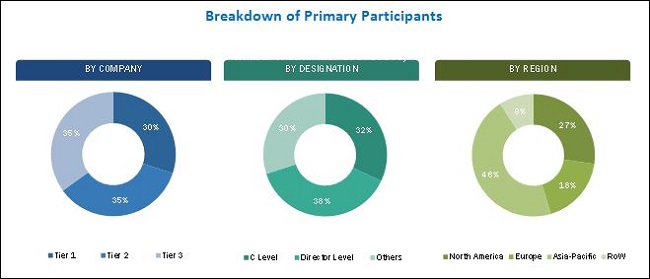
The research methodology that has been used to estimate and forecast the market begins with capturing data about the key X-band radar through secondary sources such as the U.S. Department of Defense (DoD), Defence Research & Development Organisation (DRDO) (India), the U.S. Air Force website, company websites, corporate filings such as annual reports, investor presentations, and paid databases. Different types of X-band radars offered have also been taken into consideration to determine the market segmentation. The bottom-up procedure has been employed to arrive at the overall size of the market from the revenue of the key players in the market. After arriving at the overall market size, the total market has been split into several segments and subsegments, which have then been verified through primary research by conducting extensive interviews with key experts such as chief executive officers, vice presidents, directors, and executives of leading companies in the market. These data triangulation and market breakdown procedures have been employed to complete the overall market engineering process and arrive at the exact statistics for all the segments and subsegments of the market. The breakdown of the profiles of primaries has been depicted in the figure given below:
To know about the assumptions considered for the study, download the pdf brochure
The ecosystem of the X-band radar market comprises manufacturers, distributors, and end users. The key end users of the market are the defense sector, government, and commercial sector. The designers and manufacturers of X-band radar are Japan Radio Company Limited (Japan), Terma A/s (Denmark), Northrop Grumman Corporation (U.S.), Raytheon Company (U.S.), Saab AB (Sweden), Furuno Electric Co. Ltd. (Japan), Israel Aerospace Industries (Israel), ThalesRaytheonSystems (France), Selex ES S.p.A (Italy), Kelvin Hughes Limited (U.K.), Reutech Radar Systems (South Africa), etc.
“Study answers several questions for stakeholders, primarily, which segments to focus on over the next five years for prioritizing efforts and investments.”
Target Audience
- Original Equipment Manufacturers (OEMs)
- Regulatory Bodies
- Component Suppliers
- Military
- Technology Providers
- Distributors
Scope of the Report
This research report categorizes the global market into the following segments and subsegments:
-
X-band Radar Market, By Application
- Defense Application – Land-based, Airborne, and Naval
- Government Application - Border Security, Homeland Security
- Commercial Application - Perimeter Security, Facility Surveillance, Airspace Surveillance, Weather Detection
-
X-band radar Market, By Type
- Mobile X-band Radar
- Sea-Based X-band Radar
-
X-band Radar Market, By Array
- Active Electronically Scanned Array (AESA)
- Passive Electronically Scanned Array (PESA)
-
X-band Radar Market, By Region
- North America
- Europe
- Asia-Pacific
- Middle East
- Rest of the World
Customizations available for the report
With the given market data, MarketsandMarkets offers customizations as per specific needs of a company. The following customization options are available for the report:
-
Country-level Analysis
- Comprehensive market projections for countries categorized under Rest of Europe, Rest of Asia-Pacific, Rest of Middle East, and Rest of the World
-
Company Information
- Detailed analysis and profiling of additional market players (Up to 5)












Growth opportunities and latent adjacency in X-Band Radar Market