Global Sales Intelligence: Multi-Region Implementation
September 15, 2025

Did you know that global sales intelligence can be the difference between closing a $10 million deal or watching your competitor walk away with it? I've seen it happen more times than I care to admit. When sales teams operate across borders without proper intelligence, it's like trying to navigate through fog without headlights.
Global sales intelligence isn't just a fancy term—it's the backbone of successful multi-region selling. Sales intelligence software varies dramatically in effectiveness across different markets, and implementing regional sales intelligence strategies requires both technical know-how and cultural awareness. Additionally, with regulations like GDPR in Europe and CCPA in California, a one-size-fits-all approach simply doesn't work anymore.
In this article, I'll walk you through everything you need to know about implementing sales intelligence across multiple regions. From selecting the right tools for each market to overcoming common data synchronization challenges, we'll cover the essential components that make global sales teams thrive. Whether you're expanding into new territories or trying to optimize existing international operations, these insights will help you build a sales intelligence system that actually delivers results.
STOP GUESSING YOUR PIPELINE
START GROWING IT WITH AI SALES!!
Sales intelligence forms the foundation of successful sales strategies across borders. In its simplest form, sales intelligence is the systematic gathering and analysis of data on prospects, customers, and market trends to drive more effective selling strategies. Yet, this definition expands considerably when operating in multiple regions simultaneously.
For teams spanning different countries and continents, sales intelligence takes on a more nuanced meaning. It becomes the collection and analysis of region-specific data that enables sales professionals to make informed decisions throughout the global sales process. Unlike domestic operations, multi-region sales intelligence must account for varying market conditions, cultural preferences, and regulatory environments.
Sales intelligence for global teams breaks down into three fundamental components:
Data collection - Gathering information from various sources including social media, websites, and public records specific to each region
Data analysis - Using algorithms and artificial intelligence to analyze large volumes of region-specific data
Data application - Implementing insights to identify high-potential leads and predict sales trends across different territories
The types of data that comprise effective sales intelligence include prospect data (information on potential leads), customer data (insights for personalization), market data (broader industry trends), and competitor data (competitive positioning in each region). This multi-dimensional approach allows sales teams to customize their strategies based on regional nuances.
Furthermore, sales intelligence provides real-time data and insights, enabling global teams to make quick decisions, personalize outreach, and stay ahead of regional competitors. This becomes particularly valuable when dealing with territories that operate in different time zones or have distinct business practices.
Global sales operations require precision outreach that acknowledges local differences. Generic messaging fails when stakeholders span across finance, operations, IT, and sustainability teams in various regions. Consequently, sales teams need to tailor their approaches based on region-specific data.
Location intelligence, a critical component of regional sales intelligence, allows businesses to gain a better understanding of target markets by analyzing demographic, geographic, and psychographic data specific to each region. Armed with this information, sales teams can craft campaigns that resonate with local audiences, resulting in more personalized advertising and higher ROI.
In fact, location intelligence gives businesses a competitive advantage by providing an in-depth view of consumer behavior and market trends while monitoring performance across different territories. Through careful analysis of location data, sales teams can identify:
Gaps in regional markets
Local consumer preferences
Previously undiscovered business opportunities
Sales territory planning without region-specific insights often becomes merely a numbers game—mapping regions, assigning reps, and chasing quotas. However, today's buyers expect relevance and understanding that generic approaches simply cannot provide.
The strategic use of regional sales intelligence also enables businesses to adapt quickly to changes in local markets. For instance, a sales strategy that works perfectly in North America might fall flat in APAC regions due to different buying behaviors, regulatory environments, or cultural norms.
Ultimately, sales intelligence serves as both a feedback loop and a forward-looking tool. It provides vital information about customer needs and pain points across regions, enabling companies to refine their offerings and stay ahead in diverse markets. For global organizations, this means developing a unified sales approach that still respects and responds to regional differences.
By leveraging regional sales intelligence, global teams can create balanced territories that align with strategic goals, determine optimal resource allocation, and focus efforts where they'll have the greatest impact. This strategic approach ensures that even the most complex global accounts receive the right attention in the right places at the right times.
North America currently dominates the global sales intelligence landscape, accounting for 40-46% of the market share as of 2024. This dominance stems from the high concentration of sales intelligence vendors, widespread technology adoption across various sectors, and the rapid integration of sales intelligence for data management purposes.
The United States specifically represents a major portion of this market, valued at approximately $1.07 billion in 2024 and projected to reach around $2.93 billion by 2034. The U.S. market's strength comes from consistent growth in retail e-commerce sales, which reached $1.05 trillion in 2022 and is expected to grow to $1.7 trillion by 2026.
Ready to turn your Rep
INTO BEST PERFORMER ?
Nevertheless, Asia Pacific is emerging as the fastest-growing region, with an impressive CAGR of 14-15.2% over the forecast period. This accelerated growth reflects rapidly increasing digitization, evolving consumer preferences, growing use of digital sales channels, and increasing awareness regarding the benefits of sales intelligence tools.
Within the APAC region, specific country-level growth rates demonstrate varying adoption patterns:
China leads with 13.5% growth rate
India follows at 12.5%
Japan and South Korea are actively implementing AI and ML technologies
European markets show steady growth as well, with Germany posting 11.5% growth, France at 10.5%, and the UK at 9.5%.
Artificial intelligence and machine learning are fundamentally reshaping sales intelligence across all regions. These technologies enable sales teams to extract deeper insights from customer data, predict buying behaviors, and personalize sales approaches at scale.
According to industry research, 79% of salespeople using AI report spending more time on actual selling activities, 72% build reports faster, and 85% state that AI makes their prospecting efforts more effective. This adoption is driving significant operational improvements in sales functions.
The integration of machine learning and artificial intelligence with existing sales intelligence platforms is creating substantial opportunities across regions. For example, 66% of marketers in the Asia Pacific region increased their investments in first-party data collection in 2022, compared to 60% in 2021.
The lead management segment, heavily influenced by AI applications, currently accounts for approximately 35% of the sales intelligence market share and is expanding at the fastest CAGR. Specifically, AI-enabled solutions like chatbots have significantly improved customer interactions, especially in B2C domains.
As organizations navigate an environment characterized by increasing data volumes and stringent regulations, AI-powered sales intelligence has become essential for adapting traditional business strategies to remain competitive across global markets.
Effective global sales intelligence depends on having the right technological components in place. A multi-region sales intelligence stack requires specific tools that can handle diverse data sets while providing actionable insights across geographical boundaries.
Building an effective multi-region lead scoring system requires both demographic and behavioral data analysis. Lead scoring ranks potential customers by assigning values based on behavior, demographics, and engagement metrics to determine conversion likelihood. For global sales teams, this process must account for regional variations in buying behaviors.
Account-based lead scoring extends beyond individual contacts to analyze entire organizations. This approach allows interactions from all contacts related to an account to contribute to the lead's overall score. For instance, when multiple contacts from the same international account open an email, this activity collectively increases the account's engagement score.
Each account receives an engagement level score based on:
Frequency of interactions across regions
Count of account-related activities
Number of active leads and opportunities
Regional service requests
This approach is essential for B2B SaaS platforms with multi-user accounts where traditional user-centric analytics fall short. Account-level insights enable teams to track aggregate behaviors, build account-level funnels, and measure metrics like activation and retention across an entire customer base across different territories.
Predictive analytics transforms sales forecasting from a reactive, opinion-driven process into a proactive, strategic operation. By analyzing historical data, current pipeline dynamics, and external market factors, these tools remove biases and minimize guesswork.
Unlike traditional forecasting methods that rely on manual inputs and static assumptions, predictive analytics for regional sales uses advanced statistical models and machine learning algorithms to ingest multiple signals:
Deal age and activity cadence
Regional product mix preferences
Buyer-side engagement patterns
Macroeconomic indicators by region
Moreover, these systems constantly recalculate win probabilities as conditions change, creating a probability-weighted range rather than a single top-line number. This approach gives leaders earlier, more granular warnings about regional performance issues.
Organizations implementing comprehensive data analysis strategies see an average 47% increase in qualified lead conversion rates within the first six months. This improvement occurs primarily because predictive models can identify which patterns actually turn into revenue, removing noise and regional biases.

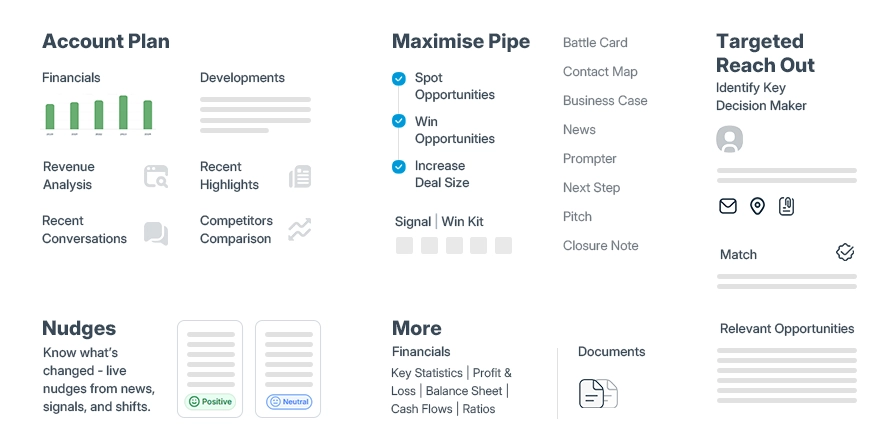
Data enrichment enhances first-party customer information with third-party data to increase database range and accuracy. This process updates existing datasets and supplements incomplete records, thereby improving sales processes that rely on quality data.
Automated data enrichment tools analyze social media profiles, public records, and other sources to find information about companies and people in your database. Subsequently, they update your CRM to fill gaps and correct inaccurate data. The benefits include:
Improved data segmentation for regional campaigns
Enhanced personalization based on regional preferences
More accurate identification of valuable leads
Revitalized old sales leads when circumstances change
Real-time alerts complete the stack by notifying sales teams about important updates as they happen. These alerts cover scenarios from new leads entering the system to changes in deal status or customer activity across different regions.
Indeed, timing is a major factor in sales success—especially in multi-region operations where project windows vary and decisions are time-sensitive. AI-driven notification systems flag relevant project changes, contact updates, and tender phases immediately, turning timing from guesswork into a predictable strategy.
By integrating these three core components—lead scoring with account-level insights, predictive analytics for regional forecasting, and data enrichment with real-time alerts—global sales teams can build an intelligence stack that delivers actionable insights across multiple regions.
Selecting the right sales intelligence tools for each region requires a careful assessment of their capabilities and regional strengths. Different markets demand different approaches, and what works in one region might fail in another.
When targeting European markets, the choice between LinkedIn Sales Navigator and Cognism often comes down to data compliance and contact accessibility. Cognism stands out as having the most complete data coverage in the EMEA region, with EU and US research teams that enable highly-targeted global lead generation. Notably, Cognism provides phone-verified mobile numbers, direct dials, and emails across US, EMEA, NAM, and APAC without additional charges for access to global data.
For EMEA operations, Cognism offers distinct advantages:
GDPR and CCPA compliance with options to hide contacts on DNC lists
Phone-verified numbers (Diamond Data®) that make connecting with prospects three times more likely
Stringent verification processes that apply to the entire database
In contrast, LinkedIn Sales Navigator excels in relationship-based selling scenarios. Its network mapping capabilities allow teams to find the "best path in" to reach prospects through collective networks—a feature particularly valuable for enterprise deals where warm introductions matter. LinkedIn Sales Navigator costs approximately USD 64.99-79.99 per month, offering advanced search filters and personalized messaging.
The fundamental difference? Cognism provides direct contact information while LinkedIn Sales Navigator focuses on relationship discovery without offering direct contact details.
North America holds the largest share of the sales intelligence market, surpassing USD 1.52 billion in 2024. Two dominant platforms serving this region are HubSpot Sales and Salesforce Einstein.
HubSpot Sales targets small to medium-sized businesses with its user-friendly interface and robust features. Companies using HubSpot's sales intelligence tools saw a 28% increase in sales productivity and a 25% increase in sales revenue within six months of implementation. HubSpot Sales offers lead generation, account-level insights, and predictive analytics at a more accessible price point than enterprise alternatives.
Alternatively, Salesforce Einstein leverages artificial intelligence to provide predictive analytics and account-level insights. Its advanced capabilities make it suitable primarily for large enterprises. Salesforce users can scale their team's impact without scaling headcount through Agentforce, which supports employees and customers 24/7.
The decision between these platforms often depends on organizational size, budget constraints, and existing technology infrastructure. For complex North American sales operations spanning multiple states with varying privacy regulations, Salesforce's enterprise-grade capabilities typically provide better compliance management.
STOP CHASING PROSPECTS
START CLOSING DEALS!!
Intent data has become crucial for identifying in-market buyers across regions. ZoomInfo and Demandbase offer distinct approaches to capturing this intelligence.
ZoomInfo delivers real-time B2B intent signals from over 12,000 intent topics sourced from 5,000 B2B sites. The platform prioritizes speed with daily data updates compared to competitors' weekly refreshes. ZoomInfo's intent data integrates directly with CRMs and marketing automation platforms, allowing sales teams to act quickly on signals.
Demandbase takes a different approach, focusing on accuracy and keyword granularity. The platform:
Sources over 1 trillion intent signals monthly from its proprietary B2B DSP
Applies machine learning to analyze content on each page
Provides 575,000+ keywords for precise intent modeling
The primary distinction lies in data quality versus speed. While ZoomInfo offers faster updates, Demandbase emphasizes accuracy through natural language processing to ensure topics relate specifically to keywords. This makes Demandbase particularly valuable for companies targeting regulated industries where precision matters more than speed.
For multi-region implementation, combining these tools strategically—using ZoomInfo for markets requiring rapid response and Demandbase for regions with stricter accuracy requirements—often yields the best results.
Successful multi-region sales intelligence implementation hinges on three critical elements that must work in harmony. Unlike standalone tools, a fully integrated global approach requires careful orchestration of systems, content, and people across different markets.
Bidirectional data flow between your CRM and regional systems forms the backbone of effective global sales intelligence. Premium integrations now allow companies to seamlessly send CRM data through data pipelines to journeys or other supported destinations while simultaneously updating the CRM with real-time engagement data. This two-way communication creates a closed feedback loop essential for multi-region operations.
The most effective CRM integrations enable organizations to:
Update data-driven segments when contacts, leads, accounts, or other elements change in different regions
Trigger automatic nurturing campaigns based on stage, status, or size variations across territories
Pass engagement data back to the CRM to update regional teams about specific customer interactions
Modern integration platforms support all standard and custom objects along with custom fields, allowing companies to sync millions of records from day one without managing complex infrastructure. Through smart API rate limits that auto-adjust for each system, these platforms maintain data integrity across regional boundaries.
STOP GUESSING YOUR PIPELINE
START GROWING IT WITH AI SALES!!
A Sales Playbook Version Control System provides the framework needed to manage, update, and distribute sales playbooks effectively across multiple regions. This structured approach is particularly valuable for organizations with large sales teams operating in different territories, as it eliminates inconsistencies and ensures everyone works with current information.
Effective playbook localization requires:
Tailoring assortments to regional customer demographics
Adapting messaging for stores with high ethnic customer penetration
Expanding premium product offerings in more affluent areas
Store manager feedback plays a crucial role in protecting against oversupplying premium products in price-sensitive regions. Additionally, sophisticated retailers harness analytical capabilities to refine merchandising strategies by location, with proper implementation driving 2-5% top-line growth alongside reduced inventory positions.
Beyond basic translation, proper localization encompasses market-specific user experiences, culturally relevant messaging, SEO translation, compliance with regional regulations, and localized marketing campaigns. This strategic approach helps build authentic connections with audiences, compete against local players, and establish a thriving global presence.
For global sales and revenue teams, effective collaboration means overcoming the complexities of diverse accounts, regional differences, and fragmented processes. Cross-functional collaboration becomes essential as businesses expand across markets, preventing teams from falling into silos that lead to misaligned strategies and duplicate efforts.
Key benefits of synchronized cross-region collaboration include:
Consistent customer experience across regions, building trust and loyalty
Access to shared insights and global perspectives for better trend identification
Unified efforts enabling cross-selling, upselling, and new market entry
Real-time data synchronization solves the challenge of data silos, where sales teams see one version of a customer while support sees another. AI bridges these gaps by creating a unified data environment that consolidates information from various tools like Salesforce, Gmail, and LinkedIn. This integration allows sales teams to access all prospect details from a single interface while ensuring updates in one platform sync automatically across others.
For implementing multi-region data synchronization, organizations typically employ either master-slave configurations or multi-master setups. The master-slave approach designates one primary database for write operations, with changes synchronized to read-only replicas in other regions, while multi-master setups allow multiple databases to accept write operations but require conflict resolution mechanisms.
Real-world examples illustrate the tangible benefits of global sales intelligence implementation. These case studies highlight how major tech companies have successfully applied sales intelligence across different regions.
IBM's implementation of sales intelligence software demonstrates the power of automated lead qualification across continents. Through IBM watsonx Orchestrate for sales, the company utilizes LLMs, generative AI, and automation to streamline the entire sales process. This AI-powered system eliminates delays and provides seamless access to customer data across regions.
In practice, IBM's ML models identify behaviors that signal high-quality leads and automatically rank prospective users. Principally, these models invoke advanced skills that use generative AI to help sales teams identify prospective customers through automated lead qualification processes.
The results speak for themselves:
20% cost avoidance forecasted for new projects
70% decrease in problem detection and resolution time
40% estimated reduction in query generation time
25% reduction in customer onboarding time
Furthermore, in a partnership with Salesforce Marketing Cloud, IBM helped a Fortune 100 financial services organization improve target conversion by 3-5% through enhanced segmentation and personalization.
Make Every Rep Speak
Like Your Top 1%
Microsoft's approach focuses on geographic visualization within CRM systems. By mapping CRM data region-wise, Microsoft provides sales managers with clear visibility into how regional sales and marketing teams perform. This visual approach enables data-driven decisions without extensive manual analysis.
The regional mapping capability allows sales managers to select specific territories and immediately access sales summaries containing customer counts and progress toward targets. Hence, regional managers can reassign territories based on performance data, ensuring optimal coverage across global markets.
Microsoft's CRM integration offers several strategic advantages for multi-region teams including route optimization, better team coordination, and enhanced customer experiences. Throughout their implementation, Microsoft has focused on building systems that allow sales teams to prioritize high-value accounts while maintaining appropriate coverage across all territories.
Salesforce's implementation of predictive analytics showcases how global sales intelligence can transform forecasting. In one example, Salesforce developed a 48-month predictive intelligence model inside their CRM Analytics platform for a global enterprise software company. The model was specifically tailored to how the client actually sells and renews across regions.
This solution integrated data preparation, AI-driven forecasting, dashboard visualization, and continuous governance. As a result, the client transformed from using static, manual forecasting methods to implementing a scalable, AI-driven approach that actually worked.
The implementation delivered concrete business outcomes: improved forecast accuracy, enhanced cross-regional collaboration, clearer renewal visibility, and higher data confidence. Chiefly, this created executive-level agility that was previously impossible with fragmented regional data.
Implementing global sales intelligence across multiple regions presents several obstacles that require careful planning and strategic solutions. Despite the benefits, organizations face three primary challenges when rolling out sales intelligence systems internationally.
Navigating the complex web of regional privacy laws poses significant hurdles for sales intelligence implementations. The California Consumer Privacy Act (CCPA) provides consumers control over personal information businesses collect, whereas GDPR enforces strict data protection norms for EU citizens. Both regulations have extraterritorial reach, affecting organizations regardless of their geographic location. Throughout implementation, teams must address data residency requirements that may force partitioning datasets by region. Furthermore, encryption becomes essential for data in transit and at rest, although managing keys across regions introduces operational overhead.
Poor data quality costs organizations approximately $15 million annually, with sales reps missing out on $32,000 in extra revenue yearly because of bad data. Cross-region synchronization faces several technical obstacles:
Latency issues causing outdated information across systems
Conflict resolution when multiple regions update the same record
Schema mismatches between regional systems with different data structures
API limits restricting the volume of data transfers
Unless addressed, these issues cascade into larger problems—duplicate records create customer confusion, while inconsistent financial data makes reports unreliable across regions.
Presently, only 23% of employees feel fully educated and trained on AI tools, creating a significant adoption barrier. About 67% of employees don't feel ready to work with AI technologies, while 58% of business leaders cite their team's lack of AI skills as their biggest challenge. Since even the best AI technology becomes ineffective without proper usage, organizations must develop role-specific training programs. Sales teams specifically need skills in AI-powered lead scoring, prompt engineering, and data interpretation from AI-generated insights. Without structured practice, global teams struggle to achieve expected ROI from sales intelligence investments.
The evolution of AI will propel global sales intelligence beyond current capabilities, creating unprecedented opportunities for sales organizations to increase efficiency and strengthen customer relationships.
AI now enables true one-to-one personalization across entire customer bases, regardless of geographic location. Currently, 71% of consumers expect companies to deliver personalized interactions, with 76% becoming frustrated when this doesn't happen. Organizations that excel at personalization generate 40% more revenue from these activities than average players. This shift has made personalization a necessity rather than an option.
Hyper-personalization at scale involves:
Creating unique experiences for each individual customer across different regions
Using AI to analyze customer demographics, preferences, and behavior
Delivering contextual communications through optimal channels
The conversational AI market is expanding rapidly from USD 11.58 billion in 2024 to a projected USD 41.39 billion by 2030, growing at an impressive CAGR of 23.7%. Similarly, the voice analytics market is moving from USD 1.68 billion in 2024 to USD 7.12 billion by 2032.
This growth reflects fundamental changes in buyer behavior, as 70% of consumers feel frustrated when they lack options to contact human representatives. Forward-thinking organizations use conversational analytics to extract insights from customer calls, identifying patterns that would otherwise remain hidden. Through this technology, companies transform thousands of hours of customer conversations into actionable sales intelligence.
Ultimately, AI forecasting systems will optimize territory planning across global markets. These systems analyze customer data alongside historical sales performance to maximize opportunities and effectively allocate resources. Unlike traditional methods, AI forecasting considers subtle factors including:
Changes in customer engagement patterns
Shifts in deal velocity across different segments
Market conditions and external economic indicators
Companies implementing these technologies early will have distinct advantages in capturing high-potential clients.
STOP GUESSING YOUR PIPELINE
START GROWING IT WITH AI SALES!!
Throughout this article, we've examined how global sales intelligence transforms cross-border selling from guesswork into a strategic advantage. Sales intelligence clearly stands as the foundation for successful multi-region operations, enabling teams to make informed decisions based on region-specific data rather than generic assumptions.
Market projections undoubtedly support this shift, with the sales intelligence market expected to reach between $8.32 billion and $11.7 billion by 2032-2035. North America currently leads adoption, though Asia Pacific shows the fastest growth with an impressive 14-15.2% CAGR. These numbers reflect a fundamental change in how global sales teams operate.
The core components we discussed—lead scoring with account-level insights, predictive analytics for regional forecasting, and data enrichment with real-time alerts—work together to create a powerful intelligence stack. Additionally, selecting the right tools for each region proves essential, whether that means Cognism for EMEA compliance, Salesforce Einstein for North American enterprises, or specialized intent data platforms.
Successful implementation, however, requires more than just technology. Effective CRM integration, localized sales playbooks, and cross-region collaboration form the backbone of any multi-region strategy. The case studies from IBM, Microsoft, and Salesforce demonstrate these principles in action, showing measurable results across different territories.
Still, challenges remain. Data privacy regulations like GDPR and CCPA create complex compliance requirements. Data quality issues can undermine even the best-designed systems. Training and adoption across distributed teams often determine whether implementations succeed or fail.
The future of global sales intelligence nevertheless looks promising. AI-driven hyper-personalization, voice analytics, and multi-tier territory forecasting will soon offer even greater capabilities to sales teams willing to embrace these technologies.
Thus, global sales intelligence implementation represents both a technical challenge and a strategic opportunity. Those who master the intricacies of multi-region intelligence gain a significant competitive edge—turning regional differences from obstacles into advantages while building sales operations that truly perform worldwide.
Q1. What is global sales intelligence and why is it important for multi-region teams?
Global sales intelligence is the systematic gathering and analysis of region-specific data that enables sales professionals to make informed decisions across different markets. It's crucial for multi-region teams as it helps tailor strategies to local preferences, navigate regulatory environments, and identify opportunities unique to each territory.
Q2. How is AI transforming sales intelligence across regions?
AI is revolutionizing sales intelligence by enabling deeper insights from customer data, predicting buying behaviors, and personalizing sales approaches at scale. It's improving lead scoring, enhancing predictive analytics for regional forecasting, and providing real-time alerts for timely decision-making across global markets.
Q3. What are the core components of a multi-region sales intelligence stack?
The core components include lead scoring with account-level insights, predictive analytics for regional forecasting, and data enrichment with real-time alerts. These tools work together to provide a comprehensive view of potential customers, market trends, and sales opportunities across different regions.
Q4. What challenges do companies face when implementing sales intelligence across multiple regions?
Major challenges include navigating complex data privacy regulations like GDPR and CCPA, ensuring data quality and synchronization across regions, and driving adoption among distributed teams. Companies must also address technical issues like latency and API limits when integrating systems across territories.
Q5. How is the global sales intelligence market expected to grow in the coming years?
The global sales intelligence market is projected to grow significantly, with estimates ranging from $8.32 billion to $11.7 billion by 2032-2035. This growth is driven by increasing adoption of data-driven decision-making, rising use of digital sales channels, and the integration of AI with existing sales intelligence tools.


Category: Uncategorized Tags: ai, AIOps, Artificial Intelligence, cloud, cloud platform, Cybersecurity, Information and Communications Technology , VR