Accelerometer and Gyroscope Market by Accelerometer Type (MEMS, Piezoelectric, and Piezoresistive), Gyroscope Type (MEMS, FOG, RLG, HRG, and DTG), Dimension (1, 2, and 3 Axis), Application (Low End and High End), and Geography - Global Growth Driver and Industry Forecast to 2035


Accelerometer and Gyroscope Market Summary
The global Accelerometer and Gyroscope Market is entering a sustained growth phase as motion-sensing technologies become fundamental components of connected vehicles, smartphones, wearables, drones, robotics, industrial automation, navigation systems, medical devices, and aerospace platforms. Based on a synthesis of recent industry estimates, the global Accelerometer and Gyroscope Market is estimated at approximately USD 4-5 billion in 2025 and is projected to reach around USD 7-9 billion by 2035, representing an estimated 5-7% CAGR during the forecast period. Recent market studies place the 2025 market between roughly USD 3.4 billion and USD 4.6 billion, while longer-term forecasts generally point to continued expansion driven by MEMS adoption, sensor fusion, automotive electronics, consumer devices, and industrial automation.
Accelerometers measure linear acceleration, while gyroscopes measure angular velocity. When combined into inertial measurement units and sensor-fusion architectures, they provide critical information about movement, orientation, stabilization, vibration, and navigation. Their strategic importance is increasing as manufacturers build more intelligent physical systems. AI, IoT, automation, edge computing, and digital transformation are increasing the amount of motion data generated and creating new requirements for low-power, high-accuracy, miniaturized sensors capable of processing information in real time.
The automotive sector is becoming particularly important as advanced driver-assistance systems, electronic stability control, autonomous driving functions, electric vehicles, and vehicle navigation increasingly depend on accurate inertial information. At the same time, consumer electronics remain a high-volume application because accelerometers and gyroscopes are integrated into smartphones, tablets, gaming systems, wearables, cameras, and augmented- and virtual-reality devices. Industrial robotics, drones, predictive maintenance, healthcare monitoring, and aerospace navigation provide additional growth opportunities. Industry research consistently identifies MEMS miniaturization, sensor fusion, low power consumption, and expanding automation as major market themes.
Key Market Trends & Insights
North America remains a leading regional market for high-value accelerometer and gyroscope applications. The region benefits from advanced aerospace and defense programs, automotive technology development, robotics, industrial automation, and a mature semiconductor ecosystem. High-performance inertial sensors used in navigation and stabilization also create a strong premium market for precision accelerometers and gyroscopes.
Asia Pacific is the fastest-growing major region, supported by large-scale electronics manufacturing, automotive production, smartphones, wearables, industrial automation, and expanding IoT deployments. China, Japan, South Korea, and India are particularly important demand centers. Recent market research identifies Asia Pacific as a key growth region, while some market estimates identify it as the largest regional market depending on the scope of the study.
Accelerometers remain the dominant product segment. One recent 2025 market assessment estimates accelerometers at more than 60% of the combined market, reflecting their broad use in consumer electronics, automotive safety, industrial monitoring, and embedded systems.
MEMS technology continues to dominate volume applications. MEMS accelerometers and gyroscopes offer small dimensions, low power consumption, scalable manufacturing, and attractive cost-performance characteristics. These advantages make them particularly suitable for smartphones, wearables, automotive electronics, drones, and IoT devices.
Sensor fusion and AI are transforming motion sensing. Combining accelerometer and gyroscope outputs with magnetometers, GNSS, cameras, radar, or other sensors allows systems to produce more reliable estimates of movement and orientation. Machine-learning methods are also increasingly being investigated for calibration, noise reduction, drift compensation, and sensor interpretation. Research has demonstrated ML-based MEMS gyroscope calibration methods that can improve accuracy and stability compared with conventional approaches.
Miniaturization and edge intelligence are becoming central innovation priorities. Manufacturers are moving toward smaller packages, lower power consumption, integrated processing, and intelligent sensor modules capable of extracting useful information closer to the source rather than continuously transmitting raw data to the cloud.
Market Size & Forecast
- Base year market size: Approximately USD 4-5 billion in 2025, with published estimates varying according to market scope, product inclusion, and treatment of high-end inertial systems.
- Forecast value by 2035: Approximately USD 7-9 billion, representing a broad analyst range consistent with recent medium- and high-growth forecasts.
- CAGR: Approximately 5-7% through 2035. Recent estimates range from approximately 4.2% to 7.5%, with differences largely reflecting market definitions and coverage.
- Growth factors: Automotive electrification, ADAS, autonomous navigation, smartphone and wearable adoption, robotics, drones, industrial automation, IoT, aerospace modernization, and AI-enabled sensor fusion will remain major growth contributors.
Accelerometer and Gyroscope Market Top 10 key takeaway
- The global Accelerometer and Gyroscope Market is estimated at approximately USD 4-5 billion in 2025.
- The market is projected to reach approximately USD 7-9 billion by 2035 under a range of current industry forecasts.
- The market is expected to expand at approximately 5-7% CAGR during the forecast period.
- Accelerometers account for the dominant share of combined market demand.
- MEMS-based products lead high-volume consumer, automotive, and IoT applications.
- North America remains a leading market for advanced inertial sensing and high-value applications.
- Asia Pacific represents the fastest-growing major regional opportunity.
- Automotive applications are expanding because of ADAS, EVs, stabilization, navigation, and autonomous driving.
- AI-enabled sensor fusion is improving calibration, interpretation, and real-time motion intelligence.
- Miniaturization, low-power operation, edge processing, and integrated IMUs will shape future product development.
Product Insights
The accelerometer segment represents the leading product category in the Accelerometer and Gyroscope Market. Its dominance is linked to the exceptionally broad range of applications in which linear motion or vibration needs to be measured. Accelerometers are used in smartphones for screen orientation and motion detection, in vehicles for safety systems and dynamics monitoring, in industrial equipment for vibration analysis, and in aerospace systems for navigation and structural monitoring. Recent market analysis estimates that accelerometers represented approximately 62% of the combined market in 2025.
Within accelerometers, MEMS-based capacitive architectures are especially important in volume applications because they combine compact size, low energy consumption, manufacturability, and suitable accuracy. Piezoelectric and piezoresistive accelerometers remain relevant in applications requiring high-frequency response, ruggedness, high dynamic range, or specialized measurement performance.
Gyroscopes form the second major product category. MEMS gyroscopes dominate many consumer and automotive applications, while fiber-optic gyroscopes, ring-laser gyroscopes, and other high-performance technologies remain important for aerospace, defense, navigation, and other applications where accuracy and stability outweigh cost and size considerations.
The market is also moving toward combined inertial measurement units (IMUs). Instead of treating the accelerometer and gyroscope as independent components, manufacturers increasingly package multiple sensing axes and signal-processing functions into integrated modules. This approach simplifies system design and enables more sophisticated sensor-fusion algorithms.
Emerging product categories include ultra-low-power inertial sensors for wearables, automotive-grade IMUs for ADAS, high-stability sensors for drones and robotics, and intelligent motion modules capable of preprocessing data. AI integration is becoming a competitive differentiator because manufacturers can use machine-learning algorithms to compensate for temperature variation, calibration errors, bias instability, and sensor drift.
Research into ML-based gyroscope calibration demonstrates the potential of AI to improve sensor accuracy without necessarily requiring major changes to the underlying MEMS architecture.
Technology / Component Insights (Rename based on keyword if needed)
The technological foundation of the Accelerometer and Gyroscope Market is increasingly centered on MEMS, sensor fusion, advanced packaging, embedded processing, and digital interfaces. MEMS devices use microscopic mechanical structures integrated with electronic circuits to detect acceleration or rotation. Their ability to be manufactured at scale has made MEMS the preferred architecture for high-volume applications.
Capacitive sensing is widely used because it provides strong sensitivity and can be implemented in compact semiconductor-compatible structures. Piezoelectric and piezoresistive approaches remain important for specialized industrial and high-dynamic-range applications. Optical gyroscopes continue to occupy the premium end of the market where long-term stability, low drift, and high navigational accuracy are essential.
Sensor fusion is one of the most important technology trends. Accelerometers and gyroscopes rarely operate in isolation in sophisticated systems. Data can be combined with magnetometers, GNSS, cameras, radar, lidar, wheel-speed sensors, or pressure sensors. Fusion algorithms can compensate for individual sensor limitations and create a more robust representation of motion.
AI is adding another layer to this architecture. Machine-learning models can identify systematic errors, estimate sensor bias, recognize motion patterns, and improve calibration. In industrial environments, AI can distinguish normal equipment vibration from early fault signatures. In automotive systems, sensor fusion can contribute to positioning and vehicle-state estimation. In wearables, motion classification can support activity recognition and health-related analytics.
IoT is expanding the number of connected devices that require motion sensing. Smart industrial equipment, connected vehicles, drones, logistics assets, and wearable devices can continuously generate motion data. Edge processing helps reduce communication requirements by extracting meaningful information locally before transmitting it to cloud platforms.
Future innovation will focus on ultra-low-power architectures, multi-axis integration, advanced calibration, edge AI, high-temperature operation, radiation tolerance, and more efficient packaging. The integration of MEMS and IC technologies is particularly important because modern sensor modules increasingly combine mechanical sensing, analog-to-digital conversion, filtering, processing, and communication in compact packages.
Application Insights
Consumer electronics remain a major application segment because smartphones, tablets, gaming devices, cameras, wearables, and AR/VR products require compact motion sensing. Accelerometers enable screen orientation, step counting, motion detection, image stabilization, and device interaction, while gyroscopes provide rotational information for gaming, navigation, stabilization, and immersive applications.
The automotive industry is one of the most strategically important growth markets. Modern vehicles use inertial sensors for electronic stability control, airbag systems, rollover detection, navigation, suspension control, ADAS, and autonomous driving functions. Electric vehicles are adding further opportunities as software-defined architectures, advanced driver assistance, and vehicle dynamics management become increasingly sophisticated.
Industrial automation and robotics represent a high-growth application area. Robots need accurate information about position, orientation, vibration, and movement to perform precise tasks. Accelerometers can also support condition monitoring by measuring vibration in motors, pumps, bearings, turbines, and other rotating equipment. When combined with AI analytics, these measurements can become part of predictive-maintenance programs.
Drones and unmanned aerial vehicles depend heavily on accelerometers and gyroscopes for stabilization, attitude control, navigation, and autonomous flight. Growth in commercial drones, defense UAVs, inspection platforms, and logistics applications therefore supports demand for compact and reliable inertial sensors.
Healthcare is another emerging opportunity. Wearables and medical devices can use motion data to monitor activity, gait, rehabilitation progress, posture, and other physical behaviors. As AI improves the interpretation of movement data, inertial sensors can become more useful in remote monitoring and digital-health applications.
Aerospace and defense remain critical premium markets. Navigation systems, guidance platforms, stabilization systems, missiles, aircraft, satellites, and unmanned platforms require high-performance inertial sensing. These applications support demand for fiber-optic, ring-laser, and advanced MEMS gyroscopes alongside precision accelerometers.
Regional Insights
North America maintains a leading position in the global Accelerometer and Gyroscope Market because of strong demand from aerospace and defense, automotive electronics, industrial automation, robotics, healthcare technology, and advanced consumer devices. The United States has a particularly mature ecosystem of inertial-sensor manufacturers, semiconductor companies, defense contractors, and research organizations. High-end navigation and stabilization requirements also support premium sensor technologies.
Europe represents another established market, supported by automotive manufacturing, industrial machinery, aerospace, defense, robotics, and advanced medical equipment. Germany is particularly important because of its automotive and industrial automation base. European manufacturers are increasingly integrating inertial sensors into connected industrial systems and next-generation vehicles.
Asia Pacific is expected to register the fastest growth as electronics production, smartphones, automotive manufacturing, wearables, robotics, and IoT deployments expand. China has a large domestic electronics and automotive ecosystem, while Japan and South Korea combine advanced manufacturing capabilities with strong demand for precision sensors.
India is becoming increasingly relevant as electronics manufacturing, automotive production, drones, industrial automation, and digital infrastructure expand. Southeast Asian manufacturing centers also offer opportunities as electronics and automotive supply chains diversify.
- North America: Leading market for aerospace, defense, automotive, robotics, and high-performance inertial systems.
- Europe: Strong automotive, industrial, aerospace, and precision-engineering demand.
- Asia Pacific: Fastest-growing region due to electronics manufacturing and expanding automotive production.
- China: Major opportunity from consumer electronics, EVs, industrial automation, and domestic semiconductor development.
- Japan and South Korea: Strong demand for precision electronics, robotics, automotive systems, and advanced manufacturing.
[Country]-Specific Market Trends
In Asia Pacific, China is estimated to grow at approximately 7-9% CAGR, while Japan is expected to expand at approximately 4-6% CAGR through the forecast period. China's faster trajectory reflects strong electronics production, electric-vehicle manufacturing, robotics, drones, and domestic development of semiconductor and sensor technologies. Japan represents a more mature market, but its advanced automotive, robotics, industrial, and electronics industries continue to create demand for high-performance inertial sensing.
In North America, the United States is estimated to grow at approximately 5-6% CAGR, Canada at around 4-6%, and Mexico at approximately 6-7%. The United States remains the region's principal market, supported by aerospace and defense investment, autonomous-vehicle development, industrial automation, and advanced electronics. Canada provides opportunities through aerospace, mining technology, industrial monitoring, and research. Mexico is benefiting from automotive manufacturing and the continued expansion of electronics production.
In Europe, Germany is estimated to grow at approximately 5-6% CAGR, while France is expected to expand at approximately 4-6%. Germany's automotive sector, industrial automation capabilities, and engineering base make it a major demand center. France benefits from aerospace, defense, automotive, robotics, and scientific research.
Government investment in defense modernization, autonomous systems, smart manufacturing, semiconductor capacity, and digital infrastructure is supporting demand across these markets. Automotive safety regulations and growing requirements for electronic stability and advanced driver assistance are also encouraging broader adoption of high-quality motion sensors.
- China: Fast-growing demand from EVs, electronics, robotics, drones, and industrial automation.
- Japan: Mature but technologically advanced market driven by automotive and robotics.
- United States: Strongest high-value opportunity across aerospace, defense, automotive, and industrial applications.
- Germany: Automotive and industrial automation remain major demand drivers.
- France: Aerospace, defense, robotics, and advanced manufacturing provide diversified opportunities.
Key Accelerometer and Gyroscope Company Insights
The competitive landscape includes Analog Devices, Bosch Sensortec, STMicroelectronics, TDK InvenSense, Murata Manufacturing, Honeywell, NXP Semiconductors, Microchip Technology, TE Connectivity, and Northrop Grumman LITEF. Market research consistently identifies several of these companies among the leading suppliers of MEMS accelerometers, gyroscopes, and inertial systems.
Analog Devices competes at the high-performance end through precision inertial sensors, signal processing, and industrial and aerospace applications. Its portfolio emphasizes accuracy, low noise, stability, and integration into demanding measurement systems. Bosch Sensortec maintains a strong position in consumer electronics and IoT through compact, low-power MEMS sensors designed for smartphones, wearables, and intelligent devices.
STMicroelectronics has a broad MEMS portfolio serving consumer, automotive, and industrial markets. Its strategy benefits from high-volume manufacturing and integration across sensor families. TDK and its InvenSense business are particularly important in motion sensing for consumer electronics, automotive systems, and industrial applications. Murata Manufacturing is another major supplier with expertise in miniaturized MEMS and inertial components.
Honeywell focuses strongly on high-reliability inertial products for aerospace, defense, and industrial applications. NXP Semiconductors and Microchip Technology address automotive, industrial, embedded, and high-performance sensing requirements. Northrop Grumman participates in high-end inertial systems for aerospace and defense.
- Analog Devices: Focuses on precision, low-noise, high-performance inertial sensing.
- Bosch Sensortec: Emphasizes miniaturization, low power, consumer electronics, and IoT.
- STMicroelectronics: Leverages broad MEMS integration across consumer, automotive, and industrial markets.
- TDK InvenSense and Murata: Concentrate on compact, high-volume motion sensing and advanced MEMS technologies.
- Honeywell and Northrop Grumman: Target high-reliability aerospace, defense, and navigation applications.
Recent Developments
In 2025, Inertial Labs introduced a tactical-grade MEMS inertial measurement unit targeting applications requiring approximately 1 degree/hour gyro bias performance, illustrating the continued improvement of MEMS technology for cost-sensitive defense and navigation applications traditionally associated with more expensive inertial technologies.
In 2025, Northrop Grumman introduced its LR-500 QMG IMU, targeting space and tactical applications with sub-degree-per-hour performance. The development demonstrates continued demand for precision inertial measurement systems in aerospace and defense.
In 2025, research and commercial development continued around AI-assisted MEMS calibration and sensor optimization. Machine-learning methods including XGBoost and multilayer perceptron models have demonstrated potential for reducing gyroscope noise and improving calibration stability, indicating a future in which AI becomes increasingly embedded within inertial-sensor processing workflows.
Market Segmentation
The Accelerometer and Gyroscope Market can be segmented By Product into accelerometers and gyroscopes. Accelerometers include capacitive, piezoelectric, and piezoresistive architectures, while gyroscopes include MEMS, fiber-optic, ring-laser, dynamically tuned, and other technologies. Accelerometers represent the larger combined market segment because of their broad adoption across consumer, automotive, industrial, and embedded applications.
By Technology / Component, the market includes MEMS structures, capacitive sensing, piezoelectric sensing, piezoresistive sensing, optical gyroscopes, integrated inertial measurement units, sensor-fusion processors, RF and analog interfaces, embedded processors, and digital communication interfaces. MEMS technology dominates high-volume applications, while optical and specialized inertial technologies remain important for precision navigation.
By Application, the market covers consumer electronics, automotive, aerospace and defense, industrial automation, healthcare, drones and UAVs, robotics, navigation, vibration monitoring, and other specialized applications. Consumer electronics generate substantial unit volumes, while automotive, aerospace, defense, and industrial applications provide opportunities for higher-value products.
By Region, the market is divided into North America, Europe, Asia Pacific, Latin America, and the Middle East & Africa. North America remains a major high-value market, Europe retains strong industrial and automotive demand, and Asia Pacific offers the fastest expansion due to electronics manufacturing and increasing automation.
- By Product: Accelerometers hold the leading share, while gyroscopes remain essential for orientation and navigation.
- By Technology / Component: MEMS dominates volume applications; optical technologies serve precision requirements.
- By Application: Consumer electronics and automotive are major demand centers, with robotics and industrial automation gaining momentum.
- By Region: North America leads high-value applications while Asia Pacific provides the strongest growth potential.
- Emerging segment: AI-enabled IMUs, sensor-fusion modules, ultra-low-power MEMS, and autonomous navigation systems are gaining importance.
Conclusion
The global Accelerometer and Gyroscope Market is positioned for consistent expansion through 2035, with the market estimated at approximately USD 4-5 billion in 2025 and potentially reaching USD 7-9 billion by 2035. A reasonable long-term industry range is approximately 5-7% CAGR, although published forecasts vary based on whether the analysis emphasizes MEMS devices, combined inertial systems, precision gyroscopes, or the broader motion-sensing ecosystem.
AI will become an increasingly important factor in the market's development. Rather than replacing physical sensors, AI will make their output more valuable by improving calibration, sensor fusion, anomaly detection, activity classification, navigation, and predictive maintenance. Machine-learning calibration of MEMS gyroscopes is already demonstrating how software can compensate for limitations associated with sensor drift and complex error behavior.
IoT will continue increasing the number of connected devices requiring motion awareness. From industrial equipment and connected vehicles to wearables and drones, the ability to understand movement is becoming a fundamental requirement for intelligent systems. Automation is further increasing demand for reliable real-time motion data in robotics, manufacturing, warehouse systems, autonomous vehicles, and machine monitoring.
The automotive sector is likely to remain one of the most strategically important growth areas. Electrification, ADAS, autonomous driving, electronic stability, navigation, and software-defined vehicle architectures all require accurate information about vehicle motion. Meanwhile, aerospace and defense will sustain demand for premium inertial systems where accuracy, reliability, and resistance to environmental conditions are critical.
For businesses operating across electronics, automotive, robotics, industrial automation, healthcare, and aerospace, accelerometers and gyroscopes are increasingly becoming foundational sensing technologies rather than standalone components. The strongest opportunities through 2035 will likely emerge from suppliers capable of combining miniaturized MEMS hardware, advanced packaging, embedded intelligence, sensor fusion, low-power operation, and application-specific software. Companies that successfully move from component supply toward intelligent inertial platforms should be best positioned to capture the next phase of market growth.
FAQs
1. What is the market size of the Accelerometer and Gyroscope Market?
The global Accelerometer and Gyroscope Market is estimated at approximately USD 4-5 billion in 2025. Recent published estimates vary from around USD 3.4 billion to more than USD 4.5 billion depending on market scope and product coverage.
2. What is the expected growth rate of the Accelerometer and Gyroscope Market?
The market is expected to grow at approximately 5-7% CAGR through 2035. Published forecasts range from approximately 4% to 7.5%, reflecting differences in definitions, product coverage, and forecast periods.
3. What are the key drivers of the Accelerometer and Gyroscope Market?
Key drivers include growing adoption of MEMS technology, smartphones and wearables, automotive safety systems, ADAS, electric vehicles, autonomous navigation, robotics, industrial automation, drones, IoT devices, aerospace modernization, and AI-powered sensor fusion.
4. Which region leads the Accelerometer and Gyroscope Market?
North America is a leading market for high-value accelerometer and gyroscope applications, particularly aerospace, defense, automotive, and industrial systems. Asia Pacific is expected to demonstrate the fastest growth, supported by electronics manufacturing, automotive production, robotics, IoT, and industrial automation.
5. Who are the key companies in the Accelerometer and Gyroscope Market?
Major companies include Analog Devices, Bosch Sensortec, STMicroelectronics, TDK InvenSense, Murata Manufacturing, Honeywell, NXP Semiconductors, Microchip Technology, TE Connectivity, and Northrop Grumman LITEF. These companies compete through MEMS miniaturization, precision sensing, low-power designs, sensor fusion, automotive-grade products, and high-reliability aerospace and defense systems.
To speak to our analyst for a discussion on the above findings, click Speak to Analyst
 Exclusive indicates content/data unique to MarketsandMarkets and not available with any competitors.
Table of Contents
1 Introduction (Page No. - 18)
1.1 Objectives of the Study
1.2 Market Definition
1.3 Study Scope
1.3.1 Markets Covered
1.3.2 Geographic Scope
1.3.3 Years Considered for the Study
1.4 Currency
1.5 Package Size
1.6 Limitations
1.7 Market Stakeholders
2 Research Methodology (Page No. - 22)
2.1 Research Data
2.1.1 Secondary Data
2.1.1.1 Key Data From Secondary Sources
2.1.2 Primary Data
2.1.2.1 Key Data From Primary Sources
2.1.2.2 Key Industry Insights
2.1.2.3 Breakdown of Primaries
2.2 Supply- and Demand-Side Analysis
2.3 Market Size Estimation
2.3.1 Bottom-Up Approach
2.3.2 Top-Down Approach
2.3.3 Market Ranking Estimation
2.4 Market Breakdown and Data Triangulation
2.5 Research Assumptions
3 Executive Summary (Page No. - 34)
4 Premium Insights (Page No. - 39)
4.1 Attractive Market Opportunities in the Global Accelerometer and Gyroscope Market
4.2 Accelerometer & Gyroscope Market, By Dimension
4.3 Accelerometer & Gyroscope Market, By Type
4.4 Country-Wise Analysis of the Accelerometer & Gyroscope Market
4.5 Accelerometer & Gyroscope Market Size, By Region
4.6 Accelerometer & Gyroscope Market, By Application
4.7 Accelerometer & Gyroscope Market Life Cycle Analysis, By Application (2016)
5 Market Overview (Page No. - 44)
5.1 Introduction
5.2 Market Evolution
5.3 Market Segmentation
5.3.1 Accelerometer & Gyroscope Market, By Type
5.3.2 Accelerometer & Gyroscope Market, By Dimension
5.3.3 Accelerometer & Gyroscope Market, By Application
5.3.4 Accelerometer & Gyroscope Market, By Geography
5.4 Market Dynamics
5.4.1 Drivers
5.4.1.1 Huge Demand From Consumer Electronics Industry
5.4.1.2 Stringent Government Regulations for the Automotive Industry
5.4.1.3 Emergence of Efficient, Economic, and Compact MEMS Technology
5.4.1.4 Growing Adoption of Automation in Industries and Homes
5.4.1.5 Rising Demand From Emerging Economies
5.4.1.6 Increasing Defense Expenditure Globally
5.4.2 Restraints
5.4.2.1 Highly Complex Manufacturing Process and Demanding Cycle Time
5.4.2.2 Capital-Intensive Applications
5.4.3 Opportunities
5.4.3.1 Growing Demand for Wearable Electronics
5.4.3.2 Commercialization of Iot
5.4.3.3 Introduction of Advanced Consumer Applications
5.4.3.4 Rising Demand for Unmanned Vehicles
5.4.3.5 Increase in Fleet Size in Commercial Aviation
5.4.4 Challenges
5.4.4.1 Low Return on Investment
5.4.4.2 Growing Level of Integration
6 Industry Trends (Page No. - 58)
6.1 Introduction
6.2 Value Chain Analysis
6.3 Porter’s Five Forces Analysis
6.3.1 Threat of New Entrants
6.3.2 Threat of Substitutes
6.3.3 Bargaining Power of Suppliers
6.3.4 Bargaining Power of Buyers
6.3.5 Competitive Rivalry
7 Accelerometer and Gyroscope Market, By Type (Page No. - 68)
7.1 Introduction
7.2 Accelerometer
7.2.1 MEMS Accelerometer
7.2.2 Piezoelectric Accelerometer
7.2.3 Piezoresistive Accelerometer
7.2.4 Others
7.3 Gyroscope
7.3.1 MEMS Gyroscope
7.3.2 Ring Laser Gyroscope (RLG)
7.3.3 Fiber-Optic Gyrocope (FOG)
7.3.4 Hemispherical Resonator Gyroscope (HRG)
7.3.5 Dynamically Tuned Gyroscope (DTG)
7.3.6 Others
8 Accelerometer and Gyroscope Market, By Dimension (Page No. - 83)
8.1 Introduction
8.2 1 Axis
8.3 2 Axis
8.4 3 Axis
9 Accelerometer and Gyroscope Market, By Application (Page No. - 94)
9.1 Introduction
9.2 Low-End Application
9.2.1 Transportation
9.2.1.1 Railway
9.2.1.2 Automotive
9.2.2 Electronics
9.2.2.1 Smartphones, Tablets, and Laptops
9.2.2.2 Wearable Devices
9.2.2.3 Portable Navigation Devices (PNDS)
9.2.2.4 Portable Media Players
9.2.2.5 Digital Cameras
9.2.2.7 Other Electronic Devices
9.2.3 Others
9.2.3.1 Home Automation
9.2.3.2 Iot
9.2.3.3 Structural Health Monitoring
9.3 High-End Application
9.3.1 Defense
9.3.2 Aerospace
9.3.2.1 Commercial Aircraft
9.3.2.2 Military Aircraft
9.3.2.3 Spacecraft
9.3.3 Remotely Operated Vehicle (ROV)
9.3.3.1 Unmanned Underwater Vehicle (UUV)
9.3.3.2 Unmanned Aerial Vehicle (UAV)
9.3.3.3 Unmanned Ground Vehicle (UGV)
9.3.4 Industrial
9.3.4.1 Stabilization
9.3.4.2 Flow/Level Sensors
9.3.4.3 Others
9.3.5 Medical
10 Geographic Analysis (Page No. - 119)
10.1 Introduction
10.2 Americas
10.2.1 U.S.
10.2.2 Canada
10.2.3 Mexico
10.2.4 Brazil
10.2.5 Rest of the Americas
10.3 Europe
10.3.1 Germany
10.3.2 France
10.3.3 U.K
10.3.4 Italy
10.3.5 Rest of Europe
10.4 Asia-Pacific
10.4.1 Japan
10.4.2 China
10.4.3 South Korea
10.4.4 India
10.4.5 Rest of APAC
10.5 RoW
10.5.1 Middle East
10.5.2 Africa
11 Competitive Landscape (Page No. - 133)
11.1 Overview
11.2 Market Rank Analysis
11.3 Competitive Scenario
11.3.1 New Product Launches
11.3.2 Acquisitions, Expansions, Partnerships, and Agreements
12 Company Profiles (Page No. - 138)
(Company at A Glance, Business Overview, Products Offered, Key Strategy, Recent Developments, SWOT Analysis & MnM View)*
12.1 Introduction
12.2 Robert Bosch GmbH
12.3 Stmicroelectronics N.V.
12.4 Analog Devices, Inc.
12.5 Colibrys Ltd.
12.6 Honeywell International, Inc.
12.7 Northrop Grumman Litef GmbH
12.8 KVH Industries, Inc.
12.9 Murata Manufacturing Co., Ltd.
12.10 NXP Semiconductors N.V.
12.11 Invensense, Inc.
12.12 Kionix, Inc.
12.13 Fizoptika Corp.
12.14 Innalabs Holding Inc.
12.15 Sensonor as
12.16 Systron Donner Inertial
*Details on Company at A Glance, Recent Financials, Products Offered, Strategies & Insights, & Recent Developments Might Not Be Captured in Case of Unlisted Companies.
13 Appendix (Page No. - 172)
13.1 Insights of Industry Experts
13.2 Discussion Guide
13.3 Knowledge Store: Marketsandmarkets’ Subscription Portal
13.4 Introducing RT: Real-Time Market Intelligence
13.5 Available Customizations
13.6 Related Reports
13.7 Author Details
List of Tables (69 Tables)
Table 1 Various Government Regulations for the Automotive Industry
Table 2 Porter’s Five Forces Analysis With Their Weightage Impact
Table 3 Accelerometer & Gyroscope Market, 2014–2022 (USD Million)
Table 4 Accelerometer & Gyroscope Market, 2014–2022 (Million Units)
Table 5 Accelerometer Market, By Type, 2014–2022 (USD Million)
Table 6 MEMS Accelerometer Market, By Low-End Application, 2014–2022 (USD Million)
Table 7 MEMS Accelerometer Market, By High-End Application, 2014–2022 (USD Million)
Table 8 Piezoelectric Accelerometer Market, By Low-End Application, 2014–2022 (USD Million)
Table 9 Piezoelectric Accelerometer Market, By High-End Application, 2014–2022 (USD Million)
Table 10 Piezoresistive Accelerometer Market, By Low-End Application, 2014–2022 (USD Million)
Table 11 Piezoresistive Accelerometer Market, By High-End Application, 2014–2022 (USD Million)
Table 12 Accelerometer Market for Other Types, By High-End Application, 2014–2022 (USD Million)
Table 13 Gyroscope Market, By Type, 2014–2022 (USD Million)
Table 14 MEMS Gyroscope Market, By Low-End Application, 2014–2022 (USD Million)
Table 15 MEMS Gyroscope Market, By High-End Application, 2014–2022 (USD Million)
Table 16 Ring Laser Gyroscope Market, By High-End Application, 2014–2022 (USD Million)
Table 17 Fiber-Optic Gyroscope Market, By High-End Application, 2014–2022 (USD Million)
Table 18 Hemispherical Resonator Gyroscope Market, By High-End Application, 2014–2022 (USD Million)
Table 19 Dynamically Tuned Gyroscope Market, By High-End Application, 2014–2022 (USD Million)
Table 20 Gyroscope Market for Other Types, By High-End Application, 2014–2022 (USD Million)
Table 21 Accelerometer Market, By Dimension, 2014–2022 (USD Million)
Table 22 Gyroscope Market, By Dimension, 2014–2022 (USD Million)
Table 23 1-Axis Accelerometer Market, By Low-End Application, 2014–2022 (USD Million)
Table 24 1-Axis Gyroscope Market, By Low-End Application, 2014–2022 (USD Million)
Table 25 1-Axis Accelerometer Market, By High-End Application, 2014–2022 (USD Million)
Table 26 1-Axis Gyroscope Market, By High-End Application, 2014–2022 (USD Million)
Table 27 2-Axis Accelerometer Market, By Low-End Application, 2014–2022 (USD Million)
Table 28 2-Axis Gyroscope Market, By Low-End Application, 2014–2022 (USD Million)
Table 29 2-Axis Accelerometer Market, By High-End Application, 2014–2022 (USD Million)
Table 30 2-Axis Gyroscope Market, By High-End Application, 2014–2022 (USD Million)
Table 31 3-Axis Accelerometer Market, By Low-End Application, 2014–2022 (USD Million)
Table 32 3-Axis Gyroscope Market, By Low-End Application, 2014–2022 (USD Million)
Table 33 3-Axis Accelerometer Market, By High-End Application, 2014–2022 (USD Million)
Table 34 3-Axis Gyroscope Market, By High-End Application, 2014–2022 (USD Million)
Table 35 Accelerometer Market, By Application Type, 2014–2022 (USD Million)
Table 36 Accelerometer Market, By Application Type, 2014–2022 (Million Units)
Table 37 Gyroscope Market, By Application Type, 2014–2022 (USD Million)
Table 38 Gyroscope Market, By Application Type, 2014–2022 (Million Units)
Table 39 Accelerometer Market, By Low-End Application, 2014–2022 (USD Million)
Table 40 Accelerometer Market, By Low-End Application, 2014–2022 (Million Units)
Table 41 Gyroscope Market, By Low-End Application, 2014–2022 (USD Million)
Table 42 Gyroscope Market, By Low-End Application, 2014–2022 (Million Units)
Table 43 Accelerometer Market for Transportation Application, By Type, 2014–2022 (USD Million)
Table 44 Accelerometer Market for Other Low-End Applications, By Type, 2014–2022 (USD Million)
Table 45 Accelerometer Market, By High-End Application, 2014–2022 (USD Million)
Table 46 Accelerometer Market, By High-End Application, 2014–2022 (Million Units)
Table 47 Gyroscope Market, By High-End Application, 2014–2022 (USD Million)
Table 48 Gyroscope Market, By High-End Application, 2014–2022 (Million Units)
Table 49 Accelerometer Market for Defense Application, By Type, 2014–2022 (USD Million)
Table 50 Gyroscope Market for Defense Application, By Type, 2014–2022 (USD Million)
Table 51 Accelerometer Market for Aerospace Application, By Type, 2014–2022 (USD Million)
Table 52 Gyroscope Market for Aerospace Application, By Type, 2014–2022 (USD Million)
Table 53 Accelerometer Market for Remotely Operated Vehicle Application, By Type, 2014–2022 (USD Million)
Table 54 Gyroscope Market for Remotely Operated Vehicle Application, By Type, 2014–2022 (USD Million)
Table 55 Accelerometer Market for Industrial Application, By Type, 2014–2022 (USD Million)
Table 56 Gyroscope Market for Industrial Application, By Type, 2014–2022 (USD Million)
Table 57 Accelerometer Market for Medical Application, By Type, 2014–2022 (USD Million)
Table 58 Gyroscope Market for Medical Application, By Type, 2014–2022 (USD Million)
Table 59 Accelerometer & Gyroscope Market, By Region, 2014–2022 (USD Million)
Table 60 Accelerometer Market, By Region, 2014–2022 (USD Million)
Table 61 Gyroscope Market, By Region, 2014–2022 (USD Million)
Table 62 Accelerometer & Gyroscope Market in Americas, By Country, 2014–2022 (USD Million)
Table 63 Accelerometer & Gyroscope Market in Europe, By Country, 2014–2022 (USD Million)
Table 64 Accelerometer & Gyroscope Market in APAC, By Country, 2014–2022 (USD Million)
Table 65 Accelerometer & Gyroscope Market in RoW, By Region, 2014–2022 (USD Million)
Table 66 Top 5 Players in the Acceleromoeter & Gyroscoepe Market for Low-End Application, 2015
Table 67 Top 5 Players in the Accelerometer & Gyroscope Market for High-End Application, 2015
Table 68 10 Most Recent New Product Launches in the Accelerometer and Gyroscope Market
Table 69 5 Most Recent Acquisitions, Expansions, Partnerships, and Agreements in the Accelerometer and Gyroscope Market
List of Figures (75 Figures)
Figure 1 Accelerometer and Gyroscope Market: Research Design
Figure 2 Secondary Sources Distribution
Figure 3 IoT Ecosystem Taxonomy
Figure 4 Time-Scale Analysis
Figure 5 Delphi Method
Figure 6 Process Flow
Figure 7 Market Size Estimation Methodology: Bottom-Up Approach
Figure 8 Market Size Estimation Methodology: Top-Down Approach
Figure 9 Market Breakdown & Data Triangulation
Figure 10 Assumptions of the Research Study
Figure 11 3-Axis Accelerometers and Gyroscopes to Hold the Largest Market Share During the Forecast Period
Figure 12 MEMS Accelerometer and Gyroscope Accounts for the Largest Market Share in 2016
Figure 13 Accelerometers and Gyroscopes Used in Remotely Operated Vehicle Applications to Grow at the Highest CAGR During the Forecast Period
Figure 14 Americas Likely to Be the Fastest-Growing Region in the Accelerometer and Gyroscope Market During the Forecast Period
Figure 15 Emergence of Advanced Applications Expected to Increase the Demand for Accelerometers and Gyroscopes
Figure 16 3-Axis Accelerometers and Gyroscopes Expected to Hold A Large Size of the Market During the Forecast Period
Figure 17 MEMS Accelerometers and Gyroscopes Have Highest Demand in 2016
Figure 18 U.S. Expected to Hold the Largest Share of the Accelerometer and Gyroscope Market in 2016
Figure 19 Accelerometer and Gyroscope Market in the Americas Expected to Grow at the Highest CAGR During the Forecast Period
Figure 20 Remotely Operated Vehicle and Industrial Applications Recently Entered the Growth Stage and are Expected to Grow at the Highest Rate in the Near Future
Figure 21 Evolution of the Accelerometer and Gyroscope Market
Figure 22 Accelerometer and Gyroscope Market, By Geography
Figure 23 Emergence of Efficient, Economic, and Compact MEMS Technology to Propel the Demand for Accelerometers and Gyroscopes
Figure 24 Total Smartphone Users in the World (2014–2020)
Figure 25 Defense Expenditure By Top 10 Countries in 2015
Figure 26 Estimated New Airplane Deliveries Between 2016 and 2035
Figure 27 Value Chain Analysis: Major Value Added During the Original Equipment Manufacturing and System Integration Phases
Figure 28 Porter’s Five Force Model for Accelerometer and Gyroscope Market, 2016
Figure 29 Porter’s Five Forces Analysis
Figure 30 High Dominance of Existing Players and Moderate Growth Rate are Decreasing the Impact of Threat of New Entrants
Figure 31 Low Threat of Substitutes Owing to Lack of Viable Alternatives
Figure 32 Medium Impact of Bargaining Power of Suppliers Due to High Switching Costs and Low Supplier Concentration
Figure 33 Buyer Volume Leverage and High Buyer Concentration vs Industry Strengthening the Buyers’ Bargaining Power
Figure 34 High Degree of Competitive Rivalry in the Market Owing to Presence of Large Number of Players
Figure 35 Gyroscope Market Expected to Hold A Larger Size During the Forecast Period
Figure 36 MEMS Accelerometer Expected to Hold the Largest Size of the Accelerometer Market Based on Type During the Forecast Period
Figure 37 Hemispherical Resonator Gyroscope Expected to Grow at the Highest Rate During the Forecast Period
Figure 38 3-Axis Accelerometer Expected to Hold the Largest Size of the Accelerometer Market Based on Dimension During the Forecast Period
Figure 39 2-Axis and 3-Axis Gyroscopes Expected to Grow at the Highest Rate During the Forecast Period
Figure 40 Accelerometer Market for High-End Applications Expected to Grow at A High Rate Than That of Low-End Applications During the Forecast Period
Figure 41 High-End Application Expected to Dominate the Gyroscope Market During the Forecast Period
Figure 42 Accelerometer Market for Other Low-End Applications Expected to Growing at the Highest Rate During the Forecast Period
Figure 43 Gyroscope Market for Other Low-End Applications to Grow at the Highest Rate During the Forecast Period
Figure 44 MEMS Gyroscope Market for Transportation Application, 2014–2022 (USD Million)
Figure 45 MEMS Accelerometer Market for Electronics Application, 2014–2022 (USD Million)
Figure 46 MEMS Gyroscope Market for Electronics Application, 2014–2022 (USD Million)
Figure 47 MEMS Gyroscope Market for Other Low-End Applications, 2014–2022 (USD Million)
Figure 48 Accelerometer Market for Remotely Operated Vehicle Application Expected to Grow at the Highet Rate During the Forecast Period
Figure 49 Gyroscope Market for Remotely Operated Vehicle Application Expected to Register the Highest Growth Rate During the Forecast Period
Figure 50 Accelerometer and Gyroscope Market: Geographic Snapshot
Figure 51 Americas: Accelerometer and Gyroscope Market Snapshot
Figure 52 Europe: Accelerometer and Gyroscope Market Snapshot
Figure 53 APAC: Accelerometer and Gyroscope Market Snapshot
Figure 54 RoW: Accelerometer and Gyroscope Market Snapshot
Figure 55 Companies Adopted New Product Launches as the Key Growth Strategy Between January 2014 and October 2016
Figure 56 Accelerometer and Gyroscope Market Evaluation Framework
Figure 57 Battle for the Market Share
Figure 58 Geographic Revenue Mix of Top Market Players
Figure 59 Robert Bosch GmbH: Company Snapshot
Figure 60 Robert Bosch GmbH: SWOT Analysis
Figure 61 Stmicroelectronics N.V.: Company Snapshot
Figure 62 Stmicroelectronics N.V.: SWOT Analysis
Figure 63 Analog Devices, Inc.: Company Snapshot
Figure 64 Analog Devices, Inc.: SWOT Analysis
Figure 65 Colibrys Ltd.: Company Snapshot
Figure 66 Colibrys Ltd.: SWOT Analysis
Figure 67 Honeywell International, Inc.: Company Snapshot
Figure 68 Honeywell International, Inc.: SWOT Analysis
Figure 69 Northrop Grumman Litef GmbH: Company Snapshot
Figure 70 Northrop Grumman Litef GmbH: SWOT Analysis
Figure 71 KVH Industries, Inc.: Company Snapshot
Figure 72 Murata Manufacturing Co., Ltd.: Company Snapshot
Figure 73 NXP Semiconductors N.V.: Company Snapshot
Figure 74 Invensense, Inc.: Company Snapshot
Figure 75 Kionix, Inc.: Company Snapshot
The sizing of the accelerometer and gyroscope market has been done by the top-down and bottom-up approach. The bottom-up approach has been employed to arrive at the overall size of the market from the revenues of key players (companies) and their share in the market. Calculations are made on the basis of the number of accelerometers and gyroscopes used in each type of application, which is further multiplied by the production of various applications for all major countries. Finally, the volume is multiplied by the average selling price of each accelerometer and gyroscope to arrive at the overall market size. In the top-down approach, the overall market size has been used to estimate the size of the individual markets (mentioned in the market segmentation) through percentage splits from secondary research (including study of associations, databases, journals such as The Groupe Speciale Mobile Association (GSMA), U.S. Department of Defense, and others), and primary researches. For the calculation of specific market segments, the most appropriate parent market size has been used to implement the top-down approach.
In the process of determining and verifying the market size for several segments and subsegments obtained through secondary research, extensive primary interviews have been conducted with key opinion leaders. The break-up of the profiles of primary participants is given below:
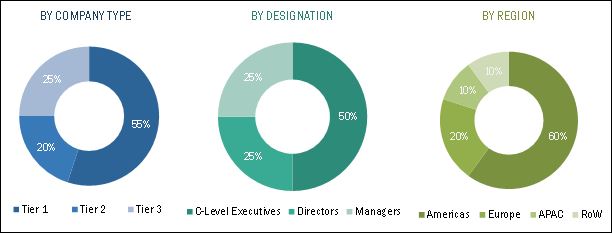
To know about the assumptions considered for the study, download the pdf brochure
The accelerometer and gyroscope ecosystem comprises major players such as Analog Devices Inc. (U.S.), Colibrys Ltd. (Switzerland), Fizoptika Corp. (Russia), Honeywell International Inc. (U.S.), InnaLabs (Ireland), InvenSense, Inc. (U.S.), Kionix, Inc. (U.S.), KVH Industries, Inc. (U.S.), Murata Manufacturing Co., Ltd. (Japan), Northrop Grumman LITEF GmbH (Germany), NXP Semiconductors N.V. (Netherlands), Robert Bosch GmbH (Germany), Sensonsor AS (Norway), STMicroelectronics N.V. (Switzerland), and Systron Donner Inertial (U.S.), among others.
All these companies have their own R&D facilities and extensive sales offices and distribution channels. The products of these companies can be used across various industries for various applications. The report provides the competitive landscape of the key players which indicates their growth strategies in the accelerometer and gyroscope market.
Target Audience:
- Raw material and manufacturing equipment suppliers
- Electronic design automation (EDA) and design tool vendors
- Component manufacturers
- Original equipment manufacturers (OEMs)
- Integrated device manufacturers (IDMs)
- Original design manufacturers (ODMs)
- ODM and OEM technology solution providers
- Assembly, testing, and packaging vendors
- Technology, service, and solution providers
- Intellectual property (IP) core and licensing providers
- Suppliers and distributors
- Government and other regulatory bodies
- Technology investors
- Research institutes and organizations
- Market research and consulting firms
“The study answers several questions for the stakeholders, primarily which market segments to focus in next two to five years (depends on range of forecast period) for prioritizing the efforts and investments.”
Scope of the Report:
The market covered in this report has been segmented as follows:
Accelerometer and Gyroscope Market, by Type:
-
Accelerometer
- MEMS Accelerometer
- Piezoelectric Accelerometer
- Piezoresistive Accelerometer
- Others (including Mechanical Accelerometer)
-
Gyroscope
- MEMS Gyroscope
- Ring Laser Gyroscope (RLG)
- Fiber-Optic Gyroscope (FOG)
- Hemispherical Resonator Gyroscope (HRG)
- Dynamically Tuned Gyroscope (DTG)
- Others (including Gyrostat, Vibrating Structure Gyroscope (VSG) or Coriolis Vibratory Gyroscope (CVG), London Moment Gyroscope, and Other Mechanical Gyroscopes)
Accelerometer and Gyroscope Market, by Dimension:
- 1 Axis
- 2 Axis
- 3 Axis
Accelerometer and Gyroscope Market, by Application:
-
Low-End Applications
- Transportation
- Electronics
- Others (including Home Automation, IoT, Structural Health Monitoring, and Augmented and Virtual Reality)
-
High-End Applications
- Defense
- Aerospace
- Remotely Operated Vehicle (ROV)
- Industrial
- Medical
Accelerometer and Gyroscope Market, by Geography:
-
Americas
- U.S.
- Canada
- Mexico
- Brazil
- Rest of the Americas (including Argentina and Chile)
-
Europe
- Germany
- France
- U.K.
- Italy
- Rest of Europe (including Spain, Sweden, Switzerland, Finland, the Netherlands, Russia, Ireland, and other East European countries)
-
Asia-Pacific
- Japan
- China
- South Korea
- India
- Rest of APAC (including Australia, Taiwan, Singapore, Indonesia, and the Philippines)
-
Rest of the World
- Middle East
- Africa
Available Customizations:
- Further breakdown of the application segment, by dimension and geography
- Further breakdown of the geography segment, by application
- Detailed analysis and profiling of additional market players on the basis of various blocks of the value chain













Growth opportunities and latent adjacency in Accelerometer and Gyroscope Market