Military Auxiliary Power Unit (APU) Market by Platform (Airborne, Land, and Naval), By Type (Emergency Power Unit, Fuel Cell, Electric, and Combustion Engines), By End Use (OEM and MRO) and Region - Global Forecast to 2035


Military Auxiliary Power Unit (APU) Market Overview
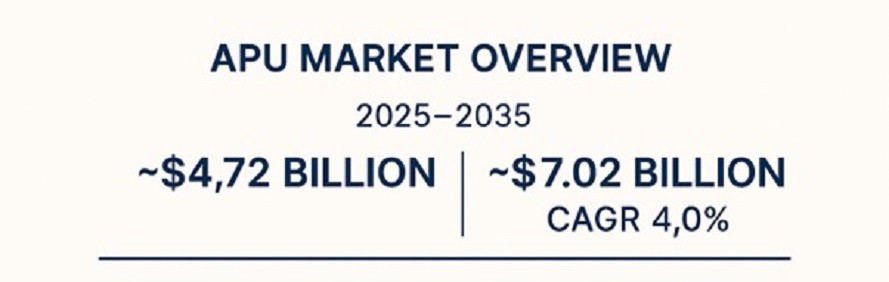
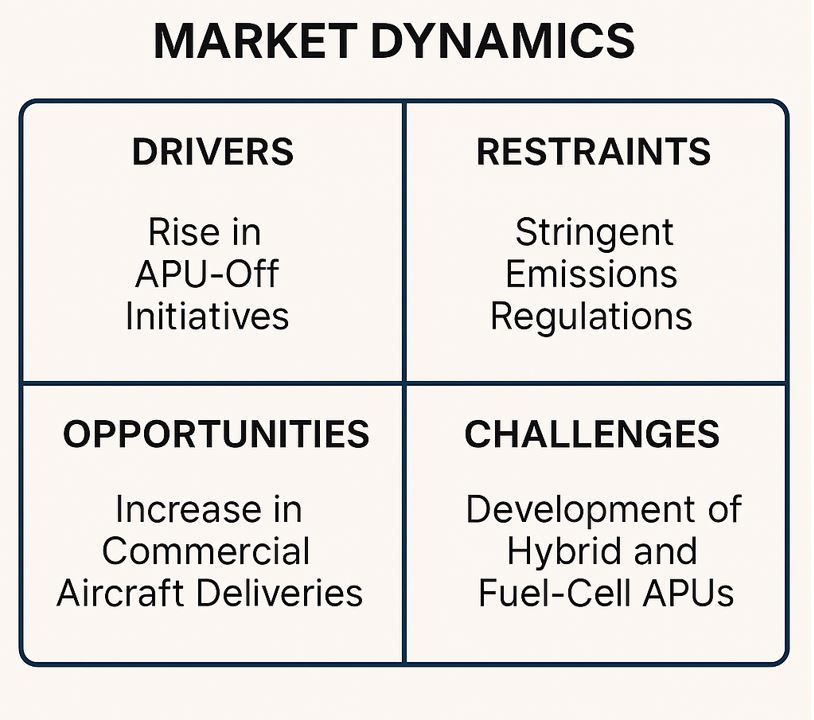
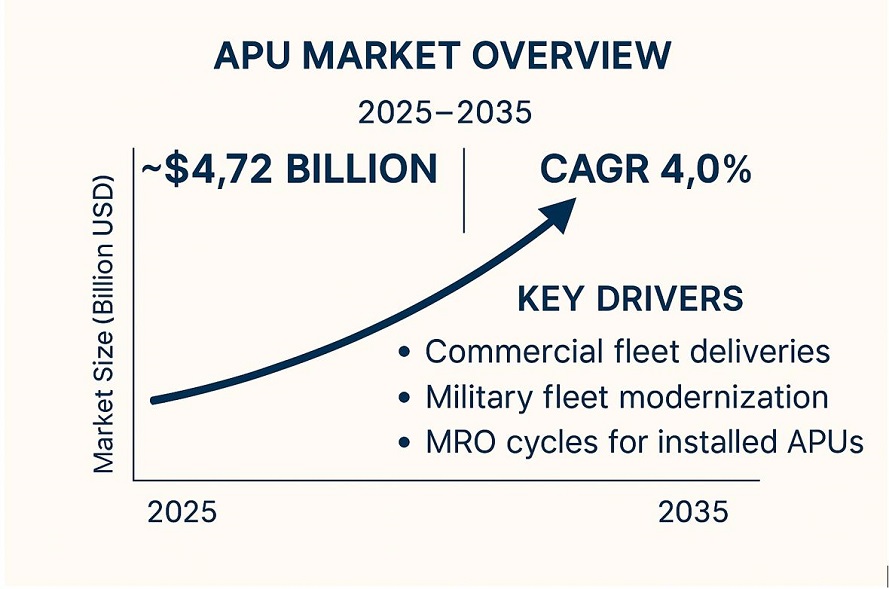
The global aerospace & military APU market size was valued at USD 4.72 billion in 2025 and is projected to reach USD 7.02 billion by 2035, growing at a CAGR of 4.0%. Sustained commercial fleet deliveries, military fleet modernization, and MRO cycles for installed APUs support growth. At the same time, airport “APU-off” rules and fixed ground power availability are changing usage patterns, prompting OEMs to adopt lower-emission, lower-noise architectures and starter-generator upgrades. Fuel-cell and hybrid concepts are emerging for future airframes and ground operations. At the same time, today’s demand skews to reliable turboshaft APUs with improved digital controls, lighter LRU packages, and extended on-wing life. (Policy pressure to limit ramp emissions is noted by multiple sources discussing APU-off practices.)
Source: MarketsandMarkets analysis; secondary research; primary interviews
Segmentation Analysis
Source: MarketsandMarkets analysis; secondary research; primary interviews
By Platform
Commercial fixed-wing (narrow-/wide-body, regional jets)
Largest installed base and aftermarket demand; line-fit tied to OEM production, with strong retrofit/MRO replacement cycles.
Business & general aviation
Value-added upgrades focused on quieter operation, faster starts, and reduced maintenance.
Military fixed- and rotary-wing
Ruggedized APUs with higher bleed/electrical loads for austere starts and mission equipment; demand linked to fleet availability and readiness programs.
By Function
Start power
Main-engine start reliability in hot/high, cold-soak, or expeditionary scenarios is covered
Electrical power
Starter-generator upgrades, as well as higher kVA for avionics and cabin loads, are included under this segment.
Pneumatic/bleed & ECS support
Including packs, de-icing, and environmental control on the ground.
Hybrid/auxiliary roles
Ground cart/APU interface, health monitoring, and prognostics are part of the scope.
By End User
OEM line-fit
Linked to aircraft delivery rates and platform refresh cycles.
Aftermarket/MRO
Replacement APUs, hot section overhauls, LRUs, rentals/leases.
Defense depots & fleet sustainment
Overhauls aligned to flight hours and readiness.
By Region
Source: MarketsandMarkets analysis; secondary research; primary interviews
North America leads in installed base and MRO capacity; Europe remains steady with line-fit and aftermarket support; the Asia Pacific accelerates with fleet growth and localized support; the Middle East sustains wide-body fleets; Latin America & Africa grow gradually with modernization programs.
Competitive Landscape
Source: MarketsandMarkets analysis, public filings, and vendor literature
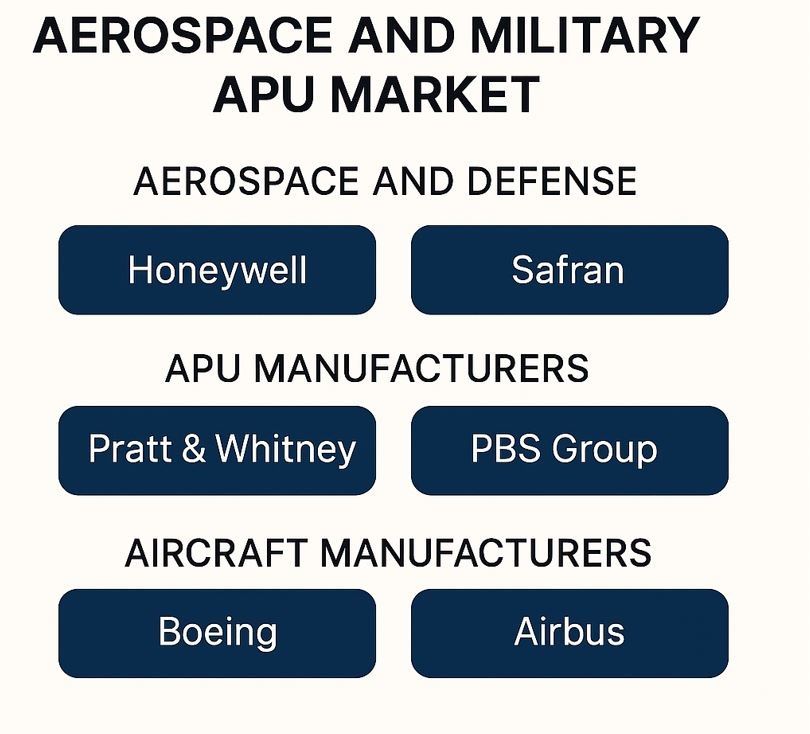
The market is concentrated around a few tier-1 APU OEMs and a broad aftermarket ecosystem:
- APU OEMs / System Integrators: Honeywell Aerospace (broad commercial & military portfolio), Safran Power Units (ex-Microturbo), Pratt & Whitney / Collins (APS/APU programs), PBS Aerospace (PBS Velká Bíteš) for select platforms.
- Key Subsystem & Service Providers: Woodward (fuel controls), AMETEK (starter-generators), Triumph Group (gearboxes), Crane Aerospace (valves), plus global MRO networks supporting overhauls, rentals, and exchanges.
Strategic priorities include lower NOx/particulate emissions, noise reduction, condition-based maintenance, digital engine controls, and extended TBO to reduce the total cost of ownership.
Regulatory & Sustainability
- Airport APU-use restrictions (“APU-off when ground power available”) are increasingly enforced to curb ramp emissions and noise; this elevates the importance of efficient starts, fast spools, and reliable ECS support when needed.
- Certification remains under FAA/EASA engine/APU standards with applicable environmental limits; military usage adds expeditionary and acoustic constraints on bases and carriers.
- OEMs are investing in fuel-efficient combustors, advanced materials, and hybrid/fuel-cell demonstrators to align with airline and defense emissions and readiness goals.
Technology Trends
- Digital FADEC/ECU and health-monitoring for predictive maintenance and faster troubleshooting.
- Higher-power starter-generators supporting more-electric aircraft loads.
- Noise-attenuated, low-emission combustors and improved thermal management.
- Hybrid and fuel-cell APUs in R&D for reduced ramp emissions and future more-electric architectures.
Why This Report
The MarketsandMarkets Aerospace & Military APU Report (2025–2035) offers a comprehensive view of line-fit versus aftermarket demand, platform trends across commercial, business, and military fleets, and a grounded forecast based on a blended, scope-normalized baseline. The model triangulates OEM production, fleet age/utilization, MRO cycles, and airport policy shifts to quantify revenue pools and replacement timing through 2035.
FAQs
Q1. What is the market size of aerospace & military APUs?
A1. ~USD 4.72 billion (2025), projected to reach ~USD 7.02 billion by 2035 at ~4.0% CAGR (MnM blended estimate based on multiple public sources).
Q2. What is driving growth?
A2. OEM deliveries, military fleet sustainment, and aftermarket replacements, alongside technology upgrades (starter-generators, digital controls) and reliability improvements.
Q3. How do APU-off rules affect demand?
A3. They reduce ground-idle runtime but increase the premium on efficient starts, reliability, and low emissions, steering investment to cleaner, smarter APUs.
Q4. Who are the key players?
A4. Honeywell Aerospace, Safran Power Units, Pratt & Whitney/Collins (APS/APU), PBS Aerospace, with subsystem partners like Woodward, AMETEK, Triumph, Crane Aerospace, and global MROs.
Q5. What is the longest public forecast, and how does MnM differ?
A5. Public horizons extend to 2034 in some sources; MnM extends to 2035, per policy, with a blended CAGR to provide a 10-year overview.
 Exclusive indicates content/data unique to MarketsandMarkets and not available with any competitors.
table of contents
1... INTRODUCTION
1.1 OBJECTIVES OF THE STUDY
1.2 MARKET DEFINITION
1.3 INCLUSIONS & EXCLUSIONS
1.4 STUDY SCOPE
1.4.1 MARKETS COVERED
1.4.2 REGIONAL SCOPE
1.4.3 YEARS CONSIDERED FOR THE STUDY
1.5 CURRENCY AND PRICING
1.6 LIMITATIONS
1.7 MARKET STAKEHOLDERS
2... RESEARCH METHODOLOGY
2.1 RESEARCH DATA
2.1.1 SECONDARY DATA
2.1.1.1 Secondary sources
2.1.2 PRIMARY DATA
2.1.2.1 Key data from primary sources
2.1.2.2 Breakdown of primaries
2.2 FACTOR ANALYSIS
2.2.1 INTRODUCTION
2.2.2 DEMAND-SIDE INDICATORS
2.2.3 SUPPLY-SIDE INDICATORS
2.3 MARKET SIZE ESTIMATION
2.3.1 BOTTOM-UP APPROACH
2.3.2 TOP-DOWN APPROACH
2.4 DATA TRIANGULATION
2.5 ASSUMPTIONS
2.6 RISK ANALYSIS
3... EXECUTIVE SUMMARY
4... PREMIUM INSIGHTS
5... MARKET OVERVIEW
5.1 INTRODUCTION
5.2 MARKET DYNAMICS
5.2.1 DRIVERS
5.2.2 RESTRAINTS
5.2.3 OPPORTUNITIES
5.2.4 CHALLENGES
5.3 VALUE CHAIN ANALYSIS
5.4 MARKET ECOSYSTEM
5.5 TRENDS/DISRUPTION IMPACTING CUSTOMER’S BUSINESS
5.6 PRICING ANALYSIS
5.6.1 AVERAGE SELLING PRICES OF KEY PLAYERS
5.6.2 AVERAGE SELLING PRICE TREND
5.7 TECHNOLOGY ANALYSIS
5.8 PATENT ANALYSIS
5.9 CASE STUDY ANALYSIS
5.10 TRADE DATA ANALYSIS
5.11 KEY CONFERENCES & EVENTS IN 2025-26
5.12 TARIFF AND REGULATORY LANDSCAPE
5.12.1 Regulatory Framework
5.12.2 REGULATORY BODIES, GOVERNMENT AGENCIES, AND OTHER ORGANIZATIONS
5.13 KEY STAKEHOLDERS & BUYING CRITERIA
5.12 Investment and funding scenario
5.13 business model
5.14 total cost of ownership
5.16 Impact of AI
5.17 macroeconomic outlook
6... INDUSTRY TRENDS
6.1 INTRODUCTION
6.2 EMERGING TRENDS
6.3 PATENT ANALYSIS
6.4 IMPACT OF MEGATRENDS
7 Military Auxiliary Power Unit (APU) Market, BY platform, market size in USD MILLION, VOLUME (UNITS), 2021-2035
7.1 INTRODUCTION
7.2 Airborne
7.2.1 fighter aircraft
7.2.1.1 Enabling independent ground operations and rapid sortie turnaround without main engine use
7.2.2 Transport aircraft
7.2.2.1 Supporting autonomous power for loading, avionics, and climate control at austere airfields
7.2.3 Helicopter
7.2.3.1 Providing reliable onboard power for engine start and mission systems in remote operations
7.2.4 Unmanned Aerial Vehicles
7.2.4.1 Ensuring self-sustained onboard power for avionics, sensors, and pre-flight readiness
7.3 Land
7.3.1 Main battle tanks (MBT)
7.3.1.1 Reducing fuel consumption and acoustic signature during silent watch operations
7.3.2 Infantry Fighting Vehicles (IFVs)
7.3.2.1 Powering onboard electronics and mission systems without main engine idling
7.3.3 Armored Personnel Carriers (APCS)
7.3.3.1 Enabling continuous situational awareness and communications in static deployments
7.3.4 Armored Amphibious Vehicles (AAV)
7.3.4.1 Supporting power availability across land and littoral transition operations
7.3.5 Mine-Resistant Ambush Protected (MRAP)
7.3.5.1 Sustaining electronic systems and crew survivability equipment during stationary missions
7.3.6 Self-Propelled Howitzers (SPHS)
7.3.6.1 Enabling fire control, navigation, and communications while minimizing engine wear
7.4 naval
7.4.1 frigates
7.4.1.1 Providing auxiliary power for onboard systems and sensors during low-speed or docked operations
7.4.2 submarines
7.4.2.1 Supporting critical onboard systems and battery charging during non-propulsion phases
7.4.3 Amphibious ships
7.4.3.1 Enabling independent power for embarked forces, vehicle decks, and mission support systems
8... Military Auxiliary Power Unit (APU) Market, BY type, market size in USD MILLION, VOLUME (UNITS), 2021-2035
8.1 INTRODUCTION
8.2 Emergency Power Unit
8.2.1 Enabling Controlled Recovery, Safe Shutdown, And Crew Survivability During Primary Power Loss
8.3 fuel cell
8.3.1 Supporting Long-Duration Endurance Missions With Reduced Fuel Logistics Burden
8.4 electric
8.4.1 Enabling silent watch, reduced thermal and acoustic signatures, and lower maintenance cycles
8.5 combustion engines
8.5.1 Enabling Scalable Power Output For Heavy Loads And Continuous Operations
9... Military Auxiliary Power Unit (APU) Market, BY END USE, market size in USD MILLION, VOLUME (UNITS), 2021-2035
9.1 INTRODUCTION
9.2 oem
9.2.1 Embedding Power Redundancy And Autonomy Into Next-Generation Military Platforms
9.3 mro
9.3.1 Sustaining Operational Availability Through Life-Extension And Overhaul Of Installed Power Units
- 10. Military Auxiliary Power Unit (APU) Market, BY REGION, market size in USD MILLION, VOLUME (UNITS), 2021-2035
10.1 INTRODUCTION
10.2 NORTH AMERICA
10.2.1 US
10.2.1.1 Driving higher onboard power capacity for next-gen mission systems across air, land, and naval fleets
10.2.2 CANADA
10.2.2.1 Supporting Arctic and remote operations with reliable auxiliary power and cold-weather start performance
10.3 EUROPE
10.3.1 UK
10.3.1.1 Upgrading legacy fleets with lower-signature auxiliary power for persistent surveillance and readiness
10.3.2 GERMANY
10.3.2.1 Enabling silent watch and electrified subsystems on armored vehicles through higher-capacity auxiliary power
10.3.3 FRANCE
10.3.3.1 Integrating higher-efficiency auxiliary power to reduce logistics burden and improve operational tempo
10.3.4 RUSSIA
10.3.4.1 Driving upgrades focused on battlefield endurance, redundancy, and harsh-environment operability
10.3.5 ITALY
10.3.5.1 Sustaining mixed fleets with standardized auxiliary power upgrades and stronger MRO throughput
10.3.6 REST OF THE EUROPE
10.3.6.1 Expanding retrofit and depot sustainment to keep legacy fleets operational with improved power reliability
10.4 ASIA PACIFIC
10.4.1 CHINA
10.4.1.1 Scaling platform production while raising onboard power levels for sensors, comms, and autonomy
10.4.2 JAPAN
10.4.2.1 Modernizing fleets with efficient power units to support advanced ISR and networked operations
10.4.3 INDIA
10.4.3.1 Driving indigenous manufacturing and upgrade programs that expand demand for APUs and power modules
10.4.4 SOUTH KOREA
10.4.4.1 Expanding local production and sustainment to reduce lifecycle cost and improve readiness
10.4.5 AUSTRALIA
10.4.5.1 Improving availability in remote basing through robust power units and responsive sustainment networks
10.4.6 REST OF THE ASIA PACIFIC
10.4.6.1 Key data from primary sources
10.5 Latin America
10.5.1 BRAZIL
10.5.1.1 Supporting domestic defense industrialization and lifecycle sustainment for power unit availability
10.5.2 MEXICO
10.5.2.1 Improving fleet availability through pragmatic upgrades and sustainment for utility aircraft and land assets
10.5.3 REST OF LATIN AMERICA
10.5.3.1 Extending platform life through retrofit APUs and cost-focused MRO programs
10.6 REST OF WORLD
10.6.1 MIDDLE EAST
10.6.1.1 TURKEY
16.6.1.1.1 Supporting UAV and Land Platform Scale-Up With Standardized Auxiliary Power And Sustainment Capacity
10.6.1.2 SAUDI ARABIA
10.6.1.2.1 Building local sustainment capability to raise fleet availability and reduce dependence on external MRO
10.6.1.3 ISRAEL
10.6.1.3.1 Prioritizing Fast Turnaround And Readiness Through Power Redundancy And Efficient Sustainment
10.6.1.4 UAE
10.6.1.4.1 Supporting Modernization With Auxiliary Power Integration For Digital Mission Systems And Autonomy
10.6.1.5 REST OF MIDDLE EAST
10.6.1.5.1 Raising Fleet Availability Through MRO Expansion, Spares, And Power Unit Refurbishment Programs
10.6.2 AFRICA
10.6.2.1.. Sustaining Operational Availability Of Aging Fleets Through Overhaul, Retrofit, And
Component Repair Capacity
- 11. COMPETITIVE LANDSCAPES
11.1 Introduction
11.2 key players’ strategies/right to win
11.3 MARKET SHARE ANALYSIS OF LEADING PLAYERS, 2024
11.4 Revenue analysis of top market players, 2024
11.5 Company overview
11.6 Company Evaluation Matrix: Key Players, 2024
11.6.1 Star
11.6.2 Pervasive
11.6.3 Emerging Leader
11.6.4 Participant
11.6.5 Company footprint, key players, 2024
11.6.5.1 Company Footprint
11.6.5.2 Region Footprint
11.6.5.3 Platform Footprint
11.6.5.4 END USER FOOTPRINT
11.6.5.5 Type FOOTPRINT
11.7 Company Evaluation Matrix: Startups/SMEs,2024
11.7.1 PROGRESSIVE COMPANY
11.7.2 RESPONSIVE COMPANY
11.7.3 STARTING BLOCK
11.7.4 DYNAMIC COMPANY
11.7.5 COMPETITIVE BENCHMARKING: Startups/SMEs, 2024
11.7.5.1 Detailed list of key startups/SMEs
11.7.5.2 Competitive benchmarking of key startups/SMEs
11.8 company valuation and financial metrics
11.9 brand/product comparison
11.10 Competitive Scenario
11.10.1 Product Launches
11.10.2 Deals
11.10.3 Others
- 12. COMPANY PROFILES
12.1 INTRODUCTiON
12.2 KEY PLAYERS
12.2.1 Honeywell International, Inc.
12.2.2 Pratt & Whitney
12.2.3 Elbit Systems Ltd.
12.2.4 Safran group
12.2.5 PBS Group, a. s.
12.2.6 the marvin group
12.2.7 dewey electronics corporation
12.2.8 Astronics Corporation
12.2.9 AAR Corporation
12.2.10 Polar Power Inc.
12.3 other PLAYERS
*Details on Business Overview, Products Offered, Recent Developments, MnM View might not be captured in case of unlisted companies.
** Only few key players are mentioned above, however top 20 to 25 key players will be profiled during the course of research study
*** The above tentative TOC is based on preliminary secondary data and could improve based on primary data in the course of research study
**** All segments above will be further assessed & considered to be a part of market breakdown. The breakdown of segments will be finalized during the course of research.
***** Request for addition of company profiles or countries in the scope can be considered and included post feasibility
- 13. APPENDIX
13.1 DISCUSSION GUIDE
13.2 KNOWLEDGE STORE: MARKETSANDMARKETS’ SUBSCRIPTION PORTAL
13.3 AVAILABLE CUSTOMIZATION
13.4 RELATED REPORTS
13.5 AUTHOR DETAILS
Exhaustive secondary research was done to collect information on military auxiliary power unit (APU) market, its adjacent markets, and its parent market. The next step was to validate these findings, assumptions, and sizing with industry experts across the value chain through primary research. Demand-side analyses were carried out to estimate the overall size of the market. Both top-down and bottom-up approaches were employed to estimate the complete market size. Thereafter, market breakdown and data triangulation were used to estimate the size of segments and subsegments.
Secondary Research
In the secondary research process, various secondary sources, such as D&B Hoovers, Bloomberg, Business Week, and different magazines were referred to identify and collect information for this study. Secondary sources also included annual reports, press releases & investor presentations of companies, certified publications, articles by recognized authors, and research papers.
Primary Research
Extensive primary research was conducted after acquiring information regarding the military auxiliary power unit (APU) market scenario through secondary research. The market for military auxiliary power unit (APU) is being driven by a range of stakeholders, including APU manufacturers, Component suppliers, system integrators, and MRO service providers. The demand-side of this market is characterized by various end users, such as military forces, military vehicle manufacturers, and defense departments and ministries. The supply side is characterized by technological advancements and the development in military auxiliary power unit (APU). Various primary sources from both the supply and demand sides of the market were interviewed to obtain qualitative and quantitative information. Following is the breakdown of primary respondents.
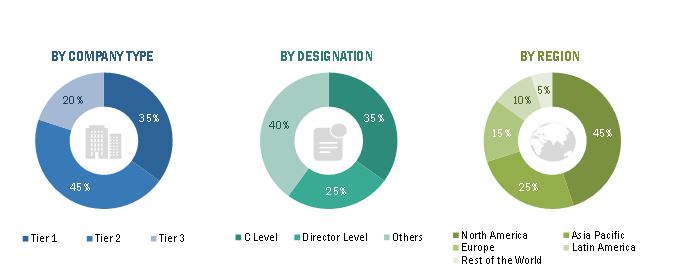
To know about the assumptions considered for the study, download the pdf brochure
Market Size Estimation
Both the top-down and bottom-up approaches were used to estimate and validate the total size of the military auxiliary power unit (APU) market. These methods were also used extensively to estimate the size of various subsegments in the market. The research methodology used to estimate the market size includes the following:
- The key players in the industry and markets were identified through extensive secondary research.
- The industry’s supply chain and market size, in terms of value, were determined through primary and secondary research processes.
- All percentage shares, splits, and breakdowns were determined using secondary sources and verified through primary sources.
Data Triangulation
After arriving at the overall market size from the market size estimation process, the total market has been split into several segments and subsegments. To complete the overall market engineering process and arrive at the exact statistics for market segments and subsegments, the data triangulation procedure has been implemented, wherever applicable. The data has been triangulated by studying various factors and trends from both the demand and supply sides. Along with this, the market size has been validated using both top-down and bottom-up approaches.
Report Objectives
- To define, describe, segment, and forecast the size of the military auxiliary power unit (APU) Market based on platform, type, end use, and region.
- To forecast the size of different segments of the market with respect to five key regions, namely, North America, Europe, Asia Pacific, Latin America, and Rest of the World, along with their key countries
- To identify and analyze the key drivers, restraints, opportunities, and challenges influencing the growth of the market.
- To identify technology trends currently prevailing in the military auxiliary power unit (APU) market
- To analyze micro markets with respect to individual growth trends, prospects, and their contribution to the overall market
- To analyze opportunities in the market for stakeholders by identifying the key market trends
- To profile the leading market players and comprehensively analyze their market share and core competencies.
- To analyze the degree of competition in the market by identifying the key growth strategies, such as acquisitions, new product launches, contracts, and partnerships, adopted by the leading market players.
- To identify detailed financial positions, key products, and unique selling points of the leading companies in the market
- To provide a detailed competitive landscape of the market, along with a ranking analysis, market share analysis, and revenue analysis of the key players
Scope of the Report
|
Report Metric |
Details |
|
Market size available for years |
2023–2028 |
|
Base year considered |
2022 |
|
Forecast period |
2023-2028 |
|
Forecast units |
Value (USD Million) |
|
Segments covered |
By Platform, By Type, By End Use |
|
Geographies covered |
North America, Europe, Asia Pacific, Latin America, and Rest of the World |
|
Companies covered |
Honeywell International Inc. (US), Safran SA (France), Elbit Systems Ltd. (Israel), The Marvin Group (US), Pratt & Whitney (US), Milspec Manufacturing (Australia), The Dewey Electronics Corporation (US), Astronics Corporation (US), AAR (US) are some of the major players of military auxiliary power unit (APU) market. (25 Companies) |
Military Auxiliary Power Unit (APU) Market Highlights
The study categorizes the military auxiliary power unit (APU) market based on Platform, Type, End Use, and Region.
|
Segment |
Subsegment |
|
By Platform |
|
|
By Type |
|
|
By End Use |
|
|
By Region |
|
Available Customizations
MarketsandMarkets offers the following customizations for this market report:
Company Information
- Profiling of additional market players (up to 5)
Product Analysis
- Product matrix, which provides a detailed comparison of the product portfolio of each company in the military auxiliary power unit (APU) market.












Growth opportunities and latent adjacency in Military Auxiliary Power Unit (APU) Market