Aircraft Interface Device Market Size, Share, Trends, Growth Report by End-Use (Fixed Wing, Rotary Wing), Fit (Line Fit, Retrofit) Aircraft Type, Connectivity, and Region (North America, APAC, Europe, Middle East, Africa, Latin America) - Forecast to 2035


Aircraft Interface Device Market
Aircraft Interface Device Market Summary
The global Aircraft Interface Device Market is estimated to be valued at approximately USD 210 million in 2025 and is projected to reach USD 520 million by 2035, expanding at a CAGR of 9.5% during the forecast period. The market is experiencing robust growth driven by the increasing adoption of connected aircraft technologies, rising demand for real-time data exchange, and the digital transformation of cockpit and cabin operations. Aircraft Interface Devices (AIDs) play a critical role in bridging avionics systems with electronic flight bags (EFBs), enabling seamless communication and data transfer. The integration of artificial intelligence (AI), Internet of Things (IoT), and automation is transforming AIDs into intelligent systems capable of predictive analytics, enhanced operational efficiency, and improved flight safety. The growing emphasis on paperless cockpits, fuel optimization, and advanced aircraft health monitoring systems is further accelerating market growth globally.
Key Market Trends & Insights
The Aircraft Interface Device Market is evolving rapidly as airlines and aircraft manufacturers increasingly adopt digital and connected solutions. North America leads the market due to its advanced aviation infrastructure and early adoption of next-generation avionics systems, while Asia Pacific is emerging as the fastest-growing region driven by expanding airline fleets and increasing air traffic.
Portable AIDs dominate the product segment due to their flexibility, cost-effectiveness, and ease of deployment across various aircraft types. Installed AIDs, however, are gaining traction in modern aircraft due to their enhanced integration and reliability. Emerging technology trends include AI-driven data analytics, cloud connectivity, and real-time aircraft performance monitoring.
The integration of IoT-enabled systems is enabling continuous data exchange between aircraft and ground operations, improving decision-making and operational efficiency. Automation is streamlining cockpit workflows, reducing pilot workload, and enhancing safety. These trends highlight the growing importance of digital transformation in the aviation industry.
Market Size & Forecast
-
Base year market size (2025): USD 210 million
-
Forecast value by 2035: USD 520 million
-
CAGR (2025–2035): 9.5%
-
Growth is driven by increasing adoption of connected aircraft systems, demand for real-time data analytics, expansion of airline fleets, and integration of AI and IoT technologies
Aircraft Interface Device Market Top 10 key takeaway
-
The market is expected to more than double by 2035
-
Digital transformation in aviation is a key growth driver
-
North America dominates due to advanced aviation infrastructure
-
Asia Pacific is the fastest-growing region globally
-
Portable AIDs lead the product segment
-
AI-enabled analytics are enhancing operational efficiency
-
IoT integration is enabling real-time data exchange
-
Automation is reducing pilot workload and improving safety
-
Expansion of airline fleets is boosting demand
-
Paperless cockpit initiatives are accelerating adoption
Product Insights
Portable Aircraft Interface Devices (AIDs) represent the leading product segment in the market, primarily due to their flexibility and cost-effectiveness. These devices can be easily deployed across different aircraft without requiring significant modifications, making them an attractive option for airlines seeking to modernize their operations without extensive capital investment. Portable AIDs are widely used in conjunction with electronic flight bags (EFBs), enabling pilots to access real-time data, navigation information, and performance metrics.
Installed AIDs, on the other hand, are gaining increasing adoption in new-generation aircraft due to their seamless integration with onboard avionics systems. These devices offer enhanced reliability, security, and performance, making them suitable for advanced aviation applications. The demand for installed AIDs is expected to grow as airlines continue to invest in fleet modernization and new aircraft deliveries.
Emerging product innovations include hybrid AIDs that combine the benefits of portability and integration, as well as advanced devices equipped with AI-driven analytics and real-time monitoring capabilities. These innovations are enhancing the functionality and value proposition of AIDs, making them indispensable components of modern aircraft systems.
Technology / Component Insights (Rename based on keyword if needed)
Technological advancements are at the core of the Aircraft Interface Device Market, with AI, IoT, and cloud computing playing pivotal roles in shaping next-generation solutions. AI is enabling advanced data analytics, allowing airlines to optimize flight operations, reduce fuel consumption, and improve maintenance planning. Machine learning algorithms are being used to analyze large volumes of flight data, providing actionable insights for decision-making.
IoT integration is facilitating seamless connectivity between aircraft systems, ground operations, and airline networks. This connectivity enables real-time data exchange, improving situational awareness and operational efficiency. Cloud-based platforms are increasingly being used to store and process data collected by AIDs, enabling scalable and efficient data management.
Automation is streamlining cockpit operations by reducing manual tasks and improving workflow efficiency. Future innovation trends include the development of edge computing capabilities, enhanced cybersecurity features, and integration with advanced avionics systems. These technologies are expected to further enhance the performance and reliability of AIDs in the coming years.
Application Insights
The commercial aviation segment dominates the Aircraft Interface Device Market, driven by the increasing adoption of connected aircraft technologies and the need for efficient flight operations. Airlines are leveraging AIDs to improve fuel efficiency, optimize flight routes, and enhance passenger experience through real-time data access.
Business aviation is another significant application segment, with operators increasingly adopting AIDs to enhance operational efficiency and reduce costs. The growing demand for private and charter flights is contributing to the expansion of this segment.
Military aviation is also witnessing increased adoption of AIDs, particularly for mission planning, situational awareness, and data integration. Future opportunities lie in integrating AIDs with autonomous and unmanned aerial systems, further expanding their application scope and functionality.
Regional Insights
North America leads the Aircraft Interface Device Market, supported by its advanced aviation infrastructure, strong presence of key industry players, and early adoption of digital technologies. The region continues to invest heavily in connected aircraft solutions and next-generation avionics systems.
Europe is experiencing steady growth, driven by increasing investments in aviation modernization and digital transformation initiatives. The region is also focusing on sustainability and efficiency, further driving the adoption of AIDs.
Asia Pacific is the fastest-growing region, fueled by rapid expansion of airline fleets, increasing air passenger traffic, and significant investments in aviation infrastructure. Countries such as China and India are playing a key role in driving regional growth.
-
North America dominates due to advanced aviation infrastructure
-
Europe shows steady growth with modernization initiatives
-
Asia Pacific is the fastest-growing region globally
-
Increasing air traffic is driving demand across regions
-
Digital transformation is accelerating adoption worldwide
Country-Specific Market Trends
In Asia Pacific, China is witnessing a CAGR of approximately 10.8%, driven by rapid expansion of airline fleets and investments in aviation infrastructure. Japan is also experiencing steady growth, supported by technological innovation and a strong aviation industry.
In North America, the United States remains the largest market, with a CAGR of around 9.2%, driven by continuous investment in advanced avionics systems and connected aircraft technologies. Canada and Mexico are also contributing to market growth through modernization initiatives.
In Europe, Germany and France are key markets, with CAGRs of approximately 9.0% and 8.8%, respectively. These countries are focusing on enhancing aviation efficiency and adopting advanced digital solutions.
-
China leads growth in Asia Pacific with strong aviation expansion
-
Japan focuses on technological innovation in aviation
-
The United States dominates the global market
-
Germany and France drive growth in Europe
-
Government investments and policies support market expansion
Key Aircraft Interface Device Market Company Insights
The Aircraft Interface Device Market is characterized by strong competition and continuous innovation, with leading players focusing on advanced connectivity, AI integration, and enhanced system performance. Key companies such as Collins Aerospace, Honeywell International Inc., Teledyne Controls, Astronics Corporation, SITAONAIR, and Boeing are playing a significant role in shaping the market.
These companies are investing heavily in research and development to introduce advanced AIDs with enhanced connectivity, real-time analytics, and improved cybersecurity features. Strategic collaborations with airlines and technology providers are enabling them to expand their market presence and deliver innovative solutions.
The focus on integrating AI and IoT technologies, improving data management capabilities, and enhancing system reliability is driving competitive strategies. Continuous innovation and digital transformation are expected to remain key differentiators in the market.
-
Companies are focusing on AI-driven data analytics
-
Strategic partnerships are enhancing market reach
-
Investment in R&D is driving innovation
-
Emphasis on cybersecurity and reliability is increasing
-
Expansion into emerging markets is boosting growth
Recent Developments
Recent developments in the Aircraft Interface Device Market highlight the growing emphasis on connectivity and digital transformation. Several companies have introduced next-generation AIDs with enhanced data processing capabilities and real-time analytics features.
Additionally, partnerships between aviation technology providers and airlines are enabling the integration of IoT-based solutions, improving operational efficiency and passenger experience. Governments and regulatory bodies are also supporting the adoption of digital technologies in aviation, further driving market growth.
Market Segmentation
The Aircraft Interface Device Market is segmented based on product, technology/component, application, and region. By product, the market includes portable and installed AIDs, with portable devices dominating due to their flexibility and cost-effectiveness.
In terms of technology, the market encompasses traditional AIDs, AI-enabled systems, IoT-integrated solutions, and cloud-based platforms. These technologies are driving advancements in connectivity, data analytics, and operational efficiency.
Applications are categorized into commercial aviation, business aviation, and military aviation, each contributing to overall market growth. Regionally, the market is divided into North America, Europe, Asia Pacific, and the rest of the world, with varying adoption rates and growth potential.
-
Portable AIDs dominate the product segment
-
AI-enabled systems are driving technological advancements
-
Commercial aviation holds the largest market share
-
Business and military aviation show steady growth
-
Asia Pacific is emerging as a key growth region
Conclusion
The Aircraft Interface Device Market is poised for significant growth through 2035, driven by the increasing adoption of digital and connected aircraft technologies. The integration of AI, IoT, and automation is transforming AIDs into intelligent systems that enhance operational efficiency, improve safety, and reduce costs.
As the aviation industry continues to embrace digital transformation, the demand for advanced AIDs will continue to rise. Companies that invest in innovative technologies and align their strategies with evolving industry trends will be well-positioned to capitalize on future opportunities. The market’s growth trajectory underscores its strategic importance in shaping the future of modern aviation.
FAQs
1. What is the current market size of the Aircraft Interface Device Market?
The market size is estimated at USD 210 million in 2025.
2. What is the expected growth rate of the market?
The market is projected to grow at a CAGR of 9.5% from 2025 to 2035.
3. What are the key drivers of market growth?
Key drivers include digital transformation in aviation, adoption of AI and IoT technologies, and increasing demand for connected aircraft systems.
4. Which region leads the Aircraft Interface Device Market?
North America is the leading region due to advanced aviation infrastructure and early technology adoption.
5. Who are the major players in the market?
Major players include Collins Aerospace, Honeywell International Inc., Teledyne Controls, Astronics Corporation, SITAONAIR, and Boeing.
 Exclusive indicates content/data unique to MarketsandMarkets and not available with any competitors.
TABLE OF CONTENTS
1 INTRODUCTION (Page No. - 29)
1.1 OBJECTIVES OF THE STUDY
1.2 MARKET DEFINITION
1.3 STUDY SCOPE
1.3.1 MARKETS COVERED
FIGURE 1 SEGMENTATION
1.3.2 INCLUSIONS & EXCLUSIONS
1.3.3 YEARS CONSIDERED FOR THE STUDY
1.4 CURRENCY
1.5 LIMITATIONS
1.6 MARKET STAKEHOLDERS
1.7 SUMMARY OF CHANGES
FIGURE 2 AIRCRAFT INTERFACE DEVICE MARKET TO GROW AT A LOWER RATE COMPARED TO PREVIOUS REPORT ESTIMATES
2 RESEARCH METHODOLOGY (Page No. - 34)
2.1 RESEARCH DATA
FIGURE 3 REPORT PROCESS FLOW
FIGURE 4 RESEARCH DESIGN
2.1.1 SECONDARY DATA
2.1.1.1 Key secondary sources
2.1.2 PRIMARY DATA
2.1.2.1 Key primary sources
2.1.2.2 Breakdown of primaries
2.2 FACTOR ANALYSIS
2.2.1 INTRODUCTION
2.2.2 DEMAND-SIDE INDICATORS
2.2.2.1 Increasing demand for efficient aircraft models
2.2.2.2 Cockpit improvement and crew resource management
2.2.3 SUPPLY-SIDE ANALYSIS
2.2.3.1 Advancements in technology
2.3 MARKET SIZE ESTIMATION
2.3.1 MARKET DEFINITION & SCOPE
2.3.2 SEGMENTS AND SUBSEGMENTS
2.4 RESEARCH APPROACH & METHODOLOGY
2.4.1 BOTTOM-UP APPROACH
2.4.2 AIRCRAFT INTERFACE DEVICE MARKET FOR OEM
2.4.3 AIRCRAFT INTERFACE DEVICE AFTERMARKET
FIGURE 5 MARKET SIZE ESTIMATION METHODOLOGY: BOTTOM-UP APPROACH
2.4.4 TOP-DOWN APPROACH
FIGURE 6 MARKET SIZE ESTIMATION METHODOLOGY: TOP-DOWN APPROACH
2.5 TRIANGULATION & VALIDATION
FIGURE 7 DATA TRIANGULATION
2.5.1 TRIANGULATION THROUGH PRIMARY AND SECONDARY RESEARCH
2.6 ASSUMPTIONS FOR THE RESEARCH STUDY
TABLE 1 ASSUMPTIONS FOR THE RESEARCH STUDY
2.7 RISKS
3 EXECUTIVE SUMMARY (Page No. - 44)
FIGURE 8 FIXED WING SEGMENT ESTIMATED TO ACCOUNT FOR A LARGER SHARE IN 2020
FIGURE 9 AIRCRAFT TYPE, 2020
FIGURE 10 RETROFIT SEGMENT ESTIMATED TO ACCOUNT FOR A LARGER SHARE IN 2020
FIGURE 11 AIRCRAFT INTERFACE DEVICE INDUSTRY IN ASIA PACIFIC TO GROW AT THE HIGHEST CAGR DURING FORECAST PERIOD
4 PREMIUM INSIGHTS (Page No. - 46)
4.1 REDUCTION IN MAINTENANCE AND OPERATIONAL COSTS IS EXPECTED TO DRIVE THE MARKET FROM 2O20 TO 2025
FIGURE 12 ATTRACTIVE GROWTH OPPORTUNITIES
4.2 AIRCRAFT INTERFACE DEVICE MARKET, BY FIT
FIGURE 13 RETROFIT SEGMENT PROJECTED TO LEAD THE MARKET FROM 2020 TO 2025
4.3 AIRCRAFT INTERFACE DEVICE MARKET, BY COUNTRY
FIGURE 14 AIRCRAFT INTERFACE MARKET IN INDIA IS PROJECTED TO GROW AT THE HIGHEST CAGR FROM 2020 TO 2025
5 MARKET OVERVIEW (Page No. - 48)
5.1 INTRODUCTION
5.2 MARKET DYNAMICS
FIGURE 15 MARKET DYNAMICS
5.2.1 DRIVERS
5.2.1.1 Increase in situational awareness to drive operations
5.2.1.2 Reduction of maintenance cost
5.2.1.3 Increase in demand for real-time aviation analytics
5.2.1.4 Reduction in operational costs with minimal fuel consumption
5.2.1.5 Large existing aircraft fleet for retrofitting
TABLE 2 AIRCRAFT TYPES AND THEIR FLEET SIZE (UNITS)
5.2.2 RESTRAINTS
5.2.2.1 Certification from regulatory bodies and regulations associated with airworthiness
5.2.3 OPPORTUNITIES
5.2.3.1 Benefits associated with advanced in-flight entertainment services
5.2.3.2 Installations in commercial helicopters
5.2.4 CHALLENGES
5.2.4.1 Cybersecurity issues with wireless devices
5.2.4.2 Software errors and program design
5.2.4.3 Compatibility issues with retrofitting
5.2.4.4 Impact of COVID-19 on cancellations and delaying orders from end users
5.3 AVERAGE SELLING PRICE
FIGURE 16 AVERAGE SELLING PRICE: LINE FIT AIRCRAFT INTERFACE DEVICE, 2020 AND 2025
FIGURE 17 AVERAGE SELLING PRICE: RETROFIT AIRCRAFT INTERFACE DEVICE, 2020 AND 2025
5.4 VOLUME DATA
TABLE 3 LINE FIT CIVIL AIRCRAFT SIZE, BY REGION (UNITS)
TABLE 4 LINE FIT MILITARY AIRCRAFT SIZE, BY REGION (UNITS)
5.5 SUPPLY CHAIN ANALYSIS
FIGURE 18 SUPPLY CHAIN ANALYSIS
5.6 VALUE CHAIN ANALYSIS
FIGURE 19 VALUE CHAIN ANALYSIS
5.7 MARKET ECOSYSTEM MAP
5.7.1 PROMINENT COMPANIES
5.7.2 PRIVATE AND SMALL ENTERPRISES
5.7.3 END USERS
FIGURE 20 MARKET ECOSYSTEM MAP
5.8 DISRUPTION IMPACTING CUSTOMER’S BUSINESS
5.8.1 REVENUE SHIFT & NEW REVENUE POCKETS FOR AIRCRAFT INTERFACE DEVICE MANUFACTURERS
FIGURE 21 REVENUE IMPACT
5.9 PORTER’S FIVE FORCES ANALYSIS
FIGURE 22 INTENSITY OF COMPETITIVE RIVALRY
5.10 TRADE DATA STATISTICS
TABLE 5 TRADE DATA TABLE FOR AIRCRAFT INTERFACE DEVICE
5.11 TARIFF AND REGULATORY LANDSCAPE
6 INDUSTRY TRENDS (Page No. - 61)
6.1 TECHNOLOGY EVOLUTION
6.2 TECHNOLOGY TRENDS
6.2.1 CONNECTED AIRCRAFT
6.2.2 E-ENABLED ARCHITECTURE
FIGURE 23 TYPICAL ARCHITECTURE OF E-ENABLED AIRCRAFT
6.2.3 TABLET INTERFACE MODULE
6.3 AIRCRAFT INTERFACE DEVICE - APPLICATIONS
6.4 IMPACT OF MEGATRENDS
6.5 INNOVATIONS AND PATENT REGISTRATIONS
TABLE 6 INNOVATIONS AND PATENT REGISTRATIONS, 2015-2020
7 AIRCRAFT INTERFACE DEVICE MARKET, BY END-USE (Page No. - 65)
7.1 INTRODUCTION
FIGURE 24 FIXED WING SEGMENT IS PROJECTED TO LEAD DURING FORECAST PERIOD
TABLE 7 SIZE, BY END-USE, 2017-2019 (USD MILLION)
TABLE 8 SIZE, BY END-USE, 2020-2025 (USD MILLION)
7.2 FIXED WING
TABLE 9 FIXED WING END-USE SEGMENT SIZE, BY REGION, 2017-2019 (USD MILLION)
TABLE 10 FIXED WING END-USE SEGMENT SIZE, BY REGION, 2020-2025 (USD MILLION)
TABLE 11 FIXED WING END-USE SEGMENT SIZE, BY END USER, 2017-2019 (USD MILLION)
TABLE 12 FIXED WING END-USE SEGMENT SIZE, BY END USER, 2020-2025 (USD MILLION)
7.2.1 AIRLINES & OPERATORS
7.2.1.1 Increasing demand for advanced avionics is driving the demand for fixed wing aircraft
7.2.2 OEMS
7.2.2.1 Optimizing cockpit systems and in-flight entertainment systems with AID to drive the market
7.2.3 MROS
7.2.3.1 Increased modernization of aircraft is fueling the growth of this segment
7.3 ROTARY WING
TABLE 13 ROTARY WING END-USE SEGMENT SIZE, BY REGION, 2017-2019 (USD MILLION)
TABLE 14 ROTARY WING END-USE SEGMENT SIZE, BY REGION, 2020-2025 (USD MILLION)
TABLE 15 ROTARY WING END-USE SEGMENT SIZE, BY END USER, 2018-2025 (USD MILLION)
TABLE 16 ROTARY WING END-USE SEGMENT SIZE, BY END USER, 2020-2025 (USD MILLION)
7.3.1 OPERATORS
7.3.1.1 Increasing procurement of helicopters with advanced avionics is driving the market
7.3.2 OEMS
7.3.2.1 Requirement for advanced avionic systems is expected to drive the market
7.3.3 MROS
7.3.3.1 Rise in demand to upgrade helicopters is expected to fuel the growth of this segment
8 AIRCRAFT INTERFACE DEVICE MARKET, BY FIT (Page No. - 72)
8.1 INTRODUCTION
FIGURE 25 LINE FIT SEGMENT PROJECTED TO GROW AT A HIGHER CAGR DURING FORECAST PERIOD
TABLE 17 MARKET SIZE, BY FIT, 2017-2019 (USD MILLION)
TABLE 18 MARKET SIZE, BY FIT, 2020-2025 (USD MILLION)
8.2 LINE FIT
8.2.1 INCREASED DEMAND FOR COMMERCIAL AIRLINERS FUEL DEMAND FOR AIRCRAFT INTERFACE DEVICES
TABLE 19 SIZE, BY REGION, 2017-2019 (USD MILLION)
TABLE 20 SIZE, BY REGION, 2020-2025 (USD MILLION)
8.3 RETROFIT
8.3.1 GROWING COCKPIT UPGRADATION AND MODIFICATION DRIVING MARKET GROWTH
TABLE 21 SIZE, BY REGION, 2017-2019 (USD MILLION)
TABLE 22 SIZE, BY REGION, 2020-2025 (USD MILLION)
9 AIRCRAFT INTERFACE DEVICE MARKET, BY AIRCRAFT TYPE (Page No. - 77)
9.1 INTRODUCTION
FIGURE 26 CIVIL SEGMENT EXPECTED TO LEAD DURING FORECAST PERIOD
TABLE 23 SIZE, BY AIRCRAFT TYPE, 2017-2019 (USD MILLION)
TABLE 24 SIZE, BY AIRCRAFT TYPE, 2020-2025 (USD MILLION)
9.2 CIVIL
9.2.1 INCREASING DEMAND FOR COMMERCIAL AVIATION POST COVID-19 IS EXPECTED TO DRIVE THE MARKET
TABLE 25 CIVIL SEGMENT SIZE, BY TYPE, 2017-2019 (USD MILLION)
TABLE 26 CIVIL SEGMENT SIZE, BY TYPE, 2020-2025 (USD MILLION)
TABLE 27 CIVIL SEGMENT SIZE, BY REGION, 2018-2025 (USD MILLION)
TABLE 28 CIVIL SEGMENT SIZE, BY REGION, 2020-2025 (USD MILLION)
9.2.2 NARROW BODY AIRCRAFT
9.2.2.1 Increasing domestic air travel to drive the market for aircraft interface devices in narrow body aircraft
TABLE 29 NARROW BODY TYPE MARKET SIZE, BY REGION, 2017-2019 (USD MILLION)
TABLE 30 NARROW BODY TYPE MARKET SIZE, BY REGION, 2020-2025 (USD MILLION)
9.2.3 WIDE BODY AIRCRAFT
9.2.3.1 Increasing global air passenger traffic expected to drive procurement of wide body aircraft
TABLE 31 WIDE BODY TYPE MARKET SIZE, BY REGION, 2017-2019 (USD MILLION)
TABLE 32 WIDE BODY TYPE MARKET SIZE, BY REGION, 2020-2025 (USD MILLION)
9.2.4 BUSINESS JETS
9.2.4.1 High demand for business class travel aircraft expected to drive the market for AID
TABLE 33 BUSINESS JETS INTERFACE DEVICE MARKET SIZE, BY REGION, 2017-2019 (USD MILLION)
TABLE 34 BUSINESS JETS INTERFACE DEVICE MARKET SIZE, BY REGION, 2020-2025 (USD MILLION)
9.2.5 REGIONAL TRANSPORT AIRCRAFT
9.2.5.1 Increasing demand for short-distance transport fuels demand for aircraft interface device in regional transport aircraft
TABLE 35 REGIONAL TRANSPORT MARKET SIZE, BY REGION, 2017-2019 (USD MILLION)
TABLE 36 REGIONAL TRANSPORT MARKET SIZE, BY REGION, 2020-2025 (USD MILLION)
9.2.6 CIVIL HELICOPTERS
9.2.6.1 Demand for civil helicopters for domestic use expected to drive market
TABLE 37 CIVIL HELICOPTERS INTERFACE DEVICE MARKET SIZE, BY REGION, 2017-2019 (USD MILLION)
TABLE 38 CIVIL HELICOPTERS INTERFACE DEVICE MARKET SIZE, BY REGION, 2020-2025 (USD MILLION)
9.3 MILITARY
9.3.1 INCREASING INVESTMENTS IN MILITARY AVIONICS EXPECTED TO DRIVE THE MARKET
TABLE 39 MILITARY SEGMENT SIZE, BY TYPE, 2017-2019 (USD MILLION)
TABLE 40 MILITARY SEGMENT SIZE, BY TYPE, 2020-2025 (USD MILLION)
TABLE 41 MILITARY SEGMENT SIZE, BY REGION, 2017-2019 (USD MILLION)
TABLE 42 MILITARY SEGMENT SIZE, BY REGION, 2020-2025 (USD MILLION)
9.3.2 FIGHTER AIRCRAFT
9.3.2.1 Increasing procurement and modernization programs by militaries across the globe expected to drive this segment
TABLE 43 FIGHTER SEGMENT MARKET SIZE, BY REGION, 2017-2019 (USD MILLION)
TABLE 44 FIGHTER SEGMENT MARKET SIZE, BY REGION, 2020-2025 (USD MILLION)
9.3.3 TRANSPORT AIRCRAFT
9.3.3.1 Increasing demand for military transport aircraft expected to drive the market
TABLE 45 TRANSPORT SEGMENT MARKET SIZE, BY REGION, 2017-2019 (USD MILLION)
TABLE 46 TRANSPORT SEGMENT MARKET SIZE, BY REGION, 2020-2025 (USD MILLION)
9.3.4 SPECIAL MISSION AIRCRAFT
9.3.4.1 Increasing demand for special mission aircraft expected to drive the market
TABLE 47 SPECIAL MISSION SEGMENT MARKET SIZE, BY REGION, 2017-2019 (USD MILLION)
TABLE 48 SPECIAL MISSION AIRCRAFT INTERFACE DEVICE MARKET SIZE, BY REGION, 2020-2025 (USD MILLION)
9.3.5 MILITARY HELICOPTERS
9.3.5.1 Increasing procurement of military helicopters by emerging economies boosts the market growth
TABLE 49 MILITARY HELICOPTERS INTERFACE DEVICE MARKET SIZE, BY REGION, 2017-2019 (USD MILLION)
TABLE 50 MILITARY HELICOPTERS INTERFACE DEVICE MARKET SIZE, BY REGION, 2020-2025 (USD MILLION)
10 AIRCRAFT INTERFACE DEVICE MARKET, BY CONNECTIVITY (Page No. - 93)
10.1 INTRODUCTION
FIGURE 27 WIRELESS SEGMENT PROJECTED TO GROW AT A HIGHER CAGR DURING FORECAST PERIOD
TABLE 51 INDUSTRY SIZE, BY CONNECTIVITY, 2017-2019 (USD MILLION)
TABLE 52 INDUSTRY SIZE, BY CONNECTIVITY, 2020-2025 (USD MILLION)
10.2 WIRED
10.2.1 HIGH RELIABILITY AND LOW MAINTENANCE OF WIRED CONNECTIVITY EXPECTED TO DRIVE THIS SEGMENT
TABLE 53 WIRED CONNECTIVITY SIZE, BY REGION, 2017-2019 (USD MILLION)
TABLE 54 WIRED CONNECTIVITY SIZE, BY REGION, 2020-2025 (USD MILLION)
10.3 WIRELESS
10.3.1 DEMAND FOR WIRELESS CONNECTIVITY IS EXPECTED TO GROW DUE TO LOW INSTALLATION AND MAINTENANCE COSTS
TABLE 55 WIRELESS CONNECTIVITY MARKET SIZE, BY REGION, 2017-2019 (USD MILLION)
TABLE 56 WIRELESS CONNECTIVITY SIZE, BY REGION, 2020-2025 (USD MILLION)
11 REGIONAL ANALYSIS (Page No. - 98)
11.1 INTRODUCTION
FIGURE 28 ASIA PACIFIC TO GROW AT HIGHEST CAGR FROM 2020 TO 2025
11.2 COVID-19 IMPACT BY REGION
FIGURE 29 COVID-19 IMPACT ON AVIATION REVENUE IN 2020, BY REGION
FIGURE 30 IMPACT OF COVID-19
11.3 NORTH AMERICA
11.3.1 PESTLE ANALYSIS: NORTH AMERICA
FIGURE 31 NORTH AMERICA REGIONAL SNAPSHOT
TABLE 57 NORTH AMERICA: INDUSTRY SIZE, BY END-USE, 2017-2019 (USD MILLION)
TABLE 58 NORTH AMERICA: INDUSTRY SIZE, BY END-USE, 2020-2025 (USD MILLION)
TABLE 59 NORTH AMERICA: INDUSTRY SIZE, BY FIT, 2017-2019 (USD MILLION)
TABLE 60 NORTH AMERICA: INDUSTRY SIZE, BY FIT, 2020-2025 (USD MILLION)
TABLE 61 NORTH AMERICA: INDUSTRY SIZE, BY AIRCRAFT TYPE, 2017-2019 (USD MILLION)
TABLE 62 NORTH AMERICA: INDUSTRY SIZE, BY AIRCRAFT TYPE, 2020-2025 (USD MILLION)
TABLE 63 NORTH AMERICA: INDUSTRY SIZE, BY CONNECTIVITY, 2017-2019 (USD MILLION)
TABLE 64 NORTH AMERICA: INDUSTRY SIZE, BY CONNECTIVITY, 2020-2025 (USD MILLION)
TABLE 65 NORTH AMERICA: INDUSTRY, BY COUNTRY, 2017-2019 (USD MILLION)
TABLE 66 NORTH AMERICA: INDUSTRY, BY COUNTRY, 2020-2025 (USD MILLION)
11.3.2 US
11.3.2.1 Presence of leading manufacturers of aircraft interface device drives the market in the US
TABLE 67 US: REGIONAL SIZE, BY END-USE, 2017-2019 (USD MILLION)
TABLE 68 US: REGIONAL SIZE, BY END-USE, 2020-2025 (USD MILLION)
TABLE 69 US: REGIONAL SIZE, BY FIT, 2017-2019 (USD MILLION)
TABLE 70 US: REGIONAL SIZE, BY FIT, 2020-2025 (USD MILLION)
TABLE 71 US: REGIONAL SIZE, BY AIRCRAFT TYPE, 2017-2019 (USD MILLION)
TABLE 72 US: REGIONAL SIZE, BY AIRCRAFT TYPE, 2020-2025 (USD MILLION)
TABLE 73 US: REGIONAL SIZE, BY CONNECTIVITY, 2017-2019 (USD MILLION)
TABLE 74 US: REGIONAL SIZE, BY CONNECTIVITY, 2020-2025 (USD MILLION)
11.3.3 CANADA
11.3.3.1 Aircraft modernization programs fuel adoption of aircraft interface devices in Canada
TABLE 75 CANADA: SIZE, BY END-USE, 2017-2019 (USD MILLION)
TABLE 76 CANADA: SIZE, BY END-USE, 2020-2025 (USD MILLION)
TABLE 77 CANADA: SIZE, BY FIT, 2017-2019 (USD MILLION)
TABLE 78 CANADA: SIZE, BY FIT, 2020-2025 (USD MILLION)
TABLE 79 CANADA: SIZE, BY AIRCRAFT TYPE, 2017-2019 (USD MILLION)
TABLE 80 CANADA: SIZE, BY AIRCRAFT TYPE, 2020-2025 (USD MILLION)
TABLE 81 CANADA: SIZE, BY CONNECTIVITY, 2017-2019 (USD MILLION)
TABLE 82 CANADA: SIZE, BY CONNECTIVITY, 2020-2025 (USD MILLION)
11.4 EUROPE
11.4.1 PESTLE ANALYSIS: EUROPE
FIGURE 32 EUROPE AIRCRAFT INTERFACE DEVICE MARKET SNAPSHOT
TABLE 83 EUROPE: SIZE, BY END-USE, 2017-2019 (USD MILLION)
TABLE 84 EUROPE: SIZE, BY END-USE, 2020-2025 (USD MILLION)
TABLE 85 EUROPE: SIZE, BY FIT, 2017-2019 (USD MILLION)
TABLE 86 EUROPE: SIZE, BY FIT, 2020-2025 (USD MILLION)
TABLE 87 EUROPE: SIZE, BY AIRCRAFT TYPE, 2017-2019 (USD MILLION)
TABLE 88 EUROPE: SIZE, BY AIRCRAFT TYPE, 2020-2025 (USD MILLION)
TABLE 89 EUROPE: SIZE, BY CONNECTIVITY, 2017-2019 (USD MILLION)
TABLE 90 EUROPE: SIZE, BY CONNECTIVITY, 2020-2025 (USD MILLION)
TABLE 91 EUROPE: REGIONAL MARKET, BY COUNTRY, 2017-2019 (USD MILLION)
TABLE 92 EUROPE: REGIONAL MARKET, BY COUNTRY, 2020-2025 (USD MILLION)
11.4.2 FRANCE
11.4.2.1 Presence of aircraft OEMs drives the market in France
TABLE 93 FRANCE: SIZE, BY END-USE, 2017-2019 (USD MILLION)
TABLE 94 FRANCE: SIZE, BY END-USE, 2020-2025 (USD MILLION)
TABLE 95 FRANCE: SIZE, BY FIT, 2017-2019 (USD MILLION)
TABLE 96 FRANCE: SIZE, BY FIT, 2020-2025 (USD MILLION)
TABLE 97 FRANCE: SIZE, BY AIRCRAFT TYPE, 2017-2019 (USD MILLION)
TABLE 98 FRANCE: SIZE, BY AIRCRAFT TYPE, 2020-2025 (USD MILLION)
TABLE 99 FRANCE: SIZE, BY CONNECTIVITY, 2017-2019 (USD MILLION)
TABLE 100 FRANCE: SIZE, BY CONNECTIVITY, 2020-2025 (USD MILLION)
11.4.3 RUSSIA
11.4.3.1 Constant R&D focus on advanced aircraft will propel the market in Russia
TABLE 101 RUSSIA: SIZE, BY END-USE, 2017-2019 (USD MILLION)
TABLE 102 RUSSIA: SIZE, BY END-USE, 2020-2025 (USD MILLION)
TABLE 103 RUSSIA: SIZE, BY FIT, 2017-2019 (USD MILLION)
TABLE 104 RUSSIA: SIZE, BY FIT, 2020-2025 (USD MILLION)
TABLE 105 RUSSIA: SIZE, BY AIRCRAFT TYPE, 2017-2019 (USD MILLION)
TABLE 106 RUSSIA: SIZE, BY AIRCRAFT TYPE, 2020-2025 (USD MILLION)
TABLE 107 RUSSIA: SIZE, BY CONNECTIVITY, 2017-2019 (USD MILLION)
TABLE 108 RUSSIA: SIZE, BY CONNECTIVITY, 2020-2025 (USD MILLION)
11.4.4 UK
11.4.4.1 Presence of military aircraft OEMs fuels demand for aircraft interface device in the UK
TABLE 109 UK: SIZE, BY END-USE, 2017-2019 (USD MILLION)
TABLE 110 UK: SIZE, BY END-USE, 2020-2025 (USD MILLION)
TABLE 111 UK: SIZE, BY FIT, 2017-2019 (USD MILLION)
TABLE 112 UK: SIZE, BY FIT, 2020-2025 (USD MILLION)
TABLE 113 UK: SIZE, BY AIRCRAFT TYPE, 2017-2019 (USD MILLION)
TABLE 114 UK: SIZE, BY AIRCRAFT TYPE, 2020-2025 (USD MILLION)
TABLE 115 UK: SIZE, BY CONNECTIVITY, 2017-2019 (USD MILLION)
TABLE 116 UK: SIZE, BY CONNECTIVITY, 2020-2025 (USD MILLION)
11.4.5 GERMANY
11.4.5.1 Growing investment in air travel connectivity boosts demand for aircraft interface device in Germany
TABLE 117 GERMANY: SIZE, BY END-USE, 2017-2019 (USD MILLION)
TABLE 118 GERMANY: SIZE, BY END-USE, 2020-2025 (USD MILLION)
TABLE 119 GERMANY: SIZE, BY FIT, 2017-2019 (USD MILLION)
TABLE 120 GERMANY: SIZE, BY FIT, 2020-2025 (USD MILLION)
TABLE 121 GERMANY: SIZE, BY AIRCRAFT TYPE, 2017-2019 (USD MILLION)
TABLE 122 GERMANY: SIZE, BY AIRCRAFT TYPE, 2020-2025 (USD MILLION)
TABLE 123 GERMANY: SIZE, BY CONNECTIVITY, 2017-2019 (USD MILLION)
TABLE 124 GERMANY: SIZE, BY CONNECTIVITY, 2020-2025 (USD MILLION)
11.4.6 ITALY
11.4.6.1 High demand for civil and military helicopters expected to drive aircraft interface device market in Italy
TABLE 125 ITALY: SIZE, BY END-USE, 2017-2019 (USD MILLION)
TABLE 126 ITALY: SIZE, BY END-USE, 2020-2025 (USD MILLION)
TABLE 127 ITALY: SIZE, BY FIT, 2017-2019 (USD MILLION)
TABLE 128 ITALY: SIZE, BY FIT, 2020-2025 (USD MILLION)
TABLE 129 ITALY: SIZE, BY AIRCRAFT TYPE, 2017-2019 (USD MILLION)
TABLE 130 ITALY: SIZE, BY AIRCRAFT TYPE, 2020-2025 (USD MILLION)
TABLE 131 ITALY: SIZE, BY CONNECTIVITY, 2017-2019 (USD MILLION)
TABLE 132 ITALY: SIZE, BY CONNECTIVITY, 2020-2025 (USD MILLION)
11.4.7 SPAIN
11.4.7.1 Increasing aircraft fleet size drives the market growth
TABLE 133 SPAIN: SIZE, BY END-USE, 2017-2019 (USD MILLION)
TABLE 134 SPAIN: SIZE, BY END-USE, 2020-2025 (USD MILLION)
TABLE 135 SPAIN: SIZE, BY FIT, 2017-2019 (USD MILLION)
TABLE 136 SPAIN: SIZE, BY FIT, 2020-2025 (USD MILLION)
TABLE 137 SPAIN: SIZE, BY AIRCRAFT TYPE, 2017-2019 (USD MILLION)
TABLE 138 SPAIN: SIZE, BY AIRCRAFT TYPE, 2020-2025 (USD MILLION)
TABLE 139 SPAIN: SIZE, BY CONNECTIVITY, 2017-2019 (USD MILLION)
TABLE 140 SPAIN: SIZE, BY CONNECTIVITY, 2020-2025 (USD MILLION)
11.4.8 REST OF EUROPE
11.4.8.1 Increasing aircraft fleet size due to increasing air passenger traffic will fuel the market in this region
TABLE 141 REST OF EUROPE: SIZE, BY END-USE, 2017-2019 (USD MILLION)
TABLE 142 REST OF EUROPE: SIZE, BY END-USE, 2020-2025 (USD MILLION)
TABLE 143 REST OF EUROPE: SIZE, BY FIT, 2017-2019 (USD MILLION)
TABLE 144 REST OF EUROPE: SIZE, BY FIT, 2020-2025 (USD MILLION)
TABLE 145 REST 0F EUROPE: SIZE, BY AIRCRAFT TYPE, 2017-2019 (USD MILLION)
TABLE 146 REST OF EUROPE: MARKET SIZE, BY AIRCRAFT TYPE, 2020-2025 (USD MILLION)
TABLE 147 REST OF EUROPE: SIZE, BY CONNECTIVITY, 2017-2019 (USD MILLION)
TABLE 148 REST OF EUROPE: SIZE, BY CONNECTIVITY, 2020-2025 (USD MILLION)
11.5 ASIA PACIFIC
11.5.1 PESTLE ANALYSIS: ASIA PACIFIC
FIGURE 33 ASIA PACIFIC AIRCRAFT INTERFACE DEVICE MARKET SNAPSHOT
TABLE 149 ASIA PACIFIC: SIZE, BY END-USE, 2017-2019 (USD MILLION)
TABLE 150 ASIA PACIFIC: SIZE, BY END-USE, 2020-2025 (USD MILLION)
TABLE 151 ASIA PACIFIC: SIZE, BY FIT, 2017-2019 (USD MILLION)
TABLE 152 ASIA PACIFIC: SIZE, BY FIT, 2020-2025 (USD MILLION)
TABLE 153 ASIA PACIFIC: SIZE, BY AIRCRAFT TYPE, 2017-2019 (USD MILLION)
TABLE 154 ASIA PACIFIC: SIZE, BY AIRCRAFT TYPE, 2020-2025 (USD MILLION)
TABLE 155 ASIA PACIFIC: SIZE, BY CONNECTIVITY, 2017-2019 (USD MILLION)
TABLE 156 ASIA PACIFIC: SIZE, BY CONNECTIVITY, 2020-2025 (USD MILLION)
TABLE 157 ASIA PACIFIC: SIZE, BY COUNTRY, 2017-2019 (USD MILLION)
TABLE 158 ASIA PACIFIC: SIZE, BY COUNTRY, 2020-2025 (USD MILLION)
11.5.2 CHINA
11.5.2.1 Growing demand for aerospace products increases the demand for aircraft interface devices in China
TABLE 159 CHINA: SIZE, BY END-USE, 2017-2019 (USD MILLION)
TABLE 160 CHINA: SIZE, BY END-USE, 2020-2025 (USD MILLION)
TABLE 161 CHINA: SIZE, BY FIT, 2017-2019 (USD MILLION)
TABLE 162 CHINA: SIZE, BY FIT, 2020-2025 (USD MILLION)
TABLE 163 CHINA: SIZE, BY AIRCRAFT TYPE, 2017-2019 (USD MILLION)
TABLE 164 CHINA: SIZE, BY AIRCRAFT TYPE, 2020-2025 (USD MILLION)
TABLE 165 CHINA: SIZE, BY CONNECTIVITY, 2017-2019 (USD MILLION)
TABLE 166 CHINA: SIZE, BY CONNECTIVITY, 2020-2025 (USD MILLION)
11.5.3 INDIA
11.5.3.1 Improving domestic capabilities of the aerospace industry offer growth opportunities to market in India
TABLE 167 INDIA: SIZE, BY END-USE, 2017-2019 (USD MILLION)
TABLE 168 INDIA: SIZE, BY END-USE, 2020-2025 (USD MILLION)
TABLE 169 INDIA: SIZE, BY FIT, 2017-2019 (USD MILLION)
TABLE 170 INDIA: SIZE, BY FIT, 2020-2025 (USD MILLION)
TABLE 171 INDIA: SIZE, BY AIRCRAFT TYPE, 2017-2019 (USD MILLION)
TABLE 172 INDIA: SIZE, BY AIRCRAFT TYPE, 2020-2025 (USD MILLION)
TABLE 173 INDIA: SIZE, BY CONNECTIVITY, 2017-2019 (USD MILLION)
TABLE 174 INDIA: SIZE, BY CONNECTIVITY, 2020-2025 (USD MILLION)
11.5.4 JAPAN
11.5.4.1 Increasing orders for new aircraft fuel the growth of the market in Japan
TABLE 175 JAPAN: SIZE, BY END-USE, 2017-2019 (USD MILLION)
TABLE 176 JAPAN: SIZE, BY END-USE, 2020-2025 (USD MILLION)
TABLE 177 JAPAN: SIZE, BY FIT, 2017-2019 (USD MILLION)
TABLE 178 JAPAN: SIZE, BY FIT, 2020-2025 (USD MILLION)
TABLE 179 JAPAN: SIZE, BY AIRCRAFT TYPE, 2017-2019 (USD MILLION)
TABLE 180 JAPAN: SIZE, BY AIRCRAFT TYPE, 2020-2025 (USD MILLION)
TABLE 181 JAPAN: SIZE, BY CONNECTIVITY, 2017-2019 (USD MILLION)
TABLE 182 JAPAN: SIZE, BY CONNECTIVITY, 2020-2025 (USD MILLION)
11.5.5 AUSTRALIA
11.5.5.1 Use of advanced technology in air transport results in demand for aircraft interface device in Australia
TABLE 183 AUSTRALIA: SIZE, BY END-USE, 2017-2019 (USD MILLION)
TABLE 184 AUSTRALIA: SIZE, BY END-USE, 2020-2025 (USD MILLION)
TABLE 185 AUSTRALIA: SIZE, BY FIT, 2017-2019 (USD MILLION)
TABLE 186 AUSTRALIA: SIZE, BY FIT, 2020-2025 (USD MILLION)
TABLE 187 AUSTRALIA: SIZE, BY AIRCRAFT TYPE, 2017-2019 (USD MILLION)
TABLE 188 AUSTRALIA: SIZE, BY AIRCRAFT TYPE, 2020-2025 (USD MILLION)
TABLE 189 AUSTRALIA: SIZE, BY CONNECTIVITY, 2017-2019 (USD MILLION)
TABLE 190 AUSTRALIA: SIZE, BY CONNECTIVITY, 2020-2025 (USD MILLION)
11.5.6 REST OF ASIA PACIFIC
11.5.6.1 Aging aircraft fleets and an increase in the defense budget are expected to drive demand for aircraft interface device in this region
TABLE 191 REST OF ASIA PACIFIC: SIZE, BY END-USE, 2017-2019 (USD MILLION)
TABLE 192 REST OF ASIA PACIFIC: SIZE, BY END-USE, 2020-2025 (USD MILLION)
TABLE 193 REST OF ASIA PACIFIC: SIZE, BY FIT, 2017-2019 (USD MILLION)
TABLE 194 REST OF ASIA PACIFIC: SIZE, BY FIT, 2018-2025 (USD MILLION)
TABLE 195 REST OF ASIA PACIFIC: SIZE, BY AIRCRAFT TYPE, 2017-2019 (USD MILLION)
TABLE 196 REST OF ASIA PACIFIC: SIZE, BY AIRCRAFT TYPE, 2020-2025 (USD MILLION)
TABLE 197 REST OF ASIA PACIFIC: SIZE, BY CONNECTIVITY, 2017-2019 (USD MILLION)
TABLE 198 REST OF ASIA PACIFIC: SIZE, BY CONNECTIVITY, 2020-2025 (USD MILLION)
11.6 MIDDLE EAST
11.6.1 PESTLE ANALYSIS: MIDDLE EAST
TABLE 199 MIDDLE EAST: SIZE, BY END-USE, 2017-2019 (USD MILLION)
TABLE 200 MIDDLE EAST: SIZE, BY END-USE, 2020-2025 (USD MILLION)
TABLE 201 MIDDLE EAST: SIZE, BY FIT, 2017-2019 (USD MILLION)
TABLE 202 MIDDLE EAST: SIZE, BY FIT, 2020-2025 (USD MILLION)
TABLE 203 MIDDLE EAST: SIZE, BY AIRCRAFT TYPE, 2017-2019 (USD MILLION)
TABLE 204 MIDDLE EAST: SIZE, BY AIRCRAFT TYPE, 2020-2025 (USD MILLION)
TABLE 205 MIDDLE EAST: SIZE, BY CONNECTIVITY, 2017-2019 (USD MILLION)
TABLE 206 MIDDLE EAST: SIZE, BY CONNECTIVITY, 2020-2025 (USD MILLION)
TABLE 207 MIDDLE EAST: SIZE, BY COUNTRY, 2017-2019 (USD MILLION)
TABLE 208 MIDDLE EAST: SIZE, BY COUNTRY, 2020-2025 (USD MILLION)
11.6.2 UAE
11.6.2.1 Increasing upgradation of commercial airlines and rising military expenditure expected to drive the market
TABLE 209 UAE: SIZE, BY END-USE, 2017-2019 (USD MILLION)
TABLE 210 UAE: SIZE, BY END-USE, 2020-2025 (USD MILLION)
TABLE 211 UAE: SIZE, BY FIT, 2017-2019 (USD MILLION)
TABLE 212 UAE: SIZE, BY FIT, 2020-2025 (USD MILLION)
TABLE 213 UAE: SIZE, BY AIRCRAFT TYPE, 2017-2019 (USD MILLION)
TABLE 214 UAE: SIZE, BY AIRCRAFT TYPE, 2020-2025 (USD MILLION)
TABLE 215 UAE: SIZE, BY CONNECTIVITY, 2017-2019 (USD MILLION)
TABLE 216 UAE: SIZE, BY CONNECTIVITY, 2020-2025 (USD MILLION)
11.6.3 ISRAEL
11.6.3.1 Indigenous aircraft development programs and increasing air passenger traffic boosting demand for new aircraft
TABLE 217 ISRAEL: SIZE, BY END-USE, 2017-2019 (USD MILLION)
TABLE 218 ISRAEL: SIZE, BY END-USE, 2020-2025 (USD MILLION)
TABLE 219 ISRAEL: SIZE, BY FIT, 2017-2019 (USD MILLION)
TABLE 220 ISRAEL: SIZE, BY FIT, 2020-2025 (USD MILLION)
TABLE 221 ISRAEL: SIZE, BY AIRCRAFT TYPE, 2017-2019 (USD MILLION)
TABLE 222 ISRAEL: SIZE, BY AIRCRAFT TYPE, 2020-2025 (USD MILLION)
TABLE 223 ISRAEL: SIZE, BY CONNECTIVITY, 2017-2019 (USD MILLION)
TABLE 224 ISRAEL: SIZE, BY CONNECTIVITY, 2020-2025 (USD MILLION)
11.6.4 SAUDI ARABIA
11.6.4.1 Significant growth in airline business drives demand for aircraft interface device in Saudi Arabia
TABLE 225 SAUDI ARABIA: SIZE, BY END-USE, 2017-2019 (USD MILLION)
TABLE 226 SAUDI ARABIA: SIZE, BY END-USE, 2020-2025 (USD MILLION)
TABLE 227 SAUDI ARABIA: SIZE, BY FIT, 2017-2019 (USD MILLION)
TABLE 228 SAUDI ARABIA: SIZE, BY FIT, 2020-2025 (USD MILLION)
TABLE 229 SAUDI ARABIA: SIZE, BY AIRCRAFT TYPE, 2017-2019 (USD MILLION)
TABLE 230 SAUDI ARABIA: SIZE, BY AIRCRAFT TYPE, 2020-2025 (USD MILLION)
TABLE 231 SAUDI ARABIA: SIZE, BY CONNECTIVITY, 2017-2019 (USD MILLION)
TABLE 232 SAUDI ARABIA: SIZE, BY CONNECTIVITY, 2020-2025 (USD MILLION)
11.6.5 QATAR
11.6.5.1 Presence of certified commercial aircraft repair stations offer opportunities to the market to grow
TABLE 233 QATAR: SIZE, BY END-USE, 2017-2019 (USD MILLION)
TABLE 234 QATAR: SIZE, BY END-USE, 2020-2025 (USD MILLION)
TABLE 235 QATAR: SIZE, BY FIT, 2017-2019 (USD MILLION)
TABLE 236 QATAR: SIZE, BY FIT, 2020-2025 (USD MILLION)
TABLE 237 QATAR: SIZE, BY AIRCRAFT TYPE, 2017-2019 (USD MILLION)
TABLE 238 QATAR: SIZE, BY AIRCRAFT TYPE, 2020-2025 (USD MILLION)
TABLE 239 QATAR: SIZE, BY CONNECTIVITY, 2017-2019 (USD MILLION)
TABLE 240 QATAR: SIZE, BY CONNECTIVITY, 2020-2025 (USD MILLION)
11.6.6 REST OF MIDDLE EAST
11.6.6.1 Increasing number of aircraft repair stations increases the demand for aircraft interface device in this region
TABLE 241 REST OF MIDDLE EAST: SIZE, BY END-USE, 2017-2019 (USD MILLION)
TABLE 242 REST OF MIDDLE EAST: SIZE, BY END-USE, 2020-2025 (USD MILLION)
TABLE 243 REST OF MIDDLE EAST: SIZE, BY FIT, 2017-2019 (USD MILLION)
TABLE 244 REST OF MIDDLE EAST: SIZE, BY FIT, 2020-2025 (USD MILLION)
TABLE 245 REST OF MIDDLE EAST: SIZE, BY AIRCRAFT TYPE, 2017-2019 (USD MILLION)
TABLE 246 REST OF MIDDLE EAST: SIZE, BY AIRCRAFT TYPE, 2020-2025 (USD MILLION)
TABLE 247 REST OF MIDDLE EAST: SIZE, BY CONNECTIVITY, 2017-2019 (USD MILLION)
TABLE 248 REST OF MIDDLE EAST: SIZE, BY CONNECTIVITY, 2020-2025 (USD MILLION)
11.7 LATIN AMERICA
11.7.1 PESTLE ANALYSIS: LATIN AMERICA
TABLE 249 LATIN AMERICA: SIZE, BY END-USE, 2017-2019 (USD MILLION)
TABLE 250 LATIN AMERICA: SIZE, BY END-USE, 2020-2025 (USD MILLION)
TABLE 251 LATIN AMERICA: SIZE, BY FIT, 2017-2019 (USD MILLION)
TABLE 252 LATIN AMERICA: SIZE, BY FIT, 2020-2025 (USD MILLION)
TABLE 253 LATIN AMERICA: SIZE, BY AIRCRAFT TYPE, 2017-2019 (USD MILLION)
TABLE 254 LATIN AMERICA: SIZE, BY AIRCRAFT TYPE, 2020-2025 (USD MILLION)
TABLE 255 LATIN AMERICA: SIZE, BY CONNECTIVITY, 2017-2019 (USD MILLION)
TABLE 256 LATIN AMERICA: SIZE, BY CONNECTIVITY, 2020-2025 (USD MILLION)
TABLE 257 LATIN AMERICA: SIZE, BY COUNTRY, 2017-2019 (USD MILLION)
TABLE 258 LATIN AMERICA: SIZE, BY COUNTRY, 2020-2025 (USD MILLION)
11.7.2 BRAZIL
11.7.2.1 Presence of OEMs and airlines offer opportunities to the market in Brazil
TABLE 259 BRAZIL: SIZE, BY END-USE, 2017-2019 (USD MILLION)
TABLE 260 BRAZIL: SIZE, BY END-USE, 2020-2025 (USD MILLION)
TABLE 261 BRAZIL: SIZE, BY FIT, 2017-2019 (USD MILLION)
TABLE 262 BRAZIL: SIZE, BY FIT, 2020-2025 (USD MILLION)
TABLE 263 BRAZIL: SIZE, BY AIRCRAFT TYPE, 2017-2019 (USD MILLION)
TABLE 264 BRAZIL: SIZE, BY AIRCRAFT TYPE, 2020-2025 (USD MILLION)
TABLE 265 BRAZIL: SIZE, BY CONNECTIVITY, 2017-2019 (USD MILLION)
TABLE 266 BRAZIL: SIZE, BY CONNECTIVITY, 2020-2025 (USD MILLION)
11.7.3 MEXICO
11.7.3.1 Use of special mission aircraft by the government for surveillance drives the market in Mexico
TABLE 267 MEXICO: SIZE, BY END-USE, 2017-2019 (USD MILLION)
TABLE 268 MEXICO: SIZE, BY END-USE, 2020-2025 (USD MILLION)
TABLE 269 MEXICO: SIZE, BY FIT, 2017-2019 (USD MILLION)
TABLE 270 MEXICO: SIZE, BY FIT, 2020-2025 (USD MILLION)
TABLE 271 MEXICO: SIZE, BY AIRCRAFT TYPE, 2017-2019 (USD MILLION)
TABLE 272 MEXICO: SIZE, BY AIRCRAFT TYPE, 2020-2025 (USD MILLION)
TABLE 273 MEXICO: SIZE, BY CONNECTIVITY, 2017-2019 (USD MILLION)
TABLE 274 MEXICO: SIZE, BY CONNECTIVITY, 2020-2025 (USD MILLION)
11.7.4 REST OF LATIN AMERICA
11.7.4.1 Increased fleet size of airlines propel the market in this region
TABLE 275 REST OF LATIN AMERICA: SIZE, BY END-USE, 2017-2019 (USD MILLION)
TABLE 276 REST OF LATIN AMERICA: SIZE, BY END-USE, 2020-2025 (USD MILLION)
TABLE 277 REST OF LATIN AMERICA: SIZE, BY FIT, 2017-2019 (USD MILLION)
TABLE 278 REST OF LATIN AMERICA: SIZE, BY FIT, 2020-2025 (USD MILLION)
TABLE 279 REST OF LATIN AMERICA: SIZE, BY AIRCRAFT TYPE, 2017-2019 (USD MILLION)
TABLE 280 REST OF LATIN AMERICA: SIZE, BY AIRCRAFT TYPE, 2020-2025 (USD MILLION)
TABLE 281 REST OF LATIN AMERICA: SIZE, BY CONNECTIVITY, 2017-2019 (USD MILLION)
TABLE 282 REST OF LATIN AMERICA: SIZE, BY CONNECTIVITY, 2020-2025 (USD MILLION)
11.8 AFRICA
TABLE 283 AFRICA: SIZE, BY END-USE, 2017-2019 (USD MILLION)
TABLE 284 AFRICA: SIZE, BY END-USE, 2020-2025 (USD MILLION)
TABLE 285 AFRICA: SIZE, BY FIT, 2017-2019 (USD MILLION)
TABLE 286 AFRICA: SIZE, BY FIT, 2020-2025 (USD MILLION)
TABLE 287 AFRICA: SIZE, BY AIRCRAFT TYPE, 2017-2019 (USD MILLION)
TABLE 288 AFRICA: SIZE, BY AIRCRAFT TYPE, 2020-2025 (USD MILLION)
TABLE 289 AFRICA: SIZE, BY CONNECTIVITY, 2017-2019 (USD MILLION)
TABLE 290 AFRICA: SIZE, BY CONNECTIVITY, 2020-2025 (USD MILLION)
TABLE 291 AFRICA: SIZE, BY COUNTRY, 2017-2019 (USD MILLION)
TABLE 292 AFRICA: SIZE, BY COUNTRY, 2020-2025 (USD MILLION)
11.8.1 SOUTH AFRICA
11.8.1.1 Demand for replacement of aircraft components fuels market in South Africa
TABLE 293 SOUTH AFRICA: SIZE, BY END-USE, 2017-2019 (USD MILLION)
TABLE 294 SOUTH AFRICA: SIZE, BY END-USE, 2020-2025 (USD MILLION)
TABLE 295 SOUTH AFRICA: SIZE, BY FIT, 2017-2019 (USD MILLION)
TABLE 296 SOUTH AFRICA: SIZE, BY FIT, 2020-2025 (USD MILLION)
TABLE 297 SOUTH AFRICA: SIZE, BY AIRCRAFT TYPE, 2017-2019 (USD MILLION)
TABLE 298 SOUTH AFRICA: SIZE, BY AIRCRAFT TYPE, 2020-2025 (USD MILLION)
TABLE 299 SOUTH AFRICA: SIZE, BY CONNECTIVITY, 2017-2019 (USD MILLION)
TABLE 300 SOUTH AFRICA: SIZE, BY CONNECTIVITY, 2020-2025 (USD MILLION)
11.8.2 REST OF AFRICA
11.8.2.1 Availability of low-cost raw materials fuels market growth in the Rest of Africa
TABLE 301 REST OF AFRICA: SIZE, BY END-USE, 2017-2019 (USD MILLION)
TABLE 302 REST OF AFRICA: SIZE, BY END-USE, 2020-2025 (USD MILLION)
TABLE 303 REST OF AFRICA: SIZE, BY FIT, 2017-2019 (USD MILLION)
TABLE 304 REST OF AFRICA: SIZE, BY FIT, 2020-2025 (USD MILLION)
TABLE 305 REST OF AFRICA: SIZE, BY AIRCRAFT TYPE, 2017-2019 (USD MILLION)
TABLE 306 REST OF AFRICA: SIZE, BY AIRCRAFT TYPE, 2020-2025 (USD MILLION)
TABLE 307 REST OF AFRICA: SIZE, BY CONNECTIVITY, 2017-2019 (USD MILLION)
TABLE 308 REST OF AFRICA: SIZE, BY CONNECTIVITY, 2020-2025 (USD MILLION)
12 COMPETITIVE LANDSCAPE (Page No. - 182)
12.1 INTRODUCTION
FIGURE 34 OVERVIEW OF STRATEGIES DEPLOYED BY KEY PLAYERS
12.2 RANKING ANALYSIS OF KEY MARKET PLAYERS, 2019
FIGURE 35 RANKING ANALYSIS OF TOP 5 PLAYERS IN 2019
12.3 SHARE OF KEY MARKET PLAYERS, 2019
12.4 REVENUE ANALYSIS OF TOP 5 MARKET PLAYERS, 2019
12.5 COMPETITIVE LEADERSHIP MAPPING
12.5.1 STAR
12.5.2 EMERGING LEADER
12.5.3 PERVASIVE
12.5.4 PARTICIPANT
FIGURE 36 COMPETITIVE LEADERSHIP MAPPING, 2019
TABLE 309 COMPANY PRODUCT FOOTPRINT
TABLE 310 COMPANY END USE FOOTPRINT
TABLE 311 COMPANY AIRCRAFT TYPE FOOTPRINT
TABLE 312 COMPANY REGION FOOTPRINT
12.6 COMPETITIVE SCENARIO
12.6.1 NEW PRODUCT LAUNCHES
TABLE 313 NEW PRODUCT LAUNCHES, 2016-2020
12.6.2 CONTRACTS
TABLE 314 CONTRACTS, 2016-2020
12.6.3 ACQUISITIONS/PARTNERSHIPS
TABLE 315 ACQUISITIONS/PARTNERSHIPS, 2016-2020
13 COMPANY PROFILES (Page No. - 194)
(Business overview, Products/solutions/services offered, Recent developments & MnM View)*
13.1 KEY PLAYERS
13.1.1 COLLINS AEROSPACE
FIGURE 37 COLLINS AEROSPACE: COMPANY SNAPSHOT
13.1.2 THALES SA
FIGURE 38 THALES SA: COMPANY SNAPSHOT
13.1.3 THE BOEING COMPANY
FIGURE 39 THE BOEING COMPANY: COMPANY SNAPSHOT
13.1.4 ASTRONICS CORPORATION
FIGURE 40 ASTRONICS CORPORATION.: COMPANY SNAPSHOT
13.1.5 ELBIT SYSTEMS LTD.
FIGURE 41 ELBIT SYSTEMS LTD.: COMPANY SNAPSHOT
13.1.6 VIASAT, INC.
FIGURE 42 VIASAT, INC.: COMPANY SNAPSHOT
13.1.7 TELEDYNE CONTROLS LLC
13.1.8 HONEYWELL INTERNATIONAL INC.
FIGURE 43 HONEYWELL INTERNATIONAL INC.: COMPANY SNAPSHOT
13.1.9 GLOBAL EAGLE ENTERTAINMENT INC.
FIGURE 44 GLOBAL EAGLE ENTERTAINMENT INC.: COMPANY SNAPSHOT
13.1.10 AVIONICA, INC.
13.1.11 SKYTRAC SYSTEMS LTD.
13.1.12 SANMINA CORPORATION
FIGURE 45 SANMINA CORPORATION: COMPANY SNAPSHOT
13.1.13 DAC INTERNATIONAL, INC.
13.1.14 SHADIN AVIONICS
13.1.15 CONCEPT DEVELOPMENT, INC.
13.1.16 CMC ELECTRONICS INC.
*Details on Business overview, Products offered, Recent developments & MnM View might not be captured in case of unlisted companies.
14 ADJACENT MARKET (Page No. - 221)
14.1 INTRODUCTION
14.2 AVIONICS MARKET
14.2.1 MARKET DEFINITION
14.2.2 AVIONICS MARKET, BY END-USER
FIGURE 46 BY END-USER, OEM SEGMENT ESTIMATED TO LEAD AVIONICS MARKET DURING FORECAST PERIOD
TABLE 316 AVIONICS MARKET SIZE, BY END-USER, 2017-2024 (USD MILLION)
14.2.3 AVIONICS MARKET, BY PLATFORM
FIGURE 47 BY PLATFORM, COMMERCIAL AVIATION SEGMENT ESTIMATED TO LEAD AVIONICS MARKET DURING FORECAST PERIOD
TABLE 317 AVIONICS MARKET SIZE, BY PLATFORM, 2017-2024 (USD MILLION)
14.2.3.1 Commercial aviation
TABLE 318 COMMERCIAL AVIATION: AVIONICS MARKET, BY AIRCRAFT TYPE, 2017-2024 (USD MILLION)
14.2.3.2 Military aviation
TABLE 319 MILITARY AVIATION: AVIONICS MARKET, BY AIRCRAFT TYPE, 2017-2024 (USD MILLION)
14.2.3.3 Business jets & general aviation
TABLE 320 BUSINESS JETS & GENERAL AVIATION: AVIONICS MARKET, BY AIRCRAFT TYPE, 2017-2024 (USD MILLION)
14.2.3.4 Helicopters
TABLE 321 HELICOPTERS: AVIONICS MARKET, BY AIRCRAFT TYPE, 2017-2024 (USD MILLION)
15 APPENDIX (Page No. - 226)
15.1 DISCUSSION GUIDE
15.2 KNOWLEDGE STORE: MARKETSANDMARKETS’ SUBSCRIPTION PORTAL
15.3 AVAILABLE CUSTOMIZATION
15.4 RELATED REPORTS
15.5 AUTHOR DETAILS
The study involved four major activities in estimating the current size of the aircraft interface device industry. Exhaustive secondary research was done to collect information on the market, peer market, and parent market. The next step was to validate these findings, assumptions, and sizing with industry experts across the value chain through primary research. Both top-down and bottom-up approaches were employed to estimate the complete market size. After that, market breakdown and data triangulation were used to estimate the market size of segments and subsegments.
Secondary Research
In the secondary research process, various secondary sources such as Statista, Global Firepower, SIPRI report, UN Comtrade World Bank, Factiva, Bloomberg, BusinessWeek, SEC filings, annual reports, press releases & investor presentations of companies, certified publications, and articles by recognized authors were referred to for identifying and collecting information on the Aircraft Interface Device Market.
Primary Research
The aircraft interface device market comprises several stakeholders, such as raw material suppliers, end-product manufacturers, service providers, and system integrators in its supply chain. The demand side of this market is characterized by various end-users such as commercial, government & private organizations of different countries. The supply side is characterized by suppliers, manufacturers, solution providers, technology developers, alliances, and organizations. The following is the breakdown of the primary respondents that were interviewed to obtain qualitative and quantitative information.
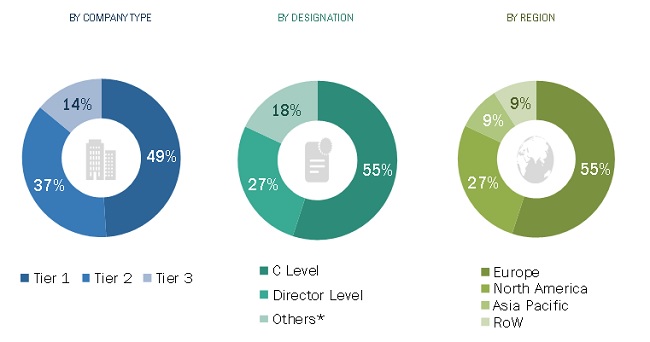
To know about the assumptions considered for the study, download the pdf brochure
Market Size Estimation
Both top-down and bottom-up approaches were used to estimate and validate the total size of the aircraft interface device market. These methods were also used extensively to estimate the size of various segments and subsegment of the market. The research methodology used to estimate the market size included the following:
- Key players in the industry and market were identified through extensive secondary research of their product matrix and geographical presence and developments undertaken by them.
- All percentage shares, splits, and breakdowns were determined using secondary sources and verified through primary sources.
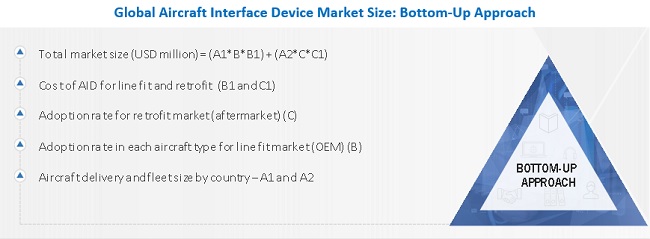
To know about the assumptions considered for the study, Request for Free Sample Report
Data Triangulation
After arriving at the overall size of the Aircraft Interface Device Market using the market size estimation processes explained above, the market was split into several segments and subsegments. To complete the overall market engineering process and arrive at the exact statistics of each market segment and subsegment, data triangulation, and market breakdown procedures were employed, wherever applicable. The data was triangulated by studying various factors and trends from demand as well as supply sides.
Report Objectives
- To define, describe, and forecast the size of the aircraft interface device market based on end use, fit, aircraft type, connectivity, and region
- To forecast the size of the various segments of the aircraft interface device market based on six regions: North America, Asia Pacific, Europe, the Middle East, Africa, and Latin America, along with key countries in each of these regions
- To identify and analyze key drivers, restraints, opportunities, and challenges influencing the growth of the market
- To identify industry trends, market trends, and technology trends prevailing in the market
- To analyze micromarkets with respect to individual technological trends, prospects, and their contribution to the overall market
- To provide a detailed competitive landscape of the market and analyze competitive growth strategies such as new product developments, contracts, partnerships, mergers, product enhancements, and collaborations adopted by key players in the market
- To identify the detailed financial position, key products, unique selling points, and key developments of leading companies in the market
- To strategically profile key market players and comprehensively analyze their market rank analysis and core competencies
Available Customizations
MarketsandMarkets offers the following customizations for this market report:
- Additional country-level analysis of the aircraft interface device market
- Profiling of additional market players (up to 5)
Product Analysis
- Product matrix, which provides a detailed comparison of the product portfolio of each company in the Aircraft Interface Device Market












Growth opportunities and latent adjacency in Aircraft Interface Device Market