Automated Fingerprint Identification System Market by Component (Fingerprint Input Modules, Microprocessors/Microcontrollers, Displays, Matchers), Search Type (Tenprint Search, Latent Search), Application, and Geography - Global Forecast to 2035


Automated Fingerprint Identification System Market Summary
The Automated Fingerprint Identification System Market is expanding steadily as governments, law enforcement agencies, border-control authorities, financial institutions, and enterprises increase investments in biometric identification and automated identity verification. The global Automated Fingerprint Identification System Market is estimated at approximately USD 4–5 billion in 2025 and is projected to reach USD 10–12 billion by 2035, registering a CAGR of 9%–11% during the forecast period. Growth is being driven by rising security requirements, increasing adoption of biometric authentication, digital identity programs, border management modernization, criminal identification applications, and the integration of artificial intelligence (AI), Internet of Things (IoT), cloud computing, and automation.
Automated Fingerprint Identification Systems (AFIS) enable organizations to capture, store, search, match, and verify fingerprint information against large biometric databases. The technology has evolved significantly from conventional centralized fingerprint databases toward intelligent, scalable, cloud-enabled, and AI-assisted platforms capable of processing increasingly large datasets. Improvements in fingerprint sensors, matching algorithms, image processing, machine learning, and high-performance computing are improving identification speed and accuracy.
Law enforcement remains one of the largest application areas for AFIS technology. Police departments and forensic agencies use automated fingerprint matching to identify suspects, link individuals to criminal records, support investigations, and process latent fingerprints recovered from crime scenes. At the same time, the technology is expanding into civil applications, including national identification programs, immigration, border control, voter identification, banking, healthcare, and employee authentication.
The growing emphasis on digital identity is creating new opportunities for the Automated Fingerprint Identification System Market. Governments are developing integrated identity ecosystems in which biometric information is linked to secure digital credentials and public services. AI is further enhancing AFIS capabilities by improving fingerprint image enhancement, minutiae extraction, matching, quality assessment, and automated classification.
Cloud computing and distributed architectures are also changing system deployment models. Instead of relying entirely on locally hosted infrastructure, organizations can increasingly use hybrid and cloud-based architectures to improve scalability and facilitate information exchange between authorized agencies. However, data privacy, cybersecurity, interoperability, and regulatory compliance remain important considerations for market participants.
Key Market Trends & Insights
The Automated Fingerprint Identification System Market is experiencing a transition toward AI-powered biometric identification. Machine learning algorithms can assist with image enhancement, fingerprint quality assessment, pattern recognition, and matching, allowing systems to handle difficult or partial fingerprint images more effectively.
North America is expected to remain a leading regional market, supported by established law-enforcement infrastructure, extensive biometric databases, border-security investments, and adoption of advanced identification technologies. The US continues to represent a major demand center for sophisticated biometric identification and forensic technologies.
Asia Pacific is expected to record the fastest growth through 2035. Large population bases, national digital identity initiatives, border-management modernization, increasing public-safety investments, and expanding financial inclusion programs are encouraging the adoption of fingerprint identification systems.
Cloud-enabled AFIS is another important trend. Modern systems increasingly support centralized or distributed biometric databases, remote access, software updates, analytics, and integration with other identity-management platforms.
The integration of AI and automation is reducing manual intervention in fingerprint examination. Automated image enhancement and matching can accelerate identification workflows, particularly when agencies must search very large databases.
Interoperability is also becoming increasingly important. Governments and large enterprises increasingly seek platforms that can integrate AFIS with facial recognition, iris recognition, document verification, criminal-record systems, border-management platforms, and digital identity infrastructure.
Market Size & Forecast
- Base year market size (2025): USD 4–5 billion
- Forecast market value (2035): USD 10–12 billion
- CAGR (2025–2035): 9%–11%
- Primary growth factors: Increasing security threats, digital identity programs, border-control modernization, biometric authentication, forensic applications, and government investment.
- Technology outlook: AI-enabled matching, cloud-based AFIS, mobile biometric devices, edge processing, advanced fingerprint sensors, and interoperable identity platforms will shape market growth.
Automated Fingerprint Identification System Market Top 10 key takeaway
- The Automated Fingerprint Identification System Market is estimated at USD 4–5 billion in 2025.
- The market is projected to reach USD 10–12 billion by 2035.
- The market is expected to register a CAGR of 9%–11% during 2025–2035.
- Law enforcement remains a major end-use sector for AFIS technology.
- AI is improving fingerprint image processing, classification, and matching capabilities.
- Cloud-based and hybrid AFIS architectures are gaining adoption.
- North America is expected to remain a leading regional market.
- Asia Pacific is projected to be the fastest-growing region.
- National digital identity programs are creating significant long-term opportunities.
- Privacy, cybersecurity, interoperability, and biometric-data governance will remain key competitive considerations.
Product Insights
The product landscape of the Automated Fingerprint Identification System Market includes hardware, software, and integrated solutions. Hardware encompasses fingerprint scanners, live-scan devices, biometric readers, mobile fingerprint-capture equipment, servers, storage infrastructure, and related accessories. Software includes fingerprint image processing, biometric matching, database management, identity-management, analytics, and system administration platforms.
Fingerprint scanners and live-scan systems represent a critical component of AFIS deployments because the quality of captured biometric information directly affects matching performance. Traditional optical scanners continue to be used in many established installations, while capacitive, multispectral, and other advanced sensing technologies are gaining attention for applications requiring improved performance under challenging conditions.
Integrated AFIS solutions are particularly important for government and law-enforcement organizations. These platforms combine fingerprint capture, database management, search and matching, workflow automation, reporting, and system integration within a unified architecture.
Mobile AFIS solutions represent an emerging product category. Portable biometric devices allow authorized personnel to capture fingerprints and perform identification checks outside conventional offices. Such systems can support field policing, border control, military operations, disaster response, and remote identity verification.
AI integration is increasing the intelligence of AFIS software. Algorithms can automatically evaluate fingerprint quality, remove noise, enhance ridge patterns, identify usable features, and rank matching results. This can reduce examiner workload and accelerate identification processes.
The development of multimodal biometric platforms is also influencing product strategies. Vendors increasingly offer solutions that combine fingerprints with facial recognition, iris recognition, voice recognition, or document verification. This allows organizations to select the most appropriate authentication method according to risk, environment, and application.
Technology / Component Insights
Technology development remains central to the Automated Fingerprint Identification System Market. Modern AFIS platforms depend on high-quality biometric sensors, sophisticated image-processing algorithms, powerful computing infrastructure, secure databases, and advanced matching technologies.
AI and machine learning are becoming increasingly important. Traditional fingerprint matching relied heavily on predefined algorithms and minutiae-based comparison. Modern AI-assisted systems can improve image enhancement, ridge-pattern recognition, feature extraction, quality assessment, and candidate ranking. These capabilities are particularly valuable for latent fingerprints and low-quality images.
IoT connectivity is expanding the role of fingerprint identification systems beyond centralized facilities. Connected biometric devices can transmit authentication information to authorized platforms, enabling identity verification across distributed locations. IoT-enabled biometric readers can also support access control, workforce management, and smart-building security.
Cloud computing is enabling scalable biometric database management. Cloud-based AFIS architectures can provide centralized data processing, remote administration, elastic computing capacity, and integration with digital identity platforms. Hybrid architectures are likely to remain important for organizations that need to retain sensitive biometric information within controlled environments.
Automation is another major technology driver. Automated workflows can capture fingerprints, evaluate image quality, perform database searches, generate candidate lists, and forward results to authorized personnel. This reduces processing time and supports high-volume identification operations.
Edge computing is expected to become more relevant as mobile and field-based biometric systems expand. Local processing can enable faster identification while reducing the need to transmit complete biometric datasets over communication networks.
Future technology innovation will increasingly focus on privacy-preserving biometric processing, encrypted databases, secure biometric templates, federated identity architectures, explainable AI, and advanced anti-spoofing capabilities.
Application Insights
Law enforcement and forensic identification represent the leading application areas in the Automated Fingerprint Identification System Market. Police and forensic agencies use AFIS to compare fingerprints captured from individuals or recovered from crime scenes against large databases. Automated searches can significantly reduce the time required to identify potential matches.
Civil identification is another major application. Governments use fingerprint technologies in national ID programs, passports, immigration processes, welfare distribution, voter registration, and other identity-related services. Large-scale digital identity initiatives can create demand for highly scalable AFIS infrastructure.
Border control is becoming an increasingly important application. Airports and land borders use biometric identification to verify travelers, identify persons of interest, and improve immigration processing. AFIS can be integrated with facial recognition and document-verification systems to create multimodal border-management solutions.
Financial services represent another growth opportunity. Banks and financial institutions are increasingly adopting biometric authentication to strengthen customer onboarding, account access, and transaction security. Fingerprint authentication can complement passwords, PINs, and mobile-based authentication.
Healthcare organizations can also use fingerprint technologies for patient identification, staff access, and secure access to digital health systems. Similarly, enterprises are deploying biometric systems for workforce authentication and restricted-area access.
Future opportunities are expected to emerge from mobile identity verification, smart borders, digital government services, biometric payments, remote onboarding, and integrated multimodal identity platforms.
Regional Insights
North America is expected to remain a leading region in the Automated Fingerprint Identification System Market due to its mature law-enforcement infrastructure, established biometric databases, border-security requirements, and continued investment in digital identity and forensic technologies. The US represents a significant market because federal, state, and local agencies use fingerprint systems for criminal identification, background screening, immigration, and civil applications.
Europe represents another important market, supported by border-security modernization, migration management, digital identity initiatives, and law-enforcement technology investments. Data protection requirements have also encouraged vendors to focus on secure biometric processing and privacy-aware system architectures.
Asia Pacific is expected to register the fastest growth. Governments across the region are investing in digital identity systems, public safety, border management, and smart-city infrastructure. China, Japan, India, South Korea, and Southeast Asian economies are creating opportunities for biometric technology providers.
- North America: Mature biometric infrastructure supports continued AFIS modernization.
- Europe: Digital identity, border security, and privacy-compliant technologies drive demand.
- Asia Pacific: Government-led identity initiatives support the fastest market growth.
- China: Large-scale digital infrastructure and public-security investments create opportunities.
- India: Expanding digital identity and e-governance ecosystems support biometric adoption.
Country-Specific Market Trends
China is expected to record approximately 12%–14% CAGR through 2035, supported by digital identity development, public-security modernization, smart-city initiatives, and demand for automated identification technologies. Government investment in digital infrastructure is supporting the integration of biometric technologies into broader identity and security systems.
Japan is expected to grow at approximately 7%–9% CAGR, supported by advanced security infrastructure, automation, technology modernization, and demand for reliable identity verification systems.
In North America, the United States is projected to register approximately 8%–10% CAGR, supported by law-enforcement modernization, forensic applications, border security, and digital identity initiatives. Canada is expected to grow at approximately 7%–9% CAGR, while Mexico could achieve approximately 9%–11% CAGR as public-security and border-management infrastructure develops.
In Europe, Germany is expected to grow at approximately 7%–9% CAGR, supported by digital public services, law-enforcement modernization, and secure identity infrastructure. France is projected to record approximately 7%–9% CAGR, supported by border management, public security, and digital government initiatives.
- China: Large-scale digitalization supports high AFIS deployment potential.
- Japan: Advanced technology infrastructure supports sophisticated biometric solutions.
- United States: Forensic and law-enforcement applications remain major demand centers.
- Germany: Secure digital identity and public-sector modernization support adoption.
- France: Border security and digital public services create market opportunities.
Key Automated Fingerprint Identification System Market Company Insights
The competitive landscape of the Automated Fingerprint Identification System Market includes specialized biometric technology companies, security solution providers, identity-management vendors, and government technology contractors. Key companies operating across the market include IDEMIA, NEC Corporation, Thales, HID Global, Suprema, Fingerprint Cards, DERMALOG, Aware, Inc., Innovatrics, and M2SYS.
IDEMIA and Thales have strong positions in government identity, border management, and biometric technologies, with strategies focused on integrated identity ecosystems and advanced biometric matching. NEC emphasizes biometric identification and AI-enabled recognition technologies for government and public-security applications.
HID Global focuses strongly on identity verification and access-control ecosystems, while Suprema provides fingerprint and biometric authentication technologies for enterprise and security applications. DERMALOG specializes in biometric identification systems, including AFIS, border control, and government applications.
Aware, Inc. focuses on biometric software and identity-management technologies, while Innovatrics develops fingerprint and multimodal biometric recognition platforms. M2SYS provides biometric identity solutions across multiple enterprise and government applications.
Competitive strategies increasingly emphasize AI-assisted matching, mobile biometrics, cloud deployment, cybersecurity, interoperability, and multimodal identification. Vendors are also developing solutions that integrate AFIS with facial recognition, document verification, and digital identity platforms.
- IDEMIA: Focuses on government identity, biometrics, and border-management solutions.
- NEC: Emphasizes AI-enabled biometric recognition and public-security applications.
- Thales: Develops integrated digital identity and biometric security platforms.
- HID Global: Combines biometric authentication with broader identity-management solutions.
- DERMALOG: Focuses on AFIS, border control, and government biometric applications.
Recent Developments
A major development in the Automated Fingerprint Identification System Market is the integration of AI and machine learning into fingerprint matching workflows. AI-assisted systems are increasingly designed to improve fingerprint enhancement, feature extraction, quality evaluation, and candidate ranking, helping investigators process larger databases more efficiently.
Another important development is the expansion of mobile AFIS. Compact fingerprint scanners and mobile biometric platforms are enabling law-enforcement and border personnel to perform identity verification in field environments.
The market is also moving toward cloud-enabled and hybrid AFIS architectures. These systems provide greater scalability and can connect biometric databases with digital identity, border-management, criminal-record, and enterprise security platforms while maintaining controlled access to sensitive information.
Market Segmentation
The Automated Fingerprint Identification System Market can be segmented by Product, Technology/Component, Application, and Region. By Product, the market includes fingerprint scanners, live-scan devices, mobile biometric devices, AFIS software, database systems, servers, and integrated solutions. By Technology/Component, the market covers optical, capacitive, multispectral, ultrasonic and other fingerprint-sensing technologies, together with image-processing, biometric matching, AI, database, cloud, and cybersecurity components. By Application, the market includes law enforcement, forensic investigation, civil identification, border control, immigration, financial services, healthcare, enterprise security, and other applications. By Region, the market comprises North America, Europe, Asia Pacific, and Rest of the World.
- By Product: AFIS software, fingerprint scanners, and integrated biometric systems represent major product categories.
- By Technology: AI-based matching, advanced sensing, cloud, and secure database technologies are gaining importance.
- By Application: Law enforcement and forensic identification remain leading applications.
- By Deployment: Cloud, on-premises, and hybrid architectures address different security requirements.
- By Region: North America leads, while Asia Pacific is expected to experience the fastest growth.
Conclusion
The Automated Fingerprint Identification System Market is entering an important phase of technological transformation as biometric identification becomes increasingly integrated with digital identity, public security, border management, and enterprise authentication. The market is estimated at USD 4–5 billion in 2025 and is projected to reach USD 10–12 billion by 2035, representing a CAGR of 9%–11% over the forecast period.
AI will be one of the most important technologies shaping the future of AFIS. Machine learning can improve fingerprint image quality, feature extraction, matching accuracy, and automated candidate ranking. This will allow agencies to process increasingly large biometric databases while reducing manual examination requirements.
IoT and cloud technologies will further expand the role of AFIS. Connected biometric devices can support identity verification across distributed environments, while cloud and hybrid architectures can provide scalable processing and database management. Edge computing will complement these technologies by allowing certain biometric-processing functions to take place closer to the point of capture.
The market's future growth will also depend on the expansion of digital identity programs. Governments and enterprises are increasingly moving toward integrated identity ecosystems in which fingerprints, facial biometrics, documents, digital credentials, and other authentication factors can operate within a unified framework.
However, biometric-data security and privacy will remain critical. AFIS providers will need to invest in encryption, secure biometric templates, access controls, cybersecurity, data governance, and privacy-preserving technologies. Interoperability will also become increasingly important as organizations connect AFIS platforms with broader identity and security systems.
Through 2035, the convergence of AI, biometrics, IoT, cloud computing, automation, and digital identity is expected to create substantial opportunities for AFIS technology providers. Organizations capable of delivering accurate, scalable, secure, interoperable, and AI-enabled solutions will be well positioned to benefit from the continuing expansion of the Automated Fingerprint Identification System Market.
FAQs
1. What is the market size of the Automated Fingerprint Identification System Market?
The Automated Fingerprint Identification System Market is estimated at USD 4–5 billion in 2025 and is projected to reach USD 10–12 billion by 2035.
2. What is the growth rate of the Automated Fingerprint Identification System Market?
The market is expected to expand at a CAGR of 9%–11% from 2025 to 2035, driven by biometric identity programs, public-security modernization, border management, forensic applications, and AI-enabled identification.
3. What are the key drivers of the Automated Fingerprint Identification System Market?
Key drivers include rising security requirements, digital identity programs, increasing adoption of biometric authentication, law-enforcement modernization, border-control investments, AI integration, cloud computing, and automated identity verification.
4. Which region is expected to lead the Automated Fingerprint Identification System Market?
North America is expected to remain a leading regional market because of its established biometric infrastructure, law-enforcement applications, forensic databases, and border-security investments. Asia Pacific is expected to record the fastest growth.
5. Who are the key companies in the Automated Fingerprint Identification System Market?
Key companies include IDEMIA, NEC Corporation, Thales, HID Global, Suprema, Fingerprint Cards, DERMALOG, Aware, Inc., Innovatrics, and M2SYS. These companies are focusing on AI-powered biometric matching, mobile identification, cloud platforms, cybersecurity, and integrated digital identity solutions.
To speak to our analyst for a discussion on the above findings, click Speak to Analyst
 Exclusive indicates content/data unique to MarketsandMarkets and not available with any competitors.
Table of Contents
1 Introduction (Page No. - 14)
1.1 Objectives of the Study
1.2 Market Definition
1.3 Study Scope
1.3.1 Markets Covered
1.3.2 Years Considered for the Study
1.4 Currency
1.5 Limitations
1.6 Stakeholders
2 Research Methodology (Page No. - 18)
2.1 Research Data
2.1.1 Secondary Data
2.1.1.1 Key Data From Secondary Sources
2.1.2 Primary Data
2.1.2.1 Key Data From Primary Sources
2.1.2.2 Key Industry Insights
2.1.2.3 Breakdown of Primaries
2.2 Market Size Estimation
2.2.1 Bottom-Up Approach
2.2.2 Top-Down Approach
2.3 Market Breakdown & Data Triangulation
2.4 Research Assumptions
2.4.1 Assumptions
3 Executive Summary (Page No. - 26)
4 Premium Insights (Page No. - 31)
4.1 Market, 2015–2020 (USD Billion)
4.2 Market – Major Search Type
4.3 Market in APAC
4.4 U.S. Along With U.K., Expected to Emerge as the Fastest-Growing Region Between 2015 and 2020
4.5 Market: Market Share of Two Major Applications in 2014
4.6 Market: Developed vs Developing Market
4.7 Market: Government and Transportation Sectors (2020)
5 Market Overview (Page No. - 35)
5.1 Introduction
5.2 Market Segmentation
5.2.1 Automated Fingerprint Identification System Market, By Component
5.2.2 Automated Fingerprint Identification System Market, By Search Type
5.2.3 Automated Fingerprint Identification System Market, By Application
5.2.4 Automatic Fingerprint Identification System Market, By Geography
5.3 Market Dynamics
5.3.1 Drivers
5.3.1.1 Transformation and Technology Evolution From A Manual Process to A Digital Process
5.3.1.2 Growing Investments in Government and Enterprise Sectors to Support E-Governance Applications
5.3.1.3 Increasing Online Transactions
5.3.1.4 Increasing National and Network Security Threats
5.3.2 Restraints
5.3.2.1 Inconvenience and Fear of Privacy and Intrusion
5.3.2.2 Availability of Substitutes Such as Iris and Face Recognition Technologies
5.3.3 Opportunities
5.3.3.1 High Demand for Access Control Systems in the Government and Civil Sectors
5.3.3.2 Increasing Demand for Biometric Systems as A Service
5.3.3.3 Growth in the Mobile Solutions Market
5.3.4 Challenges
5.3.4.1 Data Security and Rapid Processing
5.3.4.2 Pricing and Entry Barriers in the Large-Sized Markets
6 Supply-Side Analysis (Page No. - 45)
6.1 Introduction
6.2 Value Chain Analysis
6.3 Technology Roadmap
6.4 Porter’s Five Forces Model
6.4.1 Intensity of Competitive Rivalry
6.4.2 Threat of Substitutes
6.4.3 Bargaining Power of Buyers
6.4.4 Bargaining Power of Suppliers
6.4.5 Threat of New Entrants
7 Automated Fingerprint Identification System Market, By Component (Page No. - 53)
7.1 Introduction
7.2 Hardware
7.2.1 Fingerprint Input Modules
7.2.1.1 Sensors
7.2.1.1.1 Optical Sensors
7.2.1.1.2 Capacitive Sensors
7.2.1.1.3 Ultrasound Sensors
7.2.1.1.4 Thermal Sensors
7.2.2 Microprocessors/Microcontrollers
7.2.3 Displays
7.2.4 Others
7.3 Software
7.3.1 Matchers
7.3.1.1 Miniature-Based Matching
7.3.1.2 Pattern Matching
7.3.2 Database Fingerprints
8 Automated Fingerprint Identification System Market, By Search Type (Page No. - 60)
8.1 Introduction
8.1.1 Tenprint to Tenprint Search
8.1.2 Latent Print to Latent Print Search
8.1.3 Others
9 Automated Fingerprint Identification System Market, By Application (Page No. - 64)
9.1 Introduction
9.2 Banking & Finance
9.3 Government
9.4 Hospitality
9.5 Healthcare
9.6 Transportation
9.7 Others
10 Automated Fingerprint Identification System Market, By Geography (Page No. - 86)
10.1 Introduction
10.2 North America
10.2.1 U.S.
10.2.2 Rest of North America (Canada & Mexico)
10.3 Europe
10.3.1 U.K.
10.3.2 Germany
10.3.3 France
10.3.4 Rest of Europe
10.4 Asia-Pacific (APAC)
10.4.1 China
10.4.2 India
10.4.3 South Korea
10.4.4 Japan
10.4.5 Rest of APAC
10.5 Rest of the World (RoW)
10.5.1 Middle East & Africa
10.5.2 Latin America
11 Competitive Landscape (Page No. - 111)
11.1 Overview
11.2 Market Ranking for Automated Fingerprint Identification System (AFIS) Market
11.3 Competitive Scenario
11.4 New Product Launches and Developments
11.5 Contracts/Agreements
11.6 Partnerships/Collaborations/Acquisitions
11.7 Expansions
12 Company Profiles (Page No. - 118)
(Overview, Products and Services, Financials, Strategy & Development)*
12.1 Introduction
12.2 3M Cogent Inc.
12.3 Morpho SA
12.4 NEC Corporation
12.5 Fujitsu Limited
12.6 Suprema Incorporation
12.7 Crossmatch Technologies Inc.
12.8 HID Global Corporation
12.9 Sonda Technologies Ltd.
12.10 Dermalog Identification Systems Gmbh
12.11 M2sys Technology
12.12 Papillon Systems
12.13 East Shore Technologies
12.14 Afix Technologies Incorporation
*Details on Overview, Products and Services, Financials, Strategy & Development Might Not Be Captured in Case of Unlisted Companies
13 Appendix (Page No. - 145)
13.1 Insights of Industry Experts
13.2 Discussion Guide
13.3 Introducing RT: Real-Time Market Intelligence
13.4 Available Customizations
13.5 Related Reports
List of Tables (75 Tables)
Table 1 Technology Evolution and E-Governance Applications are Propelling the Growth of the AFIS Market
Table 2 Fear of Privacy and New Substitutes Act as Restraints for the AFIS Market
Table 3 High Demand for Access Control in the Government and Civil Sectors is A Huge Opportunity for the AFIS Market
Table 4 Security of Data and Faster Processing Systems Would Be the Biggest Challenge
Table 5 Key Industry Trends in the Market
Table 6 Porter’s Five Forces Analysis: Bargaining Power of Suppliers Likely to Have A High Impact on the Overall Market
Table 7 Global Automated Fingerprint Identification System Market, By Component, 2013–2020 (USD Billion)
Table 8 Market, By Hardware Component, 2013–2020 (USD Billion)
Table 9 Market, By Search Type, 2013–2020 (USD Billion)
Table 10 Global AFIS Market for Tenprint to Tenprint Search, By Application, 2013–2020 (USD Billion)
Table 11 Global AFIS Market for Latent to Latent Print Search, By Application, 2013–2020 (USD Billion)
Table 12 Automated Fingerprint Identification System Market, By Application, 2013–2020 (USD Billion)
Table 13 Global Banking & Finance AFIS Market, By Search Type, 2013–2020 (USD Billion)
Table 14 Automated Fingerprint Identification System Market for Banking & Finance, By Region, 2013–2020 (USD Billion)
Table 15 North America: AFIS Market for Banking & Finance Sector, By Country, 2013–2020 (USD Billion)
Table 16 Europe: Automated Fingerprint Identification System Market for Banking & Finance Sector, By Country, 2013–2020 (USD Million)
Table 17 APAC: AFIS Market for Banking & Finance Sector, By Country, 2013–2020 (USD Million)
Table 18 RoW: AFIS Market for Banking & Finance Sector, By Country, 2013–2020 (USD Million)
Table 19 Global AFIS Market for Government Sector, By Search Type, 2013–2020 (USD Billion)
Table 20 Market for Government Sector, By Region, 2013–2020 (USD Billion)
Table 21 North America: AFIS Market for Government Sector, By Country, 2013–2020 (USD Billion)
Table 22 Europe: Market for Government Sector, By Country, 2013–2020 (USD Million)
Table 23 APAC: AFIS Market for Government Sector, By Country, 2013–2020 (USD Million)
Table 24 RoW: AFIS Market for Government Sector, By Country, 2013–2020 (USD Million)
Table 25 Global AFIS Market for Hospitality Sector, By Search Type, 2013–2020 (USD Million)
Table 26 Global AFIS Market for Hospitality Sector, By Region, 2013–2020 (USD Million)
Table 27 North America: AFIS Market for Hospitality Sector, By Country, 2013–2020 (USD Million)
Table 28 Europe: AFIS Market for Hospitality Sector, By Country, 2013–2020 (USD Million)
Table 29 APAC: AFIS Market for Hospitality Sector, By Country, 2013–2020 (USD Million)
Table 30 RoW: AFIS Market for Hospitality Sector, By Country, 2013–2020 (USD Million)
Table 31 Global AFIS Market for Healthcare Sector, By Search Type, 2013–2020 (USD Million)
Table 32 Global AFIS Market for Healthcare Sector, By Region, 2013–2020 (USD Million)
Table 33 North America: AFIS Market for Healthcare Sector, By Country, 2013–2020 (USD Million)
Table 34 Europe: AFIS Market for Healthcare Sector, By Country, 2013–2020 (USD Million)
Table 35 APAC: AFIS Market for Healthcare Sector, By Country, 2013–2020 (USD Million)
Table 36 RoW: AFIS Market for Healthcare Sector, By Country, 2013–2020 (USD Million)
Table 37 Global AFIS Market for Transportation Sector, By Search Type, 2013–2020 (USD Million)
Table 38 Global AFIS Market for Transportation Sector, By Region, 2013–2020 (USD Million)
Table 39 North America: AFIS Market for Transportation Sector, By Country, 2013–2020 (USD Million)
Table 40 Europe: AFIS Market for Transportation Sector, By Country, 2013–2020 (USD Million)
Table 41 APAC: AFIS Market for Transportation Sector, By Country, 2013–2020 (USD Million)
Table 42 RoW: AFIS Market for Transportation Sector, By Country, 2013–2020 (USD Million)
Table 43 Global AFIS Market for Other Sectors, By Search Type, 2013–2020 (USD Million)
Table 44 Global AFIS Market for Other Sectors, By Region, 2013–2020 (USD Million)
Table 45 North America: AFIS Market for Other Sectors, By Country, 2013–2020 (USD Million)
Table 46 Europe: AFIS Market for Other Sector, By Country, 2013–2020 (USD Million)
Table 47 APAC: AFIS Market for Other Sectors, By Country, 2013–2020 (USD Million)
Table 48 RoW: AFIS Market for Other Sector, By Country, 2013–2020 (USD Million)
Table 49 Automated Fingerprint Identification System Market, By Region, 2013–2020 (USD Billion)
Table 50 North America: Market, By Application, 2013–2020 (USD Billion)
Table 51 North America: Market, By Country, 2013–2020 (USD Billion)
Table 52 U.S.: Market, By Application, 2013–2020 (USD Million)
Table 53 Rest of North America (Canada & Mexico): Market, By Application, 2013–2020 (USD Million)
Table 54 Europe: Market, By Application, 2013–2020 (USD Million)
Table 55 Europe: Market, By Country, 2013–2020 (USD Million)
Table 56 U.K.: Market, By Application, 2013–2020 (USD Million)
Table 57 Germany: Market, By Application, 2013–2020 (USD Million)
Table 58 France: Market, By Application, 2013–2020 (USD Million)
Table 59 Rest of Europe: Market, By Application, 2013–2020 (USD Million)
Table 60 Asia-Pacific: Market, By Application, 2013–2020 (USD Million)
Table 61 APAC: Market, By Country, 2013–2020 (USD Million)
Table 62 China: Market, By Application, 2013–2020 (USD Million)
Table 63 India: Market, By Application, 2013–2020 (USD Million)
Table 64 South Korea: Market, By Application, 2013–2020 (USD Million)
Table 65 Japan: Market, By Application, 2013–2020 (USD Million)
Table 66 Rest of APAC: Market, By Application, 2013–2020 (USD Million)
Table 67 RoW: Market, By Application, 2013–2020 (USD Million)
Table 68 RoW: Market, By Country, 2013–2020 (USD Million)
Table 69 Middle East & Africa: Market, By Application, 2013–2020 (USD Million)
Table 70 Latin America: Market, By Application, 2013–2020 (USD Million)
Table 71 Market Ranking of Top 5 Players in the Automated Fingerprint Identification System (AFIS) Market
Table 72 New Product Launches and Developments, 2012–2015
Table 73 Contracts/Agreements, 2012–2015
Table 74 Partnerships/Collaborations/Acquisitions, 2012–2015
Table 75 Expansions, 2012–2015
List of Figures (45 Figures)
Figure 1 Global Automated Fingerprint Identification System Market: Research Design
Figure 2 Market Size Estimation Methodology: Bottom-Up Approach
Figure 3 Market Size Estimation Methodology: Top-Down Approach
Figure 4 Data Triangulation
Figure 5 Market, 2013–2020 (USD Billion)
Figure 6 Software Components Expected to Lead the Global AFIS Market During the Forecast Period
Figure 7 Hardware AFIS Market Would Be Dominated By the Fingerprint Modules
Figure 8 AFIS Market Based on Search Type Would Be Led By the Tenprint to Tenprint Search During the Forecast Period
Figure 9 Government Sector Expected to Witness the Highest Growth Rate Between 2015 and 2020
Figure 10 North America Held the Largest Market Share in 2014
Figure 11 Attractive Market Opportunities for Automated Fingerprint Identification Systems
Figure 12 Tenprint to Tenprint Search Segment Accounted for the Largest Market Share in 2014
Figure 13 Government Sector Accounted for the Largest Market Share in APAC in 2014
Figure 14 U.S. Followed By U.K., Estimated to Emerge as Fastest-Growing Countries
Figure 15 Transportation Sector Held the Largest Share of the North American Market, 2014
Figure 16 U.S. Market Expected to Grow at A Higher Rate Than Other Countries in the Next Five Years
Figure 17 Government Sector is Expected to Have A Promising Future in North America During the Forecast Period
Figure 18 Market Segmentation: By Geography
Figure 19 Transformation and Technology Evolution is the Driving Force for the AFIS Market
Figure 20 Growth in the Mobile Solutions Market Would Drive the AFIS Market
Figure 21 Value Chain Analysis (2015): Major Value is Added During Manufacturing and System Integration Stages
Figure 22 Porter’s Five Forces Analysis (2014)
Figure 23 Market: Porter’s Five Forces Analysis
Figure 24 AFIS Market: Impact Analysis of Intensity of Competitive Rivalry
Figure 25 AFIS Market: Impact Analysis of Threat of Substitutes
Figure 26 AFIS Market: Impact Analysis of Bargaining Power of Buyers
Figure 27 AFIS Market: Impact Analysis of Bargaining Power of Suppliers
Figure 28 AFIS Market: Impact Analysis of Threat of New Entrants
Figure 29 Market: Hardware Components vs Software Components (2014 vs 2020)
Figure 30 Geographic Snapshot: North America Expected to Register the Highest Growth Rate During the Forecast Period
Figure 31 U.S. Estimated to Lead the AFIS Market With the Largest Market Size Between 2015 and 2020
Figure 32 North America: Market Overview
Figure 33 Europe: Market Overview (2014)
Figure 34 APAC: Market Overview (2014)
Figure 35 Companies Adopted Product Launches as the Key Growth Strategy Over the Last Three Years
Figure 36 Market Evaluation Framework - New Product Launches & Developments Fueled the Growth During 2014 & 2015
Figure 37 Battle for Market Share: New Product Launches Was the Key Strategy
Figure 38 3M Cogent Inc.: SWOT Analysis
Figure 39 Morpho SA: SWOT Analysis
Figure 40 NEC Corporation: Company Snapshot
Figure 41 NEC Corporation: SWOT Analysis
Figure 42 Fujitsu Limited: Company Snapshot
Figure 43 Fujitsu Limited: SWOT Analysis
Figure 44 Suprema Inc.: Company Snapshot
Figure 45 Suprema Inc.: SWOT Analysis
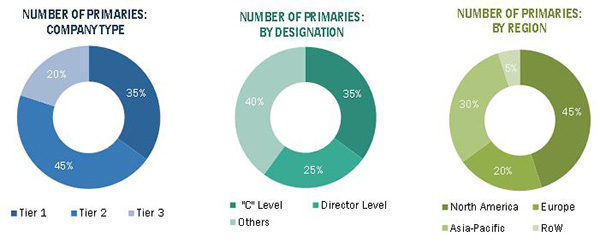
The research methodology used to estimate and forecast the automated fingerprint identification system market begins with capturing data on key vendors’ revenues through secondary research. The vendor offerings are also taken into consideration to determine the market segmentation. The bottom-up procedure was employed to arrive at the overall market size of the global market from the revenue of the key players in the market. After arriving at the overall market size, the total market was split into several segments and subsegments which are then verified through primary research by conducting extensive interviews with key people such as CEOs, VPs, directors, and executives. This data triangulation and market breakdown procedures were employed to complete the overall market engineering process and arrive at the exact statistics for all segments and subsegments. The breakdown of profiles of primary is depicted in the below figure:
To know about the assumptions considered for the study, download the pdf brochure
The automated fingerprint identification system ecosystem comprises stakeholders such as the electronic hardware suppliers, mobile application developers, research organizations, and the technology standards organizations, alliances, forums among others.
Key Target Audience
- Governments, financial institutions, and investment communities
- System integrators
- Analysts and strategic business planners
- Semiconductor foundries
- Biometric product manufacturers
- Software vendors
Scope of the Report
The research report segments the market to the following submarkets:
By Component:
-
Hardware
- Fingerprint Input Modules
- Microprocessors/Microcontrollers
- Displays
- Others
- Software
By Search Type:
- Tenprint to Tenprint Searches
- Latent to Latent Searches
By Application:
- Government
- Healthcare
- Transportation
- Hospitality
- Banking & Finance
- Others
By Region:
- North America
- Europe
- Asia-Pacific
-
Rest of the World
- Middle East & Africa
- Latin America
Available Customizations
With the given market data, MarketsandMarkets offers customizations according to the company’s specific needs. The following customization options are available for the report:
Product Analysis
- Product matrix which gives a detailed comparison of product portfolio of each company
Geographic Analysis
- Further breakdown of the MEA automated fingerprint identification system market
- Further breakdown of the Latin American market
Company Information
- Detailed analysis and profiling of additional market players













Growth opportunities and latent adjacency in Automated Fingerprint Identification System Market