Ballistic Protection Market Size, Share, Trends & Growth Analysis

Ballistic Protection Market by Product Type (Body Armor, Transparent Armor, Shields, Barriers), Armor Technology (Metals, Aramid Fibers, UHMWPE, Hybrid Armor, Bulletproof Glass), End User, Application, Threat Level, and Region - Global Forecast to 2031




BALLISTIC PROTECTION MARKET OVERVIEW
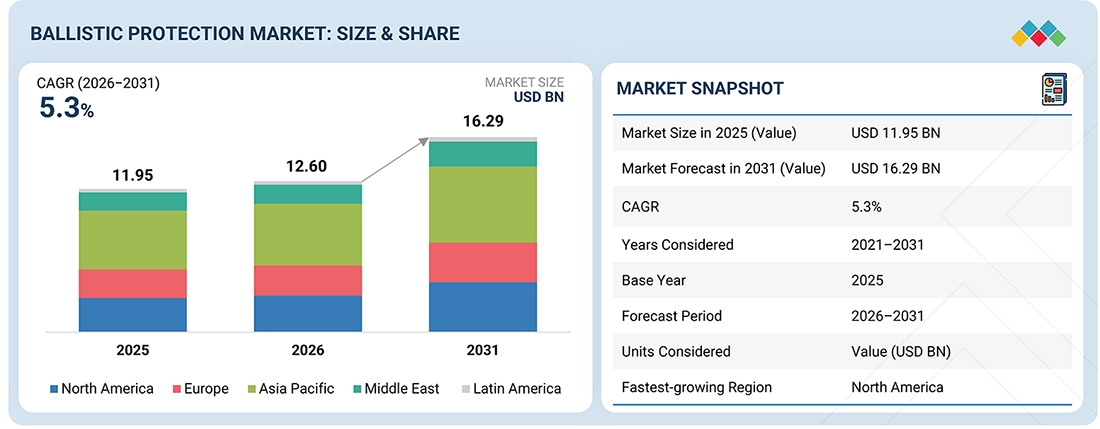
According to Marketsandmarkets, the Global Ballistic Protection Market Size was valued at USD 12.60 billion in 2026 and is projected to reach USD 16.29 billion by 2031, growing at a CAGR of 5.3% from 2026-2031. This growth is driven by the need to host and manage physical defense platforms, including infantry land vehicles, naval platforms, and personnel tactical apparel, in highly volatile threat environments. There is regulatory compliance, increasing demand for material upgrades, and greater emphasis on personnel survivability among defense and law enforcement users.
BALLISTIC PROTECTION MARKET SNAPSHOT TABLE
| REPORT METRIC | DETAILS |
|---|---|
| Market Size in 2025 (Value) | USD 11.95 Billion |
| Market Size in 2026 (Value) | USD 12.60 Billion |
| Market Forecast in 2031 (Value) | USD 16.29 Billion |
| CAGR | CAGR of 5.3% from 2026-2031 |
| Years Considered | 2021–2031 |
| Base Year | 2025 |
| Forecast Period | 2026–2031 |
| Units Considered | USD Billion |
| Report Coverage | Revenue Forecast, Company Ranking, Competitive Landscape, Growth Factors, and Trends |
| Top Companies |
|
| Growth Drivers |
|
| Segments Covered |
|
| Regions Covered | North America, Europe, Asia Pacific, Middle East, Latin America |
BALLISTIC PROTECTION MARKET KEY TAKEAWAYS
-
By RegionThe Asia Pacific region is projected to register a CAGR of 4.2% in the ballistic protection market during the forecast period.
-
By ApplicationBy application, the naval and marine platform segment will register the highest CAGR of 7.6% during the forecast period.
-
By Product TypeBy product type, the spall and fragmentation protection segment held the largest market share in 2025.
-
By End UserBy end user, the military segment held the largest share of the ballistic protection market in 2025.
-
By Armor TechnologyBy armor technology, aramid fibers will register the highest CAGR of 5.6% during the forecast period.
-
By Threat LevelBy threat level, armor piercing rounds will register the highest growth during the forecast period.
-
Competitive Landscape - Key PlayersBAE Systems, Rheinmetall AG, and Point Blank Enterprises, Inc. were identified as some of the star players in the ballistic protection market, given their strong market share and product footprint.
-
Competitive Landscape - Startups/SMEsSafariland has identified itself among SMEs by securing a strong foothold in specialized niche areas, underscoring its potential as an emerging market leader.
The growth of the Ballistic Protection Industry is driven by defense forces that are upgrading personal armor, tactical helmets, body plates, combat vehicles, and structural shielding systems to protect personnel and equipment. This demand stems from the need for improved threat mitigation, lighter gear for deployed units, compliance with material standards, scalable manufacturing, and enhanced battlefield survivability.
Source: Secondary Research, Interviews with Experts, MarketsandMarkets Analysis
TRENDS & DISRUPTIONS IMPACTING CUSTOMERS' CUSTOMERS
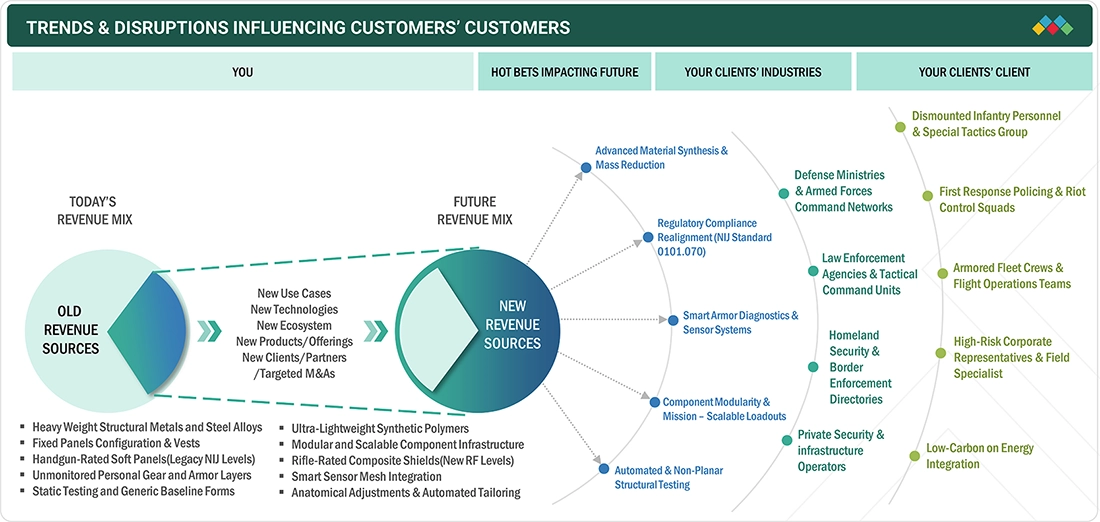
The ballistic protection market is primarily driven by the need to equip field forces with threat-resistant gear, protect tactical vehicle crews, enforce domestic security, and field modular defensive armor within high-risk operational environments. Historically, this market has focused on heavyweight structural metals and steel alloys, fixed panel configurations and vests, handgun rated soft panels adhering to legacy NIJ levels, unmonitored personal gear layers, as well as static testing and generic baseline forms. However it is now shifting toward ultra-lightweight synthetic polymers, modular and scalable component infrastructure, rifle-rated composite shields matching new RF levels, smart sensor mesh integration, and anatomical adjustments with automated tailoring. These changes are driven by advanced material synthesis and mass reduction, regulatory compliance realignment under NIJ Standard 0101.08, the inclusion of smart armor diagnostics, component modularity for mission-scalable loadouts and the implementation of automated, non-planar structural testing. This evolution impacts various entities, including defense ministries, armed forces, law enforcement agencies, tactical command units, homeland security and border enforcement directorates, and private security operators that provide support to dismounted infantry, special tactics groups, riot control squads, armored fleet crews, flight operations teams, and high-risk field specialists.
Source: Secondary Research, Interviews with Experts, MarketsandMarkets Analysis
BALLISTIC PROTECTION MARKET DYNAMICS

Level
-
Unprecedented Escalation of Global Military Expenditure and NATO Force Modernization

-
Rising Geopolitical Conflicts, Asymmetric Threats, and Global Terrorism Mortality


Level
-
High Cost of Advanced Raw Materials and Complex Manufacturing Processes

-
Stringent, Fragmented, and Evolving Testing and Certification Requirements


Level
-
Unmanned Autonomous System Integration

-
Fixed-site Civil Infrastructure Protection


Level
-
Weight-protection Trade-off and Musculoskeletal Burden on End Users

-
Raw Material Supply Concentration and Input Cost Volatility

Source: Secondary Research, Interviews with Experts, MarketsandMarkets Analysis
Driver: Unprecedented Escalation of Global Military Expenditure and NATO Force Modernization
Increasing geopolitical tensions are leading to significant increases in NATO procurement programs and national defense budgets. This funding is directed towards fleet armor systems and the modernization of soldier protective equipment to enhance combat readiness. As a result, it stabilizes long-term contract pipelines for advanced manufacturing facilities worldwide.
Restraint: High Cost of Advanced Raw Materials and Complex Manufacturing Processes
Procurement is limited by the high costs of specialized technical inputs, such as boron carbide ceramics and premium aramid fibers. Additionally, strict quality control standards and the complexities of chemical synthesis and multi-stage molding processes limit high-volume production, increasing initial capital requirements.
Opportunity: Unmanned Autonomous System Integration
The increased use of automated logistics systems and unmanned ground vehicles is creating a new commercial opportunity for structural defense plating. By integrating lightweight ballistic armor panels onto these autonomous platforms, we can enhance asset protection during high-threat transport and reconnaissance missions.
Challenge: Weight-protection Trade-off and Musculoskeletal Burden on End Users
The main technical challenge is to enhance threat mitigation while minimizing the physical burden on personnel. Heavy tactical armor can lead to quick fatigue and long-term musculoskeletal strain, which negatively impacts individual movement speed, operational flexibility, and overall mission performance in the field.
BALLISTIC PROTECTION MARKET SIZE, SHARE, TRENDS & GROWTH ANALYSIS: COMMERCIAL USE CASES ACROSS INDUSTRIES
| COMPANY | USE CASE DESCRIPTION | BENEFITS |
|---|---|---|
 |
BAE Systems supplies advanced structural hull plating and modular armor kits for heavy tactical vehicles under large-scale military fleet deployment programs | It supports land system survivability, protects crew compartments from high-velocity kinetic impacts, and secures structural integrity during frontline combat operations | Enhances crew survival rates | Minimizes vehicle structural damage | Allows field teams to interchange modular plates based on changing threat environments |
 |
Rheinmetall AG integrates high-performance composite strike faces and add-on ballistic shielding for armored main battle tanks and tactical transport platforms | It supports heavy mechanized infantry protection, vehicle survivability against armor-piercing ammunition, and defensive coverage during high-intensity conflict scenarios | Offers multi-hit protection capability | Lowers vehicle deadweight via advanced composite integration | Helps mechanized units maintain operational maneuverability and defense |
 |
Avon Protection manufactures ultra-lightweight advanced ballistic helmets, body armor inserts, and tactical personal equipment for dismounted infantry units | It supports individual personnel survivability, head and torso protection against high-velocity shrapnel, and modular combat gear integration during high-risk field operations | Decreases individual physical fatigue | Ensures high-grade trauma reduction | Allows combat teams to maintain situational awareness and mobility in rugged terrains |
Logos and trademarks shown above are the property of their respective owners. Their use here is for informational and illustrative purposes only.
BALLISTIC PROTECTION MARKET ECOSYSTEM
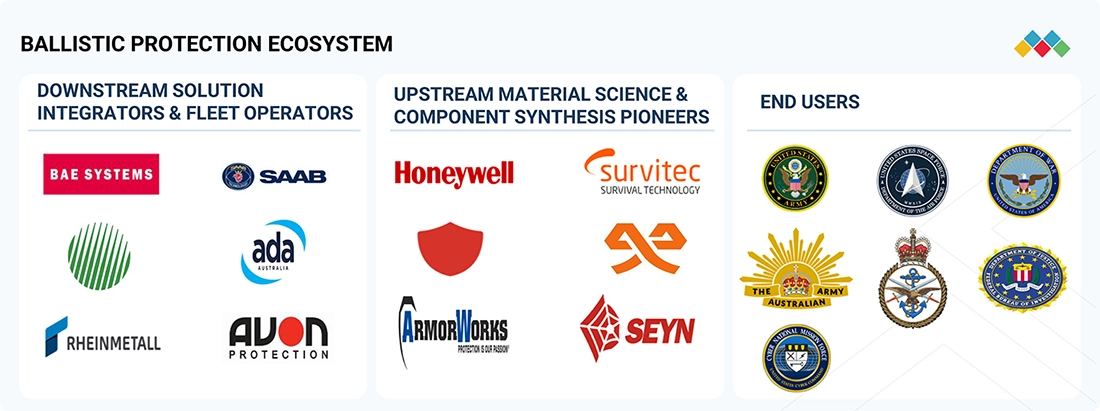
The ballistic protection market comprises several key participants, including upstream material science and component synthesis pioneers, downstream solution integrators and fleet operators, and end users. Upstream materials science and component-synthesis pioneers, such as Honeywell International, Inc., FMS Enterprises Migun Ltd., Seyntex, TenCate Advanced Armor, ArmorWorks, and Survitec Group Limited, supply the underlying ballistic raw materials, fibers, and specialized defense fabrics. These include aramid yarns, ultra-high-molecular-weight polyethylene (UHMWPE), technical textiles, and ceramic composite layers designed to withstand high-velocity kinetic threats. Downstream solution integrators and fleet operators, including BAE Systems, Rheinmetall, Saab AB, Cooneen, Point Blank Enterprises, Avon Protection, ArmorSource LLC, Revision Military, ADA (Australian Defence Apparel), and Southern States LLC, process these core components into finished armor platforms. They manufacture wearable protective gear, integrate modular ballistic plating into vehicle hulls, and supply finished protective equipment to institutional clients. End users in this ecosystem include the Army, Navy, Air Force, and government and law enforcement agencies. These entities use ballistic protection systems in tactical applications to safeguard operational personnel, protect vehicular assets, minimize shrapnel and blast-impact trauma, and maintain strategic field survivability.
Logos and trademarks shown above are the property of their respective owners. Their use here is for informational and illustrative purposes only.
BALLISTIC PROTECTION MARKET SEGMENTS
Source: Secondary Research, Interviews with Experts, MarketsandMarkets Analysis
Ballistic Protection Market, by Application
Land vehicles accounted for the largest share of the market due to the extensive mechanized military fleets, such as tactical trucks and armored personnel carriers, which require substantial surface areas of heavy structural plating. Additionally, the volume of raw materials and heavy composite armor required for vehicular hulls demands a significantly larger budget allocation than individual personal protective gear.
Ballistic Protection Market, by Product Type
By product type, armor kits and panels are projected to see the highest growth rate. This growth is driven by the increasing need to upgrade existing maritime vessels and military vehicles with modular add-on ballistic shielding instead of replacing entire fleets. This approach enables defense agencies to quickly adapt their active field assets to withstand evolving high-velocity kinetic threats while maintaining cost efficiency.
Ballistic Protection Market, by End User
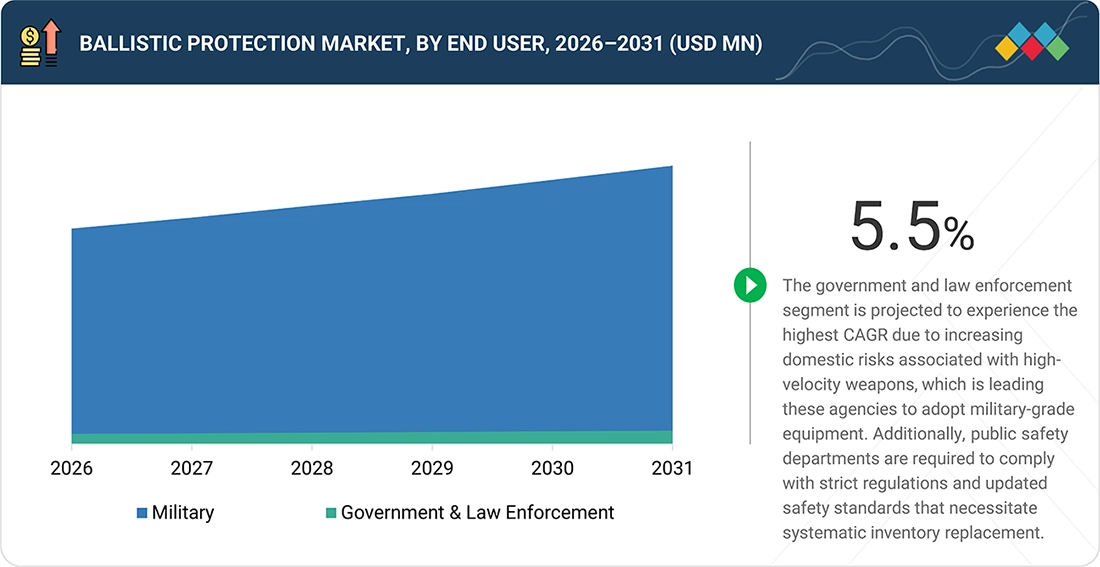
By end use, government and law enforcement agencies are expected to experience the highest growth rate due to increasing civil unrest, urban security challenges, and domestic counter-terrorism needs. This operational environment compels federal and state police authorities to modernize their tactical units aggressively, equipping them with military-grade personal body armor and lightweight tactical vehicle shielding to counter high-velocity ballistic threats.
Ballistic Protection Market, by Armor Technology
Composite and hybrid armor currently hold the largest market share by armor technology. These materials combine ceramics, metals, and advanced polymers to effectively counter multi-hit, armor-piercing threats while being significantly lighter than traditional steel plating. This weight efficiency is crucial for modern defense forces, as it allows for maximum vehicle payload capacity, improved strategic maneuverability, and reduced physical strain on personnel.
Ballistic Protection Market, by Threat Level
Fragments and shrapnel account for the largest market share by threat level because explosive blasts from artillery, mortars, and improvised devices are the leading cause of casualties on modern battlefields. This reality necessitates that every standard-issue tactical helmet, soft ballistic vest, and vehicle spall liner be designed with comprehensive coverage to mitigate high-velocity fragmentation.
BALLISTIC PROTECTION MARKET REGION
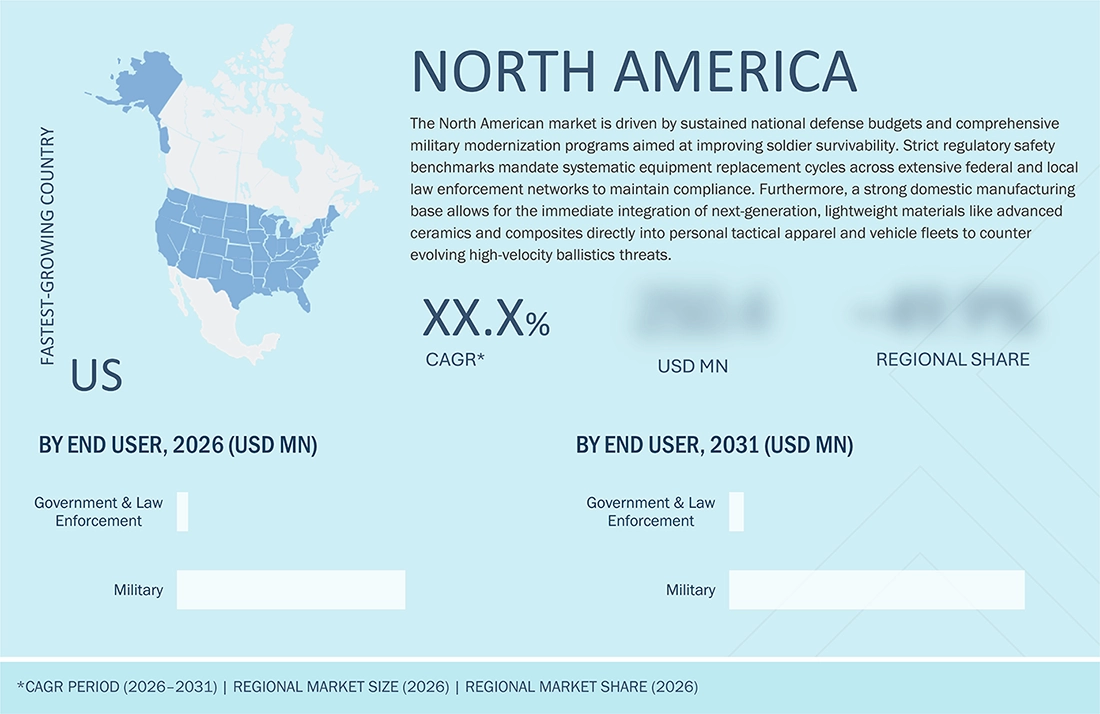
North America to be fastest-growing region in ballistic protection market during forecast period
North America is expected to experience the highest growth rate due to significant defense budget allocations and a comprehensive overhaul of military procurement processes, including the shift to integrated portfolio acquisition frameworks. This centralized funding directly accelerates large-scale modernization contracts for advanced squad weapons, next-generation combat vehicles, and lightweight soldier protection systems, all designed to counter escalating high-velocity tactical threats.
BALLISTIC PROTECTION MARKET SIZE, SHARE, TRENDS & GROWTH ANALYSIS: COMPANY EVALUATION MATRIX
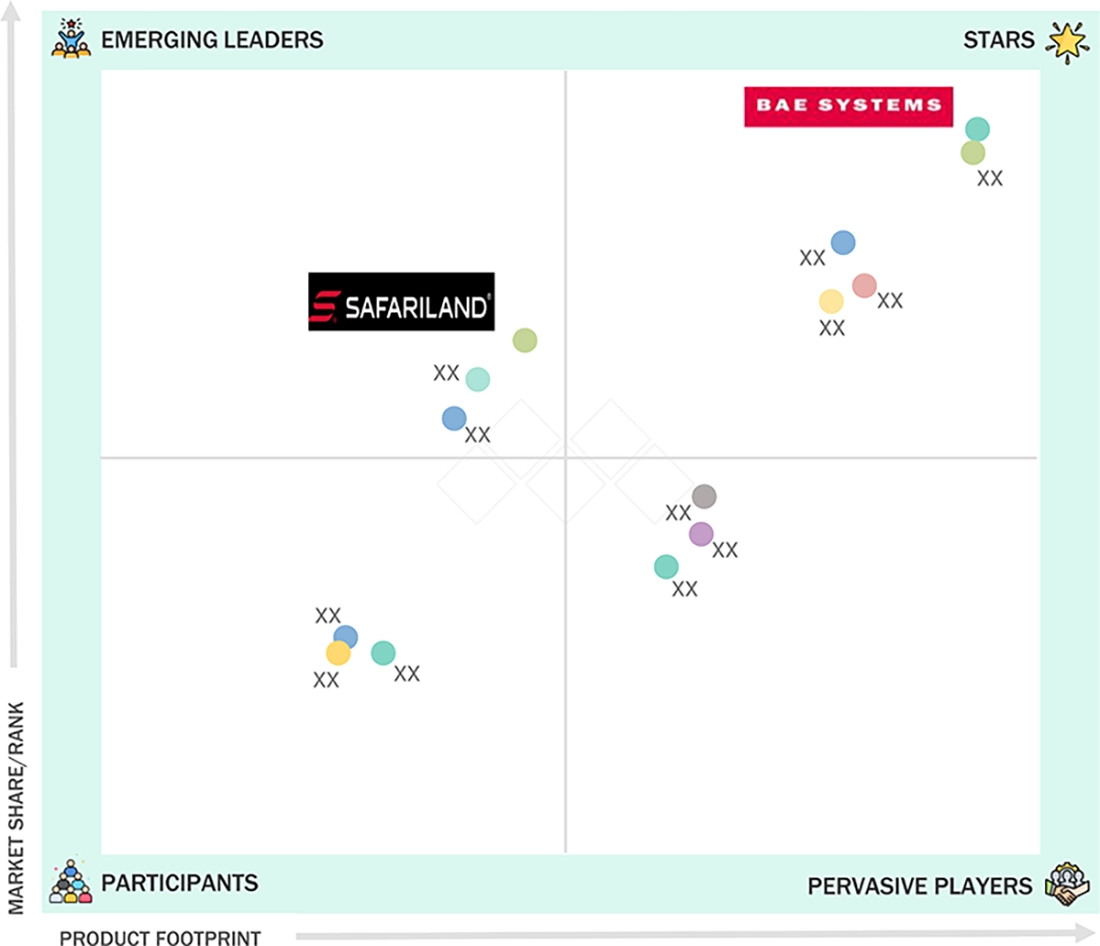
In the ballistic protection market matrix, BAE Systems Limited is categorized as a "Star" because of its established access to extensive capabilities and global defense customers, spanning manufacturing of heavy structural vehicle armor, combat fleet hull integration, and large-scale military platform survivability programs. Safariland, on the other hand, is classified as an "Emerging Player" because it plays a distinct role in law enforcement personal security, specialized body armor plates, tactical carriers, and soft ballistic vest solutions. However, Safariland's market footprint remains primarily focused on individual law enforcement equipment and is less comprehensive than BAE Systems' in heavy defense vehicle hulls, naval platforms, and multi-layered composite military shielding. In summary, companies with larger military hardware integration portfolios and stronger capital ties to major defense procurement ministries are ranked higher in the matrix. Conversely, companies focused on niche law enforcement personnel applications or smaller-scale equipment supply chains are placed at the lower end.
Source: Secondary Research, Interviews with Experts, MarketsandMarkets Analysis
KEY BALLISTIC PROTECTION MARKET PLAYERS
List of Top Ballistic Protection Market Companies
- BAE Systems (UK)
- Rheinmetall AG (Germany)
- Point Blank Enterprises, Inc. (US)
- Avon Protection (UK)
- DuPont (US)
- TenCate Advanced Armor (Netherlands)
- FMS Enterprises Migun Ltd. (Israel)
- Honeywell International, Inc. (US)
- KNDS (Netherlands)
- Seyntex (Belgium)
- ADA (Australian Defence Apparel) (Australia)
- Survitec Group Limited (UK)
- Saab AB (Sweden)
- ArmorWorks (US)
- Revision Military (US)
- Armource LLC (US)
- Southern States LLC (US)
- Roketsan (Turkey)
WHAT IS IN IT FOR YOU: BALLISTIC PROTECTION MARKET SIZE, SHARE, TRENDS & GROWTH ANALYSIS REPORT CONTENT GUIDE
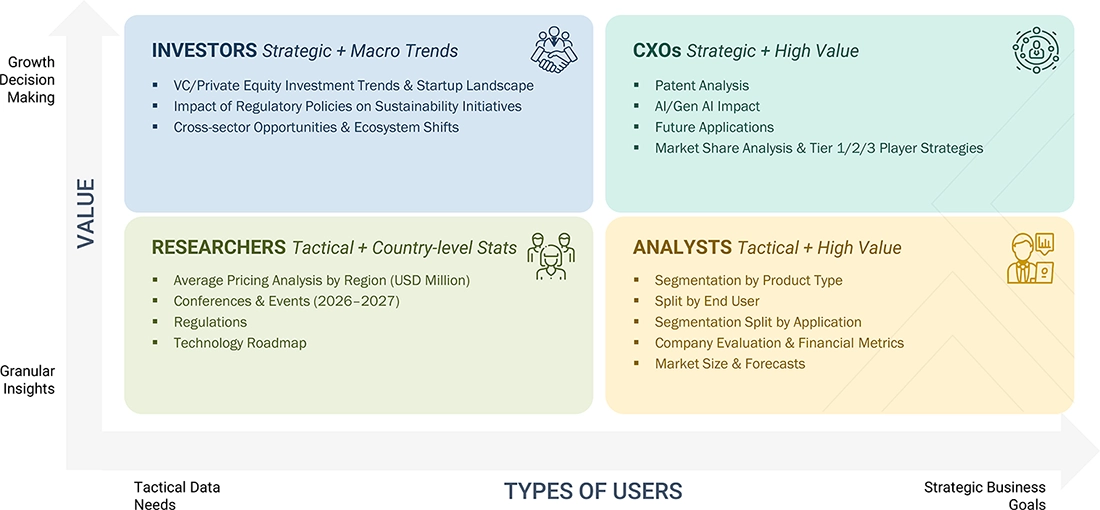
DELIVERED CUSTOMIZATIONS
We have successfully delivered the following deep-dive customizations:
| CLIENT REQUEST | CUSTOMIZATION DELIVERED | VALUE ADDS |
|---|---|---|
| Leading Manufacturer | Additional segment breakdown for countries | Additional country-level market sizing tables for segments/subsegments covered at the regional/global level to gain an understanding of market potential by each country |
| Emerging Leader | Additional company profiles | Competitive information on targeted players to gain granular insights on direct competition |
| Regional Market Leader | Additional country market estimates | Additional country-level deep dive for a more targeted understanding of the total addressable market |
RECENT DEVELOPMENTS
- June 2026 : Avon Technologies' Team Wendy received delivery orders totaling USD 40 million from the US Army and the Defense Logistics Agency. This allocation is tied directly to personal ballistic protection for the ongoing delivery of the Next-generation Integrated Head Protection System (NG-IHPS) ballistic helmets.
- June 2026 : Rheinmetall AG secured a strategic defense contract package valued at approximately USD 6.1 billion for heavy mechanized combat vehicle production. The procurement focuses on delivering Lynx infantry fighting vehicles equipped with integral hull armor plating to optimize field defense.
- February 2026 : BAE Systems was awarded a USD 195 million contract modification by the US Marine Corps for the production of additional Amphibious Combat Vehicles (ACVs). The next-generation platforms utilize advanced composite survivability armor to protect deployed personnel from high-velocity kinetic impacts.
Table of Contents
 Exclusive indicates content/data unique to MarketsandMarkets and not available with any competitors.
Methodology
The study involved four major activities to estimate the current size of the ballistic protection market. Exhaustive secondary research was conducted to gather information on the ballistic protection market, its adjacent markets, and its parent market. The next step was to validate these findings, assumptions, and sizing with industry experts across the value chain through primary research. Demand-side analysis was conducted to estimate the overall market size. Thereafter, data triangulation procedures were employed to estimate the sizes of various segments and subsegments within the ballistic protection market.
Secondary Research
During the secondary research process, various sources were consulted to identify and collect information for this study. The secondary sources included government sources, such as SIPRI; corporate filings, including annual reports, press releases, and investor presentations; white papers, journals, and certified publications; and articles from recognized authors, directories, and databases.
Primary Research
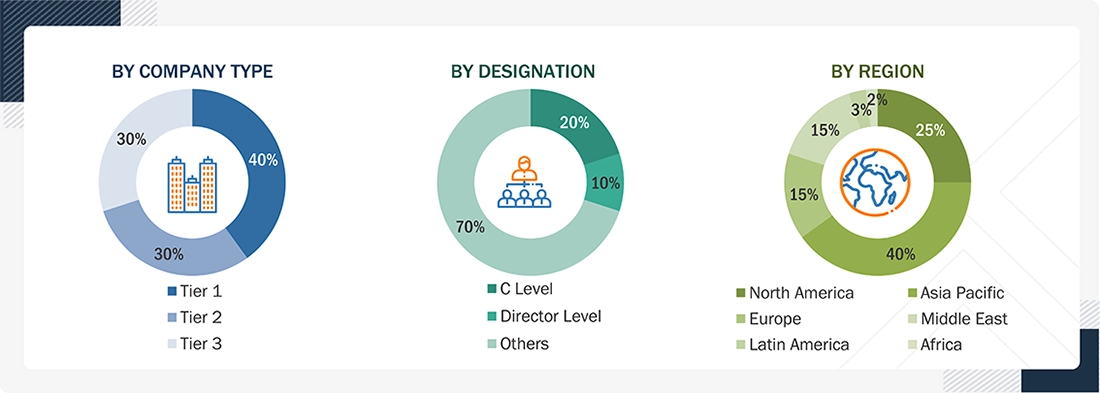
Extensive primary research was conducted after acquiring information on the ballistic protection market through secondary research. Several primary interviews were conducted with market experts from the demand and supply sides across major countries of North America, Europe, the Asia Pacific, the Middle East, Latin America, and Africa. Primary data was collected through questionnaires, emails, and telephonic interviews.
To know about the assumptions considered for the study, download the pdf brochure
Market Size Estimation
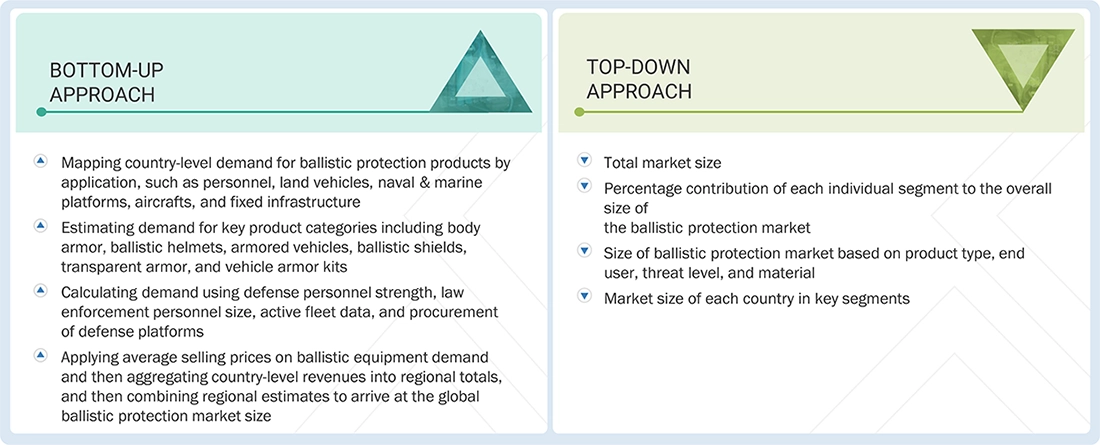
Top-down and bottom-up approaches were used to estimate and validate the size of the ballistic protection market. The research methodology used to estimate the size of the market included the following details:
- Key players in the ballistic protection market were identified through secondary research, and their market shares were determined through a combination of primary and secondary research. This included a study of the annual and financial reports of the top market players, as well as extensive interviews with leaders, including directors, engineers, marketing executives, and other key stakeholders of leading companies operating in the market.
- All percentage shares, splits, and breakdowns were determined using secondary sources and verified through primary sources.
- All possible parameters that affect the markets covered in this research study were accounted for, viewed in extensive detail, verified through primary research, and analyzed to obtain the final quantitative and qualitative data on the ballistic protection market. This data was consolidated, enhanced with detailed input, analyzed by MarketsandMarkets, and presented in this report.
Ballistic Protection Market : Top-Down and Bottom-Up Approach
Data Triangulation
After determining the overall market size, the total market was classified into several segments and subsegments. The data triangulation and market breakdown procedures explained below were implemented, wherever applicable, to complete the overall market engineering process and arrive at the estimated market numbers for the market segments and subsegments. The data was triangulated by examining various factors and trends on both the demand and supply sides. Additionally, the market size was validated using top-down and bottom-up approaches.
Market Definition
The ballistic protection market comprises products designed to protect personnel, vehicles, aircraft, naval platforms, and fixed infrastructure from bullets, fragments & shrapnel, and other kinetic projectile threats.
Key Stakeholders
- Armor Manufacturers and Integrators
- Platform Manufacturers
- End Users
- Regulatory and Certification Bodies
- Maintenance and Support Providers
- Technology and Component Suppliers
Report Objectives
- To define, describe, and forecast the ballistic protection market based on product type, application, armor technology, threat level, end use, and region in terms of value
- To forecast the size of various segments of the market across North America, Europe, the Asia Pacific, the Middle East & Africa, and Latin America in terms of value
- To identify and analyze the drivers, restraints, opportunities, and challenges influencing the growth of the market
- To identify industry trends, market trends, and technology trends currently prevailing in the market
- To analyze micromarkets with respect to growth trends, prospects, and their contribution to the overall market
- To analyze opportunities in the market for stakeholders by identifying key market trends
- .
- To profile key market players and comprehensively analyze their market share and core competencies
- To evaluate the degree of competition in the market by analyzing recent developments, such as contracts, agreements, and acquisitions adopted by leading market players
- To identify key products and unique selling points of leading companies in the market
- To provide a detailed competitive landscape of the market, along with market share analysis and revenue analysis of key players
Available customizations:
MarketsandMarkets offers the following customizations for this market report:
- Additional country-level analysis of the ballistic protection market
- Profiling of other market players (up to five)
Product Analysis
- Product matrix, which provides a detailed comparison of the product portfolios of each company in the ballistic protection market
Key Questions Addressed by the Report
How large is the global ballistic protection market expected to become by 2031?
According to MarketsandMarkets, the global ballistic protection market is projected to grow from USD 12.60 billion in 2026 to USD 16.29 billion by 2031, registering a CAGR of 5.3%. Growth is driven by increasing investments in personnel protection, armored vehicles, naval platforms, and tactical protective equipment across defense and law enforcement sectors.
What are the primary factors driving the ballistic protection market?
The market is driven by rising global defense spending, military modernization programs, increasing geopolitical tensions, stricter regulatory compliance, growing demand for lightweight protective materials, and the need to improve personnel survivability against evolving battlefield threats.
Which region is expected to experience the fastest growth in the ballistic protection market?
North America is expected to be the fastest-growing regional market during the forecast period, supported by significant defense budget allocations, modernization of military fleets, procurement of next-generation combat vehicles, and investments in advanced soldier protection systems.
Which application segment is projected to grow the fastest in the ballistic protection market?
The naval and marine platform segment is expected to register the highest CAGR of 7.6% during the forecast period, driven by increasing investments in warship survivability, vessel modernization, and advanced ballistic shielding for naval platforms operating in high-threat environments.
Why do land vehicles currently account for the largest share of the ballistic protection market?
Land vehicles dominate because armored personnel carriers, tactical trucks, infantry fighting vehicles, and main battle tanks require extensive structural armor, composite plating, and spall protection systems. Their large surface area and higher material requirements generate greater overall market value than personal protective equipment.
Which armor technology is expected to witness the strongest growth?
Aramid fiber-based armor is projected to register the highest CAGR of 5.6% owing to its excellent strength-to-weight ratio, high ballistic resistance, flexibility, and widespread use in lightweight body armor, helmets, and vehicle protection systems.
What major opportunity is emerging for ballistic protection manufacturers?
The growing deployment of autonomous and unmanned ground vehicles (UGVs) is creating new opportunities for lightweight ballistic armor panels that protect robotic logistics vehicles, reconnaissance platforms, and autonomous military systems operating in high-risk environments.
What is the biggest technical challenge facing the ballistic protection industry?
The biggest challenge is balancing protection with weight. Increasing armor thickness improves survivability but also increases physical strain on soldiers and reduces vehicle mobility, making lightweight, high-performance materials a critical area of research and development.
How is technology transforming modern ballistic protection systems?
The market is shifting from traditional steel armor toward lightweight composite materials, ultra-high-molecular-weight polyethylene (UHMWPE), advanced ceramics, modular armor systems, smart sensor-integrated protective equipment, automated fit customization, and compliance with the latest NIJ 0101.08 ballistic standards.
Which companies are recognized as leading players in the global ballistic protection market?
Key companies include BAE Systems, Rheinmetall AG, Point Blank Enterprises, Avon Protection, DuPont, TenCate Advanced Armor, Honeywell International, KNDS, Seyntex, Saab AB, ArmorWorks, Revision Military, FMS Enterprises Migun Ltd., Southern States LLC, Roketsan, and ADA (Australian Defence Apparel). BAE Systems is recognized as a Star player due to its extensive military vehicle armor portfolio, while Safariland is identified as an Emerging Player specializing in personal protective equipment for law enforcement and tactical users.


Personalize This Research
- Triangulate with your Own Data
- Get Data as per your Format and Definition
- Gain a Deeper Dive on a Specific Application, Geography, Customer or Competitor
- Any level of Personalization
Let Us Help You
- What are the Known and Unknown Adjacencies Impacting the Ballistic Protection Market
- What will your New Revenue Sources be?
- Who will be your Top Customer; what will make them switch?
- Defend your Market Share or Win Competitors
- Get a Scorecard for Target Partners

Custom Market Research Services
We Will Customise The Research For You, In Case The Report Listed Above Does Not Meet With Your Requirements
Get 10% Free CustomisationTESTIMONIALS
- Israel Ballistic Protection Market
- Turkey Ballistic Protection Market
- South Africa Ballistic Protection Market
- Brazil Ballistic Protection Market
- Mexico Ballistic Protection Market
- Rest Of Europe Ballistic Protection Market
- Rest Of Asia Pacific Ballistic Protection Market
- Canada Ballistic Protection Market
- US Ballistic Protection Market
- UK Ballistic Protection Market
- France Ballistic Protection Market
- Germany Ballistic Protection Market
- Italy Ballistic Protection Market
- China Ballistic Protection Market
- India Ballistic Protection Market
- Japan Ballistic Protection Market
- South Korea Ballistic Protection Market
- Australia Ballistic Protection Market
- UAE Ballistic Protection Market
- Saudi Arabia Ballistic Protection Market
Growth opportunities and latent adjacency in Ballistic Protection Market




David
Apr, 2019
I am looking for market intel on manufactures and customers involved with ballistic helmets, vehicles, and personal protection products. .