China IoT Market by Hardware (Processor, Memory, Logic, Sensor, & Connectivity), Software (Real-Time Streaming, Network Security, Data Management, Remote Monitoring, & Bandwidth Management), Platform, Service, and Application - Global Forecast to 2035


China IoT Market Summary
The China IoT Market is entering a high-growth phase as connected devices, industrial automation, artificial intelligence (AI), 5G, edge computing, cloud platforms, and smart infrastructure increasingly converge. Based on current industry expansion patterns and technology adoption, the China IoT Market is estimated at approximately USD 210–235 billion in 2025 and is projected to reach nearly USD 520–600 billion by 2035, expanding at a CAGR of around 9%–11% during 2025–2035. The market is being propelled by rapid digital transformation across manufacturing, automotive, consumer electronics, energy, logistics, healthcare, retail, and smart-city infrastructure. China's large electronics manufacturing ecosystem, extensive telecommunications infrastructure, growing industrial Internet deployments, and government-backed digitalization programs provide a strong foundation for IoT adoption.
AI is becoming an increasingly important growth catalyst because connected devices are shifting from simple data collection toward intelligent sensing, prediction, decision-making, and autonomous control. China's policy direction also reinforces this transition. The State Council's "AI+" action emphasizes industrial intelligence, smart manufacturing equipment, AI-driven process optimization, supply-chain coordination, and deeper integration between AI and the industrial Internet.
Key Market Trends & Insights
The China IoT Market is characterized by a combination of large-scale connectivity, rapid hardware deployment, and accelerating intelligence at the edge. Several trends are expected to shape the market through 2035.
Industrial IoT is becoming a core growth engine. Manufacturing remains one of the strongest demand centers because factories are deploying sensors, machine vision, connected controllers, robotics, digital twins, predictive maintenance platforms, and real-time production monitoring. AI is increasingly being integrated into these systems to convert IoT-generated data into actionable operational intelligence.
5G and cellular IoT connectivity are expanding the addressable market. China's extensive telecommunications infrastructure enables large deployments of connected vehicles, smart meters, industrial equipment, surveillance systems, logistics assets, and smart-city devices. Low-power wide-area technologies and 5G-based connectivity are supporting use cases where devices must operate reliably at scale.
Smart manufacturing is becoming increasingly dominant. IoT is moving beyond monitoring toward closed-loop automation. Manufacturers are connecting production assets with cloud and edge platforms that can detect anomalies, optimize production parameters, and automatically trigger maintenance or process adjustments.
AIoT is emerging as a major technology direction. The convergence of AI and IoT is creating systems capable of real-time analytics, automated decisions, intelligent video processing, voice interfaces, and predictive operations. ITU work on AIoT specifically highlights applications across smart homes, smart cities, and industrial Internet environments, while also emphasizing the growing importance of security.
Edge computing is becoming more strategically important. Processing data closer to connected devices reduces latency and bandwidth requirements and enables real-time applications such as autonomous mobility, robotics, industrial inspection, energy management, and intelligent security.
Market Size & Forecast
- Base year market size: The China IoT Market is estimated at approximately USD 210–235 billion in 2025.
- Forecast value by 2035: The market is projected to reach approximately USD 520–600 billion by 2035.
- CAGR: The market is expected to expand at approximately 9%–11% CAGR during 2025–2035.
- Growth factors: Major contributors include 5G and cellular connectivity, AIoT, industrial automation, smart manufacturing, cloud and edge computing, connected vehicles, smart homes, digital healthcare, smart energy, and government-supported digital transformation.
The forecast reflects an analytical range rather than a single-point estimate because market boundaries differ depending on whether IoT hardware, connectivity, platforms, software, services, and industrial systems are included. Nevertheless, the underlying direction remains strongly positive as connected assets increasingly become integral to China's digital economy.
China IoT Market Top 10 key takeaway
- The China IoT Market is estimated at approximately USD 210–235 billion in 2025.
- The market could reach approximately USD 520–600 billion by 2035.
- The market is expected to register around 9%–11% CAGR between 2025 and 2035.
- Industrial IoT and smart manufacturing are among the strongest demand-generating applications.
- AIoT is transforming conventional connected devices into intelligent and increasingly autonomous systems.
- 5G, LPWAN, Wi-Fi, Bluetooth, and other wireless technologies are expanding IoT connectivity.
- Edge computing is becoming critical for low-latency industrial, automotive, and smart-city applications.
- Cloud platforms are increasingly combined with AI analytics for centralized device and data management.
- Government-backed digitalization and industrial modernization initiatives are supporting adoption.
- Huawei, Alibaba, China Mobile, Tencent, Xiaomi, and other technology companies are strengthening China's IoT ecosystem.
Product Insights
Connected devices, sensors, modules, gateways, networking equipment, industrial controllers, smart appliances, connected vehicles, and IoT platforms represent the major product categories within the China IoT Market. Hardware remains foundational because every IoT architecture begins with sensors, communication modules, processors, gateways, or connected endpoints capable of collecting and transmitting information. China's extensive electronics manufacturing ecosystem gives domestic companies an advantage in producing IoT modules, embedded systems, smart appliances, cameras, industrial equipment, and consumer devices at scale.
Industrial sensors and connected controllers are particularly important as manufacturers modernize production facilities. Temperature, vibration, pressure, proximity, image, location, and environmental sensors allow factories to monitor machines and processes continuously. When combined with AI, these devices can identify abnormal behavior and support predictive maintenance before equipment failures occur.
Smart home devices represent another major product category. Smart speakers, security cameras, connected lighting, thermostats, appliances, and home gateways are increasingly integrated into unified ecosystems. Xiaomi and other consumer technology companies have helped establish large connected-device ecosystems in China, while AI-based voice interaction and intelligent automation are making these devices more useful.
Connected vehicles, robotics, smart meters, industrial cameras, and edge-AI devices are expected to be among the faster-growing categories through 2035. The next phase of product development will emphasize embedded AI processing, energy efficiency, cybersecurity, interoperability, and autonomous decision-making rather than connectivity alone.
Technology / Component Insights
The technological foundation of the China IoT Market is evolving from basic device connectivity toward intelligent, distributed computing. Connectivity technologies including 5G, 4G/LTE, Wi-Fi, Bluetooth, LPWAN, and industrial communication protocols enable large numbers of devices to exchange information. Cloud infrastructure then provides scalable storage, device management, data analytics, and application services.
AI is becoming the most important technology layer influencing the future direction of IoT. AI algorithms can process sensor streams, video feeds, machine data, and customer behavior to identify patterns and make predictions. In manufacturing, this enables predictive maintenance and quality inspection. In logistics, AI can optimize routes and asset utilization. In buildings, AI can optimize energy consumption. In retail, intelligent systems can analyze customer behavior and inventory.
Edge computing complements cloud platforms by moving processing closer to the point of data generation. This is particularly important for applications requiring millisecond-level responses. Industrial robotics, autonomous vehicles, machine vision, smart grids, and safety systems can use edge AI to make decisions without continuously sending all information to centralized cloud infrastructure.
Automation is also becoming embedded into IoT architectures. Instead of simply reporting that a machine is overheating, an AI-enabled IoT system can detect the anomaly, identify its likely cause, recommend an action, and potentially trigger an automated response. China's industrial policy increasingly encourages this convergence. The Ministry of Industry and Information Technology has issued an action plan specifically focused on integrating industrial Internet technologies with AI.
Future innovation will increasingly focus on AI accelerators at the edge, digital twins, autonomous IoT agents, secure device identity, federated learning, advanced sensor fusion, robotics, and AI-powered cybersecurity.
Application Insights
Manufacturing is expected to remain one of the leading applications in the China IoT Market because China has one of the world's largest industrial bases and is investing heavily in smart factories and production automation. IoT technologies enable manufacturers to monitor equipment, optimize production, track assets, automate inspection, improve worker safety, and reduce unplanned downtime.
Smart cities are another major application area. Connected traffic systems, intelligent lighting, environmental sensors, surveillance, waste management, parking systems, public infrastructure monitoring, and smart utilities depend on large-scale IoT deployments. AI can transform these systems by enabling real-time traffic optimization, anomaly detection, energy management, and automated public-service responses.
The automotive sector represents a significant future opportunity. Connected vehicles increasingly incorporate telematics, vehicle diagnostics, intelligent navigation, driver assistance, fleet monitoring, and vehicle-to-everything connectivity. The integration of IoT with AI and edge computing will support autonomous driving and software-defined vehicle architectures.
Healthcare, agriculture, logistics, energy, retail, and buildings will also contribute to long-term growth. Remote monitoring, smart medical equipment, precision agriculture, connected warehouses, smart grids, and intelligent buildings create opportunities for IoT solution providers that can combine connectivity with analytics and automation.
Regional Insights
From a global benchmark perspective, North America remains a leader in several high-value IoT software, cloud, AI, and enterprise solution categories because of advanced digital infrastructure, high enterprise technology spending, and strong technology ecosystems. Europe maintains a significant position due to industrial automation, sustainability requirements, connected mobility, and smart manufacturing. Asia Pacific is expected to register the fastest growth, supported by large-scale manufacturing, infrastructure investments, 5G deployment, smart-city programs, and rising adoption of connected technologies. Within Asia Pacific, China is particularly important because of its combination of manufacturing scale, domestic technology companies, telecommunications infrastructure, and government-supported industrial digitalization.
For the China IoT Market specifically, regional demand is concentrated in economically developed manufacturing and technology clusters such as the Yangtze River Delta, Pearl River Delta, Beijing-Tianjin-Hebei region, and other major urban-industrial corridors.
- North America: Strong enterprise IoT, cloud, AI, and industrial software adoption.
- Europe: Emphasis on industrial IoT, sustainability, energy efficiency, and connected mobility.
- Asia Pacific: Fastest-growing regional environment for connected devices and infrastructure.
- China: Major IoT manufacturing, connectivity, industrial automation, and AIoT hub.
- Japan: Strong demand for robotics, industrial automation, electronics, and precision manufacturing.
China-Specific Market Trends
China is expected to remain the dominant country-level contributor to the Asia Pacific IoT ecosystem, supported by large-scale manufacturing, telecommunications infrastructure, consumer electronics production, smart-city deployment, and industrial automation. Government initiatives have increasingly encouraged integration between AI, industrial Internet platforms, intelligent equipment, and digital manufacturing.
Japan represents an advanced IoT market within Asia Pacific, with demand strongly associated with industrial robotics, factory automation, automotive technologies, healthcare, and aging-related applications. Japanese manufacturers are increasingly using IoT and AI for predictive maintenance, quality control, and highly automated production.
In North America, the United States remains a major innovation center for cloud IoT platforms, AI software, industrial analytics, and connected infrastructure. Canada is progressing through smart-city, industrial, energy, and connected infrastructure deployments, while Mexico is benefiting from manufacturing digitalization and connected-factory investments associated with automotive and electronics production.
In Europe, Germany remains particularly important because of its industrial automation and manufacturing base. France is expanding IoT adoption through smart infrastructure, industrial modernization, energy management, transportation, and connected services.
- China: Industrial IoT, 5G, AIoT, smart cities, and connected manufacturing drive growth.
- Japan: Robotics, automotive, electronics, and factory automation remain important.
- United States: AI, cloud IoT, enterprise platforms, and industrial analytics support adoption.
- Canada and Mexico: Connected infrastructure and industrial digitalization create opportunities.
- Germany and France: Industrial automation, energy efficiency, mobility, and smart infrastructure remain key.
Key China IoT Market Company Insights
The competitive environment includes telecommunications companies, cloud providers, consumer electronics manufacturers, industrial technology companies, and platform providers. Huawei maintains a broad IoT ecosystem spanning connectivity, cloud, edge computing, device management, and industry solutions. Alibaba Cloud combines IoT capabilities with cloud computing, data analytics, and AI, creating opportunities across logistics, retail, manufacturing, and smart infrastructure. China Mobile is important for large-scale IoT connectivity and device-management services; its IoT platform supports connection management, automated monitoring, lifecycle management, and integration capabilities.
Tencent brings cloud, AI, data, and platform capabilities into connected applications, while Xiaomi has developed a broad consumer IoT ecosystem linking smartphones, appliances, wearables, and smart-home products. Other important participants include China Telecom, China Unicom, Haier, Hikvision, and ZTE.
Company strategies are increasingly moving toward AI-enabled products rather than connectivity-only offerings. Providers are investing in edge intelligence, AI analytics, cloud platforms, industrial applications, cybersecurity, and ecosystem partnerships.
- Huawei: Focuses on 5G, cloud, edge computing, industrial IoT, and AI integration.
- Alibaba: Combines cloud, data analytics, AI, and IoT platform capabilities.
- China Mobile: Concentrates on connectivity, device management, and large-scale IoT services.
- Tencent: Integrates cloud, AI, data, and IoT application ecosystems.
- Xiaomi: Expands interconnected consumer electronics, smart-home products, and AI-enabled devices.
Recent Developments
The convergence of AI and industrial IoT has become a major strategic direction in China. In December 2025, China's Ministry of Industry and Information Technology issued an action plan for integrating industrial Internet and AI, strengthening the connection between AI, industrial systems, intelligent equipment, software, and production processes.
At the technology level, AIoT is also gaining attention around security and device intelligence. International standards work involving Chinese technology organizations is addressing security threats associated with AI-enabled IoT devices, highlighting the increasing importance of secure AI inference, data protection, device identity, and lifecycle management.
Market Segmentation
The China IoT Market can be segmented by Product, Technology / Component, Application, and Region. By product, the market encompasses sensors, actuators, RFID devices, connected modules, gateways, networking equipment, smart appliances, industrial devices, connected vehicles, and IoT platforms. By technology/component, connectivity technologies such as 5G, Wi-Fi, Bluetooth, LPWAN, cellular IoT, edge computing, cloud computing, AI, machine learning, cybersecurity, and analytics form the primary technology layers. By application, industrial manufacturing, smart cities, automotive and transportation, consumer electronics, healthcare, energy and utilities, logistics, retail, agriculture, and smart buildings represent important areas of deployment. By region, demand is concentrated around China's major technology and industrial clusters, with economically advanced coastal regions supporting substantial industrial and consumer IoT adoption.
- By Product: Sensors, modules, gateways, connected devices, industrial equipment, and IoT platforms.
- By Technology / Component: 5G, LPWAN, cloud, edge computing, AI, analytics, and cybersecurity.
- By Application: Manufacturing, automotive, smart cities, healthcare, energy, logistics, retail, and buildings.
- By Region: Major demand centers include eastern coastal manufacturing and technology clusters.
- By Growth Opportunity: AIoT, industrial automation, robotics, connected vehicles, and smart energy offer strong potential.
Conclusion
The China IoT Market is moving from a connectivity-focused model toward an intelligent, autonomous, and AI-enabled ecosystem. With an estimated market size of USD 210–235 billion in 2025, the industry could expand to approximately USD 520–600 billion by 2035, representing a potential CAGR of 9%–11% over the forecast period. The next stage of growth will be driven less by simply adding connected devices and more by making those devices intelligent, automated, secure, and capable of real-time decision-making.
AI will be central to this transformation. The convergence of AI, IoT, cloud computing, edge computing, robotics, digital twins, and 5G will allow Chinese businesses to automate increasingly complex processes across manufacturing, transportation, energy, healthcare, retail, and smart infrastructure. Government support for AI and industrial Internet integration further strengthens the long-term investment environment.
For businesses, the strategic importance of IoT will therefore extend beyond operational efficiency. Companies that successfully combine connected assets with AI-driven analytics, automation, cybersecurity, and digital platforms will be better positioned to create new revenue streams, improve asset utilization, reduce downtime, and respond to changing customer requirements. Through 2035, China is likely to remain one of the world's most important ecosystems for large-scale IoT deployment and AIoT innovation.
FAQs
1. What is the market size of the China IoT Market?
The China IoT Market is estimated to be valued at approximately USD 210–235 billion in 2025. Based on current adoption patterns, connectivity expansion, industrial digitalization, and AI integration, the market could reach approximately USD 520–600 billion by 2035.
2. What is the expected growth rate of the China IoT Market?
The China IoT Market is projected to grow at approximately 9%–11% CAGR from 2025 to 2035. Growth is supported by industrial IoT, smart manufacturing, 5G connectivity, AIoT, connected vehicles, smart cities, cloud platforms, and edge computing.
3. What are the key drivers of the China IoT Market?
Major growth drivers include AI adoption, 5G and cellular connectivity, industrial automation, smart manufacturing, cloud computing, edge computing, connected vehicles, smart cities, digital transformation, and government-supported industrial modernization.
4. Which is the leading region in the China IoT Market?
Within China, economically developed technology and manufacturing clusters in eastern and southern China represent major demand centers. At the broader global level, North America remains strong in enterprise IoT and cloud technologies, while Asia Pacific is expected to experience the fastest overall growth, with China representing one of its most important IoT markets.
5. Who are the key companies in the China IoT Market?
Key companies include Huawei, Alibaba Cloud, China Mobile, Tencent, Xiaomi, China Telecom, China Unicom, Haier, Hikvision, and ZTE. These companies are focusing on connectivity, AI, cloud platforms, edge computing, smart devices, industrial IoT, cybersecurity, and intelligent automation.
To speak to our analyst for a discussion on the above findings, click Speak to Analyst
 Exclusive indicates content/data unique to MarketsandMarkets and not available with any competitors.
Table of Contents
1 Introduction (Page No. - 15)
1.1 Objectives of the Study
1.2 Market Definition
1.3 Study Scope
1.3.1 Markets Covered
1.4 Years Considered for the Study
1.5 Currency
1.6 Limitations
1.7 Stakeholders
2 Research Methodology (Page No. - 19)
2.1 Research Data
2.1.1 Secondary Data
2.1.1.1 Key Data From Secondary Sources
2.1.2 Primary Data
2.1.2.1 Key Data From Primary Sources
2.1.2.2 Key Industry Insights
2.1.2.3 Breakdown of Primaries
2.2 Market Size Estimation
2.2.1 Bottom-Up Approach
2.2.2 Top-Down Approach
2.3 Market Breakdown and Data Triangulation
2.4 Research Assumptions
3 Executive Summary (Page No. - 28)
4 Premium Insights (Page No. - 33)
4.1 Attractive Market Opportunities in the Chiina IoT Market
4.2 China IoT Market, By Component
4.3 Market, By Hardware and Software
4.4 Market Size, By Application
4.5 China 12th Five–Year Plan’s Offerings for IoT Industry
4.6 China 13th Five–Year Plan’s Offerings for IoT Industry
4.7 Made in China 2025 Offerings for IoT Industry
4.8 Smart Cities in China
5 Market Overview (Page No. - 43)
5.1 Introduction
5.2 Market Evolution
5.3 Market Segmentation
5.3.1 China IoT Market, By Hardware
5.3.2 Market, By Software
5.3.3 China IoT Market, By Platform
5.3.4 Market, By Service
5.3.5 China IoT Market, By Application
5.4 Market Dynamics
5.4.1 Drivers
5.4.1.1 Growing Demand for Smartphones and Other Connecting Devices
5.4.1.2 Growing Use of Internet in China
5.4.1.3 Rising Trend of Industrial Automation
5.4.1.4 Mainstream Adoption of Cloud Computing
5.4.2 Restraints
5.4.2.1 Complex Network Infrastructure of IoT
5.4.2.2 High Power Consumption By Connected Devices
5.4.3 Opportunities
5.4.3.1 Adoption of IoT for Cross-Domain Applications
5.4.3.2 Emergence of Smart Cities in China
5.4.3.3 Introduction of Advanced Integrated Economical Solutions of IoT
5.4.3.4 Government Funding to Promote IoT in China
5.4.4 Challenges
5.4.4.1 Lack of Common Communication Standards Across Platforms
5.4.4.2 Increasing Concern Regarding Safety and Privacy of Data
6 Industry Trends (Page No. - 57)
6.1 Introduction
6.2 Value Chain Analysis
6.3 Porter’s Five Forces Analysis
6.3.1 Threat of New Entrants
6.3.2 Threat of Substitutes
6.3.3 Bargaining Power of Suppliers
6.3.4 Bargaining Power of Buyers
6.3.5 Competitive Rivalry
6.4 China IoT Market Pestel Analysis
6.4.1 Introduction
6.4.2 Political Factors
6.4.3 Economic Factors
6.4.4 Social Factors
6.4.5 Technological Factors
6.4.6 Environmental Factors
6.4.7 Legal Factors
6.4.8 Conclusion
7 China IoT, Technology Analysis (Page No. - 73)
7.1 Introduction
7.2 Consumer Applications
7.2.1 Smart Homes
7.2.2 Home Automation Systems
7.2.3 Smart Thermostats
7.2.4 Smart Lighting
7.2.5 Smart Appliances
7.2.6 Smoke Detectors
7.2.7 Occupancy Sensors
7.2.8 Wearable Electronics
7.3 Public Applications
7.3.1 Building Automation & Controls Systems
7.3.2 IoT-Based Precision Farming
7.3.3 Smart Greenhouses
7.3.4 Intelligent Transportation Systems
7.4 Industrial Applications
7.4.1 Industrial IoT Market
7.4.2 Industrial Control & Factory Automation
7.4.3 Smart Factories
7.4.4 Retail Automation
8 China IoT Market, By Hardware (Page No. - 90)
8.1 Introduction
8.2 Processor
8.2.1 Microcontroller (MCU)
8.2.2 Application Processor
8.2.3 Digital Signal Processor (DSP)
8.3 Memory Device
8.4 Logic Device
8.5 Sensor
8.5.1 Heart Rate Sensor
8.5.2 Pressure Sensor
8.5.3 Temperature Sensor
8.5.4 Blood Glucose Sensor
8.5.5 Blood Oxygen Sensor
8.5.6 Electrocardiogram (ECG) Sensor
8.5.7 Humidity Sensor
8.5.8 Image Sensor
8.5.9 Gas Sensor
8.5.10 Ambient Light Sensor
8.5.11 Flow Sensor
8.5.12 Level Sensor
8.5.13 Chemical Sensor
8.5.14 Motion and Position Sensor
8.5.15 Soil Humidity Sensor
8.5.16 Soil Temperature Sensor
8.6 Connectivity IC
8.6.1 Ant+
8.6.2 Bluetooth
8.6.3 Bluetooth Smart/Bluetooth Low Energy (BLE)
8.6.4 Zigbee
8.6.5 Wireless Fidelity (Wi-Fi)
8.6.6 Ethernet
8.6.7 Near Field Communication (NFC)
8.6.8 Enocean
8.6.9 Cellular Network
8.6.10 Wireless Highway Addressable Remote Transducer Protocol (WHART)
8.6.11 Global Navigation Satellite System (GNSS) Module
8.6.12 Thread
8.6.13 Z-Wave
8.6.14 Isa 100
9 China IoT Market, By Software (Page No. - 103)
9.1 Introduction
9.2 Real-Time Streaming Analytics
9.3 Application and Network Security
9.4 Data Management
9.5 Remote Monitoring System
9.6 Network Bandwidth Management
10 China IoT Market, By Platform (Page No. - 109)
10.1 Introduction
10.2 Device Management Platform
10.3 Application Management Platform
10.4 Network Management Platform
11 China IoT Market, By Services (Page No. - 113)
11.1 Introduction
11.2 Professional Services
11.3 Managed Services
12 China IoT Market, By Application (Page No. - 117)
12.1 Introduction
12.2 Consumer Electronics
12.2.1 Products Covered Under Consumer Electronics Application
12.2.1.1 Activity Monitors
12.2.1.2 Smart Watches
12.2.1.3 Smart Glasses
12.2.1.4 Wearable Cameras
12.2.1.5 Smart Tvs
12.2.1.6 Refrigerators
12.2.1.7 Washing Machines
12.2.1.8 Other Products
12.3 Building Automation
12.3.1 Products Covered Under Building Automation Application
12.3.1.1 Occupancy Sensors
12.3.1.2 Daylight Sensors
12.3.1.3 Smart Thermostats
12.3.1.4 IP Cameras
12.3.1.5 Smart Meters
12.3.1.6 Smart Locks
12.3.1.7 Smoke Detectors
12.3.1.8 Lighting Control Actuators
12.4 Industrial
12.4.1 Products Covered Under Industrial Application
12.4.1.1 Industrial Motes
12.5 Automotive & Transportation
12.6 Healthcare
12.6.1 Products Covered Under Healthcare Application
12.6.1.1 Fitness & Heart Rate Monitors
12.6.1.2 Blood Pressure Monitors
12.6.1.3 Blood Glucose Meters
12.6.1.4 Continuous Glucose Monitors
12.6.1.5 Pulse Oximeters
12.6.1.6 Automated External Defibrillators
12.6.1.7 Programmable Syringe Pumps
12.6.1.8 Wearable Injectors
12.6.1.9 Multiparameter Monitors
12.7 Retail
12.7.1 Products Covered Under Retail Application
12.7.1.1 Smart Beacons
12.8 Oil & Gas
12.8.1 Products Covered Under Oil & Gas Application
12.8.1.1 Wireless Sensors
12.9 Agriculture
12.9.1 Products Covered Under Agriculture Application
12.9.1.1 Wireless Sensors
12.10 Other Applications
13 Competitive Landscape (Page No. - 139)
13.1 Overview
13.2 Market Ranking Analysis
13.3 Competitive Scenario
13.3.1 New Product Launches
13.3.2 Acquisitions and Expansions
13.3.3 Partnerships
13.3.4 Agreements, Collaborations, Joint Ventures, and Strategic Alliances
14 Company Profiles (Page No. - 147)
(Overview, Products and Services, Financials, Strategy & Development)*
14.1 Introduction
14.2 Hardware Providers
14.2.1 Huawei Investment & Holding Co., Ltd.
14.2.2 Mediatek Inc.
14.2.3 Qualcomm Inc.
14.2.4 Xiaomi Inc.
14.3 Software Providers
14.3.1 IBM Corp.
14.3.2 Microsoft Corp.
14.3.3 Alibaba Group Holding Ltd.
14.4 Network Providers
14.4.1 China Mobile Ltd.
14.4.2 China Unicom (Hong Kong) Ltd.
14.4.3 China Telecom Corp. Ltd.
*Details on Overview, Products and Services, Financials, Strategy & Development Might Not Be Captured in Case of Unlisted Companies.
15 Appendix (Page No. - 172)
15.1 Insights of Industry Experts
15.2 Discussion Guide
15.3 Knowledge Store: Marketsandmarkets’ Subscription Portal
15.4 Introducing RT: Real-Time Market Intelligence
15.5 Available Customizations
15.6 Related Reports
List of Tables (45 Tables)
Table 1 Global vs. China IoT Market Size, 2013–2022 (USD Billion)
Table 2 China IoT Market, By Component, 2013–2022 (USD Million)
Table 3 Chinese Cities Listed Under the First Pilot Smart City Project
Table 4 Porter’s Five Forces Analysis With Their Weightage Impact
Table 5 China: Country Snapshot
Table 6 Political Background of China
Table 7 Comparison of Economic Factors of China, for 2013, 2014, and 2015
Table 8 Demographics of China (2015)
Table 9 Analysis of Technological Influence on China (2015)
Table 10 Analysis of Environment of China
Table 11 China IoT Market, By Hardware, 2013–2022 (USD Million)
Table 12 Market for Hardware, By Application, 2013–2022 (USD Million)
Table 13 Market, By Processor, 2013–2022 (USD Million)
Table 14 China IoT Market, By Software, 2013–2022 (USD Million)
Table 15 Market for Software, By Application, 2013–2022 (USD Million)
Table 16 China IoT Market, By Platform, 2013–2022 (USD Million)
Table 17 Market for Platform, By Application, 2013–2022 (USD Million)
Table 18 China IoT Market, By Service, 2013–2022 (USD Million)
Table 19 Market for Service, By Application, 2013–2022 (USD Million)
Table 20 Market, By Application, 2013–2022 (USD Million)
Table 21 China IoT Market for Consumer Electronics Application,By Component, 2013–2022 (USD Million)
Table 22 Market for Consumer Electronics Application, By Hardware, 2013–2022 (USD Million)
Table 23 China IoT Market for Building Automation Application, By Component, 2013–2022 (USD Million)
Table 24 Market for Building Automation Application, By Hardware, 2013–2022 (USD Million)
Table 25 China IoT Market for Industrial Application, By Component,2013–2022 (USD Million)
Table 26 Market for Industrial Application, By Hardware,2013–2022 (USD Million)
Table 27 China IoT Market for Automotive & Transportation Application,By Component, 2013–2022 (USD Million)
Table 28 Market for Automotive & Transportation Application,By Hardware, 2013–2022 (USD Million)
Table 29 China IoT Market for Healthcare Application, By Component,2013–2022 (USD Million)
Table 30 Market for Healthcare Application, By Hardware,2013–2022 (USD Million)
Table 31 China IoT Market for Retail Application, By Component,2013–2022 (USD Million)
Table 32 Market for Retail Application, By Hardware,2013–2022 (USD Million)
Table 33 China IoT Market for Oil & Gas Application, By Component,2013–2022 (USD Million)
Table 34 Market for Oil & Gas Application, By Hardware,2013–2022 (USD Million)
Table 35 China IoT Market for Agriculture Application, By Component,2013–2022 (USD Million)
Table 36 Market for Agriculture Application, By Hardware,2013–2022 (USD Million)
Table 37 China IoT Market for Other Applications, By Component,2013–2022 (USD Million)
Table 38 Market for Other Applications, By Hardware,2013–2022 (USD Million)
Table 39 Top 3 Hardware Providers in the China IoT Market, 2015
Table 40 Top 3 Software Providers in the Market, 2015
Table 41 Top 3 Network Providers in the China IoT Market, 2015
Table 42 10 Most Recent New Product Launches in Market
Table 43 5 Most Recent Acquisitions and Expansions in China IoT Market
Table 44 5 Most Recent Partnerships in China IoT Market
Table 45 5 Most Recent Agreements, Collaborations, Joint Ventures,And Strategic Alliances in Market
List of Figures (70 Figures)
Figure 1 China IoT Market Segmentation
Figure 2 Market: Research Methodology
Figure 3 Process Flow of Market Size Estimation
Figure 4 Market Size Estimation Methodology: Bottom-Up Approach
Figure 5 Market Size Estimation Methodology: Top-Down Approach
Figure 6 Data Triangulation
Figure 7 Service Market in China IoT Likely to Grow at the Highest Rate During the Forecast Period
Figure 8 Connectivity ICs Expected to Hold the Largest Size of the Market During the Forecast Period
Figure 9 Data Management Software, Device Management Platform, and Professional Services to Dominate the Market During the Forecast Period
Figure 10 IoT Market for Agriculture Application to Grow at the Highest Rate During the Forecast Period
Figure 11 Government Offerings in Terms of Incentives and Standards Expected to Attract Foreign and Domestic Players Toward the Market
Figure 12 Software and Services Would Dominate the Market During the Forecast Period
Figure 13 Connectivity IC Held the Major Share of the Hardware Market; Data Management Software Held A Major Share of He Software Market
Figure 14 Applications Related to the Public Sector Leading the IoT Market in China
Figure 15 Evolution of the Market
Figure 16 Growing Demand for Smartphones and Other Connecting Devices to Drive the IoT Market in China
Figure 17 Number of Smartphone Users in China (2014–2020)
Figure 18 Number of Internet Users in China (June 2011–June 2015)
Figure 19 Average Yearly Wages in the Manufacturing Sector in China(2008–2014)
Figure 20 Increasing Urban Population of China (2010–2015)
Figure 21 Value Chain Analysis: Major Value is Added During the Research, Design, and Development and End User Phases
Figure 22 Porter’s Five Force Model for Market, 2016
Figure 23 Porter’s Five Forces Analysis
Figure 24 Impact of Threat of New Entrants is Currently Medium Because of Favorable Government Regulations and Capital Required
Figure 25 The Threat of Substitutes is Low as IoT is Still in R&D Phase in China
Figure 26 High Supplier Concentration Weakening the Bargaining Power of Suppliers
Figure 27 Bargaining Power of Buyers in Market
Figure 28 High Industry Growth Rate Leads to A High Degree of Competitive Rivalry in the Market
Figure 29 IoT Market Size Comparison: Global vs. China (2014 to 2020)
Figure 30 Smart Home Market Size Comparison: Global vs. China (2014 to 2020)
Figure 31 Home Automation & Security Controls Market Size Comparison: Global vs. China (2014 to 2020)
Figure 32 Smart Thermostat Market Size Comparison: Global vs. China(2014 to 2020)
Figure 33 Smart Lighting Market Size Comparison: Global vs. China (2014 to 2020)
Figure 34 Smart Appliances Market Size Comparison: Global vs. China(2014 to 2020)
Figure 35 Smoke Detector Market Size Comparison: Global vs. China(2014 to 2020)
Figure 36 Occupancy Sensor Market Size Comparison: Global vs. China(2014 to 2020)
Figure 37 Wearable Electronics Market Size Comparison: Global vs. China(2014 to 2020)
Figure 38 Building Automation & Controls Market Size Comparison: Global vs. China (2014 to 2020)
Figure 39 IoT Based Precision Farming Market Size Comparison: Global vs. China (2014 to 2020)
Figure 40 Smart Greenhouse Market Size Comparison: Global vs. China(2014 to 2020)
Figure 41 Intelligent Transportation System Market Size Comparison: Global vs. China (2014 to 2020)
Figure 42 Industrial IoT Market Size Comparison: Global vs. China (2014 to 2020)
Figure 43 Industrial Control & Factory Automation Market Size Comparison: Global vs. China (2014 to 2020)
Figure 44 Smart Factory Market Size Comparison: Global vs. China (2014 to 2020)
Figure 45 Retail Automation Market Size Comparison: Global vs. China(2014 to 2020)
Figure 46 Memory Devices to Witness the Highest Growth Rate in the China IoT Market
Figure 47 Application and Network Security Software Expected to Witness Highest Growth Rate in the Market
Figure 48 Device Management Platform Expected to Grow at the Highest Rate in the China IoT Market
Figure 49 Managed Services to Witness the Highest Growth Rate in the Market
Figure 50 Agriculture Application to Wtness the Highest Growth in the China IoT Market
Figure 51 Growth of the Automotive Sector in China By 2020
Figure 52 Global Companies in the Market Adopted New Product Launches as the Key Growth Strategy Between January 2015 and May 2016
Figure 53 Domestic Companies in the Market Adopted New Product Launches as the Key Growth Strategy Between January 2015 and May 2016
Figure 54 China IoT Market Evaluation Framework
Figure 55 Battle for the Market Share
Figure 56 Geographic Revenue Mix of IoT Players
Figure 57 Huawei Investment & Holding Co., Ltd.: Company Snapshot
Figure 58 Huawei Investment & Holding Co., Ltd.: SWOT Analysis
Figure 59 Mediatek Inc.: Company Snapshot
Figure 60 Mediatek Inc.: SWOT Analysis
Figure 61 Qualcomm Inc.: Company Snapshot
Figure 62 Qualcomm Inc.: SWOT Analysis
Figure 63 Xiaomi Inc.: SWOT Analysis
Figure 64 IBM Corp.: Company Snapshot
Figure 65 IBM Corp.: SWOT Analysis
Figure 66 Microsoft Corp.: Company Snapshot
Figure 67 Alibaba Group Holding Ltd.: Company Snapshot
Figure 68 China Mobile Ltd.: Company Snapshot
Figure 69 China Unicom (Hong Kong) Ltd.: Company Snapshot
Figure 70 China Telecom Corp. Ltd.: Company Snapshot
This research study involves an extensive use of secondary sources such as annual and financial reports of top players, presentations, press releases, journals, paid databases, and interviews with experts. The research methodology is explained below. The China IoT market size has been calculated using the top-down and bottom-up methods. In bottom-up approach, the number of additional components going into a smart devices are calculated, then the number of extra devices is multiplied with the volume of these devices in China to arrive total volume of devices, which is further multiplied by their average selling price (ASP). The top hardware numbers are arrived at, and a similar process is followed for the software, platform, services, and applications. Finally, all numbers are added to estimate the overall China IoT market.
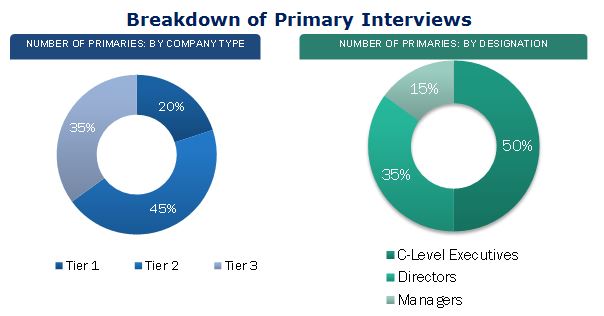
After arriving at the overall market size, the total market has been split into several segments and subsegments and confirmed with experts. The figure below shows the breakdown of primaries conducted during the research study on the basis of company, designation, and region.
To know about the assumptions considered for the study, download the pdf brochure
The China IoT ecosystem comprises major hardware providers such as Xiaomi Inc. (China), Qualcomm Incorporated (U.S.), MediaTek Inc. (Taiwan), and Huawei Investment & Holding Co., Ltd. (China), network providers such as China Mobile Limited (Hong Kong), China Unicom (Hong Kong) Ltd. (Hong Kong), and China Telecom Corporation Limited (Beijing); and software providers such as International Business Machines (IBM) Corporation (U.S.), Microsoft Corporation (U.S.), and Alibaba Group Holding Ltd. (China).
All these companies have their own R&D facilities and extensive sales offices and distribution channels. The products of these companies can be used across industries. The target audience for the report includes:
- Technology providers
- Raw material and manufacturing equipment suppliers
- Semiconductor wafer vendors
- Fabless players
- Foundry players
- Electronic design automation (EDA) and intellectual property (IP) core vendors
- Original equipment manufacturers (OEMs) (end-user applications or electronic product manufacturers)
- Original design manufacturers (ODMs) and OEM technology solution providers
- System designers and IoT device manufacturers
- Operating system (OS) vendors
- Mobile network operators (MNOs)
The study answers several questions for the stakeholders, primarily, which market segments to focus on in the next two to five years for prioritizing efforts and investments.
The market covered under this report has been segmented as follows:
This research report categorizes the China IoT market on the basis of hardware (processor, memory, logic, sensor, and connectivity), service (professional and managed services), by software, platform, and application.
China IoT Market, by Hardware
- Processors
- Memory Devices
- Logic Devices
- Sensors
- Connectivity ICs
China IoT Market, by Software
- Real-Time Streaming Analytics
- Application and Network Security
- Data Management
- Remote Monitoring System
- Network Bandwidth Management
China IoT Market, by Platform
- Device Management
- Application Management
- Network Management
China IoT Market, by Service
- Professional Services
- Managed Services
China IoT Market, by Application
- Consumer Electronics
- Building Automation
- Industrial
- Automotive & Transportation
- Healthcare
- Retail
- Oil & Gas
- Agriculture
- Others
Available Customizations:
With the given market data, MarketsandMarkets offers customizations according to the company’s specific needs. The following customization options are available for the report:
Hardware Analysis
- Further breakdown of the hardware segment, by sensor
- Further breakdown of the hardware segment, by connectivity













Growth opportunities and latent adjacency in China IoT Market
I am working on a project comparing the IoT statistics of different countries to global IoT statistics and require China's statistics for the same.
Is this report involved the market sizing for IoT-based hardware like processor, Memory, logic, and sensor?