CMOS Image Sensor Market by Technology (CMOS and Others), Specification, Wafer & Sensor Size, Application (Automotive, Consumer Electronics, Industrial, Entertainment, & Security & Surveillance), and Region - Global Trends and Forecast to 2036


CMOS Image Sensor Market Summary
The CMOS Image Sensor Market is witnessing robust growth driven by the rapid expansion of imaging technologies across consumer electronics, automotive, healthcare, and industrial automation sectors. In 2025, the global market size is estimated to be valued at around USD 28–32 billion and is projected to reach approximately USD 65–75 billion by 2036, expanding at a CAGR of 8%–10% during the forecast period. This growth trajectory is strongly influenced by the increasing integration of AI-powered vision systems, IoT-enabled smart devices, and automation across industries. The proliferation of smartphones, autonomous vehicles, smart surveillance systems, and medical imaging solutions is accelerating demand for high-performance, low-power CMOS sensors. Additionally, advancements in digital transformation, edge computing, and real-time analytics are further enhancing the adoption of CMOS image sensors globally.
Key Market Trends & Insights
The CMOS image sensor market is evolving rapidly, shaped by both technological advancements and shifting industry demands. North America continues to dominate the market due to strong R&D investments and early adoption of AI-enabled imaging systems, while Asia Pacific is emerging as the fastest-growing region due to large-scale electronics manufacturing and rising consumer demand.
The backside illumination (BSI) technology segment remains dominant, driven by its superior low-light performance and compact design, especially in smartphones and automotive cameras. Meanwhile, stacked CMOS sensors and AI-integrated imaging chips are emerging as transformative innovations, enabling faster processing and enhanced image quality.
Automation and AI are playing a critical role in redefining imaging applications, particularly in industrial inspection, autonomous driving, and smart cities. The integration of machine learning algorithms directly into image sensors is enabling real-time decision-making at the edge, reducing latency and improving efficiency.
Market Size & Forecast
- Base Year Market Size (2025): USD 28–32 Billion
- Forecast Market Value (2036): USD 65–75 Billion
- CAGR (2025–2036): 8%–10%
- Growth Factors: Increasing adoption of AI-powered imaging, expansion of IoT ecosystems, rising demand for advanced driver-assistance systems (ADAS), and growth in industrial automation and smart surveillance
CMOS Image Sensor Market Top 10 key takeaway
- The market is expected to more than double in value by 2036.
- Smartphones remain the largest revenue-generating segment.
- Automotive applications are among the fastest-growing segments.
- Asia Pacific is the fastest-growing regional market.
- AI integration is transforming image processing capabilities.
- Backside illumination (BSI) technology dominates the product segment.
- Industrial automation is creating new growth avenues.
- Edge computing is driving demand for smart sensors.
- Healthcare imaging applications are expanding rapidly.
- Strategic partnerships and innovation are key competitive factors.
Product Insights
The CMOS image sensor market is primarily segmented into area image sensors and linear image sensors, with area image sensors dominating the market due to their widespread use in consumer electronics such as smartphones, tablets, and digital cameras. These sensors offer high-resolution imaging capabilities, compact size, and energy efficiency, making them ideal for portable devices.
Backside illumination (BSI) sensors have become the leading product category, as they significantly improve light sensitivity and image quality in low-light conditions. This makes them highly suitable for applications like night photography, surveillance systems, and automotive vision systems. Additionally, stacked CMOS sensors are gaining traction as they allow for faster data processing and improved performance by integrating memory and logic layers directly into the sensor.
Emerging product categories include global shutter sensors and event-based sensors, which are increasingly being adopted in industrial automation and robotics. These sensors offer high-speed imaging and reduced motion blur, enabling precise machine vision applications. AI integration into sensors is also creating intelligent imaging solutions capable of real-time object detection and analysis.
Technology / Component Insights
The CMOS image sensor market is driven by several key technologies, including backside illumination (BSI), front-side illumination (FSI), stacked sensor architecture, and global shutter technology. Among these, BSI technology dominates due to its enhanced light capture efficiency and compact design.
AI and machine learning are revolutionizing the functionality of CMOS sensors by enabling on-chip image processing. This reduces the need for external processing units and enhances real-time decision-making capabilities. IoT integration is further expanding the use of CMOS sensors in smart homes, smart cities, and industrial IoT applications, where connected devices rely on visual data for monitoring and control.
Cloud computing and edge computing are also playing a crucial role in the evolution of CMOS image sensors. While cloud platforms enable large-scale data storage and analytics, edge computing allows real-time processing directly at the sensor level, reducing latency and bandwidth requirements.
Future innovation trends include the development of ultra-high-resolution sensors, quantum dot imaging technologies, and AI-driven adaptive imaging systems. These advancements are expected to unlock new applications in augmented reality (AR), virtual reality (VR), and autonomous systems.
Application Insights
The consumer electronics segment dominates the CMOS image sensor market, driven by the widespread use of smartphones, tablets, and wearable devices. The increasing demand for high-resolution cameras and advanced photography features is fueling the adoption of CMOS sensors in this segment.
The automotive sector is emerging as a key growth area, with CMOS sensors being widely used in advanced driver-assistance systems (ADAS), autonomous vehicles, and in-cabin monitoring systems. These sensors enable features such as lane detection, collision avoidance, and driver monitoring, enhancing safety and driving experience.
Healthcare is another rapidly growing application segment, where CMOS sensors are used in medical imaging devices such as endoscopes, X-ray systems, and diagnostic equipment. The demand for non-invasive imaging and real-time diagnostics is driving innovation in this space.
Industrial applications, including machine vision, robotics, and quality inspection, are also contributing to market growth. CMOS sensors enable precise imaging and automation, improving operational efficiency and reducing errors.
Regional Insights
North America leads the CMOS image sensor market due to strong technological infrastructure, high R&D investments, and early adoption of AI-driven imaging solutions. The presence of major technology companies and a well-established semiconductor ecosystem further supports market growth.
Europe follows closely, with increasing adoption of CMOS sensors in automotive and industrial applications. The region's focus on Industry 4.0 and smart manufacturing is driving demand for advanced imaging solutions.
Asia Pacific is the fastest-growing region, driven by the rapid expansion of consumer electronics manufacturing, particularly in countries like China, Japan, and South Korea. The region also benefits from strong government support for semiconductor manufacturing and digital transformation initiatives.
- North America dominates due to innovation and AI adoption
- Europe benefits from strong industrial and automotive demand
- Asia Pacific is the fastest-growing region
- Rising investments in semiconductor manufacturing boost growth
- Increasing demand for smart devices drives regional expansion
Country-Specific Market Trends
In Asia Pacific, China is leading the market with a CAGR of around 10%–12%, driven by its massive electronics manufacturing base and government support for semiconductor self-sufficiency. Japan is also a key player, focusing on high-end imaging technologies and innovation in automotive sensors.
In North America, the United States dominates the market with a CAGR of 7%–9%, supported by strong investments in AI, autonomous vehicles, and defense applications. Canada and Mexico are also witnessing steady growth due to expanding industrial automation and manufacturing sectors.
In Europe, Germany leads the market with a CAGR of 8%–10%, driven by its automotive industry and focus on Industry 4.0. France is also contributing to market growth through investments in smart city projects and digital infrastructure.
- China leads APAC with strong manufacturing capabilities
- Japan focuses on high-end sensor innovation
- United States drives North American market growth
- Germany dominates Europe with automotive demand
- Government initiatives support semiconductor advancements
Key CMOS Image Sensor Market Company Insights
The CMOS image sensor market is highly competitive, with major players focusing on innovation, AI integration, and strategic partnerships to strengthen their market position. Leading companies are investing heavily in R&D to develop advanced imaging technologies and expand their product portfolios.
Companies are increasingly integrating AI capabilities into their sensors to enable real-time image processing and analytics. They are also focusing on developing compact, energy-efficient sensors for use in IoT devices and wearable technologies. Strategic collaborations with automotive manufacturers and technology firms are helping companies expand their presence in emerging application areas.
- Companies focus on AI-driven sensor innovation
- Strong emphasis on R&D investments
- Strategic partnerships drive market expansion
- Product diversification enhances competitiveness
- Focus on energy-efficient and compact designs
Recent Developments
Recent developments in the CMOS image sensor market highlight the growing importance of AI and advanced imaging technologies. Several companies have launched AI-enabled sensors capable of performing real-time object recognition and image enhancement directly on the chip.
In another development, partnerships between semiconductor companies and automotive manufacturers have accelerated the deployment of CMOS sensors in autonomous vehicles and ADAS systems. Additionally, advancements in stacked sensor technology have improved performance and reduced power consumption.
Market Segmentation
The CMOS image sensor market is segmented based on product, technology, application, and region. By product, the market includes area image sensors and linear image sensors, with area sensors dominating due to their widespread use in consumer electronics. By technology, the market is categorized into BSI, FSI, and stacked sensors, with BSI leading due to superior performance.
In terms of application, the market is segmented into consumer electronics, automotive, healthcare, industrial, and security & surveillance. Consumer electronics hold the largest share, while automotive and healthcare are rapidly growing segments. Regionally, the market is divided into North America, Europe, Asia Pacific, and the Rest of the World.
- Area image sensors dominate the product segment
- BSI technology leads the market
- Consumer electronics is the largest application segment
- Automotive and healthcare show strong growth potential
- Asia Pacific is the fastest-growing regional market
Conclusion
The CMOS image sensor market is poised for significant growth through 2036, driven by advancements in AI, IoT, and automation technologies. As industries increasingly rely on visual data for decision-making, the demand for high-performance imaging solutions will continue to rise. The integration of AI into image sensors is transforming them into intelligent devices capable of real-time analysis, opening new opportunities across various sectors.
With strong growth potential and expanding applications, CMOS image sensors are becoming a critical component of the digital ecosystem. Businesses that invest in innovation, strategic partnerships, and advanced technologies will be well-positioned to capitalize on this dynamic market.
FAQs
1. What is the current size of the CMOS Image Sensor Market?
The market is valued at approximately USD 28–32 billion in 2025.
2. What is the expected growth rate of the market?
The market is projected to grow at a CAGR of 8%–10% from 2025 to 2036.
3. What are the key drivers of market growth?
Key drivers include AI integration, IoT expansion, automation, and rising demand for high-resolution imaging.
4. Which region leads the CMOS image sensor market?
North America currently leads the market due to strong technological adoption and innovation.
5. Who are the key players in the market?
Major companies focus on innovation, AI integration, and strategic partnerships to maintain their competitive edge
 Exclusive indicates content/data unique to MarketsandMarkets and not available with any competitors.
Table of Contents
1 Introduction (Page No. - 16)
1.1 Objectives of the Study
1.2 Market Definition
1.3 Study Scope
1.3.1 Markets Covered
1.3.1.1 CMOS Image Sensor Market, By Wafer and Sensor Size
1.3.2 Years Considered for the Study
1.4 Currency & Pricing
1.5 Limitations
1.6 Stakeholders
2 Research Methodology (Page No. - 19)
2.1 Research Data
2.1.1 Secondary Data
2.1.1.1 Key Data From Secondary Sources
2.1.2 Primary Data
2.1.2.1 Key Data From Primary Sources
2.1.2.2 Key Industry Insights
2.1.2.3 Breakdown of Primaries
2.2 Market Size Estimation
2.2.1 Bottom-Up Approach
2.2.2 Top-Down Approach
2.3 Market Breakdown & Data Triangulation
2.4 Research Assumptions
3 Executive Summary (Page No. - 29)
4 Premium Insights (Page No. - 34)
4.1 CMOS Image Sensor Market Expected to Have Huge Growth Opportunity in Automotive and Consumer Electronics
4.2 Market, By Application (2015–2020)
4.3 Market, By Region and Application
4.4 Market, By Region (2014)
4.5 Market, By Type
4.6 Market, By Image Processing Type
5 Market Overview (Page No. - 40)
5.1 Introduction
5.2 Evolution
5.3 Market Segmentation
5.3.1 By Technology
5.3.2 By Application
5.3.3 By Specification Type
5.3.4 By Wafer Size and Sensor Size
5.3.5 By Region
5.4 Market Dynamics
5.4.1 Drivers
5.4.1.1 Growing Implementation of CMOS Image Sensors in Consumer Electronics Segment Supports the Growth of This Market
5.4.1.2 Investment By Major Players in Automotive Sector Expected to Boost the Market
5.4.1.3 4k Pixel Technology is Expected to Support the Growth of Security & Surveillance Sector of Market
5.4.2 Restraints
5.4.2.1 Shortage of CMOS Image Sensors to Vendors in Asia-Pacific
5.4.3 Opportunities
5.4.3.1 Emerging Opportunities in 3D Image Sensing
5.4.3.2 Stacked Image Sensor Expected to Create Opportunities for This Market
5.4.3.3 BSI to Become A Mainstream Technology
5.4.4 Challenges
5.4.4.1 Reducing Image Sensor Chip Size Leading to Loss of Pixel Size
5.4.4.2 Improving Resolution of CMOS Image Sensor With Increase in Pixel Count
6 Industry Trends (Page No. - 52)
6.1 Introduction
6.2 Value Chain Analysis
6.3 Porter’s Five Forces Analysis
6.3.1 Intensity of Competitive Rivalry
6.3.2 Threat of Substitutes
6.3.3 Bargaining Power of Buyers
6.3.4 Bargaining Power of Suppliers
6.3.5 Threat of New Entrants
6.4 Industry Trends
6.4.1 Mergers and Acquisitions – CMOS Image Sensor
6.5 Strategic Benchmarking
6.5.1 Major Strategies Adopted By the Key Players
7 CMOS Image Sensor Market, By Technology (Page No. - 63)
7.1 Introduction
7.2 Complementary Metal-Oxide-Semiconductor (CMOS)
7.2.1 Fsi Technology
7.2.2 BSI Technology
7.2.3 Others
7.2.3.1 3D Stacked BSI
7.2.3.2 3D Hybrid Stacked
7.3 Others (sCMOS)
8 Market, By Specification (Page No. - 74)
8.1 Introduction
8.2 Market, By Processing Type
8.2.1 2D Image Sensor
8.2.2 3D Image Sensor
8.3 Market, By Spectrum
8.3.1 Visible Spectrum
8.3.2 Non-Visible Spectrum
8.3.2.1 Infrared Invisible Spectrum
8.3.2.2 X-Ray Light
8.4 Market, By Array Type
8.4.1 Linear Image Sensor
8.4.2 Area Image Sensor
9 Market Analysis, By Application (Page No. - 85)
9.1 Introduction
9.2 Aerospace
9.3 Automotive
9.4 Consumer Electronics
9.4.1 Smartphone
9.4.2 Tablet Pc
9.4.3 Camera
9.4.4 Wearable Electronics
9.4.5 Others
9.5 Healthcare
9.6 Industrial
9.7 Entertainment
9.8 Security & Surveillance
9.9 Others
10 Market Analysis, By Wafer and Sensor Size (Page No. - 120)
10.1 Market By Wafer Size
10.1.1 Introduction
10.1.2 200 Mm
10.1.3 300 Mm
10.1.4 Others
10.2 Market, By Sensor Size
10.2.1 Introduction
10.2.2 Medium Format
10.2.3 Full Frame
10.2.4 APS-H and APS-C
10.2.5 4/3 Inch
10.2.6 1 Inch and Below
11 Market, By Region (Page No. - 126)
11.1 Introduction
11.2 North America
11.3 Europe
11.4 Asia-Pacific
11.5 Rest of the World
12 Competitive Landscape (Page No. - 144)
12.1 Overview
12.2 Market Share Analysis: Image Sensor Market
12.3 Competitive Situation and Trends
12.3.1 New Product Developments
12.3.2 Agreements and Contracts
12.3.3 Acquisitions and Expansions
13 Company Profiles (Page No. - 151)
13.1 Introduction
13.2 Omnivision Technologies Inc.
13.2.1 Business Overview
13.2.2 Products Offered
13.2.3 Recent Developments
13.2.4 MnM View
13.2.4.1 Key Strategy
13.2.4.2 SWOT Analysis
13.3 Samsung Electronics Co., Ltd
13.3.1 Business Overview
13.3.2 Products Offered
13.3.3 Recent Developments
13.3.4 MnM View
13.3.4.1 Key Strategy
13.3.4.2 SWOT Analysis
13.4 Sharp Corporation
13.4.1 Business Overview
13.4.2 Products Offered
13.4.3 Recent Developments
13.4.4 MnM View
13.4.4.1 Key Strategy
13.4.4.2 SWOT Analysis
13.5 SK Hynix Inc.
13.5.1 Business Overview
13.5.2 Products Offered
13.5.3 Recent Developments
13.5.4 MnM View
13.5.4.1 Key Strategy
13.5.4.2 SWOT Analysis
13.6 Sony Corporation
13.6.1 Business Overview
13.6.2 Products Offered
13.6.3 Recent Developments
13.6.4 MnM View
13.6.4.1 Key Strategy
13.6.4.2 SWOT Analysis
13.7 CMOSis N.V.
13.7.1 Business Overview
13.7.2 Products Offered
13.7.3 Recent Developments
13.8 E2V Technologies PLC.
13.8.1 Business Overview
13.8.2 Products Offered
13.8.3 Recent Developments
13.8.4 MnM View
13.8.4.1 Key Strategy
13.9 Galaxycore Inc.
13.9.1 Business Overview
13.9.2 Products Offered
13.9.3 Recent Developments
13.10 On Semiconductor Corporation
13.10.1 Business Overview
13.10.2 Products Offered
13.10.3 Recent Developments
13.11 Pixart Imaging Inc.
13.11.1 Business Overview
13.11.2 Products Offered
13.11.3 Recent Developments
13.12 Panasonic Corporation
13.12.1 Business Overview
13.12.2 Products Offered
13.12.3 Recent Developments
13.12.4 MnM View
13.12.4.1 Key Strategy
13.13 Stmicroelectronics N.V.
13.13.1 Business Overview
13.13.2 Products Offered
13.13.3 Recent Developments
13.14 Teledyne Technologies, Inc.
13.14.1 Business Overview
13.14.2 Products Offered
13.14.3 Recent Developments
13.15 Toshiba Corporation
13.15.1 Business Overview
13.15.2 Products Offered
13.15.3 Recent Developments
13.16 Taiwan Semiconductor Manufacturing Co., Ltd.
13.16.1 Business Overview
13.16.2 Products Offered
13.16.3 Recent Developments
14 Appendix (Page No. - 190)
14.1 Insights of Industry Experts
14.2 Discussion Guide
14.3 Introducing RT : Real Time Market Intelligence
14.4 Available Customizations
14.5 Related Reports
List of Tables (79 Tables)
Table 1 CMOS Image Sensor Market Size, 2013–2020 (USD Million)
Table 2 Market Size, By Technology, 2013–2020 (USD Million)
Table 3 Market, By Technology
Table 4 Market, By Application
Table 5 Market, By Specification
Table 6 Market, By Wafer & Sensor Size
Table 7 Investments in Automotive Sector By Major Players Expected to Boost the Demand
Table 8 Shortage of CMOS Image Sensors to Vendors in Asia-Pacific Limits the Growth of This Market
Table 9 CMOS Image Sensor Expected to Have A Large Application in 3D Image Sensing
Table 10 The Reducing Image Sensor Chip Size Leads to Loss of Pixel Size Acts as A Challenge is Acting as Major Challenges
Table 11 Mergers and Acquisitions - CMOS Image Sensor
Table 12 CMOS Image Sensor Market Size, By Technology, 2013–2020 (USD Million)
Table 13 Market Size, By Type, 2013–2020 (USD Million)
Table 14 Market Size, By Application, 2013–2020 (USD Million)
Table 15 Market Size, By Region, 2013–2020 (USD Million)
Table 16 Other Image Sensor Market Size, By Application, 2013–2020 (USD Million)
Table 17 Other Image Sensor Market Size, By Region, 2013–2020 (USD Million)
Table 18 CMOS Image Sensor Market Size, By Processing Type, 2013–2020 (USD Million)
Table 19 2D Image Sensor Market Size, By Application, 2013–2020 (USD Million)
Table 20 3D Image Sensor Market Size, By Application, 2013–2020 (USD Million)
Table 21 CMOS Image Sensor Market Size, By Spectrum Type, 2013–2020 (USD Million)
Table 22 Visible Spectrum: CMOS Image Sensor Market Size, By Application, 2013–2020 (USD Million)
Table 23 Non-Visible Spectrum: CMOS Image Sensor Market Size, By Application, 2013–2020 (USD Million)
Table 24 CMOS Image Sensor Market Size, By Array Type, 2013–2020 (USD Million)
Table 25 Market Size, By Application, 2013–2020 (USD Million)
Table 26 Aerospace : CMOS Image Sensor Market Size, By Technology, 2013–2020 (USD Million)
Table 27 Aerospace : Market Size, By Image Processing Type, 2013–2020 (USD Million)
Table 28 Aerospace : Market Size, By Spectrum, 2013–2020 (USD Million)
Table 29 Aerospace : Market Size, By Region, 2013–2020 (USD Million)
Table 30 Automotive : CMOS Image Sensor Market Size, By Pixel Resolution, 2013–2020 (USD Million)
Table 31 Automotive : Market Size, By Technology, 2013–2020 (USD Million)
Table 32 Automotive : Market Size, By Image Processing Type, 2013–2020 (USD Million)
Table 33 Automotive : Market Size, By Spectrum, 2013–2020 (USD Million)
Table 34 Automotive : Market Size, By Region, 2013–2020 (USD Million)
Table 35 Consumer Electronics: CMOS Image Sensor Market Size, By Pixel Resolution, 2013–2020 (USD Million)
Table 36 Market Size, By Consumer Electronics Application, 2013–2020 (USD Million)
Table 37 Consumer Electronics: CMOS Image Sensor Market Size, By Technology, 2013–2020 (USD Million)
Table 38 Consumer Electronics: Market Size, By Image Processing Type, 2013–2020 (USD Million)
Table 39 Consumer Electronics: Market Size, By Spectrum, 2013–2020 (USD Million)
Table 40 Consumer Electronics: Market, By Region, 2013–2020 (USD Million)
Table 41 Healthcare: CMOS Image Sensor Market Size, By Application, 2013–2020 (USD Million)
Table 42 Healthcare: Market Size, By Technology, 2013–2020 (USD Million)
Table 43 Healthcare: Market Size, By Image Processing Type, 2013–2020 (USD Million)
Table 44 Healthcare: Market Size, By Spectrum, 2013–2020 (USD Million)
Table 45 Healthcare: Market Size, By Region, 2013–2020 (USD Million)
Table 46 Industrial: CMOS Image Sensor Market Size, By Pixel Resolution, 2013–2020 (USD Million)
Table 47 Industrial: Market Size, By Technology, 2013–2020 (USD Million)
Table 48 Industrial: Market Size, By Image Processing Type, 2013–2020 (USD Million)
Table 49 Industrial: Market Size, By Spectrum, 2013–2020 (USD Million)
Table 50 Industrial: Market Size, By Region, 2013–2020 (USD Million)
Table 51 Entertainment : CMOS Image Sensor Market Size, By Technology, 2013–2020 (USD Million)
Table 52 Entertainment : Market Size, By Image Processing Type, 2013–2020 (USD Million)
Table 53 Entertainment : Market Size, By Spectrum, 2013–2020 (USD Million)
Table 54 Entertainment : Market Size, By Region, 2013–2020 (USD Million)
Table 55 Security & Surveillance: CMOS Image Sensor Market Size , By Pixel Resolution, 2013–2020 (USD Million)
Table 56 Security & Surveillance: Market Size, By Technology, 2013–2020 (USD Million)
Table 57 Security & Surveillance: Market Size, By Image Processing Type, 2013–2020 (USD Million)
Table 58 Security & Surveillance: Market Size, By Spectrum, 2013–2020 (USD Million)
Table 59 Security & Surveillance : Market Size, By Region, 2013–2020 (USD Million)
Table 60 Others: CMOS Image Sensor Market Size, By Technology, 2013–2020 (USD Million)
Table 61 Others: Market Size, By Image Processing Type, 2013–2020 (USD Million)
Table 62 Others: Market Size, By Spectrum, 2013–2020 (USD Million)
Table 63 Others: Market Size, By Region, 2013–2020 (USD Million)
Table 64 CMOS Image Sensor Market Size, By Region, 2013–2020 (USD Million)
Table 65 North America: CMOS Image Sensor Market Size, By Technology, 2013–2020 (USD Million)
Table 66 North America: Market Size, By Application, 2013–2020 (USD Million)
Table 67 North America: Market Size, By Country, 2013–2020 (USD Million)
Table 68 Europe: CMOS Image Sensor Market Size, By Technology, 2013–2020 (USD Million)
Table 69 Europe: Market Size, By Application, 2013–2020 (USD Million)
Table 70 Europe: Market Size, By Country, 2013–2020 (USD Million)
Table 71 APAC : CMOS Image Sensor Market Size, By Technology, 2013–2020 (USD Million)
Table 72 APAC : Market Size, By Application, 2013–2020 (USD Million)
Table 73 APAC : Market Size, By Country, 2013–2020 (USD Million)
Table 74 RoW: CMOS Image Sensor Market Size, By Technology, 2013–2020 (USD Million)
Table 75 RoW: Market Size, By Application, 2013–2020 (USD Million)
Table 76 RoW: Market Size, By Region, 2013–2020 (USD Million)
Table 77 New Product Developments, 2012–2015
Table 78 Agreements and Contract
Table 79 Acquisitions and Expansions
List of Figures (91 Figures)
Figure 1 Markets Covered
Figure 2 Research Design
Figure 3 Bottom-Up Approach
Figure 4 Top-Down Approach
Figure 5 Data Triangulation
Figure 6 Assumptions of the Research Study
Figure 7 CMOS Image Sensor Market Segmentation
Figure 8 CMOS Image Sensor: Market Snapshot (2015 vs 2020): Consumer Electronics Expected to Hold A Large Market Share During the Forecast Period
Figure 9 CMOS Image Sensor Market, By Application (2015)
Figure 10 Market, By Region (2015)
Figure 11 Attractive Growth Opportunities in the Market
Figure 12 Consumer Electronics Expected to Hold the Largest Market Share During the Forecast Period (2015–2020)
Figure 13 Asia-Pacific to Hold the Largest Share of the Market in 2015
Figure 14 U.S. Held the Largest Share of the Market, 2014
Figure 15 BSI Expected to Hold the Largest Share of the CMOS Image Sensor Market By 2020
Figure 16 3D CMOS Image Sensor Market Expected to Grow at A High CAGR Between 2015 and 2020
Figure 17 Evolution of CMOS Image Sensor
Figure 18 Market, By Region
Figure 19 Demand for CMOS Image Sensor Expected to Increase in the Near Future
Figure 20 Value Chain Analysis: Maximum Value Added During the Design and Manufacturing Stage By CMOS Image Sensor Suppliers
Figure 21 Bargaining Power of Buyers Expected to Have High Impact
Figure 22 Porter’s Five Forces Analysis
Figure 23 Intensity of Competitive Rivalry in CMOS Image Sensor Market
Figure 24 Threat of Substitutes in Market
Figure 25 Bargaining Power of Buyers in Market
Figure 26 Bargaining Power of Suppliers in Market
Figure 27 Threat of New Entrants in Market
Figure 28 New Product Development : the Major Strategy Adopted By Industry Players (2012–2015)
Figure 29 CMOS Expected to Have the Largest Market Size By 2020
Figure 30 Backside Illumination Expected to Grow at Highest CAGR During the Forecast Period
Figure 31 CMOS Image Sensor Applications Expected to Grow at the Highest CAGR in Automotive Sector
Figure 32 CMOS Image Sensor Market in APAC Expected to Grow at Highest CAGR Between 2015 and 2020
Figure 33 Other Image Sensor Expected to Grow in Automotive Sector During the Forecast Period
Figure 34 Other Image Sensors Expected to Have High Growth Potential in Asia-Pacific
Figure 35 2D CMOS Image Sensor Expected to Grow at A High CAGR in Automotive Sector
Figure 36 Non-Visible Spectrum Expected to Grow at A Highest CAGR During Forecasted Period
Figure 37 Automotive Segment for Non-Visible Spectrum Expected to Grow at A High CAGR Between 2015 and 2020
Figure 38 Linear Image Sensor to Lead the CMOS Image Sensor Market
Figure 39 Market Scope of CMOS Image Sensor
Figure 40 Consumer Electronics Sector Expected to Have the Largest Market Size By 2020
Figure 41 Market for 2D CMOS Image Sensor Expected to Grow With Large Market Size
Figure 42 Features of CMOS Image Sensor in Automotive Application
Figure 43 Market for Automotive in CMOS Image Sensor Expected to Grow With Large Market Size
Figure 44 Non-Visible Spectrum in the Automotive Sector Expected to Witness High Growth During the Forecast Period
Figure 45 Smartphones Expected to Have A Large Market Size By 2020
Figure 46 2D Image Sensor Expected to Lead the CMOS Image Sensor Market Between 2015 and 2020
Figure 47 Market for the Healthcare Sector in Endoscopy Expected to Grow at the Highest CAGR Between 2015 and 2020
Figure 48 Market for CMOS Image Sensor in Industrial Sector Expected to Grow With A Largest Market Share
Figure 49 North America Expected to Have A Large Market Size By 2020
Figure 50 Market for 3D Image Sensor in Entertainment Sector to Grow at the Highest CAGR Between 2015 and 2020
Figure 51 CMOS Image Sensor Held A Large Share of the Market in Security & Surveillance Sector
Figure 52 CMOS Image Sensor Market in Security & Surveillance Expected to Hold A Large Share of the Asia-Pacific Market By 2020
Figure 53 CMOS Technology Expected to Hold the Major Market Share of Other Applications of CMOS Image Sensor
Figure 54 North America Expected to Hold the Largest Market Size By 2020
Figure 55 CMOS Image Sensor Market, By Wafer Size
Figure 56 Market, By Sensor Size
Figure 57 Geographic Snapshot – Global CMOS Image Sensor Market, By Geography
Figure 58 APAC Market Expected to Grow at A High Rate Between 2015 and 2020
Figure 59 North America Snapshot (2014–2020): Demand Likely to Be Driven By Automotive Application in the Market
Figure 60 CMOS Image Sensor Market in Automotive Expected to Grow at the Highest CAGR Between 2015 and 2020
Figure 61 U.S. Market for CMOS Image Sensor Expected to Grow at A High Rate in North America
Figure 62 Automotive Application Expected to Have High Growth Rate During Forecasted Period
Figure 63 Asia-Pacific Image Sensor Market Snapshot: India Expected to Be the Most Lucrative Market
Figure 64 Automotive Application Expected to Grow at the Highest CAGR in APAC
Figure 65 India Expected to Grow at A High Rate in Market
Figure 66 Middle East Market for Image Sensor Expected to Grow at A High Rate in RoW
Figure 67 Companies Adopted New Product Development as the Key Growth Strategy Between 2012 and 2015
Figure 68 CMOS Image Sensor Market Share, By Key Player, 2014
Figure 69 Market Evolution Framework: New Product Development Fueled Growth in Market
Figure 70 Battle for Market Share: New Product Development—The Key Strategy
Figure 71 Geographic Revenue Mix of Top 5 Market Players (2014)
Figure 72 Omnivision Technology Inc.: Company Snapshot
Figure 73 Omnivision Technology Inc.: SWOT Analysis
Figure 74 Samsung Electronics Co., Ltd.: Company Snapshot
Figure 75 Samsung Electronics Co., Ltd: SWOT Analysis
Figure 76 Sharp Corporation: Company Snapshot
Figure 77 Sharp Corporation: SWOT Analysis
Figure 78 SK Hynix Inc.: Company Snapshot
Figure 79 SK Hynix Inc.: SWOT Analysis
Figure 80 Sony Corporation: Company Snapshot
Figure 81 Sony Corporation: SWOT Analysis
Figure 82 CMOSis N.V.: Company Snapshot
Figure 83 E2V Technologies PLC.: Company Snapshot
Figure 84 Galaxycore Inc.: Company Snapshot
Figure 85 On Semiconductor Corporation: Company Snapshot
Figure 86 Pixart Imaging Inc.: Company Snapshot
Figure 87 Panasonic Corporation: Company Snapshot
Figure 88 Stmicroelectronics N.V.: Company Snapshot
Figure 89 Teledyne Technologies, Inc: Company Snapshot
Figure 90 Toshiba Corporation: Company Snapshot
Figure 91 Taiwan Semiconductor Manufacturing Co., Ltd.: Company Snapshot
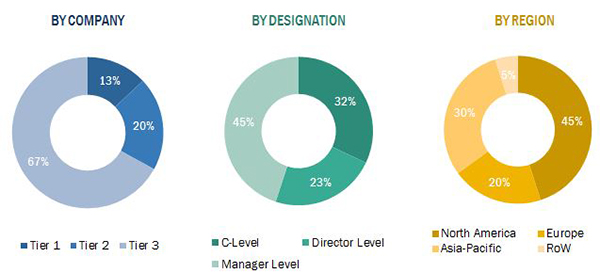
The research methodology used to estimate and forecast the market begins with capturing data on key vendor revenues through secondary research. The vendor offerings are also taken into consideration to determine the market segmentation. The bottom-up procedure was employed to arrive at the overall market size of the global CMOS image sensor market from the revenue of the key players in the market. After arriving at the overall market size, the total market was split into several segments and sub-segments which are then verified through primary research by conducting extensive interviews with key people such as CEOs, VPs, Directors and executives. This data triangulation and market breakdown procedures were employed to complete the overall market engineering process and arrive at the exact statistics for all segments and sub-segments.
To know about the assumptions considered for the study, download the pdf brochure
The stakeholders of this report include foundry players, CMOS image sensor developers, ODM and OEM technology solution providers, research organizations, technology investors, technology standards organizations, associations, forums, and alliances related to CMOS image sensor, government bodies such as regulating authorities and policy makers, and investors.
The target audience for the report includes key players such as OmniVision Technologies Inc. (U.S), Samsung Electronics Co., Ltd. (South Korea), Sharp Corporation (Japan), SK Hynix Inc. (South Korea), and Sony Corporation (Japan), CMOSIS N.V. (Belgium), e2v technologies plc (U.K.), ON Semiconductor Corporation (U.S.), and Panasonic Corporation (Japan). Study answers several questions for the stakeholders, primarily which market segments to focus in next two to five years for prioritizing the efforts and investments.
Scope of the report:
This research report categorizes the global CMOS image sensor market on the basis of technology, specification, wafer & sensor size, application, and region.
On the basis of technology:
The CMOS image sensor market has been segmented on the basis of technology into CMOS image sensor technology and other image sensor. The other image sensor technology includes a combination of CMOS and CCD, known as hybrid or sCMOS.
On the basis of specification:
The CMOS image sensor market has been segmented on the basis of specification into image processing type, spectrum, and array type. The image processing type has been subsegmented into 2D image sensor and 3D image sensor. The market on the basis of spectrum includes visible spectrum and non-visible spectrum. The market segmented on the basis of array type includes linear image spectrum and area image sensor.
On the basis of wafer and sensor size:
The CMOS image sensor market has been segmented on the basis of wafer and sensor size. The segmentation on the basis of wafer size includes 200mm, 300mm, and others. Other wafer sizes include those below 200mm and above 300mm. The sensor size segmentation includes medium format, full frame, APS-H and APS-C, 4/3inch, and 1inch and below. Only qualitative data for wafer and sensor size has given in the report.
On the basis of application:
The CMOS image sensor market has been segmented on the basis of application into aerospace, automotive, consumer electronics, healthcare, industrial, entertainment, security & surveillance, and others which include motion capture and barcode and document scanners.
On the basis of Region:
The global CMOS image sensor market has been segmented on the basis of region into four geographies, namely, the Americas, Europe, Asia-Pacific, and Rest of the World along with their respective countries.
Available customizations:
With the given market data, MarketsandMarkets offers customizations as per the company’s specific needs. The following customization options are available for the report:
Company Information
Detailed analysis and profiling of additional market players (up to five)













Growth opportunities and latent adjacency in CMOS Image Sensor Market