Electronic Sensors Market For Consumer Industry by Type (Image, Motion, Pressure, Temperature, Fingerprint, Proximity, & Others), Application (Communication & IT, Entertainment, Home Appliances, & Wearable Devices), and Geography - Global Growth Driver and Industry Forecast to 2035


Electronic Sensors Market Summary
The global Electronic Sensors Market is entering a sustained expansion phase as sensors become foundational components across connected vehicles, smart factories, consumer electronics, healthcare equipment, robotics, energy systems, and automated infrastructure. Based on current industry estimates and rounded to avoid false precision, the global Electronic Sensors Market is valued at approximately USD 270-280 billion in 2025 and is projected to reach approximately USD 550-560 billion by 2035, representing a CAGR of around 7%-8% during the forecast period. One recent market assessment estimates the market at USD 271.5 billion in 2025 and USD 556.2 billion by 2035, with a 7.5% CAGR.
Electronic sensors are increasingly moving beyond their traditional role of measuring physical conditions. Modern sensing platforms can capture temperature, pressure, motion, position, light, images, proximity, biometrics, vibration, and other parameters before transmitting or processing the information through connected electronic systems. The rapid adoption of IoT, artificial intelligence, edge computing, industrial automation, autonomous mobility, and digital transformation is therefore increasing both sensor volumes and the intelligence embedded within sensor architectures. Industrial automation demand is also strengthening across North America and Asia, reinforcing the broader need for connected measurement and control systems.
The market's long-term opportunity is supported by increasing sensor content per vehicle, the deployment of smart manufacturing equipment, growing demand for connected consumer products, and the transition toward predictive rather than reactive operations. Automotive electrification and advanced driver-assistance systems are increasing requirements for multiple sensing technologies, while healthcare and wearable devices are creating new demand for compact biometric and physiological sensors. At the same time, manufacturers are investing in miniaturization, low-power architectures, sensor fusion, embedded AI, and edge processing to improve performance while controlling system costs.
Key Market Trends & Insights
North America remains a leading regional market. The region benefits from strong semiconductor and technology ecosystems, advanced manufacturing, established automotive and healthcare industries, and significant investment in IoT and industrial automation. AI-integrated sensors and smart manufacturing applications are further supporting demand.
Asia Pacific represents the fastest-growing major opportunity. China, Japan, South Korea, India, and Taiwan benefit from large electronics manufacturing ecosystems, automotive production, semiconductor capabilities, and rapid adoption of smart devices. The concentration of consumer electronics assembly and sensor-related semiconductor production gives the region a strong structural advantage.
Image sensors represent a strategically important product category. Demand for high-resolution imaging is increasing across smartphones, machine vision, security systems, automotive cameras, robotics, and augmented or extended reality. In the narrower consumer electronics sensors market, image sensors held the largest product share in 2023.
Automotive and industrial applications are becoming increasingly sensor-intensive. Electrification, ADAS, autonomous functions, predictive maintenance, robotics, and Industry 4.0 are increasing the number and sophistication of sensors incorporated into individual systems.
AI is changing the value proposition of sensing. Rather than simply collecting measurements, sensors increasingly feed AI models that detect anomalies, classify objects, optimize processes, and support automated decision-making. Edge AI can also reduce latency by processing selected data closer to the sensor.
Sensor fusion is becoming a major innovation theme. Combining information from cameras, motion sensors, pressure sensors, radar, temperature sensors, and other sources can produce more reliable situational awareness than relying on a single sensor type. This is particularly relevant to robotics, autonomous vehicles, smart factories, and intelligent infrastructure.
Market Size & Forecast
- Base year market size: Approximately USD 270-280 billion in 2025.
- Forecast value by 2035: Approximately USD 550-560 billion.
- CAGR: Approximately 7%-8% during the forecast period.
- Growth factors: IoT deployment, AI-enabled sensing, automotive electrification, ADAS, industrial automation, predictive maintenance, connected consumer electronics, healthcare digitization, robotics, and smart infrastructure are expected to sustain demand.
Electronic Sensors Market Top 10 key takeaway
- The global Electronic Sensors Market is estimated at approximately USD 270-280 billion in 2025.
- The market is projected to reach approximately USD 550-560 billion by 2035.
- Market revenue is expected to expand at roughly 7%-8% CAGR through the forecast period.
- Automotive, industrial automation, and consumer electronics represent major demand centers.
- Image, motion, pressure, temperature, proximity, and biometric sensors remain important product categories.
- North America maintains a leading position due to advanced technology and industrial ecosystems.
- Asia Pacific is expected to deliver the fastest growth, supported by electronics manufacturing and industrialization.
- AI and edge computing are increasing the intelligence and processing capabilities of sensor platforms.
- IoT is expanding sensor deployment across factories, vehicles, buildings, healthcare systems, and connected products.
- Miniaturization, low-power operation, sensor fusion, and intelligent analytics will shape the competitive landscape through 2035.
Product Insights
The Electronic Sensors Market can be broadly categorized into image sensors, temperature sensors, pressure sensors, motion sensors, biometric sensors, proximity sensors, and other specialized sensing technologies. No single sensor architecture serves every application, but image and motion sensing remain particularly influential because of their broad deployment across consumer electronics, automotive systems, robotics, industrial inspection, security, and smart devices.
Image sensors benefit from the increasing requirement for machine vision and visual intelligence. Smartphones continue to require sophisticated imaging capabilities, while industrial cameras use advanced sensors for quality inspection and automated production. Automotive cameras are also becoming increasingly important as manufacturers expand ADAS capabilities. In robotics, high-performance image sensing provides machines with environmental information that can be interpreted by AI systems.
Motion sensors represent another major category because accelerometers and gyroscopes are embedded in smartphones, wearables, vehicles, industrial equipment, gaming systems, drones, and robotics. Pressure and temperature sensors similarly have broad applications, ranging from automotive powertrains and HVAC equipment to medical devices and industrial machinery.
Emerging categories include advanced biometric sensors, environmental sensors, MEMS-based multi-axis platforms, flexible sensors, and integrated sensor modules. As electronics become smaller and more multifunctional, manufacturers increasingly seek components that combine multiple sensing capabilities into a single package. The development of compact multi-sensor architectures can reduce space requirements, power consumption, and system complexity.
AI is strengthening the market for advanced products because intelligent algorithms require high-quality real-time data. A conventional sensor can provide a measurement, but an AI-enabled sensing architecture can identify patterns, classify objects, detect anomalies, or predict equipment conditions. This transition is encouraging suppliers to differentiate through not only hardware accuracy but also embedded processing, software, calibration, and data analytics capabilities.
Technology / Component Insights (Rename based on keyword if needed)
The technology landscape of the Electronic Sensors Market is being shaped by MEMS, CMOS imaging, semiconductor integration, microcontrollers, analog front ends, wireless connectivity, edge processors, and increasingly sophisticated AI accelerators. MEMS technology is particularly important because it enables small, low-power, high-volume sensing components for consumer electronics, automotive applications, industrial equipment, and medical devices.
AI and edge computing are becoming closely connected with sensing architectures. Processing sensor data locally can reduce latency, limit bandwidth requirements, and support applications in which immediate decisions are essential. In automated manufacturing, for example, edge-based analytics can identify equipment abnormalities without sending every raw data stream to a remote cloud platform.
IoT provides another major growth engine. Sensors act as the interface between physical assets and digital platforms, allowing machines, buildings, vehicles, and infrastructure to continuously generate operational data. IoT sensor deployments are expanding across manufacturing, healthcare, transportation, retail, energy, and smart-building environments. The broader IoT sensors market is also benefiting from connected automotive, healthcare, consumer electronics, and building automation applications.
Automation is particularly important for industrial sensing. Smart factories use temperature, pressure, vibration, position, optical, and proximity sensors to monitor production equipment and enable automated control. As manufacturers move toward predictive maintenance, sensor data is increasingly combined with AI algorithms to identify early signs of equipment deterioration.
Future innovation will focus on sensor fusion, self-calibration, ultra-low-power electronics, wireless sensor networks, flexible and printed electronics, edge AI, and advanced packaging. Developers are also working to reduce sensor size while improving sensitivity and reliability. Sustainability is becoming another design consideration, encouraging lower energy consumption, longer operating lifetimes, and more resource-efficient manufacturing.
Application Insights
The consumer electronics segment remains one of the largest application areas because smartphones, tablets, wearables, cameras, gaming devices, smart appliances, and other connected products require multiple electronic sensors. The proliferation of smart devices has increased demand for motion, image, proximity, biometric, pressure, and environmental sensing. In the narrower consumer electronics sensors market, Asia Pacific held a leading share, reflecting its role in electronics production.
Automotive is emerging as one of the most strategically important application segments. Modern vehicles increasingly incorporate sensors for ADAS, vehicle dynamics, battery management, cabin monitoring, tire-pressure monitoring, parking assistance, powertrain control, and safety systems. Electric vehicles add further sensing requirements around batteries, thermal management, power electronics, and charging.
Industrial applications are being transformed by Industry 4.0. Sensors provide the real-time data required for automated production, machine monitoring, robotics, quality inspection, and predictive maintenance. As factories become more connected, sensor data becomes an operational asset rather than simply an equipment measurement.
Healthcare represents another significant opportunity. Electronic sensors are increasingly incorporated into patient-monitoring equipment, diagnostic systems, wearable devices, rehabilitation technologies, and connected medical equipment. The increasing emphasis on remote monitoring and preventive care is encouraging demand for compact, accurate, and energy-efficient sensors.
Future opportunities will increasingly come from robotics, autonomous mobility, smart cities, renewable-energy infrastructure, warehouse automation, agricultural technology, and intelligent buildings. These applications require continuous measurement and automated decision-making, making sensors fundamental to digital transformation.
Regional Insights
North America maintains a leading position in the broader Electronic Sensors Market because of its established technology companies, semiconductor ecosystem, advanced automotive sector, healthcare infrastructure, aerospace capabilities, and industrial automation base. The United States represents the largest regional contributor, supported by investment in smart infrastructure, connected healthcare, advanced manufacturing, and AI-enabled industrial systems.
Europe remains a significant market, particularly in automotive, industrial machinery, aerospace, healthcare, and energy. Germany's manufacturing base creates substantial demand for industrial sensors, while Europe's focus on vehicle safety, electrification, energy efficiency, and smart infrastructure encourages further deployment.
Asia Pacific is expected to experience the fastest growth. The region combines large electronics manufacturing capacity with rapidly expanding automotive production, industrial automation, robotics, and connected-device adoption. China, Japan, South Korea, Taiwan, and India are all contributing to regional momentum. Asia Pacific also benefits from the presence of major image-sensor and semiconductor manufacturing ecosystems.
- North America: Strong AI, IoT, automotive, healthcare, and industrial automation ecosystems support leadership.
- Europe: Automotive innovation, smart manufacturing, energy efficiency, and regulatory requirements support sensor demand.
- Asia Pacific: Electronics manufacturing, semiconductor capacity, robotics, and industrialization drive the fastest growth.
- China and Japan: Both countries remain strategically important for electronics, automotive, robotics, and sensor manufacturing.
- Emerging economies: Infrastructure development and connected-device adoption are creating new demand opportunities.
[Country]-Specific Market Trends
In APAC, China is expected to remain one of the largest and fastest-expanding national markets for electronic sensors. Strong consumer electronics manufacturing, electric-vehicle production, industrial automation, robotics, and smart-city development are increasing sensor requirements. Japan is also a high-value market, supported by advanced automotive technology, robotics, precision manufacturing, healthcare electronics, and sophisticated consumer products. Japan's broader consumer electronic sensor market has been estimated to expand at around 10%-11% CAGR in recent forecasts.
In North America, the United States remains the principal market because of its leadership in AI, semiconductor design, cloud computing, automotive technology, medical technology, aerospace, and industrial automation. Canada benefits from automotive manufacturing, industrial digitization, clean technology, and advanced research. Mexico is gaining importance as electronics and automotive manufacturing expand, with nearshoring trends creating additional opportunities for sensing components and industrial automation systems.
In Europe, Germany is a major demand center because of its automotive and industrial manufacturing base. France benefits from aerospace, automotive, industrial automation, and healthcare technology. Across the region, energy-efficiency requirements and vehicle electrification are encouraging manufacturers to use more sophisticated sensing architectures.
At the country level, growth rates are expected to remain strongest where semiconductor production, automation, electronics manufacturing, and connected infrastructure are expanding simultaneously. Across these markets, government-supported digitalization programs, industrial modernization, EV policies, and smart-infrastructure investment can accelerate sensor adoption.
- China: High electronics production and EV manufacturing create substantial sensor demand.
- Japan: Robotics, precision manufacturing, automotive technology, and healthcare support sophisticated sensing applications.
- United States: AI, automation, automotive, aerospace, and healthcare are major growth engines.
- Germany: Industry 4.0 and automotive technology sustain demand for high-performance sensors.
- France: Aerospace, smart infrastructure, automotive, and healthcare applications support market expansion.
Key Electronic Sensors Market Company Insights
The competitive landscape includes Honeywell International, Texas Instruments, Analog Devices, STMicroelectronics, Bosch Sensortec, Sony Semiconductor Solutions, Samsung Electronics, Panasonic, ams-OSRAM, and TE Connectivity. These companies compete across different sensor categories and end-use markets, with strategies increasingly focused on miniaturization, accuracy, energy efficiency, embedded intelligence, and application-specific solutions.
Texas Instruments and Analog Devices maintain strong positions in analog and mixed-signal technologies that connect physical sensor outputs with processing systems. STMicroelectronics combines MEMS, sensing, microcontrollers, and embedded technologies, making it a significant supplier for automotive, industrial, and consumer applications. Bosch Sensortec has established a strong position in MEMS and environmental sensing, particularly for mobile and wearable devices.
Sony Semiconductor Solutions is strategically important in image sensors, with continued innovation for cameras, industrial vision, security, automotive, robotics, and emerging applications. Recent developments in imaging demonstrate how sensor companies are increasingly combining high-resolution sensing with edge AI and specialized processing. For example, Sony announced a 4K security-camera sensor in 2026 and disclosed a preliminary agreement with TSMC concerning next-generation image sensors.
Samsung Electronics and Panasonic also participate across imaging, inertial, automotive, consumer, and industrial sensing technologies. Panasonic has developed integrated inertial sensor solutions, while Samsung has introduced image-sensor technologies targeting robotics and XR applications.
- Bosch Sensortec: Focuses on MEMS miniaturization and integrated sensing platforms.
- STMicroelectronics: Combines sensors with microcontrollers and embedded processing technologies.
- Sony Semiconductor Solutions: Concentrates on high-performance image sensors and intelligent vision applications.
- Texas Instruments: Emphasizes analog, mixed-signal, signal-conditioning, and industrial sensing solutions.
- Analog Devices: Focuses on precision measurement, industrial sensing, and intelligent signal chains.
Recent Developments
A significant recent development is the increasing integration of AI into image and sensing platforms. Sony Semiconductor Solutions announced a 4K security-camera sensor in 2026 designed for advanced imaging applications, illustrating the industry's movement toward increasingly capable visual sensing systems.
Sensor companies are also targeting emerging robotics and extended-reality applications. Samsung introduced ISOCELL Vizion sensor technologies for robotics and XR applications, while Panasonic introduced a 6-in-1 inertial sensor aimed at automotive safety and performance applications. These developments demonstrate the expansion of sensor technology beyond conventional consumer electronics.
Industrial automation is another important area of development. Recent demand for automated and software-connected measurement systems illustrates the growing convergence of sensors, data acquisition, control, and analytics. This trend is particularly relevant as manufacturers seek real-time visibility into production processes and predictive maintenance capabilities.
Market Segmentation
The Electronic Sensors Market is segmented By Product into image sensors, temperature sensors, pressure sensors, motion sensors, biometric sensors, proximity sensors, and other specialized categories. Image sensors command substantial demand because of their use in smartphones, automotive cameras, security, industrial inspection, robotics, and machine vision. Motion, pressure, and temperature sensors have broader cross-industry deployment and remain critical components of automated systems.
By Technology / Component, the market includes MEMS-based sensors, CMOS and semiconductor sensing technologies, optical technologies, inertial systems, biometric sensing architectures, and integrated sensor modules. The shift toward multi-sensor integration and embedded intelligence is increasing demand for components that combine sensing, signal conditioning, processing, and connectivity.
By Application, the market covers consumer electronics, automotive, industrial, healthcare, aerospace and defense, energy, telecommunications, infrastructure, and other applications. Consumer electronics remain a major volume market, while automotive and industrial sectors are expected to generate significant value growth as automation, electrification, robotics, and digital transformation accelerate.
By Region, the market encompasses North America, Europe, Asia Pacific, Latin America, and the Middle East & Africa. North America remains a leading market, Europe maintains strong industrial and automotive demand, and Asia Pacific represents the fastest-growing major regional opportunity due to manufacturing scale and technology adoption.
- By Product: Image, motion, pressure, temperature, proximity, and biometric sensors represent core categories.
- By Technology: MEMS, semiconductor, optical, inertial, and integrated sensing technologies drive innovation.
- By Application: Consumer electronics, automotive, and industrial systems account for major demand.
- By End-Use Trend: Automation, electrification, robotics, and IoT are increasing sensor content per system.
- By Region: North America leads while Asia Pacific offers the strongest growth trajectory.
Conclusion
The global Electronic Sensors Market is positioned to become an increasingly important foundation of the digital economy. With an estimated market size of approximately USD 270-280 billion in 2025, the market could expand to approximately USD 550-560 billion by 2035, supported by a 7%-8% CAGR under the current industry outlook.
The next decade will be characterized by a shift from conventional sensing toward intelligent, connected, and application-specific sensing architectures. AI will improve the ability of systems to interpret sensor data, while IoT will expand the number of connected sensing points across industrial, automotive, healthcare, consumer, and infrastructure environments. Automation will create further demand for sensors capable of operating continuously and reliably under demanding conditions.
The strategic importance of sensors will also increase as businesses adopt predictive maintenance, digital twins, autonomous equipment, smart factories, connected vehicles, and intelligent buildings. Sensor suppliers that can provide accurate hardware together with edge processing, cybersecurity, software integration, and analytics will be better positioned to capture higher-value opportunities.
By 2035, market competition is likely to center on the ability to deliver smaller, lower-power, more accurate, and more intelligent sensing platforms at commercially viable prices. For businesses across automotive, manufacturing, electronics, healthcare, and technology, understanding the evolution of the Electronic Sensors Market will therefore be increasingly important for product development, supply-chain planning, and long-term digital-transformation strategies.
FAQs
1. What is the market size of the Electronic Sensors Market?
The global Electronic Sensors Market is estimated at approximately USD 270-280 billion in 2025, based on current industry estimates rounded into a range. One recent assessment values the market at USD 271.5 billion.
2. What is the growth rate of the Electronic Sensors Market?
The market is expected to expand at approximately 7%-8% CAGR through 2035. A recent industry forecast estimates a 7.5% CAGR from 2026 to 2035.
3. What are the key drivers of the Electronic Sensors Market?
Major growth drivers include IoT adoption, AI-enabled sensing, industrial automation, predictive maintenance, automotive electrification, ADAS, connected consumer electronics, robotics, digital healthcare, and smart infrastructure.
4. Which region leads the Electronic Sensors Market?
North America remains a leading regional market because of its advanced technology ecosystem, industrial automation capabilities, semiconductor expertise, and strong automotive and healthcare sectors. Asia Pacific is expected to record the fastest growth due to electronics manufacturing, industrialization, robotics, and expanding connected-device adoption.
5. Who are the key companies in the Electronic Sensors Market?
Major companies include Honeywell International, Texas Instruments, Analog Devices, STMicroelectronics, Bosch Sensortec, Sony Semiconductor Solutions, Samsung Electronics, Panasonic, ams-OSRAM, and TE Connectivity. Competitive differentiation increasingly centers on MEMS, image sensing, AI integration, low-power operation, sensor fusion, and application-specific solutions.
To speak to our analyst for a discussion on the above findings, click Speak to Analyst
 Exclusive indicates content/data unique to MarketsandMarkets and not available with any competitors.
Table of Contents
1 Introduction (Page No. - 16)
1.1 Objectives of the Study
1.2 Market Definition
1.3 Study Scope
1.3.1 Markets Covered
1.3.2 Geographic Scope
1.3.3 Years Considered for the Study
1.4 Currency
1.5 Stakeholders
2 Research Methodology (Page No. - 20)
2.1 Research Data
2.1.1 Secondary Data
2.1.1.1 Key Data From Secondary Sources
2.1.2 Primary Data
2.1.2.1 Key Data From Primary Sources
2.1.2.2 Key Industry Insights
2.1.2.3 Breakdown of Primaries
2.2 Market Size Estimation
2.2.1 Bottom-Up Approach
2.2.2 Top-Down Approach
2.3 Market Breakdown & Data Triangulation
2.4 Research Assumptions and Limitations
2.4.1 Assumptions
2.4.2 Limitations
3 Executive Summary (Page No. - 29)
4 Research Methodology (Page No. - 34)
4.1 Attractive Market Opportunities in the Electronic Sensors Market for Consumer Industry
4.2 Electronic Sensors Market for Consumer Industry, By Geography and Sensor Type
4.3 Electronic Sensors Market for Consumer Industry, By Geography, 2015
4.4 Electronic Sensors Market for Consumer Industry, By Application (2022)
4.5 Electronic Sensors Market for Consumer Industry, Asia-Pacific vs Europe
5 Market Overview (Page No. - 37)
5.1 Introduction
5.2 Evolution
5.3 Market Segmentation
5.3.1 By Type
5.3.2 Pressure Sensor Market for Consumer Industry,By Type
5.3.3 Temperature Sensor Market for Consumer Industry, By Type
5.3.4 Motion Sensor Market for Consumer Industry, By Type
5.3.5 Image Sensor Market for Consumer Industry, By Type
5.3.6 Image Sensor Market for Consumer Industry, By Operating Spectrum
5.3.7 CMOS Image Sensor Market for Consumer Industry, By Image Processing
5.3.8 Proximity Sensor Market for Consumer Industry, By Sensing Range
5.3.9 Proximity Sensor Market for Consumer Industry, By Technology
5.3.10 Fingerprint Sensor Market for Consumer Industry, By Type
5.3.11 Other Sensors Market for Consumer Industry, By Type
5.3.12 By Application
5.3.13 By Geography
5.4 Market Dynamics
5.4.1 Drivers
5.4.1.1 Demand for Smartphones Across the Globe With the Emphasis on Features Enhancement
5.4.2 Restraints
5.4.2.1 Lack of Standardized Fabrication Process for MEMS Sensors
5.4.3 Opportunities
5.4.3.1 Increasing Demand and Adoption of Wearable Devices
5.4.4 Challenges
5.4.4.1 Trade-Off Between Increasing Pricing Pressure and Size of the Sensors
6 Industry Trends (Page No. - 52)
6.1 Introduction
6.2 Value Chain Analysis for Electronic Sensors Market for Consumer Industry
6.3 Porter’s Five Forces Analysis
6.3.1 Degree of Competition
6.3.2 Threat of Substitutes
6.3.3 Bargaining Power of Buyers
6.3.4 Bargaining Power of Suppliers
6.3.5 Threat of New Entrants
7 Electronic Sensors Market for Consumer Industry, By Type (Page No. - 64)
7.1 Introduction
7.2 Pressure Sensor
7.2.1 Introduction
7.2.2 Piezoresistive
7.2.3 Capacitive
7.2.4 Electromagnetic
7.2.5 Optical
7.2.6 Resonant Solid State
7.2.7 Microelectromechanical System (MEMS)
7.2.8 Others
7.3 Temperature Sensor
7.3.1 Introduction
7.3.2 Bimetallic
7.3.3 Thermistor
7.3.4 Resistance Temperature Detector (RTD)
7.3.5 Temperature Sensor IC
7.3.6 Thermocouple
7.3.7 Infrared
7.3.8 Fiber Optic
7.3.9 Others
7.4 Motion Sensor
7.4.1 Introduction
7.4.2 MEMS Accelerometer
7.4.3 MEMS Gyroscope
7.4.4 MEMS Magnetometer
7.4.5 Sensor Combos
7.5 Image Sensor
7.5.1 Introduction
7.5.2 CMOS Image Sensor
7.5.2.1 CMOS Image Sensor, By Processing Type
7.5.2.1.1 2d Image Sensors
7.5.2.1.2 3d Image Sensors
7.5.3 Ccd Image Sensor
7.5.4 Other Image Sensors
7.5.4.1 Nmos Linear Image Sensor
7.5.4.2 Ingaas Linear Image Sensor
7.5.4.3 Flat Panel X-Ray Image Sensor
7.5.4.4 Scmos
7.5.5 Image Sensor, By Operating Spectrum
7.5.5.1 Visible Spectrum
7.5.5.2 Invisible Spectrum
7.5.5.2.1 Infrared Spectrum
7.5.5.2.2 X-Ray Spectrum
7.6 Proximity Sensor
7.6.1 Introduction
7.6.2 Capacitive Proximity Sensor
7.6.3 Others
7.6.3.1 Photoelectric Proximity Sensor
7.6.3.2 Ultrasonic Proximity Sensor
7.7 Fingerprint Sensor
7.7.1 Introduction
7.8 Other Sensors
7.8.1 Introduction
7.8.2 Level Sensor
7.8.3 Biosensor
8 Electronic Sensors Market for Consumer Industry, By Application (Page No. - 102)
8.1 Introduction
8.2 Entertainment
8.3 Communication and IT
8.4 Home Appliances
8.5 Wearable Devices
9 Electronic Sensors Market for Consumer Industry, By Geography (Page No. - 109)
9.1 Introduction
9.2 North America
9.2.1 U.S.
9.2.2 Canada
9.2.3 Mexico
9.3 Europe
9.3.1 U.K.
9.3.2 Germany
9.3.3 France
9.3.4 Rest of Europe
9.4 Asia-Pacific
9.4.1 China
9.4.2 Japan
9.4.3 India
9.4.4 Rest of APAC
9.5 Rest of the World
9.5.1 Middle East & Africa
9.5.2 South America
10 Competitive Landscape (Page No. - 124)
10.1 Overview
10.2 Electronic Sensors Market for Consumer Industry Market Rank Analysis
10.3 Competitive Situations and Trends
10.4 New Product Launches
10.5 Expansions
10.6 Mergers & Acquisitions
10.7 Agreements and Partnerships
11 Company Profiles (Page No. - 131)
11.1 Introduction
(Business Overview, Products & Services, Key Insights, Recent Developments, SWOT Analysis, Ratio Analysis, MnM View)*
11.2 Sony Corporation
11.3 Samsung Electronics Co., Ltd.
11.4 Stmicroelectronics N.V.
11.5 NXP Semiconductors N.V.
11.6 TE Connectivity Ltd.
11.7 Murata Manufacturing Co., Ltd.
11.8 Robert Bosch GmbH
11.9 Infineon Technologies AG
11.10 Synaptics Incorporated
11.11 Cypress Semiconductor Corporation
11.12 Omron Corporation
*Details on Business Overview, Products & Services, Key Insights, Recent Developments, SWOT Analysis, MnM View Might Not Be Captured in Case of Unlisted Companies.
12 Appendix (Page No. - 165)
12.1 Insights of Industry Experts
12.2 Discussion Guide
12.3 Knowledge Store: Marketsandmarkets’ Subscription Portal
12.4 Introducing RT: Real-Time Market Intelligence
12.5 Available Customizations
12.6 Related Reports
List of Tables (82 Tables)
Table 1 Impact Analysis of Drivers
Table 2 Impact Analysis of Restraints
Table 3 Impact Analysis of Opportunities
Table 4 Impact Analysis of Challenges
Table 5 Prominent Companies in the Electronic Sensors Market for Consumer Industry
Table 6 Electronic Sensors Market for Consumer Industry, By Type, 2013–2022 (USD Million)
Table 7 Electronic Sensors Market for Consumer Industry, By Type, 2013–2022 (Million Units)
Table 8 Pressure Sensor Market in Consumer Industry, By Type, 2013–2022 (USD Million)
Table 9 Pressure Sensor Market in Consumer Industry, By Application, 2013–2022 (USD Million)
Table 10 North American Pressure Sensor Market in Consumer Industry, By Application, 2013–2022 (USD Million)
Table 11 European Pressure Sensor Market in Consumer Industry, By Application, 2013–2022 (USD Million)
Table 12 Asia-Pacific Pressure Sensor Market in Consumer Industry, By Application, 2013–2022 (USD Million)
Table 13 RoW Pressure Sensor Market in Consumer Industry, By Application, 2013–2022 (USD Million)
Table 14 Temperature Sensor Market in Consumer Industry, By Type, 2013–2022 (USD Million)
Table 15 Temperature Sensor Market in Consumer Industry, By Application, 2013–2022 (USD Million)
Table 16 North American Temperature Sensor Market in Consumer Industry, By Application, 2013–2022 (USD Million)
Table 17 European Temperature Sensor Market in Consumer Industry, By Application, 2013–2022 (USD Million)
Table 18 Asia-Pacific Temperature Sensor Market in Consumer Industry, By Application, 2013–2022 (USD Million)
Table 19 RoW Temperature Sensor Market in Consumer Industry, By Application, 2013–2022 (USD Million)
Table 20 Motion Sensor Market in Consumer Industry, By Type, 2013–2022 (USD Million)
Table 21 Motion Sensor Market in Consumer Industry, By Application, 2013–2022 (USD Million)
Table 22 North American Motion Sensor Market in Consumer Industry, By Application, 2013–2022 (USD Million)
Table 23 European Motion Sensor Market in Consumer Industry, By Application, 2013–2022 (USD Million)
Table 24 Asia-Pacific Motion Sensor Market in Consumer Industry, By Application, 2013–2022 (USD Million)
Table 25 RoW Motion Sensor Market in Consumer Industry, By Application, 2013–2022 (USD Million)
Table 26 Difference Between CMOS and Ccd Sensor
Table 27 Image Sensor Market in Consumer Industry, By Type, 2013–2022 (USD Million)
Table 28 Image Sensor Market in Consumer Industry, By Spectrum Type, 2013–2022 (USD Million)
Table 29 CMOS Image Sensor Market in Consumer Industry, By Image Processing, 2013–2022 (USD Million)
Table 30 Image Sensor Market in Consumer Industry, By Application, 2013–2022 (USD Million)
Table 31 North American Image Sensor Market in Consumer Industry, By Application, 2013–2022 (USD Million)
Table 32 European Image Sensor Market in Consumer Industry, By Application, 2013–2022 (USD Million)
Table 33 Asia-Pacific Image Sensor Market in Consumer Industry, By Application, 2013–2022 (USD Million)
Table 34 RoW Image Sensor Market in Consumer Industry, By Application, 2013–2022 (USD Million)
Table 35 Proximity Sensor Market in Consumer Industry, By Technology, 2013–2022 (USD Million)
Table 36 Proximity Sensor Market in Consumer Industry, By Sensing Range, 2013–2022 (USD Million)
Table 37 Proximity Sensor Market in Consumer Industry, By Application, 2013–2022 (USD Million)
Table 38 North American Proximity Sensor Market in Consumer Industry, By Application, 2013–2022 (USD Million)
Table 39 European Proximity Sensor Market in Consumer Industry, By Application, 2013–2022 (USD Million)
Table 40 Asia-Pacific Proximity Sensor Market in Consumer Industry, By Application, 2013–2022 (USD Million)
Table 41 RoW Proximity Sensor Market in Consumer Industry, By Application, 2013–2022 (USD Million)
Table 42 Fingerprint Sensor Market in Consumer Industry, By Application, 2013–2022 (USD Million)
Table 43 Other Electronic Sensors Market for Consumer Industry, By Type, 2013–2022 (USD Million)
Table 44 Other Electronics Sensors Market in Consumer Industry, By Application, 2013–2022 (USD Million)
Table 45 North American Other Electronic Sensors Market in Consumer Industry, By Application, 2013–2022 (USD Million)
Table 46 European Other Electronic Sensor Market in Consumer Industry, By Application, 2013–2022 (USD Million)
Table 47 Asia-Pacific Other Electronic Sensor Market in Consumer Industry, By Application, 2013–2022 (USD Million)
Table 48 RoW Other Electronic Sensor Market in Consumer Industry, By Application, 2013–2022 (USD Million)
Table 49 Electronic Sensors Market for Consumer Industry, By Application, 2013–2022 (USD Million)
Table 50 North American Electronic Sensors Market in Consumer Electronics, By Application, 2013–2022 (USD Million)
Table 51 European Electronic Sensors Market in Consumer Electronics, By Application, 2013–2022 (USD Million)
Table 52 Asia-Pacific Electronic Sensors Market in Consumer Electronics, By Application, 2013–2022 (USD Million)
Table 53 RoW Electronic Sensors Market in Consumer Electronics, By Application, 2013–2022 (USD Million)
Table 54 Electronic Sensors Market for Consumer Industry, By Region, 2013–2022 (USD Million)
Table 55 North American Electronic Sensors Market in Consumer Industry, By Country, 2013–2022 (USD Million)
Table 56 European Electronic Sensors Market in Consumer Industry, By Country, 2013–2022 (USD Million)
Table 57 APAC Electronic Sensors Market in Consumer Industry, By Country, 2013–2022 (USD Million)
Table 58 RoW Electronic Sensors Market in Consumer Industry, By Region, 2013–2022 (USD Million)
Table 59 Temperature Sensor Market in Consumer Industry, By Region, 2013–2022 (USD Million)
Table 60 Pressure Sensor Market in Consumer Industry, By Region, 2013–2022 (USD Million)
Table 61 Image Sensor Market in Consumer Industry, By Region, 2013–2022 (USD Million)
Table 62 Motion Sensor Market in Consumer Industry, By Region, 2013–2022 (USD Million)
Table 63 Proximity Sensor Market in Consumer Industry, By Region, 2013–2022 (USD Million)
Table 64 Fingerprint Sensor Market in Consumer Industry, By Region, 2013–2022 (USD Million)
Table 65 Other Electronic Sensors Market in Consumer Industry, By Region, 2013–2022 (USD Million)
Table 66 Level Sensor Market for Consumer Industry, By Region, 2013–2022 (USD Million)
Table 67 Electronic Sensors Market for Consumer Industry Market Rank Analysis, 2015
Table 68 New Product Launches, 2014–2016
Table 69 Expansions, 2014–2016
Table 70 Acquisitions, 2014–2016
Table 71 Agreements and Partnerships, 2014–2016
Table 72 Sony Corporation: Products Offered
Table 73 Samsung Electronics Co., Ltd. : Productsoffered
Table 74 Stmicroelectronics N.V. : Products Offered
Table 75 NXP Semiconductors N.V. : Products Offered
Table 76 TE Connectivity Ltd.: Products Offered
Table 77 Murata Manufacturing Co., Ltd.: Products Offered
Table 78 Robert Bosch GmbH: Products Offered
Table 79 Infineon Technologies: Products Offered
Table 80 Synaptics Incorporated: Products Offered
Table 81 Cypress Semiconductor Corporation: Products Offered
Table 82 Omron Corporation: Products Offered
List of Figures (79 Figures)
Figure 1 Markets Covered
Figure 2 Electronic Sensors Market for Consumer Industry, By Geography
Figure 3 Electronic Sensors Market for Consumer Industry: Research Design
Figure 4 Electronic Sensors Market for Consumer Industry —Size Estimation Methodology: Bottom-Up Approach
Figure 5 Electronic Sensors Market for Consumer Industry —Size Estimation Methodology: Top-Down Approach
Figure 6 Data Triangulation Methodology
Figure 7 Assumptions of the Research Study
Figure 8 Limitations of the Research Study
Figure 9 Snapshot of Electronic Sensors Market for Consumer Industry (USD Million)
Figure 10 Snapshot of Electronic Sensors Market for Consumer Industry, 2015 vs 2022 (USD Million): Market for Fingerprint Sensors Expected to Grow at the Highest Rate
Figure 11 CMOS Technology Held the Largest Size of the Global Image Sensor Market in Consumer Industry in 2015
Figure 12 Electronic Sensors Market for Consumer Industry, By Application, 2015
Figure 13 Asia-Pacific Electronic Sensors Market for Consumer Industry Expected to Grow at the Highest Rate During the Forecast Period
Figure 14 Electronic Sensors Market for Consumer Industry Expected to Grow at A Double Digit Rate Between 2016 and 2022
Figure 15 Asia-Pacific Held the Largest Share of the Electronic Sensors Market for Consumer Industry in 2015
Figure 16 The U.S. Held the Largest Share of the Electronic Sensors Market for Consumer Industry in 2015
Figure 17 Communication & It Expected to Hold the Largest Share of the Market in Asia-Pacific By 2022
Figure 18 Asian Markets to Grow Faster Than Their Counterparts in Europe During the Forecast Period
Figure 19 Evolution of Electronic Sensors Market for Consumer Industry
Figure 20 Electronic Sensors Market for Consumer Industry, By Type
Figure 21 Pressure Sensor, By Type
Figure 22 Temperature Sensor, By Type
Figure 23 Motion Sensor, By Type
Figure 24 Image Sensor, By Type
Figure 25 Image Sensor, By Operating Spectrum
Figure 26 CMOS Image Sensor, By Image Processing
Figure 27 Proximity Sensor, By Sensing Range
Figure 28 Proximity Sensor, By Technology
Figure 29 Fingerprint Sensor, By Type
Figure 30 Other Sensors, By Type
Figure 31 Electronic Sensors Market for Consumer Industry, By Application
Figure 32 Electronic Sensors Market for Consumer Industry, By Geography
Figure 33 Drivers, Restraints, Opportunities, and Challenges in the Electronic Sensors Market for Consumer Industry
Figure 34 Global Smartphones Shipment Snapshot for Key Suppliers
Figure 35 Design Techniques Adopted By the Key Players in the MEMS Industry
Figure 36 Global Wearable Electronics Growth Story: the Fitbit, Inc. Prospective
Figure 37 Electronic Sensors Market for Consumer Industry : Value Chain Analysis
Figure 38 Porter’s Five Forces Analysis
Figure 39 Porter’s Five Forces Analysis for Electronic Sensors Market for Consumer Industry
Figure 40 Electronic Sensors Market for Consumer Industry : Degree of Competition
Figure 41 Electronic Sensors Market for Consumer Industry : Threat of Substitutes
Figure 42 Electronic Sensors Market for Consumer Industry : Bargaining Power of Buyers
Figure 43 Electronic Sensors Market for Consumer Industry : Bargaining Power of Suppliers
Figure 44 Electronic Sensors Market for Consumer Industry : Threat of New Entrants
Figure 45 Pressure Sensor, By Type
Figure 46 Temperature Sensor, By Type
Figure 47 Motion Sensor, By Type
Figure 48 Image Sensor, By Type
Figure 49 Proximity Sensor Market, By Sensing Range
Figure 50 Proximity Sensor Market, By Technology
Figure 51 Other Sensor, By Type
Figure 52 Electronic Sensors Market for Consumer Industry, By Entertainment Application
Figure 53 Electronic Sensors Market for Consumer Industry, By Communication & It
Figure 54 Electronic Sensors Market for Consumer Industry, By Home Appliance
Figure 55 Electronic Sensors Market for Consumer Industry, By Wearable
Figure 56 Electronic Sensors Market for Consumer Industry : Geographic Snapshot (2013–2022)
Figure 57 Snapshot of the North American Electronic Sensors Market for Consumer Industry
Figure 58 Snapshot of the European Sensors Market for Consumer Industry
Figure 59 Snapshot of Asia-Pacific Sensors Market for Consumer Industry
Figure 60 Snapshot of the RoW Electronic Sensors Market for Consumer Industry
Figure 61 Companies Majorly Adopted New Product Launches as the Key Growth Strategy Over the Last Three Years (2014–2016)
Figure 62 Product Mapping for the Key Suppliers of the Electronic Sensors Market for Consumer Industry
Figure 63 Market Evolution Framework: New Product Lauches Fueled Growth and Innovation in the Electronic Sensors Market for Consumer Industry (2014–2016)
Figure 64 Battle for Market Share: New Product Lauches Were the Key Strategies (2014–2016)
Figure 65 Geographic Revenue Mix of Top 5 Market Players
Figure 66 Sony Corporation: Company Snapshot
Figure 67 Sony Corporation: SWOT Analysis
Figure 68 Samsung Electronics Co., Ltd. : Company Snapshot
Figure 69 Samsung Electronics Co., Ltd. : SWOT Analysis
Figure 70 Stmicroelectronics N.V. : Company Snapshot
Figure 71 Stmicroelectronics N.V. : SWOT Analysis
Figure 72 NXP Semiconductors N.V. : Company Snapshot
Figure 73 TE Connectivity Ltd.: Company Snapshot
Figure 74 Murata Manufacturing Co., Ltd.: Company Snapshot
Figure 75 Robert Bosch GmbH: Company Snapshot
Figure 76 Infineon Technologies AG: Company Snapshot
Figure 77 Synaptics Incorporated: Company Snapshot
Figure 78 Cypress Semiconductor Corporation: Company Snapshot
Figure 79 Omron Corporation: Company Snapshot
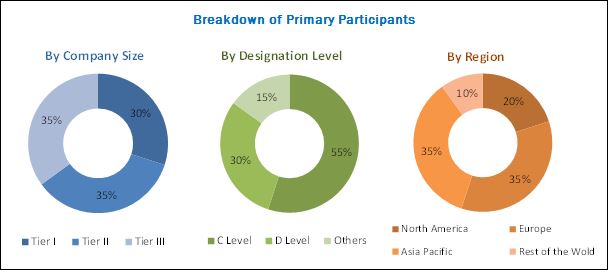
The research methodology used to estimate and forecast the electronic sensors market begins with obtaining data on key vendor revenues through secondary research, such as Consumer Technology Association, IEEE Journals & Magazines and newsletters as well as whitepapers. The vendor offerings have also been taken into consideration to determine the market segmentation. The bottom-up procedure has been employed to arrive at the overall size of the market by estimating the revenue of key players. After arriving at the overall market size, the total market has been split into several segments and subsegments, which have been verified through primary research by conducting extensive interviews with key personnel, such as CEOs, VPs, directors, and executives. The market breakdown and data triangulation procedures have been employed to complete the overall market engineering process and arrive at the exact statistics for all segments and subsegments. The breakdown of profiles of primaries has been depicted in the figure given below.
In-depth interviews of various primary respondents have been conducted which include key industry participants, subject matter experts (SMEs), C-level executives of key market players, and industry consultants among other experts to obtain and verify critical qualitative and quantitative information as well as to assess future prospects.
To know about the assumptions considered for the study, download the pdf brochure
The electronic sensors market for consumer industry ecosystem comprises sensor manufacturers and suppliers, OEMs, system integrators, sensors component providers, distributors, MEMS technology providers, CMOS technology providers, smartphone manufacturers, and wearable device suppliers. Companies involved in the manufacturing of electronic sensors include Sony Corporation (Japan), Samsung Electronics Co., Ltd.,(South Korea), STMicroelectronics N.V.(Switzerland) NXP Semiconductors N.V.(Acquired by Qualcomm), TE Connectivity Ltd., (Switzerland), Murata Manufacturing Co., Ltd.( Japan), Robert Bosch GmbH (Germany), Infineon Technologies AG (Germany), Synaptics Incorporated (US), Cypress Semiconductor Corporation (US), and Omron Corporation (Japan).
Target Audience:
- Sensor suppliers
- Sensor component suppliers
- OEM and ODM in consumer electronics industry
- MEMS and CMOS technology companies
- System integrators and service providers in the consumer electronics market
- Banks, financial institutions, investors, and venture capitalists
- Technology investors
- Governments and financial institutions
- Analysts and strategic business planners
Scope of the Report:
Electronic Sensors Market for Consumer Industry scope:
By Type:
- Pressure Sensor
- Temperature Sensor
- Motion Sensor
- Image Sensor
- Proximity Sensor
- Fingerprint Sensor
- Others
By Application:
- Entertainment
- Communication & IT
- Home Appliances
- Wearable Devices
By Geography:
- North America
- Europe
- Asia-Pacific
- Rest of the World
Available Customizations:
With the given market data, MarketsandMarkets offers customizations as per the company’s specific needs. The following customization options are available for the report:
Geographic Analysis
- Further breakdown of the electronic sensors market for consumer industry by region into the respective countries
Company Information
- Detailed analysis and profiling of additional market players (up to five)













Growth opportunities and latent adjacency in Electronic Sensors Market
I am a masters student currently specializing in strategy and innovation management. I am specifically interested to learn about niche strategies and commercialization techniques for the sensors' industry and analyze market trends, technology patterns etc. for the same. I request you to give me access to the report for research purposes.
I am looking for information specifically for the US electronic sensor market.
I am interested in the following - New Trends in Consumer Electronics & Mobile Hand set., New Trends in Sales, New Technology in Telecom & IT.