Collision Avoidance System Market by Device, Technology, Application (Automotive, Aerospace, Railway, Marine, and Construction & Mining), and Region (North America, Europe, Asia-Pacific, and RoW) - Global Trend & Forecast to 2035


The Collision Avoidance System Market Summary
The Collision Avoidance System Market is undergoing significant expansion as automotive manufacturers, commercial fleet operators, and transportation technology providers increasingly deploy advanced safety systems to reduce accidents and improve road safety. The global Collision Avoidance System Market is estimated at approximately USD 6–8 billion in 2025 and is projected to reach USD 16–20 billion by 2035, registering a CAGR of 9%–11% during the forecast period. Increasing vehicle electrification, stringent vehicle safety regulations, growing adoption of advanced driver assistance systems (ADAS), and improvements in radar, LiDAR, cameras, ultrasonic sensors, artificial intelligence (AI), and machine learning are major factors supporting market growth.
Collision avoidance systems combine multiple sensing and computing technologies to identify vehicles, pedestrians, cyclists, obstacles, and other road hazards and provide warnings or initiate automated interventions. Depending on the system architecture, collision avoidance can include forward collision warning, automatic emergency braking, blind-spot detection, lane departure warning, lane keeping assistance, rear cross-traffic alert, pedestrian detection, adaptive cruise control, and surround-view monitoring.
The transition toward software-defined vehicles is further expanding the role of collision avoidance technologies. Modern systems increasingly process large amounts of sensor data through centralized or domain-based computing platforms. AI algorithms can identify objects, predict potential collision trajectories, classify road users, and determine appropriate warning or intervention strategies.
The Collision Avoidance System Market is also benefiting from the growth of connected and autonomous vehicles. Vehicle-to-vehicle (V2V), vehicle-to-infrastructure (V2I), and vehicle-to-everything (V2X) communication can supplement onboard sensing by providing information about traffic conditions, hazards, road infrastructure, and nearby vehicles. Cloud connectivity and IoT platforms can further support fleet safety monitoring, predictive analytics, and software updates.
Passenger vehicles represent a major application area, while commercial trucks, buses, construction equipment, mining vehicles, and agricultural machinery offer additional growth opportunities. As governments and transportation authorities emphasize Vision Zero initiatives, road safety, and reduction of traffic fatalities, collision avoidance systems are becoming increasingly important components of modern vehicle architectures.
Key Market Trends & Insights
The Collision Avoidance System Market is being shaped by the rapid integration of multiple sensing technologies. Camera-based systems remain widely deployed because of their ability to recognize road markings, vehicles, pedestrians, traffic signs, and other visual objects. Radar complements cameras by providing reliable distance and velocity information under challenging lighting conditions.
AI-powered perception is one of the most important trends. Deep learning algorithms enable vehicles to classify objects and interpret complex driving environments more accurately. AI is increasingly being combined with sensor fusion, allowing information from cameras, radar, LiDAR, and ultrasonic sensors to be processed collectively.
North America is expected to remain a leading regional market, supported by advanced automotive technologies, strong ADAS penetration, commercial fleet safety initiatives, and regulatory attention toward vehicle safety. Asia Pacific is expected to be the fastest-growing region, supported by rising vehicle production, increasing disposable income, rapid urbanization, EV adoption, and expanding automotive technology manufacturing.
Another major trend is the increasing integration of collision avoidance with automated emergency braking. Rather than simply alerting drivers, modern systems can automatically apply brakes when a collision becomes imminent. Future systems are expected to combine braking, steering, acceleration, and vehicle stability functions to enable more comprehensive collision mitigation.
Commercial fleet operators are also increasingly using collision avoidance technologies to reduce accident-related costs, insurance claims, vehicle downtime, and driver safety risks. AI-enabled telematics platforms can analyze driving behavior and identify recurring collision risks.
Market Size & Forecast
- Market size in 2025: USD 6–8 billion
- Forecast market size by 2035: USD 16–20 billion
- CAGR (2025–2035): 9%–11%
- Key growth factors: Increasing ADAS adoption, vehicle safety regulations, AI-powered perception, sensor fusion, vehicle electrification, autonomous driving, and connected vehicle technologies.
- Technology outlook: Camera, radar, LiDAR, ultrasonic sensors, AI, machine learning, V2X connectivity, edge computing, and centralized vehicle computing will shape future growth.
Collision Avoidance System Market Market Top 10 key takeaway
- The Collision Avoidance System Market is estimated at USD 6–8 billion in 2025.
- The market is projected to reach USD 16–20 billion by 2035.
- The market is expected to expand at a CAGR of 9%–11% from 2025 to 2035.
- Forward collision warning and automatic emergency braking are key system categories.
- Camera and radar technologies remain fundamental to collision detection.
- AI and machine learning are improving object recognition and driving-environment perception.
- North America is expected to remain a leading regional market.
- Asia Pacific is projected to record the fastest growth.
- Commercial fleets are increasingly adopting collision avoidance technologies to improve safety.
- Autonomous and connected vehicles will create new long-term opportunities for collision avoidance system suppliers.
Product Insights
The product landscape of the Collision Avoidance System Market includes forward collision warning systems, automatic emergency braking systems, adaptive cruise control, blind-spot detection, lane departure warning systems, lane keeping assistance, rear cross-traffic alert systems, pedestrian detection systems, parking collision avoidance systems, and integrated ADAS platforms.
Forward collision warning and automatic emergency braking represent leading product categories because they directly address front-impact risks, which are among the most important safety concerns in road transportation. These systems use cameras, radar, or combinations of sensors to determine the relative position and movement of objects ahead of a vehicle.
Automatic emergency braking is gaining particularly strong attention because it can intervene when the driver does not respond to an imminent collision. The technology is increasingly being integrated into mainstream passenger vehicles rather than remaining limited to premium models.
Blind-spot detection and lane-based collision avoidance systems are also expanding. These technologies use cameras, radar, and other sensors to monitor areas that may not be visible to the driver. Increasing traffic density and the growing number of vehicles operating in urban environments are supporting adoption.
Pedestrian and cyclist detection is another important area of innovation. AI-based computer vision can identify vulnerable road users and estimate their movement trajectories. Combining these capabilities with automatic braking can improve safety in urban environments.
Integrated ADAS platforms represent an emerging product direction. Instead of treating each collision avoidance function as a separate system, manufacturers are increasingly integrating multiple functions through centralized computing architectures. This approach can reduce hardware duplication and enable coordinated decision-making.
For commercial vehicles, collision avoidance products are increasingly being integrated with telematics and fleet-management systems. Fleet operators can monitor safety events, identify risky driving behavior, and use data to improve driver training.
Technology / Component Insights
The technology foundation of the Collision Avoidance System Market includes cameras, radar sensors, LiDAR, ultrasonic sensors, electronic control units, processors, communication modules, actuators, and software algorithms.
Camera-based perception is widely used because cameras provide rich visual information and can support object recognition, lane detection, traffic sign recognition, and pedestrian identification. However, camera performance can be affected by darkness, glare, fog, rain, and other environmental conditions.
Radar technology provides accurate distance and velocity measurements and performs relatively well under adverse weather and lighting conditions. Radar is therefore commonly combined with camera systems in sensor-fusion architectures.
LiDAR is gaining importance in advanced autonomous driving applications because it can generate detailed three-dimensional representations of the surrounding environment. Although cost and packaging considerations have historically limited broad deployment, technological improvements are supporting greater adoption in higher-level automated driving platforms.
Ultrasonic sensors continue to support low-speed applications, particularly parking assistance, obstacle detection, and short-range collision avoidance. These sensors provide a cost-effective method for detecting nearby objects.
AI is transforming the software layer of collision avoidance. Deep learning models can process complex sensor information and recognize vehicles, pedestrians, cyclists, road boundaries, and other objects. AI-based prediction models can estimate how detected road users may move and determine the probability of a collision.
Edge computing is increasingly important because collision avoidance requires extremely low latency. Processing sensor data locally within the vehicle allows safety decisions to be made without depending on cloud connectivity.
IoT and cloud platforms provide complementary capabilities. Connected vehicles can transmit collision events, sensor information, and vehicle diagnostics to fleet-management platforms. Over-the-air software updates can improve algorithms and introduce new safety features throughout the vehicle lifecycle.
Future innovation will focus on multimodal sensor fusion, AI-powered predictive perception, centralized vehicle computing, V2X communication, high-performance automotive processors, and increasingly sophisticated safety software.
Application Insights
Passenger vehicles represent the leading application segment of the Collision Avoidance System Market. Consumers are increasingly considering safety technology when purchasing vehicles, while automakers are integrating ADAS features across more vehicle categories.
Regulatory requirements are an important growth driver. Governments and safety organizations are encouraging or requiring technologies such as automatic emergency braking, lane departure warning, blind-spot monitoring, and pedestrian detection. Such requirements create a more consistent baseline for collision avoidance adoption.
Electric vehicles are also supporting demand. EV manufacturers frequently use advanced electronics and centralized computing architectures that can accommodate sophisticated ADAS functions. As EV platforms become increasingly software-driven, collision avoidance systems can be integrated more closely with other vehicle-control systems.
Commercial vehicles offer substantial opportunities because collisions involving trucks and buses can result in significant economic and safety consequences. Fleet operators are increasingly deploying collision avoidance technologies to improve driver safety and lower operating costs.
Off-highway applications are another emerging area. Mining trucks, construction machinery, agricultural equipment, and material-handling vehicles increasingly incorporate cameras, radar, proximity detection, and automated braking to reduce collisions in complex operating environments.
Future opportunities will emerge from autonomous vehicles and intelligent transportation systems. Autonomous driving platforms require advanced collision avoidance capabilities capable of continuous environmental perception and real-time decision-making.
Regional Insights
North America is expected to remain a leading region in the Collision Avoidance System Market, supported by high ADAS penetration, established automotive manufacturers, strong technology companies, commercial fleet adoption, and regulatory emphasis on road safety. The United States is expected to account for a significant portion of regional demand.
Europe remains a technologically advanced market because of its strong automotive industry, vehicle safety regulations, and emphasis on advanced driver assistance and automated driving. Germany, France, the UK, and other European markets continue to invest in vehicle safety technologies.
Asia Pacific is projected to record the fastest growth. China has emerged as a major automotive and EV market, while Japan and South Korea possess strong automotive electronics ecosystems. India is also becoming increasingly important because of rising vehicle production, urbanization, and growing consumer demand for advanced safety technologies.
- North America: Strong ADAS adoption, fleet safety programs, and automotive technology investment support market development.
- Europe: Safety regulations and advanced automotive engineering drive demand.
- Asia Pacific: Vehicle production, EV adoption, and urbanization make the region a major growth engine.
- China: Intelligent vehicle development and domestic automotive technology support rapid adoption.
- India: Rising vehicle ownership and increasing focus on vehicle safety create new opportunities.
Country-Specific Market Trends
China is expected to be one of the fastest-growing national markets, with an estimated CAGR of 11%–13% through 2035. The country's large automotive production base, strong EV market, intelligent vehicle development, and growing deployment of ADAS technologies are supporting adoption.
Japan is expected to grow at approximately 7%–9% CAGR, supported by advanced automotive electronics, established vehicle manufacturers, and a strong focus on road safety and driver assistance.
In North America, the United States is projected to grow at approximately 9%–11% CAGR, supported by ADAS penetration, vehicle safety initiatives, connected vehicles, and commercial fleet technology. Canada could register approximately 8%–10% CAGR, while Mexico could achieve approximately 9%–11% CAGR because of its expanding automotive manufacturing ecosystem.
In Europe, Germany is expected to grow at approximately 8%–10% CAGR, supported by premium vehicle production, ADAS development, and automotive software investment. France could register approximately 7%–9% CAGR, supported by EV adoption, connected mobility, and vehicle safety technologies.
- China: EVs and intelligent vehicles accelerate collision avoidance adoption.
- Japan: Advanced automotive electronics support sophisticated safety systems.
- United States: Regulatory attention and ADAS penetration support strong growth.
- Germany: Premium vehicles and automotive engineering strengthen demand.
- France: Connected vehicles and electrification support continued technology adoption.
Key Collision Avoidance System Market Company Insights
The competitive landscape of the Collision Avoidance System Market includes automotive Tier 1 suppliers, ADAS specialists, semiconductor companies, sensor manufacturers, and autonomous driving technology providers. Major companies include Robert Bosch GmbH, Continental AG, ZF Friedrichshafen AG, DENSO Corporation, Aptiv PLC, Valeo, Magna International Inc., Mobileye Global Inc., Autoliv Inc., and Hyundai Mobis.
Bosch and Continental have extensive ADAS portfolios covering radar, cameras, electronic control units, braking systems, and software. ZF focuses on integrated vehicle-control technologies, while DENSO develops advanced sensing and electronic systems for automotive applications.
Aptiv is emphasizing software-defined vehicle architectures and advanced computing platforms. Valeo has a strong position in camera, LiDAR, radar, and parking technologies. Magna is developing integrated ADAS and automated driving solutions.
Mobileye is particularly focused on computer vision, driver assistance, autonomous driving, and AI-based perception. Autoliv combines active safety technologies with its broader vehicle safety portfolio.
Competitive strategies are increasingly centered on sensor fusion, AI, centralized computing, software development, high-performance processors, and scalable ADAS platforms. Partnerships between automakers, semiconductor companies, sensor manufacturers, and software providers are expected to remain important.
- Bosch: Focuses on integrated ADAS, radar, cameras, braking, and vehicle-control systems.
- Continental: Develops sensor fusion, ADAS software, and automated driving platforms.
- ZF: Emphasizes integrated safety and vehicle-control technologies.
- Mobileye: Focuses on AI-powered perception and automated driving.
- Valeo and Aptiv: Invest in sensors, software, computing platforms, and advanced mobility technologies.
Recent Developments
A major development in the Collision Avoidance System Market is the increasing integration of AI-powered perception with camera and radar sensor fusion. These systems can identify multiple road users and analyze their trajectories to provide earlier and more accurate collision warnings.
Automotive suppliers are also developing increasingly centralized ADAS computing architectures. These platforms combine several safety functions into a common processing environment, enabling better coordination between collision warning, emergency braking, lane assistance, adaptive cruise control, and automated driving features.
Another important development is the expansion of collision avoidance technology into commercial fleets and off-highway equipment. Connected fleet platforms increasingly combine ADAS event data with telematics, driver monitoring, predictive analytics, and cloud-based safety management.
Market Segmentation
The Collision Avoidance System Market can be segmented by Product, Technology/Component, Application, and Region. By Product, the market includes forward collision warning, automatic emergency braking, blind-spot detection, lane departure warning, lane keeping assistance, adaptive cruise control, pedestrian detection, rear cross-traffic alert, and parking collision avoidance systems. By Technology/Component, the market includes cameras, radar, LiDAR, ultrasonic sensors, electronic control units, processors, software, actuators, and connectivity technologies. By Application, the market covers passenger vehicles, commercial vehicles, off-highway vehicles, and other specialized platforms. By Region, the market includes North America, Europe, Asia Pacific, and Rest of the World.
- By Product: Automatic emergency braking and forward collision warning represent major product categories.
- By Technology: Camera and radar remain core technologies, while LiDAR gains importance in advanced automation.
- By Application: Passenger vehicles lead, while commercial and off-highway applications provide new opportunities.
- By Architecture: Standalone systems are increasingly shifting toward integrated and centralized ADAS platforms.
- By Region: North America leads, while Asia Pacific is expected to deliver the fastest growth.
Conclusion
The Collision Avoidance System Market is positioned for sustained expansion as vehicle safety evolves from passive protection toward intelligent, predictive, and increasingly automated collision prevention. The market is estimated at USD 6–8 billion in 2025 and is projected to reach USD 16–20 billion by 2035, representing a CAGR of 9%–11% during the forecast period.
AI will remain one of the most influential technologies in the next phase of market development. AI-powered perception can improve object classification, trajectory prediction, driver monitoring, and decision-making. The combination of AI with radar, cameras, LiDAR, and ultrasonic sensors will enable vehicles to build increasingly accurate representations of their surroundings.
IoT and connected vehicle technologies will further expand the value proposition of collision avoidance systems. Safety events can be analyzed through cloud platforms, enabling fleet managers and manufacturers to identify risk patterns and improve system performance. Over-the-air updates can also allow manufacturers to enhance safety algorithms after vehicle deployment.
Automation represents another significant opportunity. As vehicles progress toward higher levels of driving automation, collision avoidance systems will evolve from driver-alert technologies into integrated vehicle-control systems capable of coordinating braking, steering, acceleration, and other functions.
The strategic importance of collision avoidance extends beyond passenger vehicles. Commercial fleets, public transportation, construction equipment, mining machinery, and agricultural vehicles increasingly require intelligent safety technologies to reduce accidents and operating risks.
By 2035, companies that successfully combine AI, IoT, sensor fusion, edge computing, advanced radar and LiDAR, connected vehicle technologies, and automated control will be positioned to capture opportunities in the rapidly evolving Collision Avoidance System Market.
FAQs
1. What is the market size of the Collision Avoidance System Market?
The Collision Avoidance System Market is estimated at USD 6–8 billion in 2025 and is projected to reach USD 16–20 billion by 2035.
2. What is the growth rate of the Collision Avoidance System Market?
The market is expected to register a CAGR of 9%–11% from 2025 to 2035, driven by ADAS adoption, vehicle safety regulations, AI, sensor fusion, connected vehicles, and automated driving.
3. What are the key drivers of the Collision Avoidance System Market?
Major drivers include increasing ADAS penetration, automatic emergency braking adoption, stringent vehicle safety requirements, AI-powered perception, radar and camera deployment, vehicle electrification, autonomous driving, and connected vehicle technologies.
4. Which region is expected to lead the Collision Avoidance System Market?
North America is expected to remain a leading region because of advanced automotive technology adoption, strong ADAS penetration, fleet safety initiatives, and established automotive technology ecosystems. Asia Pacific is expected to be the fastest-growing region.
5. Who are the key companies in the Collision Avoidance System Market?
Major companies include Robert Bosch GmbH, Continental AG, ZF Friedrichshafen AG, DENSO Corporation, Aptiv PLC, Valeo, Magna International Inc., Mobileye Global Inc., Autoliv Inc., and Hyundai Mobis. These companies are investing in AI, sensor fusion, radar, LiDAR, cameras, centralized computing, and integrated ADAS platforms.
To speak to our analyst for a discussion on the above findings, click Speak to Analyst
 Exclusive indicates content/data unique to MarketsandMarkets and not available with any competitors.
Table of Contents
1 Introduction (Page No. - 16)
1.1 Objectives of the Study
1.2 Market Definition
1.3 Study Scope
1.3.1 Markets Covered
1.3.2 Regional Scope
1.3.3 Years Considered for the Study
1.4 Currency
1.5 Stakeholders
2 Research Methodology (Page No. - 23)
2.1 Research Data
2.1.1 Secondary Data
2.1.1.1 Key Data From Secondary Sources
2.1.2 Primary Data
2.1.2.1 Key Data From Primary Sources
2.1.2.2 Key Industry Insights
2.1.2.3 Breakdown of Primaries
2.2 Market Size Estimation
2.2.1 Bottom-Up Approach
2.2.2 Top-Down Approach
2.3 Market Breakdown and Data Triangulation
2.4 Research Assumptions and Limitations
2.4.1 Assumptions
2.4.2 Limitations
3 Executive Summary (Page No. - 32)
4 Premium Insights (Page No. - 36)
4.1 Opportunities in the Market
4.2 Market, By Region
4.3 Market, By Region and Application
4.4 Colision Avoidance System Market, By Region
4.5 Automotive Collision Avoidance System Market, By Vehicle Type (2015 and 2020)
5 Market Overview (Page No. - 41)
5.1 Introduction
5.2 Market Segmentation
5.2.1 By Region
5.3 Market Dynamics
5.3.1 Drivers
5.3.1.1 New Car Assessment Programs (Ncaps) & Regulations Drive Automotive Market
5.3.1.2 Growing Focus of Consumers & Oems on Vehicle Safety
5.3.1.3 Insurance Companies Focusing on Reducing Costs for Vehicles With Collision Avoidance System
5.3.2 Restraints
5.3.2.1 Cyclic Nature of Automotive Sales & Production
5.3.3 Opportunities
5.3.3.1 Growing Automotive Safety Norms in Developing Countries
5.3.3.2 Growing Trend of Installing Advanced Driver Assistance System in Passenger Cars
5.3.4 Challenges
5.3.4.1 Passing the Increased Price of Collision Avoidance Systems Technology to Consumers, Especially in Middle- & Low-Income Countries
5.3.4.2 Train Collision Avoidance System Faces Challenges of Interoperability
6 Industry Trends (Page No. - 54)
6.1 Introduction
6.2 Value Chain Analysis
6.3 Porter’s Five Forces Model
6.4 Intensity of Competitive Rivalry
6.5 Bargaining Power of Suppliers
6.6 Bargaining Power of Buyers
6.7 Threat of New Entrants
6.8 Threat of Substitutes
6.9 Industry Lifecycle
7 Automotive Collision Avoidance System Market (Page No. - 63)
7.1 Introduction
7.2 Device
7.2.1 Adaptive Cruise Control (ACC)
7.2.2 Blind Spot Detection (BSD)
7.2.3 Lane Departure Warning (LDW)
7.2.4 Night Vision (NV)
7.2.5 Autonomous Emergency Braking (AEB)
7.2.6 Electronic Stability Control (ESC)
7.2.7 Tire Pressure Monitoring System (TPMS)
7.2.8 Driver Monitoring System (DMS)
7.3 Technology
7.3.1 Radar
7.3.2 Lidar:
7.3.3 Camera:
7.3.4 Ultrasonic:
7.4 Region
8 Airborne Collision Avoidance System Market (Page No. - 78)
8.1 Introduction
8.2 Device
8.2.1 Computer Unit
8.2.2 Mode S Transponder
8.2.3 Ads-B
8.2.4 Cockpit Presentation
8.2.5 Others
8.3 Technology
8.4 Region
9 Rail Collision Avoidance System Market (Page No. - 84)
9.1 Introduction
9.2 Device
9.2.1 On-Board Or Locomotive System
9.2.2 Wayside Interface Unit
9.2.3 Back Office Server System
9.3 Technology
9.4 Region
10 Marine Collision Avoidance System Market (Page No. - 93)
10.1 Introduction
10.2 Device
10.2.1 Automatic Identification Systems (AIS)
10.2.2 Electronic Chart Display and Information System (ECDIS)
10.3 Technology
10.4 Region
11 Construction & Mining Collision Avoidance System Market (Page No. - 99)
11.1 Introduction
11.2 Device
11.2.1 Tags
11.2.2 Antennas
11.2.3 Camera
11.3 Technology
11.3.1 Global Positioning System (GPS)
11.3.2 Radio Frequency Identification (RFID)
11.3.3 Ultrasonic
11.4 Region
12 Collision Avoidance System Market, By Region (Page No. - 107)
12.1 Introduction
12.2 North America
12.2.1 U.S.
12.2.2 Rest of North America
12.3 Europe
12.3.1 U.K.
12.3.2 Germany
12.3.3 France
12.4 Asia-Pacific
12.4.1 China
12.4.2 Japan
12.4.3 India
12.5 Rest of the World
12.5.1 Middle East & Africa
12.5.2 South America
13 Competitive Landscape (Page No. - 119)
13.1 Overview
13.2 Market Share Analysis of Collision Avoidance System Market
13.3 Competitive Situation and Trends
13.3.1 New Product Launches
13.3.2 Mergers and Acquisitions
13.3.3 Agreements, Collaborations, Contracts, and Partnerships
13.3.4 Expansions
14 Company Profiles (Page No. - 127)
(Overview, Products and Services, Financials, Strategy & Development)*
14.1 Overview
14.2 Robert Bosch GmbH
14.3 Denso Corporation
14.4 Delphi Automotive PLC
14.5 Autoliv, Inc.
14.6 General Electric Company
14.7 Rockwell Collins, Inc.
14.8 Honeywell International, Inc.
14.9 Alstom SA
14.10 Siemens AG
14.11 Mobileye N.V.
14.12 Aviation Communication & Surveillance Systems, Llc
14.13 SAAB AB
14.14 Becker Mining Systems AG
14.15 Hexagon AB
14.16 Wabtec Corporation
*Details on Overview, Products and Services, Financials, Strategy & Development Might Not Be Captured in Case of Unlisted Companies.
15 Appendix (Page No. - 171)
15.1 Insights of Industry Experts
15.2 Discussion Guide
15.3 Introducing RT: Real-Time Market Intelligence
15.4 Available Customizations
15.5 Related Reports
List of Tables (79 Tables)
Table 1 Collision Avoidance System Market, By Application, 2013–2020 (USD Million)
Table 2 Impact Analysis of Drivers
Table 3 Impact Analysis of Restraint
Table 4 Upcoming Safety Legislations in the Next Five Years
Table 5 Impact Analysis of Opportunity
Table 6 Impact Analysis of Challenge
Table 7 Market Size, By Vehicle Type, 2013–2020 (USD Billion)
Table 8 Market Size, By Vehicle Type, 2013–2020 (‘000 Units)
Table 9 Passenger Car Market Size, By Device, 2013–2020 (USD Billion)
Table 10 Passenger Car Market Size, By Device, 2013–2020 (‘000 Units)
Table 11 Commercial Vehicles Market Size, By Device, 2013–2020 (USD Billion)
Table 12 Commercial Vehicles Market Size, By Device, 2013–2020 (‘000 Units)
Table 13 Automotive Collision Avoidance System Market Size, By Device, 2013–2020 (USD Billion)
Table 14 Automotive Market Size, By Device, 2013–2020 (‘000 Units)
Table 15 Automotive Collision Avoidance System, By Technology, 2013–2020 (USD Billion)
Table 16 Passenger Car Market Size, By Region, 2013–2020 (USD Billion)
Table 17 Passenger Car Market Size, By Region, 2013–2020 (‘000 Units)
Table 18 Commercial Vehicle Market Size, By Region, 2013–2020 (USD Billion)
Table 19 Commercial Vehicle Market Size, By Region, 2013–2020 (‘000 Units)
Table 20 Automotive Market Size, By Region, 2013–2020 (USD Billion)
Table 21 Automotive Market Size, By Region, 2013–2020 (‘000 Units)
Table 22 North America: Automotive Collision Avoidance System Market Size, By Country, 2013–2020 (USD Billion)
Table 23 North America: Automotive Market Size, By Country, 2013–2020 (‘000 Units)
Table 24 Europe: Market Size, By Country, 2013–2020 (USD Billion)
Table 25 Europe: Market Size, By Country, 2013–2020 (‘000 Units)
Table 26 Asia-Pacific: Market Size, By Country, 2013–2020 (USD Million)
Table 27 Asia-Pacific: Market Size, By Country, 2013–2020 (‘000 Units)
Table 28 RoW: Market Size, By Region, 2013–2020 (USD Million)
Table 29 RoW: Market Size, By Region, 2013–2020 (‘000 Units)
Table 30 Airborne Collision Avoidance System Market, By Device, 2013—2020 (USD Million)
Table 31 Airborne Market, By Technology, 2013—2020 (USD Million)
Table 32 Airborne Market, By Region, 2013—2020 (USD Million)
Table 33 North America: Airborne Market, By Country, 2013—2020 (USD Million)
Table 34 Europe: Airborne Market, By Country, 2013—2020 (USD Million)
Table 35 Asia-Pacific: Airborne Market, By Country, 2013—2020 (USD Million)
Table 36 RoW: Airborne Market, By Region, 2013—2020 (USD Million)
Table 37 Rail Collision Avoidance System Market, By Device, 2013—2020 (USD Million)
Table 38 Rail Market, By Device, 2013—2020 (Units)
Table 39 Rail Market, By Technology, 2013—2020 (USD Million)
Table 40 Rail Market, By Region, 2013—2020 (USD Million)
Table 41 Wayside Interface Units Market, By Region, 2013—2020 (USD Million)
Table 42 Wayside Interface Units Market, By Region, 2013—2020 (Units)
Table 43 Locomotive On-Board System Market, By Region, 2013—2020 (USD Million)
Table 44 Locomotive On-Board System Market, By Region, 2013—2020 (Units)
Table 45 Back Office Server System Market, By Region, 2013—2020 (USD Million)
Table 46 Back Office Server System Market, By Region, 2013—2020 (Units)
Table 47 North America: Rail Collision Avoidance System Market, By Country, 2013—2020 (USD Million)
Table 48 Europe: Rail Market, By Country, 2013—2020 (USD Million)
Table 49 Asia-Pacific: Rail Market, By Country, 2013—2020 (USD Million)
Table 50 RoW: Rail Market, By Region, 2013—2020 (USD Million)
Table 51 Marine Market, By Device, 2013—2020 (USD Million)
Table 52 Marine Market, By Device, 2013—2020 (Units)
Table 53 Marine Market, By Technology, 2013—2020 (USD Million)
Table 54 Marine Market, By Region, 2013—2020 (USD Million)
Table 55 North America: Marine Market, By Country, 2013—2020 (USD Million)
Table 56 Europe: Marine Market, By Country, 2013—2020 (USD Million)
Table 57 Asia-Pacific: Marine Market, By Country, 2013—2020 (USD Million)
Table 58 RoW: Marine Market, By Region, 2013—2020 (USD Million)
Table 59 Collision Avoidance System in Construction & Mining Market Size, By Device, 2013–2020 (USD Million)
Table 60 Construction & Mining Market, By Technology, 2013–2020 (USD Million)
Table 61 Construction & Mining Market Size, By Region, 2013–2020 (USD Million)
Table 62 Mining Collision Avoidance System Market Size, By Region, 2013–2020 ( Units)
Table 63 North America Mining Market Size, By Region, 2013–2020 (USD Million)
Table 64 Europe Mining Market Size, By Region, 2013–2020 (USD Million)
Table 65 Asia Pacific Mining Market Size, By Region, 2013–2020 (USD Million)
Table 66 RoW Construction & Mining Market Size, By Region, 2013–2020 (USD Million)
Table 67 Market, By Region, 2013–2020 (USD Billion)
Table 68 North America: Collision Avoidance System Market, By Application, 2013–2020 (USD Million)
Table 69 North America: Market, By Country, 2013–2020 (USD Billion)
Table 70 Europe: Market, By Application, 2013–2020 (USD Million)
Table 71 Europe: Market, By Country, 2013–2020 (USD Billion)
Table 72 Asia-Pacific: Market, By Application, 2013–2020 (USD Million)
Table 73 Asia-Pacific: Market, By Country, 2013–2020 (USD Billion)
Table 74 RoW: Market, By Application, 2013–2020 (USD Million)
Table 75 RoW: Market, By Region, 2013–2020 (USD Million)
Table 76 New Product Launches, 2013–2015
Table 77 Mergers and Acquisitions, 2013–2015
Table 78 Agreements, Collaborations, Contracts, and Partnerships, 2014–2015
Table 79 Expansions, 2014–2015
List of Figures (72 Figures)
Figure 1 Collision Avoidance System: Markets Covered
Figure 2 Market, By Region
Figure 3 Years Considered for the Study of the Market
Figure 4 Research Design
Figure 5 Market Size Estimation Methodology: Bottom-Up Approach
Figure 6 Market Size Estimation Methodology: Top-Down Approach
Figure 7 Market Breakdown and Data Triangulation
Figure 8 Assumptions of the Research Study
Figure 9 Limitations of the Research Study
Figure 10 Automotive Collision Avoidance System Market Snapshot (2014 vs 2020): Commercial Vehicles Segment to Witness Rapid Growth During the Forecast Period
Figure 11 Automotive Market Snapshot (2014 vs 2020): Cameras to Witness Rapid Growth During the Forecast Period
Figure 12 Europe Accounted for the Largest Market for Collision Avoidance Systems in 2014
Figure 13 Attractive Opportunities for the Growth of the Market (2015–2020)
Figure 14 Europe and North America are Expected to Hold A Large Share During the Forecast Period
Figure 15 Automotive Sector Held the Largest Share of the Market in 2014
Figure 16 Asia-Pacific, North America, and RoW Expected to Be Potential Markets for Collision Avoidance Systems During the Forecast Period, 2015-2020
Figure 17 Passenger Cars Segment is Expected to Account for the Largest Share in 2020
Figure 18 Market Segmentation
Figure 19 Market, By Geography
Figure 20 Drivers, Restraints, Opportunities, and Challenges for the Collision Avoidance Systems Market
Figure 21 Road Traffic Death Rates, By Country Income Status, 2010 (Per 100,000 Population)
Figure 22 Road Traffic Deaths, By Region, 2010 (Per 100,000 Population)
Figure 23 Collision Avoidance System Market: Value Chain Analysis
Figure 24 Collision Avoidance System: Porter's Five Forces Analysis
Figure 25 Porter’s Five Forces Analysis for the Market
Figure 26 Market: Intensity of Competitive Rivalry
Figure 27 Market: Bargaining Power of Suppliers
Figure 28 Market: Bargaining Power of Buyers
Figure 29 Market: Threat of New Entrants
Figure 30 Market: Threat of Substitutes
Figure 31 Automotive and Construction & Mining Sectors is in the Growth Stage of the Industry Life Cycle
Figure 32 Passenger Car has the Largest Share of the Collision Avoidance Systems Market, in 2015
Figure 33 Regional Snapshot: Rapid Growing Markets (North America and RoW) Emerging as New Hotspots
Figure 34 Airborne Collision Avoidance System Market
Figure 35 Rail Collision Avoidance System
Figure 36 Marine Collision Avoidance System
Figure 37 ECDIS Implementation Schedule: 2012–2018
Figure 38 Antenna Market in Construction & Mining Collision Avoidance Systems has the Largest Market Share in 2015
Figure 39 Regional Snapshot: Rapid Growing Markets (Asia-Pacific) Emerging as New Hotspots
Figure 40 Market is Expected to Grow Higher in the Emerging Markets Between 2015 and 2020
Figure 41 Market in the Construction & Mining Sector is Expected to Grow Exponentially During the Forecast Period
Figure 42 North America: Collision Avoidance System Market, 2013-2020
Figure 43 Europe: Market, 2013–2020
Figure 44 Asia-Pacific: Market, 2013–2020
Figure 45 Top 5 Companies Adopted New Product Launches and Partnership/ Agreement as the Key Growth Strategy Over the Last Three Years
Figure 46 Market Share Analysis, 2014
Figure 47 Market Evolution Framework: New Product Launches, Partnerships Have Fuelled Growth in the Market
Figure 48 Battle for Market Share: New Product Launches has Emerged as the Key Strategy
Figure 49 Geographic Revenue Mix of Top Market Players
Figure 50 Robert Bosch GmbH: Company Snapshot
Figure 51 Robert Bosch GmbH: SWOT Analysis
Figure 52 Denso Corporation: Company Snapshot
Figure 53 Denso Corporation: SWOT Analysis
Figure 54 Delphi: Company Snapshot
Figure 55 Delphi Automotive PLC: SWOT Analysis
Figure 56 Autoliv, Inc.: Company Snapshot
Figure 57 Autoliv, Inc: SWOT Analysis
Figure 58 General Electric Company: Company Snapshot
Figure 59 General Electric Company: SWOT Analysis
Figure 60 Rockwell Collins, Inc.: Company Snapshot
Figure 61 Rockwell Collins, Inc.: SWOT Analysis
Figure 62 Honeywell International, Inc.: Company Snapshot
Figure 63 Honeywell International, Inc.: SWOT Analysis
Figure 64 Alstom SA: Company Snapshot
Figure 65 Alstom SA: SWOT Analysis
Figure 66 Siemens AG: Company Snapshot
Figure 67 Siemens AG: SWOT Analysis
Figure 68 Mobileye N.V.: Company Snapshot
Figure 69 Mobileye N.V.: SWOT Analysis
Figure 70 SAAB AB: Company Snapshot
Figure 71 Hexagon AB: Company Snapshot
Figure 72 Wabtec Corporation: Company Snapshot
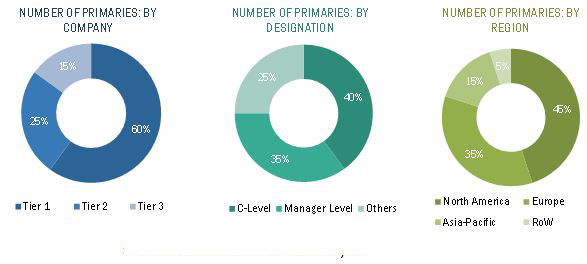
The research methodology used to estimate and forecast the market begins with capturing data on key vendor revenues through the secondary research. The vendor offerings are also taken into consideration to determine the market segmentation. The bottom-up procedure was employed to arrive at the overall market size of the global collision avoidance system market from the revenue of the key players in the market. After arriving at the overall market size, the total market was split into several segments and sub-segments which were then verified through the primary research by conducting extensive interviews with people holding key positions such as CEOs, VPs, directors and executives. Market breakdown and data triangulation procedures were employed to complete the overall market engineering process and arrive at the exact statistics for all segments and sub-segments. The breakdown of primaries is depicted in the below figure:
To know about the assumptions considered for the study, download the pdf brochure
The collision avoidance systems ecosystem comprises collision avoidance system vendors, such as Robert Bosch GmbH (Germany), Delphi Automotive Plc. (U.K.), Autoliv, Inc. (Sweden), Denso Corporation (Japan), Mobileye N.V. (Israel), Becker Mining Systems AG (Germany), Hexagon AB (Sweden), Wabtec Corporation (U.S.), Rockwell Collins, Inc. (U.S.), Aviation Communication & Surveillance Systems, LLC (U.S.), Honeywell International, Inc. (U.S.), Saab AB (Sweden), General Electric Company (U.S.), Alstom SA (France), and Siemens AG (Germany), and others.
Target Audience of the Report:
The intended audience for this report includes:
- Collision avoidance system products and solutions providers
- Collision avoidance system related service providers
- Research organizations and consulting companies
- Vehicle safety related associations, organizations, forums, and alliances
- Government and corporate offices
- Venture capitalists, private equity firms, and startup companies
- Distributors and traders
- Forums, alliances, and associations
- End users who want to know more about the collision avoidance technology and latest technological developments in the market
Scope of the Report
The research report segments the collision avoidance system market into following submarkets:
By Application:
- Automotive
- Aerospace
- Railway
- Marine
- Construction & mining
Automotive Collision Avoidance System Market
- By Device
- By Technology
- By Geography
Airborne Collision Avoidance System Market:
- By Device
- By Technology
- By Geography
Train Collision Avoidance System Market
- By Device
- By Technology
- By Geography
Marine Collision Avoidance System Market
- By Device
- By Technology
-
By Geography
- By Device
- By Technology
- By Geography
Available customizations:
With the given market data, MarketsandMarkets offers customizations as per the company’s specific needs. The following customization options are available for the report:
Market Analysis
- Further breakdown of the collision avoidance system applications market, by geography
Company Information
- Detailed analysis and profiling of additional market players (up to five)













Growth opportunities and latent adjacency in Collision Avoidance System Market
Automotive collision repair, Collision repair technology and design, Collision and Insurance Education. Does the scope of your research include the above things?
Several interests. Railway in all global regions. Also interested in other applications (auto, aerospace, marine, etc.). Have you considered them in your research? Also are there any smart devices that you have considered in the scope?