Compressor Control System Market by Component (Controlling: (PLC and SCADA) & Networking), Application (Oil & Gas, Refining, Petrochemical, Power Generation, Metals & Mining, Water & Wastewater and Fertilizer), and Geography - Global Growth Driver and Industry Forecast to 2035


Compressor Control System Market Summary
The global Compressor Control System Market is undergoing steady expansion as industrial operators prioritize energy efficiency, process stability, predictive maintenance, and automation across compressor-intensive operations. Based on a synthesis of current industry estimates, the market is assessed at approximately USD 5-8 billion in 2025 and is projected to reach approximately USD 10-13 billion by 2035, advancing at an estimated 5%-7% CAGR over the forecast period. Published market studies currently place the 2025 market in a broad range, with estimates of approximately USD 3.2 billion to USD 7.6 billion depending on market scope and the inclusion of compressor-control hardware, software, and integrated systems.
The market is being driven by the increasing use of automated compressor control systems in oil and gas, petrochemicals, power generation, manufacturing, chemicals, metals and mining, food and beverage, water and wastewater, and other process industries. Compressor control systems regulate parameters such as pressure, temperature, flow, speed, and load while coordinating compressors to maintain stable output. Rising electricity costs are making optimization particularly important because compressed-air and gas systems can represent a significant operating expense in industrial facilities. As a result, companies are increasingly replacing basic control architectures with intelligent systems incorporating programmable logic controllers, sensors, variable-frequency drives, supervisory software, remote monitoring, and analytics.
Digital transformation is further changing the competitive landscape. IoT-enabled sensors and Industrial Internet of Things connectivity allow operators to monitor compressor performance continuously, while cloud platforms enable centralized supervision across multiple plants. AI and machine learning are being introduced for predictive maintenance, anomaly detection, energy optimization, and failure forecasting. Automation therefore represents not only a productivity improvement but also a mechanism for reducing unplanned downtime, extending equipment life, and improving energy performance. These trends are positioning compressor control systems as an important component of modern industrial automation and Industry 4.0 strategies.
Key Market Trends & Insights
Energy efficiency is the primary market driver. Industrial customers are increasingly focused on reducing energy consumption and operating costs. Intelligent sequencing, pressure optimization, variable-speed control, and automated load management can help compressors operate closer to actual process requirements rather than continuously running at inefficient conditions. Industry research identifies energy efficiency and industrial electricity costs as important drivers of compressor control adoption.
Integrated control platforms are gaining share over standalone controllers. Modern industrial facilities increasingly require compressor controls to communicate with plant-wide PLC, SCADA, DCS, MES, and energy-management systems. Integrated architectures provide operators with broader visibility and allow compressor performance to be coordinated with overall production demand.
IoT connectivity is becoming a standard differentiator. Recent market research indicates that IoT-enabled sensors and IIoT devices are increasingly incorporated into compressor systems, enabling real-time monitoring, remote diagnostics, and condition-based maintenance.
AI-enabled predictive maintenance is emerging as a high-value application. AI can analyze vibration, pressure, temperature, current, flow, and historical operating data to identify abnormal patterns before they become equipment failures. This can reduce maintenance costs and improve asset availability.
Asia Pacific is expected to be the fastest-growing major region. Industrialization, manufacturing expansion, infrastructure development, and energy investment are creating new compressor installations and modernization opportunities across China, India, Japan, South Korea, and Southeast Asia.
Cybersecurity is becoming increasingly important. As compressor control systems connect with enterprise networks and cloud environments, industrial operators must protect controllers, sensors, gateways, and remote-access platforms against cyber threats. The convergence of operational technology and IT creates efficiency benefits but also increases the importance of secure industrial architectures.
Market Size & Forecast
- Base year market size: Approximately USD 5-8 billion in 2025, reflecting differences in market definitions and inclusion of integrated control hardware, software, and services.
- Forecast value by 2035: Approximately USD 10-13 billion.
- CAGR: Approximately 5%-7% during the forecast period.
- Growth factors: Industrial automation, energy-efficiency initiatives, compressor modernization, IIoT connectivity, predictive maintenance, cloud monitoring, process optimization, and expanding demand from oil and gas, manufacturing, chemicals, power, and other process industries.
Compressor Control System Market Top 10 key takeaway
- The global Compressor Control System Market is estimated at approximately USD 5-8 billion in 2025.
- The market is expected to reach approximately USD 10-13 billion by 2035.
- The market is projected to expand at approximately 5%-7% CAGR through the forecast period.
- Energy efficiency and pressure optimization remain major purchasing priorities.
- Integrated control systems are gaining importance across automated industrial facilities.
- IoT connectivity is enabling real-time compressor monitoring and remote diagnostics.
- AI-based predictive maintenance is emerging as an important value-added capability.
- Oil and gas, petrochemicals, power generation, and manufacturing remain major application areas.
- Asia Pacific is expected to deliver the fastest growth because of industrialization and infrastructure investment.
- Cybersecurity, interoperability, edge computing, and cloud analytics will increasingly shape product development.
Product Insights
The Compressor Control System Market can broadly be divided into standalone control units, integrated control systems, scalable control platforms, remote control systems, and specialized compressor safety and protection solutions. Among these categories, integrated control systems are expected to remain a leading product segment because industrial customers increasingly require compressors to operate as part of broader automated production environments. Instead of controlling an individual compressor in isolation, integrated systems can coordinate multiple machines according to plant demand, pressure requirements, operating conditions, and energy objectives.
Standalone controllers continue to have a role in smaller installations and applications where a relatively simple control architecture is sufficient. However, large manufacturing facilities, refineries, petrochemical plants, power stations, and processing facilities typically require more sophisticated solutions. Integrated platforms can coordinate compressor sequencing, capacity control, surge protection, pressure management, alarms, safety functions, and communication with plant automation systems.
Scalable control platforms represent another important growth category. Industrial operators increasingly prefer systems that can begin with a limited number of compressors and expand as production capacity increases. This reduces the need for complete system replacement when a facility adds compressors or production lines. Modular architectures also make modernization easier in plants that contain a mixture of legacy and new equipment.
Remote compressor control is becoming increasingly important as companies seek centralized management of geographically distributed assets. Cloud-connected dashboards can provide maintenance teams with real-time information about operating pressure, discharge temperature, vibration, power consumption, runtime, and fault conditions. Remote monitoring can be particularly valuable in oil and gas, mining, water infrastructure, and large manufacturing networks where physical access to equipment may be difficult.
AI is also beginning to differentiate premium control products. Rather than simply responding to predefined thresholds, intelligent systems can learn normal operating patterns and identify deviations. AI-assisted controllers can support predictive maintenance, optimization of compressor sequencing, and more accurate estimation of remaining equipment health. These capabilities are likely to become increasingly embedded within compressor-management platforms through 2035.
Technology / Component Insights (Rename based on keyword if needed)
Technology development in the Compressor Control System Market is centered on the convergence of automation, sensing, connectivity, analytics, and industrial software. Traditional compressor control systems relied heavily on PLCs, pressure switches, temperature sensors, relays, and basic human-machine interfaces. Contemporary systems increasingly combine these technologies with variable-speed drives, industrial Ethernet, edge computing, cloud platforms, advanced sensors, and analytics software.
PLCs and industrial controllers remain foundational because they provide deterministic control over compressor operations. They receive data from pressure, temperature, flow, vibration, and other sensors and execute control logic based on defined operating conditions. However, modern architectures increasingly supplement conventional control logic with analytics layers capable of identifying long-term performance trends.
Variable-frequency drives are particularly important for energy optimization. By adjusting motor speed according to demand, variable-speed systems can reduce unnecessary energy consumption compared with fixed-speed operation under variable loads. Automated sequencing can further improve efficiency by selecting the most appropriate combination of compressors for current production requirements.
IoT is transforming compressor control from an isolated machine-level function into a connected asset-management capability. IIoT sensors can continuously collect operating information and transmit it to local gateways, plant networks, or cloud platforms. Research into industrial IoT emphasizes the importance of reliable, real-time communication as IT and operational technology increasingly converge.
AI and machine learning represent the next stage of this evolution. Historical compressor data can be used to identify patterns associated with bearing degradation, overheating, pressure instability, excessive energy consumption, or other abnormal conditions. Predictive algorithms can provide maintenance recommendations before a fault results in an unplanned shutdown.
Edge computing is also becoming relevant because some compressor applications require rapid decisions without depending on a remote cloud connection. Local analytics can reduce latency, limit bandwidth requirements, and provide resilience during network interruptions. Cloud platforms will continue to complement edge systems by enabling fleet-wide analytics, centralized reporting, software updates, and long-term performance benchmarking.
Cybersecurity will become an increasingly important technology component. Connected compressor controllers can become part of larger industrial networks, creating additional attack surfaces. Secure authentication, network segmentation, encrypted communications, access management, firmware protection, and continuous monitoring will therefore become essential requirements for connected compressor-control architectures.
Application Insights
The oil and gas industry remains one of the most important application areas for compressor control systems. Gas compression is fundamental to upstream production, midstream transportation, gas processing, storage, and downstream operations. Compressor performance can directly influence production continuity, pipeline pressure, equipment safety, and operating costs. Advanced control systems are therefore used to maintain pressure stability, prevent surge conditions, optimize compressor loading, and coordinate multiple compression stages.
Petrochemical and chemical plants represent another significant application segment. These facilities operate highly integrated processes in which pressure and flow stability are critical. Compressor control systems help maintain process conditions while supporting safety interlocks and equipment protection. As chemical producers modernize plants and pursue energy-efficiency targets, intelligent controls are becoming more attractive.
Power generation is also an important market. Gas turbines, process systems, instrumentation, and plant utilities can require compressed gases or air, creating demand for reliable compression and control. Automated systems help power operators maintain stable operation while monitoring energy consumption and equipment health.
Manufacturing is expected to provide significant future opportunities. Compressed air is widely used in automotive production, electronics, food processing, packaging, metalworking, pharmaceuticals, and general industrial operations. Smart control systems can coordinate multiple compressors based on plant demand and identify inefficient operating conditions.
Mining and metals facilities represent another opportunity because compressors are often deployed in harsh environments and remote locations. Remote monitoring and predictive maintenance can reduce the need for frequent physical inspections while helping operators identify problems before they lead to costly downtime.
Water and wastewater facilities are increasingly adopting automated controls as utilities modernize their infrastructure. Compressor and blower systems can represent significant energy loads, creating an economic incentive to optimize operation. Food and beverage manufacturers, pharmaceutical companies, and other process industries similarly require reliable, controlled compressed-air systems that can meet stringent production requirements.
Regional Insights
North America remains a major market for compressor control systems because of its established oil and gas industry, large industrial base, advanced automation infrastructure, and strong emphasis on operational efficiency. The United States is particularly important because of its extensive natural-gas infrastructure, petrochemical production, manufacturing facilities, and modernization activity. Canada also provides opportunities through energy, mining, manufacturing, and industrial infrastructure.
Europe represents a mature but technologically advanced market. Germany, Italy, France, the United Kingdom, and other European countries have strong manufacturing and process industries that increasingly prioritize energy efficiency and industrial digitalization. Industrial decarbonization targets are encouraging companies to improve equipment efficiency, optimize energy consumption, and modernize legacy control systems.
Asia Pacific is expected to be the fastest-growing regional market. China and India are expanding industrial production, while Japan and South Korea continue to invest in highly automated manufacturing. Southeast Asian economies are also attracting manufacturing and infrastructure investments, creating new demand for industrial compressors and their control systems.
The Middle East and Africa provide opportunities through oil and gas, petrochemical, water infrastructure, and industrial development. Large energy projects can require sophisticated compressor systems with integrated control and monitoring capabilities. Latin America is supported by energy, mining, manufacturing, and food-processing applications.
- North America: Strong demand from oil and gas, manufacturing, petrochemicals, and industrial modernization.
- Europe: Energy efficiency, industrial automation, and decarbonization are major demand drivers.
- Asia Pacific: Fastest growth supported by manufacturing expansion and infrastructure development.
- Middle East & Africa: Oil, gas, petrochemical, and infrastructure projects create substantial opportunities.
- Latin America: Mining, energy, food processing, and manufacturing support regional adoption.
Country-Specific Market Trends
In Asia Pacific, China is expected to remain one of the largest national markets and is projected to grow at approximately 6%-8% CAGR through 2035. Large manufacturing facilities, petrochemical investments, power infrastructure, and industrial automation programs support compressor-control demand. Japan is expected to expand at approximately 4%-6% CAGR, with demand concentrated in highly automated manufacturing, energy-efficient industrial equipment, chemicals, and advanced process industries. India is emerging as a high-potential market, supported by manufacturing expansion, infrastructure investment, refining capacity, and industrial digitalization.
In North America, the United States is expected to grow at approximately 5%-7% CAGR, supported by oil and gas infrastructure, LNG activity, petrochemicals, manufacturing, and replacement of aging control equipment. Canada is projected at approximately 4%-6% CAGR, driven by energy, mining, manufacturing, and process industries. Mexico is expected to grow at approximately 5%-7% CAGR, supported by manufacturing investments, automotive production, industrial facilities, and energy infrastructure.
In Europe, Germany is expected to grow at approximately 4%-6% CAGR, supported by advanced manufacturing, automotive production, chemicals, and Industry 4.0 initiatives. France is projected at approximately 4%-6% CAGR, with opportunities in energy, chemicals, manufacturing, water infrastructure, and industrial modernization. Across Europe, energy-efficiency policies and industrial decarbonization are encouraging companies to replace inefficient equipment and improve automation.
Government investment in industrial infrastructure, energy efficiency, manufacturing modernization, and digital transformation is expected to remain important. At the same time, operators are increasingly evaluating the total cost of ownership rather than initial equipment price, which favors control systems capable of delivering measurable energy and maintenance savings.
- China: Manufacturing, petrochemical, and infrastructure investment support sustained adoption.
- Japan: High automation levels encourage sophisticated and energy-efficient control systems.
- United States: Oil and gas, LNG, manufacturing, and industrial modernization remain major opportunities.
- Germany: Industry 4.0 and energy-efficiency initiatives support advanced compressor controls.
- France: Energy, chemicals, manufacturing, and infrastructure modernization create steady demand.
Key Compressor Control System Company Insights
The competitive landscape includes Siemens, Emerson Electric, Honeywell International, Schneider Electric, ABB, Rockwell Automation, Mitsubishi Electric, Atlas Copco, Ingersoll Rand, and Yokogawa Electric. These companies compete through automation platforms, industrial controllers, compressor-specific control software, energy-management capabilities, connectivity, and service offerings. Current market research identifies many of these companies among the major participants in the compressor-control ecosystem.
Siemens focuses on industrial automation, digitalization, PLCs, drives, industrial software, and connected asset management, providing a broad technology base for compressor-control applications. Emerson combines process automation, control systems, measurement technologies, and industrial software, making it particularly relevant to oil and gas and process industries.
Honeywell emphasizes automation, process control, asset performance, and digital transformation. Its broader industrial software strategy increasingly incorporates AI and IoT capabilities, reinforcing the transition toward intelligent asset management.
Schneider Electric is positioning energy management and industrial automation as interconnected capabilities, creating opportunities to optimize compressor energy consumption alongside broader plant loads. ABB combines automation, drives, electrification, and digital services, while Rockwell Automation focuses strongly on connected industrial-control architectures.
Compressor manufacturers such as Atlas Copco and Ingersoll Rand benefit from their installed equipment bases and are increasingly integrating intelligent monitoring and control into compressor offerings. Mitsubishi Electric and Yokogawa contribute advanced automation, control, and industrial digitalization technologies.
- Siemens: Combines PLCs, drives, automation, software, and digital industrial technologies.
- Emerson: Focuses on process automation, measurement, control, and asset optimization.
- Honeywell: Emphasizes AI, IoT, industrial automation, and predictive asset management.
- Schneider Electric: Integrates energy management with automation and connected industrial systems.
- Atlas Copco and Ingersoll Rand: Leverage compressor expertise and installed bases to expand intelligent control and monitoring.
Recent Developments
A major development in the market is the integration of AI-supported predictive maintenance into industrial compressor automation. Vendors and industrial operators are increasingly applying machine learning to equipment data to detect performance deviations, identify potential failures, and recommend maintenance actions. Industry research has highlighted the incorporation of AI-supported predictive maintenance into industrial compressor automation as part of the broader market shift toward intelligent control.
A second development is the expansion of IIoT-enabled compressor monitoring. Connected sensors and gateways can continuously capture operating parameters and transmit them to centralized platforms. This enables remote diagnostics, condition-based maintenance, energy benchmarking, and fleet-level asset management. Recent market research indicates growing adoption of IoT connectivity in newly deployed compressor-control systems.
The third major development is the movement toward cloud-connected and hybrid control architectures. Instead of treating the compressor controller as an isolated device, manufacturers are integrating edge control with cloud analytics, remote service platforms, and plant-wide automation. This architecture allows real-time control to remain local while higher-level analytics and reporting are performed centrally.
Market Segmentation
The Compressor Control System Market can be segmented By Product into standalone control units, integrated control systems, scalable control platforms, remote control systems, compressor safety systems, and other specialized control solutions. Integrated and scalable systems are expected to gain share as industrial customers seek centralized coordination of multiple compressors and seamless integration with plant automation.
By Technology / Component, the market includes PLCs, sensors, variable-frequency drives, control valves, HMIs, industrial communication networks, edge-computing devices, cloud platforms, analytics software, and cybersecurity technologies. Sensors and connectivity components are becoming increasingly important as operators move toward predictive maintenance and real-time monitoring.
By Application, major segments include oil and gas, petrochemicals, power generation, chemicals, metals and mining, manufacturing, water and wastewater, food and beverage, pharmaceuticals, and other process industries. Oil and gas and petrochemicals remain significant because of extensive compressor utilization, while manufacturing represents a broad long-term opportunity because compressed air is used across numerous production processes.
By Region, the market is divided into North America, Europe, Asia Pacific, Latin America, and the Middle East & Africa. North America and Europe remain technologically mature markets, while Asia Pacific offers the strongest growth potential because of industrialization, manufacturing investment, and infrastructure development.
- By Product: Integrated and scalable control platforms are gaining importance.
- By Technology: PLCs, sensors, drives, IIoT, edge computing, and analytics are central to innovation.
- By Application: Oil and gas, petrochemicals, manufacturing, and power remain major demand centers.
- By Connectivity: Local, networked, cloud, and hybrid architectures address different industrial requirements.
- By Region: Asia Pacific offers the strongest growth potential through 2035.
Conclusion
The global Compressor Control System Market is moving steadily from conventional machine-level regulation toward connected, intelligent, and increasingly automated asset-management platforms. With the market estimated at approximately USD 5-8 billion in 2025, it is expected to reach approximately USD 10-13 billion by 2035, reflecting an estimated 5%-7% CAGR.
AI will have an increasingly important role in this transformation. Predictive algorithms can turn large volumes of pressure, temperature, vibration, flow, and energy data into actionable information for maintenance and optimization. Rather than waiting for equipment to exceed a predefined alarm threshold, operators will increasingly use predictive models to identify degradation and inefficient operating patterns earlier.
IoT will connect compressors with broader plant automation and enterprise-management systems, enabling real-time visibility across individual machines and geographically distributed facilities. Cloud platforms will facilitate centralized monitoring, while edge computing will support low-latency decisions for critical applications. Automation will allow compressor fleets to respond dynamically to changing production requirements, reducing unnecessary energy consumption.
Energy efficiency will remain a fundamental commercial driver. As industrial electricity costs and sustainability requirements receive greater attention, compressor operators will increasingly evaluate control systems based on measurable reductions in energy use, maintenance expenditure, downtime, and equipment degradation.
The strategic importance of compressor control systems will therefore extend beyond basic pressure regulation. By 2035, advanced systems are expected to function as intelligent industrial platforms that combine control, sensing, analytics, cybersecurity, and predictive maintenance. Companies investing in these technologies will be better positioned to improve operational resilience, optimize energy consumption, modernize legacy assets, and integrate compressors into broader Industry 4.0 environments.
FAQs
1. What is the market size of the Compressor Control System Market?
The global Compressor Control System Market is estimated at approximately USD 5-8 billion in 2025, with published estimates varying according to whether studies include only dedicated control systems or broader integrated compressor-control solutions. Current published estimates range from approximately USD 3 billion to more than USD 7 billion.
2. What is the growth rate of the Compressor Control System Market?
The market is expected to grow at approximately 5%-7% CAGR through 2035. Current industry estimates include growth rates around 5.8%-6.3%, although market definitions differ between research providers.
3. What are the key drivers of the Compressor Control System Market?
Major drivers include industrial automation, energy-efficiency requirements, rising operating costs, IIoT adoption, predictive maintenance, compressor modernization, cloud monitoring, process optimization, and increasing demand for reliable industrial operations.
4. Which region leads the Compressor Control System Market?
North America and Europe are mature markets with substantial installed industrial infrastructure, while Asia Pacific is expected to record the fastest growth through 2035 because of manufacturing expansion, industrialization, infrastructure development, and increasing adoption of automation.
5. Who are the key companies in the Compressor Control System Market?
Major companies include Siemens, Emerson Electric, Honeywell International, Schneider Electric, ABB, Rockwell Automation, Mitsubishi Electric, Atlas Copco, Ingersoll Rand, and Yokogawa Electric. Their strategies increasingly focus on integrated automation, IIoT connectivity, energy optimization, predictive maintenance, and industrial software.
To speak to our analyst for a discussion on the above findings, click Speak to Analyst
 Exclusive indicates content/data unique to MarketsandMarkets and not available with any competitors.
Table of Contents
1 Introduction (Page No. - 17)
1.1 Study Objectives
1.2 Market Definition
1.3 Study Scope
1.3.1 Markets Covered
1.3.2 Years Considered for the Study
1.4 Currency & Pricing
1.5 Limitations
1.6 Stakeholders
2 Research Methodology (Page No. - 23)
2.1 Introduction
2.1.1 Secondary Data
2.1.1.1 Key Data From Secondary Sources
2.1.2 Primary Data
2.1.2.1 Breakdown of Primaries
2.1.2.2 Key Industry Insights
2.1.2.3 Assumptions
2.2 Market Size Estimation
2.2.1 Bottom-Up Approach
2.3 Market Breakdown and Data Triangulation
3 Executive Summary (Page No. - 30)
4 Premium Insights (Page No. - 35)
4.1 Attractive Opportunities in the Compressor Control System Market
4.2 Oil & Gas Industry Held the Largest Share in 2015
4.3 The Compressor Control System Market in APAC Expected to Grow at the Highest Rate During the Forecast Period
4.4 Life Cycle Analysis, By Region
5 Market Overview (Page No. - 39)
5.1 Introduction
5.2 Market Evolution
5.3 Market Segmentation
5.3.1 By Component
5.3.2 By Controlling Component
5.3.3 By Networking Component
5.3.4 By Application
5.3.5 By Geography
5.4 Markets Dynamics
5.4.1 Drivers
5.4.1.1 Increasing Product Quality Specifications for Critical Industrial Processes are Likely to Drive the Compressor Control System Market
5.4.1.2 Advancements in Technology and Innovation are Fuelling the Growth of the Compressor Control System Market
5.4.1.3 Large-Scale Application in Industries Such as Oil & Gas, Refining, and Petrochemical is Majorly Driving the Global Market of the Compressor Control System
5.4.1.4 Massive Investment in the Power and Water Segment is Expected to Emerge as the Second Biggest Source for Compressor Installation
5.4.1.5 Decommissioning of Aging Power Stations
5.4.1.6 Market for Spare Parts Would Have A Strong Impact on the Growth of the Compressor Control System Market in the Future
5.4.1.7 Energy-Efficient and Compact Compressors Provide Several Opportunities
5.4.2 Restraints
5.4.2.1 Less Research and Development Expenditure Incurred By the Existing Players in the Last Couple of Years May Impact the Overall Growth of the Market
5.4.2.2 Volatility in the Raw Material Prices
5.4.3 Opportunities
5.4.3.1 Application in New Industries is Likely to Encourage the Market Growth
5.4.3.2 Flexible Regulatory Environment for the Compressor Control System Market
5.4.4 Challenges
5.4.4.1 Stringent Environmental Specifications, Epa Regulation, and Imo Emission Levels Agreement
5.4.4.2 Major Players Dominating the Market Can Be A Challenge to Small Industries
5.4.4.3 Developed Countries Like U.S, Canada and Germany Dominating the Market
5.4.5 Burning Issues
5.4.5.1 Volatility in Oil and Natural Gas Prices
5.4.5.2 Other Avenues for New Orders and Revenue Growth
6 Industry Trends (Page No. - 55)
6.1 Introduction
6.2 Value Chain Analysis
6.3 Supply Chain: Oil and Gas Industry
6.4 Supply Chain: Gas Turbine-Based Power Station
6.5 Porter’s Five Forces Analysis
6.5.1 Intensity of Competitive Rivalry
6.5.2 Threat of Substitutes
6.5.3 Bargaining Power of Buyers
6.5.4 Bargaining Power of Suppliers
6.5.5 Threat of New Entrant
7 Compressor Control Systems Market, By Component (Page No. - 64)
7.1 Introduction
7.2 Controlling Components
7.2.1 PLC
7.2.2 Supervisory Control and Data Acquisition (SCADA)
7.2.2.1 Advantages of SCADA
7.2.2.1.1 Operation Efficiency
7.2.2.1.2 Performance Enhancement
7.2.2.1.3 Productivity
7.2.3 Others
7.2.3.1 Transmitters
7.2.3.2 Valves
7.2.3.3 Actuators
7.2.3.4 Drives
7.2.3.5 Motors
7.3 Networking Components
7.3.1 Switches
7.3.2 Gateways & Nodes
7.3.3 Others
8 Compressor Control System Market, By Application (Page No. - 76)
8.1 Introduction
8.2 Oil & Gas
8.2.1 Liquefied Natural Gas (LNG)
8.2.2 Piped Natural Gas (PNG)
8.2.3 Shale Gas
8.2.4 Others
8.3 Refining
8.3.1 Hydrocracking
8.3.2 Hydro Treating
8.3.3 Fluid Catalytic Cracking Unit (FCCU)
8.3.4 Continuous Catalytic Reforming (CCR)
8.3.5 Steam Methane Reforming (SMR)
8.3.6 Others
8.4 Petrochemical
8.4.1 Ethylene
8.4.2 Methanol
8.4.3 Nitrogen Plants
8.4.4 Others
8.5 Power Generation
8.5.1 Gas-Based
8.5.2 Combined Cycle Power Plant (CCPP)
8.5.3 Coal Gasification
8.5.4 Biofuels
8.5.5 Others
8.6 Metals & Mining
8.6.1 Utility
8.6.2 Oxygen/Nitrogen
8.6.3 Boil-Off Gas
8.6.4 Synthesis Gas
8.6.5 Others
8.7 Fertilizers
8.7.1 Ammonia
8.7.2 Urea
8.7.3 Others
8.8 Water & Wastewater
8.9 Others
8.9.1 Automotive
8.9.2 Cement
9 Geographic Analysis (Page No. - 114)
9.1 Introduction
9.2 Pestle Analysis
9.2.1 Political Factors
9.2.2 Economical Factors
9.2.3 Social Factors
9.2.4 Technological Factors
9.2.5 Environmental Factors
9.2.6 Legal Factors
9.3 Americas
9.3.1 North America
9.3.1.1 Presence of Advanced Infrastructure in North America
9.3.1.2 Power Sector has A Large Application of Compressor Control Systems in North America
9.3.1.3 U.S.
9.3.1.4 Canada
9.3.1.5 Mexico
9.3.2 South America
9.3.2.1 Liberal Policies for Foreign Players
9.3.2.2 Brazil
9.3.2.3 Others
9.4 Europe
9.4.1 Applications in the Petrochemical Industry to Fuel the Growth of Compressor Control System Market in the European Region
9.4.2 U.K
9.4.3 Germany
9.4.4 France
9.4.5 Italy
9.4.6 Spain
9.4.7 Rest of Europe
9.5 APAC
9.5.1 Majority of the Demand is Fueled By End-User Industries Such as Oil & Gas Among Others
9.5.2 India
9.5.3 China
9.5.4 Japan
9.5.5 Rest of APAC
9.6 Rest of the World
9.6.1 Middle East
9.6.2 Africa
9.6.2.1 Increased Activity in the Metals & Mining Sector is Encouraging Compressor Control System Market
10 Competitive Landscape (Page No. - 139)
10.1 Introduction
10.2 Market Ranking for Compressor Control System Market, 2015
10.3 Competitive Scenario
10.4 Major Projects for Market in U.S.
10.5 Developments
10.5.1 New Product Launches
10.5.2 Partnerships, Agreements, and Collaborations
10.5.3 Acquisitions and Mergers
11 Company Profiles (Page No. - 150)
(Overview, Products & Services, Strategies & Insights, Developments and MnM View)*
11.1 Introduction
11.2 ABB Ltd.
11.3 Dresser-Rand
11.4 GE Electric Co.
11.5 Rockwell Automation, Inc.
11.6 Siemens AG
11.7 Emerson Electric Co.
11.8 Compressor Controls Corporation
11.9 Schneider Electric SE
11.10 John Wood Group PLC
11.11 Ingersoll Rand PLC.
11.12 Atlas Copco
*Details on Overview, Products & Services, Strategies & Insights, Developments and MnM View Might Not Be Captured in Case of Unlisted Companies.
12 Appendix (Page No. - 195)
12.1 Insights of Industry Experts
12.2 Discussion Guide
12.3 Knowledge Store: Marketsandmarkets’ Subscription Portal
12.4 Introducing RT: Real Time Market Intelligence
12.5 Available Customizations
12.6 Related Reports
List of Tables (100 Tables)
Table 1 Market Segmentation: By Controlling Component
Table 2 Market Segmentation: By Networking Component
Table 3 Market Segmentation: By Application
Table 4 Market Segmentation: By Geography
Table 5 Massive Investment in the Power and Water Segment is Propelling the Growth of the Compressor Control Market
Table 6 The Increasing Number of New Entrants in the Market Could Restrict the Growth of the Existing Players
Table 7 Applications in the New Industry Verticals Encouraging the Market Growth
Table 8 Major Players Dominating the Market Can Be A Challenge to the Small Industries
Table 9 Falling Oil Prices Have Negative Impact on Compressor Suppliers
Table 10 Compressor Control Systems Market, By Component Type 2013–2022 (USD Billion)
Table 11 Market, By Controlling Component, 2013–2022 (USD Billion)
Table 12 Compressor Control System Market Size for Controlling Components, By Region, 2013–2022 (USD Billion)
Table 13 Compressor Control System Market, By Networking Component, 2013–2022 (USD Billion)
Table 14 Market Size for Networking Components, By Region, 2013–2022 (USD Billion)
Table 15 Compressor Control Systems Market, By Application, 2013–2022 (USD Billion)
Table 16 Market Size for Oil & Gas Application, By Sub- Application, 2013–2022 (USD Million)
Table 17 Compressor Control System Market Size for Oil & Gas Application, By Region, 2013–2022 (USD Million)
Table 18 Market Size for LNG Sub-Application, By Region, 2013–2022 (USD Million)
Table 19 Compressor Control System Market Size for PNG Sub-Application, By Region, 2013–2022 (USD Million)
Table 20 Market Size for Shale Gas Sub - Application, By Region, 2013–2022 (USD Million)
Table 21 Market Size for Others, By Region, 2013–2022 (USD Million)
Table 22 Market Size for Refining Application, By Sub - Application, 2013–2022 (USD Million)
Table 23 Market Size for Refining Application , By Region, 2013–2022 (USD Million)
Table 24 Market Size for Hydrocracking Sub - Application, By Region, 2013–2022 (USD Million)
Table 25 Compressor Control System Market Size for Hydro Treating Sub-Application, By Region, 2013–2022 (USD Million)
Table 26 Compressor Control System Market Size for FCCU, By Region, 2013–2022 (USD Million)
Table 27 Market Size for CCR, By Region, 2013–2022 (USD Million)
Table 28 Market Size for SMR, By Region, 2013–2022 (USD Million)
Table 29 Compressor Control System Market Size for Others, By Region, 2013–2022 (USD Million)
Table 30 Market Size for Petrochemical Application, By Sub- Application, 2013–2022 (USD Billion)
Table 31 Market Size for Petrochemical Application, By Region, 2013–2022 (USD Million)
Table 32 Compressor Control Systems Market Size for Ethylene Sub - Application, By Region, 2013–2022 (USD Million)
Table 33 Market Size for Methanol Sub - Application, By Region, 2013–2022 (USD Million)
Table 34 Compressor Control System Market Size for Nitrogen Plant, By Region, 2013–2022 (USD Million)
Table 35 Market Size for Others, By Region, 2013–2022 (USD Million)
Table 36 Market Size for Power Generation Application, By Region, 2013–2022 (USD Million)
Table 37 Market Size for Power Generation Application, By Sub - Application, 2013–2022 (USD Billion)
Table 38 Market Size for Gas-Based, By Region, 2013–2022 (USD Million)
Table 39 Market Size for CCPP, By Region, 2013–2022 (USD Million)
Table 40 Market Size for Coal Gasification, By Region, 2013–2022 (USD Million)
Table 41 Market Size for Biofuels, By Region, 2013–2022 (USD Million)
Table 42 Others Market Size, By Region, 2013–2022 (USD Million)
Table 43 Compressor Control System Market Size for Metal & Mining Application, By Sub-Application, 2013–2022 (USD Million)
Table 44 Market Size for Metals and Mining Application, By Region, 2013–2022 (USD Million)
Table 45 Compressor Control System Market Size for Utility, 2013–2022 (USD Million)
Table 46 Market Size for Oxygen/Nitrogen Sub - Application, By Region, 2013–2022 (USD Million)
Table 47 Compressor Control Systems Market Size for Boil-Off Gas , By Region, 2013–2022 (USD Million)
Table 48 Compressor Control Systems Market Size for Syngas , By Region, 2013–2022 (USD Million)
Table 49 Market Size for Others, By Region, 2013–2022 (USD Million)
Table 50 Market Size for Fertilizer Application, By Sub-Application, 2013-2022 (USD Million)
Table 51 Market Size for Fertilizer Application, By Region, 2013–2022 (USD Million)
Table 52 Compressor Control Systems Market Size for Ammonia Sub - Application, By Region, 2013–2022 (USD Million)
Table 53 Compressor Control Systems Market Size for Urea (Co2) Sub - Application, By Region, 2013–2022 (USD Million)
Table 54 Market Size for Others Sub - Application, By Region, 2013–2022 (USD Million)
Table 55 Market Size for Water & Wastewater Application, By Region, 2013–2022 (USD Million)
Table 56 Compressor Control Systems Market Size for Others Application, By Sub- Application, 2013–2022 (USD Million)
Table 57 Compressor Control Systems Market Size for Others Application, By Region, 2013–2022 (USD Million)
Table 58 Compressor Control System Market Size for Automotive Sub - Application, By Region, 2013–2022 (USD Million)
Table 59 Compressor Control Systems Market Size for Cement Sub - Application, By Region, 2013–2022 (USD Million)
Table 60 Compressor Control Systems Market: Pestle Analysis
Table 61 Compressor Control Systems Market Size, By Region, 2013–2022 (USD Billion)
Table 62 Americas Market Size, By Component, 2013–2022 (USD Billion)
Table 63 Market in North America , By Application, 2013–2022 (USD Million)
Table 64 Market in North America, By Country, 2013–2022 (USD Billion)
Table 65 Compressor Control Systems Market in South America, By Application, 2013–2022 (USD Million)
Table 66 Compressor Control System Market in Europe, By Application, 2013–2022 (USD Million)
Table 67 Market in Europe, By Component, 2013–2022 (USD Billion)
Table 68 Compressor Control Systems Market in Europe, By Country, 2013–2022 (USD Billion)
Table 69 Compressor Control Systems Market in APAC, By Application, 2013–2022 (USD Million)
Table 70 Market in APAC, By Component, 2013–2022 (USD Billion)
Table 71 Compressor Control Systems Market in APAC, By Country, 2013–2022 (USD Billion)
Table 72 Market in RoW, By Application, 2013–2022 (USD Million)
Table 73 Compressor Control Systems Market in RoW, By Component, 2013–2022 (USD Billion)
Table 74 Compressor Control System Market in RoW, By Region, 2013–2022 (USD Billion)
Table 75 List of Major Compressor Station Projects in U.S.
Table 76 New Product Launches, 2013–2015
Table 77 Partnerships, Agreements, and Collaborations, 2013–2015
Table 78 Acquisitions and Mergers, 2013–2015
Table 79 ABB Ltd.: Key Financial Statements (USD Million)
Table 80 ABB Ltd.: Key Financial Ratios
Table 81 Dresser-Rand: Key Financial Statements (USD Million)
Table 82 Dresser-Rand: Key Financial Ratio
Table 83 General Electric Co.: Key Financial Statements (USD Million)
Table 84 General Electric Co.: Key Financial Ratios
Table 85 Rockwell Automation, Inc.: Key Financial Statements (USD Million)
Table 86 Rockwell Automation, Inc.: Key Financial Ratio (USD Million)
Table 87 Siemens AG: Key Financial Statements (USD Million)
Table 88 Siemens AG: Key Financial Ratio
Table 89 Emerson Electric Co.: Key Financial Statement (USD Million)
Table 90 Emerson Electric Co.: Key Financial Ratio
Table 91 Compressor Controls Corporation: Key Financial Statements (USD Million)
Table 92 Compressor Controls Corporation: Key Financial Ratio
Table 93 Schneider Electric SE: Key Financial Statement (USD Million)
Table 94 Schneider Electric SE: Key Financial Ratio
Table 95 Wood Group: Key Financial Statement (USD Million)
Table 96 Wood Group: Key Financial Ratio
Table 97 Ingersoll Rand PLC.: Key Financial Statements (USD Million)
Table 98 Ingersoll Rand PLC.: Key Financial Ratios
Table 99 Atlas Copco: Key Financial Statements (USD Million)
Table 100 Atlas Copco: Key Financial Ratios
List of Figures (96 Figures)
Figure 1 Market Segmentation: Compressor Control Systems Market
Figure 2 Research Design
Figure 3 Research Methodology
Figure 4 Market Size Estimation Methodology : Bottom-Up Approach
Figure 5 Market Size Estimation Methodology: Top-Down Approach
Figure 6 Data Triangulation Approach
Figure 7 Global Compressor Control Systems Market is Expected to Grow at A Moderate CAGR
Figure 8 Controlling Component Held the Largest Share in the Compressor Control Systems Market Between 2016 and 2022
Figure 9 Global Compressor Control System Market Size, By Application, 2015–2022 (USD Billion)
Figure 10 Global Compressor Control Systems Market Size, By Country, 2016–2022 (USD Billion)
Figure 11 APAC is Expected to Grow at the Highest CAGR During 2016 and 2022
Figure 12 Controlling Components Held the Largest Share in the Compressor Control Systems Market in 2015
Figure 13 North America Accounted for the Largest Market Share in 2015
Figure 14 U.S., Followed By China, Held the Largest Market Share in 2015
Figure 15 APAC, Followed By Europe, Expected to Witness the Highest Growth Rate During the Forecast Period
Figure 16 Compressor Control System Market Segmentation
Figure 17 Massive Investment in the Power and Water Segment Expected to Spur the Demand for the Market
Figure 18 Largest Reserve Holder of Crude Oil, 2015
Figure 19 Largest Reserve Holder of Natural Gas, 2015
Figure 20 Global Prospects for Gas-Fired Power Generation, Installed Capacity 2010, 2020, and 2030
Figure 21 Volatility in World Crude Oil Prices
Figure 22 Major Value Added During the System Integration Stage
Figure 23 Oil and Gas Industry Supply Chain
Figure 24 Combined Cycle Gas Turbine-Based Power Station Supply Chain
Figure 25 Compressor Control Systems Market: Porter Five Forces Analysis, 2015
Figure 26 Compressor Control System Market: Porter’s Five Forces Analysis
Figure 27 Intensity of Competitive Rivalry: High Competition in the Market Due to the Presence of A Large Number of Players
Figure 28 Threat of Substitutes Expected to Be Moderate Due to High Consumer Switching Costs
Figure 29 Bargaining Power of Buyers Expected to Have A Moderate Impact Owing to the Availability of Customized Compressor Control Solutions
Figure 30 Bargaining Power of Suppliers Expected to Be Moderate Due to High Supplier to Buyer Ratio
Figure 31 Impact of New Entrants Expected to Be Low in the Market Due to High Capital Investments
Figure 32 Compressor Control Market Segmentation, By Component
Figure 33 Controlling Component Market is Expected to Grow at A High CAGR During the Forecasted Period
Figure 34 Compressor Control Market Segmentation, By Controlling Component
Figure 35 Compressor Control Systems Market for Controlling Component is Expected to Grow at High CAGR During the Forecast Period
Figure 36 Compressor Control System Market Size for Controlling Components, By Region, 2016 vs 2022 (USD Billion)
Figure 37 Compressor Control Market Segmentation, By Networking Component
Figure 38 Compressor Control Systems Market Size, By Networking Component, 2016 vs 2022 (USD Billion)
Figure 39 Compressor Control System Market Size for Networking Components, By Region, 2016 vs 2022 (USD Billion)
Figure 40 Compressor Control Systems Market, By Application
Figure 41 Market Size, By Application, 2016–2022 (USD Billion)
Figure 42 Oil and Gas Application
Figure 43 Compressor Control System Market Size for Oil & Gas Application, By Region, 2016 vs 2022 (USD Million)
Figure 44 Compressor Control Systems Market Size for Refining, By Region, 2016 vs 2022 (USD Million)
Figure 45 Basic Overview of the Hydrocracking Process
Figure 46 Compressor Control System Market Size for FCCU, By Region, 2016 vs 2022 (USD Million)
Figure 47 Compressor Control Systems Market Size for SMR, By Region, 2016 vs 2022 (USD Million)
Figure 48 Market Size for Petrochemical Application, By Region, 2016 vs 2022 (USD Million)
Figure 49 Working of A Methanol Plant
Figure 50 Compressor Control Systems Market Size for Power Generation Application, By Region, 2016 vs 2022 (USD Million)
Figure 51 Power Generation Industry Market Segmentation
Figure 52 Metals and Mining Market Segmentation
Figure 53 Compressor Control System Market Size for Metal and Mining Application, By Region, 2016 vs 2022 (USD Million)
Figure 54 Compressor Control System Application in the Fertilizer Industry
Figure 55 Compressor Control System Market Size for Fertilizer Application, 2016 vs 2022 (USD Million)
Figure 56 Water & Wastewater Market Size, By Region, 2016 vs 2022 (USD Million)
Figure 57 Compressor Control Systems Market Segmentation of Other Industries
Figure 58 Compressor Control Systems Market Size for Other Application, 2016 vs 2022
Figure 59 Compressor Control System Market, By Geography
Figure 60 Market: Geographic Snapshot (2016–2022)
Figure 61 Compressor Control Systems Market: Country-Wise Growth (2016– 2022)
Figure 62 Segmentation: Americas
Figure 63 Americas: Market Snapshot
Figure 64 North America: Market Segmentation
Figure 65 South America: Market Segmentation
Figure 66 Europe: Market Segmentation
Figure 67 Europe: Market Snapshot
Figure 68 Oil Demand Met By the European Economic Area (EEA) Production
Figure 69 Natural Gas Demand Met By the European Economic Area (EEA ) Production
Figure 70 APAC : Market Segmentation
Figure 71 APAC: Market Snapshot
Figure 72 Rest of the World: Market Segmentation
Figure 73 Middle East: Crude Oil Reserves, 2015 (Billion Barrels)
Figure 74 Companies Adopted Product Innovation as the Key Growth Strategy During 2013–2016
Figure 75 Rank Analysis of the Top OEM Players in the Compressor Control Systems Market, 2015
Figure 76 Market Rank Analysis of the Top System Integrators in the Compressor Control System Market, 2015
Figure 77 Battle for the Market Share: Acquisitions Was the Key Strategy
Figure 78 Market Evaluation Framework—New Product Launches Drive Growth and Innovation Between 2013 and 2016
Figure 79 Geographic Revenue Mix of Top 5 Market Players
Figure 80 ABB Ltd.: Company Snapshot
Figure 81 ABB Ltd.: SWOT Analysis
Figure 82 Dresser-Rand: Company Snapshot
Figure 83 Dresser-Rand: SWOT Analysis
Figure 84 GE Electric Co.: Company Snapshot
Figure 85 SWOT Analysis: General Electric Co.
Figure 86 Rockwell Automation, Inc.: Company Snapshot
Figure 87 Rockwell Automation, Inc.: SWOT Analysis
Figure 88 Siemens AG: Company Snapshot
Figure 89 Siemens AG: SWOT Analysis
Figure 90 Emerson Electric Co.: Company Snapshot
Figure 91 Emerson Electric Co.: SWOT Analysis
Figure 92 Compressor Controls Corporation: Company Snapshot
Figure 93 Schneider Electric SE: Company Snapshot
Figure 94 Wood Group : Company Snapshot
Figure 95 Ingersoll Rand PLC.: Company Snapshot
Figure 96 Atlas Copco: Company Snapshot
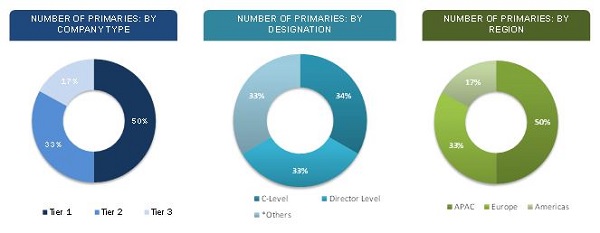
In the process of determining and verifying the market size for several segments and subsegments gathered through the secondary research, extensive primary interviews were conducted with key opinion leaders. The break-up of the profiles of primary participants is given in the chart below:
To know about the assumptions considered for the study, download the pdf brochure
The value chain of compressor control systems includes research & development, assembly & manufacturing, supply, system integration, distribution, marketing & sales, and end user industries. The report provides the competitive landscape of key players which indicates their growth strategies in the compressor control system market. The report provides the profiles of major companies in the comprmarket. The key players in the compressor control system market are General Electric Co. (U.S.), Schneider Electric (France), Siemens AG (Germany), Wood Group Plc (U.K.), Atlas Copco (Sweden), and Ingersoll Rand (Ireland).
The report also covers the factors affecting the market dynamics such as drivers, restraints, opportunities, and challenges. Apart from the in-depth view on the market segmentation, the report also includes the critical market data and qualitative information regarding compressor control systems, along with qualitative analyses such as the Porter’s five forces analysis, value chain analysis, and market breakdown analysis.
Target Audience:
- Original Device Manufacturers (ODMs)
- System Integrators
- Electronic Hardware Equipment Manufacturers
- Assembly and Packaging Vendors
- Technical Universities
- Government Research Agencies And Private Research Organizations
- Research Institutes And Organizations
- Market Research And Consulting Firms
- End-User Industries
Scope of the Report:
The market covered in this report has been segmented as follows:
Compressor Control Systems Market, by Application:
- Oil & gas
- Refining
- Petrochemical
- Power Generation
- Metals & Mining
- Fertilizers
- Water & Wastewater
- Others (Cement and Automotive)
Compressor Control System Market, by Component:
By Controlling Component
- PLC
- SCADA
- *Others
By Networking Component
- Switches
- Gateways & Nodes
- *Others
Compressor Control System Market, by Geography:
- Americas
- Europe
- APAC
- RoW
Available customizations:
- Types of compressor controls, by Country can be provided, in terms of value
- Further breakdown of the compressor control system market, by Country not covered in the report (up to 5)
- Country-wise breakup for types of compressor control systems
- Detailed analysis and profiling of additional players (up to five)













Growth opportunities and latent adjacency in Compressor Control System Market