Explosive Detectors Market by Technology (Trace (IMS, Colorimetric, Mass Spectrometry), Bulk (X-Ray System, Neutron Method, Optical)), Product Type (Vehicle Mounted, Handheld, Robotics, Biosensors), Application, Geography - Forecast to 2035


Explosive Detectors Market Summary
The Explosive Detectors Market is expanding as governments, transportation authorities, military and defense organizations, critical infrastructure operators, and commercial security providers increase investments in technologies capable of identifying explosive threats quickly and reliably. The global Explosive Detectors Market is estimated at approximately USD 1–2 billion in 2025 and is projected to reach USD 3–5 billion by 2035, registering a CAGR of 10%–12% during the forecast period. Market growth is being supported by rising security concerns, increasing passenger and cargo screening requirements, modernization of border-control infrastructure, protection of critical infrastructure, and the growing adoption of AI, IoT, automation, and digital security platforms.
Explosive detectors are increasingly being deployed across airports, seaports, border checkpoints, military facilities, government buildings, transportation hubs, public venues, and industrial facilities. These systems can identify trace quantities or vapors associated with explosive substances and provide security personnel with rapid alerts. Technological development is shifting the industry from conventional detection approaches toward portable, networked, automated, and increasingly intelligent detection systems.
Artificial intelligence is becoming an important technology enabler in the Explosive Detectors Market. AI and machine-learning algorithms can support pattern recognition, signal interpretation, anomaly detection, spectral analysis, and automated decision support. These capabilities can help improve the interpretation of complex sensor information while reducing dependence on manual analysis.
The integration of IoT is also creating new opportunities. Connected detectors can transmit operational status, alerts, diagnostics, and other authorized information to centralized security-management platforms. This enables security organizations to monitor distributed equipment and coordinate responses across large facilities.
Automation is particularly important at airports and transportation hubs, where large volumes of passengers, baggage, parcels, and cargo must be screened efficiently. Automated detection technologies can complement conventional screening processes and help security teams prioritize items requiring additional inspection.
Key Market Trends & Insights
One of the most important trends in the Explosive Detectors Market is the movement toward portable and handheld detection systems. Security personnel increasingly require compact equipment that can be deployed quickly in checkpoints, patrol environments, transportation facilities, and other locations where fixed systems may not be practical.
North America is expected to remain a leading regional market, supported by significant investment in homeland security, airport security, border protection, defense infrastructure, and critical infrastructure protection. The region also has a mature ecosystem of security technology providers and government agencies.
Asia Pacific is expected to record the fastest growth through 2035. Rising investments in airport infrastructure, expanding transportation networks, urbanization, border-security modernization, and public-safety programs are creating additional demand for explosive detection technologies.
Another important trend is the development of AI-assisted detection and automated threat classification. Advanced systems can combine sensor outputs with algorithms to identify patterns and support security personnel in evaluating potential threats.
Miniaturization is also influencing product development. Smaller sensors, improved electronics, and lower-power components are allowing manufacturers to develop portable systems without sacrificing operational capabilities.
The increasing digitization of security infrastructure is encouraging integration between detectors and centralized command-and-control platforms. This creates opportunities for cloud-enabled analytics, remote equipment monitoring, predictive maintenance, and secure data management.
Market Size & Forecast
- Base year market size (2025): USD 1–2 billion
- Forecast market value (2035): USD 3–5 billion
- CAGR (2025–2035): 10%–12%
- Key growth factors: Airport security modernization, border protection, critical infrastructure security, defense spending, transportation expansion, and increasing adoption of automated detection.
- Technology outlook: AI-assisted analytics, advanced sensors, portable detectors, IoT connectivity, edge computing, automated threat recognition, and integrated security platforms are expected to influence market development.
Explosive Detectors Market Market Top 10 key takeaway
- The Explosive Detectors Market is estimated at USD 1–2 billion in 2025.
- The market is projected to reach USD 3–5 billion by 2035.
- The market is expected to expand at a CAGR of 10%–12% from 2025 to 2035.
- Airport and transportation security represent major application areas.
- Portable and handheld detectors are gaining adoption across field-security applications.
- AI is increasingly being used to support signal analysis and threat classification.
- North America is expected to remain a leading regional market.
- Asia Pacific is projected to experience the fastest growth.
- IoT connectivity is enabling centralized monitoring of distributed detection equipment.
- Miniaturization, automation, cybersecurity, and sensor innovation will shape future competition.
Product Insights
The product landscape of the Explosive Detectors Market includes handheld detectors, portable systems, fixed detection systems, trace detectors, vapor detectors, and integrated screening solutions. Among these categories, handheld and portable detection systems represent an important and rapidly developing segment because they provide security personnel with flexibility in locations where fixed screening infrastructure is unavailable or insufficient.
Handheld systems are particularly relevant for law enforcement, border security, military personnel, transportation security teams, and critical infrastructure operators. Their portability allows security teams to conduct targeted screening and secondary inspections. Improvements in sensor sensitivity, battery technology, electronics miniaturization, and user interfaces are supporting the development of smaller and more operationally convenient devices.
Fixed detection systems remain important in high-throughput environments. Airports, cargo facilities, border crossings, and other controlled-access locations can deploy stationary equipment as part of broader security-screening architectures. These systems can be integrated with access-control, baggage-screening, video surveillance, and centralized security-management platforms.
Trace detection is another important product category. Trace detectors are designed to identify minute quantities of relevant chemical signatures and are particularly useful for screening baggage, surfaces, packages, and other objects. Vapor-based approaches can provide another detection mechanism where volatile signatures are present.
Emerging systems increasingly incorporate digital displays, automated diagnostics, wireless communication, data logging, and software-based analytics. AI can assist with interpretation of sensor signals and help distinguish between potential threat indicators and non-threatening background signals.
The market is also moving toward integrated detection platforms in which multiple sensors and security technologies work together. Combining explosive detection with video analytics, access control, X-ray screening, or other security technologies can provide a more comprehensive security architecture.
Technology / Component Insights
Technology innovation is central to the Explosive Detectors Market, with manufacturers focusing on improving detection sensitivity, response time, selectivity, portability, reliability, and ease of operation. Detection technologies vary according to application and may rely on different sensing and analytical approaches.
Advanced chemical sensing is an important technology area. Modern systems are designed to identify relevant signatures while minimizing false alarms caused by environmental contaminants and common substances. Improvements in sensor materials, electronics, signal processing, and calibration can enhance system performance.
AI and machine learning are becoming increasingly relevant in signal interpretation. Algorithms can analyze complex sensor outputs, identify patterns, classify signals, and provide decision-support information to authorized operators. This can help reduce the cognitive workload associated with interpreting large amounts of sensor information.
IoT connectivity is enabling detectors to become components of broader security networks. Connected devices can communicate operational status, system health information, alerts, and maintenance requirements to centralized platforms. Such architectures can support large facilities where hundreds of security devices may need to be monitored.
Edge computing provides another opportunity. Processing certain information locally can reduce communication requirements and allow rapid system-level responses. Edge architectures can also be useful in environments where continuous cloud connectivity is unavailable or undesirable.
Automation is increasingly important in high-throughput screening. Automated workflows can support device self-checks, status monitoring, alert generation, data logging, and integration with broader screening procedures.
Future innovation is expected to focus on improved sensor selectivity, miniaturization, low-power electronics, AI-assisted analysis, secure connectivity, multisensor architectures, and predictive maintenance. Cybersecurity will become increasingly important as detectors become connected to wider security networks.
Application Insights
Transportation security represents one of the largest application areas in the Explosive Detectors Market. Airports require technologies capable of supporting high-volume passenger and baggage screening while maintaining operational efficiency. Explosive detection systems can form part of multilayer security architectures alongside imaging, access control, video surveillance, and physical screening.
Border security is another major application. Land borders, ports, and customs facilities require screening technologies for people, vehicles, baggage, and cargo. Portable detectors can provide additional flexibility for mobile inspection teams, while fixed systems can support controlled checkpoints.
Military and defense organizations also represent a significant demand center. Detection equipment can be used for security screening, facility protection, and threat assessment. The need for portable and ruggedized systems is particularly important in field environments.
Critical infrastructure represents another growing opportunity. Energy facilities, transportation infrastructure, government buildings, industrial sites, and major public facilities require layered security strategies to mitigate potential threats.
Public venues and commercial facilities are also adopting increasingly sophisticated screening technologies. Large events, stadiums, convention centers, and high-security buildings may use detection technologies as part of broader security programs.
Future applications will increasingly involve connected security infrastructure. AI-enabled security platforms can combine information from detectors, cameras, access-control systems, and other sensors to support faster situational awareness and coordinated response.
Regional Insights
North America is expected to remain a leading region in the Explosive Detectors Market because of continued investments in homeland security, airport screening, border protection, defense infrastructure, and critical infrastructure resilience. The United States represents a major demand center, supported by established security agencies and extensive transportation infrastructure.
Europe is another important market, supported by aviation-security modernization, border management, public-safety investments, and critical infrastructure protection. European security organizations are increasingly focused on interoperable and data-driven security systems.
Asia Pacific is projected to register the fastest growth through 2035. Rapid expansion of airports, rail networks, seaports, urban infrastructure, and international transportation is increasing the need for advanced security screening. China, Japan, India, South Korea, and Southeast Asian countries are important growth markets.
- North America: Homeland security and transportation infrastructure support strong demand.
- Europe: Airport, border, and critical infrastructure security drive adoption.
- Asia Pacific: Rapid infrastructure development supports the fastest growth.
- China: Expanding transportation networks and public-security investments create opportunities.
- India: Airport expansion, urbanization, and border-security modernization support demand.
Country-Specific Market Trends
China is expected to register approximately 12%–14% CAGR through 2035. The country is expanding airport, rail, port, and smart-city infrastructure while strengthening security systems across transportation and public facilities. Demand for portable and fixed detection technologies is expected to increase as infrastructure becomes more digitally connected.
Japan is expected to record approximately 8%–10% CAGR, supported by advanced transportation infrastructure, airport security requirements, public-event security, and technology-oriented security modernization.
In North America, the United States is projected to grow at approximately 9%–11% CAGR, supported by homeland-security requirements, aviation security, border management, and defense applications. Canada is expected to achieve approximately 8%–10% CAGR, while Mexico could record approximately 9%–11% CAGR as transportation and border-security infrastructure develops.
In Europe, Germany is expected to grow at approximately 8%–10% CAGR, supported by transportation security, industrial infrastructure protection, and advanced security technology adoption. France is projected to register approximately 8%–10% CAGR, driven by aviation security, border management, public-event security, and critical infrastructure protection.
- China: Large infrastructure investments support growing security requirements.
- Japan: Advanced transportation systems create demand for sophisticated detection.
- United States: Homeland security and defense remain key demand generators.
- Germany: Industrial and transportation security support technology adoption.
- France: Aviation, border, and public-event security provide growth opportunities.
Key Explosive Detectors Market Company Insights
The competitive landscape of the Explosive Detectors Market includes specialized security technology manufacturers, defense contractors, sensor companies, and screening-equipment providers. Major companies operating across the market include Smiths Detection, Teledyne FLIR, Rapiscan Systems, Bruker, Thermo Fisher Scientific, Leidos, Nuctech, Autoclear, Hitachi High-Tech, and Kromek Group.
Smiths Detection focuses extensively on aviation, transportation, and critical infrastructure screening technologies. Rapiscan Systems provides security inspection and detection solutions for airports, borders, and other high-security environments. Teledyne FLIR combines sensing, imaging, and detection capabilities across security and defense applications.
Bruker and Thermo Fisher Scientific have strong expertise in analytical technologies and chemical detection. Their technology portfolios support applications where advanced analytical capabilities are required.
Leidos participates in broader security and defense technology programs, while Nuctech provides inspection and security-screening systems. Autoclear focuses on security screening technologies, and Hitachi High-Tech develops analytical and inspection solutions.
Kromek Group is involved in advanced detection technologies, including radiation and other specialized sensing applications. Across the competitive landscape, vendors are increasingly emphasizing portability, sensitivity, automation, AI-enabled analysis, network connectivity, and system integration.
- Smiths Detection: Focuses on aviation, transportation, and critical infrastructure security.
- Rapiscan Systems: Emphasizes integrated inspection and security-screening solutions.
- Teledyne FLIR: Combines advanced sensing and imaging capabilities.
- Bruker: Leverages analytical technologies for specialized detection applications.
- Thermo Fisher Scientific: Focuses on advanced analytical and chemical detection capabilities.
Recent Developments
A major development in the Explosive Detectors Market is the integration of AI-assisted signal analysis into detection platforms. Machine-learning techniques can help analyze sensor outputs and support automated classification, potentially improving workflow efficiency and reducing unnecessary secondary inspections.
Another significant trend is the continued miniaturization of detection equipment. Manufacturers are developing lighter and more portable systems designed for field personnel while incorporating improved battery performance, digital interfaces, wireless connectivity, and automated diagnostics.
The market is also moving toward connected security platforms. Detectors can increasingly be integrated with centralized command-and-control systems, enabling remote equipment monitoring, alert management, maintenance tracking, and broader security situational awareness.
Market Segmentation
The Explosive Detectors Market can be segmented by Product, Technology/Component, Application, and Region. By Product, the market includes handheld detectors, portable detectors, fixed systems, trace detectors, vapor detectors, and integrated screening systems. By Technology/Component, the market covers chemical sensors, spectroscopic technologies, optical components, electronic signal-processing systems, processors, communication modules, software, and AI-enabled analytics. By Application, the market includes airports, border security, military and defense, critical infrastructure, transportation, commercial facilities, government buildings, and public venues. By Region, the market comprises North America, Europe, Asia Pacific, and Rest of the World.
- By Product: Handheld and portable systems are gaining importance because of operational flexibility.
- By Technology: Advanced chemical sensing, AI, signal processing, and connectivity are key innovation areas.
- By Application: Airports, border security, and critical infrastructure represent major demand centers.
- By Deployment: Fixed and mobile systems address different security and screening requirements.
- By Region: North America leads, while Asia Pacific is expected to grow fastest.
Conclusion
The Explosive Detectors Market is positioned for sustained growth as governments and organizations strengthen security across airports, borders, transportation networks, defense facilities, critical infrastructure, and public spaces. The market is estimated at USD 1–2 billion in 2025 and is projected to reach USD 3–5 billion by 2035, representing a CAGR of 10%–12% during the forecast period.
AI, IoT, automation, and digital transformation will increasingly influence the development of explosive detection technologies. AI-assisted signal analysis can improve the interpretation of complex sensor information, while IoT connectivity enables distributed detectors to become part of centralized security-management systems.
The transition toward portable and connected equipment will create additional opportunities. Security personnel increasingly require systems that are lightweight, rapidly deployable, easy to operate, and capable of sharing authorized information with broader security platforms.
Airports and transportation facilities will remain major growth centers because of rising passenger volumes and the need to maintain efficient security-screening operations. Border-control modernization and critical infrastructure protection will provide additional demand.
At the same time, cybersecurity and responsible data management will become increasingly important as detection equipment becomes connected. Manufacturers will need to address secure communications, authentication, software protection, and network resilience.
Through 2035, the convergence of advanced sensing, AI, IoT, automation, edge computing, and digital security platforms is expected to transform the Explosive Detectors Market. Companies that can combine detection performance with portability, interoperability, cybersecurity, intelligent analytics, and operational reliability will be well positioned to capture future market opportunities.
FAQs
1. What is the market size of the Explosive Detectors Market?
The Explosive Detectors Market is estimated at USD 1–2 billion in 2025 and is projected to reach USD 3–5 billion by 2035.
2. What is the growth rate of the Explosive Detectors Market?
The market is expected to grow at a CAGR of 10%–12% from 2025 to 2035, supported by airport security modernization, border protection, defense investments, critical infrastructure protection, and technological innovation.
3. What are the key drivers of the Explosive Detectors Market?
Major drivers include rising security requirements, increasing air and passenger traffic, border-security modernization, critical infrastructure protection, defense investments, smart security infrastructure, AI integration, IoT connectivity, and automation.
4. Which region is expected to lead the Explosive Detectors Market?
North America is expected to remain a leading regional market due to strong homeland-security investment, mature transportation infrastructure, defense spending, and advanced security technology adoption. Asia Pacific is expected to register the fastest growth.
5. Who are the key companies in the Explosive Detectors Market?
Major companies include Smiths Detection, Teledyne FLIR, Rapiscan Systems, Bruker, Thermo Fisher Scientific, Leidos, Nuctech, Autoclear, Hitachi High-Tech, and Kromek Group. These companies are focusing on advanced sensing, portable systems, AI-assisted analytics, automation, and integrated security platforms.
To speak to our analyst for a discussion on the above findings, click Speak to Analyst
 Exclusive indicates content/data unique to MarketsandMarkets and not available with any competitors.
Table of Contents
1 Introduction (Page No. - 16)
1.1 Objectives of the Study
1.2 Market Definition
1.3 Study Scope
1.3.1 Markets Covered
1.3.2 Years Considered for the Study
1.4 Currency
1.5 Limitations
1.6 Stakeholders
2 Research Methodology (Page No. - 20)
2.1 Research Data
2.1.1 Secondary Data
2.1.1.1 Key Data From Secondary Sources
2.1.2 Primary Data
2.1.2.1 Key Data From Primary Sources
2.1.2.2 Key Industry Insights
2.1.2.3 Breakdown of Primary Interviews
2.2 Demand-Side Analysis for the Explosive Detectors Market
2.2.1 Rise in Terrorist Activities Across the Globe
2.2.2 Increasing Demand for Security at Airports
2.3 Market Size Estimation
2.4 Market Breakdown and Data Triangulation
2.5 Assumptions
3 Executive Summary (Page No. - 29)
4 Premium Insights (Page No. - 35)
4.1 Attractive Market Opportunities for Explosive Detectors
4.2 Market, By Application
4.3 Europe Expected to Grow at the Highest CAGR in the Market Between 2015 and 2020
4.4 North America Held A Major Share of the Market (2014)
4.5 Market, By Technology
4.6 Market, By Product Type
5 Market Overview (Page No. - 40)
5.1 Introduction
5.2 Market Evolution
5.3 Market Segmentation
5.3.1 Market, By Technology
5.3.2 Market, By Product Type
5.3.3 Market, By Vertical
5.3.4 Market, By Geography
5.4 Market Dynamics
5.4.1 Drivers
5.4.1.1 Rise in Terrorist Activities Across the Globe
5.4.1.2 Government Legislations for Enhanced Security Screening
5.4.1.3 Increasing Demand for Tighter Screening Process and Antiterrorism Activities
5.4.1.4 Growing Security in the Aviation Industry
5.4.2 Restraints
5.4.2.1 Increasing Cyber Threats and Decreasing Government Spending on Explosive Detectors
5.4.2.2 Declining Global Spending of the Defense Sector
5.4.2.3 Risk of Criticism Or Bad Press If the Device Fails in Public Safety
5.4.3 Opportunities
5.4.3.1 Innovation of More Reliable and Cost Effective Explosive Detectors
5.4.4 Challenges
5.4.4.1 Health Hazards of Full-Body Screening Using X-Ray Bulk Detectors
5.4.4.2 High Cost of Operation and Maintenance
6 Industry Trends (Page No. - 52)
6.1 Introduction
6.2 Value Chain Analysis
6.2.1 Value Chain Analysis of Explosive Detectors (2014)
6.3 Major Trends in the Explosive Detectors Market
6.3.1 Joint Development Programs
6.3.2 Development of Multi Platform Designs for Explosive Detectors
6.3.3 Hybrid System Development
6.4 Porter’s Five Forces Analysis
6.4.1 Threat of New Entrants
6.4.2 Threat of Substitutes
6.4.3 Bargaining Power of Suppliers
6.4.4 Bargaining Power of Buyers
6.4.5 Degree of Competition
7 Market, By Technology (Page No. - 61)
7.1 Introduction
7.2 Trace Detectors
7.2.1 Ion Mobility Spectrometry (IMS)
7.2.2 Thermo-Redox
7.2.3 Chemiluminescence
7.2.4 Colorimetric
7.2.5 Mass Spectrometry
7.3 Bulk Detectors
7.3.1 X-Ray Systems
7.3.2 Neutron Method-Based Systems
7.3.3 Optical Detectors
8 Market, By Product Type (Page No. - 73)
8.1 Introduction
8.2 Vehicle-Mounted Explosive Detectors
8.3 Handheld Explosive Detectors
8.4 Robotics-Based Explosive Detectors
8.5 Biosensors
9 Market, By Vertical (Page No. - 91)
9.1 Introduction
9.2 Military and Defense
9.3 Cargo and Transport
9.4 Aviation
9.5 Public Places
9.5.1 Law Enforcement
9.5.2 Home Security
9.5.3 Others
9.6 Commercial
9.6.1 Retail
9.6.2 Academia and Institutional
9.6.3 Healthcare
9.6.4 Hospitality
9.6.5 Banking, Financial Services, and Insurance (BFSI)
9.7 Other Verticals
10 Market, By Geography (Page No. - 112)
10.1 Introduction
10.2 North America
10.2.1 North America to Drive the Market
10.2.2 U.S.
10.2.2.1 U.S.: the Largest Market for Explosive Detectors in 2014
10.2.3 Canada
10.2.3.1 Dependence of the Canadian Market on the U.S. and European Suppliers
10.2.4 Mexico
10.2.4.1 Mexico Estimated to Grow at A Significant Rate in the Market During the Forecast Period
10.3 Europe
10.3.1 Recent Paris Attacks Expected to Foster the Growth of European Market
10.3.2 Germany
10.3.2.1 Germany Accounted for A Share of 17% of the European Market in 2014
10.3.3 U.K.
10.3.3.1 U.K.: A Substantially Mature Market
10.3.4 France
10.3.4.1 France: Market Demand is Further Propelled By the Recent Paris Attacks
10.3.5 Russia
10.3.5.1 Russia: Huge Potential for Market
10.3.6 Rest of Europe
10.3.6.1 Rest of Europe : Better Economic Conditions
10.4 APAC
10.4.1 APAC Market Driven By Thriving Economies
10.4.2 China
10.4.2.1 China : Fastest Growing Market in APAC
10.4.3 Japan
10.4.3.1 Japan : Great Scope for Development
10.4.4 South Korea
10.4.4.1 South Korea : High Growth in Aviation Sector
10.4.5 Rest of APAC
10.4.5.1 Rest of APAC : India & Australia are Emerging Markets With Significant Potential
10.5 Rest of the World (RoW)
10.5.1 RoW has A Developing Market for Explosive Detectors
10.5.2 Middle East & Africa
10.5.2.1 Middle East & Africa : Infrastructure Development Prevalent in the Middle East & Africa
10.5.3 South America
10.5.3.1 South America : Developing Economies Expected to Drive Future Growth
11 Competitive Landscape (Page No. - 132)
11.1 Overview
11.2 Market Ranking Analysis of the Market
11.3 Competitive Situation and Trends
11.3.1 New Product Launches/New Product Developments
11.3.2 Mergers & Acquisitions
11.3.3 Partnerships, Contracts, Agreements, Joint Ventures, and Collaborations
11.3.4 Other Developments
12 Company Profiles (Page No. - 141)
(Overview, Products and Services, Financials, Strategy & Development)*
12.1 Introduction
12.2 Safran SA
12.3 Smiths Group PLC
12.4 L-3 Communications Holdings, Inc.
12.5 OSI Systems, Inc.
12.6 Nuctech Co. Ltd.
12.7 Implant Sciences Corporation
12.8 Flir Systems, Inc.
12.9 Chemring Group PLC
12.10 American Science & Engineering, Inc.
12.11 Analogic Corporation
12.12 Leidos Holdings, Inc.
*Details on Overview, Products and Services, Financials, Strategy & Development Might Not Be Captured in Case of Unlisted Companies.
13 Appendix (Page No. - 177)
13.1 Insights of Industry Experts
13.2 Discussion Guide
13.3 Introducing RT: Real-Time Market Intelligence
13.4 Available Customizations
13.5 Related Reports
List of Tables (73 Tables)
Table 1 Explosive Detectors Market, 2013–2020
Table 2 Market, By Trace Detection Technology, 2013–2020 (USD Million)
Table 3 Market, By Bulk Detection Technology, 2013–2020 (USD Million)
Table 4 Market, By Region, 2013–2020 (USD Billion)
Table 5 Market Drivers
Table 6 Increasing Cyber Threats and Decreasing Government Spending on Explosive Detectors Hampering the Growth of the Exlposive Detectors Market
Table 7 Innovation of More Reliable and Cost-Effective Explosive Detectors Provide A Key Opportunity for the Market
Table 8 Health Hazards of Full-Body Screening Using X-Ray Bulk Detectors is A Key Challenge for the Explosive Detectors Market
Table 9 Market Size, in Terms of Value and Volume, 2013–2020
Table 10 Market Size, By Technology, 2013–2020 (USD Billion)
Table 11 Market Size, By Technology, 2013–2020 (Thousand Units)
Table 12 Market, By Trace Detection Technology, 2013–2020 (USD Million)
Table 13 Market Size, By Trace Detection Technology, 2013–2020 (Thousand Units)
Table 14 Trace Detectors Market, By Product Type, 2013–2020 (USD Million)
Table 15 Trace Detectors Market Size, By Product Type, 2013–2020 (Thousand Units)
Table 16 Market, By Bulk Detection Technology, 2013–2020 (USD Billion)
Table 17 Market Size, By Bulk Detection Technology, 2013–2020 (Thousand Units)
Table 18 Bulk Detectors Market, By Product Type, 2013–2020 (USD Billion)
Table 19 Bulk Detectors Market Volume, By Product Type, 2013–2020 (Thousand Units)
Table 20 Market, By Product Type, 2013–2020 (USD Million)
Table 21 Market Size, By Product Type, 2013–2020 (Thousand Units)
Table 22 Vehicle-Mounted Explosive Detectors , By Technology, 2013–2020 (USD Million)
Table 23 Vehicle-Mounted Explosive Detectors , By Application, 2013–2020 (USD Million)
Table 24 Market Size, By Application, 2013–2020 (Thousand Units)
Table 25 Vehicle-Mounted Explosive Detectors Market, By Commercial Application, 2013–2020 (USD Million)
Table 26 Market Size, By Commercial Application, 2013–2020 (Thousand Units)
Table 27 Market, By Technology, 2013–2020 (USD Million)
Table 28 Market, By Application, 2013–2020 (USD Million)
Table 29 Market Size, By Application, 2013–2020 (Thousand Units)
Table 30 Market, By Commercial Application, 2013–2020 (USD Million)
Table 31 Market Size, By Commercial Application, 2013–2020 (Thousand Units)
Table 32 Market, By Technology, 2013–2020 (USD Million)
Table 33 Robotics-Based Explosive Detectors Market, By Application, 2013–2020 (USD Million)
Table 34 Market Size, By Application, 2013–2020 (Thousand Units)
Table 35 Market, By Commercial Application, 2013–2020 (USD Million)
Table 36 Market Size, By Commercial Application, 2013–2020 (Thousand Units)
Table 37 Biosensors Explosive Detectors Market, By Technology, 2013–2020 (USD Million)
Table 38 Market, By Application, 2013–2020 (USD Million)
Table 39 Market Size, By Application, 2013–2020 (Thousand Units)
Table 40 Market, By Commercial Application, 2013–2020 (USD Million)
Table 41 Market Size, By Commercial Application, 2013–2020 (Thousand Units)
Table 42 Market, By Vertical, 2013–2020 (USD Million)
Table 43 Market Size, By Vertical, 2013–2020 (Thousand Units)
Table 44 Military and Defense: Market, By Product Type, 2013–2020 (USD Million)
Table 45 Military and Defense: Market, By Region, 2013–2020 (USD Million)
Table 46 Cargo and Transport: Market, By Product Type, 2013–2020 (USD Million)
Table 47 Cargo and Transport: Market, By Region, 2013–2020 (USD Million)
Table 48 Aviation: Market, By Product Type, 2013–2020 (USD Million)
Table 49 Aviation: Market, By Region, 2013–2020 (USD Million)
Table 50 Public Places: Market, By Vertical, 2013–2020 (USD Million)
Table 51 Public Places: Market Size, By Vertical, 2013–2020 (Thousand Units)
Table 52 Public Places: Market, By Product Type, 2013–2020 (USD Million)
Table 53 Public Places: Market, By Region, 2013–2020 (USD Million)
Table 54 Commercial: Market, By Application, 2013–2020 (USD Million)
Table 55 Commercial: Market Size, By Application, 2013–2020 (Thousand Units)
Table 56 Commercial: Market, By Product Type, 2013–2020 (USD Million)
Table 57 Commercial: Market, By Region, 2013–2020 (USD Million)
Table 58 Other Verticals: Market, By Product Type, 2013–2020 (USD Million)
Table 59 Other Verticals: Market, By Region, 2013–2020 (USD Million)
Table 60 Exlposive Detectors Market, By Region, 2013–2020 (USD Million)
Table 61 North America: Market Size, By Country, 2013–2020 (USD Million)
Table 62 North America: Market Size, By Application, 2013–2020 (USD Million)
Table 63 Europe: Market Size, By Country, 2013–2020 (USD Million)
Table 64 Europe: Market Size, By Application, 2013–2020 (USD Million)
Table 65 APAC: Market Size, By Country, 2013–2020 (USD Million)
Table 66 APAC: Market Size, By Application, 2013–2020 (USD Million)
Table 67 RoW: Market Size, By Region, 2013–2020 (USD Million)
Table 68 RoW: Market Size, By Application, 2013–2020 (USD Million)
Table 69 Global Market Ranking, By Key Player, 2014
Table 70 New Product Launches
Table 71 Mergers & Acquisitions
Table 72 Partnerships, Contracts, Agreements, and Joint Ventures
Table 73 Other Strategies
List of Figures (97 Figures)
Figure 1 Markets Covered in the Study
Figure 2 Research Design
Figure 3 Flow of Report Writing
Figure 4 Number of Airports Across the Regions, 2013
Figure 5 Bottom-Up Approach
Figure 6 Top-Down Approach
Figure 7 Market Breakdown and Data Triangulation
Figure 8 Assumptions of the Research Study
Figure 9 Market Size, 2013–2020 (USD Billion)
Figure 10 Market, By Technology, 2015 vs 2020 (USD Billion)
Figure 11 Market, By Product Type, 2013–2020 (USD Billion)
Figure 12 Market, By Application, 2015 vs 2020 (USD Billion)
Figure 13 Market, By Geography, 2015
Figure 14 The Market is Expected to Have A High Growth Rate Between 2015 and 2020
Figure 15 Commercial Application Expected to Grow at the Highest CAGR Between 2015 and 2020 in the Market
Figure 16 Aviation Held the Largest Share of the European Market, 2014
Figure 17 Europe Expected to Grow at the Highest CAGR in the Global Market Till 2020
Figure 18 Trace Detectors Market Expected to Grow at the Highest CAGR Between 2015 and 2020
Figure 19 Handheld Explosive Detectors Market Expected to Grow at the Highest CAGR Between 2015 and 2020
Figure 20 Evolution of Explosive Detectors in the Market
Figure 21 Market Segmentation: By Technology
Figure 22 Market, By Product Type
Figure 23 Market, By Vertical
Figure 24 Market, By Geography
Figure 25 Rise in Terrorist Activities Across the Globe Driving the Market
Figure 26 Value Chain Analysis of Explosive Detectors (2014): Major Value is Added During the Manufacturing and Assembly Phases
Figure 27 Industry Trends in the Market
Figure 28 Porter’s Five Forces Analysis: Bargaining Power of Buyers Had A High Impact on the Market in 2014
Figure 29 Threat of New Entrants
Figure 30 Threat of Substitutes
Figure 31 Bargaining Power of Suppliers
Figure 32 Bargaining Power of Buyers
Figure 33 Degree of Competition
Figure 34 Segmentation of Explosive Detectors Market, By Technology
Figure 35 Market Size, By Technology, 2015 vs 2020
Figure 36 Market, By Trace Detection Technology, 2015 vs 2020 (USD Million)
Figure 37 Trace Detectors Market, By Product Type, 2015 vs 2020 (USD Million)
Figure 38 Market, By Bulk Detection Technology, 2015 vs 2020 (USD Billion)
Figure 39 Bulk Detectors Market, By Product Type, 2015 vs 2020 (USD Billion)
Figure 40 Market, By Product Type
Figure 41 Market Size, By Product Type, 2015 vs 2020 (USD Million)
Figure 42 Market Size, By Product Type, 2015 vs 2020 (Thousand Units)
Figure 43 Vehicle-Mounted Explosive Detectors Market Size, By Application, 2015 vs 2020 (USD Million)
Figure 44 Vehicle-Mounted Explosive Detectors Market Size, By Commercial Application, 2015 vs 2020 (USD Million)
Figure 45 Market Size, By Application, 2015 vs 2020 (USD Million)
Figure 46 Handheld Explosive Detectors Market Size, By Commercial Application, 2015 vs 2020 (USD Million)
Figure 47 Market Size, By Application, 2015 vs 2020 (USD Million)
Figure 48 Market Size, By Commercial Application, 2015 vs 2020 (USD Million)
Figure 49 Biosensors Explosive Detectors Market Size, By Application, 2015 vs 2020 (USD Million)
Figure 50 Biosensors Explosive Detectors Market Size, By Commercial Application, 2015 vs 2020 (USD Million)
Figure 51 Applications of Explosive Detectors
Figure 52 Market, By Vertical, 2015 vs 2020 (USD Million)
Figure 53 Market Size, By Vertical, 2015 vs 2020 (Thousand Units)
Figure 54 Military and Defense: Market, By Product Type, 2015 vs 2020 (USD Million)
Figure 55 Cargo and Transport: Market, By Product Type, 2015 vs 2020 (USD Million)
Figure 56 Aviation: Market, By Product Type, 2015 vs 2020 (USD Million)
Figure 57 Public Places: Market, By Vertical, 2015 vs 2020 (USD Million)
Figure 58 Public Places: Market Size, By Vertical, 2015 vs 2020 (Thousand Units)
Figure 59 Public Places: Market, By Product Type, 2015 vs 2020 (USD Million)
Figure 60 Commercial Applications of Explosive Detectors
Figure 61 Commercial: Market, By Application, 2015 vs 2020 (USD Million)
Figure 62 Commercial: Marketsize, By Application, 2015 vs 2020 (Thousand Units)
Figure 63 Commercial: Market, By Product Type, 2015 vs 2020 (USD Million)
Figure 64 Other Verticals: Market, By Product Type, 2015 vs 2020 (USD Million)
Figure 65 Market, By Geography
Figure 66 Geographic Snapshot of Market: Rapidly Growing Markets are Emerging as New Hot Spots
Figure 67 North America Expected to Hold the Largest Share of the Market By 2020
Figure 68 North American Market Snapshot: Demand Expected to Be Driven By the Upsurge in Terrorism
Figure 69 North America: Market Size, By Country, 2015 vs 2020 (USD Million)
Figure 70 North America: Market Size, By Application, 2015 vs 2020 (USD Million)
Figure 71 European Market Snapshot : Russia Accounted for the Highest Market Share in the European Region in 2014
Figure 72 Europe: Market Size, By Country, 2015 vs 2020 (USD Million)
Figure 73 Europe: Market Size, By Application, 2015 vs 2020 (USD Million)
Figure 74 APAC: Market Size, By Country, 2015 vs 2020 (USD Million)
Figure 75 APAC: Market Size, By Application, 2015 vs 2020 (USD Million)
Figure 76 RoW: Market Size, By Region, 2015 vs 2020 (USD Million)
Figure 77 RoW: Market Size, By Application, 2015 vs 2020 (USD Million)
Figure 78 Companies Adopted New Product Development and Partnerships, Agreements, & Contracts as the Key Growth Strategies Between 2012 and 2015
Figure 79 OSI Systems, Inc. Witnessed Highest Growth Rate Between 2012 and 2014
Figure 80 Market Evolution Framework—The Strategy of New Product Launches has Fueled Growth and Innovation in the Explosive Detecotrs Market Between 2013 and 2015
Figure 81 Battle for Market Share: Partnerships, Agreements, Contracts, Joint Ventures, and New Product Launches Were the Key Strategies Between 2012 and 2015
Figure 82 Geographic Revenue Mix of Top 5 Market Players (2014)
Figure 83 Safran SA : Company Snapshot
Figure 84 Safran SA : SWOT Analysis
Figure 85 Smiths Group PLC: Company Snapshot
Figure 86 Smiths Group PLC : SWOT Analysis
Figure 87 L-3 Communications Holdings, Inc. : Company Snapshot
Figure 88 L-3 Communications Holdings, Inc. : SWOT Analysis
Figure 89 OSI Systems, Inc.: Company Snapshot
Figure 90 OSI Systems, Inc. : SWOT Analysis
Figure 91 Nuctech Co. Ltd. : SWOT Analysis
Figure 92 Implant Sciences Corporation: Company Snapshot
Figure 93 Flir Systems, Inc.: Company Snapshot
Figure 94 Chemring Group PLC: Company Snapshot
Figure 95 American Science & Engineering, Inc.: Company Snapshot
Figure 96 Analogic Corporation: Company Snapshot
Figure 97 Leidos Holdings, Inc.: Company Snapshot
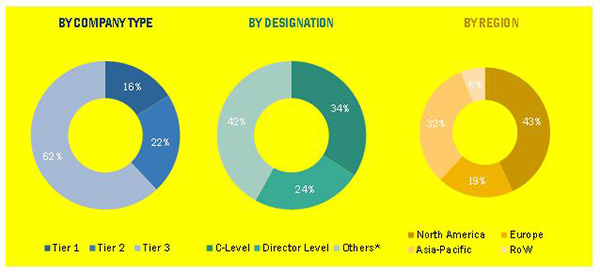
The research methodology used to estimate and forecast the explosive detectors market begins with capturing data on key vendor revenues through secondary research. The vendor offerings are also taken into consideration to determine the market segmentation. The bottom-up procedure was employed to arrive at the overall market size of the global market from the revenue of the key players in the market. After arriving at the overall market size, the total market was split into several segments and subsegments which are then verified through primary research by conducting extensive interviews with key industry people including CEOs, VPs, directors and executives. The data triangulation and market breakdown procedures were employed to complete the overall market engineering process and arrive at the exact statistics for all segments and subsegments. The breakdown of profiles of primary is depicted in the figure below:
To know about the assumptions considered for the study, download the pdf brochure
The main manufacturers in the explosive detectors market include Smiths Detection, Morpho Detection, L-3 Communication, OSI Systems, Nuctech, and others. These players have adopted various strategies such as partnerships, agreements, contracts, mergers and acquisitions, and new product developments to achieve growth in the market.
Key Target Audience
- Hardware & software manufacturers
- Government and financial institutions
- Distributors and retailers
- Managed security service providers
- Research organizations
- Consulting firms
- System integrators
Scope of the Report
The research report segments the explosive detectors market into following submarkets:
By Technology:
- Trace Detectors
- Bulk Detectors
By Product Type:
- Vehicle-Mounted
- Handheld
- Robotics
- Biosensors
By Vertical:
- Military and Defense
- Cargo and Transport
- Aviation
- Public Places
- Commercial
- Others
By Region:
- North America
- Europe
- Asia-Pacific
- Rest of the World
Available Customizations
With the given market data, MarketsandMarkets offers customizations as per the company’s specific needs. The following customization options are available for the report:
Product Analysis
- Product matrix which gives a detailed comparison of the product portfolio of each company
Geographic Analysis
- Further breakdown of the North American market
- Further breakdown of the European market
- Further breakdown of the APAC market
- Further breakdown of the RoW market
Company Information
- Detailed analysis and profiling of additional market players













Growth opportunities and latent adjacency in Explosive Detectors Market