Frequency Synthesizer Market by Type (Analog and Digital), Components (Phase Detectors, Loop Filters, Oscillators, and Mixers), Application (Telecommunications, Military & Aerospace, and Research & Measurement), and Geography - Global Growth Driver and Industry Forecast to 2035


Frequency Synthesizer Market Summary
The Frequency Synthesizer Market is witnessing steady expansion as high-performance timing and frequency-generation technologies become increasingly important across wireless communication, telecommunications, aerospace & defense, automotive electronics, industrial automation, test and measurement, and satellite systems. The market is estimated at approximately USD 2.3 billion in 2025 and is projected to reach nearly USD 3.9 billion by 2035, registering a CAGR of around 5% during the forecast period. Increasing deployment of 5G and emerging 6G infrastructure, growing demand for precision timing, expansion of satellite communication networks, and increasing electronic content in vehicles are among the primary factors supporting market growth. The adoption of AI, IoT, automation, edge computing, and digital transformation is also increasing the need for accurate, stable, programmable, and low-phase-noise frequency sources.
Modern communication and electronic systems require highly precise clock and frequency references to maintain synchronization, signal integrity, and reliable data transmission. As networks become more complex and operate across multiple frequency bands, frequency synthesizers are increasingly expected to deliver higher frequency resolution, faster switching, lower phase noise, and lower power consumption. Advances in phase-locked loop (PLL), direct digital synthesis (DDS), direct RF synthesis, and fractional-N technologies are enabling manufacturers to address increasingly demanding applications.
Key Market Trends & Insights
The Frequency Synthesizer Market is being influenced by the rapid evolution of wireless communication infrastructure. Telecommunications operators are expanding 5G networks while equipment manufacturers are developing architectures capable of supporting higher bandwidth, massive connectivity, and lower latency. These developments require sophisticated frequency-generation and synchronization components. The gradual development of 6G technologies is expected to create additional opportunities for synthesizers capable of operating at significantly higher frequencies and delivering exceptionally low phase noise.
North America is expected to remain a leading regional market because of substantial investments in aerospace and defense, telecommunications, semiconductor technologies, satellite communications, and advanced electronics. The region also benefits from a strong ecosystem of semiconductor manufacturers, defense contractors, wireless infrastructure providers, and test-and-measurement companies. Asia Pacific is projected to record the fastest growth, supported by expanding telecommunications infrastructure, electronics manufacturing, automotive production, industrial automation, and semiconductor investments in countries such as China, Japan, South Korea, and India.
One important market trend is the growing adoption of integrated frequency synthesizers. System designers increasingly prefer highly integrated solutions that combine PLLs, voltage-controlled oscillators, dividers, programmable control, frequency calibration, and monitoring functions into compact devices. Integration helps reduce board space, power consumption, component count, and design complexity.
Another major trend is the demand for low-phase-noise and high-frequency solutions. Aerospace, radar, satellite communications, instrumentation, and advanced wireless systems require precise frequency generation with minimal jitter and phase noise. Manufacturers are consequently investing in advanced architectures and semiconductor processes to improve performance at higher frequencies.
AI and automation are also influencing the market indirectly. Intelligent network optimization, autonomous systems, predictive maintenance, and AI-enabled wireless infrastructure require accurate timing and synchronization. In industrial IoT environments, frequency synthesizers support communication and sensing systems that must maintain reliable timing across distributed equipment. As connected systems become more autonomous, the importance of precision frequency generation is expected to increase.
Market Size & Forecast
- Base year market size (2025): Approximately USD 2.3 billion.
- Forecast market value (2035): Approximately USD 3.9 billion.
- Expected CAGR (2025–2035): Approximately 5%.
- Primary growth factors: 5G/6G infrastructure, satellite communications, aerospace and defense electronics, automotive connectivity, IoT, industrial automation, and semiconductor innovation.
- Technology outlook: PLL-based synthesizers are expected to maintain a substantial share, while fractional-N, DDS, direct RF, and highly integrated synthesizer architectures gain adoption in specialized applications.
- Performance priorities: Low phase noise, low jitter, fast frequency switching, high resolution, low power consumption, and compact form factors will remain critical purchasing criteria.
- Long-term opportunity: Expanding high-frequency wireless applications and increasingly sophisticated electronic systems are expected to create sustained demand for advanced frequency synthesis technologies.
Frequency Synthesizer Market Top 10 key takeaway
- The Frequency Synthesizer Market is estimated to reach approximately USD 2.3 billion in 2025.
- The market is projected to approach USD 3.9 billion by 2035.
- The market is expected to expand at a CAGR of approximately 5% during 2025–2035.
- North America is expected to remain a leading regional market.
- Asia Pacific is projected to record the fastest growth during the forecast period.
- PLL-based frequency synthesizers remain widely used because of their versatility and established ecosystem.
- 5G, emerging 6G technologies, and satellite communication are important sources of future demand.
- Aerospace and defense applications require increasingly sophisticated low-phase-noise frequency synthesizers.
- AI, IoT, automation, and edge computing are increasing requirements for accurate timing and synchronization.
- Semiconductor integration and programmable architectures will remain central to product innovation.
Product Insights
The Frequency Synthesizer Market includes several product architectures designed to generate stable and programmable frequencies from reference signals. PLL-based frequency synthesizers represent one of the dominant product categories because of their extensive use in wireless communication, networking equipment, radar, instrumentation, and consumer electronics. PLL architectures offer an effective balance of frequency range, stability, programmability, power efficiency, and integration, making them suitable for a broad range of electronic systems.
Fractional-N synthesizers are gaining particular attention in communication applications because they provide fine frequency resolution while maintaining relatively high output frequencies. These devices are increasingly used in wireless infrastructure and radio-frequency systems where precise channel spacing and rapid frequency adjustment are important. Fractional-N architectures can support sophisticated modulation and frequency-planning requirements in modern communication equipment.
Direct digital synthesis products are also important, particularly in test equipment, signal generators, radar, instrumentation, and specialized communication applications. DDS technologies offer precise digital frequency control and rapid switching, making them attractive where frequency agility and programmability are priorities. As digital signal processing becomes increasingly integrated into electronic architectures, the boundaries between conventional frequency synthesis and digitally controlled signal generation are becoming less distinct.
Integrated frequency synthesizer ICs are expected to represent an increasingly important product opportunity. Semiconductor manufacturers are combining frequency generation, programmable control, clock distribution, monitoring, and communication interfaces into compact solutions. This approach reduces the external component requirement and enables faster system development.
The automotive sector is creating another emerging product opportunity. Modern vehicles incorporate radar, infotainment, connectivity, navigation, advanced driver assistance systems, and vehicle-to-everything communication. Each of these functions can require precise timing or RF signal generation. As vehicles become more software-defined and connected, demand for highly reliable frequency-generation components is expected to increase.
Technology / Component Insights (Rename based on keyword if needed)
The technological foundation of the Frequency Synthesizer Market includes phase-locked loops, voltage-controlled oscillators, reference oscillators, frequency dividers, programmable counters, loop filters, digital control systems, and advanced semiconductor components. PLL technology remains fundamental because it allows an output signal to be locked to a stable reference while enabling frequency multiplication and programmable frequency generation.
Fractional-N PLL architectures are becoming increasingly important because they allow very fine frequency resolution. These systems are particularly useful in wireless communication applications where channels can be closely spaced and frequency accuracy is critical. Advanced fractional-N designs also seek to minimize phase noise and fractional spurs, improving overall signal quality.
Low-noise voltage-controlled oscillators and high-quality reference clocks are equally important. Phase noise and jitter can directly affect system performance, especially in radar, satellite communications, high-speed data transmission, and precision instrumentation. Manufacturers are therefore developing improved oscillator designs and semiconductor processes to provide stable frequency generation across broader operating ranges.
Digital control is another major technological development. Programmable frequency synthesizers can be configured through serial interfaces and controlled dynamically by system processors. This flexibility allows communication equipment to adapt to changing channels, operating modes, and network requirements. In automated environments, synthesizers can be remotely configured and monitored as part of larger electronic control architectures.
AI and IoT are not direct frequency-generation technologies, but they are increasingly influencing how synthesizers are deployed. AI-enabled systems can use timing and synchronization data to optimize network operations, identify anomalies, and predict component degradation. IoT architectures require accurate timing across distributed devices, particularly in industrial environments where sensors, gateways, controllers, and machines operate simultaneously.
Future innovation is expected to focus on higher operating frequencies, lower power consumption, reduced phase noise, greater integration, smaller package sizes, and improved temperature stability. Semiconductor advances will enable synthesizers to support next-generation wireless, satellite, radar, autonomous vehicle, and high-speed computing applications.
Application Insights
Telecommunications and wireless infrastructure represent a major application area for the Frequency Synthesizer Market. Base stations, radio units, network equipment, and wireless terminals depend on accurate frequency references and synthesizers to maintain channel stability and synchronization. The deployment of 5G networks has increased requirements for high-performance timing solutions, while future 6G architectures could create demand for synthesizers capable of supporting higher-frequency spectrum and advanced wireless techniques.
Aerospace and defense is another high-value application. Radar systems, electronic warfare equipment, satellite communications, navigation systems, secure communications, and signal intelligence platforms require extremely stable frequency sources. These applications prioritize low phase noise, high frequency accuracy, reliability, and resistance to harsh environmental conditions. As defense systems become more software-defined and electronically agile, frequency synthesizers are expected to support increasingly complex signal-generation requirements.
Automotive electronics is emerging as a significant growth area. Radar sensors used for advanced driver assistance and autonomous driving require precise RF signal generation. Connected vehicles also depend on communication and navigation systems that require accurate frequency references. The transition toward electric and software-defined vehicles is increasing electronic content, creating additional opportunities for synthesizer manufacturers.
Industrial automation and IoT applications are also expanding. Smart factories use distributed sensors, controllers, robots, gateways, and wireless networks that require synchronization. Frequency synthesizers can support industrial communication systems, test equipment, machine-vision platforms, and RF sensing technologies.
Test and measurement remains an important application because signal generators, spectrum analyzers, network analyzers, oscilloscopes, and other instruments require accurate frequency generation. The continued development of high-speed electronics and communication technologies is increasing demand for advanced instrumentation, supporting long-term market opportunities.
Regional Insights
North America is expected to maintain a leading position in the Frequency Synthesizer Market, supported by strong aerospace and defense spending, advanced telecommunications infrastructure, semiconductor development, and demand for high-performance electronic systems. The United States represents the largest market within the region because of its extensive ecosystem of defense electronics, satellite communication, wireless infrastructure, and technology companies. Research and development activities related to 5G, 6G, radar, and space technologies further support demand.
Europe represents a mature market supported by automotive electronics, aerospace, industrial automation, telecommunications, and precision instrumentation. Germany is particularly important because of its automotive and industrial manufacturing base. European investment in connected vehicles, Industry 4.0, and advanced communications is expected to maintain demand for frequency synthesis solutions.
Asia Pacific is projected to experience the fastest growth through 2035. The region combines large-scale electronics manufacturing with rapid telecommunications expansion and growing semiconductor investments. China is a major contributor because of its telecommunications, consumer electronics, automotive, and industrial sectors. Japan and South Korea contribute through advanced automotive electronics, robotics, semiconductor manufacturing, and communication technologies.
- North America is expected to remain a leading market due to aerospace, defense, telecommunications, and semiconductor investments.
- Asia Pacific is projected to achieve the fastest growth through 2035.
- Europe benefits from automotive electronics and Industry 4.0 adoption.
- China represents a major regional opportunity because of telecommunications and electronics manufacturing.
- Increasing semiconductor investment across Asia Pacific will strengthen local frequency synthesizer demand.
[Country]-Specific Market Trends
China is expected to register approximately 7% CAGR during the forecast period, supported by 5G infrastructure, electronics manufacturing, satellite communications, automotive electronics, and industrial automation. Government-supported investments in semiconductor and telecommunications capabilities are encouraging domestic development of advanced electronic components. Japan is expected to grow at approximately 5%, supported by automotive radar, robotics, precision instrumentation, telecommunications, and aerospace technologies.
In North America, the United States is expected to expand at approximately 5% CAGR, with defense electronics, satellite communications, wireless infrastructure, and semiconductor innovation serving as major demand generators. Canada could register approximately 4% growth, supported by telecommunications, aerospace, defense, and advanced instrumentation. Mexico is expected to grow at approximately 5%, supported by automotive electronics, electronics manufacturing, and increasing industrial automation.
Germany is projected to register approximately 5% CAGR, supported by automotive radar, industrial automation, connected vehicles, and advanced manufacturing. France could grow at approximately 4%, with aerospace, defense, telecommunications, and transportation electronics supporting adoption. Government initiatives related to semiconductor development, digital infrastructure, industrial modernization, and strategic technology capabilities are expected to reinforce demand across these countries.
- China is expected to benefit from large-scale telecommunications and electronics investments.
- Japan will continue to leverage its strengths in robotics, automotive, and precision electronics.
- United States demand will be strongly influenced by aerospace, defense, and wireless infrastructure.
- Germany will benefit from connected vehicles and industrial automation.
- France, Canada, and Mexico offer opportunities across aerospace, telecommunications, automotive, and electronics manufacturing.
Key Frequency Synthesizer Market Company Insights
The Frequency Synthesizer Market includes established semiconductor and electronic component manufacturers such as Analog Devices, Texas Instruments, Renesas Electronics, NXP Semiconductors, Infineon Technologies, Microchip Technology, Silicon Labs, Qorvo, Skyworks Solutions, and MACOM Technology Solutions. These companies compete through frequency range, phase-noise performance, power efficiency, integration, programmability, package size, and application-specific functionality.
Analog Devices and Texas Instruments have broad portfolios serving communication, instrumentation, industrial, and aerospace applications. Renesas and NXP focus heavily on timing, connectivity, automotive, and embedded applications. Microchip provides timing and frequency solutions for communications, industrial, aerospace, and data infrastructure. Silicon Labs emphasizes timing and connectivity technologies, while Qorvo, Skyworks, and MACOM address high-frequency RF applications.
Product strategies increasingly center on integrated solutions that reduce external components while maintaining high frequency accuracy. Companies are also investing in low-phase-noise architectures, high-frequency operation, compact packages, programmable interfaces, and automotive-grade reliability. AI adoption is mainly occurring at the system level, where intelligent control and predictive monitoring complement frequency-generation hardware.
- Companies are prioritizing low-phase-noise and low-jitter performance.
- Integrated timing and frequency solutions are gaining strategic importance.
- Automotive-grade products represent an expanding opportunity.
- High-frequency RF solutions support aerospace, defense, radar, and communications applications.
- Manufacturers are increasing investment in programmable and digitally controlled architectures.
Recent Developments
Leading semiconductor companies continue to introduce higher-frequency and lower-phase-noise clock and frequency-generation products designed for 5G infrastructure, data-intensive communications, radar, instrumentation, and aerospace systems. These products increasingly combine PLLs, VCOs, dividers, and digital control into highly integrated solutions.
Manufacturers are also expanding automotive timing and RF portfolios to address connected vehicles, radar-based driver assistance, and software-defined vehicle architectures. Greater emphasis is being placed on automotive-grade reliability, temperature stability, electromagnetic performance, and low power consumption.
Strategic partnerships between semiconductor suppliers, telecommunications equipment manufacturers, automotive companies, and defense technology providers are also supporting application-specific development. These collaborations are aimed at optimizing frequency-generation solutions for next-generation wireless networks, radar platforms, satellite systems, and industrial automation.
Market Segmentation
The Frequency Synthesizer Market can be segmented by product, technology/component, application, and region. By product, the market includes PLL-based frequency synthesizers, fractional-N synthesizers, direct digital synthesizers, direct RF synthesizers, and integrated frequency-generation solutions. PLL-based products account for a significant share because of their established use across communications, electronics, and instrumentation, while fractional-N and direct RF technologies are gaining importance in advanced wireless and RF applications.
By technology and components, the market encompasses phase-locked loops, voltage-controlled oscillators, reference oscillators, frequency dividers, digital control circuits, loop filters, and programmable components. By application, telecommunications, aerospace & defense, automotive, industrial, consumer electronics, satellite communication, and test & measurement represent important markets. Regionally, North America, Europe, Asia Pacific, Latin America, and the Middle East & Africa form the primary geographic markets.
- PLL-based architectures remain a core technology across multiple applications.
- Fractional-N synthesizers are gaining adoption in high-resolution communication systems.
- Telecommunications remains one of the most important application areas.
- Aerospace, defense, and automotive offer attractive high-performance applications.
- Asia Pacific is expected to provide the strongest growth opportunity through 2035.
Conclusion
The Frequency Synthesizer Market is positioned for consistent growth as modern electronic systems require increasingly precise, programmable, and high-performance frequency generation. Estimated at approximately USD 2.3 billion in 2025, the market is projected to reach nearly USD 3.9 billion by 2035, supported by telecommunications modernization, aerospace and defense electronics, automotive connectivity, industrial automation, satellite communication, and advanced instrumentation.
The evolution of 5G toward more advanced network architectures and the development of 6G will increase the importance of frequency synthesis solutions capable of operating at higher frequencies with extremely low phase noise and jitter. At the same time, automotive radar, autonomous systems, connected industrial equipment, and IoT networks will create demand for compact, efficient, and highly reliable timing components.
AI and digital transformation will increasingly influence system-level frequency management. Intelligent electronic systems will require precise synchronization for distributed computing, sensing, communications, and automation. Manufacturers that combine advanced PLL and DDS architectures with programmable control, high integration, low power consumption, and robust monitoring capabilities will be well positioned to capture future demand.
Through 2035, the strategic importance of the Frequency Synthesizer Market will extend across communication infrastructure, intelligent transportation, defense systems, industrial automation, satellite networks, and high-performance electronic equipment. Continued semiconductor innovation and increasing electronic system complexity are expected to sustain the market's long-term growth trajectory.
FAQs
1. What is the estimated market size of the Frequency Synthesizer Market?
The Frequency Synthesizer Market is estimated at approximately USD 2.3 billion in 2025 and is projected to reach nearly USD 3.9 billion by 2035.
2. What is the expected growth rate of the Frequency Synthesizer Market?
The market is expected to grow at approximately 5% CAGR from 2025 to 2035, driven by telecommunications, aerospace and defense, automotive electronics, satellite communications, and industrial automation.
3. What are the key drivers of the Frequency Synthesizer Market?
Key drivers include 5G and emerging 6G networks, increasing demand for precision timing, satellite communications, radar systems, connected vehicles, IoT, industrial automation, and advances in semiconductor integration.
4. Which region is expected to lead the Frequency Synthesizer Market?
North America is expected to remain a leading regional market because of its strong aerospace and defense ecosystem, telecommunications infrastructure, semiconductor industry, and advanced electronics capabilities. Asia Pacific is expected to be the fastest-growing region.
5. Who are the key companies operating in the Frequency Synthesizer Market?
Major companies include Analog Devices, Texas Instruments, Renesas Electronics, NXP Semiconductors, Infineon Technologies, Microchip Technology, Silicon Labs, Qorvo, Skyworks Solutions, and MACOM Technology Solutions.
To speak to our analyst for a discussion on the above findings, click Speak to Analyst
 Exclusive indicates content/data unique to MarketsandMarkets and not available with any competitors.
Table of Contents
1 Introduction (Page No. - 15)
1.1 Objectives of the Study
1.2 Market Definition
1.3 Study Scope
1.3.1 Markets Covered
1.3.2 Years Considered for the Study
1.4 Currency
1.5 Limitations
1.6 Stakeholders
2 Research Methodology (Page No. - 18)
2.1 Research Data
2.1.1 Secondary Data
2.1.1.1 Major Secondary Sources
2.1.1.2 Key Data From Secondary Sources
2.1.2 Primary Data
2.1.2.1 Primary Interviews With Experts
2.1.2.2 Breakdown of Primaries
2.1.2.3 Key Data From Primary Sources
2.2 Secondary and Primary Research
2.2.1 Key Industry Insights
2.3 Market Size Estimation
2.3.1 Bottom-Up Approach
2.3.1.1 Approach for Capturing the Market Share By Bottom-Up Analysis (Demand Side)
2.3.2 Top-Down Approach
2.3.2.1 Approach for Capturing the Market Share By Top-Down Analysis (Supply Side)
2.4 Market Breakdown and Data Triangulation
2.5 Research Assumptions
3 Executive Summary (Page No. - 28)
4 Premium Insights (Page No. - 32)
4.1 Attractive Opportunities in the Global Frequency Synthesizer Market
4.2 Market, By Type
4.3 Market, By Application
4.4 Market, By Geography
5 Market Overview (Page No. - 34)
5.1 Introduction
5.2 Market Evolution
5.3 Market Segmentation
5.3.1 Market, By Application
5.3.2 Market, By Type
5.3.3 Market, By Geography
5.3.4 Components in Frequency Synthesizers
5.4 Market Dynamics
5.4.1 Drivers
5.4.1.1 Widespread Use of Mobile Phones Across the Globe
5.4.1.2 Use in Research and Measurement, and Military and Aerospace Applications
5.4.1.3 RF Capable CIS and Chips Help in Widespread Adoption in Telecommunications Sector
5.4.2 Restraints
5.4.2.1 High Cost of Modular Frequency Synthesizers
5.4.3 Opportunities
5.4.3.1 Upcoming Technologies in the Market
5.4.3.2 Growth Opportunity Amid the Market Competition Through Inorganic Growth Strategies
5.4.4 Challenges
5.4.4.1 Improving Quality of Product Features
5.4.4.2 Developing Newer Techniques Or Architectures for Frequency Synthesis to Improve Performance and Widen Market Scope
6 Industry Trends (Page No. - 41)
6.1 Introduction
6.2 Value Chain Analysis
6.2.1 Research and Development
6.2.2 Manufacturing and Assembly
6.2.3 Distribution/Marketing
6.2.4 Post-Sale Services
6.3 Key Industry Trends
6.4 Porter’s Five Forces Analysis
6.4.1 Bargaining Power of Suppliers
6.4.2 Bargaining Power of Buyers
6.4.3 Threat of New Entrants
6.4.4 Threat of Substitutes
6.4.5 Competitive Rivalry
7 Market, By Application (Page No. - 51)
7.1 Introduction
7.2 Research and Measurement
7.2.1 Microwave Synthesis
7.2.2 Calibration
7.2.3 Time and Frequency Metrology
7.3 Military and Aerospace
7.3.1 Radar
7.3.2 Signals Intelligence (Sigint)
7.3.3 Electronic Warfare (EW)
7.4 Telecommunications
7.4.1 Software-Defined Radio (SDR)
7.4.2 Wimax
7.4.3 Wlan
7.4.4 Satcom
7.4.5 Cellular
8 Market, By Type (Page No. - 65)
8.1 Introduction
8.2 Analog
8.3 Digital
9 Market, By Geography (Page No. - 74)
9.1 Introduction
9.2 North America
9.2.1 U.S.
9.2.1.1 New Communications Standards for Telecommunications Industry
9.2.1.2 Ever-Growing U.S. Defense Budget and Aerospace Industry
9.2.2 Canada
9.2.2.1 The Upgrade of Telecommunications Network in Canada
9.2.3 Mexico
9.2.3.1 Military Hardware Upgrade
9.2.3.2 Expansion of Telecommunications Industry in Mexico
9.3 Europe
9.3.1 Germany
9.3.2 U.K.
9.3.3 France
9.3.4 Russia
9.3.5 Rest of Europe
9.4 APAC
9.4.1 China
9.4.2 Japan
9.4.3 India
9.4.4 Rest of APAC
9.5 Rest of the World
9.5.1 Middle East and Africa
9.5.2 Latin America
10 Components of Frequency Synthesizers (Page No. - 106)
10.1 Introduction
10.2 Phase Detectors
10.3 Loop Filters
10.4 Oscillators
10.5 Mixers
10.6 Dividers
11 Competitive Landscape (Page No. - 109)
11.1 Introduction
11.2 Ranking of Market Players, 2016
11.3 Competitive Situations and Trends
11.3.1 New Product Launches
11.3.2 Contracts and Agreements
11.3.3 Alliances and Expansions
11.3.4 Mergers and Acquisitions
12 Company Profiles (Page No. - 115)
(Company at A Glance, Recent Financials, Products & Services, Strategies & Insights, & Recent Developments)*
12.1 Introduction
12.2 Ultra Electronics (Herley CTI Division)
12.3 Texas Instruments Incorporated
12.4 Analog Devices, Inc.
12.5 National Instruments
12.6 Qorvo Inc.
12.7 Fei-Elcom Tech, Inc.
12.8 EM Research, Inc.
12.9 Programmed Test Sources Inc.
12.10 Sivers IMA AB
12.11 Micro Lambda Wireless, Inc.
12.12 Synergy Microwave Corporation
12.13 Mercury United Electronics Inc.
12.14 Key Innovators
12.14.1 Introduction
12.14.2 Signalcore, Inc.
12.14.3 L3 Narda-Miteq
12.14.4 VIDA Products, Inc.
*Details on Company at A Glance, Recent Financials, Products & Services, Strategies & Insights, & Recent Developments Might Not Be Captured in Case of Unlisted Companies.
13 Appendix (Page No. - 141)
13.1 Insights of Industry Experts
13.2 Discussion Guide
13.3 Knowledge Store: Marketsandmarkets’ Subscription Portal
13.4 Introducing RT: Real-Time Market Intelligence
13.5 Available Customizations
13.6 Related Reports
13.7 Author Details
List of Tables (79 Tables)
Table 1 Frequency Synthesizer Market, By Application, 2014–2022 (USD Million)
Table 2 Frequency Synthesizer Market, By Application, 2014–2022 (Thousand Units)
Table 3 Frequency Synthesizer for Research and Measurement Application, By Region, 2014–2022 (USD Million)
Table 4 Frequency Synthesizer for Research and Measurement Application in North America, By Country, 2014–2022 (USD Million)
Table 5 Market for Research and Measurement Application in Europe, By Country, 2014–2022 (USD Million)
Table 6 Market for Research and Measurement Application in APAC, By Country, 2014–2022 (USD Million)
Table 7 Market for Research and Measurement Application in RoW, By Region, 2014–2022 (USD Million)
Table 8 Market for Military and Aerospace Application, By Region, 2014–2022 (USD Million)
Table 9 Market for Military and Aerospace Application in North America, By Country, 2014–2022 (USD Million)
Table 10 Market for Military and Aerospace Application in Europe, By Country, 2014–2022 (USD Million)
Table 11 Market for Military and Aerospace Application in APAC, By Country, 2014–2022 (USD Million)
Table 12 Frequency Synthesizer for Military and Aerospace Application in RoW, By Region, 2014–2022 (USD Million)
Table 13 Frequency Synthesizer for Telecommunications Application, By Region, 2014–2022 (USD Million)
Table 14 Market for Telecommunications Application in North America, By Country, 2014–2022 (USD Million)
Table 15 Market for Telecommunications Application in Europe, By Country, 2014–2022 (USD Million)
Table 16 Market for Telecommunications Application in APAC, By Country, 2014–2022 (USD Million)
Table 17 Market for Telecommunications Application in RoW, By Region, 2014–2022 (USD Million)
Table 18 Frequency Synthesizer Market, By Type, 2014–2022 (USD Million)
Table 19 Market for Analog Frequency Synthesizers, By Region, 2014–2022 (USD Million)
Table 20 Market for Analog Frequency Synthesizers in North America, By Country, 2014–2022 (USD Million)
Table 21 Market for Analog Frequency Synthesizers in Europe, By Country, 2014–2022 (USD Million)
Table 22 Market for Analog Frequency Synthesizers in APAC, By Country, 2014–2022 (USD Million)
Table 23 Market for Analog Frequency Synthesizers in RoW, By Country, 2014–2022 (USD Million)
Table 24 Market for Digital Frequency Synthesizers, By Region, 2014–2022 (USD Million)
Table 25 Market for Digital Frequency Synthesizers in North America, By Country, 2014–2022 (USD Million)
Table 26 Market for Digital Frequency Synthesizers in Europe, By Country, 2014–2022 (USD Million)
Table 27 Market for Digital Frequency Synthesizers in APAC, By Country, 2014–2022 (USD Million)
Table 28 Market for Digital Frequency Synthesizers in RoW, By Country, 2014–2022 (USD Million)
Table 29 Market, By Geography, 2014–2022 (USD Million)
Table 30 Frequency Synthesizer Market, By Geography, 2014–2022 (Thousand Units)
Table 31 Market in North America, By Country, 2014–2022 (USD Million)
Table 32 Market in North America, By Application, 2014–2022 (USD Million)
Table 33 Market in North America, By Application, 2014–2022 (Thousand Units)
Table 34 Market in U.S., By Application, 2014–2022 (USD Million)
Table 35 Market in Canada, By Application, 2014–2022 (USD Million)
Table 36 Market in Mexico, By Application, 2014–2022 (USD Million)
Table 37 Market in North America, By Type, 2014–2022 (USD Million)
Table 38 Market Market in U.S., By Type, 2014–2022 (USD Million)
Table 39 Market in Canada, By Type, 2014–2022 (USD Million)
Table 40 Market in Mexico, By Type, 2014–2022 (USD Million)
Table 41 Market in Europe, By Country, 2014–2022 (USD Million)
Table 42 Market in Europe, By Application, 2014–2022 (USD Million)
Table 43 Market in Europe, By Application, 2014–2022 (Thousand Units)
Table 44 Market in Germany, By Application, 2014–2022 (USD Million)
Table 45 Market in U.K., By Application, 2014–2022 (USD Million)
Table 46 Market in France, By Application, 2014–2022 (USD Million)
Table 47 Market in Russia, By Application, 2014–2022 (USD Million)
Table 48 Market in Rest of Europe, By Application, 2014–2022 (USD Million)
Table 49 Market in Europe, By Type, 2014–2022 (USD Million)
Table 50 Market in Germany, By Type, 2014–2022 (USD Million)
Table 51 Market in U.K., By Type, 2014–2022 (USD Million)
Table 52 Market in France, By Type, 2014–2022 (USD Million)
Table 53 Market in Russia, By Type, 2014–2022 (USD Million)
Table 54 Market in Rest of Europe, By Type, 2014–2022 (USD Million)
Table 55 Market in APAC, By Country, 2014–2022 (USD Million)
Table 56 Market in APAC, By Application, 2014–2022 (USD Million)
Table 57 Market in APAC, By Application, 2014–2022 (Thousand Units)
Table 58 Market in China, By Application, 2014–2022 (USD Million)
Table 59 Market in Japan, By Application, 2014–2022 (USD Million)
Table 60 Market in India, By Application, 2014–2022 (USD Million)
Table 61 Market in Rest of APAC, By Application, 2014–2022 (USD Million)
Table 62 Market in APAC, By Type, 2014–2022 (USD Million)
Table 63 Market in China, By Type, 2014–2022 (USD Million)
Table 64 Market in Japan, By Type, 2014–2022 (USD Million)
Table 65 Market in India, By Type, 2014–2022 (USD Million)
Table 66 Market in Rest of APAC, By Type, 2014–2022 (USD Million)
Table 67 Market in RoW, By Region, 2014–2022 (USD Million)
Table 68 Market in RoW, By Application, 2014–2022 (USD Million)
Table 69 Market in RoW, By Application, 2014–2022 (Thousand Units)
Table 70 Market in Middle East and Africa, By Application, 2014–2022 (USD Million)
Table 71 Market in South America, By Application, 2014–2022 (USD Million)
Table 72 Market in RoW, By Type, 2014–2022 (USD Million)
Table 73 Market in Middle East and Africa, By Type, 2014–2022 (USD Million)
Table 74 Market in South America, By Type, 2014–2022 (USD Million)
Table 75 Ranking of the Top 5 Players in the Frequency Synthesizer Market, 2016
Table 76 New Product Launches in the Frequency Synthesizer Market, 2016–2017
Table 77 Contracts and Agreements in the Frequency Synthesizer Market, 2015–2016
Table 78 Alliances and Expansions in the Frequency Synthesizer Market, 2016–2017
Table 79 Mergers and Acquisitions in the Frequency Synthesizer Market, 2015–2016
List of Figures (58 Figures)
Figure 1 Frequency Synthesizer : Segmentation
Figure 2 Frequency Synthesizer : Research Design
Figure 3 Market Size Estimation Methodology: Bottom-Up Approach
Figure 4 Market Size Estimation Methodology: Top-Down Approach
Figure 5 Data Triangulation
Figure 6 Market for Telecommunications Application Expected to Grow at the Highest Rate During the Forecast Period
Figure 7 Market for Digital Frequency Synthesizers Expected to Grow at the Highest CAGR During the Forecast Period
Figure 8 North America Dominated the Frequency Synthesizers Market With the Largest Share in 2016
Figure 9 Frequency Synthesizer Market Offers Lucrative Opportunities Owing to the Rapid Rise of the New Solutions/Systems Sector
Figure 10 Analog Frequency Synthesizer Expected to Hold A Larger Size of the Market During the Forecast Period
Figure 11 Market for Telecommunications Application Expected to Grow at the Highest Rate During the Forecast Period
Figure 12 North America Expected to Hold the Largest Share of the Frequency Synthesizer Market During the Forecast Period
Figure 13 Drivers, Restraints, Opportunities and Challenges for the Frequency Synthesizer Market
Figure 14 Number of Mobile Phone Users in the World 2011–2016
Figure 15 Frequency Synthesizer Market: Value Chain Analysis
Figure 16 Greater Vertical Integration—Leading Trend Among Key Market Players
Figure 17 Porter’s Five Forces Analysis
Figure 18 Porter’s Five Forces: Impact Analysis
Figure 19 Bargaining Power of Suppliers in the Market, 2016
Figure 20 Bargaining Power of Buyers in the Market, 2016
Figure 21 Threat of New Entrants in the Market, 2016
Figure 22 Threat of Substitutes in the Market, 2016
Figure 23 Competitive Rivalry in the Market, 2016
Figure 24 Frequency Synthesizer Market, By Application
Figure 25 APAC Region to Dominate the Frequency Synthesizer for Research and Measurement Application, During the Forecast Period
Figure 26 Frequency Synthesizer Market for Research and Measurement Application in RoW, By Region, 2017–2022 (USD Million)
Figure 27 Frequency Synthesizer Market for Military and Aerospace Application in APAC, By Country, 2017–2022 (USD Million)
Figure 28 U.S. is Expected to Dominate the Frequency Synthesizer for Telecommunications Application in North America, During the Forecast Period
Figure 29 Frequency Synthesizer Market, By Type
Figure 30 MEA Expected to Hold A Larger Size in the Market for Analog Frequency Synthesizers in RoW By 2022 (USD Million)
Figure 31 U.S. Expected to Hold the Largest Size in the Market for Digital Frequency Synthesizers in North America By 2022 (USD Million)
Figure 32 MEA Expected to Hold A Larger Size of the Market for Digital Frequency Synthesizers in RoW, 2014–2022 (USD Million)
Figure 33 Frequency Synthesizer Market, By Region
Figure 34 Middle East and Africa, and India are Expected to Witness Significant Growth During the Forecast Period
Figure 35 North America: Frequency Synthesizer Snapshot
Figure 36 Telecommunications Application Likely to Dominate Frequency Synthesizer Market in the U.S. During the Forecast Period
Figure 37 Analog Frequency Synthesizers Expected to Hold Largest Market in U.S. During the Forecast Period (USD Million)
Figure 38 Europe: Frequency Synthesizer Snapshot
Figure 39 Frequency Synthesizer for Telecommunications in Rest of Europe is Expected to Witness the Fastest Growth Between 2017 and 2022 (USD Million)
Figure 40 APAC: Frequency Synthesizer Snapshot
Figure 41 Analog Frequency Synthesizer Expected to Dominate APAC During the Forecast Period (USD Million)
Figure 42 RoW: Frequency Synthesizer Snapshot
Figure 43 Telecommunications Application of Frequency Synthesizer Dominated Middle East and African Market in 2016
Figure 44 Components of Frequency Synthesizers
Figure 45 Mergers & Acquisitions Formed the Major Strategies Adopted By the Top Players in the Market
Figure 46 Market Evaluation Framework: New Products Launches Was the Major Growth Strategy Between 2014 and 2017
Figure 47 Battle for Market Share: New Product Launches Was the Key Strategy Adopted Between 2014 and 2017
Figure 48 Geographic Revenue Mix of the Major Players in the Frequency Synthesizer Market, 2016
Figure 49 Ultra Electronics: Company Snapshot
Figure 50 Ultra Electronics: SWOT Analysis
Figure 51 Texas Instruments Inc.: Company Snapshot
Figure 52 Texas Instruments: SWOT Analysis
Figure 53 Analog Devices: Company Snapshot
Figure 54 Analog Devices: SWOT Analysis
Figure 55 National Instruments: Company Snapshot
Figure 56 National Instruments: SWOT Analysis
Figure 57 Qorvo, Inc.: Company Snapshot
Figure 58 Qorvo, Inc.: SWOT Analysis
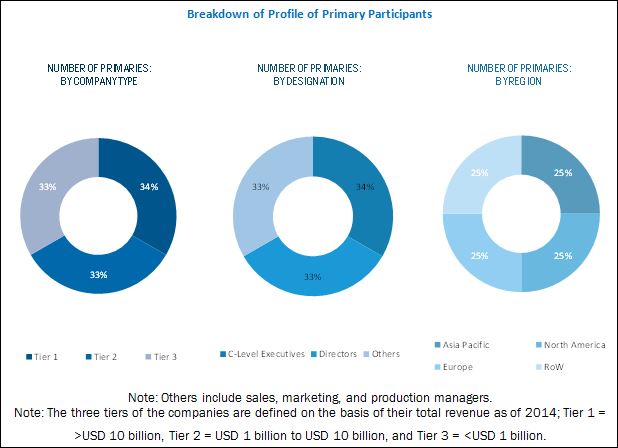
After arriving at the overall market size, the total market has been split into several segments and subsegments, which was further confirmed with the key industry experts. The figure below shows the breakdown of primaries on the basis of company type, designation, and region.
To know about the assumptions considered for the study, download the pdf brochure
The frequency synthesizer market ecosystem includes the manufacturers such as Ultra Electronics (U.K.), Texas Instruments Inc. (U.S.), Analog Devices Inc. (U.S.), National Instruments (U.S.), Qorvo, Inc. (U.S.), FEI-Elcom Tech Inc. (U.S.), and Sivers IMA AB (Sweden).
Scope of the Report:
|
Report Metric |
Details |
|
Base year |
2016 |
|
Forecast period |
2017–2022 |
|
Units |
Value (USD) |
|
Segments covered |
Type, End User, Offerings, and Region |
|
Geographic regions covered |
North America, APAC, Europe, and RoW |
|
Companies covered |
Ultra Electronics (U.K.), Texas Instruments Inc. (U.S.), Analog Devices Inc. (U.S.), National Instruments (U.S.), Qorvo, Inc. (U.S.), FEI-Elcom Tech Inc. (U.S.), and Sivers IMA AB (Sweden) |
Key Target Audience:
- Frequency synthesizer manufacturers
- Telecommunication system integrators
- Military research departments
- Telecommunications governing bodies
- Educational institutes
- Distributers
- Investors
- Research organizations
- Organizations, alliances, and associations related to telecommunication industry
Scope of the Report:
The frequency synthesizer market is segmented into following submarkets
By Application
- Research and Measurement
- Military and Aerospace
- Telecommunications
By Types
- Analog
- Digital
By Components
- Phase Detectors
- Loop Filters
- Oscillators
- Mixers
- Divider
By Region
-
North America
- U.S.
- Canada
- Mexico
-
Europe
- Germany
- U.K.
- France
- Russia
- Rest of Europe
-
Asia Pacific (APAC)
- China
- Japan
- India
- Rest of APAC
-
Rest of the World (RoW)
- Middle East and Africa
- South America
Available Customizations:
With the given market data, MarketsandMarkets offers customizations according to the company’s specific needs. The following customization options are available for the report:
- Company Information: Detailed analysis and profiling of additional market players (up to five)













Growth opportunities and latent adjacency in Frequency Synthesizer Market
I am currently working on a high-speed-on-chip-Direct digital frequency synthesizer towards my PhD/research. The "Frequency Synthesizer Market" sample would be helpful for my dissertation and understanding more into the detail of prospective FS-start up.