Future of the Global Airport Industry to 2040 and Beyond: Key Market Trends Transforming Airports (Connected and Diverse Travelers, Cognitive Airport, Aerotropolis (Airport Cities, Multi-Modal Hubs), Autonomous Airport, Net-Zero Airport, Hyper-Connected Airport, Airports as H2 Hubs)


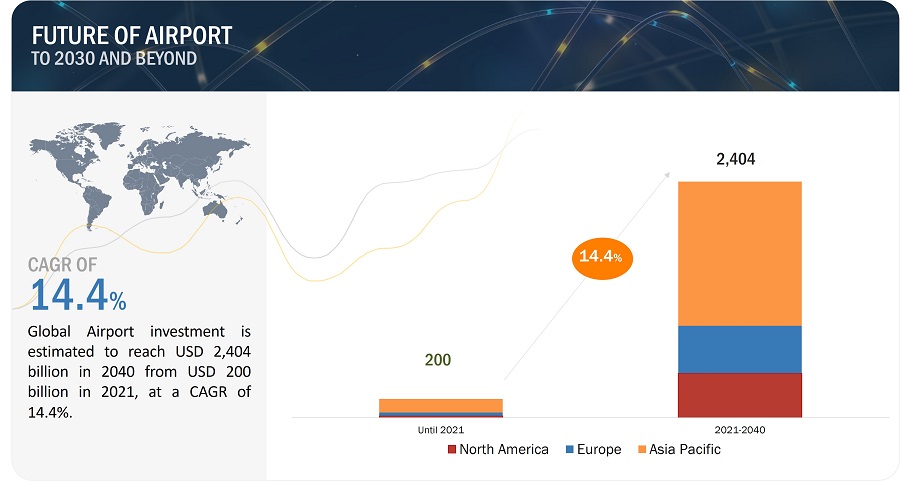
Global Airport investment is estimated to reach USD 2,404 billion in 2040 from USD 200 billion in 2021, at a CAGR of 14.4%.
The surge in airport investments can be attributed to several key drivers, each reflecting broader trends in global commerce, technology, and societal expectations. The increasing demand for air travel, fueled by global economic growth and the rising middle class, necessitates the expansion and modernization of airport infrastructure to accommodate higher passenger volumes and enhance operational efficiency. This growth trajectory is prompting stakeholders to invest in enlarging terminals, upgrading facilities, and integrating cutting-edge technologies to streamline passenger flow and improve the travel experience.
Secondly, the strategic importance of airports as economic hubs cannot be overstated. Airports play a pivotal role in stimulating local economies, facilitating trade, attracting international business, and promoting tourism. By investing in airport development, governments and private entities can spur economic development, create jobs, and enhance their regions' connectivity and competitiveness on the global stage.
The push towards sustainability and the need to address the environmental impact of aviation are driving investments in green technologies and sustainable practices. Airports are adopting innovative solutions to reduce carbon footprints, manage waste more efficiently, and conserve energy, aligning with broader environmental goals and regulatory requirements.
The digital transformation of the aviation industry is a significant factor. Investments in digital technologies, such as biometrics, artificial intelligence, and data analytics, are critical for airports aiming to enhance security, optimize operations, and deliver personalized services. These technologies not only improve efficiency and passenger satisfaction but also provide airports with valuable insights to inform strategic decision-making.
Future of Airport Industry to 2030 and Beyond
To know about the assumptions considered for the study, Request for Free Sample Report
Key Factors Driving Growth In The Market:
Connected and Diverse Travelers:
Airports are transitioning into global hubs that cater to a broad spectrum of demographics, embracing digital tools to offer personalized, seamless experiences. This approach acknowledges the diversity of passenger needs, leveraging data analytics to tailor services and enhance the overall journey.
Cognitive Airports with Metaverse Integration:
The advent of cognitive computing and the metaverse heralds a new era for airport operations and passenger engagement. Airports are set to become more intelligent, using AI and immersive technologies to streamline processes, from security checks to boarding, and offer virtual experiences that redefine waiting times and spaces.
Establishment of Airport Cities:
Airports increasingly become multifaceted spaces that blend travel, business, and leisure. These 'aerotropolises' are integrated ecosystems offering retail, entertainment, and office spaces, transforming airports into destination hubs in their own right.
Urban Air Mobility (UAM) Integration:
The integration of UAM solutions, including drones and eVTOLs (electric vertical takeoff and landing vehicles), is reshaping the concept of urban transportation. This shift not only promises to reduce ground traffic but also to offer faster, more efficient connections between airports and urban centers.
Autonomous Airports:
Automation technologies are set to redefine the operational dynamics of airports. From autonomous baggage handling to self-operating airside vehicles, these innovations aim to boost operational efficiency, reduce human error, and enhance safety.
Net Zero and Sustainable Operations:
Sustainability is becoming a non-negotiable mandate for airports. Initiatives focused on achieving net-zero emissions through renewable energy adoption, sustainable construction practices, and waste reduction are critical in mitigating the environmental impact of airport operations.
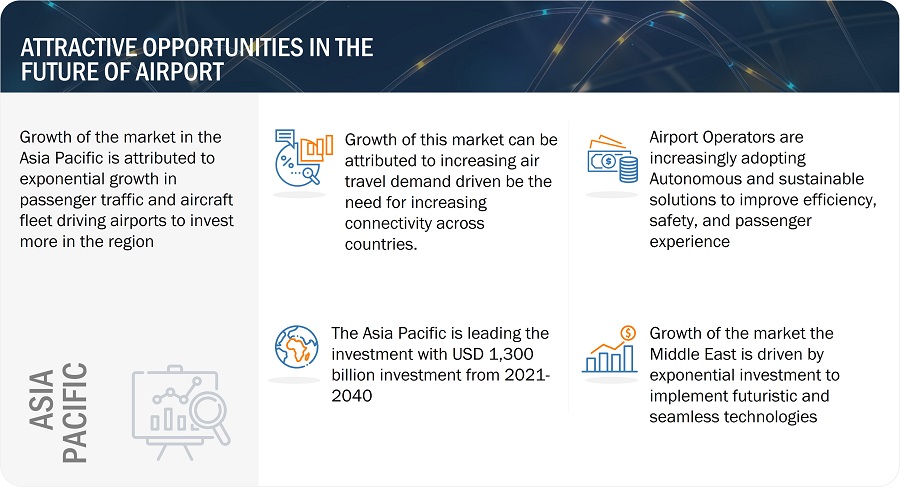
Asia Pacific holds the major share of investment from 2021-2040.
The swift economic progression in the Asia Pacific region, spearheaded by powerhouses such as China and India, is driving an increased need for improved and expanded airport facilities. This enhancement is crucial to accommodate the growing demands of both local and international flights. Given its pivotal role in global aviation as a key nexus for flights connecting the Americas, Europe, and beyond, the Asia Pacific's commitment to advancing its airport infrastructure is essential for sustaining and elevating its strategic significance in the aviation sector.
Key Market Players
The top-performing key players in 2023 were ABB, Siemens, SITA, Raytheon Technologies, Thales Group, Honeywell, and several others. These firms are investing in and collaborating with key figures in the aviation sector, such as airport authorities, air navigation services, systems integrators, and service firms, to introduce innovative technologies that enhance operational efficiency.
Recent Developments
- In 2022, 81% of global travel and tourism expenditure came from leisure trips.
- Airline business travel rebounded to 75% of its pre-pandemic level in 2022 and will recover to 85% in 2023
- In 2023, India has emerged as the 3rd largest market, while China will overtake the US around 2038.
- Beyond 2030, Top tier airports to have smart security corridors for safe and seamless passenger journeys
Frequently Asked Questions (FAQs):
What is the current investment in future of airport?
Global Airport investment is estimated to reach USD 2,404 billion in 2040 from USD 200 billion in 2021, at a CAGR of 14.4%.
What are the driving factor impacting the growth of the future of airport?
The increase in airport investments reflects a multifaceted approach to addressing the growing demands of air travel, economic development, environmental sustainability, and digital innovation.
What are the new market trends impacting the growth of the Future of airport?
Airports are transitioning into global hubs that cater to a broad spectrum of demographics, embracing digital tools to offer personalized, seamless experiences.
Which region will have the fastest-growing Future of airports?
Asia Pacific is expected to be the fastest-growing and largest market in the 2021-2040 period.
To speak to our analyst for a discussion on the above findings, click Speak to Analyst
 Exclusive indicates content/data unique to MarketsandMarkets and not available with any competitors.
Future of Airports Study offers a forward-looking study into the evolving landscape of global aviation industry from 2021 to 2050. It presents a comprehensive analysis of the key trends shaping the future of airports, underpinned by substantial data, insights, and forward-looking projections.
Key Trends Highlighted in the Study:
- Connected and Diverse Travelers: The study delves into the changing demographics and preferences of modern travelers, highlighting the emergence of micro-personas such as solo adventurers, digital influencers, and eco-conscious passengers. Case studies illustrate how airports are adopting personalized services, digital platforms, and tailored amenities to cater to this diversity, ensuring a seamless and enriched travel experience for all.
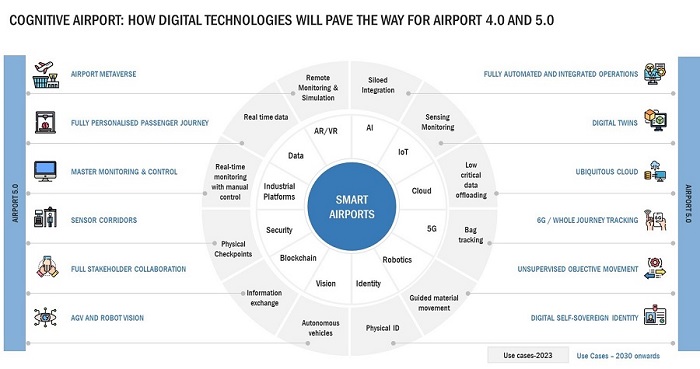
- Cognitive Airports: A focus on airports becoming increasingly 'cognitive' through the use of AI, machine learning, and data analytics to optimize operations, enhance security, and improve passenger experiences. This section explores how airports are transforming into smart ecosystems capable of predictive analytics for crowd management, personalized communication, and automated services.
To know about the assumptions considered for the study, download the pdf brochure
- Emergence of Aerotropolis: The concept of aerotropolis is analyzed, showing airports as central hubs of economic and urban development. This trend is supported by examples of airports around the world that are integrating commercial, residential, and leisure facilities, creating synergistic communities centered around air travel connectivity.
- Intermodal Transportation Integration: This trend emphasizes the importance of seamless connectivity between airports and other modes of transportation, such as rail, road, and maritime services. It examines successful models of intermodal transportation hubs that enhance accessibility, reduce carbon emissions, and improve the overall travel experience.
- Revenue Shifts from Aero to Non-Aero: The report outlines the strategic shift in airport revenue generation, moving from reliance on aeronautical sources to diversifying into non-aeronautical streams, including retail, real estate, and hospitality. This section discusses the financial implications and opportunities for airports in developing comprehensive commercial ecosystems.
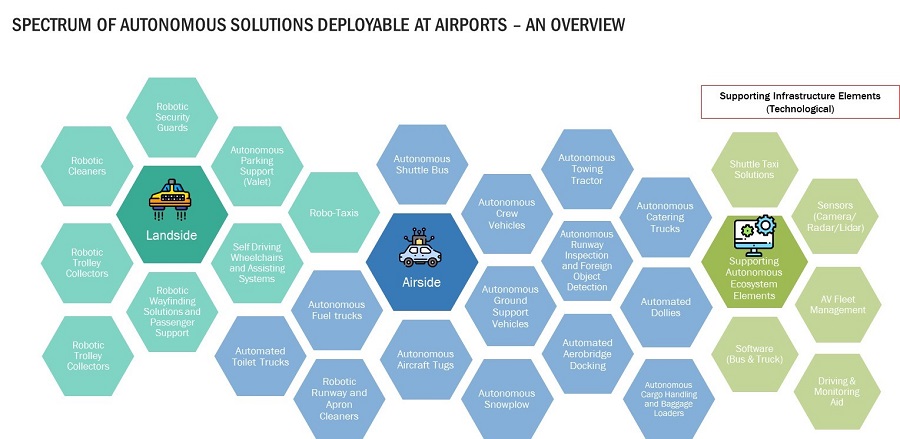
- Autonomous Airport Technologies: An exploration of the adoption of autonomous technologies within airport operations, from self-driving shuttle buses to automated baggage handling systems. The study evaluates the impact on efficiency, safety, and passenger satisfaction, highlighting pioneering airports leading this technological shift.
- Emergence of Net Zero Airports: Lastly, the study addresses the critical trend towards sustainability, with a focus on the aviation industry's efforts to achieve net-zero carbon emissions. It showcases innovative approaches to energy management, waste reduction, and sustainable construction practices, underlining the industry's commitment to environmental stewardship.










Growth opportunities and latent adjacency in Future of the Global Airport Industry to 2040 and Beyond: Key Market