eVTOL Aircraft Market Size, Share, and Trends

eVTOL Aircraft Market Size, Share, and Trends by Lift Technology (Lift+Cruise, Multirotor, Vectored Thrust), Range (<200, >200 km), MTOW (100-1000, 1001-2000, >2000 Kg), Propulsion (Fully Electric, Hybrid Electric), System, Application, and Region - Global Forecast to 2035




EVTOL AIRCRAFT MARKET SIZE, SHARE, AND TRENDS OVERVIEW
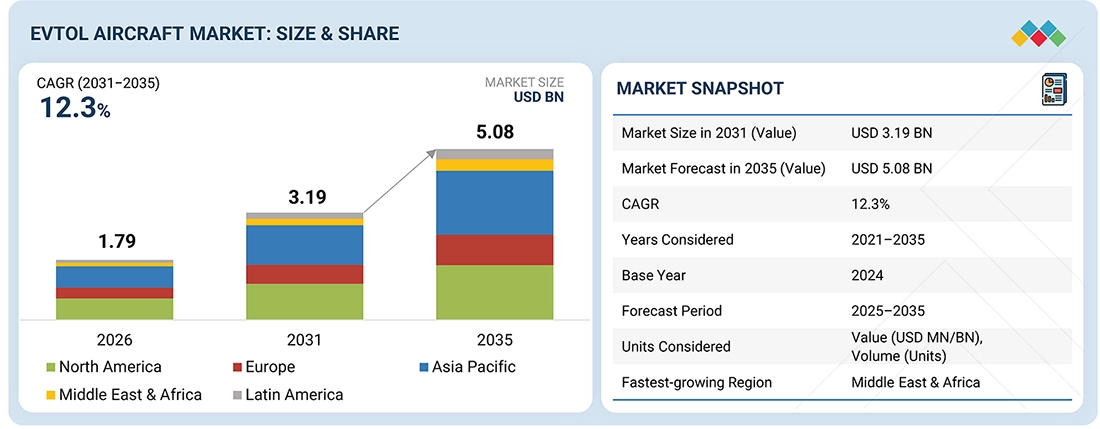
According to Marketsandmarkets, the Global eVTOL Aircraft Market Size was valued at USD 3.19 billion in 2031 and is projected to reach USD 5.08 billion by 2035, growing at a CAGR of 12.3% from 2031–2035. Rapid urbanization is leading to increased road congestion in major cities. Governments and private operators are seeking faster point-to-point transportation options. eVTOL aircraft help meet this demand with shorter travel times and lower operating costs compared to helicopters.
MARKET SNAPSHOT TABLE
| REPORT METRIC | DETAILS |
|---|---|
| Market Size in 2031 (Value) | USD 3.19 BN |
| Market Forecast in 2035 (Value) | USD 5.08 BN |
| Growth Rate | 12.3% (2031–2035) |
| Years Considered | 2021–2035 |
| Base Year | 2024 |
| Forecast Period | 2025–2035 |
| Units Considered | Value (USD MN/BN), Volume (Units) |
| Report Coverage | Revenue forecast, company ranking, competitive landscape, growth factors, and trends |
| Top Companies |
|
| Growth Drivers |
|
| Segments Covered |
|
| Regions Covered | North America, Europe, Asia Pacific, Middle East & Africa, Latin America |
Market Size & Forecast
• 2031 Market Size (Value): USD 3.19 BN
• 2035 Market Forecast (Value): USD 5.08 BN
• CAGR: 12.3% (2031–2035)
• Asia Pacific: Largest Market Share of 98.2% in 2025
• Fully Autonomous Segment: Grow at The Fastest Rate From 2025 to 2030
KEY TAKEAWAYS
-
By RegionAsia Pacific held the largest market share of 98.2% in 2025.
-
By Lift TechnologyThe lift plus cruise segment is expected to record the highest CAGR of 13.9% from 2031 to 2035.
-
By Mode of OperationThe fully autonomous segment is projected to grow at the fastest rate from 2025 to 2030.
-
By ApplicationThe cargo transport/last-mile delivery segment will exhibit the fastest growth during the forecast period.
-
Competitive LandscapeArcher Aviation Inc., Eve Holding, Inc., EHang, and Joby Aviation are all recognized as key players in the eVTOL aircraft market. These companies hold strong positions due to their established product portfolios and wide operational presence. Their solutions are deployed across multiple regions and mission profiles. Continued investment in product development supports their market standing.
-
Competitive LandscapeSkyDrive Inc. and Electra.Aero are considered emerging leaders and have distinguished themselves in the eVTOL aircraft market due to strong product innovation and technological advancement.
The eVTOL Aircraft Industry is driven by several factors. Improvements in battery performance help increase the operating range and dependability. Cities are pushing for cleaner transportation options, while premium travelers prefer faster point-to-point travel. These factors together support steady growth in the global market.
Source: Secondary Research, Interviews with Experts, MarketsandMarkets Analysis
TRENDS & DISRUPTIONS IMPACTING CUSTOMERS' CUSTOMERS
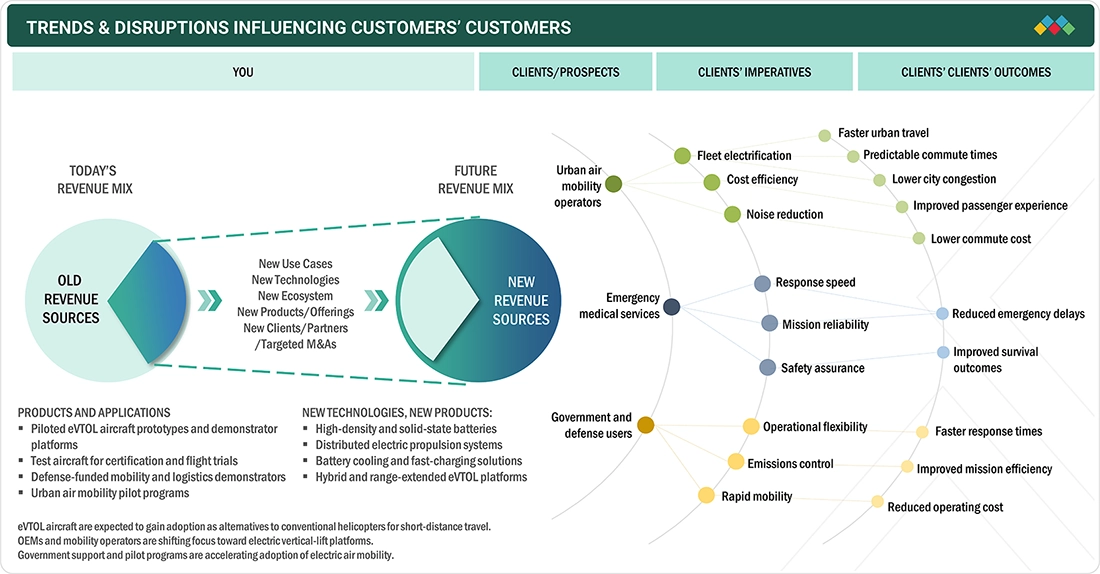
The eVTOL aircraft market is shifting toward automation and digital airspace systems, which is transforming competition as software and battery technology become more important than traditional aircraft design. Companies are investing in AI-based flight control and advanced electric propulsion to improve safety and efficiency. This shift is bringing new technology players into the market and pushing traditional aerospace firms to adapt quickly.
Source: Secondary Research, Interviews with Experts, MarketsandMarkets Analysis
MARKET DYNAMICS

Level
-
Elevated demand for new mobility solutions

-
Innovations in electric propulsion and battery technology


Level
-
Regulatory and certification uncertainty

-
Limited battery range and payload constraints


Level
-
Expansion into medical and emergency services

-
Rise of cargo and logistics applications


Level
-
Infrastructure development and integration

-
Poor public acceptance and safety perception

Source: Secondary Research, Interviews with Experts, MarketsandMarkets Analysis
Driver: Growing demand for urban air mobility
Rising traffic congestion and urbanization are increasing demand for faster city transport solutions. eVTOL aircraft offer low-emission and time-saving alternatives, which are accelerating investments and partnerships.
Restraint: Regulatory and certification uncertainty
Evolving safety standards for electric propulsion and autonomous systems are causing delays in approvals. Varying regulations across countries are raising costs and hindering market entry.
Opportunity: Expansion into medical and emergency services
eVTOL aircraft can facilitate emergency medical transport and disaster response with quicker deployment in urban and remote areas. Early adoption in this segment can create initial revenue opportunities.
Challenge: Infrastructure development and integration
Limited vertiports and charging infrastructure hinder large-scale deployment. Strong coordination between governments and private sector is essential for seamless integration.
EVTOL AIRCRAFT MARKET: COMMERCIAL USE CASES ACROSS INDUSTRIES
| COMPANY | USE CASE DESCRIPTION | BENEFITS |
|---|---|---|
 |
Integrated urban air traffic management and vertiport network planning for scalable urban air mobility operations. | Improves airspace coordination, boosts operational safety, minimizes congestion risk, and facilitates efficient fleet deployment. |
 |
All-electric air taxi operations with vertical takeoff capability for short-range urban and airport connectivity. | Reduces travel time, cuts operating emissions, minimizes noise, and promotes sustainable urban transport. |
 |
High-frequency urban shuttle services using electric vertical lift aircraft for city-to-city mobility. | Increases route flexibility, supports quick passenger turnaround, lowers per-trip operating costs, and improves urban connectivity. |
 |
Autonomous passenger eVTOL deployment for pilotless urban air mobility and smart city integration. | Removes pilot dependency, boosts fleet scalability, improves safety with automated control systems, and supports smart transportation ecosystems. |
Logos and trademarks shown above are the property of their respective owners. Their use here is for informational and illustrative purposes only.
MARKET ECOSYSTEM
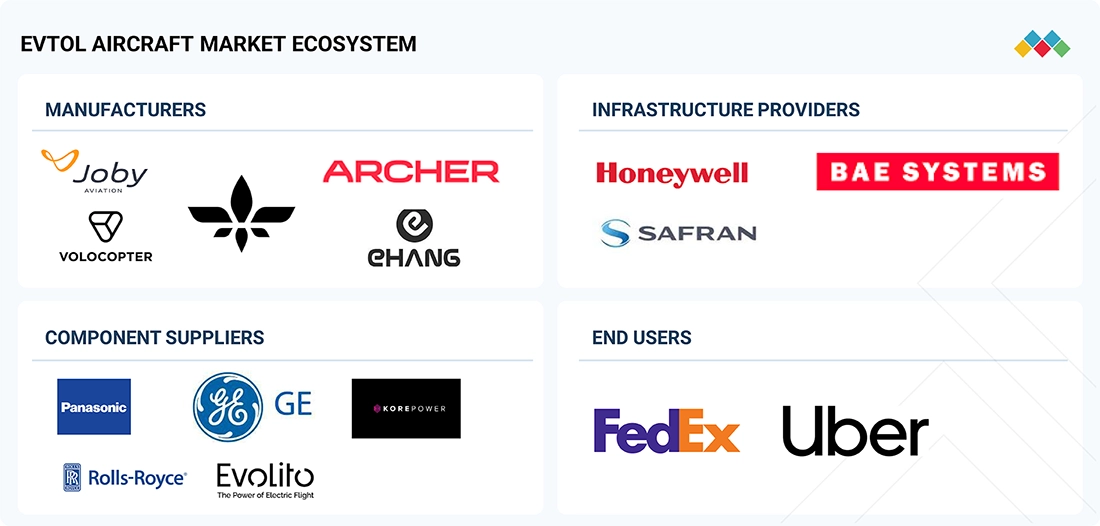
The eVTOL aircraft market ecosystem includes manufacturers like Eve Holdings Inc., Archer Aviation, Vertical Aerospace, and EHang that develop electric vertical takeoff and landing aircraft for urban mobility. Technology providers such as Honeywell, Rolls-Royce, Thales, and Safran support the market with propulsion systems, avionics, and flight control solutions. End users, including DHL, UPS, Japan Airlines, United Airlines, and the US Department of Defense, are considering eVTOL platforms for passenger transport, cargo logistics, and defense operations.
Logos and trademarks shown above are the property of their respective owners. Their use here is for informational and illustrative purposes only.
MARKET SEGMENTS
Source: Secondary Research, Interviews with Experts, MarketsandMarkets Analysis
eVTOL Aircraft Market, By Lift Technology
The multirotor segment dominates the market because it provides better stability and a simpler mechanical design, which reduces development risk. It is preferred for urban operations since it allows for precise vertical takeoff and landing in confined spaces. Manufacturers also concentrate on this configuration to speed up certification and early commercialization.
eVTOL Aircraft Market, By MTOW
The 1,001–2,000 kg segment holds the largest market share because it offers an ideal balance between passenger capacity and battery efficiency for urban air mobility. It supports short to medium-range routes, making it suitable for city transportation networks. Operators choose this weight class because it enhances revenue potential while keeping operational efficiency.
eVTOL Aircraft Market, By Propulsion
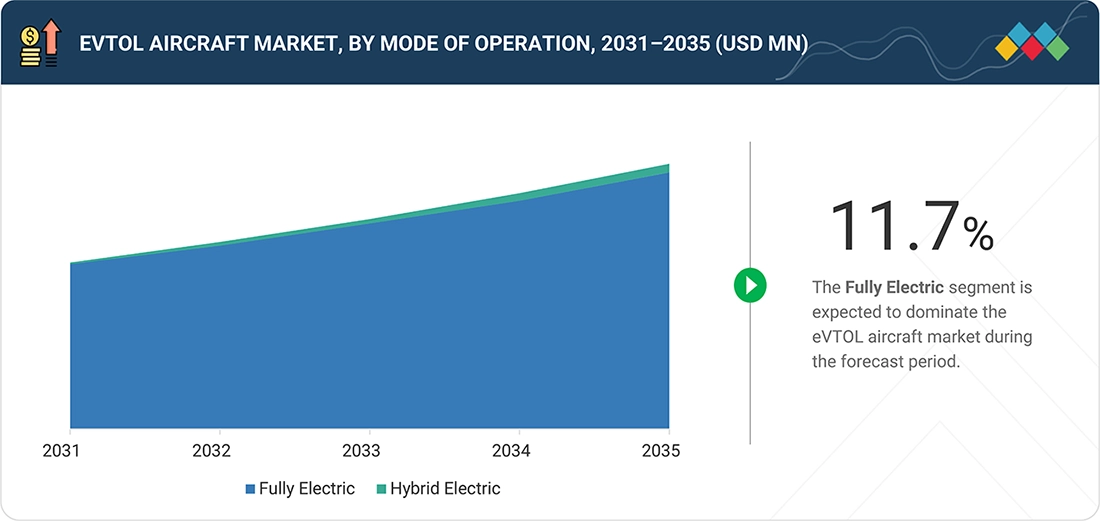
The fully electric segment dominates the market because it supports zero-emission operations and quieter performance, which are essential for urban use. It reduces reliance on fuel and aligns with government sustainability goals. Manufacturers are focusing on fully electric platforms as battery technology continues to improve.
eVTOL Aircraft Market, By Operating Range
The ≤200 km segment dominates the market because most urban air mobility routes are short-distance city or airport transfers. Short-range operations need less battery capacity, which reduces aircraft weight and cost. Operators prefer this range because it improves turnaround time and increases route frequency.
eVTOL Aircraft Market, By System
The batteries & cells segment dominates the market because energy storage is the key component that determines performance and range. Ongoing investment in advanced lithium-based battery technology is fueling innovation. Companies emphasize battery efficiency because it directly affects safety, endurance, and operating costs.
eVTOL Aircraft Market, By Mode of Operation
The piloted segment dominates the market because regulatory authorities currently require onboard pilots for certification and commercial approval. It boosts passenger confidence during early deployment phases. Companies are adopting piloted operations first so they can enter the market faster while autonomous frameworks continue to develop.
eVTOL Aircraft Market, By Application
The special mission & other applications segment leads the market as defense, emergency response, and surveillance use cases enable early adoption with controlled operations. These applications encounter fewer passenger-related certification barriers. Governments and agencies are investing in this segment because it supports critical operations and technology validation.
REGION
Middle East & Africa to be fastest-growing region in during forecast period
The Middle East & Africa is expected to be the fastest-growing region because governments in the UAE and Saudi Arabia are investing heavily in smart city initiatives and advanced air mobility infrastructure. The region is encouraging innovation-friendly regulations and public-private partnerships to speed up eVTOL deployment. A strong emphasis on tourism, luxury mobility, and futuristic transportation solutions is fueling early adoption across major cities.
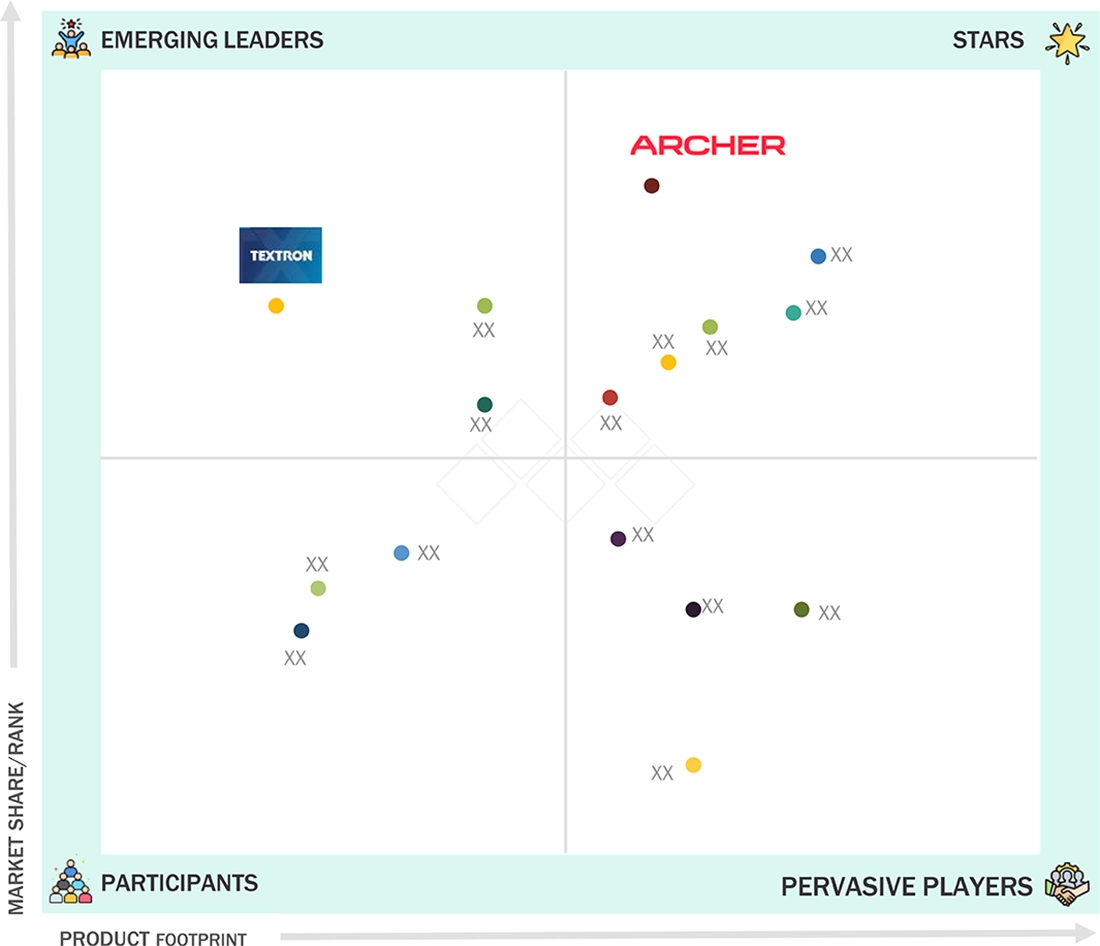
EVTOL AIRCRAFT MARKET: COMPANY EVALUATION MATRIX
Archer Aviation Inc. (Star) leads the eVTOL aircraft market with its advanced electric air taxi platform focused on urban mobility, a strong order pipeline, and strategic airline partnerships supporting commercialization. Airbus (Emerging Leader) is growing its presence with innovative electric vertical takeoff and landing prototypes and advanced aerospace expertise, driving progress in electric propulsion and sustainable aviation technologies.
Source: Secondary Research, Interviews with Experts, MarketsandMarkets Analysis
KEY MARKET PLAYERS
List of Top eVTOL Aircraft Market Companies
- Archer Aviation Inc.
- Eve Holding, Inc.
- Ehang
- Joby Aviation
- Airbus
- Textron Inc.
- Wisk Aero
- Jaunt Air Mobility LLC
- Vertical Aerospace
- BETA Technologies
- DIAMOND AIRCRAFT INDUSTRIES
- XTI Aerospace
- LIFT Aircraft Inc.
- AutoFlight
- Volant Aerotech
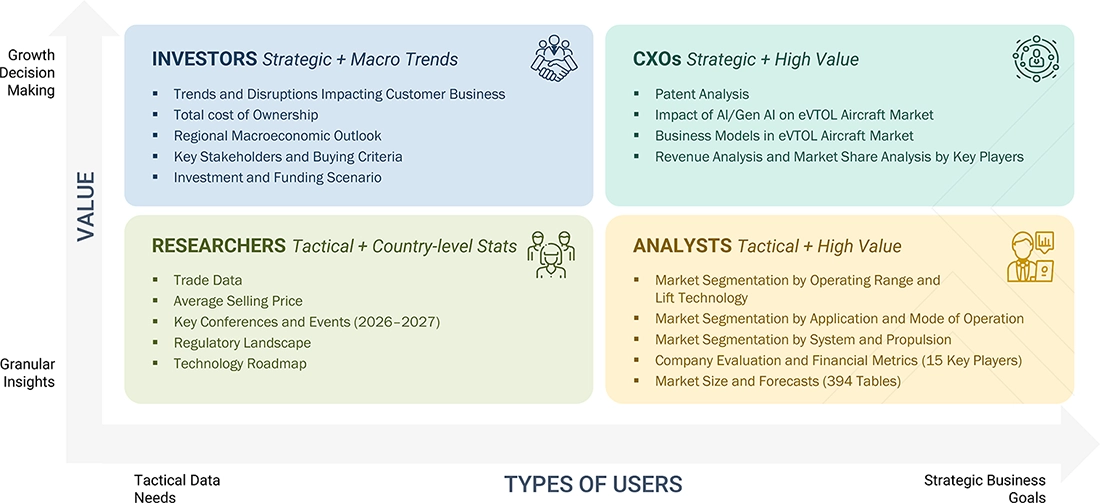
WHAT IS IN IT FOR YOU: EVTOL AIRCRAFT MARKET REPORT CONTENT GUIDE
DELIVERED CUSTOMIZATIONS
We have successfully delivered the following deep-dive customizations:
| CLIENT REQUEST | CUSTOMIZATION DELIVERED | VALUE ADDS |
|---|---|---|
| Leading Manufacturer | Additional segment breakdown for countries | Additional country-level market sizing tables for segments/sub-segments covered at regional/global level to gain understanding of market potential by each country |
| Emerging Leader | Additional company profiles | Competitive information on targeted players to gain granular insights on direct competition |
| Regional Market Leader | Additional country market estimates | Additional country-level deep dive for more targeted understanding of total addressable market |
RECENT DEVELOPMENTS
- September 2026 : Tata Elxsi and Sarla Aviation signed an MoU to accelerate development of Shunya, a six-seater-plus-pilot electric vertical take-off and landing (eVTOL) aircraft. Tata Elxsi will support avionics, flight-control software, testing, verification, validation, and certification. Shunya is designed for a 300+ km range and runway-independent operations. Its first flight is targeted within 18–24 months, followed by certification activities. The partnership strengthens India’s advanced air mobility ecosystem and moves Sarla Aviation’s Shunya closer to commercial readiness.
- August 2026 : The Airplane Farm has announced three eVTOL aircraft designs—the Harvest, Storm, and BarnCat—targeting personal transportation, aerobatic flying, and optionally piloted tactical operations. All three aircraft are built around the company’s patent-pending Electric PowerWing airframe concept, with prototype construction and initial testing already underway. The Harvest is projected to reach about 111 mph with a 76-mile continuous cruise range, while the Storm targets 250 mph and +8/-4 G loads, and the BarnCat is designed as a carbon-fiber, twin-engine tail-sitter with a 275-mph maximum speed.
- July 2026 : Eve Air Mobility signed a Letter of Intent with Shearwater Global Capital, Bay Point’s aviation finance company, for up to 16 eVTOL aircraft. The agreement expands Shearwater’s aviation finance platform into advanced air mobility and supports its strategy to provide leasing solutions for emerging eVTOL assets. Shearwater Global Capital and Bay Point plan to leverage Eve’s aircraft commitments and integrated ecosystem to help operators access aircraft and accelerate fleet deployment. The development reflects growing commercial interest in financing and leasing solutions as the advanced air mobility sector moves toward commercialization.
- July 2026 : Vertical Aerospace made the first public flight demonstration of its full-scale eVTOL prototype at the Farnborough International Airshow, marking the first eVTOL flying display at the event. The aircraft demonstrated vertical takeoff, transition to wing-borne flight, and vertical landing, showcasing the core flight capabilities being developed for the company’s commercial Valo aircraft. The demonstration followed the UK Civil Aviation Authority’s expansion of Vertical’s Permit to Fly to enable public flights away from its Cotswold Airport flight-test center. Valo is progressing toward certification, with the company targeting completion of its Critical Design Review by the end of 2026 and early production assembly during the third quarter
- July 2026 : Archer Aviation consolidated its federal lobbying strategy around eVTOL aircraft, reporting a Q2 2026 lobbying expenditure of $120,000 through a single firm. The move represents a significant reduction from its broader multi-firm approach in 2025, when the company worked with as many as four lobbying firms simultaneously. Archer Aviation is using the engagement to educate policymakers on eVTOL technology, monitor implementation of the FAA Reauthorization Act of 2024, and advocate for eVTOL aircraft, infrastructure, and supply-chain programs. Its lobbying also tracks Department of Energy funding and loan opportunities for battery manufacturing, highlighting the importance of supporting technologies for eVTOL commercialization.
Table of Contents
 Exclusive indicates content/data unique to MarketsandMarkets and not available with any competitors.
Methodology
The study used four main steps to estimate the size of the eVTOL aircraft market. Secondary research was carried out to collect data on eVTOL aircraft systems. These findings were checked through primary talks with defence firms, system suppliers, and procurement teams. The research team reviewed defense budgets, order plans, and active field use to estimate demand. Market figures were then broken into segments by lift technology, MTOW, propulsion, operating range, system, mode of operation, application, and region. Data triangulation was applied to confirm the final numbers for each segment and sub-segment.
Secondary Research
Secondary research was used to build the base for this study. Information was collected from civil aviation authorities, transport regulators, and urban air mobility programs. Company data was reviewed from annual reports, certification updates, press releases, and investor disclosures of eVTOL aircraft developers. The study also reviewed white papers, aviation journals, and published research on electric aviation and advanced air mobility. Additional inputs were taken from aerospace industry platforms and mobility associations to understand market trends and regional adoption.
Primary Research
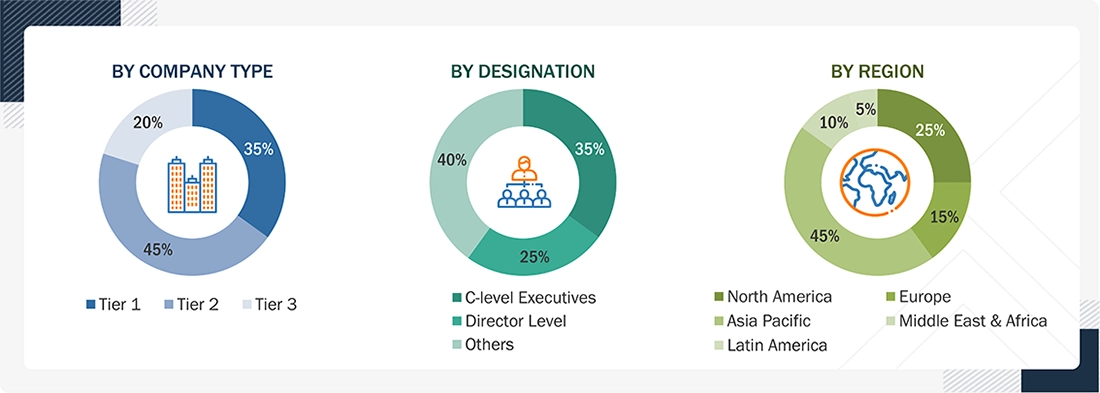
Primary research was carried out after key findings from secondary analysis were defined. The study team engaged with executives, engineers, operators, and suppliers active in the eVTOL aircraft ecosystem. Discussions included manufacturers, mobility service providers, infrastructure partners, and regulatory experts across major regions. Interviews were conducted through calls and written exchanges to validate market size estimates and user requirements. These inputs helped refine views on competition, deployment plans, and technology progress. Feedback was also used to adjust assumptions and improve data accuracy
To know about the assumptions considered for the study, download the pdf brochure
Market Size Estimation
Top-down and bottom-up approaches were used to estimate and validate the size of the eVTOL aircraft market. The research methodology included several steps to ensure accuracy:
- Key companies active in the eVTOL aircraft market were identified through secondary research. Their market shares were assessed using a mix of primary inputs and published data. This included reviewing annual reports, financial disclosures, certification updates, and public filings from leading eVTOL developers. Interviews were also conducted with industry participants such as company executives, program managers, operators, infrastructure providers, and aviation experts. These inputs were used to validate assumptions and refine market size estimates across regions.
- All percentage shares, segment splits, and market breakdowns were first developed using secondary information. These values were then verified through primary discussions with industry participants.
- Key factors affecting the eVTOL aircraft market were assessed in the analysis. These included regulatory frameworks, certification timelines, technology progress, infrastructure readiness, and investment activity. Each factor was reviewed through primary research and used to finalize both quantitative and qualitative market estimates for this report.
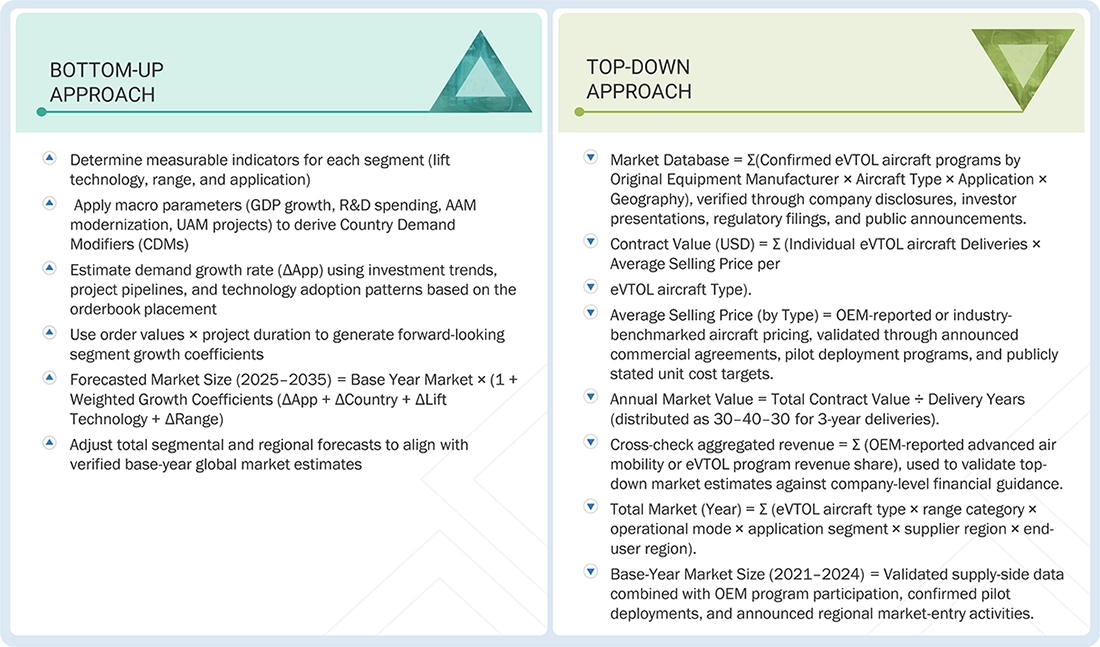
eVTOL Aircraft Market : Top-Down and Bottom-Up Approach
Data Triangulation
After determining the overall market size, the total market was divided into several segments and subsegments. The data triangulation and market breakdown procedures explained below were implemented, wherever applicable, to complete the overall market engineering process and arrive at the estimated market numbers for the market segments and subsegments. The data was triangulated by studying various factors and trends from the demand and supply sides. Additionally, the market size was validated using top-down and bottom-up approaches.
Market Definition
The eVTOL aircraft market focuses on technologies that streamline and optimize airport operations, integrating software, hardware, and real-time data for efficient passenger processing, flight management, resource allocation, and security. Key components like departure control systems (DCS), airport operational databases (AODB), and flight information display systems (FIDS) enhance decision-making, operational efficiency, and passenger experiences. Meanwhile, airport information systems (AIS) support applications in baggage handling, airside management, and dynamic revenue optimization while fostering collaboration among airlines, air traffic control, airport authorities, and ground handlers. They are vital for smarter, more connected airport ecosystems by addressing congestion, improving security, and enabling sustainable practices.
Key Stakeholders
- Raw material suppliers (aluminum alloys, composites, battery materials, electronic components)
- Propulsion system suppliers (electric motors, power electronics, energy storage systems)
- Airframe and structural component manufacturers (fuselage, wings, rotors)
- eVTOL aircraft manufacturers and original equipment manufacturers
- Avionics and flight control system providers (navigation, communication, fly-by-wire systems)
- Battery technology and energy management system providers
- Software and autonomy solution providers (flight management, vehicle control, autonomy systems)
- System integrators and Tier-1 aerospace suppliers
- Vertiport infrastructure developers and charging solution providers
- MRO service providers
- Urban air mobility operators and air taxi service providers
- Civil aviation authorities and regulatory bodies
Report Objectives
- To define, describe, and forecast the size of the eVTOL aircraft market, in terms of value, based on lift technology, MTOW, propulsion, operating range, system, mode of operation, application, and region
- To forecast the size of market segments with respect to five regions, namely North America, Europe, Asia Pacific, Middle East & Africa, and Latin America, along with key countries in each region
- To identify and analyze drivers, restraints, opportunities, and challenges influencing the growth of the market
- To identify industry trends, market trends, and technology trends currently prevailing in the market
- To provide an overview of the tariff and regulatory landscape with respect to drone regulations worldwide
- To analyze micro markets with respect to individual growth trends, prospects, and their contribution to the overall market
- To analyze opportunities in the market for stakeholders by identifying key market trends
- To profile prominent market players and comprehensively analyze their market shares and core competencies
- To analyze the degree of competition by identifying key growth strategies, such as contracts, partnerships, and collaborations, adopted by leading market players
- To identify detailed financial positions, key products, and unique selling points of leading companies in the market
- To analyze the degree of competition in the market by identifying growth strategies, such as agreements, acquisitions, partnerships, collaborations, and product launches, adopted by leading market players
Available customizations:
MarketsandMarkets offers the following customizations for this report:
- Additional country-level analysis of the eVTOL aircraft market
- Profiling of other market players (up to five)
Product Analysis
- Product matrix, which provides a detailed comparison of the product portfolio of each company in the eVTOL aircraft market
Key Questions Addressed by the Report
How is the eVTOL aircraft market expected to grow by 2035?
The global eVTOL aircraft market is projected to grow from USD 3.19 billion in 2031 to USD 5.08 billion by 2035, registering a CAGR of 12.3% during the forecast period.
What is the primary factor driving demand for eVTOL aircraft worldwide?
Rapid urbanization and increasing road congestion are creating demand for faster point to point transportation solutions, with eVTOL aircraft offering shorter travel times and lower operating costs compared with conventional helicopters.
Which lift technology segment is expected to experience the fastest growth?
The lift plus cruise segment is projected to register the highest CAGR of 13.9% from 2031 to 2035 due to its ability to combine efficient forward flight with vertical takeoff and landing capabilities.
How are advancements in battery technology supporting eVTOL market growth?
Improvements in battery performance are increasing operating range, enhancing aircraft reliability, supporting zero emission operations, and making fully electric urban air mobility solutions more commercially viable.
What opportunity is emerging for eVTOL aircraft beyond passenger transportation?
Medical transport, emergency response, and disaster relief operations present significant opportunities because eVTOL aircraft can provide rapid deployment and access to urban and remote locations where speed is critical.
Why is infrastructure development considered a major challenge for eVTOL deployment?
Limited availability of vertiports, charging facilities, and supporting air mobility infrastructure restricts large scale deployment and requires close coordination between governments, regulators, and private operators.
Which application segment currently leads the eVTOL aircraft market?
The special mission and other applications segment leads the market because defense, surveillance, and emergency response missions allow earlier deployment with fewer passenger certification requirements.
Why do piloted eVTOL aircraft currently dominate the market despite advancements in autonomy?
Piloted aircraft dominate because regulatory authorities generally require onboard pilots for certification and commercial approval, while autonomous operating frameworks continue to evolve and mature.
Which region is expected to witness the fastest growth in the eVTOL aircraft market?
The Middle East and Africa is expected to be the fastest growing region due to significant investments in smart city projects, advanced air mobility infrastructure, tourism initiatives, and innovation friendly regulatory frameworks.
Which companies are recognized as leading participants in the eVTOL aircraft market?
Archer Aviation Inc., Eve Holding, Inc., EHang, Joby Aviation, Airbus, and Textron Inc. are among the leading companies, with Archer Aviation recognized for its strong electric air taxi platform and commercialization strategy.


Personalize This Research
- Triangulate with your Own Data
- Get Data as per your Format and Definition
- Gain a Deeper Dive on a Specific Application, Geography, Customer or Competitor
- Any level of Personalization
Let Us Help You
- What are the Known and Unknown Adjacencies Impacting the eVTOL Aircraft Market
- What will your New Revenue Sources be?
- Who will be your Top Customer; what will make them switch?
- Defend your Market Share or Win Competitors
- Get a Scorecard for Target Partners

Custom Market Research Services
We Will Customise The Research For You, In Case The Report Listed Above Does Not Meet With Your Requirements
Get 10% Free CustomisationTESTIMONIALS
- US eVTOL Aircraft Market
- Canada eVTOL Aircraft Market
- UK eVTOL Aircraft Market
- Germany eVTOL Aircraft Market
- France eVTOL Aircraft Market
- Spain eVTOL Aircraft Market
- Ireland eVTOL Aircraft Market
- China eVTOL Aircraft Market
- India eVTOL Aircraft Market
- Japan eVTOL Aircraft Market
- Australia eVTOL Aircraft Market
- South Korea eVTOL Aircraft Market
- UAE eVTOL Aircraft Market
- Saudi Arabia eVTOL Aircraft Market
- South Africa eVTOL Aircraft Market
- Brazil eVTOL Aircraft Market
- Mexico eVTOL Aircraft Market
- Argentina eVTOL Aircraft Market
- Rest Of Europe eVTOL Aircraft Market
- Rest Of Asia Pacific eVTOL Aircraft Market
Growth opportunities and latent adjacency in eVTOL Aircraft Market




Soumyadeb
Aug, 2019
Surveying new developments in the aerospace market - the abstract would enable the management to judge if further study in the area is required. .
Daniel
May, 2026
Does the report examine the rising importance of cargo transport and last-mile delivery applications, including use cases such as the Elroy Air Chaparral C1 platform and logistics-focused deployment strategies?.
Brandon
May, 2026
Can the report assess the impact of AI/Gen AI technologies on predictive diagnostics, autonomous flight management, fleet optimization, situational awareness systems, and digital vertiport operations?.
Tylo
May, 2019
We are currently researching and developing out own evtol craft, and I am seeking more information on the economics of the evtol market..