G.Fast Chipset Market by Deployment Type (DPU and CPE), End User (Residential, and Enterprise/Commercial), Copper-Line Length (Lines Shorter Than 100 Meters, Lines Of 100 Meters–150 Meters, Lines Longer Than 250 Meters) - Global Forecast to 2035


G.Fast Chipset Market Summary
The global G.Fast Chipset Market is entering a strong expansion phase as telecom operators seek cost-efficient ways to deliver gigabit-class broadband over existing copper infrastructure while fiber deployments continue to expand. Based on a synthesis of recent industry estimates, the market is estimated at approximately US$4.1–6.9 billion in 2025 and is projected to reach approximately US$47–50 billion by 2035, representing a CAGR of roughly 25%–27% from 2025 to 2035. Published estimates vary considerably because market definitions differ, particularly around chipset revenue, deployment equipment, and advanced G.mgfast profiles.
The primary growth drivers include increasing demand for high-speed broadband, continued utilization of legacy copper networks, the high capital cost of complete fiber replacement, urban broadband expansion, and increasing adoption of connected devices. G.Fast chipsets enable operators to upgrade access speeds without immediately replacing every last-mile copper connection. The evolution toward higher-frequency profiles, compact distribution point units, intelligent network management, and software-defined broadband architectures is creating additional opportunities. AI-assisted network monitoring, IoT connectivity, automation, and cloud-based service management are also increasing the value of intelligent broadband access infrastructure.
Key Market Trends & Insights
The Asia Pacific region represents one of the most important markets for G.Fast chipset deployment, supported by extensive broadband infrastructure, large subscriber bases, urbanization, and continued investment in high-speed connectivity. One recent estimate placed Asia Pacific at 34.11% of the global market in 2025.
North America remains a major mature market, benefiting from broadband modernization, multi-dwelling-unit connectivity requirements, and operators' efforts to maximize the value of existing access infrastructure. The Business Research Company identifies North America as the largest regional market in 2025.
The Distribution Point Unit (DPU) chipset segment is a leading deployment category because operators can position intelligent access equipment close to subscribers and reuse existing copper connections. DPU chipsets represented approximately 55.74% of market revenue in 2025 in one recent market assessment.
The 212 MHz G.Fast profile currently has a strong installed-market position, while 424 MHz G.mgfast technology is emerging as an important innovation area for short copper loops and applications requiring higher symmetrical bandwidth.
AI and automation are increasingly being applied to network diagnostics, predictive maintenance, traffic optimization, fault detection, and service assurance. While AI is not the fundamental transmission technology behind G.Fast, it can improve the operational efficiency of networks built around G.Fast-enabled access equipment.
Market Size & Forecast
-
Base year market size (2025): US$4.1–6.9 Billion
-
Forecast value by 2035: US$47–50 Billion
-
CAGR: approximately 25%–27% from 2025 to 2035
-
Growth factors: Demand for gigabit broadband, hybrid fiber-copper architectures, lower deployment costs, urban broadband expansion, smart-device proliferation, and continued investment in advanced access silicon.
Recent market studies show a broad range of estimates. The Business Research Company estimates the market at US$4.14 billion in 2025 and US$13.61 billion in 2030, while Lucintel projects US$19.7 billion by 2031. Other 2026 estimates are substantially higher because of different market definitions and methodologies.
AI-Powered Military Transformation: The Future of Smart Combat and Defense Top 10 Key Takeaway
-
The G.Fast Chipset Market is benefiting from growing demand for high-speed broadband connectivity.
-
Existing copper infrastructure remains commercially valuable where full fiber replacement is expensive or difficult.
-
Distribution Point Unit chipsets are a major deployment segment because they support efficient last-mile modernization.
-
Higher-frequency 424 MHz G.mgfast profiles are emerging as an important technology opportunity.
-
Multi-dwelling-unit broadband is a significant application area because of concentrated subscriber density.
-
AI-enabled network analytics can improve fault detection, predictive maintenance, and service assurance.
-
IoT expansion is increasing demand for reliable, high-capacity access networks.
-
Asia Pacific offers strong long-term growth potential because of broadband expansion and digitalization.
-
Semiconductor process-node improvements can support lower power consumption and greater chipset integration.
-
G.Fast will increasingly operate as part of hybrid fiber-copper strategies rather than as a standalone alternative to fiber.
Product Insights
The Distribution Point Unit (DPU) chipset segment is expected to remain highly significant throughout the forecast period. DPUs allow network operators to bring advanced processing and broadband intelligence closer to end users while retaining portions of existing copper infrastructure. This approach can reduce the need for immediate full-premises fiber replacement and is particularly useful in buildings, neighborhoods, and locations where existing twisted-pair infrastructure remains technically viable.
Customer Premises Equipment (CPE) chipsets form another important product category. These chipsets are incorporated into residential gateways, modems, routers, and broadband termination equipment. As consumers increasingly use cloud applications, video streaming, gaming, remote-work platforms, smart-home devices, and connected appliances, the need for higher broadband performance at the customer endpoint continues to increase.
Emerging products are expected to emphasize multi-profile support, improved vectoring, greater power efficiency, advanced diagnostics, and compatibility with evolving broadband architectures. Semiconductor integration is also allowing manufacturers to combine more networking functions into compact chipsets. AI-assisted diagnostics and automated configuration capabilities could become differentiating features as service providers seek to reduce operating costs.
Technology / Component Insights
G.Fast chipsets rely on advanced digital signal processing, vectoring, line management, analog front-end technologies, and high-speed data transmission architectures to maximize performance over short copper loops. Vectoring remains particularly important because it helps reduce interference between copper pairs and improves achievable throughput.
The migration toward higher-frequency G.mgfast profiles is one of the key technology trends. The 424 MHz profile is attracting attention because it expands available spectrum and can support higher symmetrical broadband speeds over appropriately short copper connections. Recent market analysis forecasts the 424 MHz segment to grow faster than established profiles.
AI, IoT, cloud computing, and automation are influencing the broader access-network ecosystem. AI-based analytics can analyze line performance and identify potential faults before they become service-impacting events. IoT systems can provide continuous operational data, while cloud platforms enable centralized monitoring and network orchestration. Automation can reduce manual configuration and accelerate broadband service activation.
Future chipset innovation is likely to focus on smaller semiconductor process nodes, improved thermal efficiency, integrated security, higher processing capability, and software-defined functionality. Recent market analysis indicates increasing interest in 7–10 nm designs as manufacturers seek greater performance and integration.
Application Insights
Multi-dwelling-unit broadband represents one of the most attractive applications because apartment buildings and other high-density properties can benefit from high-speed connectivity without requiring complete replacement of every internal copper connection. One recent estimate placed MDU broadband at approximately 42.63% of G.Fast chipset revenue in 2025.
Single-family FTTC and FTTB deployments also provide opportunities where operators have already brought fiber close to customers but need an economical final connection technology. G.Fast can function as an intermediate modernization technology in these environments.
Small-cell and Wi-Fi offload backhaul represent emerging opportunities as mobile and enterprise networks require more distributed connectivity. Industrial IoT and smart-grid backhaul can also create specialized demand where reliable high-speed access is required but complete fiber deployment is not economically attractive.
Future application growth will increasingly depend on how effectively G.Fast can complement fiber rather than compete directly with fiber. Its strongest opportunity is likely to remain in short-loop, high-density, brownfield environments where infrastructure reuse creates a clear economic advantage.
Regional Insights
North America remains a major G.Fast chipset market because broadband providers have substantial installed infrastructure and continue to modernize access networks. The region benefits from high broadband penetration, demand for multi-gigabit services, and investment in network automation. The US market is also supported by the need to improve connectivity economics across diverse residential and commercial environments.
Europe represents an important market driven by broadband modernization, dense urban environments, multi-dwelling buildings, and regulatory emphasis on high-speed connectivity. Operators can use G.Fast and related technologies to extract additional value from existing infrastructure while gradually increasing fiber penetration.
Asia Pacific is expected to register strong growth as digitalization, urban development, broadband adoption, and connected-device usage expand. China, Japan, South Korea, India, and other Asian markets have large addressable subscriber bases and significant demand for high-capacity networks. Asia Pacific accounted for approximately 34.11% of global revenue in 2025 in one recent assessment.
-
North America combines mature broadband infrastructure with ongoing network upgrades.
-
Europe benefits from dense urban networks and modernization initiatives.
-
Asia Pacific offers strong long-term demand and large subscriber opportunities.
-
High-density residential buildings are important deployment environments.
-
Regional operators increasingly use hybrid fiber-copper architectures to control deployment costs.
Country Specific Market Trends
In Asia Pacific, China is expected to remain a major market because of its extensive telecommunications infrastructure, large subscriber base, and continued digital transformation. China could record a G.Fast chipset CAGR of approximately 24%–27% from 2025 to 2035 as operators focus on high-speed access and efficient infrastructure utilization. Japan, with its mature broadband ecosystem and advanced telecommunications industry, could grow at approximately 20%–23%, supported by demand for network upgrades and high-performance connectivity.
In North America, the United States is expected to remain the largest country-level market, with an estimated CAGR of approximately 22%–25% through 2035. Broadband providers continue to invest in network capacity, intelligent access infrastructure, and high-speed services. Canada could register approximately 20%–23% CAGR, supported by broadband expansion and connectivity requirements across urban and less densely served areas. Mexico could experience approximately 24%–28% CAGR as broadband penetration and digital infrastructure investment increase.
In Europe, Germany could grow at approximately 20%–23% CAGR, supported by broadband modernization and high-density residential deployments. France could record approximately 19%–22% CAGR, with operators focusing on high-speed broadband availability and network efficiency. These country-level estimates represent analytical forecast ranges rather than reported point estimates.
-
China remains one of the largest long-term Asia Pacific opportunities.
-
Japan provides a mature market for advanced broadband technologies.
-
The United States remains a key North American revenue contributor.
-
Mexico offers attractive growth potential as broadband infrastructure expands.
-
Germany and France remain important European markets for network modernization.
Key Company Insights
The competitive environment includes semiconductor manufacturers, broadband equipment vendors, access-network specialists, and telecommunications technology companies. Major companies identified across recent market studies include Broadcom, Sckipio, Intel, Nokia, Huawei, MaxLinear, Qualcomm, MediaTek, Marvell Technology, and Microchip Technology.
Companies are focusing on higher-performance chipsets, improved power efficiency, advanced vectoring, multi-profile compatibility, and integration with broadband access equipment. Vendors are also attempting to strengthen their positions through partnerships with telecom operators and equipment manufacturers. The transition toward smaller process nodes and increasingly software-defined access architectures is likely to intensify competition.
AI adoption is primarily occurring at the network-management and service-assurance level. Vendors that can combine efficient silicon with automated diagnostics, security, remote management, and analytics capabilities are likely to gain an advantage as operators seek to reduce operational expenditure.
-
Broadcom focuses on high-performance networking and broadband silicon.
-
Sckipio has been closely associated with G.Fast chipset innovation.
-
Nokia combines access technologies with broader telecom infrastructure.
-
Qualcomm and MediaTek bring strong semiconductor and connectivity expertise.
-
MaxLinear and other access-chip vendors emphasize integrated, efficient broadband solutions.
Recent Developments
The G.Fast chipset ecosystem is moving toward higher-frequency G.mgfast solutions, with 424 MHz profiles receiving increasing attention for short-loop gigabit applications. Recent market research identifies this profile as one of the faster-growing technology segments.
Another important development is the increasing use of smaller semiconductor process nodes, particularly 7–10 nm technologies, to improve processing efficiency and reduce power consumption in advanced access equipment.
The market is also seeing greater integration between broadband access hardware, cloud management, automation, and AI-based network analytics. These developments are helping operators move toward predictive rather than reactive network management.
Market Segmentation
The G.Fast Chipset Market can be segmented by Product into Distribution Point Unit (DPU) chipsets and Customer Premises Equipment (CPE) chipsets. By Technology / Component, the market can be evaluated through frequency profiles such as 106 MHz, 212 MHz, and 424 MHz G.mgfast, as well as semiconductor process nodes and signal-processing components. By Application, major areas include multi-dwelling-unit broadband, single-family FTTC/FTTB, small-cell and Wi-Fi offload backhaul, and industrial IoT or smart-grid backhaul. By Region, the market spans North America, Europe, Asia Pacific, and other global markets, with adoption influenced by broadband infrastructure, copper-network availability, digitalization, regulatory initiatives, and operator investment strategies.
-
DPU chipsets represent a major deployment opportunity.
-
CPE chipsets remain essential for residential broadband equipment.
-
212 MHz remains an important established frequency profile.
-
424 MHz G.mgfast is emerging as a high-growth technology segment.
-
MDU, FTTC/FTTB, backhaul, and industrial connectivity provide diverse application opportunities.
Conclusion
The G.Fast Chipset Market is positioned for substantial growth through 2035 as telecom operators balance the need for faster broadband with the economics of network deployment. Although full-fiber architectures remain the long-term direction of many broadband strategies, G.Fast can provide an important transitional and complementary technology where existing copper infrastructure remains valuable.
AI will increasingly strengthen the operational side of G.Fast-enabled networks through predictive maintenance, automated configuration, anomaly detection, capacity optimization, and intelligent service assurance. IoT and cloud connectivity will further increase pressure on access networks to deliver reliable, high-bandwidth services.
From 2025 to 2035, the market could expand from approximately US$4.1–6.9 Billion to US$47–50 Billion, at an estimated 25%–27% CAGR, depending on the market definition and deployment assumptions used. Published forecasts already demonstrate strong growth expectations, although estimates vary significantly among research methodologies.
For businesses, the strategic opportunity lies not simply in selling G.Fast chipsets but in developing integrated solutions combining efficient silicon, AI-driven analytics, automated network management, cybersecurity, and hybrid fiber-copper architectures. Vendors capable of delivering these capabilities will be better positioned to participate in the next generation of broadband access modernization.
FAQs
1. What is the estimated size of the G.Fast Chipset Market?
The global G.Fast Chipset Market is estimated at approximately US$4.1–6.9 Billion in 2025, depending on the market definition and research methodology.
2. What is the expected growth rate of the G.Fast Chipset Market?
The market is expected to grow at approximately 25%–27% CAGR from 2025 to 2035 under the broader long-term market scenario. Published forecasts differ because of variations in segmentation and revenue definitions.
3. What are the key drivers of the G.Fast Chipset Market?
Major drivers include rising demand for high-speed broadband, reuse of existing copper infrastructure, lower deployment costs compared with complete fiber replacement, increasing connected-device usage, and broadband modernization.
4. Which region is leading the G.Fast Chipset Market?
North America is identified as a leading regional market by some research estimates, while Asia Pacific represents a major market and is expected to provide strong growth opportunities.
5. Who are the key companies in the G.Fast Chipset Market?
Major companies identified in recent market research include Broadcom, Sckipio, Intel, Nokia, Huawei, MaxLinear, Qualcomm, MediaTek, Marvell Technology, and Microchip Technology.
 Exclusive indicates content/data unique to MarketsandMarkets and not available with any competitors.
Table of Contents
1 Introduction (Page No. - 15)
1.1 Objectives of the Study
1.2 Market Definition
1.3 Study Scope
1.3.1 Markets Covered
1.3.2 Years Considered for the Study
1.4 Currency
1.5 Limitations
1.6 Market Stakeholders
2 Research Methodology (Page No. - 19)
2.1 Research Data
2.2 Research Data
2.2.1 Secondary Data
2.2.1.1 Key Data From Secondary Sources
2.2.2 Primary Data
2.2.2.1 Key Data From Primary Sources
2.2.2.2 Key Industry Insights
2.2.2.3 Breakdown of Primaries
2.3 Market Size Estimation
2.3.1 Bottom-Up Approach
2.3.2 Top-Down Approach
2.3.3 Market Share Estimation
2.4 Market Breakdown and Data Triangulation
2.5 Research Assumptions
3 Executive Summary (Page No. - 28)
4 Premium Insights (Page No. - 32)
4.1 Attractive Market Opportunities in the Global G.Fast Chipset Market
4.2 G.Fast Chipset Market, By Deployment Type
4.3 G.Fast Chipset Market, By Copper-Line Length
4.4 Country-Wise Market Share Analysis of the G.Fast Chipset Market
4.5 G.Fast Chipset Market Size, By Region
4.6 G.Fast Chipset Market, By End-User
4.7 Fixed Broadband Life Cycle Analysis, By DSL Broadband Access Technology (2016)
5 Market Overview (Page No. - 39)
5.1 Introduction
5.2 History and Evolution
5.3 Block Diagram of G.Fast Technology Over Fttdp and Fttb
5.4 Market Segmentation
5.4.1 G.Fast Chipset Market, By Copper-Line Length
5.4.2 G.Fast Chipset Market, By Deployment Type
5.4.3 G.Fast Chipset Market, By End User
5.4.4 G.Fast Chipset Market, By Geography
5.5 Market Dynamics
5.5.1 Drivers
5.5.1.1 Increasing Impact of National Broadband Plan (NBP)
5.5.1.2 Increased Competition Among Broadband Service Providers
5.5.1.3 Growing Demand for Ultrafast Broadband Services
5.5.2 Restraints
5.5.2.1 Limited Residential Application of Gigabits Rates
5.5.2.2 Declining Market for Copper-Based Broadband Technology Globally
5.5.3 Opportunities
5.5.3.1 Greater Cost-Effectiveness of G.Fast Compared to Ftth
5.5.4 Challenges
5.5.4.1 Limitation of G.Fast in Areas With Low Population Density
5.5.4.2 Technical Complexity in Reverse Power Feeding
6 Industry Trends (Page No. - 56)
6.1 Introduction
6.2 Value Chain Analysis
6.3 Porter’s Five Forces Analysis
6.3.1 Threat of New Entrants
6.3.2 Threat of Substitutes
6.3.3 Bargaining Power of Suppliers
6.3.4 Bargaining Power of Buyers
6.3.5 Competitive Rivalry
7 G.Fast Chipset Market, By Deployment Type (Page No. - 65)
7.1 Introduction
7.2 CPE
7.3 DPU
8 G.Fast Chipset Market By End User (Page No. - 75)
8.1 Introduction
8.2 Residential
8.3 Enterprise/Commercial
9 G.Fast Chipset Market, By Copper Line Length (Page No. - 84)
9.1 Introduction
9.1.1 Copper-Line Length of Shorter Than 100 Meters
9.1.2 Copper-Line Length of 100 Meters–150 Meters
9.1.3 Copper-Line Length of 150 Meters–200 Meters
9.1.4 Copper-Line Length of 200 Meters–250 Meters
9.1.5 Copper-Line Length Longer Than 250 Meters
10 Geographical Analysis (Page No. - 104)
10.1 Introduction
10.2 North America
10.2.1 U.S.
10.2.2 Canada
10.2.3 Mexico
10.3 Europe
10.3.1 U.K.
10.3.2 Germany
10.3.3 France
10.3.4 Rest of Europe
10.4 Asia-Pacific
10.4.1 China
10.4.2 Japan
10.4.3 Australia
10.4.4 Rest of APAC
10.5 RoW
10.5.1 Israel
10.5.2 Others
11 Competitive Landscape (Page No. - 129)
11.1 Overview
11.2 Ranking Analysis, G.Fast Chipset Market in 2016
11.3 Battle for Market Share: New Product Launches as Key Strategy During 2014 and 2016
11.3.1 New Product Launches
11.3.2 Merger & Acquisition
11.3.3 Partnerships/Agreements/Contracts/Collaborations
12 Company Profile (Page No. - 134)
(Company at A Glance, Recent Financials, Products & Services, Strategies & Insights, & Recent Developments)*
12.1 Overview
12.2 Qualcomm, Inc.
12.3 Broadcom Ltd.
12.4 Marvell Technology Group Ltd.
12.5 Mediatek, Inc.
12.6 Sckipio Technologies Si Ltd.
12.7 Metanoia Communications, Inc.
12.8 Chunghwa Telecom Co., Ltd.
12.9 Centurylink, Inc.
12.10 BT Group PLC
12.11 Swisscom AG
*Details on Company at A Glance, Recent Financials, Products & Services, Strategies & Insights, & Recent Developments Might Not Be Captured in Case of Unlisted Companies.
13 Appendix (Page No. - 158)
13.1 Insights of Industry Experts
13.2 Discussion Guide
13.3 Knowledge Store: Marketsandmarkets’ Subscription Portal
13.4 Introducing RT: Real-Time Market Intelligence
13.5 Available Customizations
13.6 Related Reports
List of Tables (62 Tables)
Table 1 G.Fast vs VDSL: Comparative Analysis
Table 2 G.Fast Chipset Market Segmentation: By Copper-Line Length
Table 3 Market Segmentation: By Deployment
Table 4 Market Segmentation: By End User
Table 5 Market Segmentation: By Geography
Table 6 Internet Speed Needed for Various Residential Applications
Table 7 Porter’s Five Forces Analysis With Their Weightage Impact
Table 8 G.Fast Chipset Market, By Deployment Type, 2016–2022 (USD Million)
Table 9 CPE G.Fast Chipset Market, By Copper-Line Length, 2016–2022 (USD Million)
Table 10 Market for CPE, By Region, 2016–2022 (USD Million)
Table 11 Market for CPE, By End-User, 2016–2022 (USD Million)
Table 12 Market for DPU, By Copper-Line Length, 2016–2022 (USD Million)
Table 13 Market for DPU, By Region, 2016–2022 (USD Million)
Table 14 G.Fast Chipset Market for DPU, By End-User, 2016–2022 (USD Million)
Table 15 Market, By End User, 2016–2022
Table 16 Market for Residential End Users, By Copper-Line Length, 2016–2022
Table 17 Market for Residential End Users, By Region, 2016–2022 (USD Million)
Table 18 Market for Residential End Users, By Deployment Type, 2016–2022 (USD Million)
Table 19 G.Fast Chipset Market for Enterprise/Commercial End Users, By Copper-Line Length, 2016–2022 (USD Million)
Table 20 Market for Enterprise/Commercial End Users, By Region, 2016–2022 (USD Million)
Table 21 Market for Enterprise/Commercial End Users, By Deployment Type, 2016–2022 (USD Million)
Table 22 Market, By Copper-Line Length, 2016–2022 (USD Million)
Table 23 Market for Copper-Line Length of Shorter Than 100 Meters, By Region, 2016–2022 (USD Million)
Table 24 G.Fast Chipset Market for Copper-Line Length of Shorter Than 100 Meters, By End Users, 2016–2022 (USD Million)
Table 25 Copper-Line Length of Shorter Than 100 Meters, By Deployment, 2016–2022 (USD Million)
Table 26 G.Fast Chipset Market for Copper-Line Length of 100 Meters–150 Meters, By Region, 2016–2022 (USD Million)
Table 27 Market for Copper-Line Length of 100 Meters–150 Meters, By End User, 2016–2022 (USD Million)
Table 28 Market for Copper-Line Length of 100 Meters–150 Meters, By Deployment, 2016–2022 (USD Million)
Table 29 Market for Copper-Line Length of 150 Meters–200 Meters, By Geography, 2016–2022 (USD Million)
Table 30 G.Fast Chipset Market for Copper-Line Length of 150 Meters–200 Meters, By End User, 2016–2022 (USD Million)
Table 31 Market for Copper-Line Length of 150 Meters–200 Meters, By Deployment, 2016–2022 (USD Million)
Table 32 Market for Copper-Line Length of 200 Meters–250 Meters, By Region, 2016–2022 (USD Million)
Table 33 Market for Copper-Line Length of 200 Meters–250 Meters, By End User, 2016–2022 (USD Million)
Table 34 Market for Copper-Line Length of 200 Meters–250 Meters, By Deployment, 2016–2022 (USD Million)
Table 35 G.Fast Chipset Market for Copper-Line Length of Longer Than 250 Meters, By Region, 2016–2022 (USD Million)
Table 36 Market for Copper-Line Length of Longer Than 250 Meters, By End User, 2016–2022 (USD Million)
Table 37 Market for Copper-Line Length of Longer Than 250 Meters, By Deployment, 2016–2022 (USD Million)
Table 38 Market, By Region, 2016–2022 (USD Million)
Table 39 Market in North America, By Deployment Type, 2016–2022 (USD Million)
Table 40 G.Fast Chipset Market in North America, By End User, 2016–2022 (USD Million)
Table 41 Market in North America, By Copper-Line Length, 2016–2022 (USD Million)
Table 42 Market in North America, By Country, 2016–2022 (USD Million)
Table 43 Market in U.S., By Deployment Type, 2016–2022 (USD Million)
Table 44 Market in U.S., By End User, 2016–2022 (USD Million)
Table 45 G.Fast Chipset Market in Europe, By Deployment Type, 2016–2022 (USD Million)
Table 46 Market in Europe, By End User, 2016–2022 (USD Million)
Table 47 Market in Europe, By Copper-Line Length, 2016–2022 (USD Million)
Table 48 Market in Europe, By Country, 2016–2022 (USD Million)
Table 49 Market in U.K., By Deployment Type, 2016–2022 (USD Million)
Table 50 G.Fast Chipset Market in U.K., By End User, 2016–2022 (USD Million)
Table 51 Market in APAC, By Country, 2016–2022 (USD Million)
Table 52 Market in APAC, By Deployment Type, 2016–2022 (USD Million)
Table 53 Market in APAC, By End User, 2016–2022 (USD Million)
Table 54 Market in APAC, By Copper-Line Length, 2016–2022 (USD Million)
Table 55 G.Fast Chipset Market in RoW, By Deployment Type, 2016–2022 (USD Million)
Table 56 Market in RoW, By Country, 2016–2022 (USD Million)
Table 57 Market in RoW, By End User, 2016–2022 (USD Million)
Table 58 Market in RoW, By Copper-Line Length, 2016–2022 (USD Million)
Table 59 Sckipio Technologies Si Ltd. and Broadcom Ltd. are Expected to Lead the G.Fast Chipset Market in 2016
Table 60 New Product Launches, 2014–2016
Table 61 Merger & Acquisition (2014–2016)
Table 62 Partnerships/Agreements/Contracts/Collaborations (2014–2016)
List of Figures (87 Figures)
Figure 1 Market Segmentation
Figure 2 G.Fast Chipset Market: Research Design
Figure 3 Research Flow
Figure 4 Market Size Estimation Methodology: Bottom-Up Approach
Figure 5 Market Size Estimation Methodology: Top-Down Approach
Figure 6 Data Triangulation
Figure 7 Assumptions of the Research Study
Figure 8 CPE Deployment to Hold A Larger Share of the G.Fast Chipset Market By 2022
Figure 9 Copper-Line Length Segment of Less Than 100 Meters to Hold the Largest Size of the Market By 2022
Figure 10 North America Expected to Hold the Largest Share of the Market By 2022
Figure 11 Growing Competition Among Service Providers Expected to Drive G.Fast Chipset Market During Forecast Period
Figure 12 CPE Segment to Lead the G.Fast Chipset Market During the Forecast Period
Figure 13 Copper-Line Length of Shorter Than 100 Meters Expected to Hold the Largest Share of the Market in 2016
Figure 14 U.S. to Account for the Largest Share of the Market By 2022
Figure 15 North America to Hold the Largest Size of the Market By 2022
Figure 16 Residential Segment to Hold the Largest Share of the Overall G.Fast Chipset Market During the Forecast Period
Figure 17 VDSL2 and G.Fast Technologies Have Entered the Growth Stage and Expected to Grow at the Highest Rate During the Forecast Period
Figure 18 ITU Development Stages for G.Fast Technology
Figure 19 G.Fast Over Fttdp: Sample Block Diagram
Figure 20 G.Fast Speed Variations Over Length of the Local Loop
Figure 21 Ultra-Fast Broadband Technology Mapping
Figure 22 G.Fast Chipset Market : Segmentation
Figure 23 Increased Competition Among Broadband Service Providers is Driving the G.Fast Chipset Market
Figure 24 Number of Countries With Effective Broadband National Plan (Bnp) 2005 - 2015
Figure 25 Broadband Subscriber Growth By Technology, 2014–2015
Figure 26 Last 200 Meters Deployment Cost for Ftth and G.Fast
Figure 27 Value Chain Analysis: Major Value is Added During the Component Supplier and Solution Provider Stages in 2016
Figure 28 Porter’s Five Force Model for G.Fast Chipset Market, 2016
Figure 29 Porter’s Five Forces Analysis
Figure 30 High Growth and Embryonic Nature of the G.Fast Chipset Market Increases the Threat of New Entrants
Figure 31 Easy Availability of Docsis 3.0 and Ftth Gigabit Broadband Technology Strengthen the Threat of Substitutes
Figure 32 Large Number of Suppliers Weakens Bargaining Power of Suppliers
Figure 33 Limited Number of Suppliers Limits the Bargaining Power of Buyers
Figure 34 Limited Number of Players Minimizes Competitive Rivalry in the Market
Figure 35 CPE to Hold the Largest Size of the G.Fast Chipset Market During the Forecast Period
Figure 36 The Copper-Line Length Segment of Shorter Than 100 Meters to Hold the Largest Size of the G.Fast Chipset Market for CPE Deployment By 2022
Figure 37 North America to Hold the Largest Size of the G.Fast Chipset Market for CPE in 2016
Figure 38 Enterprise/Commercial Segment to Witness Faster Growth in the Market for CPE During Forecast Period
Figure 39 The Copper-Line Length Segment of Longer Than 250 Meters to Hold the Largest Size of the G.Fast Chipset Market for DPU By 2022
Figure 40 North America to Hold the Largest Size of the Market for DPU By 2022
Figure 41 Residential Segment Expected to Hold the Largest Size of the G.Fast Chipset Market for DPU During the Forecast Period
Figure 42 Residential Segment to Hold A Larger Size of the Market By 2022
Figure 43 Lines Shorter Than 100 Meters to Hold the Largest Share of the Residential End-User Segment of the G.Fast Chipset Market By 2022
Figure 44 North America to Hold the Largest Market Size of G.Fast Chipset for Residential End Users in 2016
Figure 45 CPE Segment Expected to Hold A Larger Size of the G.Fast Chipset Market for Residential End Users During Forecast Period
Figure 46 Copper-Line Segment of Lines Shorter Than 100 Meters to Hold the Largest Size of Market for Enterprise/Commercial End Users By 2022
Figure 47 North America to Hold the Largest Market Size for the Enterprise/Commercial Segment By 2022
Figure 48 CPE Segment Expected to Lead the Market for Enterprise/Commercial End Users During Forecast Period
Figure 49 Copper-Line Length of Shorter Than 100 Meters to Lead the G.Fast Chipset Market By 2022
Figure 50 North America to Lead the Market With Copper-Line Length of Shorter Than 100 Meters By 2022
Figure 51 Enterprise/Commercial End-Users to Lead the Market With Copper-Line Length Shorter Than 100 Meters By 2022
Figure 52 CPE G.Fast Chipset to Lead Copper-Line Length of Shorter Than 100 Meters in 2022
Figure 53 North America to Lead the Market With Copper-Line Length of 150 Meters–200 Meters in the G.Fast Chipset Market By 2022
Figure 54 Enterprise/Commercial Segment to Grow at Highest Rate Over Copper-Line Length of 100 Meters–150 Meters During Forecast Period
Figure 55 G.Fast Chipset to Witness Faster Growth in the DPU Segment Over Copper-Line Length of 100 Meters–150 Meters During Forecast Period
Figure 56 Europe to Dominate the G.Fast Chipset Over Copper-Line Length of 150 Meters–200 Meters By 2022
Figure 57 Enterprise/Commercial to Lead the G.Fast Chipset Market Over Copper-Line Length of 150 Meters–200 Meters By 2022
Figure 58 Market for CPE Segment to Witness Faster Growth Over Copper-Line Length of 150 Meters–200 Meters During the Forecast Period
Figure 59 Europe to Dominate the G.Fast Chipset Over Copper-Line Length of 200 Meters–250 Meters By 2022
Figure 60 Residential Segment to Lead the G.Fast Chipset Market Over Copper-Line Length of 200 Meters–250 Meters By 2022
Figure 61 CPE Segment to Witness Faster Growth Over Copper-Line Length of 200 Meters–250 Meters During the Forecast Period
Figure 62 Europe to Dominate the Market Over Copper-Line Length Longer Than 250 Meters in 2016
Figure 63 Residential Segment to Lead the G.Fast Market Over Copper-Line Length of Longer Than 250 Meters By 2022
Figure 64 DPU Segment to Hold the Larger Share Over Copper-Line Length of Longer Than 250 Meters By 2022
Figure 65 North America to Hold the Largest Size of the G.Fast Chipset Market in 2016
Figure 66 G.Fast Chipset Market Snapshot in North America
Figure 67 The U.S. to Lead the North American G.Fast Chipset Market During the Forecast Period
Figure 68 G.Fast Chipset Market Snapshot in Europe
Figure 69 The U.K. to Lead the European G.Fast Chipset Market During the Forecast Period
Figure 70 G.Fast Chipset Market Snapshot in APAC
Figure 71 China Expected to Hold the Largest Size of the G.Fast Chipset Market in APAC During the Forecast Period
Figure 72 Israel Estimated to Lead the G.Fast Chipset Market in RoW in 2016
Figure 73 Companies Adopted Product Innovation as the Key Growth Strategy During 2014 to 2016
Figure 74 Geographic Revenue Mix of Top 5 Market Players
Figure 75 Qualcomm, Inc.: Company Snapshot
Figure 76 Qualcomm, Inc.: SWOT Analysis
Figure 77 Broadcom Ltd: Company Snapshot
Figure 78 Broadcom Ltd: SWOT Analysis
Figure 79 Marvell Technology Group Ltd.: Company Snapshot
Figure 80 Marvell Technology Group Ltd.: SWOT Analysis
Figure 81 Mediatek, Inc: Company Snapshot
Figure 82 Mediatek, Inc.:SWOT Analysis
Figure 83 Sckipio Technologies Si Ltd.: SWOT Analysis
Figure 84 Chunghwa Telecom Co., Ltd.: Company Snapshot
Figure 85 Centurylink, Inc.: Company Snapshot
Figure 86 BT Group PLC: Company Snapshot
Figure 87 Swisscom AG: Company Snapshot
The study involved four major activities to estimate the current market size of G.fast chipset market. Exhaustive secondary research was done to collect information on market, peer market and parent market. The next step was to validate these findings, assumptions, and sizing with industry experts across value chain through primary research. Both top-down and bottom-up approaches were employed to estimate the complete market size. Thereafter market breakdown and data triangulation was used to estimate the market size of segments and subsegments.
Secondary Research
Secondary sources referred for this study include corporate filings (annual reports, investor presentations, and financial statements) and trade, business, and professional associations. The secondary data has been collected and analyzed to arrive at the overall market size, which has further been validated through the primary research
Primary Research
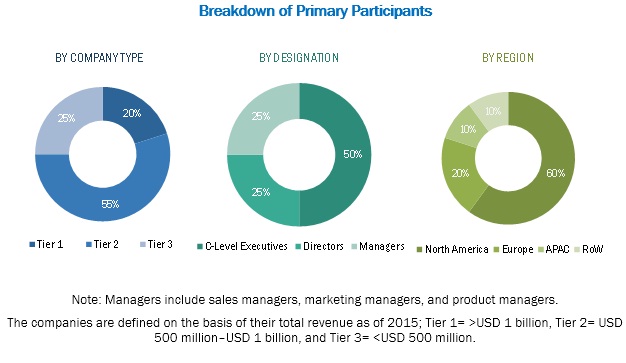
Extensive primary research has been conducted after acquiring knowledge about the G.fast chipset market scenario through secondary research. Several primary interviews have been conducted with experts from both demand and supply sides across four major regions, namely, the Americas, Europe, Asia- Pacific, and rest of the world (the Middle East & Africa). This primary data has been collected through questionnaires, emails, and telephonic interviews.
To know about the assumptions considered for the study, download the pdf brochure
Market Size Estimation
Top-down and bottom-up approaches have been used to estimate and validate the size of the global G.fast chipset market and various dependent submarkets. Key players in the market have been identified through the secondary research and their market share in the respective regions has been determined through primary and secondary research. This entire procedure includes the study of annual and financial reports of top players and extensive interviews of industry leaders, such as CEOs, VPs, directors, and marketing executives.
- The key players in the markets have been identified through extensive secondary research.
- The industry’s supply chain and market size, in terms of value, have been determined through primary and secondary research processes.
- All percentage shares, splits, and breakdowns have been determined using secondary sources and verified through primary sources.
Data Triangulation
After arriving at the overall G.fast chipset market size from the market size estimation process explained above, the total market has been split into several segments and subsegments. To complete the overall market engineering process and arrive at the exact statistics for all segments and subsegments, the market breakdown and data triangulation procedures have been employed, wherever applicable. The data has been triangulated by studying various factors and trends from both demand and supply sides. In addition to this, the market size has been validated using both top-down and bottom-up approaches.
The following are the major objectives of the study.
- To define, describe, and forecast the G.fast chipset market based on the length of copper line, deployment type, end-users, and geography
- To strategically analyze micromarkets1 with respect to individual growth trends, future prospects, and contribution to the G.fast chipset market
- To provide detailed information of the major factors that influence the growth of the G.fast chipset market (drivers, restraints, opportunities, and industry-specific challenges)
- To conduct a detailed value chain and Porter’s five forces analysis of the G.fast chipset market
- To analyze the opportunities in the G.fast chipset market for stakeholders and provide the details of a competitive landscape to market leaders
- To strategically profile key players of the G.fast market and comprehensively analyze their market shares and core competencies2
- To analyze various developments such as joint ventures, mergers and acquisitions, and new product developments, along with research and development in the G.fast chipset market
|
Report Metric |
Details |
|
Market size available for years |
2016-2022 |
|
Base year considered |
2016 |
|
Forecast period |
2016–2022 |
|
Forecast units |
Value (USD) |
|
Segments covered |
Deployment Type, End-user, Copper Length, and Geography |
|
Geographies covered |
North America, APAC, Europe, and RoW |
|
Companies covered |
Qualcomm, Inc. (US), Broadcom Ltd. (US), Marvell Technology Group Ltd. (Bermuda), MediaTek, Inc. (Taiwan), Sckipio Technologies SI Ltd. (Israel), Metanoia Communications, Inc. (Taiwan), Chunghwa Telecom Co., Ltd. (Taiwan), CenturyLink, Inc. (US), BT Group plc (UK), and Swisscom AG (Switzerland) |
This research report categorizes the G.fast chipset market based deployment type, end-user, copper length, and geography
By Deployment Type:
- CPE
- DPU
By End-user:
- Residential
- Enterprise/commercial
By Copper Line Length
- Copper-line length of Shorter than 100 Meters
- Copper-line length of 100 meters–150 meters
- Copper-line length of 150 meters–200 meters
- Copper-line length of 200 meters–250 meters
- Copper-line length longer than 250 meters
By Geography:
- North America
- Europe
- Asia Pacific
-
RoW (Israel and Others)
Available Customizations
Based on the given market data, MarketsandMarkets offers customizations in the reports as per the client’s specific requirements. The available customization options are as follows:
Geographic Analysis
- Further country-wise breakdown of the market for all 4 regions based on various application
Company Information
- Detailed analysis and profiling of additional market players (Up to 5)













Growth opportunities and latent adjacency in G.Fast Chipset Market