Geomembranes Market

Geomembranes Market by Type (HDPE, LDPE& LLDPE, PVC, EPDM, PP), Manufacturing Process (Extrusion, Calendering), Application (Mining, Water Management, Waste Management, Civil Construction, Others), Region - Global Forecast to 2031




OVERVIEW
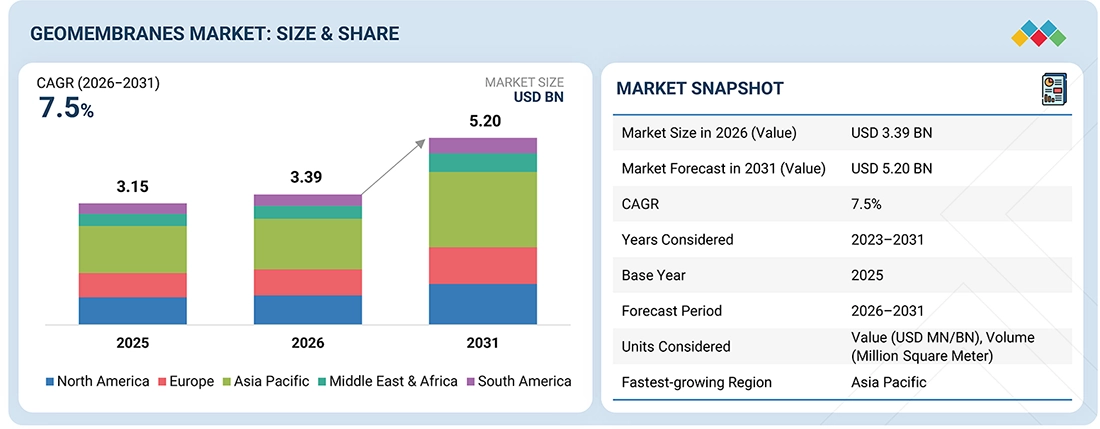
Source: Secondary Research, Interviews with Experts, MarketsandMarkets Analysis
The geomembranes market is projected to reach USD 5.20 billion by 2031, up from USD 3.39 billion in 2026, at a CAGR of 7.5% over the forecast period. The market is being driven by stricter environmental regulations that require secure containment systems for mining activities, landfill sites, wastewater treatment, and the handling of hazardous waste. Rapid urbanization and industrialization are increasing the need for water-saving infrastructure such as reservoirs, canals, and agricultural ponds, where geomembranes reduce seepage and improve water efficiency. The growth in mining operations has led to a stronger requirement for durable liners, especially for heap leach pads and tailings storage sites. In addition, expanding renewable energy projects, solar evaporation ponds, and biogas plants drive the market.
KEY TAKEAWAYS
-
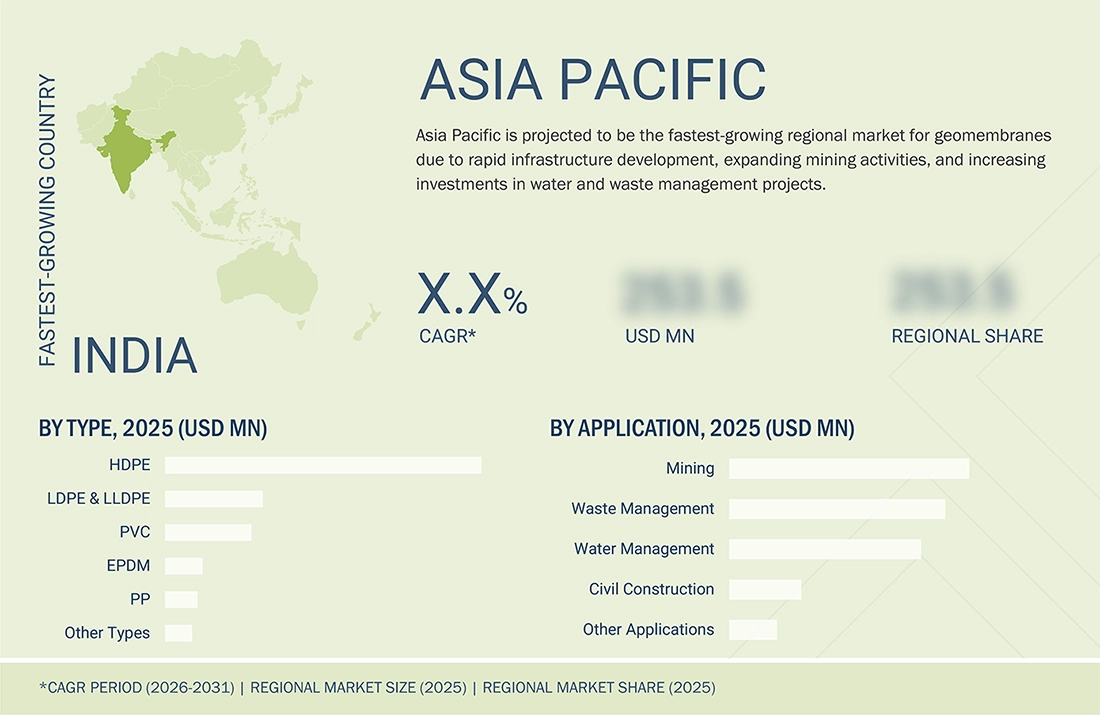
By RegionAsia Pacific accounted for the largest share (38.6%) of the geomembranes market in 2025.
-
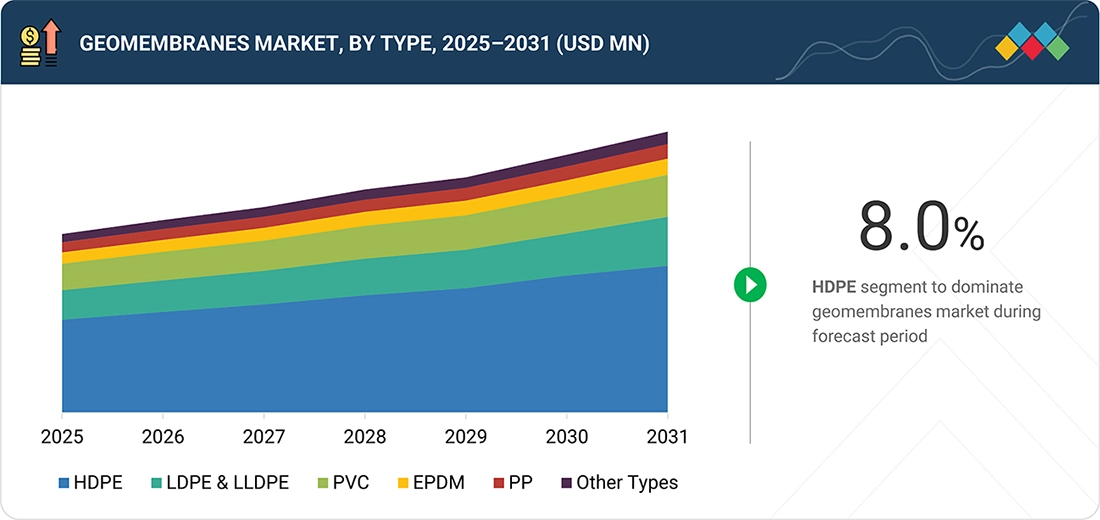
By TypeThe HDPE segment accounted for the largest market share of 52.2% in 2025.
-
By ApplicationThe mining segment is projected to register the highest CAGR of 8.2% during the forecast period.
-
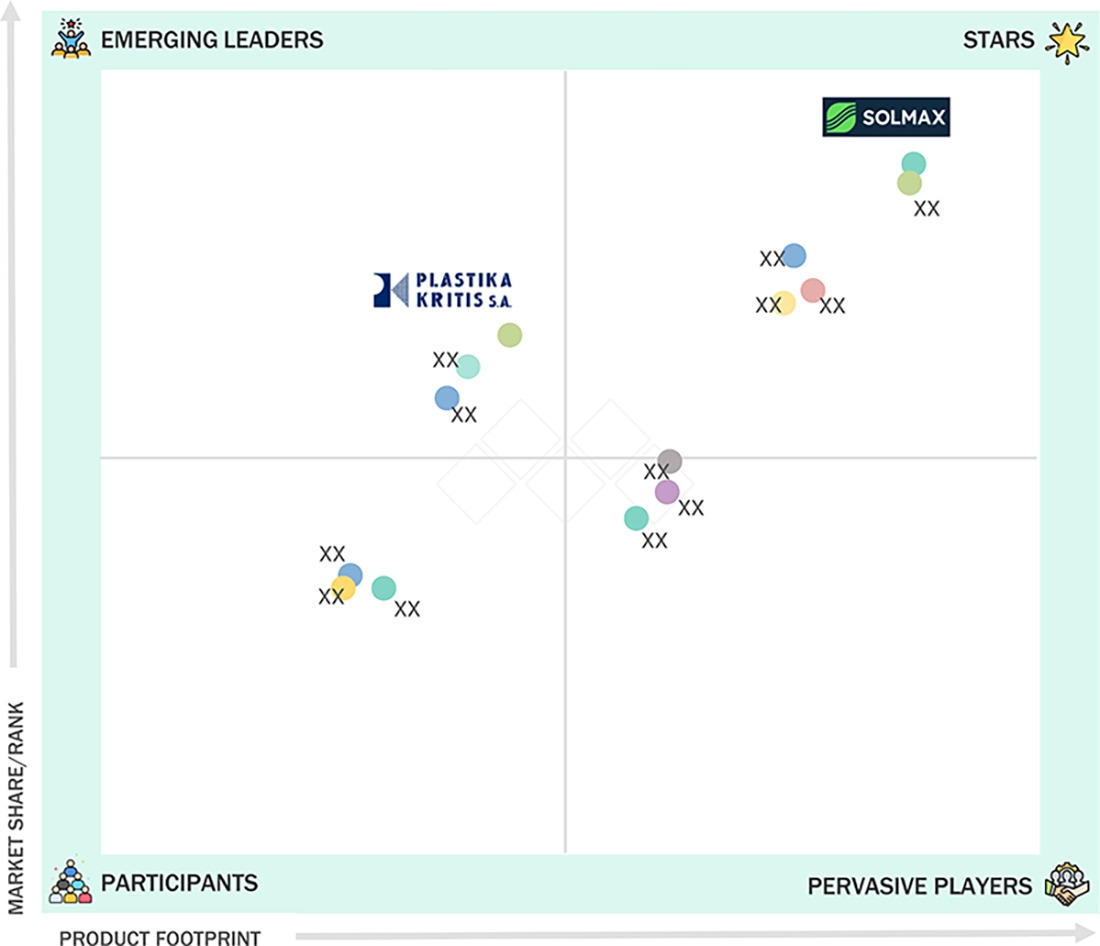
Competitive Landscape - Key PlayersSolmax, AGRU America Inc., and Naue GmbH & Co. KG were identified as some of the star players in the geomembranes market (global), given their strong market share and product footprint.
-
Competitive Landscape - StartupsAnhui Huifeng New Synthetic Materials Co., Ltd., Carthage Mills, and Layfield Group, among others, have distinguished themselves among startups and SMEs by securing strong footholds in specialized niche areas.
The geomembranes market is experiencing strong growth due to increasing demand for solid containment and environmental protection solutions across different industries. Government regulations on waste disposal, pollution control, and water management are tightening, leading companies to increasingly install impermeable liner systems. Higher spending on mining, oil and gas, transportation infrastructure, and wastewater treatment is also boosting demand for these systems. Moreover, the focus on water conservation has expanded the use of geomembranes in irrigation ponds, reservoirs, and canals to minimize seepage losses.
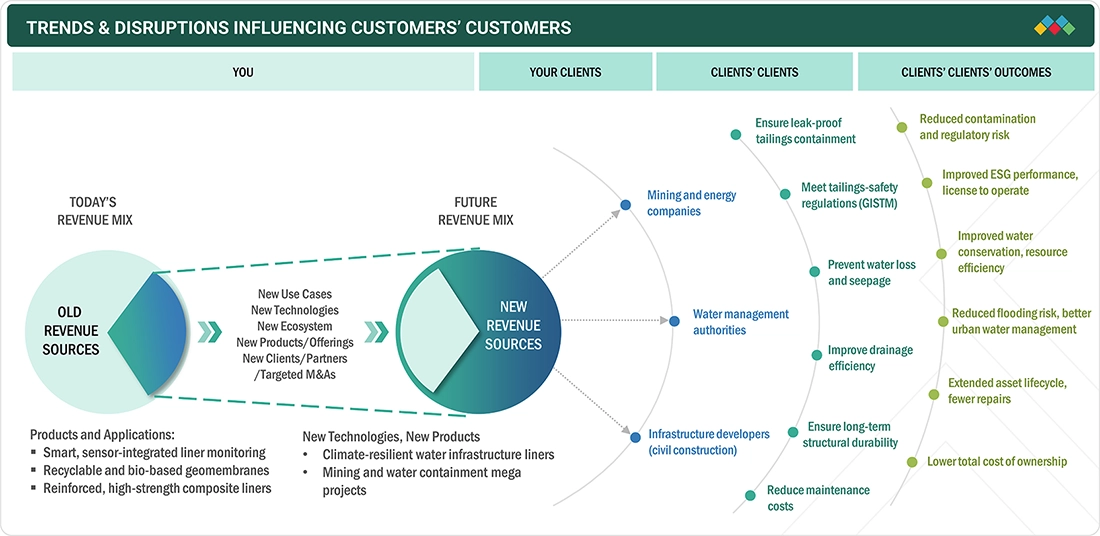
TRENDS & DISRUPTIONS IMPACTING CUSTOMERS' CUSTOMERS
Trends and disruptions impacting clients' business in the geomembranes market are being shaped by sustainability efforts, digital innovation, and tighter environmental rules across mining, water management, and civil infrastructure. Revenue growth is shifting from geomembrane products to innovative solutions like smart liner monitoring systems and eco-friendly materials. In mining, companies prioritize leak-proof tailings containment for regulatory compliance, while water management authorities focus on advanced liners to reduce seepage and improve water conservation. Meanwhile, infrastructure developers are focusing on durable geomembranes to boost drainage efficiency, extend the life of assets, and lower maintenance costs. Overall, these changing customer demands are helping drive better ESG performance, reduce environmental exposure, increase resource efficiency, and also bring down total cost of ownership.
Source: Secondary Research, Interviews with Experts, MarketsandMarkets Analysis
MARKET DYNAMICS

Level
-
Stringent environmental regulations

-
Growing mining activities


Level
-
Volatility in polymer resin prices

-
Limited adoption in cost-sensitive developing regions


Level
-
Expansion of desalination, wastewater reuse, and water storage projects

-
Increasing adoption in renewable energy infrastructure


Level
-
Ensuring high-quality installation and seam welding

-
Maintaining long-term durability under extreme UV exposure, chemicals, and temperature fluctuations

Source: Secondary Research, Interviews with Experts, MarketsandMarkets Analysis
Driver: Stringent environmental regulations
Stringent environmental regulations drive the geomembranes market as authorities require impermeable barrier systems to combat pollution. Regulations for municipal landfills, hazardous waste disposal, mining, and industrial containment mandate engineered liners to prevent contaminant migration into soil and groundwater. Stricter permitting, frequent monitoring, and significant penalties for non-compliance lead project developers to prefer high-performance geomembranes, which facilitate easier approvals and lower risks. As governments tighten legislation and promote sustainable infrastructure, the demand for certified containment solutions continues to rise in both established and emerging economies.
Restraint: Volatility in polymer resin prices
Volatility in polymer resin prices is a significant challenge for the geomembranes market, creating uncertainty about production costs for manufacturers. Since geomembranes are primarily made from polymer resins like HDPE, LLDPE, PVC, and PP, fluctuations in feedstock availability, refinery output, and energy prices directly affect raw material costs. Manufacturers struggle to maintain stable prices, especially with long-term supply contracts, leading to budgeting difficulties for contractors. This cost instability reduces pricing competitiveness and complicates procurement strategies, ultimately undermining investment confidence for projects with fixed budgets or extended timelines.
Opportunity: Expansion of desalination, wastewater reuse, and water storage projects
The rapid expansion of desalination, wastewater reuse, and water storage projects is an opportunity in the geomembranes market, since many countries are looking for long-term solutions to increasing water stress. Increasing investments in reservoirs, reclaimed water facilities, desalination plants, irrigation storage ponds and even strategic water reserves require durable lining systems that are strong and not too prone to leaking water and maintain water quality. Government actions promoting circular water management, along with climate resilience, are accelerating infrastructure development.
Challenge: Ensuring high-quality installation and seam welding
Ensuring high-quality installation and seam welding is a big challenge because the effectiveness of a geomembrane system basically leans on precise field execution. Even if premium materials are used, wrong welding parameters, panel misalignment, not enough non-destructive testing, or simply weak workmanship can lead to defects that reduce the barrier performance. In addition, installation quality is affected by the weather, the site topography, equipment calibration, and the experience level of the crew, so keeping the same standard across large projects can be hard. That is why contractors are expected to stick to strict installation specifications and clear inspection procedures in order to reach leak-free performance. At the same time, any rework that is needed due to installation defects can stretch the schedule, add more labor hours, and increase the overall execution complexity, kind of turning the job into a longer and more difficult process.
GEOMEMBRANES MARKET: COMMERCIAL USE CASES ACROSS INDUSTRIES
| COMPANY | USE CASE DESCRIPTION | BENEFITS |
|---|---|---|
 |
Supplies HDPE geomembranes for landfill liners, mining containment, and industrial environmental protection projects globally. | Delivers reliable containment, long service life, and regulatory compliance across demanding applications. |
 |
Provides geomembrane lining systems for reservoirs, wastewater ponds, canals, and agricultural water management infrastructure. | Minimizes seepage losses, conserves water resources, and lowers long-term maintenance requirements. |
 |
Offers geomembranes for tunnel waterproofing, transportation infrastructure, environmental containment, and hydraulic engineering applications. | Enhances structural durability, prevents water ingress, and improves infrastructure asset longevity. |
 |
Manufactures geomembranes for mining heap leach pads, tailings storage, and hazardous waste containment facilities. | Ensures chemical resistance, operational safety, and dependable containment in harsh environments. |
Logos and trademarks shown above are the property of their respective owners. Their use here is for informational and illustrative purposes only.
MARKET ECOSYSTEM
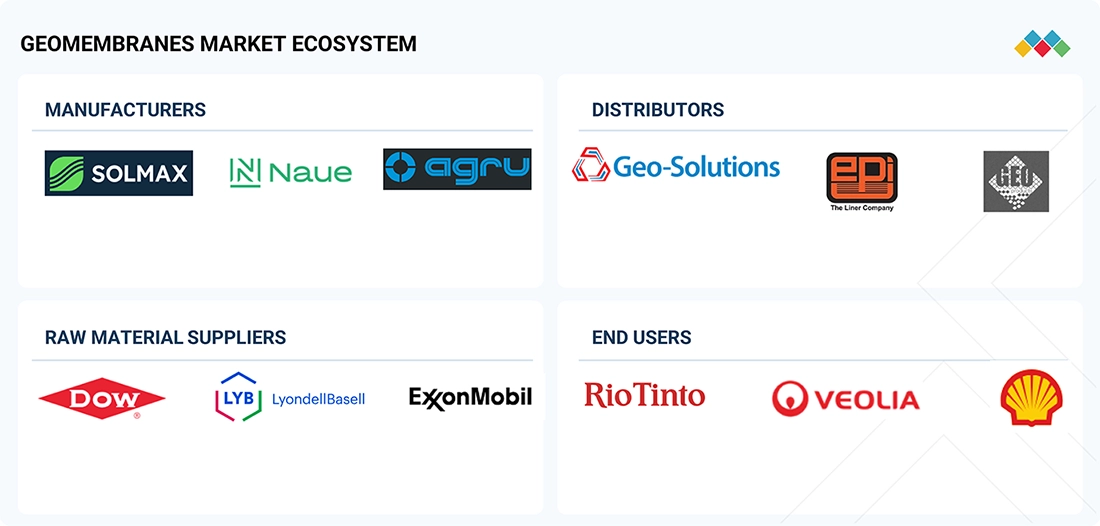
The geomembranes market ecosystem consists of raw material suppliers (Dow, ExxonMobil Chemical, LyondellBasel), manufacturers (Solmax, ARGU America, Inc., Naue GmbH & Co. KG), distributors (GeoSolutions Inc., Environmental Protection, Inc., GeoProducts LLC), and end users (Rio Tinto, Veolia, Shell). Raw material suppliers deliver polymer resins, carbon black, stabilizers, and additives that are needed for geomembrane production. Manufacturers take those inputs and turn them into engineered lining systems, with certain mechanical as well as chemical performance. Distributors handle product availability, regional sourcing, logistics, and technical assistance for clients who ask for it. Finally, end users, from mining, waste management, water treatment, oil and gas, and civil infrastructure, use geomembranes for containment, waterproofing, seepage management, and environmental safeguarding on a variety of projects.
Logos and trademarks shown above are the property of their respective owners. Their use here is for informational and illustrative purposes only.
MARKET SEGMENTS
Source: Secondary Research, Interviews with Experts, MarketsandMarkets Analysis
Geomembranes Market, By Type
The HDPE segment is estimated to hold the largest share of the geomembranes market due to its exceptional durability, strong chemical resistance, and cost-effectiveness, making it ideal for containment applications. HDPE is commonly used in landfill liners, mining heap leach pads, tailings storage facilities, wastewater treatment plants, and industrial ponds, as it can withstand harsh chemicals, UV exposure, punctures, and environmental stress cracking. Additionally, HDPE geomembranes offer a long service life with minimal maintenance requirements. Available in various thicknesses, they can be easily installed on a large scale using thermal welding and comply with strict environmental standards. Overall, these attributes contribute to HDPE's leading position in global infrastructure projects and environmentally related initiatives.
Geomembranes Market, by Application
Mining is projected to be the fastest-growing application segment in the geomembranes market due to rising global demand for critical minerals and metals used in electric vehicles and renewable energy. As mining operations expand, the need for reliable containment systems grows, particularly for heap leach pads and tailings storage. Geomembranes help minimize soil and groundwater contamination, ensure compliance with environmental regulations, and improve operational efficiency by reducing fluid leakage. Additionally, increasing investments and stricter compliance requirements are boosting the adoption of geomembranes in the mining industry.
REGION
Asia Pacific to be fastest-growing region in global geomembranes market during forecast period
The Asia Pacific region is expected to be the fastest-growing market for geomembranes due to rapid industrialization, urban expansion, and significant investments in infrastructure, mining, and water management programs. Countries such as China, India, Indonesia, and Australia are increasingly utilizing geomembranes in landfills, wastewater treatment facilities, reservoirs, canals, and mining operations to address environmental issues and resource management concerns. Additionally, there are more government initiatives focused on pollution control, improved waste management, and water conservation, along with growing industrial activity and large construction projects. This combination of factors is driving a substantial demand for geomembranes across the region.
GEOMEMBRANES MARKET: COMPANY EVALUATION MATRIX
Solmax is a star player in the geomembranes market due to its extensive global manufacturing footprint and diverse range of HDPE, LLDPE, PVC, and specialty geomembranes. It also has a strong presence in mining, waste management, water infrastructure, and energy work. PLASTIKA KRITIS is an emerging leader in the market. It is steadily enhancing its production capacity and expanding exports while investing in advanced manufacturing technologies. The company is active in water management, agriculture, landfills, and infrastructure projects. By focusing on innovation, product quality, and sustainability, PLASTIKA KRITIS is strengthening its global competitive position.
Source: Secondary Research, Interviews with Experts, MarketsandMarkets Analysis
KEY MARKET PLAYERS
- Solmax
- AGRU America Inc.
- Naue GmbH & Co. KG
- Atarfil geomembranas
- Carlisle Construction Materials
- PLASTIKA KRITIS
- Officine Maccaferri Spa
- Holcim Solutions and Products EMEA BV
- JUTA a.s.
- Viaflex
MARKET SCOPE
| REPORT METRIC | DETAILS |
|---|---|
| Market Size in 2025 (Value) | USD 3.15 Billion |
| Market Size in 2026 (Value) | USD 3.39 Billion |
| Market Forecast in 2031 (Value) | USD 5.20 Billion |
| Growth Rate | CAGR of 7.5% from 2026 to 2031 |
| Years Considered | 2023–2031 |
| Base Year | 2025 |
| Forecast Period | 2026–2031 |
| Units Considered | Value (USD Million/Billion), Volume (Million Square Meter) |
| Report Coverage | Revenue Forecast, Company Ranking, Competitive Landscape, Growth Factors, and Trends |
| Segments Covered |
|
| Regions Covered | North America, Asia Pacific, Europe, South America, and Middle East & Africa |
WHAT IS IN IT FOR YOU: GEOMEMBRANES MARKET REPORT CONTENT GUIDE
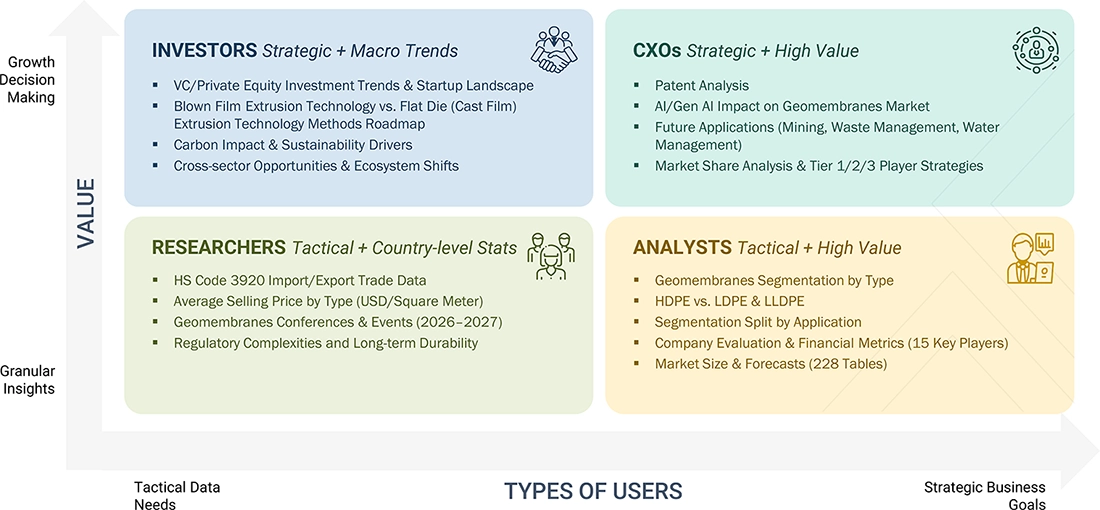
DELIVERED CUSTOMIZATIONS
We have successfully delivered the following deep-dive customizations:
| CLIENT REQUEST | CUSTOMIZATION DELIVERED | VALUE ADDS |
|---|---|---|
| Geomembrane Manufacturers | Competitive benchmarking of geomembrane grades, production capacities, technology adoption, pricing trends, and regional demand across key end-use industries | Support product portfolio optimization, identify growth opportunities, strengthen competitive positioning, and improve strategic planning |
| Geomembrane Distributors & Channel Partners | Regional demand analysis, supplier comparison, inventory planning, and end-user purchasing trends by application and geography | Optimize product sourcing, improve inventory management, expand customer reach, and increase sales opportunities |
| Geomembrane Raw Material Suppliers | Assessment of polymer demand by geomembrane type, customer requirements, technology trends, and regional consumption patterns | Identify high-growth customer segments, strengthen supplier partnerships, optimize production planning, and support business expansion |
| EPC Contractors & Geotechnical Engineering Firms | Evaluation of geomembrane material selection based on application, technical specifications, regulatory standards, and lifecycle performance | Improve material selection, ensure regulatory compliance, reduce project risks, and enhance infrastructure durability |
| Mining, Waste Management, & Water Infrastructure Companies | Comparative analysis of geomembrane solutions for containment systems based on chemical resistance, durability, installation methods, and lifecycle costs | Improve environmental protection, minimize leakage risks, reduce maintenance costs, and enhance operational efficiency |
RECENT DEVELOPMENTS
- Novemeber 2025 : Atarfil introduced the EVO AC (Acid-Resistant) and EVO AR (Alkaline-Resistant) HDPE geomembranes, which were specifically engineered for highly aggressive mining, industrial, and waste containment environments. The products offered enhanced chemical resistance and a longer service life in demanding applications.
- May 2024 : AGRU America Inc. expanded its manufacturing facility in Andrews, South Carolina, by investing USD 7.8 million, mainly by adding new machinery and other equipment to boost production capacity. This development expanded the company’s manufacturing for its geosynthetics line, such as geomembranes, to fulfill the rising demand across North America. At the same time, the company improved its production efficiency.
- May 2024 : Solmax Americas expanded a new geomembrane manufacturing line at its Houston, Texas facility and upgraded its existing production lines to enhance manufacturing efficiency. The expansion increased production capacity for HDPE and LLDPE geomembranes under the GSE product line and helped the company to meet rising demand from mining, waste management, and water containment projects across North America.
Table of Contents
 Exclusive indicates content/data unique to MarketsandMarkets and not available with any competitors.
Methodology
This study involved four major activities to estimate the current size of the geomembranes market. Exhaustive secondary research was conducted to collect information on the market, the peer product market, and the parent product group market. The next step involved validating these findings, assumptions, and sizes with industry experts across the geomembrane value chain through primary research. Both the top-down and bottom-up approaches were employed to estimate the overall size of the geomembranes market. After that, market breakdown and data triangulation were used to determine the sizes of different market segments and subsegments.
Secondary Research
For the secondary research, sources such as D&B Hoovers, Factiva, Bloomberg BusinessWeek, and Dun & Bradstreet were used to identify and collect information for this study of the geomembranes market. These sources included annual reports, press releases, and investor presentations from companies; white papers; certified publications; databases; articles by recognized authors; regulatory bodies; and trade directories.
Primary Research
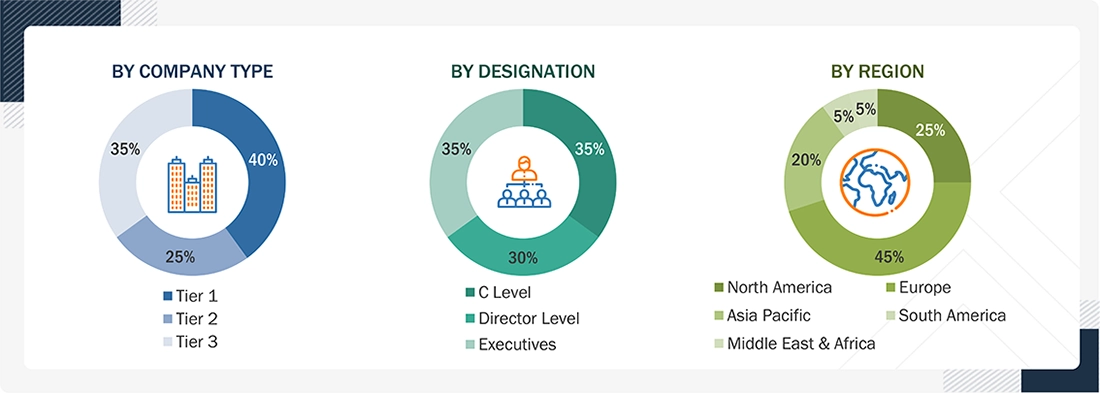
The geomembranes market involves various stakeholders along the supply chain, such as raw material suppliers, distributors, end-product manufacturers, buyers, and regulatory bodies. Both qualitative and quantitative data were collected through interviews with primary sources from both the supply and demand sides. On the demand side, key participants include opinion leaders, company executives, vice presidents, and CEOs in the market. On the supply side, primary sources consist of associations, institutions, influential opinion leaders, and processing companies involved in the market.
To know about the assumptions considered for the study, download the pdf brochure
Market Size Estimation
The bottom-up and top-down approaches were used to estimate the geomembranes market by type, application, and region. The research methodology used to calculate the market size includes the following steps:
- The key players in the industry and markets were identified through extensive secondary research.
- In terms of value, the industry’s supply chain and market size were determined through primary and secondary research processes.
- All percentage shares, splits, and breakdowns were determined using secondary sources and verified through primary sources.
- All parameters that affect the markets covered in this research study were accounted for, examined in detail, verified through primary research, and analyzed to obtain the final quantitative and qualitative data.
- The research included reviewing reports, reviews, and newsletters from top market players, as well as extensive interviews with leaders, such as directors and marketing executives, to gather opinions.
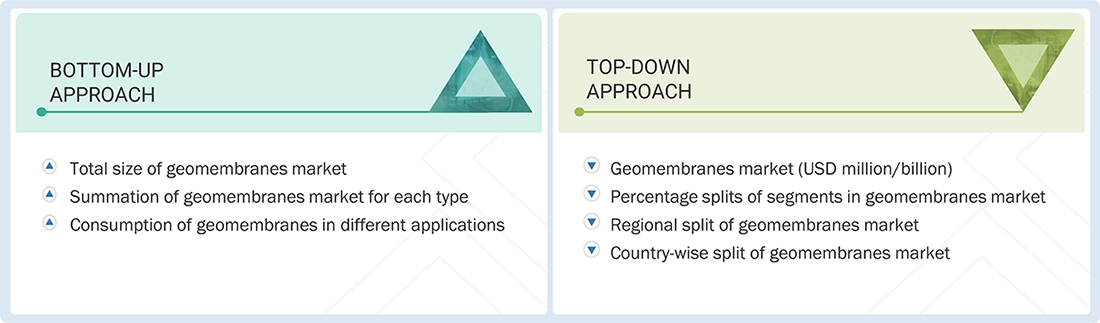
Data Triangulation
After estimating the total size of the geomembranes market, the market was divided into multiple segments and subsegments. Data triangulation and breakdown methods were used, where relevant, to refine the overall market analysis and determine precise statistics for all segments. The data was cross-checked by examining factors and trends from both demand and supply perspectives. Additionally, market size validation was performed using top-down and bottom-up approaches.
Market Definition
Geomembranes are a kind of impermeable polymer sheets that work as a barrier material to stop the movement of liquids, gases and different contaminants in environmental and civil engineering applications. They are usually made from high-density polyethylene (HDPE), linear low-density polyethylene (LLDPE), low-density polyethylene (LDPE), polyvinyl chloride (PVC), and other polymer-based blends. They are used in landfill sites, mining operations, wastewater treatment facilities, reservoirs and canals, tunnels, aquaculture ponds, and industrial containment units. They demonstrate strong chemical resistance, durability, flexibility, and low permeability, making them essential for the safe handling of materials, water conservation, and overall environmental protection across various industries.
Key Stakeholders
- Geomembranes manufacturers
- Raw material suppliers
- Regulatory bodies and government agencies
- Distributors and suppliers
- End-use industries
- Associations and industrial bodies
- Market research and consulting firms
Report Objectives
- To define, describe, and forecast the size of the geomembranes market in terms of value and volume
- To provide detailed information regarding the key factors influencing the growth of the market (drivers, restraints, opportunities, and challenges)
- To forecast the market size based on type, application, and region
- To study the market qualitatively based on manufacturing process
- To forecast the market size for the five main regions—North America, Europe, Asia Pacific, South America, and Middle East & Africa—along with their key countries
- To strategically analyze micromarkets with respect to individual growth trends, prospects, and contributions to the total market
- To analyze opportunities in the market for stakeholders and provide details of the competitive landscape for market leaders
- To strategically profile leading players and comprehensively analyze their key developments, such as product launches, expansions, and deals in the market
- To comprehensively analyze the market share and core competencies of key players
- To study the impact of AI/Gen AI on the market under study, along with the macroeconomic outlook
Available customizations:
With the given market data, MarketsandMarkets offers customizations per the specific needs of companies.
The following customization options are available for the report:
PRODUCT ANALYSIS
- Product matrix, which provides a detailed comparison of the market for different sources of geomembranes
REGIONAL ANALYSIS
- Further breakdown of a country with respect to the geomembranes market
COMPANY INFORMATION
- Detailed analysis and profiling of additional market players


Personalize This Research
- Triangulate with your Own Data
- Get Data as per your Format and Definition
- Gain a Deeper Dive on a Specific Application, Geography, Customer or Competitor
- Any level of Personalization
Let Us Help You
- What are the Known and Unknown Adjacencies Impacting the Geomembranes Market
- What will your New Revenue Sources be?
- Who will be your Top Customer; what will make them switch?
- Defend your Market Share or Win Competitors
- Get a Scorecard for Target Partners

Custom Market Research Services
We Will Customise The Research For You, In Case The Report Listed Above Does Not Meet With Your Requirements
Get 10% Free CustomisationTESTIMONIALS
We at Nissan Chemicals Corporation have been clients of MarketsandMarkets for more than a year now. We recently consulted MarketsandMarkets for a study, the team at MarketsandMarkets was extremely professional and organized. The business insights were very detailed and aligned well with our expectations that really helped us formulate the Business Plans and device new strategies for development themes. MarketsandMarkets offers a unique combination of expertise and dedicated engagement model. Their research findings have helped us in designing our Pricing Strategy which will make it easier for us to predict the future sales and profits for the next ten years. We look forward to working with MarketsandMarkets in the future.
VP of Strategy & New Business Development
Leading Specialty Chemical Company
The MarketsandMarkets Engagement Model, composed of both the Knowledge Store and advisory custom research, has greatly helped us in understanding our markets and making strategic decisions. The Knowledge Store is a fast way to allow everyone in our organization to understand more about most any market they are interested in. The ability to then get custom research done and get answers to specific strategic questions and market insight has been spectacular. The Markets and Markets team feel more like colleagues than vendors and their services have helped us change our culture where statements of things like growth opportunities and competitive position are always backed by industry research.

Rich Gibson,
Director, Corporate Strategy
Milliken & Company,
Leading Industrial Manufacturer of specialty chemical, floor covering, performance and protective textile materials, and healthcaremilliken.com
MarketsandMarkets is a trusted resource that helps us to better understand markets that are near-adjacencies-whether its technology, value chain or geography. Their Knowledge Store platform provides a dashboard of markets and their characteristics which is easy to use and saves us time.
Adam Shaw,
Market Development and Strategy Manager
AdvanSix Inc. USA,
An American Leader in Chemicalswww.advansix.com
The Knowledge Store from MarketsandMarkets is a valuable tool which has helped my team acquire greater insight in to the end markets that our business serves. This has enabled us to help our company build stronger strategies throughout our planning process.
TOSHIO KINOSHITA
Senior Chif Consultion Research & Consulting Division
Mitsubishi Chemical Research Corporation,
Leading Manufacturer of Chemical Productswww.mitsubishichem-res.co.jp/en/

We recently engaged with MarketsandMarkets for a study, the team not only clearly understood our business objectives but was also extremely professional in the way they handled the entire project. The study was efficiently conducted in a phase-wise manner, and the engagement model furnished us with high-quality business insights that far exceeded our expectations at each phase. We were especially happy that MarketsandMarkets could provide us with both, an English as well as a Japanese version of the study. A special thanks to the Analyst Team and Client Services Team, whose fluency in Japanese enhanced our comfort level, as we could converse with them in our preferred language.
Independent entrepreneurs
Arrow Precision
We approached MarketsandMarkets for study on Proppants Market, and their work exceeded our expectations. The study conducted was comprehensive and enabled us to view the market through the various dimensions. In addition, the team was extraordinarily responsive throughout the process and resolved our queries on time. I strongly recommend MarketsandMarkets and will certainly consider them for additional market assessments we will need in the future.
Global engineering company, Japan
Deputy Manager,
Strategic Planning OfficeThe high-quality insights shared by the MarketsandMarkets team helped us understand the pharmaceutical plant designers in a specific geography. It also captured the risks that we may likely face in communicating with our potential partners. The study would enable us identify partners, which would impact our future growth.
- China Geomembranes Market
- India Geomembranes Market
- Japan Geomembranes Market
- Australia Geomembranes Market
- Indonesia Geomembranes Market
- South Korea Geomembranes Market
- Germany Geomembranes Market
- UK Geomembranes Market
- France Geomembranes Market
- Italy Geomembranes Market
- Spain Geomembranes Market
- Russia Geomembranes Market
- Canada Geomembranes Market
- Mexico Geomembranes Market
- South Africa Geomembranes Market
- Brazil Geomembranes Market
- Argentina Geomembranes Market
- US Geomembranes Market
- Rest Of Europe Geomembranes Market
- Rest Of Asia Pacific Geomembranes Market
- GCC Countries Geomembranes Market
- - Rest Of GCC Countries Geomembranes Market
- Rest Of South America Geomembranes Market
Growth opportunities and latent adjacency in Geomembranes Market






Bruno
May, 2015
Specific information about Brazilian market, such as production by types (PVC,PEAD, etc), by application, by players, market share, etc .
Priya
Aug, 2019
Specific information on new product development for Pond, Reservoir and Canal lining market .
Stephane
Jun, 2019
Research methodology- Geomembrane market. Scope - such as bituminous geomembrane market dynamic and competition.
Luis
Oct, 2015
Incomplete.
Umair
Aug, 2016
Market size and growth analysis on geomembranes in GCC region and names of key companies, their capacity, along with imports & exports data and regulations..
Jan, 2015
Information on design and installation of geo-textiles in cyclone affected rural roads, due to coastal erosion.