



Hot Melt Adhesives Market
Report Code
CH 3369
Published in
Oct, 2025, By MarketsandMarkets™
Hot-Melt Adhesives Market by Resin Type (EVA, SBC, MPO, APAO, Polyolefins), Application (Packaging Solutions, Nonwoven Hygiene Products, Furniture & Woodwork, Bookbinding), and Region - Global Forecast to 2030

USD 11.13 BN
MARKET SIZE, 2030

CAGR 3.93%
(2025-2030)

280
REPORT PAGES

270
MARKET TABLES
HOT-MELT ADHESIVES MARKET SIZE
Source: Secondary Research, Interviews with Experts, MarketsandMarkets Analysis | Updated on : April 28, 2026
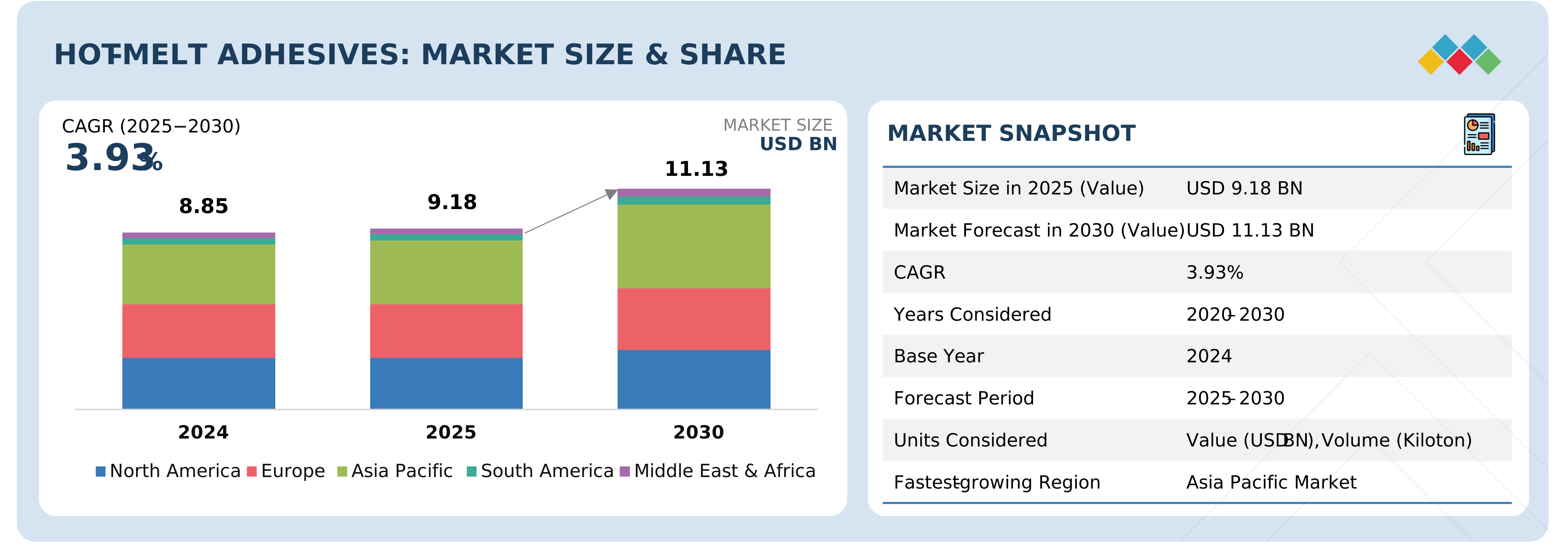
Hot-melt adhesives market size was valued at USD 9.18 billion in 2025 and is projected to reach USD 11.13 billion by 2030, growing at 3.93% cagr from 2025 to 2030. The hot-melt adhesives market size growth is driven by increasing demand from packaging, nonwoven hygiene, woodworking, and automotive sectors, along with technological advancements in eco-friendly adhesive formulations. Hot-melt adhesives are thermoplastic materials that are solid at room temperature and become tacky and bondable upon heating. They are widely used for their fast-setting, solvent-free, and versatile bonding properties.
KEY TAKEAWAYS
-
BY RESIN TYPEThe hot-melt adhesives market is segmented into ethylene-vinyl acetate (EVA), styrenic block copolymers (SBC), metallocene polyolefins (mPO), polyolefins, amorphous poly-alphaolefin (APAO), and other resin types. EVA dominates the packaging application due to cost-effectiveness, while metallocene polyolefins and polyurethane hot-melt adhesives are gaining prominence in hygiene, automotive, and furniture for their superior performance.
-
BY APPLICATIONKey applications include packaging solutions, nonwoven hygiene products, furniture & woodwork, bookbinding, and other applications such as automotive & transport, footwear, electronics, and DIY. Packaging leads the market owing to rising e-commerce, food & beverage demand, and the need for sustainable sealing solutions.
-
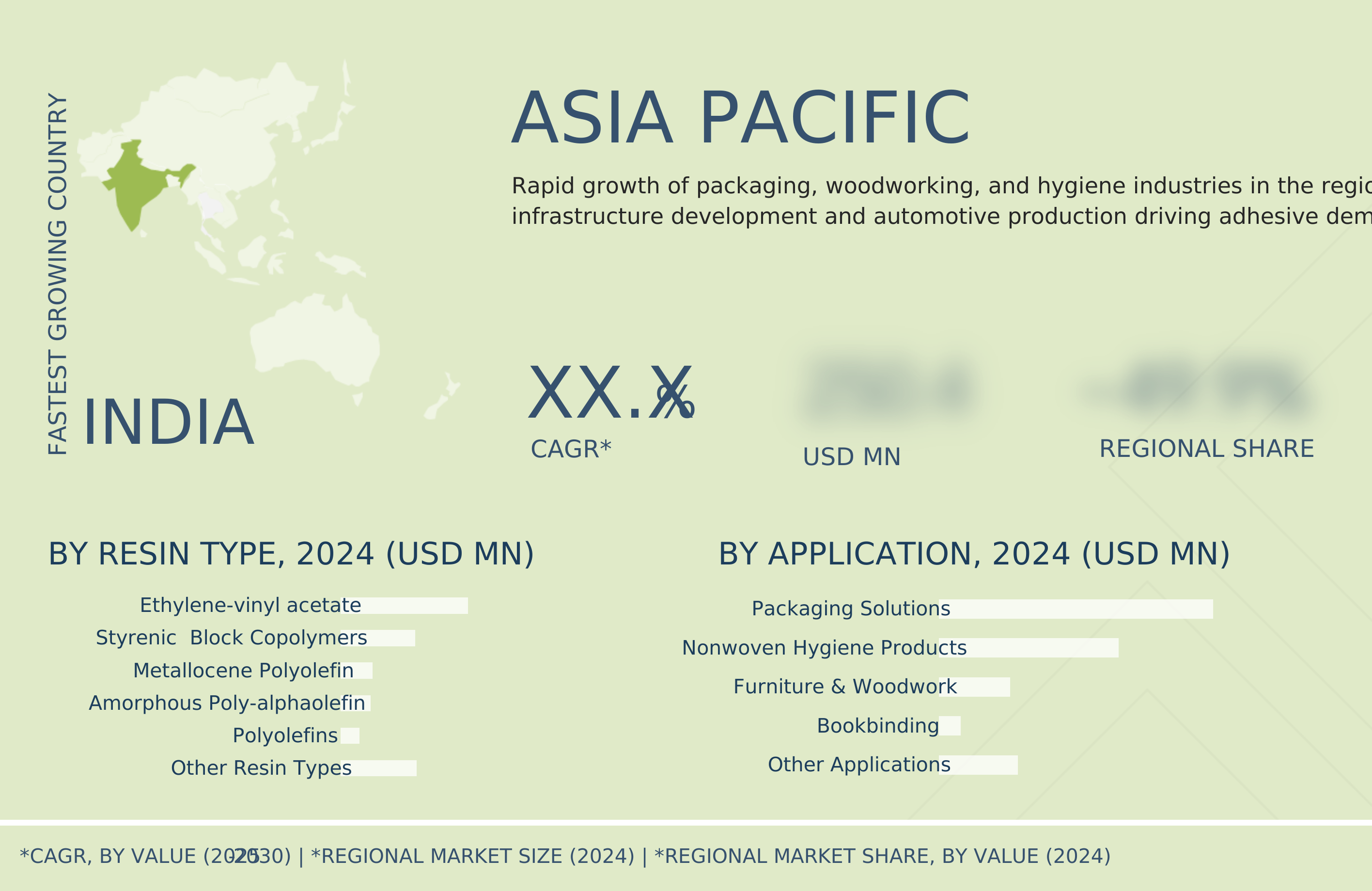
BY REGIONAsia Pacific is expected to grow fastest, with a CAGR of 5.73%, supported by booming packaging, construction, and manufacturing industries in countries such as China, India, and Southeast Asian economies. Rapid urbanization and expansion of e-commerce logistics strengthen demand.
-
COMPETITIVE LANDSCAPEThe major market players adopt both organic and inorganic strategies, including partnerships, acquisitions, and product launches. For instance, Henkel KG & Co. KGaA, H.B. Fuller Company, Arkema, 3M Company, and Jowat SE are expanding their adhesive portfolios and investing in sustainable formulations to meet rising demand across multiple end-use industries.
The hot-melt adhesives market is projected to witness steady growth over the coming years, driven by increasing use in packaging and hygiene, and advancements in bio-based hot-melt adhesives. With industries shifting toward faster, cleaner, and sustainable bonding technologies, hot-melt adhesives are expected to gain widespread adoption, reinforcing their role as a versatile and high-performance adhesive solution across diverse sectors.
HOT-MELT ADHESIVES MARKET TRENDS & DISRUPTIONS IMPACTING CUSTOMERS' CUSTOMERS
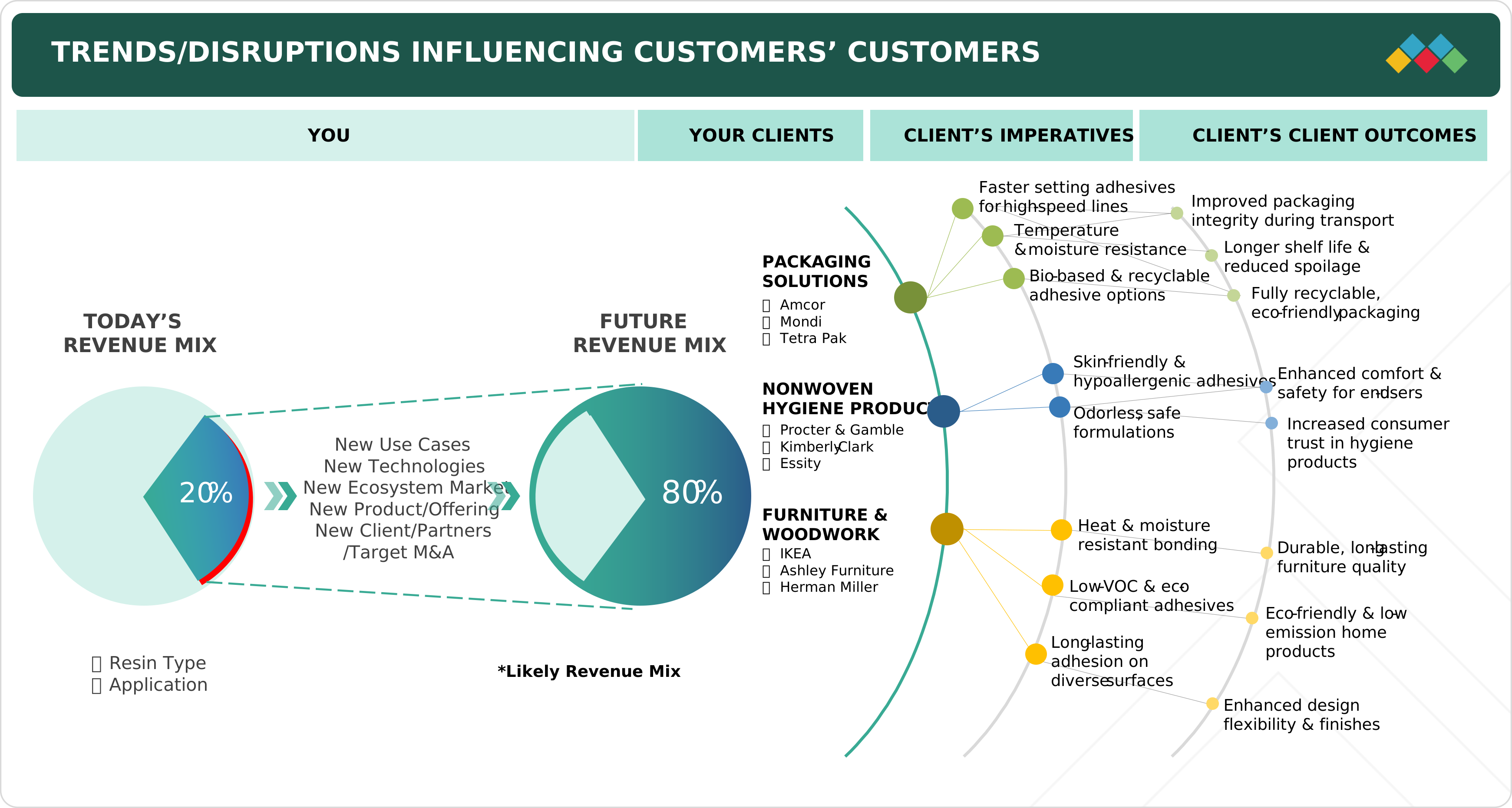
The impact on consumers’ business emerges from customer trends or disruptions. Packaging companies, nonwoven hygiene product manufacturers, and furniture makers are the clients of hot-melt adhesive manufacturers, and target applications are the clients of these manufacturers. Shifts, which are changing trends or disruptions such as e-commerce expansion, sustainability requirements, or hygiene product demand, will impact the revenues of end users. The revenue impact on end users will affect the revenue of packaging and manufacturing hotbeds, which will further affect the revenues of hot-melt adhesive manufacturers.
Source: Secondary Research, Interviews with Experts, MarketsandMarkets Analysis
HOT-MELT ADHESIVES MARKET DYNAMICS

Drivers
Impact
Level
Level
-
Growth of packaging industry

-
High demand from nonwoven hygiene products, furniture & woodwork, and bookbinding applications


RESTRAINTS
Impact
Level
Level
-
Low thermal resistance of hot-melt adhesives


OPPORTUNITIES
Impact
Level
Level
-
Changing lifestyle and increasing consumer awareness in emerging economies

-
Development of eco-friendly reactive hot-melt adhesives


CHALLENGES
Impact
Level
Level
-
Difficulty in usage on hard-to-bond substances

-
Volatility in raw material prices

Source: Secondary Research, Interviews with Experts, MarketsandMarkets Analysis
Driver: Expanding Packaging Growth
The packaging industry is a major driver of hot-melt adhesives, supported by the rise of e-commerce, food delivery, and demand for sustainable sealing. Hot-melt adhesives offer quick bonding and compatibility with diverse substrates, making them essential in flexible and recyclable packaging. With consumers seeking secure and eco-friendly solutions, the use of adhesives continues to rise, reinforcing packaging as the most critical growth engine for the global hot-melt adhesives market.
Restraint: Heat Resistance Limitations
One significant restraint for hot-melt adhesives is their low thermal resistance, which reduces performance reliability in high-temperature applications. In sectors like automotive, electronics, or construction, exposure to heat can weaken adhesive bonds, limiting their suitability compared to high-performance alternatives. While advanced resin technologies are being developed to address this drawback, thermal instability still restricts wider adoption, constraining the market’s ability to expand across heat-intensive industries.
Opportunity: Lifestyle-Driven Consumption
Changing lifestyles and growing consumer awareness in emerging economies are fueling demand for products that rely heavily on hot-melt adhesives. Urbanization and rising incomes boost consumption of packaged food, hygiene products, and modern furniture, while sustainability concerns support the use of solvent-free hot-melt adhesives. This shift reflects how evolving preferences for convenience, quality, and eco-friendly products are expanding adhesive applications, strengthening their role in meeting modern consumer needs.
Challenge: Unstable Raw Material Costs
Volatility in raw material prices, especially resins derived from petrochemicals like EVA and SBC, poses a key challenge for the hot-melt adhesives market. Fluctuations in crude oil prices and supply chain disruptions lead to unpredictable production costs, directly affecting manufacturers’ profitability. This uncertainty complicates pricing strategies and contracts, particularly in cost-sensitive industries, making raw material instability a persistent constraint on growth and stability for the market.
Hot-Melt Adhesives Market: COMMERCIAL USE CASES ACROSS INDUSTRIES
| COMPANY | USE CASE DESCRIPTION | BENEFITS |
|---|---|---|
 |
Automated, right-sized packaging using bio-based hot-melt adhesives for e-commerce and logistics | Reduced packaging waste, lower CO2 emissions per parcel, compatible with recycling, efficient automation |
 |
Moisture-resistant hot-melt adhesives for sealing and protecting housings in electronics manufacturing | Reliable water/moisture barrier, improved device durability, stable adhesion to plastics and cable materials |
 |
Transport & packaging adhesives optimized for high-speed automated production lines | Increased productivity, reliable bonding for high-volume packaging, reduces material waste |
 |
Seamless garment bonding using hot-melt tapes and films for sportswear, uniforms, and high-end apparel | Lightweight, flexible seams, fast production, improved comfort, wash and heat resistance, reduced labor |
Logos and trademarks shown above are the property of their respective owners. Their use here is for informational and illustrative purposes only.
HOT-MELT ADHESIVES MARKET ECOSYSTEM
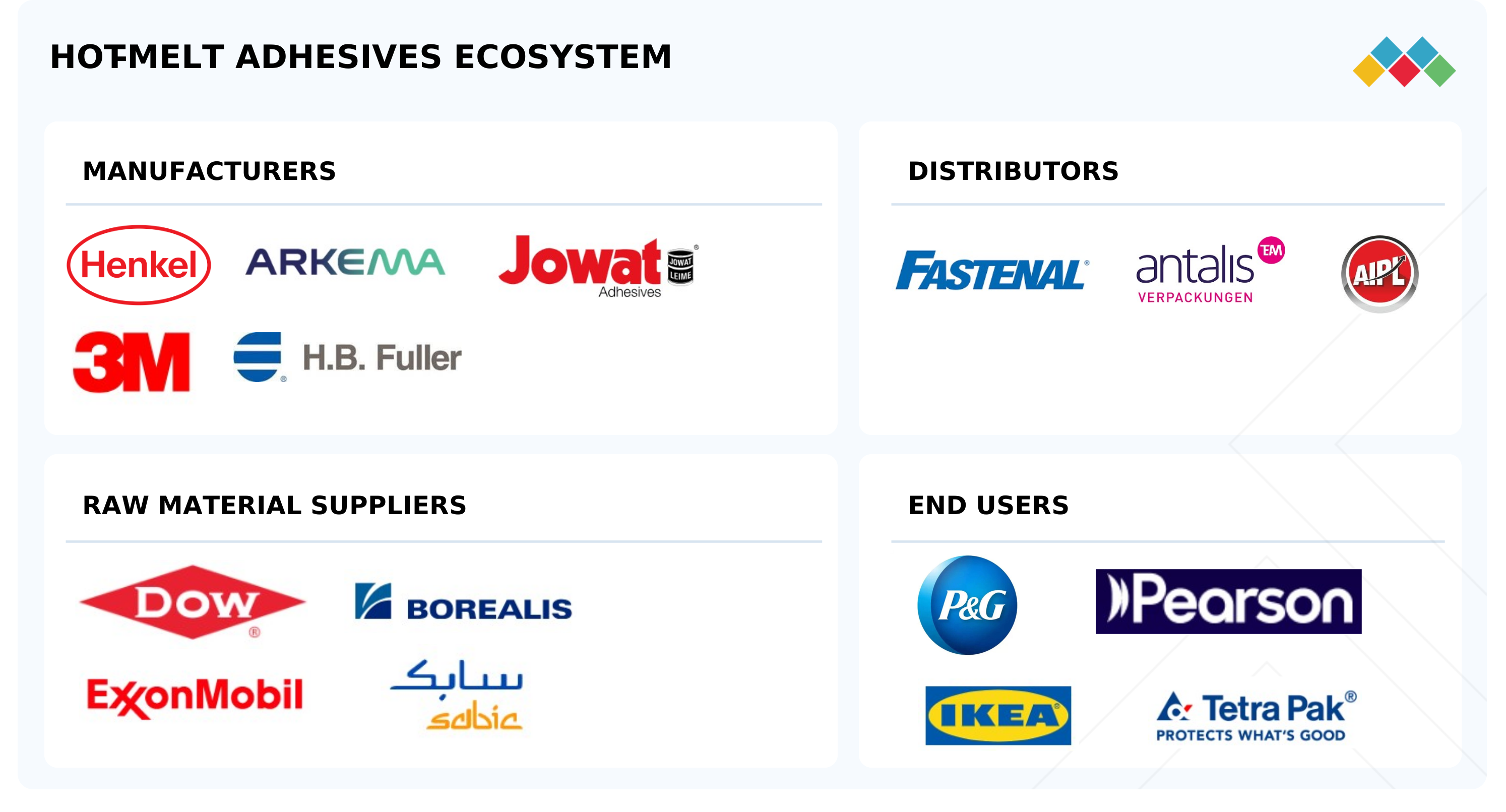
The hot-melt adhesives ecosystem involves identifying and analyzing interconnected relationships among various stakeholders, including raw material suppliers, manufacturers, distributors, contractors, and end users. Raw material suppliers provide resins such as ethylene-vinyl acetate (EVA), styrenic block copolymers (SBC), metallocene polyolefins (mPO), polyolefins, amorphous poly-alphaolefin (APAO) to adhesive manufacturers. The manufacturers process these resins using compounding and formulation technologies to produce hot-melt adhesives with specific performance characteristics. The distributors and suppliers connect manufacturers with end users across industries such as packaging, nonwoven hygiene, furniture, bookbinding, and automotive, thereby streamlining the supply chain to enhance operational efficiency and profitability.
Logos and trademarks shown above are the property of their respective owners. Their use here is for informational and illustrative purposes only.
HOT-MELT ADHESIVES MARKET SEGMENTS
Source: Secondary Research, Interviews with Experts, MarketsandMarkets Analysis
Hot-Melt Adhesives Market, By Resin Type
The ethylene-vinyl acetate (EVA) segment accounted for the largest market share in 2024. EVA is one of the most widely used resins in hot-melt adhesives due to its cost-effectiveness, versatility, and ease of processing. It is easily available and compatible with various substrates, enabling a consistent supply for mass-scale applications. EVA adhesives offer reliable performance in packaging, hygiene, and bookbinding, making them the preferred choice for manufacturers seeking a balance between affordability and functionality.
Hot-Melt Adhesives Market, By Application
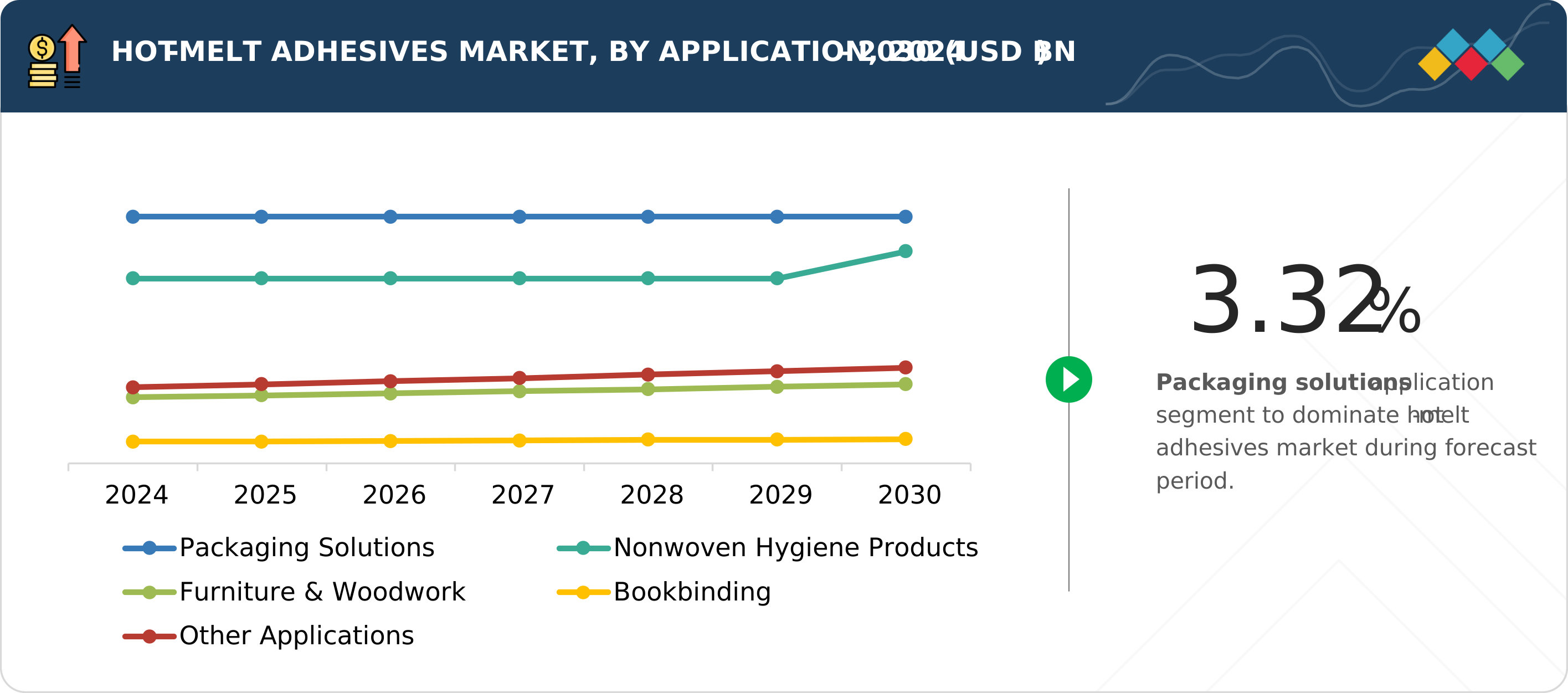
The packaging solutions segment dominated the overall hot-melt adhesives market in 2024. Packaging requires fast-setting, durable, and flexible adhesives that can seal a wide range of materials, including paper, cardboard, plastics, and laminates. Hot-melt adhesives offer strong bonds for cartons, labels, and flexible packaging, which is critical for industries such as food, beverages, and e-commerce logistics. The cost-effectiveness, versatility, and eco-friendly nature of hot-melt adhesives make them the preferred bonding technology for global packaging manufacturers.
REGION
Asia Pacific to be fastest-growing region in global hot-melt adhesives market during forecast period
Asia Pacific accounted for the largest market share in 2024 and is also projected to be the fastest-growing region during the forecast period. Rapid industrialization, expanding e-commerce, and growing food and beverage sectors in countries such as China, India, and Southeast Asian nations are driving demand for adhesives. The region benefits from large-scale manufacturing bases, increasing urbanization, and rising consumer spending, which create strong growth momentum. With robust demand for packaging and hygiene products, Asia Pacific has become the leading market for hot-melt adhesives worldwide.
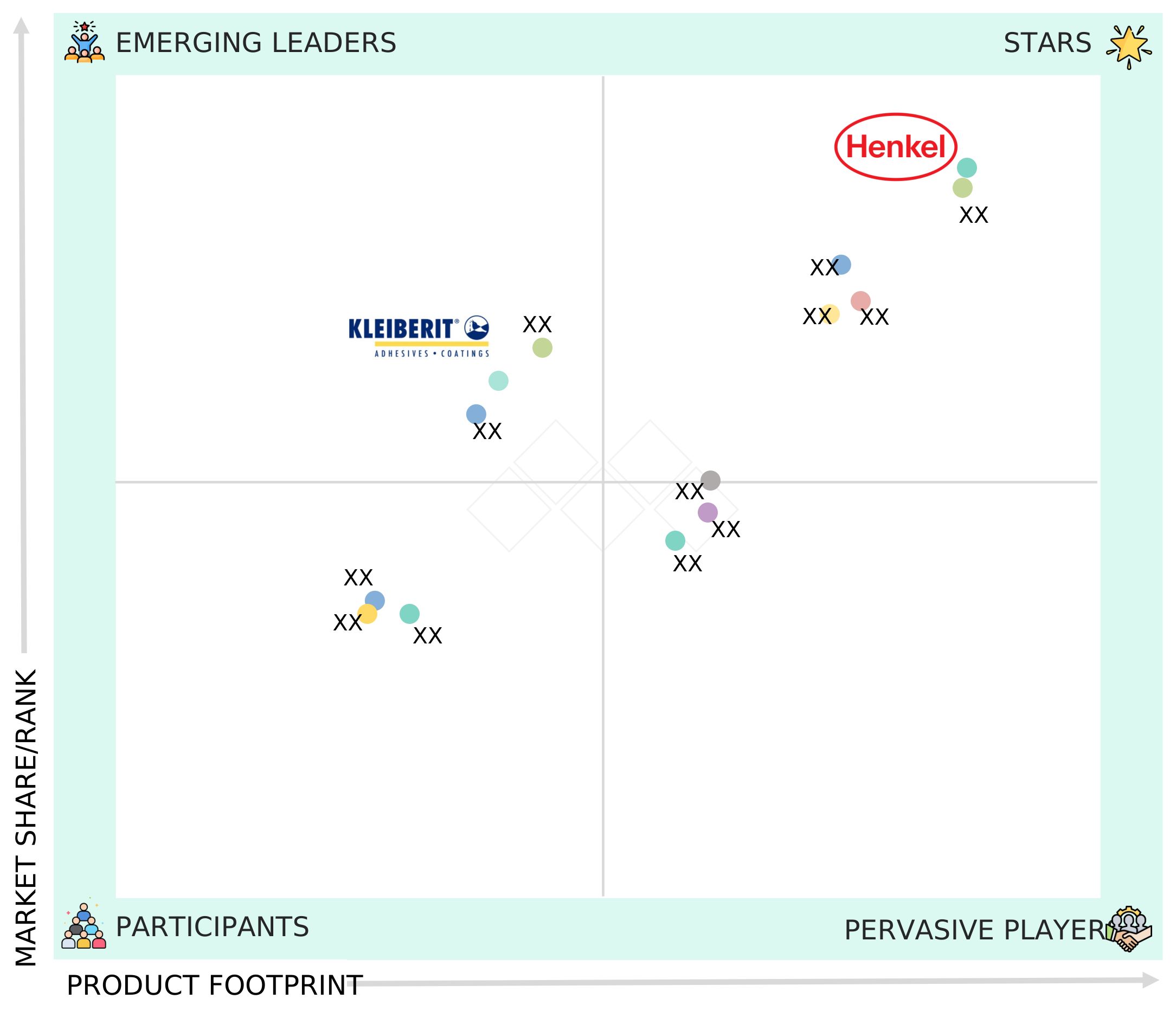
Hot-Melt Adhesives Market: COMPANY EVALUATION MATRIX
In the hot-melt adhesives market matrix, Henkel KG & Co. KGaA (Star) leads with a strong global presence and an extensive product portfolio, driving large-scale adoption across key applications such as packaging, hygiene, and automotive. Its focus on innovation, sustainable adhesive solutions, and strategic partnerships positions it at the forefront of the industry. Henkel dominates with scale, diversified offerings, and consistent investment in R&D, firmly maintaining its position in the leaders’ quadrant.
Source: Secondary Research, Interviews with Experts, MarketsandMarkets Analysis
KEY MARKET PLAYERS
MARKET SCOPE
| REPORT METRIC | DETAILS |
|---|---|
| Market Size Value in 2024 | USD 8.85 Billion |
| Revenue Forecast in 2030 | USD 11.13 Billion |
| Growth Rate | CAGR of 3.93% from 2025-2030 |
| Actual data | 2020-2030 |
| Base year | 2024 |
| Forecast period | 2025-2030 |
| Units considered | Value (USD Million), Volume (Kiloton) |
| Report Coverage | Revenue forecast, company ranking, competitive landscape, growth factors, and trends |
| Segments Covered |
|
| Regional Scope | Asia Pacific, Europe, North America, Middle East & Africa, and South America |
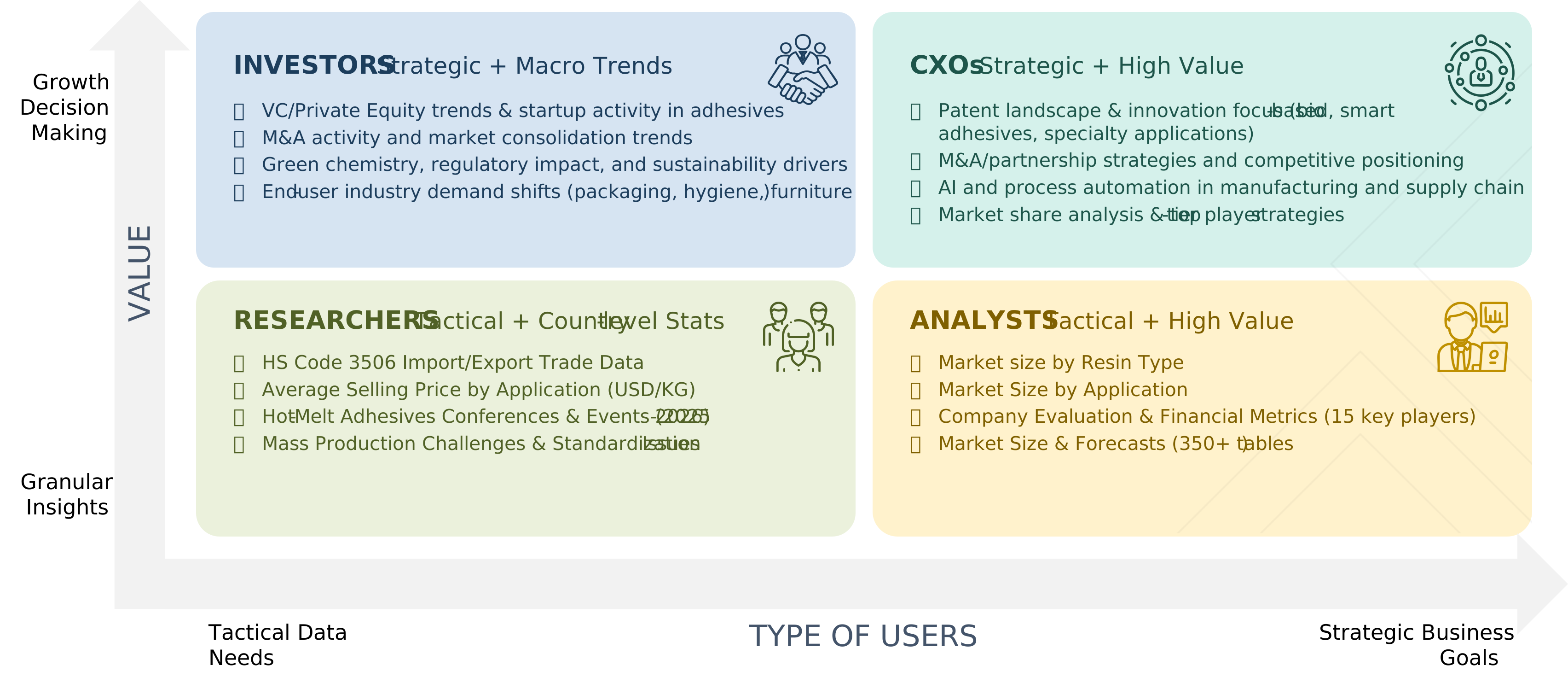
WHAT IS IN IT FOR YOU: Hot-Melt Adhesives Market REPORT CONTENT GUIDE
DELIVERED CUSTOMIZATIONS
We have successfully delivered the following deep-dive customizations:
| CLIENT REQUEST | CUSTOMIZATION DELIVERED | VALUE ADDS |
|---|
RECENT DEVELOPMENTS
- June 2026: Jowat SE presented newly developed hot-melt adhesive solutions for the filtration industry, including Jowatherm 262.65, a hot melt for high-speed wire-mesh lamination, and Jowatherm PO 264.30, a new polyolefin hot melt for pleating and frame bonding. The developments target faster processing, lower processing temperatures, reduced maintenance requirements, and improved production efficiency in filter manufacturing.
- April 2026: Henkel AG & Co. KGaA introduced Technomelt PUR 9015 BV/WV, a new polyurethane hot-melt adhesive for glass and large-panel appliance applications. The formulation combines high initial bond strength, thermal resistance, automated-process compatibility, and the ability to enable in-process debonding for rework, representing a new hot-melt adhesive development directly applicable to appliance assembly.
- December 2025: Texyear Industries Inc. commenced mass production at its second manufacturing plant in Maharashtra, India, increasing Tex Year India's annual production capacity from 3,400 tons to 10,000 tons. The company specifically stated that the expansion was intended to meet growing demand in the South Asian hot-melt adhesive markets, making this a directly relevant manufacturing-capacity development.
- September 2025: H.B. Fuller Company introduced new sustainable hot-melt adhesive solutions for case and carton sealing at FachPack 2025, including Advantra Earthic 9500, which uses at least 25% less adhesive than standard industry hot-melt technology, and Advantra Earthic 9370, which incorporates a high share of fossil-free sustainable raw materials. The launch represents a direct expansion of the company's sustainable hot-melt adhesive portfolio for packaging applications.
- May 2025: Jowat SE expanded its hot-melt adhesive portfolio with Jowatherm PUR 608.10, an unfilled reactive polyurethane hot-melt adhesive developed for high-quality edgebanding in furniture applications. The new adhesive provides high initial strength at elevated temperatures, seamless-looking bondlines, and resistance to heat, moisture, and chemicals, representing a specific new PUR hot-melt development.
Table of Contents
 Exclusive indicates content/data unique to MarketsandMarkets and not available with any competitors.
TITLE
PAGE NO
1
INTRODUCTION
26
2
RESEARCH METHODOLOGY
32
3
EXECUTIVE SUMMARY
43
4
PREMIUM INSIGHTS
46
5
MARKET OVERVIEW
Hot-melt adhesives surge as eco-friendly, versatile solutions amid rising packaging and DIY demands.
49
5.1
INTRODUCTION
5.2
MARKET DYNAMICS
5.2.1
DRIVERS
5.2.1.1
GROWTH OF PACKAGING INDUSTRY
5.2.1.2
HIGH DEMAND FROM NONWOVEN HYGIENE PRODUCTS, FURNITURE & WOODWORK, AND BOOKBINDING APPLICATIONS
5.2.1.3
GROWING PREFERENCE FOR HOT-MELT ADHESIVES OVER SOLVENT-BASED ADHESIVES
5.2.1.4
INCREASING USE IN DIY APPLICATIONS
5.2.2
RESTRAINTS
5.2.2.1
LOW THERMAL RESISTANCE OF HOT-MELT ADHESIVES
5.2.3
OPPORTUNITIES
5.2.3.1
CHANGING LIFESTYLE AND INCREASING CONSUMER AWARENESS IN EMERGING ECONOMIES
5.2.3.2
DEVELOPMENT OF ECO-FRIENDLY REACTIVE HOT-MELT ADHESIVES
5.2.4
CHALLENGES
5.2.4.1
DIFFICULTY IN USAGE ON HARD-TO-BOND SUBSTANCES
5.2.4.2
VOLATILITY IN RAW MATERIAL PRICES
5.3
PORTER’S FIVE FORCES ANALYSIS
5.3.1
THREAT OF NEW ENTRANTS
5.3.2
THREAT OF SUBSTITUTES
5.3.3
BARGAINING POWER OF BUYERS
5.3.4
BARGAINING POWER OF SUPPLIERS
5.3.5
INTENSITY OF COMPETITIVE RIVALRY
5.4
KEY STAKEHOLDERS AND BUYING CRITERIA
5.4.1
KEY STAKEHOLDERS IN BUYING PROCESS
5.4.2
BUYING CRITERIA
5.5
MACROECONOMIC OUTLOOK
5.5.1
GDP TRENDS AND FORECAST
6
INDUSTRY TRENDS
Emerging technologies and regulatory shifts redefine hot-melt adhesives' supply chain and pricing dynamics.
61
6.1
SUPPLY CHAIN ANALYSIS
6.1.1
RAW MATERIAL SUPPLIERS
6.1.2
MANUFACTURERS
6.1.3
DISTRIBUTORS
6.1.4
END USERS
6.2
PRICING ANALYSIS
6.2.1
AVERAGE SELLING PRICE OF HOT-MELT ADHESIVES IN KEY APPLICATIONS, BY KEY PLAYERS, 2024
6.2.2
AVERAGE SELLING PRICE TREND OF HOT-MELT ADHESIVES, BY REGION, 2022–2030
6.3
TRENDS/DISRUPTIONS IMPACTING CUSTOMER BUSINESS
6.4
ECOSYSTEM ANALYSIS
6.5
TECHNOLOGY ANALYSIS
6.5.1
KEY TECHNOLOGIES
6.5.1.1
POLYMER CHEMISTRY ADVANCEMENTS
6.5.1.2
FORMULATION AND BLENDING TECHNOLOGY
6.5.2
COMPLEMENTARY TECHNOLOGIES
6.5.2.1
SURFACE TREATMENT TECHNOLOGIES
6.5.3
ADJACENT TECHNOLOGIES
6.5.3.1
PRESSURE-SENSITIVE ADHESIVES
6.6
CASE STUDY ANALYSIS
6.6.1
OPERATIONAL EFFICIENCY AND SUSTAINABILITY VIA HENKEL’S EASYFLOW SYSTEM
6.6.2
INNOVATION IN NONWOVEN HYGIENE ADHESIVES BY H.B. FULLER: FULL-CARE 5300/5650
6.7
TRADE ANALYSIS
6.7.1
IMPORT SCENARIO (HS CODE 3506)
6.7.2
EXPORT SCENARIO (HS CODE 3506)
6.8
REGULATORY LANDSCAPE
6.8.1
REGULATORY BODIES, GOVERNMENT AGENCIES, AND OTHER ORGANIZATIONS
6.8.2
REGULATORY FRAMEWORK
6.8.2.1
ISO 14001 – ENVIRONMENTAL MANAGEMENT SYSTEMS
6.8.2.2
ISO 9001 – QUALITY MANAGEMENT SYSTEMS
6.9
KEY CONFERENCES AND EVENTS
6.10
INVESTMENT AND FUNDING SCENARIO
6.11
PATENT ANALYSIS
6.11.1
APPROACH
6.11.2
DOCUMENT TYPES
6.11.3
TOP APPLICANTS
6.11.4
JURISDICTION ANALYSIS
6.12
IMPACT OF 2025 US TARIFF – HOT-MELT ADHESIVES MARKET
6.12.1
INTRODUCTION
6.12.2
KEY TARIFF RATES
6.12.3
PRICE IMPACT ANALYSIS
6.12.4
IMPACT ON COUNTRY/REGION
6.12.4.1
US
6.12.4.2
EUROPE
6.12.4.3
ASIA PACIFIC
6.12.5
IMPACT ON APPLICATIONS
6.13
IMPACT OF AI/GEN AI ON HOT-MELT ADHESIVES MARKET
7
HOT-MELT ADHESIVES MARKET, BY RESIN TYPE
Market Size & Growth Rate Forecast Analysis to 2030 in USD Million and Kilotons | 28 Data Tables
89
7.1
INTRODUCTION
7.2
ETHYLENE-VINYL ACETATE (EVA)
7.2.1
RISING PACKAGED FOOD AND HYGIENE DEMAND TO DRIVE EXPANSION
7.3
STYRENIC BLOCK COPOLYMERS (SBC)
7.3.1
GROWING USE IN NONWOVEN HYGIENE PRODUCTS TO FUEL DEMAND
7.4
METALLOCENE POLYOLEFIN (MPO)
7.4.1
SUSTAINABILITY REQUIREMENTS TO BOOST MARKET
7.5
POLYOLEFINS
7.5.1
RISING GLOBAL PRODUCTION OF PACKAGED GOODS TO DRIVE MARKET GROWTH
7.6
AMORPHOUS POLY-ALPHAOLEFIN (APAO)
7.6.1
COMPATIBILITY WITH OTHER POLYMERS TO BOOST DEMAND
7.7
OTHER RESIN TYPES
8
HOT-MELT ADHESIVES MARKET, BY APPLICATION
Market Size & Growth Rate Forecast Analysis to 2030 in USD Million and Kilotons | 24 Data Tables
103
8.1
INTRODUCTION
8.2
PACKAGING SOLUTIONS
8.2.1
EXPANDING E-COMMERCE ACTIVITIES TO DRIVE MARKET
8.2.2
CORRUGATED BOXES AND TRAYS
8.2.3
CARTON AND SIDE-SEAM CLOSURES
8.2.4
NON-PRESSURE-SENSITIVE LABELS AND MARKING SYSTEMS
8.2.5
FLEXIBLE PACKAGING
8.2.6
OTHER APPLICATIONS
8.3
NONWOVEN HYGIENE PRODUCTS
8.3.1
RISING FOCUS ON COMFORT AND HYGIENE TO FUEL GROWTH
8.3.2
BABY DIAPERS, NAPPIES, AND PANTS
8.3.3
ADULT INCONTINENCE
8.3.4
FEMININE CARE
8.4
FURNITURE & WOODWORK
8.4.1
GROWING DEMAND FOR DURABLE AND AESTHETIC WOOD PRODUCTS TO DRIVE MARKET GROWTH
8.4.2
WOODWORKING
8.4.3
STRUCTURAL AND NON-STRUCTURAL WOOD PRODUCTS
8.5
BOOKBINDING
8.5.1
INCREASING NEED FOR EFFICIENT BINDING SOLUTIONS TO BOOST DEMAND
8.5.2
SPINE BINDING
8.5.3
COVER PAGE AND EDGE BONDING
8.6
OTHER APPLICATIONS
9
HOT-MELT ADHESIVES MARKET, BY REGION
Comprehensive coverage of 8 Regions with country-level deep-dive of 19 Countries | 140 Data Tables.
116
9.1
INTRODUCTION
9.2
ASIA PACIFIC
9.2.1
CHINA
9.2.1.1
GROWING INDUSTRIAL ACTIVITIES TO DRIVE MARKET
9.2.2
JAPAN
9.2.2.1
INCREASING ADOPTION OF HOT-MELT ADHESIVES IN NONWOVEN HYGIENE PRODUCTS TO DRIVE MARKET
9.2.3
INDIA
9.2.3.1
RAPID INDUSTRIALIZATION TO DRIVE DEMAND
9.2.4
SOUTH KOREA
9.2.4.1
GOVERNMENT INITIATIVES IN INDUSTRIAL SECTOR TO DRIVE MARKET
9.2.5
MALAYSIA
9.2.5.1
ECONOMIC GROWTH AND INDUSTRIAL INVESTMENT TO PROPEL MARKET
9.2.6
THAILAND
9.2.6.1
EXPANSION OF MANUFACTURING CLUSTERS TO FUEL DEMAND
9.3
NORTH AMERICA
9.3.1
US
9.3.1.1
STRONG INDUSTRIAL INFRASTRUCTURE TO FUEL GROWTH
9.3.2
CANADA
9.3.2.1
FOCUS ON ADVANCED RESEARCH AND DEVELOPMENT TO DRIVE DEMAND
9.3.3
MEXICO
9.3.3.1
STRATEGIC INDUSTRIAL INVESTMENT TO DRIVE MARKET
9.4
EUROPE
9.4.1
GERMANY
9.4.1.1
AUTOMOTIVE INDUSTRY LEADERSHIP TO BOOST MARKET
9.4.2
FRANCE
9.4.2.1
EXPANSION OF INDUSTRIAL AUTOMATION AND MODERN ASSEMBLY LINES TO PROPEL MARKET
9.4.3
UK
9.4.3.1
RISING DEMAND FROM CONSUMER DIY PRODUCTS TO FUEL GROWTH
9.4.4
SPAIN
9.4.4.1
INCREASING ADOPTION IN BOOKBINDING AND PUBLISHING TO FUEL GROWTH
9.4.5
ITALY
9.4.5.1
GROWTH IN FURNITURE AND WOODWORK MANUFACTURING TO PROPEL MARKET
9.5
MIDDLE EAST & AFRICA
9.5.1
GCC COUNTRIES
9.5.1.1
SAUDI ARABIA
9.5.1.2
UAE
9.5.2
SOUTH AFRICA
9.5.2.1
AUTOMOTIVE AND TRANSPORT SECTOR EXPANSION TO FUEL DEMAND
9.6
SOUTH AMERICA
9.6.1
BRAZIL
9.6.1.1
ECONOMIC MOMENTUM TO DRIVE ADOPTION ACROSS SECTORS
9.6.2
ARGENTINA
9.6.2.1
EXPANDING FOOD AND BEVERAGE PACKAGING INDUSTRY TO SUPPORT MARKET GROWTH
10
COMPETITIVE LANDSCAPE
Discover key players' winning strategies and market positioning in hot-melt adhesives.
177
10.1
INTRODUCTION
10.2
KEY PLAYER STRATEGIES/RIGHT TO WIN
10.2.1
STRATEGIES ADOPTED BY KEY HOT-MELT ADHESIVE MANUFACTURERS, JANUARY 2020–JULY 2025
10.3
MARKET SHARE ANALYSIS, 2024
10.4
REVENUE ANALYSIS
10.5
COMPANY EVALUATION MATRIX: KEY PLAYERS, 2024
10.5.1
STARS
10.5.2
EMERGING LEADERS
10.5.3
PERVASIVE PLAYERS
10.5.4
PARTICIPANTS
10.5.5
COMPANY FOOTPRINT: KEY PLAYERS, 2024
10.5.5.1
COMPANY FOOTPRINT
10.5.5.2
REGION FOOTPRINT
10.5.5.3
RESIN TYPE FOOTPRINT
10.5.5.4
APPLICATION FOOTPRINT
10.6
COMPANY EVALUATION MATRIX: STARTUPS/SMES, 2024
10.6.1
PROGRESSIVE COMPANIES
10.6.2
RESPONSIVE COMPANIES
10.6.3
DYNAMIC COMPANIES
10.6.4
STARTING BLOCKS
10.6.5
COMPETITIVE BENCHMARKING: STARTUPS/SMES, 2024
10.6.5.1
DETAILED LIST OF KEY STARTUPS/SMES
10.6.5.2
COMPETITIVE BENCHMARKING OF KEY STARTUPS/SMES
10.7
BRAND/PRODUCT COMPARISON ANALYSIS
10.8
COMPANY VALUATION AND FINANCIAL METRICS
10.9
COMPETITIVE SCENARIO
10.9.1
PRODUCT LAUNCHES
10.9.2
DEALS
10.9.3
EXPANSIONS
11
COMPANY PROFILES
In-depth Company Profiles of Leading Market Players with detailed Business Overview, Product and Service Portfolio, Recent Developments, and Unique Analyst Perspective (MnM View)
199
11.1
KEY PLAYERS
11.1.1
HENKEL AG & CO. KGAA
11.1.1.1
BUSINESS OVERVIEW
11.1.1.2
PRODUCTS/SOLUTIONS/SERVICES OFFERED
11.1.1.3
RECENT DEVELOPMENTS
11.1.1.4
MNM VIEW
11.1.2
H.B. FULLER COMPANY
11.1.3
ARKEMA
11.1.4
3M COMPANY
11.1.5
JOWAT SE
11.1.6
DOW INC.
11.1.7
TEX YEAR INDUSTRIES INC.
11.1.8
KLEIBERIT SE & CO. KG
11.1.9
SIKA AG
11.1.10
AVERY DENNISON CORPORATION
11.2
STARTUP/SMES
11.2.1
HUNTSMAN CORPORATION
11.2.2
ADHESIVES DIRECT UK LIMITED
11.2.3
AICA ADTEK SDN. BHD.
11.2.4
BÜHNEN GMBH & CO. KG
11.2.5
CHERNG TAY TECHNOLOGY CO., LTD.
11.2.6
CATTIE ADHESIVES
11.2.7
DAUBERT CHEMICAL COMPANY
11.2.8
EVANS ADHESIVE CORPORATION
11.2.9
EVONIK INDUSTRIES AG
11.2.10
HELMITIN, INC.
11.2.11
KMS ADHESIVES LTD.
11.2.12
SANYHOT ADHESIVOS S.A.
11.2.13
SEALOCK LTD.
11.2.14
TOYOBO CO., LTD.
11.2.15
WORTHEN INDUSTRIES, INC.
12
ADJACENT & RELATED MARKETS
251
12.1
INTRODUCTION
12.2
LIMITATION
12.3
ETHYLENE VINYL ACETATE MARKET
12.3.1
MARKET DEFINITION
12.3.2
MARKET OVERVIEW
12.4
ETHYLENE VINYL ACETATE MARKET, BY REGION
12.4.1
EUROPE
12.4.2
NORTH AMERICA
12.4.3
ASIA PACIFIC
12.4.4
REST OF THE WORLD
13
APPENDIX
255
13.1
DISCUSSION GUIDE
13.2
KNOWLEDGESTORE: MARKETSANDMARKETS’ SUBSCRIPTION PORTAL
13.3
CUSTOMIZATION OPTIONS
13.4
RELATED REPORTS
13.5
AUTHOR DETAILS
LIST OF TABLES
TABLE 1
HOT-MELT ADHESIVES MARKET: DEFINITION AND INCLUSIONS, BY RESIN TYPE
TABLE 2
HOT-MELT ADHESIVES MARKET: DEFINITION AND INCLUSIONS, BY APPLICATION
TABLE 3
HOT-MELT ADHESIVES MARKET: PORTER’S FIVE FORCES ANALYSIS
TABLE 4
IMPACT OF STAKEHOLDERS ON BUYING PROCESS OF TOP THREE APPLICATIONS (%)
TABLE 5
KEY BUYING CRITERIA FOR TOP THREE APPLICATIONS
TABLE 6
GDP TRENDS AND FORECAST OF MAJOR ECONOMIES, 2021–2030 (USD BILLION)
TABLE 7
PRICING RANGE OF HOT-MELT ADHESIVES IN KEY APPLICATIONS, BY KEY PLAYERS, 2024 (USD/KG)
TABLE 8
AVERAGE SELLING PRICE OF HOT-MELT ADHESIVES, BY REGION, 2022–2024 (USD/KG)
TABLE 9
ROLES OF COMPANIES IN HOT-MELT ADHESIVES ECOSYSTEM
TABLE 10
IMPORT DATA RELATED TO HOT-MELT ADHESIVES, BY REGION, 2019–2024 (USD MILLION)
TABLE 11
EXPORT DATA RELATED TO HOT-MELT ADHESIVES, BY REGION, 2019–2024 (USD MILLION)
TABLE 12
GLOBAL: REGULATORY BODIES, GOVERNMENT AGENCIES, AND OTHER ORGANIZATIONS
TABLE 13
NORTH AMERICA: REGULATORY BODIES, GOVERNMENT AGENCIES, AND OTHER ORGANIZATIONS
TABLE 14
EUROPE: REGULATORY BODIES, GOVERNMENT AGENCIES, AND OTHER ORGANIZATIONS
TABLE 15
ASIA PACIFIC: REGULATORY BODIES, GOVERNMENT AGENCIES, AND OTHER ORGANIZATIONS
TABLE 16
MIDDLE EAST & AFRICA: REGULATORY BODIES, GOVERNMENT AGENCIES, AND OTHER ORGANIZATIONS
TABLE 17
SOUTH AMERICA: REGULATORY BODIES, GOVERNMENT AGENCIES, AND OTHER ORGANIZATIONS
TABLE 18
HOT-MELT ADHESIVES MARKET: LIST OF KEY CONFERENCES AND EVENTS, 2025–2026
TABLE 19
HOT-MELT ADHESIVES MARKET: INVESTMENT AND FUNDING SCENARIO, 2020–2025
TABLE 20
PATENT STATUS: PATENT APPLICATIONS, LIMITED PATENTS, AND GRANTED PATENTS, 2014–2024
TABLE 21
LIST OF MAJOR PATENTS RELATED TO HOT-MELT ADHESIVES, 2014–2024
TABLE 22
PATENTS BY DOW, INC.
TABLE 23
US ADJUSTED RECIPROCAL TARIFF RATES
TABLE 24
HOT-MELT ADHESIVES MARKET, BY RESIN TYPE, 2020–2024 (USD MILLION)
TABLE 25
HOT-MELT ADHESIVES MARKET, BY RESIN TYPE, 2025–2030 (USD MILLION)
TABLE 26
HOT-MELT ADHESIVES MARKET, BY RESIN TYPE, 2020–2024 (KILOTON)
TABLE 27
HOT-MELT ADHESIVES MARKET, BY RESIN TYPE, 2025–2030 (KILOTON)
TABLE 28
ETHYLENE-VINYL ACETATE: HOT-MELT ADHESIVES MARKET, BY REGION, 2020–2024 (USD MILLION)
TABLE 29
ETHYLENE-VINYL ACETATE: HOT-MELT ADHESIVES MARKET, BY REGION, 2025–2030 (USD MILLION)
TABLE 30
ETHYLENE-VINYL ACETATE: HOT-MELT ADHESIVES MARKET, BY REGION, 2020–2024 (KILOTON)
TABLE 31
ETHYLENE-VINYL ACETATE: HOT-MELT ADHESIVES MARKET, BY REGION, 2025–2030 (KILOTON)
TABLE 32
STYRENIC BLOCK COPOLYMERS: HOT-MELT ADHESIVES MARKET, BY REGION, 2020–2024 (USD MILLION)
TABLE 33
STYRENIC BLOCK COPOLYMERS: HOT-MELT ADHESIVES MARKET, BY REGION, 2025–2030 (USD MILLION)
TABLE 34
STYRENIC BLOCK COPOLYMERS: HOT-MELT ADHESIVES MARKET, BY REGION, 2020–2024 (KILOTON)
TABLE 35
STYRENIC BLOCK COPOLYMERS: HOT-MELT ADHESIVES MARKET, BY REGION, 2025–2030 (KILOTON)
TABLE 36
METALLOCENE POLYOLEFIN: HOT-MELT ADHESIVES MARKET, BY REGION, 2020–2024 (USD MILLION)
TABLE 37
METALLOCENE POLYOLEFIN: HOT-MELT ADHESIVES MARKET, BY REGION, 2025–2030 (USD MILLION)
TABLE 38
METALLOCENE POLYOLEFIN: HOT-MELT ADHESIVES MARKET, BY REGION, 2020–2024 (KILOTON)
TABLE 39
METALLOCENE POLYOLEFIN: HOT-MELT ADHESIVES MARKET, BY REGION, 2025–2030 (KILOTON)
TABLE 40
POLYOLEFINS: HOT-MELT ADHESIVES MARKET, BY REGION, 2020–2024 (USD MILLION)
TABLE 41
POLYOLEFINS: HOT-MELT ADHESIVES MARKET, BY REGION, 2025–2030 (USD MILLION)
TABLE 42
POLYOLEFINS: HOT-MELT ADHESIVES MARKET, BY REGION, 2020–2024 (KILOTON)
TABLE 43
POLYOLEFINS: HOT-MELT ADHESIVES MARKET, BY REGION, 2025–2030 (KILOTON)
TABLE 44
AMORPHOUS POLY-ALPHAOLEFIN: HOT-MELT ADHESIVES MARKET, BY REGION, 2020–2024 (USD MILLION)
TABLE 45
AMORPHOUS POLY-ALPHAOLEFIN: HOT-MELT ADHESIVES MARKET, BY REGION, 2025–2030 (USD MILLION)
TABLE 46
AMORPHOUS POLY-ALPHAOLEFIN: HOT-MELT ADHESIVES MARKET, BY REGION, 2020–2024 (KILOTON)
TABLE 47
AMORPHOUS POLY-ALPHAOLEFIN: HOT-MELT ADHESIVES MARKET, BY REGION, 2025–2030 (KILOTON)
TABLE 48
OTHER RESIN TYPES: HOT-MELT ADHESIVES MARKET, BY REGION, 2020–2024 (USD MILLION)
TABLE 49
OTHER RESIN TYPES: HOT-MELT ADHESIVES MARKET, BY REGION, 2025–2030 (USD MILLION)
TABLE 50
OTHER RESIN TYPES: HOT-MELT ADHESIVES MARKET, BY REGION, 2020–2024 (KILOTON)
TABLE 51
OTHER RESIN TYPES: HOT-MELT ADHESIVES MARKET, BY REGION, 2025–2030 (KILOTON)
TABLE 52
HOT-MELT ADHESIVES MARKET, BY APPLICATION, 2020–2024 (USD MILLION)
TABLE 53
HOT-MELT ADHESIVES MARKET, BY APPLICATION, 2025–2030 (USD MILLION)
TABLE 54
HOT-MELT ADHESIVES MARKET, BY APPLICATION, 2020–2024 (KILOTON)
TABLE 55
HOT-MELT ADHESIVES MARKET, BY APPLICATION, 2025–2030 (KILOTON)
TABLE 56
HOT-MELT ADHESIVES MARKET IN PACKAGING SOLUTIONS, BY REGION, 2020–2024 (USD MILLION)
TABLE 57
HOT-MELT ADHESIVES MARKET IN PACKAGING SOLUTIONS, BY REGION, 2025–2030 (USD MILLION)
TABLE 58
HOT-MELT ADHESIVES MARKET IN PACKAGING SOLUTIONS, BY REGION, 2020–2024 (KILOTON)
TABLE 59
HOT-MELT ADHESIVES MARKET IN PACKAGING SOLUTIONS, BY REGION, 2025–2030 (KILOTON)
TABLE 60
HOT-MELT ADHESIVES MARKET IN NONWOVEN HYGIENE PRODUCTS, BY REGION, 2020–2024 (USD MILLION)
TABLE 61
HOT-MELT ADHESIVES MARKET IN NONWOVEN HYGIENE PRODUCTS, BY REGION, 2025–2030 (USD MILLION)
TABLE 62
HOT-MELT ADHESIVES MARKET IN NONWOVEN HYGIENE PRODUCTS, BY REGION, 2020–2024 (KILOTON)
TABLE 63
HOT-MELT ADHESIVES MARKET IN NONWOVEN HYGIENE PRODUCTS, BY REGION, 2025–2030 (KILOTON)
TABLE 64
HOT-MELT ADHESIVES MARKET IN FURNITURE & WOODWORK, BY REGION, 2020–2024 (USD MILLION)
TABLE 65
HOT-MELT ADHESIVES MARKET IN FURNITURE & WOODWORK, BY REGION, 2025–2030 (USD MILLION)
TABLE 66
HOT-MELT ADHESIVES MARKET IN FURNITURE & WOODWORK, BY REGION, 2020–2024 (KILOTON)
TABLE 67
HOT-MELT ADHESIVES MARKET IN FURNITURE & WOODWORK, BY REGION, 2025–2030 (KILOTON)
TABLE 68
HOT-MELT ADHESIVES MARKET IN BOOKBINDING, BY REGION, 2020–2024 (USD MILLION)
TABLE 69
HOT-MELT ADHESIVES MARKET IN BOOKBINDING, BY REGION, 2025–2030 (USD MILLION)
TABLE 70
HOT-MELT ADHESIVES MARKET IN BOOKBINDING, BY REGION, 2020–2024 (KILOTON)
TABLE 71
HOT-MELT ADHESIVES MARKET IN BOOKBINDING, BY REGION, 2025–2030 (KILOTON)
TABLE 72
HOT-MELT ADHESIVES MARKET IN OTHER APPLICATIONS, BY REGION, 2020–2024 (USD MILLION)
TABLE 73
HOT-MELT ADHESIVES MARKET IN OTHER APPLICATIONS, BY REGION, 2025–2030 (USD MILLION)
TABLE 74
HOT-MELT ADHESIVES MARKET IN OTHER APPLICATIONS, BY REGION, 2020–2024 (KILOTON)
TABLE 75
HOT-MELT ADHESIVES MARKET IN OTHER APPLICATIONS, BY REGION, 2025–2030 (KILOTON)
TABLE 76
HOT-MELT ADHESIVES MARKET, BY REGION, 2020–2024 (USD MILLION)
TABLE 77
HOT-MELT ADHESIVES MARKET, BY REGION, 2025–2030 (USD MILLION)
TABLE 78
HOT-MELT ADHESIVES MARKET, BY REGION, 2020–2024 (KILOTON)
TABLE 79
HOT-MELT ADHESIVES MARKET, BY REGION, 2025–2030 (KILOTON)
TABLE 80
ASIA PACIFIC: HOT-MELT ADHESIVES MARKET, BY RESIN TYPE, 2020–2024 (USD MILLION)
TABLE 81
ASIA PACIFIC: HOT-MELT ADHESIVES MARKET, BY RESIN TYPE, 2025–2030 (USD MILLION)
TABLE 82
ASIA PACIFIC: HOT-MELT ADHESIVES MARKET, BY RESIN TYPE, 2020–2024 (KILOTON)
TABLE 83
ASIA PACIFIC: HOT-MELT ADHESIVES MARKET, BY RESIN TYPE, 2025–2030 (KILOTON)
TABLE 84
ASIA PACIFIC: HOT-MELT ADHESIVES MARKET, BY APPLICATION, 2020–2024 (USD MILLION)
TABLE 85
ASIA PACIFIC: HOT-MELT ADHESIVES MARKET, BY APPLICATION, 2025–2030 (USD MILLION)
TABLE 86
ASIA PACIFIC: HOT-MELT ADHESIVES MARKET, BY APPLICATION, 2020–2024 (KILOTON)
TABLE 87
ASIA PACIFIC: HOT-MELT ADHESIVES MARKET, BY APPLICATION, 2025–2030 (KILOTON)
TABLE 88
ASIA PACIFIC: HOT-MELT ADHESIVES MARKET, BY COUNTRY, 2020–2024 (USD MILLION)
TABLE 89
ASIA PACIFIC: HOT-MELT ADHESIVES MARKET, BY COUNTRY, 2025–2030 (USD MILLION)
TABLE 90
ASIA PACIFIC: HOT-MELT ADHESIVES MARKET, BY COUNTRY, 2020–2024 (KILOTON)
TABLE 91
ASIA PACIFIC: HOT-MELT ADHESIVES MARKET, BY COUNTRY, 2025–2030 (KILOTON)
TABLE 92
CHINA: HOT-MELT ADHESIVES MARKET, BY APPLICATION, 2020–2024 (USD MILLION)
TABLE 93
CHINA: HOT-MELT ADHESIVES MARKET, BY APPLICATION, 2025–2030 (USD MILLION)
TABLE 94
CHINA: HOT-MELT ADHESIVES MARKET, BY APPLICATION, 2020–2024 (KILOTON)
TABLE 95
CHINA: HOT-MELT ADHESIVES MARKET, BY APPLICATION, 2025–2030 (KILOTON)
TABLE 96
JAPAN: HOT-MELT ADHESIVES MARKET, BY APPLICATION, 2020–2024 (USD MILLION)
TABLE 97
JAPAN: HOT-MELT ADHESIVES MARKET, BY APPLICATION, 2025–2030 (USD MILLION)
TABLE 98
JAPAN: HOT-MELT ADHESIVES MARKET, BY APPLICATION, 2020–2024 (KILOTON)
TABLE 99
JAPAN: HOT-MELT ADHESIVES MARKET, BY APPLICATION, 2025–2030 (KILOTON)
TABLE 100
INDIA: HOT-MELT ADHESIVES MARKET, BY APPLICATION, 2020–2024 (USD MILLION)
TABLE 101
INDIA: HOT-MELT ADHESIVES MARKET, BY APPLICATION, 2025–2030 (USD MILLION)
TABLE 102
INDIA: HOT-MELT ADHESIVES MARKET, BY APPLICATION, 2020–2024 (KILOTON)
TABLE 103
INDIA: HOT-MELT ADHESIVES MARKET, BY APPLICATION, 2025–2030 (KILOTON)
TABLE 104
SOUTH KOREA: HOT-MELT ADHESIVES MARKET, BY APPLICATION, 2020–2024 (USD MILLION)
TABLE 105
SOUTH KOREA: HOT-MELT ADHESIVES MARKET, BY APPLICATION, 2025–2030 (USD MILLION)
TABLE 106
SOUTH KOREA: HOT-MELT ADHESIVES MARKET, BY APPLICATION, 2020–2024 (KILOTON)
TABLE 107
SOUTH KOREA: HOT-MELT ADHESIVES MARKET, BY APPLICATION, 2025–2030 (KILOTON)
TABLE 108
MALAYSIA: HOT-MELT ADHESIVES MARKET, BY APPLICATION, 2020–2024 (USD MILLION)
TABLE 109
MALAYSIA: HOT-MELT ADHESIVES MARKET, BY APPLICATION, 2025–2030 (USD MILLION)
TABLE 110
MALAYSIA: HOT-MELT ADHESIVES MARKET, BY APPLICATION, 2020–2024 (KILOTON)
TABLE 111
MALAYSIA: HOT-MELT ADHESIVES MARKET, BY APPLICATION, 2025–2030 (KILOTON)
TABLE 112
THAILAND: HOT-MELT ADHESIVES MARKET, BY APPLICATION, 2020–2024 (USD MILLION)
TABLE 113
THAILAND: HOT-MELT ADHESIVES MARKET, BY APPLICATION, 2025–2030 (USD MILLION)
TABLE 114
THAILAND: HOT-MELT ADHESIVES MARKET, BY APPLICATION, 2020–2024 (KILOTON)
TABLE 115
THAILAND: HOT-MELT ADHESIVES MARKET, BY APPLICATION, 2025–2030 (KILOTON)
TABLE 116
NORTH AMERICA: HOT-MELT ADHESIVES MARKET, BY RESIN TYPE, 2020–2024 (USD MILLION)
TABLE 117
NORTH AMERICA: HOT-MELT ADHESIVES MARKET, BY RESIN TYPE, 2025–2030 (USD MILLION)
TABLE 118
NORTH AMERICA: HOT-MELT ADHESIVES MARKET, BY RESIN TYPE, 2020–2024 (KILOTON)
TABLE 119
NORTH AMERICA: HOT-MELT ADHESIVES MARKET, BY RESIN TYPE, 2025–2030 (KILOTON)
TABLE 120
NORTH AMERICA: HOT-MELT ADHESIVES MARKET, BY APPLICATION, 2020–2024 (USD MILLION)
TABLE 121
NORTH AMERICA: HOT-MELT ADHESIVES MARKET, BY APPLICATION, 2025–2030 (USD MILLION)
TABLE 122
NORTH AMERICA: HOT-MELT ADHESIVES MARKET, BY APPLICATION, 2020–2024 (KILOTON)
TABLE 123
NORTH AMERICA: HOT-MELT ADHESIVES MARKET, BY APPLICATION, 2025–2030 (KILOTON)
TABLE 124
NORTH AMERICA: HOT-MELT ADHESIVES MARKET, BY COUNTRY, 2020–2024 (USD MILLION)
TABLE 125
NORTH AMERICA: HOT-MELT ADHESIVES MARKET, BY COUNTRY, 2025–2030 (USD MILLION)
TABLE 126
NORTH AMERICA: HOT-MELT ADHESIVES MARKET, BY COUNTRY, 2020–2024 (KILOTON)
TABLE 127
NORTH AMERICA: HOT-MELT ADHESIVES MARKET, BY COUNTRY, 2025–2030 (KILOTON)
TABLE 128
US: HOT-MELT ADHESIVES MARKET, BY APPLICATION, 2020–2024 (USD MILLION)
TABLE 129
US: HOT-MELT ADHESIVES MARKET, BY APPLICATION, 2025–2030 (USD MILLION)
TABLE 130
US: HOT-MELT ADHESIVES MARKET, BY APPLICATION, 2020–2024 (KILOTON)
TABLE 131
US: HOT-MELT ADHESIVES MARKET, BY APPLICATION, 2025–2030 (KILOTON)
TABLE 132
CANADA: HOT-MELT ADHESIVES MARKET, BY APPLICATION, 2020–2024 (USD MILLION)
TABLE 133
CANADA: HOT-MELT ADHESIVES MARKET, BY APPLICATION, 2025–2030 (USD MILLION)
TABLE 134
CANADA: HOT-MELT ADHESIVES MARKET, BY APPLICATION, 2020–2024 (KILOTON)
TABLE 135
CANADA: HOT-MELT ADHESIVES MARKET, BY APPLICATION, 2025–2030 (KILOTON)
TABLE 136
MEXICO: HOT-MELT ADHESIVES MARKET, BY APPLICATION, 2020–2024 (USD MILLION)
TABLE 137
MEXICO: HOT-MELT ADHESIVES MARKET, BY APPLICATION, 2025–2030 (USD MILLION)
TABLE 138
MEXICO: HOT-MELT ADHESIVES MARKET, BY APPLICATION, 2020–2024 (KILOTON)
TABLE 139
MEXICO: HOT-MELT ADHESIVES MARKET, BY APPLICATION, 2025–2030 (KILOTON)
TABLE 140
EUROPE: HOT-MELT ADHESIVES MARKET, BY RESIN TYPE, 2020–2024 (USD MILLION)
TABLE 141
EUROPE: HOT-MELT ADHESIVES MARKET, BY RESIN TYPE, 2025–2030 (USD MILLION)
TABLE 142
EUROPE: HOT-MELT ADHESIVES MARKET, BY RESIN TYPE, 2020–2024 (KILOTON)
TABLE 143
EUROPE: HOT-MELT ADHESIVES MARKET, BY RESIN TYPE, 2025–2030 (KILOTON)
TABLE 144
EUROPE: HOT-MELT ADHESIVES MARKET, BY APPLICATION, 2020–2024 (USD MILLION)
TABLE 145
EUROPE: HOT-MELT ADHESIVES MARKET, BY APPLICATION, 2025–2030 (USD MILLION)
TABLE 146
EUROPE: HOT-MELT ADHESIVES MARKET, BY APPLICATION, 2020–2024 (KILOTON)
TABLE 147
EUROPE: HOT-MELT ADHESIVES MARKET, BY APPLICATION, 2025–2030 (KILOTON)
TABLE 148
EUROPE: HOT-MELT ADHESIVES MARKET, BY COUNTRY, 2020–2024 (USD MILLION)
TABLE 149
EUROPE: HOT-MELT ADHESIVES MARKET, BY COUNTRY, 2025–2030 (USD MILLION)
TABLE 150
EUROPE: HOT-MELT ADHESIVES MARKET, BY COUNTRY, 2020–2024 (KILOTON)
TABLE 151
EUROPE: HOT-MELT ADHESIVES MARKET, BY COUNTRY, 2025–2030 (KILOTON)
TABLE 152
GERMANY: HOT-MELT ADHESIVES MARKET, BY APPLICATION, 2020–2024 (USD MILLION)
TABLE 153
GERMANY: HOT-MELT ADHESIVES MARKET, BY APPLICATION, 2025–2030 (USD MILLION)
TABLE 154
GERMANY: HOT-MELT ADHESIVES MARKET, BY APPLICATION, 2020–2024 (KILOTON)
TABLE 155
GERMANY: HOT-MELT ADHESIVES MARKET, BY APPLICATION, 2025–2030 (KILOTON)
TABLE 156
FRANCE: HOT-MELT ADHESIVES MARKET, BY APPLICATION, 2020–2024 (USD MILLION)
TABLE 157
FRANCE: HOT-MELT ADHESIVES MARKET, BY APPLICATION, 2025–2030 (USD MILLION)
TABLE 158
FRANCE: HOT-MELT ADHESIVES MARKET, BY APPLICATION, 2020–2024 (KILOTON)
TABLE 159
FRANCE: HOT-MELT ADHESIVES MARKET, BY APPLICATION, 2025–2030 (KILOTON)
TABLE 160
UK: HOT-MELT ADHESIVES MARKET, BY APPLICATION, 2020–2024 (USD MILLION)
TABLE 161
UK: HOT-MELT ADHESIVES MARKET, BY APPLICATION, 2025–2030 (USD MILLION)
TABLE 162
UK: HOT-MELT ADHESIVES MARKET, BY APPLICATION, 2020–2024 (KILOTON)
TABLE 163
UK: HOT-MELT ADHESIVES MARKET, BY APPLICATION, 2025–2030 (KILOTON)
TABLE 164
SPAIN: HOT-MELT ADHESIVES MARKET, BY APPLICATION, 2020–2024 (USD MILLION)
TABLE 165
SPAIN: HOT-MELT ADHESIVES MARKET, BY APPLICATION, 2025–2030 (USD MILLION)
TABLE 166
SPAIN: HOT-MELT ADHESIVES MARKET, BY APPLICATION, 2020–2024 (KILOTON)
TABLE 167
SPAIN: HOT-MELT ADHESIVES MARKET, BY APPLICATION, 2025–2030 (KILOTON)
TABLE 168
ITALY: HOT-MELT ADHESIVES MARKET, BY APPLICATION, 2020–2024 (USD MILLION)
TABLE 169
ITALY: HOT-MELT ADHESIVES MARKET, BY APPLICATION, 2025–2030 (USD MILLION)
TABLE 170
ITALY: HOT-MELT ADHESIVES MARKET, BY APPLICATION, 2020–2024 (KILOTON)
TABLE 171
ITALY: HOT-MELT ADHESIVES MARKET, BY APPLICATION, 2025–2030 (KILOTON)
TABLE 172
MIDDLE EAST & AFRICA: HOT-MELT ADHESIVES MARKET, BY RESIN TYPE, 2020–2024 (USD MILLION)
TABLE 173
MIDDLE EAST & AFRICA: HOT-MELT ADHESIVES MARKET, BY RESIN TYPE, 2025–2030 (USD MILLION)
TABLE 174
MIDDLE EAST & AFRICA: HOT-MELT ADHESIVES MARKET, BY RESIN TYPE, 2020–2024 (KILOTON)
TABLE 175
MIDDLE EAST & AFRICA: HOT-MELT ADHESIVES MARKET, BY RESIN TYPE, 2025–2030 (KILOTON)
TABLE 176
MIDDLE EAST & AFRICA: HOT-MELT ADHESIVES MARKET, BY APPLICATION, 2020–2024 (USD MILLION)
TABLE 177
MIDDLE EAST & AFRICA: HOT-MELT ADHESIVES MARKET, BY APPLICATION, 2025–2030 (USD MILLION)
TABLE 178
MIDDLE EAST & AFRICA: HOT-MELT ADHESIVES MARKET, BY APPLICATION, 2020–2024 (KILOTON)
TABLE 179
MIDDLE EAST & AFRICA: HOT-MELT ADHESIVES MARKET, BY APPLICATION, 2025–2030 (KILOTON)
TABLE 180
MIDDLE EAST & AFRICA: HOT-MELT ADHESIVES MARKET, BY COUNTRY, 2020–2024 (USD MILLION)
TABLE 181
MIDDLE EAST & AFRICA: HOT-MELT ADHESIVES MARKET, BY COUNTRY, 2025–2030 (USD MILLION)
TABLE 182
MIDDLE EAST & AFRICA: HOT-MELT ADHESIVES MARKET, BY COUNTRY, 2020–2024 (KILOTON)
TABLE 183
MIDDLE EAST & AFRICA: HOT-MELT ADHESIVES MARKET, BY COUNTRY, 2025–2030 (KILOTON)
TABLE 184
SAUDI ARABIA: HOT-MELT ADHESIVES MARKET, BY APPLICATION, 2020–2024 (USD MILLION)
TABLE 185
SAUDI ARABIA: HOT-MELT ADHESIVES MARKET, BY APPLICATION, 2025–2030 (USD MILLION)
TABLE 186
SAUDI ARABIA: HOT-MELT ADHESIVES MARKET, BY APPLICATION, 2020–2024 (KILOTON)
TABLE 187
SAUDI ARABIA: HOT-MELT ADHESIVES MARKET, BY APPLICATION, 2025–2030 (KILOTON)
TABLE 188
UAE: HOT-MELT ADHESIVES MARKET, BY APPLICATION, 2020–2024 (USD MILLION)
TABLE 189
UAE: HOT-MELT ADHESIVES MARKET, BY APPLICATION, 2025–2030 (USD MILLION)
TABLE 190
UAE: HOT-MELT ADHESIVES MARKET, BY APPLICATION, 2020–2024 (KILOTON)
TABLE 191
UAE: HOT-MELT ADHESIVES MARKET, BY APPLICATION, 2025–2030 (KILOTON)
TABLE 192
SOUTH AFRICA: HOT-MELT ADHESIVES MARKET, BY APPLICATION, 2020–2024 (USD MILLION)
TABLE 193
SOUTH AFRICA: HOT-MELT ADHESIVES MARKET, BY APPLICATION, 2025–2030 (USD MILLION)
TABLE 194
SOUTH AFRICA: HOT-MELT ADHESIVES MARKET, BY APPLICATION, 2020–2024 (KILOTON)
TABLE 195
SOUTH AFRICA: HOT-MELT ADHESIVES MARKET, BY APPLICATION, 2025–2030 (KILOTON)
TABLE 196
SOUTH AMERICA: HOT-MELT ADHESIVES MARKET, BY RESIN TYPE, 2020–2024 (USD MILLION)
TABLE 197
SOUTH AMERICA: HOT-MELT ADHESIVES MARKET, BY RESIN TYPE, 2025–2030 (USD MILLION)
TABLE 198
SOUTH AMERICA: HOT-MELT ADHESIVES MARKET, BY RESIN TYPE, 2020–2024 (KILOTON)
TABLE 199
SOUTH AMERICA: HOT-MELT ADHESIVES MARKET, BY RESIN TYPE, 2025–2030 (KILOTON)
TABLE 200
SOUTH AMERICA: HOT-MELT ADHESIVES MARKET, BY APPLICATION, 2020–2024 (USD MILLION)
TABLE 201
SOUTH AMERICA: HOT-MELT ADHESIVES MARKET, BY APPLICATION, 2025–2030 (USD MILLION)
TABLE 202
SOUTH AMERICA: HOT-MELT ADHESIVES MARKET, BY APPLICATION, 2020–2024 (KILOTON)
TABLE 203
SOUTH AMERICA: HOT-MELT ADHESIVES MARKET, BY APPLICATION, 2025–2030 (KILOTON)
TABLE 204
SOUTH AMERICA: HOT-MELT ADHESIVES MARKET, BY COUNTRY, 2020–2024 (USD MILLION)
TABLE 205
SOUTH AMERICA: HOT-MELT ADHESIVES MARKET, BY COUNTRY, 2025–2030 (USD MILLION)
TABLE 206
SOUTH AMERICA: HOT-MELT ADHESIVES MARKET, BY COUNTRY, 2020–2024 (KILOTON)
TABLE 207
SOUTH AMERICA: HOT-MELT ADHESIVES MARKET, BY COUNTRY, 2025–2030 (KILOTON)
TABLE 208
BRAZIL: HOT-MELT ADHESIVES MARKET, BY APPLICATION, 2020–2024 (USD MILLION)
TABLE 209
BRAZIL: HOT-MELT ADHESIVES MARKET, BY APPLICATION, 2025–2030 (USD MILLION)
TABLE 210
BRAZIL: HOT-MELT ADHESIVES MARKET, BY APPLICATION, 2020–2024 (KILOTON)
TABLE 211
BRAZIL: HOT-MELT ADHESIVES MARKET, BY APPLICATION, 2025–2030 (KILOTON)
TABLE 212
ARGENTINA: HOT-MELT ADHESIVES MARKET, BY APPLICATION, 2020–2024 (USD MILLION)
TABLE 213
ARGENTINA: HOT-MELT ADHESIVES MARKET, BY APPLICATION, 2025–2030 (USD MILLION)
TABLE 214
ARGENTINA: HOT-MELT ADHESIVES MARKET, BY APPLICATION, 2020–2024 (KILOTON)
TABLE 215
ARGENTINA: HOT-MELT ADHESIVES MARKET, BY APPLICATION, 2025–2030 (KILOTON)
TABLE 216
HOT-MELT ADHESIVES MARKET: DEGREE OF COMPETITION
TABLE 217
HOT-MELT ADHESIVES MARKET: REGION FOOTPRINT
TABLE 218
HOT-MELT ADHESIVES MARKET: RESIN TYPE FOOTPRINT
TABLE 219
HOT-MELT ADHESIVES MARKET: APPLICATION FOOTPRINT
TABLE 220
HOT-MELT ADHESIVES MARKET: DETAILED LIST OF KEY STARTUPS/SMES
TABLE 221
HOT-MELT ADHESIVES MARKET: COMPETITIVE BENCHMARKING OF KEY STARTUPS/SMES
TABLE 222
HOT-MELT ADHESIVES MARKET: PRODUCT LAUNCHES, JANUARY 2020–JULY 2025
TABLE 223
HOT-MELT ADHESIVES MARKET: DEALS, JANUARY 2020–JULY 2025
TABLE 224
HOT-MELT ADHESIVES MARKET: EXPANSIONS, JANUARY 2020–JULY 2025
TABLE 225
HENKEL AG & CO. KGAA: COMPANY OVERVIEW
TABLE 226
HENKEL AG & CO. KGAA: PRODUCTS/SOLUTIONS/SERVICES OFFERED
TABLE 227
HENKEL AG & CO. KGAA: DEALS
TABLE 228
HENKEL AG & CO. KGAA: EXPANSIONS
TABLE 229
H.B. FULLER COMPANY: COMPANY OVERVIEW
TABLE 230
H.B. FULLER COMPANY: PRODUCTS/SOLUTIONS/SERVICES OFFERED
TABLE 231
H.B. FULLER COMPANY: PRODUCT LAUNCHES
TABLE 232
H.B. FULLER COMPANY: DEALS
TABLE 233
H.B. FULLER COMPANY: EXPANSIONS
TABLE 234
ARKEMA: COMPANY OVERVIEW
TABLE 235
ARKEMA: PRODUCTS/SOLUTIONS/SERVICES OFFERED
TABLE 236
ARKEMA: DEALS
TABLE 237
3M COMPANY: COMPANY OVERVIEW
TABLE 238
3M COMPANY: PRODUCT OFFERED
TABLE 239
JOWAT SE: COMPANY OVERVIEW
TABLE 240
JOWAT SE: PRODUCTS/SOLUTIONS/SERVICES OFFERED
TABLE 241
JOWAT SE: PRODUCT LAUNCHES
TABLE 242
DOW INC.: COMPANY OVERVIEW
TABLE 243
DOW INC.: PRODUCTS/SOLUTIONS/SERVICES OFFERED
TABLE 244
DOW INC.: PRODUCT LAUNCHES
TABLE 245
DOW INC.: EXPANSIONS
TABLE 246
TEX YEAR INDUSTRIES INC.: COMPANY OVERVIEW
TABLE 247
TEX YEAR INDUSTRIES INC.: PRODUCTS/SOLUTIONS/SERVICES OFFERED
TABLE 248
TEX YEAR INDUSTRIES INC.: PRODUCT LAUNCHES
TABLE 249
KLEIBERIT SE & CO. KG: COMPANY OVERVIEW
TABLE 250
KLEIBERIT SE & CO. KG: PRODUCTS/SOLUTIONS/SERVICES OFFERED
TABLE 251
SIKA AG: COMPANY OVERVIEW
TABLE 252
SIKA AG: PRODUCTS/SOLUTIONS/SERVICES OFFERED
TABLE 253
SIKA AG: EXPANSIONS
TABLE 254
AVERY DENNISON CORPORATION: COMPANY OVERVIEW
TABLE 255
AVERY DENNISON CORPORATION: PRODUCTS/SOLUTIONS/SERVICES OFFERED
TABLE 256
AVERY DENNISON CORPORATION: PRODUCT LAUNCHES
TABLE 257
AVERY DENNISON CORPORATION: EXPANSIONS
TABLE 258
HUNTSMAN CORPORATION: COMPANY OVERVIEW
TABLE 259
ADHESIVES DIRECT UK LIMITED: COMPANY OVERVIEW
TABLE 260
AICA ADTEK SDN. BHD.: COMPANY OVERVIEW
TABLE 261
BÜHNEN GMBH & CO. KG: COMPANY OVERVIEW
TABLE 262
CHERNG TAY TECHNOLOGY CO., LTD.: COMPANY OVERVIEW
TABLE 263
CATTIE ADHESIVES: COMPANY OVERVIEW
TABLE 264
DAUBERT CHEMICAL COMPANY: COMPANY OVERVIEW
TABLE 265
EVANS ADHESIVE CORPORATION: COMPANY OVERVIEW
TABLE 266
EVONIK INDUSTRIES AG: COMPANY OVERVIEW
TABLE 267
HELMITIN, INC.: COMPANY OVERVIEW
TABLE 268
KMS ADHESIVES LTD.: COMPANY OVERVIEW
TABLE 269
SANYHOT ADHESIVOS S.A.: COMPANY OVERVIEW
TABLE 270
SEALOCK LTD.: COMPANY OVERVIEW
TABLE 271
TOYOBO CO., LTD.: COMPANY OVERVIEW
TABLE 272
WORTHEN INDUSTRIES, INC.: COMPANY OVERVIEW
TABLE 273
EUROPE: ETHYLENE VINYL ACETATE MARKET SIZE, BY COUNTRY, 2019–2026 (KILOTON)
TABLE 274
EUROPE: ETHYLENE VINYL ACETATE MARKET SIZE, BY COUNTRY, 2019–2026 (USD MILLION)
TABLE 275
NORTH AMERICA: ETHYLENE VINYL ACETATE MARKET SIZE, BY COUNTRY, 2019–2026 (KILOTON)
TABLE 276
NORTH AMERICA: ETHYLENE VINYL ACETATE MARKET SIZE, BY COUNTRY, 2019–2026 (USD MILLION)
TABLE 277
ASIA PACIFIC: ETHYLENE VINYL ACETATE MARKET SIZE, BY REGION, 2019–2026 (KILOTON)
TABLE 278
ASIA PACIFIC: ETHYLENE VINYL ACETATE MARKET SIZE, BY REGION, 2019–2026 (USD MILLION)
TABLE 279
REST OF THE WORLD: ETHYLENE VINYL ACETATE MARKET SIZE, BY COUNTRY, 2019–2026 (KILOTON)
TABLE 280
REST OF THE WORLD: ETHYLENE VINYL ACETATE MARKET SIZE, BY COUNTRY, 2019–2026 (USD MILLION)
LIST OF FIGURES
FIGURE 1
HOT-MELT ADHESIVES MARKET: SEGMENTATION AND REGIONAL SCOPE
FIGURE 2
HOT-MELT ADHESIVES MARKET: RESEARCH DESIGN
FIGURE 3
MARKET SIZE ESTIMATION METHODOLOGY: APPROACH 1 (SUPPLY SIDE): COLLECTIVE MARKET SHARE OF KEY PLAYERS
FIGURE 4
MARKET SIZE ESTIMATION METHODOLOGY: APPROACH 2 BOTTOM-UP (SUPPLY SIDE): COLLECTIVE REVENUE OF ALL PRODUCTS
FIGURE 5
MARKET SIZE ESTIMATION METHODOLOGY: APPROACH 3 – BOTTOM-UP (DEMAND SIDE)
FIGURE 6
MARKET SIZE ESTIMATION METHODOLOGY: APPROACH 4—TOP-DOWN
FIGURE 7
HOT-MELT ADHESIVES MARKET: DATA TRIANGULATION
FIGURE 8
MARKET CAGR PROJECTIONS FROM SUPPLY SIDE
FIGURE 9
MARKET GROWTH PROJECTIONS FROM DEMAND-SIDE DRIVERS AND OPPORTUNITIES
FIGURE 10
ETHYLENE-VINYL ACETATE HELD LARGEST MARKET SHARE IN 2024
FIGURE 11
PACKAGING SOLUTIONS SEGMENT TO LEAD HOT-MELT ADHESIVES MARKET DURING FORECAST PERIOD
FIGURE 12
ASIA PACIFIC ACCOUNTED FOR LARGEST SHARE OF HOT-MELT ADHESIVES MARKET IN 2024
FIGURE 13
RISING DEMAND FROM PACKAGING APPLICATIONS TO DRIVE HOT-MELT ADHESIVES MARKET DURING FORECAST PERIOD
FIGURE 14
ASIA PACIFIC TO BE LARGEST HOT-MELT ADHESIVES MARKET DURING FORECAST PERIOD
FIGURE 15
PACKAGING SOLUTIONS SEGMENT AND CHINA ACCOUNTED FOR LARGEST SHARES OF ASIA PACIFIC HOT-MELT ADHESIVES MARKET IN 2024
FIGURE 16
ETHYLENE-VINYL ACETATE SEGMENT LED HOT-MELT ADHESIVES MARKET IN 2024
FIGURE 17
INDIA TO BE FASTEST-GROWING HOT-MELT ADHESIVES MARKET DURING FORECAST PERIOD
FIGURE 18
HOT-MELT ADHESIVES MARKET: DRIVERS, RESTRAINTS, OPPORTUNITIES, AND CHALLENGES
FIGURE 19
HOT-MELT ADHESIVES MARKET: PORTER’S FIVE FORCES ANALYSIS
FIGURE 20
INFLUENCE OF STAKEHOLDERS ON BUYING PROCESS FOR TOP THREE APPLICATIONS
FIGURE 21
KEY BUYING CRITERIA FOR TOP THREE APPLICATIONS
FIGURE 22
HOT-MELT ADHESIVES MARKET: SUPPLY CHAIN ANALYSIS
FIGURE 23
AVERAGE SELLING PRICE OF HOT-MELT ADHESIVES IN KEY APPLICATIONS, BY KEY PLAYERS, 2024
FIGURE 24
AVERAGE SELLING PRICE TREND OF HOT-MELT ADHESIVES, BY REGION, 2022–2024
FIGURE 25
TRENDS/DISRUPTIONS IMPACTING CUSTOMER BUSINESS
FIGURE 26
HOT-MELT ADHESIVES MARKET: ECOSYSTEM ANALYSIS
FIGURE 27
IMPORT DATA FOR HOT-MELT ADHESIVES, BY KEY COUNTRY, 2019–2024
FIGURE 28
EXPORT DATA FOR HOT-MELT ADHESIVES, BY KEY COUNTRY, 2019–2024
FIGURE 29
PATENTS REGISTERED FOR HOT-MELT ADHESIVES, 2014–2024
FIGURE 30
MAJOR PATENTS RELATED TO HOT-MELT ADHESIVES, 2014–2024
FIGURE 31
LEGAL STATUS OF PATENTS FILED RELATED TO HOT-MELT ADHESIVES, 2014–2024
FIGURE 32
MAXIMUM PATENTS FILED IN JURISDICTION OF US FROM 2014 TO 2024
FIGURE 33
IMPACT OF AI/GEN AI ON HOT-MELT ADHESIVES MARKET
FIGURE 34
ETHYLENE-VINYL ACETATE SEGMENT TO LEAD HOT-MELT ADHESIVES MARKET DURING FORECAST PERIOD
FIGURE 35
PACKAGING SOLUTIONS SEGMENT TO LEAD HOT-MELT ADHESIVES MARKET DURING FORECAST PERIOD
FIGURE 36
ASIA PACIFIC TO REGISTER HIGHEST CAGR IN HOT-MELT ADHESIVES MARKET BETWEEN 2025 AND 2030
FIGURE 37
ASIA PACIFIC: HOT-MELT ADHESIVES MARKET SNAPSHOT
FIGURE 38
NORTH AMERICA: HOT-MELT ADHESIVES MARKET SNAPSHOT
FIGURE 39
EUROPE: HOT-MELT ADHESIVES MARKET SNAPSHOT
FIGURE 40
HOT-MELT ADHESIVES MARKET SHARE ANALYSIS, 2024
FIGURE 41
HOT-MELT ADHESIVES MARKET: REVENUE ANALYSIS OF KEY PLAYERS, 2022–2024
FIGURE 42
HOT-MELT ADHESIVES MARKET: COMPANY EVALUATION MATRIX, KEY PLAYERS, 2024
FIGURE 43
HOT-MELT ADHESIVES MARKET: COMPANY FOOTPRINT
FIGURE 44
HOT-MELT ADHESIVES MARKET: COMPANY EVALUATION MATRIX, STARTUPS/SMES, 2024
FIGURE 45
HOT-MELT ADHESIVES MARKET: BRAND/PRODUCT COMPARISON
FIGURE 46
HOT-MELT ADHESIVES MARKET: EV/EBITDA OF KEY MANUFACTURERS
FIGURE 47
HOT-MELT ADHESIVES MARKET: ENTERPRISE VALUATION OF KEY PLAYERS
FIGURE 48
HENKEL AG & CO. KGAA: COMPANY SNAPSHOT
FIGURE 49
H.B. FULLER COMPANY: COMPANY SNAPSHOT
FIGURE 50
ARKEMA: COMPANY SNAPSHOT
FIGURE 51
3M COMPANY: COMPANY SNAPSHOT
FIGURE 52
DOW INC.: COMPANY SNAPSHOT
FIGURE 53
TEX YEAR INDUSTRIES INC.: COMPANY SNAPSHOT
FIGURE 54
SIKA AG: COMPANY SNAPSHOT
FIGURE 55
AVERY DENNISON CORPORATION: COMPANY SNAPSHOT
Methodology
The study involved four major activities in estimating the size of the hot-melt adhesives market. Exhaustive secondary research was conducted to gather information on the market, its peer market, and the parent market. The next step was to validate these findings, assumptions, and sizing with industry experts across the value chain through primary research. Both top-down and bottom-up approaches were employed to estimate the complete market size. Following this, market breakdown and data triangulation procedures were employed to determine the market size of the segments and subsegments.
Secondary Research
Secondary sources used in this study included annual reports, press releases, and investor presentations of companies; white papers; certified publications; articles from recognized authors; and gold standard & silver standard websites such as Factiva, ICIS, Bloomberg, and others. The findings of this study were verified through primary research, which involved conducting extensive interviews with key officials, including CEOs, VPs, directors, and other executives.
Primary Research
The hot-melt adhesives market comprises several stakeholders, such as raw material suppliers, end-product manufacturers, and regulatory organizations in the supply chain. The demand side of this market is characterized by key opinion leaders in various applications for the hot-melt adhesives market. The supply side is characterized by advancements in technology and diverse applications across various industries. Various primary sources from both the supply and demand sides of the market were interviewed to obtain qualitative and quantitative information. The breakdown of profiles of the primary interviewees is illustrated in the figure below:
The following is a breakdown of the primary respondents:
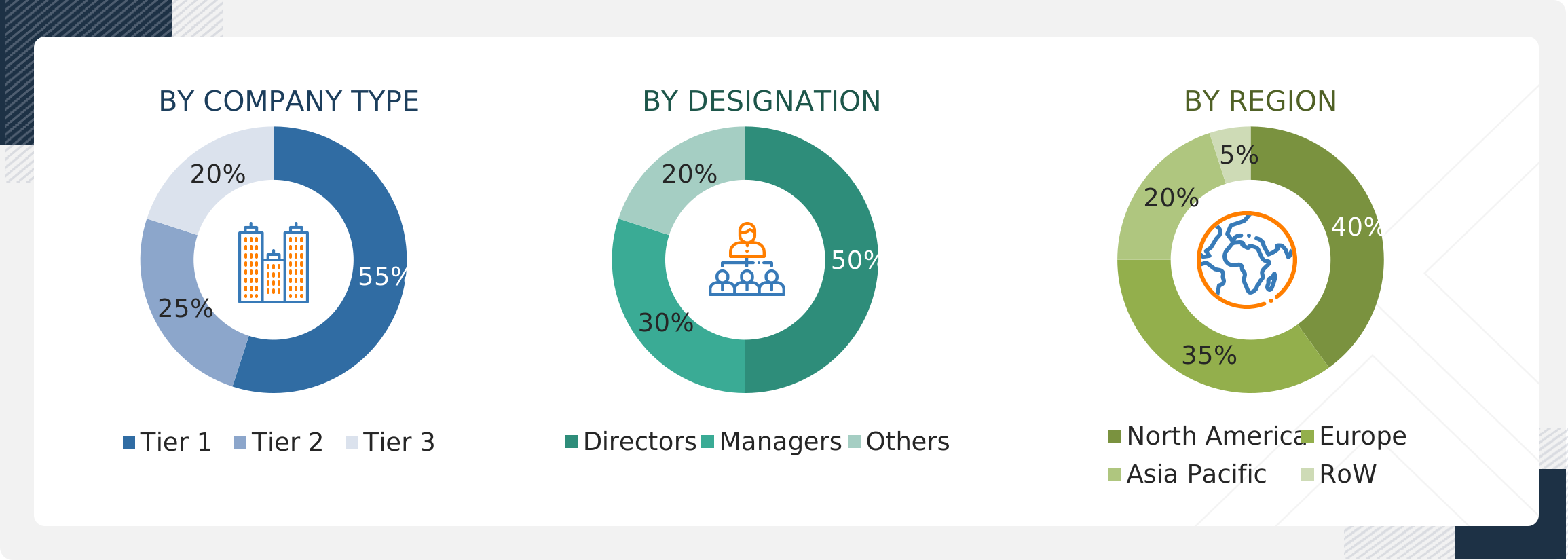
Note: Tier 1, Tier 2, and Tier 3 companies are classified based on their market revenue in 2023/2024, as publicly available, their product portfolios, and geographical presence.
Other designations include consultants, sales, marketing, and procurement managers.
To know about the assumptions considered for the study, download the pdf brochure
| COMPANY NAME | DESIGNATION | |
|---|---|---|
| Henkel AG & Co. KGaA | Senior Manager | |
| H.B. Fuller Company | Innovation Manager | |
| Arkema | Vice-President | |
| 3M Company | Production Supervisor | |
| Jowat SE | Sales Manager | |
Market Size Estimation
Both top-down and bottom-up approaches were used to estimate and validate the total size of the hot-melt adhesives market. These methods were also used extensively to estimate the size of various market segments. The research methodology used to estimate the market size includes the following:
- The key players in the industry have been identified through extensive secondary research.
- The supply chain of the industry has been determined through primary and secondary research.
- All percentage shares, splits, and breakdowns have been determined using secondary sources and verified through primary sources.
- All possible parameters that affect the markets covered in this research study have been accounted for, viewed in extensive detail, verified through primary research, and analyzed to obtain the final quantitative and qualitative data.
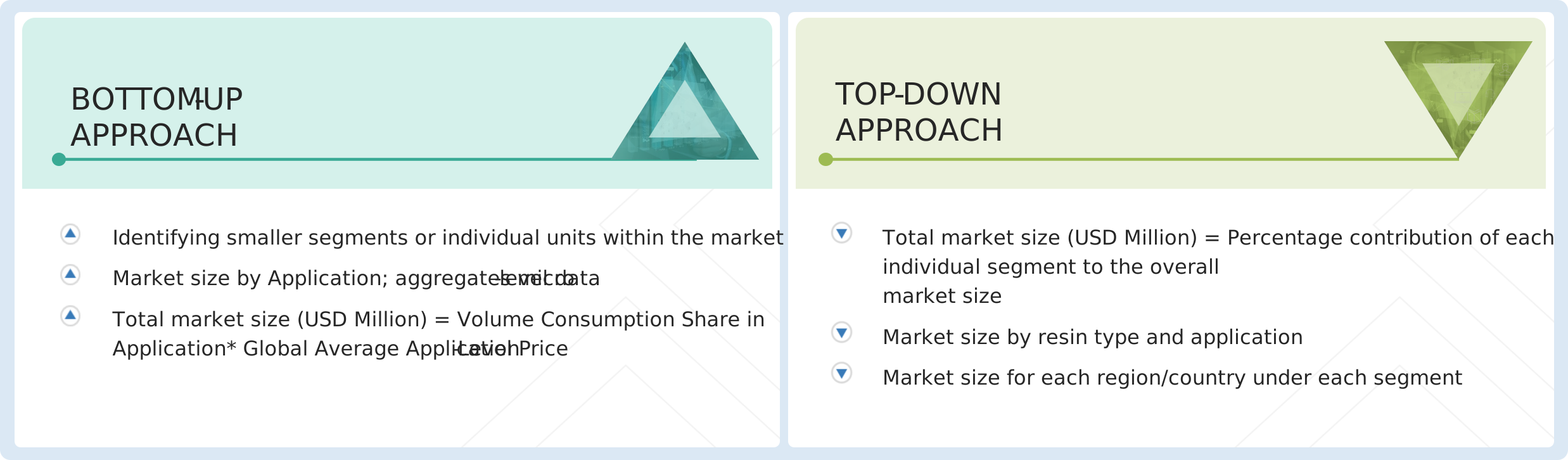
Data Triangulation
After arriving at the overall market size—using the market size estimation processes as explained above—the market was split into several segments and subsegments. To complete the overall market engineering process and arrive at the exact statistics of each market segment and subsegment, data triangulation, and market breakdown procedures were employed, wherever applicable. The data was triangulated by studying various factors and trends from both the demand and supply sides in the hot-melt adhesives industry.
Market Definition
According to FEICA, the Association of the European Adhesive and Sealant Industry, hot-melt adhesives are solvent-free thermoplastic adhesives that are commonly available in the form of pellets and solid cylindrical sticks of various diameters. These adhesives should have spreadability irrespective of the surface texture, and they cool down rapidly at room temperature. Hot-melt adhesives are 100% thermoplastic solids at temperatures below 80°C (176°F). However, they are applied in a molten state at temperatures ranging from 120°C to 180°C (248–356°F), depending on the applications and materials to be bonded.
Stakeholders
- Manufacturers, dealers, and suppliers of hot-melt adhesives and their raw materials
- Manufacturers in various end-use industries
- Traders, distributors, and suppliers of hot-melt adhesives
- Regional manufacturers’ associations and hot-melt adhesives associations
- Government and regional agencies and research organizations
Report Objectives
- To analyze and forecast the hot-melt adhesives market in terms of value and volume
- To provide detailed information about key factors (drivers, restraints, opportunities, and challenges) influencing market growth
- To define, segment, and project the size of the global hot-melt adhesives market based on resin type and application.
- To project the market size for the five main regions: North America, Europe, Asia Pacific, the Middle East & Africa, and South America, with their key countries
- To analyze the micromarkets1 concerning individual growth trends, prospects, and their contribution to the overall market
- To analyze opportunities in the market for stakeholders and provide a competitive landscape of the market leaders
- To track and analyze R&D and competitive developments such as expansions, product launches, collaborations, investments, partnerships, agreements, developments, collaborations, and mergers & acquisitions in the hot-melt adhesives market
Key Questions Addressed by the Report
What are hot melt adhesives?
Hot melt adhesives are 100% solid thermoplastic adhesives applied in molten form and solidify on cooling to create fast, solvent-free bonds across multiple substrates.
How are hot melt adhesives different from solvent-based adhesives?
Hot melt adhesives eliminate volatile organic compounds (VOCs) and the drying step, offering faster processing, lower emissions, and simpler handling than solvent-based systems.
Which industries drive the hot melt adhesives market the most?
Packaging (including e-commerce and food packaging), hygiene products, automotive, electronics, and construction are the key end-use industries driving hot melt adhesive demand.
Why is the hot melt adhesives market growing?
The market is expanding due to rising demand for eco-friendly, solvent-free adhesives, automation-friendly fast bonding, and growth in e-commerce and sustainable packaging.
Which type of hot melt adhesive offers better durability in high-performance applications?
Polyurethane-based hot melt adhesives (PUR/HMAs) are increasingly preferred for durable, moisture-curing bonds in high-performance industrial and automotive uses.
Fact checked
Personalize This Research
- Triangulate with your Own Data
- Get Data as per your Format and Definition
- Gain a Deeper Dive on a Specific Application, Geography, Customer or Competitor
- Any level of Personalization
Let Us Help You
- What are the Known and Unknown Adjacencies Impacting the Hot-Melt Adhesives Market
- What will your New Revenue Sources be?
- Who will be your Top Customer; what will make them switch?
- Defend your Market Share or Win Competitors
- Get a Scorecard for Target Partners

Custom Market Research Services
We Will Customise The Research For You, In Case The Report Listed Above Does Not Meet With Your Requirements
Get 10% Free CustomisationTESTIMONIALS

We at Nissan Chemicals Corporation have been clients of MarketsandMarkets for more than a year now. We recently consulted MarketsandMarkets for a study, the team at MarketsandMarkets was extremely professional and organized. The business insights were very detailed and aligned well with our expectations that really helped us formulate the Business Plans and device new strategies for development themes. MarketsandMarkets offers a unique combination of expertise and dedicated engagement model. Their research findings have helped us in designing our Pricing Strategy which will make it easier for us to predict the future sales and profits for the next ten years. We look forward to working with MarketsandMarkets in the future.
VP of Strategy & New Business Development
Leading Specialty Chemical Company
The MarketsandMarkets Engagement Model, composed of both the Knowledge Store and advisory custom research, has greatly helped us in understanding our markets and making strategic decisions. The Knowledge Store is a fast way to allow everyone in our organization to understand more about most any market they are interested in. The ability to then get custom research done and get answers to specific strategic questions and market insight has been spectacular. The Markets and Markets team feel more like colleagues than vendors and their services have helped us change our culture where statements of things like growth opportunities and competitive position are always backed by industry research.

Rich Gibson,
Director, Corporate Strategy
Milliken & Company,
Leading Industrial Manufacturer of specialty chemical, floor covering, performance and protective textile materials, and healthcaremilliken.com
MarketsandMarkets is a trusted resource that helps us to better understand markets that are near-adjacencies-whether its technology, value chain or geography. Their Knowledge Store platform provides a dashboard of markets and their characteristics which is easy to use and saves us time.
Adam Shaw,
Market Development and Strategy Manager
AdvanSix Inc. USA,
An American Leader in Chemicalswww.advansix.com
The Knowledge Store from MarketsandMarkets is a valuable tool which has helped my team acquire greater insight in to the end markets that our business serves. This has enabled us to help our company build stronger strategies throughout our planning process.
TOSHIO KINOSHITA
Senior Chif Consultion Research & Consulting Division
Mitsubishi Chemical Research Corporation,
Leading Manufacturer of Chemical Productswww.mitsubishichem-res.co.jp/en/

We recently engaged with MarketsandMarkets for a study, the team not only clearly understood our business objectives but was also extremely professional in the way they handled the entire project. The study was efficiently conducted in a phase-wise manner, and the engagement model furnished us with high-quality business insights that far exceeded our expectations at each phase. We were especially happy that MarketsandMarkets could provide us with both, an English as well as a Japanese version of the study. A special thanks to the Analyst Team and Client Services Team, whose fluency in Japanese enhanced our comfort level, as we could converse with them in our preferred language.
Independent entrepreneurs
Arrow Precision
We approached MarketsandMarkets for study on Proppants Market, and their work exceeded our expectations. The study conducted was comprehensive and enabled us to view the market through the various dimensions. In addition, the team was extraordinarily responsive throughout the process and resolved our queries on time. I strongly recommend MarketsandMarkets and will certainly consider them for additional market assessments we will need in the future.
Global engineering company, Japan
Deputy Manager,
Strategic Planning OfficeThe high-quality insights shared by the MarketsandMarkets team helped us understand the pharmaceutical plant designers in a specific geography. It also captured the risks that we may likely face in communicating with our potential partners. The study would enable us identify partners, which would impact our future growth.
- US Hot-Melt Adhesives Market
- Germany Hot-Melt Adhesives Market
- France Hot-Melt Adhesives Market
- UK Hot-Melt Adhesives Market
- Spain Hot-Melt Adhesives Market
- Italy Hot-Melt Adhesives Market
- Saudi Arabia Hot-Melt Adhesives Market
- South Africa Hot-Melt Adhesives Market
- Brazil Hot-Melt Adhesives Market
- Argentina Hot-Melt Adhesives Market
- Rest Of Europe Hot-Melt Adhesives Market
- China Hot-Melt Adhesives Market
- Japan Hot-Melt Adhesives Market
- India Hot-Melt Adhesives Market
- South Korea Hot-Melt Adhesives Market
- Malaysia Hot-Melt Adhesives Market
- Thailand Hot-Melt Adhesives Market
- Canada Hot-Melt Adhesives Market
- Mexico Hot-Melt Adhesives Market






Growth opportunities and latent adjacency in Hot-Melt Adhesives Market