Intelligent Platform Management Interface (IPMI) Market by Component (Hardware: Baseboard Management Controller (BMC), Sensors & Controls, Memory Devices, and Software), End-Use Application, Vertical, and Geography - Global Forecast to 2035


Intelligent Platform Management Interface Market Summary
The global Intelligent Platform Management Interface (IPMI) Market is entering a new phase of growth as enterprises, cloud providers, hyperscale data centers, telecom operators, and AI infrastructure providers prioritize remote server monitoring, predictive maintenance, automated provisioning, and secure out-of-band management. Based on a triangulation of recent industry estimates, the market is estimated at approximately USD 3.8–4.2 billion in 2025 and is projected to reach around USD 13–15 billion by 2035, representing an estimated 12%–14% CAGR during the forecast period. Recent published estimates place the 2025 market around USD 3.9–4.1 billion, while longer-term forecasts vary depending on market scope and segmentation.
The primary growth drivers include rapid data center expansion, increasing server and storage deployments, AI workloads, IoT-enabled infrastructure, cloud computing, and the growing requirement for automated infrastructure operations. IPMI enables administrators to remotely monitor hardware health, power status, temperature, fan performance, firmware, and system events even when an operating system is unavailable. As AI data centers become more computationally dense, intelligent infrastructure management is increasingly important for reducing downtime, improving energy efficiency, and maintaining system availability.
The market is also evolving beyond traditional IPMI implementations. Modern server management architectures increasingly integrate IPMI capabilities with Baseboard Management Controllers (BMCs), Redfish APIs, telemetry, cloud management platforms, automation frameworks, cybersecurity technologies, and AI-driven predictive analytics. The DMTF Redfish standard is particularly important because it provides a scalable, RESTful approach for remote and out-of-band management across servers and large-scale data center environments.
Key Market Trends & Insights
The North American region remains the leading market because of its extensive hyperscale data center footprint, mature cloud ecosystem, high enterprise IT spending, and early adoption of automated server management technologies. The region also benefits from strong demand for AI infrastructure and high-performance computing.
Asia Pacific is expected to be the fastest-growing region through 2035. China, Japan, and other major Asian economies are expanding cloud infrastructure, 5G networks, enterprise data centers, edge computing, and AI workloads. Increasing digitalization of manufacturing and telecommunications is creating additional demand for remote infrastructure monitoring.
The server application segment is expected to remain dominant because IPMI is deeply embedded in server hardware management. However, storage devices and telecommunications equipment are gaining importance as enterprises deploy increasingly distributed infrastructure.
Another important trend is the transition from conventional IPMI-centric management toward Redfish-enabled, API-driven infrastructure management. Redfish is designed for scalable, secure, interoperable management and has expanded beyond individual servers to broader data center equipment.
AI is also transforming the value proposition. Instead of merely reporting a failed fan or abnormal temperature, future management platforms can analyze telemetry, identify abnormal patterns, predict component failures, optimize workloads, and automate remediation.
Market Size & Forecast
- Base year market size: Approximately USD 3.8–4.2 billion in 2025
- Forecast value by 2035: Approximately USD 13–15 billion
- Estimated CAGR: Approximately 12%–14% from 2025 to 2035
- Growth factors: AI data centers, cloud computing, server virtualization, IoT infrastructure, remote monitoring, predictive maintenance, cybersecurity, automation, and rising demand for resilient IT infrastructure.
The variation between published estimates reflects differences in market definitions, included components, geographic coverage, and whether adjacent BMC, remote management, and infrastructure management revenues are included.
Intelligent Platform Management Interface Market Market Top 10 key takeaway
- The global Intelligent Platform Management Interface Market is estimated at approximately USD 3.8–4.2 billion in 2025.
- The market is projected to reach approximately USD 13–15 billion by 2035.
- The market is expected to expand at roughly 12%–14% CAGR through the forecast period.
- North America is expected to remain the leading regional market.
- Asia Pacific is projected to record the fastest growth as data center and digital infrastructure investments accelerate.
- Server management remains the largest application area for IPMI technologies.
- AI is increasing demand for real-time telemetry, predictive maintenance, and automated infrastructure management.
- Redfish is increasingly complementing or replacing legacy management approaches in modern server environments.
- Cloud, edge computing, IoT, and telecom infrastructure are expanding the addressable opportunity for remote hardware management.
- Security, interoperability, automation, and API-driven management will increasingly determine competitive differentiation through 2035.
Product Insights
The hardware and BMC-enabled product segment is expected to maintain a leading position in the Intelligent Platform Management Interface Market because IPMI functionality is closely associated with embedded server management controllers, sensors, memory, power-management components, and related infrastructure. BMCs provide an independent management layer that allows administrators to monitor and control systems remotely, even when the host operating system is unavailable.
The hardware segment benefits directly from continued server shipments associated with cloud computing, AI workloads, enterprise modernization, and high-performance computing. As server architectures become more complex, BMCs are increasingly required to manage thermal conditions, power consumption, firmware, security states, storage devices, and system-level telemetry.
Software and services are becoming increasingly important. Modern enterprises require centralized management dashboards, APIs, lifecycle management, firmware orchestration, automation tools, and integration with IT operations platforms. This creates opportunities for vendors that combine traditional IPMI functionality with cloud-based analytics and AI-enabled monitoring.
The product landscape is also moving toward intelligent BMCs capable of collecting high-frequency telemetry and supporting automated decision-making. Dell's iDRAC platform, for example, provides remote deployment, monitoring, configuration, updating, and troubleshooting, with automation through Redfish and other interfaces.
Technology / Component Insights
Technology development in the Intelligent Platform Management Interface Market is increasingly centered on BMCs, sensors, firmware, management software, APIs, networking interfaces, and telemetry technologies. Traditional IPMI provides core capabilities such as hardware health monitoring, remote power control, event logging, and system recovery. However, modern infrastructure requires more scalable and programmable management.
Redfish is becoming an important technology layer because its RESTful architecture and structured data model are better suited to cloud-scale and automated environments. The standard was specifically designed to provide interoperable remote management for servers, composable infrastructure, and large-scale cloud environments.
AI and machine learning will increasingly influence this technology segment. Management systems can use telemetry from temperatures, power consumption, processor utilization, storage health, and network performance to identify anomalies and forecast failures. AI can also support dynamic workload placement and energy optimization in data centers.
IoT technologies further expand the role of IPMI by increasing the number of connected computing and edge devices requiring centralized monitoring. Cloud APIs and automation platforms enable administrators to control thousands of servers through scripts and standardized interfaces rather than manually managing individual machines.
Future innovation will focus on zero-trust security, automated firmware management, predictive analytics, digital twins, AI-assisted operations, energy optimization, and autonomous remediation. HPE's current iLO ecosystem, for example, incorporates Redfish-based management and technologies such as telemetry and component integrity verification, demonstrating the direction toward more secure and data-driven platform management.
Application Insights
Server management is expected to remain the leading application segment of the Intelligent Platform Management Interface Market. Servers represent the core infrastructure supporting enterprise applications, cloud services, AI workloads, databases, virtualization, and digital platforms. IPMI provides remote access to critical server functions, allowing IT administrators to diagnose problems and perform management operations without physical access.
The increasing deployment of AI servers is strengthening this application opportunity. AI systems often operate with high processor and accelerator densities, creating greater thermal, power, and reliability challenges. Continuous monitoring and remote management therefore become essential for maintaining availability.
The storage devices segment is also expected to expand as organizations deploy increasingly distributed storage infrastructure. Published industry estimates indicate that storage-device applications can grow faster than traditional server applications in some market forecasts.
Telecommunications equipment, edge servers, high-performance computing systems, industrial computing, and private cloud infrastructure represent additional opportunities. As edge computing moves processing closer to users and connected devices, remote management becomes increasingly important because many edge systems operate in locations without dedicated IT personnel.
Regional Insights
North America is expected to remain the leading regional market for Intelligent Platform Management Interface technologies through 2035. The United States has a highly developed data center ecosystem, large cloud service providers, extensive enterprise server infrastructure, and strong investment in AI computing. These factors support continued adoption of BMC-based management and API-driven infrastructure automation.
Europe represents a mature market driven by enterprise digital transformation, cloud adoption, cybersecurity requirements, and data center modernization. European organizations are increasingly focused on energy efficiency, infrastructure resilience, and secure lifecycle management.
Asia Pacific is expected to register the fastest growth. China and Japan are expanding data centers, cloud infrastructure, AI computing, telecom networks, and smart manufacturing. The growing deployment of edge computing and IoT systems is further increasing the need for remotely managed infrastructure.
- North America: Largest installed base and strong hyperscale data center demand.
- Europe: Strong focus on security, energy efficiency, automation, and digital infrastructure.
- Asia Pacific: Fastest-growing region due to cloud, AI, telecom, and manufacturing investments.
- China and Japan: Important centers for server infrastructure, electronics manufacturing, and AI adoption.
- Regional outlook: Infrastructure automation and AI-driven operations will increasingly shape regional demand.
Country-Specific Market Trends
China is expected to record one of the strongest growth rates in Asia Pacific, with an estimated 13%–15% CAGR through 2035. Large-scale data center development, AI infrastructure, industrial digitalization, cloud computing, and government-backed digital transformation programs are supporting demand for intelligent server management. The country is also developing domestic computing infrastructure and expanding edge and telecommunications networks.
Japan is projected to grow at approximately 10%–12% CAGR, supported by enterprise modernization, robotics, industrial automation, telecommunications, cloud computing, and data center investment. Japan's mature technology ecosystem and emphasis on operational reliability make remote infrastructure management particularly valuable.
In North America, the United States is expected to maintain a dominant position and grow at roughly 11%–13% CAGR, driven by hyperscale data centers, AI infrastructure, cloud computing, and enterprise technology spending. Canada could record approximately 9%–11% CAGR, supported by cloud services, data center development, and digital transformation. Mexico, benefiting from manufacturing digitalization, nearshoring, telecom expansion, and data center investments, could achieve approximately 10%–12% CAGR.
In Europe, Germany is expected to grow at around 9%–11% CAGR, supported by industrial automation, manufacturing digitalization, cloud services, and data center modernization. France could register approximately 9%–11% CAGR, supported by cloud adoption, enterprise infrastructure modernization, and increasing demand for secure digital infrastructure.
- China: Rapid AI, cloud, telecom, and data center infrastructure expansion.
- Japan: High demand for reliable, automated, and remotely managed computing systems.
- United States: Largest regional opportunity due to hyperscale and AI data center investments.
- Canada and Mexico: Growth supported by digitalization, cloud infrastructure, and data center development.
- Germany and France: Demand driven by industrial digital transformation, cybersecurity, and infrastructure modernization.
Key Intelligent Platform Management Interface Company Insights
The competitive environment includes server manufacturers, BMC technology providers, infrastructure-management vendors, and companies developing complementary standards and software. Major companies associated with the broader ecosystem include Dell Technologies, Hewlett Packard Enterprise (HPE), Lenovo, Supermicro, Intel, ASUSTeK Computer, AMI, and IBM.
Dell Technologies is emphasizing automated server management through iDRAC and Redfish-enabled capabilities, supporting deployment, monitoring, configuration, firmware updates, and remote troubleshooting.
Hewlett Packard Enterprise is advancing iLO-based management through Redfish, telemetry, security, and component integrity technologies. HPE's iLO 7 documentation shows continued alignment with modern Redfish standards.
Lenovo, Supermicro, and other server manufacturers are also integrating BMC-based remote management into server platforms, while Intel remains strategically important to the server-management ecosystem. The broader competitive strategy is shifting from basic hardware monitoring toward programmable, automated, secure, and analytics-enabled infrastructure management.
- Vendors are integrating IPMI capabilities with Redfish APIs for scalable automation.
- AI and telemetry are becoming important differentiators in infrastructure management.
- Security and secure firmware lifecycle management are gaining strategic importance.
- Vendors are targeting hyperscale, AI, cloud, edge, telecom, and enterprise workloads.
- Interoperability and API-driven management are increasingly important for multi-vendor environments.
Recent Developments
Recent developments in the broader platform-management ecosystem demonstrate the transition toward automated and API-driven infrastructure management. In October 2025, Dell released an iDRAC9 firmware update emphasizing continued feature enhancements and compatibility across server firmware, BIOS, drivers, and related components. Dell's iDRAC platform supports remote management and Redfish-based scripting.
HPE continues to expand Redfish capabilities in its iLO ecosystem. Current iLO 7 documentation indicates conformance with DMTF Redfish 1.20.1 and continued development of management capabilities, including new telemetry, power, battery, and security-related resources.
At the standards level, Redfish continues to provide an increasingly important foundation for scalable server and data center management. Its RESTful architecture is designed to integrate with cloud-based and web-based IT operations, supporting the shift toward software-defined and automated infrastructure.
Market Segmentation
The Intelligent Platform Management Interface Market can be segmented by Product, by Technology / Component, by Application, and by Region. By product, the market includes hardware-oriented BMC implementations, firmware, management software, and associated services. By technology/component, the ecosystem encompasses BMCs, sensors and controls, memory devices, networking interfaces, firmware, management APIs, and telemetry technologies. By application, server management represents the core segment, followed by storage devices, telecommunications equipment, edge computing systems, and other specialized infrastructure. By region, North America represents the leading market, Europe maintains a mature adoption base, and Asia Pacific is expected to deliver the fastest growth through 2035, supported by data center expansion, AI infrastructure, cloud adoption, and digital transformation.
- By Product: Hardware, firmware, software, and services.
- By Technology / Component: BMCs, sensors and controls, memory, firmware, APIs, and management software.
- By Application: Servers, storage devices, telecommunications equipment, edge infrastructure, and other computing systems.
- By Region: North America, Europe, Asia Pacific, and other regional markets.
- High-growth areas: AI data centers, edge computing, cloud infrastructure, automated operations, and secure remote management.
Conclusion
The Intelligent Platform Management Interface Market is transitioning from a traditional hardware-monitoring technology into a broader intelligent infrastructure-management ecosystem. The market is estimated to expand from approximately USD 3.8–4.2 billion in 2025 to around USD 13–15 billion by 2035, with an estimated 12%–14% CAGR. The long-term opportunity is being shaped by AI data centers, cloud computing, IoT, edge infrastructure, telecommunications, and enterprise digital transformation.
AI will be particularly influential because increasingly complex computing environments require continuous telemetry, predictive maintenance, automated troubleshooting, and intelligent energy management. IPMI capabilities combined with BMCs, Redfish APIs, cloud platforms, and AI analytics can help organizations manage large infrastructure fleets with fewer manual interventions.
Through 2035, strategic differentiation will increasingly depend on automation, interoperability, cybersecurity, AI-enabled analytics, predictive maintenance, and scalable remote management. Businesses deploying AI and cloud infrastructure will increasingly view intelligent platform management not simply as a server feature, but as a critical component of operational resilience and infrastructure efficiency.
FAQs
What is the estimated Intelligent Platform Management Interface Market size?
The global Intelligent Platform Management Interface Market is estimated at approximately USD 3.8–4.2 billion in 2025. Depending on market scope and methodology, published estimates vary, but the broader market is expected to expand substantially as server, cloud, AI, and data center deployments increase.
What is the expected growth rate of the Intelligent Platform Management Interface Market?
The market is expected to grow at approximately 12%–14% CAGR from 2025 to 2035. Growth will be supported by AI infrastructure, cloud computing, remote server management, data center automation, IoT, and increasing demand for predictive maintenance.
What are the key drivers of the Intelligent Platform Management Interface Market?
Key drivers include increasing data center deployments, AI and high-performance computing, cloud infrastructure, IoT, edge computing, server virtualization, cybersecurity requirements, remote monitoring, predictive maintenance, and automation. The growing adoption of Redfish-based APIs is also helping modernize server management.
Which region is leading the Intelligent Platform Management Interface Market?
North America is expected to remain the leading regional market because of its extensive hyperscale and enterprise data center infrastructure, strong cloud ecosystem, AI investment, and advanced IT automation capabilities. Asia Pacific, however, is expected to experience the fastest growth through 2035.
Who are the key companies in the Intelligent Platform Management Interface Market?
Key companies and ecosystem participants include Dell Technologies, Hewlett Packard Enterprise, Lenovo, Supermicro, Intel, ASUSTeK Computer, AMI, and IBM. Competition is increasingly focused on BMC capabilities, Redfish interoperability, AI-enabled telemetry, automation, security, and lifecycle management.
To speak to our analyst for a discussion on the above findings, click Speak to Analyst
 Exclusive indicates content/data unique to MarketsandMarkets and not available with any competitors.
Table of Contents
1 Introduction (Page No. - 14)
1.1 Study Objectives
1.2 Market Definition
1.3 Study Scope
1.3.1 Markets Covered
1.3.2 Years Considered for the Study
1.4 Currency
1.5 Stakeholders
2 Research Methodology (Page No. - 17)
2.1 Research Data
2.1.1 Secondary Data
2.1.1.1 Key Data From Secondary Sources
2.1.2 Primary Data
2.1.2.1 Key Data From Primary Sources
2.1.2.2 Key Industry Insights
2.1.2.3 Breakdown of Primaries
2.2 Market Size Estimation
2.2.1 Bottom-Up Approach
2.2.2 Top-Down Approach
2.3 Market Breakdown and Data Triangulation
2.4 Research Assumptions
3 Executive Summary (Page No. - 26)
4 Premium Insights (Page No. - 31)
4.1 Attractive Opportunities in the Global IPMI Market
4.2 IPMI Market Size, By Vertical and Country, 2015
4.3 IPMI Market Size, By Component, 2016–2022
4.4 IPMI Component Market Size, By Hardware, 2016–2022
4.5 IPMI Market Size, By End-Use Application, 2016–2022
4.6 IPMI Market Size, By Vertical, 2016–2022
4.7 IPMI Market Size, By Geography
5 Market Overview (Page No. - 35)
5.1 Introduction
5.2 Market Evolution
5.3 Market Segmentation
5.3.1 By Component
5.3.2 By End-Use Application
5.3.3 By Vertical
5.3.4 Geographic Analysis
5.4 Market Dynamics
5.4.1 Drivers
5.4.1.1 Increase in Ict Spending and Growing Trend Among Organizations to Set Up Data Centers
5.4.1.2 Rising Demand for Enhanced Server Management Platform, Along With Reduced Total Cost of Ownership
5.4.1.3 Need for Standardized Server Management Platforms
5.4.2 Restraints
5.4.2.1 Insufficient Management Tools for Modern Data Centers
5.4.3 Opportunities
5.4.3.1 High Adoption Rate of Data Centers in Small and Medium Businesses (SMBs)
6 Industry Trends (Page No. - 42)
6.1 Introduction
6.2 Value Chain Analysis
6.3 Porter’s Five Forces Analysis
6.3.1 Intensity of Competitive Rivalry
6.3.2 Threat of New Entrants
6.3.3 Threat of Substitutes
6.3.4 Bargaining Power of Buyers
6.3.5 Bargaining Power of Suppliers
7 Intelligent Platform Management Interface (IPMI) Market, By Component (Page No. - 50)
7.1 Introduction
7.2 Hardware
7.2.1 Baseboard Management Controllers (BMCs)
7.2.2 Sensors & Controls
7.2.3 Memory Devices
7.2.4 Others
7.3 Software
8 Intelligent Platform Management Interface (IPMI) Market, By End-Use Application (Page No. - 57)
8.1 Introduction
8.2 Servers
8.2.1 Rack Servers
8.2.2 Blade Servers
8.2.3 Tower Servers
8.3 Storage Devices
8.4 Telecommunication Equipment
9 Intelligent Platform Management Interface (IPMI) Market, By Vertical (Page No. - 76)
9.1 Introduction
9.2 Banking, Financial Services, and Insurance (BFSI)
9.3 Healthcare
9.4 Education & Research
9.5 It & Telecom
9.6 Manufacturing
9.7 Retail
9.8 Public Sector
9.9 Others
10 Geographical Analysis (Page No. - 86)
10.1 Introduction
10.2 North America
10.2.1 U.S.
10.2.2 Canada
10.2.3 Others
10.3 Europe
10.3.1 U.K.
10.3.2 Germany
10.3.3 France
10.3.4 Rest of Europe
10.4 APAC
10.4.1 China
10.4.2 Japan
10.4.3 Rest of APAC
10.5 Rest of the World
10.5.1 Middle East and Africa
10.5.2 South America
11 Competitive Landscape (Page No. - 105)
11.1 Introduction
11.2 Market Ranking Analysis for the IPMI Market, 2015
11.3 Competitive Situations and Trends
11.3.1 New Product Launches and Developments
11.3.2 Partnerships
12 Company Profiles (Page No. - 109)
12.1 Introduction
(Business Overview, Products & Services, Key Insights, Recent Developments, SWOT Analysis, Ratio Analysis, MnM View)*
12.2 Hewlett Packard Enterprise (HPE) Company
12.3 Intel Corporation
12.4 NEC Corporation
12.5 Super Micro Computer, Inc.
12.6 Dell Inc.
12.7 ARM Holdings PLC
12.8 Cisco Systems, Inc.
12.9 Emerson Electric Company
12.10 Microsoft Corporation
12.11 Softlayer Technologies, Inc.
*Details on Business Overview, Products & Services, Key Insights, Recent Developments, SWOT Analysis, MnM View Might Not Be Captured in Case of Unlisted Companies.
13 Appendix (Page No. - 131)
13.1 Insights of Industry Experts
13.2 Discussion Guide
13.3 Introducing RT: Real-Time Market Intelligence
13.4 Available Customizations
13.5 Related Reports
13.6 Author Details
List of Tables (62 Tables)
Table 1 IPMI Market Size, By Component, 2013–2022 (USD Million)
Table 2 IPMI Market Size for Components, By Hardware, 2013–2022 (USD Million)
Table 3 IPMI Market Size for Hardware Components, By End-Use Application, 2013–2022 (USD Million)
Table 4 IPMI Market Size for Baseboard Management Controllers, By End-Use Application, 2013–2022 (USD Million)
Table 5 IPMI Market Size for Sensors & Controls , By End-Use Application, 2013–2022 (USD Million)
Table 6 IPMI Market Size for Memory Devices, By End-Use Application, 2013–2022 (USD Million)
Table 7 IPMI Market Size for Other Components, By End-Use Application, 2013–2022 (USD Million)
Table 8 IPMI Market Size for Software, By End-Use Application 2013–2022 (USD Million)
Table 9 IPMI Market Size, By End-Use Application, 2013–2022 (USD Million)
Table 10 IPMI Server Market Size, By Server Type, 2013–2022 (USD Million)
Table 11 IPMI Market Size for Servers, By Vertical, 2013–2022 (USD Million)
Table 12 IPMI Server Market Size for BFSI, By Region, 2013–2022 (USD Million)
Table 13 IPMI Server Market Size for Healthcare, By Region, 2013–2022 (USD Million)
Table 14 IPMI Server Market Size for Education & Research, By Region, 2013–2022 (USD Million)
Table 15 IPMI Server Market Size for It & Telecom, By Region, 2013–2022 (USD Million)
Table 16 IPMI Server Market Size for Manufacturing, By Region, 2013–2022 (USD Million)
Table 17 IPMI Server Market Size for Retail, By Region, 2013–2022 (USD Million)
Table 18 IPMI Server Market Size for Public Sector, By Region, 2013–2022 (USD Million)
Table 19 IPMI Server Market Size for Other Verticals, By Region, 2013–2022 (USD Million)
Table 20 IPMI Market Size for Storage Devices , By Vertical, 2013–2022 (USD Million)
Table 21 IPMI Storage Device Market Size for BFSI, By Region, 2013–2022 (USD Million)
Table 22 IPMI Storage Device Market Size for Healthcare, By Region, 2013–2022 (USD Million)
Table 23 IPMI Storage Device Market Size for Education & Research, By Region, 2013–2022 (USD Million)
Table 24 IPMI Storage Device Market Size for It & Telecom, By Region, 2013–2022 (USD Million)
Table 25 IPMI Storage Device Market Size for Manufacturing, By Region, 2013–2022 (USD Million)
Table 26 IPMI Storage Device Market Size for Retail, By Region, 2013–2022 (USD Million)
Table 27 IPMI Storage Device Market Size for Public Sector, By Region, 2013–2022 (USD Million)
Table 28 IPMI Storage Device Market Size for Other Verticals, By Region, 2013–2022 (USD Million)
Table 29 IPMI Telecommunication Equipment Market Size, By Vertical, 2013–2022 (USD Million)
Table 30 IPMI Telecommunication Equipment Market Size for BFSI, By Region, 2013–2022 (USD Million)
Table 31 IPMI Telecommunication Equipment Market Size for Healthcare, By Region, 2013–2022 (USD Million)
Table 32 IPMI Telecommunication Equipment Market Size for Education & Research, By Region, 2013–2022 (USD Million)
Table 33 IPMI Telecommunication Equipment Market Size for It & Telecom, By Region, 2013–2022 (USD Million)
Table 34 IPMI Telecommunication Equipment Market Size for Manufacturing, By Region, 2013–2022 (USD Million)
Table 35 IPMI Telecommunication Equipment Market Size for Retail, By Region, 2013–2022 (USD Million)
Table 36 IPMI Telecommunication Equipment Market Size for Public Sector, By Region, 2013–2022 (USD Million)
Table 37 IPMI Telecommunication Equipment Market Size for Other Verticals, By Region, 2013–2022 (USD Million)
Table 38 IPMI Market Size, By Vertical, 2013–2022 (USD Million)
Table 39 IPMI Market Size for BFSI, By End-Use Application, 2013–2022 (USD Million)
Table 40 IPMI Market Size for Healthcare, By End-Use Application, 2013–2022 (USD Million)
Table 41 IPMI Market Size for Education & Research, By End-Use Application, 2013–2022 (USD Million)
Table 42 IPMI Market Size for It & Telecom, By End-Use Application, 2013–2022 (USD Million)
Table 43 IPMI Market Size for Manufacturing, By End-Use Application, 2013–2022 (USD Million)
Table 44 IPMI Market Size for Retail, By End-Use Application, 2013–2022 (USD Million)
Table 45 IPMI Market Size for Public Sector, By End-Use Application, 2013–2022 (USD Million)
Table 46 IPMI Market Size for Other Verticals, By End-Use Application, 2013–2022 (USD Million)
Table 47 IPMI Market Size, By Region, 2013–2022 (USD Million)
Table 48 IPMI Market Size in North America, By Vertical, 2013–2022 (USD Million)
Table 49 IPMI Market Size in North America, By Country, 2013–2022 (USD Million)
Table 50 IPMI Market Size in North America, By End-Use Application, 2013–2022 (USD Million)
Table 51 IPMI Market Size in Europe, By Vertical, 2013–2022 (USD Million)
Table 52 IPMI Market Size in Europe, By Country, 2013–2022 (USD Million)
Table 53 IPMI Market Size in Europe, By End-Use Application, 2013–2022 (USD Million)
Table 54 IPMI Market Size in APAC, By Vertical, 2013–2022 (USD Million)
Table 55 IPMI Market Size in APAC, By Country, 2013–2022 (USD Million)
Table 56 IPMI Market Size in APAC, By End-Use Application, 2013–2022 (USD Million)
Table 57 IPMI Market Size in RoW, By Vertical, 2013–2022 (USD Million)
Table 58 IPMI Market Size in RoW, By Region, 2013–2022 (USD Million)
Table 59 IPMI Market Size in RoW, By End-Use Application, 2013–2022 (USD Million)
Table 60 Market Ranking Analysis for the IPMI Market, 2015
Table 61 Most Significant New Product Launches and Development in the IPMI Market, 20o4–2016
Table 62 Most Significant Partnerships in the IPMI Market in 2015
List of Figures (79 Figures)
Figure 1 IPMI Market Segmentation
Figure 2 IPMI Market: Research Design
Figure 3 Research Flow
Figure 4 Market Size Estimation Methodology: Bottom-Up Approach
Figure 5 Market Size Estimation Methodology: Top-Down Approach
Figure 6 Data Triangulation
Figure 7 Intelligent Platform Management Interface, Market Size, 2013–2022 (USD Million)
Figure 8 Software Market Expected to Grow at A Higher Rate Between 2016 and 2022
Figure 9 Sensors and Controls Expected to Hold the Largest Size of the Market By 2022
Figure 10 BFSI Sector Expected to Hold the Largest Market Size By 2022
Figure 11 IPMI Market for Servers Expected to Grow at the Highest Rate During the Forecast Period
Figure 12 North America Held the Largest Market Share in 2015, While APAC Expected to Grow at the Highest Rate During the Forecast Period
Figure 13 Rising Demand for Enhanced Server Management Platform, Along With Reduced Total Cost of Ownership Drives the Market
Figure 14 The BFSI Vertical Held the Largest Share of the IPMI Market in 2015
Figure 15 IPMI Market for Software Expected to Grow at A Higher Rate During the Forecast Period
Figure 16 IPMI Market for Baseboard Management Controllers Expected to Grow at the Highest Rate During the Forecast Period
Figure 17 The Market for Servers Expected to Grow at the Highest Rate During the Forecast Period
Figure 18 The IPMI Market for the Healthcare Vertical Expected to Grow at the Highest Rate During the Forecast Period
Figure 19 North America Held the Largest Market Share in 2015, While Market in APAC Would Grow at the Highest Rate During the Forecast Period
Figure 20 Evolution of Intelligent Platform Management Interface
Figure 21 Intelligent Management Platform Interface (IPMI) Market, By Geography
Figure 22 Rising Demand for Enhanced Server Management Platform, Along With Reduced Total Cost of Ownership Drives the IPMI Market
Figure 23 Global Data Center Ip Traffic Per Year, 2014–2022
Figure 24 Value Chain Analysis: Major Value Addition Between Component Manufacturing and System Integration Phases
Figure 25 Porter’s Five Forces Analysis, 2015
Figure 26 Threat of Substitutes Witnessed Maximum Impact in 2015
Figure 27 Impact of Intensity of Competitive Rivalry Remained Medium in the IPMI Market in 2015
Figure 28 Impact of Threat of New Entrants Remained Low in the IPMI Market in 2015
Figure 29 Impact of Threat of Substitutes Remained High in the IPMI Market in 2015
Figure 30 Impact of Bargaining Power of Buyers Remained Medium in the IPMI Market in 2015
Figure 31 Impact of Bargaining Power of Suppliers Remained Medium in the IPMI Market in 2015
Figure 32 IPMI Market, By Component
Figure 33 Hardware Component Expected to Hold the Largest Size of the IPMI Market in 2016
Figure 34 Servers Expected to Dominate the IPMI Market Based on End-Use Application During the Forecast Period
Figure 35 IPMI Market, By End-Use Application
Figure 36 Servers Expected to Lead the IPMI Market During the Forecast Period
Figure 37 Types of Servers
Figure 38 BFSI Expected to Hold the Largest Market Size, While Healthcare Expected to Grow at the Highest Rate During the Forecast Period
Figure 39 IPMI Storage Device Market for Healthcare Vertical Expected to Grow at the Highest Rate During the Forecast Period
Figure 40 It & Telecom Sector Expected to Hold the Largest Size of the IPMI Market for Telecommunication Equipment in 2016
Figure 41 Intelligent Platform Management Interface (IPMI) Market Segmentation, By Vertical
Figure 42 Market for Telecommunication Equipment Application for BFSI Industry Expected to Grow at the Highest Rate Between 2016 and 2022
Figure 43 Servers Expected to Hold the Largest Size of the IPMI Market for the Healthcare Vertical By 2022
Figure 44 Servers Expected to Lead the IPMI Market for the Education & Research Vertical During the Forecast Period
Figure 45 Servers Expected to Grow at the Fastest Rate for It & Telecom Industry During the Forecast Period
Figure 46 Servers Expected to Lead the IPMI Market for Manufacturing Industry During the Forecast Period
Figure 47 Servers Expected to Dominate the IPMI Market for Retail Sector During the Forecast Period
Figure 48 Servers Expected to Dominate the IPMI Market for Public Sector During the Forecast Period
Figure 49 Server Expected to Be the Fastest-Growing Segment in Other Verticals During the Forecast Period
Figure 50 Geographic Snapshot: the IPMI Market in China to Grow at the Highest Rate During the Forecast Period
Figure 51 IPMI Market in APAC is Expected to Grow at the Highest Rate During the Forecast Period
Figure 52 IPMI Market Snapshot in North America
Figure 53 BFSI Industry Expected to Hold the Largest Size of the IPMI Market in North America During the Forecast Period
Figure 54 U.S. to Lead the North American IPMI Market Between 2016 and 2022
Figure 55 IPMI Market Snapshot in Europe
Figure 56 IPMI Market for Healthcare Industry in Europe Expected to Grow at the Highest Rate During the Forecast Period
Figure 57 Germany Expected to Lead the IPMI Market in Europe Till 2022
Figure 58 IPMI Market Snapshot in APAC
Figure 59 IPMI Market in China Expected to Grow at the Highest Rate During the Forecast Period
Figure 60 IPMI Market Snapshot in Rest of the World
Figure 61 BFSI Vertical Expected to Hold the Largest Size of the IPMI Market in the RoW Region During the Forecast Period
Figure 62 Companies Adopted New Product Launches and Developments as A Key Strategy to Grow in the IPMI Market, 2014–2016
Figure 63 Market Evaluation Framework
Figure 64 Battle for Market Share: New Product Launches and Developments Had Been the Key Strategies
Figure 65 Geographic Revenue Mix for the Top Three Players in the IPMI Market in 2015
Figure 66 Hewlett Packard Enterprise Co (HPE): Company Snapshot
Figure 67 Hewlett Packard Enterprise Co: Sw0t Analysis
Figure 68 Intel Corporation: Company Snapshot
Figure 69 Intel Corporation: SWOT Analysis
Figure 70 NEC Corporation: Company Snapshot
Figure 71 NEC Corporation: SWOT Analysis
Figure 72 Super Micro Computer, Inc.: Company Snapshot
Figure 73 Super Micro Computer, Inc.: SWOT Analysis
Figure 74 Dell Inc.: SWOT Analysis
Figure 75 ARM Holdings PLC: Company Snapshot
Figure 76 Cisco Systems, Inc.: Company Snapshot
Figure 77 Emerson Electric Company: Company Snapshot
Figure 78 Microsoft Corporation: Company Snapshot
Figure 79 Softlayer Technologies, Inc.: Company Snapshot
The sizing of the IPMI market has been done by top-down and bottom-up method. The bottom-up approach has been employed to arrive at the overall size of the intelligent platform management interface market from the revenues of key players (companies) and their share in the market. Calculations based on the number of IPMI goes in each type of application, which is further multiplied by the production of various application products for all major countries and finally the volume is multiplied by the average selling price of each IPMI to arrive the overall market size. In top-down approach, the overall market size has been used to estimate the size of the individual markets (mentioned in the market segmentation), through percentage splits from secondary sources such as ITWorld, Factiva, and Thomas-Krenn-WiKi among others and primary researches. For the calculation of specific market segments, the most appropriate parent market size has been used to implement the top-down approach.
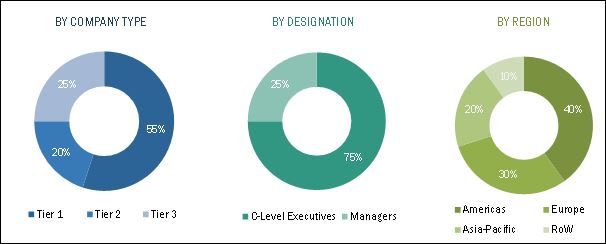
In the process of determining and verifying the market size for several segments and subsegments gathered through secondary research, extensive primary interviews have been conducted with key opinion leaders. The break-up of the profiles of primary participants is given in the chart below.
To know about the assumptions considered for the study, download the pdf brochure
The IPMI ecosystem comprises major chipset manufacturers such Intel Corporation (U.S.), ARM Holdings Inc. (U.K.), Emerson (U.S.); server vendors NEC Corporation (Japan), Super Micro Computer, Inc. (U.S.), and Cisco (U.S.), Dell, Inc. (U.S.), HPE (U.S.); and software providers Microsoft (U.S.), and Softlayer Technologies, Inc. (U.S.), among others.
All these companies have their own R&D facilities and extensive sales offices and distribution channels. The products of these companies can be used across various industries for respective applications. The report provides the competitive landscape of the key players which indicates their growth strategies in terms of the intelligent platform management interface market.
Target Audience:
- IPMI product and device manufacturers
- Original technology designers and suppliers
- Raw material suppliers
- Integrated device manufacturers (IDMs)
- Original device manufacturers (ODMs) (discrete and chip manufacturers)
- Original equipment manufacturers (OEMs)
- System integrators
- Electronic hardware equipment manufacturers
- Technical universities
- Government space research agencies and private research organizations
- Research institutes and organizations
- Market research and consulting firms
- IPMI forums, alliances, and associations
“Study answers several questions for the stakeholders, primarily which market segments to focus in next two to five years (depends on range of forecast period) for prioritizing the efforts and investments.”
Scope of the Report:
The market covered in this report has been segmented as follows:
IPMI Market, by Component:
-
Hardware
- Baseboard management controller
- Sensors & controls
- Memory devices
- Others (LAN controller, serial connectors)
IPMI Market, by End-Use Application:
- Server
- Storage devices
- Telecommunication equipment
IPMI Market, by Vertical:
- Banking, Financial services, and Insurance (BFSI)
- Healthcare
- Education & research
- Retail
- Manufacturing
- Public sector
- IT & telecom
- Others (Automotive, logistics and transportation)
IPMI Market, by Geography:
-
Americas
- U.S.
- Canada
- Rest of North America
-
Europe
- Germany
- France
- U.K.
- Rest of Europe
-
Asia-Pacific
- China
- Japan
- Rest of APAC
-
Rest of the World
- Middle East & Africa
- South America
Available Customizations:
- Detailed analysis and profiling of additional market players (up to 5)
- Product matrix which gives a detailed comparison of product portfolio of each company












Growth opportunities and latent adjacency in Intelligent Platform Management Interface (IPMI) Market