Cloud Infrastructure Market by Type (Hardware: Server, Storage, Switch, Services: Platform as a Service, Infrastructure as a service, Content/Application Delivery Network, Managed Hosting, Colocation), End-User Industry & Geography - Global Growth Driver and Industry Forecast to 2035


Cloud Infrastructure Market Summary
The global Cloud Infrastructure Market is entering a new phase of expansion as enterprises move beyond basic cloud migration toward AI-ready, hybrid, multicloud, edge, and highly automated computing environments. The market is estimated at approximately USD 290-330 billion in 2025 and is projected to reach around USD 850-950 billion by 2035, representing an estimated 11%-13% CAGR during the forecast period. A recent market assessment values the global cloud infrastructure market at approximately USD 295 billion in 2025 and forecasts it to exceed USD 923 billion by 2035, while the cloud infrastructure services segment alone was valued at approximately USD 159 billion in 2025. Differences reflect the scope of infrastructure hardware, software, and infrastructure-as-a-service offerings included in individual studies.
The central growth engine is the increasing demand for scalable computing, storage, networking, and processing resources without the capital intensity of traditional on-premises infrastructure. AI and generative AI are accelerating this transition by creating demand for GPU-accelerated computing, high-bandwidth networking, advanced storage, liquid cooling, and purpose-built data-center capacity. Gartner expects AI workloads to account for approximately half of cloud compute resources by 2029, highlighting the structural impact AI is having on cloud infrastructure planning.
At the same time, IoT, automation, digital transformation, application modernization, remote work, data analytics, and software-defined infrastructure are expanding cloud consumption across industries. Enterprises are increasingly adopting hybrid and multicloud models to balance performance, regulatory requirements, resilience, cost, and data sovereignty. This is creating a market in which cloud infrastructure is no longer simply an IT sourcing model but a strategic foundation for AI, automation, digital services, and next-generation enterprise applications.
Key Market Trends & Insights
AI-ready infrastructure is the strongest emerging growth catalyst. Generative AI and large-scale machine-learning workloads require substantially greater compute and networking capacity than many conventional enterprise applications. Hyperscalers are consequently investing heavily in GPU clusters, high-speed interconnects, advanced cooling, and new data-center capacity. Recent industry research indicates that AI-focused data-center infrastructure spending is expanding rapidly, reinforcing cloud providers' need for specialized infrastructure.
Hybrid and multicloud adoption is becoming the dominant enterprise architecture. Organizations increasingly combine public cloud resources with private infrastructure and multiple cloud providers. However, multicloud complexity remains a challenge. Gartner predicts that more than half of organizations may fail to achieve expected results from multicloud implementations by 2029 without stronger architectural planning and interoperability.
North America remains the leading regional market. Strong hyperscaler presence, mature enterprise cloud adoption, extensive data-center capacity, and high AI investment support the region's leadership. North America accounted for approximately 40% of the cloud infrastructure services market in 2025 in one recent assessment.
Asia Pacific is expected to record the fastest growth. Rapid digitalization, cloud-native application development, expanding data-center ecosystems, growing AI adoption, and increasing enterprise modernization are driving demand. India, China, Japan, Singapore, and Australia are emerging as important cloud infrastructure markets.
Automation is reshaping cloud operations. Infrastructure-as-code, automated provisioning, Kubernetes orchestration, observability, AIOps, and autonomous resource management are helping enterprises improve infrastructure utilization and reduce operational complexity.
Power availability is becoming a strategic infrastructure constraint. AI-driven data-center expansion is increasing electricity and cooling requirements. CBRE reported that power availability remained a major constraint on data-center growth in several major markets, while demand continued to exceed new supply in both established and emerging hubs.
Market Size & Forecast
- Base year market size: Approximately USD 290-330 billion in 2025.
- Forecast value by 2035: Approximately USD 850-950 billion.
- CAGR: Approximately 11%-13% during the forecast period.
- Growth factors: AI and generative AI, enterprise cloud migration, hybrid and multicloud adoption, application modernization, IoT, automation, edge computing, data analytics, digital transformation, and expanding hyperscale data-center capacity.
Cloud Infrastructure Market Top 10 key takeaway
- The global Cloud Infrastructure Market is estimated at approximately USD 290-330 billion in 2025.
- The market is expected to approach USD 850-950 billion by 2035.
- The market is projected to expand at approximately 11%-13% CAGR.
- AI workloads are becoming a major driver of cloud compute, storage, networking, and data-center investment.
- North America remains the leading regional market because of its mature cloud ecosystem and hyperscaler concentration.
- Asia Pacific is expected to record the fastest growth through 2035.
- Hybrid cloud and multicloud architectures are becoming standard enterprise strategies.
- Automation, Kubernetes, AIOps, and infrastructure-as-code are improving cloud resource management.
- Data-center power, cooling, cybersecurity, and sovereignty requirements are becoming critical infrastructure considerations.
- Cloud infrastructure is evolving into an AI-native digital foundation rather than a conventional IT outsourcing model.
Product Insights
The Cloud Infrastructure Market can be broadly divided into compute infrastructure, storage infrastructure, networking infrastructure, virtualization platforms, infrastructure-management software, and associated services. Compute infrastructure remains one of the largest and most strategically important categories because every cloud workload ultimately depends on scalable processing resources. Conventional CPU-based workloads continue to generate substantial demand, but AI is rapidly changing the infrastructure mix by increasing demand for GPUs, AI accelerators, high-performance processors, and specialized interconnects.
The shift toward AI-native infrastructure is particularly significant. Traditional enterprise applications can often operate efficiently on generalized cloud computing environments, whereas generative AI training and inference require high-density accelerator clusters, fast memory, low-latency networking, and optimized storage pipelines. Industry data indicates that accelerated AI and high-performance computing infrastructure spending has expanded sharply, with AI-focused infrastructure becoming a major driver of overall data-center investment.
Storage infrastructure is also expanding as enterprises accumulate increasingly large volumes of structured and unstructured data. AI applications require access to training datasets, model checkpoints, vector databases, logs, images, video, and other data types. Cloud object storage, high-performance file systems, distributed databases, and data-lake architectures are therefore becoming essential components of AI infrastructure.
Networking represents another high-growth category. AI clusters require extremely high bandwidth and low latency between processors, storage systems, and data sources. Cloud providers are consequently deploying faster Ethernet, specialized interconnects, software-defined networking, and advanced traffic-management technologies.
Edge infrastructure is an emerging product category. Instead of processing every workload in a centralized hyperscale facility, enterprises increasingly deploy computing resources closer to users, machines, sensors, vehicles, and industrial sites. This approach can reduce latency and bandwidth requirements and is particularly relevant to industrial IoT, autonomous systems, smart cities, healthcare, telecommunications, and real-time analytics.
Technology / Component Insights (Rename based on keyword if needed)
Technology development is transforming the Cloud Infrastructure Market from virtualized computing into a highly automated and intelligent technology stack. Virtual machines remain foundational, but containers, Kubernetes, serverless computing, software-defined networking, distributed storage, and cloud-native architectures increasingly shape infrastructure deployment.
AI is becoming embedded within cloud infrastructure at multiple levels. At the hardware layer, GPUs and specialized accelerators support model training and inference. At the platform layer, machine-learning services simplify model development and deployment. At the operations layer, AIOps tools analyze infrastructure telemetry to identify anomalies, forecast capacity requirements, optimize workloads, and automate remediation.
Gartner expects cloud compute demand from AI and machine learning to rise dramatically, forecasting that AI workloads could consume 50% of cloud compute resources by 2029 compared with less than 10% currently. This shift is likely to influence infrastructure design, procurement, energy management, and pricing strategies throughout the forecast period.
IoT is another important technology driver. Billions of connected devices generate data that must be collected, processed, stored, and analyzed. Cloud infrastructure provides centralized platforms for device management and large-scale analytics, while edge computing handles applications where immediate processing is required. The combination of cloud and edge infrastructure creates a distributed computing architecture capable of supporting industrial automation, connected vehicles, smart buildings, and real-time monitoring.
Automation is becoming equally important. Infrastructure-as-code allows organizations to provision computing resources programmatically, while Kubernetes automates container deployment and scaling. AIOps can automatically identify performance degradation and trigger corrective actions. These capabilities reduce manual intervention and allow IT teams to manage increasingly complex environments.
Future innovation will focus on AI-native cloud platforms, confidential computing, sovereign cloud architectures, advanced liquid cooling, energy-aware workload scheduling, disaggregated infrastructure, composable computing, and autonomous infrastructure management. Sustainability will also influence technology selection as operators attempt to maximize computing performance while minimizing energy and cooling requirements.
Application Insights
The IT and telecommunications sector remains one of the largest applications for cloud infrastructure because technology companies require scalable computing, storage, networking, databases, and application-hosting environments. Cloud infrastructure enables these organizations to rapidly deploy new services without constructing equivalent physical infrastructure.
Banking, financial services, and insurance represent another major application. Financial institutions increasingly use cloud infrastructure for analytics, customer applications, risk modeling, cybersecurity, digital banking, and AI. Regulatory and data-sovereignty requirements mean many organizations adopt hybrid cloud architectures that retain certain sensitive workloads in controlled environments while using public cloud resources for scalable applications.
Healthcare is experiencing strong cloud infrastructure adoption as hospitals, healthcare providers, pharmaceutical companies, and research organizations increasingly digitize medical records, imaging, diagnostics, clinical research, and patient services. AI-driven medical applications are expected to further increase demand for scalable computing and data infrastructure.
Retail and consumer services use cloud infrastructure for e-commerce, recommendation engines, inventory optimization, customer analytics, digital payments, and omnichannel applications. Cloud elasticity is particularly valuable during seasonal demand peaks because businesses can dynamically increase capacity.
Manufacturing represents a growing opportunity as industrial organizations connect machines, sensors, robotics, and production systems. Cloud infrastructure provides centralized analytics, while edge systems support time-sensitive production decisions. AI-powered predictive maintenance and digital twins can further increase cloud workloads.
Government and public-sector applications are also expanding as agencies modernize legacy systems, introduce digital citizen services, and adopt data analytics. Sovereign cloud and secure infrastructure models are particularly important where sensitive information must remain within national or jurisdictional boundaries.
Regional Insights
North America remains the leading regional market due to the presence of major cloud service providers, extensive hyperscale data-center infrastructure, high enterprise cloud penetration, and substantial AI investment. The United States accounts for a significant proportion of regional demand, supported by large technology companies, financial institutions, healthcare organizations, retailers, and government agencies. North America's established cloud ecosystem also encourages continuous spending on infrastructure modernization.
Europe is a mature and strategically important market characterized by strong enterprise cloud adoption and growing emphasis on data protection, sovereignty, cybersecurity, and energy efficiency. Enterprises increasingly seek hybrid and sovereign cloud approaches that allow them to benefit from cloud scalability while maintaining greater control over sensitive data.
Asia Pacific is expected to experience the fastest growth through 2035. China, India, Japan, Australia, Singapore, and South Korea are expanding cloud adoption as businesses digitize operations and governments invest in digital infrastructure. India is particularly notable for its rapid cloud expansion, with Gartner forecasting public-cloud spending in the country to rise to approximately USD 17.5 billion in 2026, driven partly by AI-ready infrastructure and application modernization.
The Middle East and Africa are developing markets with increasing investment in digital government, telecommunications, financial services, smart cities, and regional data centers. Latin America is also expanding cloud adoption as enterprises modernize applications and improve digital services.
- North America: Leading market supported by hyperscalers, AI investment, and mature enterprise adoption.
- Europe: Strong demand for hybrid, secure, energy-efficient, and sovereign cloud infrastructure.
- Asia Pacific: Fastest-growing region due to digitalization, AI adoption, and expanding data-center capacity.
- Middle East & Africa: Increasing investment in digital government, telecommunications, and localized infrastructure.
- Latin America: Application modernization and digital commerce support continued cloud infrastructure adoption.
Country-Specific Market Trends
In China, the Cloud Infrastructure Market is expected to expand at approximately 12%-14% CAGR through 2035. Demand is supported by large-scale digital transformation, e-commerce, industrial automation, AI development, smart-city initiatives, and domestic cloud ecosystems. Data localization and technology sovereignty are also influencing infrastructure investment.
Japan is projected to grow at approximately 9%-11% CAGR, supported by enterprise modernization, robotics, manufacturing automation, financial services, and demand for reliable infrastructure. Japan's aging workforce is also encouraging automation and digital technologies that depend on scalable cloud platforms.
In North America, the United States is expected to expand at approximately 11%-13% CAGR, supported by AI infrastructure investment, hyperscale expansion, application modernization, and enterprise adoption. Canada is projected to grow at approximately 10%-12% CAGR, supported by public-sector digitization, financial services, AI, and data sovereignty considerations. Mexico is expected to record approximately 10%-12% CAGR, supported by manufacturing, nearshoring, telecommunications, retail, and enterprise digitalization.
In Europe, Germany is expected to grow at approximately 9%-11% CAGR, driven by industrial digitalization, automotive software, manufacturing automation, and Industry 4.0. France is projected to grow at approximately 10%-12% CAGR, supported by government digitization, financial services, AI, and enterprise cloud adoption.
Government initiatives are increasingly influencing cloud infrastructure decisions. Data sovereignty, cybersecurity, digital public services, AI competitiveness, and domestic data-center capacity are becoming strategic priorities. Meanwhile, enterprises are prioritizing infrastructure that can provide both scalability and regulatory control.
- China: AI, industrial digitalization, and domestic cloud ecosystems support strong growth.
- Japan: Robotics, manufacturing, and enterprise modernization drive cloud adoption.
- United States: Hyperscale AI investment and application modernization remain central growth engines.
- Germany: Industry 4.0 and automotive digitalization create sustained infrastructure demand.
- France: AI, government digitization, and enterprise modernization support market expansion.
Key Cloud Infrastructure Company Insights
The competitive landscape includes Amazon Web Services, Microsoft Azure, Google Cloud, Oracle Cloud Infrastructure, IBM Cloud, Alibaba Cloud, Tencent Cloud, Huawei Cloud, and DigitalOcean. These providers compete through compute and storage capacity, AI infrastructure, networking, cloud-native platforms, security, databases, developer tools, industry-specific solutions, and geographic expansion.
Amazon Web Services continues to emphasize broad infrastructure coverage, scalable compute, storage, databases, AI services, and increasingly specialized accelerator infrastructure. Microsoft Azure benefits from strong enterprise relationships and deep integration across productivity, business applications, security, and AI services. Google Cloud differentiates through AI, data analytics, Kubernetes, and advanced machine-learning infrastructure.
Oracle Cloud Infrastructure is strengthening its position in high-performance database, enterprise, and AI workloads. IBM Cloud emphasizes regulated industries, hybrid cloud, enterprise AI, and integration with existing IT environments. In Asia, Alibaba Cloud, Tencent Cloud, and Huawei Cloud are important participants, particularly across China and other regional markets.
Cloud infrastructure competition is increasingly determined by AI capability and infrastructure availability rather than raw virtual-machine capacity. Providers must secure access to accelerators, power, data-center space, networking equipment, and advanced cooling. Recent industry developments illustrate the scale of this investment, with AI infrastructure becoming a central component of hyperscaler capital expenditure.
- Amazon Web Services: Broad infrastructure portfolio and strong investment in AI-ready computing.
- Microsoft Azure: Enterprise integration and AI capabilities strengthen its competitive position.
- Google Cloud: AI, analytics, Kubernetes, and specialized computing are core differentiators.
- Oracle Cloud Infrastructure: Targets enterprise databases, high-performance workloads, and AI.
- Alibaba Cloud, IBM, and Huawei Cloud: Focus on regional scale, hybrid cloud, enterprise, and regulated workloads.
Recent Developments
One of the most important recent developments is the rapid construction of AI-optimized cloud infrastructure. Industry research indicates that AI-focused infrastructure spending increased sharply in 2025, with hyperscale providers representing the largest source of demand. This is accelerating investment in GPU clusters, high-speed networking, advanced storage, and high-density cooling systems.
A second development is the increasing importance of power and cooling infrastructure. AI workloads require substantially greater computing density than many traditional workloads, forcing cloud providers to consider new data-center locations, power-generation strategies, liquid cooling, and grid capacity. CBRE has identified power constraints as a major limitation on data-center expansion in several markets.
A third development is the shift toward AI-native and multicloud architectures. Enterprises are seeking cloud environments capable of supporting generative AI and agentic AI while maintaining flexibility across providers. Forrester identifies multicloud complexity, AI cloud costs, and agentic AI automation as key themes shaping cloud strategy.
Market Segmentation
The Cloud Infrastructure Market can be segmented By Product into compute, storage, networking, virtualization, infrastructure-management platforms, and related infrastructure services. Compute remains the foundational category, while AI accelerators and high-performance infrastructure are among the fastest-growing areas. Storage and networking are also gaining importance because AI workloads require increasingly large datasets and high-speed data movement.
By Technology / Component, the market includes servers, GPUs and accelerators, storage systems, networking equipment, virtualization software, containers, Kubernetes, cloud-management platforms, security technologies, and orchestration tools. Emerging architectures increasingly combine centralized cloud infrastructure with edge computing and distributed processing.
By Application, major segments include IT and telecommunications, BFSI, healthcare, retail and e-commerce, manufacturing, government, media and entertainment, energy and utilities, education, and other industries. AI, analytics, application modernization, IoT, and digital customer experiences are increasing cloud infrastructure requirements across nearly all sectors.
By Region, the market encompasses North America, Europe, Asia Pacific, Latin America, and the Middle East & Africa. North America maintains leadership, while Asia Pacific represents the strongest growth opportunity. Regional dynamics are increasingly influenced by data sovereignty, local regulations, energy availability, connectivity, AI investment, and the expansion of hyperscale and regional cloud facilities.
- By Product: Compute remains dominant, with AI accelerators, storage, and networking expanding rapidly.
- By Technology: Cloud-native software, containers, AI hardware, automation, and orchestration are reshaping infrastructure.
- By Application: IT, BFSI, healthcare, retail, manufacturing, and government are major demand centers.
- By Deployment: Public, private, hybrid, multicloud, and edge models address different enterprise requirements.
- By Region: North America leads, while Asia Pacific provides the strongest long-term growth potential.
Conclusion
The global Cloud Infrastructure Market is evolving into the physical and digital foundation of the AI economy. With an estimated market size of approximately USD 290-330 billion in 2025, the market is positioned to approach USD 850-950 billion by 2035, representing an estimated 11%-13% CAGR.
AI will remain the defining force behind the next generation of infrastructure. Generative AI, large language models, computer vision, autonomous systems, and agentic applications require significantly greater computing capacity and faster movement of data. Gartner's expectation that AI could account for half of cloud compute resources by 2029 demonstrates how profoundly AI is likely to change infrastructure demand.
The market's future, however, will not be determined by compute capacity alone. Cloud providers and enterprise users must simultaneously address energy consumption, cooling, cybersecurity, data sovereignty, infrastructure costs, and operational complexity. Power availability is already emerging as a limiting factor in major data-center markets, making energy-efficient architectures and geographically distributed infrastructure increasingly strategic.
IoT will continue expanding the amount of data entering cloud environments, while edge computing will distribute processing closer to connected devices and industrial systems. Automation will reduce the complexity of managing these environments through infrastructure-as-code, AIOps, autonomous scaling, and intelligent workload placement.
By 2035, the most competitive cloud infrastructure platforms are likely to be those that can dynamically allocate compute, storage, networking, and energy according to workload requirements. Hybrid and multicloud architectures will remain important as businesses seek flexibility, resilience, regulatory compliance, and cost optimization.
For enterprises, investment in cloud infrastructure is increasingly a strategic business decision rather than a simple technology upgrade. Organizations that build AI-ready, secure, automated, and scalable infrastructure will be better positioned to accelerate digital transformation, launch new products, improve operational efficiency, and compete in increasingly data-intensive markets.
FAQs
1. What is the market size of the Cloud Infrastructure Market?
The global Cloud Infrastructure Market is estimated at approximately USD 290-330 billion in 2025. One recent market assessment valued the market at approximately USD 295 billion in 2025, although estimates vary depending on whether infrastructure services, hardware, software, and related components are included.
2. What is the growth rate of the Cloud Infrastructure Market?
The Cloud Infrastructure Market is expected to grow at approximately 11%-13% CAGR through 2035. Growth is being driven by AI workloads, enterprise cloud migration, hybrid cloud, multicloud, application modernization, IoT, automation, and data-center expansion.
3. What are the key drivers of the Cloud Infrastructure Market?
The major drivers include generative AI, digital transformation, enterprise application modernization, scalable computing, IoT, data analytics, remote work, automation, edge computing, and increasing demand for flexible infrastructure. AI is becoming particularly important because advanced workloads require specialized compute, storage, networking, and data-center capacity.
4. Which region is leading the Cloud Infrastructure Market?
North America currently leads the market because of its mature cloud ecosystem, hyperscale providers, enterprise adoption, and significant AI infrastructure investment. Asia Pacific is expected to record the fastest growth through 2035 as cloud adoption, AI, digital services, and data-center capacity expand across China, India, Japan, and other markets.
5. Who are the key companies in the Cloud Infrastructure Market?
Major companies include Amazon Web Services, Microsoft Azure, Google Cloud, Oracle Cloud Infrastructure, IBM Cloud, Alibaba Cloud, Tencent Cloud, Huawei Cloud, and DigitalOcean. Competition increasingly centers on AI infrastructure, cloud-native technologies, cybersecurity, geographic availability, hybrid-cloud capabilities, specialized accelerators, and energy-efficient data-center operations.
To speak to our analyst for a discussion on the above findings, click Speak to Analyst
 Exclusive indicates content/data unique to MarketsandMarkets and not available with any competitors.
Table of Contents
1 Introduction (Page No. - 16)
1.1 Objectives of the Study
1.2 Market Definition
1.3 Study Scope
1.3.1 Markets Covered
1.3.2 Geographic Scope
1.3.3 Years Considered for the Study
1.4 Currency
1.5 Limitations
1.6 Stakeholders
2 Research Methodology (Page No. - 20)
2.1 Introduction
2.1.1 Secondary Data
2.1.1.1 Key Data From Secondary Sources
2.1.2 Primary Data
2.1.2.1 Key Data From Primary Sources
2.1.2.2 Key Industry Insights
2.1.2.3 Breakdown of Primaries
2.2 Market Size Estimation
2.2.1 Bottom-Up Approach
2.2.2 Top-Down Approach
2.3 Market Breakdown and Data Triangulation
2.4 Research Assumptions
3 Executive Summary (Page No. - 28)
4 Premium Insights (Page No. - 33)
4.1 Cloud Infrastructure Market Opportunities
4.2 Cloud Infrastructure Services Market, By Type, 2015
4.3 Geographic Snapshot of the Cloud Infrastructure Market
4.4 Market, By End-Use Industry, 2016–2022 (USD Billion)
4.5 Market, By Type, 2016–2022 (USD Billion)
5 Market Overview (Page No. - 38)
5.1 Introduction
5.2 Market Segmentation
5.2.1 Cloud Infrastructure Market, By Type
5.2.2 Market, By End-Use Industry
5.2.3 Market, By Region
5.3 Market Dynamics
5.3.1 Drivers
5.3.1.1 Increasing Ict Spending and Growing Trend for Adopting Big Data Analytics
5.3.1.2 Growing Demand of Organizations for Agile, Scalable, and Cost-Effective Computing
5.3.1.3 High Penetration of Hybrid Clouds
5.3.2 Restraints
5.3.2.1 Decline in Demand for Server Hardware Due to Consolidation and Virtualization of Servers
5.3.2.2 Concern Over Data Privacy and Security
5.3.3 Opportunities
5.3.3.1 High Adoption Rate in SMBS
5.3.3.2 Growth of the Analytics Market
5.3.4 Challenges
5.3.4.1 Workload Complexities in Cloud Environment
5.3.4.2 Data Transfer and Application Issues
6 Industry Trends (Page No. - 46)
6.1 Introduction
6.2 Value Chain Analysis
6.3 Industry Trends
6.4 Porter’s Five Forces Analysis
6.4.1 Threat of New Entrants
6.4.2 Threat 0f Substitutes
6.4.3 Bargaining Power of Buyers
6.4.4 Bargaining Power of Suppliers
6.4.5 Degree of Competition
7 Cloud Infrastructure Market, By Type (Page No. - 56)
7.1 Introduction
7.2 Hardware
7.2.1 Server
7.2.1.1 Tower Server
7.2.1.2 Rack Server
7.2.1.3 Blade Server
7.2.1.4 Density-Optimized Server
7.2.2 Storage
7.2.3 Ethernet Switches
7.3 Services
7.3.1 Platform as A Service (PaaS)
7.3.2 Infrastructure as A Service (IaaS)
7.3.3 Content Delivery Network (CDN)/Application Delivery Network (ADN)
7.3.4 Managed Hosting
7.3.5 Colocation Services
8 Cloud Infrastructure Market, By End-Use Industry (Page No. - 73)
8.1 Introduction
8.2 Banking, Financial Services, and Insurance (BFSI)
8.3 Consumer Goods & Retail
8.4 Telecommunications & Ites
8.5 Healthcare
8.6 Energy
8.7 Government
8.8 Education & Research
8.9 Media & Entertainment
8.10 Manufacturing
8.11 Business & Consulting Services
8.12 Others
9 Regional Analysis (Page No. - 105)
9.1 Introduction
9.2 North America (NA)
9.2.1 U.S.
9.2.2 Canada
9.3 Europe
9.3.1 U.K.
9.3.2 Germany
9.3.3 France
9.3.4 Others
9.4 Asia-Pacific (APAC)
9.4.1 China
9.4.2 Japan
9.4.3 Others
9.5 Middle East & Africa (MEA)
9.5.1 Middle East
9.5.2 Africa
9.6 Latin America (LA)
10 Competitive Landscape (Page No. - 129)
10.1 Overview
10.2 Market Share Analysis of the Cloud Infrastructure Market, 2015
10.2.1 Market Share Analysis of the Cloud Infrastructure Hardware Market, 2015
10.2.2 Company Ranking Analysis of the Cloud Infrastructure Services Market, 2015
10.3 Competitive Situation and Trends
10.3.1 New Product/Service Launches
10.3.2 Partnerships, Agreements, Collaborations, and Alliances
10.3.3 Acquisitions
10.3.4 Expansions
11 Company Profiles (Page No. - 137)
(Overview, Products and Services, Financials, Strategy & Development)*
11.1 Introduction
11.2 Hewlett Packard Enterprise Co (HPE)
11.3 Dell, Inc.
11.4 Cisco Systems, Inc.
11.5 EMC Corporation
11.6 IBM Corporation
11.7 AWS (Amazon Web Services)
11.8 Salesforce.Com
11.9 Alphabet Inc. (Google)
11.10 Netapp, Inc.
11.11 Intel Corporation (U.S.)
11.12 Lenovo Group Limited
11.13 AT&T, Inc.
11.14 Rackspace
11.15 Oracle Corporation
11.16 Quanta Computer Inc.
11.17 Foxconn Technology Group (Hon Hai Precision Industry Co., Ltd.)
*Details on Overview, Products and Services, Financials, Strategy & Development Might Not Be Captured in Case of Unlisted Companies
12 Appendix (Page No. - 182)
12.1 Insights of Industry Experts
12.2 Discussion Guide
12.3 Knowledge Store: Marketsandmarkets’ Subscription Portal
12.4 Introducing RT: Real Time Market Intelligence
12.5 Available Customizations
12.6 Related Report
List of Tables (93 Tables)
Table 1 Increasing Ict Spending and Growing Trend for Big Data Analytics is Driving the Cloud Infrastructure Market
Table 2 Decline in Demand for Server Hardware Due to Consolidation and Virtualization of Servers is A Major Restraint for the Cloud Infrastructure Market
Table 3 Mobility and Byod Offer Opportunities for Adoption of Cloud Infrastructure Services By Various Organizations
Table 4 Lack of Security Proves to Be A Major Challenge to the Market
Table 5 Cloud Infrastructure Market, By Type, 2013–2022 (USD Billion)
Table 6 Cloud Infrastructure Hardware Market, By Type, 2013–2022 (USD Billion)
Table 7 Cloud Infrastructure Server Market, By Type, 2013–2022 (USD Billion)
Table 8 Cloud Infrastructure Server Market, By End-Use Industry, 2013–2022 (USD Million)
Table 9 Disk Storage: Cloud Infrastructure Hardware Market, By End-Use Industry, 2013–2022 (USD Million)
Table 10 Ethernet Switches: Cloud Infrastructure Hardware Market, By End-Use Industry, 2013–2022 (USD Million)
Table 11 Cloud Infrastructure Services Market, By Type, 2013–2022 (USD Billion)
Table 12 PaaS: Cloud Infrastructure Services Market, By End-Use Industry, 2013–2022 (USD Million)
Table 13 IaaS: Cloud Infrastructure Services Market, By End-Use Industry, 2013–2022 (USD Million)
Table 14 CDN/ADN: Cloud Infrastructure Services Market, By End-Use Industry, 2013–2022 (USD Million)
Table 15 Managed Hosting: Cloud Infrastructure Services Market, By End-Use Industry, 2013–2022 (USD Million)
Table 16 Colocation: Cloud Infrastructure Services Market, By End-Use Industry, 2013–2022 (USD Million)
Table 17 Cloud Infrastructure Market, By End-Use Industry, 2013–2022 (USD Billion)
Table 18 Cloud Infrastructure Hardware Market, By End-Use Industry, 2013–2022 (USD Billion)
Table 19 Cloud Infrastructure Services Market, By End-Use Industry, 2013–2022 (USD Billion)
Table 20 BFSI: Cloud Infrastructure Hardware Market, By Type, 2013–2022 (USD Million)
Table 21 BFSI: Cloud Infrastructure Hardware Market, By Region, 2013–2022 (USD Million)
Table 22 BFSI: Cloud Infrastructure Services Market, By Type, 2013–2022 (USD Million)
Table 23 BFSI: Cloud Infrastructure Services Market, By Region, 2013–2022 (USD Million)
Table 24 Consumer Goods & Retail: Cloud Infrastructure Hardware Market, By Type, 2013–2022 (USD Billion)
Table 25 Consumer Goods & Retail: Cloud Infrastructure Hardware Market, By Region, 2013–2022 (USD Million)
Table 26 Consumer Goods & Retail: Cloud Infrastructure Services Market, By Type, 2013–2022 (USD Million)
Table 27 Consumer Goods & Retail: Cloud Infrastructure Services Market, By Region, 2013–2022 (USD Million)
Table 28 Telecommunications & Ites: Cloud Infrastructure Hardware Market, By Type, 2013–2022 (USD Million)
Table 29 Telecommunications & Ites: Cloud Infrastructure Hardware Market, By Region, 2013–2022 (USD Million)
Table 30 Telecommunications & Ites: Cloud Infrastructure Services Market, By Type, 2013–2022 (USD Million)
Table 31 Telecommunications & Ites: Cloud Infrastructure Services Market, By Region, 2013–2022 (USD Million)
Table 32 Healthcare: Cloud Infrastructure Hardware Market, By Type, 2013–2022 (USD Million)
Table 33 Healthcare: Cloud Infrastructure Hardware Market, By Region, 2013–2022 (USD Million)
Table 34 Healthcare: Cloud Infrastructure Services Market, By Type, 2013–2022 (USD Million)
Table 35 Healthcare: Cloud Infrastructure Services Market, By Region, 2013–2022 (USD Million)
Table 36 Energy: Cloud Infrastructure Hardware Market, By Type, 2013–2022 (USD Million)
Table 37 Energy: Cloud Infrastructure Hardware Market, By Region, 2013–2022 (USD Million)
Table 38 Energy: Cloud Infrastructure Services Market, By Type, 2013–2022 (USD Million)
Table 39 Energy: Cloud Infrastructure Services Market, By Region, 2013–2022 (USD Million)
Table 40 Government: Cloud Infrastructure Hardware Market, By Type, 2013–2022 (USD Million)
Table 41 Government: Cloud Infrastructure Hardware Market, By Region, 2013–2022 (USD Million)
Table 42 Government: Cloud Infrastructure Services Market, By Type, 2013–2022 (USD Million)
Table 43 Government: Cloud Infrastructure Services Market, By Region, 2013–2022 (USD Million)
Table 44 Education & Research: Cloud Infrastructure Hardware Market, By Type, 2013–2022 (USD Million)
Table 45 Education & Research: Cloud Infrastructure Hardware Market, By Region, 2013–2022 (USD Million)
Table 46 Education & Research: Cloud Infrastructure Services Market, By Type, 2013–2022 (USD Million)
Table 47 Education & Research: Cloud Infrastructure Services Market, By Region, 2013–2022 (USD Million)
Table 48 Media & Entertainment: Cloud Infrastructure Hardware Market, By Type, 2013–2022 (USD Million)
Table 49 Media & Entertainment: Cloud Infrastructure Hardware Market, By Region, 2013–2022 (USD Million)
Table 50 Media & Entertainment: Cloud Infrastructure Services Market, By Type, 2013–2022 (USD Million)
Table 51 Media & Entertainment: Cloud Infrastructure Services Market, By Region, 2013–2022 (USD Million)
Table 52 Manufacturing: Cloud Infrastructure Hardware Market, By Type, 2013–2022 (USD Million)
Table 53 Manufacturing: Cloud Infrastructure Hardware Market, By Region, 2013–2022 (USD Million)
Table 54 Manufacturing: Cloud Infrastructure Services Market, By Type, 2013–2022 (USD Million)
Table 55 Manufacturing: Cloud Infrastructure Services Market, By Region, 2013–2022 (USD Million)
Table 56 Business & Consulting Services: Cloud Infrastructure Hardware Market, By Type, 2013–2022 (USD Million)
Table 57 Business & Consulting Services: Cloud Infrastructure Hardware Market, By Region, 2013–2022 (USD Million)
Table 58 Business & Consulting Services: Cloud Infrastructure Services Market, By Type, 2013–2022 (USD Million)
Table 59 Business & Consulting Services: Cloud Infrastructure Services Market, By Region, 2013–2022 (USD Million)
Table 60 Others: Cloud Infrastructure Hardware Market, By Type, 2013–2022 (USD Million)
Table 61 Others: Cloud Infrastructure Hardware Market, By Region, 2013–2022 (USD Million)
Table 62 Others: Cloud Infrastructure Services Market, By Type, 2013–2022 (USD Million)
Table 63 Others: Cloud Infrastructure Services Market, By Region, 2013–2022 (USD Million)
Table 64 Cloud Infrastructure Market, By Region, 2013–2022 (USD Billion)
Table 65 Cloud Infrastructure Hardware Market, By Region, 2013–2022 (USD Billion)
Table 66 Cloud Infrastructure Services Market, By Region, 2013–2022 (USD Billion)
Table 67 North America Cloud Infrastructure Hardware Market, By End-Use Industry, 2013–2022 (USD Million)
Table 68 North America Cloud Infrastructure Services Market, By End-Use Industry, 2013–2022 (USD Million)
Table 69 North America Cloud Infrastructure Market, By Country, 2013–2022 (USD Billion)
Table 70 North America Cloud Infrastructure Hardware Market, By Country, 2013–2022 (USD Billion)
Table 71 North America Cloud Infrastructure Services Market, By Country, 2013–2022 (USD Billion)
Table 72 Europe Cloud Infrastructure Hardware Market, By End-Use Industry, 2013–2022 (USD Million)
Table 73 Europe Cloud Infrastructure Services Market, By End-Use Industry, 2013–2022 (USD Million)
Table 74 Europe Cloud Infrastructure Market, By Country, 2013–2022 (USD Billion)
Table 75 Europe Cloud Infrastructure Hardware Market, By Country, 2013–2022 (USD Billion)
Table 76 Europe Cloud Infrastructure Services Market, By Country, 2013–2022 (USD Billion)
Table 77 APAC Cloud Infrastructure Hardware Market, By End-Use Industry, 2013–2022 (USD Million)
Table 78 APAC Cloud Infrastructure Services Market, By End-Use Industry, 2013–2022 (USD Million)
Table 79 APAC Cloud Infrastructure Market, By Country, 2013–2022 (USD Billion)
Table 80 APAC Cloud Infrastructure Hardware Market, By Country, 2013–2022 (USD Billion)
Table 81 APAC Cloud Infrastructure Services Market, By Country, 2013–2022 (USD Billion)
Table 82 MEA Cloud Infrastructure Hardware Market, By End-Use Industry, 2013–2022 (USD Million)
Table 83 MEA Cloud Infrastructure Services Market, By End-Use Industry, 2013–2022 (USD Million)
Table 84 MEA Cloud Infrastructure Market, By Country, 2013–2022 (USD Billion)
Table 85 MEA Cloud Infrastructure Hardware Market, By Country, 2013–2022 (USD Billion)
Table 86 MEA Cloud Infrastructure Services Market, By Country, 2013–2022 (USD Billion)
Table 87 Latin America Cloud Infrastructure Hardware Market, By End-Use Industry, 2013–2022 (USD Million)
Table 88 Latin America Cloud Infrastructure Services Market, By End-Use Industry, 2013–2022 (USD Million)
Table 89 Company Ranking: Cloud Infrastructure Services, 2015
Table 90 New Product/Service Launches, 2015–2016
Table 91 Partnerships, Agreements, Collaborations, and Alliances, 2015–2016
Table 92 Acquisitions, 2015–2016
Table 93 Expansions, 2014–2016
List of Figures (67 Figures)
Figure 1 Market Segmentation
Figure 2 Cloud Infrastructure Market: Research Design
Figure 3 Market Size Estimation Methodology: Bottom-Up Approach
Figure 4 Market Size Estimation Methodology: Top-Down Approach
Figure 5 Data Triangulation
Figure 6 The Ethernet Switch Segment of the Cloud Infrastructure Hardware Market is Expected to Grow at the Highest CAGR Between 2016 and 2022
Figure 7 The Density-Optimized Segment of the Cloud Infrastructure Server Market is Expected to Register Highest Growth During the Forecast Period
Figure 8 The PaaS Segment of the Cloud Infrastructure Services Market is Expected to Grow at the Highest CAGR During the Forecast Period
Figure 9 North America Accounted for the Largest Market Share in 2015
Figure 10 Cloud Infrastructure Market to Provide Lucrative Growth Opportunities During the Forecast Period
Figure 11 The Colocation Segment Accounted for the Largest Share of the Cloud Infrastructure Services Market in 2015
Figure 12 The Market in Latin America is Expected to Grow at the Highest CAGR During the Forecast Period
Figure 13 The Healthcare Segment is Projected to Exhibit the Highest Growth During the Forecast Period
Figure 14 The Hardware Segment of the Cloud Infrastructure Market is Expected to Grow at the Highest CAGR During the Forecast Period
Figure 15 Regional Segmentation of the Market
Figure 16 Increasing ICT Spending and Growing Trend for Adopting Big Data and Analytics is Driving the Market
Figure 17 Hybrid Cloud Market, 2016 & 2021 (USD Billion)
Figure 18 Value Chain: Cloud Infrastructure Market
Figure 19 Key Industry Trends in the Cloud Infrastructure Market
Figure 20 The Porter’s Five Forces Analysis (2015)
Figure 21 Porter’s Five Forces Analysis for the Market, 2015
Figure 22 The Impact of Threat of New Entrants is Medium Since It Requires Sound Technical and Industrial Knowledge to Enter the Market
Figure 23 The Impact of Threat of Substitutes is Low Since There are No Direct Substitutes for Cloud Infrastructure Products
Figure 24 Bargaining Power of Buyers is High Due to Increasing Number of Suppliers and New Entrants in the Market
Figure 25 Bargaining Power of Suppliers is Low, Owing to Presence of Large Number of Suppliers in the Market
Figure 26 Degree of Competition in the Market is Medium, Owing to Presence of Leading Technology Companies in the Market
Figure 27 Cloud Infrastructure Market, By Type
Figure 28 Cloud Infrastructure Server Market, By Type
Figure 29 Density-Optimized Sub Segment of the Cloud Infrastructure Server Market is Estimated to Grow at the Highest Rate During the Forecast Period
Figure 30 Cloud Infrastructure Services Market, By Type
Figure 31 Colocation Segment of the Accounted for the Largest Share in the Cloud Infrastructure Services Market in 2015
Figure 32 Cloud Infrastructure Market, By End-Use Industry
Figure 33 Consumer Goods and Retail Segment of the Cloud Infrastructure Hardware Market to Grow at A Steady Rate During the Forecast Period
Figure 34 Server Segment is Estimated to Lead the Market During the Forecast Period
Figure 35 Ethernet Switches Segment of the Cloud Infrastructure Hardware Market in Energy to Grow at the Highest Rate During the Forecast Period
Figure 36 Latin America Cloud Infrastructure Services Market in Government is Estimated to Grow at the Highest Rate During the Forecast Period
Figure 37 APAC to Lead the Cloud Infrastructure Market By 2022
Figure 38 Latin America Cloud Infrastructure Services Market in Business & Consulting Services to Grow at the Highest CAGR During the Forecast Period
Figure 39 The Market in Latin America Expected to Grow at the Highest CAGR During the Forecast Period
Figure 40 North America: Cloud Infrastructure Market Snapshot
Figure 41 Europe: Market Snapshot
Figure 42 Asia-Pacific: Cloud Infrastructure Market Snapshot
Figure 43 MEA: Market Snapshot
Figure 44 Companies Adopted New Product Launches and Acquisitions as the Key Growth Strategies Over the Last Four Years (2013–2016)
Figure 45 Battle for Market Share: New Product/Service Launch has Been the Key Strategy
Figure 46 Geographic Revenue Mix of the Top Five Market Players
Figure 47 Hewlett Packard Enterprise Co: Company Snapshot
Figure 48 Hewlett Packard Enterprise Co: SWOT Analysis
Figure 49 Dell, Inc.: SWOT Analysis
Figure 50 Cisco Systems, Inc.: Company Snapshot
Figure 51 Cisco Systems, Inc.: SWOT Analysis
Figure 52 EMC Corporation: Company Snapshot
Figure 53 EMC Corporation : SWOT Analysis
Figure 54 IBM Corporation: Company Snapshot
Figure 55 IBM Corporation: SWOT Analysis
Figure 56 Amazon Web Services: SWOT Analysis
Figure 57 Salesforce.Com: Company Snapshot
Figure 58 Salesforce.Com: SWOT Analysis
Figure 59 Alphabet Inc.: Company Snapshot
Figure 60 Netapp, Inc.: Company Snapshot
Figure 61 Intel Corporation: Company Snapshot
Figure 62 Lenovo Group Limited: Company Snapshot
Figure 63 AT&T, Inc.: Company Snapshot
Figure 64 Rackspace: Company Snapshot
Figure 65 Oracle Corporation: Company Snapshot
Figure 66 Quanta Computer Inc.: Company Snapshot
Figure 67 Foxconn Technology Group: Company Snapshot
Secondary Research
Secondary sources referred for this study include corporate filings (annual reports, investor presentations, and financial statements) and trade, business, and professional associations. The secondary data has been collected and analyzed to arrive at the overall market size, which has further been validated through the primary research
Primary Research
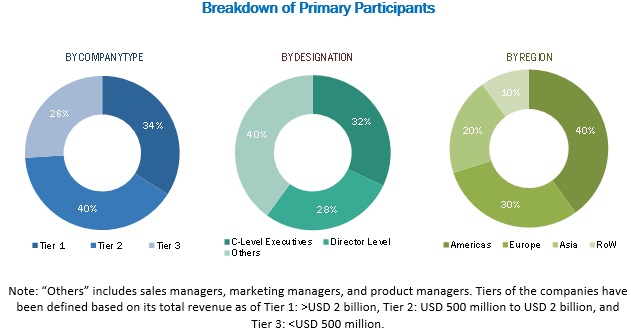
Extensive primary research has been conducted after acquiring knowledge about the cloud infrastructure market scenario through secondary research. Several primary interviews have been conducted with experts from both demand and supply sides across four major regions, namely, the Americas, Europe, Asia- Pacific, and rest of the world (the Middle East & Africa). This primary data has been collected through questionnaires, emails, and telephonic interviews.
To know about the assumptions considered for the study, download the pdf brochure
Market Size Estimation
Top-down and bottom-up approaches have been used to estimate and validate the size of the global cloud infrastructure market and various dependent submarkets. Key players in the market have been identified through the secondary research and their market share in the respective regions has been determined through primary and secondary research. This entire procedure includes the study of annual and financial reports of top players and extensive interviews of industry leaders, such as CEOs, VPs, directors, and marketing executives.
- The key players in the markets have been identified through extensive secondary research.
- The industry’s supply chain and market size, in terms of value, have been determined through primary and secondary research processes.
- All percentage shares, splits, and breakdowns have been determined using secondary sources and verified through primary sources.
Data Triangulation
After arriving at the overall market size from the market size estimation process explained above, the total market has been split into several segments and subsegments. To complete the overall market engineering process and arrive at the exact statistics for all segments and subsegments, the market breakdown and data triangulation procedures have been employed, wherever applicable. The data has been triangulated by studying various factors and trends from both demand and supply sides. In addition to this, the market size has been validated using both top-down and bottom-up approaches.
The following are the major objectives of the study.
- To define, describe, and forecast the global cloud infrastructure market based on type, end-use industry, and region
- To forecast the market size, in terms of value, for various segments with respect to five regions, namely, North America, Europe, Asia-Pacific, and Middle East & Africa
- To provide detailed information regarding major factors influencing the growth of the market (drivers, restraints, opportunities, and challenges)
- To strategically analyze micromarkets1 with respect to individual growth trends, future prospects, and contributions to the total market
- To analyze opportunities in the market for stakeholders by identifying the high-growth segments of cloud infrastructure, and provide details of the competitive landscape for market leaders
- To strategically profile key players and comprehensively analyze their product portfolios, market share, and core competencies3
- To analyze strategic developments such as new product launches, acquisitions, expansions, and agreements in the global cloud infrastructure market
|
Report Metric |
Details |
|
Market size available for years |
2013-2022 |
|
Base year considered |
2015 |
|
Forecast period |
2016-2022 |
|
Forecast units |
Value (USD) |
|
Segments covered |
Type, End-use Industry, and Geography |
|
Geographies covered |
North America, APAC, Europe, and Middle East & Africa, and, Latin America |
|
Companies covered |
Hewlett Packard Enterprise Co (US), Dell Inc. (US), Cisco Systems, Inc. (US), EMC Corporation (US), IBM Corporation (US), Amazon Web Services (US), Salesforce.com (US), Alphabet Inc. (US), NetApp, Inc. (US), Intel Corporation (US), Lenovo group Limited (China), AT&T, Inc. (US), Oracle Corporation (US), Quanta Computer Inc. (Taiwan), Foxconn Technology Group (Taiwan), and Rackspace Hosting, Inc. (US). |
This research report categorizes the cloud infrastructure market based on type, end-use industry, and geography.
By Type:
- Hardware
- Services
By End-use Industry:
- Banking, financial services, and insurance (BFSI)
- Consumer goods & retail
- Telecommunications & ITES
- Healthcare
- Energy
- Government
- Education & Research
- Media & Entertainment
- Manufacturing
- Business & Consulting Services
- Others
By Geography:
- North America
- Europe
- Asia Pacific
- Middle East & Africa
- Latin America
Available Customizations:
Based on the given market data, MarketsandMarkets offers customizations in the reports as per the client’s specific requirements. The available customization options are as follows:
Geographic Analysis
- Further country-wise breakdown of the market for all 4 regions based on various application
Company Information
- Detailed analysis and profiling of additional market players (Up to 5)













Growth opportunities and latent adjacency in Cloud Infrastructure Market