Intelligent Virtual Assistant Market by Product (Chatbots, IVA smart speakers), User Interface (Text-based, Text-to-speech based, Automatic Speech Recognition), Industry (Consumer Electronics, BFSI, Retail), and Geography - Global Forecast to 2035


Intelligent Virtual Assistant Market
Summary
The global Intelligent Virtual Assistant Market is estimated at approximately US$26.00 Billion in 2025 and is projected to reach approximately US$430.00 Billion by 2035, expanding at a CAGR of approximately 32.70% from 2025 to 2035. The market is experiencing rapid transformation as enterprises move beyond traditional rule-based chatbots toward generative AI-powered assistants capable of understanding context, maintaining conversations, retrieving information, and executing tasks. Rising demand for automated customer service, increasing adoption of cloud platforms, proliferation of connected devices, growth in digital commerce, and investments in AI-driven employee productivity are major growth drivers. The evolution of large language models (LLMs), retrieval-augmented generation (RAG), natural language processing, speech recognition, and agentic AI is further expanding the role of virtual assistants across banking, healthcare, retail, automotive, telecommunications, education, and government applications. Current industry estimates also show strong growth momentum, with one recent forecast projecting the market from US$25.99 billion in 2025 to US$328.88 billion by 2034.
Key Market Trends & Insights
North America remains the leading regional market because of high enterprise AI adoption, advanced cloud infrastructure, strong investments by technology companies, and widespread deployment of conversational AI in customer-service operations. Asia Pacific is expected to register the fastest growth as China, Japan, India, and other economies accelerate digital transformation and deploy AI assistants across financial services, telecommunications, e-commerce, manufacturing, and public services.
Chatbots remain a dominant product category because they are relatively easy to deploy across websites, mobile applications, messaging platforms, and customer-service portals. Grand View Research reported that chatbots accounted for 67.83% of intelligent virtual assistant revenue in 2022.
Generative AI is reshaping the competitive landscape by allowing assistants to generate responses dynamically rather than relying only on predefined intents and scripts. Voice-based interaction is another important trend, with technology companies increasingly investing in more natural, low-latency conversational interfaces.
The integration of AI assistants with IoT devices, enterprise applications, CRM systems, ERP platforms, smart speakers, automobiles, and wearable devices is creating new automation opportunities. At the same time, enterprises are increasingly adopting AI agents that can perform multi-step tasks rather than simply answer questions.
Market Size & Forecast
-
Base year market size: Approximately US$26.00 Billion in 2025
-
Forecast value by 2035: Approximately US$430.00 Billion by 2035
-
CAGR: Approximately 32.70% from 2025 to 2035
-
Growth factors: Generative AI, LLM adoption, enterprise automation, conversational commerce, cloud computing, voice AI, IoT connectivity, and increasing demand for 24/7 digital customer engagement are expected to accelerate market expansion.
The strong projected growth reflects the transition from conventional virtual assistants to intelligent, context-aware and task-oriented AI agents. Enterprises are increasingly measuring assistants not only by response accuracy but also by their ability to resolve customer issues, access enterprise information, execute workflows, and integrate with business applications.
AI-Powered Military Transformation: The Future of Smart Combat and Defense Top 10 Key Takeaway
-
The Intelligent Virtual Assistant Market is moving rapidly from scripted chatbots toward generative AI and agentic assistants.
-
North America is expected to remain the leading regional market through the forecast period.
-
Asia Pacific is projected to experience the fastest growth as digital infrastructure and AI adoption accelerate.
-
Chatbots continue to represent a major product segment because of broad enterprise and consumer deployment.
-
Generative AI is improving contextual understanding, personalization, summarization, and automated decision support.
-
Voice-enabled assistants are gaining importance as speech recognition and text-to-speech technologies become more natural.
-
Cloud deployment is enabling scalable virtual-assistant infrastructure for enterprises of different sizes.
-
IoT integration is expanding assistants into connected homes, vehicles, industrial environments, and wearable devices.
-
RAG and enterprise knowledge integration are helping reduce inaccurate responses and improve domain-specific performance.
-
Strategic competition among Amazon, Google, Microsoft, Apple, IBM, OpenAI, and specialized AI providers is accelerating innovation.
Product Insights
Chatbots are expected to remain one of the leading product categories in the Intelligent Virtual Assistant Market because of their flexibility, relatively low deployment cost, and compatibility with websites, mobile applications, social platforms, and enterprise portals. Businesses use chatbots for customer support, lead generation, appointment scheduling, product discovery, employee assistance, and transaction support. The strong position of chatbot-based assistants is supported by their ability to handle large volumes of simultaneous interactions without proportional increases in staffing requirements.
Smart speakers and voice assistants represent another important product category with significant growth potential. The emergence of generative AI is enabling voice assistants to move beyond basic commands toward contextual conversations and task execution. Amazon's Alexa+ illustrates this transition, incorporating generative AI capabilities and integrations designed to support more personalized interactions and everyday tasks.
Emerging products include enterprise AI copilots, AI customer-service agents, automotive assistants, wearable assistants, multilingual voice agents, and domain-specific virtual assistants for healthcare and financial services.
Technology / Component Insights
Natural language processing, machine learning, automatic speech recognition, natural language understanding, text-to-speech, computer vision, and conversational AI remain fundamental technologies supporting intelligent virtual assistants. However, the technology stack is increasingly being dominated by LLMs and generative AI.
LLMs enable assistants to understand longer conversations, interpret ambiguous requests, generate natural responses, summarize information, and support more complex workflows. RAG is becoming particularly important for enterprise deployments because it allows assistants to retrieve information from approved internal databases and documents before generating responses. This approach can improve factual accuracy and support specialized applications, although challenges involving hallucinations, data freshness, and governance remain.
Cloud computing provides scalable infrastructure for AI model training, inference, analytics, and integration. IoT connectivity extends assistants into smart homes, connected vehicles, industrial systems, and consumer electronics. Automation technologies enable virtual assistants to initiate workflows such as scheduling, ticket creation, customer verification, order tracking, and information retrieval.
Future innovation is expected to focus on multimodal AI, real-time voice interaction, smaller domain-specific models, edge AI, multilingual capabilities, emotion and sentiment recognition, and agentic systems capable of completing multi-step tasks autonomously.
Application Insights
Customer service is expected to remain a leading application segment because virtual assistants can provide 24/7 support, reduce response times, automate repetitive inquiries, and improve service scalability. Banking and financial institutions are deploying assistants for account inquiries, transaction guidance, financial information, and customer onboarding, while retailers are using them for product recommendations, order tracking, and conversational commerce.
Healthcare presents significant long-term opportunities as virtual assistants become integrated with appointment scheduling, patient engagement, information services, remote monitoring, and administrative workflows. Research into voice-based AI agents also highlights their potential to improve accessibility and scalability in healthcare delivery.
Automotive applications are also expanding as manufacturers integrate conversational assistants into connected vehicles. Education, telecommunications, IT service management, human resources, travel, hospitality, and government services are additional application areas where automated interaction can reduce operational workloads.
Regional Insights
North America is expected to maintain its leadership position in the Intelligent Virtual Assistant Market through 2035. The region benefits from mature cloud infrastructure, strong AI investment, advanced enterprise software ecosystems, and the presence of major technology companies. The US market is particularly influential because companies such as Amazon, Google, Microsoft, Apple, IBM, and OpenAI are actively advancing conversational and generative AI technologies.
Europe represents another important market, supported by enterprise digitalization, automation initiatives, multilingual AI requirements, and growing emphasis on responsible AI and data governance. Financial services, healthcare, automotive, and government organizations are key adopters.
Asia Pacific is projected to record the fastest growth from 2025 to 2035. Rapid smartphone penetration, expanding cloud infrastructure, e-commerce growth, digital banking, manufacturing automation, and government-supported AI programs are driving adoption across China, Japan, India, and other regional economies.
-
North America: Leading region due to mature AI and cloud infrastructure.
-
Asia Pacific: Fastest-growing region because of digitalization and expanding AI deployment.
-
Europe: Strong demand from regulated industries and enterprise automation.
-
China and Japan: Major contributors to AI assistant development and connected-device adoption.
-
India: Increasing adoption across banking, e-commerce, telecommunications, and customer-service operations.
Country Specific Market Trends
China is expected to remain one of Asia Pacific's most important intelligent virtual assistant markets as domestic technology companies expand AI models, conversational applications, smart devices, and enterprise automation. The country's large digital-commerce ecosystem creates significant opportunities for AI-powered customer engagement.
Japan is expected to experience strong adoption because of its advanced robotics, automotive, electronics, and smart-device industries. AI assistants are increasingly relevant for elderly support, connected devices, automotive systems, and enterprise productivity.
In North America, the United States remains the largest country-level market due to substantial investment in generative AI, cloud computing, enterprise software, and consumer AI products. Canada is expanding AI adoption across financial services, healthcare, government, and technology, while Mexico is benefiting from digital transformation and increasing automation across customer-service and business-process operations.
Germany and France are major European markets. Germany's industrial and automotive ecosystem creates opportunities for intelligent assistants in manufacturing, mobility, and enterprise operations. France is increasing AI adoption across financial services, telecommunications, government, retail, and customer engagement.
Estimated country-level CAGRs over 2025–2035 are approximately 30%–34% for China, 27%–31% for Japan, 25%–29% for Canada, 24%–28% for Mexico, 31%–34% for the United States, 23%–27% for Germany, and 24%–28% for France.
-
United States: Largest market and major center for generative AI innovation.
-
China: Rapid domestic AI development and large digital ecosystem.
-
Japan: Strong convergence of AI, robotics, automotive, and smart devices.
-
Germany: Industrial automation and automotive applications support adoption.
-
France: Government, financial services, telecom, and enterprise AI deployments support growth.
Key Company Insights
The competitive landscape includes global technology companies and specialized conversational AI providers. Major companies include Amazon, Apple, Google, Microsoft, IBM, Meta Platforms, OpenAI, Baidu, Samsung Electronics, and Oracle. Industry company listings also identify specialized providers such as Kore.ai, Avaamo, Inbenta, Creative Virtual, and SoundHound AI.
Amazon is expanding conversational AI through Alexa and generative AI capabilities, while Google is integrating Gemini-based intelligence across its ecosystem. Microsoft is focusing on enterprise copilots and AI agents, strengthening integration with productivity and business applications. IBM emphasizes enterprise AI, automation, and governed conversational systems. Apple continues to develop AI-powered interaction across its device ecosystem.
OpenAI and other generative AI companies are influencing the market by raising expectations for natural language interaction and autonomous task execution. Specialized providers are differentiating themselves through industry-specific assistants, enterprise knowledge integration, workflow automation, and voice AI.
-
Amazon: Generative AI-powered consumer and smart-home assistants.
-
Google: Multimodal AI and Gemini-based conversational experiences.
-
Microsoft: Enterprise copilots and workflow-oriented AI agents.
-
IBM: Enterprise conversational AI, automation, and governed AI.
-
OpenAI: Advanced LLM-based conversational and agentic capabilities.
Recent Developments
The market is increasingly influenced by generative AI product launches and partnerships. Amazon expanded Alexa+ into Australia in August 2026, adding generative AI-based conversational capabilities, broader personalization, smart-home integration, and task-oriented functions.
Technology companies are also accelerating voice AI development as improvements in speech recognition, LLMs, and real-time response generation make conversations more natural. Recent industry reporting indicates that major technology companies are increasingly positioning voice as a major interface for AI systems.
Enterprise virtual assistants are simultaneously moving toward agentic architectures, enabling systems to connect with business applications and execute workflows instead of merely answering questions.
Market Segmentation
The Intelligent Virtual Assistant Market can be segmented by Product, by Technology / Component, by Application, and by Region. By Product, the market includes chatbots, smart speakers, and other intelligent assistant interfaces. By Technology / Component, segmentation includes natural language processing, speech recognition, text-to-speech, machine learning, deep learning, generative AI, LLMs, and supporting cloud infrastructure. By Application, major categories include customer service, healthcare, BFSI, retail and e-commerce, automotive, IT and telecommunications, education, travel and hospitality, government, and enterprise productivity. By Region, the market covers North America, Europe, Asia Pacific, Latin America, and the Middle East & Africa.
The segmentation is increasingly converging as AI assistants combine multiple technologies. For example, an enterprise voice assistant may use speech recognition to convert audio into text, an LLM to interpret intent, RAG to retrieve enterprise information, an automation engine to execute a task, and text-to-speech technology to deliver the response. This convergence is expanding the addressable market beyond conventional chatbot deployments.
-
By Product: Chatbots are a leading product category.
-
By Technology: Generative AI and LLMs are reshaping assistant capabilities.
-
By Application: Customer service represents a major enterprise use case.
-
By Region: North America leads while Asia Pacific records faster growth.
-
By Deployment: Cloud-based and integrated enterprise solutions are gaining importance.
Conclusion
The Intelligent Virtual Assistant Market is entering a new phase in which AI assistants are evolving from simple conversational interfaces into intelligent digital workers capable of understanding context, retrieving knowledge, and completing business tasks. The market is estimated at US$26.00 Billion in 2025 and is projected to reach approximately US$430.00 Billion by 2035 at a CAGR of 32.70% from 2025 to 2035.
Generative AI, LLMs, voice technologies, IoT, cloud computing, and automation will remain the primary forces shaping the market. Businesses that successfully integrate virtual assistants with CRM, ERP, customer-service platforms, knowledge bases, and workflow systems can improve operational efficiency while delivering more personalized digital experiences.
By 2035, competitive advantage is expected to shift from simply having an AI assistant to deploying secure, multimodal, domain-aware, and agentic systems that can perform meaningful tasks. Organizations will therefore need to balance AI innovation with data privacy, cybersecurity, governance, accuracy, and human oversight. The strategic importance of intelligent virtual assistants will continue increasing as businesses seek scalable automation and more natural human-machine interaction.
FAQs
1. What is the Intelligent Virtual Assistant Market size?
The global Intelligent Virtual Assistant Market is estimated at approximately US$26.00 Billion in 2025 and is projected to reach approximately US$430.00 Billion by 2035.
2. What is the growth rate of the Intelligent Virtual Assistant Market?
The market is projected to grow at approximately 32.70% CAGR from 2025 to 2035, supported by generative AI, LLMs, cloud computing, voice AI, and enterprise automation.
3. What are the key drivers of the Intelligent Virtual Assistant Market?
Major drivers include increasing demand for automated customer service, generative AI adoption, enterprise digitalization, cloud deployment, IoT connectivity, voice interfaces, and demand for 24/7 support.
4. Which region leads the Intelligent Virtual Assistant Market?
North America is expected to remain the leading region because of its mature AI ecosystem, strong technology investment, advanced cloud infrastructure, and high enterprise adoption.
5. Who are the key companies in the Intelligent Virtual Assistant Market?
Key companies include Amazon, Apple, Google, Microsoft, IBM, Meta Platforms, OpenAI, Baidu, Samsung Electronics, and Oracle, along with specialized providers such as Kore.ai, Avaamo, Inbenta, and SoundHound AI.
 Exclusive indicates content/data unique to MarketsandMarkets and not available with any competitors.
Table of Contents
1 Introduction (Page No. - 12)
1.1 Objectives of the Study
1.2 Definition
1.3 Markets Covered
1.3.1 Market Segmentation
1.3.2 Years Considered for the Study
1.4 Currency
1.5 Limitations
1.6 Stakeholders
2 Research Methodology (Page No. - 15)
2.1 Research Data
2.1.1 Secondary Data
2.1.1.1 List of Major Secondary Sources
2.1.1.2 Secondary Sources
2.1.2 Primary Data
2.1.2.1 Primary Interviews With Experts
2.1.2.2 Breakdown of Primaries
2.1.2.3 Primary Sources
2.2 Secondary and Primary Research
2.2.1.1 Key Industry Insights
2.3 Market Size Estimation
2.3.1 Bottom-Up Approach
2.3.2 Top-Down Approach
2.4 Market Breakdown and Data Triangulation
2.5 Research Assumptions
3 Executive Summary (Page No. - 25)
4 Premium Insights (Page No. - 29)
4.1 Attractive Opportunities in the Intelligent Virtual Assistants Market
4.2 North America: Intelligent Virtual Assistant Market, By Industry and Country
4.3 Intelligent Virtual Assistants Market, By Type
4.4 Intelligent Virtual Assistants Market, By Product
4.5 Intelligent Virtual Assistants Market, By Geography
5 Market Overview (Page No. - 32)
5.1 Introduction
5.2 Evolution of the Market: Intelligent Virtual Assistant Market
5.3 Market Dynamics
5.3.1 Drivers
5.3.1.1 Demand for Automation in Customer Service
5.3.1.2 Integration of Speaker-Based Virtual Assistants and Smart Home Appliances is Driving the Market of Smart Speakers
5.3.1.3 Increasing Adoption of Chatbots Because of the Availability of Low-Cost Software Modules for Chatbot Design
5.3.2 Restraints
5.3.2.1 Lack of Accuracy in Chatbot
5.3.2.2 System Integration Complexities Add to the Cost of Smart Speakers
5.3.3 Opportunities
5.3.3.1 Gesture Recognition Technology Will Add Value to Intelligent Virtual Assistants Market
5.3.3.2 Multi-Language Support in IVAs Will Increase Its Intelligent Virtual Assistant Market Penetration.
5.3.4 Challenges
5.3.4.1 Lack of Awareness in Developing Countries
5.3.4.2 Limited Market Reach of IVA Smart Speakers in Developing Countries.
6 Industry Trends (Page No. - 37)
6.1 Introduction
6.2 Value Chain Analysis
6.3 Startup Scenario
7 Intelligent Virtual Assistant Market, By Product (Page No. - 39)
7.1 Introduction
7.2 Chatbot
7.2.1 Chatbot Market By Deployment
7.2.1.1 Stand-Alone
7.2.1.2 Web-Based
7.2.2 Chatbot Market By Offering
7.2.2.1 Software
7.2.2.2 Services
7.3 Intelligent Virtual Assistants Market : Smart Speakers
8 Intelligent Virtual Assistant Market, By User Interface (Page No. - 51)
8.1 Introduction
8.2 Text Based
8.3 Text-To-Speech-Based
8.4 Automatic Speech Recognition (ASR)
8.5 Others
9 Intelligent Virtual Assistant Market, By Type (Page No. - 58)
9.1 Introduction
9.2 Rule-Based
9.3 Conversational Ai-Based
10 Intelligent Virtual Assistant Market, By Industry (Page No. - 62)
10.1 Introduction
10.2 Consumer Electronics
10.3 BFSI
10.4 Healthcare
10.5 Education
10.6 Retail
10.7 Government
10.8 Utilities
10.9 Travel & Hospitality
10.10 Others
11 Geographic Analysis (Page No. - 73)
11.1 Introduction
11.2 North America
11.2.1 US
11.2.2 Canada
11.2.3 Mexico
11.3 Europe
11.3.1 Germany
11.3.2 France
11.3.3 UK
11.3.4 Rest of Europe
11.4 Asia Pacific
11.4.1 Japan
11.4.2 China
11.4.3 Australia
11.4.4 India
11.4.5 Rest of APAC
11.5 RoW
11.5.1 Middle East and Africa
11.5.2 South America
12 Competitive Landscape (Page No. - 95)
12.1 Overview
12.2 Market Ranking Analysis, 2016
12.3 Competitive Scenario and Trends
12.3.1 Product Launches
12.3.2 Acquisitions
12.3.3 Partnerships/Collaborations/Agreements
13 Company Profiles (Page No. - 101)
(Business Overview, Strength of Product Portfolio, Business Strategy Excellence, Recent Developments, Key Relationships)*
13.1 Microsoft
13.2 Nuance Communications
13.3 Samsung Electronics
13.4 Alphabet
13.5 Apple
13.6 Amazon
13.7 International Business Machines (IBM)
13.8 Baidu
13.9 Blackberry
13.10 Inbenta Technologies
13.11 Innovators
13.11.1 Facebook
13.11.2 Cognitive Code
13.11.3 Artificial Solutions
13.11.4 Unified Computer Intelligence
13.11.5 Mycroft Ai
*Details on Business Overview, Strength of Product Portfolio, Business Strategy Excellence, Recent Developments, Key Relationships Might Not Be Captured in Case of Unlisted Companies.
14 Appendix (Page No. - 131)
14.1 Insights From Industry Experts
14.2 Discussion Guide
14.3 Knowledge Store: Marketsandmarkets’ Subscription Portal
14.4 Introducing RT: Real-Time Market Intelligence
14.5 Available Customizations
14.6 Related Reports
14.7 Author Details
List of Tables (68 Tables)
Table 1 Currency Table
Table 2 Start-Up Companies and Investors Scenario
Table 3 Intelligent Virtual Assistants Market, By Product, 2014–2023 (USD Million)
Table 4 Intelligent Virtual Assistant Market, By Deployment, 2014–2023 (USD Million)
Table 5 Chatbot Market, By Offering, 2014–2023 (USD Million)
Table 6 Chatbot Market in North America, By Offering, 2014–2023 (USD Million)
Table 7 Chatbots Market in Europe, By Offering, 2014–2023 (USD Million)
Table 8 Intelligent Virtual Assistant Market in APAC, By Offering, 2014–2023 (USD Million)
Table 9 Chatbots Market in RoW, By Offering, 2014–2023 (USD Million)
Table 10 Chatbot Market in North America By Type, 2014–2023 (USD Million)
Table 11 Chatbots Market in Europe By Type, 2014–2023 (USD Million)
Table 12 Chatbots Market in APAC By Type, 2014–2023 (USD Million)
Table 13 Chatbots Market in RoW, By Type, 2014–2023 (USD Million)
Table 14 Stand-Alone Chatbot Market, By Geography, 2014–2023 (USD Million)
Table 15 Web-Based Chatbot Market, By Geography, 2014–2023 (USD Million)
Table 16 Chatbots Software Market, By Geography, 2014–2023 (USD Million)
Table 17 Chatbot Services Market, By Geography, 2014–2023 (USD Million)
Table 18 Intelligent Virtual Assistants Market of Smart Speakers Market, By Geography, 2014–2023 (USD Million)
Table 19 IVA Smart Speakers Market By Type 2014–2023 (USD Million)
Table 20 IVA Market By User Interface, 2014–2023 (USD Million)
Table 21 IVA Smart Speakers Market By User Interface, 2014–2023 (USD Million)
Table 22 Chatbot Market By User Interface, 2014–2023 (USD Million)
Table 23 IVA Market for Text-Based User Interface By Region, 2014–2023 (USD Million)
Table 24 Intelligent Virtual Assistant Market for Text-To-Speech Based User Interface By Region, 2014–2023 (USD Million)
Table 25 Automatic Speech Recognition Based Intelligent Virtual Assistant Market, By Region, 2014–2023 (USD Million)
Table 26 Intelligent Virtual Assistant Market for Other Types of User Interface By Region, 2014–2023 (USD Million),
Table 27 Intelligent Virtual Assistants Market By Type, 2014–2023 (USD Million)
Table 28 Rule-Based IVA Market, By Region, 2014–2023 (USD Million)
Table 29 Conversational Ai-Based Market, By Region, 2014–2023 (USD Million)
Table 30 IVA Market, By Industry, 2014–2023 (USD Million)
Table 31 IVA Market for Consumer Electronics, By Region, 2014–2023 (USD Million)
Table 32 IVA Market of Smart Speakers, 2014–2023 (Million Units)
Table 33 IVA Market for BFSI, By Region, 2014–2023 (USD Million)
Table 34 IVA Market for Healthcare, By Region, 2014–2023 (USD Million)
Table 35 IVA Market for Education, By Region, 2014–2023 (USD Million)
Table 36 IVA Market for Retail, By Region, 2014–2023 (USD Million)
Table 37 IVA Market for Government, By Region, 2014–2023 (USD Million)
Table 38 Intelligent Virtual Assistants Market for Utilities, By Region, 2014–2023 (USD Million)
Table 39 Intelligent Virtual Assistant Market for Travel and Hospitality, By Region, 2014–2023 (USD Million)
Table 40 IVA Market for Other Industries, By Region, 2014–2023 (USD Million)
Table 41 IVA Market Size, By Region, 2014–2023 (USD Million)
Table 42 Chatbots Market, By Region, 2014–2023 (USD Million)
Table 43 IVA Smart Speaker Market By Region, 2014–2023 (USD Million)
Table 44 Intelligent Virtual Assistant Market for Smart Speakers By Region, 2014–2023 (Million Units)
Table 45 North America IVA Market Size, By Country, 2014–2023 (USD Million)
Table 46 Intelligent Virtual Assistants Market in North America, By Industry, 2014–2023 (USD Million)
Table 47 Chatbots Market in North America, By User Interface, 2014–2023 (USD Million)
Table 48 Chatbot Market in North America, By Deployment, 2014–2023 (USD Million)
Table 49 Chatbot Market in North America, By Offering, 2014–2023 (USD Million)
Table 50 Intelligent Virtual Assistant Market in Europe, By Country, 2014–2023 (USD Million)
Table 51 Intelligent Virtual Assistant Market in Europe, By Industry, 2014–2023 (USD Million)
Table 52 Chatbot Market in Europe, By User Interface, 2014–2023 (USD Million)
Table 53 Chatbot Market in Europe, By Deployment, 2014–2023 (USD Million)
Table 54 Chatbot Market in Europe, By Offering, 2014–2023 (USD Million)
Table 55 Intelligent Virtual Assistants Market in Asia Pacific, By Country, 2014–2023 (USD Million)
Table 56 Intelligent Virtual Assistant Market in Asia Pacific, By Industry, 2014–2023 (USD Million)
Table 57 Chatbot Market in Asia Pacific, By User Interface, 2014–2023 (USD Million)
Table 58 Chatbot Market in Asia Pacific, By Deployment, 2014–2023 (USD Million)
Table 59 Chatbot Market in Asia Pacific, By Offering, 2014–2023 (USD Million)
Table 60 IVA Market in RoW, By Region, 2014–2023 (USD Million)
Table 61 Intelligent Virtual Assistant Market in RoW, By Industry, 2014–2023 (USD Million)
Table 62 RoW Chatbot Market, By User Interface, 2014–2023 (USD Million)
Table 63 RoW Chatbot Market, By Deployment, 2014–2023 (USD Million)
Table 64 RoW Chatbot Market, By Offering 2014–2023 (USD Million)
Table 65 Ranking of the Key Players in the Intelligent Virtual Assistants Market 2016.
Table 66 Product Launches, 2015–2017
Table 67 Acquisitions, 2015–2017
Table 68 Partnerships/Collaborations/Agreements, 2014
List of Figures (54 Figures)
Figure 1 Intelligent Virtual Assistant Market: Research Design
Figure 2 Bottom-Up Approach
Figure 3 Top-Down Approach
Figure 4 Data Triangulation
Figure 5 Intelligent Virtual Assistants Market, 2014-2023
Figure 6 Intelligent Virtual Assistant Market for Smart Speakers is Expected to Grow at A Higher Rate Between 2014–2023
Figure 7 Automatic Speech Recognition Expected to Account for the Largest Share During the Forecast Period
Figure 8 Conversational Ai-Based IVA Accounted for A Higher Market Size in 2016
Figure 9 Consumer Electronics Accounted for the Largest Share of the Overall Intelligent Virtual Assistants Market in 2016
Figure 10 Intelligent Virtual Assistant Market , By Geography, 2016
Figure 11 Usage of IVA in Enterprises for Customer Support Services Propels the Growth of the Intelligent Virtual Assistant Market
Figure 12 Consumer Electronics Sector Held the Largest Share of the North American Intelligent Virtual Assistant Marketin 2016
Figure 13 Conversational Ai-Based IVA Held the Largest Share of the Intelligent Virtual Assistant Market in 2016
Figure 14 Chatbot Accounted for Larger Market Share in the Year 2016
Figure 15 The Intelligent Virtual Assistants Market in China is Expected to Grow at the Highest CAGR Between 2017 and 2023
Figure 16 Evolution of Intelligent Virtual Assistants
Figure 17 Growing Demand for Automation in Industries & Enterprises is Driving the IVA Market
Figure 18 Value Chain Analysis of Intelligent Virtual Assistant Market
Figure 19 Intelligent Virtual Assistant Market, By Product
Figure 20 Software-Based IVA is Expected to Dominate the Overall IVA Market By 2023
Figure 21 Software-Based Chatbot Market in APAC is Expected to Dominate Till 2023
Figure 22 Intelligent Virtual Assistants Market of Conversational Ai-Based IVA Will Have A Higher Share in APAC During the Forecast Period
Figure 23 North America is Expected to Continue Its Dominance in the Web Based Chatbots Market During the Forecast Period
Figure 24 APAC IVA Smart Speaker Market is Expected to Grow at A Highest CAGR Between 2017 and 2023
Figure 25 Intelligent Virtual Assistant Market, By User Interface
Figure 26 Text-Based Chatbots are Expected to Continue Its Dominance in the Chatbot Market During the Forecast Period
Figure 27 Automatic Speech Recognition Based Intelligent Virtual Assistants Market, 2014–2023
Figure 28 Intelligent Virtual Assistant Market, By Type
Figure 29 Conversational Ai-Based Market, By Geography, 2014–2023 (USD Million)
Figure 30 Intelligent Virtual Assistant Market, By Industry
Figure 31 IVA Smart Speakers Market, 2014–2023 (Million Units)
Figure 32 Intelligent Virtual Assistants Market for BFSI, By Geography, 2014–2023 (USD Million)
Figure 33 Intelligent Virtual Assistant Market for Government, By Geography, 2014–2023 (USD Million)
Figure 34 IVA Market in Travel and Hospitality, 2014–2023 (USD Million)
Figure 35 Regional Snapshot: Asia Pacific is the Emerging Region in the Intelligent Virtual Assistants Market
Figure 36 Snapshot: Presence of Key IVA Vendors is A Major Factor Contributing Toward the Growth of the Intelligent Virtual Assistant Market in North America
Figure 37 Software-Based IVA is Expected to Grow at A Higher Rate Between 2017 and 2023
Figure 38 Snapshot: Increasing Adoption of Chatbots in the Healthcare Sector is Driving the Growth of the Intelligent Virtual Assistants Market in Europe
Figure 39 Text-Based IVA Held the Highest Share of the European Market in By 2023
Figure 40 Snapshot: Technological Advancement is Contributing Toward the Growth of the Intelligent Virtual Assistant Market in APAC
Figure 41 Software-Based IVA is Expected to Hold A Higher Share of the Chatbot Market By 2023
Figure 42 South America is Expected to Hold A Major Share of the Intelligent Virtual Assistants Market in RoW By 2023
Figure 43 Companies Adopted Product Launch as the Key Growth Strategy Between 2014–2017
Figure 44 Market Evaluation Framework–Product Launches Fuelled Growth and Innovation Between 2014 and 2016
Figure 45 Battle for Market Share: Product Launch Was the Key Strategy
Figure 46 Microsoft: Company Snapshot
Figure 47 Nuance Communications: Company Snapshot
Figure 48 Samsung Electronics: Company Snapshot
Figure 49 Alphabet: Company Snapshot
Figure 50 Apple: Company Snapshot
Figure 51 Amazon: Company Snapshot
Figure 52 International Business Machines (IBM): Company Snapshot
Figure 53 Baidu: Company Snapshot
Figure 54 Blackberry: Company Snapshot
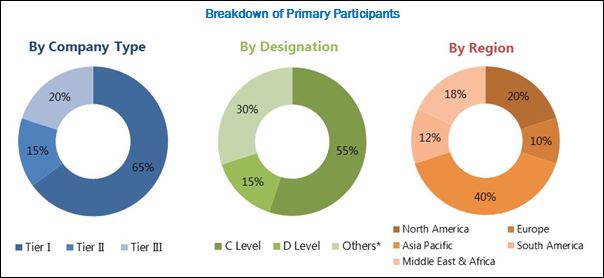
The research methodology used to estimate and forecast the intelligent virtual assistants market begins with capturing data on key vendor revenues through the secondary research that include annual reports, press releases, investor presentations, white papers, journals, certified publications, articles from recognized authors, gold standard and silver standard websites, organizations, directories, and databases, which include Factiva, Hoovers, and the Wall Street Journals among others. The vendor offerings are also taken into consideration to determine the market segmentation. The bottom-up procedure was employed to arrive at the overall market size of the global intelligent virtual assistants market from the revenue of the key players in the market. After arriving at the overall market size, the total market was split into several segments and sub-segments which were then verified through the primary research by conducting extensive interviews with people holding key positions such as CEOs, VPs, directors and executives. Market breakdown and data triangulation procedures were employed to complete the overall market engineering process and arrive at the exact statistics for all segments and sub-segments. The breakdown of primaries is depicted in the below figure:
To know about the assumptions considered for the study, download the pdf brochure
Target Audience of the Report:
The intended audience for this report includes:
- IVA module designers and manufacturers
- Research organizations and consulting companies
- Associations, forums, and alliances related to intelligent virtual assistant
- Investors
- Start-up companies
- Raw material suppliers
- Government and other regulatory bodies
- Market research and consulting firms
Scope of the Report
The research report segments the intelligent virtual assistants market into following submarkets:
- By Product:
Chatbots
- IVA smart speakers
By User Interface
Text Based
- Text-To-Speech
- Automatic Speech Recognition (ASR)
- Others
By Type
Rule based
- Conversational AI based
By Industry
Consumer Electronics
- BFSI
- Healthcare
- Education
- Retail
- Government
- Utilities
- Travel & Hospitality
- Others
By Geography
North America
- U.S.
- Canada
- Mexico
- Europe
- U.K.
- Germany
- France
- Rest of Europe
- APAC
- China
- Japan
- Australia
- India
- Rest of APAC
- Rest of the World
- Middle East and Africa
- South America
- Available customizations:
With the given market data, MarketsandMarkets offers customizations as per the company’s specific needs. The following customization options are available for the report:
- Market Analysis
- Further breakdown of the IVA system applications market, by geography
- Company Information
- Detailed analysis and profiling of additional market players (up to five)













Growth opportunities and latent adjacency in Intelligent Virtual Assistant Market