AI in Supply Chain Market Size, Share & Trends

AI in Supply Chain Market Size, Share, Growth & Trends by Offering (Software, Services), Deployment (Cloud, On-premises, Hybrid), Application (Demand Planning & Forecasting, Warehouse & Transportation Management, Supply Chain Risk Management) - Global Forecast to 2032




AI IN SUPPLY CHAIN MARKET SIZE, SHARE & TRENDS
According to Marketsandmarkets, the global AI in supply chain market size was valued at USD 13.93 billion in 2025 and is projected to reach USD 50.41 billion by 2032, growing at a CAGR of 20.2% from 2025 to 2030. The market is experiencing strong growth driven by increasing supply chain complexity, rising demand volatility, and the need for real-time decision-making. Enterprises are adopting AI-powered software and cloud-based platforms to improve demand forecasting, inventory optimization, logistics efficiency, and risk management. Growing digital transformation initiatives and the focus on supply chain resilience further accelerate market expansion.
MARKET SNAPSHOT TABLE
| REPORT METRIC | DETAILS |
|---|---|
| Market Size, 2025 (Value) | USD 13.93 billion |
| Market Forecast, 2032 (Value) | USD 50.41 Billion |
| Growth Rate | CAGR of 20.2% |
| Years Considered | 2021–2032 |
| Base Year | 2024 |
| Forecast Period | 2025–2032 |
| Units Considered | Value (USD Million/Billion) |
| Report Coverage | Revenue forecast, company ranking, competitive landscape, growth factors, and trends |
| Top Companies |
|
| Growth Drivers |
|
| Segments Covered |
|
| Regions Covered | North America, Asia Pacific, Europe, Rest of the World |
Market Size & Forecast
KEY TAKEAWAYS
-
BY REGIONNorth America is estimated to dominate the AI in supply chain market with a 36.7% share in 2025.
-
BY OFFERINGBy offering, the software segment held the largest share in the AI in supply chain market in 2024.
-
BY DEPLOYMENTCloud deployment is projected to grow at a high CAGR of 21.8% in the AI in supply chain market from 2025 to 2032.
-
BY ORGANIZATION SIZEBy organization size, the small & medium organizations segment is estimated to grow at a high CAGR during the forecast period.
-
BY APPLICATIONBy application, warehouse and transport management is set to grow at the highest CAGR of 22.9% during the forecast period.
-
BY END-USE INDUSTRYBy end-use industry, the retail segment to dominate the AI in supply chain market in 2024.
-
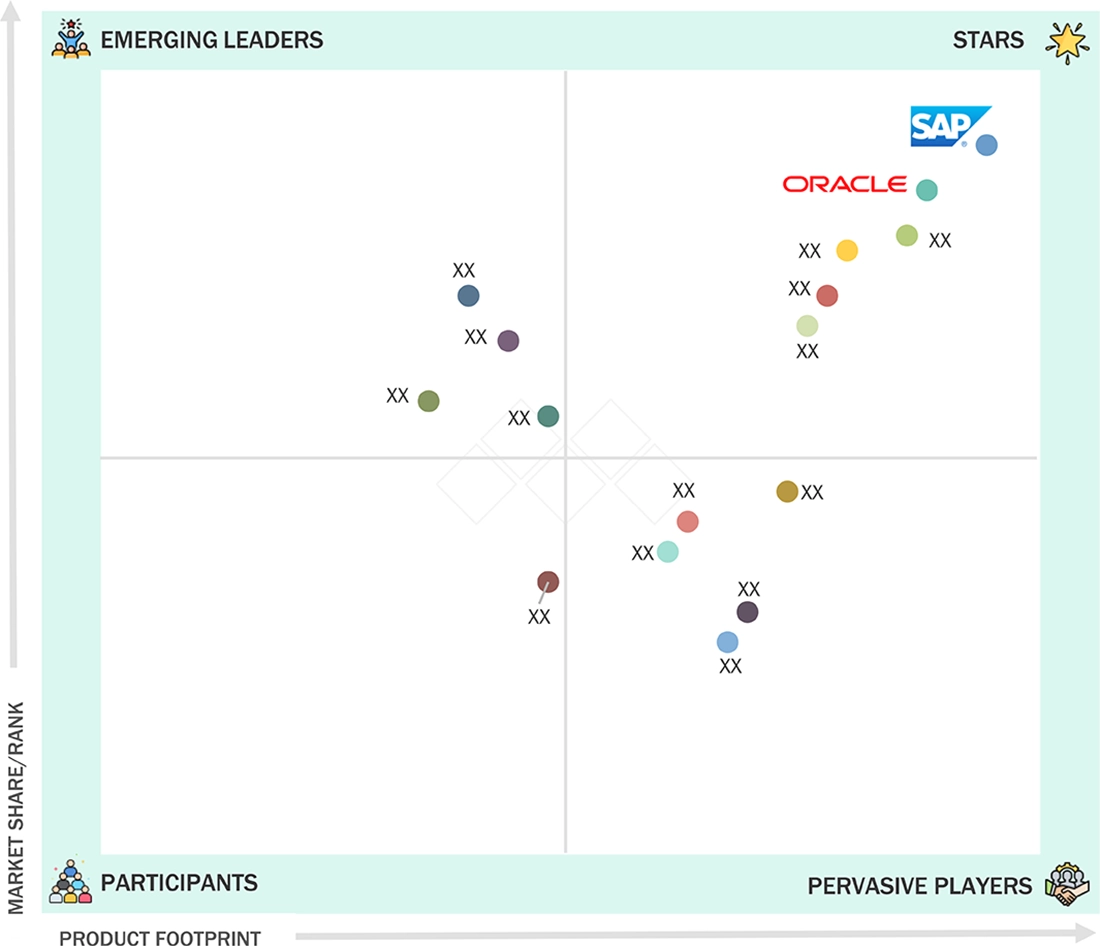
Competitive Landscape - KEY PLAYERSSAP SE, Oracle, Blue Yonder Group, Inc., and Manhattan Associates were identified as some of the star players in the AI in supply chain market, given their strong market share and product footprint.
-
Competitive Landscape - STARTUPS/SMESAltana, o9 Solutions, and Project44, among others, have distinguished themselves among startups and SMEs by securing strong footholds in specialized niche areas, underscoring their potential as emerging market leaders.
The AI in supply chain industry is witnessing robust growth due to rising supply chain complexity, increasing demand volatility, and the growing need for predictive and data-driven decision-making. Organizations are increasingly adopting AI-powered software and cloud-based platforms to enhance demand planning, inventory management, logistics optimization, and risk mitigation. Additionally, expanding e-commerce activities, digital transformation initiatives, and the focus on building resilient and agile supply chains are further accelerating market growth.
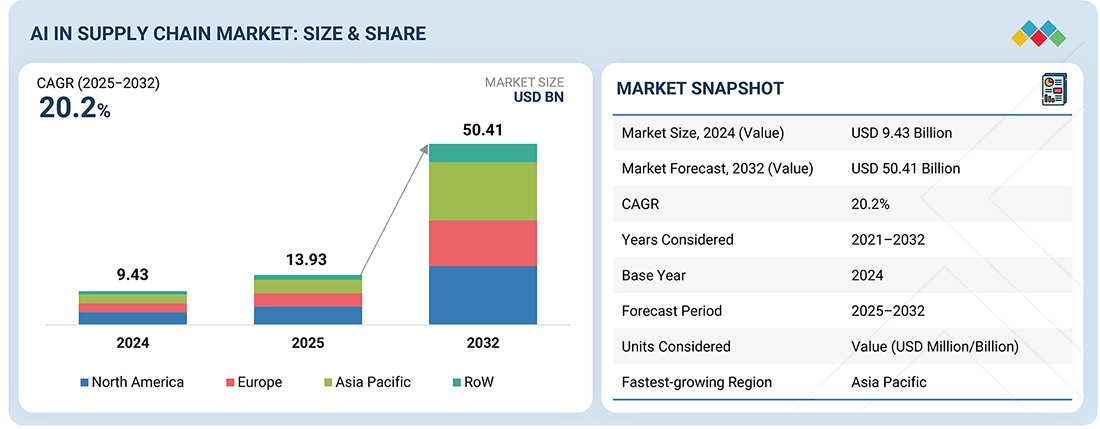
Source: Secondary Research, Interviews with Experts, MarketsandMarkets Analysis
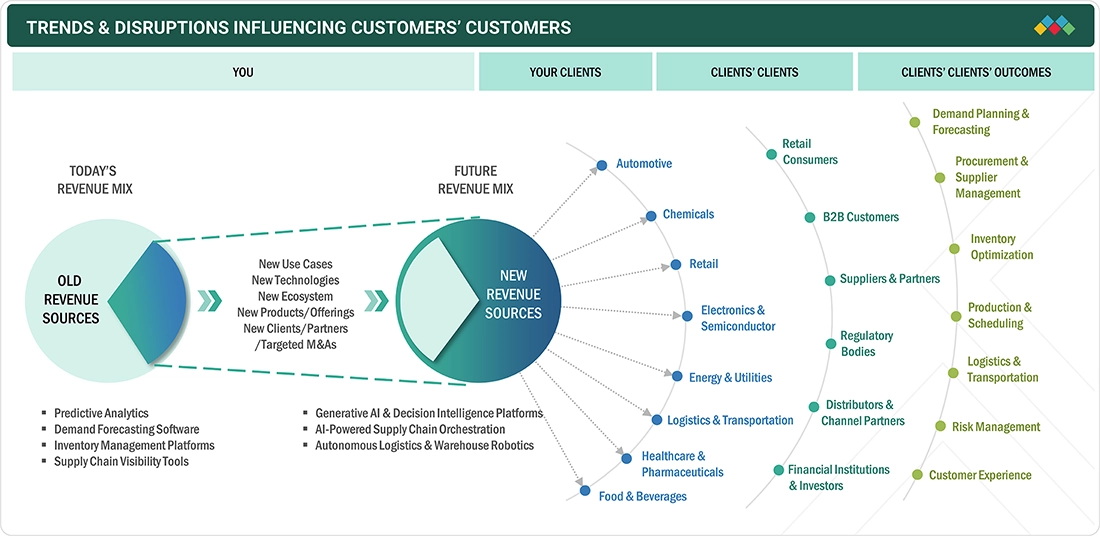
TRENDS & DISRUPTIONS IMPACTING CUSTOMERS' CUSTOMERS
The AI in supply chain market share is undergoing significant disruption as enterprises move from rule-based planning and reactive operations toward intelligent, data-driven supply chain orchestration. Emerging trends such as predictive and prescriptive analytics, generative AI-enabled decision intelligence, autonomous planning systems, and real-time supply chain visibility are reshaping customer business models. Increased integration of AI with cloud platforms, IoT, and digital twins is enabling faster decision-making, improved resilience, and enhanced customer experience across retail, manufacturing, logistics, and distribution networks.
Source: Secondary Research, Interviews with Experts, MarketsandMarkets Analysis
AI IN SUPPLY CHAIN MARKET DYNAMICS

Level
-
Growing implementation of big data and AI technologies

-
Need for enhanced visibility in supply chain processes


Level
-
Shortage of skilled workforce

-
Security and data privacy concerns


Level
-
Surge in demand for intelligent business processes and automation

-
Improved operational efficiency with AI


Level
-
Difficulties in seamless data integration

-
Inconsistent data quality and availability

Source: Secondary Research, Interviews with Experts, MarketsandMarkets Analysis
Driver: Growing implementation of big data and AI technologies
The increasing availability of large volumes of structured and unstructured supply chain data is driving the adoption of AI-powered solutions. Enterprises are leveraging big data analytics and machine learning to improve demand forecasting, inventory optimization, and logistics efficiency. This shift toward data-driven operations is accelerating AI deployment across end-to-end supply chain processes.
Restraint: Shortage of skilled workforce
The adoption of AI in supply chain operations is constrained by a shortage of skilled professionals capable of managing AI models and advanced analytics platforms. Many organizations face challenges in recruiting and retaining talent with expertise in data science, AI engineering, and supply chain domain knowledge. This skills gap slows implementation timelines and limits the effective utilization of AI technologies.
Opportunity: Surge in demand for intelligent business processes and automation
Rising pressure to improve operational efficiency and responsiveness is creating strong demand for intelligent and automated supply chain processes. AI-driven automation enables real-time decision-making, predictive planning, and autonomous execution across procurement, production, and logistics. This trend presents significant growth opportunities for AI solution providers targeting scalable and industry-specific supply chain applications.
Challenge: Difficulties in seamless data integration
Integrating data from multiple sources, such as ERP, WMS, TMS, and external partners, remains a major challenge for AI-driven supply chains. Data silos, inconsistent data formats, and poor data quality limit the accuracy and effectiveness of AI models. Overcoming these integration challenges is critical to realizing the full value of AI across complex supply chain networks.
AI IN SUPPLY CHAIN MARKET SIZE, SHARE ANALYSIS: COMMERCIAL USE CASES ACROSS INDUSTRIES
| COMPANY | USE CASE DESCRIPTION | BENEFITS |
|---|---|---|
 |
AI-enabled field service management using SAP Field Service Management to analyze and summarize historical equipment activity data, including spare parts usage, service durations, and checklist results, supporting faster issue diagnosis and efficient technician dispatching | Up to 65% improvement in field service productivity | 5% increase in first-time fix rates | Faster issue resolution | Smarter technician assignment | Improved service planning efficiency |
 |
Cloud-based, AI-driven category management and assortment optimization deployed on Microsoft Azure to localize assortments, optimize shelf space, and automate replenishment | Improved on-shelf availability | Reduced out-of-stocks and obsolete inventory | Increased profitability | Localized assortment optimization | Rapid ROI through scalable cloud deployment |
 |
Migration of warehouse management system to an AI-driven, cloud-based platform with real-time inventory tracking, analytics, and mobile voice integration across 19 distribution centers | 35% increase in warehouse productivity | Improved accuracy and visibility | Lower operational costs | Enhanced scalability | Faster response to demand fluctuations |
 |
Blockchain-based platform to secure the pharmaceutical supply chain by enabling end-to-end traceability and verification of drugs to prevent counterfeiting and fraud | Enhanced drug traceability | Reduced counterfeit risks | Improved regulatory compliance | Greater supply chain transparency | Strengthened drug safety and security |
|
|
Deployment of Microsoft Copilot for Microsoft 365 to enhance collaboration, automate workflows, and optimize internal processes across complex energy operations | Improved operational efficiency | Enhanced collaboration | Streamlined workflows | Better data utilization | Increased productivity across energy operations |
Logos and trademarks shown above are the property of their respective owners. Their use here is for informational and illustrative purposes only.
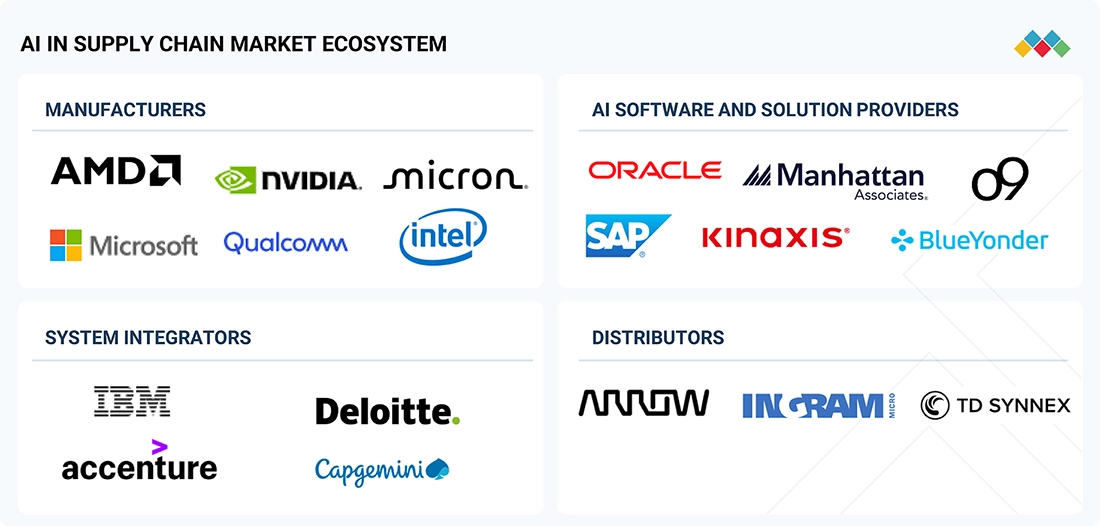
AI IN SUPPLY CHAIN MARKET ECOSYSTEM
The AI in supply chain market growth ecosystem comprises hardware manufacturers, AI software and solution providers, system integrators, and distribution partners working together to enable end-to-end adoption. Hardware providers support high-performance data processing, while AI software vendors deliver advanced analytics, forecasting, and optimization capabilities. System integrators play a critical role in deployment, customization, and integration with existing enterprise systems. Distributors support market reach, scalability, and regional adoption, collectively strengthening the overall ecosystem and accelerating AI-driven supply chain transformation.
Logos and trademarks shown above are the property of their respective owners. Their use here is for informational and illustrative purposes only.
AI IN SUPPLY CHAIN MARKET SEGMENTS
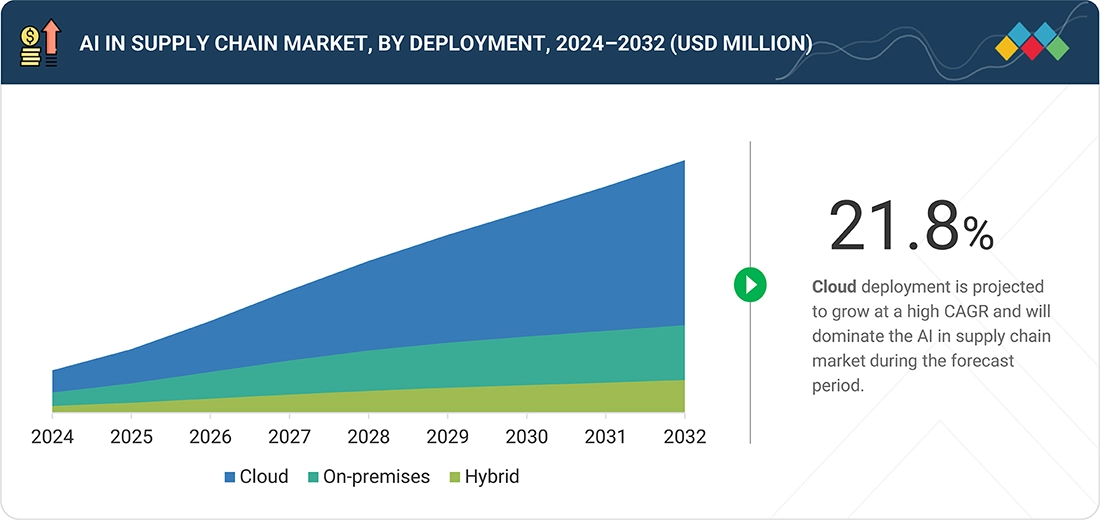
Source: Secondary Research, Interviews with Experts, MarketsandMarkets Analysis
AI in Supply Chain Market Trends, By Offering
The software segment held the largest market share in 2024, driven by strong adoption of AI-powered planning, forecasting, and analytics tools. Enterprises are increasingly investing in AI software to improve visibility, decision-making, and operational efficiency across supply chains. Continuous advancements in predictive and prescriptive analytics further strengthen software-led revenue growth.
AI in Supply Chain Market, By Deployment
Cloud deployment is expected to dominate the market and grow at the highest CAGR during the forecast period due to its scalability and cost efficiency. Organizations prefer cloud-based AI solutions for faster deployment and real-time data processing. The ability to integrate seamlessly with existing enterprise systems further accelerates cloud adoption.
AI in Supply Chain Market, By Organization Size
Small and medium organizations are projected to grow at the highest CAGR as cloud-based AI solutions lower implementation barriers. SMEs are adopting AI to enhance demand planning, inventory management, and logistics optimization. Flexible pricing models and faster return on investment are encouraging wider adoption among these organizations.
AI in Supply Chain Market, By Application
Demand planning and forecasting dominated the AI in supply chain market in 2024 due to the critical need for accurate demand insights. AI enables organizations to reduce forecast errors and respond quickly to market fluctuations. Improved planning accuracy directly supports better inventory and service-level performance.
AI in Supply Chain Market, By End-use Industry
Retail is estimated to account for the largest market share in 2025, supported by omnichannel operations and high demand variability. Retailers are increasingly using AI to optimize inventory, enhance demand sensing, and improve fulfillment efficiency. The focus on customer experience and cost optimization continues to drive adoption.
REGION
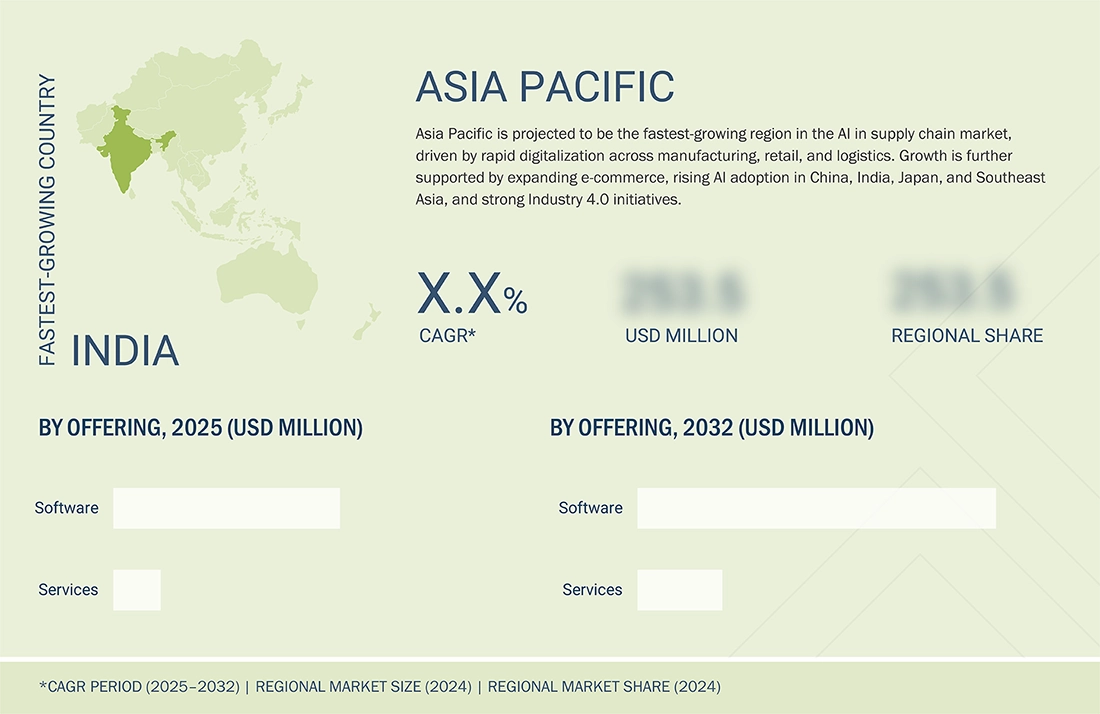
Asia Pacific to be fastest-growing region in global AI in supply chain market growth during forecast period
Asia Pacific is estimated to grow at the highest CAGR due to rapid industrialization, expanding manufacturing bases, and strong adoption of digital supply chain technologies. Countries across the region are increasingly investing in AI to improve demand forecasting, production planning, and logistics efficiency. The growth of e-commerce, cross-border trade, and smart logistics infrastructure is further driving adoption. In addition, supportive government initiatives promoting AI, automation, and smart manufacturing are strengthening long-term market growth across the region.
AI IN SUPPLY CHAIN MARKET SIZE, SHARE ANALYSIS: COMPANY EVALUATION MATRIX
In the AI in supply chain market matrix, SAP SE and Oracle emerge as star players, supported by their strong market presence and broad, integrated product portfolios. SAP leads with its end-to-end, AI-enabled supply chain capabilities tightly embedded within its ERP ecosystem, enabling large enterprises to achieve real-time visibility, predictive planning, and intelligent execution across complex global networks. Oracle follows closely, leveraging its cloud-native SCM suite and embedded AI to deliver scalable, data-driven supply chain planning, logistics optimization, and automated decision-making.
Source: Secondary Research, Interviews with Experts, MarketsandMarkets Analysis
KEY MARKET PLAYERS - Top AI in Supply Chain Companies
- SAP SE (Germany)
- Oracle (US)
- Blue Yonder Group, Inc. (US)
- Manhattan Associates (US)
- Kinaxis Inc. (Canada)
- IBM (US)
- Microsoft (US)
- Amazon Web Services, Inc. (US)
- Anaplan, Inc. (US)
- Logility Supply Chain Solutions, Inc. (US)
WHAT IS IN IT FOR YOU: AI IN SUPPLY CHAIN MARKET SIZE, SHARE ANALYSIS REPORT CONTENT GUIDE
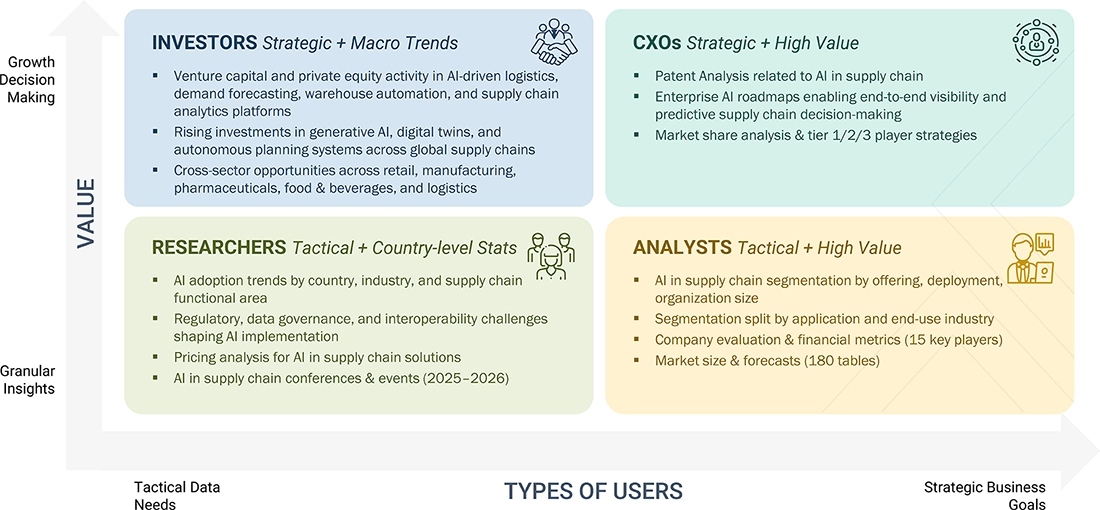
DELIVERED CUSTOMIZATIONS
We have successfully delivered the following deep-dive customizations:
| CLIENT REQUEST | CUSTOMIZATION DELIVERED | VALUE ADDS |
|---|---|---|
| Comprehensive Ecosystem Mapping of AI in Supply Chain | Conducted detailed mapping of the AI supply chain ecosystem covering AI software platforms, analytics engines, data providers, cloud infrastructure, system integrators, and logistics technology stakeholders across key industries | Delivers holistic clarity on ecosystem structure, interdependencies, and emerging growth areas, supporting informed market entry and expansion strategies |
| Competitive Benchmarking of AI Supply Chain Solution Providers | Evaluated leading AI vendors based on solution breadth, AI capabilities, deployment models, scalability, industry focus, regional presence, and customer adoption | Enhances competitive intelligence, enables objective vendor comparison, and supports strategic partnership, investment, and acquisition decisions |
| Application-Level and Industry-Specific Opportunity Assessment | Analyzed AI adoption and high-impact use cases across demand planning, inventory management, procurement, logistics, and risk management for retail, manufacturing, logistics, and e-commerce sectors | Identifies revenue-generating opportunities, prioritizes high-growth applications and industries, and sharpens go-to-market focus |
| Technology Roadmap and Adoption Maturity Analysis | Assessed the maturity of AI technologies, including machine learning, predictive analytics, generative AI, digital twins, and autonomous planning across supply chain functions | Supports technology investment planning and helps align AI strategies with long-term digital transformation and resilience goals |
| Cost Structure, Pricing, and Deployment Barrier Analysis | Examined solution pricing models, implementation costs, data integration challenges, cloud versus on-premises trade-offs, and workforce skill constraints impacting AI adoption | Enables optimized pricing strategies, smoother deployment planning, and proactive risk mitigation for AI-driven supply chain initiatives |
RECENT DEVELOPMENTS
- June 2026: Manhattan Associates introduced Manhattan Marketplace™, a shared ecosystem within ActivePlatform™ that enables customers and partners to discover and deploy intelligent agents, extensions and accelerators for supply chain and commerce operations. The marketplace uses Manhattan’s Agent Foundry™ to allow partners to build AI-powered solutions that connect natively with the company’s Active solutions while operating within established platform guardrails. The development expands Manhattan’s AI ecosystem and supports the deployment of agentic capabilities across supply chain workflows.
- June 2026: Oracle announced four new Fusion Agentic Applications within Oracle Fusion Cloud Supply Chain & Manufacturing (SCM), using coordinated teams of specialized AI agents to improve inventory visibility, supplier qualification, manufacturing efficiency and supply-chain execution. The applications are designed to reason, act proactively and progress routine work within established security and governance controls, while new inventory-optimization capabilities further support supply-chain resilience. The development strengthens Oracle’s AI-enabled SCM portfolio by moving AI from decision support toward automated execution.
- May 2026: SAP SE introduced its Autonomous Enterprise vision and SAP Autonomous Suite, embedding AI agents into core business applications across functions including supply chain, procurement and logistics. The company also introduced SAP Business AI Platform as a governed foundation for building and deploying enterprise AI, while Joule Assistants and specialized agents are designed to execute processes from end to end. The development advances SAP’s use of agentic AI in supply-chain operations by connecting AI-driven decision-making with enterprise data, workflows and execution.
- May 2026: Blue Yonder Group, Inc. launched new Cognitive Solutions for Space Planning and Production Planning and Scheduling, alongside new AI agents and enhancements across its planning, warehouse and commerce solutions at ICON 2026. The company also introduced an Inventory Ops Agent skill that supports supplier-order approvals and provides explainable insights into decisions, extending AI-driven automation across supply-chain workflows. The developments strengthen Blue Yonder’s AI portfolio for planning, execution and operational decision-making across the end-to-end supply chain.
- December 2025 : Anaplan, Inc. introduced a new suite of role-based AI agents, anchored by the Anaplan CoModeler, designed to embed predictive, generative, and agentic intelligence across enterprise planning workflows. CoModeler converted natural language into structured planning models, enabling rapid model creation, scenario testing, and governance, significantly accelerating decision-making and improving resilience across business functions.
Table of Contents
 Exclusive indicates content/data unique to MarketsandMarkets and not available with any competitors.
Methodology
The study utilized four major activities to estimate the AI in supply chain market size. Exhaustive secondary research was conducted to gather information on the market and its peer and parent markets. The next step was to validate these findings, assumptions, and sizing with industry experts across the value chain through primary research. Both top-down and bottom-up approaches were employed to estimate the total market size. Finally, market breakdown and data triangulation methods were utilized to estimate the market size for different segments and subsegments.
Secondary Research
In the secondary research process, various sources were used to identify and collect information on the AI in supply chain market for this study. Secondary sources for this research study include corporate filings (annual reports, investor presentations, and financial statements), trade, business, and professional associations, white papers, certified publications, articles by recognized authors, directories, and databases. The secondary data was collected and analyzed to determine the overall market size, further validated through primary research.
Primary Research
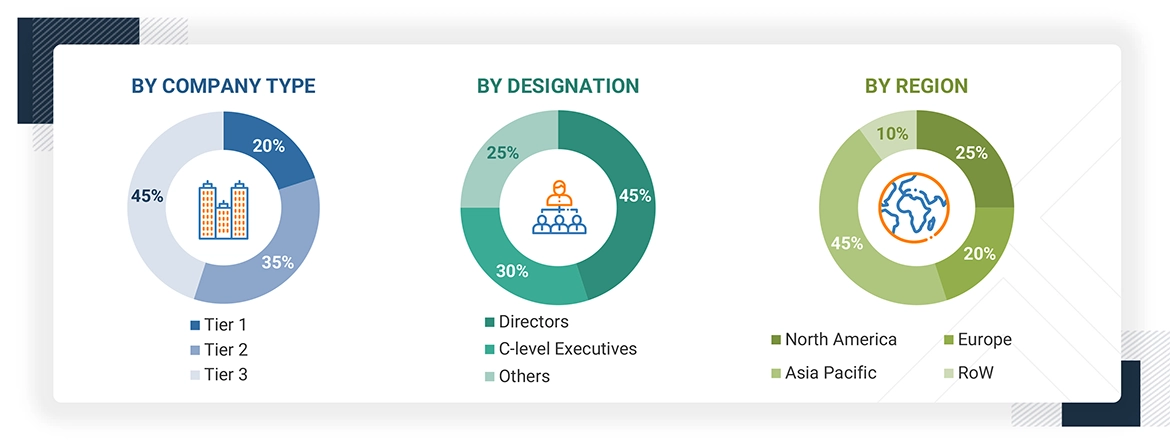
Primary interviews were conducted to gather insights on market statistics, revenue data, market breakdowns, size estimations, and forecasting. Additionally, primary research was used to comprehend the various technology, type, end use, and regional trends. Interviews with stakeholders from the demand side, including CIOs, CTOs, CSOs, and customer/end user installation teams using AI in supply chain market offerings and processes, were also conducted to understand their perspective on suppliers, products, component providers, and their current and future use of AI in supply chain market, which will impact the overall market. Several primary interviews were conducted across major countries in North America, Europe, Asia Pacific, and RoW.
To know about the assumptions considered for the study, download the pdf brochure
Market Size Estimation
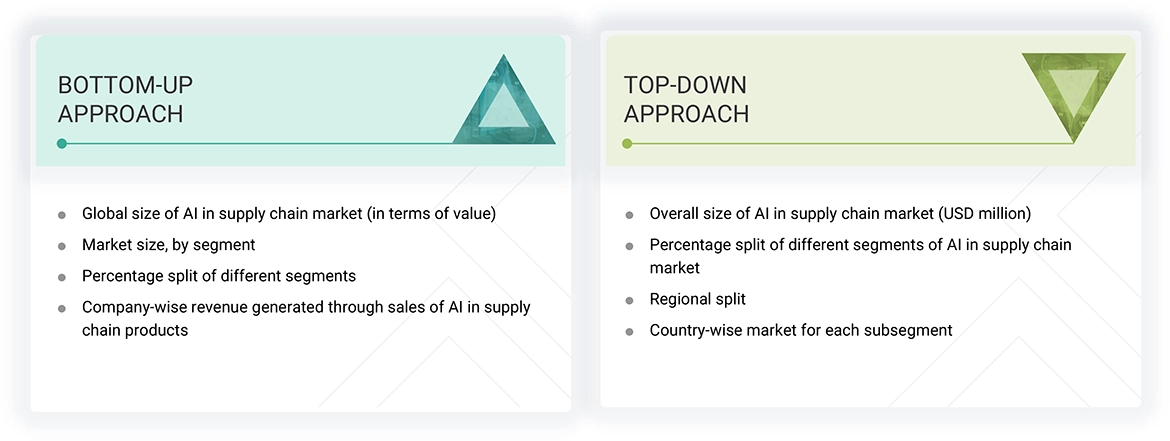
In the complete market engineering process, top-down and bottom-up approaches and several data triangulation methods have been used to estimate and forecast the overall market segments and subsegments listed in this report. Key players in the market have been identified through secondary research, and their market shares in the respective regions have been determined through primary and secondary research. This entire procedure includes the study of annual and financial reports of the top market players and extensive interviews for key insights (quantitative and qualitative) with industry experts (CEOs, VPs, directors, and marketing executives).
All percentage shares, splits, and breakdowns have been determined using secondary sources and verified through primary sources. All the parameters affecting the markets covered in this research study have been accounted for, viewed in detail, verified through primary research, and analyzed to obtain the final quantitative and qualitative data. This data has been consolidated and supplemented with detailed inputs and analysis from MarketsandMarkets and presented in this report. The following figure represents this study's overall market size estimation process.
Al in Supply Chain Market : Top-Down and Bottom-Up Approach
Data Triangulation
Once the overall size of the AI in supply chain market was determined using the methods described above, it was divided into multiple segments and subsegments. Market engineering was performed for each segment and subsegment using market breakdown and data triangulation methods, as applicable, to obtain accurate statistics. Various factors and trends from the demand and supply sides were studied to triangulate the data. The market was validated using both top-down and bottom-up approaches.
Market Definition
AI in supply chain refers to the integration of artificial intelligence to optimize and automate various processes involved in managing the flow of goods, services, and information. AI enhances supply chain operations by improving demand forecasting, inventory management, logistics, and production planning. It leverages machine learning (ML), predictive analytics, and automation to analyze real-time data, enabling accurate decision-making, identification of potential disruptions, and streamlined operations. AI helps companies increase efficiency, reduce costs, and improve flexibility in response to market demands and changes.
Key Stakeholders
- Semiconductor companies
- Technology providers
- Universities and research organizations
- System integrators
- AI-based supply chain solution providers
- AI platform providers
- Cloud service providers
- Technology providers
- AI system providers
Report Objectives
- To describe and forecast the AI in supply chain market size, by offering, deployment, organization size, application, end-use industry, and region, in terms of value
- To describe and forecast the market for various segments across four main regions, namely North America, Europe, Asia Pacific, and RoW, in terms of value
- To describe and forecast the market volume in terms of offering
- To strategically analyze micromarkets with regard to individual growth trends, prospects, and contributions to the markets
- To provide detailed information regarding drivers, restraints, opportunities, and challenges influencing market growth
- To analyze opportunities for stakeholders by identifying high-growth segments in the market
- To provide a detailed overview of the AI in supply chain market value chain
- To strategically analyze key technologies, average selling price trends, trends impacting customer business, ecosystem, regulatory landscape, patent landscape, Porter's five forces, import and export scenarios, trade landscape, key stakeholders and buying criteria, and case studies pertaining to the market under study
- To strategically profile key players in the AI in supply chain market and comprehensively analyze their market share and core competencies
- To analyze competitive developments, such as partnerships, acquisitions, expansions, collaborations, product launches, and research & development (R&D), in the AI in supply chain market
Available Customizations
With the given market data, MarketsandMarkets offers customizations according to the specific requirements of companies. The following customization options are available for the report:
Company Information
- Detailed analysis and profiling of additional market players (up to 5)
- Additional country-level analysis of the AI in supply chain market
Product Analysis
- The product matrix provides a detailed comparison of the product portfolio of each company in the AI in supply chain market.
Key Questions Addressed by the Report
What is the current size of the global AI in supply chain market?
The global AI in supply chain market is estimated to reach USD 13.93 billion in 2025. The market includes AI-powered software and services used for demand forecasting, inventory optimization, procurement, logistics, warehouse management, and supply chain risk management. (MarketsandMarkets)
What will be the projected size of the AI in supply chain market by 2032?
The AI in supply chain market is projected to reach USD 50.41 billion by 2032 from USD 13.93 billion in 2025, growing at a CAGR of approximately 20.2% during 2025–2032. (MarketsandMarkets)
What is the CAGR of the AI in supply chain market?
The global AI in supply chain market is expected to grow at a CAGR of 20.2% from 2025 to 2032 due to increasing adoption of AI-driven automation, predictive analytics, and intelligent decision-making platforms. (MarketsandMarkets)
What are the major growth drivers of the AI in supply chain industry?
Key growth drivers include increasing supply chain complexity, demand volatility, need for real-time visibility, growing adoption of cloud-based AI platforms, automation of logistics operations, predictive analytics, and the need for resilient supply networks. (MarketsandMarkets)
What are the major trends shaping the AI in supply chain market?
Major trends include AI-powered demand forecasting, autonomous supply chain operations, generative AI adoption, real-time supply chain visibility, digital twins, predictive maintenance, intelligent warehouse automation, and AI-based risk management systems. (MarketsandMarkets)
Which industries and applications are driving AI in supply chain adoption?
Major industries adopting AI in supply chains include retail, automotive, manufacturing, healthcare, consumer goods, food & beverage, logistics, and transportation. Key applications include demand planning & forecasting, warehouse and transportation management, inventory optimization, procurement, production planning, and supply chain risk management. (MarketsandMarkets)
Which companies are major players in the AI in supply chain market?
Leading companies include SAP SE, Oracle, Blue Yonder Group Inc., Manhattan Associates, Kinaxis Inc., IBM, Microsoft, Amazon Web Services (AWS), Anaplan, and Logility Supply Chain Solutions. These companies provide AI-enabled supply chain planning, analytics, automation, and cloud-based solutions. (MarketsandMarkets)
Which offering segment dominates the AI in supply chain market?
The software segment holds the largest market share due to increasing demand for AI-based analytics, planning, optimization, and decision-support platforms. AI supply chain software enables organizations to improve forecasting accuracy, inventory management, and logistics efficiency. (MarketsandMarkets)
Which region leads the global AI in supply chain market?
North America is expected to dominate the AI in supply chain market, accounting for an estimated 36.7% share in 2025, supported by advanced digital infrastructure, strong enterprise AI adoption, cloud investments, and the presence of major technology providers. Asia Pacific is expected to grow at the highest CAGR due to rapid industrialization, manufacturing expansion, e-commerce growth, and smart logistics adoption. (MarketsandMarkets)
What does the MarketsandMarkets AI in supply chain market report cover?
The report covers market size forecasts, competitive landscape, growth drivers, trends, opportunities, and challenges. It analyzes segments by offering (software, services), deployment (cloud, on-premises, hybrid), applications (demand planning & forecasting, warehouse & transportation management, supply chain risk management), organization size, end-use industry, and region. The report includes 280 pages and 180 market tables with analysis covering 2021–2032. (MarketsandMarkets)


Personalize This Research
- Triangulate with your Own Data
- Get Data as per your Format and Definition
- Gain a Deeper Dive on a Specific Application, Geography, Customer or Competitor
- Any level of Personalization
Let Us Help You
- What are the Known and Unknown Adjacencies Impacting the AI in Supply Chain Market
- What will your New Revenue Sources be?
- Who will be your Top Customer; what will make them switch?
- Defend your Market Share or Win Competitors
- Get a Scorecard for Target Partners

Custom Market Research Services
We Will Customise The Research For You, In Case The Report Listed Above Does Not Meet With Your Requirements
Get 10% Free CustomisationTESTIMONIALS

Tetsuya Ohhira
Business Development Manager-Technology Business
Nikon Corporation,
Leading Japanese MNC specializing in optics and imaging productswww.nikon.com
MarketsandMarkets™ response
is quick. Their attitude is flexible and positive. Analyst Insights are globally considered and
significant. Client Services quickly respond to our inquiry and demand. Their wide range of global
surveys help us make our strategic plan.
We hope Knowledge Store will be easier to search
for a report.
VP - Marketing & Business Development
Leading Provider of Process Control Solutions
We engaged with MarketsandMarkets on a study to perform an analysis and recommend a Go-To-Market strategy for metrology and process control in the semiconductor market. The study was tailored to our targets and needs with well-defined milestones. Our overall experience with the MarketsandMarkets team was very good throughout the project in all aspects including the analysis methodologies used, the quality and depth of primary and secondary data sets, the professionalism and flexibility of the team and the ability to meet the target schedule and milestones. We want to thank MarketsandMarkets team for a job well done.
- US AI in Supply Chain Market
- Canada AI in Supply Chain Market
- Mexico AI in Supply Chain Market
- Germany AI in Supply Chain Market
- UK AI in Supply Chain Market
- France AI in Supply Chain Market
- Italy AI in Supply Chain Market
- China AI in Supply Chain Market
- Japan AI in Supply Chain Market
- South Korea AI in Supply Chain Market
- India AI in Supply Chain Market
- Rest Of Europe AI in Supply Chain Market
- Rest Of Asia Pacific AI in Supply Chain Market
- GCC AI in Supply Chain Market
Growth opportunities and latent adjacency in AI in Supply Chain Market






Dylan
Apr, 2026
Can the report help in scenario planning, for example, modeling supply chain resilience under different economic conditions, global trade policies, or AI adoption rates.
Tyler
Apr, 2026
Is it possible to customize the report with additional insights specific to our niche, such as regional logistics hubs, last-mile delivery AI solutions, or industry-specific predictive analytics.