Internet of Robotic Things Market (IoRT) by Component (Sensor, Power, Control), Service (Professional, Managed), Platform (Device, Application, Network), Software (Analytics, Data, Security, Monitoring, Bandwidth), Application - Global Growth Driver and Industry Forecast to 2035


Internet of Robotic Things Market Summary
The global Internet of Robotic Things Market is transitioning from connected automation toward intelligent, autonomous robotic ecosystems that can sense, communicate, analyze, and act with limited human intervention. The market is estimated at approximately USD 40-50 billion in 2025 and is projected to reach roughly USD 350-450 billion by 2035, expanding at an estimated 23-26% CAGR over the forecast period. The broad range reflects differences in market definitions, particularly whether connected robotic hardware, software, managed services, cloud platforms, and enabling infrastructure are included. Independent market studies currently place the market on a high-growth trajectory; one recent estimate values the market at about USD 62 billion in 2024 and projects it to exceed USD 250 billion by 2030, while another 2025-2035 assessment forecasts growth from roughly USD 42 billion to nearly USD 400 billion.
The Internet of Robotic Things, commonly referred to as IoRT, represents the convergence of robotics, Internet of Things (IoT), artificial intelligence (AI), cloud computing, sensors, connectivity, and data analytics. Unlike conventional robots that primarily execute predefined instructions, IoRT-enabled machines can collect environmental and operational data, exchange information with other systems, receive software updates, and use analytics to adapt their behavior. AI, edge computing, 5G, digital twins, machine learning, and automation are therefore becoming fundamental components of the market. Recent research describes this convergence as an emerging foundation for connected robotics and physical AI, with edge-based small language models and cloud-based large language models increasingly being investigated for distributed robotic decision-making.
Key Market Trends & Insights
North America remains a leading regional market, supported by advanced industrial automation, substantial enterprise technology spending, established cloud infrastructure, and strong investment in AI and robotics. The United States has a particularly developed ecosystem spanning industrial robots, autonomous mobile robots, logistics automation, cloud platforms, semiconductor technologies, and AI computing.
Asia Pacific is expected to record the fastest growth. China, Japan, South Korea, and other manufacturing-intensive economies are investing heavily in industrial automation, smart factories, logistics robotics, connected production systems, and AI-enabled machines. The combination of labor constraints, manufacturing modernization, e-commerce growth, and government-backed digitalization programs is strengthening regional demand.
Industrial and manufacturing applications remain dominant, as factories increasingly connect robots with sensors, manufacturing execution systems, enterprise software, industrial networks, and predictive-maintenance platforms. IoRT enables robots to become active participants in connected production environments rather than isolated automation assets.
AI-enabled autonomous robotics is becoming a major technology trend. Machine learning, computer vision, reinforcement learning, generative AI, and increasingly physical-AI architectures are allowing robotic systems to interpret environments and perform more flexible tasks. The direction of technology development is moving from programmed automation toward goal-oriented autonomy.
Cloud-to-edge architectures are reshaping IoRT deployment. Cloud platforms provide fleet-level analytics, model management, data storage, and centralized orchestration, while edge computing supports low-latency perception and control. This combination is particularly important for safety-sensitive industrial and mobile applications where sending every decision to a remote cloud introduces latency.
Cybersecurity and interoperability are becoming strategic priorities. Connected robots create additional network endpoints and exchange operational data across enterprise systems. As IoRT deployments scale, organizations increasingly require secure communications, device identity, access controls, software lifecycle management, and interoperable standards.
Market Size & Forecast
- Base year market size: Approximately USD 40-50 billion in 2025, covering connected robotic systems, IoT-enabled robotics platforms, software, connectivity, analytics, and associated services.
- Forecast value by 2035: Approximately USD 350-450 billion, supported by expanding industrial automation, autonomous mobile robotics, intelligent logistics, healthcare robotics, and AI-enabled machines.
- CAGR: Approximately 23-26% during the forecast period.
- Growth factors: AI adoption, Industry 4.0, IoT connectivity, labor shortages, e-commerce automation, cloud and edge computing, 5G connectivity, predictive maintenance, and increasing demand for autonomous operations are expected to accelerate market expansion. Independent research also identifies IoRT's role in manufacturing, logistics, healthcare, and defense as a major growth catalyst.
Internet of Robotic Things Market Top 10 key takeaway
- The global Internet of Robotic Things Market is projected to expand at an estimated 23-26% CAGR through 2035.
- Market value is expected to increase from approximately USD 40-50 billion in 2025 to around USD 350-450 billion by 2035.
- North America is expected to remain a leading market because of advanced robotics, AI infrastructure, and industrial automation.
- Asia Pacific is projected to be the fastest-growing region, driven by manufacturing modernization and increasing robotics deployment.
- Manufacturing is expected to remain a major application area for IoRT technologies.
- AI is transforming connected robots from programmed machines into adaptive and increasingly autonomous systems.
- Edge computing and 5G are improving real-time communication and robotic decision-making.
- Cloud platforms are enabling centralized fleet management, analytics, software updates, and predictive maintenance.
- Logistics and e-commerce are creating strong demand for connected autonomous mobile robots.
- Cybersecurity, interoperability, safety, and data governance will become increasingly important as robotic fleets become connected at scale.
Product Insights
Connected industrial robots and autonomous mobile robots are expected to represent leading product categories within the Internet of Robotic Things Market. Industrial robotic arms, collaborative robots, autonomous mobile robots, warehouse robots, inspection robots, and service robots increasingly contain sophisticated sensors, communication modules, processors, and software that allow them to interact with surrounding infrastructure. The growth of smart manufacturing is particularly important because modern production environments require robots to exchange information with machines, production-management systems, inventory platforms, and human operators.
Autonomous mobile robots are gaining substantial attention because they can dynamically navigate warehouses, factories, hospitals, distribution centers, and other environments. Instead of following fixed routes, connected AMRs can use sensor information, mapping systems, cloud-based fleet management, and AI-based navigation to adjust their movement according to changing conditions. This capability makes them particularly suitable for environments where operational requirements change frequently.
Collaborative robots are another important product category. Cobots can operate near human workers and support assembly, material handling, inspection, packaging, and other repetitive tasks. IoRT connectivity can enhance these systems by enabling centralized monitoring, remote diagnostics, workload optimization, and integration with production software.
Emerging product categories include connected humanoid robots, quadruped inspection robots, agricultural robots, healthcare robots, delivery robots, drones, and robotic fleets. The rapid development of physical AI is expected to broaden this product landscape further. Recent developments in AI-enabled processors and autonomous robotics demonstrate the industry's shift toward machines capable of determining how to accomplish objectives rather than simply following fixed instructions.
Technology / Component Insights (Rename based on keyword if needed)
The technology architecture of the Internet of Robotic Things Market consists of sensors, actuators, processors, connectivity modules, robotic operating systems, cloud platforms, edge-computing infrastructure, AI algorithms, analytics software, and security technologies. Sensors provide the raw information required for perception, while actuators translate robotic decisions into physical movement. Connectivity allows robots to communicate with other machines, applications, and cloud environments.
AI is becoming the intelligence layer of IoRT. Computer vision enables object recognition and environment understanding, machine learning supports predictive analytics, and reinforcement learning can improve decision-making in dynamic environments. Generative AI and large language models are also being explored as interfaces through which robots can interpret higher-level instructions. Research into AI-IoT-robotics integration highlights the emerging combination of edge small language models and cloud large language models to support distributed robotic cognition.
IoT provides the connectivity and sensing foundation. Connected sensors can monitor temperature, vibration, location, power consumption, equipment health, production conditions, and environmental changes. This information can be shared across enterprise systems, enabling predictive maintenance and real-time operational visibility.
Cloud computing supports fleet-level management, data aggregation, model training, remote monitoring, and software deployment. However, edge computing is becoming increasingly important because robots require rapid responses for navigation, collision avoidance, manipulation, and safety. Hybrid architectures that combine cloud intelligence with local edge processing are therefore expected to gain market share.
5G and other advanced wireless technologies can further improve robotic connectivity by supporting higher bandwidth, lower latency, and greater device density. Future innovation is likely to focus on secure machine-to-machine communication, digital twins, swarm robotics, AI-powered perception, autonomous fleet orchestration, and interoperable robotic platforms.
Application Insights
Manufacturing is expected to remain one of the largest application segments in the Internet of Robotic Things Market. Smart factories increasingly require robots to interact with production equipment, industrial IoT sensors, enterprise software, digital twins, and human workers. Connected robotics can support predictive maintenance, automated inspection, flexible assembly, material movement, quality control, and production optimization.
Logistics and warehousing represent another high-growth application. The expansion of e-commerce has increased pressure on distribution centers to process higher order volumes with greater speed and accuracy. IoRT-enabled autonomous mobile robots can transport goods, coordinate fleet movements, optimize routes, and share operational data with warehouse management systems. This allows businesses to scale automation while maintaining visibility across large facilities.
Healthcare is expected to offer substantial long-term opportunities. Connected robots can support hospital logistics, disinfection, medication delivery, rehabilitation, telepresence, and selected clinical workflows. As healthcare providers face workforce constraints and rising operational complexity, robotic automation can help reduce repetitive workloads.
Agriculture is also emerging as an IoRT application through autonomous harvesting, crop monitoring, precision spraying, and field navigation. Defense and security organizations are adopting connected unmanned systems for surveillance, inspection, reconnaissance, and hazardous-environment operations.
Future applications are likely to extend into construction, mining, energy infrastructure, smart buildings, retail, hospitality, and domestic environments. The common factor across these sectors is the need for machines that can sense conditions, communicate data, and autonomously execute physical tasks.
Regional Insights
North America is expected to remain a leading regional market for the Internet of Robotic Things. The United States has strong capabilities in AI, cloud computing, autonomous systems, industrial automation, logistics technology, and robotics. Enterprises are increasingly combining robotic hardware with data platforms and AI infrastructure, creating a favorable environment for IoRT adoption. The region's mature e-commerce and advanced manufacturing sectors further support demand for connected robotic fleets.
Europe is expected to maintain a significant position due to its strong industrial automation ecosystem, automotive manufacturing base, engineering expertise, and emphasis on smart manufacturing. Germany remains a major center for industrial robotics and automation, while France and other European markets are expanding investment in AI, warehouse automation, healthcare robotics, and digital factories. European adoption is also strongly influenced by safety, data protection, cybersecurity, and responsible AI requirements.
Asia Pacific is forecast to experience the fastest growth through 2035. China, Japan, South Korea, and other economies are accelerating investment in factory automation, logistics robotics, semiconductor manufacturing, automotive production, and smart infrastructure. Government-supported digital manufacturing initiatives, demographic changes, and rising demand for automation are supporting large-scale deployment.
- North America is expected to remain a major IoRT market through 2035.
- Asia Pacific is projected to achieve the fastest growth.
- Europe will benefit from advanced manufacturing and Industry 4.0 investment.
- China and Japan are expected to remain important centers of robotic deployment.
- Logistics, manufacturing, and healthcare will create opportunities across all major regions.
Country-Specific Market Trends
China is expected to record strong growth in the Internet of Robotic Things Market as manufacturers increase investments in intelligent factories, automated warehouses, industrial robots, and AI-enabled production systems. Government initiatives supporting advanced manufacturing and robotics are reinforcing private-sector investment. China's large electronics, automotive, semiconductor, logistics, and e-commerce sectors provide a broad customer base for IoRT solutions. The country is expected to record approximately 25-28% CAGR during the forecast period.
Japan is likely to remain a major robotics market because of its long-standing industrial robotics expertise, advanced manufacturing base, aging population, and strong demand for automation. Connected robots are increasingly relevant in manufacturing, healthcare, logistics, and service environments. Japan is expected to record approximately 20-23% CAGR, with IoT and AI increasingly integrated into established robotic infrastructure.
In North America, the United States is expected to remain the largest country market, supported by AI investment, warehouse automation, autonomous robotics, defense technology, and smart manufacturing. Canada is expected to experience growing adoption across manufacturing, logistics, mining, and healthcare, while Mexico is benefiting from industrial automation associated with manufacturing expansion and supply-chain localization. Major North American markets are expected to record approximately 21-24% CAGR collectively.
Germany is expected to lead European adoption because of its automotive, machinery, electronics, and industrial automation industries. France is also expanding investment in AI, robotics, logistics automation, and smart manufacturing. Germany is expected to record approximately 19-22% CAGR, while France is likely to remain within a similar high-growth range as businesses modernize production and logistics infrastructure.
- China is expected to be one of the fastest-growing major national IoRT markets.
- Japan will leverage its established robotics ecosystem and automation expertise.
- United States will remain a major center for AI-enabled and cloud-connected robotics.
- Germany will benefit from Industry 4.0 and advanced manufacturing investment.
- France, Canada, and Mexico offer expanding opportunities across industrial and service robotics.
Key Internet of Robotic Things Market Company Insights
The competitive environment includes established robotics manufacturers, industrial automation companies, cloud and networking providers, semiconductor companies, and emerging AI-robotics developers. Major companies associated with the Internet of Robotic Things ecosystem include ABB, FANUC, KUKA, Yaskawa Electric, Siemens, Rockwell Automation, Cisco, NVIDIA, Intel, Microsoft, iRobot, Universal Robots, and Locus Robotics. Industry research also identifies companies such as Bosch, Honeywell, Omron, Panasonic, Samsung, Hyundai, Tesla, and ST Engineering among participants in the broader IoRT landscape.
ABB, FANUC, KUKA, Yaskawa, and Universal Robots are strongly positioned around industrial automation, collaborative robotics, and connected manufacturing. Their strategies increasingly involve software integration, remote monitoring, digital manufacturing, and data-driven optimization. Siemens and Rockwell Automation provide broader industrial automation platforms that can connect robots with production systems and enterprise infrastructure.
NVIDIA and Intel are strengthening the computing layer required for AI-enabled robotics. NVIDIA's robotics strategy centers on accelerated computing, simulation, perception, and physical AI, while Intel continues to participate in edge computing and embedded processing for intelligent machines. Cloud and enterprise technology companies such as Microsoft and Cisco contribute through cloud infrastructure, connectivity, cybersecurity, analytics, and enterprise integration.
The competitive landscape is also expanding beyond conventional industrial robotics. Companies developing autonomous mobile robots, humanoids, quadrupeds, and AI foundation models are increasingly entering the market. Recent investment activity around Chinese robotics companies illustrates the growing commercial importance of embodied AI and connected autonomous machines.
- Leading robotics companies are expanding from hardware into software and connected services.
- AI computing is becoming a critical competitive layer in IoRT.
- Industrial automation vendors are integrating robots with broader digital-factory platforms.
- Cloud, connectivity, and cybersecurity companies are becoming strategic ecosystem partners.
- Emerging physical-AI companies are creating new competition in autonomous and humanoid robotics.
Recent Developments
The Internet of Robotic Things Market is experiencing rapid innovation around physical AI and autonomous decision-making. Semiconductor companies are developing processors specifically optimized for robotics, combining AI acceleration with real-time processing for industrial and autonomous applications. AMD, for example, has recently positioned its embedded AI processors for robotics and other physical-AI workloads, reflecting the industry's transition toward robots that can determine how to achieve objectives rather than merely execute predefined instructions.
Another significant development is the integration of generative AI and large language models with robotic operating platforms. Research published in 2025 explored the combination of LLMs, generative AI, edge computing, IoT architectures, and 5G to improve robotic adaptability across manufacturing, healthcare, and service applications.
The third major development is increased investment in humanoid and embodied-AI robotics. In 2026, Chinese robotics company Unitree attracted substantial investor attention with its Shanghai Stock Exchange IPO, highlighting the accelerating commercialization of humanoid and quadruped robotics. The development indicates that connected robotics is increasingly moving beyond traditional factory robots toward general-purpose machines capable of operating across varied environments.
Market Segmentation
The Internet of Robotic Things Market can be segmented by product into industrial robots, collaborative robots, autonomous mobile robots, service robots, humanoid robots, drones, and other connected robotic systems. Industrial and mobile robots currently represent major revenue contributors, while humanoid and service robots are expected to experience faster percentage growth as AI and physical intelligence improve.
By technology/component, the market includes sensors, actuators, processors, communication modules, control systems, IoT platforms, AI software, cloud platforms, edge-computing systems, cybersecurity solutions, and analytics software. Sensors and connectivity provide the basic IoRT infrastructure, while AI, cloud, and edge platforms increasingly determine system intelligence and operational value.
By application, the market spans manufacturing, logistics and warehousing, healthcare, automotive, aerospace and defense, food and beverages, agriculture, energy, retail, hospitality, and other sectors. Manufacturing is expected to remain a major revenue contributor, while logistics, healthcare, and service applications are projected to achieve strong growth.
By region, the market covers North America, Europe, Asia Pacific, Latin America, and the Middle East & Africa. North America is expected to remain a leading market, Europe will benefit from industrial automation, and Asia Pacific is forecast to deliver the fastest expansion.
- Industrial robots and autonomous mobile robots currently form major product categories.
- AI software, connectivity, sensors, and edge computing are critical technology components.
- Manufacturing remains a leading application, while logistics and healthcare offer strong growth potential.
- Asia Pacific is expected to achieve the fastest regional growth.
- Emerging humanoid and physical-AI systems could significantly expand the addressable market by 2035.
Conclusion
The Internet of Robotic Things Market is positioned to become a central component of the next generation of intelligent automation. Through 2035, the convergence of robotics, AI, IoT, cloud computing, edge intelligence, 5G, digital twins, and automation is expected to transform robots from isolated machines into interconnected physical agents capable of sensing, reasoning, communicating, and acting.
The market's potential expansion from approximately USD 40-50 billion in 2025 to USD 350-450 billion by 2035 reflects the increasing strategic importance of connected robotics across manufacturing, logistics, healthcare, agriculture, defense, and service industries. AI will be the most significant catalyst because it is enabling robots to process unstructured information, recognize objects and environments, learn from experience, and respond to changing operational conditions.
For businesses, the strategic opportunity extends beyond purchasing robotic equipment. Successful IoRT strategies will increasingly depend on connecting robotic fleets with enterprise software, IoT sensors, cloud and edge infrastructure, AI models, cybersecurity systems, and real-time analytics. Organizations that build these integrated ecosystems can achieve higher equipment utilization, predictive maintenance, improved workflow visibility, and more flexible automation.
At the same time, cybersecurity, safety, interoperability, data governance, and workforce adaptation will determine how quickly IoRT can scale. As physical AI becomes more capable, businesses will need robust governance frameworks for machines that operate with increasing autonomy. Overall, the Internet of Robotic Things Market offers substantial growth potential through 2035 and is likely to become strategically important for companies seeking resilient, intelligent, and highly automated operations.
FAQs
1. What is the estimated Internet of Robotic Things Market size?
The global Internet of Robotic Things Market is estimated at approximately USD 40-50 billion in 2025. Depending on market scope and the inclusion of robotics hardware, software, services, and enabling infrastructure, published estimates vary considerably. Recent research places the market at more than USD 60 billion in 2024, while another 2025-2035 assessment estimates approximately USD 42 billion in 2025.
2. What is the expected growth rate of the Internet of Robotic Things Market?
The market is expected to grow at approximately 23-26% CAGR through 2035. High growth is being driven by industrial automation, AI, IoT, autonomous mobile robotics, cloud computing, edge computing, and increasing demand for connected robotic fleets.
3. What are the key drivers of the Internet of Robotic Things Market?
Major drivers include Industry 4.0, AI-enabled robotics, labor shortages, e-commerce and warehouse automation, predictive maintenance, IoT connectivity, 5G, cloud platforms, edge computing, and demand for real-time operational intelligence. The convergence of AI, IoT, and robotics is increasingly enabling autonomous and context-aware machines.
4. Which region is leading the Internet of Robotic Things Market?
North America is expected to remain a leading regional market because of its advanced robotics ecosystem, AI investment, cloud infrastructure, industrial automation, and logistics technology. Asia Pacific is projected to record the fastest growth, driven by manufacturing modernization, government digitalization initiatives, and expanding robotics adoption.
5. Who are the key companies in the Internet of Robotic Things Market?
Major companies participating in the IoRT ecosystem include ABB, FANUC, KUKA, Yaskawa Electric, Siemens, Rockwell Automation, Cisco, NVIDIA, Intel, Microsoft, iRobot, Universal Robots, and Locus Robotics. The competitive landscape is expanding as established automation companies increasingly integrate AI and IoT while emerging robotics firms develop physical-AI and autonomous systems.
To speak to our analyst for a discussion on the above findings, click Speak to Analyst
 Exclusive indicates content/data unique to MarketsandMarkets and not available with any competitors.
Table of Contents
1 Introduction (Page No. - 15)
1.1 Objectives of the Study
1.2 Market Definition
1.3 Scope of the Study
1.3.1 Markets Covered
1.3.2 Geographic Scope
1.3.3 Years Considered for the Study
1.4 Currency
1.5 Limitations
1.6 Stakeholders
2 Research Methodology (Page No. - 19)
2.1 Introduction
2.1.1 Secondary Data
2.1.1.1 Key Data From Secondary Sources
2.1.2 Primary Data
2.1.2.1 Key Data From Primary Sources
2.1.2.2 Key Industry Insights
2.1.2.3 Breakdown of Primaries
2.2 Market Size Estimation
2.2.1 Bottom-Up Approach
2.2.2 Top-Down Approach
2.3 Market Breakdown and Data Triangulation
2.4 Research Assumptions
3 Executive Summary (Page No. - 28)
4 Premium Insights (Page No. - 35)
4.1 Internet of Robotic Things Market Opportunities
4.2 Internet of Robotic Things Market, 2015
4.3 Geographic Snapshot of the Market
4.4 Market, By Service, 2016–2022 (USD Million)
4.5 Market, By Collaborative Industrial Robot Application, 2014–2022, (USD Million)
5 Market Overview (Page No. - 40)
5.1 Introduction
5.2 Market Segmentation
5.2.1 By Smart Robot Component
5.2.2 By Software
5.2.3 By Platform
5.2.4 By Service
5.2.5 By Application
5.3 Market Dynamics
5.3.1 Drivers
5.3.1.1 Adoption By E-Commerce Industry
5.3.1.2 Increasing Application Areas Owing to Integration of Robots With Various Technologies
5.3.1.3 Short Payback Period and ROI
5.3.2 Restraints
5.3.2.1 High Cost of Research & Development
5.3.2.2 Long Process of New Product Development
5.3.3 Opportunities
5.3.3.1 Increasing Demand of Robots in Education Sector
5.3.4 Challenges
5.3.4.1 Implementation of High-Quality and Reliable Robots and Testing Them With Suitable Solutions
5.3.4.2 Data Security and Interoperability Issues
6 Industry Trends (Page No. - 48)
6.1 Introduction
6.2 Value Chain Analysis
6.3 Industry Trends
6.4 Porter’s Five Forces Analysis
6.4.1 Threat of New Entrants
6.4.2 Threat 0f Substitutes
6.4.3 Bargaining Power of Buyers
6.4.4 Bargaining Power of Suppliers
6.4.5 Degree of Competitions
7 Market, By Smart Robot Component (Page No. - 60)
7.1 Introduction
7.2 Sensors
7.3 Actuators
7.4 Power Sources
7.5 Control Systems
7.6 Others
8 Market, By Software (Page No. - 65)
8.1 Introduction
8.2 Real-Time Streaming Analytics
8.3 Security Solutions
8.4 Data Management
8.5 Remote Monitoring Systems
8.6 Network Bandwidth Management
9 Market, By Platform (Page No. - 71)
9.1 Introduction
9.2 Device Management Platform
9.3 Application Management Platform
9.4 Network Management Platform
10 Market, By Service (Page No. - 75)
10.1 Introduction
10.2 Professional Services
10.2.1 Deployment and Integration
10.2.2 Support and Maintenance
10.2.3 Consulting Services
10.3 Managed Services
11 Market, By Application (Page No. - 80)
11.1 Introduction
11.2 Collaborative Industrial Robots
11.2.1 Automotive
11.2.2 Electronics
11.2.3 Food & Beverages
11.3 Service Robots
11.3.1 Personal Services
11.3.1.1 Domestic
11.3.1.1.1 Vacuum & Floor Cleaning
11.3.1.1.2 Lawn Mowing
11.3.1.1.3 Pool Cleaning
11.3.1.2 Entertainment
11.3.1.2.1 Smart Toys
11.3.1.2.2 Robotic Pets
11.3.1.3 Others
11.3.1.3.1 Elderly & Handicap Assistance
11.3.1.3.2 Home Security & Surveillance
11.3.2 Professional Services
11.3.2.1 Defense & Security
11.3.2.1.1 Demining
11.3.2.1.2 Fire & Bomb Fighting
11.3.2.2 Field
11.3.2.2.1 Agriculture & Forestry
11.3.2.2.2 Milking Robots
11.3.2.3 Medical
11.3.2.3.1 Rehabilitation Systems
11.3.2.3.2 Others (Assistive Robots)
11.3.2.4 Underwater
11.3.2.5 Logistics
11.3.2.5.1 Factory Logistics
11.3.2.5.2 Service Logistics
11.3.2.6 Telepresence
11.3.2.6.1 Business
11.3.2.6.2 Healthcare
11.3.2.6.3 Personal
11.3.2.7 Inspection & Maintenance
11.3.2.7.1 Facilities & Plants
11.3.2.7.2 Tank, Tubes, Pipes, and Sewers
11.3.2.7.3 Ships & Turbines
11.3.2.7.4 Others (Infrastructure Construction)
11.3.2.8 Others
12 Market, By Geography (Page No. - 113)
12.1 Introduction
12.2 North America
12.2.1 U.S.
12.2.2 Canada
12.2.3 Mexico
12.3 Europe
12.3.1 U.K.
12.3.2 Germany
12.3.3 France
12.3.4 Rest of Europe
12.4 APAC
12.4.1 India
12.4.2 China
12.4.3 Japan
12.4.4 South Korea
12.4.5 Rest of APAC
12.5 RoW
12.5.1 Middle East & Africa
12.5.2 South America
13 Competitive Landscape (Page No. - 127)
13.1 Overview
13.2 Key Players in Internet of Robotic Things Market
13.3 Competitive Situation and Trends
13.3.1 Partnership and Collaborations
13.3.2 New Product Development/ Launch
13.3.3 Acquisitions
13.3.4 Expansions, Investment, Restructuring
13.3.5 Agreements and Contracts
14 Company Profiles (Page No. - 135)
(Company at A Glance, Recent Financials, Products & Services, Strategies & Insights, & Recent Developments)*
14.1 Introduction
14.2 ABB Ltd. (Switzerland)
14.3 Kuka AG (Germany)
14.4 Irobot Corporation (U.S.)
14.5 Fanuc Corporation (Japan)
14.6 Amazon.Com, Inc. (U.S.)
14.7 Google, Inc (U.S.)
14.8 Cisco Systems, Inc. (U.S.)
14.9 Intel Corporation (U.S.)
14.10 Honda Motors Co., Ltd (Japan)
14.11 Yaskawa Electric Corporation (Japan)
14.12 Northrop Grumman Corporation (U.S.)
14.13 Aethon Inc. (U.S.)
14.14 Blufin Robotics Corporation (U.S.)
14.15 Omron Adept Technologies, Inc. (U.S.)
14.16 Geckosytems International Corporation (U.S.)
14.17 ECA Group (France)
14.18 Robert Bosch GmbH (Germany)
14.19 Samsung Electronics Co., Ltd (South Korea)
*Details on Company at A Glance, Recent Financials, Products & Services, Strategies & Insights, & Recent Developments Might Not Be Captured in Case of Unlisted Companies.
15 Appendix (Page No. - 180)
15.1 Insights of Industry Experts
15.2 Discussion Guide
15.3 Knowledge Store: Marketsandmarkets’ Subscription Portal
15.4 Introducing RT: Real-Time Market Intelligence
15.5 Available Customizations
15.6 Related Report
List of Tables (69 Tables)
Table 1 Internet of Robotic Things Market, By Smart Robot Component, 2014–2022, (USD Million)
Table 2 Market for Smart Robot Components, By Geography (USD Million)
Table 3 Market, By Software, 2014–2022, (USD Million)
Table 4 Internet of Robotic Things Market for Software, By Geography (USD Million)
Table 5 Market, By Platform, 2014–2022, (USD Million)
Table 6 Market for Platform, By Geography (USD Million)
Table 7 Internet of Robotic Things Market, By Service, 2014–2022, (USD Million)
Table 8 Market for Services, By Geography (USD Million)
Table 9 Market, By Professional Service, 2014–2022, (USD Million)
Table 10 Market, By Application, 2014–2022, (USD Million)
Table 11 Market for Collaborative Industrial Robots, By Application, 2014–2022, (USD Million)
Table 12 Market for Collaborative Industrial Robots, By Region (USD Million)
Table 13 Internet of Robotic Things Market for Service Robots, By Application, 2014–2022, (USD Million)
Table 14 Market for Personal Services, By Application, 2014–2022, (USD Million)
Table 15 Market for Personal Services, By Region (USD Million)
Table 16 Market for Domestic Applications, By Type, 2014–2022, (USD Million)
Table 17 Market for Domestic Applications, By Region (USD Million)
Table 18 Market for Vacuum & Floor Cleaning Robots, By Region (USD Million)
Table 19 Market for Lawn Mowing Robots, By Region (USD Million)
Table 20 Market for Pool Cleaning Robots, By Region (USD Million)
Table 21 Internet of Robotic Things Market for Entertainment Applications, By Type, 2014–2022, (USD Million)
Table 22 Market for Entertainment Applications, By Region (USD Million)
Table 23 Market for Smart Toys, By Region (USD Million)
Table 24 Market for Robotic Pets, By Region (USD Million)
Table 25 Internet of Robotic Things Market for Other Applications, By Type, 2014—2022, (USD Million)
Table 26 Market for Other Applications, By Region (USD Million)
Table 27 Market for Elderly & Handicap Assistance Applications, By Region (USD Million)
Table 28 Market for Home Security & Surveillance Applications, By Region (USD Million)
Table 29 Market for Professional Services, By Application, 2014–2022, (USD Million)
Table 30 Market for Professional Services, By Region (USD Million)
Table 31 Internet of Robotic Things Market for Defense Applications, By Type, 2014–2022, (USD Million)
Table 32 Market for Defense Applications, By Region (USD Million)
Table 33 Market for Demining Applications, By Region (USD Million)
Table 34 Market for Fire & Bomb Fighting Applications, By Region (USD Million)
Table 35 Market for Field Applications, By Type, 2014–2022, (USD Million)
Table 36 Market for Field Applications, By Region (USD Million)
Table 37 Market for Agriculture & Forestry Applications, By Region (USD Million)
Table 38 Market for Milking Robots Applications, By Region (USD Million)
Table 39 Market for Medical Applications, By Type, 2014–2022, (USD Million)
Table 40 Internet of Robotic Things Market for Medical Applications, By Region (USD Million)
Table 41 Market for Rehabilitation Systems, By Region (USD Million)
Table 42 Market for Other Medical Applications, By Region (USD Million)
Table 43 Market for Underwater Applications, By Region (USD Million)
Table 44 Market for Logistics Applications, By Type, 2014–2022, (USD Million)
Table 45 Market for Logistics Applications, By Region (USD Million)
Table 46 Internet of Robotic Things Market for Factory Logistics Applications, By Region (USD Million)
Table 47 Market for Service Logistics Applications, By Region (USD Million)
Table 48 Market for Telepresence Applications, By Type, 2014–2022, (USD Million)
Table 49 Market for Telepresence Applications, By Region (USD Million)
Table 50 Internet of Robotic Things Market for Business Applications, By Region (USD Million)
Table 51 Market for Healthcare Applications, By Region (USD Million)
Table 52 Market for Personal Applications, By Region (USD Million)
Table 53 Market for Inspection & Maintenance Applications, By Type, 2014–2022, (USD Million)
Table 54 Market for Inspection & Maintenance Applications, By Region (USD Thousand)
Table 55 Market for Facilities & Plants, By Region (USD Thousand)
Table 56 Internet of Robotic Things Market for Tank, Tubes, Pipes, & Sewers, By Region (USD Thousand)
Table 57 Market for Ships & Turbines , By Region (USD Thousand)
Table 58 Market for Other Applications, By Region (USD Thousand)
Table 59 Market for Others Professional Applications, By Region (USD Million)
Table 60 Internet of Robotic Things Market, By Region, 2014–2022, (USD Million)
Table 61 Market in North America, By Country, 2014–2022, (USD Million)
Table 62 Market in Europe, By Country, 2014–2022, (USD Million)
Table 63 Market in APAC, By Country, 2014–2022, (USD Million)
Table 64 Internet of Robotic Things Market in RoW, By Region, 2014–2020, (USD Million)
Table 65 Partnerships and Collaborations, 2015–2016
Table 66 New Product Development/ Launch
Table 67 Aquisitions
Table 68 Expansions, Investment, Restructuring 2014–2016
Table 69 Agreements and Contracts, 2014–2016
List of Figures (61 Figures)
Figure 1 Market Segmentation
Figure 2 Internet of Robotic Things Market: Research Design
Figure 3 Market Size Estimation Methodology: Bottom-Up Approach
Figure 4 Internet of Robotic Things Market Size Estimation Methodology: Top-Down Approach
Figure 5 Market Breakdown and Data Triangulation
Figure 6 Services Segment of the IORT Market is Expected to Grow at the Highest Rate Between 2016 and 2022
Figure 7 Sensors Expected to Register Highest Growth During the Forecast Period in the IORT Market for Smart Robot Components
Figure 8 Security Solution Segment Expected to Grow at the Highest CAGR During the Forecast Period in the IORT Market for Software
Figure 9 Devices Management Platform Expected to Grow at the Highest Rate During the Forecast Period in the IORT Market for Platforms
Figure 10 Collaborative Industrial Robot Application to Grow at A Higher Rate During the Forecast Period
Figure 11 North America Accounted for the Largest Market Share in 2015
Figure 12 Emerging Markets in APAC and South America to Create Opportunities for IORT Market During the Forecast Period
Figure 13 Smart Robot Component Segment Accounted for the Largest Share of the IORT Market in 2015
Figure 14 The Market in Mexico is Expected to Grow at the Highest CAGR During the Forecast Period
Figure 15 Professional Service Segment is Expected to Grow at A Higher Rate During the Forecast Period
Figure 16 Electronics Application Expected to Grow at the Highest Rate During the Forecast Period
Figure 17 Geographic Segmentation of the Market
Figure 18 Increasing Application Areas Owing to Integration of Robots With Various Technologies is the Major Driver for the IORT Market
Figure 19 Online Retail Market Growth of Major Countires, 2015—2016
Figure 20 Value Chain: Internet of Robotic Things Market
Figure 21 Key Industry Trends in Market
Figure 22 The Porter’s Five Forces Analysis (2015)
Figure 23 Porter’s Five Forces Analysis for the Market, 2015
Figure 24 The Impact of Threat of New Entrants Was Medium as Sound Technical and Industrial Knowledge is Required to Enter the Market
Figure 25 The Impact of Threat of Substitutes Was Low Since the Technological Alternatives are Less
Figure 26 Bargaining Power of Buyers Was Low Due to Increasing Switching Cost and Customization in Products in the Market
Figure 27 Bargaining Power of Suppliers Was Medium as the Impact of Inputs By Suppliers on End Product and End Users is Considerable.
Figure 28 Internet of Robotic Things Market, By Smart Robot Component
Figure 29 Market for Sensors Expected to Grow at the Highest CAGR During the Forecast Period
Figure 30 Market, By Software
Figure 31 Market for Security Solutions Expected to Grow at the Highest CAGR During the Forecast Period
Figure 32 Market, By Platform
Figure 33 Market for Device Management Platform Expected to Grow at the Highest CAGR During the Forecast Period
Figure 34 Internet of Robotic Things Market, By Service
Figure 35 Market for Deployment and Integration Services Expected to Grow at the Highest CAGR During the Forecast Period
Figure 36 Internet of Robotic Things Market, By Application
Figure 37 Market for Collaborative Industrial Robots Expected to Grow at the Highest Rate During the Forecast Period
Figure 38 Geographic Snapshot: Internet of Robotic Things Market (2016–2022)
Figure 39 Snapshot: Market in North America
Figure 40 Snapshot: Market in Europe
Figure 41 Snapshot: Market in APAC
Figure 42 Snapshot: Market in RoW
Figure 43 Companies Adopted New Product Launches and Acquisitions as the Key Growth Strategies Over the Last Four Years (2013–2016)
Figure 44 Battle for Market Share: Partnerships ADN Collaborations Have Been the Key Strategy
Figure 45 Geographic Revenue Mix of the Top Five Market Players
Figure 46 ABB Ltd. : Company Snapshot
Figure 47 Kuka AG :Company Snapshot
Figure 48 Irobot Corporatipon (U.S.):Company Snapshot
Figure 49 Fanuc Corporatipon (Japan): Company Snapshot
Figure 50 Amazon.Com, Inc. (U.S.): Company Snapshot
Figure 51 Google Inc. (U.S.):Company Snapshot
Figure 52 Cisco Systems, Inc. (U.S.): Company Snapshot
Figure 53 Intel Corporation (U.S.): Company Snapshot
Figure 54 Honda Motors Co., Ltd (Japan): Company Snapshot
Figure 55 Yaskawa Electrical Corporation (Japan): Company Snapshot
Figure 56 Northrop Grumman Corporation (U.S.): Company Snapshot
Figure 57 Omron Adept Technologies, Inc. (U.S.): Company Snapshot
Figure 58 Geckosystems International Corporation (U.S.): Company Snapshot
Figure 59 ECA Group (France): Company Snapshot
Figure 60 Robert Bosch GmbH (Germany):Company Snapshot
Figure 61 Samsung Electronics Co., Ltd (South Korea):Company Snapshot
Research Methodology
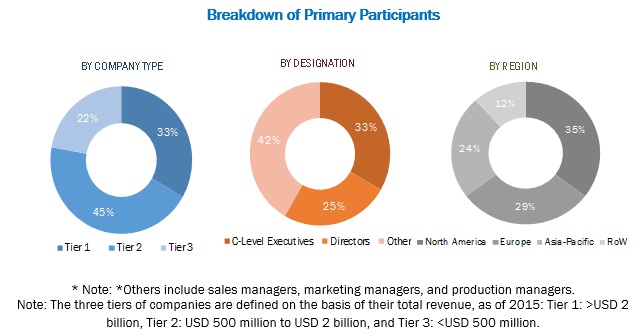
During this research study, major players of the Internet of Robotic Things ecosystem in various regions have been identified and their offerings, regional presence, and distribution channels have been understood through in-depth discussions. To find the overall market size, top-down and bottom-up approaches have been used to estimate the sizes of other individual markets by using percentage splits from secondary sources such as Hoovers, Bloomberg Business, Factiva, and OneSource and primary research. The entire procedure includes the study of the annual and financial reports of the top market players and extensive interview of industry leaders such as CEOs, VPs, directors, and marketing executives for key insights (both qualitative and quantitative) pertaining to the market. The figure below shows the breakdown of the primaries on the basis of the company type, designation, and region conducted during the research study.
To know about the assumptions considered for the study, download the pdf brochure
The ecosystem of Internet of Robotic Things market comprises a well-established network of manufacturers, distributors, hardware vendors, and service providers. The key companies in the Internet of Robotic Things include ABB Ltd. (Switzerland), KUKA AG (Germany), iRobot Corp. (U.S.), Amazon.com, Inc. (U.S.), Google, Inc. (U.S.), Fanuc, Corp. (Japan). The prominent companies in the markets include the well-established, financially stable and technically expertise players that have been operating in the industry for several years and have diversified product portfolios, proprietary technologies, and strong distribution networks through collaborations and acquisitions.
Target Audience:
- Semiconductor foundries
- Original Equipment Manufacturers (OEMs)
- ODM and OEM technology solution providers
- Research Institutes
- Market research and consulting firms
- Internet of things (IoT) forums, alliances, and associations
- Technology investors
- Governments and financial institutions
- Analysts and strategic business planners
- End-users who want to know more about the smart robots technology and the latest technological developments in the IoT and robotics industry
Report Scope
By Smart Robot Component:
- Sensors
- Actuators
- Power source
- Control systems
- Other (Electrical, Electronic and Mechanical)
By Software:
- Real Time Streaming Analytics
- Security Solution
- Data Management
- Remote Monitoring System
- Network Bandwidth Management
By Platform:
- Introduction
- Device Management Platform
- Application Management Platform
- Network Management Platform
By Service:
-
Professional Services
- Deployment and Integration
- Support and Maintenance
- Consulting Services
- Managed Services
By Application:
-
Collaborative Industrial Robots
- Automotive
- Electronics
- Food and Beverages
- Others
-
Service Sector
-
Personal Services
- Domestic
-
Entertainment
- Smart Toys
- Robotic Pets
- Others
-
Professional Services
-
Defense and Security
- Demining
- Fire and Bomb Fighting
-
Field
- Agriculture and forestry
- Milking robots
-
Medical
- Rehabilitation system
- Others (Assistive robots)
- Underwater
-
Logistics (Automated Guided Vehicles)
- Factory logistics
- Service logistics
-
Telepresence
- Business
- Healthcare
- Personal
-
Inspection & Maintenance
- Factory facilities
- Tank, tubes, pipes and sewers
- Ships and turbines
- Others (Infrastructure and construction)
- Others
-
Defense and Security
-
Personal Services
By Geography:
- North America
- Europe
- APAC
- Rest of the World
Available Customizations:
With the given market data, MarketsandMarkets offers customizations according to the client’s specific needs. The following customization options are available for the report:
Geographic Analysis
- Further analysis of the Internet of Robotic Things market for additional countries
Company Information
- Detailed analysis and profiling of additional market players (up to five)













Growth opportunities and latent adjacency in Internet of Robotic Things Market