Marine Interiors Market Size, Share & Industry Growth Analysis Report by Ship Type (Commercial, Defense), End User (New Fit, Refit), Material (Aluminum, Steel, Joinery, Composites), Product (Ceilings & Wall Panels, Furniture, Galleys & Pantries, Lighting), Application, Geography- Global Growth Driver and Industry Forecast to 2035


Marine Interiors Market
Marine Interiors Market Summary
The global Marine Interiors Market is estimated to be valued at approximately USD 4.85 billion in 2025 and is projected to reach USD 8.95 billion by 2035, expanding at a CAGR of 6.3% during the forecast period. Growth in this market is being driven by the steady expansion of the cruise tourism industry, increasing demand for luxury yachts, and the modernization of naval and commercial vessels. In addition, the integration of artificial intelligence (AI), Internet of Things (IoT), and automation into marine interior systems is transforming onboard experiences and operational efficiency. Smart cabins, automated lighting, energy-efficient HVAC systems, and digitally connected passenger environments are becoming standard features across modern vessels. The rising focus on sustainability, lightweight materials, and digital transformation in shipbuilding and retrofitting activities is further accelerating market expansion globally.
Key Market Trends & Insights
The Marine Interiors Market is witnessing a shift toward premium, technology-enabled, and environmentally sustainable interior solutions. Europe remains the leading region due to its strong shipbuilding industry and dominance in cruise liner manufacturing, while Asia Pacific is emerging as the fastest-growing region driven by expanding shipbuilding capacity and rising maritime tourism.
Cabin interiors represent the dominant segment, as passenger comfort and experience are becoming central to cruise and ferry operations. Meanwhile, luxury yacht interiors are gaining traction, supported by increasing high-net-worth individuals and demand for personalized designs. Technological trends such as AI-powered smart cabins, IoT-enabled monitoring systems, and automated climate control are reshaping onboard environments.
Automation is enhancing operational efficiency through predictive maintenance and energy optimization, while digital twin technologies are increasingly being used to design and manage marine interior systems. These trends highlight a strong convergence between design aesthetics and advanced technology integration in the marine interiors ecosystem.
Market Size & Forecast
-
Base year market size (2025): USD 4.85 billion
-
Forecast value by 2035: USD 8.95 billion
-
CAGR (2025–2035): 6.3%
-
Growth is driven by rising cruise tourism, increasing demand for luxury vessels, retrofitting of aging fleets, and integration of smart and sustainable interior technologies
Marine Interiors Market Top 10 key takeaway
-
The market is expected to reach nearly USD 9 billion by 2035
-
Cruise ship interiors dominate due to growing global tourism
-
Europe leads the market with strong shipbuilding capabilities
-
Asia Pacific is the fastest-growing region globally
-
Smart cabin technologies are transforming passenger experiences
-
Sustainability and lightweight materials are key design priorities
-
Automation is improving energy efficiency and maintenance
-
Luxury yacht interiors are witnessing rising demand
-
Retrofitting of existing vessels is a major growth driver
-
Digital transformation is reshaping marine interior design and operations
Product Insights
Cabin interiors represent the largest product segment in the Marine Interiors Market, driven by the increasing emphasis on passenger comfort, personalization, and luxury experiences. Cruise operators and ferry service providers are investing heavily in modernizing cabin spaces to enhance customer satisfaction and differentiate their offerings in a competitive tourism market. High-quality materials, ergonomic designs, and integrated entertainment systems are key features contributing to the dominance of this segment.
Public spaces, including lounges, dining areas, and recreational zones, are also undergoing significant transformation. These spaces are increasingly designed with a focus on aesthetics, functionality, and passenger engagement. Emerging product categories such as modular interiors and customizable design solutions are gaining traction, enabling shipbuilders and operators to adapt layouts based on operational requirements.
Technology integration is playing a pivotal role in product innovation. AI-enabled smart cabins with voice-controlled systems, automated lighting, and personalized climate settings are becoming more prevalent. Additionally, advanced materials such as fire-resistant composites and eco-friendly finishes are being widely adopted to meet stringent safety and environmental regulations.
Technology / Component Insights (Rename based on keyword if needed)
Technological advancements are redefining the Marine Interiors Market, with AI, IoT, and automation driving innovation across all aspects of interior design and functionality. IoT-enabled systems allow real-time monitoring of environmental conditions, energy consumption, and passenger preferences, enabling operators to optimize onboard experiences and operational efficiency.
AI is increasingly being used to personalize passenger experiences, offering customized lighting, temperature, and entertainment settings based on individual preferences. Predictive maintenance powered by AI and data analytics is helping ship operators identify potential issues before they escalate, reducing downtime and maintenance costs.
Cloud-based platforms are facilitating centralized management of interior systems, allowing seamless integration with other shipboard technologies. Automation is enhancing operational efficiency by optimizing energy usage, reducing manual intervention, and improving system reliability. Future innovation trends include the adoption of augmented reality (AR) for interior design visualization, digital twins for lifecycle management, and advanced materials for improved durability and sustainability.
Application Insights
The cruise segment dominates the Marine Interiors Market, driven by the rapid growth of global cruise tourism and increasing demand for luxury travel experiences. Cruise operators are continuously upgrading interior spaces to attract passengers and enhance onboard experiences, leading to significant investments in interior design and refurbishment.
Commercial vessels, including ferries and cargo ships, represent another important application segment. While functionality remains a priority, there is a growing focus on improving crew comfort and operational efficiency through better interior design and advanced technologies.
Naval vessels are also contributing to market growth, with governments investing in modernizing fleet interiors to improve crew well-being and operational performance. Future opportunities lie in integrating smart interior systems across all vessel types, enhancing both user experience and operational efficiency.
Regional Insights
Europe leads the Marine Interiors Market, supported by its strong shipbuilding industry, particularly in cruise ship manufacturing. Countries such as Italy, Germany, and Finland are known for their expertise in designing and constructing high-end marine interiors. The region also benefits from a well-established tourism industry and strong demand for luxury cruise experiences.
North America follows closely, driven by high demand for cruise tourism and the presence of major cruise operators. The region is also witnessing increased adoption of advanced technologies in marine interiors, particularly in smart cabin systems and energy-efficient solutions.
Asia Pacific is the fastest-growing region, fueled by expanding shipbuilding activities, rising maritime trade, and increasing investments in tourism infrastructure. Countries such as China and Japan are focusing on developing advanced shipbuilding capabilities, which is boosting demand for marine interiors.
-
Europe dominates due to strong shipbuilding and cruise industry
-
North America shows steady growth with high cruise demand
-
Asia Pacific is the fastest-growing region globally
-
Increasing maritime tourism is driving global demand
-
Technological adoption is accelerating across all regions
Country-Specific Market Trends
In Asia Pacific, China is witnessing a CAGR of approximately 7.5%, driven by rapid expansion in shipbuilding capacity and increasing investments in cruise tourism. Japan is also experiencing steady growth, supported by technological innovation and a strong maritime industry.
In North America, the United States leads the market with a CAGR of around 6.1%, driven by high demand for cruise travel and continuous investments in fleet modernization. Canada and Mexico are also contributing to market growth, particularly in ferry and coastal transport sectors.
In Europe, Germany and France are key markets, with CAGRs of approximately 6.0% and 5.8%, respectively. These countries are focusing on sustainable shipbuilding practices and advanced interior design technologies to maintain their competitive edge.
-
China leads growth in Asia Pacific with expanding shipbuilding industry
-
Japan focuses on technological innovation in marine interiors
-
The United States dominates North America’s market
-
Germany and France drive growth in Europe
-
Government initiatives and tourism demand support market expansion
Key Marine Interiors Market Company Insights
The Marine Interiors Market is characterized by the presence of several established players focusing on innovation, sustainability, and technological integration. Leading companies such as ALMACO Group, Marine Interiors S.p.A., Fincantieri S.p.A., Carnival Corporation & plc, Royal Caribbean Group, and Hurtigruten Group are playing a significant role in shaping the market.
These companies are investing in advanced materials, modular construction techniques, and smart interior solutions to enhance passenger experience and operational efficiency. AI and IoT integration is becoming a key focus area, enabling companies to offer innovative and connected interior systems.
Strategic collaborations with shipbuilders, technology providers, and design firms are helping companies expand their capabilities and market reach. Sustainability is also a major focus, with companies adopting eco-friendly materials and energy-efficient systems to meet regulatory requirements and consumer expectations.
-
Companies are focusing on sustainable and eco-friendly materials
-
AI and IoT integration is driving innovation
-
Modular construction techniques are gaining popularity
-
Strategic partnerships are enhancing market presence
-
Investment in R&D is accelerating product development
Recent Developments
Recent developments in the Marine Interiors Market highlight the growing emphasis on smart and sustainable solutions. Several companies have introduced AI-enabled smart cabin systems that allow passengers to control lighting, temperature, and entertainment through mobile applications or voice commands.
In addition, partnerships between shipbuilders and technology firms are enabling the integration of IoT-based monitoring systems, improving energy efficiency and operational performance. Governments and private operators are also investing in retrofitting projects to upgrade existing vessels with modern interior solutions.
Market Segmentation
The Marine Interiors Market is segmented based on product, technology/component, application, and region. By product, the market includes cabin interiors, public spaces, and service areas, each contributing to overall market growth. Cabin interiors dominate due to their direct impact on passenger experience and revenue generation.
In terms of technology, the market encompasses traditional interior systems, smart IoT-enabled solutions, AI-based automation systems, and advanced materials. These technologies are driving innovation in design, functionality, and sustainability.
Applications are categorized into cruise ships, commercial vessels, and naval ships, each with distinct requirements and growth drivers. Regionally, the market is divided into North America, Europe, Asia Pacific, and the rest of the world, with varying levels of adoption and growth potential.
-
Cabin interiors dominate the product segment
-
Smart and AI-enabled systems are driving technological advancements
-
Cruise ships represent the largest application segment
-
Commercial and naval vessels show steady growth
-
Asia Pacific is emerging as a key regional market
Conclusion
The Marine Interiors Market is poised for steady growth through 2035, driven by the increasing demand for luxury travel, advancements in smart technologies, and the ongoing modernization of global fleets. The integration of AI, IoT, and automation is transforming marine interiors into intelligent, connected environments that enhance both passenger experience and operational efficiency.
As sustainability and digital transformation continue to shape the industry, companies that invest in innovative materials, smart systems, and modular designs will be well-positioned to capitalize on emerging opportunities. The market’s growth trajectory underscores its strategic importance for shipbuilders, operators, and technology providers aiming to stay competitive in an evolving maritime landscape.
FAQs
1. What is the current market size of the Marine Interiors Market?
The market size is estimated at USD 4.85 billion in 2025.
2. What is the expected growth rate of the market?
The market is projected to grow at a CAGR of 6.3% from 2025 to 2035.
3. What are the key drivers of market growth?
Key drivers include rising cruise tourism, demand for luxury vessels, technological advancements, and sustainability initiatives.
4. Which region leads the Marine Interiors Market?
Europe is the leading region due to its strong shipbuilding industry and cruise market.
5. Who are the major players in the market?
Major players include ALMACO Group, Marine Interiors S.p.A., Fincantieri S.p.A., Carnival Corporation & plc, Royal Caribbean Group, and Hurtigruten Group.
 Exclusive indicates content/data unique to MarketsandMarkets and not available with any competitors.
TABLE OF CONTENTS
1 INTRODUCTION (Page No. - 23)
1.1 OBJECTIVES OF THE STUDY
1.2 MARKET DEFINITION
1.3 STUDY SCOPE
1.3.1 MARKETS COVERED
1.3.2 REGIONAL SCOPE
1.3.3 YEARS CONSIDERED FOR THE STUDY
1.4 CURRENCY & PRICING
1.5 MARKET STAKEHOLDERS
2 RESEARCH METHODOLOGY (Page No. - 26)
2.1 RESEARCH DATA
2.1.1 SECONDARY DATA
2.1.1.1 Key data from secondary sources
2.1.2 PRIMARY DATA
2.1.2.1 Key data from primary sources
2.1.2.2 Breakdown of primaries
2.2 MARKET DEFINITION & SCOPE
2.2.1 SEGMENT DEFINITIONS
2.2.1.1 Industry, by ship type
2.2.1.2 Industry, by material
2.2.1.3 Industry, by end user
2.2.1.4 Industry, by application
2.2.1.5 Industry, by product
2.2.2 EXCLUSIONS
2.3 MARKET SIZE ESTIMATION & METHODOLOGY
2.3.1 BOTTOM-UP APPROACH
2.3.2 TOP-DOWN APPROACH
2.4 DATA TRIANGULATION
2.5 MARKET SIZING & FORECASTING
2.6 LIMITATIONS
3 EXECUTIVE SUMMARY (Page No. - 35)
4 PREMIUM INSIGHTS (Page No. - 38)
4.1 ATTRACTIVE OPPORTUNITIES IN MARINE INTERIORS MARKET
4.2 INDUSTRY, BY END USER
4.3 INDUSTRY, BY PRODUCT
4.4 INDUSTRY, BY SHIP TYPE
4.5 INDUSTRY, BY REGION
5 MARKET OVERVIEW (Page No. - 41)
5.1 INTRODUCTION
5.2 MARKET DYNAMICS
5.2.1 DRIVERS
5.2.1.1 Growing maritime tourism industry
5.2.1.2 Rise in river cruise market
5.2.1.3 Growth in refurbishment market
5.2.2 RESTRAINTS
5.2.2.1 High downtime in retrofitting ships
5.2.3 OPPORTUNITIES
5.2.3.1 Adoption of additive manufacturing to produce lighter, faster, and fireproof interiors
5.2.3.2 Rising adoption of OLED lighting technology
5.2.3.3 Surging demand for passenger ships from Asian shipyards
5.2.4 CHALLENGES
5.2.4.1 Delay in passenger ship deliveries
5.2.4.2 Space constraints in cruise lines
5.2.4.3 COVID-19 impact on the marine industry
6 INDUSTRY TRENDS (Page No. - 52)
6.1 INTRODUCTION
6.2 ROADMAP TOWARD EMISSION-FREE SHIPPING INDUSTRY
6.3 TECHNOLOGY TRENDS IN THE INDUSTRY
6.3.1 RISING ADOPTION OF SMART CABINS IN PASSENGER SHIPS
6.3.2 SHIFTING FROM TRADITION CABIN MANUFACTURING TO PREFABRICATION
6.3.3 ADOPTION OF WATERPROOF LED LIGHTING IN PASSENGER SHIPS
6.3.4 ADOPTION OF DIGITAL WINDOWS IN LOW BUDGET CABINS
6.3.4.1 Virtual balconies
6.3.4.2 Magical portholes
6.3.5 SHOW KITCHENS
6.3.6 NORWEGIAN'S FREESTYLE CONCEPT
6.3.7 BREWERIES AND CRAFT BEER HALLS
6.3.8 NEW GREEN FLOORING
6.3.9 ADVANCED UPHOLSTERY MATERIALS
6.3.10 SHOCK MITIGATING SEATS
6.3.11 ADVANCEMENT IN GALLEYS & LAUNDRIES
6.3.11.1 Adoption of lightweight galleys
6.3.11.2 Adoption of energy efficient galley solutions
6.4 INNOVATIONS & PATENT REGISTRATIONS
7 MARINE INTERIORS MARKET, BY SHIP TYPE (Page No. - 58)
7.1 INTRODUCTION
7.2 COMMERCIAL
7.2.1 PASSENGER VESSELS
7.2.1.1 Yachts
7.2.1.1.1 Luxury
7.2.1.1.1.1 Luxury yachts are large-sized, luxurious vessels with length varying from 75-250 Feet
7.2.1.1.2 Premium
7.2.1.1.2.1 Premium yachts emphasize more on quality, comfort, and style over price factor
7.2.1.1.3 Budget
7.2.1.1.3.1 Budget yachts are also known as bargain/economy/contemporary vessels
7.2.1.2 Cruise
7.2.1.2.1 Luxury
7.2.1.2.1.1 Vacationers increasingly selecting smaller-ship voyages on luxury ocean and river cruise line
7.2.1.2.2 Premium
7.2.1.2.2.1 Premium cruise ships typically feature additional guest spaces and art collections
7.2.1.2.3 Budget
7.2.1.2.3.1 The budget cruise is less expensive than premium and luxury cruises
7.2.1.3 Ferries
7.2.1.3.1 Retrofitting of ferries is expected to drive the demand for marine interiors
7.2.2 CARGO VESSELS
7.2.2.1 Container ships
7.2.2.1.1 Increasing seaborne trade drive the demand for container vessels and thereby marine interiors
7.2.2.2 Bulk carriers
7.2.2.2.1 Increased demand for retrofitting existing bulk carriers will fuel the demand for marine interiors
7.2.2.3 Tankers
7.2.2.3.1 Rising demand for oil tankers to transport LNG is expected to drive the demand for marine interiors
7.2.2.4 General cargo ships
7.2.2.4.1 Modernization of general cargo vessels increases the demand for marine interiors
7.2.3 OTHERS
7.2.3.1 Dredgers
7.2.3.1.1 Growing demand for dredgers to remove contaminants from seabed is expected to fuel the demand for marine interiors
7.2.3.2 Research vessels
7.2.3.2.1 Increasing construction of research vessels will propel the demand for marine nteriors
7.2.4 DEFENSE
7.2.4.1 Destroyers
7.2.4.1.1 Increasing procurement of destroyers by countries is driving the demand for marine interiors
7.2.4.2 Frigates
7.2.4.2.1 Rising demand for construction and maintenance of frigates will drive the demand for marine interiors in the coming years
7.2.4.3 Corvettes
7.2.4.3.1 Ongoing procurement of corvettes across militaries is driving the demand of marine interior
7.2.4.4 Submarines
7.2.4.4.1 Development of advanced submarines by major countries expected to propel the demand for marine interiors in the coming years
7.2.4.5 Offshore patrol vessels
7.2.4.5.1 Increased demand for offshore patrol vessels by military forces will propel the demand for marine interiors
7.2.4.6 Aircraft carriers
7.2.4.6.1 Procurement of advanced aircraft carriers for strengthening naval fleet by countries will fuel the market for marine interiors
7.2.4.7 Amphibious ships
7.2.4.7.1 Construction of amphibious ships will drive the demand for marine interiors
8 MARINE INTERIORS MARKET, BY END USER (Page No. - 75)
8.1 INTRODUCTION
8.2 NEW FIT
8.2.1 RISE IN COMMERCIAL SHIP ORDERBOOK IS DRIVING THE CRUISE NEW FIT MARKET
8.3 REFIT
8.3.1 CRUISE LINE OPERATORS AND OWNERS PREFER REFIT OVER NEWBUILD TO REDUCE THE CAPITAL EXPENDITURE
8.4 CRUISES
8.4.1 CRUISE LINE OPERATORS AND OWNERS PREFER REFIT OVER NEWBUILD TO REDUCE THE CAPITAL EXPENDITURE
8.5 YACHTS
8.5.1 ITALY TO HOLD THE LARGEST SHARE IN YACHT REFIT MARKET
9 MARINE INTERIORS MARKET, BY APPLICATION (Page No. - 84)
9.1 INTRODUCTION
9.2 PASSENGER AREA
9.2.1 INSIDE AND OUTSIDE CABINS
9.2.2 WET UNITS
9.2.3 SUITES
9.3 PUBLIC AREA
9.3.1 SPA & WELLNESS AREAS
9.3.2 DISCOS & CASINOS
9.3.3 STAIRCASES & CORRIDORS
9.4 CREW AREA
9.4.1 CABIN & WET UNITS
9.4.2 RECREATIONAL ROOMS
9.4.3 MESS ROOMS
9.4.4 CREW CORRIDORS & CREW STAIRCASES
9.5 UTILITY AREA
9.5.1 GALLEYS, PANTRIES & PROVISION STORES
9.5.2 BRIDGES
9.5.3 AC ROOMS
9.5.4 ENGINE ROOMS
9.5.5 LAUNDRIES
10 MARINE INTERIORS MARKET, BY MATERIAL (Page No. - 94)
10.1 INTRODUCTION
10.2 ALUMINUM
10.3 STEEL
10.4 COMPOSITES
10.5 JOINERY
10.6 OTHERS
11 MARINE INTERIORS MARKET, BY PRODUCT (Page No. - 100)
11.1 INTRODUCTION
11.2 CEILINGS & WALL PANELS
11.2.1 COMPOSITES, ALUMINUM, AND STEEL ARE USED IN MANUFACTURING CEILINGS & WALL PANELS
11.3 LIGHTING
11.3.1 CEILINGS & WALLS
11.3.1.1 Ceiling & wall lights are majorly used in cabins, wet units, spa & wellness, theaters, and restaurants
11.3.2 FLOORING
11.3.2.1 Floor path lights are useful during an emergency to guide passengers during an evacuation
11.3.3 DECORATIVE
11.3.3.1 LED, Halogen, Xenon, and fluorescent technologies are used in decorative lighting
11.3.4 SIGNAGE
11.3.4.1 Signage lights are also known as compartment & utility lights
11.4 GALLEYS & PANTRIES
11.4.1 THE DEMAND FOR GALLEY & PANTRIES IS HIGH IN NEWBUILD SHIPS AS WELL AS REFURBISHMENT MARKET
11.5 FURNITURE
11.5.1 FURNITURE USED IN SHIPS ARE CONSTRUCTED USING LIGHTWEIGHT NON-COMBUSTIBLE MATERIALS
11.6 OTHERS
11.6.1 WINDOWS AND DOORS ARE MADE OF ALUMINUM, STAINLESS STEEL, AND GLASS
12 REGIONAL ANALYSIS (Page No. - 106)
12.1 INTRODUCTION
12.2 EUROPE
12.2.1 ITALY
12.2.1.1 Presence of recognized cruise shipbuilders is expected to drive the marine interiors industry
12.2.2 UK
12.2.2.1 Growth of the shipbuilding industry expected to drive manufacturing of new vessels thereby fuel the demand for marine interiors
12.2.3 FRANCE
12.2.3.1 Presence of stringent environmental regulations is driving the market in France
12.2.4 GERMANY
12.2.4.1 Growing demand for recreational boating in Germany is expected to fuel the demand for marine interiors
12.2.5 FINLAND
12.2.5.1 Increasing demand for polar cruise ships is expected to drive the marine interiors industry in Finland
12.2.6 REST OF EUROPE
12.3 NORTH AMERICA
12.3.1 US
12.3.1.1 Rising demand for river cruise is expected to drive the market for cabin interiors in the US
12.3.2 CANADA
12.3.2.1 Canada is a lucrative market for marine interiors from the demand side
12.4 ASIA PACIFIC
12.4.1 CHINA
12.4.1.1 Increasing cruising and rising demand for merchant ships expected to stimulate the demand for marine interiors
12.4.2 INDIA
12.4.2.1 Growth of maritime industry is driving the market for marine interiors in India
12.4.3 JAPAN
12.4.3.1 Increasing cruising activities expected to boost the demand for marine interiors
12.4.4 AUSTRALIA
12.4.4.1 Increasing commercial vessel manufacturing in Australia expected to boost the demand for marine interiors
12.4.5 SOUTH KOREA
12.4.5.1 Increasing commercial shipbuilding activities is expected to boost the demand for marine interiors
12.4.6 REST OF ASIA PACIFIC
12.4.6.1 Commercial ships to hold the largest share in the marine interiors market
12.5 REST OF THE WORLD
12.5.1 MIDDLE EAST
12.5.1.1 Increased investments in shipping infrastructures are driving the marine interiors market in the Middle East
12.5.2 LATIN AMERICA
12.5.2.1 Growth of marine sector is fueling the market for marine interiors in Latin America
13 COMPETITIVE LANDSCAPE (Page No. - 138)
13.1 INTRODUCTION
13.2 COMPETITIVE LEADERSHIP MAPPING
13.2.1 VISIONARY LEADERS
13.2.2 INNOVATORS
13.2.3 DYNAMIC DIFFERENTIATORS
13.2.4 EMERGING COMPANIES
13.3 RANKING OF KEY PLAYERS, 2019
13.3.1 WINNING IMPERATIVES, BY KEY PLAYERS
13.4 COMPETITIVE SCENARIO
13.4.1 CONTRACTS
13.4.2 COLLABORATIONS & PARTNERSHIPS
13.4.3 EXPANSIONS
13.5 CUSTOMER ANALYSIS
13.5.1 CRUISES
13.5.1.1 Meyer Werft (Germany)
13.5.1.2 Meyer Turku (Finland)
13.5.1.3 Lloyd Werft (Germany)
13.5.1.4 Mitsubishi (Japan)
13.5.1.5 Chantiers de l’Atlantique (STX France)
13.5.1.6 Fincantieri (Italy)
13.5.1.7 T. Mariotti (Italy)
13.5.1.8 Xiamen (China)
13.5.1.9 Grand Bahamas Shipyard (Bahamas)
13.5.1.10 Navantia Shipyard (Spain)
13.5.1.11 Sembawang (Singapore)
13.5.1.12 ST Engineering Marine (Singapore)
13.5.1.13 Remontowa (Poland)
13.5.1.14 Tallin (Estonia)
13.5.2 YACHTS
13.5.2.1 Koninklijke De Vries: Feadship (Netherlands)
13.5.2.2 Royal Van Lent: Feadship (Kaag Island)
13.5.2.3 Lurssen Yachts (Germany)
13.5.2.4 Amel (Netherlands)
13.5.2.5 Azimuth Yachts (Italy)
13.5.2.6 Benetti Yachts (Italy)
13.5.2.7 Fincantieri Yachts (Italy)
13.5.2.8 Heesen (Netherlands)
13.5.2.9 Nobiskrug (Germany)
13.5.2.10 Oceanco (Netherlands)
13.5.2.11 Sanlorenzo Yachts (Italy)
13.5.2.12 Westport Yachts (US)
13.6 CERTIFYING BODIES AND AUTHORITIES/PROCEDURE
13.6.1 IMO
13.6.1.1 2010 FTP CODE
13.6.1.2 SOLAS
13.6.1.3 MARPOL
13.6.1.4 COLREG
13.6.2 ISO 9001
13.6.3 OHASAS 18001
13.6.4 ISO14001
13.6.5 MED
13.6.6 LIOYD’S REGISTER
13.6.7 AMERICAN BOAT & YACHT COUNCIL
13.6.7.1 NMMA Boat & Yacht Certification
13.7 TOP EXHIBITIONS AND EVENTS
13.7.1 SMM
13.7.2 MARINTEC CHINA
13.7.3 NOR-SHIPPING
13.7.4 CRUISE SHIP INTERIORS EXPO EUROPE
13.7.5 CRUISE SHIP INTERIORS EXPO AMERICA
13.7.6 BOAT INTERNATIONAL’S SUPERYACHT DESIGN FESTIVAL
13.8 CONCLUSION AND RECOMMENDATIONS
13.8.1 MARKET GROWTH
13.8.1.1 Is the niche sectors (including cruises and yachts) going to experience market growth in the coming 5 to 10 years?
13.8.2 MARKET EXPANSION GEOGRAPHICALLY
13.8.2.1 Where is that market expansion mostly going to happen geographically?
13.8.3 SUPPLY AND DEMAND
13.8.3.1 How do the supply and demand look like for outfitting or joinery and decorative metal manufacturing companies in that sector?
13.8.4 STRATEGY RECOMMENDATIONS
13.8.4.1 Which business is perceived to be more profitable and a better target for acquisition in the marine interior sector (outfitting companies or joinery manufacturers)?
13.8.5 LISTING OF POTENTIAL COMPANIES
13.8.5.1 Potential companies
14 COMPANY PROFILES (Page No. - 191)
14.1 INTRODUCTION
(Business overview, Company information, Products & services offered, Customers and application area, Unique value proposition and right to win, R&M’s right to win, Growth strategies, Organic strategies, SWOT analysis, Recent developments)*
14.2 R&M GROUP
14.3 ALMACO
14.4 MIVAN MARINE LTD & MJM MARINE
14.5 TRIMLINE
14.6 KAEFER
14.7 MARINE INTERIORS
14.8 AROS MARINE
14.9 NORAC
14.10 BOLIDT
14.11 FORBO FLOORING SYSTEMS
14.12 TILLBERG DESIGN OF SWEDEN
14.13 NAVAL INTERIOR TEAM LTD (NIT)
14.14 ELATION LIGHTING INC.
14.15 OY LAUTEX AB
14.16 PRECETTI INC.
14.17 WINCH DESIGN
14.18 REDMAN WHITELEY DIXON (RWD)
14.19 SINOT EXCLUSIVE YACHT DESIGN
14.20 TERENCE DISDALE
14.21 RAYMOND LANGTON DESIGN
*Business overview, Company information, Products & services offered, Customers and application area, Unique value proposition and right to win, R&M’s right to win, Growth strategies, Organic strategies, SWOT analysis, Recent developmentsmight not be captured in case of unlisted companies.
14.22 INTERIOR DESIGNERS AND JOINERY COMPANIES
14.22.1 CRUISE INTERIOR DESIGNERS
14.22.2 YACHT INTERIOR DESIGNERS
14.22.3 JOINERY AND DECORATIVE METAL MANUFACTURING COMPANIES
14.22.3.1 Pfleiderer
14.22.3.2 Robos Contract Furniture
14.22.3.3 East Coast Flooring Blog
14.22.3.4 H.Y.S
14.22.3.5 Yachting Innovations
14.22.3.6 Ocean Refit Yacht Carpentary
14.22.3.7 World Surface Teak Decking and Yacht Refinishing
14.22.3.8 Classic Yacht Shipwrights
14.22.3.9 TW Joinery
14.22.3.10 Florida Teak
15 APPENDIX (Page No. - 298)
15.1 DISCUSSION GUIDE
15.2 KNOWLEDGE STORE: MARKETSANDMARKETS’ SUBSCRIPTION PORTAL
15.3 AVAILABLE CUSTOMIZATIONS
15.4 RELATED REPORTS
15.5 AUTHOR DETAILS
LIST OF TABLES (123 Tables)
TABLE 1 RESEARCH ASSUMPTIONS
TABLE 2 CRUISE LINE REFURBISHMENT SCHEDULE (2018–2020)
TABLE 3 LIST OF CRUISE SHIPBUILDING IN ASIA PACIFIC
TABLE 4 COVID-19 IMPACT SCENARIOS, 2018–2027 (USD MILLION)
TABLE 5 INNOVATIONS & PATENT REGISTRATIONS, 2011–2020
TABLE 6 INDUSTRY SIZE, SHIP TYPE, 2018–2027 (USD MILLION)
TABLE 7 COMMERCIAL: SEGMENT SIZE, BY TYPE, 2018–2027 (USD MILLION)
TABLE 8 PASSENGER VESSELS: SEGMENT SIZE, BY TYPE, 2018–2027 (USD MILLION)
TABLE 9 YACHT DELIVERIES (1999–2018)
TABLE 10 NEW-BUILD YACHTS, BY OWNERSHIP & SHIPYARD, 2019
TABLE 11 NEW-BUILD YACHTS, BY OWNERSHIP & SHIPYARD, 2020
TABLE 12 NEW-BUILD YACHT, BY OWNERSHIP & SHIPYARD, 2021–2024
TABLE 13 YACHTS: SEGMENT SIZE, BY SHIP CATEGORY, 2018–2027 (USD MILLION)
TABLE 14 CRUISES: SEGMENT SIZE, BY SHIP CATEGORY, 2018–2027 (USD MILLION)
TABLE 15 COMPETING BRANDS OFFERED WITHIN THE LUXURY CRUISE CATEGORY
TABLE 16 COMPETING BRANDS OFFERED WITHIN THE PREMIUM CRUISE CATEGORY
TABLE 17 COMPETING BRANDS OFFERED WITHIN THE BUDGET CRUISE CATEGORY
TABLE 18 CARGO VESSELS: SEGMENT SIZE, BY TYPE, 2018–2027 (USD MILLION)
TABLE 19 OTHER SHIPS: SEGMENT SIZE, BY TYPE, 2018–2027 (USD MILLION)
TABLE 20 DEFENSE SHIPS: SEGMENT SIZE, BY TYPE, 2018–2027 (USD MILLION)
TABLE 21 MARINE INTERIORS MARKET SIZE, BY END USER, 2018–2027 (USD MILLION)
TABLE 22 CRUISE ORDERBOOK (2019–2025)
TABLE 23 CRUISE INDUSTRY EXPENDITURE IN NEW FIT (USD MILLION)
TABLE 24 DRYDOCK REFURBISHMENT PROGRAMS
TABLE 25 CRUISE INDUSTRY EXPENDITURE IN REFURBISHMENT (USD MILLION)
TABLE 26 MARINE INTERIORS MARKET FOR CRUISES, BY END USER, 2018-2027 (USD MILLION)
TABLE 27 MARINE INTERIORS MARKET FOR YACHTS, BY END USER, 2018–2027 (USD MILLION)
TABLE 28 MARINE INTERIORS MARKET SIZE, BY APPLICATION, 2018-2027 (USD MILLION)
TABLE 29 DRYDOCK REFURBISHMENT SCHEDULES (FOR CABINS)
TABLE 30 DRYDOCK REFURBISHMENT SCHEDULES (FOR SUITES)
TABLE 31 DRYDOCK REFURBISHMENT SCHEDULES (FOR SPA & WELLNESS AREAS)
TABLE 32 DRYDOCK REFURBISHMENT SCHEDULES (FOR DISCOS & CASINOS)
TABLE 33 DRYDOCK REFURBISHMENT SCHEDULES (FOR STAIRCASES & CORRIDORS)
TABLE 34 MARINE INTERIORS MARKET SIZE, BY MATERIAL, 2018–2027 (USD MILLION)
TABLE 35 COMPARISON OF SHIP MATERIAL WEIGHT (TONS)
TABLE 36 PLANNING, DESIGN, AND PRODUCTION COST BREAKDOWN OF MATERIAL
TABLE 37 PASSENGER SHIPS: COMPARISON BETWEEN STEEL AND COMPOSITES
TABLE 38 MARINE INTERIORS MARKET SIZE, BY PRODUCT, 2018—2027 (USD MILLION)
TABLE 39 LIGHTING: SEGMENT SIZE, BY TYPE, 2018—2027 (USD MILLION)
TABLE 40 EUROPE REGIONAL SIZE, BY SHIP TYPE, 2018–2027 (USD MILLION)
TABLE 41 EUROPE REGIONAL SIZE, BY APPLICATION, 2018–2027 (USD MILLION)
TABLE 42 EUROPE REGIONAL SIZE, BY END USER, 2018–2027 (USD MILLION)
TABLE 43 EUROPE REGIONAL SIZE, BY MATERIAL, 2018–2027 (USD MILLION)
TABLE 44 EUROPE REGIONAL SIZE, BY COUNTRY, 2018–2027 (USD MILLION)
TABLE 45 CRUISE INDUSTRY: EXPENDITURE FOR NEWBUILDING AND REFURBISHMENT (USD MILLION), 2017
TABLE 46 ITALY: YACHT CONSTRUCTION (2019)
TABLE 47 ITALY: CRUISE SHIPS DELIVERY, BY CRUISE LINES, SHIP MODEL, AND YARD (2015-2027)
TABLE 48 ITALY MARINE CABIN INTERIORS MARKET SIZE, BY SHIP TYPE, 2018–2027 (USD MILLION)
TABLE 49 ITALY REGIONAL SIZE, BY END USER, 2018–2027 (USD MILLION)
TABLE 50 UK: YACHT CONSTRUCTION (2019)
TABLE 51 UK REGIONAL SIZE, BY SHIP TYPE, 2018–2027 (USD MILLION)
TABLE 52 UK REGIONAL SIZE, BY END USER, 2018–2027 (USD MILLION)
TABLE 53 FRANCE: CRUISE SHIPS DELIVERY, BY CRUISE LINES, SHIP MODEL, AND YARD (2016-2027)
TABLE 54 FRANCE REGIONAL SIZE, BY SHIP TYPE, 2018–2027 (USD MILLION)
TABLE 55 FRANCE REGIONAL SIZE, BY END USER, 2018–2027 (USD MILLION)
TABLE 56 GERMANY: YACHT CONSTRUCTION (2019)
TABLE 57 GERMANY: CRUISE SHIPS DELIVERY, BY CRUISE LINES, SHIP MODEL, AND YARD, (2015-2027)
TABLE 58 GERMANY REGIONAL SIZE, BY SHIP TYPE, 2018–2027 (USD MILLION)
TABLE 59 GERMANY REGIONAL SIZE, BY END USER, 2018–2027 (USD MILLION)
TABLE 60 FINLAND: CRUISE SHIPS DELIVERY, BY CRUISE LINES, SHIP MODEL, AND YARD (2016-2025)
TABLE 61 FINLAND REGIONAL SIZE, BY SHIP TYPE, 2018–2027 (USD MILLION)
TABLE 62 FINLAND REGIONAL SIZE, BY END USER, 2018–2027 (USD MILLION)
TABLE 63 REST OF EUROPE REGIONAL SIZE, BY SHIP TYPE, 2018–2027 (USD MILLION)
TABLE 64 REST OF THE EUROPE REGIONAL SIZE, BY END USER, 2018–2027 (USD MILLION)
TABLE 65 NORTH AMERICA MARINE CABIN INTERIORS MARKET SIZE, BY SHIP TYPE, 2018–2027 (USD MILLION)
TABLE 66 NORTH AMERICA REGIONAL SIZE, BY APPLICATION, 2018–2027(USD MILLION)
TABLE 67 NORTH AMERICA REGIONAL SIZE, BY END USER, 2018–2027 (USD MILLION)
TABLE 68 NORTH AMERICA REGIONAL SIZE, BY MATERIAL, 2018–2027 (USD MILLION)
TABLE 69 NORTH AMERICA REGIONAL SIZE, BY COUNTRY, 2018–2027 (USD MILLION)
TABLE 70 US: YACHT CONSTRUCTION (2019)
TABLE 71 US REGIONAL SIZE, BY SHIP TYPE, 2018–2027 (USD MILLION)
TABLE 72 US REGIONAL SIZE, BY END USER, 2018–2027 (USD MILLION)
TABLE 73 CANADA REGIONAL SIZE, BY SHIP TYPE, 2018–2027 (USD MILLION)
TABLE 74 CANADA REGIONAL SIZE, BY END USER, 2018–2027 (USD MILLION)
TABLE 75 ASIA PACIFIC REGIONAL SIZE, BY SHIP TYPE, 2018–2027 (USD MILLION)
TABLE 76 ASIA PACIFIC REGIONAL SIZE, BY APPLICATION, 2018–2027 (USD MILLION)
TABLE 77 ASIA PACIFIC REGIONAL SIZE, BY END USER, 2018–2027 (USD MILLION)
TABLE 78 ASIA PACIFIC REGIONAL SIZE, BY MATERIAL, 2018–2027 (USD MILLION)
TABLE 79 ASIA PACIFIC REGIONAL SIZE, BY COUNTRY, 2018–2027 (USD MILLION)
TABLE 80 CHINA: YACHT CONSTRUCTION (2019)
TABLE 81 CHINA MARINE INTERIOR MARKET SIZE, BY SHIP TYPE, 2018–2027 (USD MILLION)
TABLE 82 CHINA REGIONAL SIZE, BY END USER, 2018–2027 (USD MILLION)
TABLE 83 INDIA REGIONAL SIZE, BY SHIP TYPE, 2018–2027 (USD MILLION)
TABLE 84 INDIA REGIONAL SIZE, BY END USER, 2018–2027 (USD MILLION)
TABLE 85 JAPAN REGIONAL SIZE, BY SHIP TYPE, 2018–2027 (USD MILLION)
TABLE 86 JAPAN REGIONAL SIZE, BY END USER, 2018–2027 (USD MILLION)
TABLE 87 AUSTRALIA REGIONAL SIZE, BY SHIP TYPE, 2018–2027 (USD MILLION)
TABLE 88 AUSTRALIA REGIONAL SIZE, BY APPLICATION, 2018–2027 (USD MILLION)
TABLE 89 SOUTH KOREA REGIONAL SIZE, BY SHIP TYPE, 2018–2028 (USD MILLION)
TABLE 90 SOUTH KOREA REGIONAL SIZE, BY END USER, 2018–2027 (USD MILLION)
TABLE 91 REST OF ASIA PACIFIC REGIONAL SIZE, BY SHIP TYPE, 2018–2028 (USD MILLION)
TABLE 92 REST OF ASIA PACIFIC REGIONAL SIZE, BY END USER, 2018–2027 (USD MILLION)
TABLE 93 REST OF THE WORLD REGIONAL SIZE, BY SHIP TYPE, 2018–2027 (USD MILLION)
TABLE 94 REST OF THE WORLD REGIONAL SIZE, BY APPLICATION, 2018–2027 (USD MILLION)
TABLE 95 REST OF THE WORLD REGIONAL SIZE, BY END USER, 2018–2027 (USD MILLION)
TABLE 96 REST OF THE WORLD REGIONAL SIZE, BY MATERIAL, 2018–2027 (USD MILLION)
TABLE 97 REST OF THE WORLD REGIONAL SIZE, BY REGION, 2018–2027 (USD MILLION)
TABLE 98 MIDDLE EAST REGIONAL SIZE, BY SHIP TYPE, 2018–2027 (USD MILLION)
TABLE 99 REST OF THE WORLD REGIONAL SIZE, BY END USER, 2018–2027 (USD MILLION)
TABLE 100 LATIN AMERICA REGIONAL SIZE, BY SHIP TYPE, 2018–2027 (USD MILLION)
TABLE 101 LATIN AMERICA REGIONAL SIZE, BY END USER, 2018–2027 (USD MILLION)
TABLE 102 CONTRACTS, 2017–2020
TABLE 103 COLLABORATIONS & PARTNERSHIPS, 2017–2019
TABLE 104 EXPANSIONS, 2018
TABLE 105 MEYER WERFT SHIPYARD: CUSTOMER SNAPSHOT
TABLE 106 MEYER TURKU SHIPYARD CUSTOMER SNAPSHOT
TABLE 107 LLOYD WERFT SHIPYARD: CUSTOMER SNAPSHOT
TABLE 108 MITSUBISHI SHIPYARD: CUSTOMER SNAPSHOT
TABLE 109 CHANTIERS DE L’ATLANTIQUE (STX FRANCE) SHIPYARD: CUSTOMER SNAPSHOT
TABLE 110 FINCANTIERI SHIPYARD: CUSTOMER SNAPSHOT
TABLE 111 T. MARIOTTI SHIPYARD: CUSTOMER SNAPSHOT
TABLE 112 WHO-TO-WHOM ANALYSIS XIAMEN SHIPYARD
TABLE 113 GRAND BAHAMAS SHIPYARD: CUSTOMER SNAPSHOT
TABLE 114 NAVANTIA SHIPYARD: CUSTOMER SNAPSHOT
TABLE 115 SEMBAWANG SHIPYARD: CUSTOMER SNAPSHOT
TABLE 116 ST ENGINEERING MARINE SHIPYARD: CUSTOMER SNAPSHOT
TABLE 117 REMONTOWA SHIPYARD: CUSTOMER SNAPSHOT
TABLE 118 TALLIN SHIPYARD: CUSTOMER SNAPSHOT
TABLE 119 KONINKLIJKE FEADSHIP SHIPYARD: CUSTOMER SNAPSHOT
TABLE 120 ROYAL VAN LENT FEADSHIP SHIPYARD: CUSTOMER SNAPSHOT
TABLE 121 LURSSEN YACHTS SHIPYARD: CUSTOMER SNAPSHOT
TABLE 122 AMEL SHIPYARD: CUSTOMER SNAPSHOT
TABLE 123 KAEFER: SWOT ANALYSIS
LIST OF FIGURES (36 Figures)
FIGURE 1 REPORT PROCESS FLOW
FIGURE 2 MARINE INTERIORS INDUSTRY: RESEARCH DESIGN
FIGURE 3 BREAKDOWN OF PRIMARY INTERVIEWS: BY COMPANY TYPE, DESIGNATION & REGION
FIGURE 4 MARKET SIZE ESTIMATION METHODOLOGY: BOTTOM-UP APPROACH
FIGURE 5 MARKET SIZE ESTIMATION METHODOLOGY: TOP-DOWN APPROACH
FIGURE 6 DATA TRIANGULATION
FIGURE 7 COMPOSITES SEGMENT PROJECTED TO GROW AT THE HIGHEST CAGR FROM 2020 TO 2027
FIGURE 8 CRUISE SHIPS SEGMENT IN EUROPE EXPECTED TO LEAD FROM 2020 TO 2027
FIGURE 9 NEW FIT SEGMENT IS ESTIMATED TO LEAD FROM 2020 TO 2027
FIGURE 10 EUROPE ESTIMATED TO HOLD THE LARGEST SHARE IN 2020
FIGURE 11 INCREASING MARITIME TOURISM INDUSTRY AND REFURBISHMENT OF CRUISES AND YACHTS ARE DRIVING MARINE INTERIORS MARKET FROM 2020 TO 2027
FIGURE 12 NEW FIT SEGMENT ESTIMATED TO ACCOUNT FOR A LARGER SHARE OF MARINE INTERIORS MARKET AS COMPARED TO REFIT SEGMENT IN 2020
FIGURE 13 CEILING & WALL PANELS SEGMENT EXPECTED TO ACCOUNT FOR THE LARGEST SHARE OF MARINE INTERIORS MARKET DURING FORECAST PERIOD
FIGURE 14 COMMERCIAL SEGMENT EXPECTED TO LEAD MARINE INTERIORS MARKET DURING FORECAST PERIOD
FIGURE 15 MARINE INTERIORS MARKET IN NORTH AMERICA EXPECTED TO GROW AT THE HIGHEST CAGR DURING FORECAST PERIOD
FIGURE 16 MARINE INTERIORS MARKET: DRIVERS, RESTRAINTS, OPPORTUNITIES, AND CHALLENGES
FIGURE 17 CLIA GLOBAL OCEAN CRUISE PASSENGERS (IN MILLION), 2009—2020
FIGURE 18 GLOBAL CRUISE INDUSTRY SHARE, BY REGION, 2019
FIGURE 19 RIVER CRUISE PASSENGERS (IN THOUSANDS), 2012–2018
FIGURE 20 ROADMAP TOWARD EMISSION-FREE SHIPPING INDUSTRY
FIGURE 21 INDUSTRY EXPERTS VIEWS ON MARINE GALLEY ADVANCEMENT
FIGURE 22 MARINE INTERIORS MARKET, BY SHIP TYPE, 2020 & 2027 (USD MILLION)
FIGURE 23 MARINE INTERIORS MARKET, BY END USER, 2020 & 2027 (USD MILLION)
FIGURE 24 NEW ORDERS OF CARGO SHIPS, 2010-2018 (MILLION DWT)
FIGURE 25 40M+ YACHT REFIT, 2017–2018 (USD MILLION)
FIGURE 26 MARINE INTERIORS MARKET SIZE, BY APPLICATION, 2020-2027 (USD MILLION)
FIGURE 27 MARINE INTERIORS MARKET, BY MATERIAL, 2020-2027 (USD MILLION)
FIGURE 28 MARINE INTERIORS MARKET SIZE, BY PRODUCT, 2020 & 2027 (USD MILLION)
FIGURE 29 EUROPE ESTIMATED TO HOLD LARGEST SHARE OF MARINE INTERIORS MARKET IN 2020
FIGURE 30 EUROPE MARINE INTERIORS MARKET SNAPSHOT
FIGURE 31 NORTH AMERICA MARINE INTERIORS MARKET SNAPSHOT
FIGURE 32 ASIA PACIFIC MARINE INTERIORS MARKET SNAPSHOT
FIGURE 33 KEY DEVELOPMENTS BY LEADING PLAYERS IN MARINE INTERIORS MARKET BETWEEN 2016 AND 2020
FIGURE 34 MARINE INTERIORS MARKET: COMPETITIVE LEADERSHIP MAPPING, 2019
FIGURE 35 MARKET RANKING OF TOP PLAYERS IN MARINE INTERIORS MARKET, 2019
FIGURE 36 FORBO FLOORING SYSTEMS: COMPANY SNAPSHOT
Exhaustive secondary research was undertaken to collect information on the marine interiors market, its adjacent markets, and its parent market. The next step was to validate these findings, assumptions, and sizing with the industry experts across the value chain through primary research. Both demand and supply-side analyses were employed to estimate the overall size of the market. Thereafter, market breakdown and data triangulation procedures were used to estimate the market sizes of different segments and subsegments.
Secondary Research
In the secondary research process, various secondary sources such as Publications of Statista, Clarksons Research, the International Maritime Organization (IMO), the United Nations Conference on Trade and Development (UNCTAD), Shipyard Orderbook, OECD, and Global Firepower, SEC filings, annual reports, press releases & investor presentations of companies, certified publications, and articles by recognized authors were referred to for identifying and collecting information on the marine Interiors market.
Primary Research
The marine interiors market comprises several stakeholders, such as raw material suppliers, processors, end-product manufacturers, and integratory and regulatory organizations in its supply chain. The demand side of this market includes various end users such as commercial and government & defense organizations of different countries. The following is the breakdown of the primary respondents that were interviewed to obtain qualitative and quantitative information about the marine interiors market.
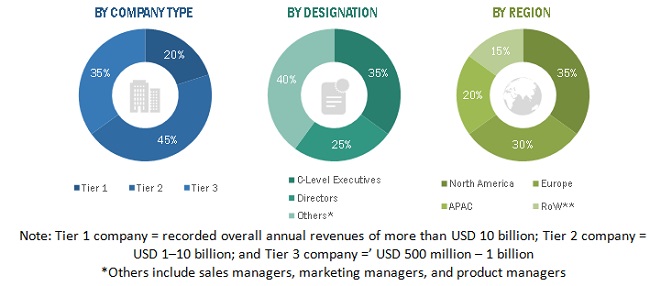
To know about the assumptions considered for the study, download the pdf brochure
Market Size Estimation
Both top-down and bottom-up approaches were used to estimate and validate the total size of the marine interiors market. These methods were also used extensively to estimate the size of various segments and subsegment of the market. The research methodology used to estimate the market size included the following:
- Key players in the industry and market were identified through extensive secondary research of their product matrix and geographical presence and developments undertaken by them.
- All percentage shares, splits, and breakdowns were determined using secondary sources and verified through primary sources.
Data Triangulation
After arriving at the overall size of the marine interiors market using the market size estimation processes explained above, the market was split into several segments and subsegments. Data triangulation and market breakdown were employed, wherever applicable, to complete the overall market engineering process and arrive at the exact statistics of each market segment and subsegment. The data was triangulated by studying various factors and trends from demand as well as supply sides of the marine interiors market.
Report Objectives
- To define, describe, and forecast the size of the Marine Interior market based on ship type, material, application, end user, product, and region
- To identify and analyze key drivers, opportunities, and challenges influencing the growth of the market
- To identify industry trends, market trends, and technology trends currently prevailing in the market
- To analyze micromarkets1 with respect to individual technological trends, prospects, and their contribution to the overall market
- To forecast the size of segments of marine interiors market based on four regions, namely, North America, Europe, Asia Pacific, the Rest of the World, along with key countries in each of these regions
- To provide a detailed competitive landscape of the market and analyze competitive growth strategies such as contracts, partnerships, agreements, and acquisitions adopted by key players in the market
- To strategically profile key market players and comprehensively analyze their market rank analysis and core competencies2
Available Customizations
Along with the market data, MarketsandMarkets offers customizations according to the specific requirements of companies.
Product Analysis
- Product matrix, which gives a detailed comparison of the product portfolio of each company
Company Information
- Detailed analysis and profiles of additional market players (up to 5)












Growth opportunities and latent adjacency in Marine Interiors Market