Methyl Methacrylate Adhesives Market

Methyl Methacrylate Adhesives Market by System Type (Two-Part Pre-Mix (2K), No-Mix/Activator, UV/Light-Cure Acrylic), Substrate (Metals (Steel, Al, SS), Thermoset Composites (FRP/CRP/GRP), Standard Thermoplastics (ABS, PC, PVC), Engineering Plastics/LSE (Nylon, PP, PE, TPO), Ceramics/Magnets/Glass), Cure Speed (Ultra-Fast (< 3 min), Fast (3–10 min), Extended (15–60 min), UV/Light-Cure (1-Part, 1–5 min)), End-use Industry (Land Transport (Auto, Truck, Rail, Bus), Marine (Shipbuilding + Leisure Boats), Renewable Energy (Wind, Solar Frames), Construction (Panels, Facades, Glazing), EV/New Energy (Battery, Motor, Magnets), Electronics (Devices, Enclosures, Displays), Aerospace & Defense (Certified Grades), Medical Devices (ISO 10993-qualified), General Industrial/MRO), and Region - Global Forecast to 2031




OVERVIEW
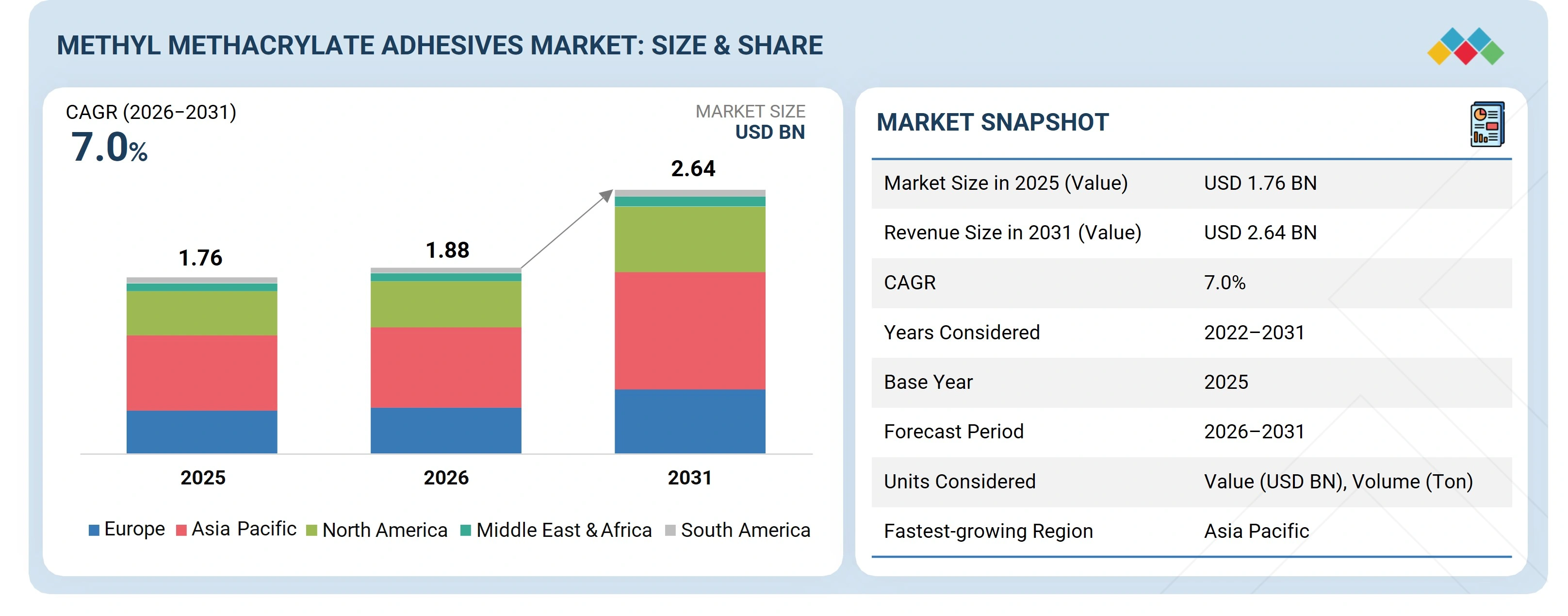
Source: Secondary Research, Interviews with Experts, MarketsandMarkets Analysis
The methyl methacrylate adhesives market is projected to grow from USD 1.88 billion in 2026 to USD 2.64 billion in 2031 at a CAGR of 7.0% during the forecast period. The market growth is driven by the increasing demand for high-strength adhesive solutions in various industries. There is a significant increase in infrastructure development activities, which is increasing the demand for methyl methacrylate adhesives in various applications, such as panel bonding, facade, and structural glazing in residential and commercial construction. Moreover, the growth of the land transport industry, particularly with the advent of electric vehicles, is increasing the demand for methyl methacrylate adhesives for bonding materials such as thermoset composites, engineering plastics, and metals. These adhesives offer excellent adhesion to dissimilar substrates, thus minimizing the use of mechanical fasteners for weight reduction. Additionally, various industries such as the marine industry and renewable energy sectors are adopting methyl methacrylate adhesives for their excellent durability. With the rapid industrialization in developing countries, there is a constant increase in production capacities and areas of application. Finally, the increasing focus on sustainability is accelerating the growth of the methyl methacrylate adhesive market.
KEY TAKEAWAYS
-
BY REGIONAsia Pacific is the largest and fastest-growing market for methyl methacrylate adhesives, growing at a CAGR of 7.8 % during the forecast period.
-
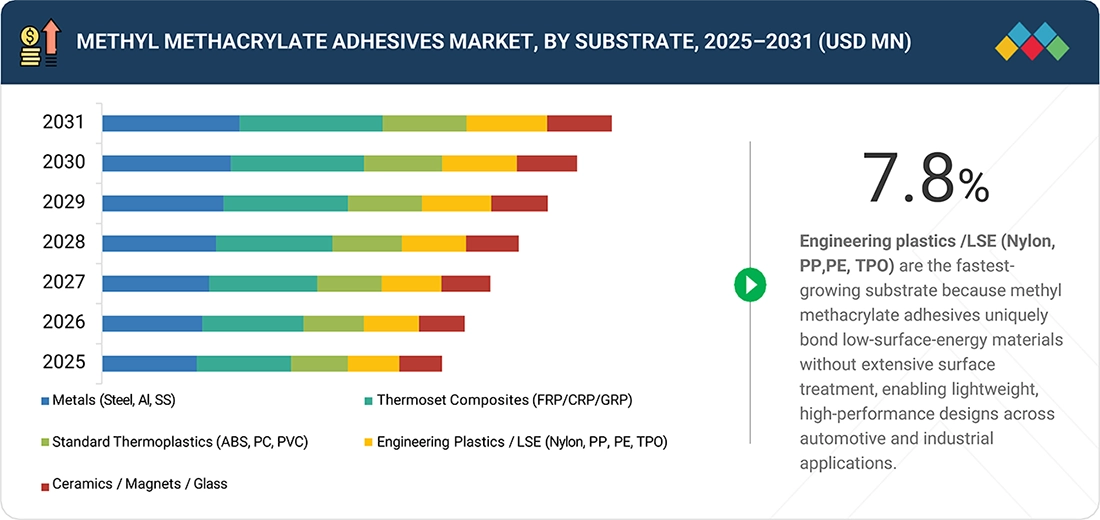
BY SUBSTRATEBy substrate, metals segment accounted for the largest market share and is projected to register a CAGR of 6.4 % between 2026 and 2031.
-
BY END-USE INDUSTRYThe EV/New Energy (Battery, Motor, Magnets) segment is the fastest-growing end-use industry for the methyl methacrylate adhesives market, growing at a CAGR of 7.9% during the forecast period.
-
BY SYSTEM TYPEThe two-part pre-mix (2k) segment is projected to grow at a CAGR of 7.1 % in the methyl methacrylate adhesives market during the forecast period.
-
BY CURE SPEEDUV / Light-cure (1 Part, 1-5 min) is the fastest-growing cure speed segment in the overall methyl methacrylate adhesives market, growing at a CAGR of 7.4 % during the forecast period.
-
COMPETITIVE LANDSCAPE - KEY PLAYERSThe methyl methacrylate adhesives market is driven by product innovation, capacity expansions, and strategic collaborations among global leaders, such as Bostik (France), Illinois Tool Works Inc (US), and H.B. Fuller Company (US). These companies are focusing on capacity expansion and product launches to sustain their market position.
-
COMPETITIVE LANDSCAPE - STARTUPS/SMESPermabond (US), WEICON Inc. (Canada), and Parson Adhesives Inc.(US) are considered upcoming players in the methyl methacrylate adhesives market.
The methyl methacrylate adhesives market is driven by the increasing demand for advanced adhesive solutions in key end-use industries. Key factors impacting the methyl methacrylate adhesives market include the high rate of industrialization and infrastructure development activities. Another factor affecting the methyl methacrylate adhesives market is the increasing demand for adhesive solutions in the automotive industry, including electric vehicles. Adhesive manufacturers are increasingly using methyl methacrylate adhesives to provide adhesive solutions for the manufacturing of lightweight materials. Apart from the above-mentioned factors, the steady growth of the construction sector, along with the high growth of the electronics sector in the Asia Pacific region, is also fueling the methyl methacrylate adhesives market. Methyl methacrylate adhesives are widely used in many sectors where high impact resistance, fatigue resistance, and dissimilar material bonding are required.
TRENDS & DISRUPTIONS IMPACTING CUSTOMERS' CUSTOMERS
The market for methyl methacrylate adhesives is experiencing many trends and disruptions in the market due to sustainability issues, government regulations, and end-use industry demands. One of the significant market trends is an increase in demand for low-VOC, eco-friendly, and recyclable adhesives. This trend is due to the stringent environmental regulations set by governments and authorities around the world. This is resulting in the production of highly sophisticated and technologically advanced adhesive products. Capacity expansions are also reported in the Asia Pacific region, which is affecting the global supply chain of the methyl methacrylate adhesives market. Raw material price volatility, especially for methacrylate monomers, is also reported in the market. The electric vehicle market is also reported to be significantly impacting the market for methyl methacrylate adhesives, as these adhesives are used in the manufacturing of electric vehicles to bond dissimilar materials and composites. To make the overall supply chain efficient, digitalization is also adopted in the market for methyl methacrylate adhesives.
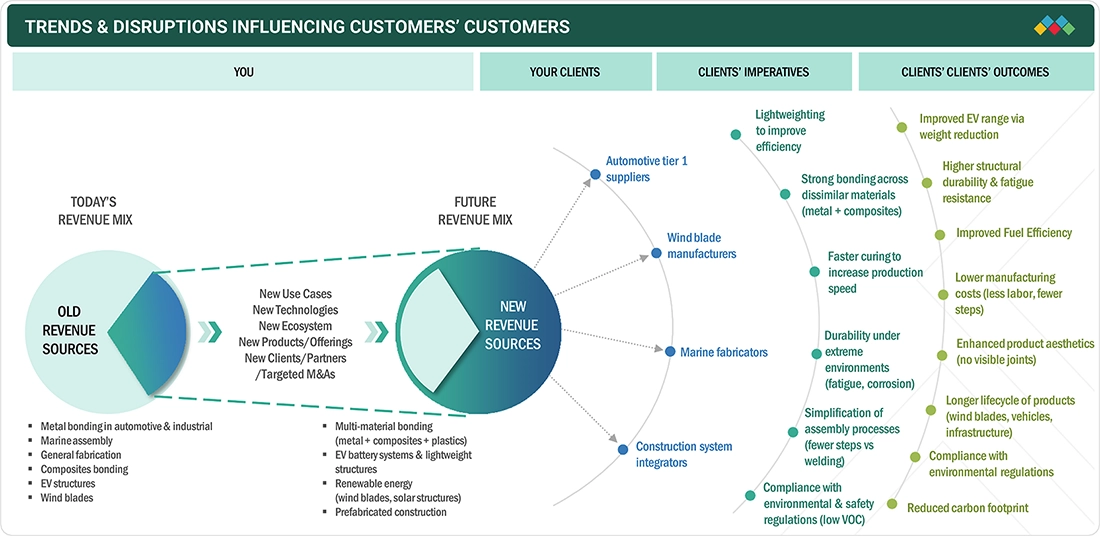
Source: Secondary Research, Interviews with Experts, MarketsandMarkets Analysis
MARKET DYNAMICS

Level
-
Lightweighting & Multi-Material Bonding Demand

-
Superior Performance Compared to Conventional Adhesive Systems


Level
-
Adoption Barriers and Operational Complexity

-
High Cost of Methyl Methacrylate Adhesives Limiting Adoption in Price-Sensitive Markets


Level
-
Rapid Expansion of Electrical Vehicles and Battery Systems

-
Expansion in Composite Applications


Level
-
Performance Standardization and Certification Requirements Delaying Market Commercialization

Source: Secondary Research, Interviews with Experts, MarketsandMarkets Analysis
Drivers: Lightweighting & Multi-Material Bonding Demand
The demand for lightweighting and multi-material bonding is driven by the increasing need for lightweight and high-performance designs in the automotive, EV, aerospace, and wind energy sectors. The industry is shifting away from steel and toward the increasing adoption of lightweight materials such as aluminum and FRP. Conventional joining methods used in the industry are becoming less effective with the increasing adoption of these materials. Methyl methacrylate adhesives can bond dissimilar materials with high strength and minimize weight by eliminating the need for mechanical fasteners.
Restraints: Adoption Barriers and Operational Complexity
Adoption barriers and operational complexity act as key restraints for the methyl methacrylate adhesives market, particularly in cost-sensitive and traditional industries. Many manufacturers continue to rely on conventional solutions such as epoxy, polyurethane, and mechanical fastening due to familiarity and proven performance, while switching to methyl methacrylate adhesives requires extensive validation, compatibility testing, and higher upfront costs. Additionally, methyl methacrylate adhesives present handling and safety challenges, including flammability, strong odour emissions, and the need for proper ventilation and storage. Their two-component (2K) nature requires precise mixing, specialized equipment, and skilled operators, increasing process complexity and operational costs. These factors collectively limit adoption, especially among SMEs and in emerging markets, thereby restraining the overall market growth.
Opportunities: Rapid Expansion of Electrical Vehicles and Battery Systems
The rapid growth in the development and deployment of electric vehicle technology and battery systems offers an enormous growth opportunity for the methyl methacrylate adhesive market. The industry is moving toward the development of lightweight and hybrid materials in vehicle construction. The development and deployment of electric vehicle technology require the application of lightweight materials such as aluminum and composite materials in the construction of the battery and the vehicle. In this regard, methyl methacrylate adhesive technology provides better bonding and impact resistance in comparison with conventional adhesive technologies. The growing adoption of electric vehicle technology and the development of battery production capacity across the globe in alignment with the policies and regulations of various countries is driving the market growth.
Challenges : Performance Standardization and Certification Requirements Delaying Market Commercialization
One major challenge in the methyl methacrylate adhesives market is performance standardization and certification. This is especially true in industries like aerospace and wind energy, where adhesives play a crucial role. These industries demand extensive mechanical, thermal, and environmental tests for validating the durability and fatigue resistance of materials. Regulatory and certification procedures in these industries are very stringent, making it a time- and cost-consuming task. This process alone may take months or years. Moreover, if changes are incorporated in the adhesive formulation, it may require re-certification, thus further prolonging the product development cycle. This is likely to discourage users from adopting new methyl methacrylate adhesive technology.
METHYL METHACRYLATE ADHESIVES MARKET: COMMERCIAL USE CASES ACROSS INDUSTRIES
| COMPANY | USE CASE DESCRIPTION | BENEFITS |
|---|---|---|
 |
Methyl methacrylate structural adhesives used in automotive, transportation, marine, and construction for bonding metals, composites, and plastics in lightweight assemblies | Strong adhesion to dissimilar substrates, fast curing, high impact resistance, reduced need for mechanical fasteners, improved productivity and durability |
 |
Advanced methyl methacrylate adhesives (e.g., structural bonding solutions) used in automotive, industrial equipment, and wind energy for composite bonding and load-bearing applications | Excellent fatigue resistance, high strength under dynamic loads, thermal and environmental resistance, enhanced structural integrity, and long service life |
 |
Methyl methacrylate adhesives used in construction, transportation, and industrial assembly for panel bonding, façade systems, and composite structures | Fast fixture time, strong bonding with minimal surface preparation, improved manufacturing efficiency, durability in harsh conditions, and versatility across substrates |
 |
Methyl methacrylate structural adhesives (via brands like Plexus) used in marine, automotive, and transportation industries for bonding FRP, metals, and thermoplastics | Superior impact and peel strength, excellent resistance to chemicals and moisture, lightweight bonding solutions, enhanced design flexibility, and long-term performance |
Logos and trademarks shown above are the property of their respective owners. Their use here is for informational and illustrative purposes only.
MARKET ECOSYSTEM
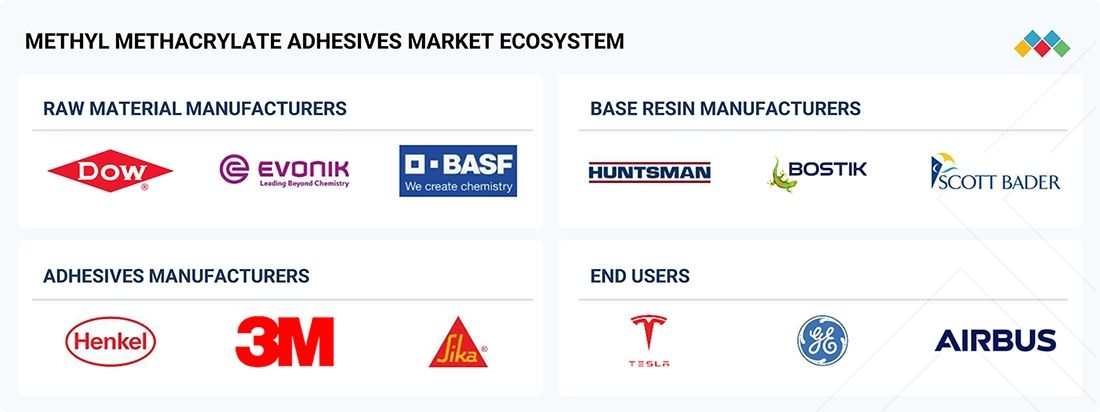
The methyl methacrylate adhesives market ecosystem is defined as a group of connected organizations that have an impact on the development, production, or consumption of methyl methacrylate adhesives. The key raw materials suppliers include raw materials producers in the petrochemicals or specialty chemicals industry. They provide raw materials used in the production of methyl methacrylate adhesives. The raw materials include methyl methacrylate monomer, initiators, accelerators, and other chemical additives. The raw materials are then chemically synthesized by monomer/resin producers. They convert raw materials into methyl methacrylate resin or other chemical products with desired properties. Adhesive formulators/adhesive manufacturers then formulate methyl methacrylate adhesives. They develop methyl methacrylate adhesives, which are usually two-component (2K) materials. The raw materials used in methyl methacrylate adhesives have chemical additives that improve their properties. Distributors/logistics providers connect adhesive manufacturers with users. They ensure effective management of the supply chain. The users include land transport, electronics & electrical, construction, marine, renewable energy, aerospace, and industrial assembly markets. Methyl methacrylate adhesives are used in structural bonding of metals, thermoset composites, standard thermoplastics, or engineering plastics.
Logos and trademarks shown above are the property of their respective owners. Their use here is for informational and illustrative purposes only.
MARKET SEGMENTS
Source: Secondary Research, Interviews with Experts, MarketsandMarkets Analysis
Methyl Methacrylate Adhesives Market, By System Type
The two-part pre-mix (2K) systems segment, by system type, is expected to have the highest market share in the methyl methacrylate adhesives market during the forecast period (2025-2030). 2K MMA adhesives are primarily used in structural parts that need high structural strength, rapid curing, and good bonding of different substrates such as metals, composites, and high-performance plastics. The two-part pre-mix formulation of these adhesives offers better control over the curing of the adhesives, thus offering better bond strength. Among all other types of adhesives, 2K MMA adhesives have better performance characteristics for use in bonding applications. In addition, the rising demand for these adhesives is due to the increase in the use of high-performance, lightweight materials in electric vehicles, industrial machinery, and electronic devices. The use of these materials has increased the need for robust and durable adhesive solutions. Moreover, the increase in production capacity in the Asia Pacific region is also going to boost the market for two-part pre-mix (2K) systems in the methyl methacrylate adhesives market.
Methyl Methacrylate Adhesives Market, by Cure Speed
The fast MMA adhesives (with cure time ranging from 3-10 minutes) segment is expected to hold the highest market share in the methyl methacrylate adhesives market during the forecast period (2025-2030). Fast-curing MMA adhesives are used in high-volume production and assembly operations where high bonding speed, minimal processing time, and early handling strength are important parameters in production processes. These adhesives are widely used in industries like automotive, aerospace, rail transport, electronics, and industrial manufacturing. They help improve production efficiency and speed, while also ensuring strong bonds in structural assemblies. The rising need for lightweight materials in electric vehicles, along with modular construction in aviation and high-end industrial assemblies, is likely to boost the adoption of fast MMA adhesives. This is largely because of their superior bonding capabilities, their ability to withstand thermal and chemical stress, and their adaptability to different materials, such as metals, composites, and advanced engineering plastics. Furthermore, the shift toward automated production lines, just-in-time manufacturing, and process optimization in areas like Asia Pacific, Europe, and North America, where production is expanding and modernizing, will also drive growth. These factors position fast MMA adhesives as the leading cure speed in the methyl methacrylate adhesives market throughout the forecast period.
Methyl Methacrylate Adhesives Market, by Substrate
By substrate, Metals remain the undisputed leader in the MMA adhesives market because they are still the primary structural foundation for the automotive, marine, and construction sectors. MMA adhesives are a perfect match for these industries because they offer the kind of high shear and impact resistance needed to survive heavy, dynamic loads. These MMA adhesives can bond to slightly oily or uneven metal surfaces with almost no prep work, saving companies significant time and labor costs. By replacing welding and rivets with these adhesives, manufacturers can build lighter products with more uniform stress distribution and better protection against rust. This combination of strength and ease of use ensures that, regardless of the fabrication environment, metals and MMA adhesives remain a dominant duo.
Methyl Methacrylate Adhesives Market, by End-use Industry
The land transport segment, including the production of automobiles, trains, and commercial vehicles, is a significant end-use segment of the methyl methacrylate (MMA) adhesives market. These adhesives are commonly employed in structural bonding of lightweight materials, like aluminum, carbon fibers, and high-strength plastic materials. The increasing demand for electric vehicles, hybrid cars, and high-performance passenger vehicles is another factor that is expected to increase the usage of MMA adhesives due to their high bonding strength and rapid curing capabilities. Increasing safety and crashworthiness requirements, along with the need for high-temperature resistance, vibration resistance, and mechanical stress resistance in body and chassis materials of automobiles, are also increasing the usage of these types of adhesives in the land transport segment.
REGION
Asia Pacific to be largest methyl methacrylate adhesives market during forecast period
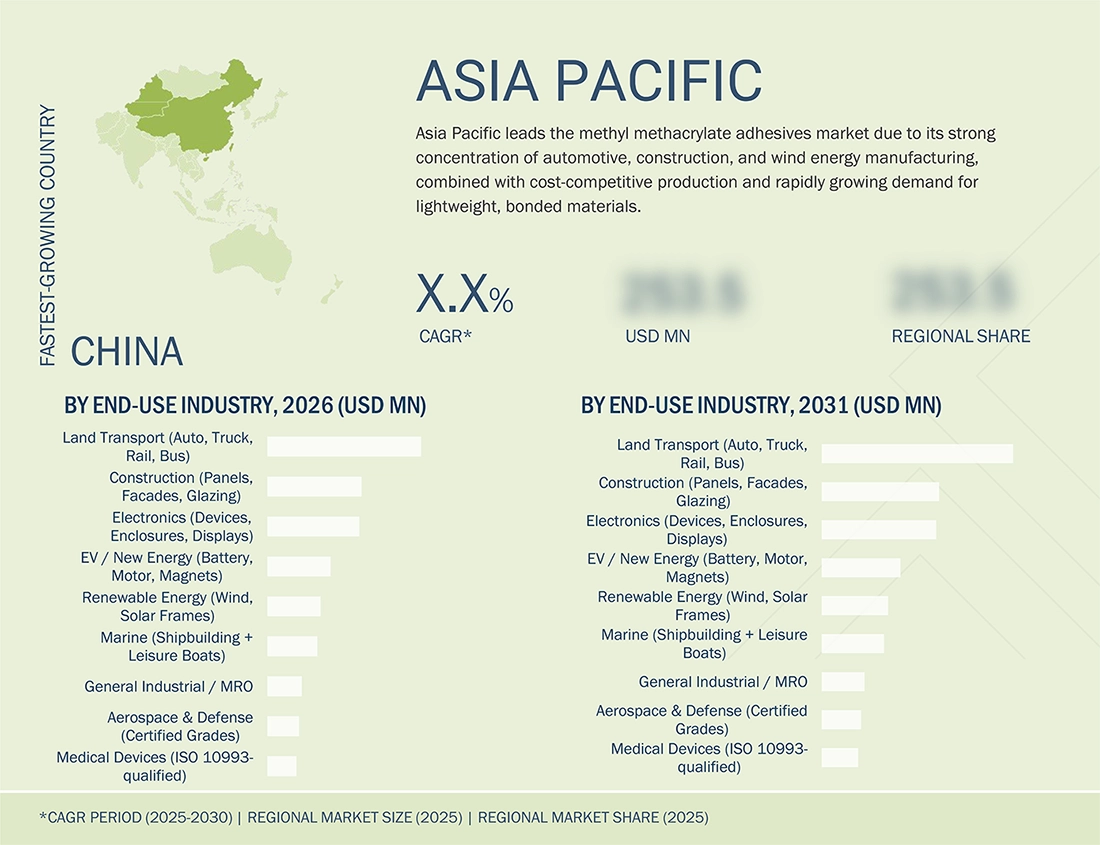
Asia Pacific leads the methyl methacrylate adhesives market. The growth of this market in the region is attributed to the rapid industrialization and increase in manufacturing capabilities of the countries in this region. Methyl methacrylate adhesives are witnessing a high demand due to the increasing adoption in land transport, construction, marine, and renewable energy segments. China is the dominant market in the region. The growth of this market can be attributed to the increase in urbanization, disposable income, and usage of lightweight and durable products. In addition, an increase in government support, technological advancements, and manufacturing capabilities of regional and global adhesive manufacturers support the market growth.
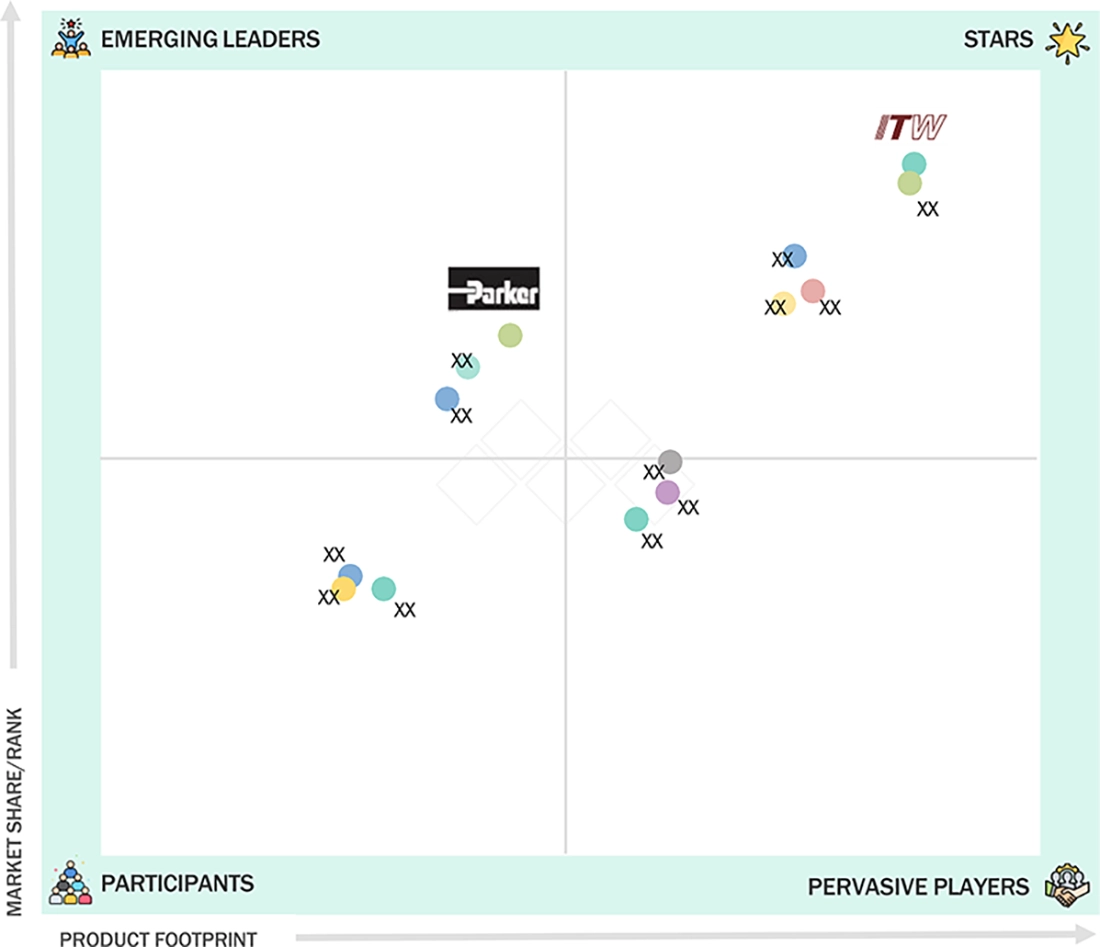
METHYL METHACRYLATE ADHESIVES MARKET: COMPANY EVALUATION MATRIX
In the methyl methacrylate adhesives market, Illinois Tool Works Inc. (Star) is at the forefront with its strong presence and portfolio of high-performance methyl methacrylate structural adhesives used in marine, aerospace & defence, land transport, and renewable energy sectors. Parker Hannifin Corp (Emerging leader) is using its expertise in materials science, strong market presence with its LORD division, and its expanding portfolio of structural adhesives used in land transport, aerospace and defence, and general industrial markets.
Source: Secondary Research, Interviews with Experts, MarketsandMarkets Analysis
KEY MARKET PLAYERS
- 3M
- Illinois Tool Works Inc
- SIKA AG
- Bostik
- H.B. Fuller Company
- Huntsman International LLC
- Henkel Adhesives Technologies India Private Limited.
- Scott Bader Company Ltd.
- IPS Corporation
- PARKER HANNIFIN CORP
MARKET SCOPE
| REPORT METRIC | DETAILS |
|---|---|
| Market Size in 2025 (Value) | USD 1.76 Billion |
| Market Size in 2026 (Value) | USD 1.88 Billion |
| Market Forecast in 2031 (Value) | USD 2.64 Billion |
| Growth Rate | CAGR of 7.0 % from 2026–2031 |
| Actual data | 2022–2031 |
| Base year | 2025 |
| Forecast period | 2026–2031 |
| Units considered | Value (USD Million/Billion), Volume (Ton) |
| Report Coverage | Revenue forecast, company ranking, competitive landscape, growth factors, and trends |
| Segments Covered |
|
| Regions Covered | Asia Pacific, Europe, North America, Middle East & Africa, South America |
WHAT IS IN IT FOR YOU: METHYL METHACRYLATE ADHESIVES MARKET REPORT CONTENT GUIDE
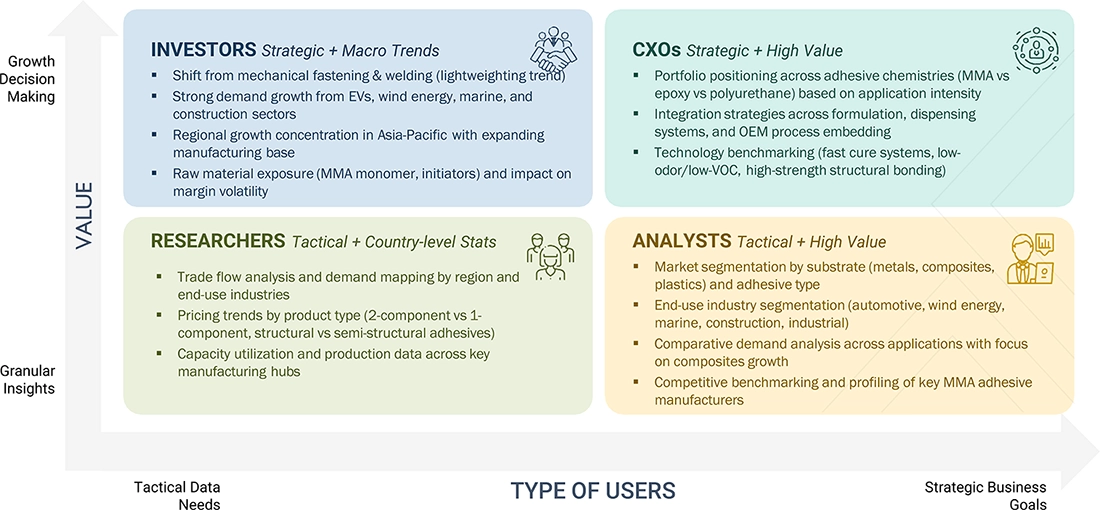
DELIVERED CUSTOMIZATIONS
We have successfully delivered the following deep-dive customizations:
| CLIENT REQUEST | CUSTOMIZATION DELIVERED | VALUE ADDS |
|---|---|---|
| Country-Level Breakdown | Instead of a high-level regional view, the report provides country-specific analysis for key methyl methacrylate adhesives markets, such as China, the US, Germany, Japan, South Korea, and India. The analysis includes demand by end-use industries (automotive, wind energy, construction, marine, aerospace), production capacity by major players, import-export trends, regulatory frameworks (VOC norms, safety standards), and sustainability initiatives (low-odor, bio-based methyl methacrylate adhesives). | Helps stakeholders identify high-growth national markets, understand supply-demand dynamics, assess regulatory impact, and forecast country-level demand for methyl methacrylate adhesives with greater accuracy |
| Application-Specific Deep Dive | Detailed segmentation of methyl methacrylate adhesives consumption by application, including transportation (automotive, EVs, rail), wind energy (turbine blades), building & construction (panels, facades), marine, and aerospace; Each segment evaluated based on bonding requirements (impact resistance, fatigue strength, thermal stability), curing speed, material compatibility, growth outlook, and margin potential | Enables clients to prioritize high-growth and high-value applications, align product portfolios with lightweighting and multi-material trends, and optimize R&D and commercialization strategies |
| Material & Process Segmentation | Comprehensive analysis of methyl methacrylate adhesives by product type (two-component vs. one-component), substrate compatibility (metals, composites, plastics, glass), and processing characteristics (open time, curing methods, dispensing technologies); Includes performance benchmarking (strength, flexibility, chemical resistance), cost structures, recyclability, and environmental footprint (low-VOC, bio-based innovations) | Supports manufacturers and investors in evaluating cost-performance trade-offs, selecting optimal adhesive systems, identifying innovation opportunities, and ensuring long-term sustainability |
| Competitive Benchmarking | Detailed profiling of leading global and regional methyl methacrylate adhesive manufacturers, covering production capacities, product portfolios, pricing strategies, partnerships, acquisitions, and innovation focus areas (low-odor formulations, advanced dispensing systems) | Provides a clear competitive landscape, helping identify market leaders, innovation trends, strategic partnerships, pricing power, and differentiation strategies in the methyl methacrylate adhesives market |
RECENT DEVELOPMENTS
- January 2026 : Henkel AG & Co. KGaA signed an agreement to acquire ATP Adhesive Systems, a Swiss company specializing in high-performance bonding solutions, such as specialty tapes. This acquisition enhances Henkel’s Adhesive Technologies segment by expanding its capabilities in advanced bonding systems across automotive, electronics, and construction markets. While focused on tapes, the deal strengthens Henkel’s broader adhesive ecosystem, including structural and acrylic technologies like MMA adhesives used in similar end-use industries.
- May 2025 : The company opened a new state-of-the-art manufacturing facility in Cairo, Egypt, and expanded its existing site in the UAE. The Cairo facility acts as a strategic hub with advanced adhesive production capabilities and strong logistics access to key global markets, enabling reduced lead times and improved supply chain efficiency. Additionally, the UAE expansion enhances production capacity across multiple adhesive applications. This regional investment supports faster innovation, localized production, and better service for customers across Africa and the Middle East.
Table of Contents
 Exclusive indicates content/data unique to MarketsandMarkets and not available with any competitors.
Methodology
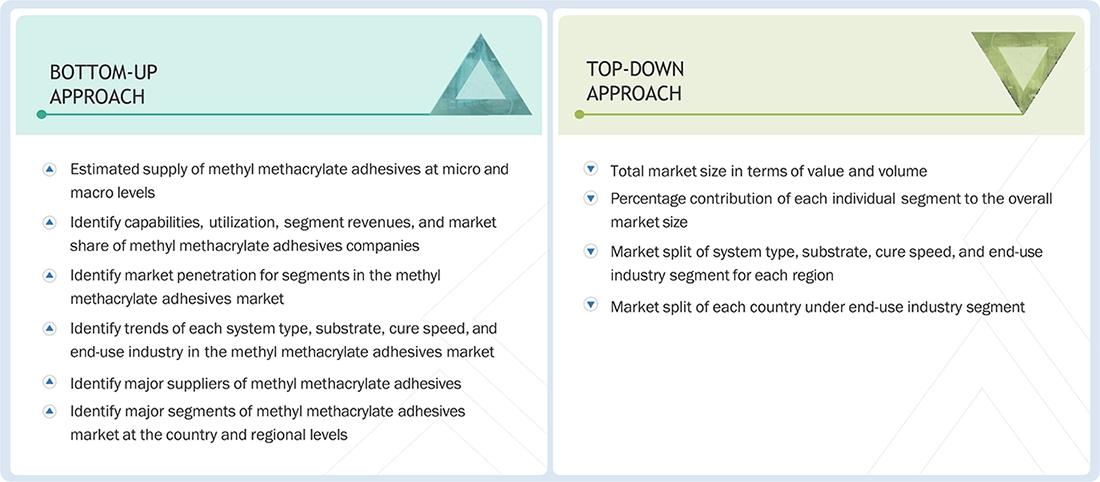
The study involved four major activities in estimating the size of the methyl methacrylate adhesives market. Exhaustive secondary research was done to collect information on the market, the peer market, and the parent market. The next step was to validate these findings, assumptions, and sizing with industry experts across the value chain through primary research. Both top-down and bottom-up approaches were employed to estimate the complete market size. Thereafter, the market breakdown and data triangulation procedures were used to estimate the market size of the segments and subsegments.
Secondary Research
In the secondary research process, various secondary sources have been referred to for identifying and collecting information for this study. These secondary sources include annual reports, press releases, investor presentations of companies, white papers, certified publications, trade directories, articles from recognized authors, gold standard and silver standard websites, and databases.
Secondary research has been used to obtain key information about the value chain of the industry, monetary chain of the market, the total pool of key methyl methacrylate adhesives players, market classification and segmentation according to industry trends to the bottom-most level, and regional markets. It was also used to obtain information about the key developments from a market-oriented perspective.
Primary Research
The methyl methacrylate adhesives market comprises several stakeholders in the value chain, which include raw material suppliers, manufacturers, distributors, and end users. Various primary sources from the supply and demand sides of the methyl methacrylate adhesives market have been interviewed to obtain qualitative and quantitative information. The primary interviewees from the demand side include key opinion leaders in end-use sectors. The primary sources from the supply side include manufacturers, associations, and institutions involved in the methyl methacrylate adhesives industry.
Primary interviews were conducted to gather insights such as market statistics, data on revenue collected from the products and services, market breakdowns, market size estimations, market forecasting, and data triangulation. Primary research also helped in understanding the various trends related to substrate, system type, cure speed, end-use industry, and region. Stakeholders from the demand side, such as CIOs, CTOs, and CSOs, were interviewed to understand the buyer’s perspective on the suppliers, products, component providers, and their current usage of methyl methacrylate adhesives and future outlook of their business, which will affect the overall market.
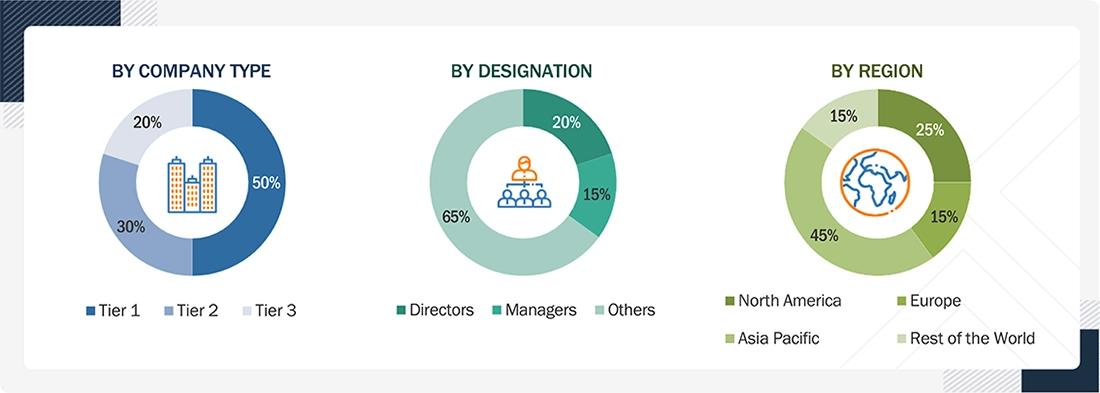
Note: Tier 1, Tier 2, and Tier 3 companies are classified based on their market revenue in 2024 available in the public domain, product portfolios, and geographical presence.
To know about the assumptions considered for the study, download the pdf brochure
Market Size Estimation
- The top-down approach was used to estimate and validate the size of various submarkets for methyl methacrylate adhesives for each region. The research methodology used to estimate the market size included the following steps:
- The key players in the industry have been identified through extensive secondary research.
- The supply chain of the industry has been determined through primary and secondary research.
- The global market was then segmented into four major regions and validated by industry experts.
- All percentage shares, splits, and breakdowns based on substrate, system type, end-use industry, cure speed, and regions were determined using secondary sources and verified through primary sources.
- All possible parameters that affect the markets covered in this research study were accounted for, viewed in extensive detail, verified through primary research, and analyzed to get the final quantitative and qualitative data. This data was consolidated and added with detailed inputs and analysis and presented in this report.
Data Triangulation
After arriving at the total market size from the estimation process for methyl methacrylate adhesives above, the overall market has been split into several segments and sub-segments. To complete the overall market engineering process and arrive at the exact statistics for all the segments and sub-segments, the data triangulation and market breakdown procedures have been employed, wherever applicable. The data has been triangulated by studying various factors and trends from both the demand and supply sides. Along with this, the market size has been validated by using both the top-down and bottom-up approaches and primary interviews. Hence, for every data segment, there have been three sources—top-down approach, bottom-up approach, and expert interviews. The data was assumed correct when the values arrived from the three sources matched.
Market Definition
The methyl methacrylate adhesives market comprises adhesives based on methyl methacrylate chemistry, primarily used for structural and high-performance bonding applications. These adhesives are typically two-component reactive systems that cure via polymerization, providing exceptional strength, impact resistance, and chemical and temperature durability. The market includes a range of formulations such as fast-curing, toughened, and specialty variants, catering to industries like automotive, aerospace, marine, construction, and industrial manufacturing. Methyl methacrylate adhesives are favored over mechanical fasteners and conventional adhesives for bonding metals, composites, and plastics, offering lightweight, durable, and reliable solutions. The market covers product development, manufacturing, distribution, and application of these high-performance adhesives globally.
Key Stakeholders
- Methyl methacrylate adhesives manufacturers
- Methyl methacrylate adhesive traders, distributors, and suppliers
- Raw material suppliers
- Government and private research organizations
- Associations and industrial bodies
- R&D institutions
- Environmental support agencies
Report Objectives
- To define, describe, and forecast the size of the methyl methacrylate adhesives market, in terms of value and volume
- To provide detailed information regarding the major factors (drivers, opportunities, restraints, and challenges) influencing the growth of the market
- To estimate and forecast the market size based on substrate, system type, cure speed, end-use industry, and region
- To forecast the size of the market with respect to major regions, namely, Europe, North America, Asia Pacific, Middle East & Africa and South America, along with their key countries
- To strategically analyze micromarkets with respect to individual growth trends, prospects, and their contribution to the overall market
- To analyze opportunities in the market for stakeholders and provide a competitive landscape of market leaders
- To track and analyze recent developments such as product launch, collaboration, contract, acquisition, and expansion in the market
- To strategically profile key market players and comprehensively analyze their core competencies.
Available customizations:
Along with the given market data, MarketsandMarkets offers customizations according to the company’s specific needs. The following customization options are available for the report:
Regional Analysis
- Further breakdown of a region with respect to a particular country or additional end-use industry
Company Information
- Detailed analysis and profiles of additional market players
Tariff & Regulations
- Regulations and impact on the methyl methacrylate adhesives market
By System Type Analysis
- Market size for methyl methacrylate adhesives in terms of value and volume


Personalize This Research
- Triangulate with your Own Data
- Get Data as per your Format and Definition
- Gain a Deeper Dive on a Specific Application, Geography, Customer or Competitor
- Any level of Personalization
Let Us Help You
- What are the Known and Unknown Adjacencies Impacting the Methyl Methacrylate Adhesives Market
- What will your New Revenue Sources be?
- Who will be your Top Customer; what will make them switch?
- Defend your Market Share or Win Competitors
- Get a Scorecard for Target Partners

Custom Market Research Services
We Will Customise The Research For You, In Case The Report Listed Above Does Not Meet With Your Requirements
Get 10% Free CustomisationTESTIMONIALS
We at Nissan Chemicals Corporation have been clients of MarketsandMarkets for more than a year now. We recently consulted MarketsandMarkets for a study, the team at MarketsandMarkets was extremely professional and organized. The business insights were very detailed and aligned well with our expectations that really helped us formulate the Business Plans and device new strategies for development themes. MarketsandMarkets offers a unique combination of expertise and dedicated engagement model. Their research findings have helped us in designing our Pricing Strategy which will make it easier for us to predict the future sales and profits for the next ten years. We look forward to working with MarketsandMarkets in the future.
VP of Strategy & New Business Development
Leading Specialty Chemical Company
The MarketsandMarkets Engagement Model, composed of both the Knowledge Store and advisory custom research, has greatly helped us in understanding our markets and making strategic decisions. The Knowledge Store is a fast way to allow everyone in our organization to understand more about most any market they are interested in. The ability to then get custom research done and get answers to specific strategic questions and market insight has been spectacular. The Markets and Markets team feel more like colleagues than vendors and their services have helped us change our culture where statements of things like growth opportunities and competitive position are always backed by industry research.

Rich Gibson,
Director, Corporate Strategy
Milliken & Company,
Leading Industrial Manufacturer of specialty chemical, floor covering, performance and protective textile materials, and healthcaremilliken.com
MarketsandMarkets is a trusted resource that helps us to better understand markets that are near-adjacencies-whether its technology, value chain or geography. Their Knowledge Store platform provides a dashboard of markets and their characteristics which is easy to use and saves us time.
Adam Shaw,
Market Development and Strategy Manager
AdvanSix Inc. USA,
An American Leader in Chemicalswww.advansix.com
The Knowledge Store from MarketsandMarkets is a valuable tool which has helped my team acquire greater insight in to the end markets that our business serves. This has enabled us to help our company build stronger strategies throughout our planning process.
TOSHIO KINOSHITA
Senior Chif Consultion Research & Consulting Division
Mitsubishi Chemical Research Corporation,
Leading Manufacturer of Chemical Productswww.mitsubishichem-res.co.jp/en/

We recently engaged with MarketsandMarkets for a study, the team not only clearly understood our business objectives but was also extremely professional in the way they handled the entire project. The study was efficiently conducted in a phase-wise manner, and the engagement model furnished us with high-quality business insights that far exceeded our expectations at each phase. We were especially happy that MarketsandMarkets could provide us with both, an English as well as a Japanese version of the study. A special thanks to the Analyst Team and Client Services Team, whose fluency in Japanese enhanced our comfort level, as we could converse with them in our preferred language.
Independent entrepreneurs
Arrow Precision
We approached MarketsandMarkets for study on Proppants Market, and their work exceeded our expectations. The study conducted was comprehensive and enabled us to view the market through the various dimensions. In addition, the team was extraordinarily responsive throughout the process and resolved our queries on time. I strongly recommend MarketsandMarkets and will certainly consider them for additional market assessments we will need in the future.
Global engineering company, Japan
Deputy Manager,
Strategic Planning OfficeThe high-quality insights shared by the MarketsandMarkets team helped us understand the pharmaceutical plant designers in a specific geography. It also captured the risks that we may likely face in communicating with our potential partners. The study would enable us identify partners, which would impact our future growth.
- China Methyl Methacrylate Adhesives Market
- Japan Methyl Methacrylate Adhesives Market
- India Methyl Methacrylate Adhesives Market
- South Korea Methyl Methacrylate Adhesives Market
- US Methyl Methacrylate Adhesives Market
- Canada Methyl Methacrylate Adhesives Market
- Mexico Methyl Methacrylate Adhesives Market
- Germany Methyl Methacrylate Adhesives Market
- France Methyl Methacrylate Adhesives Market
- UK Methyl Methacrylate Adhesives Market
- Italy Methyl Methacrylate Adhesives Market
- Spain Methyl Methacrylate Adhesives Market
- South Africa Methyl Methacrylate Adhesives Market
- Rest Of Europe Methyl Methacrylate Adhesives Market
- Rest Of Asia Pacific Methyl Methacrylate Adhesives Market
- GCC Countries Methyl Methacrylate Adhesives Market
- –Rest Of GCC Countries Methyl Methacrylate Adhesives Market
Growth opportunities and latent adjacency in Methyl Methacrylate Adhesives Market






Laura
Aug, 2018
Trend and forecast of MMA market.
Mitch
May, 2016
Have an interest in this report, seeking more information and best pricing to see if our Q2 budget can allow. Thank you.
Tim
Jun, 2018
General information on Composite Adhesives Market.
Thomas
Mar, 2018
MMA applications in single lap joints for marine industry..