Molded Pulp Packaging Market

Molded Pulp Packaging Market by Molded Type (Transfer Molded, Thickwall, Thermoformed Fiber and Processed Pulp), Source (Wood Pulp and Non-Wood Pulp), Product (Trays, Clamshells), End-use Industry (Food), and by Region - Global Forecast To 2031




OVERVIEW
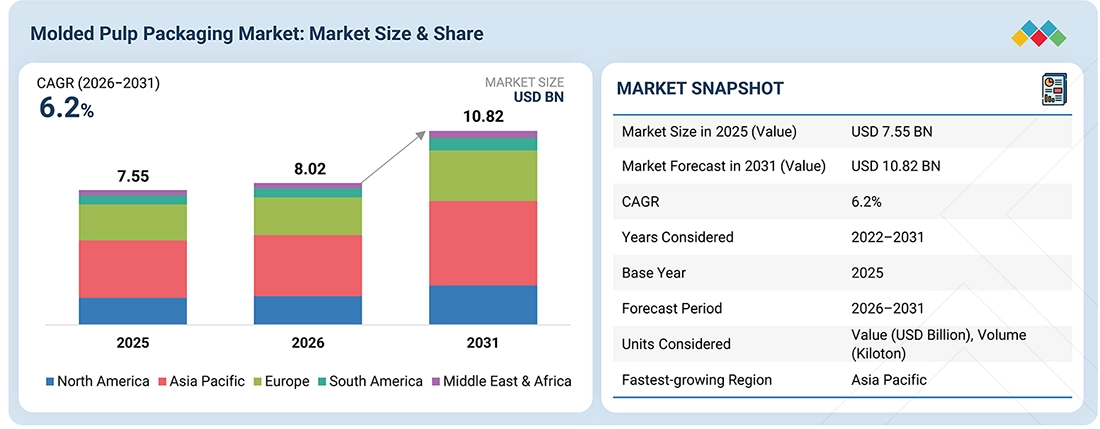
Source: Secondary Research, Interviews with Experts, MarketsandMarkets Analysis
The molded pulp packaging market is projected to grow from USD 8.02 billion in 2026 to USD 10.82 billion by 2031, at a CAGR of 6.2% during the forecast period. The molded pulp packaging market is anticipated to experience substantial growth during the forecast period, as brands and manufacturers continue to move toward the use of sustainable, recyclable, and biodegradable packaging options. There has been an increasing awareness of the problem of plastic waste, and the desire to cut down on the number of single-use plastic and foam packages is driving replacement with molded pulp packages. Its applications will continue to grow due to increased needs in food, e-commerce, electronics, healthcare, and consumer goods. There are more and more food delivery, take-out and organized retail formats driving growth in trays and containers.
KEY TAKEAWAYS
-
By RegionAsia Pacific's molded pulp packaging market dominated, with a share of 42.8% in 2025.
-
By SourceBy source, the wood pulp segment is expected to be the leading segment, in terms of value.
-
By Molded TypeBy molded type, the transfer molded segment is expected to be the leading segment, in terms of value.
-
By ProductBy product, the trays segment is expected to dominate the market, in terms of value.
-
By End-use IndustryBy end-use industry, the food packaging segment is expected to be the leading segment, in terms of value.
-
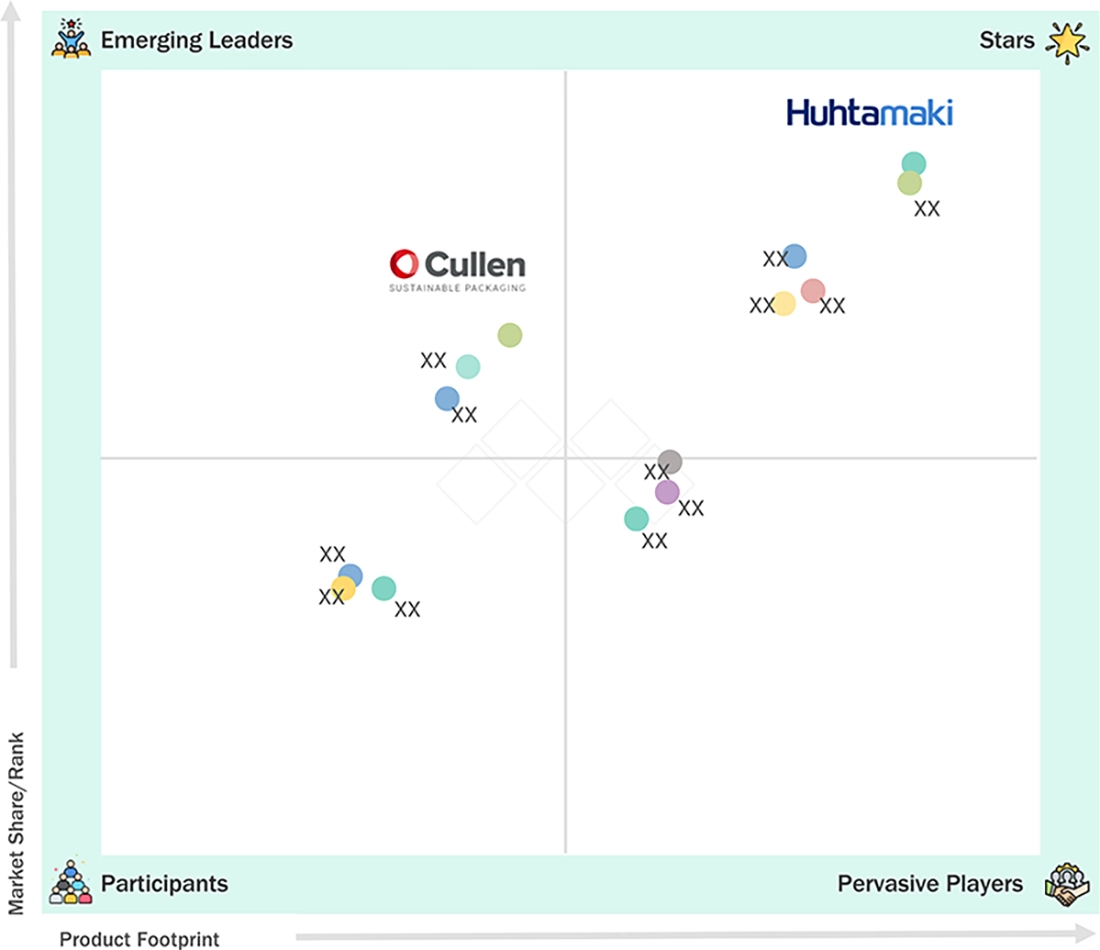
Competitive Landscape - Key PlayersHuhtamaki Oyj (Finland), Hartmann Packaging A/S (Denmark), CKF Inc. (Canada), Novolex (US), and Sabert Corporation (US) were identified as star players in the molded pulp packaging market. These companies maintain strong market positions through established manufacturing capabilities, extensive product portfolios, broad geographic presence, and strong relationships with customers across food, foodservice, consumer goods, and other end-use industries.
-
Competitive Landscape- StartupsRypax, Green Valley Packaging, Bonitopak, Maspack Limited among others, have distinguished themselves among startups and SMEs. These companies are gaining traction through specialized molded fiber solutions, customized packaging designs, sustainable material use, and technological capabilities.
The growth of e-commerce at the same time is fueling the need for protective molded pulp inserts and cushioning for fragile products. The ability to mold, dry and develop barrier technologies is creating lighter, stronger, more accurate and better products. Better recycling of paper and agricultural fibers is also helping to provide materials and innovations. Moreover, the brands are implementing fiber packaging due to the corporate sustainability agenda and shifting consumer preferences, which has been generating new opportunities for molded pulp packaging manufacturers.
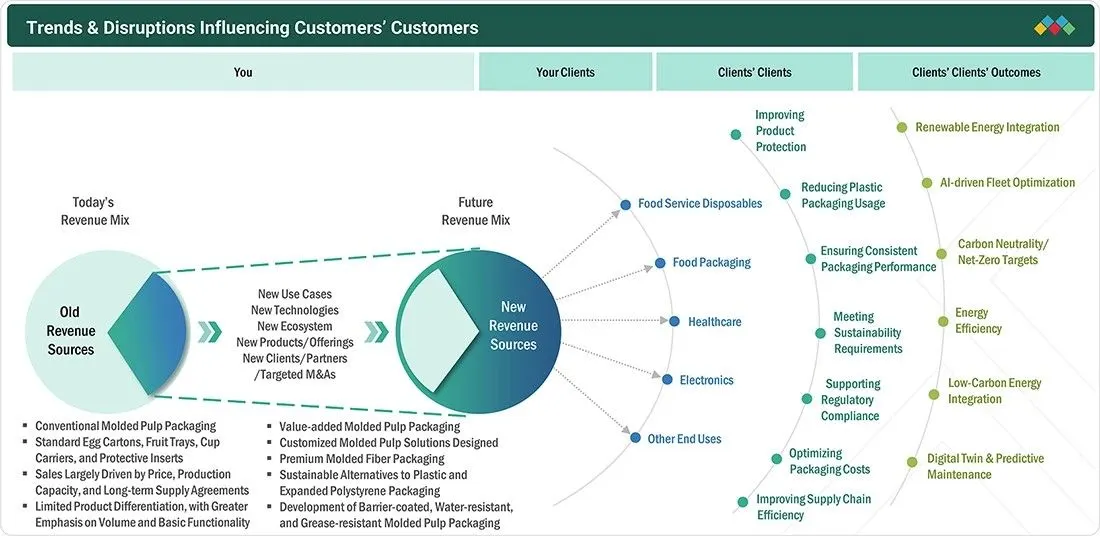
TRENDS & DISRUPTIONS IMPACTING CUSTOMERS' CUSTOMERS
Increasing brands' sustainability commitments, the transition from single-use plastics and rising demand for recyclable and biodegradable packaging are driving the molded pulp packaging market. Product quality, design flexibility and performance is enhanced by technological advances in molding, drying, barrier coatings and fiber formulations for products like food, electronics, etc. Meanwhile, raw material price volatility, energy requirements of manufacturing, and moisture and grease resistance are critical issues for manufacturers. The trends are helping companies to invest in efficient production technologies, alternative fibers and higher performing molded pulp solutions.
Source: Secondary Research, Interviews with Experts, MarketsandMarkets Analysis
MARKET DYNAMICS

Level
-
Expansion of egg production

-
Growing e-commerce industry


Level
-
Higher cost in certain applications

-
Raw-material availability and quality variations


Level
-
Growing wine and beer consumption

-
Growth in emerging markets


Level
-
Achieving performance comparable to plastic

-
Scaling production to meet large customer requirements

Source: Secondary Research, Interviews with Experts, MarketsandMarkets Analysis
Driver: Increasing restrictions on single-use plastics
The rise in consumer awareness of the need to reduce single-use plastics and EPS packaging, and the government measures taken to address this, are bringing opportunities for molded pulp packaging. Governments are implementing bans, taxes, limits on use, and producer responsibility measures, which are creating opportunities for molded pulp packaging. These rules will help businesses, such as restaurants, retailers, foodservice operators, and manufacturers, switch to greener packaging alternatives instead of traditional plastic packaging. Food trays, take-away containers, plates, bowls, clamshells, and protective packaging can all be substituted with molded pulp. The demand for molded pulp is rising in a few end use industries as companies look for packaging options that are compliant with regulations. This regulatory change is thus anticipated to be propelling the molded pulp packaging market during the forecast period.
Restraint: Higher cost in certain applications
In some applications, the use of molded pulp packaging may be restricted due to the higher production costs, especially when compared to the unit cost of conventional plastic packaging. Molded pulp production includes several steps: pulping, molding, dewatering, drying, finishing, and, in some cases, coating, which in turn can lead to increased processing and energy expenses. Other production costs may be higher for customized designs because of the need for special equipment, tooling, and barrier treatments. Also, molded pulp may be more expensive to transport if the product is bulky or not easily stackable. These cost pressures are especially important for end-use products that are sensitive to price, but cost competitiveness can continue to be enhanced over time through automation, lightweighting, better drying technologies, and higher production volumes.
Opportunity: Expansion into high-performance, smart, and customized molded fiber packaging
The increased demand for high-performance, smart, and customized packaging is opening new opportunities for molded pulp to go beyond conventional packaging. More advanced molding and barrier technologies are allowing its application in such high-value sectors as food, electronics, cosmetics, beverages, and high-performance packaging, where performance and aesthetics are critical. QR Codes, RFID, NFC, and digital identifiers can also be integrated to provide traceability, authentication, inventory, and consumer engagement capabilities. New tooling capabilities also enable the addition of custom shapes, compartments, textures, embossing, and branding features that enhance product appearance. These advances allow molded pulp packaging to meet sustainability, functionality, protection, and brand differentiations needs, and help expand the range of applications.
Challenge: Achieving performance comparable to plastic
One of the major challenges for molded pulp packaging is to offer the same performance as traditional plastics and keep the sustainability advantages. Plastic possesses high strength, impact resistance, moisture and grease resistance, dimensional stability, lightweight construction, and consistent surface quality. Molded pulp producers, therefore, require increased mechanical strength, cushioning, barrier, dimensional stability, surface finish, and weight efficiency. But higher fiber density or fiber thickness can provide more protection but lead to higher material consumption, weight, shipping costs, and manufacturing costs. Thinner and lighter packaging also demands new molding technologies and accurate fiber distribution, in the case of high-performance packaging applications like electronics, foodservice, and e-commerce packaging.
MOLDED PULP PACKAGING MARKET: COMMERCIAL USE CASES ACROSS INDUSTRIES
| COMPANY | USE CASE DESCRIPTION | BENEFITS |
|---|---|---|
 |
EnviroPAK developed a customized thin-wall (Type 2) molded fiber packaging solution for Kohler’s rough-in shower valves. The company redesigned its existing molded fiber packaging, which had been supplied to Kohler for more than 20 years, to optimize nesting and increase the number of products per pallet by approximately 25%. | The redesigned packaging improved pallet utilization and transportation efficiency, enabling more products to be shipped per load and reducing the number of required truck shipments. It also provided Kohler with a more reliable supply of biodegradable molded fiber packaging while maintaining adequate protection for its shower valves. |
 |
FiberCel developed custom-engineered molded pulp packaging solutions for sensitive industrial and electronic products, including powder-coated metal equipment and electronic ozone generators. For a powder-coated metal personal camp stove, FiberCel replaced corrugated die-cuts with molded pulp end caps featuring a water-soluble wax coating, reducing the need for folding and assembly. For an electronic ozone generator, the company replaced plastic mesh and polystyrene end caps with a custom molded pulp design that passed drop tests and reduced the number of components from eight to four. | The molded pulp solutions provided effective cushioning and product protection while reducing surface scuffing, material use, packaging weight, and costs. The redesigned packaging also simplified packing operations and reduced assembly requirements, supporting more efficient handling and transportation. |
Logos and trademarks shown above are the property of their respective owners. Their use here is for informational and illustrative purposes only.
MARKET ECOSYSTEM
The molded pulp packaging ecosystem consists of raw material suppliers, pulp manufacturers, molded pulp packaging producers, equipment and technology suppliers, distributors, and end-use industries. The ecosystem starts with sourcing and processing wood pulp, recycled paper, and non-wood fibers, which are converted into pulp and formed into packaging products. Food, electronics, health care, and consumer goods are all sectors that rely on manufacturers of products like trays, clamshells, containers, and protective packaging. The overall growth and competitiveness of the market are affected by sustainability needs, the development of recycling facilities, technological innovations and cooperation within the value chain.
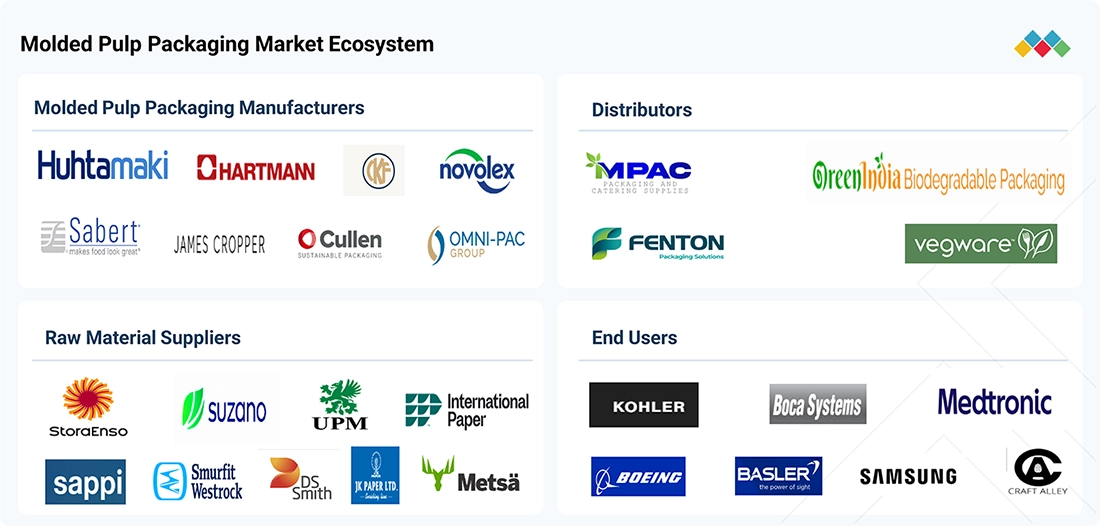
Logos and trademarks shown above are the property of their respective owners. Their use here is for informational and illustrative purposes only.
MARKET SEGMENTS
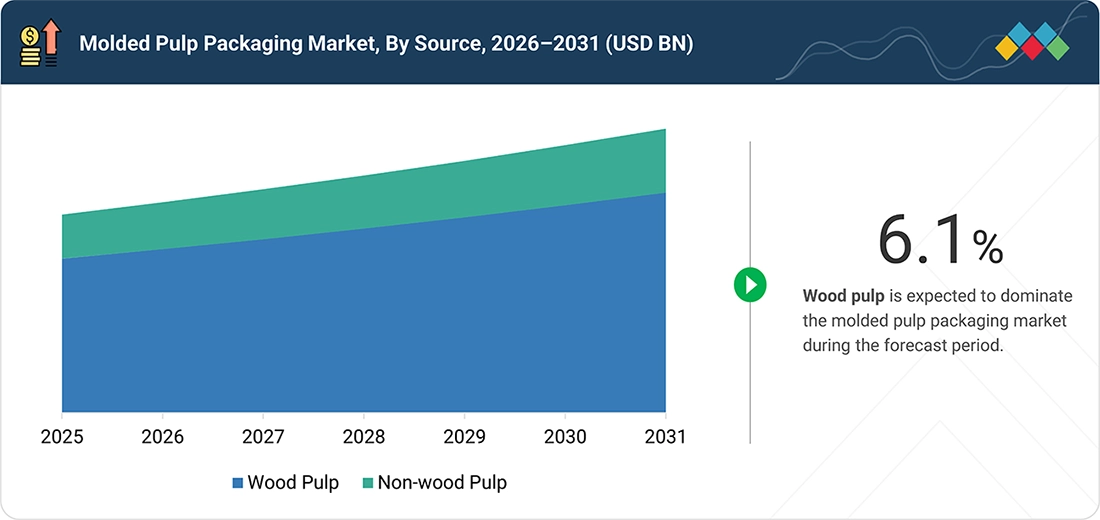
Source: Secondary Research, Interviews with Experts, MarketsandMarkets Analysis
Molded Pulp Packaging Market, By Source
Wood pulp accounted for the largest share of the molded pulp packaging market in 2025, due to its quality cellulose fiber characteristics such as good strength, consistency and forming properties. It is a well-developed product with a good processing facility for pulp production, which makes large scale molded pulp packaging possible. The wood pulp can be graded to produce various types of pulp to produce rigid packing with cushioning performance. It can also be used to create smooth, even surfaces, such as those found in pharmaceuticals, food, and packaging applications. Wood-based fiber's recyclability and renewability also contribute to its use as brands strive to find packaging alternatives that are made from fiber.
Molded Pulp Packaging Market, By Molded Type
In 2025, transfer molded accounted for the largest segment of the molded pulp packaging market because of its balance of product quality, dimensional accuracy, production efficiency and versatility, making it the top packaging technology of the molded type segment. It enables the molded pulp products to be molded in rather complex shapes with uniform thickness and structure. The process can be used to manufacture packaging components of various sizes and design including trays, inserts, holders and protective structures. Transfer molding also can produce superior surface definition and finishing than traditional molding methods.
Molded Pulp Packaging Market, By Product
In 2025, trays accounted for the largest share of the molded pulp packaging market, as they are utilized for product protection, product presentation, separation and transportation. They can securely hold individual products, and are used in a variety of applications such as food, electronics, healthcare, consumer goods, and more. Molded pulp trays can be created with compartments, holes, and various shapes to hold different products, minimize moving and possible damage during handling. They can also be used to replace plastic and expanded foam trays in a few uses, helping to promote the trend toward fiber-based packaging. The versatility, adaptability, recyclability, and affordability of their offering is still fueling robust demand.
Molded Pulp Packaging Market, By End-use Industry
Food packaging accounted for the largest share of the molded pulp packaging market in 2025, as molded pulp products are being increasingly employed in protective packaging for egg cartons, fruit and produce trays, food containers, dishes, bowls, etc. The amount of packaged food consumed makes it a big need to provide packaging solutions that are practical and economical. Molded pulp is a cushioning and structural material that offers an alternative to many traditional packaging materials, such as plastic, metal and glass. The increase in the consumption of takeaway, food delivery, and ready-to-eat food is also providing new opportunities for molded pulp packaging. In addition, consumers demand food packaging to be recyclable and environmentally friendly, which is driving food manufacturers and retailers to turn to molded pulp.
REGION
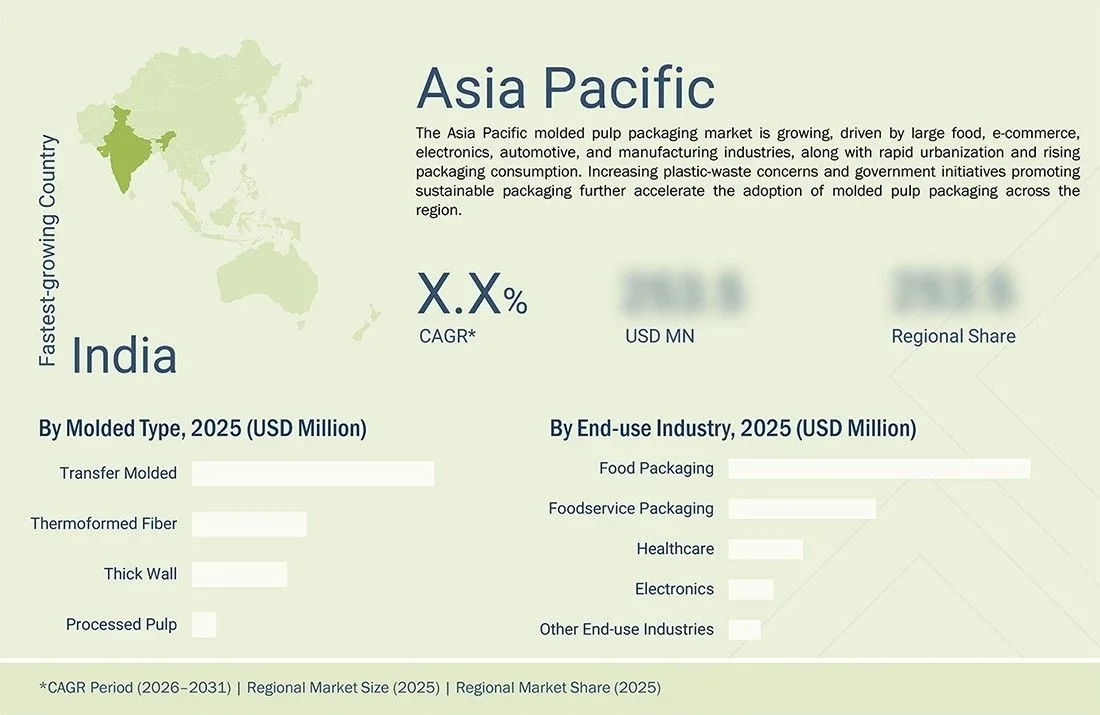
Asia Pacific is a leading region in the global molded pulp packaging market.
By region, Asia Pacific is the leading region in the molded pulp packaging market, driven by the size of the manufacturing market, the growth in the population and the expansion of end-use industries. The region is seeing a rising adoption of molded pulp products due to robust demand in food, electronics, e-commerce, healthcare, personal care and consumer goods. The growing consciousness of the environment and the government's initiative to minimize plastic waste drive manufacturers and brands to develop and use packaging that is recyclable, biodegradable, or fiber-based in nature. Furthermore, the growth of e-commerce and food delivery businesses is driving increased demand for protective trays, containers and other molded pulp products in the region.
MOLDED PULP PACKAGING MARKET: COMPANY EVALUATION MATRIX
In the molded pulp packaging market matrix, Huhtamaki Oyj (Star) leads due to broad molded fiber packaging portfolio, strong manufacturing capabilities, global presence, and continued focus on sustainable packaging solutions. Cullen Sustainable Packaging (Emerging Leader) is gaining visibility due to expanding molded pulp packaging capabilities, focus on sustainable fiber-based solutions, and efforts to strengthen its presence across key end-use markets.
Source: Secondary Research, Interviews with Experts, MarketsandMarkets Analysis
KEY MARKET PLAYERS
- Huhtamaki Oyj (Finland)
- Hartmann Packaging A/S (Denmark)
- CKF Inc. (Canada)
- Novolex (US)
- Sabert Corporation (US)
- Omni-Pac Group (France)
- Cullen Sustainable Packaging (UK)
- James Cropper PLC (UK)
- Genpak (US)
- PAPACKS SALES GmbH (Germany)
- Keiding, Inc. (US)
- Henry Molded Products Inc. (US)
- EnviroPAK (US)
- Specialized Packaging Group (SPG) (US)
- Tekni-Plex, Inc.
MARKET SCOPE
| REPORT METRIC | DETAILS |
|---|---|
| Market Size in 2025 (Value) | USD 7.55 Billion |
| Market Size in 2026 (Value) | USD 8.02 Billion |
| Market Forecast in 2031 (Value) | USD 10.82 Billion |
| CAGR | 6.2% |
| Years Considered | 2022–2031 |
| Base Year | 2025 |
| Forecast Period | 2026–2031 |
| Units Considered | Value (USD Billion), Volume (Kiloton) |
| Report Coverage | Revenue forecast, company ranking, competitive landscape, growth factors, and trends |
| Segments Covered |
|
| Regions Covered | North America, Europe, Asia Pacific, South America, and Middle East & Africa |
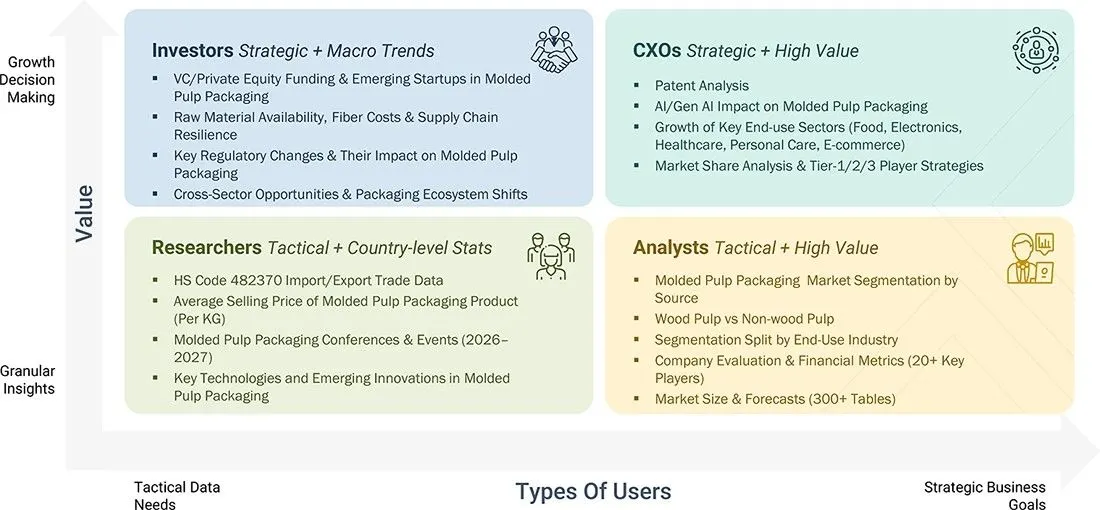
WHAT IS IN IT FOR YOU: MOLDED PULP PACKAGING MARKET REPORT CONTENT GUIDE
DELIVERED CUSTOMIZATIONS
We have successfully delivered the following deep-dive customizations:
| CLIENT REQUEST | CUSTOMIZATION DELIVERED | VALUE ADDS |
|---|---|---|
| Asia Pacific-based Molded Pulp Packaging Market | Detailed company profiles of molded pulp packaging market competitors (financials, product portfolio), molded type (transfer molded, thermoformed fiber, thick wall, and processed pulp), product (trays, clamshells, plates, cups, bowls, and other products), and end-use industry (food packaging, foodservice packaging, healthcare, electronics, other end-use industries) | Identified & profiled 20+ molded pulp packaging producers across Asia Pacific Mapped demand trends across high-growth segments (food packaging, foodservice packaging, healthcare, electronics, other end-use industries)) |
| Europe-based Molded Pulp Packaging Market | Detailed company profiles of molded pulp packaging market competitors (financials, product portfolio), molded type (transfer molded, thermoformed fiber, thick wall, and processed pulp), product (trays, clamshells, plates, cups, bowls, and other products), and end-use industry (food packaging, foodservice packaging, healthcare, electronics, other end-use industries) | Identified & profiled 20+ molded pulp packaging producers across Europe Mapped demand trends across high-growth segments (food packaging, foodservice packaging, healthcare, electronics, other end-use industries)) |
RECENT DEVELOPMENTS
- 4/1/2025 12:00:00 AM : Huhtamaki acquired Zellwin Farms, a privately owned molded fiber packaging business based in Zellwood, Florida, USA, in a transaction valued at approximately USD 18 million. The acquisition strengthened Huhtamaki’s position in the molded fiber packaging industry, particularly in egg cartons and egg flats, while expanding its production capacity and capabilities. Zellwin Farms had served egg producers across the Southeastern United States for more than 20 years from a single manufacturing site, generating approximately USD 20 million in annual net sales. The acquisition enabled Huhtamaki to enhance its molded fiber packaging capacity and better serve the growing egg packaging market.
- 4/1/2025 12:00:00 AM : Hartmann Packaging A/S entered into a definitive agreement to acquire SC Dentas Romania SRL, a subsidiary of Dentas Kagit Sanayi AS, subject to customary regulatory approvals. The acquisition aimed to strengthen Hartmann’s fiber packaging capacity and expand its European footprint, while broadening its product portfolio in key growth markets. Integrating Dentas Romania’s manufacturing capabilities was expected to enhance Hartmann’s ability to serve customers and meet the growing demand for sustainable fiber-based packaging solutions.
- 4/1/2025 12:00:00 AM : Novolex completed its combination with Pactiv Evergreen Inc., creating a leading provider of food, beverage, and specialty packaging products. The transaction was valued at approximately USD 6.7 billion, including Pactiv Evergreen’s net debt as of September 30, 2024. After the transaction closed, Pactiv Evergreen’s shares were delisted from Nasdaq, and shareholders received USD 18.00 in cash per share, a 49% premium to the company’s two-month unaffected volume-weighted average trading price as of December 2, 2024
- 7/1/2025 12:00:00 AM : Scotia Investments Limited (SIL), together with CKF Inc., signed an agreement with US-based UFP Technologies Inc. for CKF to acquire Molded Fiber Technology Inc. (MFT). Following the acquisition, MFT and CKF’s molded fiber operations were combined under the new corporate entity MFT-CKF Inc.
Table of Contents
 Exclusive indicates content/data unique to MarketsandMarkets and not available with any competitors.
Methodology
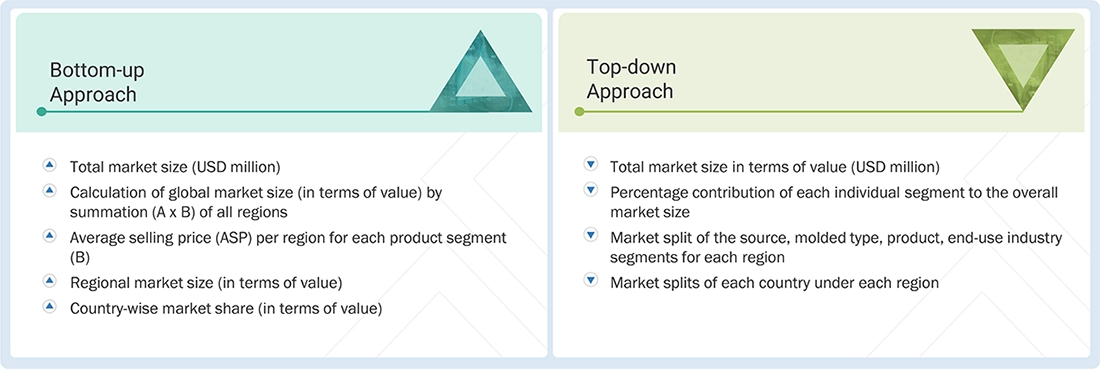
The study involved four major activities to estimate the current size of the global molded pulp packaging market. Exhaustive secondary research was carried out to collect information on the market, the peer product market, and the parent product group market. The next step was to validate these findings, assumptions, and sizes with industry experts across the value chain of molded pulp packaging through primary research. The top-down and bottom-up approaches were employed to estimate the overall size of the molded pulp packaging market. After that, market breakdown and data triangulation procedures were used to determine the size of different segments of the market.
Secondary Research
The market for companies offering molded pulp packaging was determined using secondary data available through paid and unpaid sources, analyzing the product portfolios of the major companies in the ecosystem, and rating the companies by their performance and quality. For this study, various secondary sources, such as Business Standard, Bloomberg, the World Bank, and Factiva, were referred to identify and collect information on the molded pulp packaging market. In the secondary research process, various secondary sources were referred to identify and collect information related to the study. Secondary sources included annual reports, press releases, and investor presentations of molded pulp packaging vendors, forums, certified publications, and whitepapers. The secondary research was used to obtain critical information on the industry’s value chain, the total pool of key players, market classification, and segmentation from the market and technology-oriented perspectives.
Primary Research
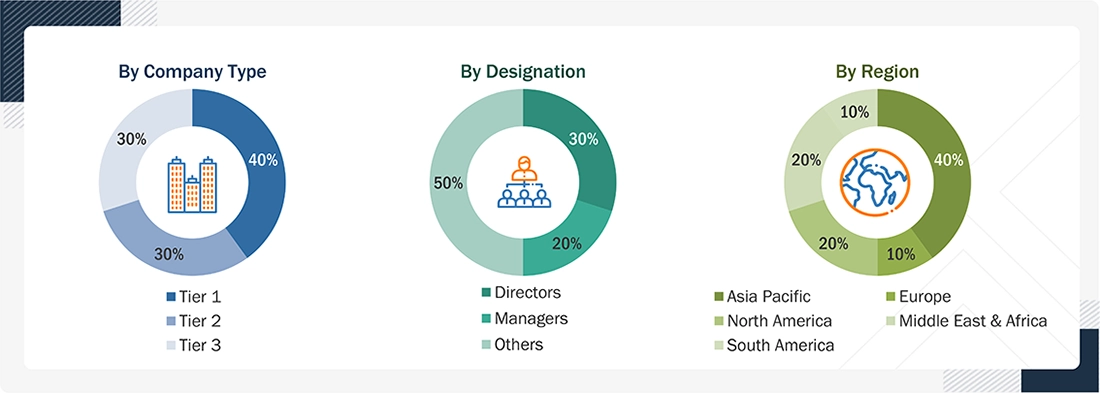
In the primary research process, various primary sources from the supply and demand sides were interviewed to obtain qualitative and quantitative information for this report. The primary sources from the supply side included industry experts, such as chief executive officers (CEOs), vice presidents (VPs), marketing directors, technology and innovation directors, and related key executives from several key companies and organizations operating in the molded pulp packaging market. After the complete market engineering (calculations for market statistics, market breakdown, market size estimations, market forecasting, and data triangulation), extensive primary research was conducted to gather information and verify and validate the critical numbers arrived at.
Primary research was also conducted to identify the segmentation types, industry trends, competitive landscape of molded pulp packaging offered by various market players, and key market dynamics, such as drivers, restraints, opportunities, challenges, trends, and key player strategies. In the complete market engineering process, the top-down and bottom-up approaches and several data triangulation methods were extensively used to perform the market estimation and market forecasting for the overall market segments and subsegments listed in this report. Extensive qualitative and quantitative analysis was performed on the complete market engineering process to list the key information/insights throughout the report.
To know about the assumptions considered for the study, download the pdf brochure
Market Size Estimation
The top-down and bottom-up approaches were used to estimate and validate the size of the global molded pulp packaging market. These approaches were also used extensively to estimate the size of various dependent market segments. The research methodology used to estimate the market size included the following:
Data Triangulation
After arriving at the overall market size using the market size estimation processes, the market was split into several segments and subsegments. The data triangulation and market breakup procedures were employed, wherever applicable, to complete the overall market engineering process and arrive at the exact statistics of each market segment and subsegment. The data was triangulated by studying various factors and trends from the demand and supply sides.
Market Definition
Molded pulp, also known as molded fiber packaging, is a sustainable packaging material manufactured by forming cellulose-based fibers into specific three-dimensional shapes through a molding, dewatering, drying, and finishing process. The primary raw materials include recycled paper, cardboard, newsprint, and natural fibers such as sugarcane bagasse, bamboo, and wheat straw. The selected raw material influences the packaging's color, surface texture, strength, rigidity, and other physical properties.
The manufacturing process generally begins by blending the raw materials with water to create a pulp slurry. A mesh forming tool is immersed in the slurry, and vacuum pressure draws the fibers onto the mold until the required thickness is achieved. The wet molded components are then removed and dried, then pressed with heated tools to improve surface smoothness and dimensional accuracy. During finishing, manufacturers can add logos, artwork, coatings, barriers, or other surface treatments, while trimming or die-cutting edges, holes, and windows as required.
Molded pulp packaging is characterized by rounded corners, draft angles, and complex three-dimensional geometries, as sharp 90-degree angles are generally unsuitable for releasing the molded component from the forming tools. Historically, molded pulp was primarily used for protective packaging applications such as egg cartons, fruit trays, and end caps. Advances in molding, thermoforming, tooling, and surface-finishing technologies have enabled the production of thinner, smoother, more precise, and visually appealing packaging, expanding its use across food packaging, foodservice, electronics, consumer goods, healthcare, e-commerce, and other end-use industries.
Key Stakeholders
- Raw material suppliers
- Pulp & paper manufacturers
- Molded pulp packaging manufacturers
- Machinery & equipment suppliers
- Chemical & coating suppliers
- Packaging converters
- End-users
- Waste management companies
- Recycling companies
- Government and research organizations
- Associations and industrial bodies
- R&D institutions
- Environmental support agencies
Report Objectives
- To define, describe, and forecast the size of the global molded pulp packaging market, by source, molded type, product, and end-use industry, in terms of value and volume
- To forecast the market size of segments for North America, Europe, Asia Pacific, South America, and the Middle East & Africa, along with their respective countries, in terms of value and volume
- To provide detailed information on the significant drivers, restraints, opportunities, and challenges influencing the market
- To strategically analyze micromarkets concerning individual growth trends, prospects, and their contribution to the market
- To assess the growth opportunities in the market for stakeholders and provide details on the competitive landscape for market leaders
- To strategically profile key players and comprehensively analyze their market shares and core competencies
- To analyze competitive developments, such as partnerships, acquisitions, and expansions in the molded pulp packaging market
- To provide the impact of AI/Gen AI on the market
- To provide the macroeconomic outlook for each region covered under the study, and the impact of the 2025 US tariff on the market
Available customizations:
With the given market data, MarketsandMarkets offers customizations according to client-specific needs.
The following customization options are available for the molded pulp packaging report:
Product Analysis
- A product matrix that gives a detailed comparison of the product portfolio of each company
Regional Analysis
- A further breakdown of the molded pulp packaging market for additional countries
Company Information
- Detailed analysis and profiling of additional market players (up to five)


Personalize This Research
- Triangulate with your Own Data
- Get Data as per your Format and Definition
- Gain a Deeper Dive on a Specific Application, Geography, Customer or Competitor
- Any level of Personalization
Let Us Help You
- What are the Known and Unknown Adjacencies Impacting the Molded Pulp Packaging Market
- What will your New Revenue Sources be?
- Who will be your Top Customer; what will make them switch?
- Defend your Market Share or Win Competitors
- Get a Scorecard for Target Partners

Custom Market Research Services
We Will Customise The Research For You, In Case The Report Listed Above Does Not Meet With Your Requirements
Get 10% Free CustomisationTESTIMONIALS

We at Nissan Chemicals Corporation have been clients of MarketsandMarkets for more than a year now. We recently consulted MarketsandMarkets for a study, the team at MarketsandMarkets was extremely professional and organized. The business insights were very detailed and aligned well with our expectations that really helped us formulate the Business Plans and device new strategies for development themes. MarketsandMarkets offers a unique combination of expertise and dedicated engagement model. Their research findings have helped us in designing our Pricing Strategy which will make it easier for us to predict the future sales and profits for the next ten years. We look forward to working with MarketsandMarkets in the future.
VP of Strategy & New Business Development
Leading Specialty Chemical Company
The MarketsandMarkets Engagement Model, composed of both the Knowledge Store and advisory custom research, has greatly helped us in understanding our markets and making strategic decisions. The Knowledge Store is a fast way to allow everyone in our organization to understand more about most any market they are interested in. The ability to then get custom research done and get answers to specific strategic questions and market insight has been spectacular. The Markets and Markets team feel more like colleagues than vendors and their services have helped us change our culture where statements of things like growth opportunities and competitive position are always backed by industry research.

Rich Gibson,
Director, Corporate Strategy
Milliken & Company,
Leading Industrial Manufacturer of specialty chemical, floor covering, performance and protective textile materials, and healthcaremilliken.com
MarketsandMarkets is a trusted resource that helps us to better understand markets that are near-adjacencies-whether its technology, value chain or geography. Their Knowledge Store platform provides a dashboard of markets and their characteristics which is easy to use and saves us time.
Adam Shaw,
Market Development and Strategy Manager
AdvanSix Inc. USA,
An American Leader in Chemicalswww.advansix.com
The Knowledge Store from MarketsandMarkets is a valuable tool which has helped my team acquire greater insight in to the end markets that our business serves. This has enabled us to help our company build stronger strategies throughout our planning process.
TOSHIO KINOSHITA
Senior Chif Consultion Research & Consulting Division
Mitsubishi Chemical Research Corporation,
Leading Manufacturer of Chemical Productswww.mitsubishichem-res.co.jp/en/

We recently engaged with MarketsandMarkets for a study, the team not only clearly understood our business objectives but was also extremely professional in the way they handled the entire project. The study was efficiently conducted in a phase-wise manner, and the engagement model furnished us with high-quality business insights that far exceeded our expectations at each phase. We were especially happy that MarketsandMarkets could provide us with both, an English as well as a Japanese version of the study. A special thanks to the Analyst Team and Client Services Team, whose fluency in Japanese enhanced our comfort level, as we could converse with them in our preferred language.
Independent entrepreneurs
Arrow Precision
We approached MarketsandMarkets for study on Proppants Market, and their work exceeded our expectations. The study conducted was comprehensive and enabled us to view the market through the various dimensions. In addition, the team was extraordinarily responsive throughout the process and resolved our queries on time. I strongly recommend MarketsandMarkets and will certainly consider them for additional market assessments we will need in the future.
Global engineering company, Japan
Deputy Manager,
Strategic Planning OfficeThe high-quality insights shared by the MarketsandMarkets team helped us understand the pharmaceutical plant designers in a specific geography. It also captured the risks that we may likely face in communicating with our potential partners. The study would enable us identify partners, which would impact our future growth.




Growth opportunities and latent adjacency in Molded Pulp Packaging Market